Duolingo works for some learners, but many people find it overly gamified, too slow, or simply not built for how they absorb a new language. For anyone searching for Spanish For Beginners, TK: Best Duolingo Alternative For Spanish, the good news is that several strong options exist, each designed around different learning styles, goals, and schedules.
Among the alternatives worth considering, Parrot stands out for its focus on real, natural sentences and native-speaker audio rather than repetitive drills. It builds practical skills at a steady pace without relying on streaks or point systems to keep users engaged. Those ready to take a more effective approach can learn Spanish with a method built around how language acquisition actually works.
Table of Contents
Why Spanish Learners Look for Duolingo Alternatives
What to Look for in a Duolingo Alternative for Spanish
7 Best Duolingo Alternatives for Spanish
Which Duolingo Alternative Is Right for Your Learning Goal?
How Parrot Helps Spanish Learners Move From Practice to Conversation
Start Learning Spanish Today
Summary
Most Spanish learners who leave Duolingo do not quit because of low motivation. They leave because the app was designed for getting started, not for reaching fluency. Gamification builds consistent habits, but habits built around earning points do not automatically transfer to real comprehension or conversation. The gap between performing well in an app and understanding native speech at full speed is a methodological problem, not a personal failure.
Listening comprehension is consistently underestimated as a skill, and most apps make this worse by using slow, studio-recorded audio that does not reflect how Spanish actually sounds in Oaxaca, Bogotá, or Madrid. Learners who train almost exclusively on clean, controlled audio often find themselves unable to understand anything when a real conversation starts. Exposure to authentic native-speaker speech, with regional accents, dropped syllables, and informal phrasing, needs to be built into the learning process early rather than treated as an advanced skill.
Grammar instruction and immersive exposure are not interchangeable, and choosing the wrong approach for your learning style creates compounding friction over time. Some learners need to understand the logic behind a structure before they can use it confidently. Others absorb grammar naturally through repeated exposure to real input. Being honest about which type of learner you are before committing to a platform can save you months of stalled progress.
Consistency in language learning is less about discipline and more about format fit. According to Babbel, lessons designed for as little as 15 minutes per day outperform longer weekend study sessions in terms of retention. The learners who build fluency are rarely the ones who study hardest in concentrated bursts. They are the ones who made the habit small enough that skipping felt stranger than continuing.
Over 90% of language app users plateau before reaching conversational fluency, according to Parrot Blog. That statistic reflects a structural problem with most apps: they train recognition rather than production. Recognizing the correct answer in a multiple-choice exercise uses a completely different cognitive process than producing a sentence in real time while someone is waiting for a response. Adults learning a Category 1 language like Spanish can reach conversational proficiency in 18 to 24 months, according to Noun Town Blog, but learners who choose the right tool early and stay consistent reach that level significantly faster.
Vocabulary gaps are frequently misdiagnosed as speaking problems. When a learner understands the grammar but runs out of words mid-sentence, the issue is not fluency mechanics but vocabulary depth. Words learned in real sentences, with situational and emotional context, are retained far more reliably than translation pairs studied in isolation. Contextual exposure encodes meaning alongside memory in a way that flashcard drilling does not replicate.
Parrot's Learn Spanish addresses the recognition-versus-production gap by delivering comprehensible input through short-form native-speaker video, a format designed to build fluency through daily immersive exposure rather than drill completion.
Why Spanish Learners Look for Duolingo Alternatives
Learners don't quit Duolingo because they give up. They leave because they outgrew it. The app excels at getting you started, but that's not enough — and for serious learners, "enough" is never the goal.
"The app is great at getting you started, but that stops being enough." — A reality millions of Spanish learners face every year.
💡 Tip: If Duolingo feels too easy or too repetitive, that's not a motivation problem. That's a signal you've hit the app's ceiling.
Spanish is the second most spoken language in the world, with over 500 million native speakers, according to the Clozemaster Blog. That massive scale means the language exists across a huge range of real conversations, regional accents, and social contexts that no single app can fully capture. Duolingo introduces you to Spanish — it was never designed to make you fluent in it.
🔑 Takeaway: With 500 million+ native speakers spread across dozens of countries and dialects, Spanish fluency demands far more than gamified drills — it requires exposure to real-world language variety that Duolingo simply wasn't built to deliver.
Building Beginner Vocabulary
Where Duolingo Falls Short
Deep grammar and language structure
Daily Habit Formation
Where Duolingo Falls Short
Exposure to regional accents and dialects
Gamified Motivation
Where Duolingo Falls Short
Real conversation practice
Basic Phrase Recognition
Where Duolingo Falls Short
Advanced fluency development
Why does the app plateau feel like a motivation problem when it isn't?
A learner completes hundreds of lessons, holds a 300-day streak, and feels productive. Then they try to follow a native speaker at normal speed, and the words blur together. The gap between performing well in an app and understanding real Spanish is not a motivation problem—it's a method problem. Gamification builds habits, but habits built around earning points don't transfer to comprehension or conversation.
Most learners who hit this wall can recognize vocabulary in isolation but freeze when words arrive in clusters, wrapped in slang, spoken fast, and loaded with cultural context. This freeze reflects what happens when language learning relies on drills and rewards rather than meaningful exposure to real input. According to the 2025 Duolingo Language Report, Spanish is the most studied language on Duolingo. But popularity and effectiveness are not equivalent.
Does switching apps actually change how you acquire Spanish?
The instinct to search for an app with more conversation practice or better listening exercises makes sense. But the real question is: does the alternative change how you learn language, or does it rearrange the same drills in a different interface? Apps like Parrot take a structurally different approach, using short-form video content from native speakers to create immersion through comprehensible input rather than activity completion. Consistency stops depending on willpower and happens naturally.
The reason you plateaued matters more than the plateau itself.
Related Reading
What to Look for in a Duolingo Alternative for Spanish
Pick an option that matches what you actually want to do, not just its features or star rating. Someone getting ready for a business trip to Mexico City needs something entirely different from someone trying to understand their partner's family at Sunday dinner — and choosing the wrong tool for your goal means wasted time, wasted money, and frustratingly slow progress.
"The best Spanish learning app isn't the one with the most features — it's the one built for your specific goal, your schedule, and your real-world context."
Business Travel (e.g., Mexico City)
What You Need Most
Professional vocabulary and a formal communication style
What to Prioritize
Structured lessons with workplace-focused phrases
Family & Social Settings
What You Need Most
Conversational, informal Spanish
What to Prioritize
Speaking practice and cultural nuances
General Fluency
What You Need Most
Broad vocabulary and solid grammar foundations
What to Prioritize
A balanced curriculum with spaced repetition
💡 Tip: Before downloading anything, write down your single most important reason for learning Spanish. That one answer should drive every decision about which alternative you choose.
🎯 Key Point: A high star rating means an app works well for someone — but that someone may have completely different goals than you. Match the tool to your mission, not the masses.
⚠️ Warning: Don't let a long feature list fool you. An app packed with tools you'll never use is just clutter standing between you and real progress.

Why does matching app training to your real goals matter?
The problem occurs when what an app teaches doesn't match what you need to do. Most language apps are built around reading and recognition—they measure whether you can identify the right answer, not whether you can produce language under pressure. Learners who study this way for months can fill in blanks accurately but freeze when a native speaker responds at full speed with dropped syllables and regional expressions they've never heard. If your goal is conversation, prioritize platforms that require you to speak, respond, and listen to real Spanish, not tap the correct tile.
How much weight should listening comprehension get in your practice?
Listening comprehension deserves as much weight as speaking practice. App-based audio is typically slower and cleaner than authentic speech, lacking the informal contractions and regional rhythms that define Spanish in Oaxaca, Bogotá, or Madrid. Seek platforms that expose you to native-speaker speech rather than studio recordings read slowly for learners.
Does your learning style match the method you're using?
Grammar instruction is a dividing line. Some learners need to understand why "me gusta" works the way it does before they can use it confidently. Others learn grammar naturally through repeated exposure and prefer hearing a phrase in ten different contexts to reading a rule once. Neither approach is wrong, but choosing an app built for the opposite style creates friction that accumulates over time.
What makes some learners more consistent than others?
The most consistent learners are often not the most disciplined, but those who integrate learning into their everyday habits. Parrot delivers comprehensible input through short videos from native speakers, a format that aligns with how people already use their phones. According to the Clozemaster Blog, Spanish has approximately 600 million total speakers worldwide, providing abundant real content to learn from.
Ask the right questions before you decide
Cost matters less than fit. A platform that costs more but directly addresses your specific gap—pronunciation feedback, immersive listening, or structured grammar progression—delivers more value than a cheaper one you abandon. Ask: "Does this solve the problem keeping me from improving?" not "What's the price?"
Once you know what you're looking for, the next step is the one most learners find surprisingly difficult.
7 Best Duolingo Alternatives for Spanish
Seven platforms stand out as real alternatives to Duolingo for Spanish learners. The best choice depends on which skill is holding you back and which learning format you'll actually stick with.
"The best language learning platform is not the most popular one — it's the one matched to your specific skill gap and learning format." — Learning Science Research
🎯 Key Point: With 7 distinct platforms to choose from, there is no single best option — your weakest skill should drive your decision.
💡 Tip: Before committing to any platform, identify whether speaking, listening, reading, or grammar is your biggest bottleneck — then choose accordingly.
Conversation-Focused Platforms
Best For
Speaking skills
Learning Format
Live conversation practice
Grammar-Focused Platforms
Best For
Structure and grammar rules
Learning Format
Structured lessons
Immersion-Based Platforms
Best For
Listening and reading comprehension
Learning Format
Passive and active immersion
Tutor Marketplaces
Best For
All-around language development
Learning Format
One-on-one coaching with a tutor

1. Parrot
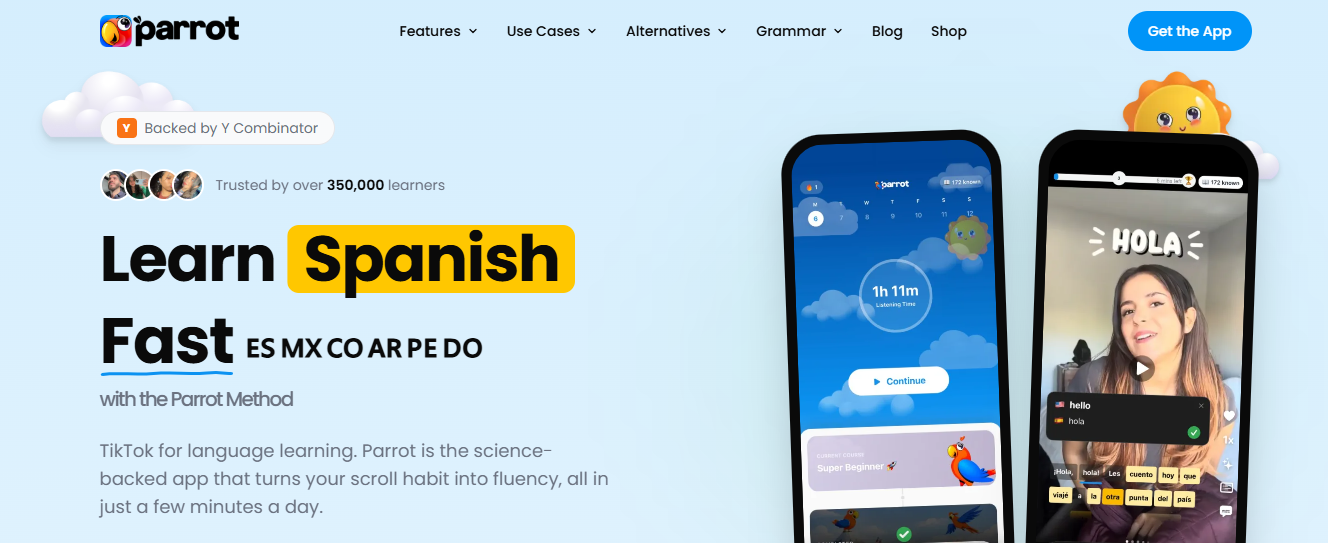
The most common frustration among Spanish learners isn't vocabulary: it's understanding Spanish on paper but freezing in real conversation. Most apps train recognition, not production. Learn Spanish with Parrot closes that gap.
How does Parrot build real conversational fluency?
Parrot uses short-form video immersion based on Dr. Stephen Krashen's comprehensible input theory: fluency develops when you absorb real language slightly above your current ability, not through drills or grammar tables. The TikTok-style format transforms a scrolling habit into daily Spanish immersion, making consistency a design feature rather than a discipline problem.
Why do most language app users plateau before fluency?
According to Parrot Blog, over 90% of language app users stop making progress before they can talk naturally. The problem isn't effort; it's method. When the language you read isn't real, and you never practice speaking, you won't become fluent.
Best for
Learners who want to talk naturally using immersive, science-backed input.
2. Babbel
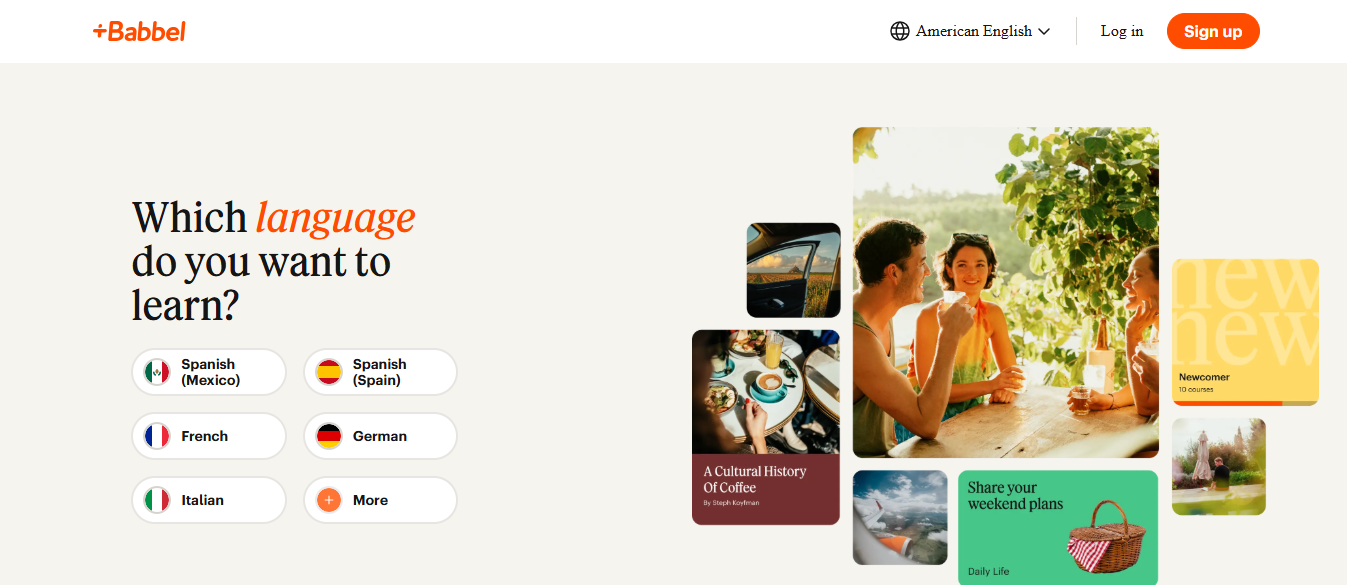
Babbel uses a structured, curriculum-driven approach that explains the logic behind Spanish rather than presenting it in isolation. Lessons are built around practical dialogues and real-world situations, with grammar instruction woven in naturally.
Learners who struggled with high school Spanish often find Babbel's explanation-first style more satisfying than Duolingo's pattern-repetition approach. If you want to understand why the subjunctive exists before using it, Babbel delivers that.
Best for
Structured learners seeking grammar instruction with vocabulary and speaking practice.
3. Busuu
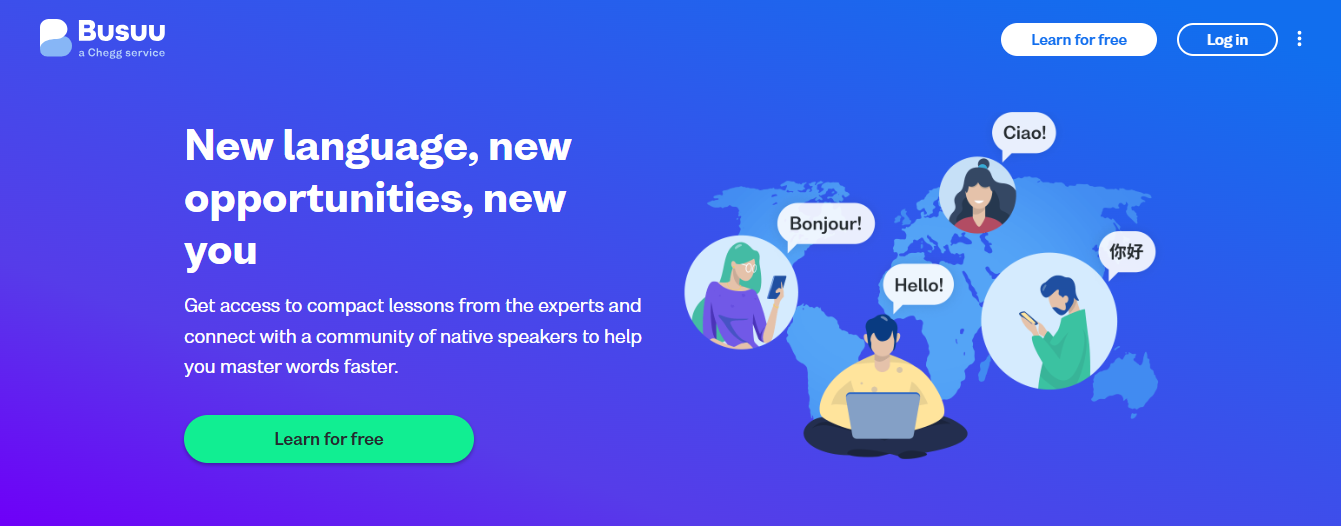
Busuu combines structured courses with native speaker feedback, a feature most apps lack. After completing writing or speaking exercises, you submit them to the community for corrections from fluent speakers worldwide.
This feedback loop is important. While automated apps check if answers are right or wrong, native speakers identify unnatural phrasing—the difference between textbook Spanish and real Spanish.
Best for
Learners who want structured lessons paired with genuine human feedback.
4. Rosetta Stone
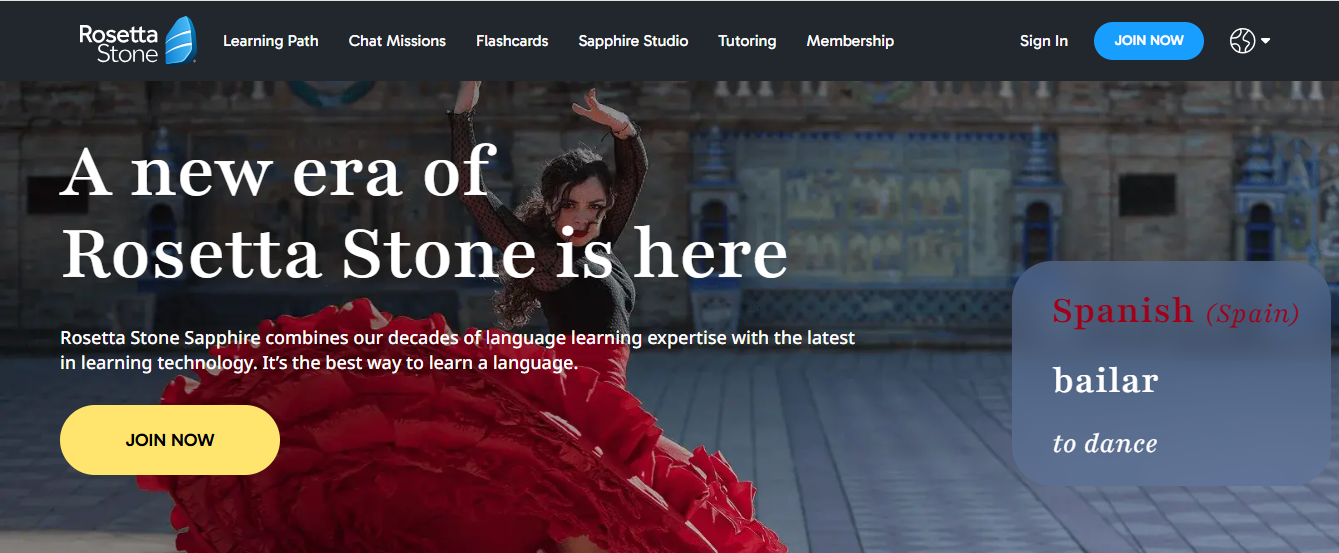
Rosetta Stone teaches Spanish almost entirely through images, audio, and context rather than English translation, forcing you to think directly in the language rather than mentally translating to English.
This approach works well for learners frustrated by translation-heavy methods and builds strong listening instincts early by requiring you to interpret meaning from context.
Best for
Immersion-focused learners who want to build intuitive comprehension without relying on their first language.
5. Pimsleur
Pimsleur is audio-first by design. Every lesson is a guided listening and speaking session in which learners hear a phrase, understand it, and speak it aloud before moving on, with no screens required.
This means commutes, gym sessions, and long drives become Spanish practice time without extra planning. For busy learners with free ears, Pimsleur fits into what you already do rather than consuming additional time.
Best for
Audio learners who want to build pronunciation and conversational ability during daily movement.
6. Memrise
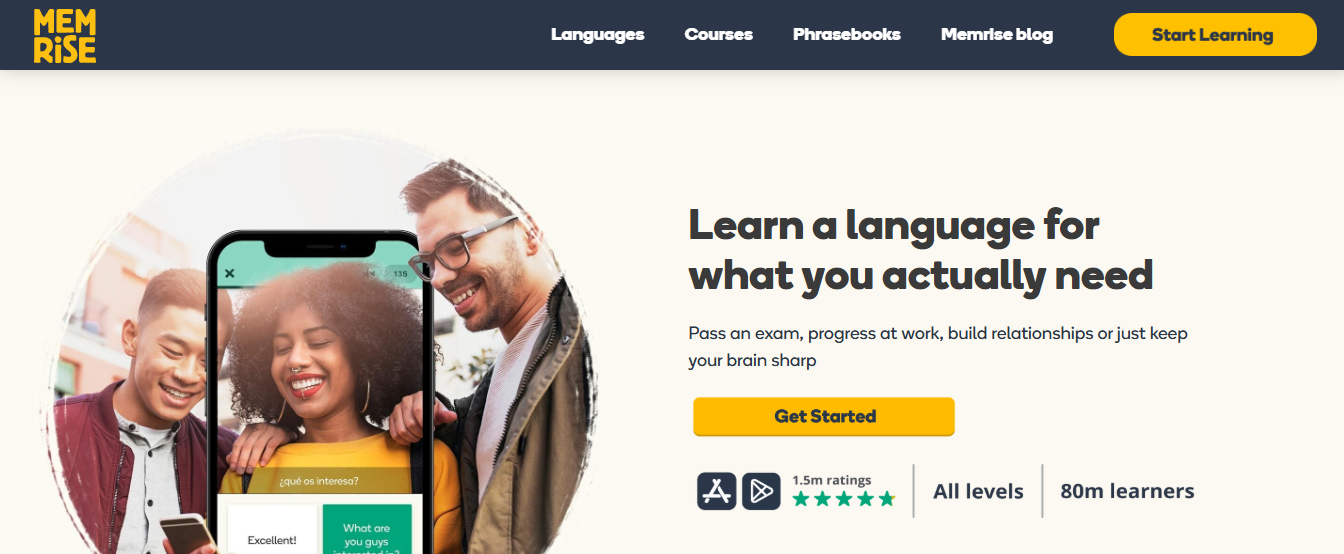
Memrise builds vocabulary through spaced recall and native-speaker video content. Short clips show real people using everyday Spanish in natural, unscripted ways, exposing learners to regional accents, informal phrasing, and the rhythm of actual speech.
Many learners understand slow, clear audio but struggle with real-world speech. Memrise narrows that gap earlier than most vocabulary tools.
Best for
Learners who want to expand vocabulary while training their ear for authentic Spanish.
7. FluentU
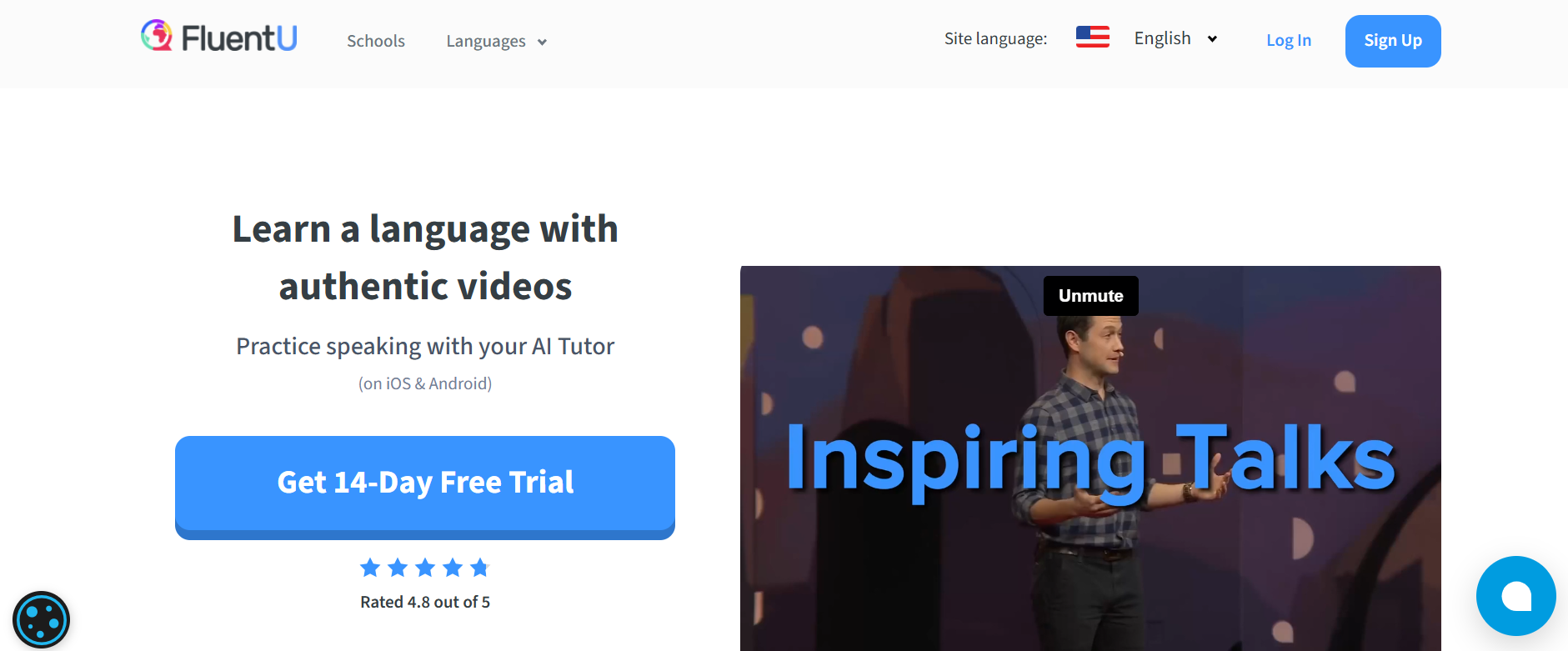
FluentU uses real Spanish media—news clips, interviews, music videos, and short films—as primary learning material. Interactive subtitles let learners click on any word for instant definitions and examples, tracking vocabulary across multiple videos.
This exposes learners to Spanish as it exists in culture, not in textbooks. Intermediate learners with solid foundations often find FluentU speeds up comprehension faster than structured courses.
Best for
Intermediate learners ready to engage with authentic Spanish content and cultural context.
Which tool belongs in your Spanish learning stack right now?
No single app covers every skill equally well. Serious learners typically combine two or three tools: one for speaking, one for vocabulary, one for immersive listening, because different platforms solve different problems at different stages.
The harder question is which tool belongs in your stack now, and the answer depends on where your Spanish is breaking down.
Related Reading
Which Duolingo Alternative Is Right for Your Learning Goal?
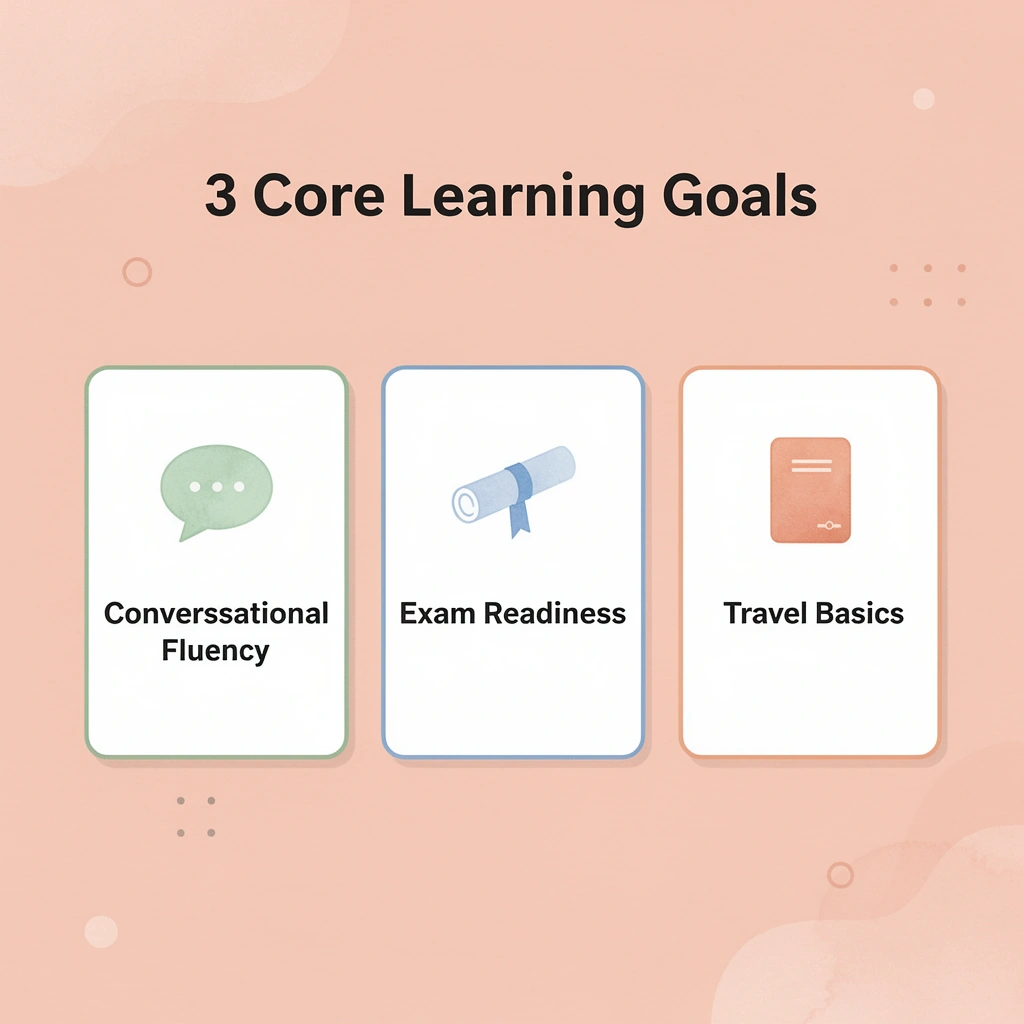
Your learning goal is the only filter that truly matters when choosing a Spanish learning app. Whether you're chasing conversational fluency, exam readiness, or travel-level basics, the right tool is the one built around your specific outcome — not the one with the most downloads.
"The best language app isn't the most popular one — it's the one aligned with your goal, your schedule, and your learning style."
🎯 Key Point: Before downloading anything, define your #1 learning objective — this single decision will determine which app gives you the fastest, most meaningful results.
Conversational Fluency
Best App Type
AI conversation tools
Key Feature to Look For
Real-time speaking practice
Grammar Mastery
Best App Type
Structured curriculum apps
Key Feature to Look For
Explicit grammar explanations
Travel Basics
Best App Type
Phrase-focused apps
Key Feature to Look For
Audio pronunciation guides
Exam Prep
Best App Type
Test-aligned learning platforms
Key Feature to Look For
Practice tests and performance scoring
💡 Tip: Don't let gamification or a free price tag drive your choice — match the app's core strength to your personal finish line.
✅ Best Practice: Revisit your learning goal every 30 days and ask whether your current app is still the best fit — goals evolve, and your tools should too.
Match the tool to the skill gap
The failure point is usually a mismatch between what an app teaches and what a learner needs. Someone struggling to understand fast native speech needs consistent exposure to real spoken Spanish, not fill-in-the-blank grammar exercises. Someone preparing for a two-week trip to Mexico City needs practical dialogue practice, not an in-depth exploration of subjunctive mood. Your current skill gap should determine which tool you pick next.
What does your current skill gap actually look like?
Conversational learners need production time, not recognition practice alone. If you can read a Spanish sentence but freeze when someone speaks it back to you, your training has been almost entirely passive. Apps that close this gap force you to speak, respond, and process language in real time rather than select answers from multiple-choice lists.
Grammar-focused learners do best with structured platforms that explain the "why" behind sentence construction, since pattern recognition without understanding breaks down in unfamiliar situations. Travel-focused learners benefit most from scenario-based dialogue practice with narrow, practical, immediately useful vocabulary. According to the Noun Town Blog, adults can reach conversational proficiency in 18 to 24 months for a Category 1 language like Spanish, making early tool selection crucial to progress.
Does consistency matter more than how long you study?
Being consistent matters more than working hard in bursts. The best app is one you will use tomorrow. Babbel reports that its lessons take as little as 15 minutes per day, which matters because a short daily session beats a two-hour weekend session for language retention. Learners who build fluency make the habit small enough that skipping feels stranger than doing it.
How do you know if vocabulary is your real obstacle?
Language learners with limited vocabulary often think their problem is speaking when the real issue is having too few words to express their meaning. If you understand the grammar but run out of words mid-sentence, choose tools that build vocabulary through contextual exposure rather than isolated flashcard drilling. Seeing a word used in a real sentence with emotional and situational context makes it stick in ways translation pairs never do. Platforms built around authentic content, where users learn Spanish through short-form immersive video, naturally embed new vocabulary inside real conversations and outperform rote memorization tools because the brain encodes meaning alongside context.
The learner who identifies their single biggest obstacle and chooses one tool designed to solve it will outperform the learner who downloads five apps and uses each one only occasionally. Specificity beats variety at every stage of language acquisition.
How Parrot Helps Spanish Learners Move From Practice to Conversation
Most learners hit the same wall. They finish lessons, build vocabulary, and understand written sentences pretty well. Then a native speaker talks at natural speed, uses a regional phrase, or responds in a way the app never prepared them for — and everything stops. The problem isn't knowledge. It's that knowledge and production are fundamentally different skills, and most apps only train one of them.
"The gap between understanding a language and speaking it is where most learners get permanently stuck — not from lack of effort, but from training the wrong skill."
💡 Tip: If you can read Spanish but freeze when speaking, you're not failing — you're experiencing the knowledge-production gap that nearly every app-based learner hits eventually.
🎯 Key Point: Comprehension and conversation are separate cognitive skills. Recognizing a word on a screen and producing it under real-time pressure require completely different mental processes — and only one of them prepares you for an actual conversation.
Passive Comprehension
What It Trains
Reading, multiple-choice exercises, and translation
Real-World Result
You understand Spanish
Active Production
What It Trains
Speaking, responding, and improvising
Real-World Result
You speak Spanish
Most Language Apps
What It Trains
Primarily passive comprehension
Real-World Result
You hit the conversation wall

Why conversation practice changes everything
The failure point is almost always the same: learners practice recognizing answers rather than retrieving them under pressure. Recognizing the correct answer in a multiple-choice exercise uses a different thinking process than producing a sentence in real time while someone waits for your response. According to Babbel (via Parrot Blog), learners who engage with authentic spoken content remember vocabulary significantly longer than those who rely on text-based drills alone. Passive familiarity with words is not the same as owning them well enough to use them mid-conversation.
How does short-form video content build real fluency?
Parrot solves this problem by using short videos with content you can understand: real Spanish spoken by real people at your level. Our app transforms a habit you already have—scrolling through short videos—into daily Spanish learning. Consistency becomes easier because the format matches how you spend your time.
What "practice" actually needs to look like
Speaking confidently comes from processing enough real Spanish that responses surface automatically, without translation. Krashen's comprehensible input theory predicts this outcome, and immersive content at the right level of difficulty produces it. Parrot's App Store description notes that learners can reach real conversational ability within 90 days, a meaningful contrast to the 18- to 24-month plateau on grammar-drill platforms.
A learner preparing to travel to Mexico needs to hear how people order food, ask for directions, and handle misunderstandings at a natural pace and with good comprehension. When those situations arise, the brain reaches for absorbed patterns, not rules. That's the difference between studying a language and acquiring one.
The most important question isn't which method sounds better on paper.
Start Learning Spanish Today
If real conversation is your goal, learn Spanish with Parrot offers a practical path through comprehensible input, short-form immersion, and daily repetition that builds fluency without requiring willpower.
"The most effective language learning combines comprehensible input, immersion, and daily repetition — the exact formula that turns passive exposure into real conversational ability." — Language Acquisition Research
💡 Tip: Comprehensible input is the single most important factor in language acquisition — Parrot is built around this principle from day one.
Comprehensible Input
What It Builds
Natural fluency
Time Required
Short daily sessions
Short-Form Immersion
What It Builds
Listening skills
Time Required
Just minutes per day
Daily Repetition
What It Builds
Long-term retention
Time Required
Consistent daily habit

The best Duolingo alternative matches how your brain learns language. Try Parrot and start turning Spanish knowledge into real-world communication.
🎯 Key Point: Fluency isn't about grinding through lessons; it's about finding a method that aligns with your brain's natural language-learning process.
⚠️ Warning: Most language apps focus on passive memorization. Without active immersion and daily repetition, knowledge of Spanish rarely translates into real speaking ability.
Related Reading
Duolingo Spanish Review