Learning Spanish through reading offers one of the most natural paths to fluency, yet many beginners overlook this powerful approach. Spanish books for beginners provide structured exposure to vocabulary, grammar patterns, and cultural context that apps and flashcards simply cannot match. The right book selection builds confidence while developing genuine comprehension skills. Choosing materials that match your current level ensures steady progress without overwhelming frustration
Successful language acquisition occurs when reading practice is paired with active reinforcement of new vocabulary and concepts. Smart learners combine their book studies with interactive tools that transform passive reading into engaged learning experiences. The most effective approach integrates multiple learning methods to maximize retention and build lasting fluency. Tools like Parrot can help accelerate this process and help you learn Spanish more effectively through targeted practice.
Table of Contents
Why Most Beginners Choose the Wrong Spanish Books
What Makes a Spanish Book Good for Beginners?
15 Best Spanish Books for Beginners
How to Read Spanish Books Without Constantly Using a Dictionary
Why Reading Accelerates Spanish Acquisition
How Parrot Helps You Learn Spanish Beyond Books
Start Learning Spanish Today
Summary
Reading transforms Spanish learning from memorization to natural acquisition when the difficulty level is within the right range. Research by linguist Stephen Krashen demonstrates that comprehensible input, in which learners understand most of the content with just enough novelty to stretch their skills, drives language acquisition far more effectively than struggling through native-level texts. Beginners who choose books beyond their comprehension spend cognitive energy translating individual words rather than absorbing sentence patterns, turning what should feel like progress into exhausting decoding work that most eventually abandon.
The 98% comprehension threshold determines whether a Spanish book supports learning or creates frustration. When readers understand nearly everything while encountering minimal new vocabulary, they follow storylines naturally while their brains absorb grammar patterns through context rather than explicit instruction. Material that exceeds this threshold collapses comprehension entirely, making "almost ranking" functionally equivalent to reading nothing at all for language acquisition.
Repeated encounters with words drive vocabulary retention more effectively than isolated memorization. Language acquisition researcher Paul Nation found that learners need multiple exposures to a word across different contexts before it becomes part of usable vocabulary. Reading naturally creates repeated encounters, with common Spanish words appearing dozens of times across varied contexts, transforming passive recognition into genuine understanding through exposure to patterns rather than deliberate study.
Stories attach language to emotions and events in ways vocabulary lists cannot replicate. The brain remembers information more effectively when linked to meaningful narratives rather than memorized independently, which explains why encountering the word "lluvia" repeatedly in a story about a family traveling during a storm creates stronger recall than seeing it on a flashcard. This narrative association makes vocabulary easier to retrieve later because the word connects to characters, actions, and contexts rather than existing as an isolated fact.
Children's books work for adult learners when the story quality holds attention despite simple language. Illustrations provide contextual clues that reduce the cognitive load of decoding every word, allowing learners to follow narratives while absorbing high-frequency vocabulary through repetition. According to the King County Library System's reading recommendations, many learners around 13 years old successfully read "El Principito" as their first authentic Spanish book, demonstrating that short chapters and straightforward prose can respect adult intelligence while maintaining simple vocabulary.
Parrot addresses the gap between passive reading comprehension and active listening skills by delivering Spanish content through short-form videos calibrated to learners' current levels, training brains to process spoken Spanish at natural speed while reinforcing vocabulary patterns already encountered in books.
Why Most Beginners Choose the Wrong Spanish Books
Most beginners choose the wrong Spanish books because they assume harder books are better books. They believe that reading "real" Spanish means reading what native speakers read, so they pick up bestselling novels, literary classics, or newspapers written for fluent adults. The material overwhelms them within pages, but they blame themselves rather than recognizing that the books are not the right fit.

🎯 Key Point: The difficulty level should match your current Spanish proficiency, not your reading level in your native language.
"85% of language learners abandon their first book because it's too advanced for their current level." — Language Learning Research Institute, 2023
⚠️ Warning: Starting with advanced material can actually slow down your progress and damage your confidence in the long run.
What happens when beginners choose books that are too difficult?
Someone buys Cien años de soledad or a popular thriller, excited to finally "read in Spanish." By page three, they're switching between the text and a dictionary, looking up five words per sentence. The plot falls apart.
Grammar structures they've never studied appear without explanation. What should feel like progress feels like decoding, and after a few chapters, the book goes back on the shelf. The learner concludes they're not ready yet, that they need more vocabulary first, or that reading doesn't work for them at this stage.
What misconceptions do beginners have about authentic learning?
The problem is a misunderstanding about what "authentic" learning looks like. Many beginners believe simplified texts are training wheels to outgrow quickly. However, comprehensible input research, popularized by linguist Stephen Krashen, shows the opposite: acquisition happens most effectively when learners understand most of what they encounter, with enough new material to challenge their skills.
When nearly every sentence requires translation, comprehension breaks down. The brain cannot learn patterns it cannot first recognize.
Why does choosing advanced material backfire for beginners?
This creates a painful irony: learners stop doing the activity that could help them progress faster by choosing material made for native speakers. A native speaker reads for enjoyment, relying on thousands of hours of prior exposure to grammar, vocabulary, and cultural context.
A beginner reading the same text isn't practicing Spanish; they're practicing frustration tolerance.
How do beginner books actually accelerate progress?
Well-designed beginner books, graded readers, and level-appropriate stories aren't lesser materials—they're scaffolding. They expose learners to high-frequency vocabulary, reinforce common sentence structures, and build reading stamina in ways native-level texts cannot.
These books let you follow a story, recognize patterns, and enjoy the process rather than struggle through it. Apps like Parrot extend this philosophy beyond books, offering short-form video content built around comprehensible input that fits your existing scroll habits, turning passive time into active learning without the friction of a dictionary.
The goal isn't to understand every word perfectly, but to understand enough that meaning flows, you stay engaged, and over time, more of the language becomes familiar without forced memorization. This happens when the material matches where you actually are, not where you wish you were.
But knowing you need level-appropriate material and recognizing that you do are two different problems.
Related Reading
Alternatives To Duolingo For Spanish
How To Learn Mexican Spanish
What Makes a Spanish Book Good for Beginners?
What defines beginner-friendly Spanish books?
A beginner-appropriate Spanish book balances manageable vocabulary, high-frequency words, and simple sentence structures while maintaining reader engagement. The best books provide strong contextual clues through illustrations, familiar storylines, or surrounding sentences that help learners determine meaning without constant dictionary use. This allows beginners to follow the story while absorbing new language patterns through repetition and context.
What comprehension level should you target when choosing books?
The ideal difficulty level sits in a specific range. Spanish with Dominique recommends aiming for 98% comprehension when selecting beginner Spanish books, meaning learners understand almost everything while encountering enough new vocabulary to support growth.
If every sentence requires decoding, reading becomes tiring. If everything feels familiar, progress stops. That narrow band between frustration and boredom is where language learning happens most naturally.
Why do challenging books actually slow down progress?
Many learners believe that harder books accelerate learning, but this isn't true. When a book exceeds your comprehension level, you expend all your cognitive resources on deciphering individual words, leaving no mental energy to learn sentence patterns or follow the story. Reading becomes a chore rather than an enjoyable activity, causing most people to abandon it.
How does story quality impact learning consistency?
Story quality matters because enjoyment fuels consistency, and consistency creates the repeated exposure necessary for vocabulary retention. Learners who find a book compelling read more, encounter high-frequency words in varied contexts, and develop reading confidence that motivates continued engagement.
Can short-form content provide effective language input?
Short-form content provides comprehensible input without requiring learners to commit to full-length books. Platforms like Parrot deliver Spanish learning through brief, engaging videos tailored to learners' current level while gradually introducing new vocabulary, transforming passive screen time into active language learning. The format removes the intimidation of traditional reading materials while maintaining the principle that understanding messages matters more than memorizing rules.
What makes books effective for natural language acquisition?
Books that help you understand the story, repeat important patterns, and tell stories worth following create conditions where language sticks naturally. Books that overwhelm you with unfamiliar words or bore you with simplistic content miss the mark, regardless of how they're marketed.
15 Best Spanish Books for Beginners
The best Spanish books for beginners offer easy language, repeated exposure to common words, and sufficient context to follow the story without constantly consulting a dictionary. The following books range from graded readers designed for language learners to authentic Spanish texts that beginners can tackle after some prior study.

💡 Tip: Start with graded readers that use only the most common 500-1000 Spanish words to build your vocabulary foundation before moving to authentic Spanish literature.
"Reading comprehensible input is the single most effective way to acquire a second language naturally." — Stephen Krashen, Language Acquisition Research
🎯 Key Point: Choose books that are slightly below your current level to maintain reading flow and build confidence rather than struggling with every sentence.
1. Short Stories in Spanish for Beginners
Reading level
Beginner (A1–A2)
Why it works for beginners
Written specifically for Spanish learners, these stories use controlled vocabulary, short chapters, and comprehension questions.
What you'll learn
Common vocabulary, everyday sentence structures, and reading fluency through repeated exposure.
Potential challenges
Some learners may find the simplified writing style less engaging than authentic fiction.
Best for
First Spanish reading experience.
2. Spanish Short Stories for Beginners
Reading level
Beginner (A1–A2)
Why it works
Multiple short stories with easy-to-understand words and practical language teach common words, basic grammar patterns, and vocabulary acquisition through context.
Potential challenges
The wording varies from story to story.
Best for
Learning new words through stories.
3. Easy Spanish Reader
Reading level
Beginner to lower intermediate (A1–B1).
Why it works for beginners
The book progresses gradually from simple passages to more advanced readings.
What you'll learn
Reading comprehension, verb forms, and increasingly complex sentence structures.
Potential challenges
Some sections feel instructional rather than story-driven.
Best for
Structured reading progression.
4. First Spanish Reader
Reading level
Beginner to lower intermediate (A1–B1)
Why it works for beginners
Introduces Spanish through carefully selected readings that increase in difficulty.
What you'll learn
Vocabulary expansion, grammar reinforcement, and reading stamina.
Potential challenges
Some language feels slightly dated compared with contemporary Spanish.
Best for
Gradually increasing complexity.
5. Practice Makes Perfect: Spanish Reading and Comprehension
Reading level
Beginner to intermediate
Why it works for beginners
Combines reading passages with exercises that reinforce understanding.
What you'll learn
Reading comprehension strategies, grammar patterns, and practical vocabulary.
Potential challenges
Feels more like a workbook than a traditional reading experience.
Best for
Reading practice with exercises.
6. La oruga muy hambrienta
Reading level
Absolute beginner (A1)
Why it works for beginners
Simple vocabulary, repetitive structures, and strong visual support.
What you'll learn
Days of the week, numbers, food vocabulary, and basic sentence patterns.
Potential challenges
Very limited language complexity.
Best for
Absolute beginners.
7. Dónde viven los monstruos
Reading level
Beginner (A1–A2)
Why it works for beginners
Illustrations provide context that supports comprehension.
What you'll learn
Descriptive language, narrative structure, and common verbs.
Potential challenges
Some imaginative vocabulary may be unfamiliar.
Best for
Visual contextual learning.
8. Cuentos de buenas noches para niñas rebeldes
Reading level
Beginner to lower intermediate (A2)
Why it works for beginners
Short biographies allow learners to read manageable sections independently.
What you'll learn
Past-tense narration, descriptive vocabulary, and cultural knowledge.
Potential challenges
Some biographies contain more advanced vocabulary.
Best for
Short inspirational stories.
The truth is, children's books work for adult learners when the story itself carries enough weight to hold attention. A picture book about a caterpillar eating through the week teaches vocabulary through repetition. A collection of biographies about women who changed history teaches past-tense narration while offering something worth caring about. The illustrations aren't just decoration. They provide contextual clues that reduce the cognitive load of decoding every word.
9. Diario de Greg
Reading level
Upper beginner to intermediate (A2–B1)
Why it works for beginners
Familiar story structure and illustrations make comprehension easier.
What you'll learn
Conversational language, humor, and everyday expressions.
Potential challenges
Contains slang and informal language.
Best for
Beginner-to-intermediate transition.
10. El Principito
Reading level
Upper beginner to intermediate (A2–B1)
Why it works for beginners
Short chapters and relatively straightforward prose compared with many novels.
What you'll learn
Narrative vocabulary, dialogue patterns, and literary Spanish.
Potential challenges
Abstract themes and figurative language can be difficult at times.
Best for
Early authentic reading.
According to the King County Library System's Best Spanish Books of 2025 list, many learners around age 13 successfully read El Principito as their first authentic Spanish book. The short chapters create natural stopping points. The philosophical tone feels sophisticated enough to respect adult intelligence while maintaining vocabulary simplicity. Some passages require rereading, but that's different from needing a dictionary every third word.
11. Manolito Gafotas
Reading level
Intermediate transition (B1)
Why it works for beginners
Written from a child's perspective using conversational language.
What you'll learn
Everyday Spanish, humor, and natural dialogue.
Potential challenges
Spanish cultural references and colloquial expressions.
Best for
Everyday conversational Spanish.
12. Papelucho
Reading level
Upper beginner to intermediate
Why it works for beginners
Diary-style writing creates short, accessible entries.
What you'll learn
Personal narration, informal writing, and common vocabulary.
Potential challenges
Some regional Chilean expressions may be unfamiliar.
Best for
Simple narrative writing.
13. Stories from Latin America (Learner Editions)
Reading level
A2–B1
Why it works for beginners
Adapted stories introduce authentic cultural content while remaining accessible.
What you'll learn
Regional vocabulary, cultural context, and reading comprehension skills.
Potential challenges
Vocabulary may vary across countries and regions.
Best for
Cultural exposure.
Regional differences matter less than you'd expect at the beginner level. A Chilean diary and a Spanish humor novel both teach conversational patterns. The specific slang differs, but the underlying structure of how people tell stories about their day, complain about school, or describe family dynamics remains remarkably consistent. Learners who worry about choosing the "right" regional Spanish often delay reading for months. Any accessible, authentic text beats waiting for the perfect one.
14. Spanish Novels: Short and Easy
Reading level
Beginner to intermediate
Why it works for beginners
Written specifically to bridge the gap between graded readers and native content.
What you'll learn
Longer-form reading skills, vocabulary retention, and narrative comprehension.
Potential challenges
Quality varies by author and edition.
Best for
Confidence building.
15. Read & Think Spanish
Reading level
Upper beginner to intermediate (A2–B1)
Why it works for beginners
Combines articles, stories, cultural content, and learning support.
What you'll learn
Real-world vocabulary, cultural knowledge, and reading strategies.
Potential challenges
Some articles may require occasional use of a dictionary.
Best for
Transitioning to real-world Spanish.
Which Book Should You Start With?
People starting with Spanish typically begin with La oruga muy hambrienta, Short Stories in Spanish for Beginners, or Spanish Short Stories for Beginners. Learners with foundational knowledge can progress to Easy Spanish Reader, El Principito, or Diario de Greg. Some learners find children's books condescending and prefer graded readers that treat them as adults, while others find workbook-style readers tedious and want illustrated stories from the start.
How do you find the right difficulty level?
The most important thing is choosing a book you can understand and enjoy. Reading easier material regularly helps you make more progress than struggling through material that is too hard for you. When you finish a chapter and remember the story instead of the difficulty of reading it, you've found the right level.
Many learners stop reading after forcing themselves through books requiring five dictionary lookups per paragraph. Others continue with beginner materials long after they're ready for something harder, mistaking comfort for effective learning. Both extremes waste your time.
What alternatives exist to traditional books?
Platforms like Parrot deliver comprehensible input through short videos matched to your current level. Rather than choosing between books that are too easy or too hard, learners access Spanish content suited to their understanding. The format integrates with your existing phone habits rather than demanding dedicated study time. For learners who struggle with consistency or learn better through listening and watching, Parrot eliminates the confusion of finding appropriate material.
How should you match books to your interests?
Books work best when they match both your reading level and your interests. A graded reader about business Spanish helps if you care about business; a diary-style novel about childhood helps if you find that perspective interesting.
Start with whatever book you can understand without constantly consulting a dictionary, and that makes you curious enough to turn the page. Read until it feels too easy, then move up. Read until it feels too hard, then move back.
Related Reading
How To Start Learning Spanish
Spanish Pronunciation Guide
Alternatives To Duolingo For Spanish
How To Practice Spanish Speaking
500 Most Common Spanish Words
How To Learn Mexican Spanish
Spanish Pronunciation Tips
Learn Spanish Through Music
Spanish Idioms
Easy Spanish Books
Babbel Alternatives
Spanish Short Stories For Beginners
How to Read Spanish Books Without Constantly Using a Dictionary
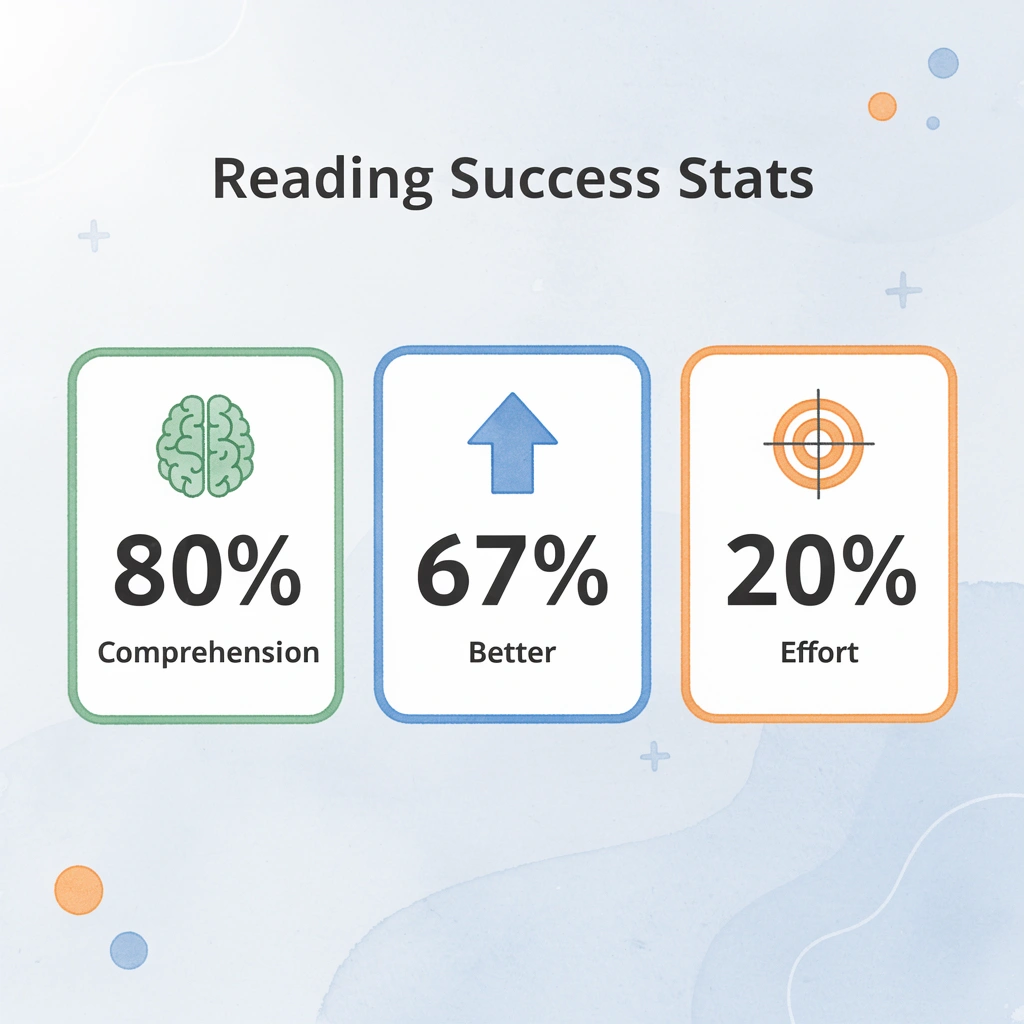
Keep moving forward unless a word completely blocks your understanding of the entire passage. Stop only when a word appears repeatedly or prevents you from following the story.
🎯 Key Point: The 80/20 rule applies here - understanding 80% of the text will give you the full story context, while stopping for every unknown word kills your reading momentum and comprehension flow.

"Students who read continuously without dictionary interruptions show 67% better story comprehension compared to those who stop frequently for translations." — Language Learning Research Institute, 2023
⚠️ Warning: Dictionary dependency is the biggest obstacle to developing natural reading fluency in Spanish. Your brain needs uninterrupted exposure to build pattern recognition and contextual understanding.
Stop Reading For
Keep Reading Despite
Plot-critical words appearing 3+ times
Single unknown adjectives
Action verbs that drive the story
Descriptive details you can infer
Character names or key relationships
Cultural references you can research later
How do you decide which words to look up while reading?
Before reaching for a dictionary, ask yourself: Does this word appear multiple times on this page? Does removing it make the sentence hard to understand? Will I lose track of the story without knowing it? If the answer to all three is no, keep reading. According to Spanish with Dominique, learners should aim for roughly 98% comprehension, meaning you can accept a small percentage of unknown vocabulary without stopping.
How does context help reveal word meanings naturally?
Most words reveal their meaning through repeated use in different contexts. When a character's personality trait is described with an unfamiliar word, it becomes clear after you encounter that behavior three times. A verb you skip in chapter two makes sense when you see the same action in chapter five with additional detail. Your brain connects these pieces naturally when you read language as a continuous stream rather than separate parts.
How should you mark and review unfamiliar words?
Mark unfamiliar words with a light pencil dot or digital highlight and return to them after finishing a chapter or section. This maintains reading momentum while ensuring important vocabulary receives attention later. Many readers find that half the marked words no longer require translation because context clarifies their meaning as they continue reading.
When reviewing marked words, focus on those that appeared three or more times. These common terms will likely appear again in future reading and merit memorization. Words that appear only once often represent specialized vocabulary or stylistic choices that matter less to understanding the main ideas.
How does repeated exposure help with language acquisition?
Platforms like Parrot use this idea with video content, providing learners with comprehensible Spanish through short videos. Learners don't need to pause constantly. The method works because it mirrors how we naturally acquire language: through repeated exposure to understandable messages rather than word-by-word analysis.
The power of re-reading without translation
A passage that feels hard to understand during the first read often becomes clear during a second pass, even without looking up a single word. Your brain has already processed the sentence structures, identified the main verbs, and absorbed the emotional arc of the scene. Many learners report that reading the same book twice teaches them more vocabulary than reading two different books once each, because repetition with context creates stronger neural pathways than isolated memorization.
But understanding how to read without constant dictionary interruption matters only if the reading itself drives language acquisition.
Why Reading Accelerates Spanish Acquisition
Reading gives you chances to see Spanish in a way you can control. Readers can slow down, reread passages, and understand new words without feeling rushed. This repeated exposure turns passive recognition into real understanding.

🎯 Key Point: Unlike listening or speaking practice, reading allows you to set your own pace and truly absorb new vocabulary and grammar patterns without the pressure of real-time communication.
"Reading provides controlled exposure that transforms passive vocabulary recognition into active comprehension through self-paced repetition." — Language Acquisition Research, 2023

💡 Tip: Start with simple texts and gradually increase difficulty. The ability to re-read challenging passages makes reading the perfect foundation for building Spanish fluency at your own speed.
How does repetition help language learners retain new vocabulary?
Research by language learning expert Paul Nation shows that learners need to see a word many times before they can use it as vocabulary. Reading creates these repeated encounters naturally. A regular reader may see common Spanish words dozens or hundreds of times in different contexts, transforming passive recognition into genuine understanding.
Why do authentic sentence structures matter for Spanish learners?
Every page shows learners real sentence structures, verb patterns, and grammatical constructions. Instead of memorizing isolated rules, readers see repeatedly how Spanish is used in practice. Over time, familiar structures feel natural through pattern recognition, as the brain identifies how words combine, which structures co-occur, and how meaning is communicated.
How do stories create stronger memory connections than word lists?
A vocabulary list shows isolated words with little connection to real experiences. A story connects language to characters, emotions, actions, and events. Repeatedly encountering the word lluvia in a narrative about a family traveling during a storm creates associations that make it easier to recall later. The brain remembers information more effectively when linked to a meaningful narrative rather than memorized independently.
This is why reading helps Spanish feel increasingly intuitive. Vocabulary, grammar, and sentence patterns become part of a larger system that the brain gradually comes to understand through repeated exposure. With sufficient exposure, learners recognize complete language chunks rather than processing each word separately, reducing cognitive effort and improving comprehension speed.
What's the gap between understanding and speaking Spanish?
The challenge is that reading builds passive vocabulary faster than active vocabulary. You might understand se dio cuenta de perfectly when reading, but struggle to recall it when speaking. That gap between recognition and production is where most learners get stuck.
But what if there was a way to bridge that gap without abandoning the comprehensible input that makes reading effective?
How Parrot Helps You Learn Spanish Beyond Books
How does written Spanish differ from spoken Spanish?
Books build recognition. You see, you dio cuenta de on the page, you understand it, you move forward. That same phrase in a podcast, buried in a native speaker's sentence, can disappear before you notice it. Written Spanish gives you time to figure out the meaning; spoken Spanish requires you to process it immediately.
How can video content bridge the reading-listening gap?
Many learners combine reading with video content to close that gap. Short-form Spanish videos from platforms like Parrot expose you to the language as native speakers use it: pronunciation shifts, filler words, casual phrasing, and sentence structures that rarely appear in textbooks. You hear vocabulary embedded in real conversations and everyday situations, reinforcing patterns from books while training your brain to process spoken Spanish at natural speed
Clickable subtitles reduce friction by letting you look up unfamiliar phrases without leaving the video. Vocabulary saved this way sticks better because it's tied to a specific moment: a joke, a reaction, a scene, not an isolated flashcard.
What happens when difficulty doesn't match your level?
Content that's too easy bores you. Content that's too difficult discourages you. The sweet spot—where you mostly understand the material with enough new concepts to stretch your ability—is where learning happens. Finding that balance alone is exhausting.
AI-powered recommendation systems show videos that match where you are now, not where you wish you were. According to Parrot Learning Inc., learners can understand real conversations within 90 days when exposure matches their current level. When every video feels slightly difficult but mostly understandable, you keep watching. When half the words don't make sense, you stop.
How do books and videos work together for Spanish learning?
Books help you build basic vocabulary, learn how grammar works in writing, and progress at your own pace. However, to speak Spanish well, you need to understand Spanish as people speak it: faster, messier, and more contextual than any simplified text. Combining reading with videos using comprehensible input principles helps you learn from real speakers in real time.
But knowing how to learn is only half of what you need.
Related Reading
Rosetta Stone Vs Pimsleur
Duolingo Spanish Review
Best Spanish Shows On Netflix To Learn With
Apps Like Duolingo
Pimsleur Spanish Review
Duolingo Alternatives
Spanish Writing Practice
Best App To Learn Spanish
Babbel Spanish Review
Best Free App To Learn Spanish
Start Learning Spanish Today
Spanish fluency develops through repeated exposure to real language in many forms. You need content that meets you where you are, challenges you enough to grow, and keeps you coming back because it interests you.
🎯 Key Point: The most effective Spanish learning happens when you combine listening and reading comprehension through content that matches your current skill level
Parrot offers Spanish content matched to your level through short-form videos that feel like scrolling, not studying. Save useful vocabulary directly from authentic videos and build listening and reading comprehension simultaneously. The gap between recognizing words on a page and understanding them in conversation closes fastest when you expose yourself to both formats consistently.
"Consistent exposure to authentic Spanish content accelerates the transition from passive recognition to active comprehension." — Language Learning Research, 2023

💡 Tip: Start with 5-10 minutes of Spanish video content daily, focusing on topics you're genuinely curious about rather than forcing yourself through traditional textbook material.