
Watching Spanish-language shows on Netflix is one of the most effective ways for beginners to absorb real speech patterns, everyday slang, and natural conversation flow. The platform offers a strong selection of series that do more than entertain; they expose viewers to the kind of Spanish actually spoken in homes, streets, and workplaces across the Spanish-speaking world.
Choosing the right shows matters, but pairing screen time with structured practice is what turns passive watching into real progress. Hearing a phrase in a drama and then reinforcing it through dedicated study helps vocabulary stick rather than fade overnight. For anyone ready to take that next step, Parrot makes it straightforward to learn Spanish.
Table of Contents
Why Traditional Spanish Study Leaves Many Learners Frustrated
What Makes a Spanish Netflix Show Good for Learning?
10 Best Spanish Shows on Netflix to Learn With
Common Mistakes People Make When Learning Spanish With Netflix
How to Turn Netflix Into a Powerful Spanish Learning Tool
How Parrot Helps You Learn Spanish With the Content You Love
Start Learning Spanish Today
Summary
Textbook Spanish and spoken Spanish are not the same language. Spanish is spoken by roughly 600 million people across dozens of countries, each with distinct accents, slang, and rhythm. Learners who master grammar drills often still struggle to follow a conversation at natural speed because the method builds knowledge without building listening ability.
Comprehensible input is the mechanism behind real language acquisition. Linguist Stephen Krashen's Input Hypothesis holds that acquisition occurs through exposure to language slightly above your current level, yet still understandable through context. This model, supported by decades of second-language research, directly challenges the grammar-drill approach that dominates most beginner courses.
Motivation alone does not sustain learning when the method feels like a chore. Preply's 2026 Global Language Learning Report found that 68% of respondents were learning a language for career advancement, travel, or relationships, all goals with genuine emotional stakes. Repetitive drills strip that emotional connection out entirely, and without enjoyment, even strong motivation fades over time.
Show selection matters more than viewing hours when using Netflix to learn Spanish. Beginners who choose content based on popularity rather than their comprehension level often quit within a few episodes, not from a lack of commitment, but because the material is too far above their current level to absorb. The right show is the one where you understand enough to stay engaged while still encountering new language regularly.
Passive viewing habits quietly undermine progress. Using English subtitles redirects the brain's attention away from the Spanish audio entirely, and skipping vocabulary review means that phrases encountered multiple times in a single episode fade within 48 hours. Small, deliberate adjustments to how you watch, not how much you watch, consistently separate learners who plateau from those who keep progressing.
Scene repetition is one of the most underused tools in media-based language learning. Rewatching a two-minute scene two or three times causes words that were previously inaudible to come through clearly, because the brain builds contextual bridges rather than processing new information from scratch. Short scenes watched with intention consistently outperform full episodes watched passively.
Parrot's Learn Spanish addresses this by delivering short-form Spanish video clips calibrated to your current level, so each session provides comprehensible input rather than background noise you absorb nothing from.
Why Traditional Spanish Study Leaves Many Learners Frustrated
Traditional Spanish study fails most learners not because they lack effort, but because the method itself creates a limit. Memorizing verb conjugations and vocabulary lists builds a foundation, but a foundation is not a building. When a native speaker talks at natural speed, that carefully built foundation crumbles.
"A foundation is not a building. Memorizing conjugations without exposure to real spoken Spanish leaves learners structurally unprepared for authentic conversation."
⚠️ Warning: Relying on vocabulary lists and grammar drills alone creates a false sense of progress. You may feel prepared until a native speaker opens their mouth.
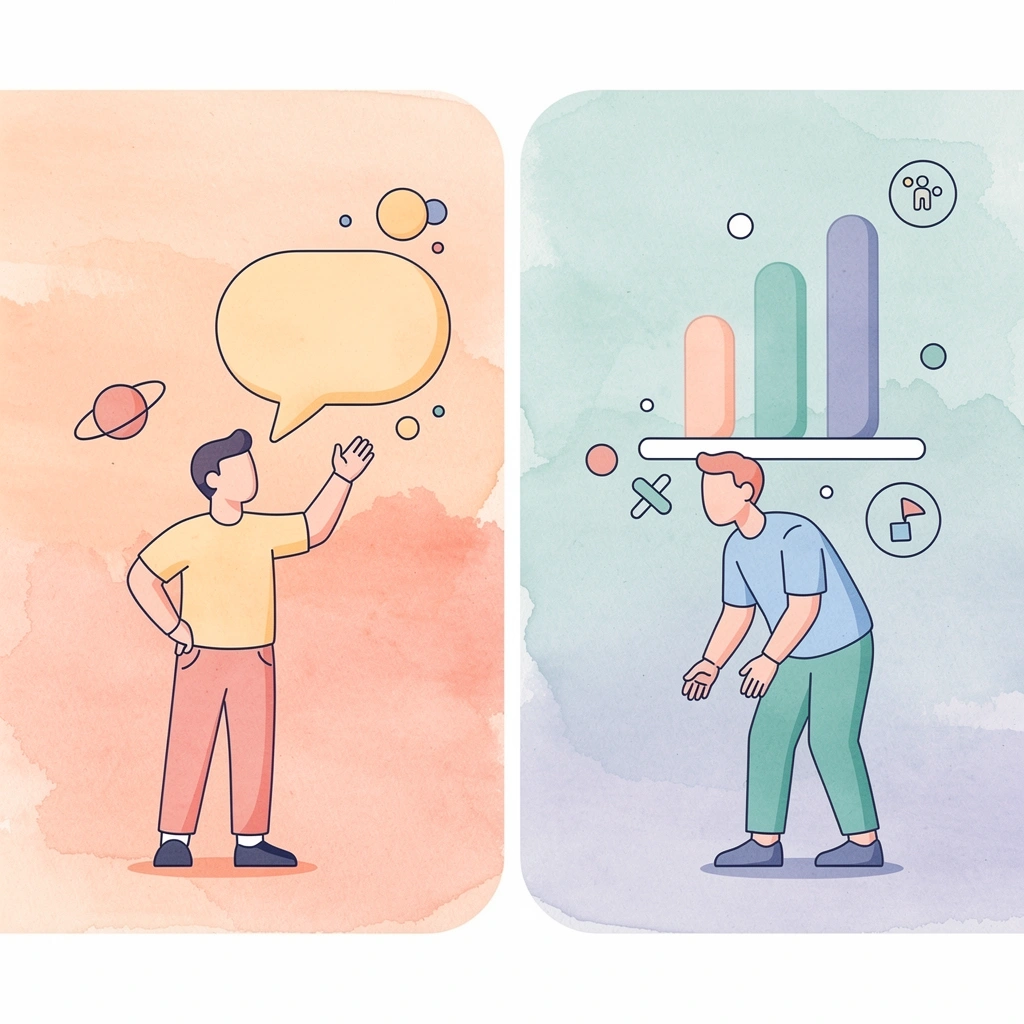
The gap between textbook Spanish and spoken Spanish is wider than most learners expect. Spanish is spoken by roughly 600 million people across dozens of countries, each with distinct accents, slang, and rhythm. A learner who has mastered present-tense conjugations will still struggle to follow a conversation from Buenos Aires or a crime drama set in Madrid.
Here is a breakdown of what textbooks teach versus how real Spanish actually sounds:
Slow, clearly enunciated vocabulary: Shifts to natural speed with blended syllables.
Standard Castilian grammar rules: Swapped for regional slang and local expressions.
Isolated verb conjugation drills: Replaced by fluid, connected speech across tenses.
Single-accent pronunciation models: Expands to 600 million speakers with dozens of accents.
💡 Tip: Supplement textbook study with authentic listening material — think native podcasts, TV dramas, and real conversations — to start closing the gap between classroom Spanish and spoken Spanish.
🎯 Key Point: Mastering present-tense conjugations is a necessary first step, but it is not sufficient. Real fluency requires exposure to the full spectrum of accents, rhythms, and regional vocabulary that textbooks rarely cover.
Why does listening comprehension break down for most beginners?
The failure point is listening comprehension. Spoken language does not pause for you: it compresses syllables, drops letters, blends words together, and assumes cultural context you have not been taught. Linguist Stephen Krashen's Input Hypothesis argues that language acquisition happens through comprehensible input—exposure to language slightly above your current level but still understandable. Decades of second-language research support this model, challenging the grammar-drill approach that dominates most beginner courses.
Most learners repeat the same cycle with a different app or textbook. The hidden cost is not just wasted time, but the slow erosion of confidence from putting in real effort and still not understanding what someone says to you. Apps built around streaks and point systems keep you clicking, but clicking is not comprehending. According to Duolingo's 2024 Language Report, Spanish was the most-studied language in 33 countries worldwide, yet the gap between learners' proficiency and actual conversational ability remains stubbornly wide. Tools like Parrot take a different approach, using short-form video built around comprehensible input so that every minute of practice immerses you in real Spanish.
Why do drills kill motivation even when your goals are real?
Preply's 2026 Global Language Learning Report found that 68% of people surveyed were learning a language to advance their careers, travel, or build relationships. Yet repetitive drills drain the vitality from learning. When the method feels like a boring task, motivation fades. Staying consistent requires content that feels real and alive.
Is fluency really an exposure problem rather than a grammar problem?
Fluency is not a grammar problem; it is an exposure problem. Learners who break through are those who spend more time inside the language, listening to it, absorbing its rhythm, and letting context teach.
But knowing that immersion matters and knowing which content works for your level are two different things.
What Makes a Spanish Netflix Show Good for Learning?
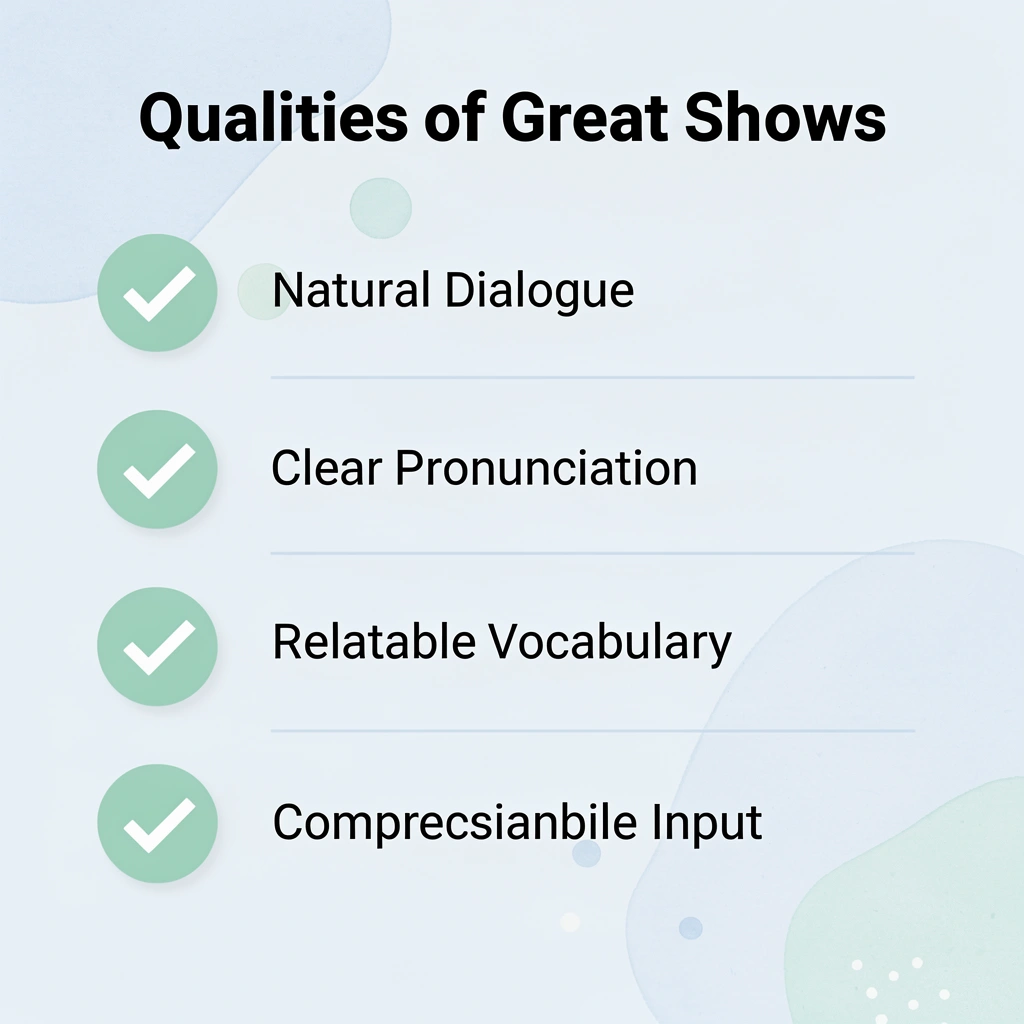
Choosing the right Spanish show on Netflix means finding something your brain can work with, not something that sounds impressive. The best shows for language learning share key qualities: natural dialogue, clear pronunciation, relatable vocabulary, and engaging storylines. When a show holds your attention, your brain enters active listening rather than passive background noise, where real language acquisition happens.
🎯 Key Point: The single most important factor in choosing a Spanish Netflix show isn't the genre — it's whether the dialogue feels natural and comprehensible at your current level.
"Comprehensible input — content that is slightly above your current level — is the most effective driver of language acquisition." — Stephen Krashen, Input Hypothesis
💡 Tip: Look for shows with clear speech patterns, everyday vocabulary, and subtitles in Spanish — these three features alone can dramatically accelerate your listening comprehension and vocabulary retention.
Here is a breakdown of the key qualities to look for in a resource and why they matter for learning:
Natural dialogue: Mirrors real conversational Spanish.
Clear pronunciation: Builds accurate phonetic recognition.
Relatable vocabulary: Reinforces everyday language use.
Engaging storyline: Sustains active attention and motivation.
Why does comprehensible input matter for language learners?
The most effective shows for language learners provide understandable input: language slightly above your current level, not far beyond it. You catch enough to follow the story, and context fills the gaps. Your brain learns language the way a child does: through meaning, repetition, and emotional engagement with what happens on screen.
Clear pronunciation matters more than most learners expect. Some Spanish-language series feature actors who speak at a pace and with clarity that make word boundaries audible, while others pack dialogue with overlapping voices, regional contractions, and rapid-fire delivery that can exhaust intermediate learners. Rewinding the same 10 seconds repeatedly signals that the content doesn't yet match your level.
How does everyday vocabulary in shows build real retention?
Everyday vocabulary is the other major factor. Shows centered on family dynamics, workplace tension, or school relationships expose you to the words Spanish speakers use daily. Hearing the same phrase in three different emotional contexts—as a joke, in an argument, as a quiet confession—helps you remember it better than flashcard decks. According to Spring Languages, specific Netflix shows are recommended for learners because they balance natural dialogue with accessible storylines that keep beginners engaged without overwhelming them.
What happens when content difficulty doesn't match your level?
The failure point is usually a mismatch between content difficulty and learner level. Beginners who jump into fast-paced crime dramas or shows dense with Argentine slang often quit within two episodes because the input is incomprehensible. When you cannot understand enough to care what happens next, no amount of willpower sustains engagement. Parrot applies this principle, delivering short-form video clips calibrated to your current level, so every session provides absorbable input rather than content that requires constant dictionary lookups.
Should beginners worry about accent diversity from the start?
Accent diversity matters, but not as most beginners assume. Pick one accent as your primary input source and build a foundation there first. Once your ear is trained to one variety of Spanish, other accents become recognizable variations rather than entirely new languages. Visual storytelling does the same work: facial expressions, setting, and action carry emotional truth even when individual words slip past you.
Related Reading
Hard Spanish Sentences
Common Spanish Phrases
Spanish Books For Beginners
Quotes In Spanish
Mexican Spanish Slang
Sentences In Spanish
Spanish Numbers
What Countries Speak Spanish
Spanish Spoken Worldwide And Why You Should Learn It
1000 Most Common Spanish Words
10 Best Spanish Shows on Netflix to Learn With
The best Spanish show for learning is the one that matches exactly where you are with your comprehension, not necessarily the most critically acclaimed.
🎯 Key Point: Matching your level is the single most important factor in choosing a show. The wrong difficulty level prevents language acquisition, regardless of how good the series is.
"Ten shows consistently stand out across difficulty levels, covering a range of accents, vocabulary types, and narrative styles — from beginner-friendly content to fast-paced crime dramas." — Your Spanish Hub, 2025
According to Your Spanish Hub's 2025 guide to the best shows for learning Spanish, ten shows consistently stand out across difficulty levels, covering a range of accents, vocabulary types, and narrative styles. The list spans beginner-friendly content with slow, repetitive dialogue to fast-paced crime dramas where native speakers talk over each other.
💡 Tip: Start with shows featuring slow, clear dialogue if you're a beginner — jumping straight into rapid native-speed conversation will stall your progress before it starts.
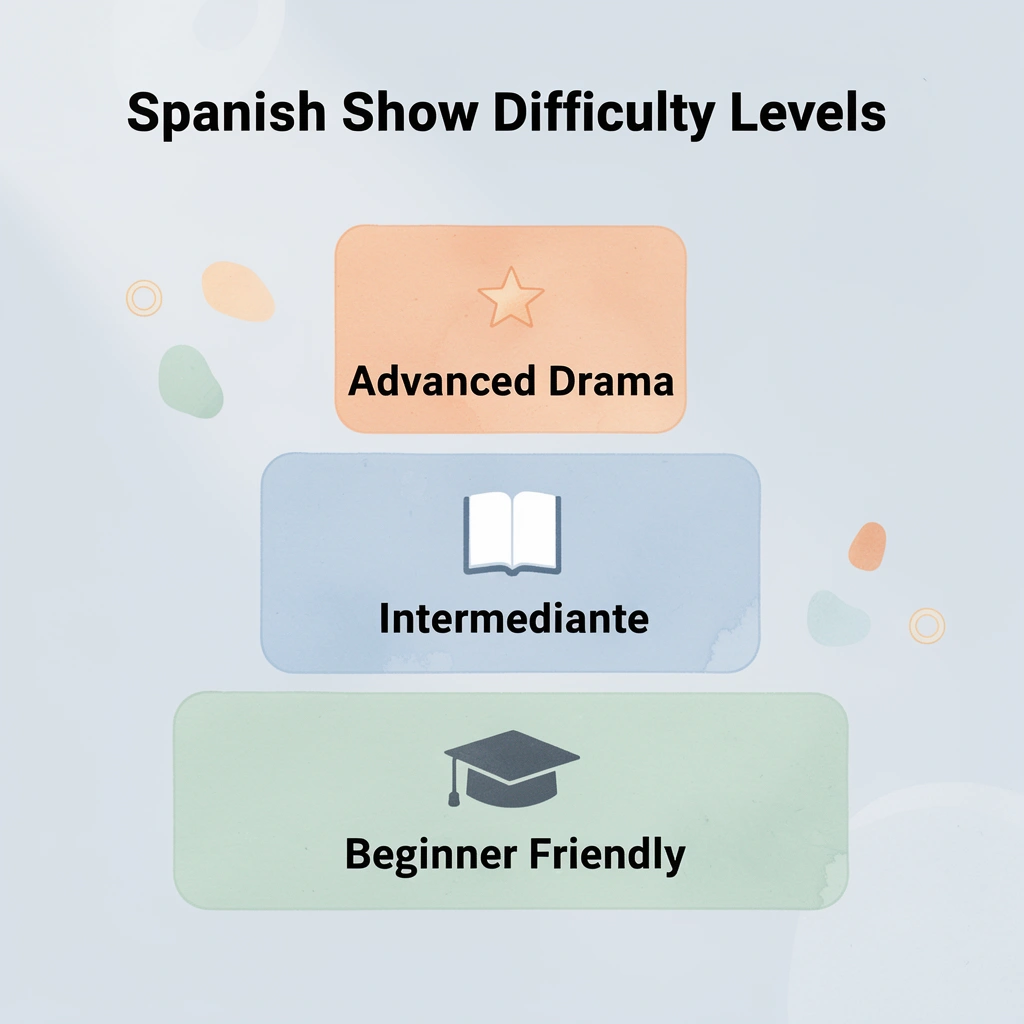
Here is a breakdown of the different difficulty levels, their dialogue styles, and what they are best for:
Beginner: Features slow, repetitive dialogue that is best for building core vocabulary.
Intermediate: Features a moderate pace that is best for expanding accent familiarity.
Advanced: Features fast-paced, overlapping dialogue that is best for native-speed comprehension.
🔑 Takeaway: The 10 best Spanish shows aren't ranked by critical acclaim — they're ranked by how well they serve real learners at every stage of the journey.
1. Extra en Español
Extra en Español was designed for language learners, making it exceptionally useful for beginners. Characters repeat key phrases, react visually to situations, and speak at a learner-friendly pace. It covers daily vocabulary around food, relationships, and household life: the repeated, practical input that builds a strong foundation.
2. La Casa de las Flores
This Mexican comedy-drama follows the collapse of a wealthy family. The emotionally charged dialogue uses accessible grammar and vocabulary centered on family dynamics and personal relationships. Mexican Spanish is one of the most widely heard varieties globally, making it an efficient choice for ear training.
3. Siempre Bruja
Colombian Spanish is known for its clarity and ease of understanding. Siempre Bruja leverages this through its fantasy narrative: a young witch jumps from the 17th century to modern Cartagena, creating natural repetition as she learns the contemporary world alongside you. Beginner- to intermediate-level learners gain exposure to accents and modern vocabulary simultaneously.
4. Club de Cuervos
Club de Cuervos closes the gap between textbook Spanish and real-world usage. The dialogue sounds like an overheard dinner conversation rather than classroom material, built around casual conversations, sports culture, and family conflict. This texture shifts comprehension from academic to instinctive.
5. Valeria
Valeria follows four women in Madrid as they navigate careers, romantic relationships, and adult life. The conversations are natural, with a consistent Castilian accent throughout. For learners seeking vocabulary around modern, everyday situations rather than historical drama or crime plots, this is ideal.
6. Las Chicas del Cable
Set in 1920s Madrid, Cable Girls uses formal dialogue that exposes learners to richer speech patterns than everyday slang, stretching comprehension without overwhelming it. The emotional weight of the storylines sustains engagement even when individual words slip past.
7. Entrevías
Most learners plateau at intermediate because textbook Spanish and street Spanish feel like different languages. Entrevías is set in a working-class neighborhood of Madrid, with intergenerational conversations featuring colloquial expressions, informal contractions, and rapid exchanges. It's challenging for early learners, but for those ready to bridge that gap, it offers one of the most honest representations of how Spanish actually sounds.
How do you keep making progress beyond comfortable shows?
Many learners default to rewatching comfortable shows rather than pushing into harder content, a habit that feels productive but stalls progress. Apps like Parrot deliver short-form video content calibrated above your current level, so you keep acquiring new language instead of reinforcing what you already know.
8. La Casa de Papel
Money Heist built a global audience and serves as an excellent training ground for advanced learners. Characters speak fast, interrupt each other, and shift between emotional registers within scenes. The strong Castilian accent, current slang, and dramatic tension maintain your interest even when comprehension falters, sustaining your brain's engagement with Spanish for extended periods.
9. Elite
Elite follows a consistent pattern in advanced Spanish shows: fast-paced dialogue, modern youth slang, and little patience for learners who need time to catch up. Set in a private high school, it exposes learners to the informal Spanish younger native speakers use in real conversations—often the last type of Spanish to feel natural even after years of study.
10. Narcos
According to the Pimsleur Language Blog, Spanish is spoken by over 500 million native speakers worldwide, with significant accent variations. Narcos highlights these differences clearly. Colombian Spanish is rich and fast, with regional characteristics that add accent textures that train your ear for authentic language variety. For advanced learners, this serves as a listening laboratory.
Why does watching in the right order matter for learning?
The ten shows above are arranged by what you need to understand at each stage. A learner who pushes through Elite at week three will build confusion and lose motivation. One who spends three months with Extra en Español and La Casa de las Flores arrives at Elite with ears ready for it.
What does real fluency actually feel like when it clicks?
Learners who reach an easy understanding of shows like Narcos or Money Heist describe a specific change: Spanish stops feeling like something they translate and starts feeling like something they understand. That change happens through consistent viewing of level-appropriate content, not grammar drills or streak counters.
What else determines whether watching Spanish shows actually works?
Picking the right show is only half the battle. What you do while watching, and the habits you develop around it, can undermine everything you're trying to build.
Common Mistakes People Make When Learning Spanish With Netflix
Watching Spanish shows without a clear method is like training for a marathon by sitting near a running track. The habits you build around your viewing — not just the hours you spend — determine whether Netflix becomes real learning or just background noise.
"The habits you build around your viewing, not just the hours you spend, determine whether Netflix becomes real learning or just background noise."
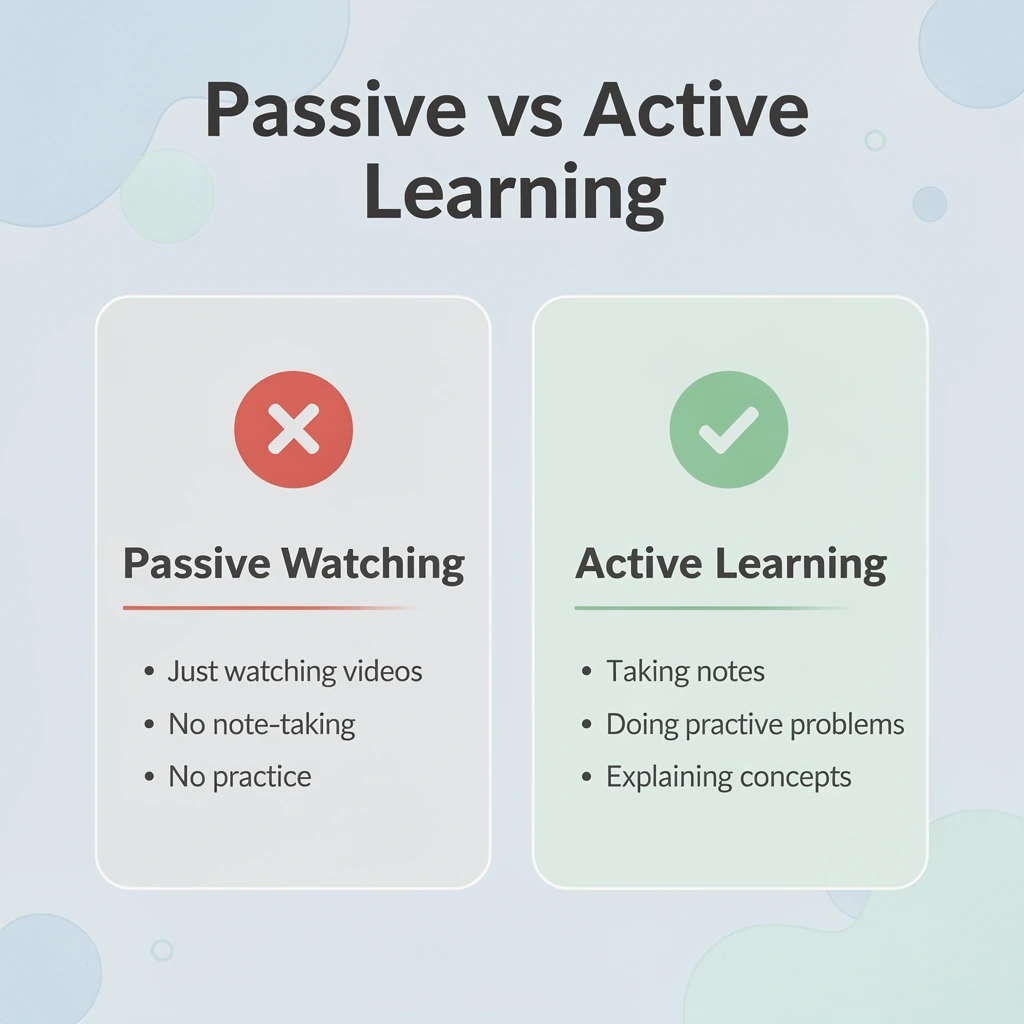
⚠️ Warning: Passive watching is one of the most common traps Spanish learners fall into — logging hours of screen time without building any real vocabulary or comprehension skills.
💡 Tip: Before hitting play, set a clear learning goal — whether that's mastering 5 new words, catching a specific grammar pattern, or practicing active listening without subtitles.
Here is a breakdown of how different viewing habits affect your learning outcomes:
Passive watching with subtitles on: Results in minimal retention and entertainment only.
Active watching with pause & repeat: Leads to higher vocabulary absorption.
Note-taking while viewing: Provides long-term memory reinforcement.
No clear method: Results in wasted time and slow progress.

Why do English subtitles slow down your Spanish learning?
The most common trap is English subtitles. They redirect your brain's attention away from the Spanish audio entirely: your eyes find the English, your brain processes it, and the Spanish becomes background music. Switch to Spanish subtitles, or no subtitles for content you're already comfortable with, and the cognitive work shifts back to the spoken language itself.
How does choosing the wrong difficulty level stall your progress?
The failure point is usually the difficulty level. Beginners pick shows based on popularity rather than comprehension, then spend entire episodes trying to understand almost nothing. When you grasp less than 70 percent of what you hear, your brain cannot build the contextual bridges that make new words stick. The right show is one where you understand enough to stay engaged while encountering new input regularly.
Sincerely, Spain identifies 12 distinct mistakes learners make when using TV and film for language learning, including passive consumption, watching without intention, skipping review, and treating comprehension as binary rather than a spectrum. Learning happens gradually. You fail only when you stop paying attention altogether, not when you miss a single line.
What happens when you skip vocabulary review after each episode?
Most learners skip vocabulary review. They encounter a phrase three times in one episode, feel they recognize it, then never see it again because they didn't write it down. That recognition fades within 48 hours without practice. A simple habit of writing down two or three recurring phrases per episode and reviewing them the next day transforms passive watching into retained vocabulary far more effectively than watching twice as many episodes without review.
Small, intentional changes to how you watch, not how much you watch, separate learners who stop improving from those who keep getting better. Once you understand what not to do, the next question becomes: what does intentional, high-impact Netflix viewing look like in practice?
How to Turn Netflix Into a Powerful Spanish Learning Tool
Watching on purpose separates hobby from method. Learners who make real progress with Spanish show that they watch with a specific goal, not just for the most hours.
"Intentional viewing — with a clear learning objective — is what separates passive entertainment from active language acquisition." — Language Learning Research
🎯 Key Point: It's not about how many hours you log — it's about how deliberately you watch. Set a specific goal before every session to maximize your results.
💡 Tip: Before pressing play, ask yourself: What am I practicing today? Whether it's vocabulary, listening comprehension, or pronunciation, a focused intention turns any episode into a powerful learning session.
Here is a breakdown of how different watching styles impact your progress:
Passive Viewing (No goal, background noise): Results in minimal retention.
Purposeful Viewing (Specific learning objective): Leads to real, measurable progress.
Active Viewing (Goal + note-taking + review): Results in accelerated fluency.

What you watch matters as much as how you watch
Show selection and viewing habits work together. Choosing a series where you already understand the context—a workplace drama or family sitcom—removes cognitive load and lets your brain focus on language itself. According to Memrise via IndieWire, nearly half of language-learning app users want to consume media in another language. The gap is not desire; it is structure.
How scene repetition rewires your listening
The failure point is usually the expectation that a single pass through an episode can accomplish what three passes can. When you rewatch a two-minute scene, words you couldn't catch before suddenly make sense. Phrases you half-recognize become familiar enough to use. This is comprehensible input working exactly as Dr. Stephen Krashen described it: repeated exposure to language slightly above your current level gradually pulls that language into your active range.
Why do short rewatched scenes outperform full episode marathons?
Most learners default to watching full episodes because it feels productive. But finishing an episode and retaining almost nothing from it is the language-learning equivalent of reading a page without absorbing a sentence. Short scenes, rewatched with intention, consistently outperform marathon sessions where comprehension is too thin to stick.
How does structured scaffolding make consistent practice easier to maintain?
Parrot is built on this principle. It delivers short-form Spanish video clips structured around comprehensible input, so every session adds real learning rather than background noise. For learners who want the immersive feel of Netflix but need more support around what they watch, this structure makes it easier to stay consistent.
The phrase-first mindset that changes everything
When you shift from collecting words to collecting phrases, your understanding of Spanish accelerates. Native dialogue is built from chunks, not vocabulary lists. Expressions like "¿Qué onda?", "Ya sé", or "Me cae bien," appear across dozens of episodes of popular Spanish-language series on Netflix, and recognizing them in context feels fundamentally different from seeing them in a flashcard deck.
Why does recognizing phrase patterns speed up your ear?
Noticing patterns is a skill that improves over time. The more phrase-level patterns you recognize across different shows and regional accents, from Mexican Spanish in "La Casa de las Flores" to Colombian Spanish in "Siempre Bruja," the faster your ear adapts to real conversation.
Once that frequency clicks, the question becomes how to maintain your Spanish practice daily.
Related Reading
Spanish Verb Conjugation
Preterite Vs Imperfect
How To Practice Spanish Speaking
How To Start Learning Spanish
Babbel Alternatives
Spanish Slang
Best Ai For Spanish
Por Vs Para
Learn Spanish Through Music
Spanish Past Tense
500 Most Common Spanish Words
Spanish Pronunciation Guide
Easy Spanish Books
Spanish Pronunciation Tips
Alternatives To Duolingo For Spanish
How To Learn Mexican Spanish
Spanish Short Stories For Beginners
How Parrot Helps You Learn Spanish With the Content You Love
Finding Spanish content is easy. The real challenge is turning it into language learning. Many learners watch hours of Spanish shows but struggle to understand native speakers or remember key phrases. Parrot solves this by turning passive entertainment into personalized, active learning.
"Many learners watch hours of Spanish content but walk away with little retention — the missing piece is structured engagement, not more screen time." — Language Learning Research
🎯 Key Point: Watching Spanish content alone isn't enough — active interaction with that content is what drives real fluency gains.
💡 Tip: Use Parrot to transform your favorite Spanish shows, videos, and podcasts into a personalized learning engine — so every minute of entertainment becomes a language breakthrough.
Here is how passive watching compares to learning with Parrot:
No structured vocabulary review: Upgraded to personalized phrase extraction.
Phrases forgotten after viewing: Fixed with active recall and retention tools.
Generic subtitles only: Replaced by context-driven language breakdowns.
Entertainment without progress: Transformed into entertainment + measurable fluency.
How does Parrot turn Spanish shows into real language acquisition?
Parrot helps you become fluent in Spanish using research-backed comprehensible input and short-form videos. Instead of vocabulary lists and grammar drills, you naturally acquire language while staying entertained.
The platform makes Spanish feel like scrolling social media rather than studying. Clickable subtitles let you instantly see translations without interrupting your flow, keeping you immersed in the content.
How does Parrot help you retain vocabulary without extra effort?
Parrot saves vocabulary and phrases for later review, turning repeated exposure into long-term retention without the need for separate notebooks or flashcards. You build vocabulary around naturally encountered expressions rather than isolated words.
AI-powered recommendations tailor videos to your interests and level, ensuring content remains understandable, engaging, and challenging enough to drive progress.
Who is Parrot designed to help reach Spanish fluency?
Whether you're learning a language for travel, relationships, your career, or personal growth, Parrot makes fluency feel possible by connecting entertainment with real language learning.
Start Learning Spanish Today
If you've been watching Spanish shows on Netflix but still find yourself lost when native speakers talk fast, the problem isn't how hard you're trying. It's how you're learning.
"The gap between passive exposure and real comprehension isn't closed by watching more — it's closed by learning smarter." — Language Learning Research
💡 Tip: Struggling to keep up with fast native speech is a sign that your learning method needs an upgrade, not your effort level.
Start a free trial of learning Spanish. Our Parrot app gives you personalized Spanish video recommendations matched to your exact level and interests, plus clickable subtitles that let you translate and save unfamiliar words right away. This creates a customized content stream and vocabulary library that grows with each session, turning entertainment into a daily learning habit that builds on itself.
🎯 Key Point: Every session with Parrot adds to your personal vocabulary library — making your next session smarter and more targeted than the last.
✅ Best Practice: Use Parrot's clickable subtitles every time an unfamiliar word appears — your saved vocabulary library compounds over time into serious fluency gains.
Related Reading
Spanish Writing Practice
Best Free App To Learn Spanish
Duolingo Spanish Review
Duolingo Alternatives
Best App To Learn Spanish
Pimsleur Spanish Review
Apps Like Duolingo
Rosetta Stone Vs Pimsleur
Babbel Spanish Review
Spanish Idioms