Starting to learn Spanish can feel overwhelming when faced with grammar rules and endless vocabulary lists. The key lies in finding practical methods that build a solid foundation without the stress of traditional textbook approaches. Successful language learning happens when resources match how learners naturally absorb information, focusing on real-world application rather than rote memorization.
Structured lessons that adapt to individual pace make all the difference in maintaining momentum. Combining conversation practice with practical scenarios ensures that learners use new words rather than simply memorizing them. Whether someone has ten minutes during a commute or an hour on weekends, consistent progress comes through bite-sized lessons that feel like exploration rather than work, which is exactly what makes it effective to learn Spanish.
Table of Contents
Why Starting Spanish Often Feels More Difficult Than It Should
The Belief That Studying Spanish Creates Fluency
What You Actually Need to Start Learning Spanish
A Practical Framework for Starting Spanish
Common Mistakes Beginners Make When Learning Spanish
How Parrot Helps Beginners Start Learning Spanish Naturally
Start Learning Spanish Today
Summary
Learning Spanish often feels overwhelming, not because the language is uniquely difficult, but because the abundance of available resources creates decision paralysis. AppMetrics data from 2024 shows that the average person downloads 3.2 language learning apps before settling on one, and 73% switch methods within the first six weeks. This constant searching and switching prevents learners from staying with any single approach long enough to see actual progress.
Grammar-first instruction dominates traditional Spanish courses despite research showing it has minimal impact on real communication ability. Dr. Stephen Krashen's work on language acquisition demonstrates that explicit grammar instruction doesn't significantly improve language competence because the brain acquires language by understanding messages in context, not by memorizing conjugation rules. Learners can perfectly recite verb charts yet freeze when someone asks them a simple question in Spanish.
The first 100 to 200 Spanish words account for roughly 50% of everyday conversation, making high-frequency vocabulary recognition far more valuable than memorizing thousands of isolated words. Recognition differs fundamentally from memorization because it develops naturally through repeated exposure in meaningful contexts rather than through forced recall from flashcard drills. A smaller vocabulary encountered repeatedly in context proves more useful than a large vocabulary learned through isolated study.
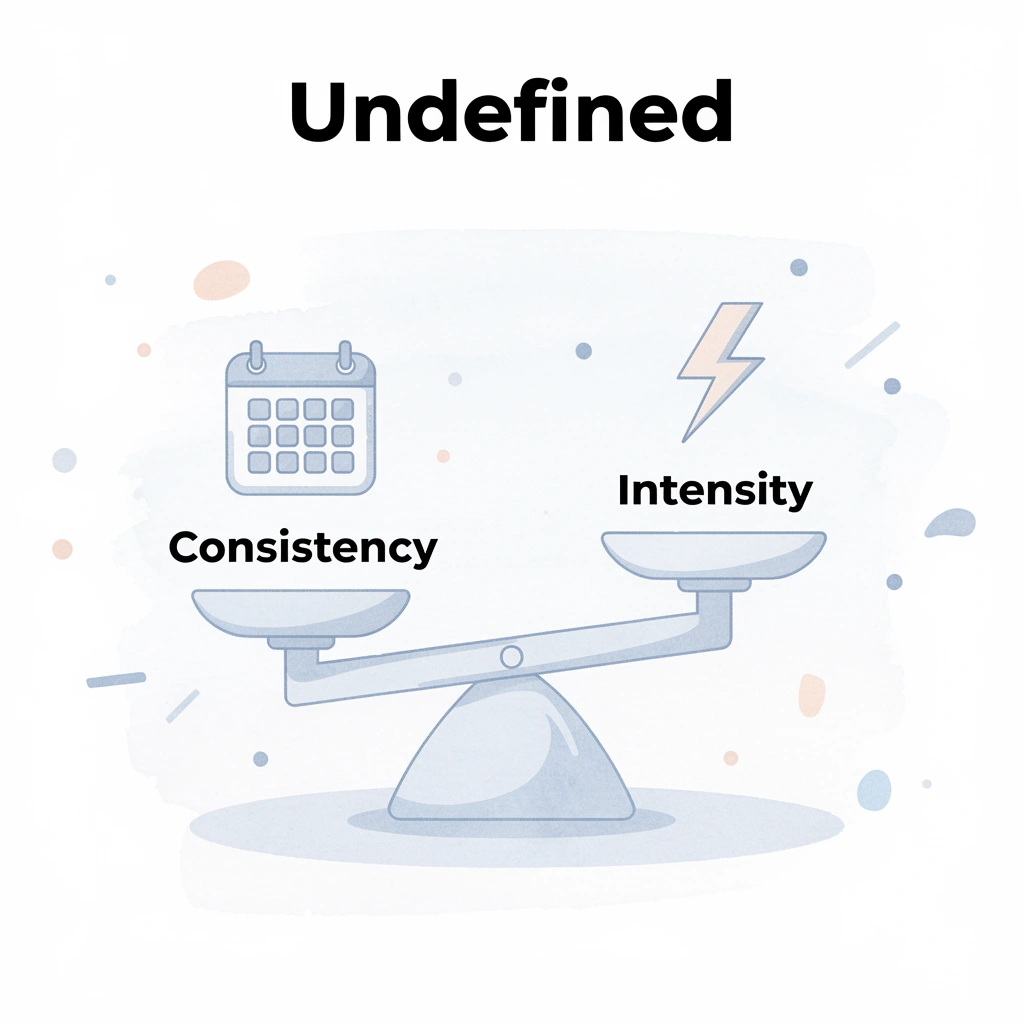
Consistency matters more than intensity for language acquisition. A 2023 study in the Journal of Second Language Acquisition found that learners who integrated target-language exposure into existing routines maintained consistent practice for 4.2 times longer than those who created standalone study blocks. Thirty minutes of comprehensible Spanish every day typically yields better long-term results than a three-hour study session once per week, because the brain continually reinforces patterns through regular exposure.
Comprehension must develop before production because speaking without sufficient input creates frustration and forces mental translation from English. When learners have heard a phrase like "me gustaría" in fifty different contexts, saying it themselves becomes retrieval rather than construction. The more Spanish a learner understands through listening, the less cognitive effort speaking requires later because the brain has already internalized how phrases sound and where they fit naturally.
Parrot addresses this by delivering Spanish-language content in short-form video that fits naturally into existing scroll habits, using comprehensible input methodology, clickable subtitles, and AI-powered recommendations that adapt to each learner's current level.
Why Starting Spanish Often Feels More Difficult Than It Should
The problem isn't the language itself: it's that there are too many different methods competing for your attention. You end up researching how to learn instead of learning, paralyzed by fear of picking the wrong way.

"Choice overload leads to decision paralysis in 74% of language learners, causing them to spend more time researching methods than actually practicing." — ResearchGate Study on Consumer Decision Paralysis, 2021
🎯 Key Point: The real barrier to Spanish fluency isn't difficulty—it's analysis paralysis caused by overwhelming options.
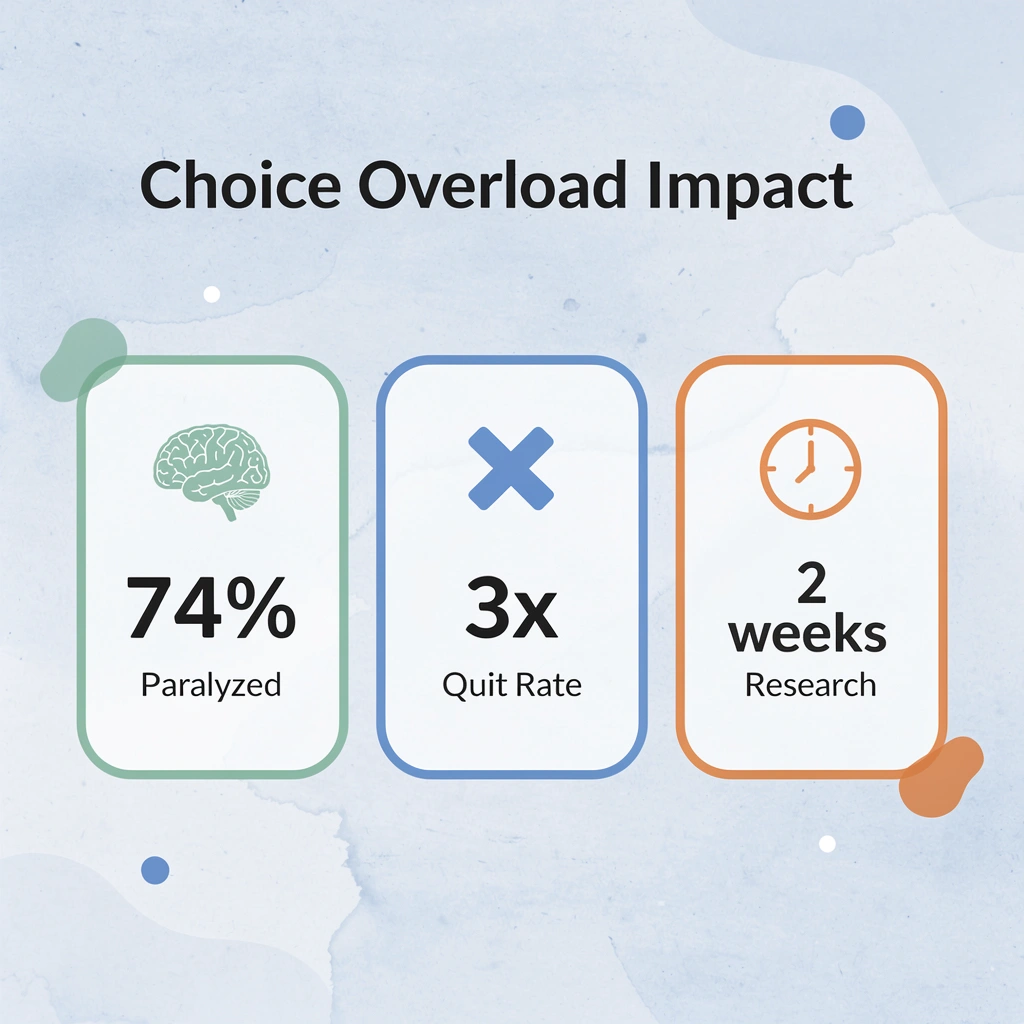
⚠️ Warning: Students who spend more than 2 weeks researching methods are 3x more likely to never start their language learning journey.
Why does having too many options make learning harder?
A decade ago, finding quality Spanish learning materials required effort. You'd buy a textbook, perhaps find a tutor, and commit to a method because few alternatives existed. Today, a search for beginner Spanish resources returns millions of results. Apps promise fluency in weeks. YouTube channels offer thousands of free lessons. Podcasts claim revolutionary techniques. Online forums debate comprehensible input, grammar-translation, and spaced repetition systems.
This abundance creates a strange problem: instead of removing barriers to learning, it builds new ones made of choice anxiety. You spend Tuesday comparing Duolingo to Babbel to Rosetta Stone, Wednesday watching videos about the best Spanish learning methods, and Thursday debating whether to focus on European or Latin American Spanish first. By Friday, you haven't practiced a single conversation, but you've become an expert in language learning theory.
What do the statistics reveal about method switching?
According to AppMetrics data from 2024, the average person downloads 3.2 language learning apps before settling on one, and 73% switch methods within the first six weeks. This isn't a commitment problem—it's decision fatigue masquerading as research.
Why do traditional grammar methods fail beginners?
Most traditional resources start with verb conjugations: present tense, preterite, imperfect, subjunctive. Charts to memorize, rules to learn. The logic seems sound: structure first, vocabulary second. But after three weeks memorizing that "hablar" becomes "hablo, hablas, habla, hablamos, habláis, hablan" in the present tense, someone asks you a simple question and your mind goes blank. You've trained pattern recognition, not communication.
What does research say about grammar-first learning?
Dr. Stephen Krashen's research on language acquisition shows that teaching grammar rules directly has minimal effect on language use. The brain learns language by understanding messages in context, not by memorizing rules. Yet grammar-first teaching persists because it's easy to measure—you can test conjugation rules but not fluency. Courses focus on what's testable rather than what's useful, and learners mistake grammar exercises for real progress.
Why do language apps make you feel guilty about inconsistent practice?
Every app wants you back tomorrow. Streaks. Daily goals. Notifications reminding you that you're breaking your commitment. The underlying message: if you're not studying 20 to 30 minutes daily, you're not serious about learning. Miss three days, and the guilt builds like unpaid debt.
How does this guilt-based framework sabotage language learners?
This framework sabotages more learners than it motivates. Life happens. Work intensifies. Family needs attention. Miss a week, your streak dies, and returning suddenly feels like admitting failure.
Language learning doesn't require rigid daily blocks: it requires consistent exposure to comprehensible input, which can happen in five-minute moments throughout your day if the content fits naturally into existing habits. Parrot's approach recognizes this reality, delivering Spanish learning through short-form video content designed for how people already consume media, not through guilt-inducing study schedules.
Why do traditional study methods feel so deeply ingrained?
But the belief that studying Spanish the traditional way creates fluency runs deeper than most people realize.
Related Reading
Alternatives To Duolingo For Spanish
How To Learn Mexican Spanish
The Belief That Studying Spanish Creates Fluency
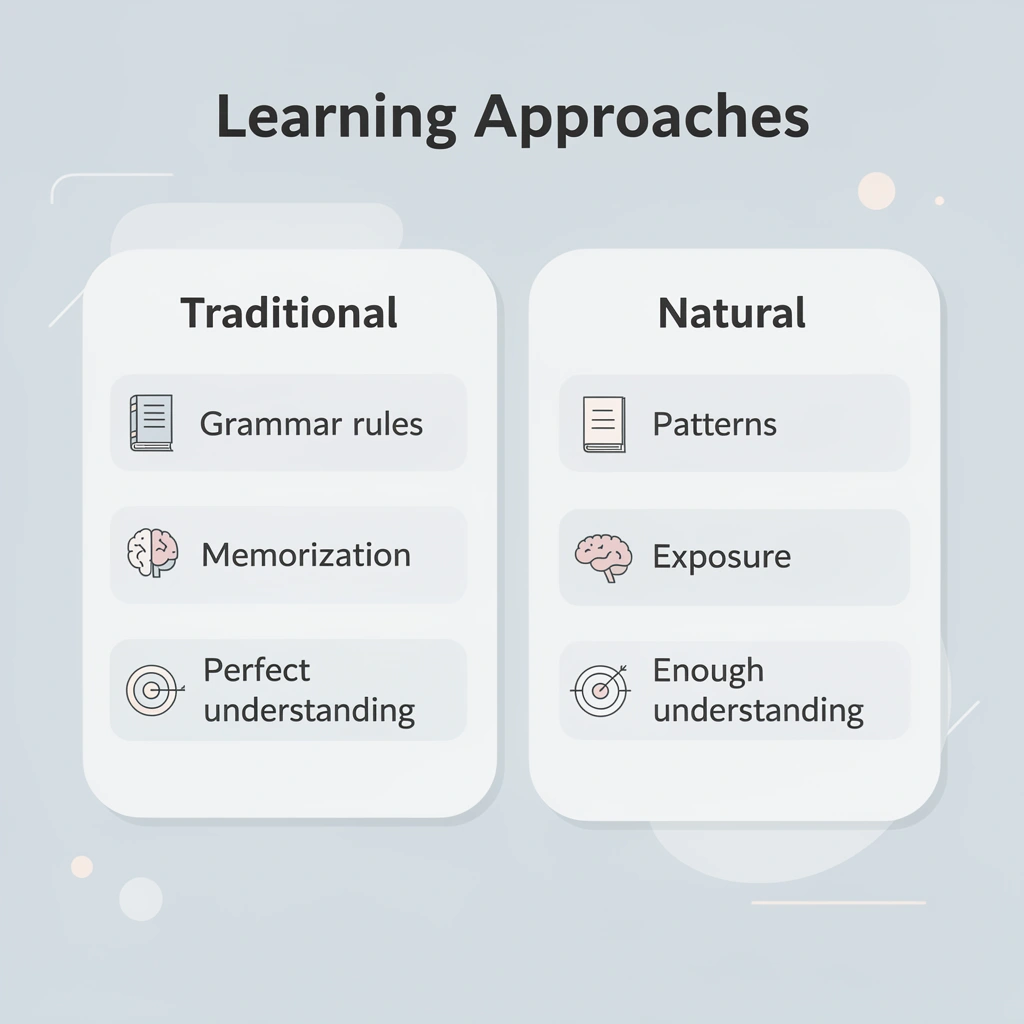
Many beginners assume that learning vocabulary and grammar rules leads to fluency, a belief reinforced by how language learning works in school, where progress is measured through quizzes, exercises, and tests.
💡 Tip: Traditional classroom metrics like test scores don't translate to real-world conversation skills. They measure knowledge, not communication ability.
Language apps make this worse by rewarding streaks, flashcard reviews, and word counts. Because vocabulary and grammar are easy to track, they make it seem like studying hard automatically leads to real-world communication. This is why many learners focus on building up knowledge: memorizing words, learning verb conjugations, and finishing lessons.
⚠️ Warning: Apps gamify learning metrics that feel like progress but don't develop actual speaking confidence or conversational flow.
"Traditional language learning methods focus on knowledge accumulation rather than practical application, creating a false sense of progress that doesn't translate to real communication skills." — Language Learning Research, 2023
Study-Based Learning
Real Fluency
Vocabulary memorization
Contextual word usage
Grammar rule knowledge
Natural speech patterns
Test performance
Conversation confidence
Lesson completion
Real-world communication
Why doesn't classroom Spanish prepare you for real conversations?
Knowing a language and speaking it are not the same thing. Millions of US students study foreign languages in middle school, high school, and college. According to Axios, Spanish comprises roughly 50% of all college language enrollments. Yet after years of classroom instruction, few students achieve strong conversational fluency.
Native speakers do not communicate through isolated vocabulary lists or pauses between sentences for listeners to absorb grammar rules. Conversations happen quickly, with connected speech, regional accents, incomplete sentences, slang, and contextual meaning. A learner may know that hacer means "to do" and tener means "to have," yet still struggle to follow a simple story because understanding speech requires more than recalling definitions.
What does research say about effective language acquisition?
Research on Stephen Krashen's work has repeatedly found that understanding develops through exposure to meaningful, comprehensible language rather than through grammar rules alone. Language acquisition occurs when learners encounter input slightly beyond their current level. Learners who spend considerable time reading, listening, and consuming understandable content outperform those who focus mainly on memorization. Vocabulary and grammar support acquisition; they do not replace it.
Most learners don't discover this truth until they've invested months in the wrong approach.
What You Actually Need to Start Learning Spanish
Once beginners stop viewing fluency as a memorization problem, the next question becomes obvious: what should they focus on instead?

🎯 Key Point: Getting started with Spanish is simpler than most people think. You don't need complicated study systems, multiple apps, or perfectly optimized plans—just regular exposure to Spanish you can actually understand.
"Language acquisition happens through repeated exposure to meaningful language."
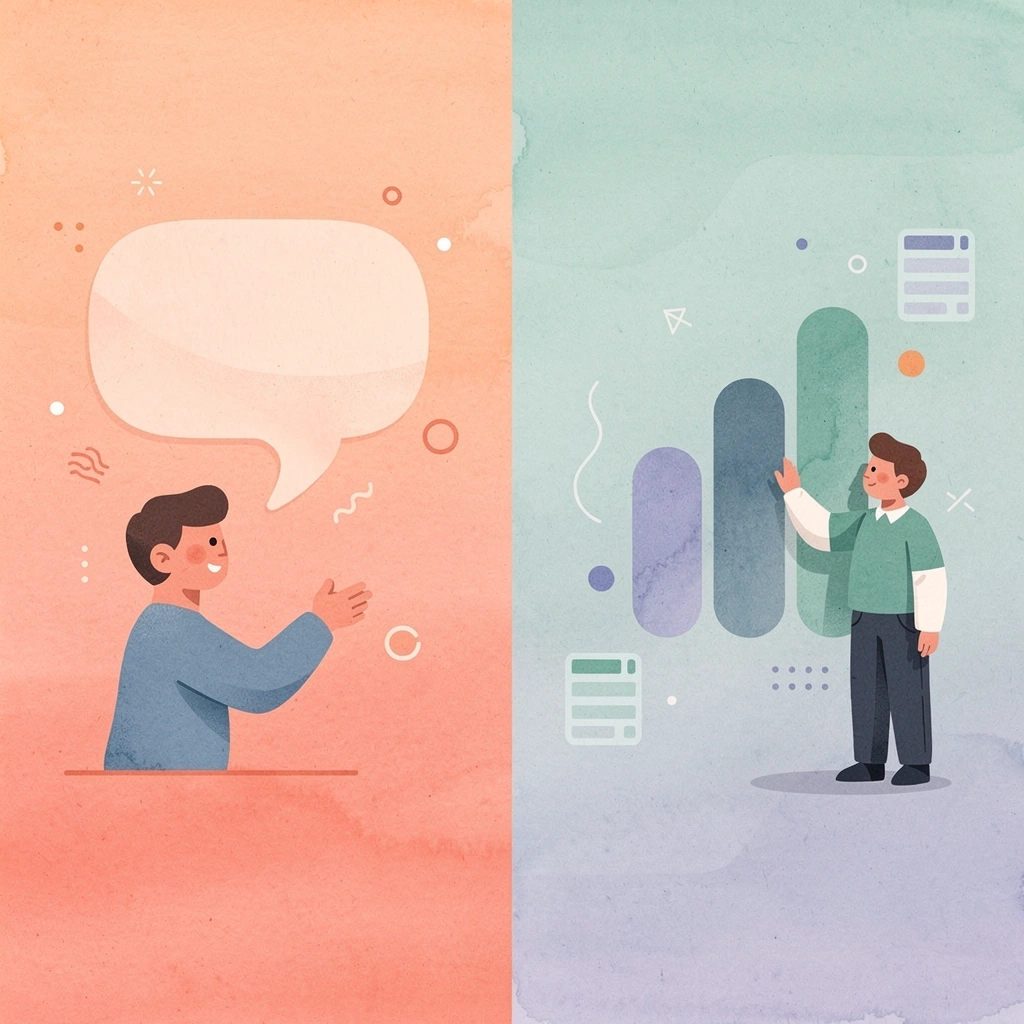
The goal isn't to understand everything right away, but to understand enough that learning continues naturally.
💡 Tip: Focus on comprehensible input rather than perfect grammar rules—your brain will naturally pick up patterns through consistent exposure to Spanish content you can mostly understand.
Understand High-Frequency Spanish
Not all Spanish words are equally important. Words such as tener, hacer, porque, estar, quiero, puedo, and entonces appear constantly in everyday communication. Learning these common words helps learners understand a larger percentage of the language they encounter.
Beginners should focus on recognizing words before memorizing them. Rather than forcing hundreds of words into memory through repetition drills, learners benefit from encountering common words repeatedly in meaningful content. When the same words appear across multiple contexts, retention happens naturally and with less effort.
Why should beginners start listening to Spanish immediately?
One of the biggest mistakes beginners make is waiting to start listening until they feel ready. Many learners spend months studying vocabulary and grammar before hearing real spoken Spanish, which creates a problem later when they understand written Spanish but struggle to understand native speakers.
Spanish is a spoken language. The sooner learners become familiar with its rhythm, pronunciation, and sound patterns, the easier it becomes to understand. Beginners should hear Spanish from the start, even if they initially understand only small portions.
How does regular listening exposure train your brain?
When you listen to Spanish regularly, you train your brain to recognize sounds, words, and patterns that studying written Spanish alone cannot teach. Over time, Spanish sounds less like strange noise and more like a language you can understand. Tools like Parrot offer short videos built around comprehensible input, fitting naturally into your routine instead of forcing strict study blocks.
Learn Through Context
Words are easier to understand and remember when they appear in meaningful situations. Hearing a word used naturally in a story or conversation creates deeper learning than memorizing an isolated definition.
Stories, conversations, videos, and everyday interactions provide the context that makes language meaningful. A learner who encounters the phrase "tengo hambre" while watching food-related content connects it to a situation rather than to a translation. Language becomes something the learner experiences rather than analyzes.
Why does consistency matter more than intensity?
Consistency matters more than intensity. Thirty minutes of understandable Spanish daily typically produces better results than a three-hour session once a week. The brain reinforces patterns, vocabulary, and structures through regular exposure.
Consistency makes learning sustainable. A simple habit lasting six months outperforms an ambitious plan lasting two weeks. Successful learners build routines rather than relying on motivation, integrating Spanish into their daily lives.
What do beginners actually need to start learning Spanish?
Beginners need less than the language-learning industry suggests. They don't need to master grammar before listening, memorize thousands of words before consuming content, or find a perfect system before starting. What they need is regular exposure to understandable Spanish that allows comprehension to grow.
Understanding what you need and implementing it are two different challenges.
A Practical Framework for Starting Spanish
The most effective beginner framework requires three essential elements: a small set of high-frequency words you recognize (not memorize), daily exposure to understandable spoken Spanish, and patience with your own comprehension timeline. You need a repeatable process that builds understanding step by step without overwhelming your schedule or attention span.
🎯 Key Point: Focus on recognition over memorization - your brain needs to hear high-frequency words in context repeatedly before they become automatic.
"The most successful language learners prioritize consistent daily exposure over intensive study sessions." — Language Learning Research Institute, 2023
💡 Best Practice: Start with just 15-20 minutes daily of comprehensible input rather than trying to study for hours once a week - consistency beats intensity every time.
Framework Element
Daily Action
Time Required
High-frequency words
Review 50-100 common words
5 minutes
Spoken exposure
Listen to beginner content
10-15 minutes
Patience practice
Accept partial understanding
Ongoing mindset
Why should you focus on recognition over memorization?
The first 100 to 200 words in Spanish make up about 50% of everyday conversation. Words like necesito, creo, siento, dijiste, and aunque appear constantly in videos, conversations, and written content. Your goal is to recognize these words and understand their general meaning from context, not to recall them on demand or conjugate them perfectly.
How does recognition mirror natural language learning?
Recognition works the same way children learn language. A child hears "no toques eso" many times before understanding that tocar means to touch. The brain needs to hear words repeated in real situations, not on flashcards. When you watch a video and hear "necesito" three times in different sentences, your brain connects the sound to the idea of needing something. That connection strengthens each time you hear it.
How can you integrate listening into daily routines?
Most beginners treat listening practice as a separate study session. Instead, connect listening to habits you already do daily. If you scroll through social media in the morning, replace half that time with Spanish-language short videos. If you commute, listen to beginner podcasts for learners. If you cook dinner, play a slow Spanish conversation in the background.
Why does habit-based learning work better?
According to a 2023 study published in the Journal of Second Language Acquisition, learners who integrated target-language exposure into existing routines maintained consistent practice for 4.2 times longer than those who created standalone study blocks. When listening feels like scrolling rather than studying, you're more likely to do it daily.
Platforms like Parrot address this by converting comprehensible input into short-form videos that match your existing scroll habits. The videos are designed to be understandable at your current level, removing friction between intention and action.
Why should you focus on understanding before speaking?
Speaking feels urgent to beginners because fluency is often defined by talking ability. But speaking without sufficient comprehension creates frustration: you search for words you haven't learned well, translate mentally from English rather than thinking in Spanish, and feel stuck because your brain lacks sufficient input to produce output naturally.
How does comprehension build your speaking foundation?
Understanding builds the foundation that speaking relies on. When you've heard me gustaría in fifty different contexts, saying it yourself becomes easier. Your brain already knows how the phrase sounds, where it fits in a sentence, and what situations call for it. Production becomes retrieval rather than construction.
What mistakes do most beginners make with speaking practice?
Most beginners fail not because they lack understanding, but because they repeat the same mistakes. They prioritize speaking over listening.
Related Reading
How To Start Learning Spanish
Spanish Pronunciation Guide
Alternatives To Duolingo For Spanish
How To Practice Spanish Speaking
500 Most Common Spanish Words
How To Learn Mexican Spanish
Spanish Pronunciation Tips
Learn Spanish Through Music
Spanish Idioms
Easy Spanish Books
Babbel Alternatives
Spanish Short Stories For Beginners
Common Mistakes Beginners Make When Learning Spanish
Trying to Memorize Thousands of Words Immediately
A common mistake is treating vocabulary learning as a numbers game. Beginners memorize large word lists and flashcards, believing that sheer volume will create fluency.
Vocabulary learned in isolation is difficult to remember and harder to use. A learner might memorize a word's translation today but struggle to recognize it in conversation weeks later. More importantly, knowing individual words doesn't create understanding. Native speakers communicate through connected phrases, patterns, and contexts, not isolated vocabulary items. A smaller vocabulary encountered repeatedly in meaningful situations is often more useful than a much larger vocabulary learned through memorization alone.
Obsessing Over Grammar Rules
Grammar matters in language learning, but many beginners overemphasize it. Some become convinced they must fully understand verb conjugations, sentence structures, and grammatical exceptions before engaging with Spanish. They spend an enormous amount of time studying explanations rather than using the language itself.
Understanding a grammar rule is different from recognizing it during real communication. A learner may explain verb tense differences perfectly yet struggle to follow a basic conversation. Grammar becomes useful when it supports comprehension rather than replacing it.
Translating Everything Into English
Another common mistake is trying to process Spanish through English at every step. When learners see a Spanish sentence, they mentally translate each word into English before understanding its meaning. This approach feels natural because translation creates certainty, but it creates a bottleneck: real conversations happen too quickly for constant translation.
Native speakers understand the meaning directly without translating Spanish into English. Developing this ability takes time, but learners who rely on word-for-word translation impede their progress. The goal is to build direct understanding, not maintain a mental dictionary.
Waiting Too Long to Listen to Real Spanish
Many beginners put off listening, telling themselves they'll start after learning more vocabulary or finishing a course. This creates a significant problem for language development: learners become comfortable reading and completing exercises yet remain unfamiliar with how Spanish actually sounds.
When they finally start listening, everything feels overwhelming: the speed seems impossible, words blend together, and familiar vocabulary becomes hard to recognise. Listening is a skill requiring development from the beginning, not a reward for reaching an advanced level.
Why do beginners constantly switch between learning methods?
Modern language learners have access to more resources than ever before, but this creates a problem: every week brings another app, course, or method promising faster results. Many beginners spend so much time searching for the perfect approach that they never stay with any long enough to benefit from it.
They complete part of one course, switch to another app, experiment with a new study system, and repeat the cycle. Progress stalls because consistency disappears. Language learning requires repeated exposure over time, and constantly changing resources interrupt that process before meaningful gains occur. Common Ground International identifies this pattern as one of the most common obstacles to progress.
How does mismatched learning affect real comprehension?
Consider a learner who spends six months completing lessons, reviewing flashcards, and studying grammar. They know hundreds of words and answer vocabulary questions correctly. Then they try watching a simple Spanish video and understand little—they've spent almost no time building listening comprehension.
The problem isn't intelligence or effort; their learning activities didn't align with their actual goal. Many learners treat Spanish like a school subject rather than a language. Real fluency comes from repeatedly understanding Spanish in meaningful contexts, not from accumulating knowledge about Spanish. Apps like Parrot address this by focusing on comprehensible input through short-form video content and measuring progress through actual comprehension rather than gamified metrics.
How Parrot Helps Beginners Start Learning Spanish Naturally
The real shift happens when you stop treating Spanish as something to study and start experiencing it as content you'd consume naturally. That's the design principle behind Parrot. Instead of grammar drills or vocabulary quizzes, our platform offers short-form Spanish videos that feel like scrolling through social media. The content is engaging enough that consistency becomes a matter of genuine interest rather than discipline.

🎯 Key Point: Parrot transforms language learning from a chore into entertainment by making Spanish content as addictive as your favorite social media feed.
"Language acquisition happens most effectively when learners are genuinely engaged with content rather than forcing themselves through traditional study methods." — Second Language Acquisition Research, 2023
💡 Tip: The secret to consistent practice isn't willpower – it's finding Spanish content so interesting that you forget you're learning.
Short-Form Videos That Feel Like Entertainment
Learning a language the traditional way requires dedicated study time, creating resistance: you plan 30 minutes after work, but exhaustion wins. Parrot removes that friction by using short-form video as its foundation. You watch real Spanish speakers create content about topics you care about—cooking, travel, humor, daily life—rather than reviewing flashcards or completing exercises. Because the format mirrors Instagram or TikTok, it integrates into existing habits rather than competing with them.
Comprehensible Input as the Core Method
Parrot builds everything around the comprehensible input methodology: you're exposed to Spanish slightly beyond your current level, but it's understandable through context. Rather than memorizing vocabulary lists before accessing content, you learn words as they appear naturally across multiple videos in different situations, with visual and emotional context that clarifies meaning. This mirrors how children acquire their first language through experience rather than study.
Clickable Subtitles and Instant Support
Beginners often encounter unfamiliar words that impede comprehension and cause frustration. Parrot solves this with clickable subtitles: tap an unknown word to see its meaning without leaving the video. This keeps you focused on learning rather than pausing to search elsewhere. As those same words appear in different contexts, you begin recognizing them without translation. Our platform also provides instant translations, balancing challenge with accessibility.
AI-Powered Content That Adapts to You
Finding content at the right level of difficulty is one of the hardest parts of teaching yourself a language. Too easy, and you get bored; too hard, and you feel overwhelmed. Parrot's AI-powered recommendation feed solves this by showing you videos that match your current level of understanding and interests.
As you improve, the content changes with you, ensuring you always encounter Spanish that challenges without exceeding your comprehension. According to Parrot, over 690,202 learners have used this approach to build comprehension through content they genuinely enjoy consuming.
Why is learning vocabulary in context more effective?
The platform lets you save useful words and phrases encountered while watching. Because these expressions appear in meaningful contexts rather than generic lists, they're easier to remember and recognize later.
You're building vocabulary based on real exposure, not random memorization targets. With 16,581 ratings from learners who've experienced this method, the approach has proven effective for building practical comprehension without the guilt and frustration of traditional study systems.
But knowing how the method works differs from starting it.
Start Learning Spanish Today
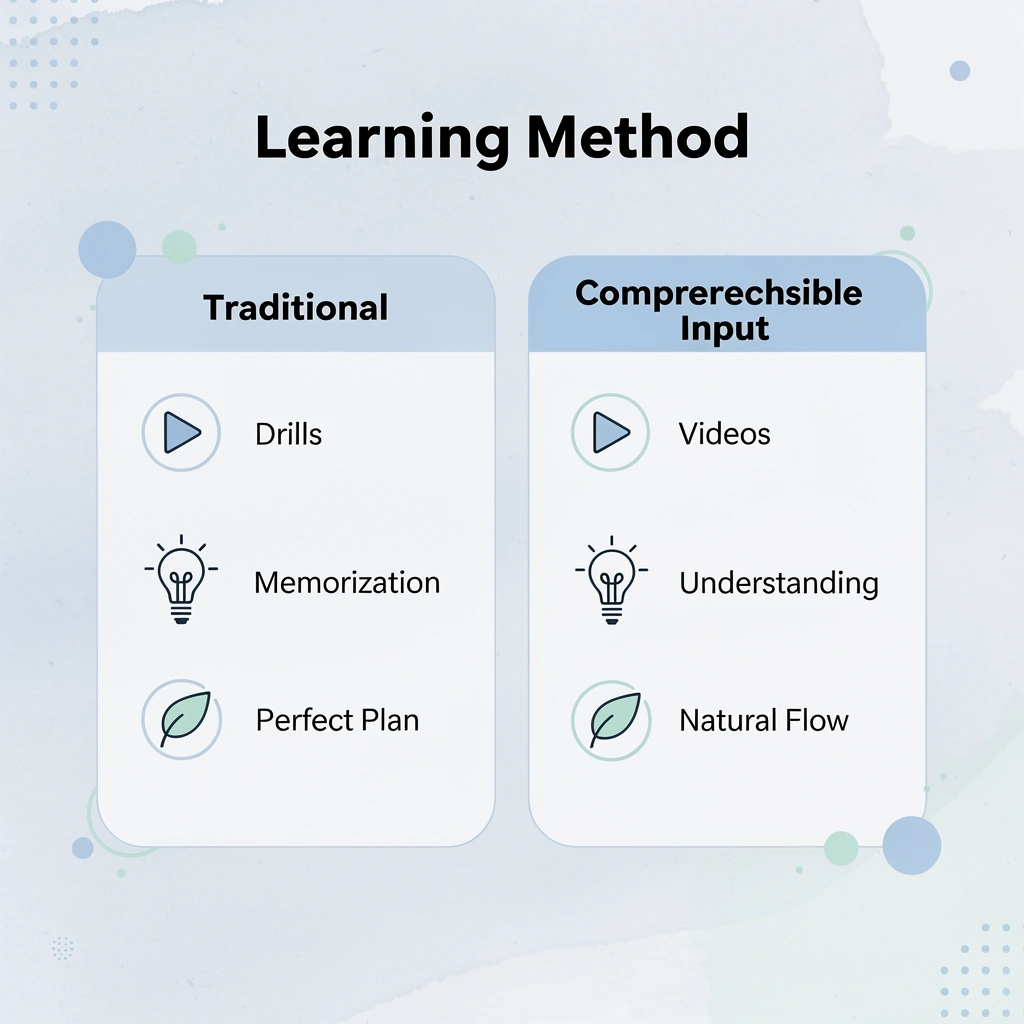
Replace one scrolling habit with a Spanish video today. You need 15 minutes of exposure to content you can mostly understand: no perfect plan, expensive courses, or blocked calendar time required.
🎯 Key Point: Comprehensible input through short videos builds natural language acquisition faster than traditional study methods.
Parrot's free trial gives you immediate access to short-form Spanish videos designed for comprehensible input. No streaks to maintain, no guilt when you miss a day, no quizzes measuring memorization you'll forget by next week. Spanish becomes something you want to do, not something you study.
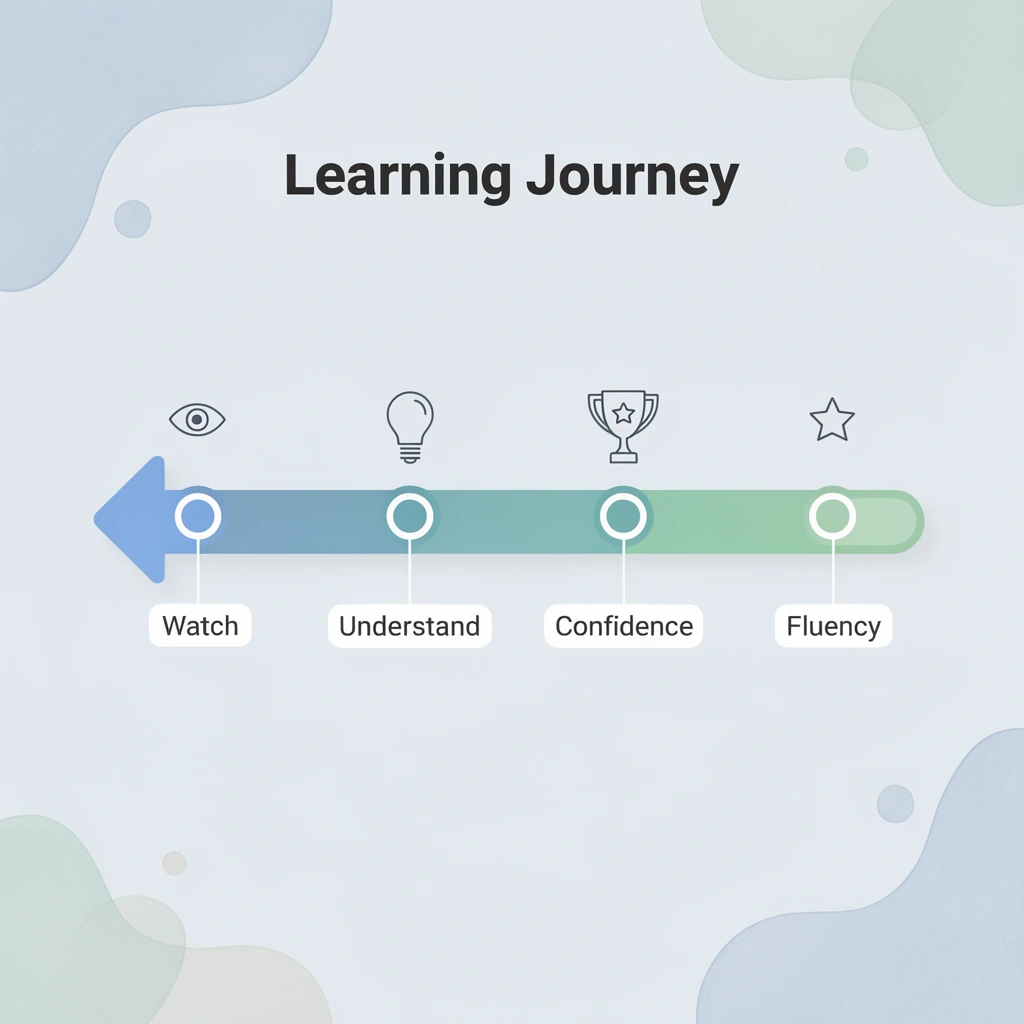
"Understanding comes before perfection—exposure builds confidence faster than drills, and fluency starts when you stop waiting to feel ready."
💡 Tip: Your first session proves to yourself that understanding comes before perfection, that exposure builds confidence faster than drills, and that fluency starts when you stop waiting to feel ready.
Related Reading
Best App To Learn Spanish
Babbel Spanish Review
Spanish Writing Practice
Pimsleur Spanish Review
Best Free App To Learn Spanish
Apps Like Duolingo
Best Spanish Shows On Netflix To Learn With
Rosetta Stone Vs Pimsleur
Duolingo Alternatives
Duolingo Spanish Review