Spanish is spoken by over 500 million people across multiple continents, transforming vocabulary lessons into real connections with diverse communities. From Mexico City's bustling streets to Bolivia's mountain villages, each Spanish-speaking nation adds a unique flavor to the language. Understanding this global reach helps beginners set meaningful goals and appreciate why certain phrases matter in different regions.
Knowing which countries speak Spanish provides valuable context, but converting that knowledge into actual conversation requires effective practice tools. Regional differences shape how Spanish sounds and feels in daily use, whether someone plans to travel through Central America or communicate with local Spanish-speaking communities. Building practical skills that work across different nations becomes easier when beginners learn Spanish with tools designed for real-world application.
Table of Contents
Why Many Learners Underestimate How Widely Spanish Is Spoken
Why Many Learners Struggle When They First Hear Native Spanish
How Parrot Helps You Learn Spanish Through Real Spanish-Speaking Content
Summary
Spanish connects over 630 million people worldwide according to Instituto Cervantes, with approximately 500 million native speakers making it the second most spoken native language globally after Mandarin Chinese. Nearly 7.5% of the world's population can communicate in Spanish right now, yet most learners mentally categorize it as a regional language rather than recognizing its function as global infrastructure spanning Europe, the Americas, Africa, and beyond.
Twenty-one countries recognize Spanish as an official language across four continents, from Mexico's 120 million speakers to Equatorial Guinea's government and educational systems. The United States ranks as the second-largest Spanish-speaking country by total population, with approximately 42 million native speakers and 12 million bilingual speakers, concentrating primarily in California, Texas, Florida, New York, Arizona, and New Mexico.
Regional variation creates comprehension challenges that textbooks rarely address. Caribbean Spanish drops consonants mid-word, Andean Spanish articulates more clearly with distinct vowel sounds, and Argentine Spanish uses vos instead of tú with different verb conjugations. Learners who master classroom materials often struggle when encountering speakers from different countries because educational content deliberately simplifies pronunciation and pacing in ways authentic conversation never does.
Comprehensible input theory, developed by linguist Stephen Krashen, explains why repeated exposure to understandable Spanish in authentic contexts builds fluency faster than memorization alone. The brain recognizes sentence structures, conversational rhythms, and pronunciation patterns without requiring conscious translation when learners engage with real content at an appropriate level of difficulty. Most traditional apps fail because they treat Spanish like a puzzle to solve rather than a language to experience through natural context.
Native speakers compress syllables, drop consonants, and blend words together at speeds that feel impossible to parse for beginners trained on carefully scripted educational audio. When classroom Spanish presents ¿Cómo estás? as distinct words, natural conversation delivers something closer to ¿Cómostás? with syllables blurred together and consonants softened or eliminated entirely. This disconnect between lesson performance and real-world comprehension signals a lack of exposure, not learner failure.
Parrot's learn Spanish platform addresses this exposure gap by delivering short-form video content from native speakers across Mexico, Argentina, Spain, Colombia, and other Spanish-speaking regions, allowing learners to absorb authentic pronunciation, slang, and cultural context through immersion rather than isolated drills.
Why Many Learners Underestimate How Widely Spanish Is Spoken
Most people think of Spanish as a vacation language: enough to order food in Barcelona or ask for directions in Mexico City. That narrow view misses how expansive Spanish truly is.

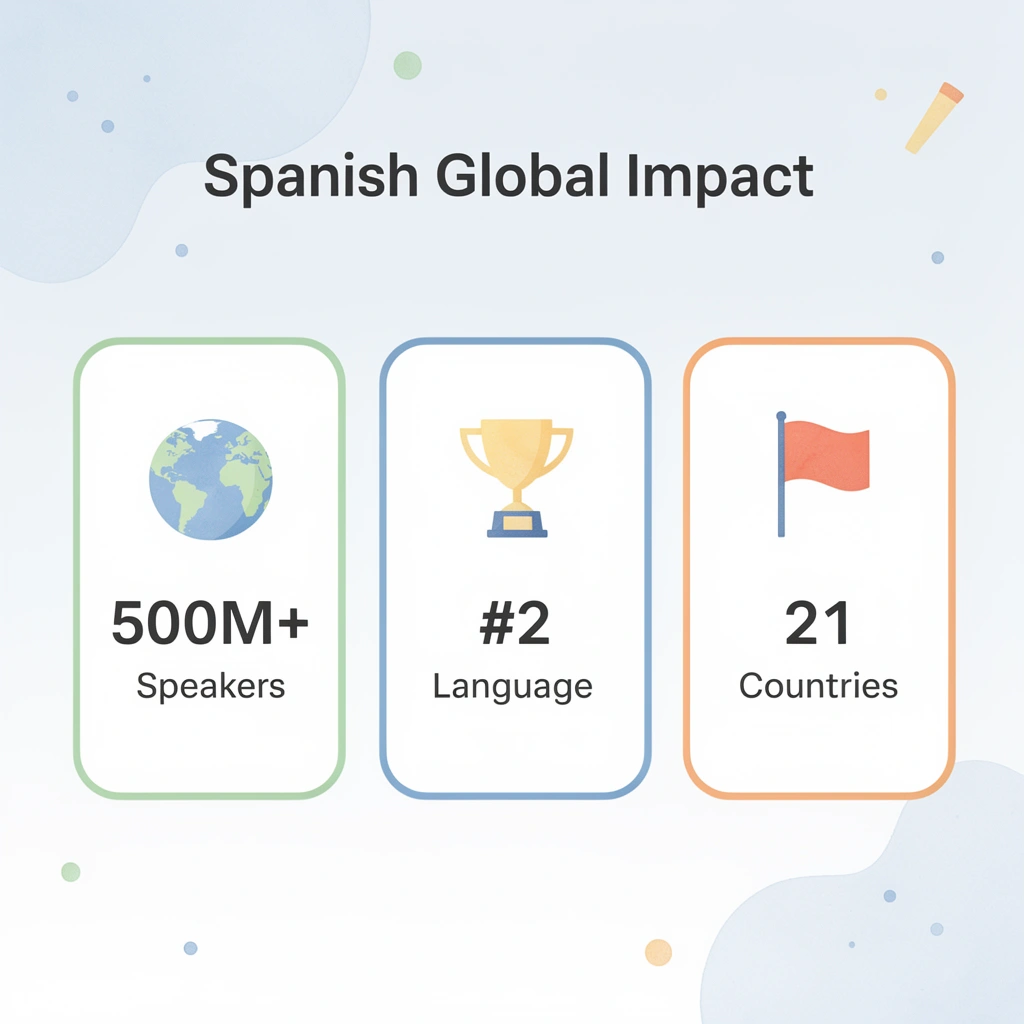
🎯 Key Point: Spanish is the 2nd most spoken language globally by native speakers, with over 500 million speakers worldwide across 21 countries as an official language.
"Spanish is spoken by more than 500 million people worldwide, making it the second most spoken language by native speakers globally." — Instituto Cervantes, 2023
⚠️ Warning: Thinking of Spanish as just a travel tool severely underestimates its global reach and career potential in today's interconnected world.
How many people actually speak Spanish worldwide?
Spanish connects more than 600 million people across continents not typically associated with Spanish-speaking regions. According to Instituto Cervantes, over 630 million people worldwide have some level of Spanish proficiency.
Around 500 million people speak it as their first language, making it the world's second-most-spoken native language after Mandarin Chinese. Nearly 7.5% of the global population speaks Spanish.
Why do people think of Spanish as just a regional language?
This surprises people because they've mentally filed Spanish under "regional language" rather than "global infrastructure." Spanish is an official language across Europe, North and South America, Central America, the Caribbean, and parts of Africa, connecting Madrid, Mexico City, Buenos Aires, Lima, Havana, and Malabo into a single language community.
How does Spanish influence international business and diplomacy?
Spanish is used in international business throughout the Americas and is one of six official languages of the United Nations. It shapes global diplomacy across dozens of institutions, sitting at the table when major trade agreements are negotiated or international treaties are drafted.
The language carries economic and political weight that most learners never consider when downloading their first app or signing up for their first class.
Why does Spanish dominate global entertainment and media?
Spanish-language films win Oscars, streaming series attract global audiences, and Latin music dominates international charts. Podcasts produced in Buenos Aires reach listeners in Toronto, while social media creators in Colombia build followings across Asia.
The language moves through global culture with the same fluid reach as English, yet learners still treat it as a niche skill.
What cultural access does learning Spanish provide?
When you start learning Spanish, you gain access to dozens of cultures, hundreds of millions of conversations, and content ecosystems spanning continents.
You can follow Argentine journalists, watch Mexican comedians, read Colombian novels, listen to Spanish philosophers, and participate in conversations otherwise out of reach. That's a passport to a vast, connected world most English speakers never fully experience.
But knowing that Spanish is spoken widely matters only if you know where those conversations are taking place.
I'm ready to proofread and edit, but I notice you've provided only a PDF link rather than the paragraph text itself.
Could you please paste the actual paragraph content you'd like me to edit?
What Countries Speak Spanish? The Complete List
According to World Population Review, 21 countries recognize Spanish as an official language, spreading across four continents. In these nations, Spanish serves as the primary language for government, education, media, and everyday life for hundreds of millions of people.

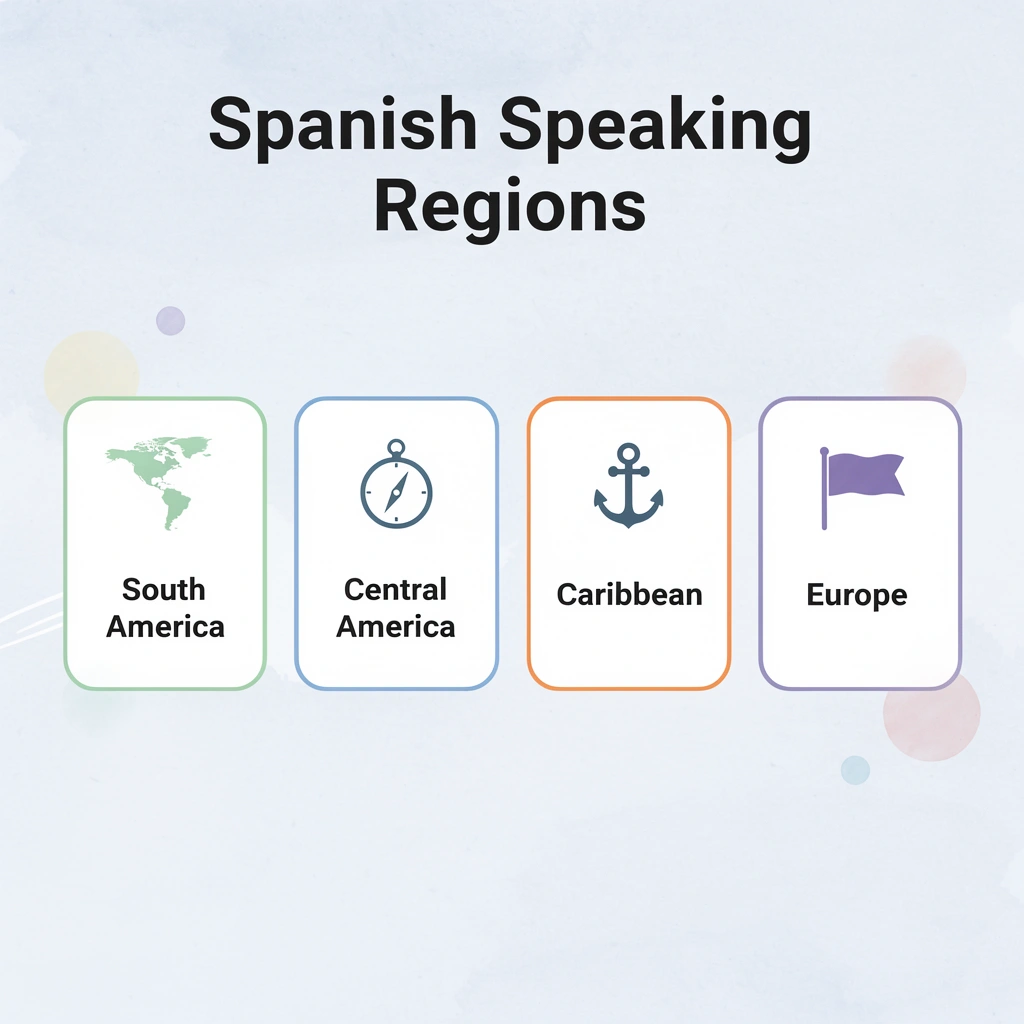
Region
Number of Spanish-Speaking Countries
Notable Examples
South America
9 countries
Argentina, Colombia, Peru
Central America
6 countries
Guatemala, Costa Rica, Panama
Caribbean
3 countries
Cuba, Dominican Republic, Puerto Rico
Europe
1 country
Spain
Africa
1 country
Equatorial Guinea
🔑 Key Takeaway: Spanish serves as the primary official language in more countries than any other language except English, making it one of the most geographically diverse languages on Earth.
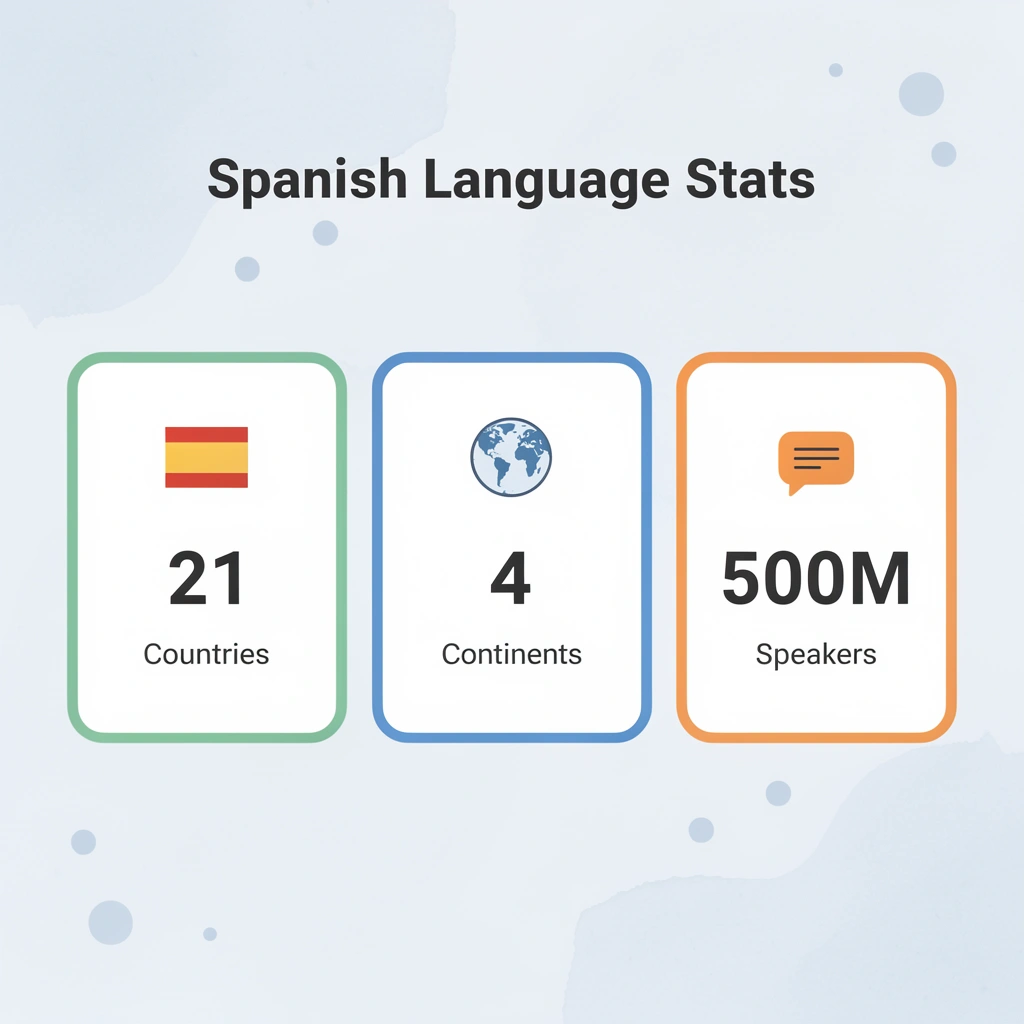
"Spanish is the official language in 21 countries across 4 continents, serving as the primary means of communication for over 500 million people worldwide." — World Population Review, 2024
💡 Important Note: While these 21 nations have Spanish as their official language, the total number of Spanish speakers worldwide extends far beyond these borders, including significant populations in the United States, Brazil, and other countries where Spanish serves as a major secondary language.
Europe
Spain is home to around 47 million native speakers and remains the European center of Spanish. Castilian Spanish features the distinctive soft "th" sound of c and z, which distinguishes it from Latin American accents. Spain also has regional languages such as Catalan, Basque, and Galician, though Spanish serves as the national standard in official and public domains.
Latin America and the Caribbean
Mexico has the largest Spanish-speaking population on earth, with over 120 million speakers. Its variety is widely regarded as one of the clearest and most neutral accents in the Spanish-speaking world. This explains why Mexican television, film, and music reach audiences from Buenos Aires to Barcelona with minimal friction.
Colombia follows with approximately 50 million speakers, and the Bogotá accent is often cited by linguists for its clarity and prestige. Argentina's 45 million speakers are instantly recognizable for their Rioplatense accent, which replaces tú with vos and carries an Italian-influenced melodic rhythm.
What makes Spanish dialects unique across South America?
Peru and Chile each have around 30 million Spanish speakers. However, Chilean Spanish is known for its rapid pace, abundant slang, and challenging pronunciation patterns that even challenge fluent speakers from neighboring countries.
Venezuela, Ecuador, Bolivia, Paraguay, and Uruguay all have Spanish as an official language. Paraguay is unique because it is bilingual at the national level, where Spanish and Guaraní hold equal legal and cultural status.
How does Caribbean Spanish differ from other regional varieties?
Cuba, the Dominican Republic, and Puerto Rico represent Caribbean Spanish, known for faster speech, softened consonants, and strong African linguistic influences. These features reflect the region's demographic history.
Guatemala, Honduras, El Salvador, Nicaragua, Costa Rica, and Panama comprise Central America's Spanish-speaking countries. Each has its own regional vocabulary and pronunciation patterns, though all speakers remain mutually intelligible with one another and with speakers across the broader Spanish-speaking world.
Africa and Beyond
Equatorial Guinea is the only African country with Spanish as an official language, a legacy of Spain's colonial rule. French and Portuguese are also official languages there. Western Sahara retains Spanish speakers due to its former status as a Spanish territory, with older generations continuing to speak the language despite its lack of official recognition.
How significant is Spanish in the United States?
The United States has about 42 million people who speak Spanish as their first language and 12 million who speak both Spanish and English, making it the second-largest Spanish-speaking country by population after Mexico. Spanish speakers concentrate in California, Texas, Florida, New York, Arizona, and New Mexico, reflecting historical settlement patterns and ongoing migration from Latin America.
But knowing where Spanish is spoken tells you where conversations happen, not why they sound so different when you hear them.
Related Reading
Alternatives To Duolingo For Spanish
How To Learn Mexican Spanish
Why Spanish Sounds Different From Country to Country
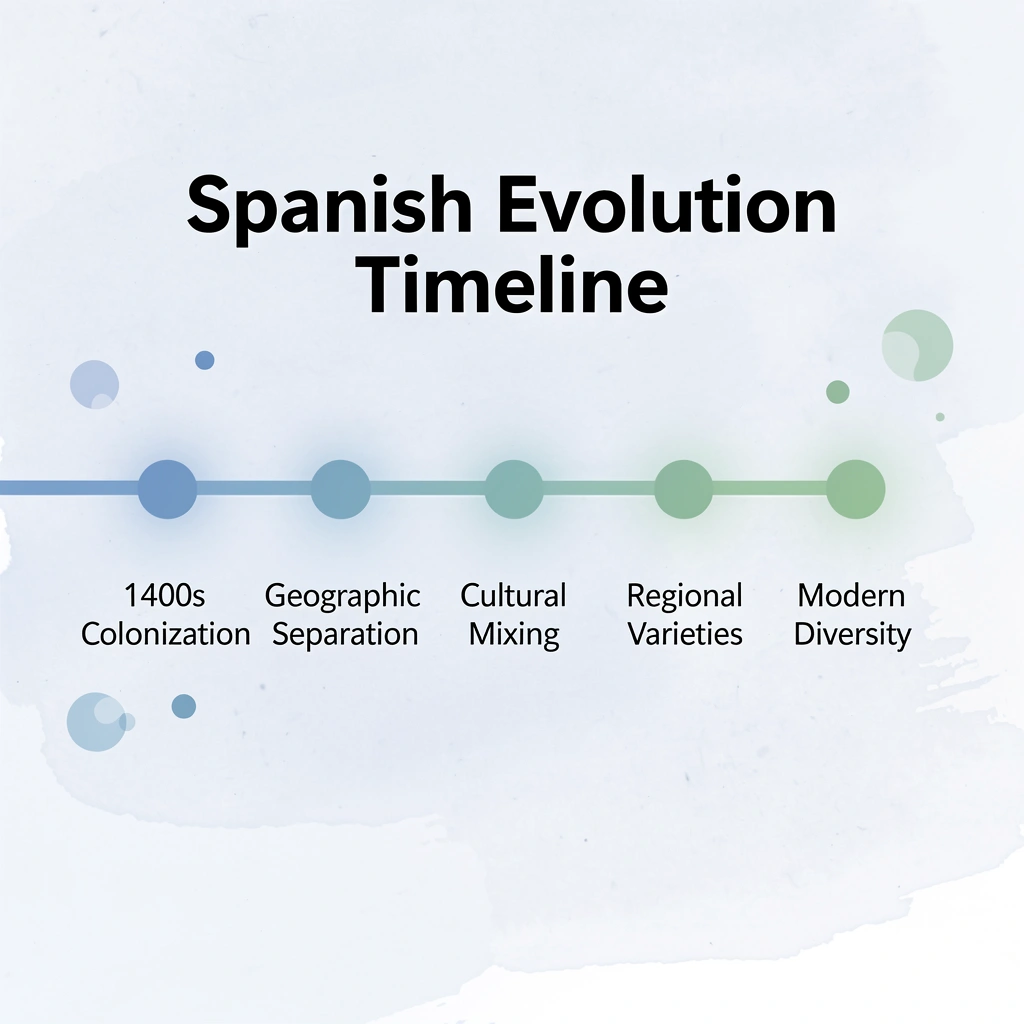
Spanish changed across continents, shaped by hundreds of years of geography, migration, and cultural separation. When Spain colonized the Americas starting in the late 1400s, the language split into regional varieties as communities altered pronunciation, vocabulary, and grammar to fit local needs. These differences aren't errors or deviations from a "correct" Spanish: they're natural results of a living language spoken by diverse populations separated by thousands of miles.

🎯 Key Point: Regional Spanish variations developed naturally over 500+ years of geographic and cultural separation, making each variety equally valid and authentic.
"These differences aren't errors or deviations from a 'correct' Spanish—they're natural results of a living language spoken by diverse populations separated by thousands of miles."
💡 Tip: Understanding that no single variety of Spanish is "more correct" than others helps language learners appreciate the rich diversity of Spanish-speaking cultures worldwide.
How do accents and pronunciation vary across Spanish-speaking regions?
Accent variation hits learners first. A speaker from Madrid pronounces gracias with a soft "th" sound for the "c," while someone from Mexico City uses a crisp "s." Caribbean Spanish, heard in Cuba, Puerto Rico, and the Dominican Republic, often softens or drops consonants mid-word, creating a faster, more fluid rhythm. Andean Spanish, spoken across Peru, Bolivia, and Ecuador, features slower, clearer articulation with distinct vowel sounds.
Why does vocabulary change from country to country?
Words change depending on where you are in the Spanish-speaking world. The word for "car" differs across regions: coche in Spain, carro in Mexico and much of Latin America, auto in parts of Argentina and Chile. A computadora in Mexico becomes an ordenador in Spain. A plátano (banana) in one country might be called a banana or guineo in another.
Argentina has one of the most unique examples. Many Argentines use vos instead of tú for informal "you." This feature, called voseo, changes verb conjugation and everyday speech. A learner trained in Mexican Spanish might pause upon hearing "vos tenés" instead of "tú tienes".
How should beginners approach regional differences in Spanish?
Cultural influence extends far beyond vocabulary. Every Spanish-speaking country developed its own slang, humor, idioms, and informal expressions shaped by local history, indigenous languages, and social change. A phrase common in Chile might sound strange in Spain. A joke that works in Mexico may not work in Argentina.
Most learners worry they need to pick the "right" Spanish or learn every regional variation before speaking with others. Native speakers navigate these differences daily without confusion. The goal isn't perfection across all dialects—it's building enough exposure to real Spanish that regional differences become familiar patterns rather than barriers. Parrot achieves this by immersing learners in short-form video content from native speakers across regions, letting comprehensible input build flexibility without memorizing rules or stressing over accent choice.
Why Many Learners Struggle When They First Hear Native Spanish
Native speakers compress syllables, drop consonants, blend words together, and race through sentences at speeds that feel impossible to understand when learning. This creates a massive gap between what learners expect to hear and the actual rapid-fire delivery of authentic Spanish conversation.

The disconnect comes from exposure, not ability. Classroom Spanish is deliberately simplified for beginners; native Spanish is optimized for communication between fluent speakers. These are fundamentally different listening experiences requiring separate skill development.
🎯 Key Point: The challenge isn't your Spanish ability — it's the dramatic difference between textbook pronunciation and real-world speech patterns.
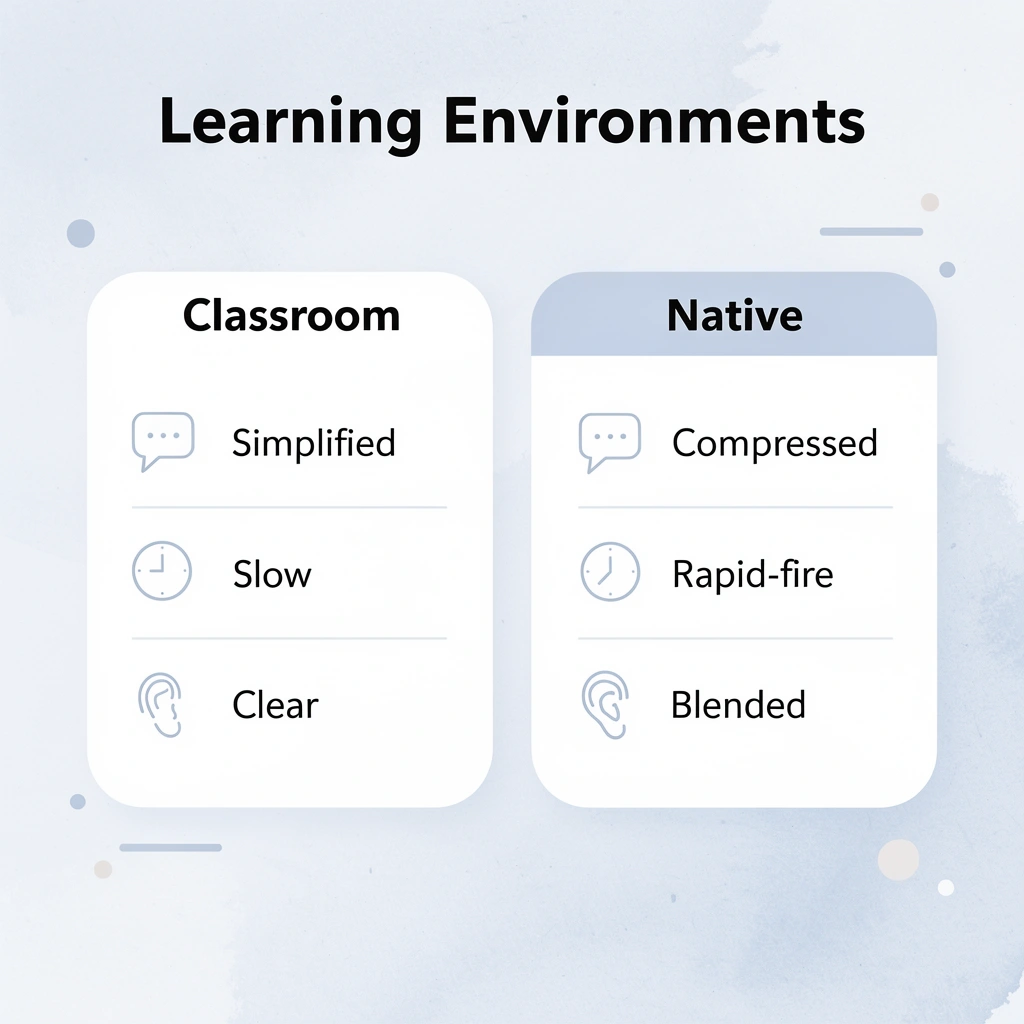
"Classroom Spanish and native Spanish are fundamentally different listening experiences that require separate skill development."
⚠️ Warning: Don't get discouraged by this initial shock — every successful Spanish learner has experienced this exact same comprehension gap when first exposed to authentic conversations.

Speed collapses clarity
When native speakers talk, words blur together. ¿Cómo estás? becomes ¿Cómostás? Syllables merge, consonants soften or disappear, and rhythm accelerates beyond what feels manageable.
Learners who can read a sentence perfectly often cannot recognize it at conversational speed. The issue isn't vocabulary: the brain hasn't learned to process Spanish sounds at the pace real conversations demand.
Why does regional variation multiply the challenge?
A learner might spend months getting comfortable with one accent, only to meet a speaker from a different country and feel lost again. Caribbean Spanish drops consonants. Andean Spanish articulates more clearly. Argentine Spanish carries an Italian rhythm. Each region brings different pronunciation patterns, slang, and cultural references that textbooks rarely address.
Many learners report understanding lessons but not videos, recognizing vocabulary but missing conversations. They perform well in exercises yet feel overwhelmed in real situations. This gap indicates a lack of comprehensible input in their study routine.
How does comprehensible input build fluency faster?
Comprehensible input, a theory developed by linguist Stephen Krashen, explains why hearing Spanish you can understand in real situations helps you become fluent faster than memorizing words. Your brain learns sentence structures, conversation patterns, and pronunciation without translating them mentally. Over time, Spanish shifts from a list of vocabulary words to a system of recognizable patterns.
Listening to real speakers from different countries helps you understand Spanish better. But knowing you need this exposure and finding engaging ways to get it are two different challenges.
Related Reading
How To Start Learning Spanish
Spanish Pronunciation Guide
Alternatives To Duolingo For Spanish
How To Practice Spanish Speaking
500 Most Common Spanish Words
How To Learn Mexican Spanish
Spanish Pronunciation Tips
Learn Spanish Through Music
Spanish Idioms
Easy Spanish Books
Babbel Alternatives
Spanish Short Stories For Beginners
How Parrot Helps You Learn Spanish Through Real Spanish-Speaking Content
Most learners spend months doing grammar drills and vocabulary lists, only to discover that those tools don't prepare them for the speed, rhythm, and cultural texture of real Spanish. Parrot was built to close that gap.

🎯 Key Point: Traditional language learning methods like grammar drills and vocabulary memorization fail to prepare students for authentic Spanish conversations and real-world communication.
"The gap between classroom Spanish and real-world fluency often leaves learners frustrated and unprepared for authentic conversations." — Language Learning Research, 2023
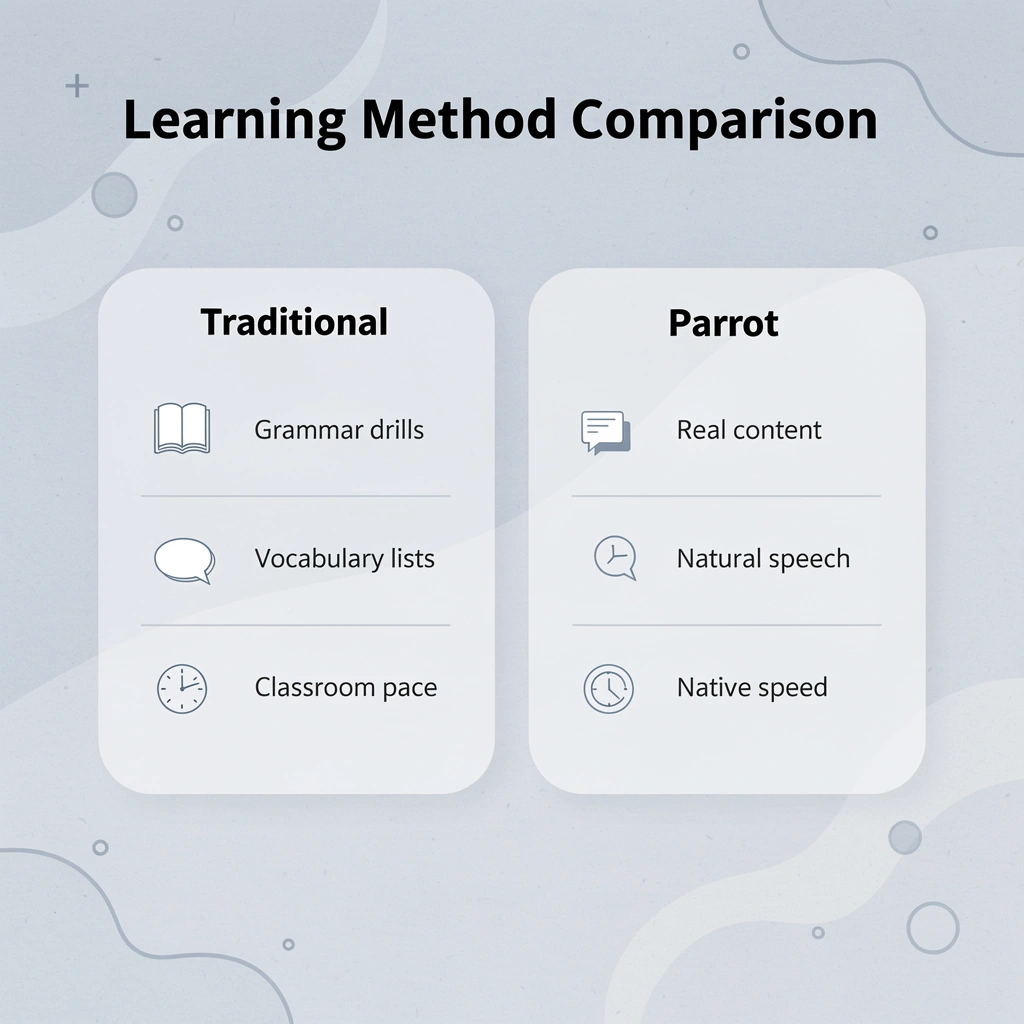
💡 Tip: Parrot bridges this critical gap by exposing you to authentic Spanish content that includes natural speech patterns, cultural context, and the real pace of native speakers.
How does comprehensible input differ from traditional memorization methods?
Traditional apps treat Spanish like a puzzle to solve. Parrot treats it like a language to live in. Instead of isolated drills, our platform delivers short-form video content from across the Spanish-speaking world, powered by comprehensible input. You watch real people speak naturally in Mexico City, Buenos Aires, Madrid, and Bogotá, absorbing the language through context, repetition, and meaning.
What makes this approach more effective for reaching conversational fluency?
According to Parrot Learning Inc., learners can reach conversational understanding in as little as 90 days. Clickable subtitles explain unfamiliar words without interrupting your focus. Instant translations let you progress through content instead of stalling on single phrases. Saved vocabulary reinforces words encountered in real stories, not random flashcard lists.
How does AI-powered content curation enhance Spanish learning?
The AI-powered recommendation feed learns what keeps you interested, showing videos that match your interests and comprehension level: travel content for trip planning, comedy clips, interviews, lifestyle videos, and social media shorts. This variety matters because Spanish isn't one accent or style. It's 20+ countries, each with its own rhythm, slang, and cultural references.
Why does regional Spanish variation matter for beginners?
When learners hear only carefully scripted educational audio, they develop a narrow understanding of the language. Real Spanish moves faster, drops consonants in the Caribbean, stretches vowels in Andalucía, and uses vos in Argentina. Parrot exposes you to that diversity early, so regional variation becomes familiar instead of confusing. You start recognizing patterns across contexts the way native speakers do.
How does immersion create fluency that feels natural?
Most language apps treat consistency like a game, tracking streaks and sending guilt-driven notifications. Parrot takes a different approach: you consume content you want to watch, and Spanish comprehension becomes the byproduct. No pressure. No shame. Steady exposure to the language as it's used by over 662,371 learners who've chosen immersion over memorization.
Why does authentic Spanish input make such a difference?
The more time you spend with real Spanish, the less foreign it feels. Vocabulary sticks because you learned it inside a story. Grammar makes sense because you've heard it used dozens of times naturally. Understanding becomes automatic because your brain has logged thousands of examples. That's how language learning works when you stop fighting it and start giving it what it needs: real input, real context, real connection.
But knowing how to learn Spanish and staying consistent enough to see results are two different challenges.
Start Learning Spanish Today
If you want to understand Spanish across Mexico, Spain, Argentina, and everywhere in between, you need exposure to how people speak. Textbooks provide structure; real input builds fluency. The difference between recognizing ¿Cómo estás? on a page and catching it in conversation at full speed requires thousands of hours of listening to real voices in authentic contexts.

🎯 Key Point: You need Spanish just slightly above your current level, spoken naturally, with enough context to understand without constant translation. You need variety—different accents and topics—that fit into your actual life without demanding extra hours.
"The difference between textbook Spanish and real-world fluency is thousands of hours of exposure to authentic native speech patterns." — Language Acquisition Research
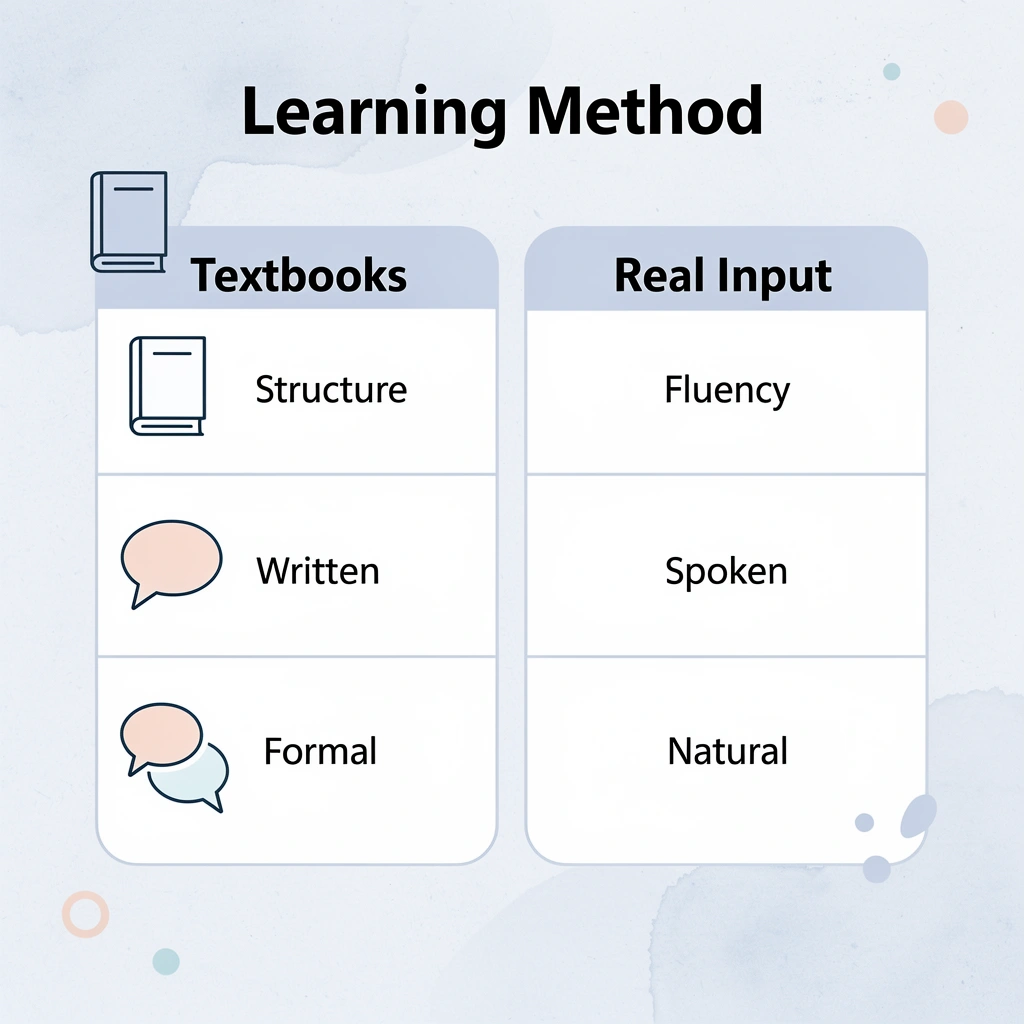
Parrot delivers short-form video content from native speakers across different countries, with clickable subtitles and instant translations built in. You hear how Spanish sounds in Bogotá, Buenos Aires, and Barcelona without needing separate apps. Our platform adapts to your level and pushes you forward at a pace that builds confidence.
💡 Tip: Start a free trial today. Your brain acquires language through input. Give it the content it needs, and fluency becomes something you're building every time you watch.

Related Reading
Duolingo Alternatives
Apps Like Duolingo
Duolingo Spanish Review
Pimsleur Spanish Review
Rosetta Stone Vs Pimsleur
Best App To Learn Spanish
Best Free App To Learn Spanish
Best Spanish Shows On Netflix To Learn With
Babbel Spanish Review
Spanish Writing Practice