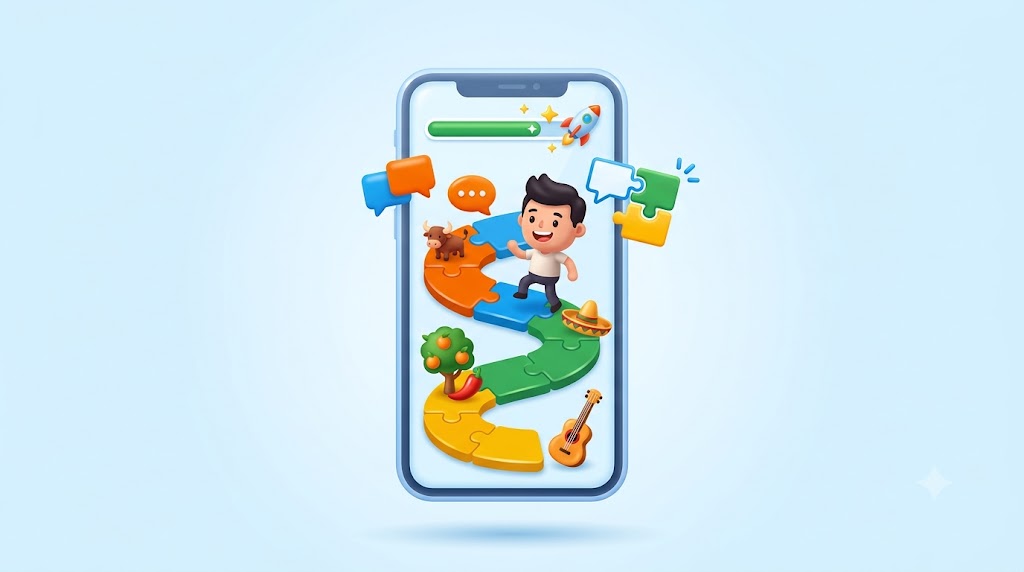
Finding the right app to study Spanish as a beginner can feel overwhelming, especially when so many options promise fluency but deliver little beyond repetitive drills. Duolingo is a popular starting point, but it is far from the only tool worth using, and for many learners, it is not enough on its own.
The best language apps go beyond gamified exercises and help learners build real conversational skills from the start. Parrot is one platform doing exactly that, offering structured practice designed to move beginners toward actual speaking confidence. Anyone ready to take that next step can learn Spanish.
Table of Contents
Why Many Learners Start Looking for Apps Like Duolingo
What to Look for in an App Like Duolingo
10 Best Apps Like Duolingo for Different Learning Styles
Common Mistakes People Make When Switching From Duolingo
Why Entertainment-Based Learning Is Becoming More Popular
How Parrot Helps You Learn Spanish With the Content You Love
Start Learning Spanish Today
Summary
Learners who feel stuck after consistent use of Duolingo are not failing due to a lack of effort. The core issue is that completing exercises and understanding spoken Spanish are two separate cognitive skills. Pattern recognition built through drills does not transfer automatically to real-time listening comprehension, which is why many dedicated learners still struggle to follow native speakers.
The business model of gamified language apps can work against deeper learning. According to a LinkedIn analysis by Dhawal Shah, Duolingo ran 40-second ads after 30-second lessons, with ads accounting for only 7% of revenue. That structure is designed to push free users toward paid upgrades rather than to accelerate fluency, which means retention metrics and learning outcomes do not always point in the same direction.
Spanish is the most studied language in the United States, chosen by more than 50% of U.S. Duolingo learners according to the 2025 Duolingo Language Report, with over 100 million Spanish learners on the platform worldwide. Despite that scale, a fraction of those learners reach conversational fluency. Study volume alone does not close the gap between recognizing vocabulary and deploying it under the natural pressure of a real conversation.
Short-form video has become the dominant daily entertainment format, with 60% of consumers watching it every day, according to Deloitte's 2025 Digital Media Trends report. That same report found that over 40% of consumers discover new topics and skills through entertainment content on social video platforms. This means the scroll habit most people already have represents a learning opportunity that structured apps rarely capture.
The global language-learning app market is projected to grow from USD 4.21 billion in 2023 to USD 16.2 billion by 2033, according to Electro IQ's language-learning app statistics. That growth reflects a diversifying market, not just a growing one. Learners are becoming more selective about whether an app aligns with their actual goals, particularly as those goals shift from completing lessons to holding real conversations.
Vocabulary retention follows context, not repetition in isolation. Words encountered repeatedly inside meaningful content, whether through video, audio, or live exchange, build the kind of multi-layered memory that flashcard decks cannot replicate. The learners who reach conversational fluency tend to be those who stopped treating Spanish as a subject to study and started using it as a medium to consume content they genuinely enjoy.
Learn Spanish addresses this directly by delivering short-form video immersion grounded in comprehensible input, so that listening to authentic Spanish becomes the core lesson rather than an afterthought added onto grammar drills.
Why Many Learners Start Looking for Apps Like Duolingo
Duolingo earns its popularity honestly. Short lessons, satisfying streaks, and a low barrier to entry have brought millions into language learning. But somewhere between lesson 47 and a real conversation with a native speaker, a gap opens up.
"Short lessons and satisfying streaks have brought millions into language learning, but a gap opens up between app progress and real conversation."
🎯 Key Point: Duolingo's greatest strength—its low barrier to entry—can become its biggest limitation once learners reach the intermediate level and need more than streaks to progress.
⚠️ Warning: If your real-world conversation skills aren't keeping pace with your in-app progress, you're not alone. This is one of the most common frustrations among Duolingo users worldwide.

What causes the gap between completing exercises and real comprehension?
The gap is not about effort. Most people who study consistently hit a wall: completing exercises and understanding spoken Spanish are two distinct cognitive skills. Translating "the cat drinks milk" trains pattern recognition. Following a fast-moving conversation between two friends in Mexico City trains something else entirely, something that drills and multiple-choice prompts were never designed to build.
The familiar approach is to push harder within the same system: more lessons, longer streaks, higher XP scores. But as language complexity grows, that approach creates friction without progress. Comprehension stalls. Motivation erodes. According to a LinkedIn analysis by Dhawal Shah, Duolingo ran 40-second ads after 30-second lessons, with ads accounting for only 7% of revenue—a structure explicitly designed to push free users toward paid upgrades rather than deepen learning. The incentive was retention, not fluency.
How does a different philosophy change what learners can actually do?
Apps like Parrot use a different approach. Instead of practicing isolated vocabulary words, Parrot uses short videos based on comprehensible input: real spoken Spanish at a speed learners can understand. This method stems from Dr. Stephen Krashen's research, which shows that people learn languages through meaningful exposure rather than memorization or gamified repetition. Ten to fifteen minutes of such input produces more progress than streak maintenance.
Electro IQ's language-learning app statistics indicate that the global language-learning app market is expected to grow from USD 4.21 billion in 2023 to USD 16.2 billion by 2033. Demand is shifting as learners become more selective about which apps align with their goals, particularly as those goals shift from "complete a lesson" to "hold a real conversation."
When does outgrowing gamification signal that real learning is taking hold?
Most learners do not leave Duolingo because it failed them. They leave because their goals outgrew what gamification can deliver. They want to understand a song, follow a podcast, or speak without having to practice every sentence first. That shift in expectations signals that real learning is taking hold.
But knowing you need something different and knowing exactly what to look for are not the same thing.
What to Look for in an App Like Duolingo
The best language-learning app closes the gap between where you are and where you want to be. That gap looks different for everyone, which is why the question is never "what is the best app?" but "best for what?"
"The real question isn't which app is best: it's which app is best for your specific goals, learning style, and current level." — Key Insight
🎯 Key Point: No single app is universally the best. The right choice depends entirely on your personal learning goals and current level.
💡 Tip: Before downloading any language app, ask yourself three critical questions: What is my current level? What is my target outcome? How much time per day can I realistically commit?

Listening and Real-World Comprehension
The failure point is usually this: learners can read a sentence and understand it, but when native speakers speak at natural speed, comprehension falls apart. Listening comprehension requires consistent exposure to authentic speech, not quiz-based drills. If your goal is to follow conversations, watch shows without subtitles, or understand podcasts, your app must prioritize audio and video content. Structured exercises build foundations, but they rarely build the ear.
Vocabulary in Context, Not Isolation
Words learned in isolation fade quickly. Vocabulary sticks when learners encounter words repeatedly within meaningful content, not flashcard decks. According to the 2025 Duolingo Language Report, Spanish is the most studied language in the United States, chosen by more than 50% of U.S. Duolingo learners. An app that lets you save new words and encounter them again in real content creates a feedback loop that drills cannot replicate.
Most learners use vocabulary apps because they feel productive. Recognizing a word in a list and understanding it during a conversation are completely different cognitive skills.
Speaking Practice and Interaction
If speaking is your primary goal, choose an app with pronunciation feedback, AI conversation features, or structured speaking prompts. Passive study builds understanding; active use builds fluency. Confusing them is one of the most common reasons learners plateau.
Parrot uses short-form video immersion grounded in comprehensible input, the method Dr. Stephen Krashen's research identified as the most natural path to acquisition. Learners absorb Spanish through real content in 10 to 15 minutes daily, converting the scroll habit into a learning mechanism.
Consistency Over Intensity
The most underrated feature in any language app is whether the experience makes you want to return tomorrow. According to the 2025 Duolingo Language Report, Duolingo has over 500 million registered users worldwide; however, user volume doesn't guarantee better results. The app that fits your life, interests, and available time is the one that will help you progress.
Once you understand what to look for, the next question becomes complicated.
Related Reading
10 Best Apps Like Duolingo for Different Learning Styles
Ten apps rise to the top when you match language-learning tools to how people actually learn. According to PCMag's tested rankings of the best language learning apps for 2026, the strongest options cover eight different categories — from audio-based learning to hard-to-find languages — meaning no single method works best for everyone.
"The strongest language-learning options cover eight different categories, from audio-based learning to hard-to-find languages — meaning no single method works best for everyone." — PCMag, 2026
🔑 Takeaway: With 8 distinct learning categories identified by PCMag's tested rankings, choosing the right app comes down to your personal learning style — not just popularity.
💡 Tip: Before downloading any app, identify whether you learn best through listening, reading, speaking, or structured lessons — this single step can dramatically improve your language learning outcomes.
Here is a breakdown of the different learning categories and who they suit best:
Audio-Based Learning: Ideal for auditory learners and commuters.
Hard-to-Find Languages: Ideal for learners of niche or regional languages.
Structured Lessons: Ideal for beginners needing guided progression.
Conversational Practice: Ideal for intermediate learners building fluency.
Gamified Learning: Ideal for learners who need daily motivation.
Immersive Methods: Ideal for advanced learners chasing real fluency.
Vocabulary Building: Ideal for learners expanding word banks fast.
Grammar-Focused: Ideal for learners who prefer analytical study.

[IMAGE: https://im.runware.ai/image/os/a05d22/ws/3/ii/c001cb0c-e276-43ac-ad24-2afe9cf9eeca.webp] Alt: Illustration of multiple language learning apps floating around a central mobile device
1. Parrot
Parrot is built on a simple idea: people learn language faster when they consume content they enjoy. The app delivers an endless feed of short-form videos matched to your level and interests. Clickable subtitles, instant translations, and vocabulary-saving features keep you engaged without interrupting the experience. Words reappear across multiple videos in natural context, building retention.
Parrot replaces the traditional lesson-complete-close cycle by turning the scroll habit itself into the study session. Learners build listening comprehension and vocabulary through content they would watch anyway, rather than abandoning the app when motivation fades around week three.
2. Babbel
Babbel works best for learners who need a clear path forward. Its courses are built by language experts and organized around real-life scenarios, so you practice phrases with immediate practical use. Grammar is woven into lessons rather than being taught in isolation, making it easier to understand the logic behind what you're saying.
3. Busuu
Busuu's key difference is its feedback loop: native speakers in the global community correct your writing and speaking exercises, not computers. This human accountability makes learners take practice more seriously and catch errors that automated systems miss.
4. Memrise
Memrise uses video clips of native speakers in unscripted, real-world situations. This method trains your ear faster than studio audio because it captures pauses, contractions, and informal language that textbooks omit. Spaced repetition strengthens vocabulary without repetitive drilling.
5. Rosetta Stone
Rosetta Stone removes the translation layer entirely. Every lesson connects words directly to images and context, pushing learners to think in Spanish rather than mentally converting from English. This builds fluency rooted in instinct rather than recall, though it takes longer to feel comfortable initially.
6. LingQ
At the intermediate level, the biggest obstacle is the gap between textbook language and natural speech. LingQ solves this by offering thousands of real articles, podcasts, and audiobooks. You can import content that interests you, mark unknown words, and watch your vocabulary grow. The library expands with you rather than stopping at a fixed point.
7. Pimsleur
Pimsleur is the best choice for people who spend significant time away from screens. Its audio-only lessons work during commutes, workouts, and walks. The method uses spaced repetition and active recall through listening and speaking, building pronunciation confidence faster than most visually focused apps.
8. HelloTalk
HelloTalk functions as a pen pal network with integrated language tools. You connect with native Spanish speakers to practice together and receive immediate feedback through correction features. The app also exposes you to cultural nuances—slang, humor, and regional speech patterns—that traditional classes don't typically cover.
9. Mondly
Mondly works well for beginners who need encouragement before becoming experts. Its game-like interface, chatbot conversations, and speech recognition exercises make early-stage learning feel easy and fun. The daily lesson structure helps you build steady study habits from the start.
10. FluentU
FluentU transforms movie trailers, news clips, and music videos into interactive lessons with clickable subtitles and personalized vocabulary quizzes. Since the content comes from real sources rather than scripted recordings, your ear adapts to the full range of how Spanish sounds in authentic contexts.
Which app actually fits your situation?
PCMag's 2026 review confirms what experienced learners know: the best language learning app matches how you naturally spend your time. If you commute, audio-based tools like Pimsleur remove every barrier. If you're a social learner, HelloTalk and Busuu create accountability that solo apps cannot. If you're intermediate and stuck in comprehension limbo, LingQ and FluentU close that gap faster than beginner-level exercises.
Does the app work with your habits or against them?
Most learners fail not by choosing the wrong app, but by choosing one that demands behavior change rather than one that works with existing habits. An app you open three times a week for six months outperforms one you use intensely for two weeks and abandon.
How does delivery format shape your real-world results?
How you get the information matters. Grammar-drill apps and flashcard tools help you learn testable content, but they don't translate to real conversation. Apps featuring natural speech teach a different skill: understanding language at normal speed without pausing to translate.
The real question is which app you will still be using in ninety days, not which one has the best reviews.
Common Mistakes People Make When Switching From Duolingo
Switching apps is not the problem. The problem is carrying the same habits into a new environment and expecting different results.

Why does app-hopping prevent you from reaching fluency?
The most common trap is app-hopping: treating every new language learning platform as a fresh start rather than a continuation. When a learner moves from Duolingo to another gamified tool, completes a few lessons, feels underwhelmed, and jumps again, they build a habit of beginning, not Spanish skills. According to the 2025 Duolingo Language Report, Spanish is the most studied language on Duolingo, with over 100 million learners worldwide, yet only a fraction reach conversational fluency. The gap between studying and speaking closes by changing what you do inside platforms, not by switching between them.
Why do so many learners struggle to understand real Spanish conversations?
The failure point is usually the same: learners prioritize reading and translating because those skills feel measurable, while listening gets treated as optional. Then they sit across from a native speaker and understand almost nothing. Natural speech compresses sounds, drops syllables, and moves at a pace that no flashcard deck or fill-in-the-blank exercise replicates. The fix is deliberate: consistent exposure to real audio through podcasts, short videos, or unscripted conversation.
How does treating listening as central close the comprehension gap?
Most learners treat podcasts as supplementary tools rather than primary ones, which impedes their listening skills and real-world conversation despite strong vocabulary. Apps like Parrot address this directly by using short videos to teach in comprehensible Spanish. This makes listening to authentic Spanish the core lesson, not an afterthought to grammar practice.
Why does a vocabulary-only study stall progress?
The critical difference between learners who plateau and those who break through is context. Memorizing word lists gives you inventory without infrastructure. Words need repeated encounters in sentences, stories, and real exchanges before the brain stores them as usable language rather than trivia. According to the 2025 Duolingo Language Report, English is the most studied language globally on Duolingo, with more than 100 countries studying it. Yet massive study volume does not automatically produce fluency when the method prioritizes recall over comprehension. Vocabulary retention follows understanding, not the other way around.
Why does consistency matter more than perfect lessons?
Patience is a technical requirement in language learning. Progress rarely moves in a straight line, and learners who quit after six weeks often do so right before a natural consolidation period where scattered knowledge clicks into place. Switching methods whenever momentum slows resets the accumulation process entirely. Consistency over 90 days of imperfect practice outperforms 30 days of perfect lessons followed by silence.
Why Entertainment-Based Learning Is Becoming More Popular
People do what they enjoy, not what they plan to do or schedule. When willpower weakens, learners reach for activities they like, which helps them stay remarkably consistent in language learning.
"When willpower gets weak, learners reach for activities they actually like—making enjoyment one of the most underrated drivers of long-term consistency in language learning."
🎯 Key Point: Enjoyment isn't a bonus—it's the real engine behind sustained learning habits. If a method feels like a chore, it will be abandoned.
💡 Tip: Replace scheduled study sessions with genuinely fun activities: games, shows, or music in your target language. This makes consistency effortless rather than forced.

The attention economy is already working for you
The same scrolling habit that pulls people toward short-form video can pull them toward Spanish if the content is interesting enough to hold their attention. According to the Deloitte 2025 Digital Media Trends report, 60% of consumers watch short-form video content daily, making social video platforms the primary entertainment medium. The difference between learners who plateau and those who continue improving often comes down to what they watch during those daily minutes.
Why passive exposure is more active than it looks
Your brain finds patterns in language without effort. When you watch content you care about in Spanish, your mind picks up on tone, deduces meaning from context, and notices recurring words. This is comprehensible input working as Krashen described it: something that happens naturally when you pay attention, not through structured practice. Learning occurs whether you're actively trying or not, which is why it works so well over weeks and months in ways that drilling usually doesn't.
Why do structured apps feel productive but fall short?
Most learners use structured apps because they feel productive: fill in the blank, tap the correct word, earn the badge. But that feeling of productivity shows performance, not real learning. The gap between finishing an app and understanding the material widens after the first few weeks. Apps like Parrot use short-form video immersion in 10 to 15 minutes daily, replacing the drill cycle with comprehensible input where content becomes the lesson.
Discovery is reshaping how people find their learning path
The Deloitte 2025 Digital Media Trends report found that over 40% of consumers discover new topics and skills through entertainment content on social video platforms. People don't deliberately open language learning apps; they encounter Spanish through a cooking video, travel clip, or favorite comedian, then seek more. Entertainment creates an appetite that structured study rarely generates on its own.
Fluency lives in the gap between studying and living
The learners who reach conversational fluency are not the ones who studied hardest. They are the ones who stopped treating Spanish as a subject and started treating it as a medium. Music, shows, short videos, real conversations with native speakers: these are not supplements to a learning plan. For many fluent speakers, the plan was.
Vocabulary retention improves dramatically when words are encountered repeatedly in emotional, memorable contexts rather than in isolated lists. Hearing a word in a funny clip, a tense scene, and a casual conversation builds a multi-layered memory that flashcard decks cannot replicate.
Once learning stops feeling like effort and starts feeling like a habit you want, the question shifts from how to stay consistent to something far more interesting.
Related Reading
Best Ai For Spanish
Spanish Pronunciation Tips
How To Start Learning Spanish
Preterite Vs Imperfect
Spanish Past Tense
500 Most Common Spanish Words
Babbel Alternatives
Alternatives To Duolingo For Spanish
How To Learn Mexican Spanish
Learn Spanish Through Music
Por Vs Para
How To Practice Spanish Speaking
Easy Spanish Books
Spanish Slang
Spanish Short Stories For Beginners
Spanish Pronunciation Guide
Spanish Verb Conjugation
How Parrot Helps You Learn Spanish With the Content You Love
Many learners know that being consistent is key to becoming fluent, but the real challenge is finding a method they can stick with for months and years without losing motivation.
"The biggest barrier to fluency isn't ability: it's finding a learning method compelling enough to sustain long-term consistency." — Language Learning Research
💡 Tip: Parrot solves the consistency problem by letting you learn Spanish through content you already love, so staying motivated feels effortless.
🎯 Key Point: The most effective language learners aren't the most disciplined — they're the ones who found a method so enjoyable that showing up every day stopped feeling like a chore.
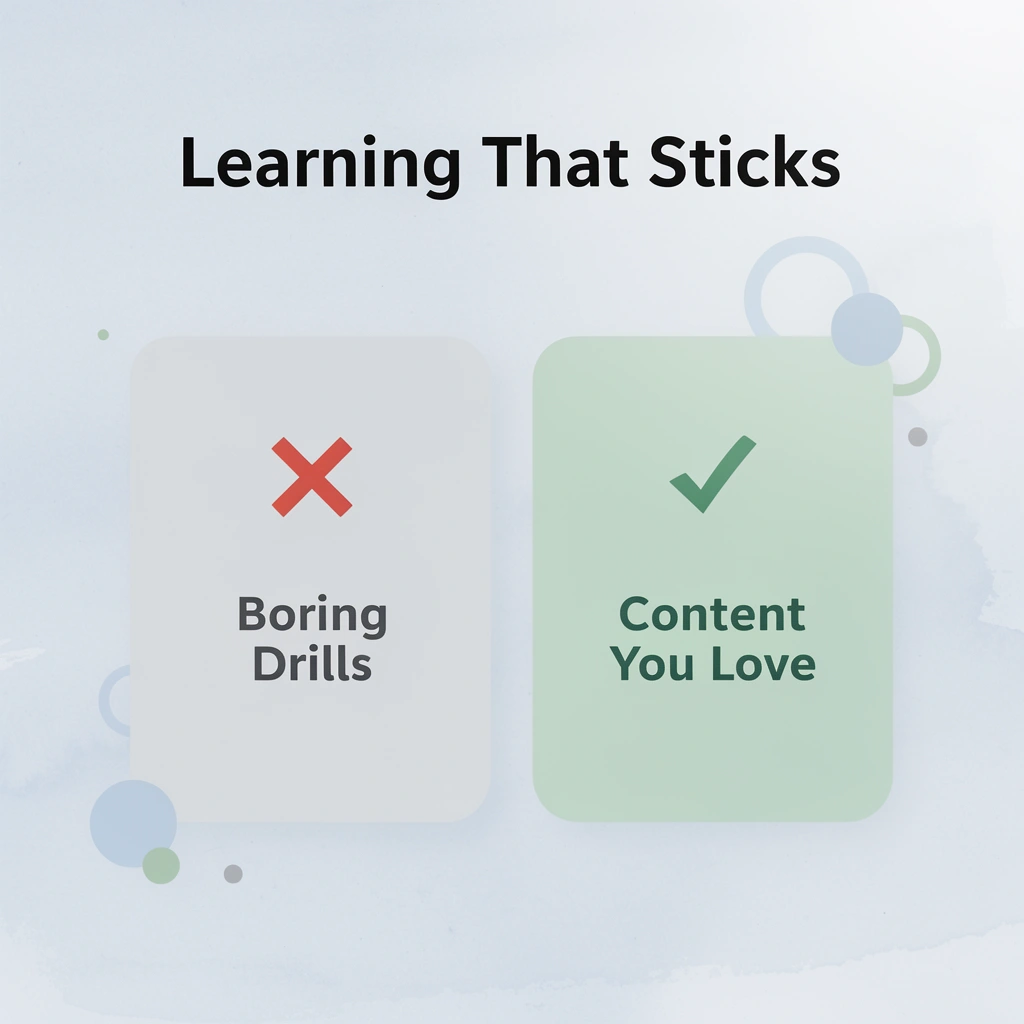
How does Parrot use content you already enjoy to teach Spanish?
Parrot transforms the content you already enjoy into a personalized Spanish-learning experience. Instead of memorizing words or completing repetitive exercises, you learn through research-backed comprehensible input and short-form videos that expose you to Spanish in context.
This approach closes the gap between studying and understanding real language. As you watch videos, you encounter vocabulary, grammar, and expressions naturally, developing listening comprehension and acquiring Spanish as it is used.
What interactive features help you build vocabulary as you watch?
Parrot makes the process interactive. Clickable subtitles let you tap unfamiliar words for instant translations without interrupting your flow. You can save new vocabulary for later review and reinforce words through repeated exposure rather than rote memorization.
Its AI-powered recommendation feed adapts to your interests and level, helping you discover videos that are both entertaining and easy to understand. Whether you're interested in travel, sports, relationships, food, or pop culture, you learn through topics you care about.
Why does learning through Parrot feel easier to stick with long-term?
Because the experience feels more like scrolling TikTok than studying, learning becomes easier to sustain. You consume enjoyable content while steadily improving your Spanish, making fluency feel achievable.
Start Learning Spanish Today
If Duolingo has helped you build a learning habit but you struggle to understand native speakers, that gap is a method problem with a practical fix.
"The difference between knowing a language and understanding it comes down to real input — not just structured drills." — Language Acquisition Research
💡 Tip: A learning habit is a strong start, but listening comprehension requires exposure to authentic, real-world Spanish, not app exercises alone.
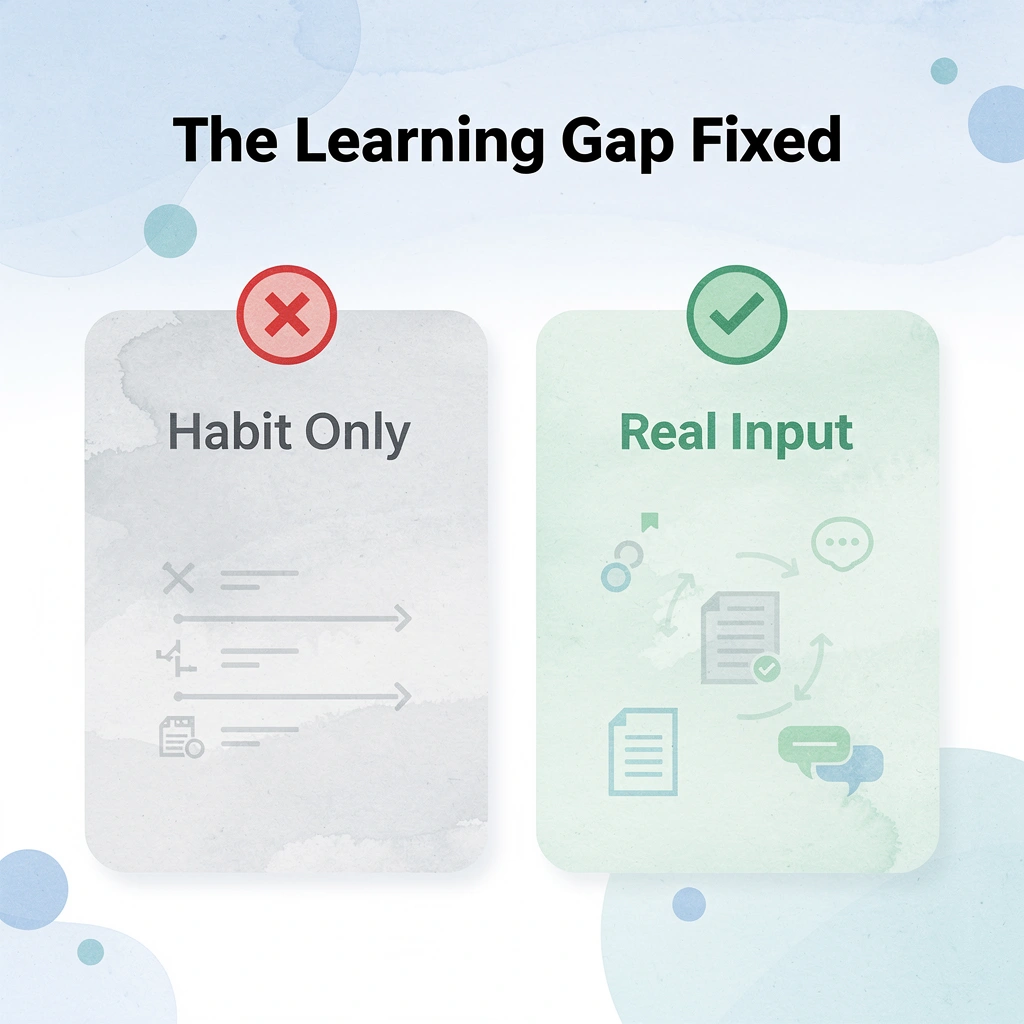
Start a free trial of Learn Spanish. With Parrot, you'll get personalized Spanish video recommendations in your very first session and save unfamiliar words using clickable subtitles. This turns short-form content into a vocabulary and listening routine that builds up over time, giving your existing habit a real foundation to build on.
🎯 Key Point: Clickable subtitles transform passive watching into active vocabulary building — every video becomes a learning opportunity.
Here is a head-to-head comparison of Duolingo and Parrot based on key features:
Habit Building: Both apps are Strong at helping you stay consistent.
Native Speaker Audio: Duolingo offers Limited text-to-speech audio, while Parrot uses Authentic Videos featuring real native speakers.
Clickable Subtitles: Duolingo offers No option to click words, whereas Parrot provides Yes, fully interactive subtitles for instant translations.
Personalized Content: Duolingo provides Generic pre-made paths, while Parrot delivers tailored content right from your First Session.
Vocabulary in Context: Duolingo primarily teaches words in Isolated sentences, whereas Parrot focuses on Real-World Context through active media.
✅ Best Practice: Combine your existing Duolingo streak with Parrot's immersive video method to finally close the gap between textbook Spanish and real comprehension.
Related Reading
Spanish Idioms
Babbel Spanish Review
Spanish Writing Practice
Pimsleur Spanish Review
Duolingo Alternatives
Best Free App To Learn Spanish
Best App To Learn Spanish
Duolingo Spanish Review
Best Spanish Shows On Netflix To Learn With
Rosetta Stone Vs Pimsleur