Spanish verb conjugation is often the first real challenge for beginners. Unlike English, Spanish verbs change form based on who is acting, when the action happens, and the mood being expressed. Understanding the underlying patterns makes this far less overwhelming than it first appears.
Short, focused practice sessions tend to build recall faster than memorizing conjugation charts. Working through present tense, past tense, and irregular verbs in context helps the rules stick in a way that passive study rarely does. For anyone ready to move from guessing to getting it right, learn Spanish with Parrot offers a practical way to do exactly that.
Table of Contents
Why Spanish Verb Conjugation Feels So Overwhelming
What Spanish Verb Conjugation Actually Is
Why Most Learners Struggle With Spanish Verb Conjugation
9 Ways to Learn Spanish Verb Conjugation Faster
Why Native Speakers Don't Think About Conjugation Rules
How Parrot Helps You Learn Spanish Verb Conjugation Naturally
Start Learning Spanish Today
Summary
Verb conjugation feels overwhelming for Spanish beginners because the number of forms is genuinely large. Spanish has 14 tenses across 3 moods, resulting in over 50 conjugation forms per verb. That number alone is enough to push most learners toward charts and drills, which build recognition but rarely build the production speed real conversation requires.
The most common tenses carry the vast majority of real-world usage. The indicative present tense alone accounts for 40.3% of verb usage in Spanish subtitles, and the first four conjugation groups together cover roughly 90% of all verb encounters. Learners who spread attention evenly across all tenses end up with shallow familiarity across rare forms, while the high-frequency ones remain fragile under pressure.
The gap between passive recognition and active recall is where most study methods quietly fail. A learner can correctly identify "hablamos" on a worksheet and still freeze when trying to produce it mid-sentence. Those are two different cognitive skills, and traditional conjugation drills almost exclusively train the first one while leaving the second underdeveloped.
The three verb families (-ar, -er, -ir) mean that learning one regular verb transfers directly to hundreds of others. Mastering how "hablar" conjugates in the present tense gives a learner the template for "trabajar," "escuchar," and "caminar" without additional effort. The system rewards pattern recognition far more than raw memorization, so grouping verbs by conjugation type is a more efficient strategy than treating each verb as an isolated task.
Native speakers do not retrieve grammar rules during conversation. They retrieve patterns that have become automatic through thousands of hours of exposure, similar to recognizing a familiar face without consciously cataloging individual features. Fluency is built through familiarity with the language in meaningful contexts, not through understanding its rules in the abstract, and the learners who speak early and adjust from mistakes build retrieval speed far faster than those who wait until their conjugations feel perfect.
Parrot's Learn Spanish app addresses the recognition-to-production gap by delivering short-form video content grounded in comprehensible input, giving learners repeated exposure to conjugated verb forms inside real spoken Spanish rather than in isolated drills.
Why Spanish Verb Conjugation Feels So Overwhelming
Spanish verb conjugation feels overwhelming because the number of forms is genuinely large. According to LanguageBird, Spanish has 14 tenses across 3 moods, resulting in over 50 conjugation forms per verb — and that's before you account for irregular verbs, which make up a significant portion of the most commonly used words in the language.
"Spanish has 14 tenses across 3 moods, resulting in over 50 conjugation forms per verb." — LanguageBird
Total Tenses
Number: 14
Grammatical Moods
Number: 3
Conjugation Forms Per Verb
Number: 50+
🔑 Takeaway: With 50+ forms per verb across 14 tenses, it's no surprise learners feel buried — the sheer volume of conjugation rules is objectively massive compared to most other languages.
⚠️ Warning: Many learners make the mistake of trying to memorize all 50+ forms at once. This approach leads to rapid burnout and poor long-term retention — focus on high-frequency tenses first.
💡 Tip: Prioritize the 3 core tenses — present, preterite, and future — before tackling the full 14-tense system. This strategic approach makes the overall workload feel far more manageable.
Why do charts and drills fail to build real fluency?
The instinct to reach for charts makes sense—they feel like control. But chart-first learning trains recognition, not production. A learner who can identify "hablamos" on a worksheet and one who can produce it mid-sentence are developing completely different skills, and most study methods build only the first.
The failure point arrives during a real conversation. Learners who drilled conjugation tables suddenly freeze, not from forgetting rules, but because retrieving a verb form under social pressure differs entirely from recalling it during quiet study. That freeze gets misread as personal failure when it reflects a method problem.
What actually builds the ability to produce verb forms naturally?
Most learners respond by studying harder, not differently—adding more charts and flashcards. What builds production fluency is repeated exposure to conjugated verbs in real contexts: hearing "fui al mercado" and "tenemos que salir" dozens of times until those patterns no longer require conscious analysis. Our Parrot app uses short-form video and comprehensible input to provide learners repeated, contextual exposure to verb patterns rather than isolated memorization.
Why does the scale of the conjugation system create discouragement?
The scale multiplies pressure. Spanish has 6 subject pronouns per tense, so each new tense brings 6 new forms. Adding irregular verbs like "ser," "ir," and "tener" makes the system feel unpredictable when regular patterns were starting to make sense. This timing discourages learners, leading them to question their aptitude rather than their approach.
The overwhelm is real, but it points at the wrong problem. The size of the conjugation system isn't what makes Spanish hard—trying to learn it through repetition of isolated forms rather than through repeated, meaningful exposure is.
Related Reading
What Spanish Verb Conjugation Actually Is
Spanish verb conjugation is the core system by which a verb changes form to show who is doing the action and when. Everything else—tense names, mood categories, irregular exceptions—stems from that one main function.
"Every conjugated verb in Spanish answers two essential questions: who is acting, and when are they acting." — Core Linguistics Principle
🎯 Key Point: Spanish verb conjugation is not about memorizing endless charts. It's about understanding one core function: expressing who + when in a single word form.
💡 Tip: Before diving into tense names or mood categories, anchor yourself to the real purpose. Every verb change you learn traces back to these two fundamental questions.

Verb form change
What it tells you: Who is doing the action
Example: hablo vs. habla
Tense marker
What it tells you: When the action happens
Example: hablé vs. hablaré
Mood category
What it tells you: The speaker’s intent or attitude
Example: habla vs. hable
Irregular exceptions
What it tells you: Unique spelling or stem changes that don’t follow rules
Example: ser, ir, tener
⚠️ Warning: Most learners get overwhelmed by irregular exceptions and mood categories before grasping the foundational principle — don't let the complexity obscure the simple core.
How the verb itself is built
Every Spanish verb has two parts: the stem, which carries the meaning, and the ending, which changes based on the subject and tense. According to the Espanido Blog, this structure makes the system learnable: you swap out endings on a familiar base rather than memorize whole new words.
Think of it like "run" in English, which stays recognizable in "runs," "running," and "runner." Spanish works the same way, but more consistently and with more distinct endings across subjects. Once you see that pattern, the verb table stops looking like confusion and starts looking like a logical grid.
Why do Spanish verb endings change?
Spanish verb endings carry information about who is doing the action. The Clozemaster Blog notes that each Spanish verb can have up to six different forms for each tense, one for each pronoun. The verb ending indicates who is acting, allowing native speakers to omit the subject pronoun entirely and still be understood.
Why do drilling charts rarely build real speed?
Most learners study those six forms through drills with charts, which helps them recognize the forms but rarely helps them use them quickly. People can identify the correct conjugation when they see it written, but they freeze when they need to produce it mid-sentence. Apps like Parrot address this by replacing drills with short-form video content built on comprehensible input, the approach developed by Dr. Stephen Krashen. This allows verb forms to reach the brain through repeated, meaningful exposure rather than isolated repetition.
Regular patterns do the heavy lifting
The three verb families (-ar, -er, -ir) mean that most of what you learn about one verb transfers directly to hundreds of others. Hablar teaches you the template for trabajar, escuchar, and caminar. The system rewards pattern recognition over memorization, and your brain builds pattern recognition naturally through repeated exposure to real language, not through drilling endings in isolation.
Understanding the structure is only the starting point. Knowing why conjugation works does not automatically explain why many learners, even experienced ones, still hit a wall when they try to use it.
Why Most Learners Struggle With Spanish Verb Conjugation
The struggle is rarely about how smart you are. Most people learning Spanish hit a wall with verb conjugation because they study the language rather than absorb it — treating tense forms and pronoun agreements as problems to solve rather than patterns to internalize through repeated exposure.
"The core issue isn't intelligence — it's method. Learners who treat conjugation as rules to memorize will always struggle more than those who build pattern recognition through repeated, meaningful exposure." — Language Acquisition Research
⚠️ Warning: If you're drilling verb charts in isolation, you're working harder — not smarter. Rote memorization without context is one of the most common mistakes Spanish learners make.
💡 Tip: Shift your focus from memorizing endings to recognizing patterns across real sentences. Repeated exposure to conjugated verbs in context is what builds lasting fluency — not flashcards alone.
Better Language Learning Approach
Memorizing verb charts in isolation → Encountering verbs in real sentences
Builds real-world understanding instead of abstract memorization
Treating conjugation as a set of rules to solve → Building pattern recognition naturally
Develops intuition instead of rule dependency
Passive study of tense forms → Active absorption through repeated exposure
Strengthens retention through real usage
Drilling pronoun agreements abstractly → Internalizing agreements through context
Makes grammar automatic in communication

Why does recognition fail when real conversation begins?
The failure point is usually the gap between passive recognition and active recall. A learner can spend an entire weekend reviewing present-tense conjugations, ser versus estar, and the irregular stems of tener and venir, only to feel unprepared. Someone asks a simple question in real time, and the forms vanish. That experience is not a memory problem but a retrieval problem: those forms were never anchored to anything the brain found meaningful or emotionally relevant.
Why do learners waste time on low-frequency verb forms?
According to My Crappy Code Blog's frequency analysis of Spanish verb usage, the indicative present tense accounts for 40.3% of verb usage in Spanish subtitles. Yet many learners spread their attention across the subjunctive imperfect, the conditional, and the future perfect before mastering the present tense. This produces shallow familiarity across many forms rather than deep fluency in the ones that appear in conversation.
The first four conjugation groups account for roughly 90% of verb usage, yet most learners spend time on rare forms, while high-frequency ones remain weak under pressure. Most traditional apps and textbooks treat all tenses as equally important, resulting in learners who hesitate with the most common verbs even though they technically know how to conjugate the pluperfect subjunctive.
Why does drilling conjugation tables fall short of real fluency?
The familiar approach is to open an app, drill a conjugation table, earn a streak, and move on. Drilling trains recognition, not production: the brain learns to identify a correct form when it sees it, but generating the right form under conversational pressure is a different skill. Parrot takes a different path, using short-form video content built around comprehensible input so learners encounter high-frequency verb forms in real spoken Spanish, repeatedly and in context, building the retrieval speed conversation demands.
A common pattern among struggling learners is confusing effort with effectiveness. Hours of chart review feel like progress because they are tiring and structured. Yet language acquisition research consistently shows that exposure volume and meaningful context drive fluency, not the number of paradigms memorized. The brain builds fluency from familiarity, which comes only from time spent inside the language.
9 Ways to Learn Spanish Verb Conjugation Faster
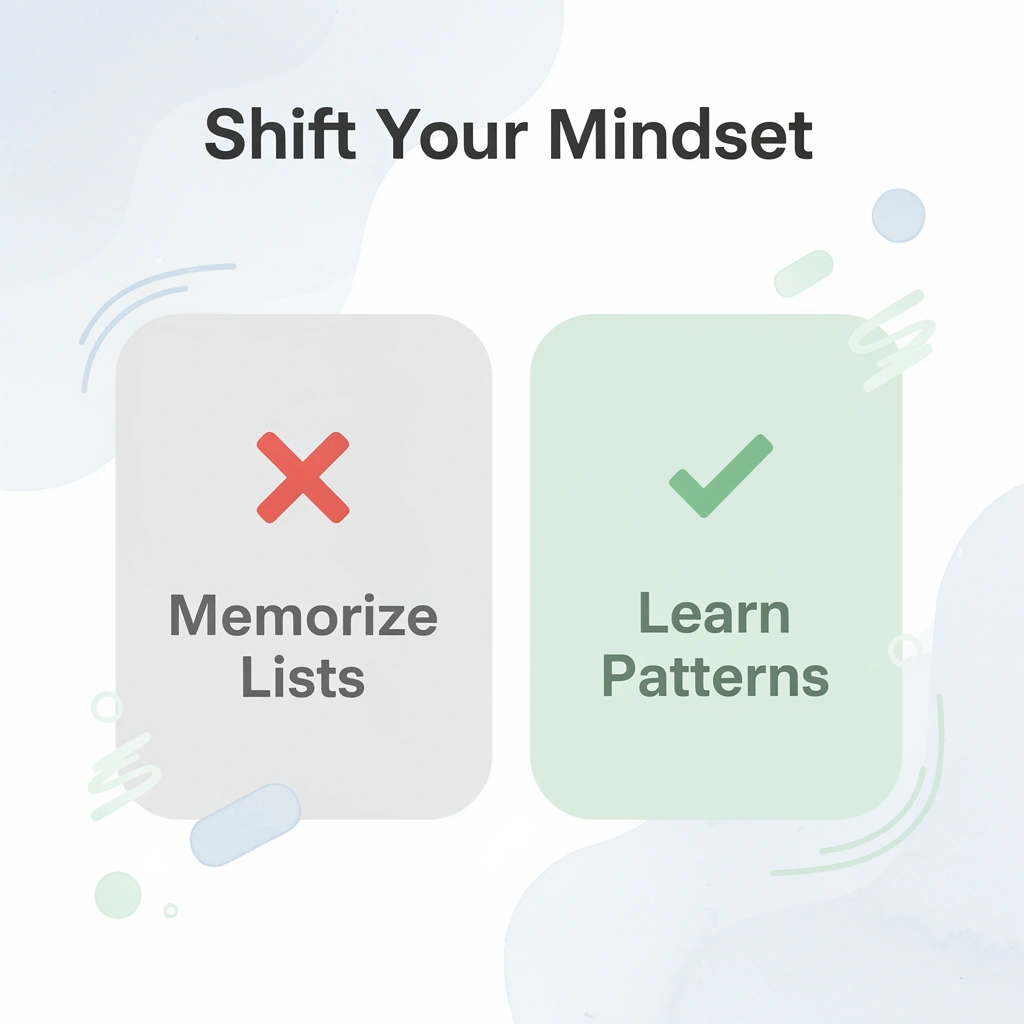
You can make faster progress with Spanish verb conjugation by making one important change: stop thinking of conjugation as a list you need to memorize and start thinking of it as a pattern you need to learn. The nine methods below focus on studying smarter — giving your brain practice with the right forms, at the right frequency, in the right context.
"The biggest mistake language learners make is treating verb conjugation as rote memorization rather than pattern recognition — one approach exhausts you, the other scales with you." — Language Acquisition Research
💡 Tip: Before diving into the methods below, shift your mindset: conjugation patterns are not vocabulary lists. Your brain is wired to recognize structure and repetition — use that to your advantage.
Memorizing endless lists → Recognizing repeating patterns
Builds intuition instead of overload
Studying every form at once → Focusing on high-frequency forms first
Prioritizes what you actually use in real communication
Random, infrequent review → Spaced repetition at the right intervals
Improves long-term retention and recall
Isolated drills with no context → Practice in real sentence context
Strengthens natural usage and fluency
🎯 Key Point: The 9 methods ahead are built around how your brain actually learns — prioritizing pattern exposure, active recall, and contextual practice over passive memorization.
Method 1: Learn the Most Common Verbs First
Not all verbs deserve equal attention early on. Ser, estar, tener, ir, hacer, and querer appear constantly in everyday speech, so every hour spent with them pays off across multiple conversations. Rare verbs can wait.
Most learners treat all verbs as equally urgent. Prioritizing high-frequency verbs isn't cutting corners: it shortens the learning curve by focusing on what appears most often.
Method 2: Prioritize High-Frequency Tenses
According to My Crappy Code Blog's analysis of Spanish subtitle frequency data, the present indicative, imperative, present subjunctive, and preterite together account for roughly 90% of verb usage in real Spanish. Prioritize these high-frequency tenses before moving to less common ones.
Most learners spread their attention across all 14 tenses at once. Mastering a few tenses is better than learning many superficially.
Method 3: Learn Verbs Inside Sentences
Studying "comer = to eat" gives you a definition. Studying "¿Comes carne?" gives you a conjugated verb in a real situation your brain can anchor to. Memory depends on context, and isolated infinitives do not transfer easily to conversation.
Build small sentence sets around each new verb. Como pizza los viernes. Comemos juntos. ¿Comes carne? Three sentences lock in three different conjugations through use rather than rule repetition.
Method 4: Group Verbs by Conjugation Pattern
Spanish verb conjugation follows predictable rules for regular verbs. Once you know how hablar conjugates in the present tense, you can apply those same endings to cantar, caminar, and hundreds of other regular -ar verbs. The same logic applies to -er and -ir groups.
Grouping by pattern means you are learning a system, not a list. One well-learned pattern unlocks dozens of verbs at once.
Method 5: Build Fluency Through Listening
Listening transforms conjugation from intellectual understanding to natural instinct. When you hear "quiero," "quieres," and "queremos" in natural speech across many conversations, those forms become familiar sounds you can deploy quickly when needed.
Most learners spend far more time reading grammar explanations than listening to Spanish. Podcasts, interviews, and Spanish video content provide the repeated exposure that charts cannot.
Method 6: Use Active Recall Instead of Re-reading Charts
It is easy to recognize something. Retrieval builds fluency. Rereading a conjugation table feels productive because the forms look familiar, but familiarity from passive review does not translate to production in real conversation.
Close the book and ask yourself: "How do I say 'we used to eat'?" That act of forcing retrieval, even when you get it wrong, strengthens the neural pathway far more than scanning correct answers. Research consistently shows active retrieval beats passive review.
Method 7: Pay Attention to Repeated Phrases
Native speakers don't build sentences word by word using grammar rules. Instead, they reach for familiar phrases: "Voy a...", "Tengo ganas de...", "No puedo creer que..." These phrases contain conjugated verb forms, and hearing them repeatedly makes the conjugation stick.
When learners focus only on individual words, they miss the natural rhythm of Spanish. Pay attention to phrases, not vocabulary.
Method 8: Use Comprehensible Input as Your Primary Method
The familiar approach of studying grammar rules, drilling conjugation tables, and then speaking creates a gap between knowing and doing that frustrates learners. Months are spent preparing to speak instead of speaking.
Parrot uses a different model based on Dr. Stephen Krashen's comprehensible input theory. The platform delivers short-form Spanish video content, providing 10 to 15 minutes of daily immersive exposure to real, conjugated Spanish in context. Verb forms become familiar through use, not memorization.
Method 9: Accept Imperfect Speaking Early
A pattern emerges among learners who plateau: they wait until their conjugations feel perfect before speaking aloud. Meanwhile, learners who speak early, make mistakes, and adjust build the retrieval muscle that matters.
Mistakes during speaking are not signs of failure; they are the brain working through a retrieval problem in real time, which speeds up fluency. Imperfect early speaking is not a shortcut. It is the process.
The Principle Underneath All Nine Methods
Getting good at Spanish verb conjugation requires practice, not just understanding the rules. You improve by using the language in meaningful situations. Grammar knowledge is like a map; exposure to the language is the territory you explore.
Which conjugation forms should you focus on first?
The imperative mood accounts for 15.4% of verb usage in Spanish subtitles, according to the same frequency analysis on My Crappy Code Blog, making it the second-most common conjugation form. Your brain learns fastest from the forms you hear most often, so prioritize exposure to the language.
What happens when study methods alone are not enough?
Yet even learners who follow every one of these methods sometimes hit a wall, because something happens inside a native speaker's mind that no study method fully explains.
Related Reading
Spanish Past Tense
How To Start Learning Spanish
Spanish Pronunciation Guide
Alternatives To Duolingo For Spanish
How To Practice Spanish Speaking
500 Most Common Spanish Words
How To Learn Mexican Spanish
Learn Spanish Through Music
Spanish Verb Conjugation
Spanish Idioms
Easy Spanish Books
Babbel Alternatives
Spanish Short Stories For Beginners
Why Native Speakers Don't Think About Conjugation Rules
Native speakers don't check mental grammar charts because fluency isn't stored that way. The brain retrieves patterns that become familiar through thousands of hours of exposure, the same way you recognize a friend's face without listing their features one by one.
"Fluency isn't stored as rules: it's stored as deeply encoded patterns built through thousands of hours of repeated exposure." — Linguistics Research
🎯 Key Point: Native speakers achieve automatic pattern retrieval through repetition, which wires those patterns directly into their long-term memory.
💡 Tip: Instead of drilling grammar charts, focus on massive input exposure through reading, listening, and speaking until patterns feel instinctive rather than calculated.
Why do drilling verb tables fall short for real conversation?
Most learners practice verb tables extensively, building recognition but not the automatic retrieval that real conversation demands. Parrot takes a different approach, using short-form video grounded in comprehensible input so your brain encounters conjugated verbs the way native speakers did growing up: in context, repeatedly, naturally.
What kind of exposure actually moves you toward fluency?
The best way to move forward is to hear Spanish the way people speak it: in real sentences, at a speed your brain can handle. Ten minutes daily of listening to real Spanish will bring you closer to fluency than an hour of studying charts.
How Parrot Helps You Learn Spanish Verb Conjugation Naturally
If you've ever spent an hour studying verb charts only to forget everything during a conversation, you're not alone. Many learners memorize conjugation tables and practice endings, yet still struggle to understand native speakers or recall the right forms when needed. The problem is that memorizing isolated conjugations doesn't provide the repeated exposure that helps patterns become familiar. Fluency develops when learners encounter verb forms naturally over and over again.
"Memorizing isolated conjugations doesn't give learners the repeated exposure that helps patterns become familiar. Fluency develops when verb forms are encountered naturally, over and over again."
🎯 Key Point: The gap between knowing conjugation rules and actually using them in conversation is one of the most common frustrations in Spanish learning—a structural problem with how most people study.
⚠️ Warning: Spending hours on verb charts and endings without contextual exposure creates the illusion of progress but leaves learners unable to recall forms when it matters most.
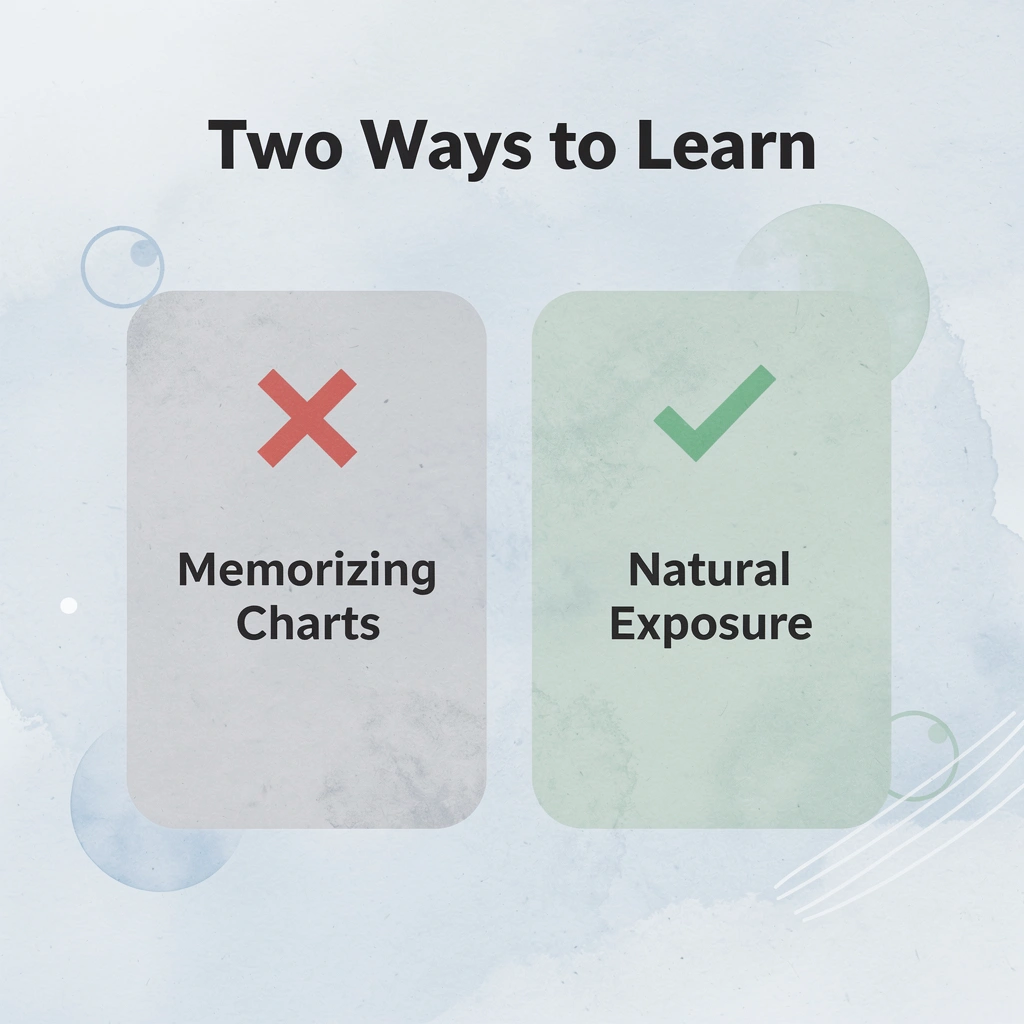
Instead of treating conjugation as a collection of rules to memorize, Parrot helps learners acquire verb patterns the same way fluent speakers do: through repeated exposure to real Spanish.
Traditional Study
Method: Memorizing conjugation tables
Outcome: Rules are known, but recall often fails in conversation
Parrot’s Approach
Method: Repeated exposure to real Spanish
Outcome: Patterns become automatic and natural
Fluent Speakers
Method: Acquired through immersion
Outcome: Effortless, intuitive verb use
🔑 Takeaway: Parrot bridges the gap between studying Spanish and speaking it — by replicating the natural acquisition process that produces genuine fluency.
How does watching authentic videos help verb forms stick?
One reason conjugations are hard to remember is that learners often encounter them only in textbooks. Parrot solves this by providing short-form Spanish videos filled with real language. Learners hear verbs used naturally by native speakers in stories, conversations, interviews, and everyday situations. Verbs are easier to remember when connected to meaningful contexts. Over time, expressions such as quiero ir, vamos a ver, and estaba pensando stop feeling like grammar exercises and become familiar.
How do clickable subtitles keep learners immersed while learning?
Nothing breaks immersion faster than constantly opening a dictionary. Parrot's clickable subtitles eliminate that friction: learners can quickly understand unfamiliar verbs and continue watching without leaving the video, staying immersed as they learn new vocabulary and conjugations.
Parrot's instant translations reduce frustration by helping learners quickly understand what they're hearing without destroying immersion. Rather than spending minutes decoding a sentence, learners grasp the meaning and continue exposing themselves to Spanish. That continuous exposure helps conjugation patterns become familiar.
How does saving expressions from real content improve retention?
Many learners encounter useful expressions repeatedly yet forget them. Parrot lets learners save vocabulary, verbs, and entire expressions as they encounter them, creating a personalized collection from real content. Instead of memorizing tener in isolation, learners might save expressions such as: Tengo hambre. Tengo ganas de viajar. No tengo tiempo. Because these phrases come from real situations, they're easier to remember and use later.
How does AI-powered content matching increase exposure to conjugation patterns?
One challenge with immersion is finding content that isn't too easy or too difficult. Parrot's AI-powered recommendations help learners discover videos that match their interests and comprehension level, so learners spend less time searching for material and more time engaging with Spanish. This gives the brain more chances to absorb common conjugation patterns.
Why does comprehensible input make conjugations feel automatic over time?
The greatest advantage of Parrot is that it supports learning built around comprehensible input. Rather than memorizing isolated charts, learners encounter verbs repeatedly in meaningful situations. They hear quiero, vamos, estaba, and hicieron while following stories and conversations that make sense to them. Each encounter strengthens familiarity, and those forms eventually stop feeling like information to recall from a chart and become patterns the brain recognizes automatically.
Many learners believe they need to master every conjugation chart before speaking naturally. Speaking becomes easier when common patterns feel familiar. Parrot creates that familiarity by surrounding learners with authentic Spanish, reducing interruptions, and enabling repeated exposure to the verb forms native speakers use daily. Over time, those patterns become familiar, making conjugations easier to understand and use during conversations.
Start Learning Spanish Today
If Spanish verb conjugation feels overwhelming, try Parrot for free. Watch authentic Spanish videos with clickable subtitles, save useful expressions as you discover them, and expose yourself to the language patterns native speakers use every day.
"Exposure to authentic, real-world language is one of the most effective ways to internalize grammar patterns naturally — without rote memorization." — Language Acquisition Research
💡 Tip: Clickable subtitles let you look up any word instantly — turning every video into an interactive lesson without breaking your flow.
🎯 Key Point: Saving expressions as you encounter them builds a personal vocabulary bank drawn from real native speech — far more effective than generic word lists.
Authentic Spanish Videos
What it does: Real content from native speakers
Why it matters: Exposes you to natural language patterns
Clickable Subtitles
What it does: Instant word lookup while watching
Why it matters: Removes friction from active learning
Save Expressions
What it does: Build a personal phrase library
Why it matters: Reinforces memory retention over time
Related Reading
Pimsleur Spanish Review
Best App To Learn Spanish
Apps Like Duolingo
Duolingo Alternatives
Babbel Spanish Review
Best Spanish Shows On Netflix To Learn With
Rosetta Stone Vs Pimsleur
Spanish Writing Practice
Duolingo Spanish Review
Best Free App To Learn Spanish