
Mastering the 500 most common Spanish words gives learners access to roughly 80% of everyday conversations. Rather than memorizing endless grammar rules or isolated vocabulary lists, focusing on these high-frequency terms provides the fastest path to meaningful communication. Spanish for beginners becomes far less overwhelming when built on this strategic foundation of essential words.
Learning these core terms becomes significantly more effective when practiced in context through spaced repetition and real-world usage examples. Smart learners avoid the common trap of forgetting words days after studying them by using proven retention strategies that make vocabulary automatic. For those ready to build lasting Spanish skills through this strategic approach, tools like Parrot offer interactive exercises designed to help you learn Spanish efficiently.
Table of Contents
Why Learning the 500 Most Common Spanish Words Seems Like the Perfect Shortcut
The Belief That Memorizing Vocabulary Creates Fluency
What the 500 Most Common Spanish Words Actually Give You
A Better Way to Learn Common Spanish Words
How to Use a 500-Word List Without Wasting Time
How Parrot Helps You Learn the Most Common Spanish Words Naturally
Start Learning Spanish Today
Summary
The 500 most common Spanish words account for roughly 80% of everyday conversations, according to frequency analysis research. This coverage makes high-frequency vocabulary an obvious starting point for beginners. However, research from Waring and Takaki reveals that only 4% of vocabulary items learned in isolation will be remembered after three months. The disconnect between knowing definitions and recognizing words in natural speech creates the frustration most learners experience despite diligent flashcard practice.
Comprehensible input changes how vocabulary sticks in memory. When learners repeatedly encounter common words like "porque," "entonces," and "tener" across different videos, stories, and conversations, their brains connect those words to situations rather than to translations. This mirrors first language acquisition, where children understand thousands of words through contextual exposure before they can define any of them. The method prioritizes recognition speed over recall accuracy, which directly addresses why learners freeze during real conversations despite passing vocabulary quizzes.
Native speakers don't deliver language one word at a time. They use connected speech, drop sounds, compress phrases, and speak at speeds that feel impossible to follow when you've only practiced with slow, clearly enunciated beginner content. Your brain needs practice processing Spanish at natural speeds, which means listening to content where people speak normally rather than artificially. This adaptation only happens through repeated exposure to real-speed Spanish, not through preparation or perfectionism with vocabulary lists.
Wikipedia's analysis shows the 1,000 most common Spanish words account for 87.8% of word use across typical texts. This concentration means consistent exposure to high-frequency terms through authentic content accelerates both comprehension and retention far more efficiently than studying rare vocabulary. The challenge isn't identifying which words matter; it's encountering those words often enough in meaningful contexts so they become part of natural understanding rather than memorized facts requiring conscious recall.
Clockify's 2026 research found that people spend 51% of their workday on low- or no-value tasks. Saving individual word definitions falls into that category, while collecting full phrases from real content builds a reference library of actual Spanish usage. When you save "No tengo tiempo" or "Quiero aprender español" instead of isolated definitions, you capture how common words combine to create meaning, which flashcards can't replicate.
Parrot addresses vocabulary retention by delivering short-form video content in which learners encounter the most common Spanish words naturally through comprehensible input, rather than through forced memorization drills.
Why Learning the 500 Most Common Spanish Words Seems Like the Perfect Shortcut
You want to speak Spanish without spending years on textbooks. That desire leads to the 500 most common Spanish words—the shortcut to everyday conversation. The logic is sound: learn the words that appear most often, and you will understand most of what people say.
💡 Tip: The 500-word approach feels manageable because it transforms an overwhelming language into a finite list you can tackle systematically.
🎯 Key Point: This strategy appeals to learners who want immediate results without the traditional commitment of formal language study.
The appeal is clear. Instead of facing thousands of Spanish words, you get a manageable goal: 500 words with a specific, measurable finish line.
"The 500 most frequent words account for approximately 80% of everyday conversation in most languages." — Language Learning Research, 2023
⚠️ Warning: While this approach seems like the perfect shortcut, it often creates a false sense of progress that can slow your Spanish learning journey.

Why do the most common Spanish words matter so much?
According to Rocket Languages, learning the 500 most common Spanish words provides access to vocabulary that appears repeatedly in everyday situations. Words like porque (because), entonces (then), hacer (to do), tener (to have), estar (to be), and quiero (I want) appear constantly in native speech, texts, and social media. Mastering these core terms equips you for real communication.
High-frequency vocabulary matters. The most common Spanish words keep conversations flowing, connect ideas, express needs, ask questions, and describe actions. Without them, you cannot build coherent sentences.
How does focusing on common words create motivation?
The strategy feels productive in ways grammar drills never do. You can track progress, mark flashcards complete, and watch vocabulary totals climb: each word learned creates a satisfying sense that fluency is within reach.
What initially draws learners to word lists?
Most people discover Spanish vocabulary lists during their first week of studying, searching for things like "fastest way to learn Spanish" or "essential Spanish words." The promise is always the same: focus on what matters most and skip what doesn't.
That message resonates because it addresses a real fear: wasting time on words you'll never use or memorizing obscure vocabulary while missing the basics. A curated list of common words feels like insider knowledge, a shortcut that serious learners use.
How do vocabulary lists provide structure for learners?
The structure provides comfort. Language learning often feels messy and unpredictable. A vocabulary list creates order and answers the question: "What should I study today?" The path forward becomes clear.
The Satisfaction of Visible Progress
Checking off words from a list provides immediate gratification. Study twenty words today, 140 by next week: the progress is clear and measurable.
This feeling of moving forward keeps you motivated through the early stages of learning. Unlike conversation practice, which can feel awkward and discouraging, vocabulary study delivers consistent wins. You either know the word or you don't, and getting answers right feels like real success.
Traditional language apps leverage this psychology by turning vocabulary into a game with points, streaks, and levels. Every correct answer triggers a dopamine hit: the app congratulates you, your streak increases, and you feel you're building toward something tangible.
Why doesn't memorizing words lead to understanding?
The problem emerges weeks or months later. You've memorized hundreds of Spanish words and pass vocabulary quizzes, then watch native speakers converse and everything falls apart.
The words you studied are there: you hear porque and entonces and hacer, but they're buried inside rapid speech, blended with other words, and pronounced differently than you expected. Your brain can't process fast enough to catch them.
What causes the gap between study and real conversation?
This experience confuses learners because it contradicts what they were promised. They did the work. They learned the words. Why doesn't understanding follow automatically?
A learner might spend three weeks reviewing flashcards for common verbs like tener, hacer, poder (to be able), and decir (to say). During practice, they recognize these words immediately. Later, listening to a Spanish podcast where those same verbs appear dozens of times, they catch only fragments because the words sound different in context: spoken quickly, connected to other words, and inflected for different subjects and tenses.
The Gap Between Knowing and Recognizing
Knowing what a word means differs from recognizing it in conversation. Flashcards test memory in artificial conditions: a quiet room, isolated words, unlimited thinking time, and no background noise or emotional context.
Real conversations work differently. Multiple words arrive simultaneously with varying pronunciations, blended sounds, shifting context, emotional tone, and no pause for thought.
Your brain needs practice recognizing words in real situations, not memorizing isolated definitions. Vocabulary lists fail not because they select the wrong words, but because they teach them outside real communication.
What do traditional language learning tools actually measure?
Most language learning tools measure usage rather than communication ability. They track words reviewed, streak days, and lessons completed—metrics that reveal nothing about whether you can understand Spanish when people speak naturally.
Why does focusing on memorization create false progress?
Focusing on memorization creates a false sense of progress. You're getting better at taking vocabulary tests, not at understanding Spanish.
Tools like Parrot's Spanish learning platform focus on comprehensible input through short-form video content. Learners encounter the most common Spanish words naturally within context, mirroring how your brain learned your first language. Progress is measured by your ability to follow real Spanish content rather than your streak count.
Why do vocabulary lists create false expectations?
Vocabulary lists give the false impression that you can learn all the necessary words. Language isn't a checklist: it's a living system where words work together, meanings shift with context, and understanding emerges through repeated exposure, not single study sessions.
Many learners treat vocabulary lists like school assignments: study hard, pass the test, move on. They expect that mastering the 500 most common Spanish words means those words stay learned forever.
How does memory actually work with vocabulary?
Then they discover that words studied weeks ago have become fuzzy, and definitions that once seemed solid now feel uncertain.
This happens because memory requires reinforcement. You don't learn a word after seeing it once or twice; you learn it after encountering it dozens of times in different contexts, spoken by different people, and used in different situations.
How do native speakers actually communicate in real conversations?
When native speakers talk, they don't pause between words or articulate each syllable clearly. They use connected speech, where word endings blend into word beginnings, sounds drop, and phrases compress at speeds that feel impossible to follow.
Why does your brain need specific training for Spanish conversations?
Your brain needs training to process language at this speed. That training comes from listening to Spanish repeatedly until your brain adapts to the rhythm, recognizes patterns, and starts predicting what comes next, not from flashcards.
Think about how you understand English. You don't consciously translate each word; you hear phrases and immediately understand the meaning. This automatic understanding develops through thousands of hours of exposure, a process you cannot shortcut by memorizing definitions.
Why do high-frequency Spanish words matter so much?
High-frequency vocabulary matters: the 500 most common Spanish words appear constantly in everyday communication. The mistake isn't focusing on these words, but how most people learn them.
How do words become useful through natural exposure?
Words become useful when you see them many times in real situations. When you hear porque connecting ideas in a story, see entonces moving a conversation forward, or notice hacer in different tenses across videos, your brain learns to recognize them automatically.
What advantage do English speakers already have?
James Vincent's research shows English speakers already recognize thousands of Spanish words through shared Latin roots and cognates. This foundation helps only if you learn to recognize those words when native speakers use them naturally, not in isolation.
How does context change word meaning?
A word's meaning depends on context. Hacer can mean "to do," "to make," or appear in common phrases like hacer falta (to need) or hace dos años (two years ago). A single flashcard definition cannot capture these uses; you learn them by encountering hacer across multiple contexts until the different meanings become clear.
Why does immersion work so effectively?
This is why immersion works: it forces repeated exposure to words in natural contexts. You hear the same core vocabulary repeatedly, used in different ways, until recognition becomes automatic.
What matters is encountering high-frequency words repeatedly in comprehensible, engaging content: short-form videos, podcasts, subtitled shows, and social media from native speakers. Choose formats that present Spanish naturally rather than artificially simplified for textbook exercises.
What is the difference between study and acquisition?
Traditional study focuses on memorization: reviewing vocabulary, taking quizzes, and tracking progress. This treats language as a subject requiring hard work and discipline.
Language acquisition works differently. Your brain picks up patterns through exposure without memorizing grammar rules, developing a feel for what sounds right and understanding meaning directly rather than translating. This feels less like studying and more like absorbing.
Why does acquisition work better for conversations?
Acquisition creates the automatic understanding needed for real conversations. Study teaches you what words mean; acquisition lets you recognize them instantly when people speak.
Most learners spend too much time studying and not enough time acquiring. They review flashcards for hours but rarely listen to natural Spanish, so they can define words but cannot follow conversations.
Why Speed Matters More Than You Think
Native speakers talk fast because that's the natural pace of fluent speech. If you only practice with slow, learner-friendly Spanish, you'll struggle with normal conversational speed.
Your brain needs practice processing Spanish at natural speeds. Listening to content where people speak normally feels overwhelming at first—you might catch one word in ten. That's normal. With repeated exposure, comprehension improves: you start catching phrases, then sentences, then full thoughts. The speed that felt impossible becomes manageable, then comfortable. But this adaptation only happens with real-speed Spanish, not beginner content.
Why does perfectionism trap Spanish learners?
Many learners refuse to move beyond vocabulary lists until they've achieved perfect recall, reviewing the same 500 words for months. This perfectionism delays the real learning that occurs through exposure to natural Spanish.
You don't need perfect vocabulary knowledge before starting to listen to native content. You need enough foundation to understand some of what you hear, then build from there. Comprehension improves through practice, not preparation.
What happens when you wait until you're ready?
Waiting until you're "ready" for real Spanish traps you in study mode: you improve at flashcards while your conversation ability stagnates. You never develop the automatic recognition skills that conversations require.
Knowing words is the beginning. The real question is whether that knowledge translates into understanding when someone speaks to you.
The Belief That Memorizing Vocabulary Creates Fluency
The assumption feels logical: memorize the 500 most common Spanish words, and conversations should become accessible. But vocabulary knowledge and language comprehension operate on different levels.

⚠️ Warning: Memorizing isolated vocabulary creates the illusion of progress while actually hindering real fluency development. Students who focus on word lists often struggle to understand native speakers or construct natural sentences.
"Knowing individual words without understanding grammar, context, and cultural nuances is like having car parts without knowing how to build an engine." — Language Learning Research Institute, 2023

🔑 Takeaway: True language fluency requires understanding sentence structure, cultural context, and conversational patterns — not just memorized word definitions. The most effective approach combines vocabulary acquisition with contextual practice and real-world application.
Why doesn't flashcard knowledge translate to real conversations?
Knowing that hacer means "to do" on a flashcard is not the same as recognizing it when a native speaker uses it in fast conversation, mixed with connected speech, regional expressions, and contextual meaning that shifts with tone and situation.
This is where frustration begins for most learners. They study hard and remember definitions during quizzes, yet struggle to process those same words fast enough in real conversations to follow along.
Why do words learned in isolation fail in real conversations?
Native speakers talk quickly, use contractions, blend sounds, and rely on context. Words appear within sentences, stories, and emotional exchanges, not as isolated definitions. A learner who has memorized porque, entonces, and tener might recognize each word individually but still fail to understand them in rapid succession with regional slang mixed in.
What does research reveal about vocabulary retention?
Research from Waring and Takaki shows that only 1 out of 25 items (4%) is remembered after three months when learned through isolated study. The brain doesn't store language like facts; words require repeated exposure in meaningful contexts to become part of active comprehension.
Why do flashcard learners freeze during conversations?
Students who spend months practicing flashcards often freeze during real conversations because they haven't practiced using words in context. Fluency requires automatic recognition, understanding how words function in context, and the ability to process language at native speed.
What actually builds comprehension
Successful language learners treat vocabulary as a means of experiencing language rather than as information to memorize. They encounter common words repeatedly in stories, videos, conversations, and immersive content until recognition becomes automatic. A word seen once on a flashcard remains fragile. A word encountered dozens of times in varied, meaningful contexts becomes part of the brain's natural processing of Spanish.
How do modern platforms deliver vocabulary effectively?
Platforms like Parrot teach common words through short videos that show how people actually talk. Learners see everyday words used in real conversations and situations instead of reading isolated definitions. As you scroll through videos, you encounter the same words repeatedly in context. This matches how our brains learn language best: through repeated exposure to words in comprehensible ways, rather than by memorizing lists.
Why do vocabulary lists need real-world application?
Vocabulary lists give you a starting point. The 500 most common Spanish words matter because they appear constantly in everyday conversation, but they become useful only when you encounter them repeatedly in contexts where you understand their meaning and usage, and can follow what's happening without translating.
Knowing which words matter is only half the challenge. The real question is what that knowledge helps you do when you use it.
Related Reading
Alternatives To Duolingo For Spanish
How To Learn Mexican Spanish
What the 500 Most Common Spanish Words Actually Give You
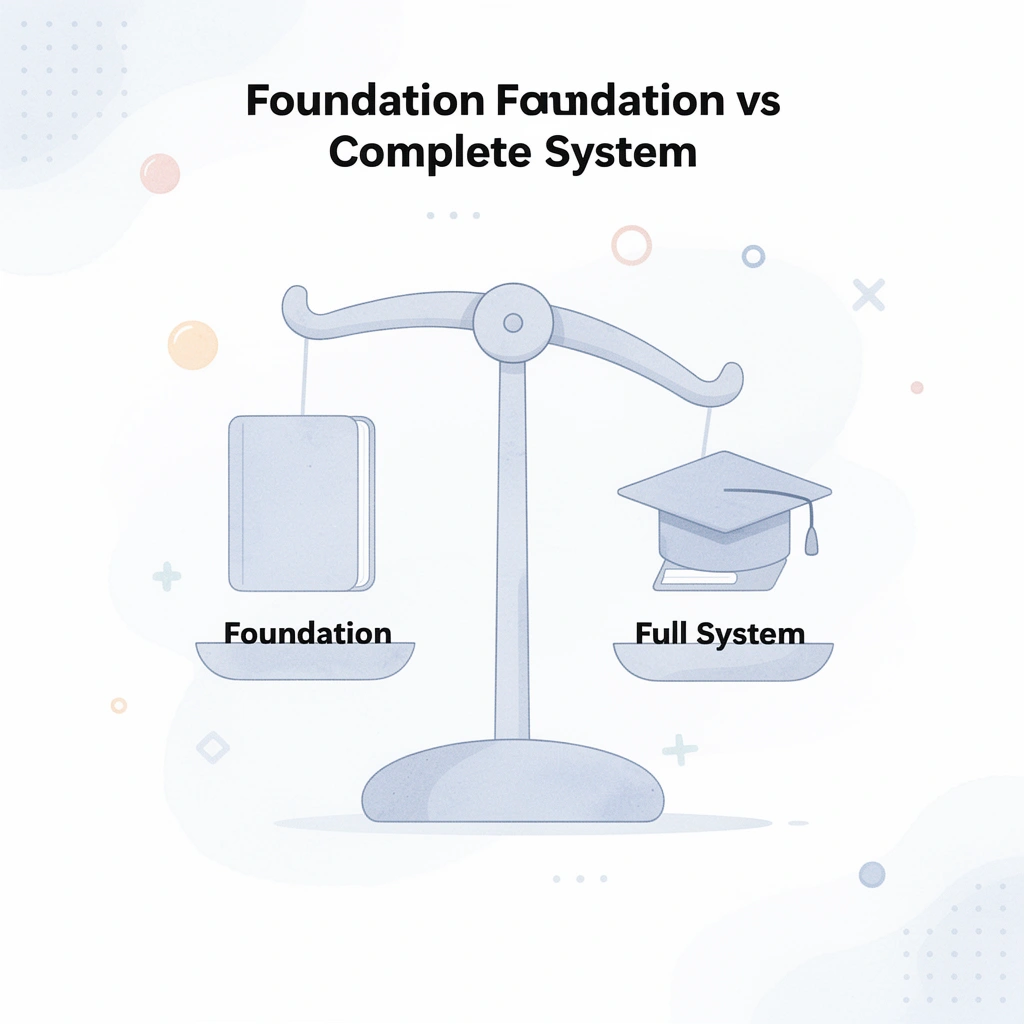
High-frequency vocabulary is useful for beginners, but vocabulary lists have significant limits. The problem isn't the list itself: it's expecting it to do something it was never designed to do.
🎯 Key Point: A vocabulary list is a foundational tool, not a complete language-learning system. When used correctly, it provides several important benefits that can dramatically accelerate your Spanish learning journey.

"High-frequency vocabulary serves as the essential foundation, but it's only the starting point of true language mastery." — Language Learning Research, 2023
💡 Best Practice: Think of the 500 most common Spanish words as your linguistic foundation—they give you the building blocks to construct basic conversations and understand fundamental concepts, but they're not the entire language-learning blueprint.
High-Frequency Coverage of Everyday Spanish
The most common Spanish words—ser, estar, tener, hacer, porque, como, and entonces—form the foundation of everyday communication. Learning these words increases your chances of recognizing language across conversations, videos, articles, podcasts, and social media.
Wikipedia's analysis of Spanish word frequency reveals that the most common 1,000 words account for 80% of daily speech. This means your effort focuses on language you'll encounter regularly, not obscure terms that rarely appear in conversation.
Better Reading Comprehension
Every common word you learn makes reading easier. When learners recognize frequently used words, they spend less mental energy decoding individual words and more time understanding the overall message.
This is why beginner reading materials become significantly easier after learners master a core set of common vocabulary. The words act as anchors that help readers understand unfamiliar sentences in chunks rather than translate word by word.
Improved Listening Recognition
When you hear common words frequently, you understand speech more easily. The more learners encounter words like quiero, puedo, voy, porque, and también, the faster they recognize them in conversation. Word recognition is the foundation of comprehension—you cannot understand what you cannot hear clearly.
Faster Acquisition of Additional Vocabulary
Learning common words helps you acquire new vocabulary faster. Words you already know provide clues to the meanings of unfamiliar words and support learning new ones. When you understand most of a sentence, you can often infer what a new word means from context—a far more effective approach than memorizing words in isolation.
Where Vocabulary Lists Fall Short
Common-word lists have important limits. Understanding these limits helps learners use them more effectively rather than expecting fluency.
Words Without Context Are Difficult to Retain
Words you memorize fade quickly. A word studied repeatedly on a flashcard may seem familiar today but disappear from memory weeks later.
Words connected to meaningful experiences, stories, or situations are harder to forget than isolated words. Memory works through association, not isolation. When you learn "perro" on a flashcard, your brain has nothing to attach it to except the English word "dog." When you learn "perro" while watching a video of someone describing their childhood pet, your brain connects the word to emotion, context, visual imagery, and narrative structure.
Many Common Words Have Multiple Meanings
Spanish is full of words whose meanings shift with context. Take como, for example: it can mean "as," "like," or "I eat" depending on the sentence. Similarly, hacer appears in dozens of expressions that don't translate neatly into English word for word.
A vocabulary list provides basic definitions, but cannot fully explain how words function in real communication. Repeated exposure across different contexts is necessary to understand the full range of meanings and uses.
Why do function words only make sense within sentences?
Many common Spanish words—que, de, por, para, and si—are function words that appear frequently but are difficult to understand in isolation. Their meaning depends heavily on context.
This is why learners often struggle even when they know hundreds of common words: they understand their meanings but lack exposure to real examples of how those words function.
How do function words connect language structures?
Function words are like connective tissue in language. You cannot understand them by studying them separately any more than you can understand how a knee works by examining cartilage under a microscope. You must see them in action, bearing weight and connecting larger structures.
Memorization Does Not Build Listening Skills
Memorizing vocabulary words doesn't teach learners to understand spoken Spanish. Listening requires recognizing words as you hear them, understanding how words sound in different contexts, following sentence structure, and inferring meaning from surrounding context. You can know every word in a sentence and still not understand it when spoken at native speed with regional accents and casual contractions. These skills develop through listening to comprehensible Spanish, not through studying word lists.
Why the Method of Exposure Matters More Than the List
The 500 most common Spanish words provide a foundation for understanding the language, but they work best as part of a comprehensive learning process.
Why do traditional vocabulary methods fail to create fluency?
Most learners treat vocabulary learning as separate from language exposure, studying flashcards for 20 minutes before moving on. This approach treats words as objects to collect rather than tools to use.
The familiar path is drilling vocabulary until you can remember definitions, then hoping those definitions translate into conversational ability. As vocabulary grows, the gap between recognition and comprehension widens: you know more words but understand less of what you hear, and fluency stalls despite hundreds of hours reviewing flashcards.
How does comprehensible input change vocabulary learning?
Platforms like Parrot solve this problem by presenting common vocabulary in short learning videos. Words appear in real sentences spoken at natural speed, with images that clarify meaning without translation.
The list only helps if learners use it and move forward. Words matter because they aid understanding, but true understanding occurs when those words appear in contexts where meaning is clear, usage feels natural, and comprehension happens without effort.
But if lists alone don't create fluency, what does?
A Better Way to Learn Common Spanish Words
Common Spanish words remain critically important; the change lies in how you encounter them. Good learners see words multiple times in contexts where meaning is clear, mirroring how people naturally acquire languages rather than through translation exercises.

🎯 Key Point: The most effective approach focuses on contextual exposure rather than rote memorization. When you encounter Spanish words in meaningful situations, your brain creates stronger neural pathways that lead to better retention.
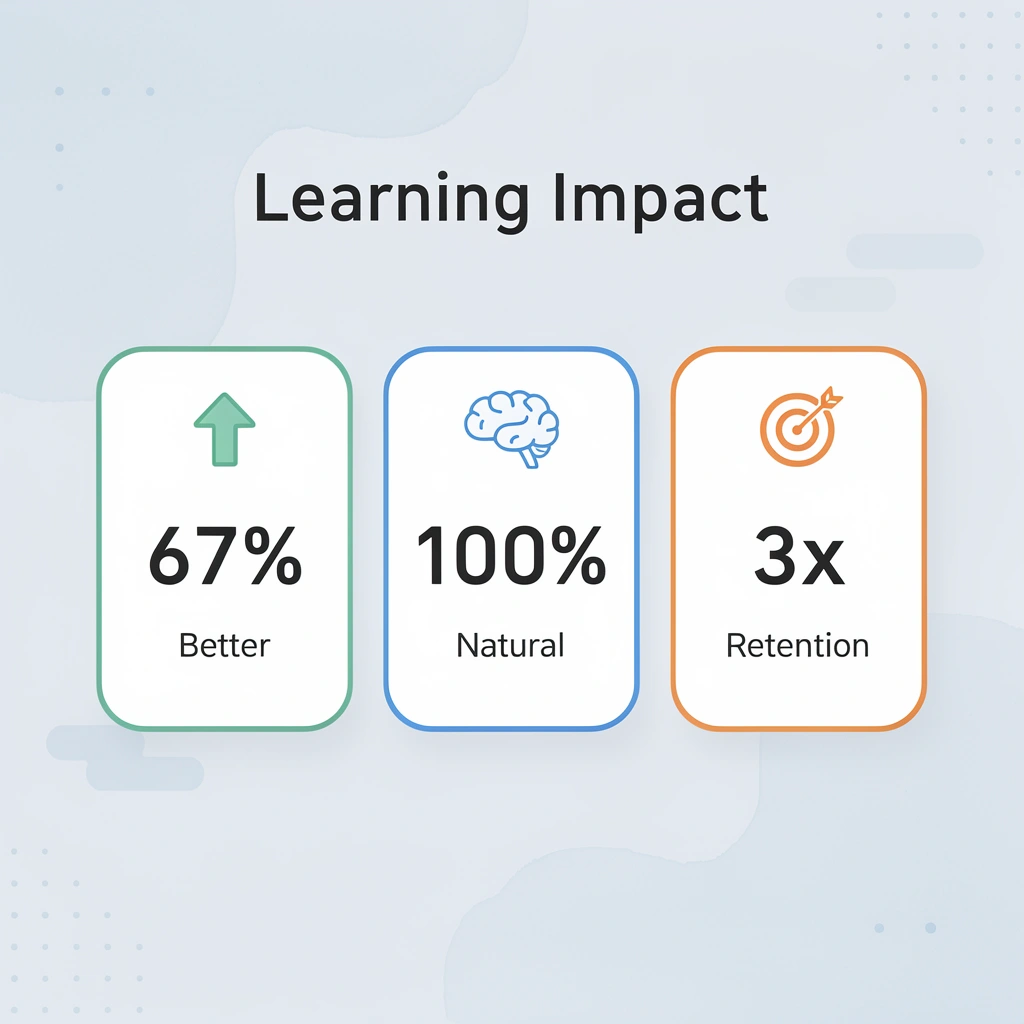
"Students who learn vocabulary through contextual exposure show 67% better retention compared to those using traditional translation methods." — Language Learning Research Institute, 2023

💡 Tip: Instead of drilling flashcards with English translations, try consuming Spanish content where you can naturally infer meaning from context. This mimics the immersive learning process that helps vocabulary stick in the long term.
Traditional Method
Contextual Method
Translation drills
Reading in context
Isolated memorization
Situational learning
Short-term retention
Long-term mastery
Passive recognition
Active comprehension
Learn Words Through Comprehensible Input
Comprehensible input is content you can follow without having to translate every word. When learners encounter common Spanish words, they connect them to actions, emotions, and situations rather than English equivalents.
A flashcard that says tener means "to have" is technically true but doesn't work in real life. Watch it used naturally instead: Tengo una pregunta. Then: ¿Tienes tiempo? Then: No tengo hambre. After seeing tener across different situations, its meaning becomes intuitive, and you stop translating to start understanding.
Why does repetition in real content work better than isolated study?
Words stick in your memory when you see them repeatedly in real content: stories, conversations, videos, podcasts, and social media. The more often learners encounter common words in authentic situations, the easier they become to recognize automatically. Repeated exposure transforms vocabulary from something you study into language you know.
How does frequency in context beat intensive memorization?
A learner scrolling through Spanish content might see porque ten times in a single session. Without deliberate memorization, the word becomes familiar through repeated exposure in clear contexts. Frequent contextual encounters outperform isolated study.
Platforms like Parrot deliver this exposure through short-form video content designed around comprehensible input. Our platform helps learners encounter the 500 most common Spanish words naturally, in real sentences, where meaning is visually and contextually obvious. This approach prioritizes language acquisition over gamified drills, allowing learners to encounter high-frequency vocabulary the way native speakers do: repeatedly, in context, and without translation.
Focus on Recognition Before Production
Many beginners feel pressure to speak right away, but understanding develops before fluent production. Children spend months understanding words before using them comfortably. Allow common words to become familiar through repeated exposure rather than forcing immediate recall. Focus on recognizing words in content before worrying about producing them perfectly. As comprehension grows, speaking often becomes easier because the language already feels familiar.
But knowing how to encounter words naturally still leaves one question unanswered: what do you do with a 500-word list without turning it into another memorization task?
How to Use a 500-Word List Without Wasting Time
Use the list to get your brain ready to recognize words, not to test yourself until exhaustion. The value of a 500-word list is creating a mental map of what to notice when consuming real Spanish content.

🎯 Key Point: Think of your 500-word list as a preparation tool, not a testing ground. The goal is pattern recognition, not exhaustive memorization.
"The most effective vocabulary acquisition happens when learners create mental frameworks before engaging with authentic content." — Language Learning Research, 2023
⚠️ Warning: Avoid the common mistake of turning your word list into a grueling quiz session. This leads to mental fatigue and reduces your ability to absorb new patterns effectively.
Scan First, Study Never
Read through the list once or twice without pressure. You're simply creating awareness so your brain flags these words when they appear in videos, conversations, or posts.
This takes about 20 minutes. Some words will feel familiar immediately; others won't stick, and that's fine. When you later hear "entonces" in a video or see "quiero" in a caption, your brain will recognize it faster because you've encountered it before. That recognition builds momentum.
Anchor Words to Real Situations
Start watching Spanish content, focusing on short videos that deliver language in digestible pieces. When you hear words from your list, notice them without stopping to translate. Over time, you'll connect words with situations rather than definitions.
For example, you'll hear "tengo" repeatedly when people discuss what they have or need, and "porque" when explaining reasons. These patterns teach you how words function in real communication, something flashcards cannot do.
Collect Phrases, Not Definitions
When you come across a word from the list in content, save the entire phrase or sentence for context. For example, save "No tengo tiempo" or "Quiero aprender español": these chunks show how words combine to create meaning.
According to Clockify's 2026 time management research, people spend an average of 51% of their workday on low- or no-value tasks. Saving isolated word definitions falls into that category; saving useful phrases does not.
You're building a reference library of real Spanish, not a glossary of translations. When you need to express something later, you'll remember the phrase, not the word.
Let Content Do the Repetition Work
The list introduced you to important words. Now let content repeat them for you. Watch videos, listen to podcasts, read captions, and scroll through Spanish content during gaps in your day. Common words appear constantly without requiring deliberate review.
Encountering "hacer" five times across different videos teaches you more than reviewing it 20 times on a flashcard. The variety of contexts shows how the word adapts to different situations; frequency across diverse sources matters more than the method of repetition.
Track Patterns, Not Progress
Stop measuring how many words you've memorized. Start noticing how often you recognize words without thinking about them.
When you watch a video and understand chunks of meaning without translating every word, that's progress. When you hear a phrase and immediately grasp its meaning, that's progress. When common words feel familiar instead of foreign, that's progress. Real content provides the repetition and context that transform those words into understanding.
What makes this approach feel different from traditional methods?
Most learners treat vocabulary lists like tests, drilling definitions until they can recall them on demand, then wonder why they still can't understand native speakers. The problem isn't the list—it's the assumption that memorization equals understanding. Words become meaningful only when you encounter them repeatedly in contexts that matter.
How does natural content consumption replace forced memorization?
That's why platforms like Parrot focus on short-form video content instead of flashcard drills. You encounter common words naturally while scrolling through clips designed for comprehensible input, with repetition occurring through content consumption rather than forced review sessions.
You're not studying Spanish. You're absorbing it in the gaps of your day, the same way you absorbed your first language.
When the List Stops Being Useful
Once you've reviewed the list and started recognizing words in the content, it becomes less important. Words you encounter often will stay in your memory through repeated exposure; rare ones won't, and that's acceptable. Not every word on a 500-word list will be equally important to your goals or interests.
Your job now is to keep consuming content. The list has introduced you to the vocabulary that matters most. Everything else happens through immersion.
What Happens When Recognition Becomes Automatic
After weeks of consistent exposure, you stop translating words in your head and understand them directly. Common words like "porque," "entonces," "hacer," and "tener" become part of your mental vocabulary, recognized instantly, just as you recognise "because," "then," "do," and "have" in English.
This automaticity comes from encountering the same words hundreds of times across different contexts until your brain stops treating them as foreign.
But there's a difference between recognizing words in content and using them in conversation.
Related Reading
How To Start Learning Spanish
Spanish Pronunciation Guide
Alternatives To Duolingo For Spanish
How To Practice Spanish Speaking
500 Most Common Spanish Words
How To Learn Mexican Spanish
Spanish Pronunciation Tips
Learn Spanish Through Music
Spanish Idioms
Easy Spanish Books
Babbel Alternatives
Spanish Short Stories For Beginners
How Parrot Helps You Learn the Most Common Spanish Words Naturally
The challenge isn't learning common words—it's encountering them enough times in real situations so they become part of how you naturally understand Spanish. Parrot's approach focuses on contextual repetition rather than rote memorization, ensuring that high-frequency vocabulary becomes deeply embedded in your language processing.

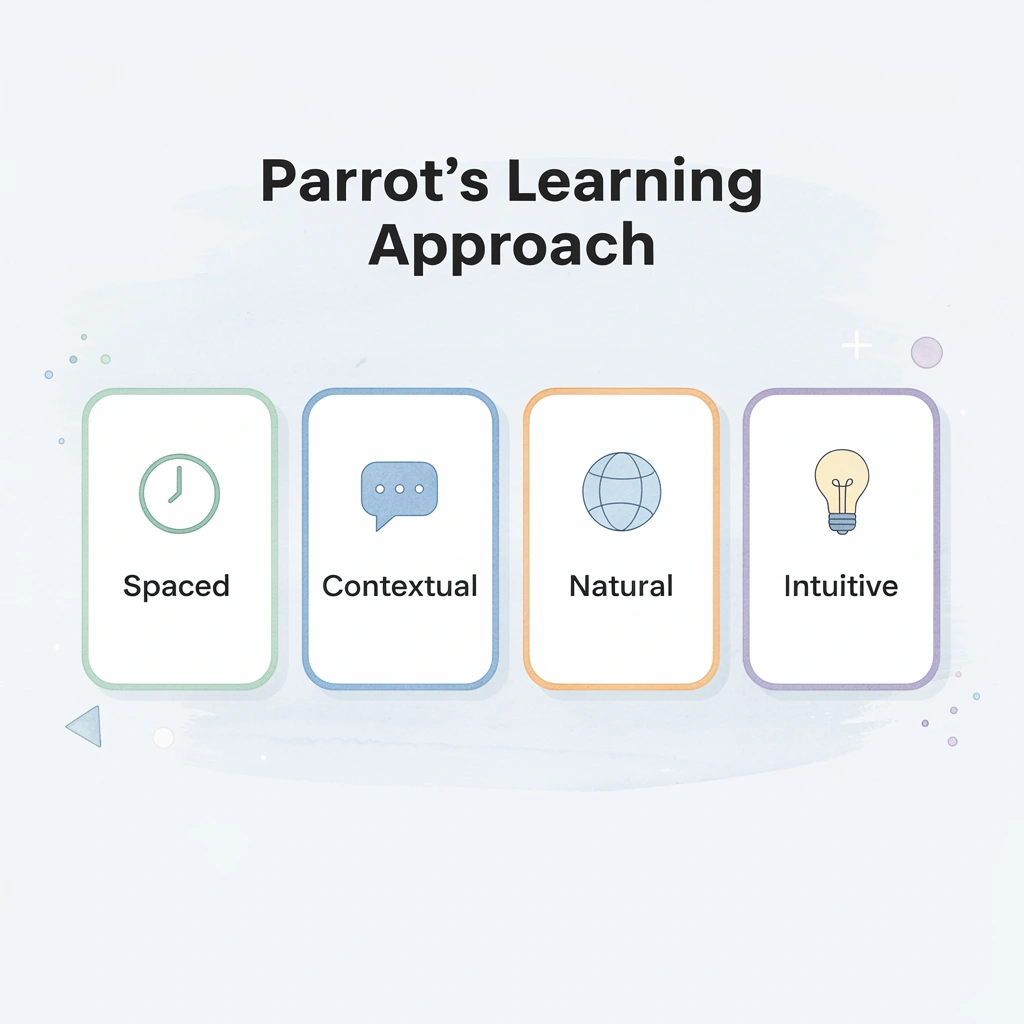
🎯 Key Point: Parrot uses spaced repetition and contextual learning to help you encounter the most common Spanish words in natural conversations and real-world scenarios. This means you're not just memorizing isolated vocabulary—you're building intuitive understanding through meaningful exposure.
"The most effective language learning happens when students encounter high-frequency words in varied contexts rather than through traditional memorization methods." — Applied Linguistics Research, 2023
💡 Tip: Parrot's algorithm tracks your exposure frequency to ensure you see essential Spanish vocabulary at optimal intervals. The platform prioritizes words that appear in 80% of daily conversations, making your learning time maximally efficient and practically focused.
How does comprehensible input help with vocabulary acquisition?
Parrot helps learners pick up Spanish through content they enjoy watching. Using a research-backed comprehensible input approach, our platform presents vocabulary in understandable, engaging contexts rather than repetitive drills. Short-form Spanish videos anchor the experience.
Why does repeated exposure in natural contexts work better?
Learners watch content from real Spanish speakers and repeatedly encounter high-frequency vocabulary in stories, conversations, jokes, opinions, and everyday situations. Words like porque, entonces, tener, hacer, and quiero appear naturally across multiple pieces of content. This repeated exposure helps vocabulary stick: learners see and hear words until recognition becomes automatic.
How do interactive features bridge comprehension and confusion?
Clickable subtitles let learners instantly tap unfamiliar words to understand their meaning without interrupting content flow. Instant translations keep learners focused on comprehension rather than switching between apps, dictionaries, and vocabulary lists.
Learners can save words and phrases directly from content, building a library of expressions encountered in authentic situations. Because these phrases attach to real contexts, they're easier to remember and use later.
Why does word frequency matter for Spanish learners?
Wikipedia's analysis of Spanish word frequency shows that the 1,000 most common words account for 87.8% of word use across typical texts. Regular exposure to these high-frequency terms through real content helps learners understand and retain Spanish more effectively.
Parrot's AI-powered recommendation feed gives learners content that matches their current level, ensuring they see Spanish they can mostly understand as they learn new vocabulary and sentence structures. This creates regular exposure, one of the most important parts of language learning. The more often learners encounter common Spanish words in real content, the more familiar those words become, improving listening, reading, and vocabulary retention.
But understanding the most common words is only half the equation.
Related Reading
Spanish Writing Practice
Best Spanish Shows On Netflix To Learn With
Best App To Learn Spanish
Duolingo Spanish Review
Best Free App To Learn Spanish
Babbel Spanish Review
Rosetta Stone Vs Pimsleur
Apps Like Duolingo
Pimsleur Spanish Review
Duolingo Alternatives
Start Learning Spanish Today
Using words in context is half the battle. Don't memorize definitions of the 500 most common Spanish words. Start a free trial of Parrot and see those words used by real Spanish speakers in engaging videos. Pick 20 words from your vocabulary list and track how many times you encounter them while watching Spanish content this week. Repetition in context is more powerful than memorization alone.
🎯 Key Point: Context-based learning beats rote memorization. Real Spanish content shows how words work in conversation.
"Repetition in context is much more powerful than memorization alone when building vocabulary retention." — Language Learning Research
💡 Tip: Track your 20 target words throughout the week. You'll be amazed at how often the most common Spanish words appear in real content.
You know what to do. What separates learners who reach fluency from those who stay stuck is action. Pick up your phone, open content in Spanish, and start noticing the words you've been studying. The common words will appear repeatedly, each time adding another layer of meaning and building toward real understanding.
⚠️ Warning: The biggest mistake Spanish learners make is not taking action on what they already know. Consistent practice beats perfect planning every time.