Choosing a Spanish learning app is harder than it sounds. Babbel is one of the most recognized names in the space, but recognition does not guarantee results. This review examines Babbel's Spanish course in detail, covering its lesson structure, speech recognition, grammar approach, and whether the subscription cost is worth it for someone starting from scratch.
Babbel works best when paired with tools that push speaking and listening beyond structured drills. Focused, real-world practice closes the gap between following lessons and holding actual conversations. For anyone ready to take that next step, learn Spanish with Parrot to build the fluency that app lessons alone rarely deliver.
Table of Contents
Why So Many Spanish Learners Finish Apps But Still Can't Hold Conversations
What Babbel Spanish Actually Teaches
Where Babbel Helps Spanish Learners Make Progress
Where Babbel Falls Short for Real-World Fluency
Babbel Alternatives Depending on Your Learning Goal
How Parrot Helps Turn Spanish Lessons Into Real Conversations
Start Learning Spanish Today
Summary
Most language learners complete app lessons and still cannot hold a real conversation, and the reason is a method problem rather than a memory problem. Apps are designed to reward recognition, which means identifying correct answers in a controlled environment. Speaking requires production, which means generating language under time pressure without prompts, topic headers, or multiple-choice options. These are different cognitive skills, and most structured apps train only one of them.
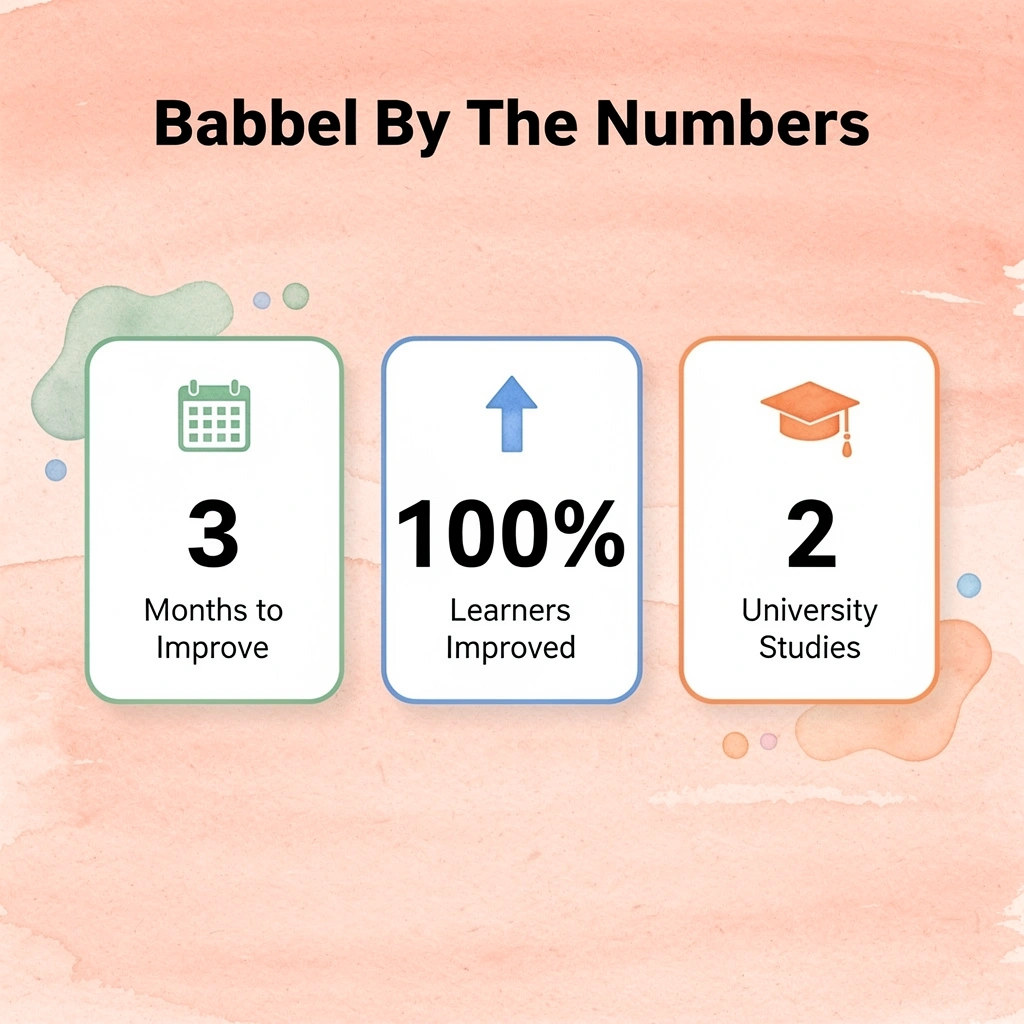
Babbel's curriculum covers approximately 2,000 words across its full course, which supports basic exchanges but falls short of the 5,000 to 10,000 words researchers associate with genuine fluency. The platform's grammar explanations, spaced repetition system, and CEFR-aligned progression give beginners a clearer foundation than most apps offer. For learners starting from zero, a Yale University study found that 100% of Babbel users improved their oral proficiency within three months, and a Michigan State University study found that 96% saw better grammar and vocabulary test scores after just ten hours of use.
The ceiling appears around the A2 level on the CEFR scale, which is where most Babbel learners plateau after six to twelve months of daily use. At A2, learners can handle simple, predictable exchanges. What they cannot do is follow a conversation that changes direction every thirty seconds, process regional accents at native speed, or respond to an unexpected follow-up question without freezing. The gap between those two things is not a vocabulary problem. It is a processing problem.
Dr. Stephen Krashen's research on language acquisition draws a clear line between learning a language consciously through rule memorization and acquiring it through meaningful exposure to comprehensible messages. Babbel sits firmly on the learning side of that line. Lessons that explain the subjunctive tense build declarative knowledge, facts you can recall when given time to think. They do not build the procedural fluency that surfaces automatically when someone asks you a question, and you need to respond in three seconds.
Babbel's speech recognition feature can confirm whether pronunciation approximates a target phrase, but it cannot tell you whether your word choice sounded natural, whether your rhythm matched native pacing, or whether what you said would land in a real exchange. More importantly, it cannot respond unpredictably. A learner can score perfectly on every pronunciation exercise and still freeze the moment a native speaker answers back with something outside the lesson's expected range.
The most effective Spanish learners build systems rather than relying on a single platform. A comprehensive review spanning over 700 hours tested across 12 language learning apps found that no single tool develops every skill equally. Babbel handles structured grammar and beginner vocabulary well. Immersive listening tools develop comprehension at native speed. Conversation practice builds production under pressure. Each component closes a different gap, and combining them yields results that no single app can match on its own.
Parrot's Learn Spanish addresses the comprehensible input gap directly by delivering short-form video immersion from real Spanish speakers, giving learners exposure to unscripted, natural language in the moments between structured study sessions.
Why So Many Spanish Learners Finish Apps But Still Can't Hold Conversations
Finishing Spanish lessons and actually speaking Spanish are fundamentally different skills. One requires you to recognize things; the other requires you to produce language under pressure in real time, with no multiple-choice options to fall back on. Apps are built around recognition: they reward you for picking the right answer, clicking the correct word, or matching a translation. What they rarely train is production — the raw ability to generate language when a real conversation demands it.
"Apps give rewards for recognition and rarely train production at the level real conversations need." — A critical distinction most learners never realize until it's too late.
⚠️ Warning: Completing an app's course is not the same as becoming conversational. Recognition skills and production skills are trained through entirely different methods, and confusing the two is the #1 reason learners plateau.
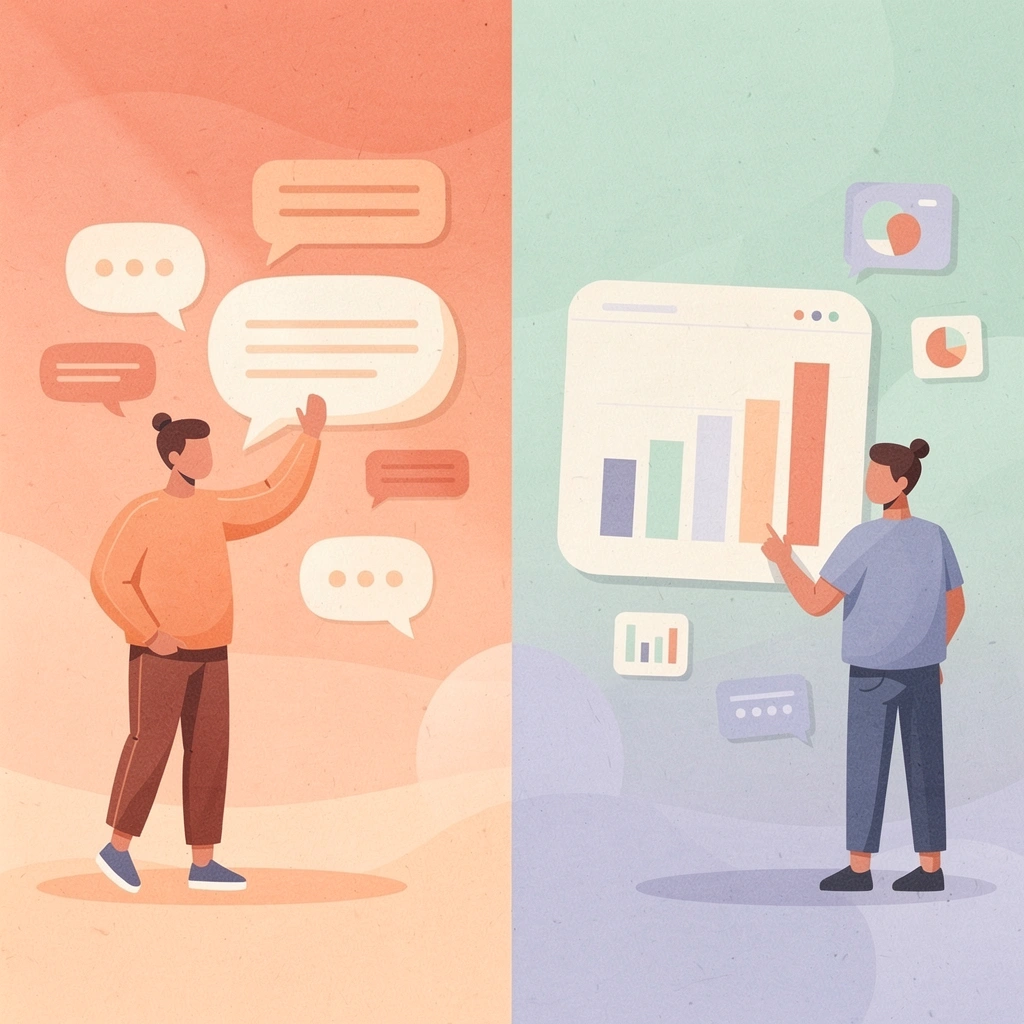
The gap shows up immediately — and it's jarring. You finish a unit on greetings, score perfectly on the quiz, feel confident — then a native speaker greets you at full conversational speed with a regional expression, and your brain stops cold. That's not a memory failure. That's a method failure. The lesson trained you to identify correct answers from a list, not to generate language under pressure from scratch in a live moment.
💡 Tip: To close this gap, you must practice active language production — speaking out loud, forming sentences unprompted, and simulating real conversational pressure — not just completing recognition-based drills.
🎯 Key Point: The difference between learners who become fluent and those who stay stuck is simple — fluent speakers train production; stuck learners keep training recognition.
Recognition: Trains your brain to identify correct forms; primarily shows up in low-stakes app quizzes and multiple-choice drills.
Production: Trains your brain to retrieve and construct language without external prompts; essential for real-time conversations and full-speed speech.
Pressure Response: Trains your brain to bypass translation and speak instinctively; critical for native speaker interactions and unexpected, high-stress situations.
Why do apps create a ceiling that stops most learners from speaking?
According to the Kaiwa Blog's research on why learners can't speak Spanish after using apps, Duolingo works for the first 2–3 months of learning vocabulary and basic grammar, but most learners outgrow it quickly. This limitation exists across most app-based learning: the structure that makes apps easy to start with is what limits how far they can take you.
Most learners respond by studying more consistently, assuming that exposure will turn into fluency. That logic works for reading and recognition but breaks down in speaking, which requires quickly pulling words from memory under pressure. Tools like Parrot's learn Spanish address this directly through short-form video immersion based on comprehensible input: real, contextual language exposure that trains your brain to process Spanish as it sounds in conversation, not as it appears in structured lessons.
What does the science say about how the brain actually acquires language?
Dr. Stephen Krashen's research on language learning explains why: the brain acquires language through understanding messages, not memorizing rules. Grammar drills build explicit knowledge you can explain, while absorbing language in context builds fluency that emerges naturally in conversation. Apps focused on drills train the wrong cognitive pathway for speaking.
The real question: Is your app preparing you for the moment when the conversation starts, and the answer choices disappear?
What Babbel Spanish Actually Teaches
Babbel Spanish teaches structured, grammar-forward language instruction, organizing content into lessons that build on each other — from basic phrases to complex conversations — while explicitly explaining the rules behind what you're learning.
"Babbel's curriculum is built around grammar-forward instruction, ensuring learners don't just memorize phrases but understand the underlying language structure that makes real conversation possible."
🎯 Key Point: Unlike passive memorization apps, Babbel is designed around a progressive lesson structure — each unit intentionally reinforces and expands on the last.
💡 Tip: Pay close attention to the grammar explanations embedded in each lesson — these are the leverage points that accelerate your path from basic phrases to truly complex conversations.

What the curriculum actually covers
The course covers practical vocabulary for everyday situations: greetings, travel, food, work, and social interactions. According to an Honest Babbel Review by Ilam Padmanabhan on Medium, Babbel Spanish teaches around 2,000 words across its full curriculum—a reasonable working vocabulary for basic conversations but below the 5,000 to 10,000 words associated with real fluency. Grammar explanations accompany most lessons, covering verb conjugations, gendered nouns, and tense structures with clarity that makes Spanish feel logical rather than random. This support proves especially helpful for learners who struggled with language study due to poor instruction.
How the method is built
The platform organizes its content around the Common European Framework of Reference for Languages (CEFR), which offers clearer proficiency tracking than most apps. According to Babbel's Learn Spanish FAQ, you can have basic conversations in weeks and conversational proficiency within months of consistent study. Spaced repetition reinforces vocabulary, while speech recognition exercises push learners to produce sounds rather than recognize them. The experience feels more like a guided course than a game, which is a strength or limitation depending on your learning style.
Where does structured learning fall short in real conversations?
Babbel works well for learners who set aside dedicated study time and work through lessons in order. The problem emerges when understanding a grammar rule in a lesson differs from retrieving it mid-conversation. Learners seeking to close that gap faster often find short-form video immersion tools like Parrot offer what Babbel's structure cannot: exposure to natural, unscripted Spanish in the moments where real conversations happen.
Does learning about Spanish actually build fluency?
Babbel teaches about Spanish—explaining conjugations, introducing vocabulary, and walking through sentence construction. But Dr. Stephen Krashen's comprehensible input research shows the brain acquires language by understanding messages, not memorizing rules. A lesson explaining the subjunctive tense differs from hearing it naturally in a conversation you're trying to follow. One gives you knowledge. The other gives you fluency.
What ceiling does structured instruction create for learners?
Babbel requires consistent, scheduled effort: focused attention, a quiet space, and a willingness to stick with structured content long enough for it to build proficiency. For travelers or professionals with short-term goals, this trade-off makes sense. For learners seeking to build fluency that emerges naturally under pressure, the method's reliance on explicit instruction rather than natural exposure creates a ceiling that structured lessons alone cannot overcome.
Whether that limit is where most learners get stuck remains a more complicated question than it first appears.
Related Reading
Where Babbel Helps Spanish Learners Make Progress
According to a Yale University study cited in the Babbel App Store listing, all learners improved their speaking skills within three months of using the app regularly. A separate Michigan State University study, also referenced in the Babbel App Store listing, found that 96% of learners achieved better test scores on grammar and vocabulary after ten hours with the platform.
"96% of learners got better test scores on grammar and vocabulary after just ten hours with Babbel." — Michigan State University Study, via Babbel App Store Listing
🔑 Takeaway: Two independent university studies confirm that Babbel delivers measurable improvements in speaking ability, grammar, and vocabulary within a short timeframe.
💡 Tip: If you commit to ten hours of focused Babbel practice—roughly 30 minutes a day for three weeks—the research suggests you'll see real, testable progress in your Spanish grammar and vocabulary scores.
How does Babbel's grammar instruction help beginners learn faster?
Babbel's clearest strength is its direct teaching of grammar rules. Many apps expect learners to pick up patterns through repetition alone. Babbel is different: it names the rule, shows it in context, and asks you to apply it. For a beginner trying to understand why "el libro" and "la mesa" take different articles, that direct explanation helps you understand faster than guessing. The spaced repetition review system reinforces those rules at intervals timed to prevent forgetting, converting short-term exposure into lasting retention.
The vocabulary focus is equally deliberate. Lessons prioritize high-frequency words tied to situations learners will face: ordering food, asking directions, checking into accommodations, and handling basic transactions. Babbel's curriculum rests on the principle that early wins matter, and recognizable, usable vocabulary creates them quickly.
Does completing Babbel lessons mean you can actually hold a conversation?
Most learners use structured apps like Babbel because the format feels safe and measurable. You complete a lesson and feel a sense of progress. The problem is that measuring progress by finishing lessons differs from measuring conversational ability, and this gap widens over time. Platforms like Parrot work differently. Our platform uses short videos to train your brain to understand real spoken Spanish rather than just memorizing lesson patterns.
Where the foundation starts to feel like a ceiling
Babbel excels at building declarative knowledge: facts about Spanish you can recall when you have time to think—grammar rules, vocabulary lists, conjugation patterns. It builds procedural fluency less consistently: the automatic language processing that lets you respond without mentally conjugating a verb first. Dr. Stephen Krashen's research on language acquisition draws a sharp distinction between intentional language learning and acquisition through meaningful exposure, and Babbel sits firmly on the learning side of that line.
That distinction matters more than most learners expect, and understanding where the gap opens up reveals the next surprising piece of this picture.
Where Babbel Falls Short for Real-World Fluency
Babbel builds real knowledge. The gap it leaves isn't in what you learn — it's in what you never get to practice doing with that knowledge under pressure.
"The gap isn't in what you learn — it's in what you never get to practice doing with that knowledge when you're under pressure." — Core Limitation of Structured App Learning
💡 Tip: If Babbel is your foundation, pair it with unscripted speaking practice. Real conversations don't follow a lesson plan.
⚠️ Warning: Structured curriculum apps excel at building vocabulary and grammar rules but cannot simulate the cognitive load of real conversations that shift direction unexpectedly.
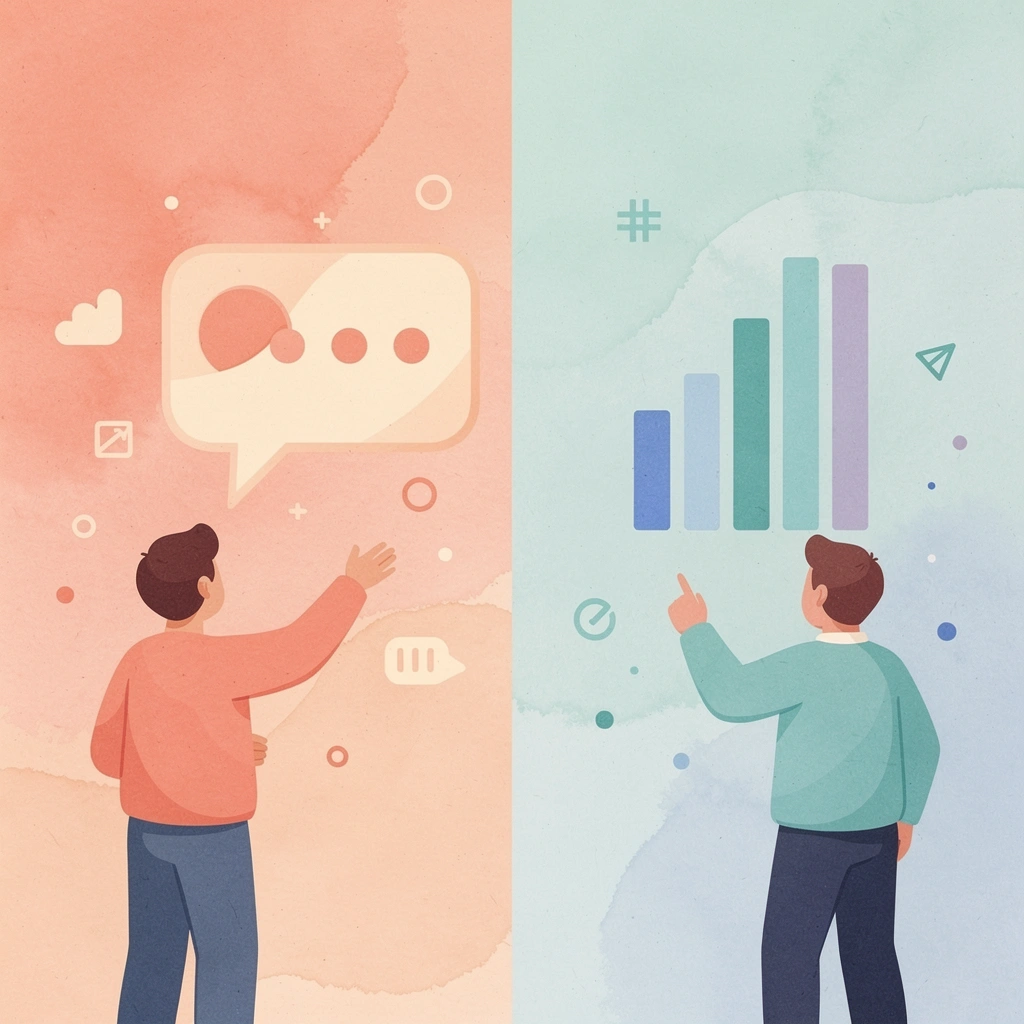
According to the LingQ Blog's Babbel Review, Babbel's full curriculum places learners at roughly A2 on the CEFR scale after six to twelve months of daily use. But A2 is the level where you can handle simple, predictable conversations — not talks that change direction every thirty seconds. That distance requires a different kind of practice entirely.
A1 (Beginner): Can handle basic greetings and introductions; Babbel is highly effective here.
A2 (Elementary): Capable of simple, predictable exchanges; Babbel achieves this with consistent 6–12 months of use.
B1 (Intermediate): Able to navigate unexpected topics and daily situations; Babbel offers partial support, but requires supplemental real-world practice.
B2+ (Upper-Intermediate/Advanced): Capable of fluid, spontaneous, and complex discussion; Babbel falls short, requiring immersive platforms, live tutors, and native-level content to reach this level.
🔑 Takeaway: After six to twelve months of daily effort, Babbel delivers A2 proficiency — a solid foundation, but still two full levels away from the conversational fluency most learners are actually chasing.
What structured lessons can't replicate
Babbel's lessons remove friction but hinder real fluency. Every exercise pre-loads vocabulary, reveals the topic, and narrows acceptable responses. This scaffolding helps introduce new material, yet you're never forced to retrieve language independently, under time pressure, or without a prompt. Real conversations lack topic headers. According to an honest Babbel review published on Medium, Babbel lessons average 10 to 15 minutes each and offer limited conversational depth. Even consistent daily users accumulate minimal exposure to the unpredictable, fast-moving exchanges that define actual spoken Spanish.
Why does structured practice fail to transfer into natural speech?
Most learners assume structured practice alone leads to natural speech. But fluency requires a brain trained to process language in real time, not retrieve memorized patterns from structured prompts. Apps like Parrot address this by placing learners in short-form video content from real Spanish speakers, where the language is unscripted, the pacing is natural, and comprehension happens without guardrails. That exposure trains the processing speed that structured lessons cannot replicate.
Why can't speech recognition prepare you for real conversations?
Babbel's speech recognition feature can check whether your pronunciation matches a target phrase, but it cannot assess whether your word choice was natural, your rhythm sounded native, or whether what you said would work in real conversation. More importantly, it cannot respond. A learner can score perfectly on every pronunciation exercise and still freeze when a native speaker answers back with something unexpected. That freeze isn't a vocabulary problem—it's a processing problem, and structured repetition alone cannot solve it.
What happens when the learning environment stops being predictable?
The same pattern appears in listening comprehension, reading speed, and conversational repair. Skills that feel strong within the app break down the moment the environment becomes unpredictable. This happens when any learning system prioritizes measurable progress within its own walls over real-world performance.
Babbel Alternatives Depending on Your Learning Goal
Closing the gap between app performance and real-world fluency requires addressing multiple skill-specific gaps, each with its own solution.
"The distance between knowing a language in an app and speaking it in the real world is defined by how well you target each individual skill gap." — Language Acquisition Research
💡 Tip: Don't rely on a single app to cover every learning need — skill-specific gaps demand targeted, specialized tools.
🎯 Key Point: Real-world fluency isn't one skill — it's a combination of speaking, listening, reading, and writing abilities that each require their own dedicated approach.
Conversational Speaking: Use Langua (AI-powered, judge-free practice) or iTalki/LanguaTalk (live human tutors) to build real-time conversational reflexes.
Listening Comprehension: Use Dreaming Spanish for "comprehensible input" videos or Yabla to watch native-speaker content with interactive captions.
Grammar Mastery: Shift to SpanishPod101 or Lingodeer, which offer more explicit, structured explanations of grammar rules than gamified apps.
Vocabulary Building: Utilize Anki for personalized spaced-repetition flashcards or SpanishDict for comprehensive, context-heavy dictionary guides.
Full Immersion: Incorporate Storylearning (Spanish Uncovered) or Dreaming Spanish to learn through context, narrative, and "input-first" methods rather than rote drills.

When structure is already working for you
Babbel's organized lesson format works well for beginners: grammar explanations, step-by-step vocabulary building, and a clear A1-B2 curriculum are strengths. The key difference lies in what follows. Learners who use only Babbel tend to plateau, while those who incorporate it into a broader learning plan continue to progress.
Why does vocabulary stop growing without varied context?
The failure point is usually context. Apps teach words in controlled environments, so learners recognize vocabulary in familiar formats but miss it in Spanish news articles or fast conversations. Reading Spanish content regularly—graded readers, social media, news sites—exposes learners to the same words across dozens of situations. That repetition in varied contexts moves a word from "I've seen this before" to "I can use this without thinking."
How does listening outside the app build real comprehension?
Most learners practice listening the same way: inside the app, with clear audio, at a controlled speed. According to NBC News Select, Pimsleur offers courses in 51 languages, with English as the source language, and 14 English-as-a-Second-Language courses. Listening comprehension develops differently from reading or grammar. Spanish podcasts, YouTube channels, and television shows force your brain to process speech at native speed, with regional accents and informal patterns that no structured lesson can replicate. Discomfort signals that real learning has begun.
When speaking, confidence is the actual problem
Recognition and production are different thinking skills. Structured apps train recognition: learners finish dozens of lessons and recognize hundreds of words. But when a native speaker responds unexpectedly, they freeze. Conversation practice—through a language exchange partner, a tutor, or a speaking community—improves production. The unpredictability of real exchange, whether a follow-up question you didn't expect or a phrase you've never heard, is not a problem to avoid. It is the training environment itself.
What does immersive listening do that structured apps can't?
Parrot addresses this gap with short-form video immersion built around comprehensible input: real Spanish in contexts that clarify meaning without translation. The approach is grounded in Krashen's acquisition research, which argues that the brain absorbs language most effectively when processing understood messages rather than drilling memorized rules. For learners wanting to develop listening and comprehension skills throughout their day rather than in scheduled lessons, that distinction matters.
How do the most effective Spanish learners close every gap?
A comprehensive review spanning over 700 hours tested across 12 language learning apps confirms what experienced learners know: no single platform develops every skill equally. The most effective Spanish learners build systems, not dependencies. Babbel handles structured grammar and beginner vocabulary. Immersive listening tools handle comprehension. Conversation practice handles production. The real skill is knowing which gap you're trying to close right now.
Once you understand which gap matters most, the next question becomes one that most learners never ask first.
Related Reading
How Parrot Helps Turn Spanish Lessons Into Real Conversations
Babbel's strength is building a solid foundation: teaching useful vocabulary, explaining grammar clearly, and providing structured lessons. The challenge emerges after those lessons end.
"Understanding a language and being able to use it in real conversation are two different skills—and most apps only train one of them." — Language Learning Research
💡 Tip: If you've completed structured lessons but struggle when speaking, the issue isn't your vocabulary—it's insufficient conversational practice to activate what you already know.
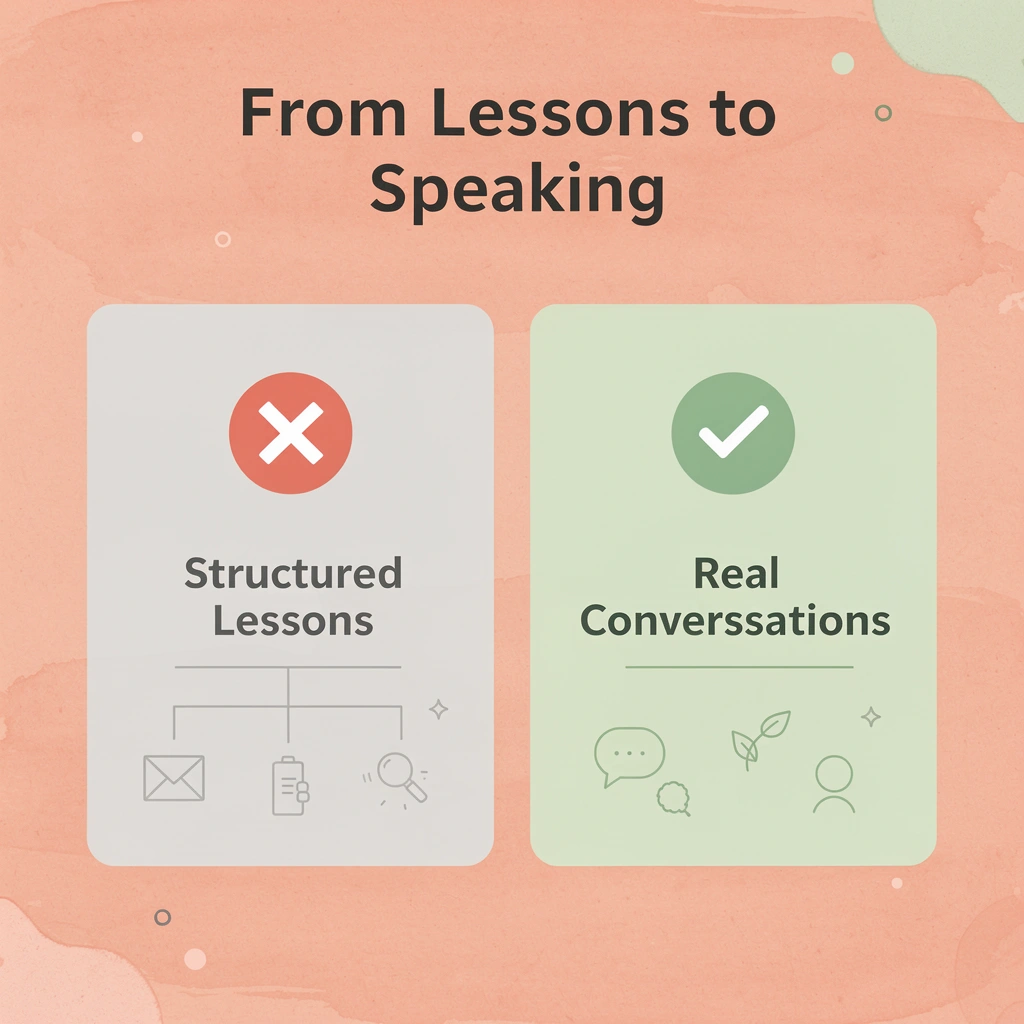
Many learners reach a point where they understand much more Spanish than they can actually use. They recognize vocabulary, understand grammar, and complete exercises successfully. Yet when it's time to speak, they hesitate, search for words, or struggle to respond naturally.
🎯 Key Point: This gap between passive understanding and active speaking ability is one of the most common—and most frustrating—plateaus in language learning.
Passive Recognition: You can identify and comprehend vocabulary, but you lack the real-time practice needed to bridge the gap between hearing and speaking.
Active Production: You understand the rules, but you're missing the conversational confidence that only comes from navigating unscripted, natural dialogue.
Babbel Lessons: You are building a solid foundation through drills, but you are missing the live, unpredictable interaction required for true fluency.
⚠️ Warning: Completing lessons without practicing real conversation can create a false sense of readiness—you may feel prepared until the moment someone actually speaks to you.
Why does understanding Spanish not always lead to speaking it?
This isn't because they've learned the wrong things. Communication is a skill that must be practiced separately from studying. Knowing vocabulary differs from using it in conversation. Understanding grammar rules differs from speaking naturally under pressure. Reading Spanish differs from interacting with another speaker in real time.
This is where Parrot fills the gap. Rather than teaching language concepts, it helps learners actively use the Spanish they've already learned. Instead of recognizing words and phrases, learners produce language, respond in conversations, and develop communication skills that traditional lesson-based learning often leaves underdeveloped.
How does Parrot encourage active language production?
One of the biggest obstacles for Spanish learners is a lack of speaking practice. Many people spend months consuming language content without producing it, becoming comfortable understanding Spanish but uncomfortable speaking it.
Parrot encourages active language production. Rather than selecting answers from a list or completing predictable exercises, learners practice forming responses, expressing ideas, and participating in interactive communication. This moves learners beyond recognition into real language use.
The platform helps learners apply vocabulary and grammar learned elsewhere. A learner may study travel vocabulary in Babbel and understand how to ask for directions, but that knowledge becomes significantly more valuable when used in conversation. The same applies to everyday topics like introductions, shopping, dining, work, and social interactions. The more learners practice retrieving and using language in context, the more accessible it becomes during real conversations.
How does using Babbel and Parrot together build real fluency?
Many learners don't struggle because they lack knowledge; they lack experience using that knowledge under real-world conditions. Confidence grows through repetition. Every successful interaction reinforces the ability to think in Spanish, respond more quickly, and communicate naturally. Over time, speaking becomes less intimidating because it becomes more familiar.
Babbel helps learners understand Spanish. Parrot helps learners practice communicating in Spanish. For many people, this combination is more powerful than either approach alone. If your goal is real-world fluency, you'll need opportunities to use the language actively. Our Parrot platform bridges that gap by turning what you've learned into actual conversations, building confidence and communication skills faster.
Start Learning Spanish Today
Most learners skip the important question: does their method create fluency or just make them feel like they are making progress? Structured lessons like Babbel build vocabulary and grammar understanding, but they cannot close the gap between knowing Spanish and speaking it in real situations.
"The difference between recognizing a language and producing it fluently is the gap most traditional apps never bridge." — Language Acquisition Research
💡 Tip: Before committing to any Spanish learning method, ask yourself one question — does it make you feel productive, or does it actually build real speaking ability?
⚠️ Warning: Structured drill-based apps like Babbel are excellent for vocabulary and grammar foundations, but relying on them alone will leave you unable to hold a real conversation.
Method
What It Builds
What It Misses
Babbel / Duolingo
Vocabulary, grammar rules
Real-world speaking fluency
Textbooks
Reading comprehension
Listening and response speed
Immersion Apps
Natural spoken fluency
Structured grammar rules
To move from recognizing Spanish to producing it naturally, learn Spanish through Parrot, a short-form video immersion app built around comprehensible input. You absorb real spoken Spanish in daily gaps, training your brain to process and respond like actual conversation. Learning happens through meaningful exposure at the right level, not repetition drills.
🎯 Key Point: Comprehensible input—hearing Spanish at the right difficulty level—is one of the most research-backed methods for achieving natural fluency fast.
✅ Best Practice: Use Parrot's short-form video format to fit Spanish immersion into everyday gaps in your schedule: commutes, lunch breaks, or even 5-minute windows between tasks.
Related Reading
Babbel Spanish Review
Pimsleur Spanish Review
Duolingo Spanish Review
Rosetta Stone Vs Pimsleur
Spanish Idioms