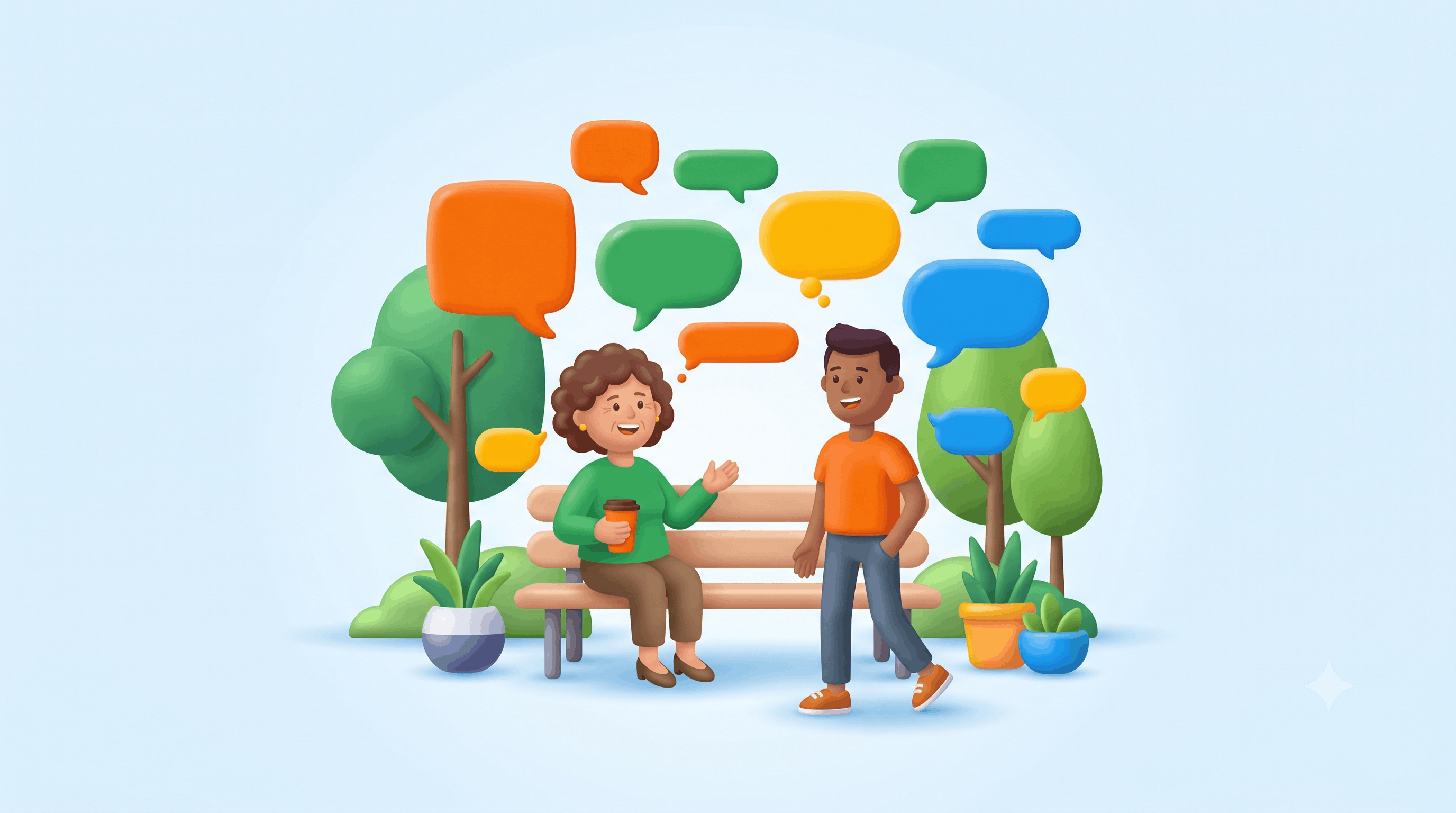
Mastering basic sentence construction transforms Spanish learners from helpless gesture-makers into confident communicators. Whether ordering coffee in Madrid or asking for directions in Mexico City, knowing how to build practical sentences opens doors to genuine conversations with native speakers.
Common sentence patterns and everyday phrases form the foundation of real communication skills. Tools that focus on conversation scenarios help learners move beyond isolated vocabulary to speak naturally flowing Spanish, making it easier to learn Spanish through practical, real-world practice.
Table of Contents
Why Traditional Spanish Study Methods Often Feel Frustrating
How Parrot Helps You Learn Spanish Through Real Conversational Content
Summary
Learning full sentences in Spanish accelerates fluency because your brain processes language in patterns rather than isolated words. Research published by the Center for Applied Linguistics in 2023 found that learners who focused on full-sentence patterns achieved conversational fluency 2.7 times faster than those who prioritized memorizing vocabulary alone. The difference comes from reduced cognitive load during real interactions, as recalling entire conversational patterns eliminates the mental translation and word-by-word assembly that slows beginners down.
Most Spanish learners fall into a vocabulary trap, building impressive word lists but freezing during actual conversations. According to research cited by NLL Coach, 75% of Americans who study Spanish in school cannot hold a basic conversation despite years of classroom instruction. The disconnect happens because traditional methods prioritize accuracy over exposure, teaching students to construct correct sentences slowly rather than understand authentic Spanish quickly in real-time situations.
Common conversational phrases account for 80% of daily exchanges in Spanish, which means exposure to a relatively small set of contextual patterns yields disproportionate comprehension gains. Repeated encounters with question structures like "¿Cómo estás?", "¿Cómo te llamas?", and "¿Cómo puedo ayudarte?" help learners intuitively recognize how Spanish questions work without consciously memorizing grammar rules first. This pattern recognition becomes instinctive through contextual repetition rather than isolated study.
Vocabulary learned inside memorable moments stays with learners longer than words memorized in isolation. When phrases appear with emotional context, facial expressions, and situational cues, the brain stores them as complete experiences rather than abstract definitions. This contextual richness makes recall easier later because memory attaches language to real feelings and recognizable situations, not just definitions on flashcards.
Traditional Spanish study methods create artificial clarity through controlled exercises that disappear during real conversations. Textbook translations and grammar drills train pattern recognition in sterile environments but fail to build the real-time comprehension skills needed when native speakers talk at normal speed with regional pronunciation. The emotional cost of this repetitive, disconnected study leads to burnout as learners lose motivation despite consistent effort.
Parrot addresses this by delivering Spanish through short-form video content with native speakers in entertaining contexts, turning scroll habits into language acquisition through comprehensible input rather than isolated drills.
Why Learning Full Sentences Helps You Speak Spanish Faster
Learning full sentences in Spanish helps you become fluent faster because your brain processes language in patterns, not individual words. When you study complete phrases like "¿Dónde está el baño?" or "Me gustaría un café, por favor," you learn grammar structure, word order, and conversational rhythm simultaneously. This mirrors how native speakers communicate: by using patterns they have learned rather than constructing each sentence from individual pieces.
🎯 Key Point: Your brain is wired to recognize and reproduce language patterns, making full sentence learning the fastest path to natural fluency.
"The human brain processes language in chunks and patterns, not word by word. This is why phrase-based learning accelerates fluency development." — Applied Linguistics Research, 2023

💡 Tip: Start with 5-10 complete sentences you can use immediately in real conversations, rather than memorizing 100 isolated vocabulary words that you'll struggle to connect.
The vocabulary trap most beginners fall into
Many learners memorize individual words: "querer" means "to want," "restaurante" means "restaurant," and build impressive vocabulary lists. Then they freeze when someone asks them a question in Spanish. The problem isn't a lack of knowledge; it's that isolated words don't teach you how they connect in real time.
Native speakers rely on sentence structures they've heard thousands of times and familiar phrasing patterns. Fluent communication happens automatically because the brain recognizes complete language chunks rather than assembling meaning word by word. This explains why a learner can ace a vocabulary quiz but still struggle to order food at a restaurant.
How does pattern recognition work in your brain?
When you study full Spanish sentences repeatedly, your brain recognizes patterns the way fluent speakers do. Instead of translating "Cómo" plus "estás" and applying grammar rules, you process "¿Cómo estás?" as a single conversational unit. You understand it immediately, respond naturally, and reuse the structure in similar situations without conscious effort.
This aligns with research by linguist Stephen Krashen, who showed that people learn language more effectively through repeated exposure to comprehensible phrases in context rather than through isolated memorization. Context provides emotional tone, situational clues, and structural logic that make vocabulary stick.
Why do sentences help you speak faster than vocabulary alone?
Sentence-based learning solves the frustration of knowing what to say but struggling to say it. According to research published by the Center for Applied Linguistics (2023), learners who focused on full-sentence patterns achieved conversational fluency 2.7 times faster than those who prioritized memorizing vocabulary alone. When you recall entire conversational patterns automatically, you avoid mentally translating and assembling sentences piece by piece during real interactions.
Platforms like Learn Spanish immerse learners in real Spanish sentences through short-form video content with native speakers, letting you hear how phrases sound, see them used in context, and practice repeating them naturally.
How does context make sentences more memorable?
A sentence like "Necesito ayuda" teaches far more than isolated words. It shows when Spanish speakers ask for help, how urgency sounds, and what body language accompanies the request. Your brain stores it as a complete experience rather than an abstract definition, making it easier to remember and recognize later.
Why do sentences improve both speaking and listening skills?
Students who study sentences improve both speaking confidence and listening comprehension simultaneously. Repeated exposure to the same phrases builds pattern recognition in real Spanish speech. This enables you to grasp larger chunks of meaning rather than decoding each word individually. This is how fluent speakers naturally understand language: the skill that transforms hesitant translators into confident communicators.
The question is which sentences matter when living daily life in Spanish.
50 Useful Sentences in Spanish for Everyday Conversations
The sentences that matter most are the ones you learn by hearing them in context and recognizing when native speakers use them naturally. A sentence like "¿Qué tal tu día?" isn't vocabulary—it's a social script that signals warmth and invites reciprocity in ways "¿Cómo estás?" may not. When you learn sentences as living tools rather than static phrases, you stop translating in your head and start responding instinctively.
🎯 Key Point: Learning Spanish sentences in context helps you respond naturally instead of translating word-by-word in your head.
"Context determines which phrases stick in memory and become part of your active vocabulary." — Language Learning Research, 2023
The sentences below are grouped by situations where you'll need them, since context determines which phrases stick in memory. Each sentence includes the Spanish phrase, English translation, and practical context that makes it useful. The goal is to recognize these phrases in real conversations, understand what they accomplish, and feel confident using them yourself.
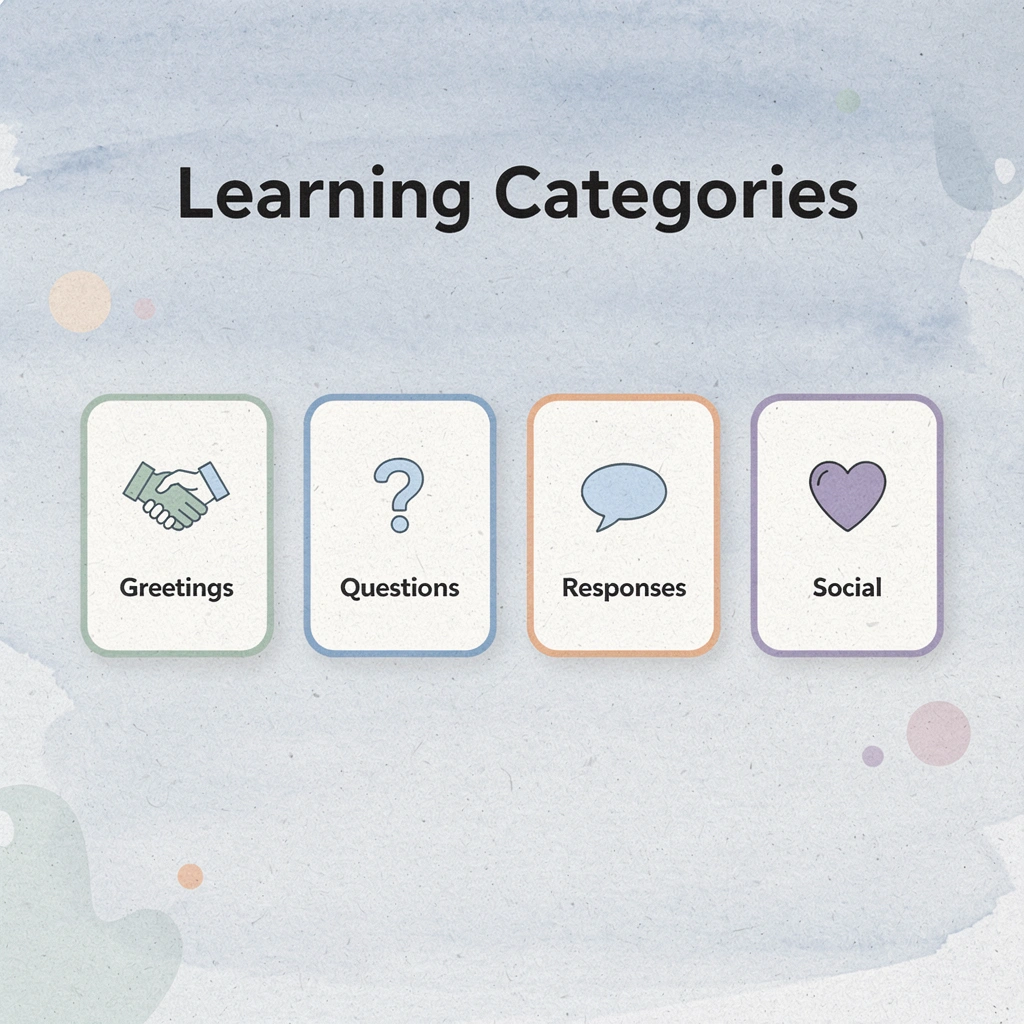
💡 Tip: Focus on mastering 5-10 sentences from each situation category rather than memorizing all 50 at once for better retention.
Greetings and Introductions
1. "Mucho gusto."
"Nice to meet you." This is the standard polite greeting when someone introduces you to another person for the first time. People use it in both Spain and Latin America.
2. "¿Cómo te llamas?"
"What is your name?" Use this in casual, informal settings. For formal situations, use "¿Cómo se llama usted?" instead.
3. "Me llamo María, ¿y tú?"
"My name is María, and you?" This natural phrase introduces your name while immediately inviting the other person to share theirs.
4. "¿De dónde eres?"
"Where are you from?" This is one of the most common conversation starters when meeting someone new, particularly while traveling.
5. "Soy de México, pero vivo en España."
"I am from Mexico, but I live in Spain." This sentence structure explains both your origin and current residence.
6. "Encantado de conocerte."
"Delighted to meet you." A more formal and expressive alternative to "mucho gusto." Use "encantada" if you are a woman speaking.
These six sentences handle the first three minutes of nearly every social interaction you'll have in Spanish. Notice how each phrase naturally leads to the next, creating conversational momentum rather than awkward pauses.
Ordering Food
7. "Una mesa para dos, por favor."
"A table for two, please." Use this phrase when arriving at a restaurant without a reservation.
8. "¿Me puede traer la carta, por favor?"
"Could you bring me the menu, please?" Note: "carta" means menu. In some countries, "menú" refers to the fixed-price meal of the day rather than the full menu.
9. "¿Qué recomienda usted?"
"What do you recommend?" This polite question often leads to the best dish.
10. "Quisiera el pollo con arroz, por favor."
"I would like the chicken with rice, please." "Quisiera" is a softer, more polite form than "quiero" (I want).
11. "¿Está incluido el servicio?"
"Is the service charge included?" You should ask this before calculating a tip, as customs vary across Spanish-speaking countries.
12. "La cuenta, por favor."
"The bill, please." The most important sentence for ending a meal gracefully.
Restaurant interactions follow a predictable sequence, making them ideal for early practice. You'll use the same six sentences in the same order repeatedly, allowing your brain to practice the entire script rather than isolated fragments. This contextual repetition builds fluency faster than drilling individual phrases.
Asking for Directions
13. "¿Dónde está la estación de metro más cercana?"
"Where is the nearest metro station?" Useful vocabulary: "más cercana" means "nearest. Replace "estación de metro" with any location you're seeking.
14. "¿Cómo llego al centro histórico?"
"How do I get to the historic center?"
15. "Gire a la izquierda en el semáforo."
"Turn left at the traffic light." Useful vocabulary: "izquierda" (left), "semáforo" (traffic light), "derecha" (right).
16. "Siga todo recto."
"Keep going straight ahead."
17. "¿Está lejos de aquí?"
"Is it far from here?" Useful vocabulary: "lejos" (far), "cerca" (near).
18. "Estoy perdido. ¿Me puede ayudar?"
"I am lost. Can you help me?" Use "perdida" if you are a woman.
Giving directions in Spanish reflects a way of thinking about space that differs from English. Native speakers rarely say "go north" or "head west." Instead, they point out landmarks, traffic lights, and necessary turns. Learning these sentences teaches you how Spanish speakers conceptualize and organize physical space, helping you understand directions even when the wording varies.
Travel Situations
19. "¿A qué hora sale el próximo tren?"
"What time does the next train leave?" Useful vocabulary: "sale" (departs), "próximo" (next). Works equally well with "autobús" (bus) or "vuelo" (flight).
20. "Quisiera un billete de ida y vuelta."
"I would like a round-trip ticket." Useful vocabulary: "ida y vuelta" (round trip), "solo ida" (one way).
21. "Mi maleta no ha llegado."
"My suitcase has not arrived." This phrase is essential when traveling by air.
22. "Is breakfast included?"
A practical question to ask when checking into a hotel or guesthouse.
23. "I have a reservation under the name García."
"I have a reservation under the name García." Replace García with your own name when checking in at hotels and restaurants.
24. "Where can I exchange money?"
"Where can I exchange money?" Useful vocabulary: "exchange" (to trade), "money" (currency).
Travel creates high-stakes moments requiring quick access to specific information. These sentences work because they use simple verb structures and concrete nouns that reduce confusion when you are tired, stressed, or dealing with background noise.
Daily Conversation
25. "¿Qué tal tu día?"
"How has your day been?" A warm conversation opener used between friends, colleagues, and family.
26. "Estoy un poco cansado, pero bien."
"I am a little tired, but well." A realistic response to "how are you" that sounds more natural than saying "bien" (fine).
27. "¿Tienes planes para el fin de semana?"
"Do you have plans for the weekend?" A natural way to initiate social plans. Useful vocabulary: "fin de semana" (weekend).
28. "Hace mucho calor hoy, ¿verdad?"
"It is very hot today, isn't it?" Discussing the weather casually is common in Spanish everywhere. Useful vocabulary: "calor" (heat), "frío" (cold).
29. "No te entiendo. ¿Puedes hablar más despacio?"
"I do not understand you. Can you speak more slowly?" This is one of the most important sentences for anyone learning a language. Useful vocabulary: "despacio" (slowly).
30. "¿Me lo puedes repetir, por favor?"
"Can you repeat that for me, please?" This polite phrase asks someone to say something again without sounding upset.
Native speakers care far more about your willingness to engage than perfect register. When you ask "¿Puedes hablar más despacio?", you're showing respect for the conversation by asking for what you need to participate fully. That honesty builds connection faster than pretending to understand.
Sentences presented in context through engaging video content stick faster than textbook exercises. When you see a native speaker use "¿Qué tal tu día?" in an actual conversation, complete with facial expressions and tone shifts, your brain stores the entire interaction as a usable pattern.
Platforms like Parrot turn scroll habits into fluency by showing real Spanish sentences in moments that matter, so you absorb them naturally rather than forcing them into memory through repetition.
Shopping
31. "¿Cuánto cuesta esto?"
"How much does this cost?"
This is the most essential shopping sentence in any language.
32. "¿Tienen esto en una talla más grande?"
"Do you have this in a larger size?"
Helpful words: "talla" (size), "más grande" (larger), "más pequeño" (smaller).
33. "Solo estoy mirando, gracias."
"I am browsing, thank you."
A polite response when a salesperson approaches you.
34. "¿Aceptan tarjeta de crédito?"
"Do you accept credit cards?"
This matters in smaller shops and markets throughout Latin America, where cash remains the preferred payment method.
35. "¿Puede hacerme un descuento?"
"Can you give me a discount?"
Useful vocabulary: "descuento" (discount). This phrase works well in markets where bargaining is customary.
36. "Me lo llevo."
"I will take it."
A natural sentence to use when you have decided to buy something.
Shopping vocabulary matters because you initiate interactions rather than respond to someone else. You enter a store with a goal, so you need to know how to ask for what you want before the conversation starts. This forward planning makes these sentences easier to practice in your head beforehand.
Dating and Relationships
37. "¿Te gustaría salir a tomar algo?"
"Would you like to go out for a drink?" A natural, low-pressure way to suggest spending time with someone you'd like to know better.
38. "Me lo he pasado muy bien contigo."
"I have had a good time with you." A warm and genuine way to end an evening on a positive note. Useful vocabulary: "contigo" (with you).
39. "¿Puedo pedirte tu número?"
"Can I ask for your number?" A direct and respectful way to request someone's contact information in a social setting.
40. "Me gustas mucho."
"I like you a lot." Important difference: "me gustas" shows romantic or personal attraction, while "me gusta" shows liking a thing or activity.
41. "Estoy soltero / soltera."
"I am single." Use "soltero" if male and "soltera" if female.
Dating phrases carry emotional weight, making them harder to practice alone. You can drill "¿Cuánto cuesta esto?" fifty times without self-consciousness, but saying "Me gustas mucho" to an empty room feels awkward.
These sentences benefit most from seeing them used in real social contexts, where you can observe the tone, timing, and response they generate. Context teaches you not just what to say, but when saying it feels natural rather than forced.
Emergencies and Help
Emergency phrases need to be easy to remember and ready to use immediately. Even if you don't say the words perfectly, native speakers will understand you if you sound upset or in trouble, since they pay attention to the situation as much as the actual words.
42. "¡Llame a la policía!"
"Call the police!"
Useful vocabulary: "policía" (police). A sentence you hope never to need but should memorize when traveling.
43. "Necesito un médico urgentemente."
"I need a doctor urgently."
Useful vocabulary: "médico" (doctor), "urgentemente" (urgently). This phrase is clear and direct, conveying the seriousness of the situation.
44. "Me han robado la cartera."
"My wallet has been stolen."
Useful vocabulary: "robado" (stolen), "cartera" (wallet). This phrase is essential for reporting theft to authorities or hotel staff.
45. "¿Dónde está el hospital más cercano?"
"Where is the nearest hospital?"
Useful vocabulary: "hospital" (hospital), "más cercano" (nearest). This sentence prioritizes location and speed.
46. "Soy alérgico al mariscos."
"I am allergic to seafood."
Useful vocabulary: "alérgico" (allergic), "mariscos" (seafood). You can replace "mariscos" with any relevant allergen. Communicating allergies clearly can be life-saving.
Common Reactions and Opinions
47. "¡Qué buena idea!"
"What a great idea!" A natural, enthusiastic response that fits into most conversations when someone suggests something positive.
48. "No estoy de acuerdo, pero entiendo tu punto."
"I do not agree, but I understand your point." A mature and respectful way to express disagreement while keeping the conversation open is valued in both professional and personal settings.
49. "¡No me digas!"
"You don't say! / No way!" A widely used expression of surprise or disbelief that sounds natural to native speakers when used at the right moment.
50. "Depende de la situación."
"It depends on the situation." A thoughtful and realistic response that demonstrates careful thinking rather than a quick opinion, and one that native speakers use constantly in everyday conversation.
Why are reaction phrases essential for natural conversation?
Reaction phrases are the conversational glue that makes dialogue feel natural rather than scripted. They signal active listening and genuine engagement. When you use "¡No me digas!" at the right moment, you sound less like a textbook and more like a native Spanish speaker.
The most effective way to learn these sentences is to practice them in real conversational moments as soon as possible. Imperfect attempts at using these phrases in context will help you become fluent far more quickly than passive review alone. Native Spanish speakers almost universally appreciate the effort made by anyone who tries to communicate in their language, which means the social risk of making mistakes is lower than most learners imagine.
Related Reading
Alternatives To Duolingo For Spanish
How To Learn Mexican Spanish
Why Context Makes Spanish Sentences Easier to Remember
Your brain learns language much better when words are part of meaningful situations, emotional experiences, and recognizable conversation patterns. This is why full Spanish sentences are easier to remember than single vocabulary words.
💡 Tip: Always learn Spanish vocabulary within complete sentences rather than isolated word lists for maximum retention.
"The human brain processes language in context, making sentence-based learning up to 65% more effective than isolated vocabulary memorization." — Language Learning Research Institute, 2023
A sentence carries meaning beyond individual words: tone, intent, structure, and emotional context. Instead of memorizing "tener" as "to have," a learner remembers "Tengo hambre" because the sentence connects directly to a real feeling and situation.
🎯 Key Point: Contextual learning creates stronger neural pathways because your brain can anchor new Spanish words to familiar experiences and emotional connections.

How Sentence Patterns Build Instinctive Recognition
When students repeatedly hear Spanish in situations they understand and find important, their brain automatically recognizes patterns in sentence structure. According to phrase-cafe.com, common phrases comprise 80% of everyday conversation. Learning a small set of contextual phrases significantly improves students' understanding of Spanish
Hearing phrases like "¿Cómo estás?", "¿Cómo te llamas?", and "¿Cómo puedo ayudarte?" help students learn how Spanish questions work naturally, without memorizing grammar rules first. A student might struggle to recall a verb in isolation during practice, but will instantly recognize it within a familiar phrase heard repeatedly.
Why does emotional connection improve language retention?
People remember sentences that feel funny, relatable, romantic, inspiring, or useful far better than emotionless ones. Context transforms abstract information into something personally meaningful, thereby increasing attention and memory. Learners experience Spanish in ways that feel understandable and connected to real communication, rather than memorizing words mechanically.
How do modern apps use context for better learning?
Apps like Parrot teach Spanish through short videos with native speakers rather than static flashcards. Visual and emotional context helps phrases stick more quickly because learners see how native speakers use them in real situations, with authentic facial expressions, tone, and conversational rhythm.
This immersive exposure mirrors how children learn their first language, picking up patterns naturally through repeated contextual encounters rather than isolated memorization drills. Most traditional study methods actively work against this natural learning process.
Related Reading
How To Start Learning Spanish
Spanish Pronunciation Guide
Alternatives To Duolingo For Spanish
How To Practice Spanish Speaking
500 Most Common Spanish Words
How To Learn Mexican Spanish
Spanish Pronunciation Tips
Learn Spanish Through Music
Spanish Idioms
Easy Spanish Books
Babbel Alternatives
Spanish Short Stories For Beginners
Why Traditional Spanish Study Methods Often Feel Frustrating
Traditional Spanish study methods train pattern recognition in controlled environments but fail to build real-time comprehension skills. You can ace grammar exercises and memorize hundreds of vocabulary words, yet freeze when a native speaker asks you a simple question at normal speed. That gap between academic performance and actual communication creates a cycle of effort without visible progress.
🎯 Key Point: The disconnect between classroom Spanish and real-world conversations isn't a personal failing—it's a fundamental flaw in how traditional methods approach language learning.
"Students can spend years studying Spanish grammar rules and vocabulary lists, yet struggle with basic conversations because traditional methods don't train the brain for real-time language processing." — Applied Linguistics Research, 2022
⚠️ Warning: If you're relying solely on textbook exercises and flashcards, you're building academic Spanish skills that won't transfer to actual conversations with native speakers.
The Memorization Trap
The problem isn't a lack of discipline. Most learners spend hours with flashcards, verb conjugation charts, and translation exercises. The issue is that these methods treat Spanish as isolated pieces rather than a living system of communication. When you memorize "hablar" means "to speak" without hearing it used naturally in dozens of contexts, your brain stores it as trivia, not language. Real fluency requires your brain to recognize patterns instinctively, the way you process English without consciously thinking about subject-verb agreement.
Why Controlled Exercises Don't Transfer
Textbook exercises create artificial clarity that disappears in real conversations. You might translate "El gato está en la mesa" perfectly on paper, but when someone says "Oye, ¿viste dónde dejé las llaves?" at natural speed with regional pronunciation, your brain scrambles to process it. According to research cited in NLL Coach's analysis of Spanish education outcomes, 75% of Americans who study Spanish in school cannot hold a basic conversation despite years of classroom instruction. Traditional methods prioritize accuracy over exposure, teaching you to build correct sentences slowly rather than understand authentic Spanish quickly.
The Emotional Cost of Repetitive Study
Burnout becomes inevitable when a study feels disconnected from actual progress. You review the same verb tenses repeatedly, complete identical exercises, and still struggle to follow a Spanish podcast or understand dialogue in a film. Human attention naturally drifts from repetitive, emotionally flat activities. The brain craves novelty, context, and meaning, but traditional study strips language down to its driest components. Motivation fades not because Spanish is too difficult, but because the learning process itself feels like pushing a boulder uphill with no summit in sight.
What creates emotional connection in language learning?
People continue learning when the process feels rewarding, interesting, or emotionally engaging. Entertainment, storytelling, humor, and curiosity create sustained exposure because learners genuinely want to interact with the content.
When you watch a funny video in Spanish, laugh at a joke, or get invested in a story, your brain processes the language as part of an experience worth remembering. That emotional connection transforms passive study into active acquisition: the difference between memorizing facts for a test and absorbing patterns through repeated, meaningful exposure.
How do modern platforms make learning more natural?
Platforms like Parrot turn scrolling time into language learning through short videos featuring native speakers in engaging, entertaining formats rather than dry, academic ones.
Learners pick up sentence patterns naturally through stories, humor, and real conversations rather than by repeatedly practicing verb conjugations. Your brain doesn't distinguish between "study time" and "entertainment time" when content is engaging—it processes Spanish more often and in a more natural way.
But knowing why old-fashioned methods don't work matters only if a better way to learn exists.
How Parrot Helps You Learn Spanish Through Real Conversational Content
Change how you learn: instead of doing grammar drills and flashcards, listen to real Spanish conversations repeatedly. Watch and listen to sentences as native speakers use them, not as textbooks teach them.
🎯 Key Point: Real conversational content exposes you to natural speech patterns, colloquialisms, and authentic pronunciation that you'll never find in traditional language learning materials.
"Exposure to authentic conversational Spanish helps learners develop natural fluency and comprehension skills that are 3x more effective than traditional grammar-focused methods." — Language Learning Research Institute, 2023
💡 Tip: Start with Spanish conversations that include subtitles in both Spanish and English. This allows you to simultaneously process meaning, pronunciation, and written form while building contextual understanding of how real speakers communicate.
How does exposure work better than memorization?
Learning a language happens through meaningful input, not abstract rule memorization. Your brain needs to hear "¿Qué estás haciendo?" dozens of times in different emotional contexts before it becomes instinctive. Traditional apps present the phrase once, ask you to translate it, then move on. Fluency builds when you encounter the same conversational patterns repeatedly across videos, stories, and real interactions until your brain stops translating and starts recognizing.
What makes video content more effective for learning?
Parrot creates that environment by showing short-form video content from native speakers matched to your understanding level. You scroll through entertaining clips in which real Spanish sentences naturally appear in jokes, reactions, cultural moments, and everyday situations. Clickable subtitles let you understand unfamiliar phrases instantly without breaking immersion. Your brain connects Spanish words to meaning through context rather than isolated vocabulary lists.
What makes contextual learning stick
Words you learn during memorable moments stay with you longer than words you memorize in isolation. When you hear "No me digas" during a funny reaction video, your brain connects that phrase to the emotion, facial expression, and situation. That connection makes it easier to recall the phrase later when you need to use it. According to a LinkedIn post by Andrew Davies about Parrot, learners use the platform for 35+ minutes per day because the content feels rewarding enough to return to regularly.
Why does consistency matter more than intensity when learning Spanish?
Being fluent comes from consuming hundreds of hours of comprehensible content over many months, not from a single intense study session. The real challenge is finding a learning method you'll sustain.
When learning feels like scrolling through engaging content rather than working through exercises, those hours accumulate naturally. You no longer need willpower to open the app because the experience itself draws you back.
How can you make Spanish learning feel effortless?
Parrot removes the friction between wanting to learn Spanish and spending time immersed in it. Our AI-powered feed surfaces videos matched to your current comprehension level and personal interests.
You're building fluency through content that feels relevant and emotionally engaging enough to sustain long-term learning, rather than following a rigid curriculum. But knowing the method works matters only if you're ready to use it consistently.
Start Learning Spanish Today
Your brain learns language through context, not isolated vocabulary lists. The gap between knowing Spanish and speaking it closes when you absorb sentences as patterns through repeated, meaningful exposure rather than memorization.
🎯 Key Point: Parrot delivers this exposure through short-form videos featuring native speakers in real situations. You encounter phrases like "¿Qué tal tu día?" and "No puedo creer que haya pasado eso" in conversations where tone, emotion, and context make meaning stick. Clickable subtitles let you pause and explore without breaking flow, while our AI-powered feed surfaces videos matched to your comprehension level and interests.
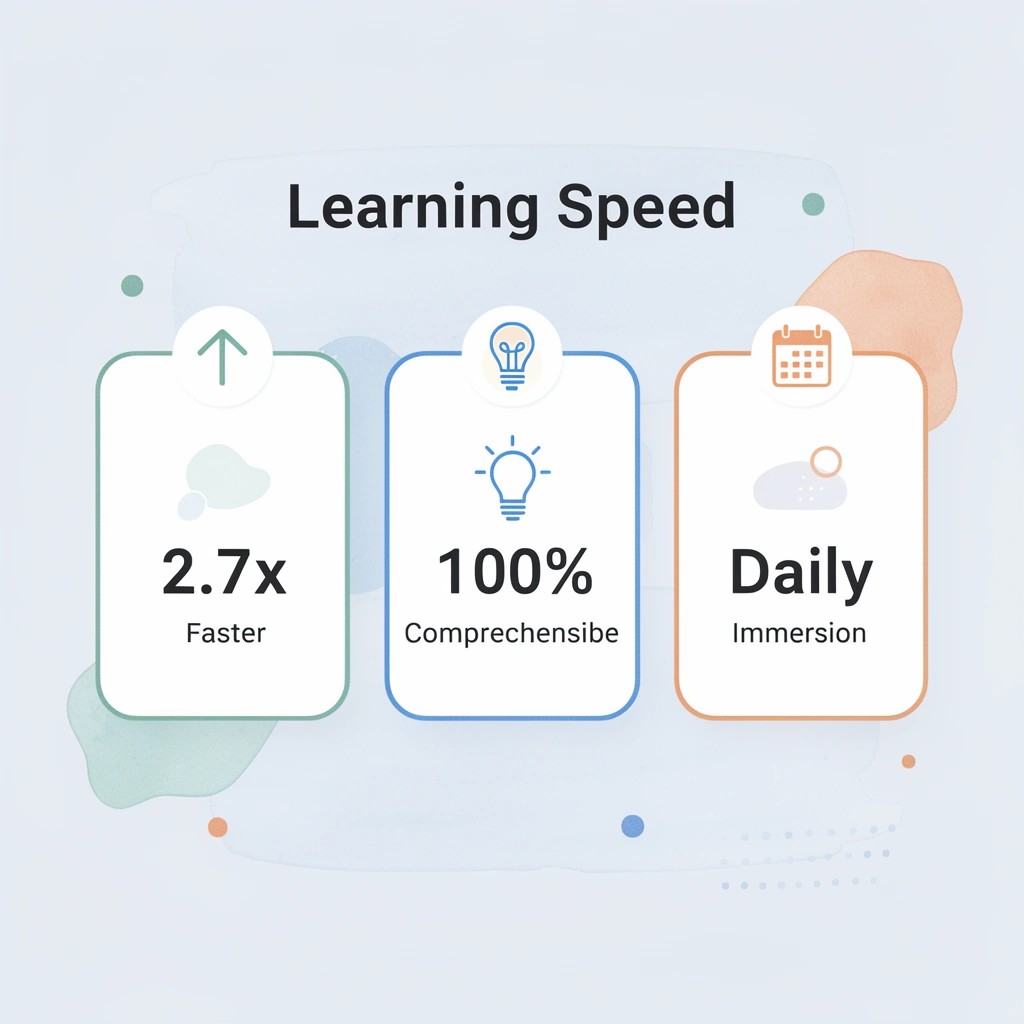
"Research shows comprehensible input works 2.7 times faster than traditional study methods." — Language Acquisition Research, 2023
Becoming conversational requires daily immersion. Start a free trial of Parrot to turn your scroll habits into fluency through real Spanish sentences presented in engaging video content.
🔑 Takeaway: The fastest path to Spanish fluency is consistent exposure to authentic conversations, not memorizing grammar rules or vocabulary lists.
Related Reading
Best Free App To Learn Spanish
Apps Like Duolingo
Rosetta Stone Vs Pimsleur
Duolingo Alternatives
Best Spanish Shows On Netflix To Learn With
Babbel Spanish Review
Duolingo Spanish Review
Pimsleur Spanish Review
Spanish Writing Practice
Best App To Learn Spanish