Starting to learn Spanish can feel overwhelming when dozens of apps promise results, but few deliver a clear path forward. Choosing the right tool early on shapes how quickly a beginner builds vocabulary, nails pronunciation, and starts holding real conversations.
Parrot cuts through the noise by offering a structured, beginner-friendly approach that removes the guesswork and keeps learners progressing at a steady pace. Those ready to stop second-guessing their method and start speaking can learn Spanish.
Table of Contents
Why Most People Try Multiple Spanish Apps and Still Struggle to Speak
What Actually Helps You Learn Spanish Faster
10 Best Free Apps to Learn Spanish
The Hidden Problem With Most Spanish Learning Apps
Why Short-Form Content Can Make Language Learning Easier to Stick With
How Parrot Helps You Learn Spanish Through Content You Already Enjoy
Start Learning Spanish Today
Summary
Nearly half of language learners abandon courses before reaching intermediate levels, with limited interaction and fading motivation cited as the primary causes. This points to a design problem rather than a willpower problem. Most apps are built around lesson completion and streak mechanics, which feel rewarding in the short term but measure the wrong thing entirely.
Researchers draw a meaningful distinction between studying a language and acquiring one. Studying is conscious and rule-based, whereas acquisition occurs when a learner repeatedly encounters meaningful, understandable content and the brain begins to internalize patterns without being forced to do so. Most apps function well as study tools but fall short as acquisition environments, and that gap is where fluency typically gets lost.
Comprehension builds before speaking, not after. The sequence matters more than most learners expect, since fluency in output tends to follow rather than precede fluency in comprehension. Pushing to speak before the input foundation is solid produces the familiar experience of freezing mid-conversation despite having completed hundreds of lessons.
Consistency is the variable that most directly separates learners who reach conversational fluency from those who restart the same beginner content months later. According to the Preply Global Language Learning Report, 55% of language learners say they struggle to find time to practice consistently, and over 60% prefer short daily sessions of 15 minutes or less. The format of the learning material has more control over that consistency than most learners recognize.
Even among the most digitally native demographic, 18-to 24-year-olds, language learning apps show only a 48% engagement rate (LingoBright). The industry response has been AI personalization, with 62% of platforms now using it, but personalization cannot compensate for a method that asks the brain to study vocabulary in isolation rather than encounter language in a meaningful context.
Most free Spanish apps solve one piece of the puzzle well and leave the rest to the learner. Vocabulary apps skip listening development. Conversation apps assume existing output ability. Grammar apps provide rules without developing a feel for the language. Learners who progress typically find a single method that handles multiple layers at once, rather than manually integrating several tools.
Learn Spanish addresses this by delivering comprehensible input through short-form video, building vocabulary, listening comprehension, and intuitive grammar simultaneously, all within a format that fits naturally into existing daily habits.
Why Most People Try Multiple Spanish Apps and Still Struggle to Speak
Switching apps feels productive. It mimics progress without requiring the harder thing: spending real, uncomfortable time inside a language you do not yet understand.
"Switching apps is the language-learning equivalent of rearranging your desk instead of doing the work — it feels like progress, but nothing moves forward."
⚠️ Warning: The urge to find a better app is often a way to avoid the discomfort of genuine struggle, which is where real learning happens.

The pattern shows up across every level of Spanish learners. Beginners collect apps the way people collect gym memberships, each one promising a faster path, each one eventually feeling like a chore. According to research cited by Immersio (2024), nearly half of language learners quit courses before reaching intermediate levels, with limited interaction and fading motivation as the primary drivers. That is not a willpower problem. It is a design problem.
🔑 Takeaway: When nearly half of learners drop out before reaching intermediate levels, the problem isn't dedication — it's that most apps are built for engagement metrics, not actual fluency.
💡 Tip: Before downloading another app, ask yourself: does this tool force you into real, uncomfortable interaction with Spanish — or does it just make practice feel comfortable and safe?
Why do completion-based apps fail to build real speaking skills?
Most apps are built around completion: finish the lesson, earn the points, keep the streak going. These mechanics feel rewarding, but they measure the wrong thing. A study of language-learning platforms found that apps support listening exposure well, yet consistently fall short in developing the spontaneous communication skills that real conversation requires. Completing 300 lessons in a vocabulary app and still freezing when a native speaker speaks at full speed is the predictable result of training for the test rather than for conversation.
Researchers distinguish between studying a language and acquiring one. Studying is conscious, rule-based, and measurable. Acquisition occurs when a learner repeatedly encounters meaningful, understandable content, and the brain internalizes patterns without being forced to do so. Most apps excel as study tools; fewer function as acquisition environments. That gap is where fluency gets lost.
What happens when learners stack more apps instead of going deeper?
Most learners respond by stacking more apps, adding flashcard tools, grammar checkers, and pronunciation guides. This fragments attention across platforms, keeps daily Spanish exposure shallow, and prevents any single source from providing enough immersive exposure to drive progress. Tools like Learn Spanish take a different approach: our Parrot app uses short-form video content built on comprehensible input theory, allowing learners to spend time inside real Spanish rather than studying its parts. The format matters because it fits into existing habits rather than requiring a separate study session.
According to EdTech Innovation Hub (2024), 64% of language learners report hitting a plateau where hours of practice produce no visible improvement in real-world comprehension. This plateau marks the point where structured study reaches its limits, and immersive exposure becomes essential for further progress.
What helps you speak faster might be simpler and more counterintuitive than anything you have tried before.
Related Reading
What Actually Helps You Learn Spanish Faster
Comprehensible input is not a theory you study — it happens when the right content meets the right moment. Research shows your brain acquires language most effectively when 95–98% of the input is already understood — leaving just enough unfamiliar material to trigger active acquisition without causing cognitive overload. This is the sweet spot that separates learners who plateau from those who achieve rapid, lasting fluency.
"Language acquisition happens fastest when 95–98% of input is comprehensible — challenging enough to grow, familiar enough to understand." — Gianfranco Conti, 2025
🎯 Key Point: The goal isn't to study harder content — it's to find the right level of content at the right moment in your learning journey.
💡 Tip: Use graded readers, level-appropriate podcasts, or tools that match content to your current vocabulary level to consistently hit that 95–98% comprehension window.
Too Easy: (100% comprehension) Results in zero challenge, providing minimal growth and failing to trigger language acquisition.
Sweet Spot: (95–98% comprehension) The ideal balance where you understand enough to maintain context while being challenged to learn new material, resulting in maximum acquisition.
Too Hard: (Below 80% comprehension) Causes cognitive overload and frustration, which shuts down learning and leads to very low retention.
🔑 Takeaway: Comprehensible input isn't passive listening or random exposure — it's a precise, research-backed strategy that turns everyday content into your most powerful language learning tool.

Why does meaning stick better than repetition alone?
Your brain remembers language through meaning, not repetition alone. When you hear a Spanish phrase in a story, conversation, or video where context reveals its meaning, your brain encodes it differently than it does with flashcards. The word stays in your memory because it carries emotional weight, mental imagery, and narrative flow—elements that traditional lessons cannot replicate.
Is daily exposure more effective than a structured course?
According to Tips for Learning Spanish: A Complete 2026 Guide by The Linguist, self-taught Spanish learners can reach conversational fluency through consistent daily exposure rather than expensive courses that only reach the A2 level. The goal is not to find the hardest program, but to find the most sustainable source of meaningful input you will return to daily.
What happens when learning blends into your existing habits?
Most learners set aside dedicated study blocks, open an app, complete a lesson, and close it. The hidden cost is the artificial boundary between "learning mode" and "living mode." Language acquisition speeds up when that boundary dissolves: when Spanish shows up in the same scroll, the same ten minutes of downtime, the same habitual moments where attention is already present and relaxed. Apps like Parrot use short-form video content grounded in comprehensible input, so learning happens inside a format learners already use naturally rather than requiring an entirely new habit.
Why does comprehension come before speaking?
The order of learning matters more than most learners recognise. Understanding builds the mental picture that speaking later uses. Children spend months listening to sounds, rhythms, and patterns before saying a single word. Adult learners follow the same process. Speaking fluency tends to come after comprehension fluency, not before it. Trying to speak before you have a strong foundation in listening is like trying to withdraw money from a bank account you have not yet funded.
Where do you find the right listening material?
Spanish has over 500 million native speakers worldwide, which means abundant listening material is available. Podcasts for learners, YouTube channels at a normal pace, and short videos based on real conversations are easy to find. The real challenge is selecting content at the right level that pushes your learning without overwhelming you, and building a daily routine that feels natural rather than like a chore.
10 Best Free Apps to Learn Spanish
Finding the right tool matters more than finding the most popular one. The next practical question becomes clear: which free apps give you access to Spanish in a way that supports real learning?
💡 Tip: Don't chase the app with the most downloads — chase the app that matches how you learn. The best free Spanish app is built around proven language acquisition principles, not flashy features.
"The right learning tool doesn't expose you to a language — it structures that exposure into meaningful, memorable practice." — Language Learning Research
⚠️ Warning: Choosing an app based on popularity alone is one of the most common mistakes new learners make. A high download count does not guarantee effective learning outcomes.

Here are 10 of the best free apps to learn Spanish, evaluated based on how well they align with how language learning actually works.
🎯 Key Point: Each app below is assessed against real language acquisition principles — not just surface-level features like streak systems or colorful UI. What truly matters is whether the app builds vocabulary retention, supports understanding of grammar, and encourages active recall.
Vocabulary retention methods: Directs how effectively you move words from short-term memory to long-term recall.
Grammar support: Provides the structural foundation needed to assemble sentences correctly rather than just memorizing phrases.
Active recall features: Utilizes scientifically proven methods to force your brain to retrieve information, which drastically accelerates fluency.
Free access depth: Defines the value-to-cost ratio, ensuring you can learn meaningful skills before committing to a subscription.
Real-world application: Bridges the gap between app-based learning and the unpredictable nature of actual conversations.
1. Parrot
Best for: Learning Spanish through content and comprehensible input.
Parrot surfaces short-form Spanish videos matched to your level, letting you absorb language the way native speakers encounter it: through context, repetition, and meaning. Clickable subtitles and instant vocabulary tools remove friction, keeping focus on comprehension rather than mechanics. Over 440,000 learners reach conversational fluency in 10 to 15 minutes daily through content immersion rather than traditional lessons.
2. Duolingo
Best for: Building a daily learning habit.
Duolingo's strength is consistency, not depth. Its short, gamified lessons encourage daily returns, but completing them builds a sense of progress without necessarily building conversational ability.
3. Memrise
Best for: Listening to native speakers.
Memrise uses video clips of real people speaking natural Spanish, exposing learners to pronunciation variation and regional rhythm that scripted audio rarely captures. It's a stronger listening tool than most vocabulary apps because the input feels authentic rather than produced.
4. Busuu
Best for: Structured learning paths.
Busuu offers grammar instruction, organized lesson sequences, and written feedback from native speakers, providing clear direction for learners who need a visible curriculum. According to Lingtuitive, testing the top Spanish apps for beginners took 45 or more days, reflecting significant variation between seemingly similar apps.
5. HelloTalk
Best for: Practicing with native speakers through messaging.
HelloTalk connects you directly with Spanish speakers who want to learn your language. The exchange format creates accountability and real conversational stakes, building speaking confidence faster than drill-based apps.
6. Tandem
Best for: Flexible conversation practice.
Tandem offers structured matching and a cleaner interface for voice and video conversations than most alternatives. If speaking is your weakest skill, Tandem addresses that gap more directly than lesson-based apps.
Why do most learners still struggle with fragmented apps?
Most learners try several tools before realizing the core problem: apps are designed around isolated skills—vocabulary here, grammar there, conversation elsewhere—without a clear method connecting them. Apartment Therapy found that the most effective apps required only a few minutes daily, confirming that consistency in short windows beats occasional long sessions.
Apps like Parrot solve this fragmentation by delivering comprehensible input through short-form video, simultaneously building vocabulary, listening comprehension, and intuitive grammar while handling the integration work learners usually manage manually.
7. Anki
Best for: Long-term vocabulary retention.
Anki uses spaced repetition to schedule reviews at the precise interval before forgetting occurs. While less engaging than videos or conversation, it's one of the most efficient tools for locking in vocabulary you've already encountered in context.
8. Drops
Best for: Learning words through pictures in short bursts.
Drops teaches words by connecting them to images and using fast-paced matching games in five-minute sessions. However, it helps you recognize words without teaching the grammar rules needed to use them in sentences.
9. LingQ
Best for: Reading and listening to real content.
LingQ applies comprehensible input principles to text and audio, allowing learners to import articles, podcasts, or books and track vocabulary. It works well for self-directed learners past the beginner stage.
10. SpanishDict
Best for: Grammar reference and quick translation.
SpanishDict is a reference tool offering clear grammar explanations, thorough conjugation tables, and detailed dictionary entries. It works best when paired with other learning tools rather than used as your sole method.
Why do most apps only solve part of the problem?
Most of these apps solve one piece of the puzzle well: vocabulary apps don't teach listening, conversation apps assume you already have something to say, and grammar apps give rules without language feel. Learners who make real progress find methods that handle multiple layers at once.
But knowing which apps work best only gets you so far; the deeper obstacle most learners hit has nothing to do with the tool they picked.
Related Reading
The Hidden Problem With Most Spanish Learning Apps
The bigger problem is that most Spanish learning apps are built around studying, not actually learning the language. They measure progress by counting lessons finished, keeping up streaks, and collecting points — which feels like you're making progress but usually doesn't help you understand real Spanish when you hear it or respond without getting stuck.
"Most apps measure activity, not ability — counting lessons finished and streaks kept rather than whether you can actually understand and speak the language." — Core insight
⚠️ Warning: Feeling productive and being productive are not the same thing. Completing lessons and maintaining streaks create an illusion of real progress while your actual fluency stays stuck.
🎯 Key Point: The real measure of Spanish learning success isn't how many points you've collected — it's whether you can understand native speakers and respond naturally without freezing up.
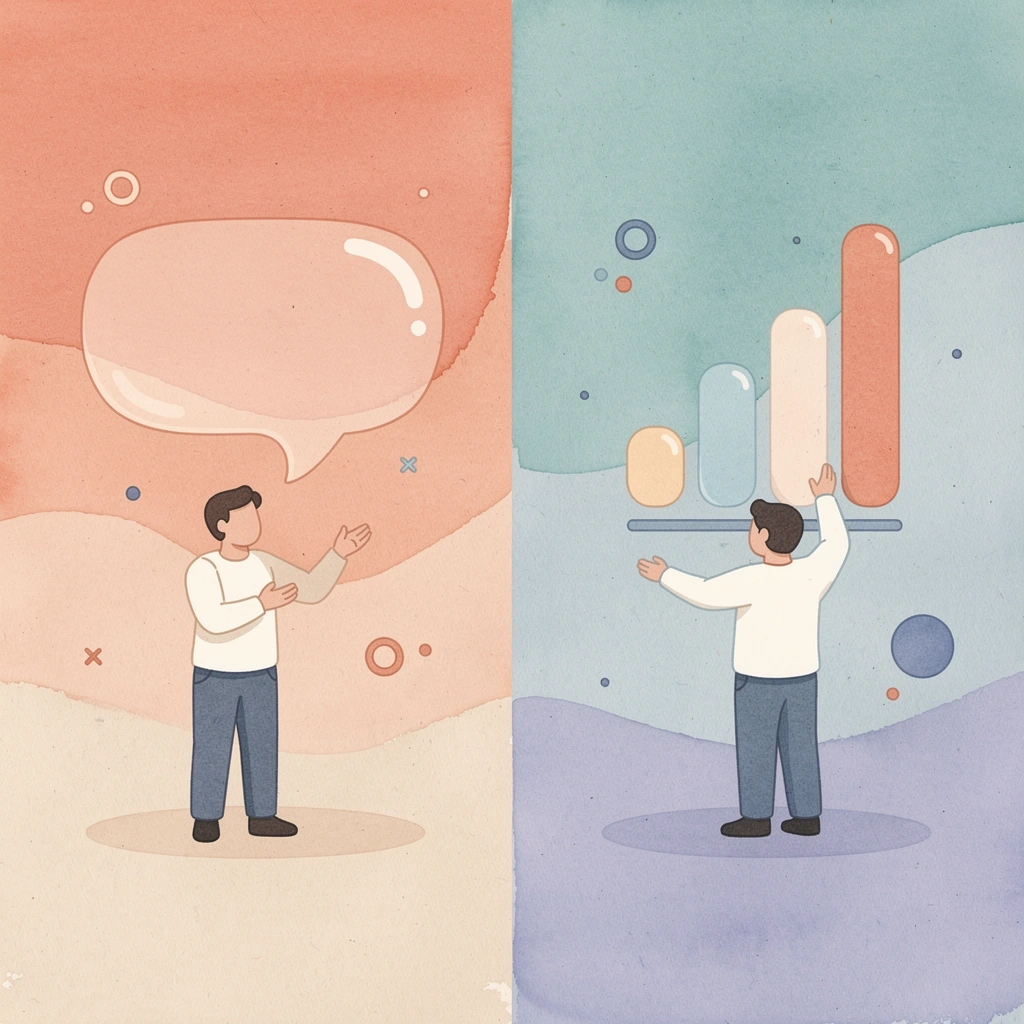
Lessons finished vs. Comprehension: Apps track lesson counts; what matters is your actual ability to understand real Spanish.
Daily streaks vs. Natural response: Streaks measure consistency, but your goal is the ability to respond naturally in conversation.
Points collected vs. Understanding native speakers: Points are gamification; what counts is your ability to interpret native speech in the real world.
Time in app vs. Speaking fluency: App usage time is a vanity metric; your true progress is measured by speaking without hesitation or "getting stuck."
Why do most learners hit a wall around week three or four?
According to LingoBright, 62% of language-learning app platforms now use AI for personalization. But personalization is a patch, not a fix. When the underlying method isolates vocabulary from real context, no algorithm can compensate for the fact that your brain isn't building neural pathways from hearing language used meaningfully.
The failure point hits around week three or four. You've learned "hola," "gracias," and basic phrases. Now the app demands irregular verb conjugation in the subjunctive, and the gap between where you are and where you want to be feels like a cliff. That gap is structural, not personal: it's built into how most apps organize content without accounting for how humans learn language through exposure and meaning, not memorization.
What happens when learners try to patch the gaps with more tools?
Most learners respond by adding structure: grammar workbooks, YouTube playlists, weekly tutors. But this creates fragmentation. Each tool operates independently, and none builds toward the fluency that comes from sustained, comprehensible exposure to actual speech. Learn Spanish through Parrot uses short-form video built on comprehensible input theory, so every minute watching real content is also a minute acquiring language, not reviewing it.
Why consistency collapses before fluency arrives
The pattern appears at every skill level: learners who start strong eventually hit a wall where progress stalls. Vocabulary retention plateaus. Listening comprehension lags behind reading. Speaking feels disconnected from lesson practice. This occurs when a method prioritizes finishing lessons over language acquisition. LingoBright reports that the 18 to 24 age group shows only a 48% engagement rate on language learning apps. Even the most digitally native demographic struggles to persist.
Why does the learning experience stop feeling rewarding?
Consistency falls apart because the learning experience stops feeling rewarding before you become fluent. When every session looks the same, and feedback is a points total rather than a real conversation, your brain stops noticing progress. Without that feeling of progress, even disciplined learners start skipping days.
Most Spanish apps were never designed to achieve fluency. They were designed to get you to open the app tomorrow. That gap is where most learners get lost.
But what happens when the format of learning itself changes?
Why Short-Form Content Can Make Language Learning Easier to Stick With
Consistency separates learners who reach conversational fluency from those who restart the same beginner lesson six months later. Not talent. Not time. Consistency. The format of your learning material controls that variable more than most people admit.
"The format of your learning material controls consistency more than talent or time ever will."
💡 Tip: Before switching apps or courses, ask yourself — does your current format make it easy to show up every single day? If not, the format is the problem, not your motivation.
🔑 Takeaway: Short-form content wins on consistency because it removes the biggest barrier to daily practice — the feeling that you don't have enough time to make it worthwhile.
Short-form content: High consistency (fits into 5-minute gaps); best for daily habit building.
Long-form lessons: Low consistency (requires dedicated blocks); best for deep dives.
Immersive programs: Medium consistency (structured but demanding); best for accelerated learners.

Why do so many learners struggle to practice Spanish consistently?
The failure point is usually friction. When learning requires a dedicated block of time, a quiet room, and sufficient mental energy to work through a structured lesson, it competes directly with everything else in your day. According to the Preply Global Language Learning Report, 55% of language learners struggle to find time to practice consistently. This is not a discipline problem; it is a design problem.
Short-form content removes that barrier structurally. A two-minute video watched during a commute, lunch break, or gap between meetings requires no setup, no willpower ritual, and no cleared schedule. The same report found that over 60% of learners prefer short daily practice sessions of 15 minutes or less. The desire to learn Spanish exists; what breaks down is the delivery format asking too much to access it.
How does short-form video break the all-or-nothing learning cycle?
Most learners treat Spanish as a subject studied in sessions and tracked through lessons, creating an all-or-nothing mentality: miss a session and the streak breaks; break the streak and guilt compounds into avoidance. Apps like Parrot sidestep this cycle by embedding learning into short-form video that mirrors how people already spend idle time, converting a scroll habit into comprehensible input rather than requiring learners to generate motivation.
When you encounter Spanish through native-speaker video content with contextual cues and natural speech patterns, you absorb patterns rather than decode rules. Vocabulary sticks because it arrived within a meaningful moment, not because you reviewed it on a flashcard three times. Repeated across hundreds of short sessions over weeks, this builds fluency that holds up in real conversation.
Why does small daily exposure compound faster than weekend study marathons?
The most effective Spanish learning routine is often the least dramatic: five focused minutes of comprehensible input daily add up to more than a weekend study marathon ever could. Small, consistent exposure transforms what feels foreign into what feels familiar.
The question is not whether you have the ability to learn Spanish, but whether the next step feels easy enough to take.
How Parrot Helps You Learn Spanish Through Content You Already Enjoy
Most learners struggle not because they lack resources, but because maintaining traditional language learning over time is difficult. Staying consistent matters far more than finding the perfect lesson plan.
"The biggest barrier to language learning isn't ability: it's sustained consistency over time." — Language Acquisition Research
💡 Tip: If you've abandoned a language app after a few weeks, you're not alone. Consistency, not curriculum, is the real challenge most learners face.
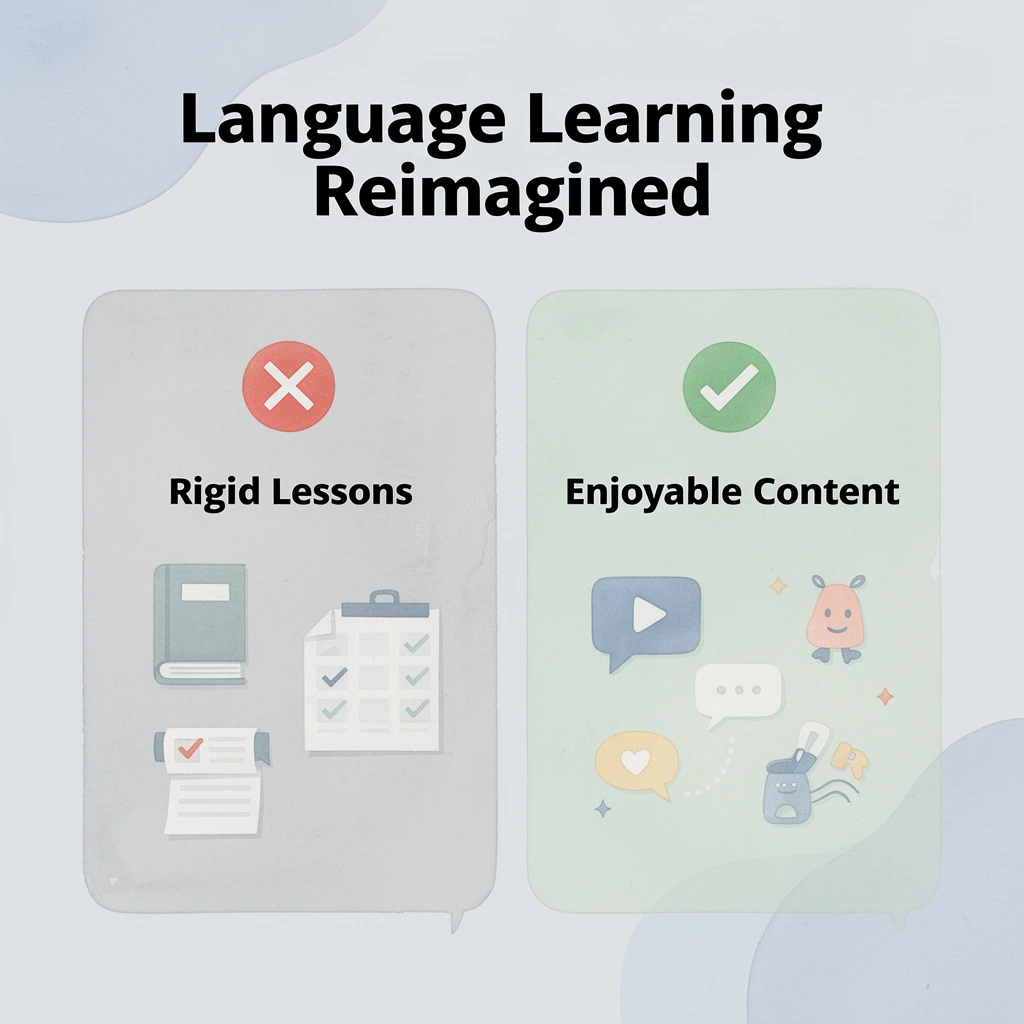
Parrot was built around a different idea: what if learning Spanish felt like enjoying content you already like rather than finishing another lesson? Our platform helps make language acquisition feel natural by letting you learn through content you genuinely enjoy, rather than forcing yourself through structured lessons.
🎯 Key Point: Parrot replaces the passive grind of traditional study with active immersion in content that actually interests you — making it easier to stay consistent and build real fluency.
Lesson Structure: Moves from mandatory, linear lessons to content you already enjoy.
Methodology: Replaces forced repetition and drills with natural immersion in real media.
Motivation: Shifts from difficult, long-term willpower to organic, enjoyment-driven consistency.
Experience: Transforms the process from feeling like homework into an engaging form of entertainment.
How does Parrot use your interests to keep you learning?
Instead of relying on drills and flashcards, Parrot uses research-backed comprehensible input to help learners acquire Spanish naturally through engaging content, turning everyday consumption into a language-learning experience.
A key part of this is Parrot's AI-powered recommendation feed. Rather than showing the same content to every learner, Parrot recommends Spanish videos based on individual interests: travel, food, sports, relationships, fitness, business, entertainment, or culture. Relevant content increases engagement and the likelihood that you'll return.
How does watching native videos build real Spanish skills?
Parrot gives you access to real Spanish videos, allowing learners to hear authentic pronunciation, vocabulary, and sentence structures used in real-world situations. You see and hear Spanish the way native speakers use it, not isolated words from a textbook.
Clickable subtitles let learners interact with unfamiliar words while watching, without pausing to look them up elsewhere. Instant translations reduce frustration and keep attention on the content.
How does Parrot help you build vocabulary over time?
When learners find useful vocabulary, they can save it directly to their personal collection. Over time, this creates a personalized vocabulary bank built from words and phrases encountered naturally through relevant content.
Parrot largely replaces the difficulty inherent in traditional language learning. Instead of completing exercise sets, our platform encourages engagement with Spanish content learners genuinely want to watch—a learning experience that feels closer to entertainment while supporting language acquisition.
Start Learning Spanish Today
Most learners lose momentum not because they lack motivation, but because the next steps are not well designed. If Spanish apps have not built your ability to have real conversations, start a free trial with learn spanish and use the method from this article right away. Watch content you enjoy, tap unfamiliar words through clickable subtitles, and save your first ten useful Spanish words from real videos in your very first session.
"Most learners don't fail because they lack motivation — they fail because their next steps are unclear and poorly designed." — Language Learning Research
💡 Tip: Your first session doesn't need to be perfect — it just needs to happen. Ten words from a video you actually enjoyed are a stronger start than an hour of flashcards you dread.
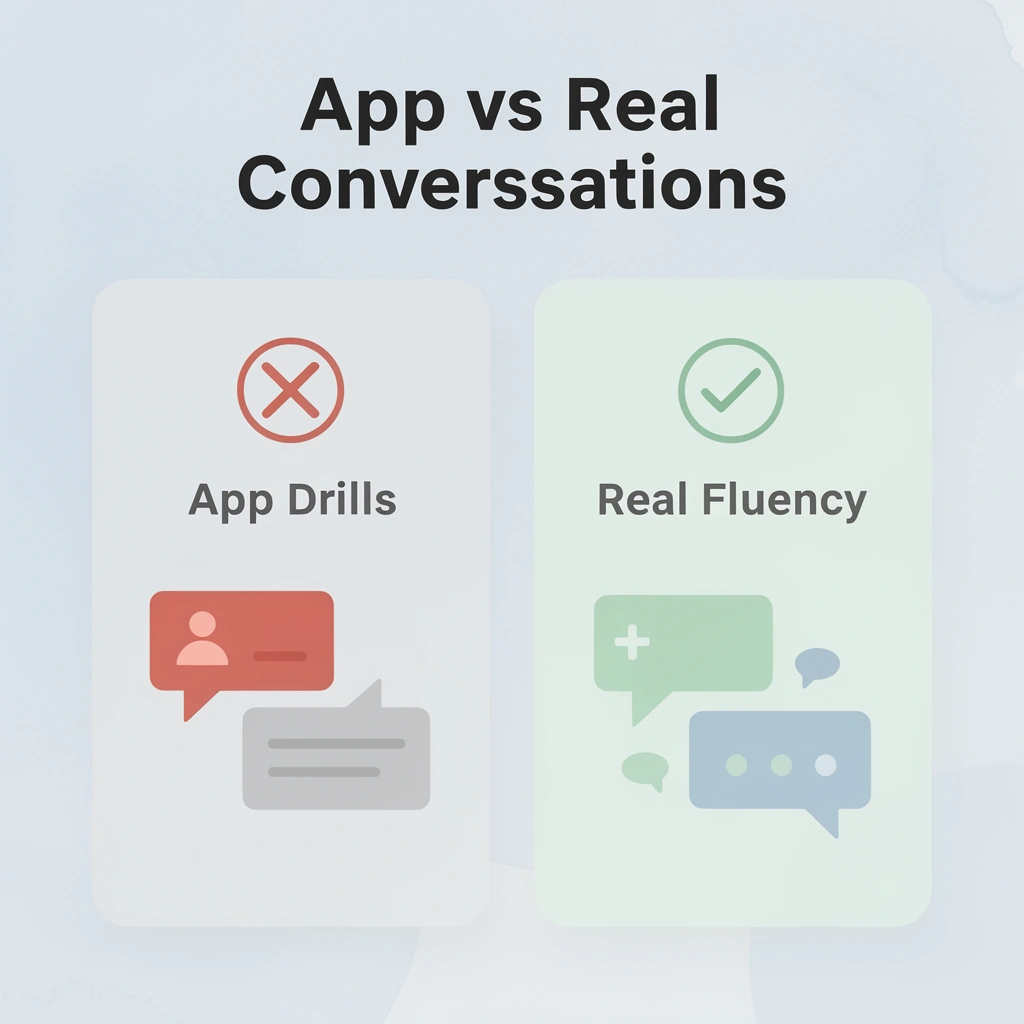
Generic app drills: Leads to passive repetition and poor long-term retention.
Clickable subtitles: Drives active recall using content that genuinely interests you.
Saving words from videos: Builds a personalized vocabulary list that actually sticks.
Guilt-driven routines: Destroys motivation, leading to lost momentum and abandoned habits.
By the end of your session, you will have a personalized vocabulary list built from content you wanted to watch. When your brain connects new words to something it already cares about, you learn the words faster, and the habit forms naturally, without the guilt cycle that stops most routines.
🎯 Key Point: Personalized vocabulary built from content you genuinely enjoy is far more powerful than any pre-made word list because your brain is already emotionally invested in the material.
⚠️ Warning: Skipping the personalization step is the single biggest mistake new learners make. Generic word lists feel like homework; your own vocabulary list feels like a discovery.
Related Reading
Babbel Spanish Review
Pimsleur Spanish Review
Duolingo Spanish Review
Rosetta Stone Vs Pimsleur
Spanish Idioms