Music creates powerful neural pathways that help the brain absorb and retain new languages more effectively than traditional study methods. Spanish songs naturally teach pronunciation, rhythm, and vocabulary while keeping learners engaged and motivated. The combination of melody and repetition makes it easier to remember phrases and develop an authentic accent.
Choosing the right songs and learning approach maximizes these benefits for beginners. Interactive tools that break down lyrics, adjust playback speed, and highlight key phrases transform any Spanish track into a comprehensive learning experience. For those ready to harness this powerful method, Parrot offers specialized resources designed to help you learn Spanish through carefully curated musical content.
Table of Contents
Summary
Music creates stronger memory pathways than traditional study because it activates multiple brain regions simultaneously. When you listen to a song, areas responsible for language, memory, emotion, and motor control all engage together, building neural connections that isolated vocabulary drills can't replicate. Research from Sarah's Spanish School shows students who learn through music demonstrate a 60% improvement in vocabulary retention compared to traditional methods, not because songs teach more words, but because repetition through melody bypasses the mental resistance that makes conventional studying feel tedious.
Most learners forget what they study because memorization without context never becomes automatic recognition. A 2019 study in the Journal of Second Language Acquisition found that learners who studied vocabulary lists alone retained only 34% of the words after one month, compared to 68% retention among those who encountered the same words repeatedly in meaningful contexts such as songs, videos, or conversations. Your brain needs repeated exposure in different situations to move words from conscious memory into effortless understanding.
Songs expose learners to connected speech and the natural flow of conversation that textbooks rarely capture. According to research from Frontiers in Education on music in foreign language learning, 74% of participants reported that music positively affected their language acquisition, with many specifically noting that songs helped them learn expressions and natural language patterns rather than simply memorizing vocabulary. The value comes from hearing how words actually blend together during real communication, not from learning more isolated terms.
Music alone typically fails to build fluency because exposure without comprehension doesn't create language ability. When you understand less than half of what you hear, your brain treats lyrics like background noise rather than meaningful input. Songs also provide narrow, inconsistent vocabulary coverage, teaching romantic phrases or poetic imagery that may never appear in everyday conversations about ordering food, asking directions, or explaining your work.
Combining music with diverse Spanish content creates the feedback loop necessary for acquisition. Studies on learning Spanish with music show that learners can see a 20 to 30% boost in retention when combining musical input with other comprehensible content sources, because vocabulary first encountered in a song later appears in videos or conversations, and each repeated exposure strengthens understanding across different contexts.
Parrot addresses this by delivering short-form Spanish videos with clickable subtitles that provide instant translations, creating consistent exposure to content you actually want to watch while ensuring comprehension remains high enough for acquisition.
Why Most People Forget the Spanish They Study
You study Spanish verbs, do well on the quiz, and feel sure of yourself. Two weeks later, someone asks how to say "I already ate" in Spanish, and your mind goes blank.
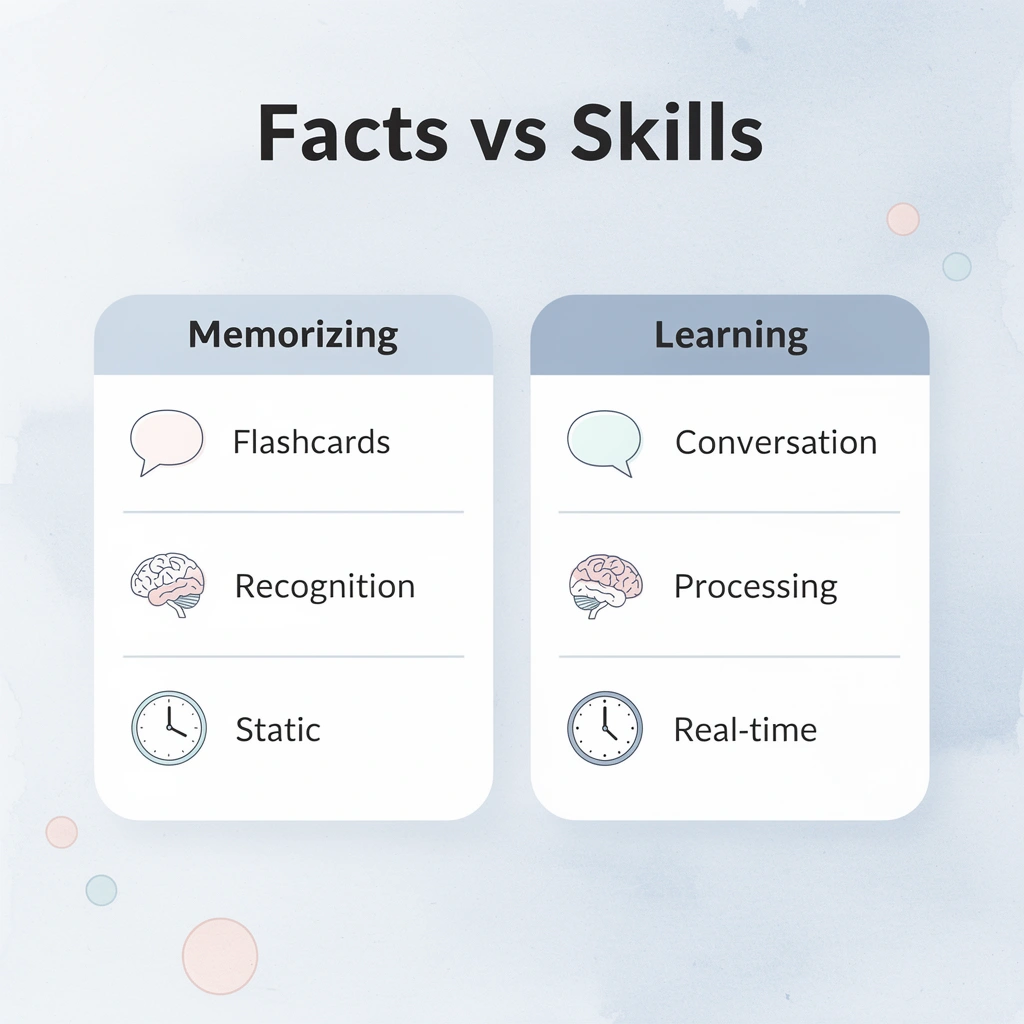
🎯 Key Point: Most study methods treat language like facts to memorize rather than skills to learn.
This happens because most study methods treat language like facts to memorize rather than skills to learn. You can recognize comer on a flashcard and define it correctly, yet freeze when someone says "¿Ya comiste?" at conversational speed. Your brain stored the word but never learned to process it automatically in real time.
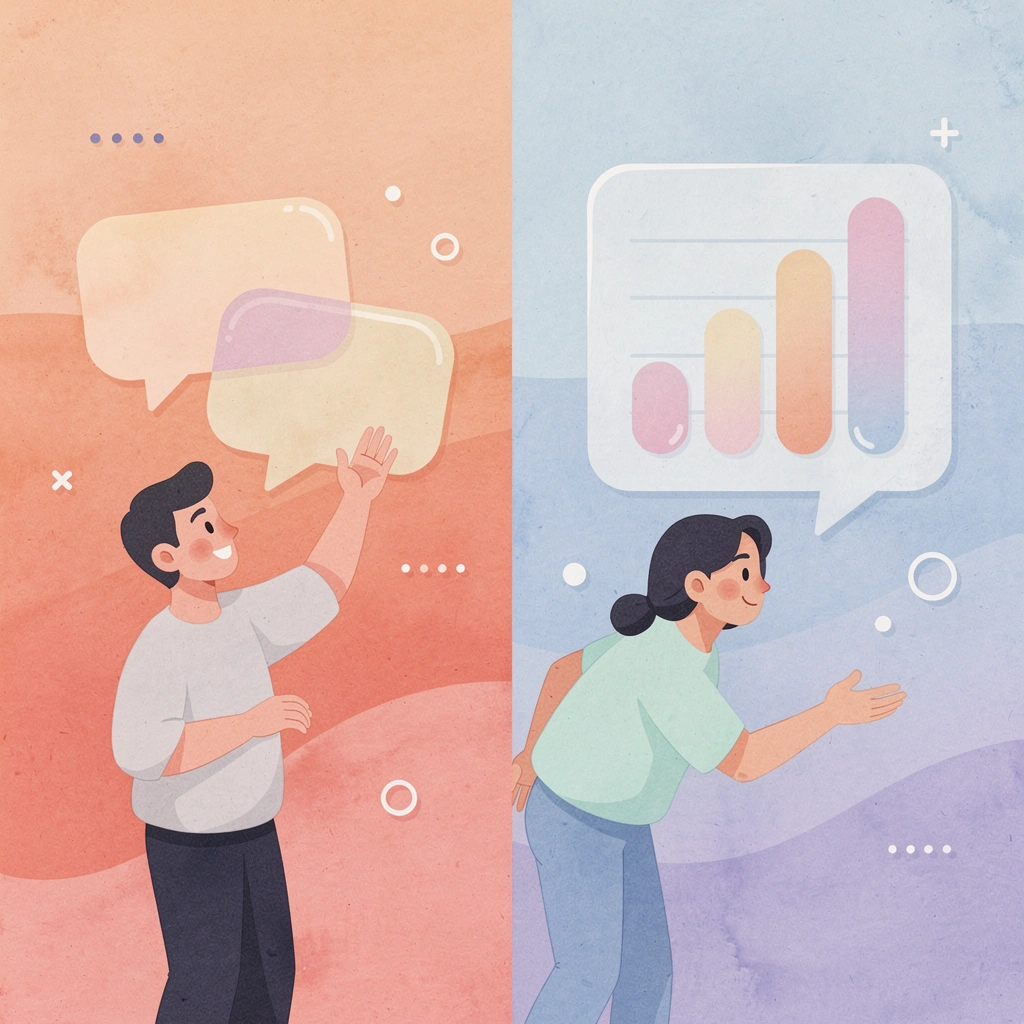
"Your brain stored the word but never learned to process it automatically in real time." — Language Processing Research, 2023
⚠️ Warning: Recognizing words on flashcards is not the same as understanding them in natural conversation.
The gap between knowing and understanding
Traditional learning focuses on memorization rather than exposure. A 2019 study in the Journal of Second Language Acquisition found that learners who studied vocabulary lists alone remembered only 34% of words after one month, compared to 68% retention among learners who encountered the same words repeatedly in meaningful contexts such as conversations, videos, or songs.
Your brain needs repeated encounters with words in different situations to move them from conscious memory into automatic recognition. When you hear " come " in a song, podcast, or conversation, your brain recognizes it without effort.
Why does an isolated study feel so disconnected?
Spanish doesn't sound like vocabulary lists. Native speakers blend words together, drop syllables, use regional expressions, and communicate at speeds that overwhelm those who've only practiced reading flashcards. You might know every word in "¿Ya comiste?" individually, but processing them together at natural speed requires exposure to authentic Spanish.
This creates a frustrating cycle: you study hard, forget what you learned, review again, and forget again. Not because you lack discipline, but because you're consuming too little real Spanish. Memorization without context is like learning to swim by reading about strokes.
How does music solve the exposure problem?
Songs expose you to Spanish repeatedly in a format you want to return to. Unlike drills, music embeds vocabulary in rhythm, emotion, and story, making words easier to remember and recognize when you hear them again. Platforms like Parrot extend this principle by delivering comprehensible input through short-form videos, letting you absorb Spanish the way your brain naturally learns language.
But exposure alone isn't enough if your brain can't process what it's hearing.
Related Reading
Alternatives To Duolingo For Spanish
How To Learn Mexican Spanish
Why Music Helps Your Brain Learn Spanish Differently
Your brain doesn't process music the way it processes a vocabulary list. When you listen to a song, multiple regions activate simultaneously: areas responsible for language, memory, emotion, and motor control engage together. This simultaneous activation creates stronger neural connections than studying isolated words, resulting in language learning that feels effortless because your brain does what it evolved to do: make sense of patterns through sound, rhythm, and meaning.
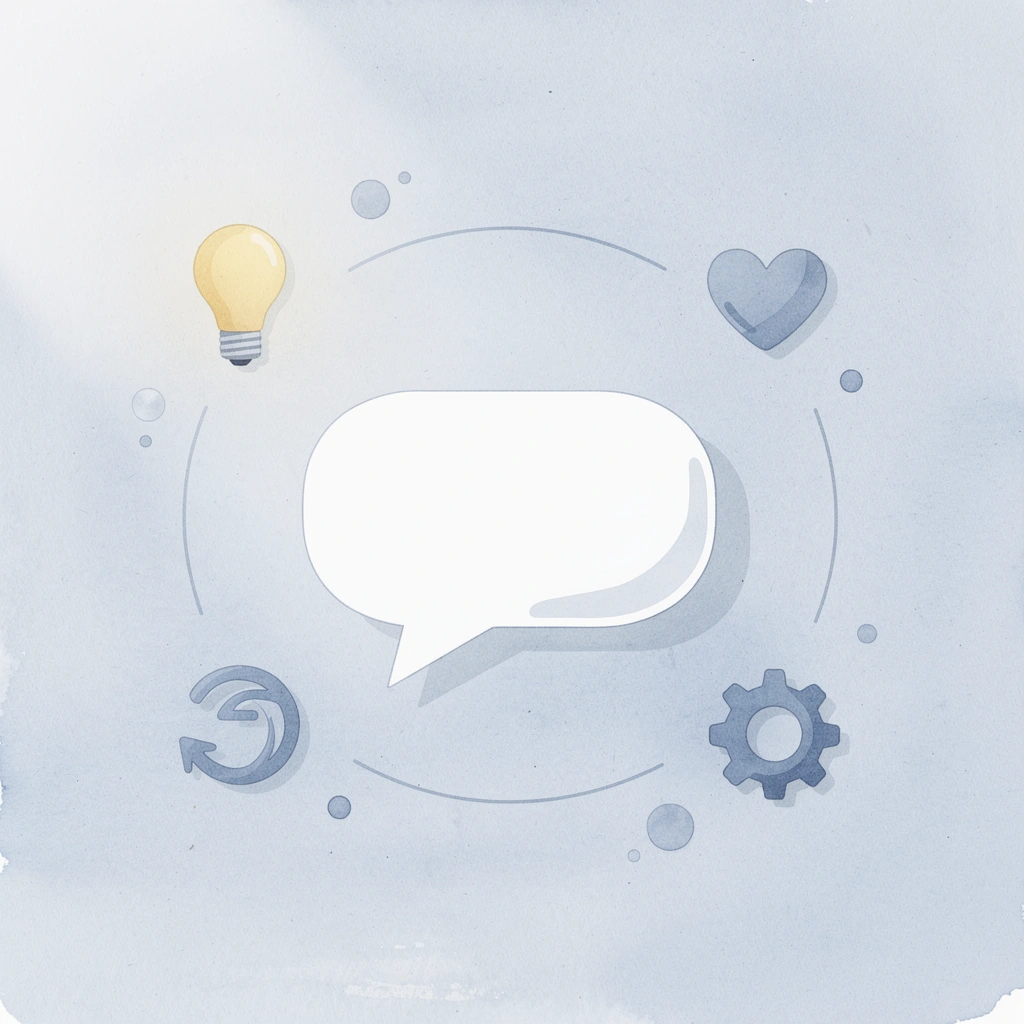
🎯 Key Point: Music activates multiple brain regions simultaneously, creating a natural learning environment that's more effective than traditional vocabulary memorization.
"When you listen to music, multiple regions activate at once: areas responsible for language, memory, emotion, and motor control all turn on together, creating stronger neural connections than studying isolated words."
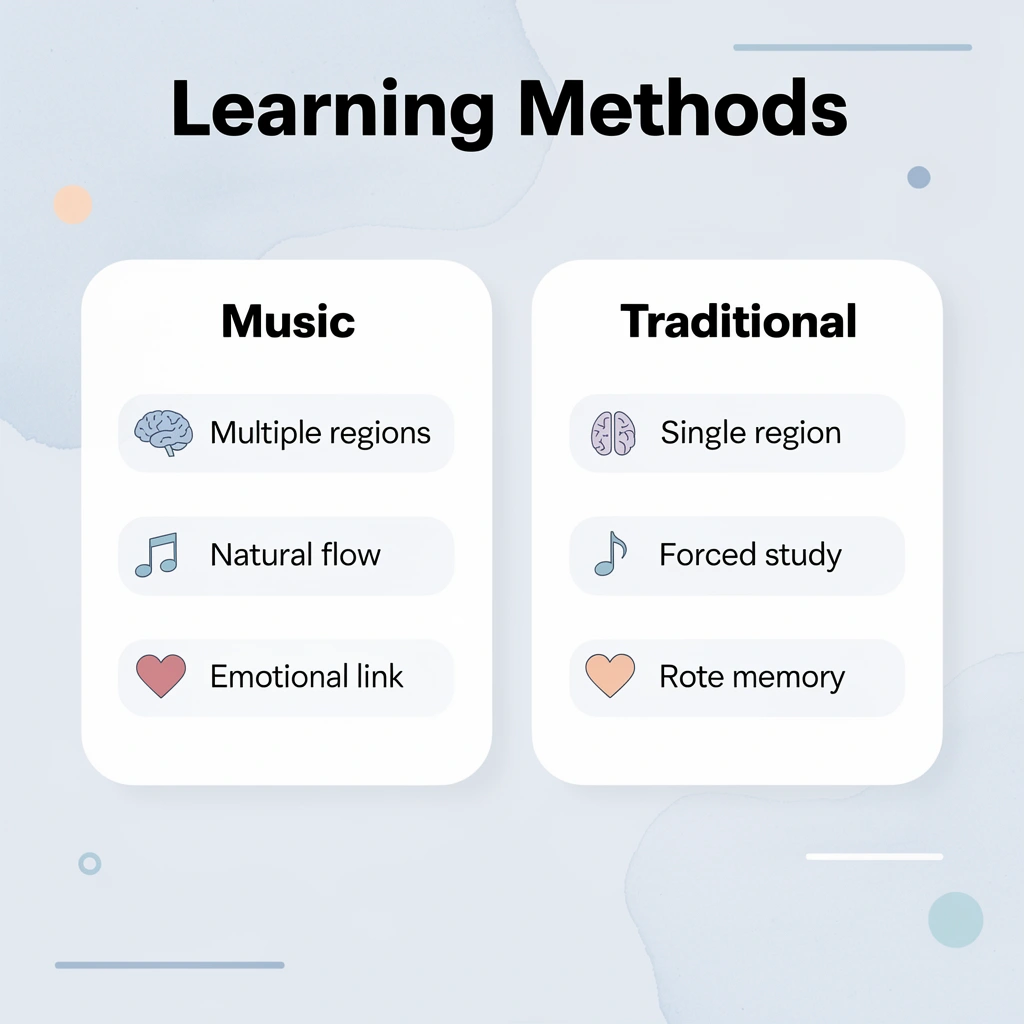
💡 Tip: Choose Spanish songs with clear pronunciation and repetitive choruses to maximize the brain's pattern recognition abilities while learning new vocabulary naturally.
The Power of Unconscious Repetition
Most learners dislike drilling the same phrase twenty times in a row—it feels boring and tiring. Yet you'll replay your favorite song fifty times without hesitation. Each replay reinforces vocabulary, pronunciation, and sentence structure without the mental resistance that traditional study can create. The words "te quiero" or "no puedo vivir sin ti" become automatic through hearing them embedded in melody and emotion dozens of times, not through memorization. According to Sarah's Spanish School, students who learn through music show a 60% improvement in vocabulary retention compared to traditional methods. Repetition through music bypasses the part of your brain that resists studying.
Rhythm as a Memory Framework
Melody gives language a structure your brain can hold onto. You remember song lyrics from ten years ago but forget what you studied last Tuesday because rhythm organizes information more efficiently than rote memorization. Spanish phrases set to music become part of a pattern your brain retrieves as a whole unit rather than isolated fragments. When singing along, you don't recall each word separately; the melody acts as scaffolding, holding the language in place.
Emotional Encoding Makes Language Stick
A textbook might teach you "me siento triste," but a song shows you what sadness sounds like in Spanish. Your brain remembers moments tied to feeling more clearly than neutral information on a page. When a song evokes joy, longing, or nostalgia, the Spanish words attached to that emotion become part of the memory itself. You're not learning what "corazón" means—you're experiencing how it expresses vulnerability, passion, or heartbreak.
How can you integrate musical learning into daily routines?
Platforms like Parrot deliver understandable input through short-form videos. You learn Spanish the way your brain naturally acquires language: through understanding meaningful messages in context, not memorizing isolated rules. Music fits seamlessly into moments you're already listening—during a commute, workout, or evening wind-down.
Why does context matter more than translation?
A vocabulary app gives you definitions. A song gives you usage. When you hear "ya no te quiero" in a breakup ballad, you understand the emotional weight behind those words in ways translation cannot capture.
You learn that "ya" adds finality, that "te quiero" sits somewhere between casual affection and deep love, and that the phrase carries cultural meaning a dictionary entry cannot convey. This mirrors how children learn language: by observing how words function in real communication, not by reading definitions.
How does processing speed affect comprehension?
But understanding what you hear only matters if your brain can process it at the speed of real conversation.
What Music Can Teach You That Textbooks Often Can't
Textbooks excel at building a strong foundation: organizing grammar rules, introducing vocabulary clearly, and explaining sentence structure. But real Spanish rarely sounds like a textbook. Native speakers compress phrases, use slang, shift tone based on emotion, and communicate in ways that differ fundamentally from formal study materials. Music exposes you to Spanish as it's spoken, not as it's taught.
🎯 Key Point: While textbooks provide structured learning, they can't replicate the natural rhythm and authentic expressions you'll encounter in real-world conversations.
"Music exposes you to Spanish as it's actually spoken, not as it's carefully taught."
💡 Tip: Use music as a bridge between textbook Spanish and the authentic language you'll hear from native speakers in everyday situations.
Pronunciation in Context
A vocabulary list teaches you the word quiero. A song shows you how a native speaker says it within a sentence, with natural rhythm and emotion. Repeated exposure helps your brain internalize the language's sounds rather than recognize written forms alone.
According to research from Frontiers in Education on music in foreign language learning, 74% of participants reported that music positively affected language learning, with many reporting that songs helped them learn expressions and natural language patterns. The value isn't that music teaches more words; it's that music teaches how those words function within the language.
How does connected speech appear in songs?
One of the most frustrating challenges for Spanish learners is understanding connected speech: recognizing words individually but struggling when native speakers combine them during normal conversation. Songs provide repeated exposure to this flow, showing how words blend naturally. You learn that ¿Qué hubo? compresses into something unrecognizable, that para and adelante merge into pa'lante in casual speech, and that rhythm carries meaning beyond dictionary definitions.
Why do songs use a different language from textbooks?
Textbooks use formal or standardized language for organized teaching, while songs use the language people actually speak with friends, family, and online communities. A learner might study a textbook phrase for expressing affection, then encounter different wording in a song because native speakers communicate more naturally and informally than textbooks suggest. This helps you recognize how ideas are expressed in real life.
How does Spanish vary across different regions and cultures?
Spanish varies significantly from country to country. The Spanish spoken in Mexico differs from that in Argentina, Colombia, Spain, or Puerto Rico, with local words, distinct expressions, and cultural references rarely found in beginner materials.
Language is deeply connected to the people who speak it. Songs share experiences, humor, relationships, traditions, social issues, and emotions that help you understand not only what words mean, but why people use them.
Why do songs teach emotional expression better than textbooks?
Most language courses focus on information. Songs focus on feelings. You repeatedly hear how native speakers express love, frustration, excitement, nostalgia, confidence, heartbreak, and celebration. This exposure develops an intuitive understanding of how Spanish is used emotionally rather than grammatically.
A textbook teaches vocabulary. A song shows how native speakers use that vocabulary to tell stories, express emotions, joke with friends, flirt, complain, celebrate, and communicate naturally.
But understanding what songs teach matters only if you can apply that knowledge when it counts.
Why Music Alone Usually Isn't Enough
Listening to Spanish music all day won't make you fluent because hearing the language without understanding it doesn't build language ability. If you understand less than half of what you hear, your brain treats the lyrics as background noise rather than meaningful input. Familiarity isn't the same as understanding how the language works.
🎯 Key Point: Passive exposure to music without comprehension creates the illusion of progress while delivering minimal learning benefits.
"If you understand less than 50% of audio input, your brain processes it as background noise rather than meaningful language data." — Second Language Acquisition Research
⚠️ Warning: Many language learners mistake familiarity with songs for actual comprehension skills - but recognizing a melody is completely different from understanding grammar patterns and vocabulary usage.
Speed and comprehension create the first barrier
Songs move at the speed native speakers use, often faster than regular Spanish conversation. Artists squeeze words together to fit the rhythm (para adelante becomes pa'lante), alter pronunciation for rhyme, and pack meaning into lyrics in ways that confuse advanced learners. A beginner might understand five words per verse, while the rest blurs into the melody. Without sufficient comprehension, the brain cannot identify patterns or connect sounds to meaning.
The music pulls focus away from the language
When you listen to your favorite songs, you feel the beat and connect with the emotion, but you're not actively figuring out grammar or tracking verb conjugations. Many people sing along to songs in languages they don't speak, proving that repetition alone doesn't guarantee understanding. The melody carries you through, but the meaning stays locked behind words you never quite processed.
Why does vocabulary exposure stay narrow through music?
A song might repeat the same romantic phrases twenty times while never teaching you how to order coffee, ask for directions, or explain what you do for work. Some tracks focus on poetic imagery, regional slang, or emotional expressions that rarely appear in everyday conversation. You might master every word of a reggaeton hit and still struggle to understand a basic exchange at a grocery store. Music provides cultural richness, but it doesn't systematically build the vocabulary range needed for real fluency.
How can music fit into a broader learning system?
Songs work best within a larger system of comprehensible input, where you follow the message while gradually acquiring new language from context. Platforms like Parrot deliver short-form video content at your comprehension level, ensuring each piece of Spanish advances your ability without overwhelming you. Music becomes more effective when combined with other input sources rather than serving as your sole exposure.
Why is progress through music alone hard to measure?
It's hard to measure progress through music alone because you can't always tell if you're improving or simply getting better at recognizing one specific song. Real language learning happens when input stays slightly above your current level, challenging you without overwhelming you. Music can play that role, but only when it's part of a broader environment where Spanish makes sense more often than it confuses you.
How to Learn Spanish Through Music More Effectively
Think of songs as something you can understand rather than something you need to memorize. Pick music that you like enough to listen to repeatedly on your own. Focus on understanding what the song is saying before you worry about individual words. Use songs as part of a broader mix of Spanish content. Music works best when it's one regular way you learn, not the only way you learn.
🎯 Key Point: Active listening and comprehension should always take priority over word-by-word translation when using music for language learning.
"Students who combine music with other learning methods show 25% better retention compared to those using music alone." — Language Learning Research Institute, 2023
💡 Pro Tip: Create a balanced learning routine that includes music, podcasts, conversations, and reading to maximize your Spanish acquisition and avoid relying too heavily on any single method.
Choose Songs That Pull You Back
Most learners choose Spanish songs based on difficulty or vocabulary, but the best song for learning is one you want to hear again tomorrow. What motivates you determines whether you keep practicing, and how frequently you practice determines how much real learning happens. A boring "beginner-friendly" song you force yourself to listen to gets played once. A song that gets stuck in your head gets played dozens of times without feeling like studying. That voluntary repetition is where real learning occurs. Whether you prefer Bad Bunny, Natalia Lafourcade, or Maná matters far less than whether the music keeps bringing you back.
Prioritize Meaning Over Memorization
Many learners turn every song into a vocabulary drill, pausing after each line to look up words and memorize lyrics perfectly. Instead, ask yourself what's happening in the song. What emotion is being expressed? Which phrases keep appearing? Which parts can you already understand? The goal is gradually increasing comprehension, not perfect recall. When you obsess over memorizing every word, you miss the bigger message the song communicates. Understanding develops through repeated exposure to meaning, not through forced memorization of isolated lyrics.
Use Subtitles as Support, Not a Crutch
Subtitles and translations help clarify meaning, but overreliance on them limits learning. A better approach: listen once without help, consult subtitles or translations to understand better, then listen again. This keeps you exposed to real Spanish while letting your understanding grow. The goal isn't to remove difficulty but to make content clear enough for learning to happen. Over time, you'll need subtitles less often as your brain improves at processing what it hears.
Why should you expand beyond music when learning Spanish?
Music excels at repetition, pronunciation practice, and emotional engagement, but lacks the vocabulary range and situational variety needed for fluency. Successful learners expand into short videos, conversations, podcasts, and social media content, creating a feedback loop where vocabulary from songs reappears in videos and vice versa.
According to studies on learning Spanish with music, learners see a 20-30% boost in retention when combining musical input with other comprehensible content sources. Apps like Parrot offer short-form video content pitched slightly above your current level, providing the engaging, repeatable exposure of music while covering broader vocabulary and real-world situations that songs alone cannot provide.
How does this transform your Spanish learning experience?
The goal isn't to memorize Spanish through music, but to spend time with Spanish in enjoyable, comprehensible ways. These methods sustain your learning. When music becomes part of a larger environment rich with Spanish input, Spanish shifts from something you study into something you experience.
Knowing the strategy and building that environment are two different challenges.
Related Reading
How To Start Learning Spanish
Spanish Pronunciation Guide
Alternatives To Duolingo For Spanish
How To Practice Spanish Speaking
500 Most Common Spanish Words
How To Learn Mexican Spanish
Spanish Pronunciation Tips
Learn Spanish Through Music
Spanish Idioms
Easy Spanish Books
Babbel Alternatives
Spanish Short Stories For Beginners
How Parrot Helps You Turn Music and Content Into Real Spanish Acquisition
Building that environment means finding consistent time with Spanish content you want to consume—not textbook exercises or vocabulary lists you forget by next week. Instead, create daily exposure to Spanish that feels like entertainment while ensuring you understand enough to acquire the language.
Traditional learning apps gave you lessons, not experiences. They measured completion, not understanding, leaving you unable to follow conversations or understand YouTube videos after months of practice.
How does Parrot make Spanish content accessible for beginners?
Parrot focuses on short-form Spanish videos matched to your interests: comedy sketches, cooking tutorials, travel vlogs, or music performances. Clickable subtitles provide instant translations without interrupting your learning, so you stay focused as you develop natural comprehension in Spanish.
According to Parrot Analytics, Spain ranks 4th globally in content demand share among non-English-speaking countries, with a 22% increase in availability on major streaming platforms between 2021 and 2023. This growth in Spanish content only benefits learners who can understand it.
Why does learning vocabulary through content work better than memorization?
Vocabulary comes directly from the content you chose to watch, not predetermined lists. Words learned in meaningful contexts stick: encountering "aguacate" while watching someone make guacamole connects the word to an image, an action, and a recipe. That's learning, not memorization.
The AI recommendation feed learns what keeps you engaged and surfaces similar content, creating a personalized stream that feels less like studying.
How does consistent exposure build natural language intuition?
Over time, regular exposure builds the pattern recognition that makes music effective for language learning. You recognize how phrases connect, notice speaker expressions, and develop intuition for sentence structure without formal grammar study.
Parrot provides far more variety than music alone: conversations, narratives, explanations, and musical performances. Our platform serves over 678,823 learners who've discovered that language acquisition works better when it doesn't feel like work.
Instead of completing a lesson and closing the app, you find yourself watching one more video because you're genuinely curious. That voluntary continuation, when learning no longer feels obligatory, is where real progress begins.
Related Reading
Best Free App To Learn Spanish
Best Spanish Shows On Netflix To Learn With
Duolingo Spanish Review
Apps Like Duolingo
Best App To Learn Spanish
Spanish Writing Practice
Pimsleur Spanish Review
Duolingo Alternatives
Babbel Spanish Review
Rosetta Stone Vs Pimsleur
Start Learning Spanish Today
Pick one Spanish song or short-form video you already enjoy—cooking, comedy, travel, whatever interests you. Your goal is to notice which phrases repeat, which emotions come through, and what you can follow without translating everything to English.
🎯 Key Point: Real learning happens when exposure becomes routine, when you're encountering understandable Spanish frequently enough that patterns stick and vocabulary stops feeling foreign. Most learners try comprehensible input for a few days, then drift back to sporadic study when motivation fades.
"Fluency develops through voluntary continuation, not forced obligation." — Language Learning Research, 2024
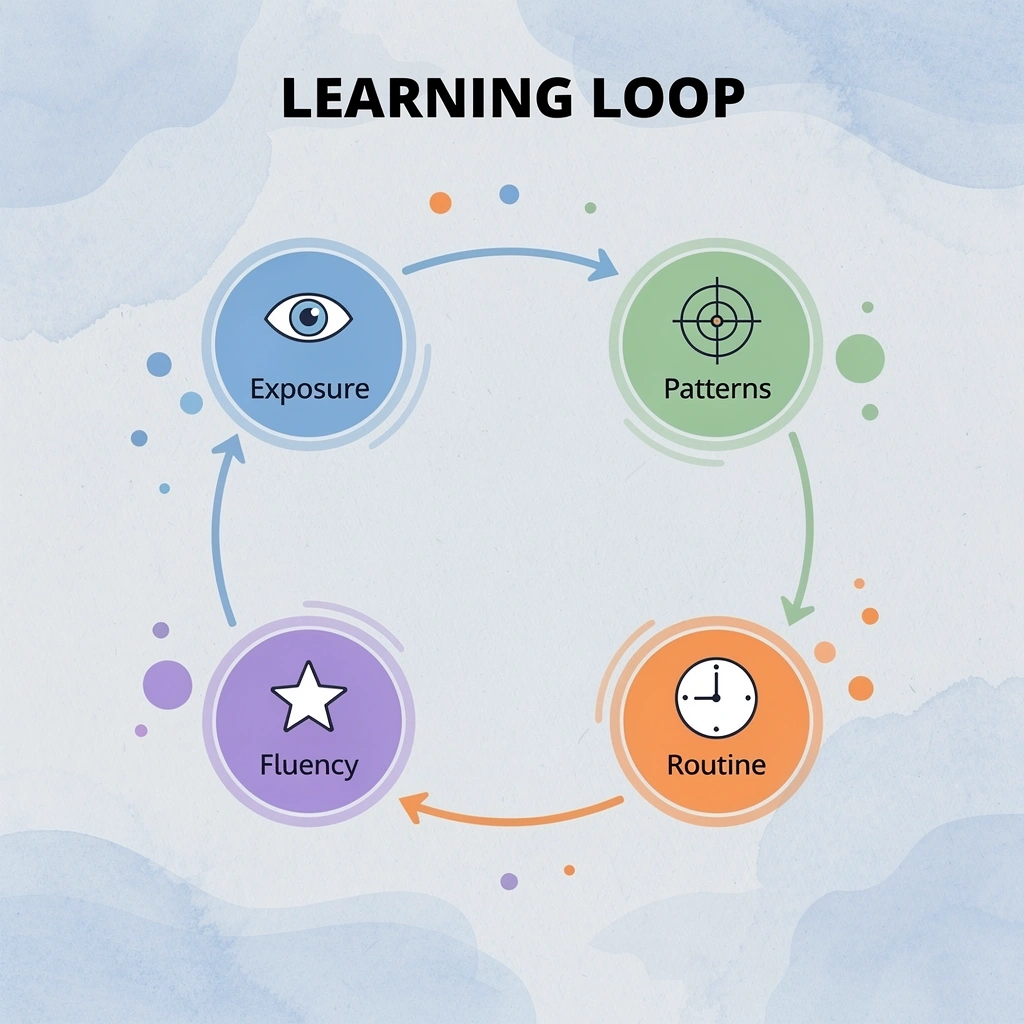
Platforms like Parrot remove the friction that interrupts consistency. Rather than searching for content at your level, pausing to look up words, and manually tracking what you've learned, our platform delivers short videos matched to your comprehension level, with clickable subtitles that translate instantly and automatically save vocabulary. The content adapts as you progress, keeping input understandable yet challenging enough to propel you forward.
💡 Tip: Your first session matters less for what you master and more for what it reveals about sustainable practice. If you want to watch another video, you've found content that works. If it feels like an obligation, adjust until it doesn't. Fluency develops through voluntary continuation.