Duolingo's gamified approach keeps millions engaged with daily Spanish lessons, but many learners find themselves stuck translating sentences they'd never use in real conversations. While streak counters and virtual rewards can motivate, they don't always translate into practical speaking skills or cultural understanding. Reaching true conversational fluency often requires tools that prioritize real-world communication over points and badges.
Effective Spanish learning platforms focus on practical dialogue, cultural context, and confidence in speaking rather than just vocabulary memorization. The best alternatives emphasize conversational skills that mirror real-world interactions with native speakers. For learners seeking this practical approach, platforms like Parrot offer comprehensive programs designed to learn Spanish through contextual, real-world scenarios.
Table of Contents
Why Many Spanish Learners Eventually Look Beyond Duolingo
What Duolingo Does Well and Where It Falls Short
What to Look for in a Duolingo Alternative
The 7 Best Alternatives to Duolingo for Different Learning Goals
Why Language Learning Is Shifting Toward Comprehensible Input
How Parrot Helps Learners Move Beyond Traditional Language Apps
Start Learning Spanish Today
Summary
Duolingo introduced millions of people to Spanish and helped establish study habits through streaks, notifications, and gamified lessons, but many learners eventually discover a gap between completing exercises and understanding native speakers in real situations. The platform works well for building foundational vocabulary and maintaining daily practice routines, yet the skills required to select correct answers or translate isolated sentences don't always transfer to comprehending conversations at natural speed with regional accents and informal expressions.
Research emphasizes that language acquisition happens most effectively when learners encounter comprehensible input, content that sits just beyond their current level, where they understand the overall message while naturally absorbing new words and structures in context. Effective learning environments provide input that is 95 to 98% comprehensible, a threshold that balances challenge with understanding and allows the brain to recognize patterns without conscious effort. When content falls below that range, learners spend more energy guessing than processing, and when it exceeds that range, acquisition stalls because nothing new appears.
Listening comprehension requires separate development from reading skills because native speakers blend words together, use contractions and slang, and speak at a rhythm that makes individual vocabulary harder to isolate. Many learners recognize written Spanish easily but miss the same phrases entirely when delivered at conversational pace, revealing that vocabulary memorization alone doesn't prepare them for real-time processing during actual exchanges.
Consistency matters more than intensity when building language skills, yet traditional lesson formats often create friction by demanding scheduled study blocks that require willpower to sustain over months. Platforms that integrate learning into existing habits, such as scroll-based short-form video formats, eliminate the need for artificial motivation systems and enable practice during moments learners would otherwise spend on social media. Over 682,122 learners have used content-driven approaches that prioritize enjoyment and comprehension, with some spending over 35 minutes per day engaging with personalized material aligned with their interests.
Personalized content recommendations solve the motivation problem that causes many learners to abandon generic curricula, as people stay engaged when the material itself feels interesting rather than relying solely on gamification to drive continued use. AI-powered feeds that surface Spanish videos around individual preferences, whether travel stories, cooking tutorials, or cultural commentary, create voluntary engagement that traditional lesson-based apps struggle to sustain because the content connects to what learners already care about rather than forcing them through predetermined topics.
Parrot's learn Spanish program addresses this by centering the experience on short videos in which native speakers use natural language at realistic speeds, allowing learners to build listening skills and contextual understanding through content they genuinely enjoy rather than decontextualized exercises.
Why Many Spanish Learners Eventually Look Beyond Duolingo
You complete lessons, keep your streak going, and watch your progress bar fill up. But when you try watching a Spanish YouTube video or ordering food at a restaurant, the gap becomes obvious. What works in the app doesn't translate to real conversations, driving many learners to look for something different.
💡 Tip: The gamification elements that make Duolingo engaging can create a false sense of progress when your real-world Spanish skills lag behind your app achievements.
⚠️ Warning: App-based learning often focuses on recognition skills rather than production skills. You might understand Spanish when you see it, but struggle to speak it in spontaneous conversations.

The moment progress stops feeling like progress
According to the 2025 Duolingo Language Report, Spanish is the most popular language to study on Duolingo, with millions following the same path of vocabulary lists, translation exercises, and achievements. The problem emerges when learners realize they can recognize words on a screen but cannot understand them when spoken aloud.
This disconnect happens because completing exercises trains you to excel at exercises, not conversations. Native speakers don't pause between words, wait for mental translation, or speak at the controlled pace you've practiced with.
When memorization replaces acquisition
The words you memorized three weeks ago feel hard to remember during actual exchanges. You studied the word for "appointment" repeatedly, but when someone asks about your schedule, it vanishes. Isolated word practice creates weak knowledge because your brain never encountered those words in meaningful, repeated contexts where they could stick naturally.
Language acquisition requires hearing words and phrases across different situations and speakers in ways that build intuitive understanding rather than conscious recall. Structured drills teach your brain to memorize for tests, not absorb for communication.
The shift from lessons to real-world readiness
Your goals shift as you progress. You stop chasing streaks and points and start wanting to understand podcasts, follow native speakers, and enjoy the content you consume. Metrics that once motivated you become less meaningful than actual comprehension.
How do modern platforms bridge the comprehension gap?
Platforms like Parrot's learn Spanish program fill this gap by focusing on comprehensible input instead of game-like completion. Rather than translating single sentences, you learn Spanish through short videos showing how native speakers actually talk. This builds listening skills and contextual understanding you can apply immediately in real conversations.
What should you understand about Duolingo's approach first?
But before exploring what works better, it is essential to understand where Duolingo succeeds and where its approach creates limitations.
Related Reading
Alternatives To Duolingo For Spanish
How To Learn Mexican Spanish
What Duolingo Does Well and Where It Falls Short
Duolingo became one of the world's most popular language-learning apps for good reason. The platform has introduced millions of people to Spanish and helped learners establish study habits they might not have developed otherwise. For beginners in particular, it provides a structured, easy-to-understand way to start learning a new language.

🎯 Key Point: Duolingo's gamified approach has made language learning accessible to users who might have been intimidated by traditional methods, creating a low-barrier entry point into Spanish education.
"Duolingo has successfully introduced millions of people to language learning through its structured and beginner-friendly platform."
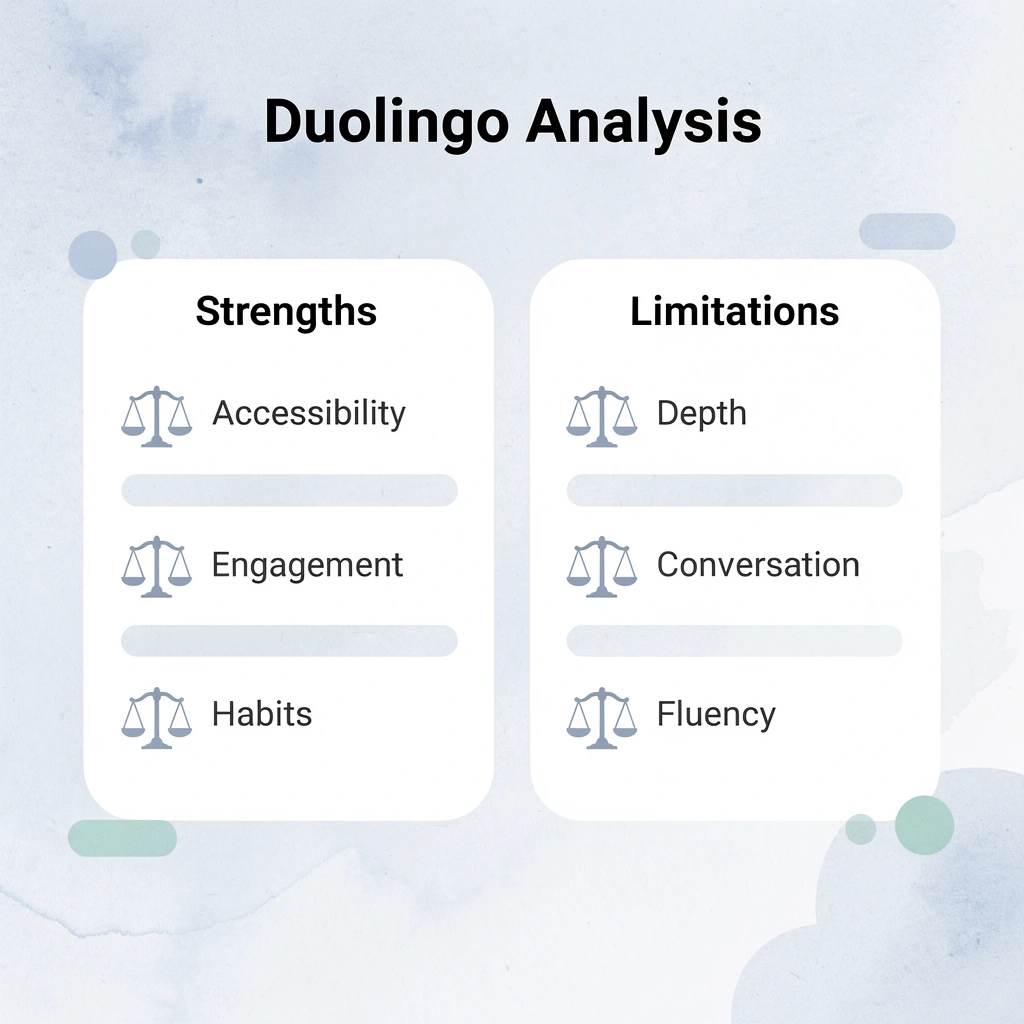
🔑 Takeaway: While Duolingo excels at initial engagement and habit formation, learners should understand its strengths and limitations when planning their Spanish learning journey.
Building the Habit First
Duolingo's greatest strength is habit formation. Many people struggle not because they lack resources, but because they don't practice regularly. The streak system, daily goals, notifications, and game-like experience create a routine that encourages regular use—invaluable for beginners when the alternative is no practice at all.
Over 800 million learners worldwide use Duolingo because new learners can start immediately without prior knowledge, a tutor, or a learning plan. Lessons are broken into small pieces, making Spanish less intimidating for beginners. Free access removes financial barriers to entry.
Does completing exercises translate into real understanding of Spanish?
The real question is whether completing exercises helps you understand authentic Spanish. Many learners report that understanding Duolingo exercises feels easier than understanding native speakers. Real Spanish includes regional accents, informal expressions, connected speech, slang, interruptions, and natural speaking speeds that structured exercises cannot replicate.
The platform's focus on exercises creates a mismatch between practice and fluency. Users become skilled at recognizing patterns, filling in blanks, selecting correct answers, and translating sentences, but these activities don't develop the skills required to understand conversations or communicate spontaneously. Some learners experience a gap between their performance in lessons and their real-world comprehension.
Why is comprehensible input crucial for language acquisition?
One common problem is insufficient comprehensible input. Language learners struggle to understand when encountering new words and grammar rules. Research shows that repeated exposure to understandable language is essential to language acquisition.
While Duolingo has reading and listening exercises, much of the experience focuses on completing tasks rather than engaging with real Spanish. Platforms like Parrot fill this gap by offering short videos where learners hear Spanish spoken by native speakers in authentic situations, building listening skills and contextual understanding that translate directly into conversations.
How do you choose the right learning approach?
The right tool depends on your goal. Duolingo is highly effective for building a foundation and learning basic vocabulary. To understand native speakers and develop real-world fluency, many learners eventually need additional input alongside structured lessons. Duolingo works best as a starting point rather than a complete language-learning strategy.
But knowing Duolingo's limitations only matters if you understand what drives language acquisition in the first place.
What to Look for in a Duolingo Alternative
The best Duolingo alternative helps you develop the specific skills you need to understand and use Spanish in real situations. Focus on how the platform delivers language, not the volume of content it offers.
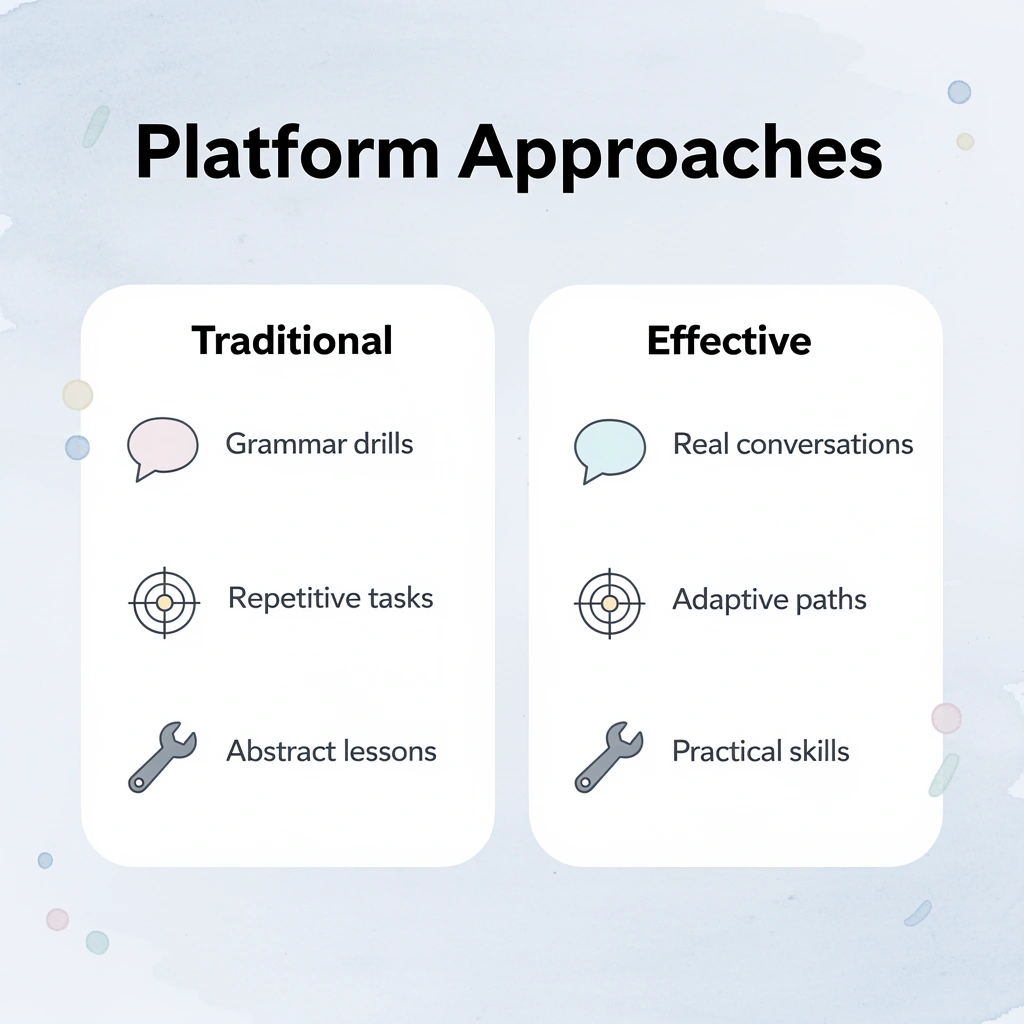
🎯 Key Point: Look for platforms that prioritize practical communication skills over gamified lessons. The most effective language apps focus on real-world conversations rather than abstract grammar drills.

"The most successful language learners use apps that emphasize practical speaking practice and contextual learning over traditional lesson structures." — Language Learning Research, 2024
⚠️ Warning: Many Duolingo alternatives promise comprehensive language learning but deliver the same repetitive exercises in different packaging. Choose platforms that offer authentic conversation practice and adaptive learning paths.
Comprehensible Input
The most important question is simple: Can you understand most of what you're hearing?
Language learning research emphasizes comprehensible input—content that sits beyond your current level. You understand the overall message while encountering new words and structures naturally embedded in context.
How do you find the right difficulty level?
If everything feels too easy, you're not growing. If nothing makes sense, you're not learning language; you're hearing noise. The ideal learning environment exists between those extremes, where meaning stays clear as complexity gradually increases.
A strong Duolingo alternative should provide Spanish that challenges you without overwhelming you, keeping you engaged with meaning rather than forcing constant translation or dictionary lookups.
Exposure to Real Spanish
Many platforms simplify Spanish lessons by shortening sentences, keeping vocabulary formal, and slowing speech to unnatural speeds. While this builds confidence for beginners, it creates a gap between what you practice and what you'll hear in Madrid, Mexico City, or Miami.
How does authentic Spanish differ from classroom Spanish?
Native speakers use contractions, regional slang, informal expressions, and cultural references that rarely appear in traditional lessons. They speak at a natural rhythm, blending words together in ways that obscure individual vocabulary. According to PolyChat, effective language apps now offer 17 languages with authentic content designed to mirror real-world communication patterns. The closer your practice material resembles actual conversations, the more readily it transfers to everyday situations.
Listening Development
Reading Spanish and understanding spoken Spanish are separate skills. You might recognize "necesito una cita" on screen but miss it entirely when someone says it quickly in conversation, blending sounds into "necesitounacita" at full speed.
Listening comprehension requires repeated exposure to pronunciation, rhythm, connected speech, and natural sentence patterns. An effective alternative should actively develop this skill rather than treat it as secondary to reading or translation exercises. Understanding messages in real time, as native speakers deliver them, matters more than recognizing individual words.
Consistency Through Design
The most effective method fails if you stop using it. Duolingo's streaks and notifications work because consistency makes the app easier to use, not because it mimics a game.
Platforms like Parrot use short videos in a scrolling format resembling TikTok or Instagram. Quick learning sessions fit naturally into times when you'd normally be scrolling, rather than requiring 20-minute study blocks that demand willpower and planning.
The best learning system is one you'll use tomorrow, next week, and three months from now. Consistency matters more than intensity.
The 7 Best Alternatives to Duolingo for Different Learning Goals
The best Duolingo alternative depends on what you find missing from your current learning experience. Some learners want more grammar instruction, others need conversation practice, and some struggle with listening comprehension, while others seek content that sustains motivation toward fluency. Identify the platform that matches your learning goal.

🎯 Key Point: The most effective language learning happens when you choose a platform that directly addresses your weaknesses rather than following a one-size-fits-all approach.
"Students who use targeted learning tools that address their specific skill gaps show 40% faster progress compared to those using generic platforms." — Language Learning Research Institute, 2023
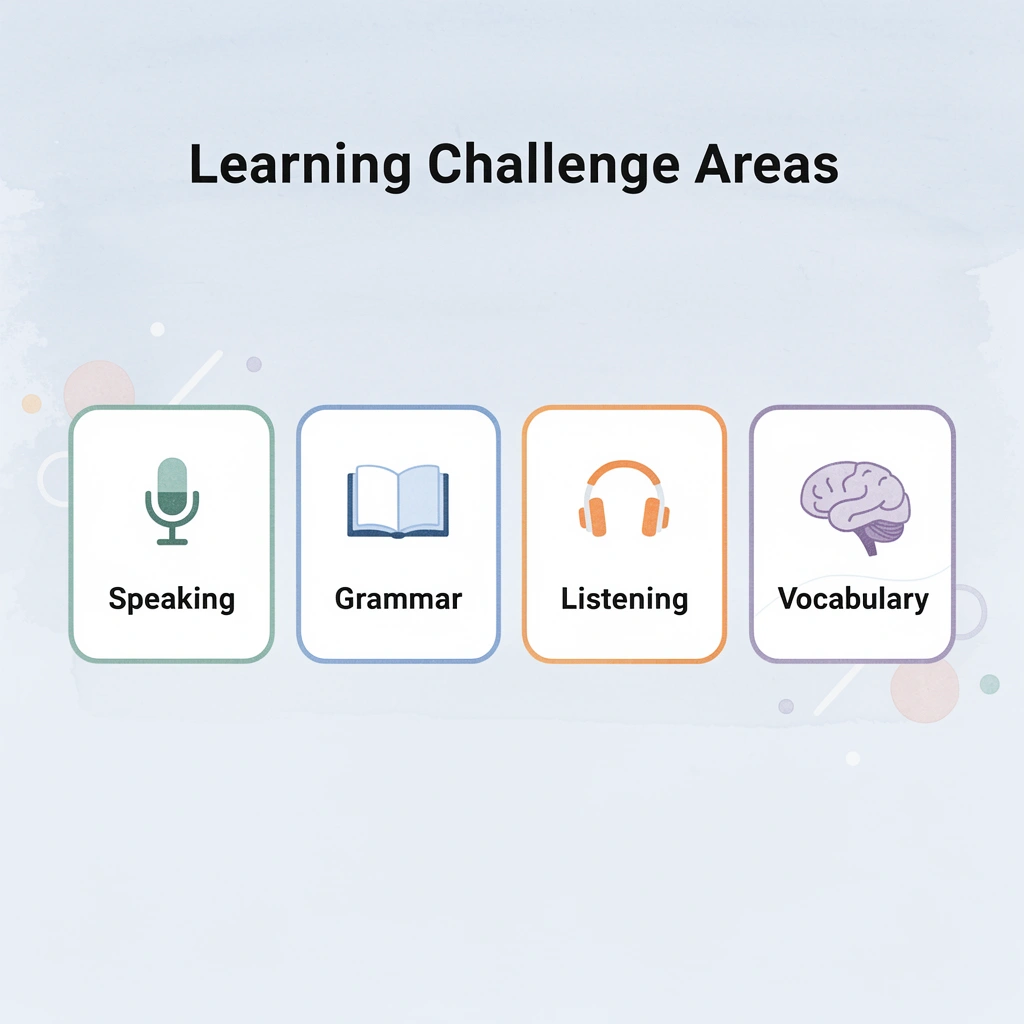
💡 Tip: Before switching platforms, spend 5 minutes identifying your biggest language learning challenge - whether it's speaking confidence, grammar understanding, or vocabulary retention - then choose the alternative that specializes in that area.
1. Best for Learning Through Content You Enjoy: Parrot
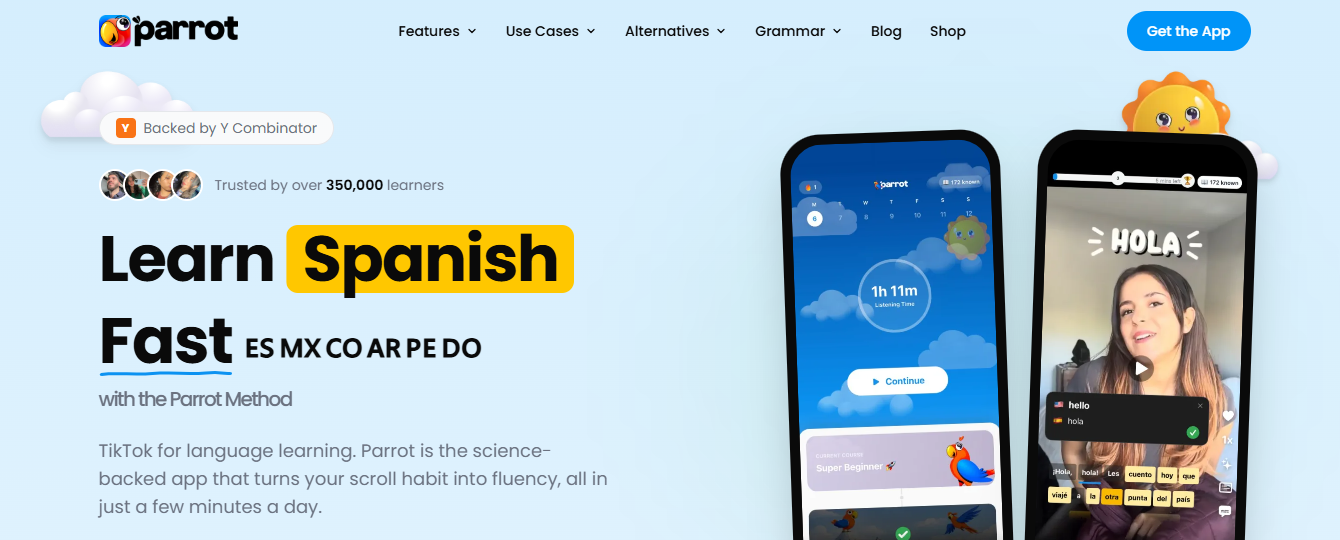
Motivation often becomes the biggest obstacle to long-term language progress. Traditional lessons feel repetitive, and vocabulary drills become difficult to sustain.
Parrot helps learners acquire Spanish through content they genuinely enjoy. Our platform uses research-backed comprehensible input and short-form Spanish content, featuring clickable subtitles, instant translations, saved vocabulary, and an AI-powered recommendation feed.
How does Parrot make learning feel natural?
Personalized recommendations make learning feel like using social media rather than studying. Sessions fit naturally into moments you'd otherwise spend on your phone, working with your existing scroll habits instead of demanding artificial study blocks.
Strengths
Easy-to-understand input, personalized content recommendations, clickable subtitles, instant translations, engaging short-form content, and natural language exposure.
Best-fit learner
Someone who prefers learning Spanish through enjoyable content instead of traditional lessons.
2. Best for Structured Grammar Learning: Babbel
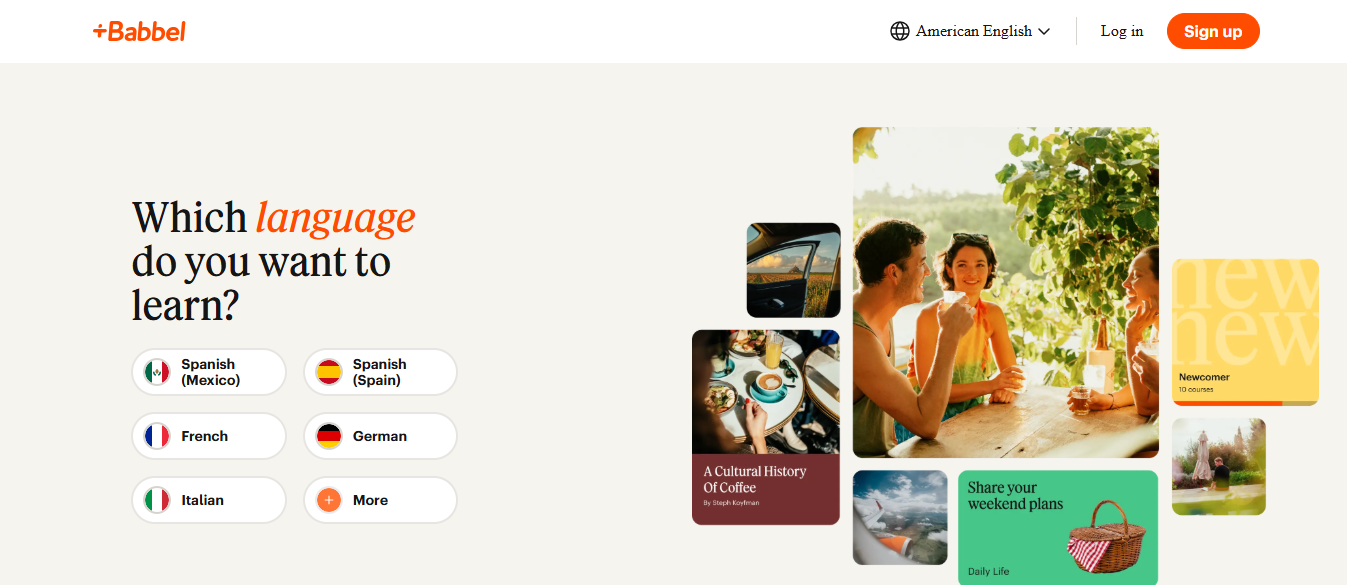
Babbel works well for learners who prefer structured lessons with clear grammar explanations. Lessons focus on practical conversations and gradually introduce new words and sentence structures, offering more direct grammar instruction than game-based apps.
Strengths
Structured lessons, clear grammar explanations, practical conversation scenarios, and organized learning paths.
Limitations
Less focus on large amounts of easy-to-understand input and learning from real content.
Best-fit learner
Someone who understands language rules through structured lessons.
3. Best for Conversation Practice: italki
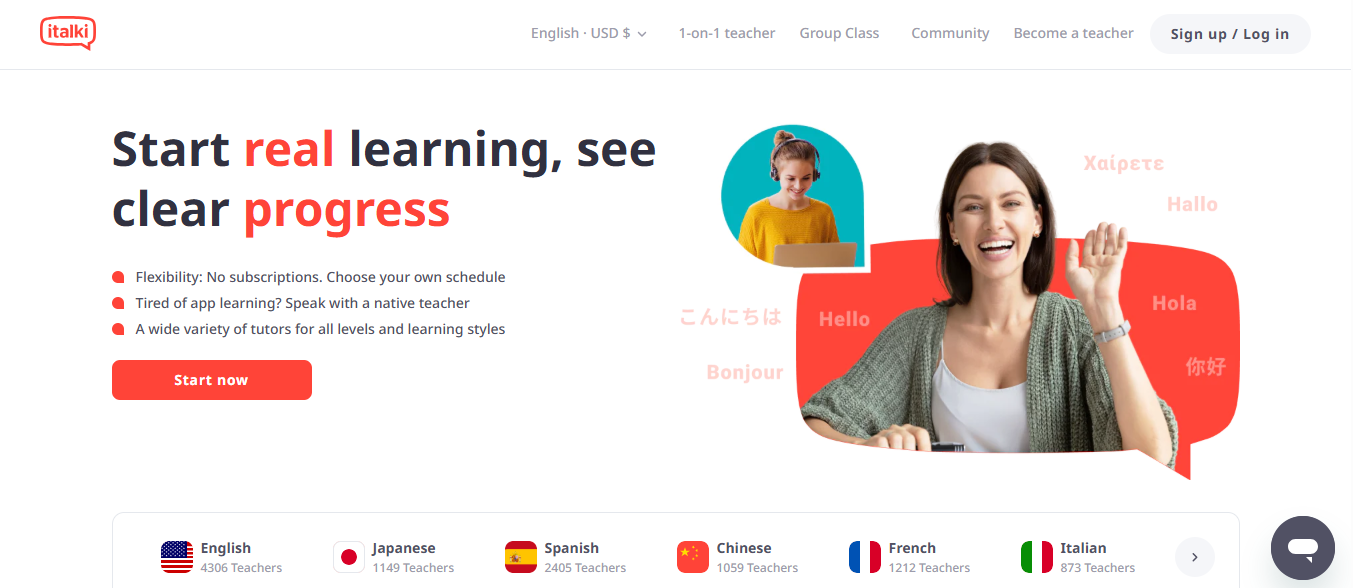
Italki connects learners with professional teachers and community tutors for one-on-one language lessons, letting you practice speaking with real people instead of relying on exercises or automated systems.
The platform lets you choose teachers, schedules, and lesson formats. You can book sessions around your availability and switch instructors until you find a teaching style that matches your learning preferences.
Strengths
Live speaking practice, personalized lessons, access to native speakers, flexible scheduling.
Limitations
Costs can increase with regular lessons, and progress depends on instructor quality and lesson frequency.
Best-fit learner
Someone who wants structured speaking practice with real tutors.
4. Best for Language Exchange: HelloTalk
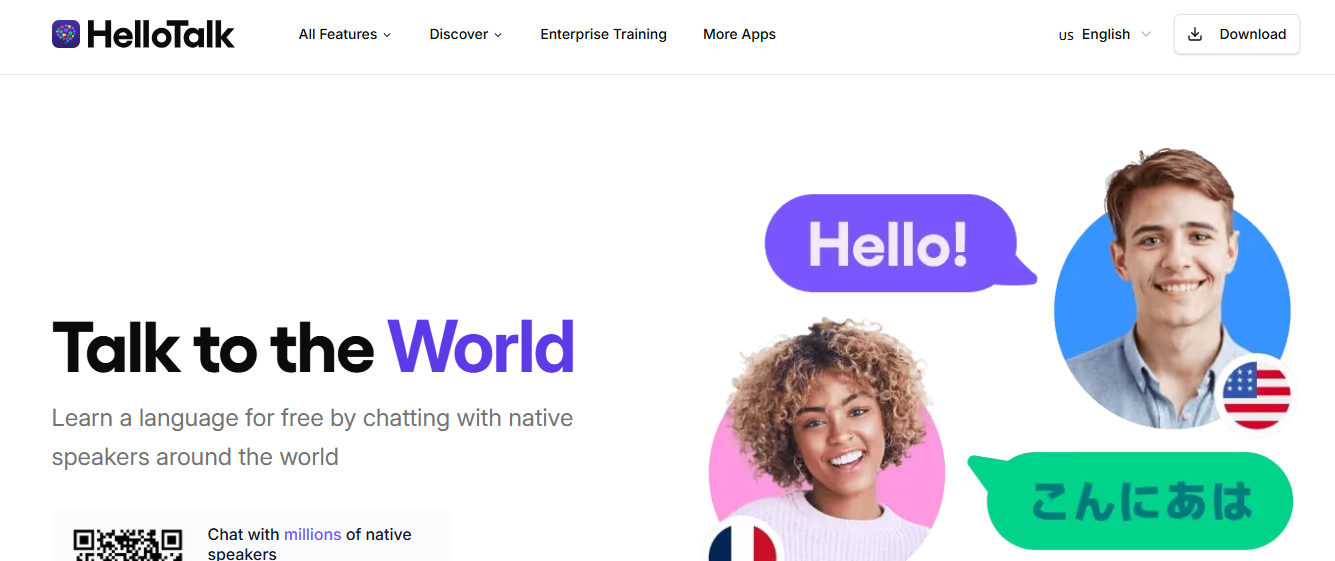
HelloTalk connects language learners with native speakers worldwide through text messages, voice notes, audio calls, and social interactions. Users practice Spanish while helping others learn their native language, creating opportunities for real communication and cultural exchange.
Strengths
Real-world communication, access to native speakers, cultural learning opportunities, and free exchange-based practice.
Limitations
Conversation quality varies significantly, and language exchanges may lack structured progression.
Best-fit learner
Someone who enjoys social learning and wants regular interaction with native speakers.
5. Best for Immersive Listening Dreaming Spanish
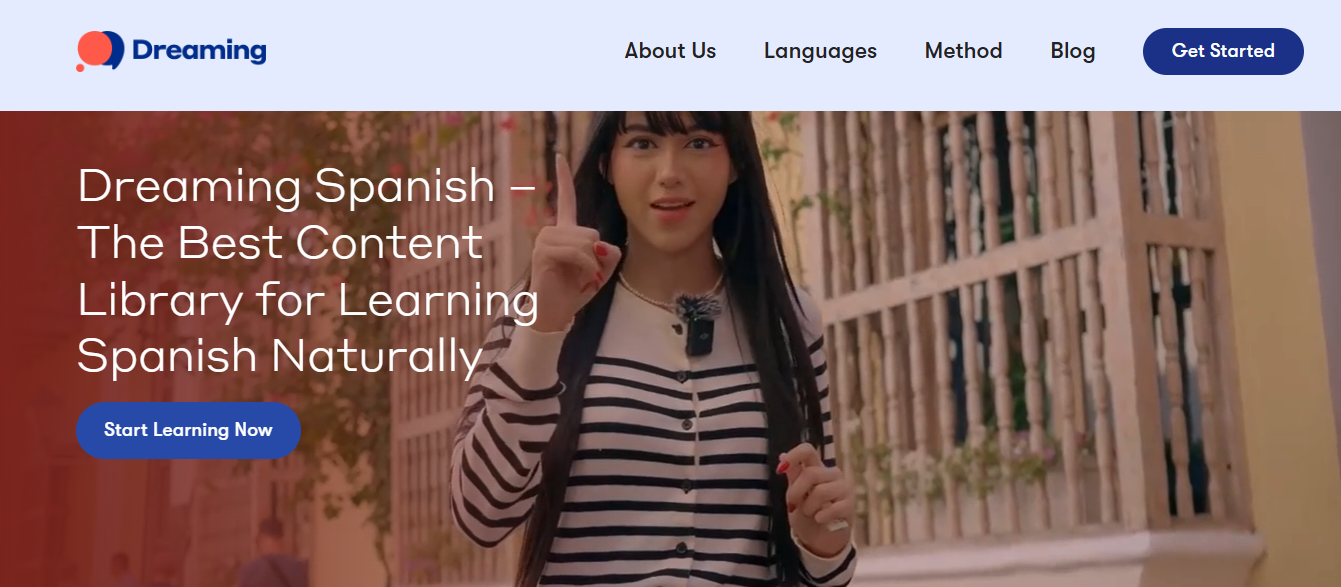
Dreaming Spanish uses comprehensible input and immersion, providing video content organized by proficiency level to help learners understand Spanish through context rather than translation.
According to NerdSip, platforms like Dreaming Spanish offer extensive libraries of 527+ courses that support immersion-focused learning. Learners progress from beginner-level videos with exaggerated gestures and simple vocabulary to intermediate content featuring faster speech and more complex topics.
Strengths
Extensive comprehensible input library, listening-focused approach, level-based progression, immersion-oriented learning.
Limitations
Limited emphasis on speaking practice and explicit grammar instruction.
Best-fit learner
Someone prioritizing listening comprehension and language acquisition through immersion.
6. Best for Vocabulary Building: Memrise
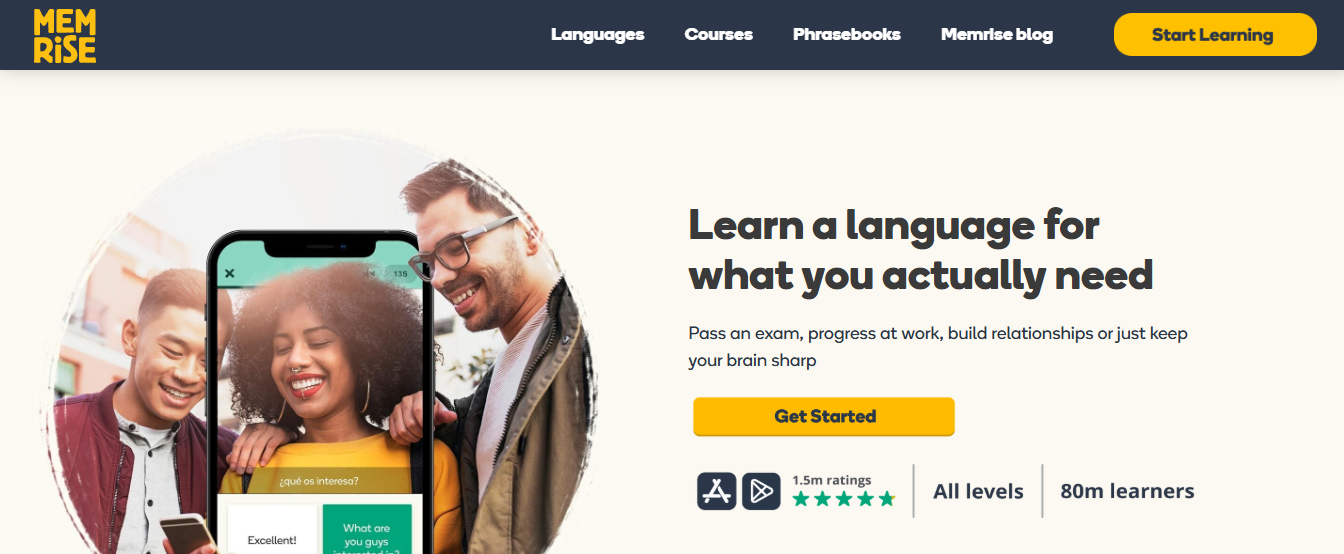
Memrise uses spaced repetition and native speaker videos to build vocabulary in realistic contexts, moving beyond traditional flashcards.
Its algorithm surfaces words you're about to forget at the optimal moment for long-term retention, making it particularly effective for learners who struggle with memory.
Strengths
Vocabulary retention, spaced repetition, native speaker videos, and an efficient review system.
Limitations
Vocabulary learning can outpace practical communication ability without supplementation from other forms of input.
Best-fit learner
Someone who wants a structured system for learning and retaining vocabulary.
7. Best for Live Online Classes: Baselang
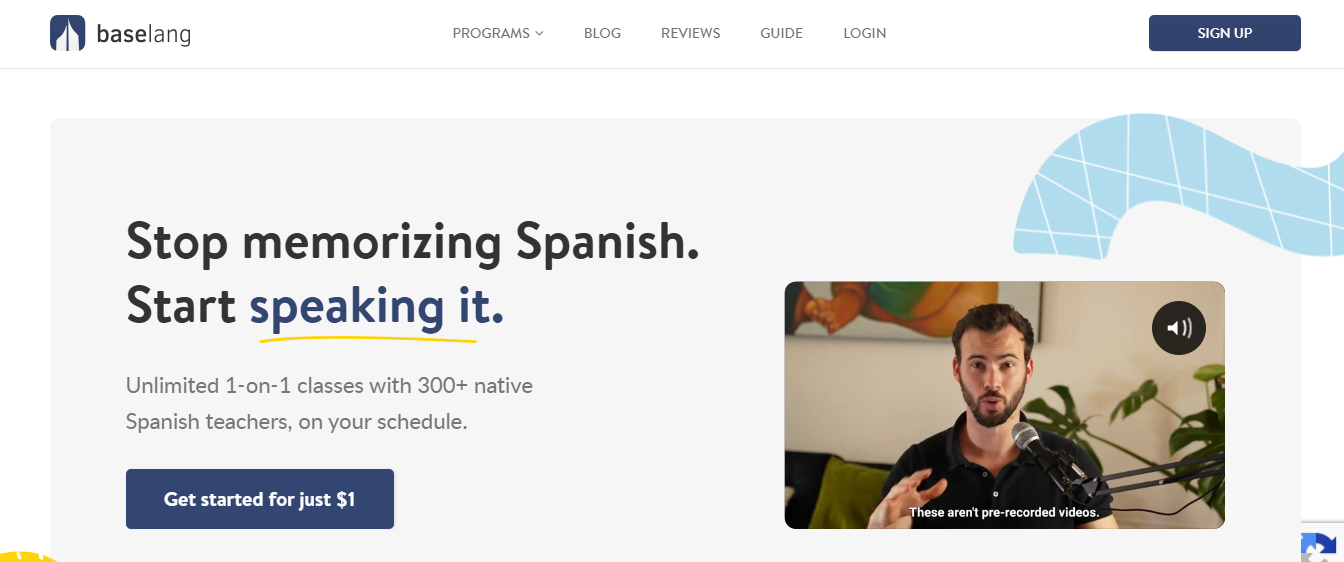
Baselang offers unlimited live Spanish classes through a subscription model, allowing learners to schedule frequent lessons with instructors for active practice. The platform appeals to people who value accountability and direct interaction.
Strengths
Unlimited live classes, consistent speaking opportunities, instructor support, and a structured learning environment.
Limitations
Requires significant time commitment; learning quality depends on instructor consistency.
Best-fit learner
Someone who learns best through live instruction and frequent conversation practice.
What factors should you consider when choosing a Spanish learning platform?
Different tools serve different purposes. Some teach grammar, while others focus on speaking practice, immersion, vocabulary retention, or live coaching.
How do you match learning platforms to your specific goals?
The best choice depends on the skill you want to improve. If your biggest challenge is understanding native Spanish while staying motivated long term, content-driven platforms offer a different experience from traditional lesson-based apps. If your goal is speaking, tutoring platforms may be more appropriate. If grammar is your focus, structured curricula provide greater value.
Choose a platform that aligns with how you want to learn Spanish, not simply the one with the most lessons.
Why Language Learning Is Shifting Toward Comprehensible Input
The shift is happening because learners discover that understanding Spanish feels fundamentally different from studying it. You can memorize conjugation tables and complete grammar exercises while freezing when someone asks a simple question at natural speed. The brain acquires language by processing meaningful messages repeatedly until patterns become automatic, not through isolated facts.

🎯 Key Point: Traditional study methods create a false sense of progress - you might ace a grammar test but struggle with real conversations because your brain hasn't developed automatic processing of the language.
"The brain acquires language by processing meaningful messages repeatedly until patterns become automatic, not through isolated facts." — Language Acquisition Research
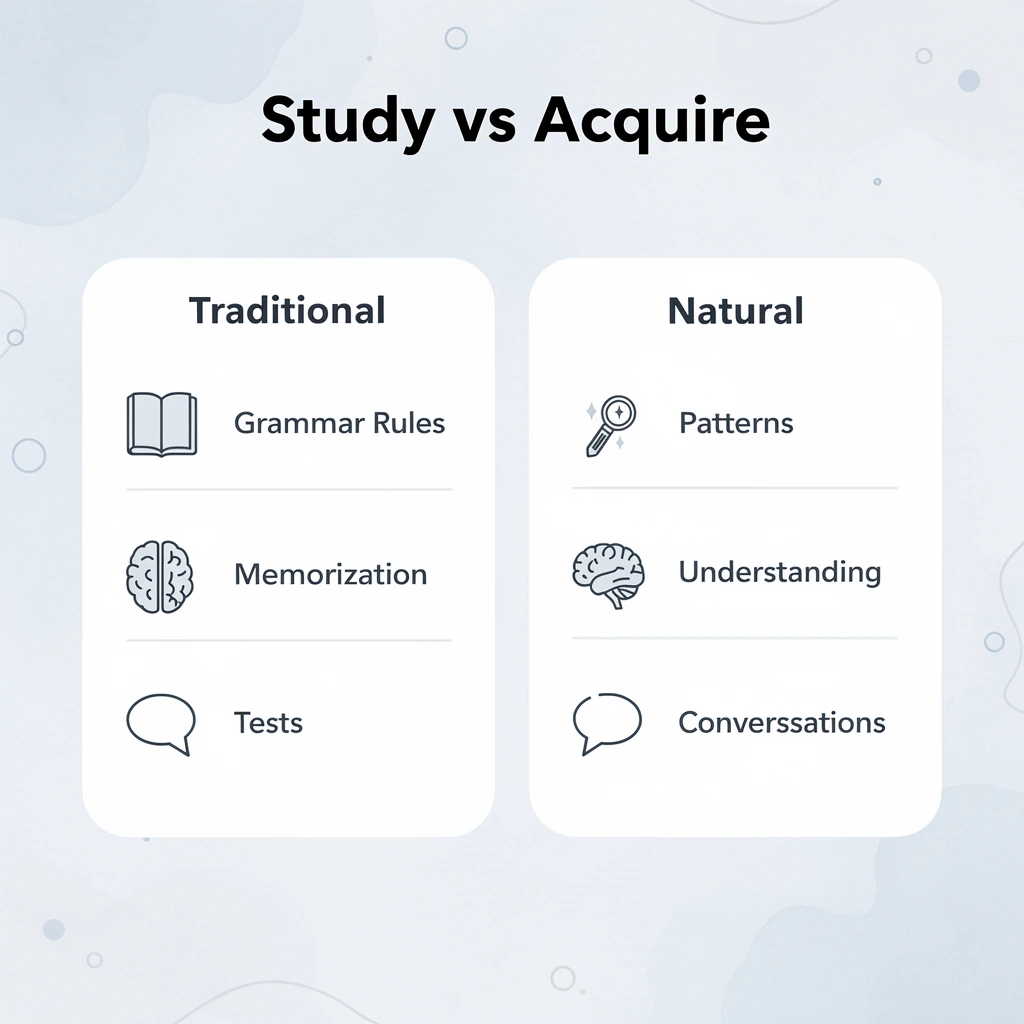
💡 Tip: Focus on comprehensible input - content that's slightly above your current level but still understandable through context. This allows your brain to naturally absorb patterns without forcing you to consciously analyze every grammatical rule.
How does traditional classroom instruction fall short?
This realization challenges decades of classroom tradition. Language instruction typically followed a predictable pattern: vocabulary lists on Monday, grammar rules on Wednesday, translation exercises on Friday. Progress meant moving through textbook chapters, accumulating knowledge about Spanish rather than developing the ability to understand it. Many learners could explain the rules of the subjunctive mood, yet couldn't follow a podcast or recognize verb tenses in writing, missing them at conversational speed.
What's the difference between knowing and understanding Spanish?
Traditional methods treat language as a puzzle to be solved by breaking it down into parts. You learn that "hablar" means "to speak," memorize how it changes in different situations, study when to use the preterite versus the imperfect, and then practice filling in blanks on worksheets. The assumption is that sufficient study will enable you to understand and speak the language smoothly.
How does comprehensible input reverse this process?
Comprehensible input approaches reverse that sequence. Instead of building knowledge first and hoping it becomes understanding later, learners engage with Spanish that they can mostly follow immediately—a video about cooking where they recognize 70% of the words, or a story told with visuals and context clues that convey meaning despite unfamiliar vocabulary. The brain starts recognizing how Spanish actually works, not how textbooks describe it.
The Language Gym emphasizes that input should be 95-98% comprehensible to support effective language acquisition. Below that range, learners spend more energy guessing than processing. Above it, the brain has nothing new to acquire. That narrow band is where natural pattern recognition occurs.
Why listening changes everything
Listening comprehension reveals the limits of learning vocabulary first. You might recognize "necesito una cita" on a flashcard, but when a receptionist says it quickly, with connected speech and regional pronunciation, it can sound unfamiliar. Written Spanish allows time to analyze; spoken Spanish demands real-time processing, exposing gaps that study methods haven't addressed.
How do video platforms improve listening skills?
Platforms like Learn Spanish Center learn around short videos where native speakers use natural language at realistic speeds. Rather than artificial lesson dialogues, learners encounter Spanish as it sounds in conversations, YouTube videos, and everyday exchanges. Our Parrot app transforms how people consume content, turning scroll time into learning time.
What role does structure play in comprehensible input?
The method isn't about replacing the entire structure. Grammar explanations help learners notice patterns faster, and vocabulary study speeds up recognition of high-frequency words. The difference lies in sequence and emphasis. Comprehensible input prioritizes understanding first, letting analytical knowledge support what the brain is already recognizing rather than building fluency from memorized rules alone. Learners who spend more time with comprehensible content often develop conversational ability faster than those who complete equivalent exercises.
Understanding why input works matters only if you can find content that matches your level and keeps you engaged.
Related Reading
How To Start Learning Spanish
Spanish Pronunciation Guide
Alternatives To Duolingo For Spanish
How To Practice Spanish Speaking
500 Most Common Spanish Words
How To Learn Mexican Spanish
Spanish Pronunciation Tips
Learn Spanish Through Music
Spanish Idioms
Easy Spanish Books
Babbel Alternatives
Spanish Short Stories For Beginners
How Parrot Helps Learners Move Beyond Traditional Language Apps
Most learners stop using traditional apps not because they lack discipline, but because the content feels disconnected from their interests and learning feels like a chore. The challenge is finding content you'll want to use repeatedly while understanding enough to make progress.

🎯 Key Point: Parrot solves this by letting you learn with content that already interests you - whether it's YouTube videos, podcasts, or articles you'd consume anyway.
"The most effective language learning happens when students engage with authentic content that matches their personal interests and current comprehension level." — Applied Linguistics Research, 2023
💡 Tip: Instead of forcing yourself through generic lessons, Parrot transforms your favorite content into personalized learning experiences that feel more like entertainment than traditional study.
A Different Foundation for Language Acquisition
Parrot was designed around comprehensible input, a research-backed principle that language learning happens most effectively when learners encounter understandable messages in meaningful contexts. The platform helps learners consume Spanish they can understand and enjoy rather than treating it as a subject for drills and memorization. Over 682,122 learners have used this approach to build comprehension through content.
Parrot integrates Spanish into the short-form videos learners already scroll through, making it easier to maintain consistency when learning feels like entertainment rather than studying.
How does personalization solve the motivation problem?
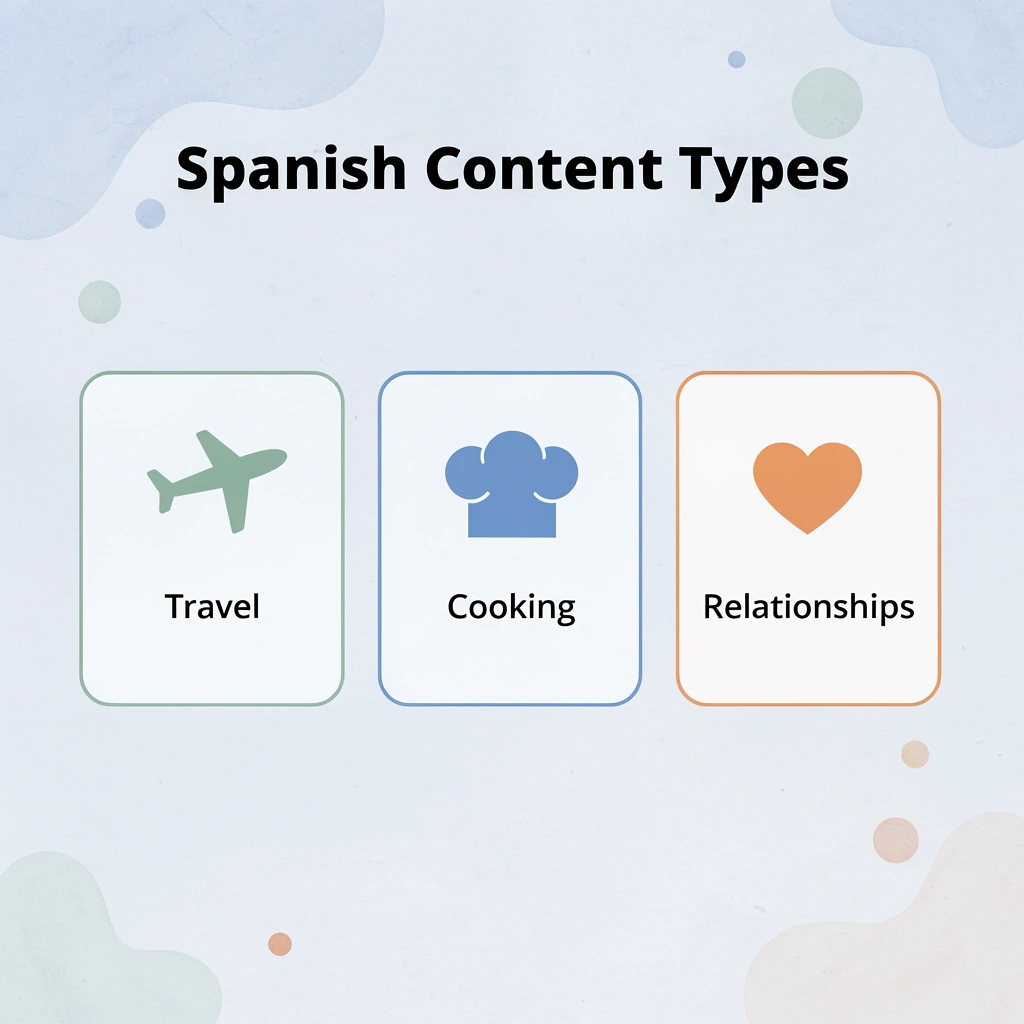
Generic content causes many learners to quit traditional apps. Parrot's AI-powered recommendation feed shows Spanish content tailored to individual preferences: travel stories, relationship advice, cooking tutorials, and cultural commentary. People stay engaged when content is interesting, not through gamification alone.
Research from a LinkedIn post by Lesia Polivod shows Parrot users spend over 35 minutes per day on the platform, suggesting personalized, comprehensible input creates voluntary engagement that traditional lesson formats cannot sustain.
How do interactive features reduce learning friction?
You can click on subtitles to get instant translations, making learning easier. When learners encounter unfamiliar words, they can explore them without switching between apps or interrupting their viewing. Saved words come from the content you're watching or reading, not from isolated study lists. This helps words stick in your memory because you've seen them used in meaningful contexts.
Building Comprehension Through Repeated Exposure
Parrot creates a learning environment centered on understanding rather than testing. Rather than measuring progress through completed exercises or streak counts, our platform helps learners spend more time interacting with real Spanish in meaningful contexts. This matches how the brain learns language: understanding builds through repeated exposure to comprehensible input while staying engaged with content that matters to you.
But knowing how a platform works only matters if you're ready to start using it.
Related Reading
Best Free App To Learn Spanish
Babbel Spanish Review
Apps Like Duolingo
Duolingo Alternatives
Best App To Learn Spanish
Rosetta Stone Vs Pimsleur
Duolingo Spanish Review
Pimsleur Spanish Review
Best Spanish Shows On Netflix To Learn With
Spanish Writing Practice
Start Learning Spanish Today
The difference between wanting to speak Spanish and speaking it comes down to how you spend the next few weeks. You could return to methods that prioritize streaks over understanding, or align your practice with how your brain naturally learns language. The choice determines whether you're translating in your head six months from now or having conversations without hesitation.
🎯 Key Point: The methods you choose in your first few weeks determine whether you'll be fluent or still struggling months later.

Platforms like Parrot make learning easier by letting you learn from content you'd watch anyway. Instead of forcing yourself through disconnected exercises, you scroll through short videos on topics that matter to you while building understanding through repeated exposure to Spanish. Clickable subtitles, instant translations, and saved vocabulary mean you spend less time managing your learning and more time absorbing the language itself.
"Learning through content you'd choose to watch creates repeated exposure to real language patterns, making acquisition feel natural rather than forced." — Language Acquisition Research
💡 Tip: Choose videos about topics you're already passionate about—your existing interest will carry you through the learning process.
Your first session matters more than your hundredth streak notification. Choose a video about something you care about—travel stories from Colombia, cooking techniques from Spain, or relationship advice from Mexican creators. Let yourself understand more than you expected, save useful words, and notice how quickly your brain recognizes patterns without formal instruction. That's acquisition, not memorization, and it's how fluency develops.
Traditional Method
Content-Based Learning
Disconnected exercises
Real-world videos
Forced topics
Personal interests
Memorization focus
Natural acquisition
Streak pressure
Understanding progress
The gap between where you are now and conversational fluency is measured by the hours you spend understanding Spanish beyond your current level while staying engaged. Start today, not because motivation is high, but because consistency through meaningful input beats guilt-driven streaks every time.
⚠️ Warning: Don't wait for the "perfect moment" to start—your brain begins recognizing patterns from day one, and every day of delay is lost progress.