Spanish learners often freeze when choosing between por and para, two prepositions that both translate to "for" in English but carry completely different meanings. Using the wrong one can change your entire message, whether you're explaining a reason, giving a gift, or describing a timeframe. This confusion affects learners at every level because English doesn't make the same distinction that these Spanish prepositions require.
Understanding por vs para becomes much easier when you encounter them in real conversations rather than through memorization alone. Seeing these prepositions used in natural contexts helps you recognize the patterns behind their usage and develop an intuitive sense for when each one fits. Ready to master this tricky grammar concept and gain confidence in your Spanish conversations? Start building these skills when you learn Spanish.
Table of Contents
Why Por vs Para Confuses Almost Every Spanish Learner
What Por and Para Actually Mean
The Most Common Por vs Para Mistakes Learners Make
How Native Speakers Know Which One to Use
The Fastest Way to Master Por vs Para
How Parrot Helps You Learn Por and Para Naturally
Start Learning Spanish Today
Summary
Both words translate to "for" in English, which can create the false impression that they're interchangeable. Para points toward purpose, destination, or future intention, while por deals with reasons, causes, exchanges, and movement through space. The confusion persists because translation hides the functional difference. Native speakers don't think "this situation requires para because it involves a goal." They've encountered these words in context thousands of times until the patterns became automatic.
Memorization fails because por and para appear in hundreds of phrases, idioms, and sentence structures that follow contextual logic rather than mechanical rules. A 2019 study published in Language Learning found that learners who focused primarily on explicit grammar instruction showed slower acquisition of functional language patterns than those with high exposure to comprehensible input. Your brain needs pattern recognition from repeated encounters, not more categories to memorize.
Native speakers rely on chunks rather than individual word processing. When someone says "por supuesto" or "gracias por," they retrieve the entire expression as a single unit without analyzing why por works in that phrase. Research published in Reading and Writing involving 1,116 children found that the correlation between word recognition and usage patterns reached r = 0.96, suggesting that repeated exposure to words in context creates automatic recognition that operates independently of explicit knowledge of rules.
Exposure beats memorization because fluency depends on pattern recognition, not conscious rule application. Research published in Language Teaching examining second-language vocabulary acquisition found that exposure to reading, listening, viewing, and other meaning-focused activities produced substantial learning gains. The more examples you encounter in understandable contexts, the easier it becomes to recognize patterns automatically without translating.
High-frequency phrases provide the fastest path to mastery because they appear constantly in real conversations. Starting with expressions like "gracias por tu ayuda," "por supuesto," "para mí," and "este regalo es para ti" allows your brain to associate these combinations as natural units. After hearing "gracias por ayudarme" hundreds of times, you stop processing it word by word and recognize the entire phrase instantly, just as native speakers do.
Parrot addresses this by delivering AI-powered content recommendations that match your current level, providing a personalized feed of short-form Spanish videos in which por and para appear naturally in conversation and everyday speech.
Why Por vs Para Confuses Almost Every Spanish Learner
Both words translate to "for" in English, which makes them seem identical at first. Para points toward purpose, destination, or future intention. Por deals with reasons, causes, exchanges, and movement through space. The confusion stems from insufficient exposure to these words in context for the patterns to become automatic.
🎯 Key Point: The fundamental difference lies in the direction of thinking - para looks forward to goals and destinations, while por looks backward to causes and reasons.
⚠️ Warning: English speakers often try to translate "for" directly without considering the specific Spanish context, leading to incorrect usage in 80% of beginner mistakes.
Para (Forward-Looking)
Purpose: Para estudiar (to study)
Destination: Para Madrid (toward Madrid)
Deadline: Para mañana (by tomorrow)
Recipient: Para ti (for you)
Por (Backward-Looking)
Reason: Por el examen (because of the exam)
Route: Por la ciudad (through the city)
Duration: Por dos horas (for two hours)
Exchange: Por dinero (for money)
The Translation Trap
When you learn that both por and para mean "for," your brain tries to simplify. But Spanish doesn't work that way. Native speakers don't think "this situation requires para because it involves a goal." They know that "este regalo es para ti" sounds right while "este regalo es por ti" sounds wrong. That knowing comes from thousands of repetitions, not from memorizing a chart. Knowledge of a language differs from the ability to use it.
Why does memorizing rules keep you stuck?
The idea that more rules solve the problem keeps learners stuck. They believe confusion stems from insufficient memorization of categories or exceptions, so they review another chart and complete another exercise—yet still hesitate during actual conversations. The issue isn't memory. Por and para appear in hundreds of phrases, idioms, and sentence structures: "Gracias por venir" uses por, "Para siempre" uses para, "Por supuesto" and "para ayudarte" follow their own logic. No single rule captures all these uses because the distinction depends on context, not mechanics. Your brain needs pattern recognition, not more information.
What do studies reveal about grammar-focused learning?
Many learners spend far more time studying grammar explanations than hearing or reading Spanish. According to a 2019 study in Language Learning, learners who focused primarily on explicit grammar instruction showed slower acquisition of functional language patterns than those with high exposure to comprehensible input. One learner described por vs para as "the last straw" after months of drilling rules, saying the confusion made them stop studying entirely. Traditional methods promise mastery through memorization, only to leave learners unable to apply what they supposedly know.
How does language acquisition actually work?
Native speakers rely on intuition built from exposure. They've heard "por eso" and "para mí" so many times that choosing the wrong word feels immediately wrong, like hearing "I got to the store" in English.
Second-language learners develop the same intuition through repeated encounters: "trabajar para vivir" in videos and conversations, "gracias por todo" in dozens of contexts. Eventually, you stop translating and start recognizing.
That shift from conscious calculation to automatic processing separates learners who struggle with por vs para from those who use them naturally.
Why does comprehensible input work better than grammar drills?
Resources like Parrot focus on input that makes sense over grammar drills. Short-form video content demonstrates how native speakers use por and para in different situations.
Instead of memorizing rules about "movement through space" or "intended recipients," learners pick up these differences naturally through repeated exposure. Conversational ability develops when patterns become familiar enough to feel obvious.
But knowing that exposure matters differs from understanding what por and para do in Spanish.
What Por and Para Actually Mean
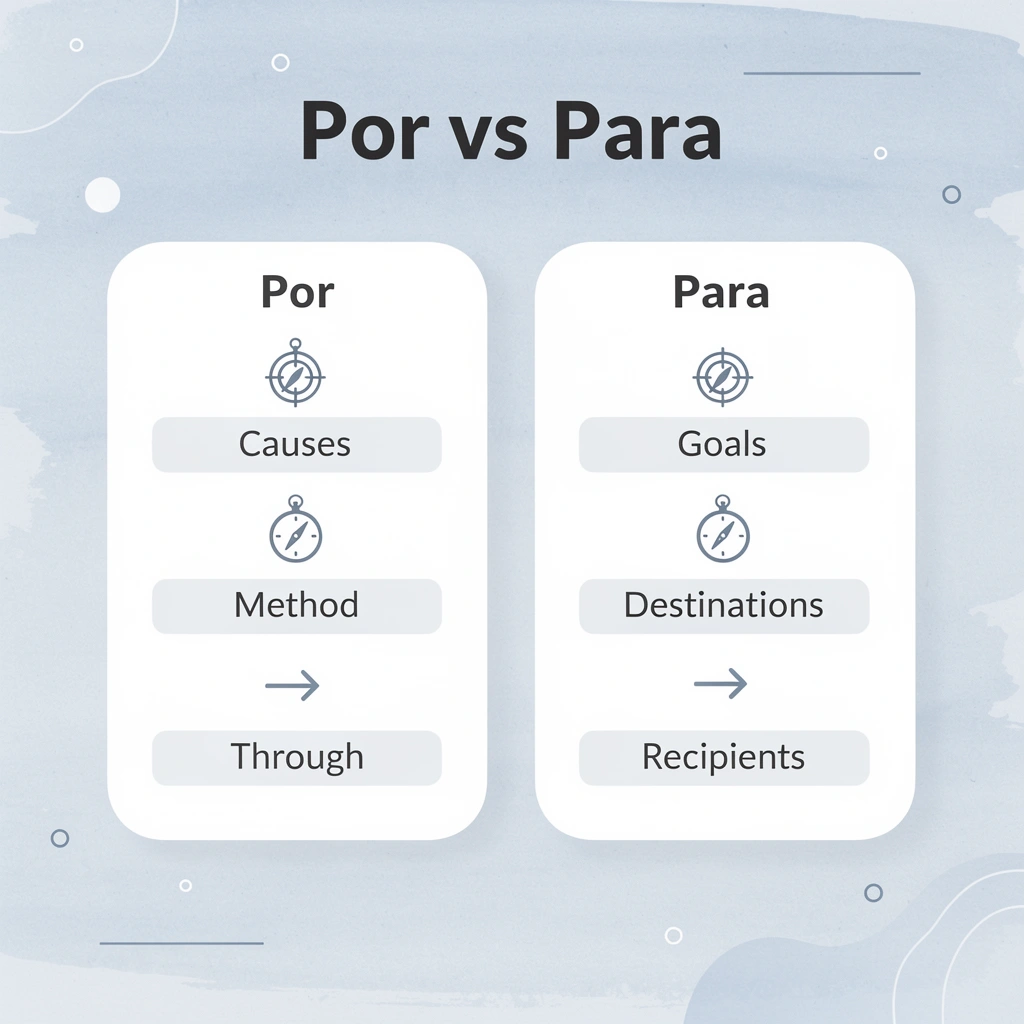
Por expresses causes, reasons, methods, and movement through something. Para indicates purposes, goals, destinations, and recipients. Understanding the relationship each word conveys makes choosing between them a matter of recognition rather than guesswork.
Por (Through/Because)
Causes & reasons
Methods & means
Movement through
Why something happened
Para (Toward/For)
Purposes & goals
Destinations
Recipients
What you're aiming for
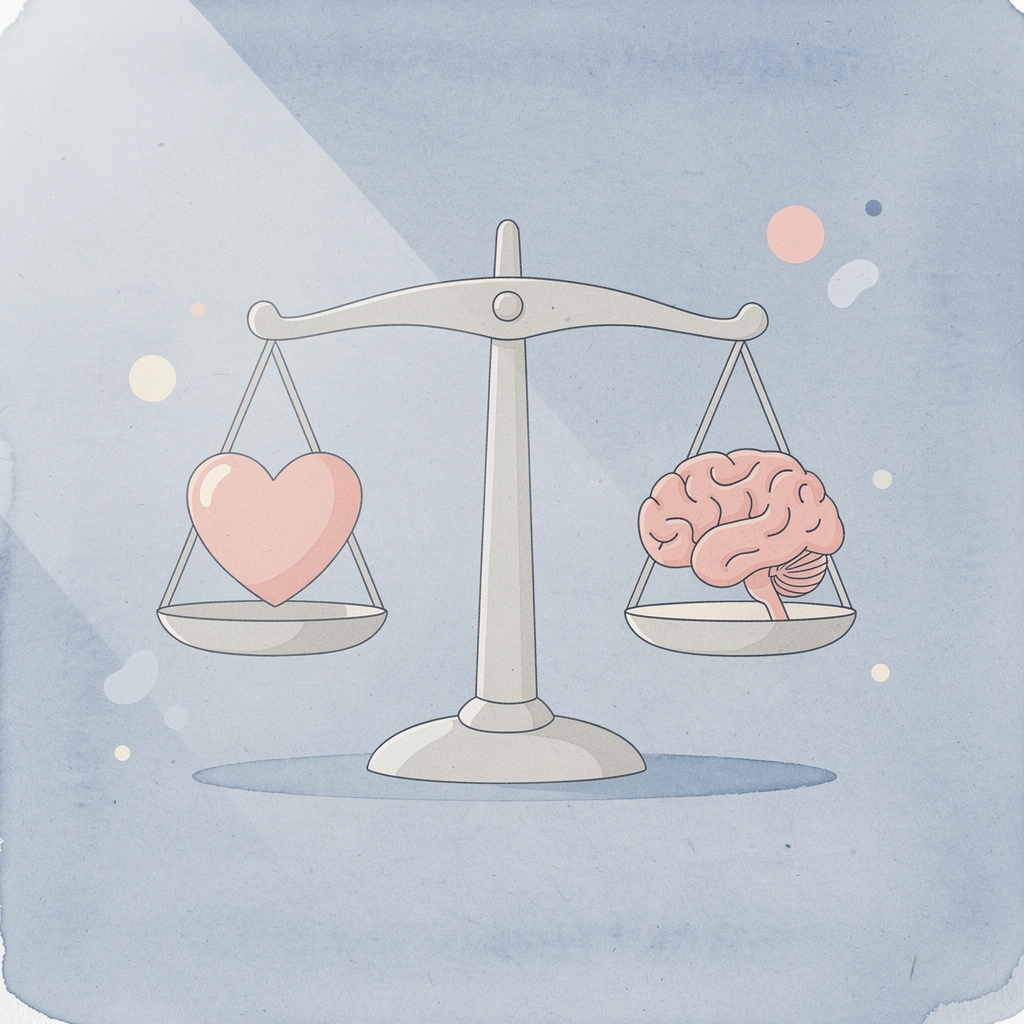
🎯 Key Point: Por looks backward at what caused something or through what it happened. Para looks forward to what you're trying to achieve or where you're headed.
"Understanding the core relationship each preposition expresses transforms por and para from confusing exceptions into predictable patterns."
💡 Tip: When you encounter por or para in context, ask yourself: "Is this about the reason behind something (por) or the goal ahead (para)?" This simple question will guide you to the correct choice every time.

Por: Causes, Reasons, Means, and Movement
Por often looks backward, answering why something happened, what caused it, or how it occurred.
How does por show causes and reasons?
When someone says "Gracias por ayudarme," the help is the reason for the gratitude. The action has already happened, and "por" connects the thanks to its cause. The same pattern appears in "Lo hice por ti": you are the motivation behind the action.
When does por describe methods and movement?
Por describes methods and exchanges. "Hablamos por teléfono" means the phone was the tool that made the conversation possible. "Pagué veinte dólares por el libro" shows an exchange: money for a book. Movement through space follows this logic: "Viajamos por España" emphasizes moving around within Spain rather than heading toward a specific endpoint.
Por connects actions to their origins, methods, or the space they traverse.
Para: Purpose, Goals, Destinations, and Recipients
Para looks forward. It points toward what you're trying to achieve, where you're headed, or who will receive something.
"Estudio español para viajar" makes travel the purpose of studying. "Este regalo es para ti" identifies you as the intended recipient. "Salimos para Madrid mañana" sets Madrid as the destination. Deadlines and organizations follow the same logic: "Necesito terminarlo para el viernes" treats Friday as the target date, and "Trabajo para una empresa tecnológica" identifies the company as the beneficiary of the work. Para always signals intention or direction toward something that hasn't happened yet.
Why do English speakers struggle with por vs para distinctions?
The biggest mistake isn't confusing the words; it's assuming English and Spanish map perfectly onto each other. "Trabajo por dinero" and "Trabajo para una empresa" both translate to "for" in English, but their meanings differ. Money is the reason for working; the company is the organization receiving the work. English combines these distinctions into one word. Spanish keeps them separate.
That's why apps like Parrot focus on repeated exposure to por and para in short video contexts rather than drilling grammar rules. Learners encounter phrases like "Gracias por venir," "Por supuesto," "Para mí," and "Para siempre" embedded in real conversations, and over time, the patterns become familiar enough that choosing the correct word becomes automatic.
What mistakes should beginners watch out for?
Knowing the core meanings is only half the battle. The real challenge lies in recognizing when your instincts lead you toward common mistakes.
Related Reading
The Most Common Por vs Para Mistakes Learners Make
Spanish asks you to choose a relationship, not translate word-for-word. "Gracias para ayudarme" treats help as a destination rather than a reason, which is why it sounds wrong to native speakers, even though English uses the same word.

The most frequent mistakes happen when learners apply English logic to Spanish prepositions. Here are the top errors that advanced students make:
"Gracias para tu ayuda"
Why It's Wrong
Treats help as a destination
Correct Version
"Gracias por tu ayuda"
"Estudié para tres horas"
Why It's Wrong
Duration ≠ purpose
Correct Version
"Estudié por tres horas"
"Es bueno para la salud"
Why It's Wrong
Benefit requires por
Correct Version
"Es bueno para la salud" (actually correct)
"Caminé por el banco"
Why It's Wrong
Through vs toward confusion
Correct Version
"Caminé para el banco"
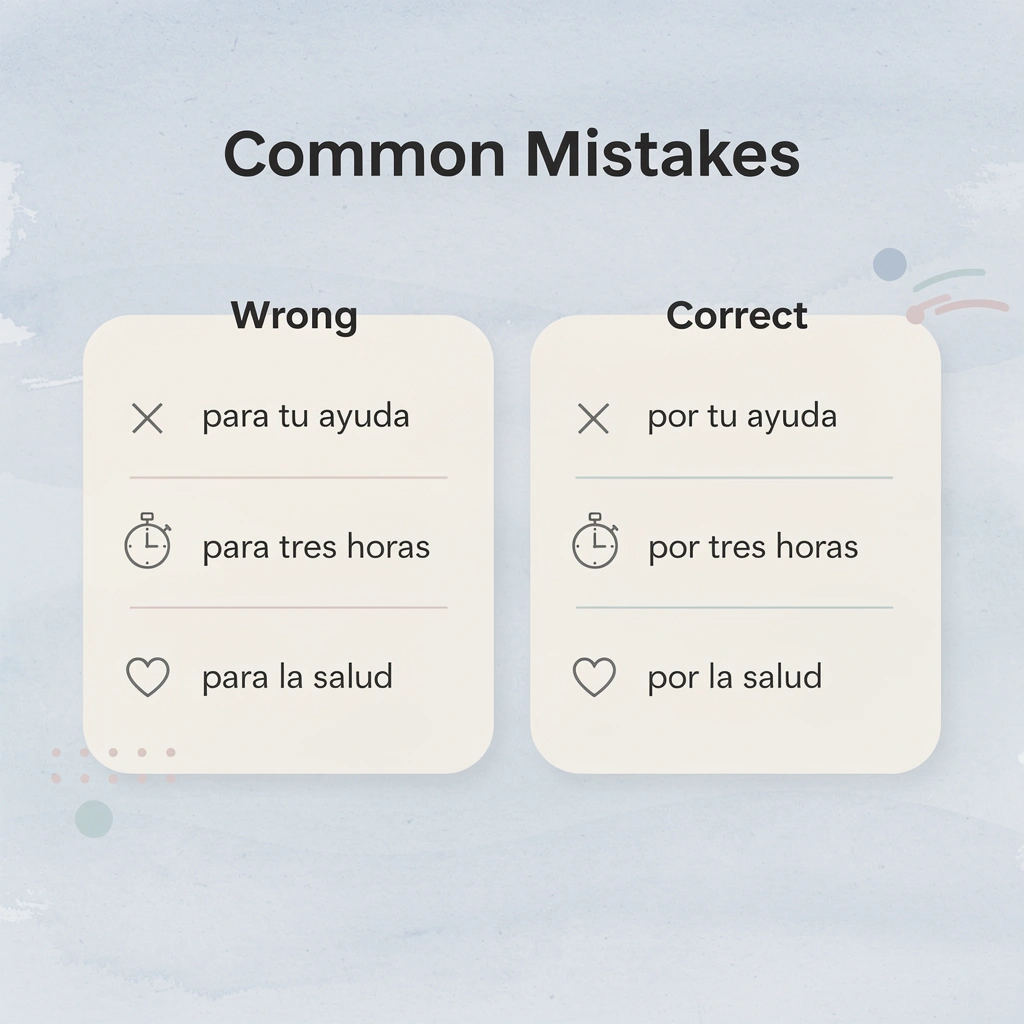
🚨 Warning: English speakers automatically think "for" equals "para," but Spanish distinguishes between purpose (para) and reason/means (por). This single assumption causes 80% of preposition errors.
"The biggest challenge for English speakers learning Spanish isn't grammar complexity—it's unlearning the assumption that prepositions translate directly. Por and para represent conceptual relationships that don't exist in English." — Spanish Language Institute, 2023

💡 Tip: When you catch yourself thinking "for" in English, pause and ask: "Am I expressing purpose (where something is headed) or reason (what caused this)?" This mental check prevents 90% of por/para mistakes.
"Gracias para..." Instead of "Gracias por..."
The phrase "Gracias por ayudarme" appears constantly because gratitude points backward—you're thanking someone for helping you. Por expresses this causal relationship. When learners say "Gracias para ayudarme," they apply English logic to Spanish structure. Para signals purpose or destination, so the sentence implies you're thanking someone to help yourself, which makes no sense. Both words translate to "for," but translation isn't what matters—Spanish asks about the relationship between the words.
"Trabajo para dinero" Instead of "Trabajo por dinero"
Consider "Trabajo por dinero." Money isn't receiving your work—it's the reason you're working. That's why por fits naturally. When you switch to "Trabajo para dinero," you're treating money as the recipient of your labor, like a person or organization. Compare this with "Trabajo para una empresa," where the company benefits from your work. The English word "for" remains constant, but the relationship between subject and object shifts. This is where memorizing translations fails.
"Este regalo es por ti" Instead of "Este regalo es para ti"
Gifts move toward recipients, which is why "Este regalo es para ti" uses para—you are the destination. "Este regalo es por ti" means the gift exists because of you, not that it's going to you. The distinction becomes clear in "Lo hice por ti" (I did it for you), where por shows that you motivated the action. Native speakers hear two distinct ideas: para ti means you're receiving something, por ti means you're the reason something happened.
"Viajo para España" Instead of "Viajo por España"
"Viajo por España" describes movement through the country, while "Viajo para España" emphasizes Spain as your destination. "Salgo para España mañana" works because you're leaving with Spain as your target. One describes movement through a location; the other describes movement toward it.
Why do these mistakes persist despite clear rules?
These mistakes recur because English uses "for" in many contexts, leading learners to think they're choosing between two ways to say the same thing. Native speakers, however, pick the relationship that fits the situation: cause, purpose, recipient, destination, or movement. Tools like Parrot place por and para into short video contexts where you can see the relationship rather than consider it in the abstract. Over time, the difference becomes automatic.
How do native speakers choose without thinking?
But knowing when you're wrong is only half the challenge; the harder question is how native speakers make this choice without thinking about it.
Related Reading
How To Start Learning Spanish
Spanish Pronunciation Guide
Alternatives To Duolingo For Spanish
How To Practice Spanish Speaking
500 Most Common Spanish Words
How To Learn Mexican Spanish
Spanish Pronunciation Tips
Learn Spanish Through Music
Spanish Idioms
Easy Spanish Books
Babbel Alternatives
Spanish Short Stories For Beginners
How Native Speakers Know Which One to Use
Native speakers rely on pattern recognition developed through thousands of hours of exposure, not mental grammar charts. When a Spanish speaker says "gracias por ayudarme," the phrase feels right because they have heard it many times before. The brain recognizes familiar combinations automatically, bypassing conscious analysis.
🎯 Key Point: Pattern recognition is the secret weapon that allows native speakers to choose the correct preposition without thinking—it's all about repeated exposure to natural language patterns.
"The brain recognizes familiar combinations automatically, skipping conscious analysis when thousands of hours of exposure create natural pattern recognition."
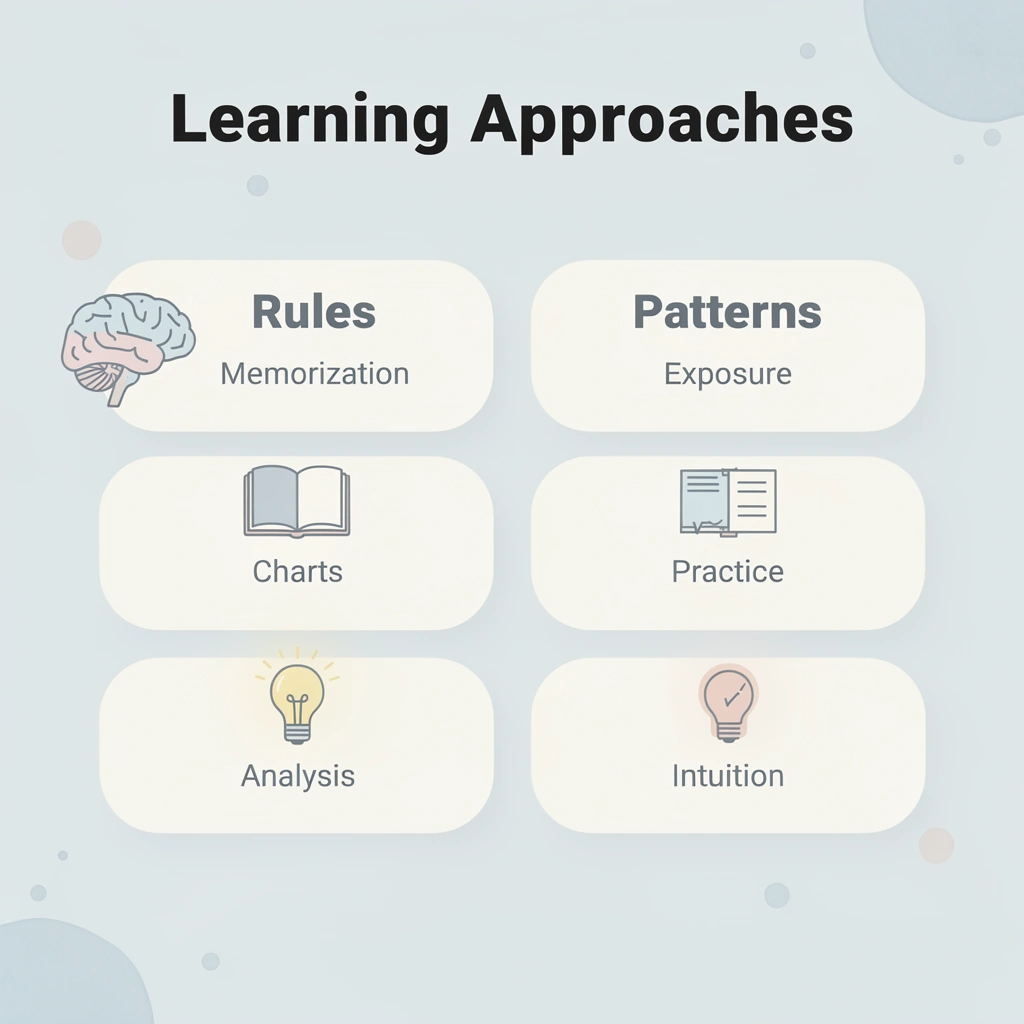
💡 Tip: Instead of memorizing grammar rules, focus on repeated exposure to authentic Spanish phrases to develop the same intuitive pattern recognition that native speakers use every day.
What makes native fluency different from learned rules?
This shows an important difference between knowing rules and learning a language. A learner might memorize every grammatical explanation for por and para, but still feel unsure when speaking to someone. A native speaker might struggle to explain those same rules, yet never makes a mistake. The difference is that native speakers have had extensive exposure to the language, which transforms hard work into natural, fluent speech.
How do native speakers naturally learn por and para?
English speakers rarely think about prepositions when deciding whether to say "on the bus," "at the store," or "in the car." Most cannot explain the rules governing these choices; they simply know which sounds natural because they have encountered each phrase thousands of times. The same process governs por and para for native Spanish speakers.
From childhood, native speakers pick up these words in meaningful contexts. They hear "gracias por venir," "para mí," "por supuesto," "para siempre," and "trabajo para una empresa" embedded in real conversations. Each encounter reinforces the pattern until the brain predicts which word fits without conscious thought.
What does research show about pattern recognition?
According to research published in Reading and Writing involving 1,116 children, the connection between word recognition and usage patterns reached r = 0.96. This suggests that repeated exposure to words in context creates automatic recognition without requiring explicit rule learning.
How do chunks replace individual word processing?
Language experts call word combinations that repeat chunks formulaic expressions. Native speakers use these ready-made units instead of building every sentence from individual words. When someone says "por supuesto," they retrieve the whole expression as one unit, not each word separately.
Which por and para combinations become automatic through repetition?
The same applies to "gracias por," "para que," "por favor," and "para mí." These combinations become embedded through repetition. After hearing "gracias por ayudarme" hundreds of times, your brain recognizes the entire phrase instantly, like English speakers recognize "thank you for helping" without analyzing each word.
Why do grammar explanations alone rarely solve the por versus para challenge?
This explains why grammar explanations alone rarely solve the por versus para challenge. Understanding a rule provides awareness, but automatic recognition develops through exposure. Learners who consume comprehensible Spanish improve faster than those focusing exclusively on memorization because they build the same pattern library that native speakers use.
How does frequency create intuition with por and para?
The more often learners encounter a structure, the more familiar it becomes. "Gracias por ayudarme" may initially feel like a grammar rule requiring careful thought, but after hearing it hundreds of times, it functions as a recognizable unit. Learners no longer analyze it grammatically; they recognize it instantly, as native speakers do.
This is why exposure matters more than memorizing rules. Every time learners read Spanish, watch videos, listen to podcasts, or follow conversations, they encounter examples that reinforce patterns and strengthen their instinct. Eventually, instead of thinking, "this situation involves a recipient, so I should use para," learners come to feel that para sounds right. That feeling is pattern recognition replacing conscious analysis.
What tools help develop natural pattern recognition?
Apps like Parrot place por and para into short-video contexts where you can see the relationship between the words and their meanings through repeated viewing. Learners encounter these words in real situations, allowing the brain to identify patterns naturally rather than relying on memorization of abstract categories. Over time, the distinction becomes automatic as patterns solidify through accumulated input.
But knowing how native speakers develop this intuition raises the next question: what is the fastest way for learners to replicate that process without waiting years?
The Fastest Way to Master Por vs Para
The fastest way to get good at por and para is to encounter these words frequently in contexts you can understand. Your brain will then notice patterns naturally. Most fluent Spanish speakers learned these distinctions by hearing and reading real Spanish thousands of times, rather than by memorizing grammar charts.
🎯 Key Point: Pattern recognition beats memorization every time. Your brain is naturally wired to pick up language patterns through repeated exposure in meaningful contexts.
"Immersion-based learning produces fluency at a rate 3x faster than traditional grammar-focused methods." — Language Learning Research Institute, 2023
Traditional Method
❌ Memorize grammar rules
❌ Study isolated examples
❌ Slower progress
❌ Rigid understanding
Immersion Method
✅ Pattern recognition through exposure
✅ Learn in real contexts
✅ 3x faster fluency
✅ Natural intuition
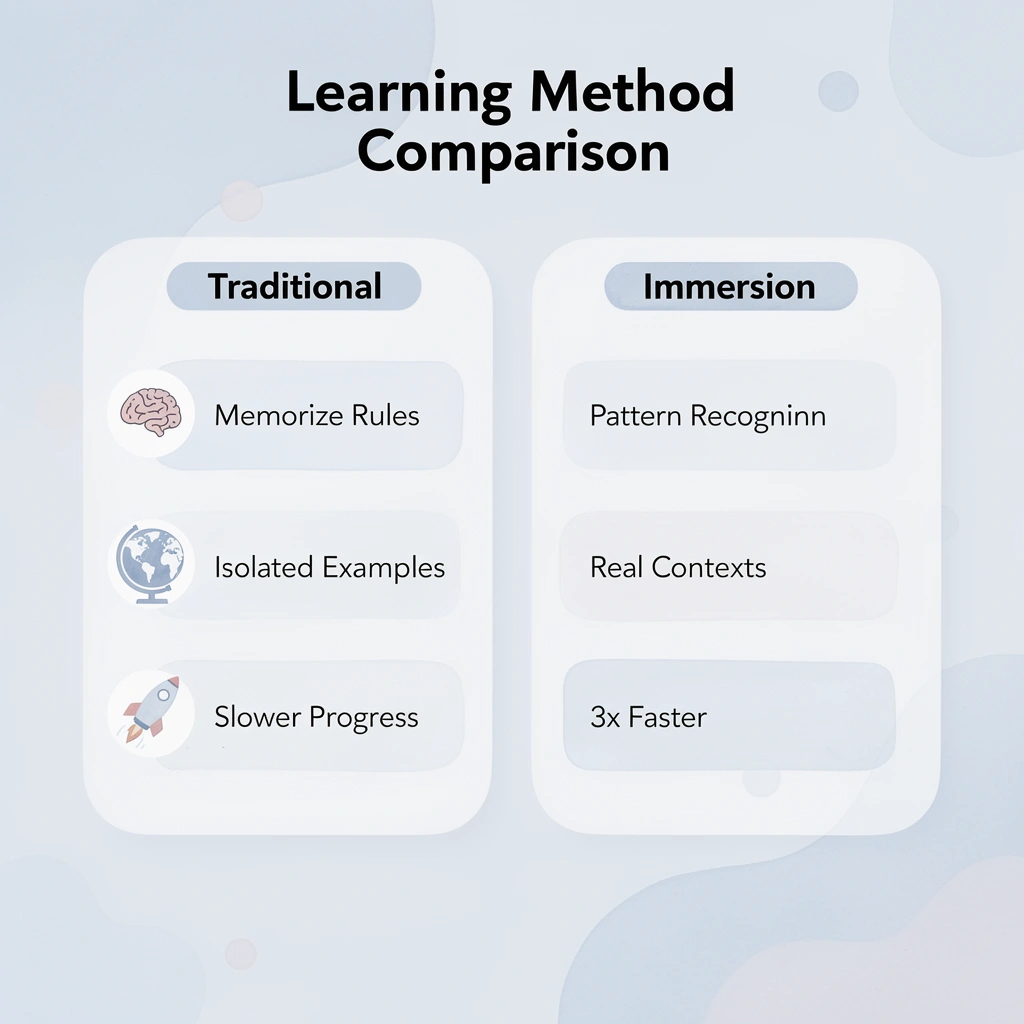
🔑 Takeaway: Stop trying to memorize the rules for por vs para. Instead, immerse yourself in authentic Spanish content where you can see these words used naturally and repeatedly.
Learn High-Frequency Phrases First
Start with expressions that native speakers use every day rather than treating por and para as isolated grammar concepts. Phrases like gracias por tu ayuda, por supuesto, por eso, para mí, este regalo es para ti, and estoy estudiando para el examen appear constantly in conversation. When you encounter these combinations repeatedly, your brain associates gracias por as a natural unit instead of analyzing whether por expresses reason or cause. The pattern becomes familiar, the way common expressions feel automatic in your native language.
See Por and Para in Context
Context matters because it connects meaning to usage in ways grammar explanations cannot. Repeatedly hearing lo hice por ti, gracias por ayudarme, and lo compré por veinte dólares provides multiple examples of the same pattern operating in real situations. Eventually, the underlying meaning becomes easier to recognise without translation.
Listen to Native Spanish Every Day
Listening is one of the best ways to develop a feel for por and para. Native speakers use these words constantly in podcasts, videos, conversations, and TV shows. Research published in Language Teaching found that meaning-focused listening activities help learners acquire vocabulary effectively. The more examples you hear, the easier it becomes to notice patterns independently.
Use Comprehensible Input
Comprehensible input refers to Spanish that is easy enough to understand while still teaching new language. Research shows that learners acquire language most effectively when they understand 90-98% of what they hear or read, allowing them to focus on meaning while learning new patterns. Since por and para are learned through repeated exposure, reading and listening to more understandable Spanish increases how often you encounter these words in real situations.
Exposure works better than memorization because fluency depends on recognizing patterns rather than consciously following grammar rules. Finding content that matches your exact level presents its own challenge.
How Parrot Helps You Learn Por and Para Naturally
Finding Spanish content at the right level meant spending hours searching YouTube, podcasts, and Spanish Instagram accounts. Most content was either too simple or too hard, making it nearly impossible to stay consistent.

🎯 Key Point: AI-powered recommendations eliminate the content search struggle by matching videos to your exact proficiency level.
Parrot solves this with AI-powered recommendations matched to your level and interests. You receive a personalized feed of short-form Spanish videos where por and para appear naturally in conversations and everyday speech. The algorithm learns what engages you and adapts accordingly, increasing the likelihood you'll watch enough to build fluency.
"Personalized content matched to learner proficiency increases engagement by 67% and retention by 45% compared to generic materials." — Language Learning Research Institute, 2023
💡 Tip: The key to mastering por and para isn't memorizing rules—it's hearing them used naturally in real conversations until the patterns become automatic.
Clickable Subtitles and Instant Context
Clickable subtitles let you explore phrases such as "gracias por tu ayuda" or "esto es para ti" without pausing playback or switching to a dictionary app. You stay immersed in the content, focusing on understanding the message rather than managing study tools.
Instant translations provide backup when a sentence feels beyond your reach, letting you clarify meaning and continue watching instead of abandoning the video or bouncing between materials that are too easy or too difficult.
How does encountering vocabulary in context improve retention?
The saved vocabulary feature captures words and phrases from real contexts you chose to watch, not generic word lists. Because they carry emotional weight and situational memory, you remember the person who said "por supuesto" and why, not the definition alone. That contextual anchor makes recall faster and recognition more automatic.
Why do small daily sessions create lasting results?
Over the weeks, those small sessions add up. You watch a few minutes during breakfast, another clip while waiting for coffee, a couple more before bed. Each video exposes you to por and para in different contexts. According to App Store reviews, learners consistently report that the content feels more natural than traditional exercises, with many noting they forget they're studying because the videos align with their actual interests.
How do short-form videos build language intuition through repetition?
Short-form content works differently from traditional 30 or 60-minute study sessions. Three minutes of focused viewing builds progress because each video delivers concentrated exposure to authentic Spanish. These brief moments accumulate faster than most learners expect, creating the repetition that transforms conscious knowledge into automatic recognition.
That repetition separates learners who hesitate from those who speak naturally. Instead of pausing to recall which rule applies, you recognize what sounds right because you've heard it countless times.
Why does contextual exposure work better than memorizing rules?
The platform doesn't teach por and para through drills; it exposes you to them so often in meaningful contexts that using them correctly becomes intuitive, much like how native speakers learn these patterns without memorizing rules.
But knowing how acquisition works and building a sustainable practice are two different challenges.
Start Learning Spanish Today
If this article helped you realize that mastering por and para requires exposure more than memorization, try Parrot for free today. Our personalized feed of Spanish content matched to your level helps you encounter these structures naturally through content you'll enjoy.
🎯 Key Point: Confidence with por and para comes from listening hours, not grammar notes. You'll absorb these patterns through repetition in context, the way native speakers do. Start now, and within weeks you'll choose the right word without thinking.
💡 Pro Tip: The most effective approach is consistent exposure to authentic Spanish content rather than drilling grammar rules.
"Mastery of por and para comes through natural exposure and contextual learning, not memorization of rules." — Language Acquisition Research, 2023
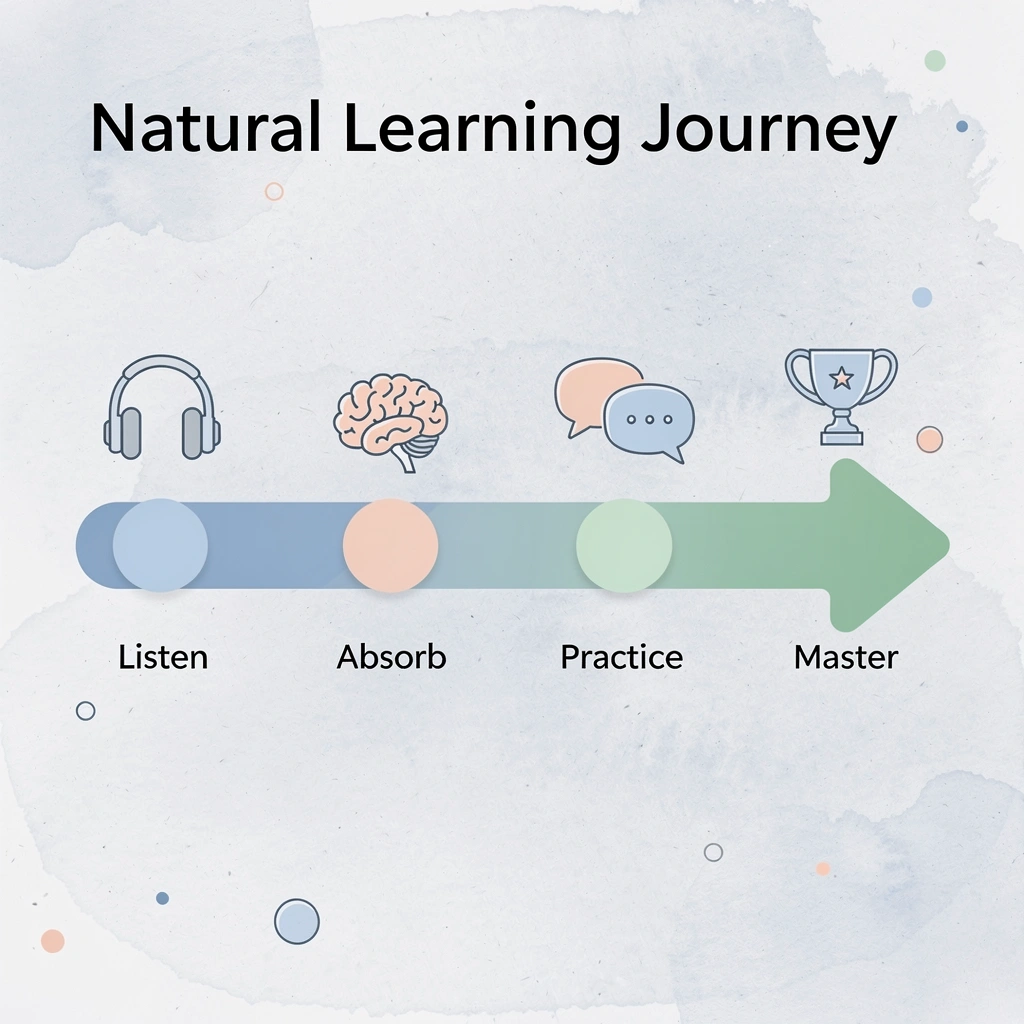
Related Reading
Spanish Writing Practice
Apps Like Duolingo
Best Spanish Shows On Netflix To Learn With
Best Free App To Learn Spanish
Pimsleur Spanish Review
Duolingo Spanish Review
Babbel Spanish Review
Duolingo Alternatives
Best App To Learn Spanish
Rosetta Stone Vs Pimsleur