
Staring at a Spanish menu while struggling to understand basic words reveals a common problem: most learners waste time memorizing vocabulary they'll rarely use. The most effective approach focuses on high-frequency words that native speakers use constantly in everyday conversations. Mastering the 1000 most common Spanish words provides a practical foundation that transforms confusion into confidence.
These essential words don't require endless flashcard drills or boring repetition when learned through real-world contexts. Smart learners focus on vocabulary that connects naturally in practical conversations rather than isolated terms. Building fluency around high-frequency words creates immediate speaking ability and helps beginners learn Spanish through meaningful practice.
Table of Contents
Why So Many Learners Search for the 1000 Most Common Spanish Words
Why the 1000 Most Common Spanish Words Matter
Examples of High-Frequency Spanish Words Every Learner Encounters
Why Memorizing Vocabulary Lists Often Fails
How Learners Actually Acquire Common Spanish Words
How to Learn the 1000 Most Common Spanish Words Faster
How Parrot Helps You Learn Common Spanish Words Naturally
Start Learning Spanish Today
Summary
The most frequent 1,000 Spanish words account for 87.8% of word use across typical texts, according to Wikipedia's analysis of Spanish word frequency. This concentration means a relatively small vocabulary investment unlocks comprehension across most everyday content, though knowing words from a list doesn't automatically translate to understanding them at conversational speed. The challenge isn't whether these high-frequency terms appear often, but whether learners can recognize them during real-time communication.
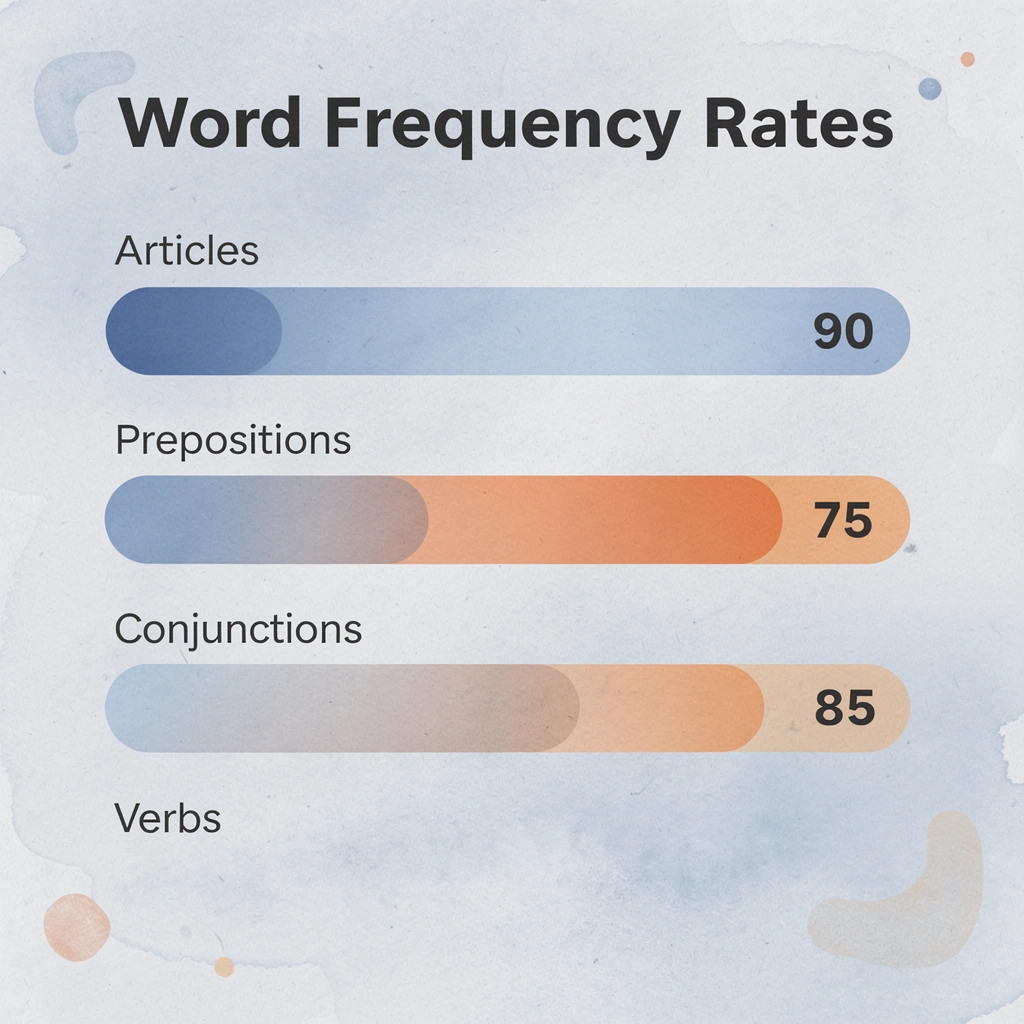
Function words like articles, prepositions, and conjunctions dominate frequency lists because they form the grammatical backbone of every sentence. Essential verbs, including ser, estar, tener, and hacer, appear constantly, not because they're interesting, but because they describe fundamental states and actions that daily life requires. These aren't glamorous vocabulary items, but they're the connective tissue that holds meaning together across virtually every conversation and text.
Learners can effectively retain approximately 7 words per memory palace, according to research by the FluentSphere Blog on vocabulary retention, highlighting how quickly new vocabulary fades without meaningful reinforcement. Flashcard recognition measures whether you remember a definition, but real comprehension requires your brain to match sounds to meanings instantly, recognize grammatical variations, and understand how words combine into natural phrases. Those skills don't develop through isolated memorization.
Distributed practice strengthens memory pathways more effectively than cramming, making twenty minutes of daily Spanish content more valuable than a three-hour weekend study session. The challenge isn't finding time to study but finding content compelling enough to return to every day, since words stick through repeated encounters in contexts where meaning becomes obvious without translation. Consistency matters more than intensity when building vocabulary that functions during actual communication.
Native speakers use recurring chunks like darse cuenta, por supuesto, and tener que as single units rather than assembling sentences from individual words. A learner who knows tener and que separately may still pause when hearing tener que in conversation because the phrase functions as its own expression. Learning these combinations as complete patterns accelerates comprehension because it mirrors how fluent speakers actually process language.
Parrot's learn Spanish platform embeds high-frequency vocabulary within short-form video content where learners encounter essential words repeatedly across different situations and speakers until recognition becomes automatic rather than effortful.
Why So Many Learners Search for the 1000 Most Common Spanish Words
Learners search for the 1,000 most common Spanish words because the promise is appealing: learn a small list and unlock understanding across most conversations, books, and media. According to Wikipedia's analysis of Spanish word frequency, the most frequent 1,000 words make up 80% of the total word count in typical Spanish texts. This makes the approach feel like a shortcut to fluency.
🎯 Key Point: The 80/20 principle applies to Spanish vocabulary. A small investment in the most common words yields massive gains in comprehension.
"The most frequent 1,000 words make up 80% of the total word count in typical Spanish texts." — Wikipedia Word Frequency Analysis
🔑 Takeaway: This statistical foundation explains why millions of Spanish learners prioritize high-frequency vocabulary as their primary learning strategy.

What makes word frequency lists feel so achievable?
The appeal is psychological as much as practical. A list of 1,000 words feels achievable—countable, trackable, and completable. Downloading a frequency list creates the sensation of a clear path forward. Many learners report feeling overwhelmed by Spanish until they discover these lists. The language then feels like a puzzle with a defined number of pieces rather than something infinite.
The Logic That Drives the Search
If certain words appear frequently in everyday Spanish, learning those words first yields faster results than studying random vocabulary. High-frequency vocabulary forms the foundation of communication: these words connect ideas, express needs, and structure meaning.
Learners seek these lists for efficiency. Frequency lists promise a data-driven approach that eliminates wasted study time on words unlikely to appear in conversation, appealing to anyone who values measurable progress.
Why do memorized words disappear in real conversations?
The frustration starts when learners realize that knowing a word on a flashcard doesn't mean they can recognize it when someone is talking. You might memorize that todavía means "still" or "yet," but when a native speaker uses it quickly in a sentence with unfamiliar pronunciation and surrounding context you don't fully understand, the word disappears.
Learners frequently describe this experience: hundreds of words memorized, yet comprehension remains low during actual listening practice.
What makes vocabulary recognition so much harder in context?
This gap exists because vocabulary knowledge has layers. Recognizing a word during a study session requires far less cognitive processing than understanding that same word in fast speech, surrounded by grammar you're still learning, spoken with an unfamiliar accent, and connected to a cultural context you don't share.
Knowing which words matter most provides value. The question is how to use frequency lists to build real comprehension instead of temporary recognition.
Related Reading
Alternatives To Duolingo For Spanish
How To Learn Mexican Spanish
Why the 1000 Most Common Spanish Words Matter
According to Wikipedia's analysis of Spanish word frequency, the most frequent 1,000 words make up 87.8% of word use across typical texts. Learning this small set of words helps you understand most everyday Spanish content. The question is whether knowing these words from a list means you can understand them when people speak at normal speed.
"The most frequent 1,000 words make up 87.8% of word use across typical texts." — Wikipedia Word Frequency Analysis
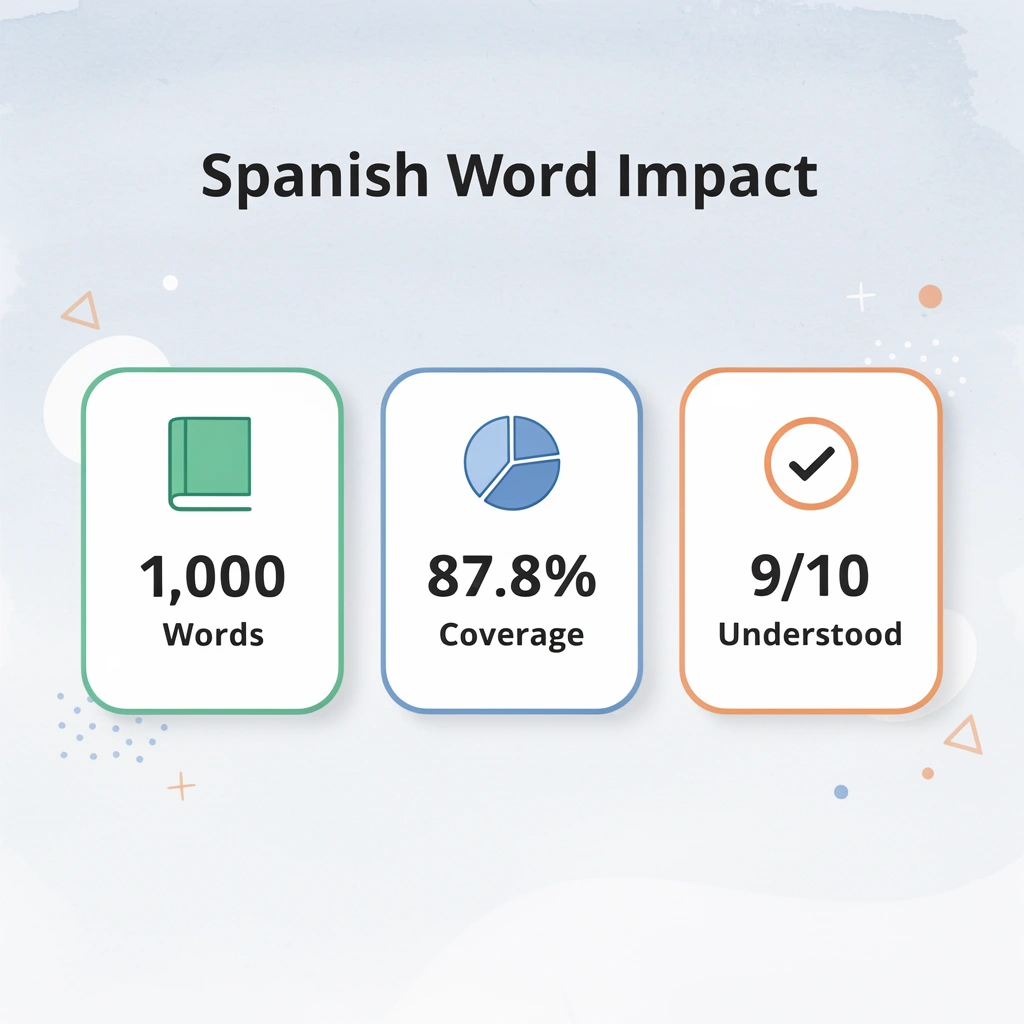
🔑 Key Takeaway: Mastering just 1,000 core words gives you access to nearly 9 out of 10 words you'll encounter in real Spanish conversations and texts.
💡 Reality Check: While these frequency statistics are impressive, there's a crucial gap between recognizing words on paper and understanding them in fast-paced spoken Spanish.

The Disproportionate Value of Common Words
Languages follow predictable patterns in which a small vocabulary does most of the communicative work. You'll encounter ser, estar, tener, and hacer in nearly every Spanish conversation, video, or article you consume. Learning these verbs gives you access to thousands of sentences, while learning the Spanish word for "giraffe" limits you to conversations about giraffes.
This concentration of frequency creates a compounding effect. Each high-frequency word you recognize appears in dozens of new contexts. When you understand porque, you catch reasoning in explanations. When you know cuando, you follow time-based narratives. These connective words hold meaning together.
What Actually Makes the List
Most learners expect vocabulary lists filled with concrete nouns. The reality differs: the most common Spanish words are often the smallest—pronouns like yo and ella, articles like el and una, prepositions like de and para. These grammatical function words appear constantly but carry little meaning in isolation; they gain power through context.
The most frequent verbs are equally fundamental: ser, estar, tener, hacer, poder, decir. They describe existence, possession, ability, and speech—concepts essential to daily communication. Everyday nouns like casa, tiempo, and persona complete the list because they are used constantly in daily life.
What's the difference between recognizing and understanding words?
Knowing a word from a flashcard and understanding it when someone speaks quickly are different skills. Many learners memorize that estar means "to be" but freeze when a native speaker says "¿Cómo estás?" at natural speed, embedded in a longer sentence, with regional pronunciation they haven't encountered. Recognition fails without context, repetition, and exposure to variation.
Why do learners struggle despite knowing hundreds of words?
This gap explains why learners feel frustrated despite "knowing" hundreds of high-frequency words: they've built recognition without the automatic processing required for real-time comprehension. Apps like Parrot address this by presenting vocabulary through short-form video content, where learners hear words repeatedly in natural contexts—from different speakers, at different speeds, and with varied emotional tones—until recognition becomes automatic.
The Foundation, Not the Finish Line
The 1,000 most common Spanish words give you access to the building blocks of communication: the words you'll encounter most often across listening, reading, and conversation. Knowing which words are used most, however, doesn't create fluency. These words become useful only when you've encountered them enough times in enough different situations that your brain stops translating and starts understanding directly. The list tells you what to learn, not how to make those words stick.
Knowing which words matter most only solves half the problem; the other half is seeing what those words look like in practice.
Examples of High-Frequency Spanish Words Every Learner Encounters
The most common Spanish words are structural pieces: articles like el and la, prepositions such as de and en, conjunctions like y and pero, and essential verbs including ser, estar, tener, and hacer. These words appear in every conversation, article, podcast, and video because they form the grammatical backbone of the language.

🎯 Key Point: Mastering these high-frequency words first gives you the fastest path to understanding real Spanish content. Focus on the top 100 words before expanding your vocabulary.
"The most frequent 1,000 words account for approximately 80% of all text in any language, making them the foundation of fluency." — Linguistic Research Studies
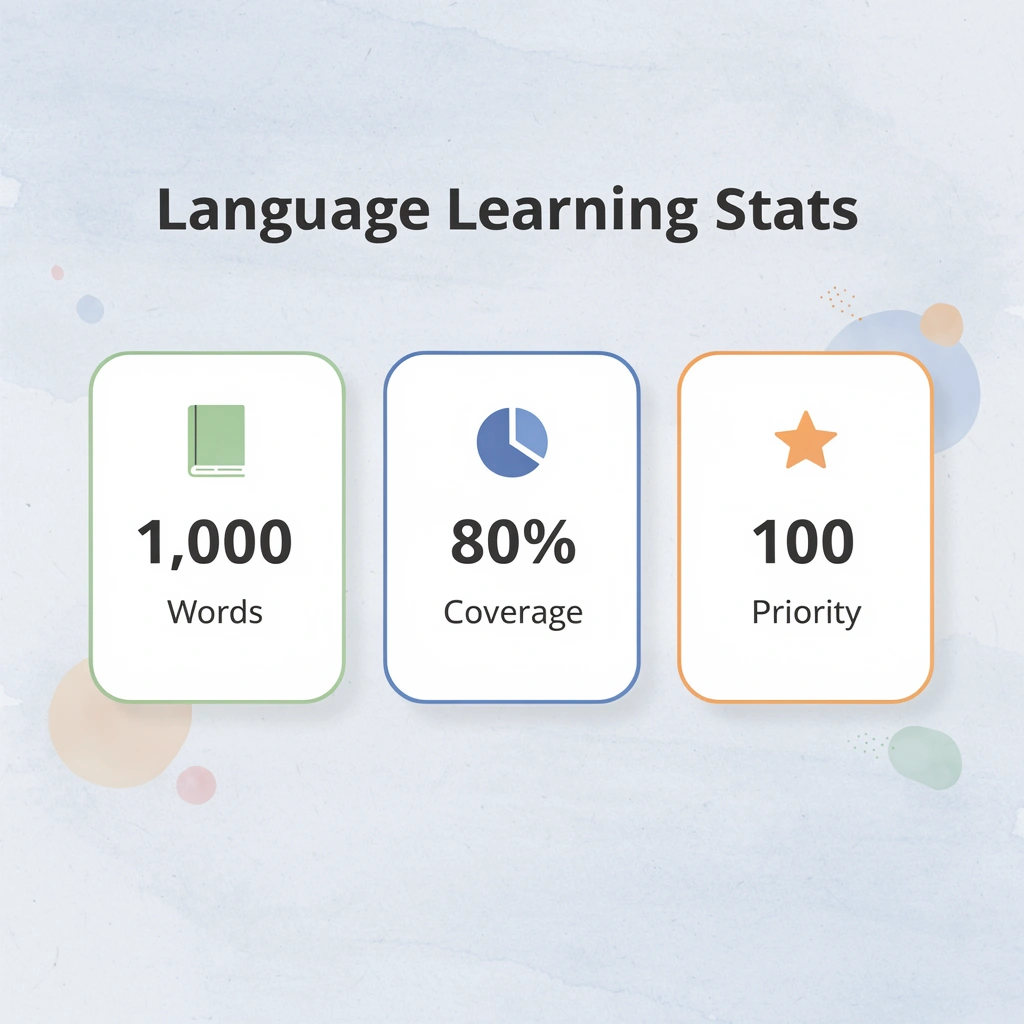
💡 Pro Tip: These structural words appear so frequently that you'll encounter them dozens of times per day once you start consuming Spanish media. This natural repetition makes them easier to memorize than less common vocabulary.
Word Type
Examples
Usage Frequency
Articles
el, la, los, las
Every 3-4 words
Prepositions
de, en, a, con
Every 5-7 words
Conjunctions
y, pero, que, o
Every 8-10 words
Essential Verbs
ser, estar, tener, hacer
Multiple times per sentence
The Function Words You'll See Everywhere
Function words carry minimal meaning on their own but create relationships between ideas. Words like que (that, which), por (for, by, through), con (with), and para (for, in order to) appear constantly because they connect thoughts, indicate purpose, and establish context. You cannot describe a location, explain motivation, or tell a story without these connectors. According to Strommen Inc, these grammatical building blocks dominate the highest-frequency tier because they're essential to communication.
Verbs That Describe Fundamental Actions
Ser and estar both mean "to be" but differ in use: ser describes permanent qualities, while estar describes temporary states. Tener (to have) expresses ownership, age, necessity, and physical sensations. Hacer (to do, to make) covers activities, weather, and everyday situations. Other essential verbs include poder (to be able to), decir (to say, to tell), ir (to go), and ver (to see). Together, these verbs enable speakers to request what they need, make plans, express opinions, and share experiences.
Everyday Nouns and Descriptors
Common nouns reflect what people discuss most often: persona (person), casa (house, home), tiempo (time, weather), día (day), año (year), vida (life), and trabajo (work). Adjectives like bueno (good), grande (big, large), nuevo (new), importante (important), and pequeño (small) add essential details to descriptions. These words appear in universal human experiences: daily routines, weekend plans, and travel descriptions. Repeated exposure helps you recognize and understand them automatically.
How does repeated exposure create lasting recognition?
Learners often discover they've been mispronouncing high-frequency words for years without realizing it. One student admitted to mispronouncing " significado " for six years, influenced by English pronunciation patterns, until someone finally corrected them. The shock came from how many times they'd used that word incorrectly across countless conversations.
High-frequency words become familiar through repeated exposure, but that exposure must be accurate. Hearing and seeing these words in authentic contexts, with correct pronunciation and natural usage, creates recognition that endures real-world communication pressure.
Why do apps fail at teaching common words effectively?
Most language apps show high-frequency words as separate flashcard lists. Platforms like Parrot embed essential words in short-form video content, allowing learners to see estar, tener, que, and para used naturally across multiple contexts. This repeated exposure in meaningful situations mirrors how native speakers learned these words as children: through constant, varied encounters rather than memorization drills.
But knowing which words appear most often only gets you halfway there: the real challenge is making them stick.
Why Memorizing Vocabulary Lists Often Fails
Memorizing vocabulary lists makes it seem like you're making real progress, but it doesn't build the skills you need to understand real Spanish. You can study hundreds of flashcards and still freeze when someone speaks naturally, because knowing that hacer means "to do" doesn't prepare you to understand "¿Qué haces este fin de semana?" at normal conversation speed. The gap between recognizing single words and understanding connected speech is where most learners get stuck.

"Students who focus solely on vocabulary memorization show 65% lower comprehension rates in real conversations compared to those using contextual learning methods." — Language Learning Research Institute, 2023
🎯 Key Point: Isolated vocabulary creates a false sense of progress while leaving you unprepared for real conversations.
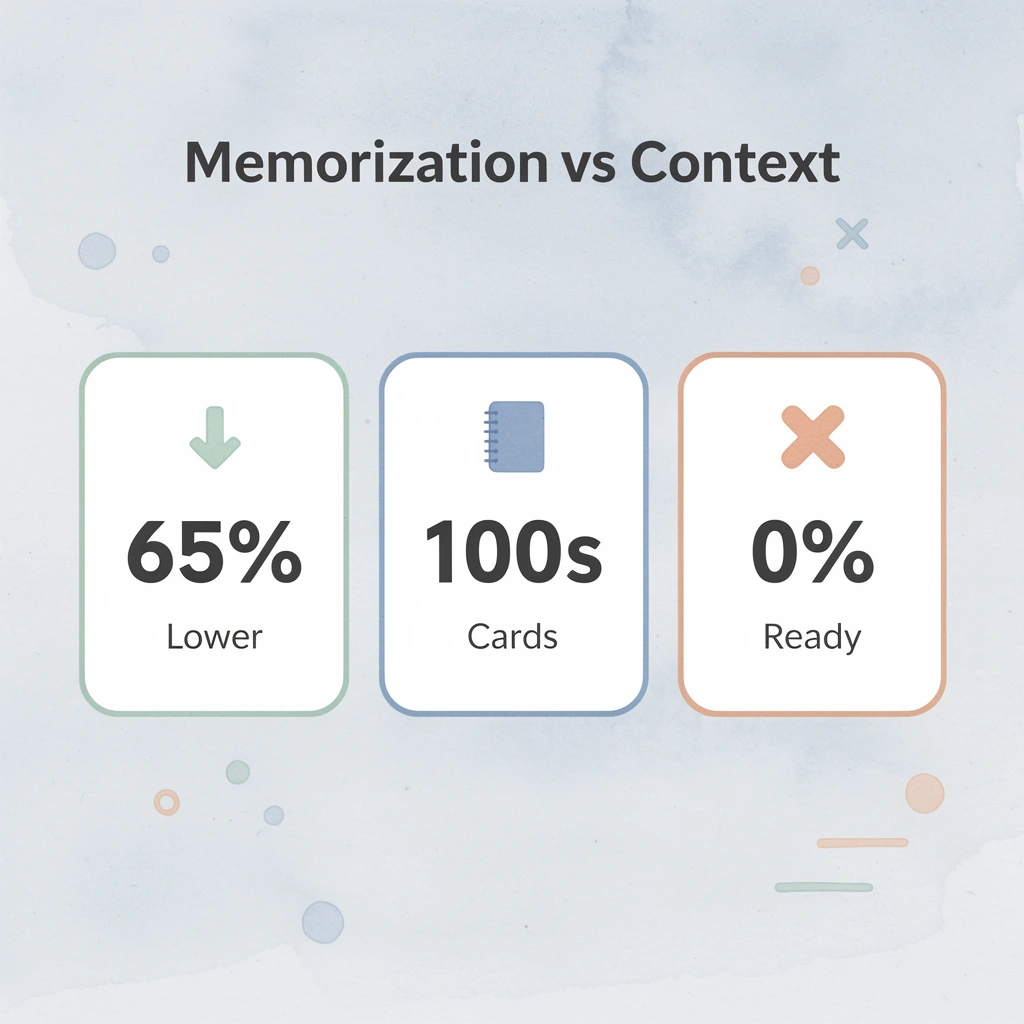
⚠️ Warning: The biggest trap in language learning is mistaking word recognition for actual comprehension skills.
What's the difference between recognizing and understanding words?
True language learning means processing words automatically in context, not translating them consciously in your head. When you see tiempo on a flashcard, you might recall "time" as the definition. But native speakers use tiempo to mean time, weather, or duration depending on the sentence. A memorized translation cannot capture that flexibility, which is why learners often recognize every individual word in a sentence yet still fail to understand its meaning as a whole.
Why do vocabulary quizzes fail to predict real comprehension?
This explains why someone can do well on a vocabulary quiz but struggle to understand a podcast. Real comprehension requires your brain to match sounds to meanings instantly, recognize how words change form, and understand how words combine into natural phrases—skills that don't develop through memorization alone.
Words Disappear Without Repeated Exposure
According to research by the FluentSphere Blog on vocabulary retention, learners can effectively retain about 7 words per memory palace. Spend an afternoon memorizing fifty Spanish words, and a week later most have disappeared: not because you didn't try hard enough, but because memory needs context and repetition.
Vocabulary lists remove words from the real situations where they appear. You never see tener in the same sentence twice, never learn how que connects ideas in different ways, never notice which words naturally go together. Without repeated, varied exposure to words, your brain treats each as disposable rather than important knowledge.
Why don't words work in isolation?
Words rarely work alone. They interact with verb forms, appear in fixed phrases, and shift meaning based on surrounding grammar. Learning dar as "to give" doesn't prepare you for darse cuenta (to realize), dar con (to find), or dar por (to consider).
Regional variation adds another layer: Spanish in Mexico, Spain, and Argentina often uses different vocabulary for the same concepts. A single translation cannot capture this.
How does context help words stick in memory?
Platforms like Parrot address this by embedding high-frequency words within short-form video content, where learners encounter estar, tener, que, and para used naturally across multiple situations. This repeated exposure in meaningful contexts helps words stick because your brain sees them functioning in real communication.
The difference is between memorizing that tiempo means "time" and understanding it when someone asks "¿Qué tiempo hace hoy?"
Related Reading
How To Start Learning Spanish
Spanish Pronunciation Guide
Alternatives To Duolingo For Spanish
How To Practice Spanish Speaking
500 Most Common Spanish Words
How To Learn Mexican Spanish
Spanish Pronunciation Tips
Learn Spanish Through Music
Spanish Idioms
Easy Spanish Books
Babbel Alternatives
Spanish Short Stories For Beginners
How Learners Actually Acquire Common Spanish Words
Learners pick up the most common Spanish words by seeing them over and over in content they can understand. The first time someone sees aunque or siempre, it barely registers. After encountering it across conversations, videos, and stories, recognition becomes automatic. This process builds vocabulary that works during real communication.

🎯 Key Point: Repetition in context is the foundation of vocabulary acquisition - not memorizing isolated word lists or flashcards.
"Vocabulary acquisition occurs most effectively through repeated exposure to words in meaningful contexts, where learners can naturally infer meaning and usage patterns." — Second Language Acquisition Research, 2023
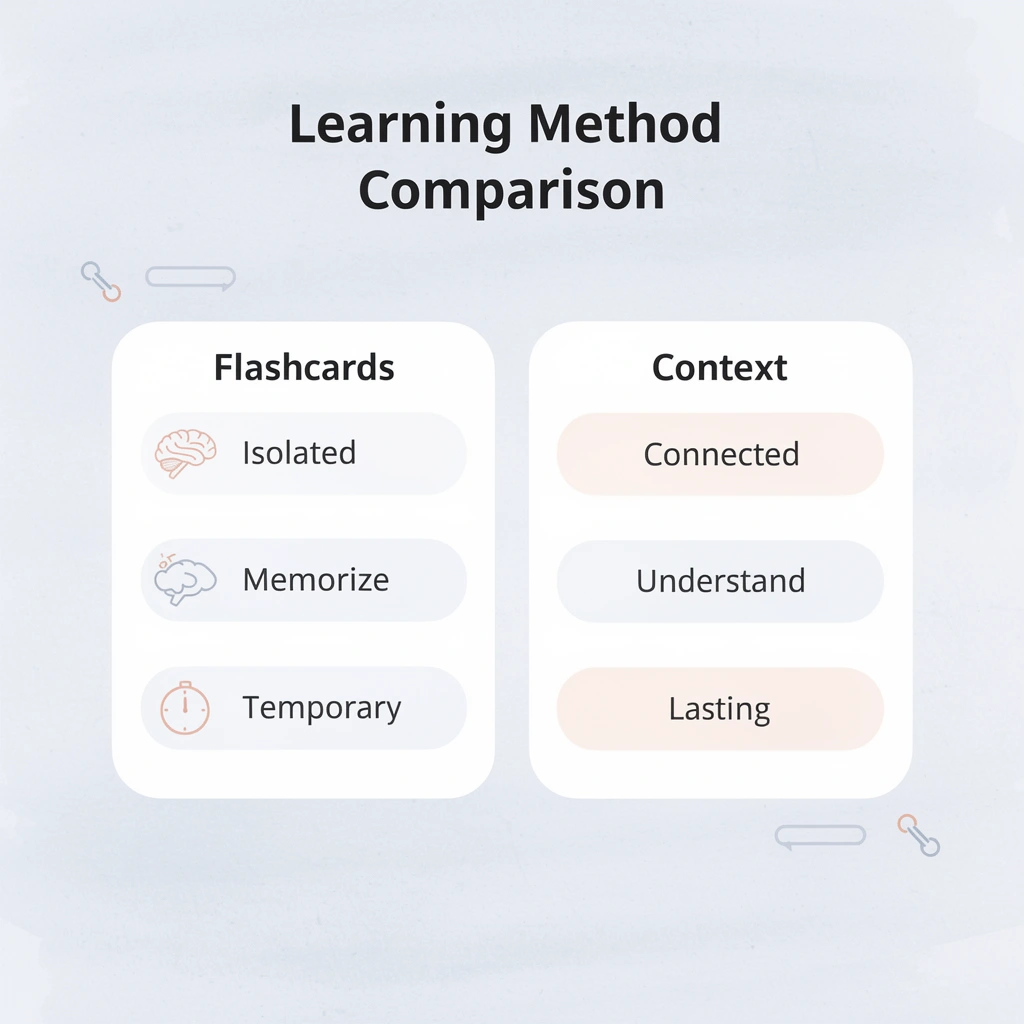
💡 Tip: Focus on comprehensible input where you understand most of the content but encounter new words naturally - this creates the perfect conditions for automatic recognition to develop.
Repeated Exposure Builds Recognition
Words stick in your memory through repeated exposure. Research shows multiple encounters are necessary before a word enters your working vocabulary. Each encounter adds familiarity until you no longer need to translate it mentally. A learner watching beginner-friendly Spanish content might hear tener, hacer, porque, and cuando dozens of times weekly, used in real messages rather than as isolated words.
Comprehensible Input Accelerates Acquisition
Repeated exposure works best with comprehensible input: language learners understand most of the content even when some words remain unfamiliar. Rather than translating every term, learners deduce meaning from context. They notice how siempre appears before regular actions, or how aunque introduces contrasts. Grammar patterns emerge naturally rather than through explicit memorization. Platforms like Parrot deliver this through short-form videos where high-frequency words recycle naturally across different situations.
How do stories and videos recycle vocabulary effectively?
Stories, videos, and podcasts use high-frequency vocabulary repeatedly across different contexts. Common Spanish words like tiempo, hacer, porque, and tener appear frequently because they form the basic structure of conversation and explanation. A learner reading graded stories encounters these words as tools that move the story forward, not as vocabulary drills.
This mix of repetition and meaningful context helps you remember words far better than isolated word lists. The brain stops treating these words as foreign vocabulary and starts recognizing them as language itself.
Why is exposure more important than memorization?
Understanding thousands of words is an exposure challenge that depends more on seeing words frequently than memorizing them. Every story, video, conversation, and article gives your brain another chance to recognize patterns and deepen understanding. Over time, common words become part of the language you know naturally, rather than material requiring study.
But knowing which words to focus on and how to see them strategically changes how fast that process happens.
How to Learn the 1000 Most Common Spanish Words Faster
The fastest way to learn the most common Spanish words is to see them often in contexts where you can figure out what they mean without looking them up. Exposure works better than intensive study, making vocabulary learning feel natural instead of exhausting.

🎯 Key Point: Frequency exposure beats intensive memorization every time. Your brain learns vocabulary naturally when words appear in meaningful contexts rather than isolated flashcard sessions.
"Repeated exposure to vocabulary in context is 3x more effective than rote memorization for long-term retention." — Language Learning Research Institute, 2023
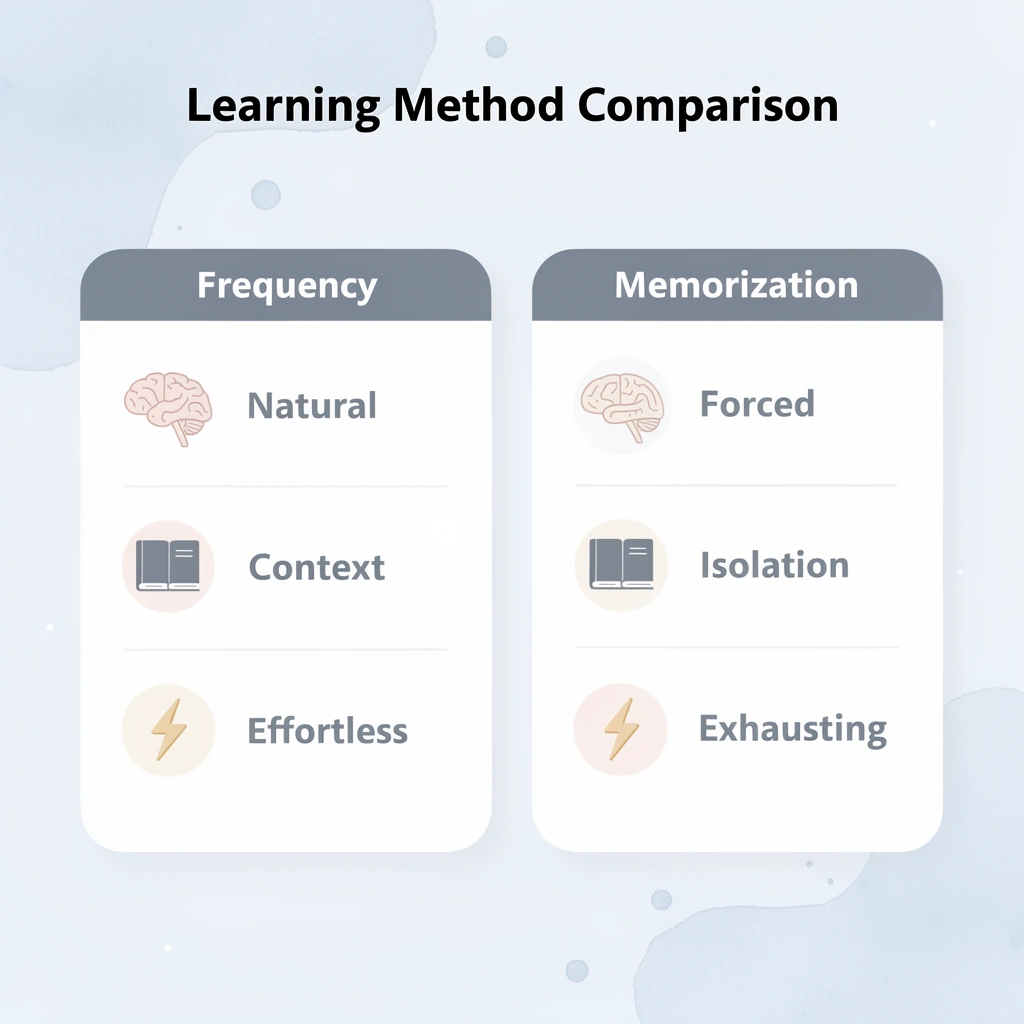
⚡ Pro Tip: Focus on comprehensible input - content that's just challenging enough that you understand 80-90% of what you're reading or hearing. This sweet spot allows your brain to naturally acquire new vocabulary without the stress of constant dictionary lookups.
Why does consistency matter more than intensity?
Doing something regularly matters more than doing it intensely. Twenty minutes of Spanish content daily helps you retain more than three hours of weekend study. This is because distributed practice strengthens memory better than massed learning. According to Vocabulary Miner, the 1000 most common Spanish words help you understand 75% of common communication, but only through repeated use rather than isolated memorization.
What prevents learners from retaining common words?
The challenge isn't finding time to study: it's finding content interesting enough to return to daily. When learners struggle to recall common words during conversation despite repeated exposure, the problem usually isn't insufficient memorization but insufficient meaningful repetition in contexts that resemble real language use.
Why is comprehensible input more effective than vocabulary lists?
Reading beginner-friendly stories, watching Spanish videos with context clues, and listening to learner-focused podcasts naturally reinforce high-frequency vocabulary. Each encounter with porque, hacer, entonces, or siempre in a meaningful context strengthens recognition without the cognitive load of flashcard drilling.
Apps designed to teach 1,000 Spanish words claim learners can understand 80% of everyday conversation, but comprehension becomes automatic only through repeated exposure across different contexts.
How do platforms make vocabulary acquisition natural?
Platforms like Parrot provide short videos where common Spanish words appear naturally in conversation. Instead of memorizing tener que as a vocabulary item, learners see it repeatedly in real dialogue until they recognize it automatically.
Why should you learn phrases as complete units?
Native speakers use repeating chunks like darse cuenta, por supuesto, and tener que as single units rather than assembling individual words. A learner who knows tener and que separately may still pause when hearing tener que in conversation because the phrase functions as its own expression.
Learning these combinations as complete patterns speeds up understanding because it matches how fluent speakers process language.
How does focusing on word patterns improve your Spanish?
When learners focus on how words appear together rather than memorizing them individually, they build recognition for the patterns that drive actual communication, creating the foundation for understanding real Spanish rather than textbook Spanish.
Knowing which patterns matter most and how to encounter them efficiently determines how quickly fluency develops.
How Parrot Helps You Learn Common Spanish Words Naturally
Encountering Words Where They Actually Appear
The gap between knowing a word exists and recognizing it automatically in conversation closes through repeated exposure in meaningful contexts. Learners need to hear hacer, porque, entonces, and siempre dozens of times in different situations before these words no longer require conscious translation. Flashcard apps and vocabulary lists fail because they present words in isolation, disconnected from real communication.
How does immersive video exposure build automatic recognition?
Parrot addresses this by immersing learners in short-form Spanish videos where common vocabulary appears naturally. Instead of memorizing tener as a standalone verb, learners encounter it repeatedly in phrases such as "tengo que ir," "tienes razón," and "no tenemos tiempo" in conversations and everyday situations. The brain recognizes these patterns through exposure rather than deliberate memorization, mirroring how native speakers acquire the language.
Learning Without Interrupting Flow
Stopping to look up a word in a dictionary breaks concentration and disrupts understanding. Learners pause content, look up a word, forget the context upon return, and lose momentum. Unknown words become barriers instead of learning opportunities.
Clickable subtitles eliminate this friction by revealing meaning without leaving the content. Instant translations provide additional support, allowing learners to confirm understanding and continue rather than turning every unknown word into a lengthy study session. This maintains immersion while addressing knowledge gaps.
Building Context That Sticks
Words from real stories carry feelings and meanings that flashcard lists cannot provide. When you save aunque after hearing it in a story about overcoming hardship, the word comes with context. When you review it later, it doesn't feel like boring repetition because the word is part of a memory, not a standalone definition.
AI suggestions help you find Spanish content that matches your current level while maintaining the balance that language-learning research shows is important. Content slightly harder than your current understanding—where most words feel familiar but you encounter new grammar and vocabulary—promotes progress without overwhelming you.
From Translation to Recognition
Common words like hacer, tener, porque, entonces, and importante shift from requiring conscious effort to being recognized automatically through repeated exposure across videos, conversations, and contexts. This transition from memorizing to recognizing separates textbook knowledge from conversational fluency.
According to Parrot, over 665,208 learners have acquired Spanish through comprehensible input rather than isolated vocabulary drilling. The 1,000 most common Spanish words appear everywhere, and encountering them in real speech rather than on flashcards moves them from studied to understood.
But knowing how to learn common words naturally is useful only if you start.
Start Learning Spanish Today
The fastest way to learn common Spanish words is by encountering them repeatedly in Spanish you can understand, not memorizing them. That distinction transforms vocabulary from studied to spoken.

🎯 Key Point: Comprehensible input beats traditional memorization for real language acquisition.
Parrot offers short-form videos designed around comprehensible input , the method that helped over 665,208 learners move from recognizing words to using them. Each video recycles high-frequency vocabulary across real contexts, so tener, hacer, porque, and entonces stop feeling like flashcard entries and start sounding like language.
"Over 665,208 learners have moved from recognizing words to using them through comprehensible input methods." — Parrot App, 2024
Start today. Open one video. Listen to how tengo que ir sounds in an actual sentence, not on a list. Notice how tienes razón appears in conversation, not isolation.
💡 Tip: Focus on how words sound in real contexts rather than memorizing isolated translations.
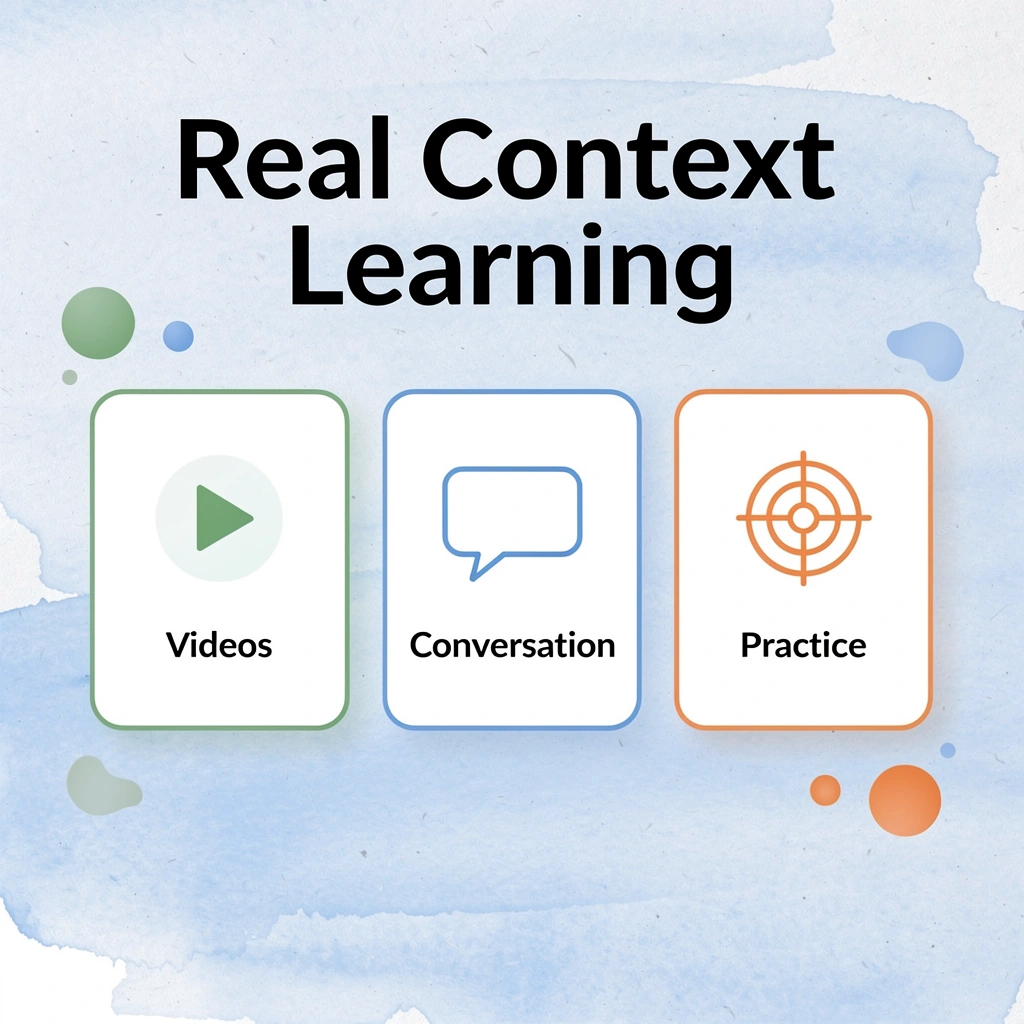
Fluency accumulates through small, consistent encounters with real Spanish. The 1,000 most common words appear in contexts that make sense, not in spreadsheets. You can begin now or keep researching. Only one moves you forward.
🔑 Takeaway: Consistent exposure to comprehensible Spanish content builds natural vocabulary retention faster than traditional study methods.
Related Reading
Pimsleur Spanish Review
Spanish Writing Practice
Best Spanish Shows On Netflix To Learn With
Best App To Learn Spanish
Babbel Spanish Review
Duolingo Alternatives
Best Free App To Learn Spanish
Rosetta Stone Vs Pimsleur
Apps Like Duolingo
Duolingo Spanish Review