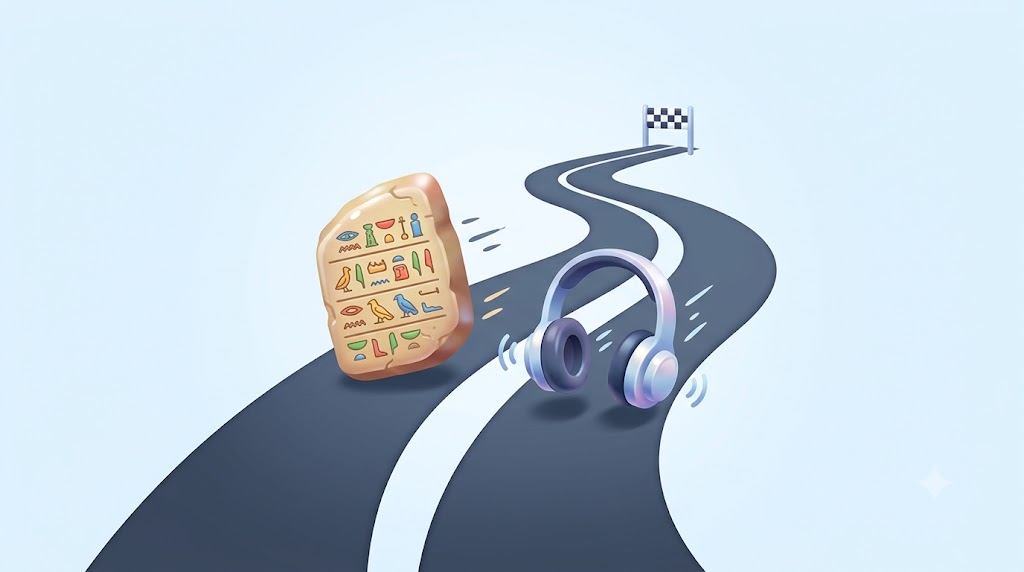
Choosing between Rosetta Stone and Pimsleur is one of the first real decisions a beginner faces when studying Spanish. Both programs have loyal followings, both promise results, and both take fundamentally different approaches to language learning. Understanding those differences saves time and helps match the right method to the right learner.
Rosetta Stone leans on visual immersion, while Pimsleur builds fluency through structured audio repetition. Neither is universally better, but one will likely suit a given learner's schedule, budget, and learning style far more than the other. For those ready to put conversational practice at the center of their studies, learn Spanish with Parrot as a practical complement to either program.
Table of Contents
Why Most Language Learners Ask the Wrong Question
Rosetta Stone vs Pimsleur: What Are the Key Differences?
Where Rosetta Stone and Pimsleur Struggle
What Actually Leads to Spanish Fluency?
How to Choose the Right Spanish Learning Method for Your Goals
How Parrot Helps You Build Real Spanish Fluency
Start Learning Spanish Today
Summary
Most language learners focus on choosing the right app rather than questioning whether the method behind it reflects how the brain actually acquires language. The failure point for most learners is not the platform they chose but the cycle of starting, stalling, and switching when progress slows. Formal language learning has seen a significant decline in recent years, with a HEPI report noting a catastrophic drop in participation across UK schools and universities, suggesting the structural problem runs deeper than any single curriculum can address.
Both Rosetta Stone and Pimsleur are built around controlled repetition, one through visual association and one through audio recall, but neither exposes learners to the unpredictable, fast-moving Spanish that native speakers actually use. Rosetta Stone requires focused screen time and structured study blocks, while Pimsleur fits into a commute or a fragmented day. That difference in flexibility often determines whether a learner studies consistently or abandons the platform entirely, regardless of motivation.
The vocabulary gap between lesson content and real conversation is wider than most beginners expect. Rosetta Stone's earlier versions relied heavily on third-person vocabulary that rarely surfaces in natural speech, and Pimsleur's scripted dialogues, while conversational in structure, create a blind spot for slang, register shifts, and the backtracking rhythms of real spoken Spanish. Learners who complete either program often describe the same experience: strong in-lesson comprehension that collapses the moment a native speaker uses different phrasing or a faster pace.
Research on fluency timelines puts the effort required into concrete terms. According to Migaku, immersion learners can reach Spanish fluency in one to two years with consistent daily practice of one to two hours, and English speakers generally need 600 to 750 class hours to reach proficiency. Those hours only count if they involve genuine comprehension rather than passive repetition of controlled input, a distinction that most structured language programs are not designed to support.
Choosing the right method depends more on daily routine and natural processing style than on platform reputation. Learners who have thirty focused minutes at a desk each day may do well with structured visual programs, while those with fragmented schedules tend to retain more through audio-based instruction. According to Berlitz, Spanish has over 500 million native speakers worldwide, making the long-term payoff for reaching real fluency substantial, but that payoff only arrives for learners who stay consistent long enough to accumulate meaningful hours inside the language.
Dr. Stephen Krashen's research on comprehensible input showed that the brain acquires language most effectively through meaningful exposure to content it can understand, rather than through memorizing vocabulary lists or grammar rules. Methods that rely on scripted, closed-vocabulary repetition build familiarity with exercises rather than flexibility in real conversation, which is why learners trained exclusively on controlled input often freeze when authentic Spanish arrives in an unexpected context.
Parrot addresses this gap by grounding its approach in comprehensible input theory, using short-form video content from native speakers so that learners build real listening and speaking ability through meaningful exposure rather than by completing lessons.
Why Most Language Learners Ask the Wrong Question
Picking the right app seems sensible, but the question contains a hidden assumption: the tool you choose is what makes you fluent. Language learning does not work that way. Learners who switch from Rosetta Stone to Pimsleur often find the same problem waiting on the other side. The app changes. The frustration does not.
"The tool you choose is not what makes you fluent. The question itself is the wrong one to ask."
⚠️ Warning: Switching apps is one of the most common traps in language learning. If you've bounced between Duolingo, Rosetta Stone, Pimsleur, or any other platform and still feel stuck, the problem isn't the app. It's the underlying assumption driving your choices.
🎯 Key Point: Fluency is not a feature unlocked by the right software. Learners who succeed stop asking "which app?" and start asking "what am I actually doing wrong?"

Why do learners keep hitting the same wall no matter which app they use?
The failure point is rarely the platform. It is the cycle of starting, stalling, and restarting that depletes both time and motivation. Learners make fast early gains, then hit the intermediate plateau and interpret slower progress as a sign they chose the wrong tool. So they switch, and the cycle repeats. According to a HEPI Report on the decline in language learning, formal language learning has seen a catastrophic decline in UK schools and universities, signaling that the structural problem runs deeper than any single app or curriculum can fix.
What does real progress actually look like outside the app?
Most language learning apps focus on completion: finish the unit, keep your streak going, move to the next level. But finishing lessons is not the same as learning a language. The real measure is what happens outside the app—whether you can understand a native speaker at natural speed, recognize familiar phrases in new situations, or hold a conversation without translating every sentence in your head. That gap between progress in the app and real-world ability is where most learners get stuck. Parrot takes a different approach, basing its method on comprehensible input through short-form video immersion that mirrors how the brain naturally learns language, helping learners build real listening and speaking ability rather than mere familiarity with exercises.
Does the method behind the app actually match how the brain learns language?
Both Rosetta Stone and Pimsleur rely on memorization and repetition through visual association or audio drilling. Dr. Stephen Krashen's research on comprehensible input demonstrated that the brain acquires language most effectively through meaningful exposure to comprehensible content, rather than through conscious memorization of vocabulary lists or grammar rules. When the method misaligns with how the brain learns, effort and persistence cannot close the gap.
The right question is not which app is better, but whether the method behind the app reflects how language acquisition actually happens. Once you start asking that question, the comparison between Rosetta Stone and Pimsleur looks different than it did at the start.
Rosetta Stone vs Pimsleur: What Are the Key Differences?
Rosetta Stone builds vocabulary and reading comprehension through visual immersion. Pimsleur builds listening and speaking ability through audio recall. These core differences have a big impact on your overall learning experience.
Primary Skill: Rosetta Stone focuses on building vocabulary and reading proficiency, whereas Pimsleur emphasizes core listening and speaking abilities.
Learning Method: Rosetta Stone utilizes visual immersion and pattern matching; Pimsleur relies on spaced repetition and active audio recall.
Best For: Rosetta Stone is better suited for learners targeting reading comprehension; Pimsleur is designed to jump-start conversational fluency.
Format: Rosetta Stone is primarily a screen-based, interactive interface, while Pimsleur is an audio-first program designed for hands-free learning.
"The method of language delivery — visual vs. audio — is one of the most critical factors in determining which skill set a learner develops fastest." — Language Learning Research
🔑 Takeaway: If your goal is reading and vocabulary, Rosetta Stone is your match. If you want real-world speaking confidence, Pimsleur's audio-first approach is the stronger choice.
💡 Tip: Consider how you'll actually use the language — traveling and speaking call for Pimsleur, while reading and writing tasks favor Rosetta Stone.

How does each platform's core method shape what you actually learn?
Rosetta Stone's core mechanism is association: you see an image, hear a word, read the text, and your brain connects them without English as a bridge. The method builds vocabulary recognition and reading fluency, but speaking practice remains controlled. You repeat phrases into a microphone and receive feedback from TruAccent speech recognition technology. However, you seldom produce language independently, which is the skill that matters when a native speaker responds faster than expected.
Pimsleur works differently. According to SmarterLanguage, lessons run for 30 minutes each as guided audio conversations in which you hear a prompt and respond aloud from memory. Spaced repetition supports retention, and learners often hold basic conversations more quickly than expected. The tradeoff is minimal reading and writing development, especially early on, which catches many learners off guard when they cannot read a menu or sign despite weeks of study.
Which platform fits better into a busy adult's daily routine?
The flexibility gap is significant. Rosetta Stone requires a screen, focused attention, and dedicated time, while Pimsleur fits into a commute, walk, or kitchen routine. For busy adults, that difference often determines whether they study consistently or abandon the app. A common pattern among learners who quit Rosetta Stone is not a lack of motivation but a lack of available screen time.
Does either of these platforms prepare you for real Spanish conversations?
Both platforms rely on controlled repetition, whether visual or audio, neither placing you inside real, unpredictable Spanish the way authentic conversation does. SmarterLanguage notes that Pimsleur offers courses in over 50 languages, but more options do not guarantee real understanding. Learners who finish either program often struggle when native speakers use different phrasing, slang, or speak faster—a method gap. Platforms like Parrot use short-form video immersion based on comprehensible input theory, placing learners inside real Spanish content they can understand rather than controlled repetitions designed for lesson completion.
Choosing between Rosetta Stone and Pimsleur depends on which skill you prioritize and your available study time. Visual learners with structured study blocks should choose Rosetta Stone; audio learners with fragmented days should choose Pimsleur. Neither fully closes the gap between lesson performance and real-world fluency.
What neither platform fully prepares you for is more revealing than anything either one promises.
Related Reading
Where Rosetta Stone and Pimsleur Struggle
Both platforms have serious trouble when real Spanish shows up — the fast, everyday Spanish that native speakers actually use, not the scripted, carefully spoken lessons.
"The gap between classroom Spanish and street Spanish is one of the biggest barriers learners face — most apps teach the scripted version, leaving students unprepared for real conversations." — Language Learning Researchers
⚠️ Warning: If your app only exposes you to slow, scripted audio, you'll struggle the moment a native speaker talks at natural speed — and they always do.
💡 Tip: Supplement Rosetta Stone or Pimsleur with authentic content — think native podcasts, TV shows, or real conversations — to bridge the gap between lesson Spanish and real-world Spanish.
Speech Speed: Both platforms use controlled, paced audio that prioritizes clarity over the rapid, fluid speed of native speakers.
Native Slang: Curriculums focus on formal, textbook-style communication, rarely incorporating regional dialects, idioms, or colloquial slang.
Real-World Readiness: Neither program simulates spontaneous or unpredictable dialogue, leaving a significant gap between lessons and actual real-world conversations.
College of Liberal Arts and Sciences - University of Florida
Authentic Audio: While they use native speakers, the audio is highly scripted and lacks the background noise, overlapping speech, and varied accents encountered in authentic environments.

Why does lesson vocabulary fail you in real conversations?
The gap between lesson vocabulary and street vocabulary is wider than most beginners expect. According to the LingQ Language Forums, Rosetta Stone version 2 relied heavily on third-person vocabulary, which rarely appears in natural conversation. This shapes what learners practice and expect to hear; when real Spanish arrives without that familiar support, comprehension breaks down quickly.
Does Pimsleur's scripted format create its own blind spots?
Pimsleur addresses this by centering conversational phrases from the start, but its scripted dialogues create a blind spot. Every exchange is predictable by design. A native speaker who pauses, backtracks, uses slang, or switches register mid-sentence will sound almost like a different language to someone trained exclusively on polished audio lessons.
When the method becomes the ceiling
The deeper issue is structural, not cosmetic. Both platforms are built around controlled input, which has inherent limits. Learners grow comfortable inside the system, then step outside it and feel lost. That experience is not a personal failure or a sign that Spanish is too hard—it is a predictable outcome of practicing a curated version of the language instead of the real one.
Why does logging more lessons fail to close the gap?
Most learners respond by doing more lessons, assuming that repetition will close the gap. The hidden cost is time spent in a system that cannot show them the unpredictable, interest-driven, emotionally resonant content that trains comprehension at speed. Apps like Parrot use short-form video immersion built around comprehensible input, so learners encounter authentic Spanish in small, digestible moments throughout their day rather than in isolated study sessions.
Does the kind of Spanish you study actually matter?
The critical difference is not how much Spanish you study, but whether the Spanish you are studying sounds like something a real person would say.
Related Reading
What Actually Leads to Spanish Fluency?
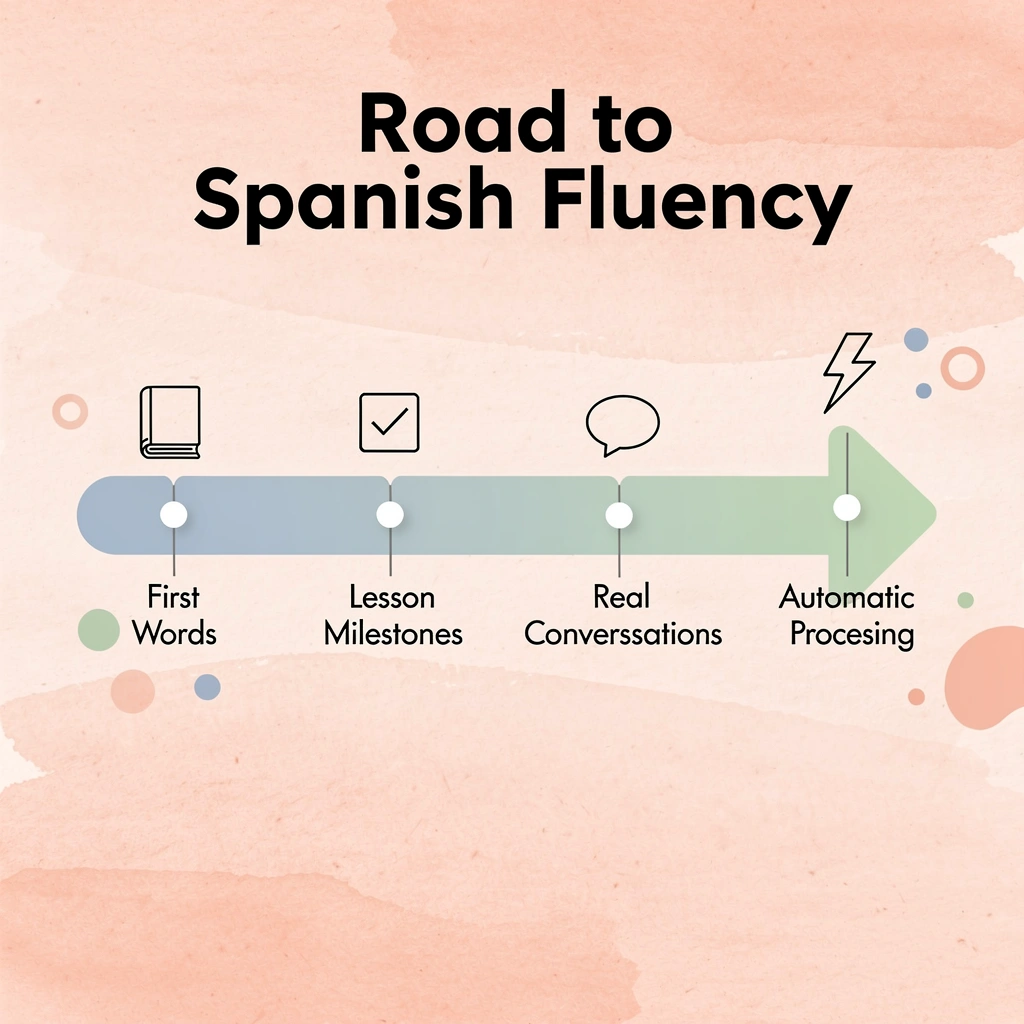
Fluency builds through thousands of small moments of understanding, repeated consistently over time until the language no longer feels foreign and becomes familiar.
Most learners get stuck in the gap between knowing Spanish and processing it automatically. They complete lessons and hit milestones, then freeze when a native speaker talks at full speed. This happens when a method optimizes for completion rather than comprehension. Both Rosetta Stone and Pimsleur use controlled input, so learners spend most of their time in carefully scripted Spanish that rarely matches the rhythm, vocabulary, or spontaneity of real conversation.
What the research actually shows
According to the Migaku Blog, people who learn through immersion can reach fluency in one to two years with consistent daily practice of one to two hours. Progress depends on regular exposure to Spanish that is comprehensible yet challenging, shifting your focus from completing a program to building a daily habit of authentic language practice.
Why do so many learners stall out before reaching fluency?
A pattern among learners who stall: they mistake familiarity with a lesson for readiness to understand the real world. Structured audio drills and vocabulary modules feel productive, but that progress is measured inside a closed system. The moment you step into a podcast, video, or street conversation, the gap between learning Spanish and living Spanish becomes obvious.
What actually builds the flexibility that real comprehension requires?
Most learners respond by repeating the same exercises, hoping the next level will close the distance. More repetition of controlled input doesn't build the flexibility that real comprehension requires. Apps like Parrot take a different approach: short-form video immersion places learners inside authentic Spanish content they can understand, distributed throughout the day rather than in isolated study blocks. The exposure is real, the context natural, and the buildup over weeks and months makes the difference.
Why is time inside the language different from time inside the lesson?
Migaku's research shows that Spanish takes about 600 to 750 class hours for English speakers to become proficient. However, this assumes those hours involve genuine understanding, not passive repetition. An hour spent understanding something interesting in Spanish trains your brain differently from an hour drilling scripted phrases. One builds real skill; the other builds script dependence.
The right method is one you will keep using long enough to build up meaningful hours of meaningful Spanish.
How to Choose the Right Spanish Learning Method for Your Goals
The right method fits how your brain learns language, how much time you realistically have, and what keeps you coming back after the novelty wears off.
"The best language learning method is the one you'll actually stick with — consistency beats perfection every time." — Language Learning Research
🎯 Key Point: There is no single "best" method — the right fit depends on your learning style, your schedule, and your long-term motivation.
💡 Tip: Before committing to any Spanish learning approach, ask yourself three critical questions: How does my brain best absorb new information? How many hours per week can I realistically dedicate? What has kept me engaged with learning in the past?
Learning Style: Identify whether you are a visual, auditory, or kinesthetic learner to match content formats to your natural cognitive strengths.
Time Available: Account for your actual daily or weekly availability to set realistic method intensity and pacing that avoids burnout.
Motivation Type: Distinguish between intrinsic desire (personal interest) and external accountability (deadlines/classes) to ensure the framework supports long-term consistency.

What your daily routine reveals about your best method
If you have thirty focused minutes at a desk each morning, a structured, visually organized program works well. If your only available learning windows occur during a commute or lunch walk, audio-first instruction fits more naturally into that rhythm. The mistake most learners make is choosing a method based on its reputation rather than its compatibility with their actual lives. A learner who studies consistently for six months with an adequate method will outperform someone who uses a theoretically superior platform for three weeks before abandoning it.
Does your natural processing style match the method you chose?
Students who learn best by reading and looking at pictures tend to do well with vocabulary-building exercises and clearly ordered lessons. Students who learn best by listening tend to do well with audio practice and spoken answers. Neither way is better, but choosing a method that contradicts your natural learning style means you spend energy on the format instead of the language itself.
Why do most learners stall before reaching real fluency?
Most learners who stop making progress do so because their chosen method requires a type of engagement they cannot sustain. According to Berlitz, Spanish is spoken by over 500 million native speakers worldwide. That benefit only materializes for learners who stay involved long enough to build meaningful hours, which requires a method they want to return to.
Why comprehensible input changes the calculation
Both Rosetta Stone and Pimsleur use controlled input, scripted sentences, closed vocabulary sets, and predictable dialogue patterns. This approach works for learning basics but doesn't prepare your brain for authentic Spanish, where speakers talk fast, skip words, use regional expressions, and ignore scripts. Many learners who spend hundreds of hours report a significant gap between solid lesson comprehension and fragile real-world comprehension.
How does comprehensible input shift the way your brain learns Spanish?
Comprehensible input works by exposing learners to language slightly above their current level. This allows your brain to acquire words and grammar through meaning rather than memorization. Apps like Parrot apply this principle by showing short videos from native Spanish speakers, providing authentic practice that fits into daily moments. The method doesn't require dedicated study time; it lets you engage with interesting Spanish content while your brain does what it naturally does.
Does your method reflect how language acquisition actually works?
The question is whether your chosen method shows how language acquisition works. Once you see the answer clearly, the next step becomes obvious.
How Parrot Helps You Build Real Spanish Fluency
The biggest challenge in language learning isn't choosing between programs—it's finding a method that keeps you engaged long enough to build the hundreds of hours of Spanish exposure needed for real fluency. While Rosetta Stone and Pimsleur build foundations through structured lessons, fluency develops through repeated exposure to understandable Spanish in meaningful contexts.
"Fluency develops through repeated exposure to understandable Spanish in meaningful contexts—not through drills alone."
💡 Tip: If your current method feels like a chore, you're less likely to stick with it long enough to reach true fluency. Engagement isn't a bonus—it's essential.
⚠️ Warning: Relying on structured drills and vocabulary lists alone can stall your progress. Real fluency requires far more hours of exposure than any single program's lessons can provide.

Parrot takes a different approach. Instead of endless drills, vocabulary lists, and repetitive exercises, our platform helps you learn Spanish through content you already enjoy consuming.
🎯 Key Point: Parrot replaces passive memorization with active immersion—turning the content you love into your most powerful language learning tool.
Repetitive drills vs. Enjoyable content: Traditional methods rely on tedious repetition; Parrot uses engaging, relatable content you already want to watch.
Vocabulary lists vs. Contextual exposure: Move away from isolated word lists toward acquiring language through natural, meaningful situations.
Structured lessons vs. Flexible immersion: Abandon rigid lesson plans in favor of learning through immersion that fits into your actual daily schedule.
Passive memorization vs. Active engagement: Shift from rote, passive memorization to active, brain-engaged interaction with real Spanish media.
How does learning through content you actually want to watch keep you engaged?
One of the biggest reasons learners stop using language programs is that studying eventually feels like work. Parrot is built on a different idea: rather than forcing learners through a fixed curriculum, our platform uses engaging short-form Spanish content to make language exposure feel natural and enjoyable—closer to browsing videos on social media than working through a traditional course. The more time you spend engaging with Spanish, the more opportunities you create for language learning.
How does comprehensible input drive language acquisition in Parrot?
One of the most important ideas in language learning is comprehensible input: learners acquire language by understanding messages that are mostly, but not completely, within their current ability. Parrot is built on this principle. Instead of focusing on memorization and translation exercises, our platform helps learners understand Spanish in context. By reading and listening to interesting, accessible content, learners acquire vocabulary, sentence structures, and listening skills through repeated exposure.
How do short-form Spanish videos replace traditional drills?
Traditional platforms require learners to complete exercises before moving on. Parrot replaces much of that structure with short-form Spanish videos that expose learners to the language as it's used in practice. Because the content is brief and engaging, it fits easily into everyday life: a few minutes spent waiting in line, commuting, or relaxing at home become opportunities to build listening comprehension and vocabulary.
How do clickable subtitles and instant translations reduce friction for learners?
Unfamiliar words can interrupt learning flow. Parrot eases this challenge with clickable subtitles and instant translations, allowing learners to understand unfamiliar vocabulary without pausing their learning experience.
How does AI-powered content recommendation personalize the learning experience?
A common challenge is finding content that matches your interests and skill level. If content is too hard, learners become frustrated; if it's too easy, progress slows. Parrot uses AI-powered recommendations to surface Spanish content that matches learners' interests and current level, creating a personalized experience that keeps them consistently engaged.
How do vocabulary-saving and review tools reinforce what you've learned?
Seeing words repeatedly is essential for language learning. Parrot lets users save vocabulary from content they watch and review it later without separate practice exercises. Because the words come from content the learner has already watched, they're connected to real situations rather than isolated lists, making them easier to remember and use.
How does entertainment replace willpower as the driver of consistency?
Many language-learning methods rely heavily on discipline, expecting learners to complete lessons even when the material feels repetitive. Parrot approaches this differently: by making Spanish content entertaining and personally relevant, it reduces the willpower required to sustain learning. Instead of forcing yourself to study, you find yourself watching one more video, learning one more phrase. This difference has significant long-term implications. Learners who reach fluency are those who sustain exposure month after month and year after year.
How does exposure to natural Spanish used by real speakers bridge the gap to fluency?
Many traditional language programs use highly controlled, scripted language, whereas real conversations rarely sound like textbook exercises. Our Parrot platform exposes learners to Spanish as it is naturally spoken by real people, helping them become familiar with pronunciation patterns, vocabulary, expressions, and communication styles found in everyday life.
This type of exposure helps bridge the gap between learning Spanish and understanding it in the real world.
Why is Parrot a more sustainable path to fluency than structured courses?
You get fluency by spending enough time understanding Spanish, not by finishing a course. Parrot makes this possible by turning language learning into something learners genuinely want to do. Through short-form videos, comprehensible input, personalized recommendations, clickable subtitles, and vocabulary tools, our platform encourages consistent exposure to real Spanish in an enjoyable way rather than relying solely on structured lessons.
Start Learning Spanish Today
The method you choose either works with your brain or against it. Structured drills and scripted audio alone are not enough to reach real conversation.
"Comprehensible input — not rote drilling — is the foundation of genuine language acquisition." — Language Acquisition Research
💡 Tip: If your current Spanish method feels like memorization rather than real communication, rethink your approach.
⚠️ Warning: Relying solely on structured drills and scripted audio creates a false sense of progress: you may pass quizzes but still struggle in real conversations.

Parrot is built on that insight. Instead of passive lessons, it gives you a personalized feed of short Spanish videos with clickable subtitles and instant translations, making comprehensible input part of your day rather than a separate task. Your first free trial session reflects your interests, putting genuine acquisition to work from minute one.
🎯 Key Point: Parrot transforms everyday content into a personalized language engine — no rigid lesson plans, no scripted audio, just real Spanish tailored to you.
Content Type: Traditional apps rely on scripted drills and repetitive exercises, whereas Parrot uses real-world Spanish videos featuring native speakers in authentic contexts.
App Store - Apple
Subtitles: Traditional apps often feature static text or none at all; Parrot provides interactive, clickable subtitles that allow for instant translations while watching.
Product Hunt
Personalization: Traditional apps typically force users through generic lesson paths; Parrot utilizes a personalized video feed tailored to your interests and level.
App Store - Apple
Learning Style: Traditional apps prioritize passive memorization through translation drills; Parrot is built on active comprehensible input, mimicking how native speakers learn by immersing you in understandable, meaningful content.
✅ Best Practice: Start your free trial session immediately — Parrot calibrates to your interests from minute one, so the sooner you begin, the faster genuine acquisition kicks in.
Related Reading
Babbel Spanish Review
Pimsleur Spanish Review
Duolingo Spanish Review
Rosetta Stone Vs Pimsleur
Spanish Idioms