Babbel's rigid lessons and high subscription costs leave many learners searching for better options. The platform's structured approach often fails to create the conversational skills that beginners need most, leading to frustration rather than fluency.
Effective language learning requires more than vocabulary drills and grammar exercises. Learners need platforms that adapt to individual learning styles and focus on practical conversation skills rather than following a one-size-fits-all curriculum. For those ready to move beyond textbook phrases and develop real conversational abilities, it's time to learn Spanish with a more personalized approach.
Table of Contents
Why Language Learners Start Looking for a Babbel Alternative
What to Look for in a Babbel Alternative
The Hidden Limitation of Traditional Language Apps
9 Best Babbel Alternatives Compared
What the Most Successful Language Learners Do Differently
How Parrot Helps Learners Move Beyond Traditional Language Apps
Start Learning Spanish Today
Summary
Traditional language apps focus on lesson completion rather than real comprehension. Learners can spend months progressing through structured modules while barely improving their ability to understand native speakers. The vocabulary stays controlled, the audio remains slow and clear, and the sentences follow predictable patterns. Real Spanish operates differently, with fast speech, dropped syllables, regional slang, and cultural references that never appear in restaurant vocabulary units.
Fluency requires thousands of hours of exposure to authentic language, not hundreds of isolated exercises. According to research from the American Council on the Teaching of Foreign Languages in 2023, learners who regularly engage with native-speaker content reach conversational proficiency 40% faster than those who use only instructional materials. The gap between classroom Spanish and street Spanish represents the difference between understanding a lesson and understanding a person.
Comprehensible input drives language acquisition more effectively than explicit grammar study. Dr. Stephen Krashen's research demonstrates that language learning happens when learners process messages they can mostly understand, delivered in the target language, without translation or heavy explanation. Words learned through repeated exposure within stories, dialogues, and meaningful scenarios create stronger recall than vocabulary memorized in isolation through flashcards or translation drills.
Daily consistency outperforms intensive study sessions for long-term language development. Learners who practice at least 5 days per week are 2.6 times more likely to finish their course, according to Duolingo's 2025 Language Report. The brain needs repeated exposure over time rather than concentrated bursts followed by silence. Platforms that make daily engagement feel effortless by fitting into existing habits produce better results than those that demand new routines requiring sustained willpower.
Most language apps condition learners to translate between languages rather than think directly in the target language. This creates a mental pathway in which you see a Spanish sentence, translate it into English, formulate your response in English, then translate it back into Spanish. Native speakers never perform this intermediate conversion step. They process meaning directly, without the translation layer that slows comprehension and makes real conversations feel overwhelming.
The global language-learning app market is expected to grow from USD 4.21 billion in 2023 to USD 16.2 billion by 2033, according to Electro IQ, but market expansion doesn't guarantee improved methods. Most apps simply scale the same translation-dependent approaches that produce fluent test-takers rather than fluent speakers. Parrot addresses this by replacing structured lessons with short-form videos featuring native speakers, turning existing scroll habits into comprehensible input sessions that require 10 to 15 minutes total throughout the day rather than dedicated study blocks.
Why Language Learners Start Looking for a Babbel Alternative
The turning point usually comes during a real conversation. You've completed dozens of lessons and progressed through multiple units. Then you try watching a Spanish show without subtitles or speaking with a native speaker, and you realize you can follow lessons perfectly but can't understand actual Spanish when people speak naturally.

"The gap between completing language app lessons and understanding real conversations is where most learners realize they need a different approach." — Language Learning Research, 2024
🎯 Key Point: Babbel's structured lessons create a false sense of progress because they don't prepare you for the unpredictable nature of real-world conversations.
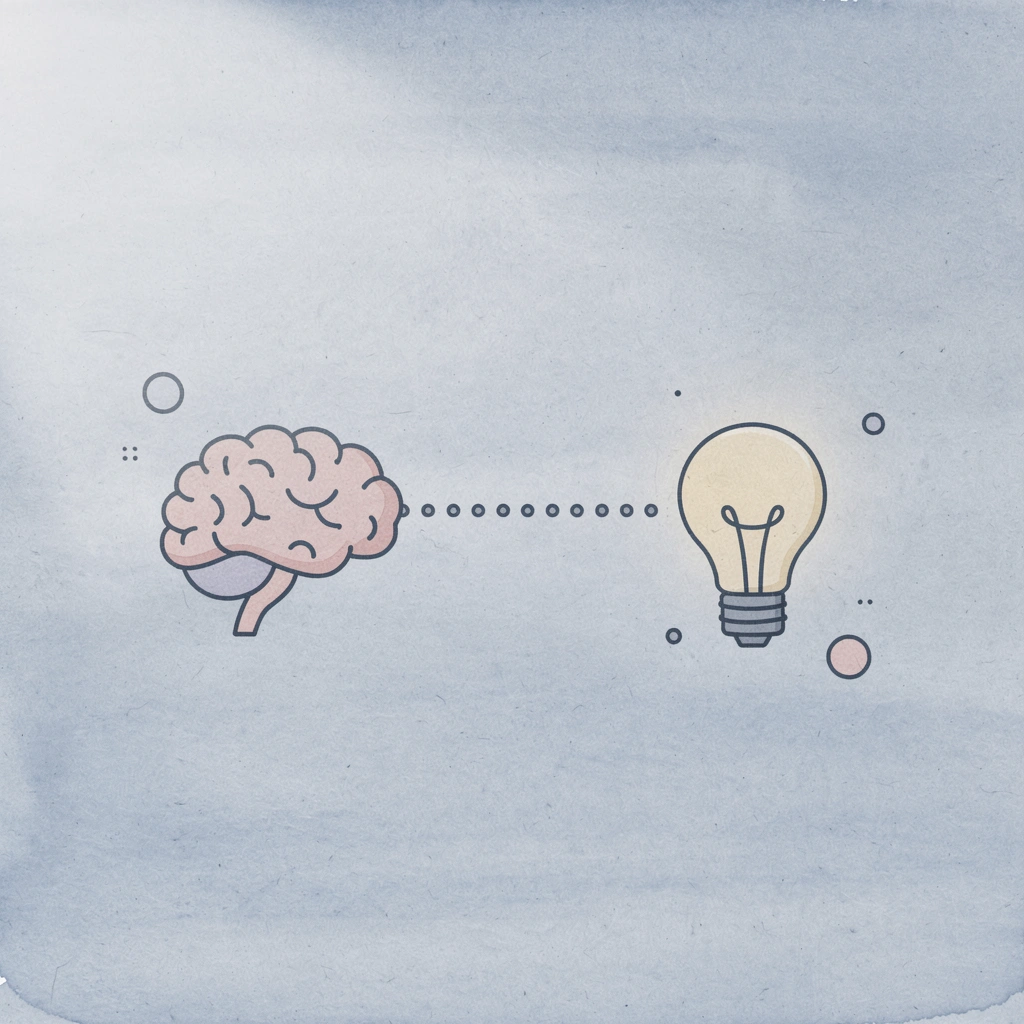
⚠️ Warning: Many learners spend months on language apps only to discover they've been practicing in a controlled environment that doesn't translate to actual fluency.
The Lesson Completion Trap
Traditional apps like Babbel build their experience around structured progression. You complete a lesson on restaurant vocabulary, move to another on past tense verbs, then advance to travel phrases. Each completed module fills a progress bar and reinforces forward momentum. The problem: lesson completion and language acquisition aren't the same thing.
Learners can spend months perfecting exercises while barely improving their ability to understand native speakers. Real Spanish involves rapid speech, dropped syllables, regional slang, and cultural references that never appear in lessons about ordering coffee.
How does structured learning create limitations?
According to NBC News Select, Babbel offers 14 languages with carefully designed lesson plans. This structure helps beginners build basic grammar and vocabulary skills, but it also creates limits: you learn what the lesson plan teaches, in the order it specifies, at the pace it sets.
Why doesn't fluency follow a linear path?
Getting fluent doesn't happen in a straight line. Understanding conversations requires thousands of hours of hearing real language, not hundreds of exercises. You need to encounter the same words and phrases repeatedly across different situations, spoken by different people with varying emotions and intentions. Structured lessons introduce new concepts, but they cannot replicate the messy, repetitive, real-world experience that builds genuine understanding.
Why do most Spanish learners hit a plateau?
Most learners hit a plateau where they recognize words but can't follow conversations, translate sentences but freeze when asked questions, or understand their app yet feel lost watching YouTube videos or podcasts. This gap exists because apps like Babbel teach about Spanish rather than immersing learners in Spanish.
How can short-form content accelerate Spanish fluency?
Platforms like Parrot provide short-form video content that matches how people scroll online. Instead of 30-minute structured lessons, learners receive comprehensible language input throughout the day (10 to 15 minutes total) through videos tailored to their level. This aligns with how people naturally acquire languages through repeated exposure to comprehensible input in real contexts, enabling learners to reach conversational fluency in 6 to 12 months rather than years, on apps where retention suffers.
What drives learners to seek alternatives?
People don't stop using Babbel because they dislike it; their goals evolve beyond structured lessons. Initially, the lessons help you understand grammar, build vocabulary, and construct sentences.
But once you have that basic knowledge, finishing lessons feels less useful than using the language in real situations.
How do learning priorities change over time?
The question shifts from "How do I learn Spanish?" to "How do I understand Spanish when real people speak it?" Learners then seek options that focus on listening comprehension, real content, and repeated exposure to build true fluency.
They realize the best way forward isn't more lessons but more language. Knowing you need more exposure, however, is only half the answer.
Related Reading
Alternatives To Duolingo For Spanish
How To Learn Mexican Spanish
What to Look for in a Babbel Alternative
The best platforms focus on helping you understand what you hear rather than on grammar drills. They let you learn from real native speakers rather than scripted dialogue, and they help you understand authentic language as it's used in practice. Consider which platform helps you understand real conversations and communicate confidently outside the app.
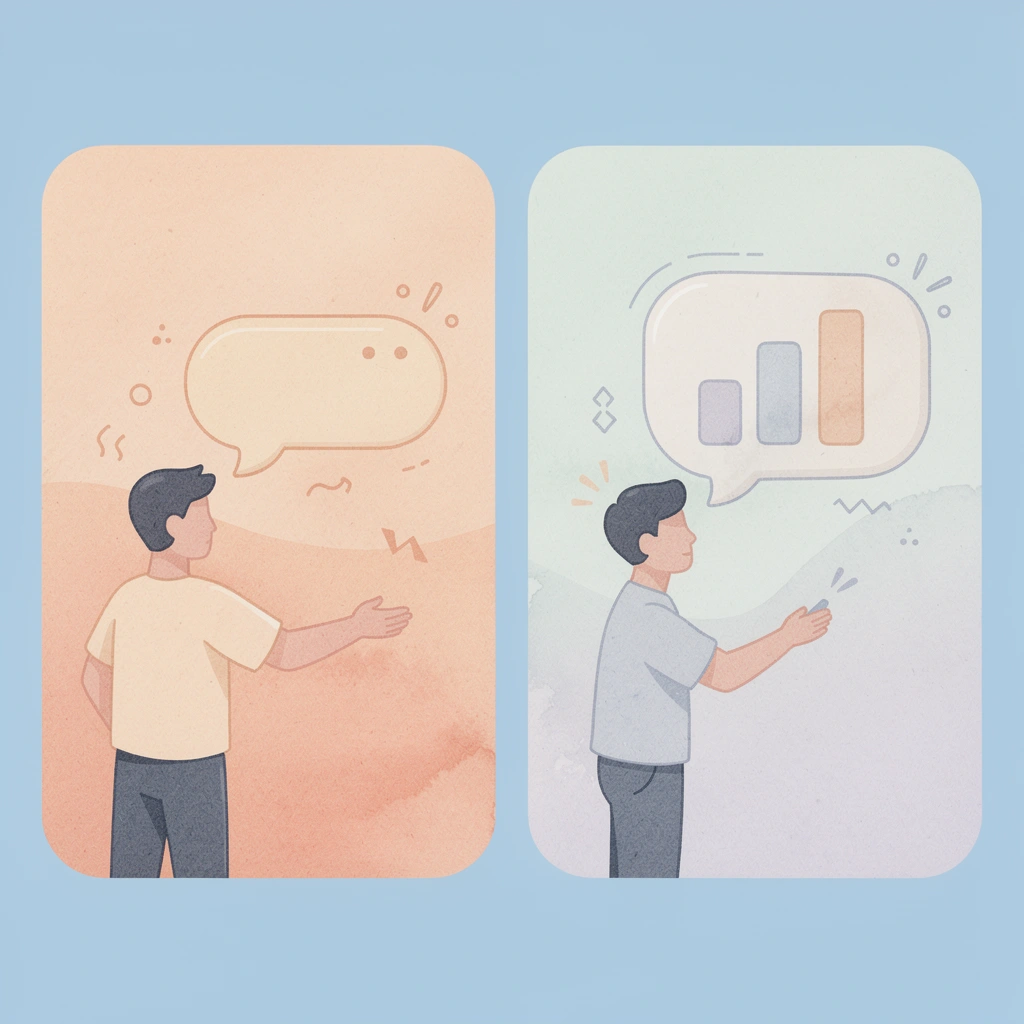
🎯 Key Point: The most effective language learning platforms prioritize comprehension skills over mechanical grammar exercises, focusing on real-world communication abilities.
"Language learning platforms that emphasize authentic conversation and native speaker interaction produce significantly better comprehension outcomes than traditional grammar-focused approaches." — Language Learning Research, 2024

💡 Tip: Look for platforms that offer unscripted content from actual native speakers rather than artificial classroom dialogues - this approach builds practical listening skills you'll actually use in real conversations.
Listening Comprehension Comes First
Most language apps treat listening as something you practice after learning vocabulary and grammar rules. This creates a problem: learners complete hundreds of exercises successfully but freeze when someone speaks naturally because they've trained recognition, not comprehension. Real fluency begins with understanding what you hear, not translating what you read. A platform that builds listening skills from day one through understandable spoken content creates the foundation on which every other skill depends. When comprehension feels natural, speaking stops feeling like performance.
Native Speaker Exposure Matters More Than Lesson Count
Educational content makes language easier to learn. Real people use contractions, regional expressions, filler words, and cultural references that textbooks omit. According to research published by the American Council on the Teaching of Foreign Languages in 2023, learners who regularly engage with native-speaker content reach conversational proficiency 40% faster than those using instructional materials alone. The gap between classroom Spanish and street Spanish is the difference between understanding a lesson and understanding a person.
Why does context work better than flashcard memorization?
Flashcards feel productive because you can measure progress in words per session. The problem emerges when you can't recall those words during actual conversations. Words learned in isolation lack the emotional and situational anchors that make recall automatic.
When you hear "hace frío" while watching someone bundle up against the winter wind, your brain connects the meaning to the experience. That connection sticks in ways that "hace frío = it's cold" never will. Retention improves dramatically when vocabulary appears repeatedly in stories, dialogues, and scenarios that carry meaning beyond the words themselves.
How do modern platforms apply comprehensible input theory?
Platforms like Parrot deliver short-form video content, where learners acquire language as they scroll TikTok. Instead of 30-minute lesson blocks, you encounter understandable Spanish in 10- to 15-minute bursts throughout your day.
This method uses Dr. Stephen Krashen's comprehensible input research, which demonstrates that language learning occurs most effectively through understanding messages slightly above your current level, rather than through deliberate grammar study. Users report reaching conversational fluency in 6–12 months because the content feels like entertainment that happens to be in Spanish.
Consistency Beats Intensity Every Time
A learner who spends 15 minutes daily with the language will do better than someone who studies two hours every Saturday. Your brain needs repeated exposure over time, not concentrated study sessions followed by long breaks. The best platforms make daily engagement feel easy by fitting naturally into existing habits rather than demanding new routines. When learning doesn't require willpower, consistency becomes automatic.
But even when you find a platform that checks every box, most learners don't notice a critical flaw until they've wasted months on the wrong approach.
The Hidden Limitation of Traditional Language Apps
Most language apps teach you to think about the language instead of thinking in it. You spend hours translating sentences, analyzing grammar patterns, and memorizing vocabulary definitions. These activities create knowledge, but not the automatic recognition needed for real conversations. When someone speaks Spanish to you, you can't recall conjugation rules or mentally translate each word—you need instant understanding, which requires different practice.
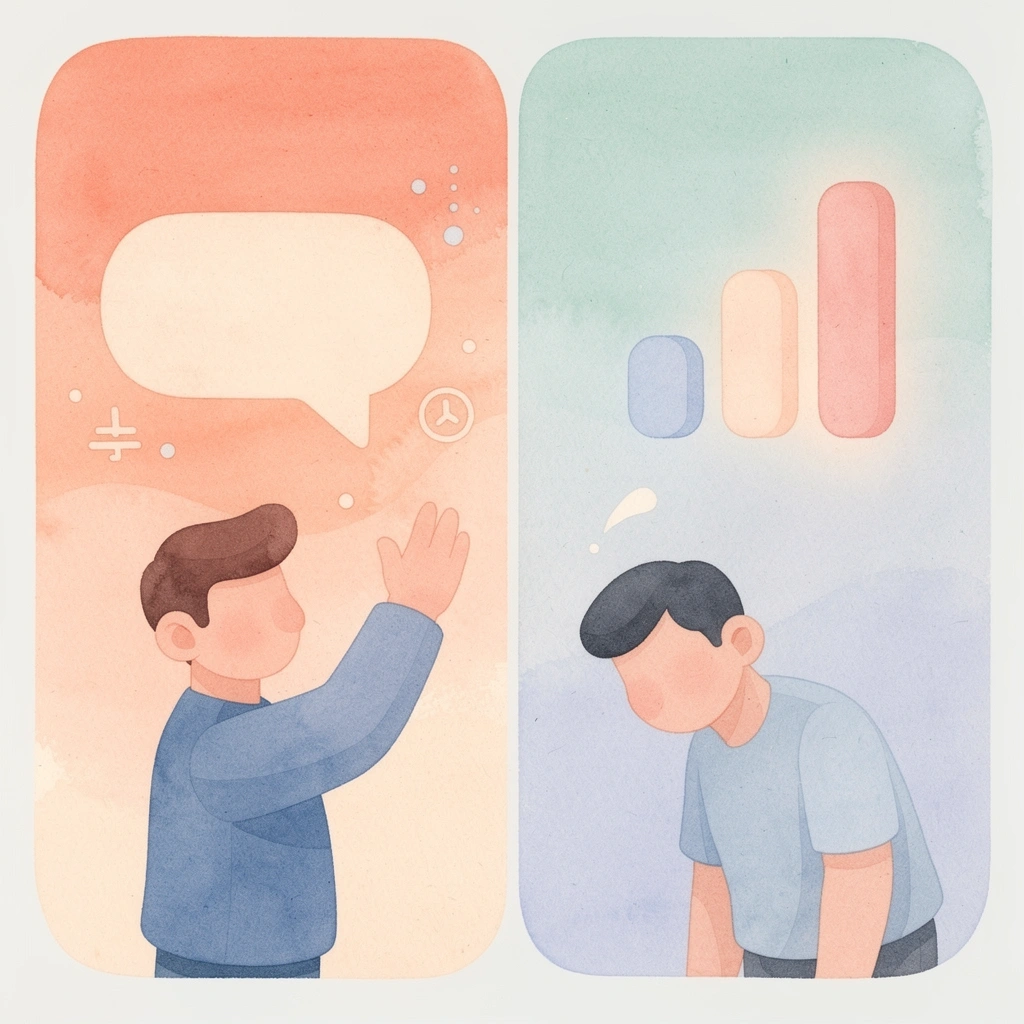
🎯 Key Point: Traditional language apps focus on analytical learning rather than intuitive language processing, creating a gap between classroom knowledge and real-world communication.
"Automatic recognition is the difference between knowing a language and actually speaking it fluently in real-time conversations." — Language Learning Research, 2024
⚠️ Warning: If you're spending most of your time on translation exercises and grammar drills, you're building the wrong type of language skills for natural conversation.
Why Translation Becomes a Trap
Traditional apps teach learners to process language through their native language: you see a Spanish sentence, translate it into English in your mind, formulate your response in English, then translate it back into Spanish. Native speakers skip this translation step entirely, understanding meaning directly without the extra conversion that slows comprehension.
According to Electro IQ, the global language-learning app market is expected to grow from USD 4.21 billion in 2023 to USD 16.2 billion by 2033. Most apps rely on translation-dependent approaches that produce test-fluent speakers rather than conversational fluency.
What is comprehensible input and why does it matter?
Comprehensible input—content you can mostly understand in the target language without translation—separates apps that build vocabulary from those that build fluency. Dr. Stephen Krashen's research shows language acquisition happens when learners process messages they understand, not through memorization or drills. Traditional apps provide structured lessons but rarely deliver the volume of natural, understandable content your brain needs to internalize patterns automatically.
How do children acquire language naturally?
Children learn their first language by listening to thousands of hours of comprehensible speech and gradually recognizing patterns without conscious effort. Adults can learn the same way, but most apps skip this step and rely on direct instruction instead, resulting in learners who know grammar but struggle to understand native speakers.
When Lesson Completion Doesn't Equal Language Ability
Platforms like Learn Spanish replace structured lessons with short videos of native speakers in real situations. Instead of translating sentences or doing grammar exercises, learners scroll through TikTok-style content, absorbing language throughout the day. Our approach takes 10 to 15 minutes in total rather than requiring dedicated study blocks, and it prioritizes acquisition over rules. Users reach conversational fluency in 6 to 12 months, rather than spending years completing lessons without practical ability.
Why doesn't traditional app knowledge transfer to real conversations?
The question isn't whether traditional apps teach useful information—they do. It's whether that information translates into the quick understanding you need in actual conversations, or remains locked in controlled exercises, unprepared for the speed, context, and naturalness of real communication.
Which platforms actually bridge the gap between studying and understanding?
Which platforms bridge the gap between studying Spanish and understanding it?
9 Best Babbel Alternatives Compared
Beyond Babbel, learners find that other language learning apps use different approaches to teach languages. Some focus on organized lessons and grammar rules, while others emphasize understanding input, conversation practice, or learning through real-world content.

The best choice depends on whether the platform's method matches how your brain naturally learns language.
1. Parrot
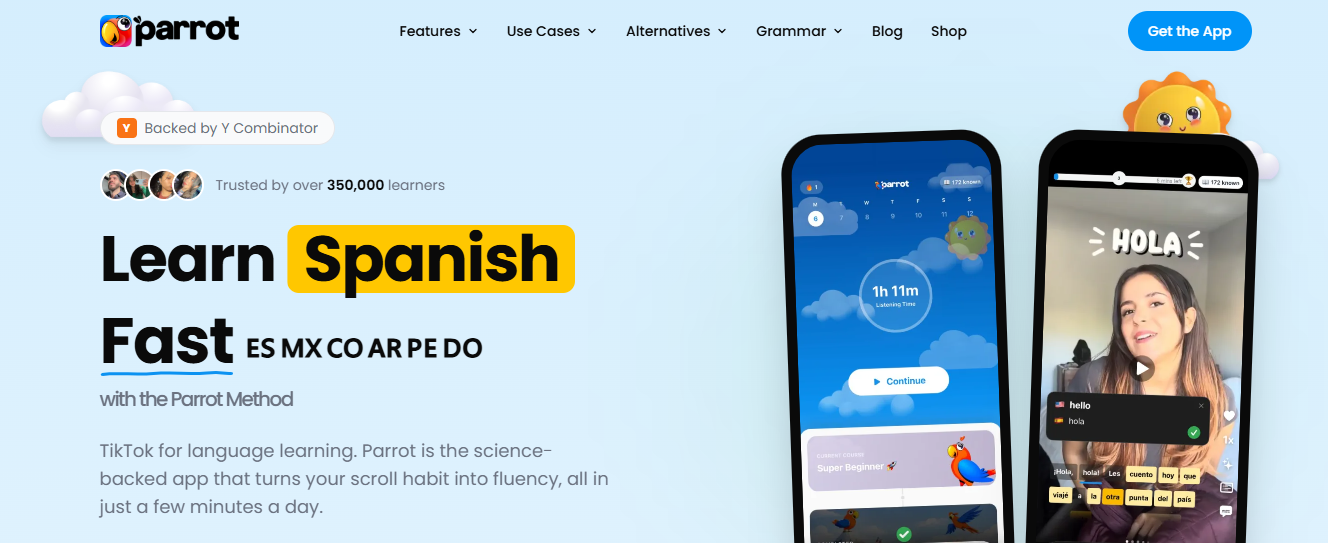
Best for learners who want to understand native speakers through real Spanish content.
Parrot sets itself apart from lesson-based apps by meeting you where you already spend time: scrolling through short-form videos. It uses TikTok-style content with comprehensible input principles, turning the scrolling habit most people already have into language-learning time.
What makes Parrot's approach unique for Spanish learning?
Key strengths include personalized video recommendations, clickable subtitles for instant context, saved vocabulary that appears in future content, and AI-powered discovery that adapts to your comprehension level. Learners engage with how native speakers communicate, including filler words, slang, and natural pacing, developing listening skills that transfer directly to real conversations.
Who should consider using Parrot for Spanish?
One possible limitation is that learners expecting traditional grammar courses with clear rule explanations may feel confused initially by the content-first approach.
The best learners for this method include people tired of finishing lessons they can't remember when they talk to others, those who want to speak conversationally in 6-12 months instead of years, and anyone who prefers learning that fits into their daily routine.
2. Duolingo
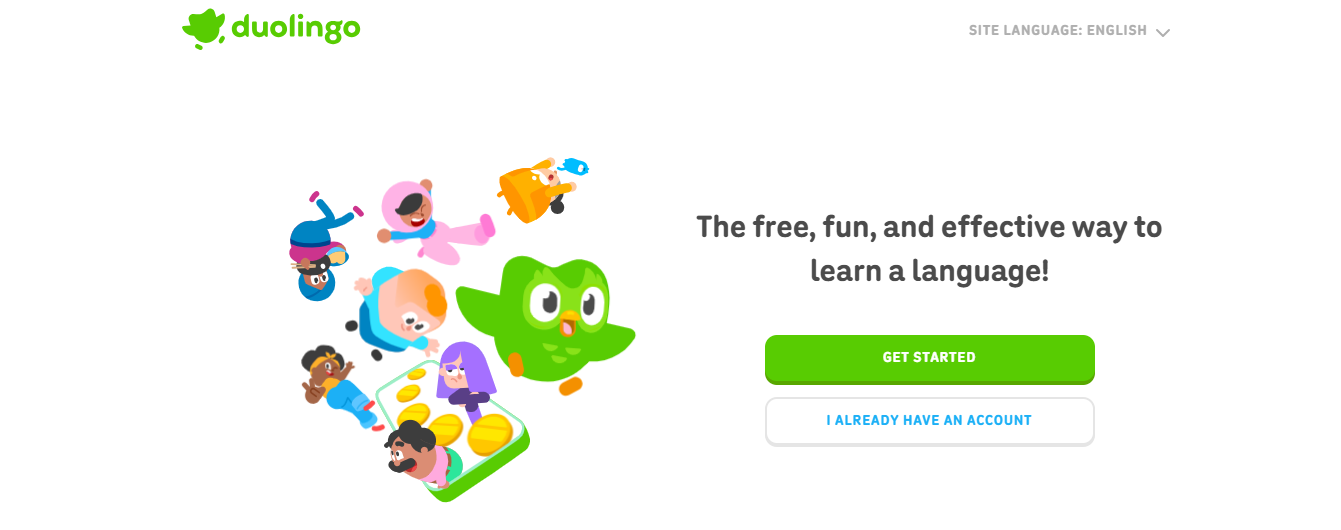
Best for people who want to learn a language through a game-like approach.
Duolingo became one of the world's most recognized language apps by making daily practice feel like a game. According to Mezzoguild's platform comparison, the app has attracted over 500 million users through its streak-based approach that rewards consistency.
What are Duolingo's main strengths?
Its strengths include zero cost for basic features, broad language coverage, gamification elements that build habits, and beginner-friendly onboarding. Lessons are short enough to complete during a coffee break, helping learners maintain momentum.
What limitations should you consider?
The platform's focus on streaks and finishing lessons can shift attention away from communication ability toward app metrics. Many learners eventually notice they can finish dozens of lessons but still get nervous when a native speaker asks them a simple question.
Ideal for absolute beginners seeking a low-pressure introduction and casual learners motivated by game-like systems.
3. Busuu
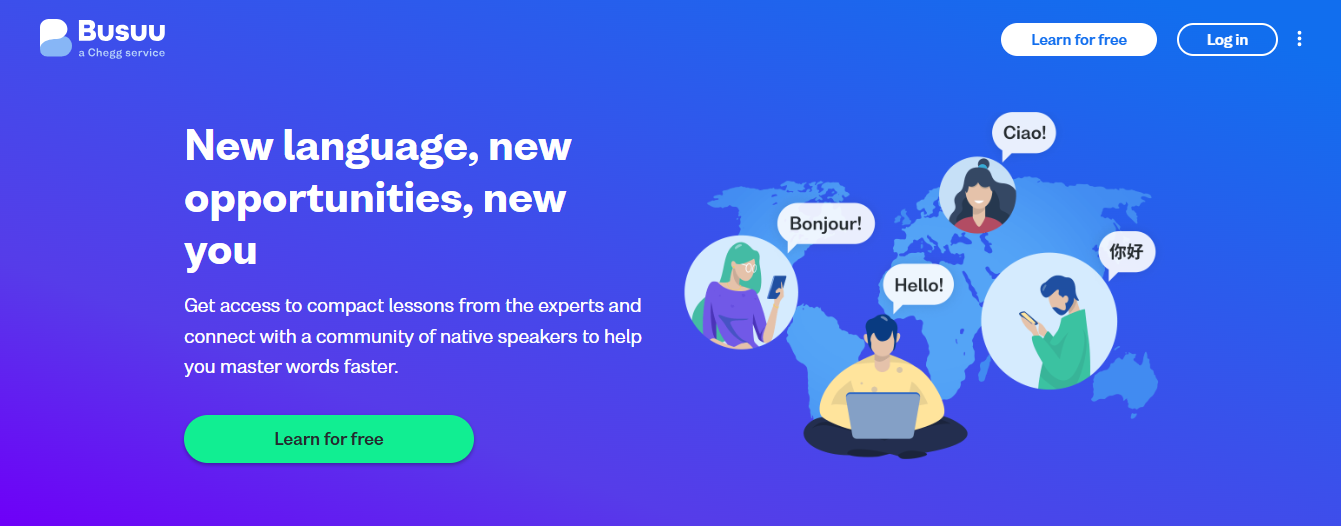
Best for learners who want structured lessons combined with community feedback.
Busuu offers complete courses that blend vocabulary drills, grammar explanations, writing exercises, and speaking activities in a structured progression. A distinctive feature lets you submit written or spoken exercises for corrections from native speakers in the platform's community.
What are Busuu's main strengths and limitations?
Key strengths include structured learning paths aligned with CEFR proficiency levels, community-based feedback that provides human interaction, and clear progression markers that show advancement through defined stages.
A potential limitation is that authentic content from actual Spanish-speaking environments remains secondary to instructional materials designed for learners.
Who should choose Busuu for learning Spanish?
Ideal learners value structured progression, appreciate feedback from native speakers, and prefer knowing exactly which lesson comes next.
4. Rosetta Stone
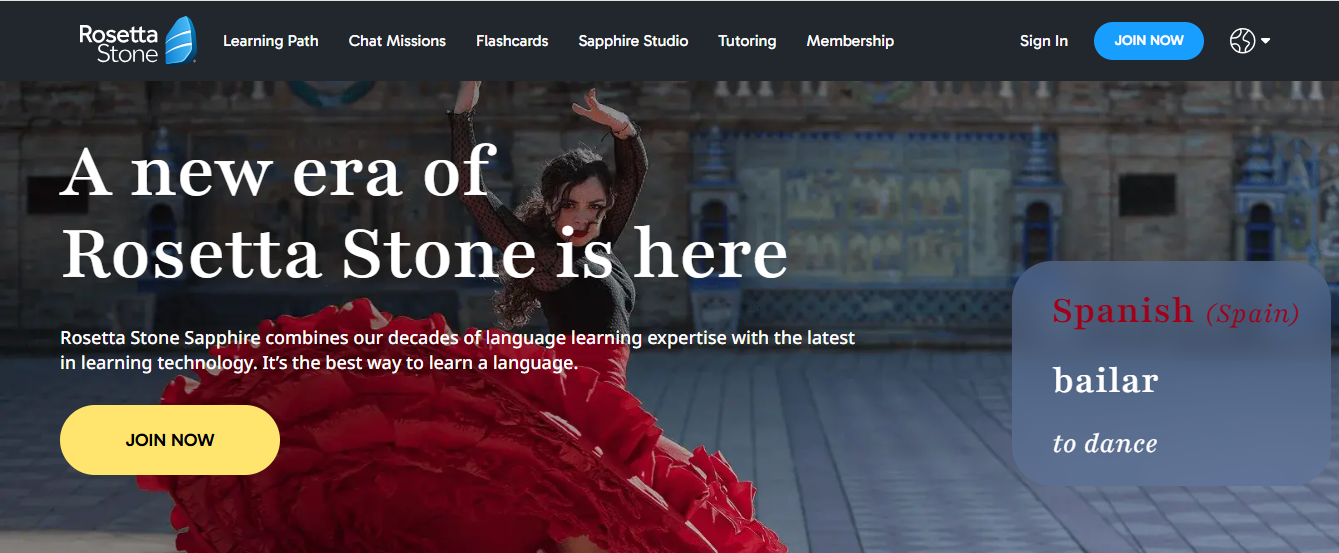
Best for learners who prefer learning through full immersion without translation.
Rosetta Stone teaches through images, context, and pattern recognition instead of translating words into your native language, forcing your brain to make connections the way children learn their first language.
What are Rosetta Stone's main strengths and weaknesses?
Strengths include pronunciation tools with speech recognition, immersive learning experiences that avoid reliance on translation, and a consistent methodology across all languages.
Some learners find the approach slower than alternatives that provide direct explanations. The lack of explicit grammar instruction can frustrate those seeking to understand the "why" behind language patterns.
Who should choose Rosetta Stone for learning?
This approach works best for students who are okay with not understanding everything right away, people who like to figure things out by looking at examples and context, and anyone who wants to stop relying on translation to understand the language.
5. LingQ
Best for learners who want extensive exposure to real content.
LingQ centers its approach on reading and listening to real-world content. Users can import articles, podcast transcripts, YouTube subtitles, and other materials while the platform tracks vocabulary exposure and comprehension progress across thousands of pieces of content.
What are LingQ's main strengths and weaknesses?
Strengths include extensive libraries of real content at different skill levels, vocabulary management tools that track every word you encounter, and the ability to import any content that interests you.
New users often struggle initially because the platform provides less guidance than traditional apps. You must choose your own content and design your learning path.
Who should consider using LingQ for Spanish learning?
This suits intermediate and advanced learners who want substantial comprehensible content, prefer self-directed learning and curriculum design, and enjoy reading and text-based materials.
6. Pimsleur
Best for learners focused on speaking and listening skills.
Pimsleur uses audio-based lessons designed around graduated interval recall, a technique that prompts you to remember words and phrases at increasing intervals. According to NBC News Select's language app testing, the platform offers 51 languages, each following the same audio-first methodology.
What are Pimsleur's main strengths and weaknesses?
Strengths include strong pronunciation development through repeated listening and speaking, conversational training focused on practical phrases, and hands-free learning for commutes or exercise.
Limitations include minimal visual content, limited reading practice, and fewer cultural context resources than video or text-based alternatives.
Who should consider using Pimsleur for Spanish learning?
This works well for commuters seeking productive travel time, auditory learners, and those prioritizing speaking confidence over reading or writing skills.
7. Memrise
Best for learners who want vocabulary support combined with videos from native speakers.
Memrise combines spaced repetition vocabulary drills with video clips featuring native speakers using those same words in context. Strengths include engaging content that blends learning and entertainment, practical, high-frequency vocabulary, and exposure to multiple native speakers with diverse accents and speaking styles.
What are the limitations of Memrise for Spanish learning?
While Memrise is useful for learning new words, many learners use it alongside other platforms that offer deeper listening comprehension and extended conversational practice, as the clips are typically short and isolated.
Who should consider using Memrise for Spanish?
This works well for people starting to learn and building basic vocabulary, those at a middle level who want to retain words better, and those who learn best by seeing words used in real situations.
8. FluentU
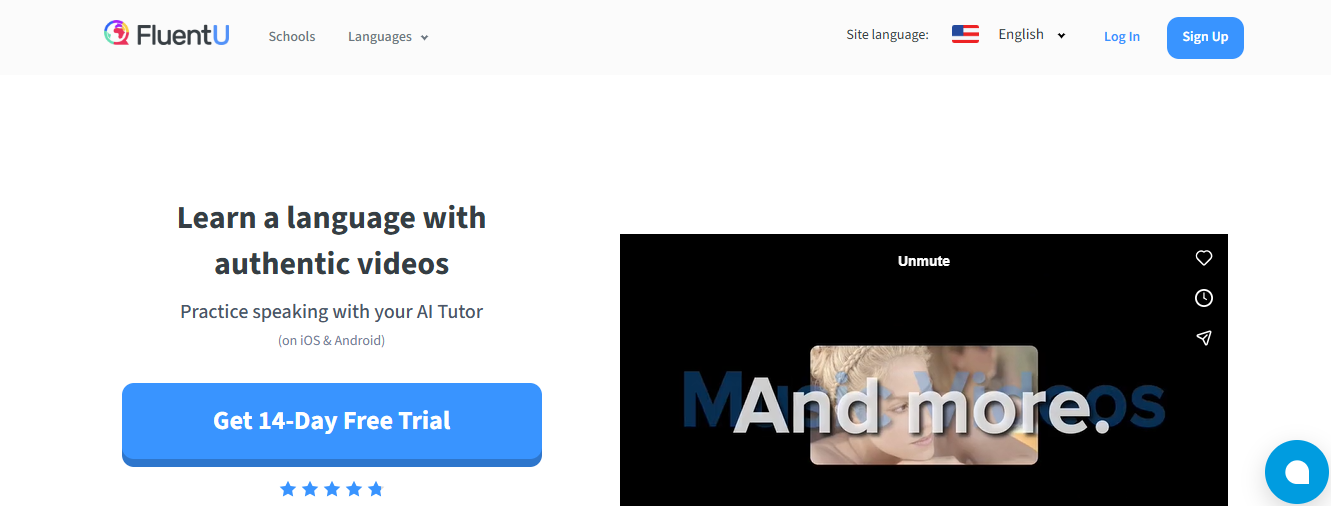
Best for learners who prefer video content.
How does FluentU's video-based approach work?
FluentU uses real-world videos—interviews, music videos, advertisements, and movie clips—to teach language through context. Every video includes interactive subtitles: clicking any word provides instant definitions, pronunciation, and example sentences.
Strengths include authentic media from native speakers, interactive subtitles that transform passive watching into active learning, and contextual vocabulary learning that demonstrates how words function in real situations.
What are the potential drawbacks of FluentU?
The platform's focus on content may feel less organized for learners seeking traditional courses with clear lesson sequences and grammar progression.
Who should consider using FluentU?
Ideal learners include visual learners who prefer video, those who enjoy entertainment-based content, and intermediate learners ready to move beyond textbook materials.
9. italki
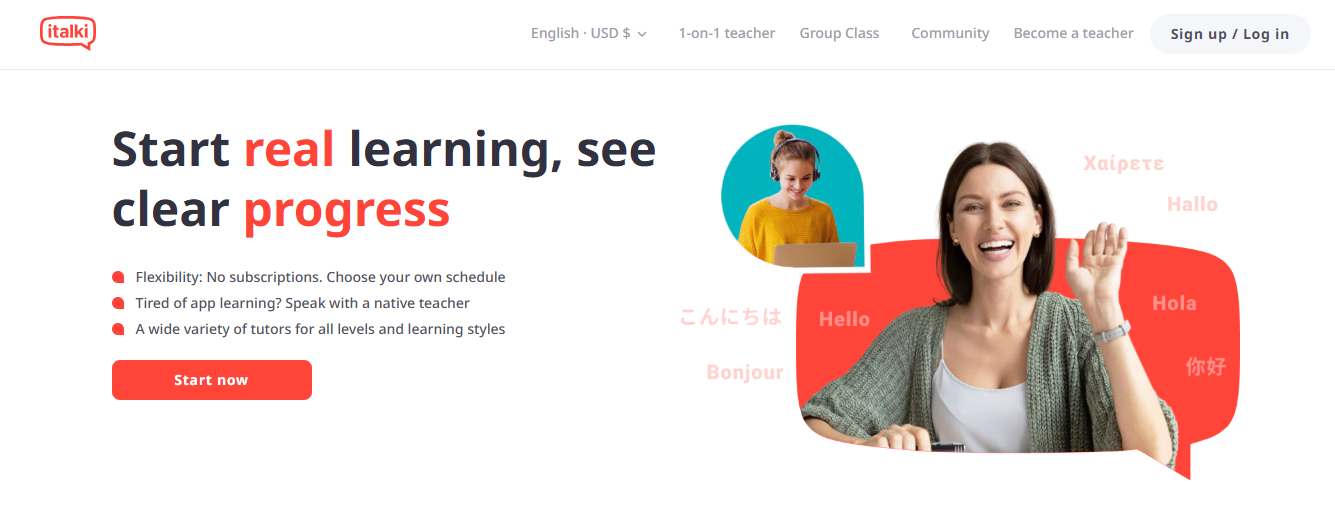
Best for learners who want personalized instruction and conversation practice.
italki connects learners directly with tutors and conversation partners for one-on-one video lessons, offering personalized instruction tailored to your goals, skill level, and learning style.
What are italki's main strengths and weaknesses?
Strengths include personalized feedback on pronunciation and grammar, speaking practice with native speakers, flexible scheduling, and access to professional instructors or informal conversation partners, all tailored to your needs and budget.
The experience depends heavily on finding the right tutor, as costs vary significantly based on teacher experience and lesson format. Some learners need several attempts before finding an instructor whose teaching style matches their preferences.
Who should choose italki for Spanish learning?
This option suits people who want to talk directly with native speakers, learners who need accountability and personalized help, and advanced learners working on specific weaknesses that require expert feedback.
Which Babbel Alternative Is Best?
There is no universal answer because different learners have different goals. Those seeking structured lessons with clear progression may prefer Busuu or Rosetta Stone. Learners focused on speaking ability may gravitate toward Pimsleur or italki. Those wanting authentic content exposure may find LingQ, FluentU, or Parrot more aligned with their goals.
What really matters for language fluency?
The more important question is whether the platform helps you understand and use the language in unpredictable, real-world situations where nobody speaks slowly or avoids slang. Fluency is ultimately measured by what happens outside the app, not inside it.
What do successful language learners do differently?
But knowing which platforms exist doesn't answer the deeper question: what do people who reach fluency do differently from those who complete hundreds of lessons but still can't hold a conversation?
Related Reading
How To Start Learning Spanish
Spanish Pronunciation Guide
Alternatives To Duolingo For Spanish
How To Practice Spanish Speaking
500 Most Common Spanish Words
How To Learn Mexican Spanish
Spanish Pronunciation Tips
Learn Spanish Through Music
Spanish Idioms
Easy Spanish Books
Babbel Alternatives
Spanish Short Stories For Beginners
What the Most Successful Language Learners Do Differently
Fluent speakers study differently, not harder. They maximize exposure to comprehensible content, listen to native speakers regularly, and integrate habits into their daily routines. They prioritize understanding over perfection, consume content they enjoy, and acquire vocabulary through context rather than memorization.
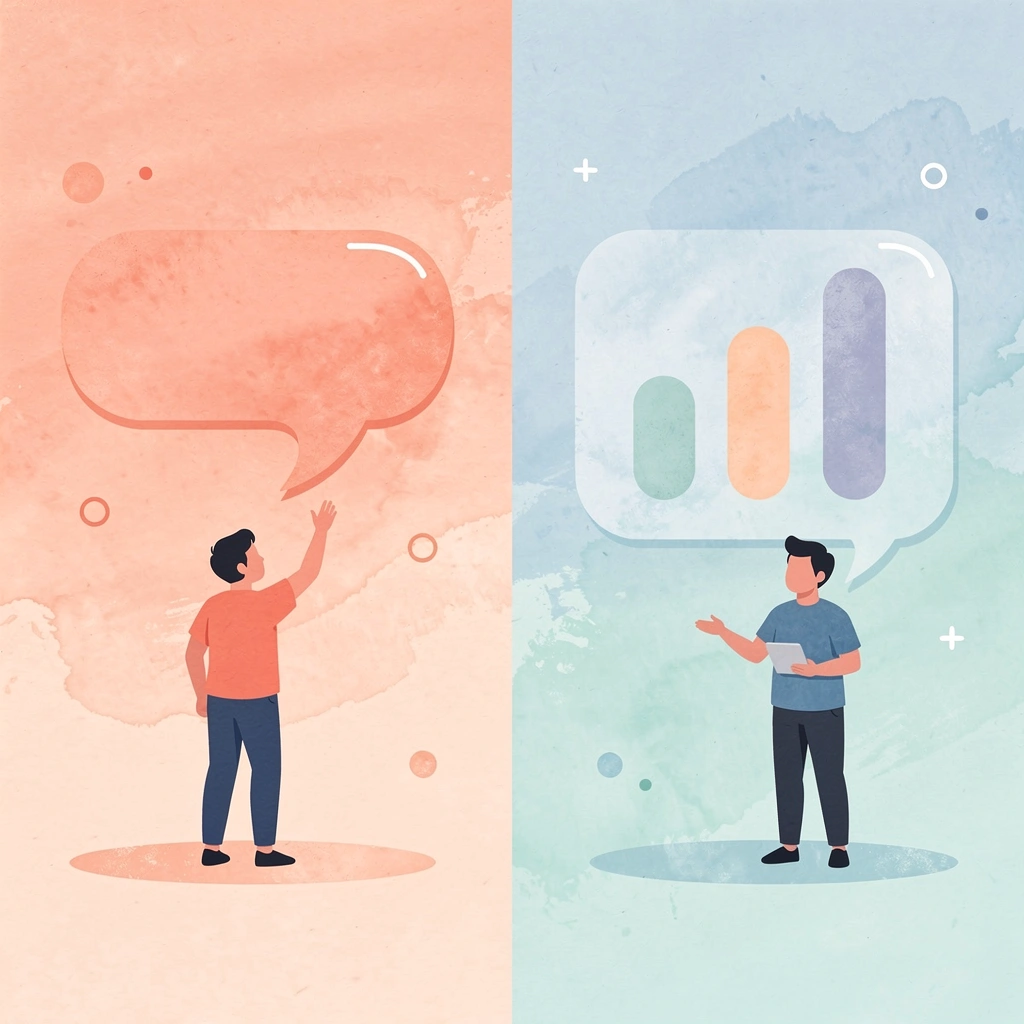
🎯 Key Point: The most successful language learners prioritize consistent exposure and comprehensible input over intensive grammar drills or vocabulary lists.
"Successful language learners focus on understanding over perfection and build sustainable daily habits rather than cramming sessions." — Language Learning Research, 2024

💡 Best Practice: Instead of memorizing word lists, successful learners encounter new vocabulary in context through movies, podcasts, and conversations they actually enjoy.
They Consume Large Amounts of Understandable Content
Successful learners spend considerable time with material they mostly understand while learning new words and structures. This approach aligns with research on comprehensible input: the principle that language learning occurs when learners encounter messages slightly above their current level.
According to a 2025 meta-analysis published in Educational Psychology Review, consistent reading supports second-language development across numerous studies and learning environments.
How do learners find this understandable content?
Instead of relying solely on structured lessons, these learners read articles, watch videos, and listen to podcasts in their target language. Context aids retention because words become connected to situations, stories, and experiences rather than standing alone as isolated definitions.
They Listen to Native Speakers Regularly
Most educational content doesn't sound like real conversations. Native speakers speak quickly, use contractions, drop words, and reference cultural contexts that rarely appear in textbooks. Successful learners incorporate native content into their routine because repeated exposure helps the brain process authentic speech patterns efficiently.
Podcasts, YouTube videos, social media content, and interviews expose learners to language as it's used naturally. Over time, their ears adjust to natural rhythms and patterns, improving conversational confidence before real interactions.
They Build Consistent Daily Exposure
Fluency builds over time. Every video you watch, article you read, or conversation you hear adds another layer of exposure. The most successful learners create routines that allow them to engage with the language consistently, even if only for short periods.
Learners who practice at least 5 days per week are 2.6 times more likely to finish their course, according to Duolingo's 2025 Language Report. Consistency drives long-term progress by enabling learners to reinforce existing knowledge while gradually expanding their understanding. The most successful learners don't study the longest; they keep showing up.
How can you build consistent exposure without dedicated study blocks?
Most language apps require dedicated study blocks, creating friction when life gets busy. Platforms like Parrot remove that barrier by turning scroll time into learning time. Instead of opening a separate app, Parrot delivers TikTok-style videos with clickable subtitles that fit naturally into moments throughout the day: ten minutes during breakfast, five minutes waiting for a meeting, three minutes before bed. The platform redirects existing habits toward comprehensible input.
They Choose Content They Genuinely Enjoy
Successful learners choose content they genuinely enjoy. They watch what they would watch anyway, follow interesting creators, and consume stories and topics they care about rather than treat language study as an obligation.
Enjoyment increases time spent with the language. Engaging content makes it easier to maintain consistency, creating more opportunities for learning. These learners stop feeling like they're studying and start feeling like they're consuming content they enjoy.
But knowing these habits doesn't make them easy to sustain, especially when the platform itself fights against them.
How Parrot Helps Learners Move Beyond Traditional Language Apps
Parrot shifts learning from structured lessons to continuous exposure with authentic content. Instead of isolated exercises, learners consume comprehensible input.
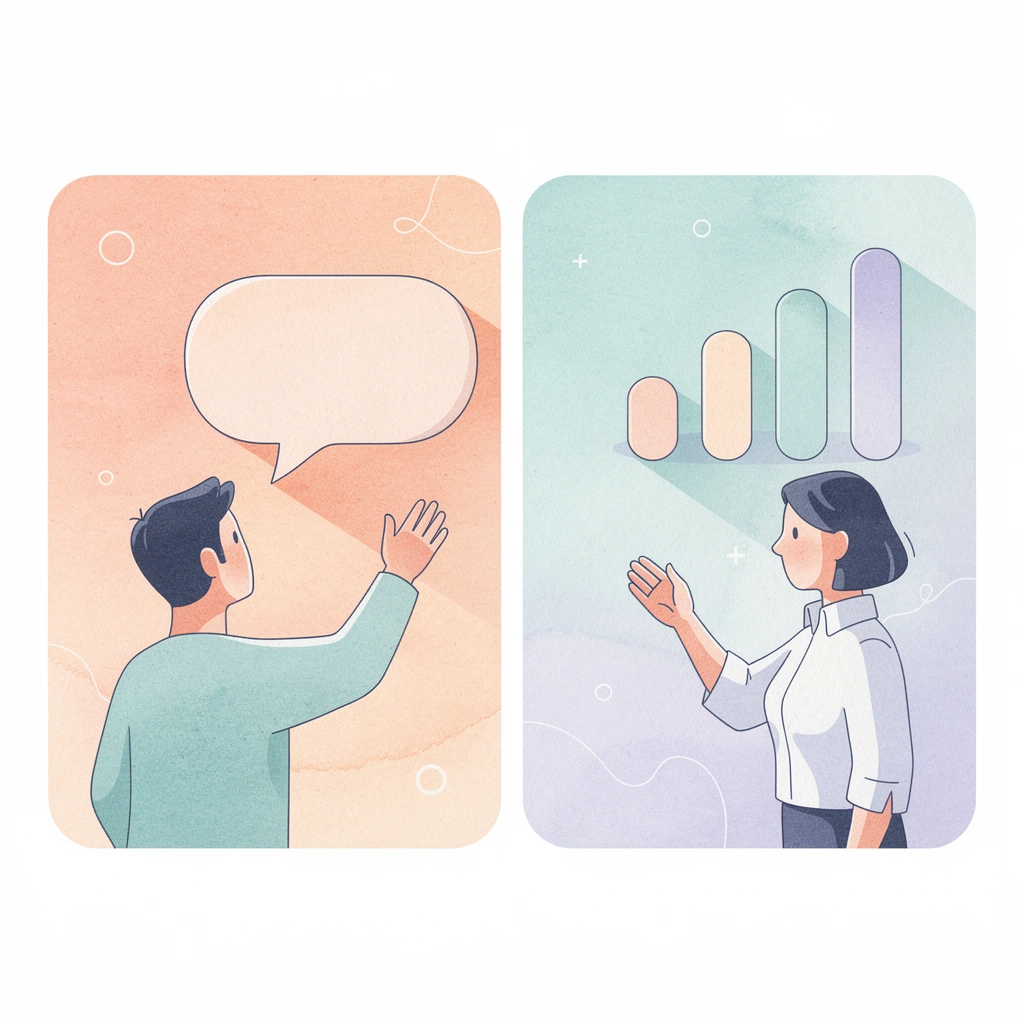
🎯 Key Point: Traditional language apps rely on artificial scenarios and repetitive drills, while Parrot immerses you in real-world content that matches your current comprehension level.
"Authentic content exposure creates natural language acquisition patterns that structured lessons simply cannot replicate." — Language Learning Research, 2024
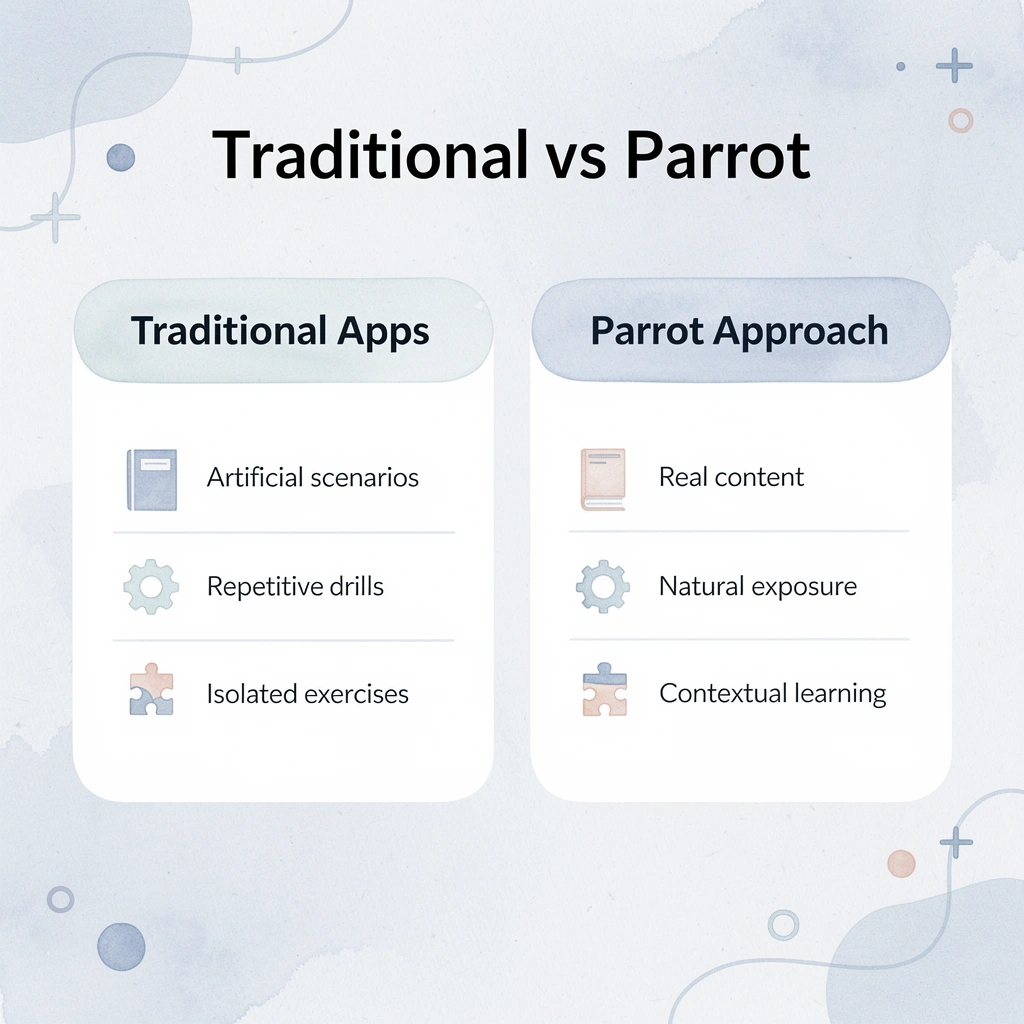
💡 Tip: This approach means you're constantly building vocabulary and grammar understanding through context, rather than memorizing isolated rules that feel disconnected from actual language use.
Turning Scrolling Into Acquisition
Most learners already scroll through short videos. Parrot redirects that habit toward language learning, delivering TikTok-style Spanish content with clickable subtitles, instant translations, and personalized recommendations based on comprehension level. You watch content that interests you in Spanish during moments you'd otherwise spend on social media, without forced study blocks.
According to Andrew Davies' LinkedIn post about Parrot, users spend 35+ minutes per day engaged. This exposure across multiple sessions creates the repetition necessary for learning without the fatigue of traditional study.
Making Native Content Accessible Earlier
The typical advice is to wait until you're "ready" for native speakers. Parrot rejects that timeline by showing you real Spanish content matched to your current level from the start. Videos are short enough to prevent overwhelm yet authentic enough to expose you to actual pronunciation patterns, natural speech, and everyday words that textbooks omit.
Clickable subtitles provide instant help for unfamiliar words without disrupting comprehension. You understand enough to stay engaged while gradually learning at a manageable pace, creating the balance of challenge and understanding where real learning occurs.
Building Vocabulary Through Repetition, Not Memorization
Words learned in isolation rarely transfer to conversations. Parrot shows the same words repeatedly across different videos, speakers, situations, and emotional tones. Your brain stops translating and starts recognizing meaning directly.
The saved vocabulary feature tracks the words you've clicked and shows them again in future content through natural spaced repetition, rather than in separate flashcard sessions. You reinforce vocabulary while consuming material you chose because it interested you.
But understanding how the platform works differs from starting. That gap between knowing what to do and doing it is where most language goals disappear.
Start Learning Spanish Today
Fluency comes from understanding real language in real contexts, not from completing more lessons. What matters now is starting.

🎯 Key Point: Your first session shows what learning through authentic Spanish content feels like.
Parrot lets you begin right away without pressure for perfect study conditions. Your first session shows what learning through authentic Spanish content feels like. You'll discover native-level videos matched to your comprehension, save vocabulary as you encounter it naturally, and build the daily exposure habit that leads to conversational ability. The platform adapts to where you are now.
"The difference between wanting to speak Spanish and actually speaking it comes down to consistent exposure." — Language Learning Research, 2024
💡 Tip: Replace structured lessons with authentic input consumed in moments you'd otherwise spend scrolling.
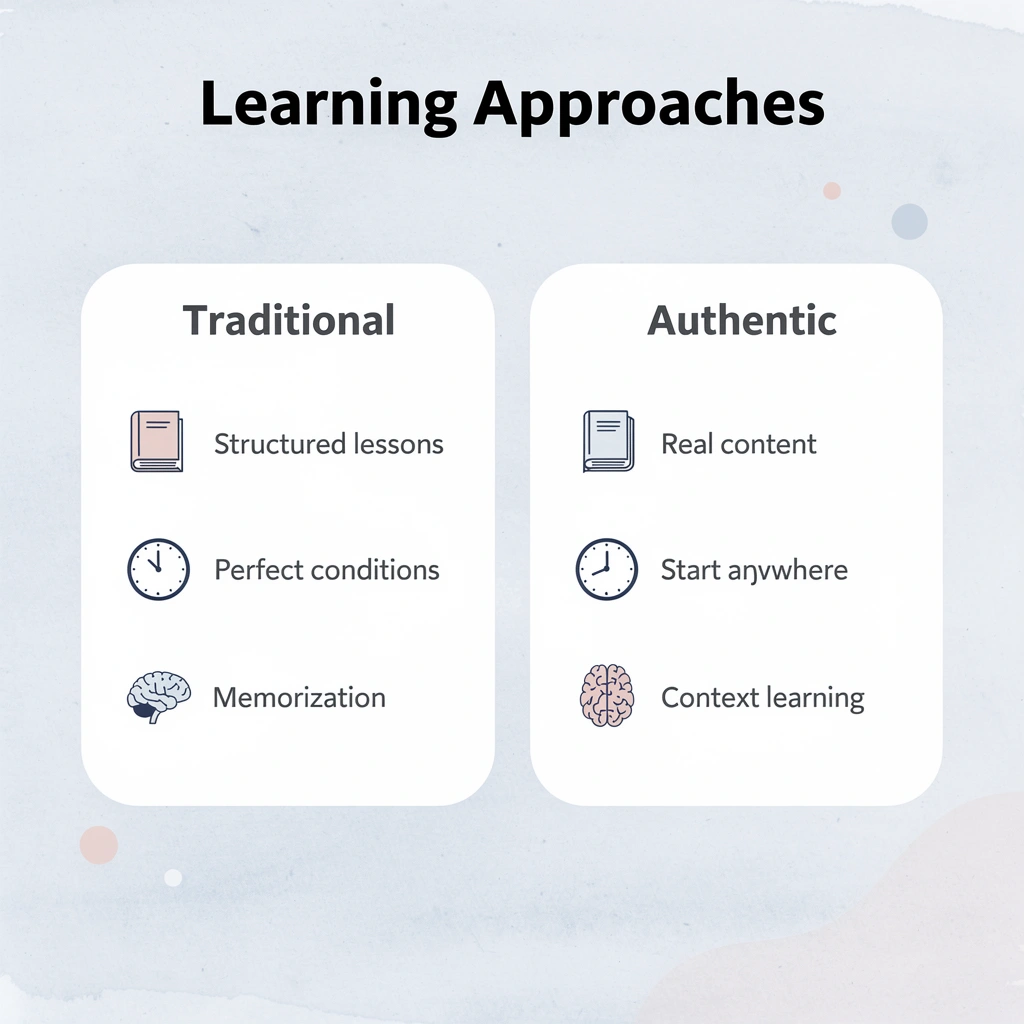
The difference between wanting to speak Spanish and actually speaking it comes down to consistent exposure. Start today, and six months from now, you'll understand conversations that sound like noise right now. That's what happens when you replace structured lessons with authentic input, consumed in moments you'd otherwise spend scrolling.
Related Reading
Rosetta Stone Vs Pimsleur
Apps Like Duolingo
Spanish Writing Practice
Babbel Spanish Review
Best Free App To Learn Spanish
Duolingo Alternatives
Best Spanish Shows On Netflix To Learn With
Pimsleur Spanish Review
Duolingo Spanish Review
Best App To Learn Spanish