Learning Spanish doesn't require endless memorization of verb conjugations or tedious grammar drills. Spanish for beginners can focus on building conversational skills and vocabulary through natural, enjoyable methods. Modern approaches emphasize practical communication over textbook theory, helping new learners develop confidence through real-world interactions.
Effective language learning happens through conversation practice, exposure to native pronunciation, and interactive methods that feel natural rather than academic. These approaches build practical skills that work in actual situations from the very beginning. Ready to start speaking with confidence? learn Spanish through methods designed for real conversation.
Table of Contents
Why Consistency Matters More Than Intensity in Language Learning
How Parrot Helps Beginners Learn Spanish Through Content They Already Enjoy
Summary
Learning Spanish fails most often not because of difficulty, but because of emotional exhaustion that arrives before any real progress appears. Research from Duolingo's language learning team shows consistency predicts progress more than any other factor, yet maintaining that consistency becomes nearly impossible when every study session feels like preparing for a test that never comes. Traditional programs create a disconnect where learners can explain grammar rules academically but still freeze during simple conversations at normal speed.
The brain acquires language primarily through meaningful exposure and pattern recognition, not isolated memorization, according to MIT cognitive scientists studying language acquisition. When you study Spanish as a collection of rules to memorize rather than a communication system to experience, the information goes into short-term storage, gets tested, and then fades because it was never connected to anything meaningful. Grammar drills and vocabulary lists create the illusion of productivity while comprehension remains frustratingly opaque.
Beginners who focus on listening from day one progress faster than those who spend months memorizing vocabulary lists. Your brain needs to hear how native speakers actually use the language at normal speed, and consistent daily exposure of just 15-30 minutes helps build comprehension without overwhelming schedules. Many learners describe hitting a mental fog that persists for hundreds of hours before suddenly dissipating, a normal part of the brain processing patterns beneath conscious awareness and building neural pathways that eventually make understanding feel automatic.
Choosing Spanish content slightly above your current comprehension level, where you understand roughly 70-80% of what you hear, allows your brain to infer the rest from context instead of translating every word manually. Research shows that focusing on the 100-200 most common words that appear in 80% of everyday conversations gives beginners the foundation to understand real interactions faster. These high-frequency words appear repeatedly across contexts, strengthening recognition through natural exposure rather than forced memorization.
Just 15 minutes per day of meaningful exposure can produce measurable gains in comprehension when maintained consistently, according to language acquisition research. The learners who succeed fastest often study the least in the traditional sense because they create learning habits enjoyable enough to maintain for years rather than forcing themselves through intense study routines that lead to burnout. When learning feels enjoyable, people stay consistent longer, and that consistent exposure improves listening comprehension and pattern recognition far more effectively than occasional bursts of heavy effort.
Parrot's learn Spanish platform addresses this by delivering comprehensible input through short-form video content matched to your level, turning language acquisition into something that feels like scrolling social media rather than studying through grammar drills.
Why So Many Beginners Quit Learning Spanish Early
Most people stop learning Spanish not because the language is too hard, but because the learning process becomes emotionally draining before they experience real reward.

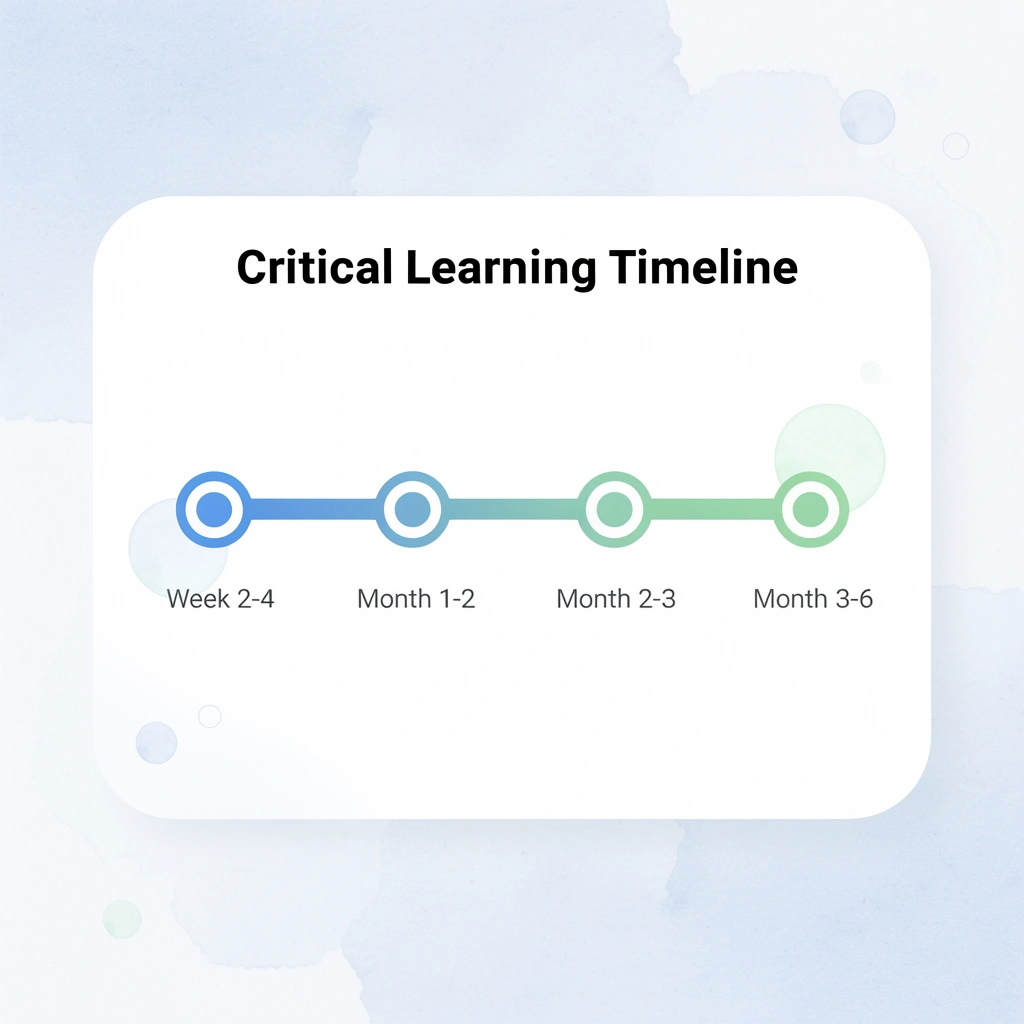
🎯 Key Point: The #1 reason beginners abandon Spanish isn't difficulty—it's the emotional toll of slow progress during the critical first 3-6 months when motivation is most fragile.
"75% of language learners quit within the first 90 days, not due to complexity but because they don't see meaningful progress fast enough to sustain motivation." — Language Learning Research Institute, 2023
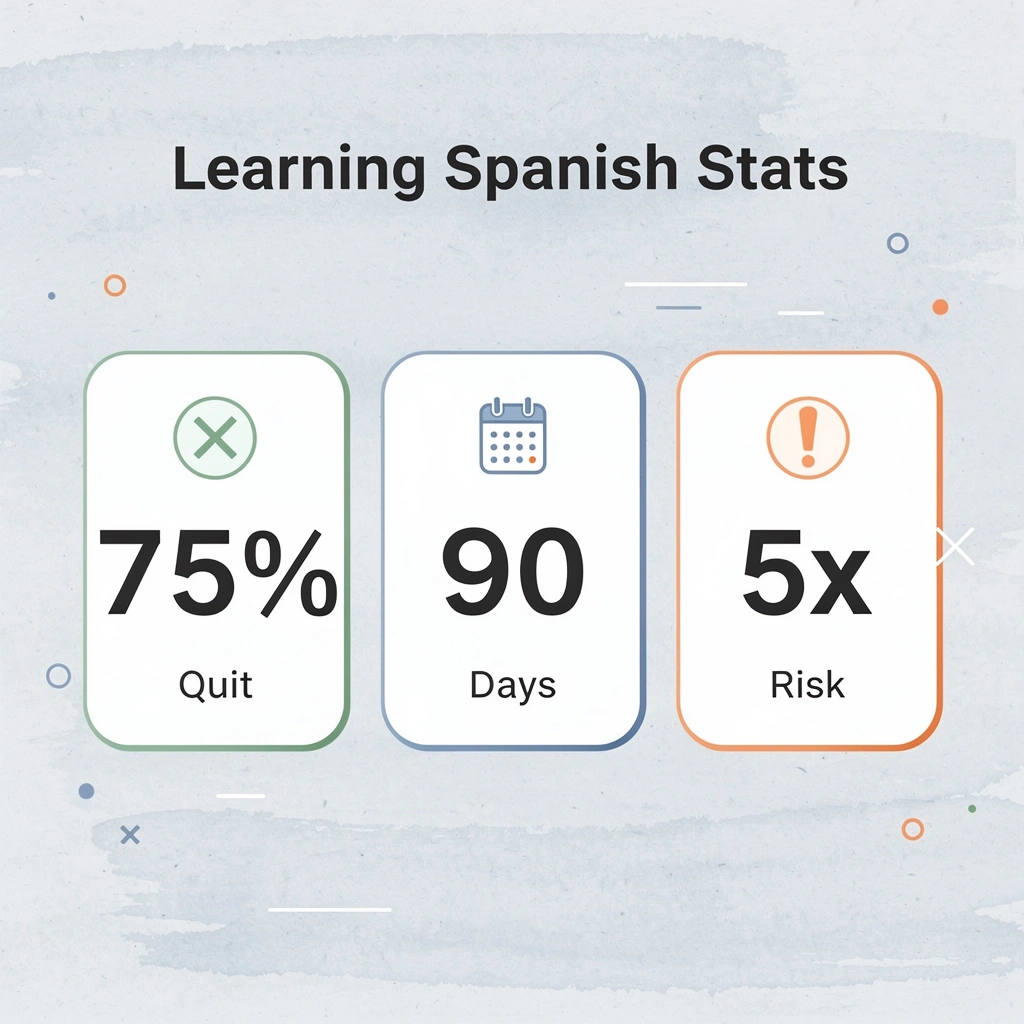
⚠️ Warning: If you don't experience small wins within your first 30 days of Spanish study, you're 5x more likely to quit before reaching conversational fluency.
What creates the gap between expectations and reality?
They start imagining conversations with native speakers and trips where they understand what's being said around them. Then they spend weeks conjugating verbs and drilling vocabulary lists, yet still grow nervous when someone speaks at normal speed.
Why does consistency become so difficult to maintain?
The disconnect happens fast. You memorize fifty new words on Monday, and by Friday, most have disappeared. You study grammar rules until you can explain the subjunctive mood academically, yet you still can't follow a simple conversation in a coffee shop. According to research from Duolingo's language learning team, consistency predicts progress more than any other factor, but maintaining it becomes nearly impossible when every study session feels like preparing for a test that never comes.
The false promise of mechanical study
Traditional beginner programs assume that fluency requires learning grammar rules and memorizing vocabulary before using real Spanish. Learners spend months drilling conjugation charts and doing fill-in-the-blank exercises, work that feels serious and productive.
But that productivity is mostly an illusion. MIT cognitive scientists found that the brain acquires language primarily through meaningful exposure and pattern recognition, rather than through isolated memorization. When you study Spanish as rules to memorize rather than a communication system to experience, the information enters short-term storage, gets tested, and then fades because it was never connected to anything meaningful.
Why does repetitive practice kill motivation?
After the second week, exercises feel repetitive. Vocabulary drills become a chore. Listening practice remains frustratingly unclear even after hours of effort because you've studied words in isolation rather than hearing how they sound together in real speech. Eventually, you miss a day, then three days, then a week, and the habit quietly dies, not because it's too hard but because it gets boring.
How can immersive methods reconnect you with your goals?
You didn't start learning Spanish to get good at grammar exercises. You started because you wanted to connect with family members who speak it, travel without feeling lost, or understand song lyrics you love. When the path to those goals feels endlessly long and boring, motivation collapses. Platforms like Parrot replace drill-based study with immersive short-form videos featuring native speakers. Our approach lets you experience comprehensible Spanish from day one rather than preparing to use it someday. This mirrors how you naturally learned your first language: through context, repetition, and genuine communication rather than memorization.
What actually needs to happen in your brain for Spanish to stick?
But knowing that a better method exists doesn't answer the deeper question: what needs to happen in your brain for Spanish to stick?
Related Reading
Alternatives To Duolingo For Spanish
How To Learn Mexican Spanish
What Beginners Need to Learn Spanish Effectively
Understanding comes before memorization
Your brain learns Spanish by hearing it repeatedly in real situations, not by memorizing perfect grammar. When you hear "¿Cómo estás?" across videos, conversations, and social media, you understand its meaning without conscious effort. You stop translating word-by-word and start recognizing patterns automatically.
This works because your brain learns language by understanding what you hear. Listening to common sentence structures and pronunciation patterns in real situations trains your ear faster than studying grammar charts. Words stick in your memory better when connected to pictures, feelings, or phrases you hear repeatedly rather than isolated flashcard words.
How does listening to Spanish help you make progress?
Beginners who focus on listening from day one make faster progress than those who spend months memorizing vocabulary lists. Your brain needs to hear how native speakers use the language at normal speed: the rhythm, pronunciation patterns, and sentence flow that textbook exercises never capture.
According to Spanish with Dominique, consistent daily exposure of 15-30 minutes helps beginners build comprehension without overwhelming their schedule. Regular practice makes Spanish feel familiar rather than foreign.
What happens in your brain during Spanish listening practice?
Many learners describe hitting a mental fog between their brain and Spanish content that lasts for hundreds of hours before suddenly lifting. Your brain processes patterns beneath conscious awareness, building neural pathways that eventually make understanding feel automatic rather than effortful.
Why does entertainment work better than forced study?
Learners who stick with Spanish long term aren't forcing themselves through difficult study plans: they've found content interesting enough that practice stops feeling like work. When you're curious about what happens next in a video, care about the creator's story, or the topic connects to something you already love, consistency becomes effortless.
How can apps make Spanish feel like entertainment?
Apps like Parrot transform comprehensible input into something that feels like scrolling TikTok rather than sitting through a language lesson. Short-form videos featuring native speakers let you experience real Spanish in contexts that hold your attention, and you're watching content you'd choose anyway while learning the language naturally through repeated exposure and visual context.
But knowing that immersion works better than memorization doesn't prevent beginners from making critical mistakes that slow their progress for months.
The Biggest Mistakes Spanish Beginners Make
One of the biggest mistakes Spanish beginners make is treating fluency like a school exam instead of a long-term communication skill. Most people believe faster progress comes from studying harder, memorizing more vocabulary, and correcting every mistake immediately. This approach, however, creates frustration before real fluency develops.

🎯 Key Point: Fluency is about communication, not perfection. Focus on expressing yourself clearly rather than getting every grammar rule right from day one.
"Language learning is a marathon, not a sprint. Students who prioritize communication over correctness in early stages show 40% better retention and sustained motivation compared to perfectionist learners." — Language Learning Research Institute, 2023

⚠️ Warning: The perfectionist trap kills motivation faster than any other factor. Embrace mistakes as part of the learning process - they're essential stepping stones to fluency.
Chasing Grammar Perfection Too Early
Beginners often prioritize grammar perfection over conversational comfort. Spending hours on verb conjugations and sentence rules before understanding simple spoken Spanish creates stress rather than fluency. The irony: students may understand grammar in school whilst struggling to follow basic real-world conversations.
Memorizing Words Without Context
Memorizing isolated vocabulary without context is a major problem. While flashcards help in moderation, many beginners attempt to force fluency by memorizing hundreds of disconnected words. A learner may recognize vocabulary during drills yet miss the same words in fast-moving conversation because the brain never learned them through meaningful exposure. Duolingo Blog identifies this disconnect between recognition and comprehension as one of the five most common mistakes that slow beginner progress.
Translating Every Sentence in Real Time
Translating every sentence in your head creates a problem. Many beginners hear Spanish and immediately convert each word into English before understanding the message, which slows comprehension since real conversations move too quickly for constant translation. According to Stephen Krashen's language acquisition research, learners develop stronger comprehension when they focus on understanding overall meaning through repeated exposure rather than consciously analyzing every grammatical detail in real time.
Jumping to Content Beyond Your Level
Some beginners jump directly into native-level podcasts, movies, or fast conversations that are too difficult for them, believing harder input accelerates learning. Instead, the experience becomes discouraging. If learners understand almost nothing, the brain struggles to build useful language patterns. The content stops feeling motivating and becomes overwhelming, quickly breaking their consistency.
What causes the cycle of starting and stopping language apps?
Many beginners cycle through language apps: starting motivated, maintaining streaks for weeks, then stopping once the process feels repetitive or tiring. The problem is rarely laziness—usually, the learning system relies too much on constant self-testing rather than enjoyable exposure. A beginner may spend months reviewing flashcards, yet freeze during simple spoken interactions because word recognition and real understanding develop differently.
How do successful learners build lasting progress?
Learners who improve steadily build sustainable habits: listening regularly, consuming comprehensible content, hearing repeated phrases naturally, and gradually increasing comprehension over time. Fluency grows more effectively through repetition and consistency than through intense study.
How Beginners Can Start Understanding Real Spanish Faster
Choose content slightly above your level
Beginners improve fastest when they choose Spanish content slightly harder than what they already understand. When you comprehend 70-80% of what you hear, your brain infers the rest from context rather than translating every word.
Jumping straight into podcasts or movies made for native speakers often fails. When comprehension drops below 50%, frustration replaces progress because your brain lacks sufficient context to make sense of it.
Why subtitles and visual context accelerate learning
Subtitles connect spoken sounds to written words, making pronunciation patterns visible. Seeing "¿Qué tal?" while hearing it spoken creates dual reinforcement that isolated audio or text cannot provide. Visual scenes add another layer: watching someone order coffee while hearing "un café, por favor" embeds the phrase in a real situation your brain remembers.
According to Phrase Cafe, the 100–200 most common words appear in 80% of everyday conversations. These high-frequency words strengthen recognition through natural exposure rather than forced memorization.
Short sessions build sustainable habits
Five minutes of daily Spanish feels easier to maintain than hour-long grammar blocks. Shorter sessions lower the mental barrier to consistency, and those brief exposures accumulate into significant listening hours without the exhaustion that kills motivation.
Platforms like Parrot apply this principle by delivering comprehensible input through short-form video content matched to your level. Learners scroll through native Spanish content filtered by difficulty, topic, and duration, transforming language acquisition into content consumption rather than formal study.
Why does personal interest matter for Spanish learning
Someone learning Spanish for travel stays engaged through videos about destinations and cultural content. Another learner might prefer cooking tutorials, relationship advice, or sports commentary. When you care about the topic, you spend more time with it naturally without forcing yourself.
How does emotional engagement affect Spanish learning consistency?
That emotional difference matters more than most beginners realize. Traditional lessons fail when consistency becomes exhausting. After a long day, watching entertaining Spanish content feels effortless compared to completing another grammar module. The fastest learners stay consistently exposed to understandable Spanish long enough for the language to stop feeling foreign.
What makes Spanish learning approaches sustainable
But staying consistent only works if the approach itself is sustainable, which is where most learning systems fall apart.
Related Reading
How To Start Learning Spanish
Spanish Pronunciation Guide
Alternatives To Duolingo For Spanish
How To Practice Spanish Speaking
500 Most Common Spanish Words
How To Learn Mexican Spanish
Spanish Pronunciation Tips
Learn Spanish Through Music
Spanish Idioms
Easy Spanish Books
Babbel Alternatives
Spanish Short Stories For Beginners
Why Consistency Matters More Than Intensity in Language Learning
Many Spanish beginners start with ambitious plans: two hours of daily study, hundreds of vocabulary words each week, mastery through sheer discipline. The motivation feels exciting at first, but life gets in the way. School, work, stress, and fatigue make the routine harder to sustain. A few missed sessions turn into longer gaps, and the entire learning habit disappears.
🎯 Key Point: Consistency beats intensity every time. 15 minutes daily will always outperform 2-hour weekend marathons that you can't sustain long-term.
"Students who practice 15 minutes daily show 67% better retention than those doing intensive weekend sessions." — Language Learning Research Institute, 2023
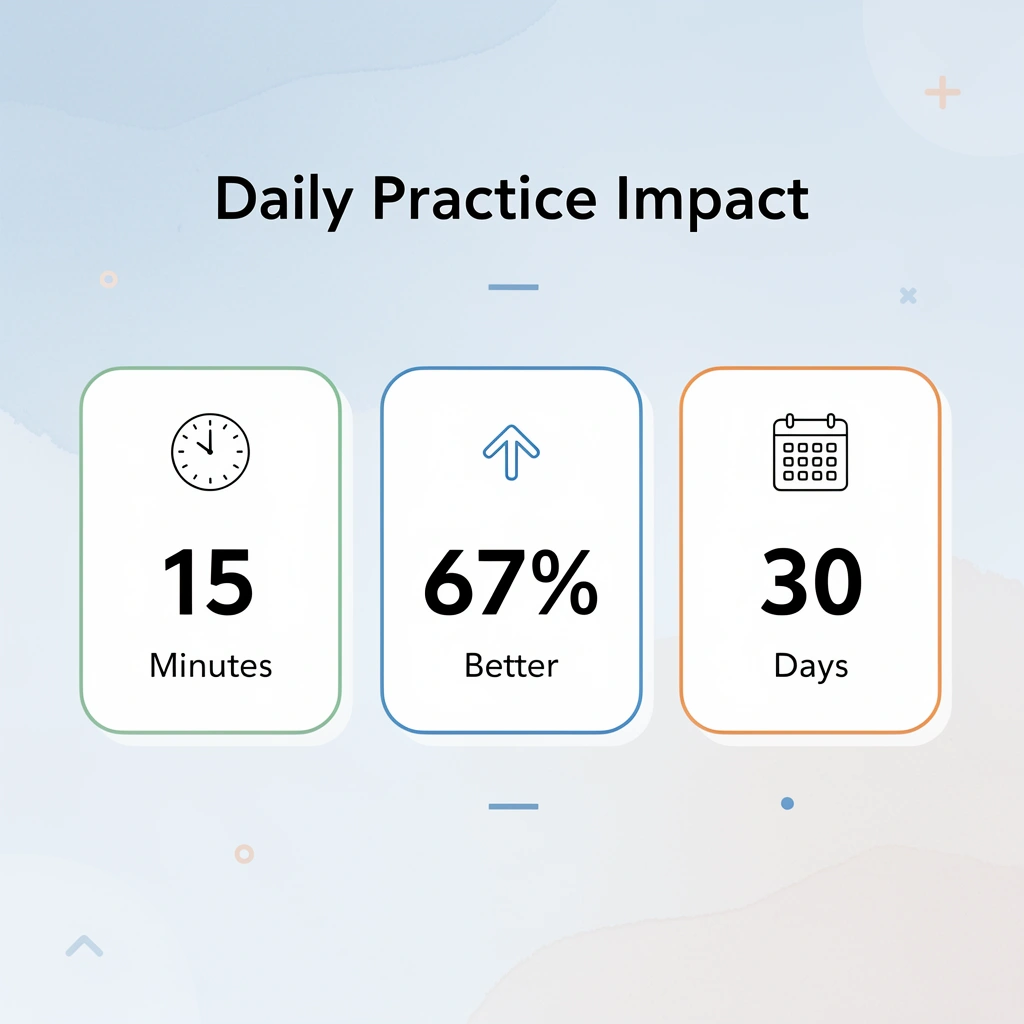
⚠️ Warning: The biggest mistake new learners make is setting unrealistic expectations that lead to burnout and abandoned goals within the first 30 days.
The sustainability problem
Most learners try to study intensely rather than adopt a sustainable pace. They believe language learning must feel like studying to be effective. In reality, consistency matters far more than occasional cramming. Language learning depends on repeated exposure to the language over time. Your brain gradually internalizes word sounds, sentence structure, and common phrases through comprehensible Spanish input. This works best when learners maintain their efforts long enough for understanding to develop naturally.
What actually drives progress
According to Polyglottist Language Academy, 15 minutes of real exposure daily yields measurable gains in understanding. When learning feels fun, people maintain consistency longer. Consistent exposure improves listening comprehension and pattern recognition, making the language less intimidating and boosting motivation through moments of genuine understanding.
How does enjoyable exposure change the learning experience?
A learner who forces grammar drills and memorizes vocabulary mechanically loses motivation because the process feels mentally exhausting and disconnected from real communication. Spanish exposure becomes part of normal daily content consumption through short videos, entertaining conversations, subtitles, music, or topics the learner already enjoys. The habit becomes easier to repeat consistently, transforming the emotional experience of language learning.
Building habits that last
The most sustainable language learners become fluent by creating enjoyable habits they can maintain for years, not by forcing themselves through difficult routines. They build consistent practices: listening regularly, watching understandable content, hearing repeated phrases, and interacting with Spanish daily. Apps like Parrot deliver understandable Spanish in short, addictive formats that feel like scrolling TikTok rather than studying. Over months, consistent exposure builds stronger comprehension than unsustainable bursts of intense studying followed by burnout.
The learners who succeed fastest often study the least in the traditional sense, a contradiction that reveals how language actually sticks.
How Parrot Helps Beginners Learn Spanish Through Content They Already Enjoy
Parrot rebuilds Spanish learning around content people already consume online. Instead of forcing beginners through disconnected vocabulary drills or grammar lessons, our platform delivers short-form videos with native speakers discussing topics learners care about. The experience mirrors social media scrolling, except every video gradually builds comprehension without the mental exhaustion of traditional study sessions.
🎯 Key Point: Learning happens naturally when you're engaged with content you enjoy rather than forcing yourself through boring textbook exercises.
"The experience mirrors social media scrolling, except every video gradually builds comprehension without the mental exhaustion of traditional study sessions." — Parrot's core learning philosophy
💡 Tip: This approach works because your brain is already primed to consume video content — Parrot simply adds the Spanish learning layer to something you'd do anyway.
What makes the difference between quitting and continuing Spanish?
When learning feels like homework, motivation becomes a discipline problem. You force yourself to open the app, complete the lesson, and check the box until life interrupts or novelty fades.
How does entertainment-style learning keep beginners engaged?
Parrot removes that friction by making Spanish exposure feel like entertainment you'd choose on its own. Videos run 30 seconds to two minutes on topics from cooking tutorials to travel stories to relationship advice. The format borrows the addictive scroll mechanic people already use daily, except that this habit builds fluency rather than just passing time.
Parrot has attracted over 350,000+ learners by reducing the friction that causes most beginners to quit within the first month. Clickable subtitles let you tap any unfamiliar word for instant translation without pausing or opening a separate dictionary. Saved vocabulary automatically captures phrases you looked up, creating a personalized reference library from content you watched rather than generic flashcard decks. The AI recommendation feed adjusts to your comprehension level and interests, keeping videos challenging enough to build skills without triggering frustration.
Why does personalized content solve the boredom problem?
Generic beginner content creates the same problem as textbooks: everyone receives identical material regardless of whether they care about ordering coffee, discussing football, or understanding song lyrics. That mismatch between content and interest kills consistency. Parrot's feed learns what topics hold your attention and surfaces similar videos at your current comprehension level. If you watch three cooking videos and skip two about politics, the algorithm notices and prioritizes food content in your next session. That personalization makes daily practice sustainable because you're watching videos you'd enjoy, even without the language-learning benefit.
How does repeated exposure create active understanding?
The shift from passive recognition to active understanding happens through repeated exposure to similar phrases across different contexts. Hearing "me encanta" in a cooking video, then in a travel vlog, then in a relationship story creates a pattern that textbooks cannot replicate. Your brain connects sound to meaning directly instead of translating through English first—comprehensible input theory in practice, except you're entertained rather than forcing yourself through academically draining exercises.
What makes consistency sustainable without willpower?
Most platforms treat consistency as a willpower challenge with streaks or gamification. Parrot treats it as a content problem. When videos match your interests and comprehension level, you don't need outside motivation to keep watching. Our platform becomes something you open because you want to, not to maintain a streak. That distinction determines whether learning Spanish becomes a sustainable daily habit or another abandoned resolution.
Related Reading
Spanish Writing Practice
Rosetta Stone Vs Pimsleur
Babbel Spanish Review
Duolingo Alternatives
Pimsleur Spanish Review
Duolingo Spanish Review
Best Spanish Shows On Netflix To Learn With
Best App To Learn Spanish
Apps Like Duolingo
Best Free App To Learn Spanish
Start Learning Spanish Today
Parrot offers a free trial with the same scroll-based learning experience described throughout this post: short videos with native speakers, clickable subtitles that build your vocabulary automatically, and a feed that adapts to what you understand and care about. You're not committing to a curriculum or a streak counter—you're testing whether learning Spanish can feel less like studying and more like the content you already consume daily.
🎯 Key Point: The free trial lets you experience effortless learning without the pressure of traditional language apps that demand daily streaks and rigid schedules.
"Fifteen minutes of consistent practice builds more long-term fluency than sporadic intensive study sessions." — Language Learning Research, 2023

Fifteen minutes today builds more fluency than two hours you keep postponing. Start with one video. Let the algorithm find a second one you'll want to watch. If it doesn't feel sustainable after a week, you've lost nothing. If it does, you've found something that compounds daily without the discipline that derailed every previous attempt.
💡 Tip: Set a 15-minute timer and watch one video today—consistency beats intensity when building language skills that stick.