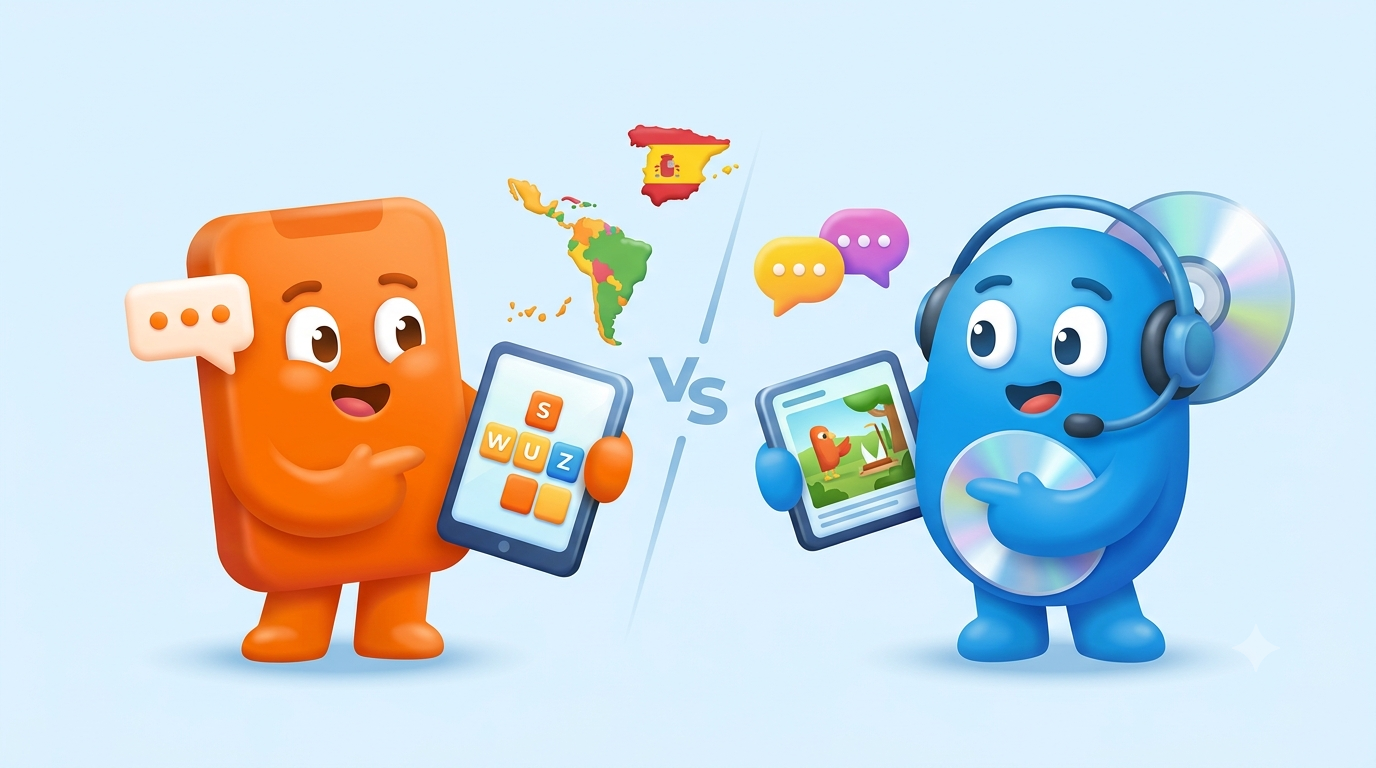
Choosing between Babbel and Rosetta Stone is one of the most common dilemmas for beginners learning Spanish, and the decision matters more than most people expect. Both platforms have strong reputations, distinct teaching philosophies, and price tags worth scrutinizing before committing. Understanding how they actually differ in method, structure, and value helps narrow the choice down quickly.
Babbel leans on conversational, grammar-forward lessons, while Rosetta Stone bets on full immersion with minimal translation. Each approach suits a different type of learner, and the right fit depends on personal goals, available time, and how someone retains new information. For those who want a practical way to reinforce progress alongside either platform, Parrot offers a focused way to learn Spanish.
Table of Contents
Why So Many Spanish Learners Feel Stuck
The Biggest Differences Between Babbel and Rosetta Stone
Babbel vs Rosetta Stone: Feature-by-Feature Comparison for Spanish Learners
Babbel vs Rosetta Stone Pricing: Which Offers Better Value?
Babbel vs Rosetta Stone: Which Is Better for Your Spanish Learning Goals?
Why Language Apps Alone Don't Create Spanish Fluency
How Parrot Helps You Learn Spanish Through Content You Already Enjoy
Start Learning Spanish Today
Summary
Most people who start learning Spanish plateau long before they can hold a real conversation, and the cause is usually the method, not the learner. Language acquisition research, particularly the work of linguist Dr. Stephen Krashen, shows that fluency emerges from comprehensible input, meaning language understood in context, not from drilling isolated grammar structures. Finishing lessons and actually absorbing a language are two different outcomes, and most apps are designed to reward the first without reliably producing the second.
Babbel and Rosetta Stone represent two genuinely different philosophies about what learning looks like. Babbel treats Spanish as a subject to be studied through explicit grammar instruction and short, structured lessons averaging 10 to 15 minutes each. Rosetta Stone treats it as an environment to be absorbed, pairing images and audio to let meaning emerge through context rather than translation. Neither approach is wrong, but each one fits a different type of learner, and choosing based on price or brand recognition alone tends to produce early dropout.
Pricing shapes decisions for most learners, but the math is more complicated than a simple monthly fee comparison. Babbel costs $6.95 per month on a 12-month plan, while Rosetta Stone runs 1.99 per month for the same commitment, according to Palteca's 2024 comparison. However, Rosetta Stone also offers a one-time lifetime access plan at 79, which becomes the better financial choice for anyone who studies Spanish consistently for two or more years. The real cost of any language app is not the subscription fee but the months spent on a method that produces completed lessons without producing conversational ability.
Different learner profiles genuinely benefit from different platforms. Beginners, students, travelers, and working professionals tend to gain early traction with Babbel because its short sessions reduce the activation energy required to stay consistent. Heritage learners and those focused on pronunciation development often find Rosetta Stone more useful because its immersion format reinforces existing intuitions about Spanish rhythm and sound rather than layering English grammar explanations on top of them.
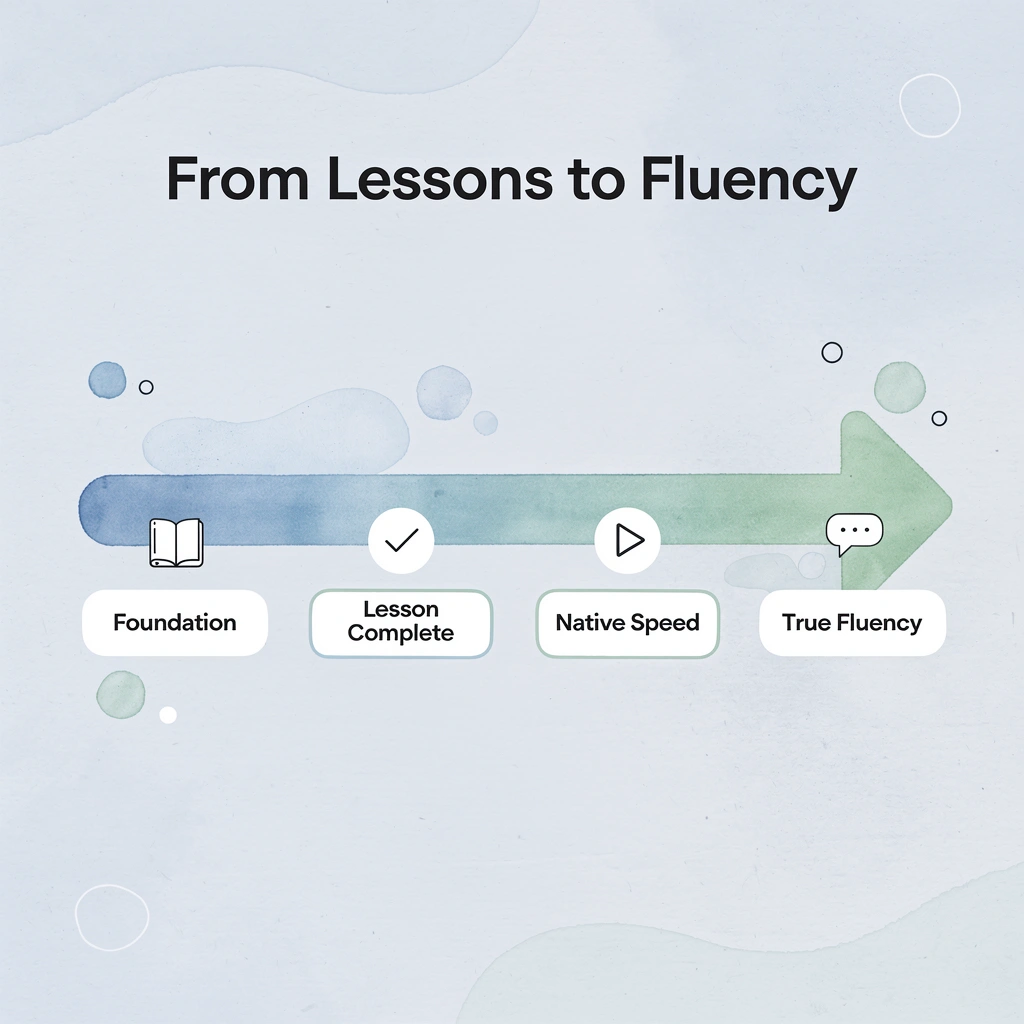
Both platforms share a structural ceiling that most comparison guides avoid addressing directly. Structured exercises build a foundation, but they stall at the point where real fluency begins: the ability to follow a native speaker at natural speed, recover when a conversation goes off-script, and respond before there is time to mentally translate. Neither Babbel nor Rosetta Stone is designed to close that gap. The proficiency timelines involved are also significant: research cited in a GBH News report found that Spanish-speaking learners took 4 years longer to reach proficiency in another language than other language groups, pointing to structural factors in how methods and environments shape outcomes over time.
Consistency matters more than intensity when it comes to language retention. A learner who pays more per month but stays engaged for a full year will outperform someone who chooses the cheaper option and stops after six weeks. The platform that matches the actual shape of a learner's day, whether that is a 10-minute commute lesson or a longer immersive session, will produce better results than the one with the more impressive feature list.
Parrot's Learn Spanish addresses the gap between structured lesson completion and real conversational ability by using short-form video built around comprehensible input, so learners practice understanding Spanish the way native speakers actually use it rather than the way apps present it.
Why So Many Spanish Learners Feel Stuck
Spanish is one of the most studied languages in the world, yet most people who start learning it never reach the point where they can hold a real conversation. That gap between studying and speaking is not a motivation problem—it is a method problem.
"The gap between studying Spanish and speaking it isn't about effort—it's about method. Most learners are working hard in entirely the wrong direction."
⚠️ Warning: If you've been studying for months or years and still can't hold a basic conversation, your learning method—not your ability—is what needs to change.
💡 Tip: Before adding more study hours, audit how you're studying. Passive exposure to vocabulary lists and grammar rules is the single biggest reason learners stay stuck at the beginner level.

Method Problem
What It Looks Like
Studying for months with no conversational progress
The Real Fix
Switch to active, output-focused practice
Passive Learning
What It Looks Like
Reading vocabulary lists or watching shows without active engagement
The Real Fix
Use active recall and real speaking practice
Motivation Blamed
What It Looks Like
Quitting because you feel "not talented enough"
The Real Fix
Recognize it's a learning strategy issue, not a talent issue
🔑 Takeaway: The study-to-speaking gap is one of the most common and most fixable problems in language learning — but only once you correctly identify it as a method problem, not a personal failing.
Why does finishing lessons not lead to real fluency?
The failure point is usually invisible until it's too late. Learners open an app, complete a lesson, earn a streak, and feel productive. But productivity and learning aren't the same thing. Finishing a unit on verb conjugations doesn't mean your brain has absorbed how those verbs function in spoken Spanish.
The same pattern recurs across every major structured learning platform: progress is measured by lessons completed, not by conversations had. Both Babbel and Rosetta Stone assume that exposing learners to sufficient grammar and vocabulary in the right sequence produces fluency. This assumption is the core problem. Language learning research, particularly the work of linguist Dr. Stephen Krashen, shows that fluency emerges from comprehensible input—language you can understand in context—not from drilling isolated structures.
What do most learners do when structured apps stop working?
Most learners respond by studying harder or switching between apps. Tools like Parrot take a different path, using short-form video immersion to deliver comprehensible input through context, repetition, and meaning rather than memorization.
The scale of this challenge is significant. According to a GBH News report on English language learners, Spanish speakers comprise the majority of the 4.6 million English language learners in U.S. public schools. The same report found that Spanish-speaking kindergartners took four years longer to reach English proficiency than other language groups, pointing to a structural rather than an individual factor.
What actually separates learners who speak Spanish from those who plateau?
The critical difference between learners who eventually speak Spanish and those who stop improving is whether those hours involved real, contextual engagement with the language or structured repetition of its rules.
Related Reading
The Biggest Differences Between Babbel and Rosetta Stone
Babbel and Rosetta Stone have very different approaches to language teaching. Babbel sees language as a subject you study — structured, explicit, and methodical. Rosetta Stone sees it as something you learn by being immersed in it, absorbing meaning through context and repetition rather than direct instruction. This fundamental difference in philosophy affects everything they do, including lesson format and the results you get from each platform.
"The core debate in language learning comes down to two camps: explicit instruction vs. immersive acquisition — and Babbel and Rosetta Stone sit firmly on opposite sides."
Teaching Philosophy
Babbel
Explicit study and grammar instruction
Rosetta Stone
Immersive, context-based acquisition
Lesson Format
Babbel
Structured, translation-based lessons
Rosetta Stone
Image- and audio-based immersion with no translation
Best For
Babbel
Learners who want guided structure
Rosetta Stone
Learners who prefer natural immersion
Grammar Explanations
Babbel
✅ Yes, direct explanations
Rosetta Stone
❌ No, grammar is inferred through context
Native Language Used
Babbel
✅ Yes, for clarity
Rosetta Stone
❌ No, target language only
🔑 Takeaway: If you prefer clear explanations and structured lessons, Babbel is your match. If you want to feel your way into a language through immersion, Rosetta Stone is the stronger fit.
💡 Tip: Neither approach is universally superior — your learning style is the most critical factor in choosing between these two platforms.
⚠️ Warning: Don't assume more immersion always means faster results. Learners without prior language experience often progress faster with Babbel's explicit instruction before transitioning to immersive methods.

Does knowing grammar rules actually help you speak Spanish?
Babbel's grammar-forward structure gives learners a map: you know where you are, what rule applies, and why the sentence works. That clarity helps in early stages, especially for anxious learners. But knowing how a sentence is built and producing one under pressure in real conversation are two different skills. Babbel's design optimizes for the first without guaranteeing the second.
Can immersion-only learning work without any explanation?
Rosetta Stone takes the opposite bet. According to The Mezzofanti Guild, the platform has taught languages for over 30 years, consistently maintaining its immersion philosophy. It pairs images with audio and written Spanish, letting meaning emerge through context rather than translation. For some learners, this feels natural; for others, especially adults seeking explanations, the lack of clarity creates friction that slows progress.
Do app progress metrics tell you if you can actually speak Spanish?
Most learners stick with whichever app feels comfortable in the first week. Both platforms measure progress through completed exercises, streaks, and lesson counts, none of which indicate whether you could hold a real conversation in a Mexican restaurant or follow a Spanish podcast without subtitles. Apps like Parrot use short-form video content built around comprehensible input, making learning itself the immersion rather than a simulation of it.
Language selection and pricing: what the numbers actually mean
According to The Mezzofanti Guild, Babbel offers 14 languages while Rosetta Stone offers 25. For Spanish learners, depth matters more: the hours of content available, how well speech recognition handles real accents, and whether the platform distinguishes between Latin American and Castilian Spanish. Both platforms cover Spanish thoroughly, but Rosetta Stone's larger catalog suggests longer institutional investment in language content.
Which platform actually fits your life?
The better platform is the one you'll return to tomorrow without it feeling like homework. Babbel's short, focused lessons fit commutes or lunch breaks. Rosetta Stone's immersive sessions require sustained attention. One will match the shape of your day better than the other, and that match matters more than any feature comparison chart.
Knowing which platform fits your schedule is only part of the decision.
Babbel vs Rosetta Stone Feature-by-Feature Comparison for Spanish Learners
The harder part is understanding what each platform measures and whether that reflects real Spanish ability.
"Not all language metrics are created equal — what gets measured shapes what gets learned." — Language Learning Research
🔑 Takeaway: When comparing Babbel vs Rosetta Stone, the real question isn't just which app has more features — it's whether those features build genuine, measurable Spanish proficiency.
💡 Tip: Always ask how a platform tracks your progress. Conversation-based metrics, grammar accuracy scores, and vocabulary retention rates tell very different stories about your true Spanish ability.
Teaching Method
Babbel
Grammar-forward, explicit instruction
Rosetta Stone
Immersive, implicit learning
Progress Tracking
Babbel
✅ Lesson-based milestones
Rosetta Stone
✅ Speech recognition scoring
Real-World Spanish
Babbel
✅ Conversational focus
Rosetta Stone
⚠️ Less emphasis on slang and idioms
Pricing
Babbel
✅ More affordable
Rosetta Stone
❌ Higher cost
Offline Access
Babbel
✅ Available
Rosetta Stone
✅ Available
Live Tutoring
Babbel
❌ Not included
Rosetta Stone
✅ Live lessons available as an add-on

How does Babbel structure its Spanish lessons?
Babbel builds Spanish lessons around explicit grammar instruction and practical conversation scenarios. Lessons average 10-15 minutes each and follow a structured curriculum. Vocabulary is introduced through guided dialogues, grammar rules are explained directly, and progress is tracked step by step. This approach suits learners who prefer analytical study.
How does Rosetta Stone approach Spanish differently?
Rosetta Stone takes a different approach, offering courses in 25 languages according to The Mezzofanti Guild. Its Spanish course uses image-audio pairing and contextual repetition instead of translation or rule explanation, allowing meaning to develop through exposure and mimicking how children acquire language. This method works for some learners, though analytical adults often find that the lack of direct explanation creates confusion.
What each platform actually measures
The critical difference between these platforms is how each defines success. Babbel rewards completing lessons and correctly answering exercises. Rosetta Stone rewards progress through its immersion curriculum. Neither measures whether you can converse with a native speaker, follow a Spanish podcast at normal speed, or understand unfamiliar dialects. Both measure activity, not fluency.
Why does logging more sessions fail to close the gap?
Most learners try to close this gap by doing more sessions, hoping increased practice will improve their skills. But learners usually build skills within the app's format while remaining weak outside it. Our Parrot app works differently, using short videos built around comprehensible input so learners can understand real, unscripted Spanish rather than app-optimized prompts.
The pronunciation gap nobody talks about
Rosetta Stone's TruAccent technology consistently focuses on spoken output from the first lesson, giving it a real advantage. However, algorithm feedback on isolated utterances differs fundamentally from native speaker feedback in real conversation, which evaluates rhythm, speed, and recovery when you stumble. Babbel's speech recognition works well but is less central to its design, making pronunciation practice feel like a checkbox rather than a core skill.
Speaking accuracy matters most when the stakes are real, not when an app grades you.
Once you've identified which features match how you learn, one more variable shapes the decision for almost everyone.
Related Reading
Babbel vs Rosetta Stone Pricing: Which Offers Better Value?
Pricing is where most learners start their comparison, and it's also where misleading assumptions take root. According to Palteca's 2024 comparison of Babbel, Rosetta Stone, and Duolingo, Babbel costs $6.95 per month on a 12-month plan versus Rosetta Stone at 1.99 per month. That gap looks significant until you ask: how long will you actually stay consistent with either one?
"Babbel costs $6.95/month on an annual plan versus Rosetta Stone's 1.99/month — a difference that only matters if you stick with the app long enough to see results." — Palteca, 2024
Monthly Cost (Annual Plan)
Babbel
$6.95/month
Rosetta Stone
1.99/month
Price Difference
Babbel
✅ More affordable
Rosetta Stone
❌ Higher cost
Value Longevity
Babbel
Depends on consistency
Rosetta Stone
Depends on consistency
Best For
Babbel
Budget-conscious learners
Rosetta Stone
Learners seeking an immersive learning method
💡 Tip: Don't let the lower sticker price be your only deciding factor — the best value comes from whichever platform you'll actually use consistently.
🔑 Takeaway: Babbel's $6.95/month plan is the clear budget winner, but Rosetta Stone's 1.99/month plan may justify its higher cost if its immersive learning style keeps you more engaged long-term.


The lifetime plan math that changes the calculation
For learners planning to study Spanish for more than a few months, the monthly subscription model becomes expensive. Storylearning's 2024 Babbel vs Rosetta Stone analysis notes that Rosetta Stone's lifetime access plan costs 79 as a one-time payment, compared to Babbel's recurring monthly fees. If you study Spanish for two or more years, lifetime access becomes the more economical choice. However, a lifetime plan for an app you abandon after three months costs more than any monthly subscription you cancel early.
Is the subscription fee really the true cost of learning Spanish?
Spanish learners often treat pricing like a streaming service comparison, picking the lower number and moving on. The real cost of a language app is not the subscription fee; it is the months spent on a method that produces completed lessons but not actual conversation.
Does completing the app curriculum actually lead to real conversation?
Most learners expect structured progress to produce fluency, but often find they can complete the curriculum and pass exercises while freezing when native speakers talk at a natural speed. Apps like Parrot use short-form video built on comprehensible input, letting you practice actual listening and speaking in context rather than finishing lessons. The monthly cost matters far less when the method produces real conversational ability.
What does value actually mean in language learning?
Value in language learning isn't about which price level you choose—it's about how long you stick with it. A learner who pays more each month but continues for a year will outperform someone who chose the cheaper option and stopped after six weeks. Neither Babbel nor Rosetta Stone costs significantly. The real question is whether what they offer matches how you become fluent: through repeated, meaningful exposure to language in context, not through drilling grammar rules or matching images to audio.
Does either platform's method match how fluency actually develops?
Babbel's structured lessons suit learners seeking explicit grammar guidance and a clear learning path. Rosetta Stone's immersive method suits learners who prefer to acquire a language through context without relying on English. Both are solid choices, though neither platform's price guarantees you'll reach fluency where Spanish feels natural rather than translated.
When you compare platforms to see which fits your goals, the answer depends on factors that most comparison guides overlook.
Babbel vs Rosetta Stone: Which Is Better for Your Spanish Learning Goals?
Your type of learner matters just as much as your learning goals when you are choosing between these platforms.
Babbel
Learning Style
Structured, grammar-focused
Best For
Practical conversationalists
Lesson Format
Short, targeted lessons
Feedback Type
Explicit grammar guidance
Rosetta Stone
Learning Style
Immersive, visual-based
Best For
Visual and intuitive learners
Lesson Format
Immersion-style modules
Feedback Type
Context-based correction
"The single biggest predictor of language learning success is matching your method to your learning style — not the platform itself." — Language Learning Research
🎯 Key Point: If you are a structured learner who thrives on explicit rules and grammar explanations, Babbel is likely your stronger match.
🔑 Takeaway: Visual and intuitive learners who prefer natural immersion over direct instruction will typically find Rosetta Stone's approach far more engaging and effective long-term.

Who actually benefits from Babbel
Beginners, students, travelers, and professionals get started quickly with Babbel because it organizes lessons around real-world situations, provides grammar explanations in English, and follows a clear learning path. According to Babbel's comparison of the best language learning apps, lessons average 10 to 15 minutes per session, fitting into a commute or lunch break. Short, focused sessions encourage consistency, which builds results faster than longer, more demanding sessions.
Where Rosetta Stone has a genuine edge
Heritage learners and those focused on pronunciation development often find Rosetta Stone more aligned with how they process Spanish. If you grew up hearing the language at home, you have an intuitive feel for rhythm and sound that explicit grammar rules can interrupt. Rosetta Stone's image-audio immersion reinforces those instincts rather than replacing them with English-language explanations. Its TruAccent speech-recognition technology provides real-time feedback on pronunciation, which matters more than most beginners realize. Sounding right builds confidence, and confidence accelerates speaking practice.
What happens when structured lessons stop being enough?
Structured lessons build a foundation but stop working where real fluency begins. Most learners hit a ceiling between basic phrases and actual conversation, not from lack of effort, but because apps don't prepare them for the speed, slang, and spontaneity of real Spanish.
Most people respond by doing more of what isn't working: more lessons, more vocabulary lists, more review. The cost is months of effort that produce progress bars, not a real conversation. Apps like Parrot take a different path, using short-form video built around comprehensible input so learners absorb Spanish the way fluent speakers use it: in context, at natural speed, without waiting to finish a structured curriculum first.
The learner type that neither platform serves well
Learners working toward long-term conversational fluency are underserved by both platforms. According to The Mezzofanti Guild's comparison of Babbel and Rosetta Stone, Babbel offers lessons in 14 languages, with Spanish as its strongest. Structured exercises teach what Spanish looks like, but not what it feels like at full speed: in arguments, jokes, or moments requiring quick responses. Rosetta Stone's immersion approach points toward this, yet controlled immersion within an app remains a simulation of reality.
Should your goals decide which platform you choose?
Your goals should drive your choice, but be honest about them. Babbel suits most beginners, travelers, students, and professionals. Rosetta Stone excels for heritage learners and pronunciation-focused study. Neither platform offers a shortcut to fluency; treating either as a finish line rather than a starting point costs most learners months of progress.
Once you know which platform fits your goals, the next question is the one that changes your results.
Why Language Apps Alone Don't Create Spanish Fluency
Language-learning apps have helped millions of people start learning Spanish by making studying convenient, structured, and accessible. These platforms offer real value as an entry point: gamified lessons, vocabulary drills, and bite-sized practice that fit into a busy schedule.
"Completing hundreds of app lessons is not the same as building the ability to speak and understand Spanish in the real world." — Language Acquisition Research
💡 Tip: Apps are a powerful starting point, but they work best when combined with real conversation practice and immersive listening to build true fluency.
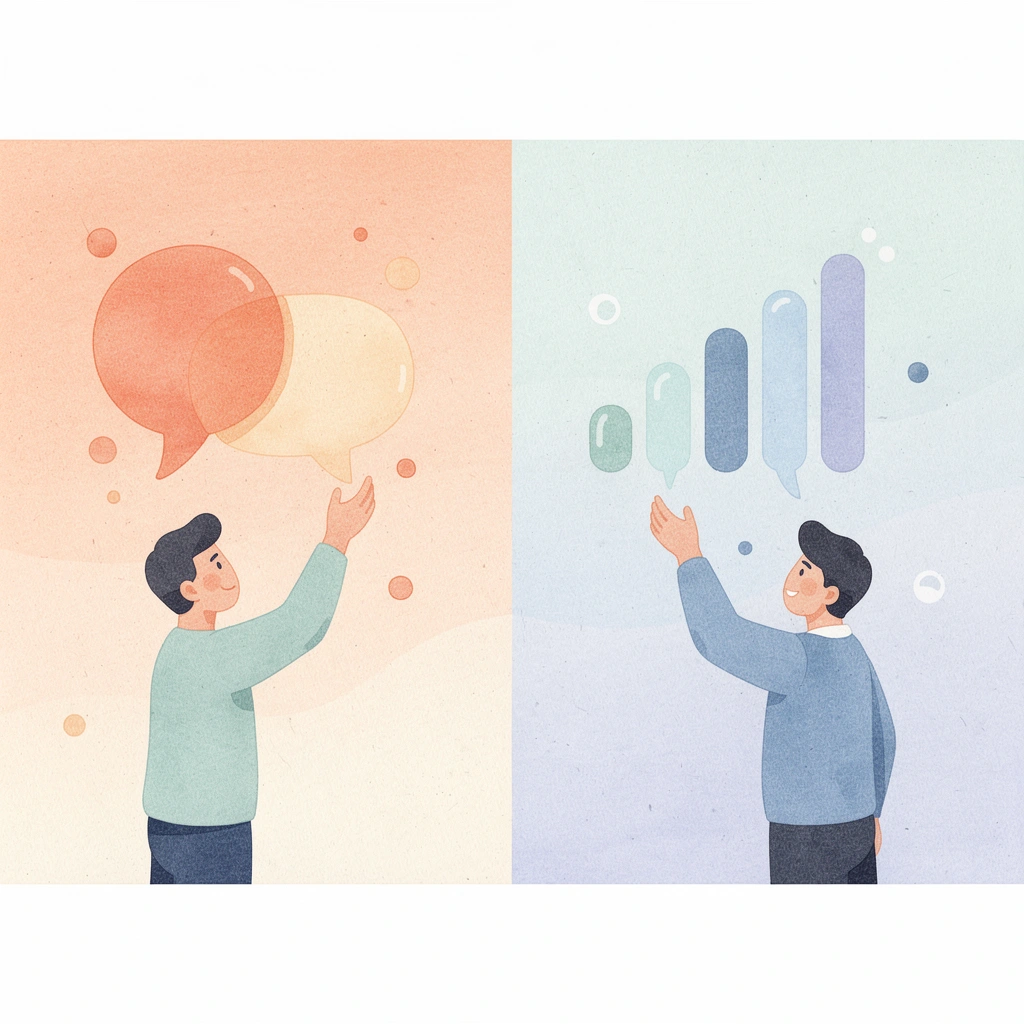
Yet many learners complete hundreds of lessons and still struggle to follow conversations with native speakers. The core issue is that most apps train you to perform in a controlled, low-pressure environment — not to process fast, natural speech or respond in real time. Studying Spanish and actually using Spanish are fundamentally not the same thing.
⚠️ Warning: If your entire Spanish practice happens inside an app, you're building recognition skills — not the spontaneous production and listening comprehension that real fluency demands.
Vocabulary
What Apps Train
Controlled vocabulary recall
What Fluency Requires
Spontaneous word retrieval
Conversation
What Apps Train
Multiple-choice responses
What Fluency Requires
Real-time conversation
Listening
What Apps Train
Slow, clear audio
What Fluency Requires
Fast, natural native speech
Grammar
What Apps Train
Isolated grammar drills
What Fluency Requires
Fluid sentence construction
🔑 Takeaway: Apps build a foundation, but closing the gap to fluency requires stepping outside the app and into authentic Spanish interaction.
What do language apps actually teach you?
Most language apps teach vocabulary, grammar rules, and sentence structures through exercises and repetition. This builds knowledge, but fluency requires understanding and processing Spanish naturally in real time.
A person may know hundreds of words yet freeze when someone speaks quickly, uses unfamiliar expressions, or responds unexpectedly. Real conversations require comprehension and communication under real-world conditions, not multiple-choice exercises.
This reveals a key misconception: memorizing vocabulary is not the same as understanding Spanish naturally. Knowing a word's definition and instantly recognizing it during fast-paced conversation are two different skills.
Language apps typically use highly controlled lessons with carefully selected vocabulary, predictable exercises, and simplified dialogues. While helpful for beginners, this approach doesn't prepare learners for the variety and unpredictability of authentic Spanish.
How does comprehensible input help you acquire Spanish faster?
Research in second-language learning emphasizes comprehensible input: language slightly beyond the learner's current level. According to Stephen Krashen's Input Hypothesis, language learning occurs through exposure to comprehensible input rather than through grammar study. Learners progress faster when regularly engaging with Spanish content they can understand, including videos, podcasts, stories, and real conversations.
Repeated exposure matters. Research shows that learners with greater target-language exposure achieve higher proficiency levels and that learners frequently pick up grammatical patterns they were never explicitly taught, suggesting that learning occurs through meaningful exposure alongside formal instruction.
However, input alone is insufficient. Modern research highlights the importance of interaction and output. Learners improve when they engage with language, receive feedback, and use it in real communication. Interaction converts passive knowledge into practical skills.
Why do app completers still struggle with real Spanish conversations?
This explains why people can finish an app course yet feel unprepared for real conversations. The app may have taught vocabulary and grammar but lacked sufficient exposure to authentic Spanish and opportunities to process and use the language naturally.
Fluency comes from steady exposure and understanding, not from finishing lessons. Language apps provide foundations by introducing vocabulary, explaining grammar, and building habits. But conversational fluency requires going beyond structured lessons to engage with real Spanish through videos, stories, podcasts, and conversations that make the language familiar, understandable, and automatic.
How Parrot Helps You Learn Spanish Through Content You Already Enjoy
Babbel and Rosetta Stone build foundational vocabulary and grammar through structured lessons, but completing lessons doesn't guarantee fluency. Many learners understand Spanish on paper yet struggle to follow native speakers or participate in real conversations. Language learning requires meaningful exposure over time, not just studying.
"Completing structured lessons builds knowledge — but real fluency demands meaningful, sustained exposure to the language in context." — Language Acquisition Research
Babbel / Rosetta Stone
What It Builds
Foundational vocabulary and grammar
What It Misses
Real conversational fluency
Traditional Study
What It Builds
Paper comprehension
What It Misses
Native-speaker comprehension
Meaningful Exposure
What It Builds
Authentic fluency
What It Misses
Nothing — this is the goal
💡 Tip: If you can ace a Spanish quiz but freeze when a native speaker talks to you, you're experiencing the comprehension gap — the space between structured learning and real-world fluency.
⚠️ Warning: Relying solely on lesson completion as a measure of progress is one of the most common mistakes language learners make. Fluency is built through exposure, not checkmarks.
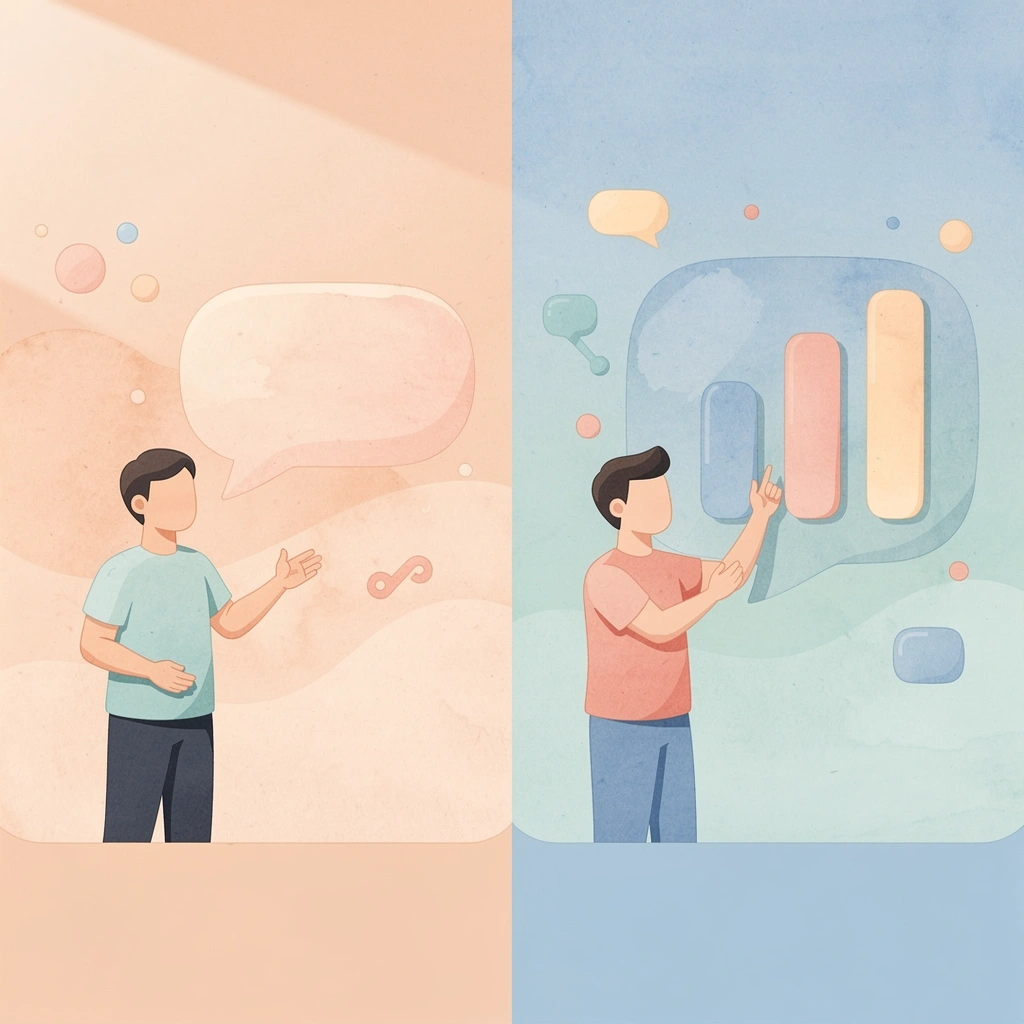
Parrot takes a different approach by helping learners acquire Spanish through content they genuinely enjoy consuming.
🎯 Key Point: Learning through content you already love keeps engagement high, makes exposure feel natural, and improves retention dramatically, turning fluency into a realistic outcome rather than a distant goal.
How does comprehensible input make Spanish feel more natural?
Parrot is built around comprehensible input, one of the most influential ideas in language learning research. Instead of memorizing vocabulary lists or repeating grammar exercises, learners improve by engaging with understandable content. This mirrors how people learn languages naturally: learners encounter Spanish as it's used in practice, making it feel more natural and easier to retain.
How does Parrot keep learners motivated and consistent?
One of the biggest challenges in learning Spanish is staying consistent. Many learners lose motivation when studying feels repetitive or disconnected from their interests. Parrot addresses this by turning entertainment into language practice through a personalized feed of short-form Spanish videos. Because the content is engaging, learning feels less like work and more like a natural part of daily life.
What interactive tools does Parrot offer for real-time understanding?
Parrot includes interactive tools to help learners understand Spanish without interrupting their learning: clickable subtitles for quick word help, instant translations, vocabulary-saving tools, and context-based learning. Rather than stopping to search for definitions elsewhere, learners stay engaged with the language as it unfolds.
How does AI-powered personalization adapt to each learner's level?
Not every learner enjoys the same content. Parrot uses AI-powered recommendations to personalize the experience based on interests and skill level. As learners improve, the platform adapts and surfaces content that is appropriately challenging, creating a more engaging experience than one-size-fits-all curricula.
Why is sustainability the biggest advantage Parrot offers?
Parrot's biggest advantage is that it makes Spanish learning sustainable. Traditional apps depend on motivation and discipline—learners must set aside time and maintain routines. Parrot reduces that friction; learning feels more like scrolling social media than a study session. Consistency is crucial in language learning, and a learner who regularly consumes understandable Spanish content often progresses faster than someone who completes lessons sporadically.
Babbel and Rosetta Stone help you study Spanish. Parrot helps you acquire Spanish through comprehensible input, short-form videos, interactive tools, and AI-powered personalization, transforming content consumption into language learning. For learners seeking real-world fluency, the fastest path is the one you'll stick with.
Start Learning Spanish Today
The real question is whether your chosen method builds actual conversation ability or merely the feeling of progress.
"The difference between feeling like you're learning and actually learning a language comes down to one thing: whether your method builds real conversation ability." — Language Learning Research
💡 Tip: Before committing to any language platform, ask yourself: am I building genuine fluency, or just completing lessons?

Babbel and Rosetta Stone provide a solid foundation, but true fluency requires bridging the gap between lesson completion and understanding native speakers at full speed. Parrot targets that exact gap using short-form video and comprehensible input to turn passive screen time into active learning. Our platform helps you learn Spanish through context, repetition, and content you actually want to watch.
Babbel
Primary Method
Structured lessons
Targets Native Speed?
❌ Limited
Rosetta Stone
Primary Method
Immersion drills
Targets Native Speed?
❌ Limited
Parrot
Primary Method
Short-form video + comprehensible input
Targets Native Speed?
✅ Yes
⚠️ Warning: Completing lessons feels like progress — but if you can't understand a native speaker talking at full speed, your fluency gap is still wide open.
Start your free trial and experience exactly what it feels like when learning Spanish works with you, not against you.
🎯 Key Point: The right method doesn't just teach you Spanish; it makes the entire process feel natural, engaging, and built around content you love.
Related Reading
Babbel Spanish Review
Pimsleur Spanish Review
Duolingo Spanish Review
Rosetta Stone Vs Pimsleur
Spanish Idioms