Learning to speak Spanish feels straightforward until a real conversation starts and the words suddenly disappear. The best way to learn conversational Spanish goes beyond vocabulary lists and grammar drills—it requires consistent spoken practice that builds confidence in real situations. Not every app delivers that, so knowing what to look for makes a real difference.
Parrot takes a different approach by centering its method on spoken dialogue and real-world context rather than passive study. Users practice using words the way they would in conversation, which is how fluency develops over time. For anyone ready to start speaking from day one, a great place to begin is Learn Spanish.
Table of Contents
Why Finding the Best App to Learn to Speak Spanish Is Hard
Why Spanish Apps Don't Automatically Teach You to Speak
What Makes an App Effective for Learning to Speak Spanish?
10 Best Apps to Learn to Speak Spanish
How to Choose the Best Speaking App for Your Goals
How Parrot Helps You Build the Listening Skills Behind Better Spanish Speaking
Start Learning Spanish Today
Summary
Most Spanish learners hit a frustrating wall where they can complete app lessons confidently but freeze the moment a native speaker talks at natural speed. The core problem is that most apps train recognition, identifying vocabulary and selecting correct answers, rather than production, retrieving language under the pressure of a real exchange. These are two distinct cognitive skills, and the gap between them is where conversational fluency either develops or stalls.
App design often prioritizes engagement over acquisition. Streaks, points, and badges keep users returning to the platform, but completion metrics do not reflect speaking ability. Research cited in the article notes that many learners end up with multiple subscriptions and zero real conversations, which is a direct result of confusing engagement design with language learning.
Listening comprehension is not a passive bonus skill. It is the foundation that makes speaking possible. A 45-day evaluation of top Spanish apps for beginners found that apps built around spoken practice and authentic audio consistently outperformed text-based drill platforms for developing real conversational ability. If a learner cannot process Spanish at natural speed, with connected words and regional rhythm, speaking fluently becomes nearly impossible.
Content structure inside apps matters more than content volume. MSU research found that apps dedicate less than 10% of their content to actual speaking practice, meaning most time goes to recognition tasks rather than language generation. Shorter, distributed sessions focused on comprehensible input produce retention gains that hold up weeks later, making daily 10- to 15-minute practice more effective than longer sessions most learners abandon.
No single app closes every gap in the path to conversational fluency. Learners who make the fastest progress typically layer their approach, using authentic input to train the ear, structured lessons to organize grammar, and live conversation tools like italki or Tandem to force real production. Treating any one app as a complete solution is the most common reason progress stalls.
Vocabulary learned in context transfers to real conversations far more reliably than vocabulary drilled in isolation. Words encountered inside sentences, where a learner can hear how they function naturally, tend to appear instinctively when needed rather than requiring conscious retrieval mid-conversation.
Parrot's Learn Spanish addresses the input side of this equation by building the learning experience around short-form video matched to proficiency level, so learners develop the listening comprehension and vocabulary retention that make spontaneous speaking feel less like translation and more like response.
Why Finding the Best App to Learn to Speak Spanish Is Hard
Searching for the best app to learn to speak Spanish seems easy at first. But most apps solve a different problem than what you need. You want to have real conversations and understand native speakers talking at normal speed, not take quizzes. That goal—spoken fluency—is far harder to build than most apps are designed to handle.
"The gap between what language apps promise and what learners actually need—real conversational fluency—is the defining challenge of modern language learning." — Language Learning Research
🚨 Warning: Most popular Spanish apps are built around gamified quizzes and vocabulary drills, which feel productive but rarely translate into the ability to hold a real conversation with a native speaker.
💡 Tip: Before downloading any Spanish app, ask yourself one question: Does this app make me speak out loud? If the answer is no, it's solving the wrong problem for your goals.
Why do most Spanish apps fail to build real speaking skills?
The failure point is usually method, not motivation. Most Spanish learning apps are built around completion metrics: streaks, points, levels, and badges. These keep you engaged with the app but are far less effective at building spontaneous language retrieval. According to Spanish Fluency Club, many learners end up with "3 subscriptions and zero conversations."
Learners typically build recognition skills, not production skills. Recognizing a Spanish word and producing it under pressure are two different cognitive tasks. Most apps train the first and leave the second untouched. Lingtuitive's 2026 research, based on 45+ days of testing top Spanish apps for beginners, found this pattern consistent across popular platforms. Apps built around spoken practice and comprehensible input close that gap more effectively than grammar drills alone.
How does comprehensible input change the way you learn Spanish?
An approach like Parrot's Learn Spanish uses short videos to teach Spanish based on Dr. Stephen Krashen's comprehensible input research. This method exposes you to Spanish the way your brain naturally learns language. Spending ten to fifteen minutes daily watching understandable content builds listening skills and speaking confidence that traditional apps rarely achieve.
Why does your current level make the best app a moving target?
Your level determines what you need. A complete beginner requires structured exposure to core vocabulary and pronunciation. An intermediate learner needs authentic listening practice, spontaneous speaking, and natural-speed comprehension. One app rarely serves both stages well, making the "best" app dependent on your current level.
But here's what most comparison guides won't tell you: the app itself may not be the real obstacle.
Related Reading
Why Spanish Apps Don't Automatically Teach You to Speak
Finishing every lesson in a Spanish app feels like progress, and it is—but only in one direction. Apps build recognition and train you to identify vocabulary and match translations. They rarely build the ability to retrieve language under pressure, when someone is waiting for your response, and there is no multiple-choice option in front of you.
"Apps build recognition—but real conversation demands retrieval. Those are two fundamentally different cognitive skills, and only one of them works when someone is waiting for your answer."
⚠️ Warning: Completing app lessons creates a false sense of fluency. Recognition-based learning does not automatically transfer to real-time speaking ability—the two skills require very different practice.
💡 Tip: To bridge the gap, supplement app practice with active retrieval exercises—think flashcard recall, shadowing, or live conversation practice—where no hints or options are provided.
Many language apps are good at recognition, but real speaking requires additional skills that involve retrieving language and responding under pressure:
Recognition – Apps often train you to match words with their meanings, but recognition alone isn't enough to produce fluent speech.
Retrieval – Speaking requires you to recall the right words and structures without being shown the answer, yet this is less commonly practised explicitly.
Pressure response – Real conversations don't give you unlimited thinking time. You need to respond immediately, making speed and spontaneous production essential parts of speaking ability.
🎯 Key Point: Spanish apps are a powerful starting point, but speaking fluency is built through retrieval practice—not recognition drills.

Why does recognition feel like fluency but fail in real conversation?
The failure point is usually retrieval speed, not vocabulary size. You might recognize "olvidar" when you see it, but when someone asks why you missed a meeting, and you need that word right now, it disappears. Recognition and retrieval are different cognitive skills, and most apps train only one. Conversation lives in retrieval.
Why does grammar knowledge break down mid-sentence?
Grammar knowledge creates the same illusion. Understanding why a verb changes form does not mean you will apply that rule mid-sentence while someone waits. If every response requires mental translation from English, finding the right verb form, and checking your work before speaking, even simple exchanges become tiring. Fluency is not knowing the rules—it is internalizing them until they run automatically.
What actually closes the gap between knowing and doing?
Most learners assume the gap stems from insufficient knowledge and download another app or add vocabulary drills. But the problem persists because the method stays the same. Approaches like Learn Spanish work differently by immersing learners in real spoken Spanish through short-form video, which trains the brain to recognise language patterns the way it absorbed your first language: through repeated exposure in context rather than conscious memorization.
Why listening is the missing half of speaking
Listening is the foundation that makes speaking possible. According to Lingtuitive's 45-day evaluation of the top Spanish apps for beginners in 2026, apps built around spoken practice and authentic audio exposure outperformed those focused on text-based drills for developing conversational ability. If your ear cannot process natural Spanish at real speed—with connected words, dropped syllables, and regional rhythm—your mouth will not know what to produce in response.
How does fear of speaking widen the gap?
Fear widens this gap. The learner who waits until their Spanish is "good enough" before speaking practices avoidance, which never closes the gap. Simple self-talk, shadowing native speakers, and short unscripted exchanges build the tolerance for imperfection that real conversation demands.
What would an app need to do differently to move you toward fluency?
Once you understand why apps fall short, a sharper question emerges: what would an app need to do differently to move you toward fluency?
What Makes an App Effective for Learning to Speak Spanish?
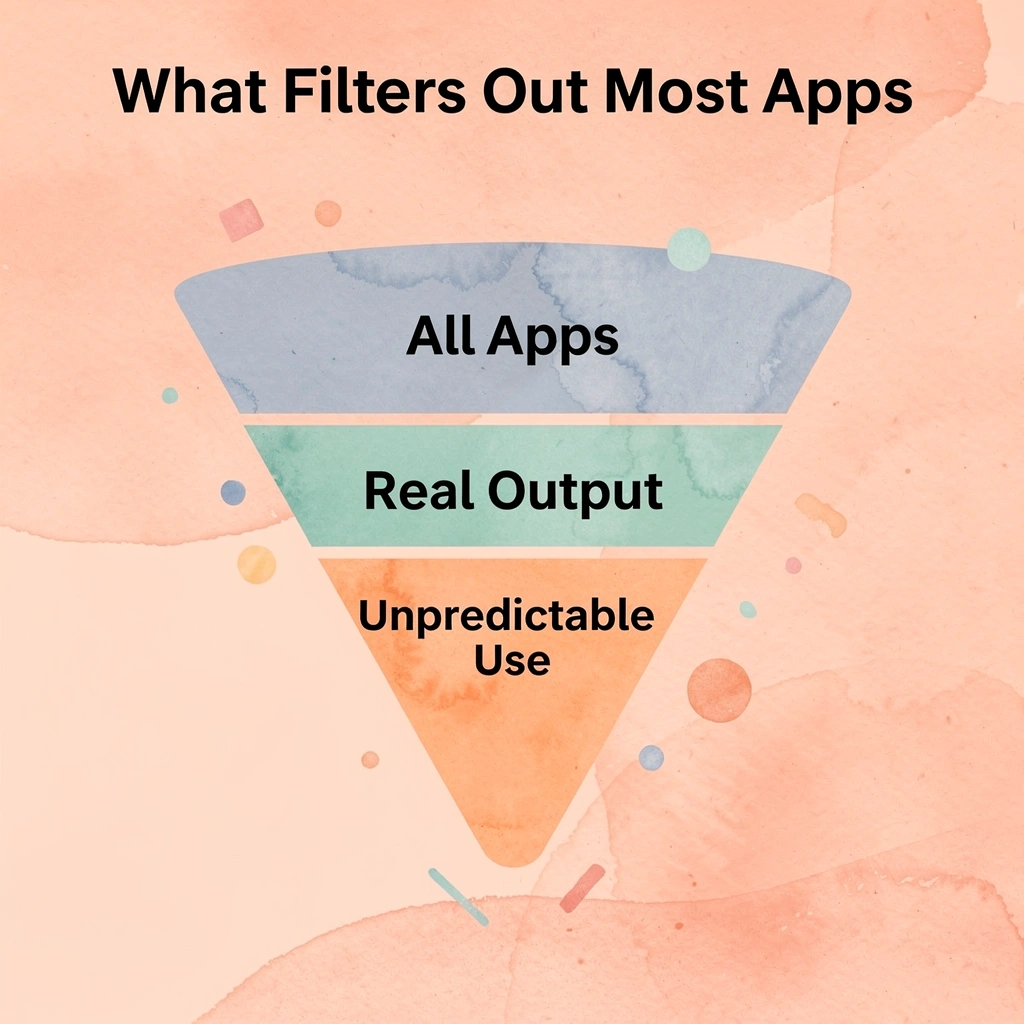
A truly effective speaking app moves you closer to understanding and producing Spanish in real, unpredictable situations—not just within its controlled environment. That single criterion filters out most of what's on the market.
"The ultimate test of any language app is whether it prepares you for conversations outside the app itself—in the wild, unscripted, and unpredictable."
🎯 Key Point: The #1 question to ask about any Spanish app is simple—does it prepare you for real-world conversations, or just in-app exercises?
💡 Tip: Before committing to any app, ask yourself: "Could I use what I'm practicing here in an actual conversation with a native speaker?" If the answer is no, it's time to look elsewhere.
An effective Spanish-learning app should prepare you to communicate outside the app, not simply help you complete lessons inside it:
Real-world readiness – Prepares you for unscripted, spontaneous dialogue, where conversations don't follow a predictable script.
Productive output – Requires you to speak and produce Spanish, rather than only consuming content.
Unpredictable scenarios – Exposes you to varied, natural conversation patterns, helping you adapt when real conversations take unexpected turns.
Beyond the app – The skills you build should transfer directly to real-world Spanish use, so progress isn't limited to the platform.
What the content actually needs to do
The failure point is usually structural. MSU Today's analysis of language learning apps found that apps spend less than 10% of their content on speaking practice. Most time goes to recognition tasks: reading prompts, selecting answers, matching vocabulary. Recognition and production use different thinking processes. An app that keeps you comfortable in its feedback loop doesn't prepare you for conversation with a native speaker who won't wait for you to find the right option.
Why do input and output both matter for speaking practice?
The most effective apps combine comprehensible input with structured output. Learners need to hear Spanish they can mostly understand, encounter new vocabulary in context, and produce language from memory rather than identify it. Research on distributed fluency practice shows that shorter, repeated sessions spaced across days produce retention gains that persist weeks later. An app that makes 15 minutes of daily practice realistic and varied is more valuable than one that front-loads content into ambitious sessions most learners abandon by week three.
Why do learners freeze when real native speakers go off-script?
Most learners eventually hit a specific wall: they can navigate the app confidently but freeze when a native speaker uses a different accent, speeds up, or goes off-script. This happens because the app never exposed them to authentic variation. Effective apps include real speakers at different speeds and with different accents, not just carefully recorded studio audio. Vocabulary learned in context—where learners hear how a word functions in a sentence—transfers far more reliably to real use than words encountered in isolation.
Apps like Parrot address this by building the learning experience around short-form video with comprehensible input. Our platform helps learners acquire Spanish through content that resembles how native speakers communicate, rather than practicing within scripted loops. The format trains the ear and brain simultaneously, building listening comprehension that makes speaking feel less like translation and more like response.
How does progressive difficulty determine whether an app actually builds fluency?
Progressive difficulty is essential. Beginners need slower, clearer speech and predictable structures. As comprehension grows, good apps introduce longer responses, less predictable patterns, and faster delivery. Babbel's claim that users can hold a basic conversation after five hours of study offers a useful early-learning benchmark, but the real test is whether the app keeps increasing in difficulty. An app that keeps you comfortable at the same level isn't a speaking app—it's a confidence-maintenance tool.
Related Reading
Mango Vs Rosetta Stone
Best App To Learn To Speak Spanish
Rosetta Stone Spanish Reviews
10 Best Apps to Learn to Speak Spanish
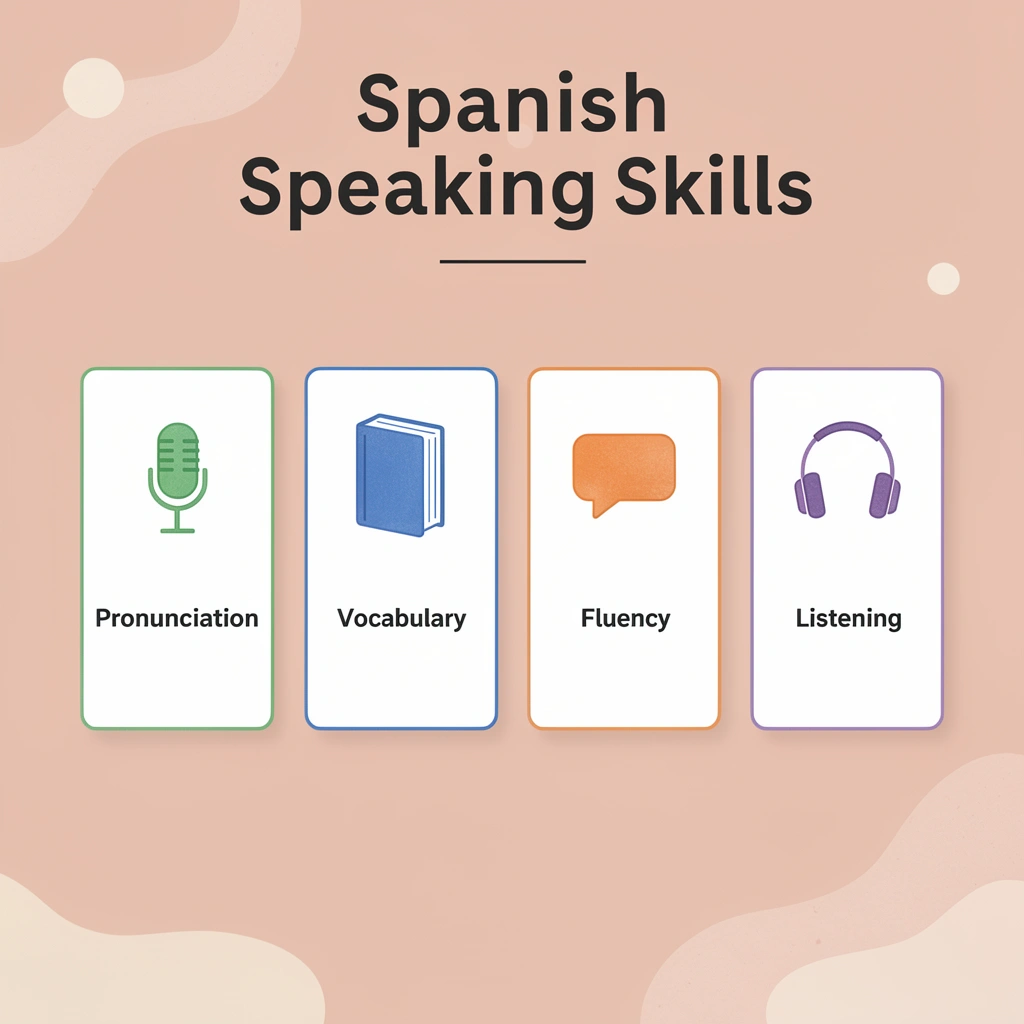
Ten apps work well for different learning styles and goals. Pick one based on your weakest speaking skill.
"The best language learning app is the one that targets your specific weaknesses — not just the most popular one." — Language Learning Experts
Different language-learning apps target different skills, so the best choice depends on which part of Spanish you want to improve:
Conversation apps – Best for speaking fluency, using real-time dialogue practice to build confidence and spontaneous responses.
Vocabulary apps – Best for word retention, using active recall and repetition to strengthen memory.
Grammar apps – Best for sentence structure, helping learners build more accurate speech patterns.
Immersion apps – Best for overall fluency, combining listening and speaking practice in a broader language environment.
💡 Tip: Don't just pick the most popular app — pick the one that targets your biggest weakness, whether that's pronunciation, vocabulary, or conversational confidence.
🎯 Key Point: Matching your app to your learning goal is the single most important factor in making real, measurable progress in Spanish speaking.
1. Parrot
Parrot uses comprehensible input through short-form Spanish video instead of flashcard drilling or multiple-choice exercises. You watch real content matched to your proficiency level, with clickable subtitles and contextual vocabulary tools that let meaning land naturally. Spanish is spoken by over 500 million native speakers worldwide, and Parrot's authentic video format exposes you to that variation early, training your ear before real conversation.
Most learners who struggle with fast, overlapping family conversations aren't missing vocabulary—they're missing the listening muscle that develops through repeated exposure to natural speech at natural speed. Parrot targets that gap in 10 to 15 minutes a day within a familiar format.
2. Pimsleur
Pimsleur uses spaced repetition and spoken phrase recall through audio lessons, making it ideal for learners who want to focus on pronunciation and conversational patterns during commutes or walks. However, it relies on scripted exchanges, so speaking confidence may not transfer to unpredictable, spontaneous conversation.
3. Babbel
Babbel structures Spanish learning around grammar, vocabulary, and pronunciation in a guided sequence, which suits learners seeking clear progression over self-directed exploration. However, it lacks spontaneous output: completing lessons provides building blocks but doesn't replicate the pressure of real-time language use.
4. Duolingo
SmarterLanguage reports that Duolingo has over 500 million downloads worldwide. The app builds daily habits and basic vocabulary effectively, but its game-like system rewards completion rather than production: a learner who finishes every lesson still hasn't had a single real conversation in Spanish.
Learners maintain their streaks and see reading comprehension improve over months. But when a native speaker talks at full speed, the gap between what the app taught and what the moment demands becomes clear. The method was never designed for spontaneous speech.
5. Busuu
Busuu combines a structured Spanish curriculum with community feedback from native speakers who correct your written and spoken responses. It merges traditional courses with language exchange, offering more interaction than grammar-focused apps.
6. italki
italki is the clearest way to get real conversation practice in an app. You book one-on-one sessions with Spanish tutors or community language partners, and the conversation goes wherever you need it to. It works well for learners who understand Spanish reasonably well but don't often get to speak it, one of the most common problems in the learning process.
italki requires you to show up prepared. Without sufficient input and vocabulary to sustain conversation, sessions end quickly. It works best as the output layer on top of consistent comprehensible input practice, not as a standalone starting point.
7. Tandem
Tandem connects you with native Spanish speakers for informal language exchange. Conversations are unscripted, exposing you to natural pace, regional expressions, and overlapping dialogue that structured apps don't cover. The tradeoff is that you take more responsibility for directing your own progress, since no curriculum guides you.
8. HelloTalk
HelloTalk connects you with Spanish speakers through text, voice messages, and audio calls. Unlike italki's structured lessons, it offers flexible practice with real-time correction tools from native speakers, making it ideal for low-stakes speaking practice before committing to a tutor.
9. LingQ
LingQ builds deep language familiarity through extensive reading and listening to Spanish content, with built-in vocabulary tracking. It's not a conversation platform, but learners who consume enough content often report that words appear in their mind before they consciously search for them, making speaking feel instinctive rather than like retrieval.
10. Dreaming Spanish
Dreaming Spanish organizes video content by proficiency level and focuses on the comprehensible input model. It's free to start, offers abundant content, and builds listening comprehension over time. Like LingQ, it's a listening resource rather than a speaking platform, so it works best when combined with something that pushes you to produce language.
How these apps actually fit together
No single app can do everything. The learners who make the fastest progress use a layered approach: authentic input to train the ear, structured lessons to organize grammar, and real conversation to force production. Most people make the mistake of treating one app as a complete solution, then blaming themselves when fluency doesn't arrive on schedule.
Why does comprehensible input matter more than drilling what you know?
An app that provides understandable input in short, daily sessions builds the subconscious language base that makes speaking feel natural, not performed. One that only tests what you already know keeps you circling the same level indefinitely.
Learn Spanish through Parrot's short-form video approach addresses the input side of that equation in a format that fits into a normal day. Most learners already spend time watching short videos. Redirecting even a fraction of that time toward Spanish content matched to your level feels less like studying and more like replacing one habit with a better one.
Which combination of tools actually closes your specific gap?
The real question isn't which app has the best interface or most content, but which combination of tools maps directly onto the specific gap between where you are and where you want to be in a real conversation. That answer is more personal than most people expect.
How to Choose the Best Speaking App for Your Goals
The best speaking app depends on what stops you from communicating comfortably in Spanish. Think about your current level, your reason for learning, and the specific skill you most need to develop.
"The right tool solves the right problem — matching your speaking app to your personal barrier is the difference between progress and frustration." — Language Learning Principle
The best learning feature depends on the specific barrier holding you back, with targeted practice helping turn each weakness into a skill:
Fear of speaking – Prioritize confidence-building practice through low-pressure AI conversations where you can practise without the anxiety of making mistakes in front of others.
Pronunciation issues – Look for real-time pronunciation feedback to identify accent and sound problems as you practise.
Vocabulary gaps – Use contextual speaking prompts that help you acquire and apply new words in meaningful situations.
Grammar mistakes – Choose tools with instant grammar analysis to provide structured corrections while you practise.
🎯 Key Point: There is no single best app — the best speaking app is the one that directly targets your weakest point in Spanish communication.
⚠️ Warning: Choosing an app based on popularity alone is a common mistake. A highly-rated app that focuses on reading and writing will not fix a speaking confidence problem — always match the tool to the specific skill gap.

What should a complete beginner look for in a speaking app?
Start with an app that provides structure: pronunciation practice, high-frequency vocabulary, reusable sentence patterns, and guided speaking exercises. A clear progression prevents jumping between unrelated topics without building a usable foundation.
What if you understand Spanish but can't respond?
Your biggest issue may be retrieving the information rather than understanding it. Look for chances to produce your own sentences instead of relying on multiple-choice questions. Speaking prompts, shadowing, role-play, and conversation practice help you transform language you recognize into language you can use.
What if you struggle to understand native speakers?
Speaking practice alone won't fix this problem. Focus on listening to substantial, understandable content alongside speaking practice. Listen to different speakers, speeds, accents, and conversation types.
What if pronunciation is your biggest weakness?
Look for audio repetition, pronunciation feedback, shadowing, and exposure to different speakers to help you get comfortable with Spanish sounds, rhythm, and connected speech.
What should you focus on if you need Spanish for travel?
Focus on practical communication rather than broad fluency. Seek speaking practice built around situations you'll encounter: ordering food, asking questions, navigating transportation, checking into accommodations, and making small talk.
What should you look for if you need Spanish for work?
Pick an approach that lets you practice real professional communication relevant to your job, whether meetings, presentations, customer interactions, or industry-specific vocabulary.
What if you want to speak Spanish with family or a partner?
Focus on everyday conversation and listening, not formal language. Learn the specific Spanish your family or partner uses, including informal expressions, pronunciation patterns, and cultural references.
What's the best approach if you have limited time?
Pick an app that makes it easy to start and repeat short practice sessions. A simple routine you stick with is more helpful than an ambitious schedule that doesn't fit your life.
What should intermediate or advanced learners prioritize?
Focus on listening to others, learning situation-appropriate words, speaking spontaneously, and having conversations where you explain your own ideas rather than repeating memorized material.
How do you choose the app that addresses your communication gap?
The best speaking app addresses your biggest communication gap and provides meaningful practice to keep improving. Even with a good speaking app, you can't become comfortable speaking Spanish without regularly hearing it used naturally. Authentic listening exposes you to the pronunciation, vocabulary, rhythms, and conversational patterns you'll need to understand and respond to. An accessible source of personalized Spanish exposure complements your speaking practice.
How Parrot Helps You Build the Listening Skills Behind Better Spanish Speaking
Speaking Spanish means more than just memorizing vocabulary — it means understanding what other people say, recognizing words you know when people talk naturally, and thinking fast enough to answer back. These are the real skills that separate a confident speaker from someone who freezes mid-conversation. Active listening, rapid word recognition, and real-time processing are essential building blocks that every learner must develop to truly communicate.
"The ability to understand spoken Spanish in real time is the hidden engine behind fluent, confident speaking." — Language Acquisition Research
Real-world Spanish requires more than knowing vocabulary—you also need to process and respond to language quickly under natural conversational conditions:
Understanding natural speech – Speakers often talk quickly and blend words together, making real-time comprehension a high-level challenge.
Recognizing familiar words – Accents, pronunciation differences, and speaking speed can make known vocabulary harder to recognise, creating a medium-high challenge.
Thinking quickly to respond – Real conversations don't pause for you, so producing an appropriate response in real time is a high-level challenge.
💡 Tip: The fastest way to improve your spoken Spanish is to train your ears first — your mouth will follow.

Parrot helps with this critical listening component of speaking by giving learners regular, structured chances to hear real Spanish in an engaging way. Rather than relying on passive exposure, Parrot builds the listening muscle that makes natural conversation feel less overwhelming and more achievable.
🎯 Key Point: Consistent listening practice through Parrot improves comprehension and directly accelerates your speaking confidence by training your brain to process Spanish automatically.
⚠️ Warning: Skipping listening practice and focusing only on grammar or vocabulary is one of the most common mistakes Spanish learners make, which is why so many struggle to hold real conversations.
What happens when you can speak but can't follow the response?
You may know how to introduce yourself and make basic sentences but still struggle when a native speaker responds naturally. If you can't understand the response, keeping the conversation going becomes difficult.
Parrot uses research-backed comprehensible input through engaging short-form videos, exposing learners to real Spanish from native speakers. Over time, this builds comfort processing Spanish outside controlled speaking exercises.
Why is native Spanish content often too difficult for learners?
Random videos, podcasts, or content made for native speakers may be too difficult for your current level, leaving you unable to follow along.
Parrot's AI-powered recommendation feed personalizes Spanish videos based on your skill level and interests, making it easier to find relevant content while gradually increasing difficulty as your comprehension improves.
How does Parrot help when an unfamiliar word breaks your focus?
An unfamiliar word can break your concentration. Pausing to search for a translation in another app can make you lose track of the content.
Parrot's clickable subtitles and instant translations provide immediate support for unfamiliar vocabulary, letting you check meaning without leaving the content.
How does Parrot help vocabulary stick in real conversation?
Recognizing a word during a lesson doesn't mean you'll remember it when you hear it in a real conversation.
Parrot lets learners save words directly from videos and revisit them in meaningful contexts, providing additional vocabulary exposure while keeping words connected to the real Spanish where they were encountered.
How does Parrot keep listening practice from becoming repetitive?
Repeating prepared dialogues helps beginners build confidence, but real conversations involve different speakers, topics, vocabulary, and ways of expressing ideas.
Parrot's personalized recommendations introduce varied Spanish content based on proficiency and interests, exposing learners to different subjects and natural language patterns while maintaining relevance to their goals.
How does building a listening foundation support real Spanish conversation?
Speaking Spanish requires understanding what others say, recognizing vocabulary in natural speech, processing different speakers, and responding without relying on translation.
Parrot supports the listening and contextual-exposure side of language learning by making authentic Spanish easier to discover and understand. It complements structured speaking practice, tutors, language exchanges, and other resources that provide opportunities to produce Spanish.
Start Learning Spanish Today
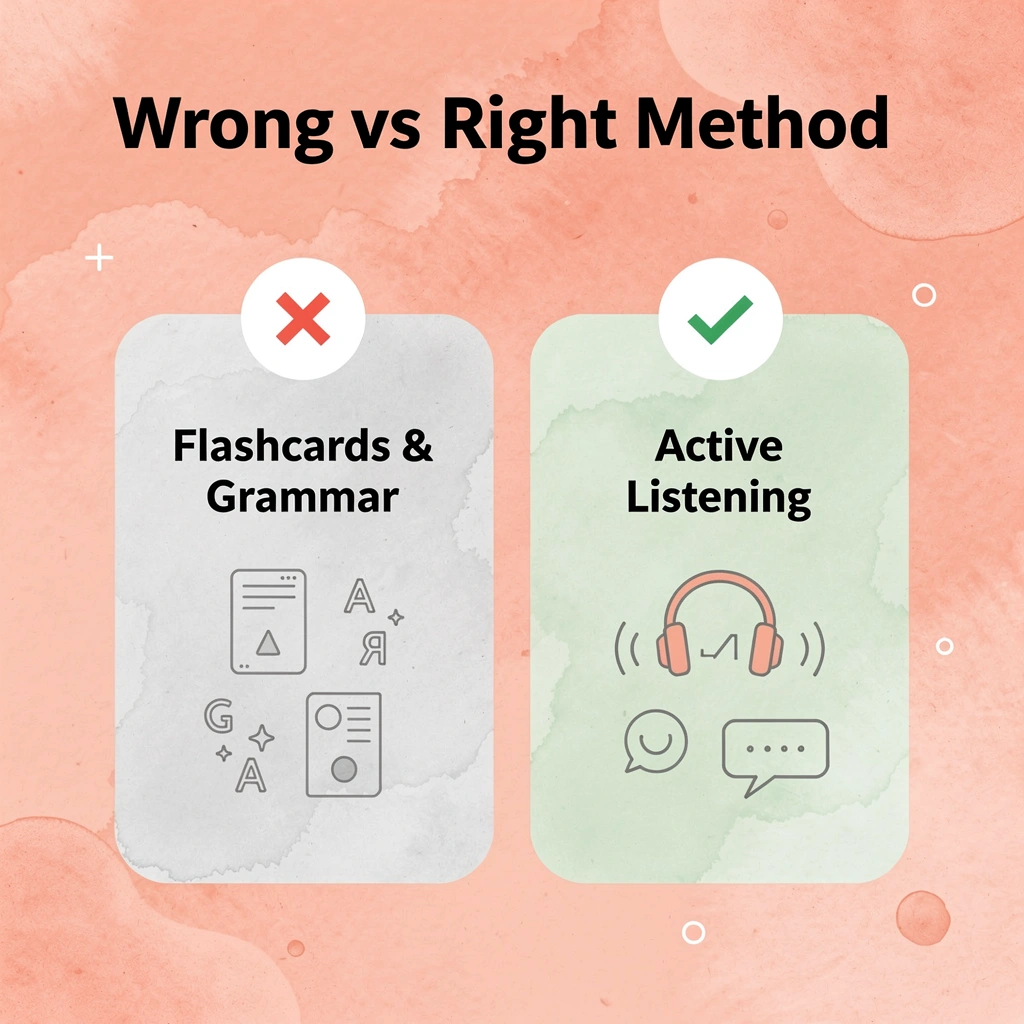
The right method matters more than motivation. Most learners waste weeks on the wrong approach—grinding flashcards or memorizing grammar rules—when smarter, more effective methods exist. You have enough information to choose a better approach for your next Spanish practice session. The only question is whether you'll act on it.
"The method you choose determines your ceiling — motivation gets you started, but the right system keeps you progressing." — Language Acquisition Research
💡 Tip: Don't wait for the perfect moment to start. The best Spanish practice session is the one you begin today with the right method behind it.
⚠️ Warning: Motivation alone is not a strategy. Without a proven learning framework, even the most enthusiastic learners plateau within weeks.
If you're ready to build the listening foundation that real conversations depend on, download Parrot and start your free 7-day trial at learn spanish. Our platform helps you actively acquire Spanish through three core features designed for real-world fluency:
Parrot turns authentic Spanish content into a personalised learning experience by matching material to your level while keeping vocabulary learning contextual:
Authentic Spanish videos – Matches videos to your exact proficiency level, giving you real Spanish input that supports more natural language acquisition.
Clickable subtitles – Provides instant word lookup without interrupting the flow, removing friction from comprehensible input.
Vocabulary saving – Lets you save words from content you actually enjoy, creating contextual learning that can support stronger long-term retention.
That's acquiring Spanish in the gaps of your day — not another rigid lesson plan, but a flexible, immersive system that fits your life.
🎯 Key Point: Parrot is built around authentic content — the same short-form Spanish videos that native speakers actually watch — so every minute you spend is real language exposure.
✅ Best Practice: Use your free 7-day trial to build a daily listening habit. Even 10–15 minutes of focused authentic input per day compounds into remarkable fluency gains over time.
Related Reading
Alternative To Pimsleur
Rosetta Stone Alternatives
Babbel Spanish Review
Best Free App To Learn Spanish
Rocket Spanish Review
Rocket Spanish Vs Pimsleur
Pimsleur Vs Babbel
Duolingo Alternatives
Pimsleur Spanish Review
Duolingo Vs Rosetta Stone
Living Language Vs Rosetta Stone
Best Duolingo Alternative For Spanish
Rocket Spanish Vs Rosetta Stone
Rocket Spanish Vs Babbel