Sitting across from a native speaker and responding naturally, without pausing to hunt for words, is what Spanish fluency actually feels like. For most learners, the gap between studying and speaking comes down to practice method. The best way to learn conversational Spanish is not more grammar drills but structured, real-world speaking practice that mirrors how the language is actually used.
Progress accelerates when learners move away from passive study and into full-sentence exchanges that reflect genuine conversation. Vocabulary sticks faster, confidence builds quicker, and the hesitation that plagues most beginners starts to fade. For anyone ready to make that shift, a focused platform like Parrot can help you learn Spanish through active, conversation-based practice that gets real results.
Table of Contents
Why Learning Spanish Fluently Is Harder Than It Looks
What Research Says About Becoming Fluent in Spanish
Why Your Spanish Isn't Becoming Fluent
How to Build a Spanish Fluency Routine That Works
Is Fluency the Right Spanish Learning Goal for You?
How Parrot Helps You Build Real Spanish Fluency
Start Learning Spanish Today
Summary
Reaching conversational Spanish fluency requires roughly 600 to 750 hours of structured study according to the U.S. Foreign Service Institute. Most learners are surprised by that number, not because it feels impossible, but because they have no clear picture of whether their current study hours are building the right skills. Completing app lessons and finishing curriculum modules does not automatically translate into the ability to speak under real conversational pressure.
The gap between recognizing Spanish and producing it is where most learners quietly stall. Recognition is passive, involving matching patterns to memorized rules, while retrieval requires pulling vocabulary and structure out of nothing, mid-sentence, with another person waiting. Nearly all common study habits train recognition almost exclusively, which explains why learners can follow a Spanish TV show with subtitles but go blank when asked a simple question face to face.
Passive input alone is not enough to lock vocabulary in. A 2023 meta-analysis published in Language Teaching examined 24 studies involving 2,771 participants and found that incidental learning through listening and reading retained only 6 to 17 percent of target words on delayed tests. Deliberate vocabulary work needs to run alongside comprehensible input, not replace it, and the words prioritized should be the high-frequency ones that actually appear in real conversation.
Speaking before feeling ready is one of the most consistent predictors of faster fluency development. A 2018 review in Language Teaching by Shawn Loewen and Masatoshi Sato identified interaction as a core component of second-language acquisition because producing language forces learners to notice gaps, test assumptions, and build automaticity that passive study never reaches. Spanish also carries a structural advantage for English speakers, sharing approximately 30 to 40 percent lexical similarity with English, which makes early speaking practice even more productive.
Defining a specific, realistic goal matters more than chasing abstract fluency. A traveler who can navigate accommodation and basic directions, a heritage speaker reconnecting with family conversations, and a professional building bilingual career skills are all pursuing genuinely different targets that require different practice approaches. Measuring progress by whether you can keep a conversation moving when you hit an unfamiliar word is a more honest indicator of communicative ability than tracking streaks or lesson completion.
A balanced weekly routine does not need to be complex, but it does need to train more than one skill. Daily comprehensible input, structured vocabulary and pronunciation work three to four times per week, and speaking practice through shadowing or conversation at least three times per week covers the core requirements. Keeping the resource stack small matters too, since three well-used tools consistently outperform six half-used ones, and a simpler routine is one that survives past the first month.
Parrot's Learn Spanish addresses the input quality problem by delivering short-form authentic Spanish video matched to a learner's current level, so daily exposure builds real comprehension rather than exercise completion habits.
Why Learning Spanish Fluently Is Harder Than It Looks
Being fluent in Spanish isn't something you finish by doing enough lessons — it's a skill you build under pressure, in real time, when real consequences follow if your brain stops working.
"Fluency isn't a finish line — it's a live performance skill that only develops under the pressure of real communication." — Language Acquisition Research
⚠️ Warning: Completing lessons feels like progress, but lesson completion and genuine fluency are not the same thing. If you've never been tested under pressure, you haven't been tested at all.
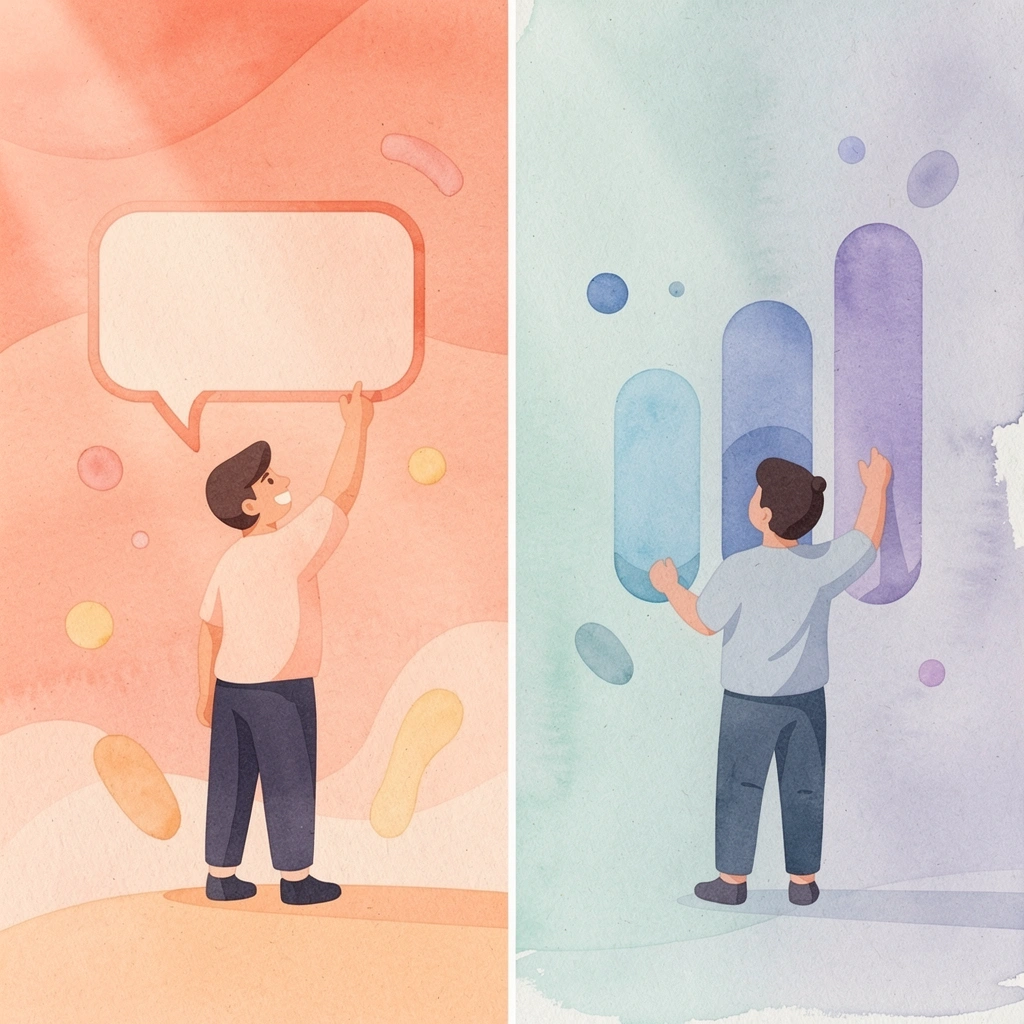
The gap between knowing Spanish and using Spanish is where most learners get stuck. You can recognize a word in an exercise and still fail to say it when someone is waiting for your answer. Recognition is passive. Conversation is not.
Passive Recognition
Identifying a word in a quiz
Doesn't activate under real pressure
Active Recall
Producing a word on demand
Requires real-time mental retrieval
Fluent Conversation
Speaking without hesitation
Built only through live, high-stakes practice
💡 Tip: Stop measuring progress by lessons completed and start measuring by conversations survived — that's where real fluency lives.
🎯 Key Point: The recognition-to-production gap is the most overlooked obstacle in language learning. Bridging it requires active, pressure-tested practice — not more passive review.
How many hours does it actually take to reach fluency?
According to Berlitz, the Foreign Service Institute estimates it takes around 600 to 750 hours to reach professional working proficiency in Spanish for English speakers. Most learners don't track how they're spending their hours or whether those hours build the right skills. Daily app lessons feel productive, but if most time goes to selecting answers from multiple-choice menus rather than retrieving language independently, the hours won't accumulate as intended.
A common pattern emerges among learners who've spent 12 to 18 months in structured apps: they pass exercises with confidence, then freeze when a native speaker accelerates, drops syllables, or shifts direction mid-sentence. Classroom Spanish is clean and predictable. Real Spanish is neither.
Why does adding more lessons fail to close the gap?
The familiar approach is to keep adding lessons and trust that fluency will follow. The hidden cost is that more input of the same kind doesn't fix a skills gap; it delays confronting it. What bridges the gap is consistent exposure to comprehensible, natural Spanish, where your brain works to understand meaning rather than match patterns to memorized rules. Tools like Learn Spanish use short-form video immersion so learners encounter real spoken Spanish in small, digestible doses that fit into daily life.
Progress becomes invisible not because it stopped, but because the metrics being tracked (streaks, lesson counts, percentage bars) don't reflect what matters: whether you can understand a stranger and respond without rehearsing.
What Research Says About Becoming Fluent in Spanish
Fluency isn't a fixed finish line—it's shaped by how you practice, what you expose yourself to, and whether you're producing language or consuming it.
"Fluency is shaped by purposeful exposure and active production, not by passive consumption alone."
🎯 Key Point: The difference between studying Spanish and acquiring Spanish comes down to active output: speaking, writing, and producing language in real time.

Hours matter less than what happens inside them. According to the U.S. Foreign Service Institute, reaching conversational proficiency in Spanish requires roughly 600 to 750 hours of structured study. That benchmark reflects intensive, proficiency-based training for government personnel — not casual practice. The number shows that sustained, purposeful practice is non-negotiable.
Hours Required
600–750 hours of structured study
Training Type
Intensive, proficiency-based
Target Audience
Government personnel, not casual learners
Key Variable
Quality of practice, not just quantity
💡 Tip: Don't just log hours — log intentional hours. Structured, goal-driven sessions will move you toward conversational proficiency far faster than passive exposure ever will.
🔑 Takeaway: 600 to 750 hours sounds daunting, but the real insight is this — it's not about the clock, it's about what fills those hours. Purposeful practice is the only path to fluency.
What actually builds vocabulary over time
The critical difference between learners who progress and those who plateau is whether their input is comprehensible. A 2023 meta-analysis published in Language Teaching examined 24 studies involving 2,771 participants and found that meaning-focused reading and listening produced measurable vocabulary gains, but incidental learning alone retained only 6 to 17 percent of target words on delayed tests. Passive exposure provides repeated contact with words but doesn't consolidate them. Deliberate vocabulary work must accompany your listening and reading, not replace it.
Why does scattered exposure fail to move words into production?
Most learners switch between apps, word lists, and occasional podcast episodes, hoping the combination will help. Scattered exposure rarely creates the repeated contact needed to move a word from recognition to production. Apps like Parrot address this differently, using short-form video immersion to deliver comprehensible Spanish in the format learners already scroll through daily, pairing natural input with the repetition that incidental listening alone cannot guarantee.
Why speaking feels so different from understanding
The anxiety many learners feel when speaking Spanish in real time isn't a confidence problem—it's a production gap. Understanding a sentence when someone else says it uses a completely different thinking process than constructing that same sentence under pressure, in real time, with another person waiting. A 2018 review in Language Teaching by Shawn Loewen and Masatoshi Sato identified interaction as a core component of second-language acquisition because producing language forces learners to notice gaps in their knowledge, test their assumptions, and build the automaticity that passive study never reaches. Speaking is where fluency forms.
Why do the fastest learners start speaking before they feel ready?
Spanish carries a structural advantage for English speakers, sharing approximately 30 to 40 percent lexical similarity with English. The learners who progress fastest aren't those with the most study hours, but those who started speaking before they felt ready.
But knowing what the research says and applying it are two different things.
Related Reading
Why Your Spanish Isn't Becoming Fluent
The failure point is usually invisible. You study consistently, finish lessons, and still hit a wall when a native speaker switches to natural speed. Most study habits train recognition, not retrieval — and those two skills live in completely different parts of how your brain uses language.
"Most study habits train recognition, not retrieval — and those are not the same skill." — The core insight behind fluency plateaus
⚠️ Warning: Finishing lessons and feeling productive is not the same as building real fluency. If your practice never forces you to retrieve language under pressure, you are training the wrong skill entirely.
💡 Tip: To break through the fluency wall, shift at least a portion of your study time from passive recognition drills to active retrieval practice — think speaking aloud, self-quizzing, and unscripted conversation at natural speed.
Recognition
Identifying words when seen or heard
Low — passive exposure only
Retrieval
Producing language from memory on demand
High — mirrors real conversation

What is the difference between recognition and retrieval in Spanish?
Recognition is passive: you see or hear something, and it clicks. Retrieval is active: you pull a word or structure out of nothing, under pressure, mid-sentence. Most Spanish learners spend nearly all their time building recognition while barely touching retrieval. That gap explains why you can understand a Spanish TV show with subtitles but go blank when someone asks you a simple question face-to-face.
Why does focusing on the right vocabulary build faster fluency?
The same issue shows up in vocabulary study and grammar review: both feel productive, but neither builds the quick reflexes that real conversation needs. LearnCraft Spanish points out that the top 100 words and core grammar structures matter most for Spanish fluency, yet most learners spread effort across hundreds of uncommon words they'll rarely use. Focusing on what appears in real speech gives your brain's word-finding system something solid to work with. Going deep with the right words moves conversations forward.
How does absorbing real language change what your study time builds?
Most learners respond by adding more content, more apps, more lessons, assuming volume will close the gap. Instead, input accumulates without being processed deeply enough to become usable. Parrot uses short-form video immersion built around comprehensible input, so each session trains your brain to understand and respond to Spanish as it sounds, not as it appears in structured exercises. Shifting from consuming lessons to absorbing real language changes what your study time builds.
Why listening alone isn't enough
LearnCraft Spanish notes that a single sentence template can express hundreds of different things. Fluency isn't about knowing more—it's about using what you know flexibly and automatically in real conversations. Learners who master a handful of useful sentence frames and practice adapting them to new situations consistently outperform those who memorize three times as many separate phrases. Structure beats volume.
What happens when listening material is too difficult?
How difficult the content is can be a hidden cost. When you listen to material that is consistently too difficult, your brain spends most of its energy understanding the words rather than learning from them. Slightly below your highest level—where you can follow along and understand most of what you hear—is where you learn fastest. That's what research consistently shows, even if it doesn't feel like you're pushing yourself hard enough.
Why does most fluency advice fall apart in practice?
Knowing this doesn't tell you what to do on a Tuesday morning with twelve minutes before work, which is where most fluency advice falls apart.
Related Reading
Best Way To Learn Spanish As An Adult
How To Learn Colombian Spanish
Rosetta Stone Spanish Reviews
How To Learn Medical Spanish
Best App To Learn To Speak Spanish
Mango Vs Rosetta Stone
Fastest Way To Learn Spanish
Best App To Learn Mexican Spanish
How To Learn Spanish On Your Own
How to Build a Spanish Fluency Routine That Works
A routine that builds conversational Spanish must train multiple skills. Most learners stick with a single activity—an app or vocabulary list—but understanding and speaking are different mental skills, and most routines only work one of them.
"Learners who train multiple language skills simultaneously develop conversational fluency significantly faster than those who rely on a single-method approach." — Language Acquisition Research
Vocabulary
Flashcard apps
Passive recognition
Listening
Podcasts, audio lessons
Comprehension
Speaking
Conversation practice
Active recall & output
Reading
Articles, stories
Grammar in context
💡 Tip: Build your daily routine around at least 2–3 skill types — not just one app — to ensure you're developing both receptive and productive language abilities.
⚠️ Warning: Relying on a single learning method is one of the most common mistakes Spanish learners make. If your routine doesn't include active speaking practice, you risk becoming a strong reader who cannot hold a real conversation.

Start with structure, then get out of it quickly
A structured foundation matters, but its job is to get you into real Spanish faster, not delay it. Focus early weeks on high-frequency vocabulary, core sentence patterns, and pronunciation rules that make authentic listening comprehensible. Once you can follow a slow, clear conversation—even partially—shift most of your time toward input. Grammar references become troubleshooting tools you consult when authentic content confuses you, rather than material you study in advance.
Where most of your time should actually go
Comprehensible input should be the center of your routine, not something extra. Listening to and reading Spanish that you can mostly follow, while encountering unfamiliar words and structures, is where learning happens fastest. Content that is too easy gives comfort but not growth; content that overwhelms gives fatigue but not fluency. The productive zone sits just below your ceiling, where you work to follow meaning without drowning in confusion.
Why does retrieval practice matter as much as input?
A common pattern among learners who stall is routines heavy on passive input but light on retrieval. They recognize Spanish in context but cannot produce it under pressure. Apps like Parrot address this gap using short-form video immersion for comprehensible input in micro-sessions that fit real schedules. Consistency across weeks and months outweighs any single long study session.
Speaking before you feel ready
The failure point in most routines is waiting too long to speak. Learners often prepare sentences in advance but freeze when real conversation moves faster than expected. Scripted practice doesn't build the spontaneous retrieval that unscripted conversation demands. Start with shadowing and self-talk: repeating what native speakers say and narrating your own day aloud before adding tutors or language exchanges. These low-stakes methods train your brain to access vocabulary in real time, a skill distinct from recognizing it on a screen.
What a realistic week actually looks like
A balanced week includes daily comprehensible input through listening or reading, structured study three to four times weekly covering vocabulary and pronunciation, speaking practice three times weekly through shadowing or conversation, and one longer session with authentic Spanish such as a film or interview. Keep your resource stack small: three well-used tools outperform six half-used ones, and a simpler routine is one you'll maintain past the first month.
But knowing how to structure your time is only part of the picture. The more surprising question is whether fluency itself is the right target to aim for.
Is Fluency the Right Spanish Learning Goal for You?
"Fluent in Spanish" is misleading because it's too vague to be useful. Fluency means something completely different depending on whether you're ordering coffee in Seville, negotiating a contract in Mexico City, or understanding your grandmother at the dinner table.
"Fluency means something completely different depending on your context — the real goal isn't fluency itself, but knowing exactly what kind of fluency you need." — Key Insight
Ordering coffee in Seville
Basic conversational phrases, casual vocabulary
Negotiating a contract in Mexico City
Advanced professional language, legal terminology
Understanding family at the dinner table
Cultural nuance, regional expressions, emotional comprehension
🎯 Key Point: Before setting "fluency" as your Spanish goal, you must define what fluency actually looks like for your life — otherwise you're chasing a target that doesn't exist.
⚠️ Warning: Treating fluency as a single destination is one of the most common mistakes Spanish learners make. It leads to years of unfocused study with no clear finish line.

What your goal actually determines
The gap between what a traveler needs and what a professional needs reflects fundamentally different goals. A traveler who can introduce themselves, find accommodation, and follow basic directions has accomplished something valuable. They don't need to understand fast Argentine slang or write formal business emails. Practical conversational Spanish, built around the specific situations you'll face, is more realistic and achievable than pursuing some abstract highest level.
Why do heritage learners face a different challenge than travelers?
Heritage learners face a different challenge. They understand how important a conversation feels but lose track when it moves fast, shifts to regional dialects, or includes cultural references absent from textbooks. Their goal isn't professional skill—it's connection. That requires practice built around listening to real speech, learning informal language, and building confidence to stay engaged in conversation.
Are you measuring your progress the right way?
Most learners measure progress the wrong way. App streaks, completed lessons, and vocabulary counts track study habits, not communication ability. A better test: Can you follow a native speaker without translating every sentence in your head? Can you keep a conversation going when you hit an unfamiliar word? Can you share an opinion, not just a fact? These questions reveal whether you're becoming someone who can communicate or simply a more diligent student.
Why does structured app learning rarely build real conversational ability?
The familiar approach—picking an app, working through its levels, and assuming conversational ability follows—rarely works because most structured tools prioritize completion over communication. Short-form immersion through real Spanish content, the kind that Parrot is built around, works differently. Instead of drilling isolated grammar rules, our platform places you inside comprehensible, natural speech from day one, which aligns with Dr. Stephen Krashen's input hypothesis on how the brain acquires language.
What does real progress feel like once your goal is clear?
Once you define a goal that fits your actual life—navigating a two-week trip, building a bilingual career, or sitting comfortably at a family table—the path forward becomes clearer. Progress stops feeling like a number on a screen and becomes tangible: a conversation you sustained longer than before, a sentence you spoke without rehearsal, a joke you understood.
Knowing where you want to go is only half the equation. The moment you decide to start is where most people get stuck.
How Parrot Helps You Build Real Spanish Fluency
Real Spanish fluency requires regular chances to hear Spanish in context, recognize vocabulary in natural speech, and gradually process the language without translating every sentence. Parrot bridges the gap between structured study and the authentic language learners need for everyday communication.
"The path to fluency isn't memorizing grammar rules — it's building the ability to process authentic language naturally, in real time." — Language Acquisition Research
🎯 Key Point: Fluency isn't just about knowing words — it's about recognizing vocabulary in natural speech and processing meaning without constant mental translation.
💡 Tip: Use Parrot consistently to close the gap between classroom Spanish and the real, everyday communication you'll encounter with native speakers.
Passive grammar drills
Active listening in context
Word-for-word translation
Natural language processing
Isolated vocabulary lists
Vocabulary in authentic speech
Structured, scripted content
Everyday communication scenarios


Why do learners study Spanish but struggle to understand authentic speech?
A learner can spend months studying vocabulary and grammar while hearing little Spanish outside structured exercises, creating a frustrating gap: the language feels familiar on paper but becomes difficult to follow when a native speaker talks. Parrot delivers research-backed comprehensible input through engaging short-form videos, exposing learners to authentic Spanish pronunciation, rhythm, vocabulary, and expressions while maintaining understandable support.
How does Parrot make native Spanish content accessible for learners?
Picking random videos from native speakers won't guarantee good practice—content that's too hard wastes study time on confusion rather than understanding. Parrot's AI-powered recommendation feed personalizes Spanish videos based on your skill level and interests, making it easier to find content that's challenging enough to teach you new language without becoming impossible to understand.
How does Parrot help when you encounter unfamiliar words?
Stopping to search for every unfamiliar word makes authentic listening tiring. Parrot's clickable subtitles and instant translations provide support while you learn, letting you quickly check word meanings and maintain focus on the broader message.
How does Parrot help vocabulary transfer into real Spanish?
Recognizing a word during an exercise doesn't mean you'll recognize it when you hear it in real conversations. Vocabulary becomes more useful when you encounter it multiple times in authentic situations. Parrot lets learners save words directly from videos and review them in context, helping you remember where you first heard the word, how it was used, and the surrounding words.
How do these features work together to build fluency?
These features work together to create a simpler path: start with a video that fits your level, use clickable subtitles when needed, save useful words, and continue with another personalized video. Spanish fluency builds through spending enough time understanding and using Spanish so that comprehension, vocabulary retrieval, and communication become automatic. Parrot makes this process easier by giving learners regular access to real, understandable Spanish and the tools to keep engaging with it.
Start Learning Spanish Today
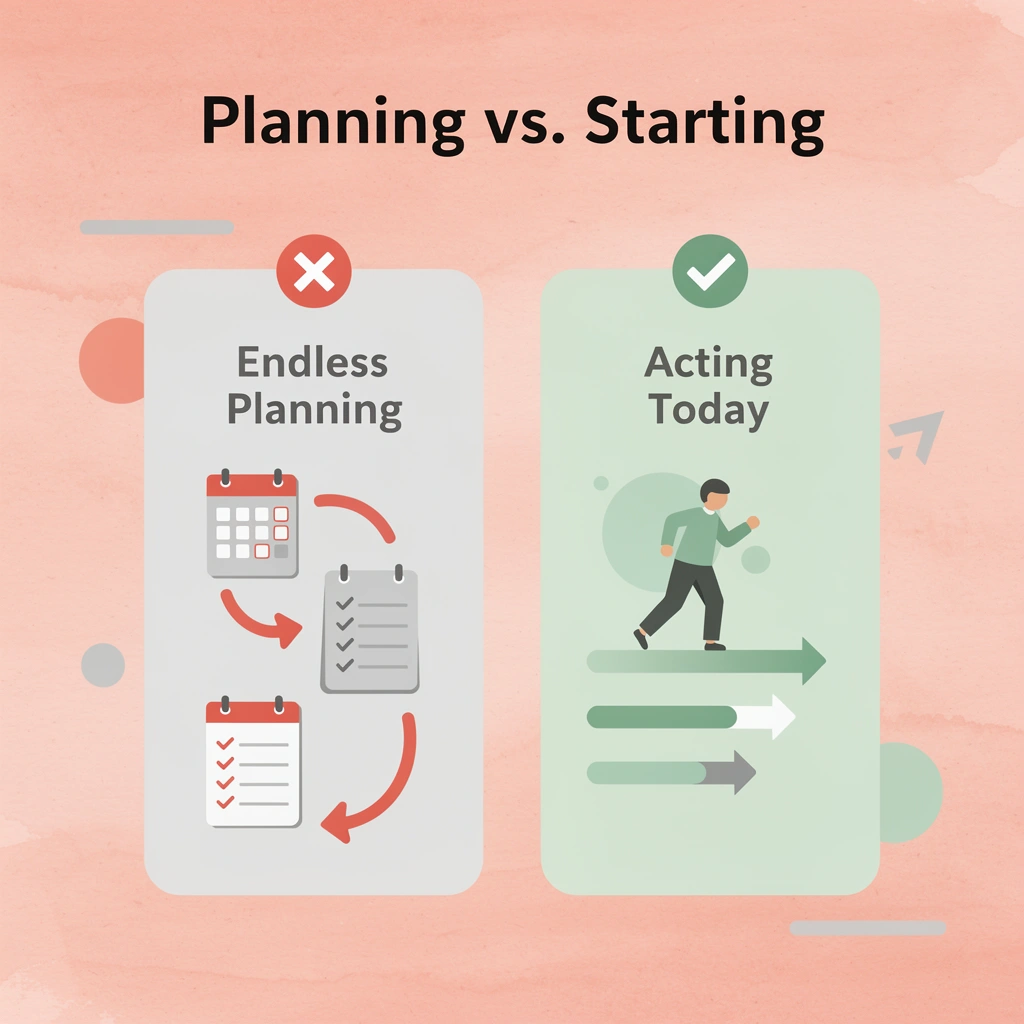
Stop treating Spanish like a project you'll get to eventually. Start treating it like something you do today — even briefly, even imperfectly. The gap between planning to learn and actually learning closes only one way: by starting now.
"The best time to start learning Spanish was months ago. The second best time is today." — Language Learning Principle
💡 Tip: You don't need a perfect plan, schedule, or conditions. You need one session — even 5 minutes counts.
If you've been studying for months without feeling closer to real conversations, the problem is rarely effort — it's exposure. Parrot gives you short-form authentic Spanish videos matched to your current level, with clickable subtitles and instant translations built in so you stay in the content instead of bouncing between tabs. You can save vocabulary directly from what you watch, which means your first session builds something useful rather than just building confidence. A free 7-day trial is enough time to feel the difference between consuming real Spanish and drilling exercises that simulate it.
Traditional drills
Simulated exposure, isolated exercises
Real Spanish, clickable subtitles, instant translation
Tab-switching study
Broken focus, passive consumption
In-app vocabulary saving
Useful output from session one
🎯 Key Point: The difference between feeling stuck and making progress isn't how hard you study — it's whether you're getting authentic exposure at the right level.
The habit you build in the next week matters more than the plan you've been refining for months. Start today—not tomorrow, not after you finish your current course, today.
⚠️ Warning: Every week you spend refining your plan instead of taking action is a week of real progress lost. Imperfect action beats perfect preparation every time.
✅ Best Practice: Commit to one short session right now. Open Parrot, start your free 7-day trial, and let authentic Spanish content do the heavy lifting from day one.

Related Reading
Rosetta Stone Vs Pimsleur
Rocket Spanish Review
Best Free App To Learn Spanish
Duolingo Vs Rosetta Stone
Rocket Spanish Vs Babbel
Babbel Spanish Review
Best Duolingo Alternative For Spanish
Rosetta Stone Alternatives
Pimsleur Vs Babbel
Alternative To Pimsleur
Duolingo Alternatives
Pimsleur Spanish Review
Living Language Vs Rosetta Stone
Rocket Spanish Vs Rosetta Stone