Downloading Duolingo and finishing a few lessons is a solid start, but many learners quickly wonder how long it will actually take to hold a real conversation in Spanish. The honest answer depends on more than daily streaks and XP points. Duolingo builds vocabulary and basic grammar habits, yet conversational fluency requires consistent speaking and listening practice that most app-based courses alone cannot provide.
Understanding where Duolingo fits within a broader learning plan helps set realistic expectations and sharper goals. Pairing it with tools designed for real conversation practice closes the gap between recognizing words and actually using them. For learners serious about speaking Spanish naturally, the right combination of resources matters, and a great place to start is Learn Spanish.
Table of Contents
Why So Many Learners Ask Whether Duolingo Is Enough
Why Time Spent on Duolingo Does Not Always Equal Fluency
The Biggest Reasons Learners Plateau on Duolingo
What Actually Determines How Long It Takes to Learn Spanish
When Duolingo Works Well and When You Need More
How Parrot Helps You Become Conversational Faster
Start Learning Spanish Today
Summary
Language acquisition research draws a clear line between explicit and implicit knowledge. Explicit knowledge covers grammar rules and vocabulary you consciously recall, while implicit knowledge is what you use automatically in real conversation. App-based learning builds explicit knowledge efficiently, but fluency depends on implicit knowledge, which develops through repeated exposure to meaningful, real language rather than structured exercises.
The Foreign Service Institute estimates that English speakers need approximately 600 to 750 hours of study to reach professional working proficiency in Spanish. That figure was built for full-time learners with professional instructors, so casual learners should treat it as a reference point rather than a personal schedule. What matters more than the total number is whether those hours consist of meaningful exposure or recognition drills, because the two produce very different outcomes.
Duolingo's own internal research acknowledges that session duration is the wrong measure of progress. The company developed a metric called "Time Spent Learning Well" (TSLW) to track quality learning time rather than raw minutes in the app. A learner who spends thirty minutes tapping through familiar exercises on autopilot gains far less than one who spends twelve focused minutes processing unfamiliar input.
Early gains on Duolingo are real and measurable. The platform's efficacy studies found that learners who completed five units showed 91% improvement in listening comprehension, and 34% showed significant improvement in reading proficiency after eight weeks. These are meaningful results for beginners, but reading comprehension and listening recognition in a controlled setting are different skills from understanding rapid natural speech in an actual conversation.
Consistency outperforms intensity across nearly every language learning outcome. A two-hour Saturday session cannot compensate for five days of silence because language memory fades quickly without daily reinforcement. Learners who reach conversational ability fastest are almost always those who built a daily habit, even a short one, rather than those who studied in occasional long bursts.
The plateau most intermediate learners hit is not a motivation problem or a talent problem. It is a method ceiling. Recognition-based exercises train learners to identify correct answers when options are already visible, a skill that has a hard limit and does not transfer to the speed or unpredictability of real conversation. Shifting to comprehensible input, content understood roughly 80 to 90 percent of the time where context fills the gaps, is what moves the brain from analytical processing to automatic retrieval.
Parrot's Learn Spanish addresses this gap by using short-form video immersion grounded in comprehensible input theory, giving learners 10 to 15 minutes a day of authentic spoken Spanish rather than structured exercises, which is the type of exposure research identifies as the primary driver of actual acquisition.
Why So Many Learners Ask Whether Duolingo Is Enough
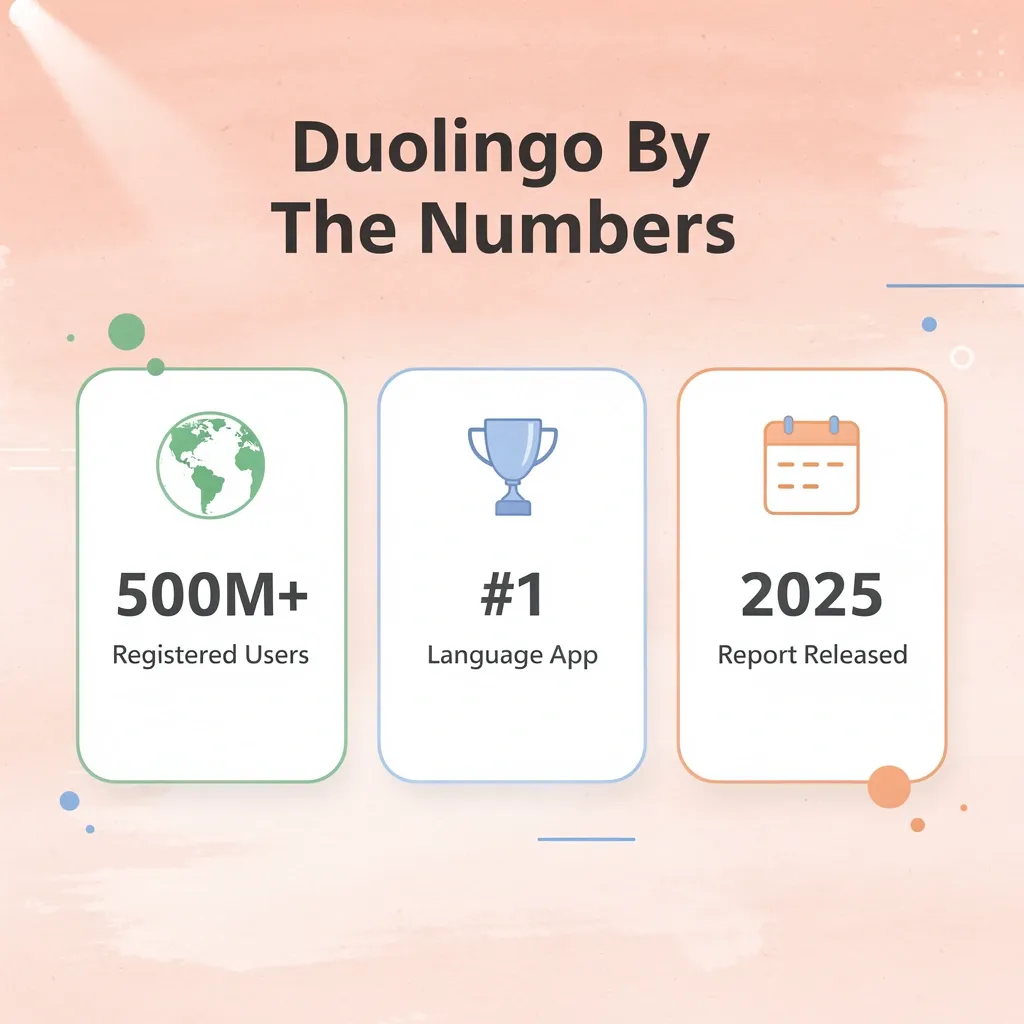
Millions of people open Duolingo every day hoping it will help them become fluent in Spanish. According to the 2025 Duolingo Language Report, Duolingo has over 500 million registered users around the world, making it easier for people to start learning a language. But starting and finishing are two different challenges.
"Duolingo has over 500 million registered users around the world — making it one of the most widely used language learning platforms in history." — 2025 Duolingo Language Report
🔑 Takeaway: 500 million users is a staggering number, but sheer popularity doesn't equal proven fluency outcomes. The real question is what happens after users sign up.
The question "how long does it take to learn Spanish with Duolingo?" masks a deeper concern: will this actually work? After weeks or months of daily practice streaks, learners notice something feels off. They can match vocabulary words and finish lessons, but when speaking with a native speaker at normal speed, their confidence disappears.
⚠️ Warning: The gap between in-app performance and real-world conversation ability is not a personal failure—it's a structural limitation of how gamified learning apps are designed.
💡 Tip: If your streak count is climbing while your speaking confidence remains flat, you're experiencing the gap that millions of learners encounter—a sign you need to supplement your practice with different methods.
Why does the method matter more than motivation?
The failure point is usually method, not motivation. Learners who spend months on gamified apps report completing hundreds of lessons yet struggling to hold a basic exchange without mentally translating every word. The app rewarded consistency but did not build the skill real conversation requires: processing Spanish as Spanish, not as a translation exercise.
Most learners respond by doubling down—adding more lessons, buying a premium plan, or extending daily practice. More time in a system that teaches recognition does not build listening comprehension or spontaneous speaking ability. Our Parrot app offers a different path. Rather than rewarding correct answers in structured exercises, we use short-form video immersion grounded in comprehensible input theory, exposing learners to real Spanish in context so the brain acquires language through meaningful exposure rather than repetitive drilling.
What does research actually show Duolingo teaches?
Research shows that app-based learning produces measurable gains in specific areas. The Duolingo Blog's efficacy studies found that learners using Duolingo for 8 weeks showed statistically significant improvements in reading and listening skills. However, improvements in reading and listening measured in a controlled study differ from those achieved through conversing with a native speaker or understanding a fast-moving telenovela. The question is whether what Duolingo teaches matches what you need.
The distinction between learning about Spanish and acquiring the ability to use it makes the timeline question difficult to answer honestly. The method determines the outcome far more than the calendar does.
But what happens inside the brain when you spend months on an app without crossing into real fluency? The answer is more surprising than most learners expect.
Why Time Spent on Duolingo Does Not Always Equal Fluency
Your brain processes language in two fundamentally different ways. Explicit knowledge is what you consciously remember: a grammar rule, a vocabulary word, a conjugation pattern. Implicit knowledge is what you use automatically when you hear someone speak and respond naturally — no thinking required. App-based learning builds explicit knowledge efficiently, but true fluency runs on implicit knowledge — which develops only through repeated exposure to meaningful, real language in real-world contexts.
"App-based learning builds explicit knowledge efficiently, but fluency runs on implicit knowledge — which develops through repeated exposure to meaningful, real language in real contexts."
⚠️ Warning: Logging hours on Duolingo does not automatically translate to speaking fluency — it builds conscious recall, not the automatic language processing that real conversations demand.
💡 Tip: To develop implicit knowledge, supplement app practice with immersive listening, real conversations, and authentic content like podcasts or films in your target language.
🔑 Takeaway: Understanding the gap between explicit and implicit knowledge is the first step to designing a language learning routine that actually produces fluency.
Explicit Knowledge
How It's Built
App drills, grammar rules, and flashcards
Used For
Conscious recall and translation
Implicit Knowledge
How It's Built
Real conversations and immersive language exposure
Used For
Automatic speaking and listening comprehension
What does quality learning time actually measure?
Duolingo found that spending time in the app was not a good measure of learning. According to the Duolingo Blog, the company created a metric called "Time Spent Learning Well" (TSLW) to measure high-quality learning time rather than total time spent. A learner can spend thirty minutes clicking through exercises they already know without paying attention and learn almost nothing new, while another learner can spend twelve focused minutes working with new material and make real progress. Real learning depends on focus, not duration.
The Duolingo Blog explains that TSLW tracks minutes of active, effective learning rather than session length. This demonstrates that focus quality matters more than lesson completion.
Why does comprehensible input drive real acquisition?
Most learners who hit a wall after months of consistent practice use methods that reward the wrong kind of effort. Dr. Stephen Krashen's comprehensible input theory, one of the most cited frameworks in second-language acquisition research, argues that fluency emerges when learners are repeatedly exposed to language they can mostly understand, but that still challenges them slightly. The brain acquires language by processing meaning, not by memorizing patterns.
Short-form video immersion built around real spoken Spanish in authentic contexts forces the brain into active processing that builds implicit knowledge. Learners using Parrot spend 10 to 15 minutes daily with real conversational Spanish rather than structured exercises, which aligns with the input Krashen's research identifies as the engine of language acquisition.
What kind of practice actually transfers to real conversation?
The critical difference is not how much time you spend studying Spanish, but whether that time triggers the cognitive process that produces fluency. Recognizing the correct answer among four options strengthens recognition. Listening to a native speaker tell a story in connected, natural speech and grasping the meaning without translating trains acquisition. These build entirely different capabilities, and only one transfers to real conversation.
The plateau most learners hit signals that the method has reached its ceiling, not that they need more time.
Related Reading
Is Duolingo Good For Spanish
Best App To Learn Spanish While Driving
Is English Or Spanish Harder To Learn
How To Learn Spanish In A Week
Can You Learn Spanish In A Year
Games To Learn Spanish
What Dialect Of Spanish Does Duolingo Teach
Best Tools To Learn Spanish
Is Pimsleur Good
Reasons To Learn Spanish
The Biggest Reasons Learners Plateau on Duolingo
The method's limit disguises itself as a problem of motivation, consistency, or talent. This wrong diagnosis traps learners in cycles of repetition without progress.
⚠️ Warning: If you feel stuck despite maintaining a perfect streak, the problem is not your work ethic: it's the feedback loop the app is giving you.
"A wrong diagnosis is more dangerous than no diagnosis at all: it keeps learners solving the wrong problem."
The most common plateau trigger is a mismatch between what the app measures and what fluency actually requires. Duolingo tracks lessons completed, hearts remaining, and streak length — none of which indicate whether your brain is building the automatic, pattern-recognition pathways that real conversation demands. A learner can finish every lesson, score perfectly on reviews, and still freeze when a native speaker asks a simple question at normal speed.
💡 Tip: Supplement Duolingo with output-based practice — speaking, writing, and responding in real time — to build the automatic recall that streaks alone will never develop.
Lessons Completed
What Duolingo Measures
Number of lessons completed
What Fluency Requires
Spontaneous sentence construction
Hearts Remaining
What Duolingo Measures
Error limits within the app
What Fluency Requires
Tolerance for ambiguity and making mistakes while communicating
Streak Length
What Duolingo Measures
Daily consistency
What Fluency Requires
Automatic pattern recognition developed through meaningful exposure
Review Scores
What Duolingo Measures
Performance on in-app review exercises
What Fluency Requires
Real-time listening comprehension in natural conversations
🎯 Key Point: Streak length and lesson scores are vanity metrics for fluency — the real goal is building neural pathways fast enough to keep up with a native speaker.
Why recognition practice stops paying off
Recognition-based exercises—matching words, arranging tiles, choosing translations—train a specific skill: identifying correct answers when they're already in front of you. That skill has a hard ceiling. According to a Duolingo All Languages Facebook Group post from 2024, learners stop because progress becomes less visible, a pattern observed consistently among long-term users across multiple languages. Improvement is real early on, but the method runs out of new territory to cover, and the learner keeps practicing the same ceiling.
What does the brain actually need to break through the ceiling?
Most learners respond by doing more lessons, adding review sessions, or switching to harder units. But the problem isn't how much you study—it's that your brain needs a different kind of input: connected, meaningful Spanish spoken at natural speed, where you must understand the meaning immediately without hints or answer choices. Apps like Parrot are built around that gap, using short-form video immersion based on comprehensible input theory to expose learners to real Spanish in 10 to 15 minutes a day, a listening practice that structured exercises cannot replicate.
What streaks actually measure
Consistency is underrated in reaching conversational Spanish, but the streak becomes counterproductive when it's the goal rather than proof of a productive habit. A 300-day streak built on two-minute review sessions represents different cognitive work than 300 days of genuine comprehensible input exposure. Both look identical on the app's progress screen, yet only one moves the learner closer to understanding fast-paced conversation or following a Spanish podcast without losing track.
Why does measuring activity instead of progress stall real learning?
Progress in language learning isn't always visible in the short term, making it easy to confuse activity with improvement. The learner who measures success by counting lessons completed always feels productive. The learner who measures success by whether they learned something new in real Spanish today sometimes feels frustrated, but they're building the right thing. That shift in how you measure success changes everything about which activities you choose and whether your method works.
How long this process takes depends far less on the app and far more on something most learners never examine.
Related Reading
How To Learn Medical Spanish
Best App To Learn To Speak Spanish
Rosetta Stone Spanish Reviews
Mango Vs Rosetta Stone
Fastest Way To Learn Spanish
Best App To Learn Mexican Spanish
Best Way To Learn Spanish As An Adult
How To Learn Spanish On Your Own
What Actually Determines How Long It Takes to Learn Spanish
Two people can study Spanish for the same number of months and end up in completely different places. The difference comes down to what they were doing with their time.
"Two learners. Same months invested. Completely different outcomes. The variable isn't time: it's how that time was used." — Core Principle of Language Acquisition
🎯 Key Point: Time spent studying Spanish differs from time used effectively. The quality of your study method matters far more than the quantity of hours.
💡 Tip: Before tracking how long you've studied, ask yourself what you were doing during that time. Passive exposure and active practice are not equivalent.

How your goal shapes your timeline
The time it takes depends on what "knowing Spanish" means to you. Ordering coffee, talking with a neighbor, or giving a work presentation require different amounts of practice. According to the Migaku Blog, reaching conversational fluency while studying one hour per day usually takes one to two years, assuming the practice builds conversation skills rather than completing exercises. Someone studying for 30 minutes a day with high-quality, easy-to-understand input can outperform someone spending twice as many hours on recognition drills.
What does your brain actually do with Spanish input?
The critical difference is not how much Spanish you consume, but how much your brain actively processes. Passive listening to content that is too easy or too fast produces almost no learning. The sweet spot is material you understand roughly 80 to 90 percent of, where your brain fills in gaps using context rather than a dictionary. That engagement, repeated consistently, builds the automatic recall real conversations demand.
Why do structured app lessons fall short of real conversation?
Most learners choose structured app lessons because they feel productive and measurable. The hidden cost is that structured exercises rarely replicate the speed, rhythm, or unpredictability of natural speech. Apps like Parrot use short-form video immersion built around comprehensible input, so learners spend their daily 10 to 15 minutes inside real Spanish rather than practicing about it.
The hours question, answered honestly
The Foreign Service Institute, cited by The Linguist, estimates that English speakers need around 600 to 750 hours of study to reach professional working proficiency in Spanish. This assumes full-time learners with professional instructors, so part-time practice around a regular life will require more time. Fluency is a volume game, but only when that volume consists of meaningful exposure. Six hundred hours of flashcard reviews won't produce the same result as six hundred hours of understanding real Spanish in context.
Why consistency beats intensity
Most learners fail not from lack of ambition but from inconsistency. A two-hour Saturday session cannot compensate for five days without practice; language memory fades without reinforcement. Thirty minutes daily keeps vocabulary, rhythm, and sentence patterns active in working memory, reducing relearning time. The fastest learners made Spanish a daily habit, not an occasional project.
What happens when you know all of this and still feel like your progress has stalled deserves understanding before you change anything else.
When Duolingo Works Well and When You Need More
The real question isn't whether Duolingo works, but what it works for and when using it alone becomes counterproductive.
"The question is never if an app works — it's when it stops being enough." — Language Learning Research
🎯 Key Point: Duolingo is a tool, not a complete solution. Understanding its limits matters as much as knowing its strengths.

For absolute beginners, the app does really well. It breaks a new language into manageable pieces, builds foundational vocabulary, and makes daily practice feel achievable. According to the Duolingo Efficacy Page, learners who completed five units showed a 91% improvement in listening comprehension — exactly the early-stage recognition skill beginners need.
Absolute Beginner
Duolingo Effectiveness
✅ Excellent
When You Need More
Rarely—it's designed for this stage
Intermediate
Duolingo Effectiveness
⚠️ Limited
When You Need More
Conversation practice and deeper grammar instruction
Advanced
Duolingo Effectiveness
❌ Insufficient
When You Need More
Immersion, writing practice, and fluency-focused speaking drills
💡 Tip: Use Duolingo's early units to build vocabulary momentum, but plan to supplement as soon as you hit the intermediate plateau.
⚠️ Warning: Relying solely on Duolingo past the beginner stage can create a false sense of progress — listening recognition is not the same as real conversational fluency.
Why do structured lessons stop producing real conversational gains?
The failure point is usually invisible until you're stuck. Intermediate learners continue to complete lessons because apps reward them with points and streaks, but the skills that matter most—understanding fast, natural speech, responding without translating, holding real conversations—require something the lesson format cannot provide. Structured exercises build recognition. Conversation requires retrieval under pressure in real time, without a multiple-choice safety net.
What fills the gap when doing more lessons no longer works?
Most learners respond by doing more of the same: adding extra lessons, chasing longer streaks, and assuming volume will produce fluency. The gap between what they can complete and what they can say widens quietly. Platforms built on comprehensible input fill this space. Parrot uses short-form video immersion to deliver authentic Spanish in 10 to 15 minutes a day, training your brain to process language automatically rather than analytically.
When your goals change the equation
If you're learning Spanish for a specific reason, things change. Travelers with short-term goals often find that Duolingo plus listening practice covers the words they need. Professionals in healthcare, legal work, or international business need to quickly understand Spanish in their field, which games cannot provide. The Duolingo Efficacy Page notes that 34% of learners showed significant improvement in reading ability after eight weeks, but reading ability and workplace communication require different methods.
Duolingo is an excellent starting point and daily reinforcement tool, but it wasn't designed to achieve conversational fluency. Expecting it to do so mismatches the tool with your goals.
Knowing when to expand your approach is the insight most learners reach too late.
How Parrot Helps You Become Conversational Faster
Becoming conversational in Spanish requires more than completing lessons. While structured apps like Duolingo build vocabulary and grammar, learners need regular exposure to real Spanish, opportunities to hear native speakers, and a sustainable learning experience. Parrot works alongside your existing study routine instead of replacing it, turning your foundation into practical conversational ability.

Why don't lessons always prepare you for real conversations?
Structured exercises cannot fully recreate how Spanish sounds in everyday life. Native speakers use natural pacing, informal expressions, regional accents, and conversational patterns that learners need to hear repeatedly.
How Parrot helps: Our Parrot platform delivers Spanish through engaging short-form videos built on research-backed comprehensible input. Because the content remains understandable while introducing new language naturally, learners develop listening comprehension alongside vocabulary and sentence patterns, bridging the gap between recognizing Spanish in an app and understanding it in real conversations.
How does looking up every word affect your learning?
Constantly switching between an app, dictionary, and content makes it difficult to stay focused on the overall message.
How Parrot helps: Clickable subtitles and instant translations support learners without leaving the video, enabling them to follow conversations and build the habit of understanding Spanish in context rather than translating every sentence.
Why doesn't vocabulary stick after the lesson ends?
Words learned in isolation are often forgotten because they lack connection to meaningful situations.
How Parrot helps: Learners save new words directly from videos and revisit them in the same contexts where they naturally occur. Repeated exposure across different conversations strengthens both recognition and recall.
How do you find content at the right level without wasting time?
Beginners often find real material overwhelming, while intermediate learners waste time searching for resources that match their level.
How Parrot helps: Our AI-powered recommendation feed personalizes content based on interests and proficiency. Learners receive a steady stream of engaging content that gradually becomes more challenging as comprehension improves.
How do you stay motivated long enough to become fluent?
Many people stop learning not because they lack ability, but because their routine becomes repetitive.
How Parrot helps: By transforming content you already enjoy into a personalized learning experience, Parrot integrates Spanish into everyday entertainment rather than treating it as a separate task. Whether you're interested in travel, sports, food, music, relationships, or current events, learning occurs through content you want to watch. Consistency drives conversational fluency.
Parrot fills the gap that many learners encounter after building basic vocabulary and grammar by combining comprehensible input, contextual vocabulary learning, personalized recommendations, and engaging short-form videos to transform study into real-world communication.
Start Learning Spanish Today
You already have the answer to the method question. What's left is making the decision.
"The gap between knowing what to do and actually doing it is where most language learners get stuck — and where real progress begins." — Language Learning Research
💡 Tip: The best time to start learning Spanish was yesterday. The second best time is right now. Even 10 minutes today builds momentum that compounds over time.
⚠️ Warning: Overthinking your method is one of the most common reasons learners never get started. Commit to an approach and let consistency do the work.

If you're ready to move past recognition drills and build Spanish that works in real conversations, learn Spanish with Parrot — a short-form video immersion app built on comprehensible input theory that fits into 10 to 15 minutes a day. It replaces passive repetition with content your brain can actually absorb and retain. Start your free trial today.
Learning Method
Traditional Apps
Repetition drills
Parrot
Comprehensible input
Daily Time Required
Traditional Apps
30–60 minutes
Parrot
10–15 minutes
Content Format
Traditional Apps
Flashcards and quizzes
Parrot
Short-form video immersion
Real Conversation Preparation
Traditional Apps
Limited
Parrot
Built in
🎯 Key Point: Comprehensible input theory is one of the most research-backed approaches to language acquisition — meaning you learn Spanish the way your brain was naturally designed to absorb language.
✅ Best Practice: Pair your Parrot sessions with real-world exposure — even 5 extra minutes of Spanish music, podcasts, or video content daily can dramatically accelerate your fluency.
Related Reading
Rocket Spanish Vs Babbel
Pimsleur Vs Babbel
Rosetta Stone Alternatives
Living Language Vs Rosetta Stone
Best Duolingo Alternative For Spanish
Pimsleur Spanish Review
Rocket Spanish Vs Rosetta Stone
Babbel Spanish Review
Rosetta Stone Vs Pimsleur
Duolingo Vs Rosetta Stone
Rocket Spanish Review
Best Free App To Learn Spanish
Alternative To Pimsleur
Duolingo Alternatives