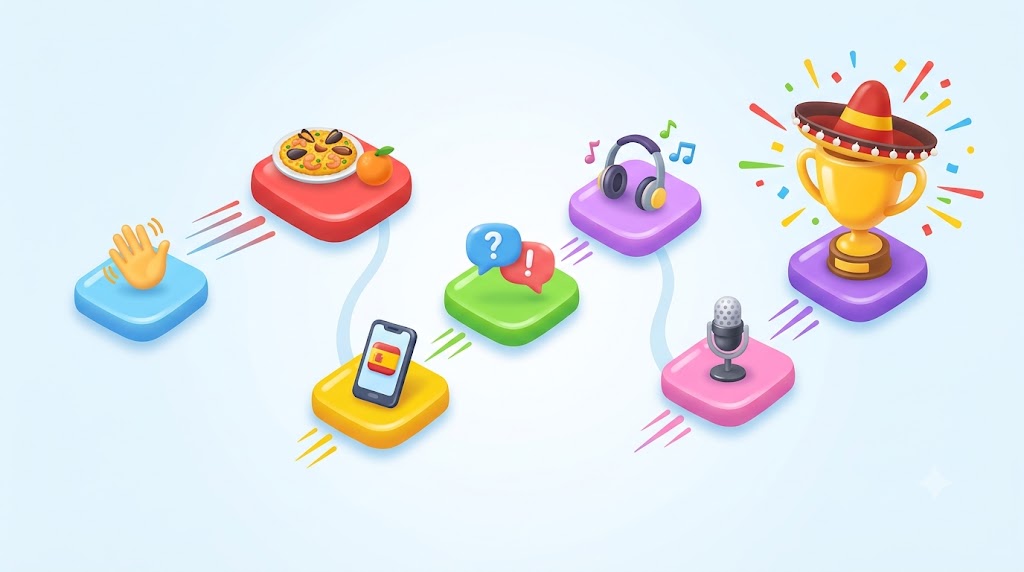
A week before a trip to Mexico, most beginners want one thing: the ability to hold a real conversation without freezing mid-sentence. A focused, realistic plan can genuinely move the needle in seven days, but it requires knowing what to prioritize and what to skip entirely.
The best way to learn conversational Spanish fast is to practice the way people actually speak, through repetition, listening, and speaking out loud rather than memorizing grammar rules in isolation. Parrot is built around exactly that approach, putting learners inside real conversations so words connect to meaning quickly. For anyone starting from zero, learn spanish with a tool that mirrors natural speech patterns makes every session count.
Table of Contents
Can You Really Learn Spanish in a Week?
What Research Says About Learning Spanish in One Week
Why Most One-Week Spanish Plans Fall Short
A Practical 7-Day Spanish Learning Plan
Is One Week the Right Goal for You?
How Parrot Helps You Make the Most of Your First Week
Start Learning Spanish Today
Summary
Reaching conversational fluency in Spanish takes English speakers roughly 600 to 750 hours of study, according to the Foreign Service Institute. That number reframes what a single week is actually for. Seven days is not a finish line. It is a starting point, and the quality of that start determines how quickly the following weeks compound.
The brain consolidates new language during rest and sleep, not just during active study. This means short, repeated sessions distributed throughout the day produce stronger retention than a single long block of cramming. A week of structured daily exposure, even 60 to 90 minutes spread across listening, speaking, and review, builds neural patterns that a six-hour study marathon cannot replicate.
Most short-term Spanish plans fail because learners try to cover too much surface area instead of going deep on what matters. Switching between apps, saving podcasts, and memorizing long vocabulary lists creates the feeling of productivity without the repetition that retention actually requires. Words learned through repeated meaningful exposure in context outlast words memorized from lists by a significant margin.
Speaking is not the reward at the end of preparation. It is part of the preparation itself. Learners who delay speaking until they feel ready rarely reach that threshold on their own, because passive study does not build the muscle memory that producing language requires. Even basic shadowing, repeating short audio clips after native speakers, or describing nearby objects in simple sentences, builds communication instincts that reading and reviewing never touch.
A returning learner who studied Spanish years ago will recover vocabulary and listening instincts far faster than a true beginner. The neural pathways already exist and simply need reactivation. That distinction matters when setting realistic expectations for a one-week plan, because recognition is faster than acquisition, and the two experiences feel very different in practice.
Written goals produce measurably better outcomes than vague intentions. According to Mooncamp's goal-setting research, people who write down their goals are 42% more likely to achieve them. A specific target, such as understanding a slow-paced conversation about food or travel and responding with basic sentences, gives a week of focused input something concrete to reach, rather than the immeasurable standard of "learning Spanish."
Parrot's Learn Spanish addresses this directly by using short-form video immersion to deliver comprehensible input inside the idle minutes already scattered through a learner's day, connecting words to real conversational meaning rather than drilling them in isolation.
Can You Really Learn Spanish in a Week?
You can make real progress in Spanish within a week. You will not become fluent. Those are two different things, and mixing them up is where most learners go wrong before they even begin.
"The gap between making progress and achieving fluency is where learner expectations collapse: where smart study strategies begin to matter most."
⚠️ Warning: Confusing real progress with full fluency is the single most common mistake new Spanish learners make. It kills motivation before the journey starts.

The difference matters because your expectations shape your method. If you spend seven days trying to absorb grammar conjugations and vocabulary lists, you will likely feel defeated by day three. But if you spend those same seven days building the habit of listening to Spanish, absorbing high-frequency phrases in context, and training your ear to recognize natural speech patterns, you walk away with something genuinely useful — not a certificate, but a foundation.
💡 Tip: Focus your first week on high-frequency phrases and active listening — not grammar drills. This approach builds a real, usable foundation far faster than traditional methods.
Approach
Result After 7 Days
Grammar conjugations + vocabulary lists
Likely frustrated and overwhelmed by day three
High-frequency phrases + active listening
Genuine foundation with recognizable speech patterns
🎯 Key Point: The goal of week one is not fluency — it's building a sustainable habit and a functional ear for the language.
Why does your method matter more than your motivation?
The problem usually isn't the person learning—it's the method being used. Most people study Spanish the way they studied for school tests: cramming information, repeating it, testing themselves, and feeling discouraged when they forget. That cycle creates stress, not real learning. According to Expanish, English speakers need about 600 to 750 hours of study to reach professional working proficiency in Spanish. However, the research shows something equally important: the hours accumulate. Every study session conducted correctly builds on the previous one.
Why do phrase books and word lists fail to stick?
The common approach to short-term language learning relies on phrase books and translation apps. People memorize "100 Spanish words to know before your trip" and struggle when native speakers respond at natural speed. Isolated words without context are nearly impossible to retain. Your brain stores language as patterns, associations, and meaning tied to sound, not as a list.
When you learn "gracias" by hearing it said warmly after a favor, it lands differently than reading it off a flashcard. Tools like Parrot use short-form video immersion to connect words to real conversational moments rather than drilling them in isolation, so five minutes of practice becomes meaningful input instead of rote repetition.
What can you realistically achieve in seven days?
What you can realistically achieve in seven days is more specific than most guides admit. You can build a working vocabulary of 150 to 200 high-frequency words and phrases, train your ear to catch the rhythm of spoken Spanish, and learn to introduce yourself, ask basic questions, and respond to simple prompts without freezing. According to Expanish, most English speakers reach conversational fluency in six to nine months of consistent practice. A week is not the finish line—it is the starting line, and how you run it determines how quickly the rest of the race goes.
The most honest thing anyone can tell you about learning Spanish in a week is this: the goal is not to arrive somewhere by Sunday. The goal is to build the right habit on Monday so that the weeks that follow move you forward.
What Research Says About Learning Spanish in One Week
Progress in Spanish is measured by hours of quality exposure, not calendar days. According to the Foreign Service Institute via Parrot Blog, reaching upper-intermediate Spanish proficiency requires 600 to 750 hours of study. A single week is a deposit toward that goal, not a complete withdrawal.
"Reaching upper-intermediate Spanish proficiency requires 600 to 750 hours of study — a single week is a deposit, not a complete withdrawal." — Foreign Service Institute via Parrot Blog
Spanish proficiency develops progressively, with each milestone requiring significantly more practice:
Basic survival phrases — ~30–50 hours – Enough to handle greetings, numbers, simple requests, and other essential interactions.
Conversational beginner — ~150–200 hours – Supports simple back-and-forth conversations on familiar topics.
Upper-intermediate fluency — ~600–750 hours – Enables more complex conversations along with stronger reading and writing ability.
🔑 Takeaway: One week of study cannot deliver fluency — but it can deliver meaningful, measurable progress if your hours are high-quality and focused.
💡 Tip: Instead of asking "Can I learn Spanish in a week?" ask "How many quality hours can I log this week?" — that reframe is the real key to accelerating your long-term progress.
⚠️ Warning: Treating a 7-day sprint as a complete learning solution sets you up for disappointment. Think of it as unlocking the first layer of a 600+ hour journey.

How does your brain actually build Spanish in seven days?
When you start learning Spanish, your brain builds a network of sound patterns, associations, and meaning—not storing vocabulary like files in a folder. Cognitive science research shows the brain consolidates new language during sleep and rest, not just during active study. A week of short, repeated sessions scattered throughout each day produces stronger retention than one exhausting six-hour block. The spacing effect determines whether learners remember what they studied.
Why do most learning habits collapse before the week is up?
Most learners use apps that reward streaks and punish gaps, opening gamified lessons and tapping through vocabulary cards. But when the streak breaks or novelty fades, the habit collapses because it was built on obligation, not absorption. Apps like Parrot take a different path, using short-form video immersion to transform idle minutes—a commute, a coffee break, a few moments before bed—into genuine Spanish exposure rather than another task to complete.
How much can realistically change in a week?
According to Expanish, most English speakers need six to nine months to reach conversational fluency. One week cannot teach you to discuss your childhood or debate politics in Spanish. It can help your brain adjust to the language's sounds, teach you common words and phrases, and help you recognize patterns in real speech rather than translate word by word. This shift from decoding to recognizing marks the first real milestone in language learning, and a focused week can get you there.
What kind of study habits make the biggest difference in week one?
The learners who get the most from a single week study in a way their brain can use: through comprehensible input, spaced repetition, and consistent daily exposure rather than desperate sprints toward fluency. Build that habit in week one, and every week that follows builds on it.
Related Reading
Best App To Learn Spanish While Driving
How To Learn Spanish In A Week
Games To Learn Spanish
Best Tools To Learn Spanish
Reasons To Learn Spanish
Why Most One-Week Spanish Plans Fall Short
Most one-week Spanish plans fail because the method works against how the brain learns language. Effort goes into vocabulary lists that don't stick, grammar tables that don't transfer, and apps that reward streaks over understanding.
"The brain doesn't retain language through passive exposure — it requires active, meaningful engagement to move words from short-term to long-term memory." — Language Acquisition Research
⚠️ Warning: If your Spanish plan relies on rote memorization or streak-based apps, you're building on a foundation that won't hold when it matters most.
💡 Tip: The most effective language learners focus on contextual usage and active recall — not just logging daily app minutes or copying grammar tables by hand.
Common language-learning methods can build useful foundations, but they may fall short when the goal is practical communication:
Vocabulary lists – Words learned without context can be harder to retain and use naturally.
Grammar tables – Memorising rules does not necessarily translate into fluent, spontaneous speech.
Streak-based apps – Rewards can encourage consistency, but completing daily activities does not always mean the learner has developed genuine understanding.

The coverage trap
The most common pattern is learning too much surface area instead of going deep on what matters. A learner spends day one memorizing 200 nouns, day two studying verb conjugations, and day three switching to a new app with a different approach entirely. By day five, nothing has been consolidated because nothing was encountered often enough, in context, to register. Research on vocabulary acquisition consistently shows that words retained through repeated meaningful exposure outlast words memorized from lists by a significant margin. Breadth feels productive. Depth is.
Why does grammar study slow conversational progress down?
Grammar deserves a specific mention because it consumes time that listening should own. Reading about the subjunctive is not the same as recognizing it when a native speaker uses it at natural speed. Grammar knowledge can support comprehension, but it cannot replace it. When your goal is conversational Spanish within a week, grammar is a reference tool, not a curriculum.
What happens when you wait until you feel ready to speak?
Most learners delay speaking until they feel ready, and that moment rarely arrives on its own. Speaking is not the reward at the end of preparation; it is part of the preparation itself. Basic activities like repeating phrases aloud, describing nearby objects, or shadowing audio clips build the muscle memory that passive study cannot develop.
How does constantly switching resources work against retention?
The familiar approach of collecting resources makes all of this worse. Each time you switch resources, it costs you focus time and interrupts the repetition your brain needs to remember things. A short-form video platform like Parrot solves this by delivering understandable language input during idle minutes already scattered through your day, keeping your exposure consistent without requiring a separate study block or new learning context.
Perfectionism silences you. When every sentence must be grammatically correct before you speak, you stop speaking. Functional communication—being understood in common situations with imperfect grammar—builds more real-world fluency in a week than flawless written exercises ever will.
Related Reading
Rosetta Stone Spanish Reviews
How To Learn Medical Spanish
Best App To Learn Mexican Spanish
Best App To Learn To Speak Spanish
Fastest Way To Learn Spanish
Best Way To Learn Spanish As An Adult
Mango Vs Rosetta Stone
How To Learn Spanish On Your Own
A Practical 7-Day Spanish Learning Plan
Seven days builds a working foundation of high-frequency vocabulary, basic sentence patterns, and listening exposure—enough that Spanish starts to sound like language rather than noise. Not fluency or deep conversations, but a meaningful, achievable outcome.
"A focused 7-day plan targeting high-frequency vocabulary and basic sentence patterns gives beginners the critical foothold they need to recognize Spanish as structured language—not random sound."
💡 Tip: Focus your first 7 days on high-frequency words and core sentence patterns—these give you the highest return on your time investment before anything else.
🎯 Key Point: The goal of this plan is not instant fluency—it's a real, measurable foundation: recognizing words, parsing sounds, and building the confidence to keep going.
The goal of an effective first week is to build a practical foundation you can continue developing:
High-frequency vocabulary – Learn the most common words used in everyday Spanish so you can recognise and understand more of what you hear.
Basic sentence patterns – Build simple, functional phrases that you can start using from day one.
Listening exposure – Train your ear to recognise Spanish as meaningful language rather than unfamiliar sounds.
Working foundation – Create a practical launchpad for progressing toward real conversations beyond the first seven days.
Day 1: Start with what you'll actually use
Start with words and phrases that appear in almost every conversation: greetings, numbers, common questions, polite expressions, and the present tense of ser, estar, and tener—the three verbs that form the skeleton of everyday Spanish. Spend the last 20 minutes of Day 1 listening to beginner-friendly Spanish audio to train your ear to the language's sound.
How you say words matters more than most plans acknowledge. If you learn a word by reading it silently, you'll recognize it when you read it but freeze when you hear it spoken at normal speed. Say every new word aloud and repeat it until it feels natural.
Days 2 and 3: Shift from studying to absorbing
The critical difference between learners who make progress and those who stall is what they do after Day 1. Most keep studying Spanish; the ones who improve start absorbing it. Watch short beginner videos and listen to simple dialogues. Pay attention to expressions that keep appearing—frequency signals the brain what matters.
Why does comprehensible input turn vocabulary into lasting retention?
According to the italki Blog, a structured 30-day Spanish plan targets 500 new words in the first seven days. These words become useful only when you encounter them in context, hear them in real sentences, and connect them with meaning rather than memorize them from a list. Comprehensible input converts vocabulary from short-term recall into lasting retention.
Days 4 and 5: Use the Spanish you've built
A common pattern emerges at this point: learners feel they need more preparation before speaking. They don't. Speaking practice on Day 4 with imperfect grammar produces more progress than waiting until Day 7 with perfect grammar, because producing language forces your brain to retrieve and organize what it has absorbed.
What does active speaking practice actually look like on these days?
Practice shadowing by repeating short audio clips after native speakers. Describe your surroundings in simple sentences. Role-play ordering food, asking for directions, or checking into a hotel. A 10-minute conversation with a tutor or language exchange partner outweighs an hour of passive review.
Why does waiting to speak make the gap harder to close?
The familiar approach treats speaking as the final reward after sufficient studying, creating a gap between comprehension and communication that widens over time. Apps like Parrot address this by using short-form video immersion to provide daily exposure to real spoken Spanish in otherwise passive moments.
Days 6 and 7: Consolidate, don't expand
The failure point in most 7-day plans is Day 6, when learners introduce large amounts of new material instead of strengthening what they already have, resulting in shallow vocabulary with no depth.
Spend these final two days revisiting words in their original contexts. Repeat role-play scenarios from Days 4 and 5 and summarise short videos in Spanish using your own words. This active retrieval—pulling language out rather than pushing it in—shifts vocabulary from recognition to use.
A daily routine that actually holds
The italki Blog notes that you can reach basic conversational ability in Spanish within 30 days with consistent effort. A daily routine looks like this: 20 to 30 minutes of structured lessons covering common vocabulary and core grammar, 20 to 30 minutes of beginner-friendly listening, 10 to 15 minutes of speaking practice through shadowing or simple conversation, and 10 to 15 minutes reviewing words in their natural contexts. That's 60 to 90 minutes a day: manageable, specific, and balanced across every essential skill.
Why is the habit itself the real outcome of week one?
What most learners miss is that the routine itself is the outcome of week one. The Spanish you learn in seven days will grow, but the habit of daily exposure, listening, speaking, and reviewing in context determines whether your Spanish continues growing six months from now.
The goal for a 7-day plan isn't to know Spanish. It's to know how to keep learning it, with a working vocabulary and enough listening exposure that the language feels familiar rather than foreign. Poco a poco. Little by little. That's the only path that works.
But whether one week is the right frame for your specific situation deserves consideration before you begin.
Is One Week the Right Goal for You?
Seven days is the right amount of time — if you know what you're actually measuring. The question isn't whether a week is long enough to learn Spanish — it's whether a week is long enough to build the system that learns Spanish for you.
"The goal of the first week isn't fluency — it's building the learning system that makes fluency inevitable."
🎯 Key Point: One week is not about how much Spanish you can absorb — it's about whether you can establish the habits, tools, and routines that will carry you forward long after day seven.
💡 Tip: Before you start your 7-day sprint, define your success metric clearly. Are you measuring vocabulary words learned, daily consistency, or confidence in basic conversation? The right goal changes everything about how you structure your week.
Effective Spanish learning is less about unrealistic short-term targets and more about building a sustainable system:
“Learn Spanish in a week” → Build a daily Spanish habit that compounds over time.
Memorize 100+ words randomly → Master core vocabulary systematically through structured repetition and context.
Consume as much content as possible → Practise active recall every day to turn exposure into usable knowledge.
Finish a course → Create a repeatable routine that continues beyond any single course or programme.

What your goal actually determines
The honest answer depends on why you're starting. Travel preparation, survival vocabulary, basic greetings and directions can be achieved in a focused week. But if your goal is to have a real conversation with a native speaker at natural speed, one week is the beginning of the timeline, not the end. Treating it as a finish line is where most people go wrong.
Does your starting point change how fast you can progress?
Where you start changes how the math works. Someone returning to Spanish after a long break can recover vocabulary and listening skills much faster than someone starting from scratch. The neural pathways already exist but lie dormant. A focused week for someone returning to the language can yield progress equivalent to months for a beginner.
Why does the most common approach create activity without progress?
The most common approach is to download an app and study in daily bursts. This creates activity without necessarily creating progress, since passive familiarity with vocabulary differs from absorbing how the language sounds and flows in real use. Apps like Learn Spanish use short-form video immersion built around comprehensible input, transforming idle minutes into genuine exposure to Spanish as it's spoken, not drilled.
How does goal clarity shape what a week of learning can actually achieve?
According to Mooncamp's Goal Setting Statistics, people who write down their goals are 42% more likely to achieve them. Writing down what you want constitutes a form of commitment. If your written goal is "speak Spanish confidently," it's too unclear to work toward in seven days. If it's "understand a slow-paced conversation about food or travel and respond with basic sentences," that's a target a week of focused learning can reach.
What is the real value of setting a one-week learning goal?
The value of a one-week goal isn't the Spanish you build up; it's the learning habit you create or don't. Seven days is long enough to prove that daily practice is doable, fits inside a commute or lunch break, and produces real progress. The learner who continues after week one is the one who eventually has that conversation.
How Parrot Helps You Make the Most of Your First Week
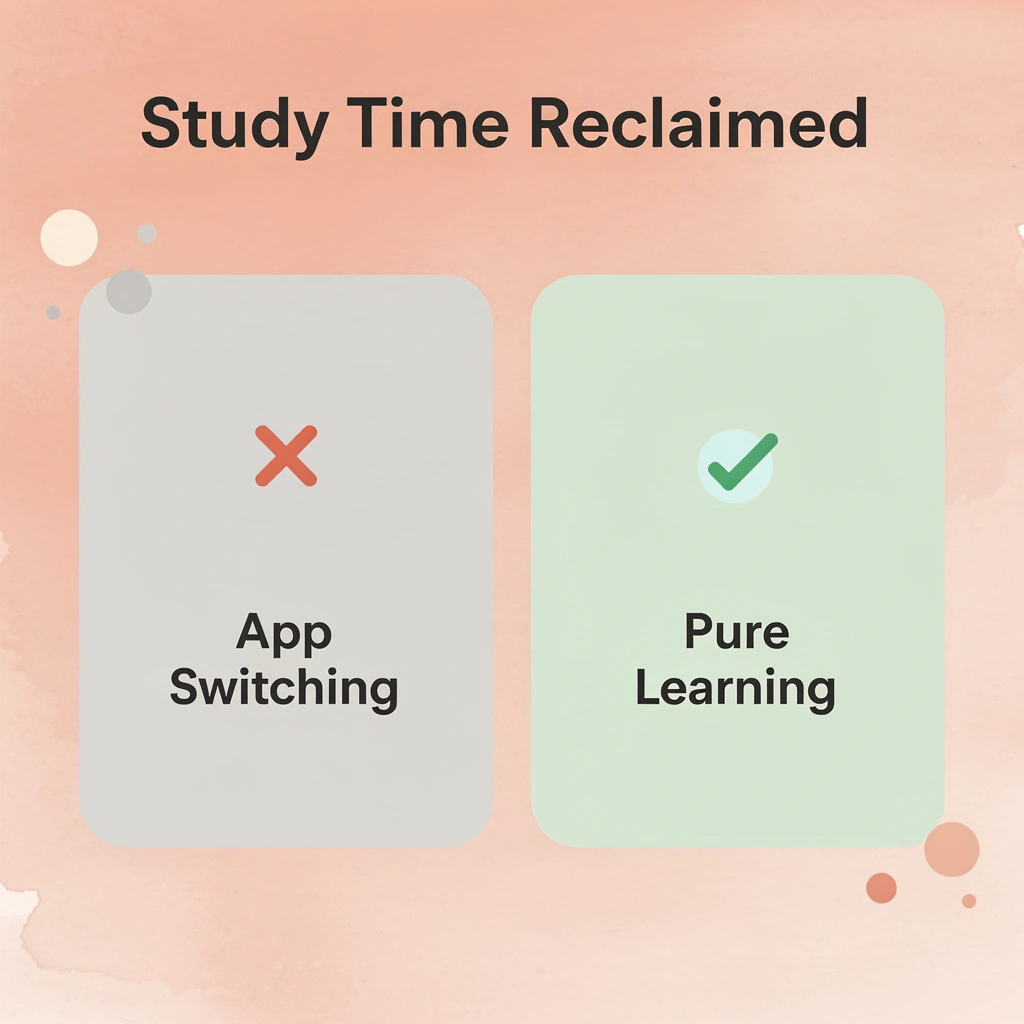
With only seven days to learn Spanish, every study session matters. Parrot eliminates time spent switching between apps, searching for content, or memorizing disconnected vocabulary lists—letting you focus on understanding and using the language.
"With only seven days to learn Spanish, every minute of focused study is a competitive advantage you can't afford to waste." — Parrot Learning Methodology
Parrot is designed to reduce the friction that makes language learning feel inefficient:
Switching between apps – An all-in-one platform keeps learning activities in one place, reducing distractions and context switching.
Searching for content – Curated learning material is delivered directly to learners, eliminating time spent finding suitable content.
Disconnected vocabulary lists – Vocabulary is taught in context, helping learners understand and remember words as they are used in real language.
💡 Tip: The biggest enemy of rapid language learning isn't difficulty—it's wasted time on logistics instead of actual practice.
🎯 Key Point: Parrot is built to protect your most valuable resource—time—by removing every obstacle between you and real Spanish fluency.
How does Parrot expose you to real Spanish in just one week?
Many one-week study plans focus on memorization without exposing you to real Spanish. Our Parrot platform combines structured study with research-backed comprehensible input through engaging short-form videos, letting you hear Spanish used naturally in authentic situations rather than learning isolated words and grammar rules.
Constantly stopping to translate unfamiliar words breaks your concentration and slows your progress. With clickable subtitles and instant translations, Parrot lets you understand new vocabulary without losing focus on the overall message.
How does Parrot help you actually remember vocabulary you learn?
Words you learn on Monday are often forgotten by Friday. Parrot helps you retain vocabulary long-term by letting you save words directly from videos and review them in the same contexts where you first encountered them. Repeated exposure to words in authentic content makes them easier to recognise, remember, and use in conversation.
How does Parrot find the right content for your level and interests?
Finding the right Spanish content requires significant study time. Parrot's AI-powered recommendation feed personalizes real videos based on your skill level and interests, so you start learning with engaging, understandable, and appropriately challenging material.
Learning Spanish in a week means making every day count with understandable, real Spanish. By combining personalized comprehensible input, contextual vocabulary learning, and engaging content, Parrot helps you maximize your first week while building habits that support progress beyond those seven days.
Start Learning Spanish Today
If you have a week, build a method that creates real communication skills, not phrases you'll forget before your flight. Short daily sessions with comprehensible input—understanding Spanish in context rather than translating word by word—compound faster than cramming.
"Comprehensible input—absorbing language in context—is the foundation of how the brain acquires a new language, not rote memorization." — Language Acquisition Research
💡 Tip: Even 5–10 focused minutes per day beats a single 2-hour cram session. Consistency is the real accelerator when building communication skills from scratch.
⚠️ Warning: Memorizing isolated phrases without contextual understanding leads to rapid forgetting, especially under the pressure of a real conversation.
Learn Spanish with Parrot, which delivers personalized authentic Spanish videos, contextual vocabulary review, and AI-powered recommendations matched to your level from day one. You absorb real Spanish the way your brain learns it—a few focused minutes at a time, in moments you already have. Start your free trial and let the habit stick.
Parrot combines authentic content, contextual learning, and personalised recommendations to build practical Spanish skills:
Authentic Spanish videos – Builds real comprehension through contextual exposure to natural Spanish.
Contextual vocabulary review – Reinforces vocabulary as learners encounter words in authentic spoken language.
AI-powered recommendations – Matches content to the learner's level from day one, helping keep practice appropriately challenging and engaging.
🎯 Key Point: Parrot is built around comprehensible input—the most effective method for absorbing a new language naturally and quickly.
✅ Best Practice: Use Parrot's free trial to build a daily micro-habit—even a few focused minutes in moments you already have is enough to make real progress.
Related Reading
Best Duolingo Alternative For Spanish
Rosetta Stone Vs Pimsleur
Duolingo Alternatives
Living Language Vs Rosetta Stone
Rosetta Stone Alternatives
Babbel Spanish Review
Rocket Spanish Review
Rocket Spanish Vs Rosetta Stone
Best Free App To Learn Spanish
Pimsleur Spanish Review
Pimsleur Vs Babbel
Alternative To Pimsleur
Rocket Spanish Vs Babbel
Duolingo Vs Rosetta Stone