
Speaking Mexican Spanish the way locals do requires more than textbook drills. It takes exposure to real dialogue, regional slang, and the rhythms that make Mexican Spanish distinct from what most classroom courses teach. The best way to learn conversational Spanish is to practice phrases people actually use, not just conjugation tables.
Parrot is built around exactly that approach, focusing on everyday Mexican vocabulary and the expressions you would genuinely hear in Mexico City, Guadalajara, or anywhere across the country. It works for complete beginners and returning learners alike, offering a practical path to fluency grounded in real speech. Anyone serious about sounding natural can learn Spanish with a method designed around how people actually talk.
Table of Contents
Why Finding the Best App to Learn Mexican Spanish Is Hard
Why Learning Spanish Doesn't Always Prepare You for Mexican Spanish
What Makes an App Effective for Learning Mexican Spanish?
10 Best Apps to Learn Mexican Spanish
How to Choose the Right Mexican Spanish App for Your Goals
How Parrot Helps You Learn Mexican Spanish Naturally
Start Learning Spanish Today
Summary
Searching for the best app to learn Mexican Spanish is harder than it sounds because most Spanish learning apps are built for breadth, not regional depth. Developers optimize for the widest possible audience, which produces a neutral, regionless Spanish that works nowhere in particular. Learners who complete full courses still struggle to follow a Mexican podcast or understand a street vendor, because app-based Spanish and conversational Mexican Spanish are two meaningfully different targets.
Dr. Stephen Krashen's research on comprehensible input shows that fluency develops through exposure to meaningful, understandable language in context, not through drilling isolated grammar rules. Yet most apps are built around conjugation tables, fill-in-the-blank exercises, and streak systems that measure engagement with the app rather than progress toward an actual conversation. These two outcomes are not the same thing, and confusing them is one of the most common reasons motivated learners stall.
Spanish has 20 distinct national varieties, each with unique vocabulary, slang, and pronunciation differences, according to the HelloTalk Blog. Mexico alone shows meaningful lexical differences across its northern, central, and southern regions. This means "Mexican Spanish" is not a single uniform target, and a learner who studied Castilian or a generic Latin American course can feel genuinely lost in a Monterrey market or a Mexico City kitchen, not because their vocabulary is small, but because the rhythm and sound of real speech are unfamiliar.
Mexico has over 130 million Spanish speakers, making it the largest Spanish-speaking country in the world. That scale means Mexican Spanish is the variety most learners are statistically likely to encounter, and the one most general courses are least likely to prepare them for. Authentic listening exposure needs to become a daily habit rather than an occasional supplement, because recognition of spoken words requires repeated contact with how those words actually sound in natural speech, not just how they look on a flashcard.
Chasing Mexican slang before building a solid Spanish foundation is a common and counterproductive mistake. Slang without grammar produces fragments rather than conversations, and fragments break down the moment a native speaker responds at full speed. The right sequence is broad Spanish proficiency first, regional fluency second, and apps that reverse this order are optimizing for novelty rather than the ability to hold a real conversation.
No single app closes every gap across every learner type, and the strongest approach treats these tools as a stack rather than a competition. A structured course builds the foundation, authentic content trains the ear, a tutor or language partner develops the speaking reflex, and reference tools fill in the rest. Parrot fits into this stack by centering the learning experience on short-form video content from native Mexican Spanish speakers, letting learners build listening comprehension through real speech rather than controlled audio designed to be easy.
Why Finding the Best App to Learn Mexican Spanish Is Hard
Looking for the best app to learn Mexican Spanish seems straightforward until you start searching. Most Spanish apps were not designed with Mexico in mind, and that gap becomes obvious upon closer inspection.
💡 Tip: Before downloading any Spanish app, check whether it specifies Mexican Spanish or generic "Spanish." This detail can make or break your learning experience.
"Most Spanish-learning apps target the broadest possible audience, which means the dialect you want to speak is often an afterthought." — Language Learning Industry Insight

The Spanish-learning app market tries to reach the biggest possible audience. This means it creates neutral Spanish that doesn't sound quite right anywhere. You learn words that work in Madrid, Buenos Aires, and Mexico City — but if you want to speak naturally with Mexican speakers, that difference is critical.
⚠️ Warning: "Neutral" or "Latin American" Spanish is not the same as Mexican Spanish. Vocabulary, pronunciation, and expressions can vary significantly — enough to make you sound unnatural to native Mexican speakers.
The closer the Spanish variant matches the learner’s target environment, the more natural and relevant the learning experience becomes:
Neutral/Generic Spanish – Designed for global learners; it can work for Mexican speakers, but may sound less natural in Mexico.
Latin American Spanish – Covers a broad regional audience; useful for Mexican learners, but often too general to capture Mexico-specific language.
Mexican Spanish – Designed specifically for learners focused on Mexico; the most appropriate fit for authentic vocabulary, pronunciation, and everyday communication.
🎯 Key Point: If your goal is to connect with Mexican speakers, a generic app will leave you with a functional but noticeably foreign accent and vocabulary set.
Why do most Spanish apps leave learners unprepared for real Mexican conversations?
Learners repeatedly download well-reviewed apps, complete dozens of lessons, then struggle to follow a Mexican podcast or understand a street vendor in Guadalajara. The app taught them Spanish, not how Spanish actually sounds when spoken by people in Mexico.
Most apps use a grammar-first approach: rules, drills, fill-in-the-blank exercises, and vocabulary lists. Dr. Stephen Krashen's research on comprehensible input shows that fluency develops through exposure to meaningful, understandable language in context, not through drilling isolated rules. Apps built around streaks and point systems measure engagement, not conversational ability. Tools like Parrot address this by centering the experience on short-form video content from native Mexican Spanish speakers, letting learners absorb pronunciation, rhythm, and vocabulary the way the brain retains language.
What combination of learning approaches actually works for Mexican Spanish?
Jumping into Mexican slang before building a solid Spanish foundation is a common mistake. Colloquial differences become meaningful at the intermediate level and beyond. Early on, you need structured exposure to core Spanish combined with consistent contact with authentic Mexican speech.
The question that matters is not "which app teaches Spanish?" but "which app gives you the right combination of structured learning and real Mexican Spanish exposure at the right time?" Most apps answer only half of that.
Related Reading
Why Learning Spanish Doesn't Always Prepare You for Mexican Spanish
Finishing a Spanish course feels like progress—you've built grammar instincts, recognize vocabulary, and structured exercises feel easier. Then a Mexican speaker opens their mouth at full conversational speed, and that preparation seems completely irrelevant. That gap isn't personal failure; it's structural.
"The disconnect between classroom Spanish and real Mexican Spanish isn't a learner problem — it's a curriculum problem. Standard courses are built around a version of the language that most native speakers simply don't use in everyday conversation."
💡 Tip: If you've completed a Spanish course and still struggle with Mexican Spanish, don't restart from scratch — targeted exposure to regional speech patterns is far more effective than repeating general lessons.
⚠️ Warning: Relying solely on textbook Spanish can create a false sense of readiness. Real conversational fluency requires exposure to the specific rhythms, slang, and speed of Mexican Spanish — not just the standardized version.
Traditional courses often teach a standardised form of Spanish, while real Mexican Spanish includes regional vocabulary, faster speech, and everyday colloquialisms:
Neutral/Castilian vocabulary → Regional Mexican slang and expressions – Everyday speech includes words and phrases specific to Mexico and its regions.
Slow, enunciated speech → Full conversational speed – Native speakers may speak quickly, blend words, and reduce or drop sounds.
Formal grammar structures → Informal contractions and colloquialisms – Real conversations frequently use shortened forms and casual expressions.
Standard pronunciation → Distinct Mexican accent and intonation patterns – Mexican Spanish has pronunciation and rhythm patterns that learners may not encounter in standardised course material.

Why is recognizing vocabulary in real speech so much harder?
Knowing a language and processing it in real time are different skills. A learner can recognize "platicar" on a flashcard but miss it entirely in fast, flowing speech. Spoken-word recognition requires repeated exposure to actual sound in natural speech—something vocabulary drills don't build. Research on second-language listening confirms this: knowing vocabulary isn't enough if you can't identify it when it leaves someone's mouth.
Why regional variation catches learners off guard
According to the HelloTalk Blog, Spanish has 20 distinct national varieties, each with unique vocabulary, slang, and pronunciation. A learner who studied Castilian Spanish or a generic "Latin American" course may struggle in a Monterrey market or Mexico City kitchen, where vocabulary, rhythm, filler words, and contractions differ significantly. Within Mexico itself, linguistic research documents meaningful vocabulary differences across northern, central, and southern regions, so even "Mexican Spanish" lacks uniformity.
Why do slang lists and apps fall short for real conversations?
Most learners respond by downloading another app or memorizing slang lists. Slang without a grammar foundation produces fragments, not conversations; fragments don't hold up when a native speaker responds at full speed. Apps built around gamification reward consistency with the app, not progress toward actual conversation. Tools like Parrot take a different approach, using short-form video immersion rooted in comprehensible input theory so learners build listening comprehension through real native-speaker content, not controlled audio designed to be easy.
What actually closes the gap
You need to listen to authentic Spanish daily. The HelloTalk Blog notes that Mexico has over 130 million Spanish speakers, making it the largest Spanish-speaking country in the world. Mexican Spanish is the variety you're most likely to hear, and most general courses don't prepare you for it adequately. The solution is regular contact with the real sound, speed, and words of Mexican speech until you recognize them automatically.
Why does context beat memorization for regional vocabulary?
Regional vocabulary builds best through context, not memorization. When you hear "carro" used repeatedly in natural situations, your brain connects the word to meaning and situation simultaneously—a fundamentally different kind of learning than adding it to a flashcard deck. The gap between course Spanish and real Mexican Spanish closes once you treat general fluency as the foundation rather than the finish line.
Once you understand what's missing from most learners' routines, the question of what to look for in an app becomes far more specific than expected.
What Makes an App Effective for Learning Mexican Spanish?
Learning specific vocabulary is the first step. A good app for learning Mexican Spanish needs to teach the common Spanish words that work everywhere, while also adding in the special vocabulary, expressions, and sounds of Mexico. Most apps do one or the other — not many do both well, and that gap is exactly where learners get stuck.
"Most apps teach either universal Spanish or regional Mexican Spanish — rarely both — leaving learners underprepared for real-world conversations in Mexico."
💡 Tip: When evaluating a Spanish app, look for one that explicitly covers Mexican slang, regional expressions, and pronunciation patterns — not just generic Latin American Spanish.
A generic Spanish app can build a broad foundation, while a Mexican Spanish app adds the regional language and cultural context needed for more authentic communication:
Universal vocabulary – Both generic and Mexican Spanish apps can cover essential vocabulary shared across Spanish-speaking regions.
Mexican slang & expressions – Generic apps rarely focus on regional expressions, while a Mexican Spanish app can teach the phrases learners are more likely to encounter in Mexico.
Regional pronunciation – Generic apps may not target Mexico-specific pronunciation patterns, whereas a specialised app can provide dedicated regional listening and pronunciation practice.
Mexico-specific cultural context – A Mexican Spanish app can incorporate cultural references and situations that make the language more relevant to everyday life in Mexico.
🎯 Key Point: The real difference between a good and great app is whether it bridges universal Spanish fluency with authentic Mexican vocabulary — because that gap is where most learners get stuck.

Why vocabulary depth matters more than variety
Students often collect words in isolation rather than learning them in context. A word heard during conversation, connected to a person and feeling, stays in memory better than a word on a flashcard. Worthwhile apps teach vocabulary through repetition in meaningful situations, not through drills that reward recognition without building recall. According to the App Store listing for Learn Mexican Spanish Words by PLANB LABS OU, the app offers 2,700+ words across 150+ topics available for free, supporting genuine vocabulary acquisition rather than surface-level familiarity.
What native exposure actually changes
Listening to native Mexican speakers is how you learn to understand Spanish. When your ear adjusts to the rhythm, dropped syllables, and regional vowel sounds, understanding becomes automatic rather than requiring mental translation. A learner who hears only textbook Spanish will struggle in real conversation, not from insufficient vocabulary, but because natural speech's speed and sound feel unfamiliar. The best apps close this gap by using real voices instead of instructors reading slowly in a studio.
Why does calibrated content matter more than raw exposure?
Most learners watch Mexican TV or YouTube videos hoping context fills gaps. This works eventually, but content is rarely calibrated to their level. When material is too fast or complex, understanding breaks down and engagement stops. Parrot addresses this with short-form video structured around comprehensible input: material challenging enough to stretch understanding without overwhelming it, with spaced repetition ensuring vocabulary transfers to long-term memory.
The slang trap and why it misleads learners
Mexican slang is not a shortcut. Learners who chase regional expressions before building a solid Spanish base end up with a party trick, not a conversation. Slang varies by age, region within Mexico, and social context. Without the grammatical and lexical foundation to read those cues, you will miss the mark. The right sequence is broad Spanish proficiency first, regional fluency second.
Why do most apps fail at pronunciation and speaking practice?
Pronunciation and speaking practice are where most apps fall short. They teach you to recognize sounds but not produce them. Mexican Spanish has distinct intonation patterns compared to Castilian or Caribbean Spanish, and your mouth needs repetition to approximate those sounds, not just your ears. An app that includes speaking prompts, shadowing exercises, or interaction with native speech provides the physical habit of forming sounds correctly—something passive listening alone cannot.
How much does consistency matter for making progress?
Consistency determines whether any of this works. Ten focused minutes daily beats two hours on a Sunday. The best apps fit into existing habits rather than demanding a restructured schedule.
Once you know what to look for, the harder question is which apps deliver it.
10 Best Apps to Learn Mexican Spanish
Each app solves a different problem. The real question isn't which one is best overall: it's which one closes the specific gap between you and a real conversation in Mexican Spanish.

1. Parrot — Best for Authentic Mexican Spanish Exposure
Most learners start with structured lessons because they feel safe and easy to measure. The problem emerges later: when a Mexican speaker talks at normal speed, you understand almost nothing, because lessons built around controlled sentences don't train your ear for real speech.
How does Parrot build real listening skills in context?
Parrot uses short videos from native speakers as its main learning tool, pairing comprehensible input with spaced repetition so vocabulary stays in context rather than isolation. Learners tap unfamiliar words while watching, save them immediately, and review them through a personalized system matched to their level. The format integrates naturally into existing daily scroll habits, making consistency automatic.
What should learners know before choosing Parrot?
The catch: Parrot's value for Mexican Spanish depends on your feed's content—it isn't a Mexico-only curriculum. For learners who want to move beyond controlled sentences and hear how Mexican speakers actually talk, our platform fills a gap that grammar apps cannot.
2. Duolingo — Best for Building a Consistent Beginner Foundation
According to makesyoufluent.com's 2025 review of the best Spanish language apps, Duolingo has over 500 million users worldwide. However, it excels at building habits rather than teaching fluency.
Duolingo's game-like structure encourages daily practice, and for beginners, this regularity builds vocabulary and sentence pattern knowledge. However, Duolingo's course teaches general Spanish, not Mexican Spanish specifically. You won't find Mexican slang, regional pronunciation, or the rhythm of casual Mexico City conversation in the lessons.
Use it to build a beginner foundation, then add content that sounds like the Spanish you want to speak.
3. Pimsleur — Best for Audio-Based Speaking Practice
Pimsleur is built for learners who want to practice speaking while commuting, exercising, or multitasking. Its guided audio lessons focus on pronunciation and conversational recall, making it one of the stronger tools for developing spoken output without sitting at a desk.
Pimsleur offers distinct Spanish courses, including a Spain-focused option. If your goal is Mexican Spanish pronunciation and vocabulary, ensure you're using the correct course variant; this oversight can misdirect your accent for months.
4. Babbel — Best for Structured Mexican Spanish Lessons
Babbel distinguishes between European Spanish and Mexican Spanish at the course level. English-speaking learners can choose the Mexican Spanish track, which progresses to B1 and includes speakers from multiple Spanish-speaking countries. Regional specificity matters because the vocabulary, phrasing, and pronunciation in early lessons shape the Spanish your brain defaults to under pressure.
Structured lessons are controlled environments. Babbel builds a solid Mexican Spanish foundation but cannot replicate the unpredictability of real conversation. Pair it with authentic listening content once your foundation stabilizes.
5. LingQ — Best for Learning Through Mexican Spanish Content
If you've already built a foundation and want to develop reading and listening depth, LingQ gives you access to authentic Mexican Spanish material: podcasts, articles, and video transcripts. You work through content at your own pace, marking unknown words and tracking comprehension over time.
The constraint is real: LingQ provides access, not curation. You must select material that matches your level and targets the Mexican Spanish variety you want. A library isn't a curriculum; the discipline to use it well must come from you.
6. italki — Best for Practicing With Mexican Tutors
Speaking practice with a real person solves what no app can replicate: the pressure, spontaneity, and feedback loop of actual conversation. italki lets you search specifically for Mexican tutors, so your pronunciation feedback, vocabulary corrections, and conversational exposure match the regional variety you're targeting.
Tutor selection is critical. A great Mexican tutor who adapts lessons to your goals speeds up speaking more than months of solo study. Read profiles carefully, prioritize tutors with structured lesson plans, and treat the first session as a diagnostic rather than a commitment.
7. SpanishDict — Best for Mexican Spanish Reference
SpanishDict helps you find unfamiliar words, expressions, and conjugations while consuming Mexican content. It provides definitions, pronunciation, regional usage notes, and full conjugation tables, making it a useful reference layer alongside other learning methods.
The limitation: looking up vocabulary builds awareness but not the automatic recall needed for real-time conversation. Reference tools support fluency; they don't create it.
8. Tandem — Best for Language Exchange With Mexican Speakers
Tandem connects learners with over 42,000 native Mexican speakers on its platform, offering direct access to informal Mexican Spanish, regional expressions, and conversational rhythm that structured apps cannot provide.
The main limitation is that language exchange isn't the same as instruction. Your partner isn't trained to correct grammar consistently, and conversations can drift toward being social rather than educational. Use Tandem to practice what you've already learned, not to learn things for the first time.
9. YouTube — Best Free Source of Mexican Spanish Content
Mexican creators on YouTube—journalists, comedians, chefs, educators—produce vast amounts of content covering speech from formal to deeply casual. That variety builds listening skills in ways most language apps cannot.
The drawback is how it's set up: YouTube doesn't organize content by skill level or learning goals. You must build your own curriculum by finding Mexican creators whose speech speed and vocabulary match your current level. Start with content that's somewhat challenging but mostly understandable, and avoid fast-paced drama before your ear is ready.
10. Netflix — Best for Immersive Mexican Spanish Listening
Mexican shows on Netflix like "La Casa de las Flores," "Monarca," and "Control Z" offer authentic Mexican Spanish in cultural context. Watching with Spanish audio and Spanish subtitles helps your brain connect sound, meaning, and context simultaneously, bringing you closer to real fluency than multiple-choice exercises.
Netflix works best once you have a listening foundation. Use it as a reward and training tool when your comprehension is strong enough to catch at least 60 to 70 percent of what you hear without subtitles.
No Single App Teaches Every Part of Mexican Spanish
Each tool solves a specific problem and creates a gap: Babbel builds regional structure but can't replicate spontaneous conversation. Duolingo builds habits but lacks regional depth. italki builds speaking confidence but requires prior knowledge to draw from. YouTube and Netflix build listening fluency only for learners past the beginner stage.
Which combination of tools closes your weaknesses fastest?
The strongest learners treat these tools as a stack: a structured course builds the foundation, authentic content trains the ear, a tutor develops the speaking reflex, and reference tools fill gaps. The question isn't which app wins, but which combination closes your specific weaknesses fastest.
Knowing the tools is only half the answer. The harder part is figuring out which one to start with.
Related Reading
Best App To Learn To Speak Spanish
Rosetta Stone Spanish Reviews
Mango Vs Rosetta Stone
How To Learn Spanish On Your Own
How To Learn Medical Spanish
Fastest Way To Learn Spanish
How To Learn Colombian Spanish
How To Learn Spanish Fluently
Best Way To Learn Spanish As An Adult
How to Choose the Right Mexican Spanish App for Your Goals
Your current learning gap is a better guide than any feature comparison chart. A beginner who needs help with sentence structure has little in common with an intermediate learner who understands classroom Spanish but freezes when a Mexican speaker talks faster in conversation. The same app produces different results for each because their actual problem is different. Matching the tool to the gap is the only selection process that consistently works.
"The right app isn't the most popular one — it's the one that targets your specific gap at your current level." — Core principle of effective language tool selection
The right language-learning features depend on the learner's level and the specific gaps they need to address:
Beginner – Focus on sentence structure and foundational vocabulary through structured lessons and grammar scaffolding.
Intermediate – Prioritise real-speed conversational Mexican Spanish with authentic audio and native-speed listening practice.
Advanced – Focus on fluency and regional nuance through immersive content, slang, and cultural context.
🎯 Key Point: Before comparing app features, identify your single biggest learning gap — that gap is your real selection criteria.
⚠️ Warning: Choosing an app based on popularity or reviews alone means you may be solving someone else's problem, not yours — leading to wasted time and stalled progress.

What do absolute beginners need to focus on first?
People starting to learn Spanish need high-frequency vocabulary, basic sentence patterns, and correct pronunciation before learning slang or regional expressions. Trying to learn Mexican idioms before you can make simple sentences is like reading a novel before knowing the alphabet. Build your foundation first, then work on sounding authentic. Once you have a solid foundation, listening to real Mexican speech becomes comprehensible.
Why do intermediate learners hit a wall with natural Mexican speech?
Intermediate learners face a different problem: they can read and answer rehearsed questions, but native speech at natural speed causes comprehension to drop sharply. The issue isn't vocabulary size—it's that app-based learning rarely exposes learners to the rhythm, dropped syllables, and regional cadence of actual Mexican speech. More beginner-style lessons won't close this gap; authentic listening will. Most learners keep reaching for structured courses when they need unscripted exposure to multiple Mexican voices.
What do travelers actually need when phrasebook apps fall short?
Travelers often download phrasebook apps to memorize greetings, food vocabulary, and directions. This works for predictable exchanges but fails when a waiter responds off-script or a local gives directions using landmarks instead of street names. Practical communication requires flexible vocabulary to handle unexpected conversation turns. Parrot addresses this by using short-form video clips from real Mexican speakers calibrated to your comprehension level, so you absorb language as people actually speak it, not as textbooks imagine it.
Does your reason for learning change what you need?
People moving to Mexico and heritage learners often want to learn both the language and culture. Understanding what someone says differs from understanding why it sounds that way, what cultural references mean, or why a phrase feels warm in one situation and sharp in another. Heritage learners especially benefit from content that shows the variety of Spanish their family speaks, not a sanitized version without regional specificity.
Does the type of learner you are change which tool fits best?
No single app solves every problem for every type of learner. Professionals who need Mexican Spanish for client meetings require general conversation skills, industry vocabulary, and real-time confidence. Casual learners need something they'll want to use tomorrow. Consistency over months matters more than any single feature: an app with a hundred lessons you abandon after two weeks helps less than a simpler tool you use daily.
What is the right question to ask before choosing an app?
Choosing based on feature count is the wrong approach. The right question is: what is the one thing stopping you from having a real conversation with a Mexican speaker right now? That answer points directly to the tool you need next.
Once you know what you need, the only thing left is starting.
How Parrot Helps You Learn Mexican Spanish Naturally
Learning Mexican Spanish takes more than just grammar and vocabulary. To talk comfortably with people in Mexico, you need to hear how Spanish sounds and is used in real situations — listening to native speakers, learning regional vocabulary in context, and getting repeated exposure to unfamiliar expressions.
💡 Tip: Don't just study Spanish — immerse yourself in it. Regional vocabulary, native speaker audio, and contextual exposure are the three pillars of authentic Mexican Spanish fluency.
"To talk comfortably with people in Mexico, you need repeated exposure to how Spanish is actually used — not just how it's taught." — Core Language Acquisition Principle
Authentic language exposure helps learners develop the listening skills and contextual understanding needed for natural communication:
Listening to native speakers – Trains your ear to recognise authentic pronunciation, rhythm, and natural speech patterns.
Regional vocabulary in context – Builds a more authentic understanding of Mexican Spanish by showing how regional words and expressions are actually used.
Repeated exposure to expressions – Reinforces unfamiliar phrases through repetition, strengthening memory and improving long-term retention.

Parrot bridges the gap between structured Spanish study and authentic Mexican Spanish exposure.
🎯 Key Point: The challenge isn't learning Spanish—it's learning Mexican Spanish specifically. Parrot closes that gap directly.
✅ Best Practice: Use Parrot consistently to move from textbook Spanish into the natural, conversational Mexican Spanish that people speak.
Why don't general Spanish lessons provide enough authentic Mexican speech?
A learner can build a strong foundation through structured lessons and still struggle to understand Mexican speakers. Carefully designed exercises teach useful vocabulary and grammar, but they lack sufficient exposure to the pace, pronunciation, and variety of natural speech.
Parrot uses research-backed comprehensible input through engaging short-form videos, exposing learners to authentic Spanish from native speakers. Rather than relying solely on scripted exercises, you hear Spanish as naturally spoken, making Mexican pronunciation, everyday expressions, and conversational patterns increasingly familiar.
Why can authentic Mexican content be too difficult for learners?
Finding Mexican content is not hard. Finding content you can understand is.
A beginner who watches fast-paced Mexican interviews or unscripted conversations may recognize individual words without understanding the overall message, turning authentic exposure into frustration.
Parrot's AI-powered recommendation feed personalizes content based on your proficiency and interests, helping you discover Spanish at your current level while gradually increasing the challenge. You spend more study time listening and understanding rather than searching for suitable content.
How does looking up every Mexican expression interrupt learning?
Regional expressions make Mexican Spanish interesting, but constantly stopping to translate unfamiliar words makes listening tiring. You pause the video, open another app, search for meaning, and lose context by the time you return.
Parrot's clickable subtitles and instant translations let you check unfamiliar vocabulary without leaving the learning experience, so you understand words while seeing and hearing how they're used.
Why is regional vocabulary easy to forget after a single encounter?
Knowing a Mexican expression once doesn't mean you'll recognize it next time. Parrot lets learners save words from videos and review them in real situations, giving regional vocabulary repeated exposure. You're connecting the word to the video, sentence, and situation—not memorizing a definition. Over time, encountering the same Mexican vocabulary repeatedly makes unfamiliar words easier to recognize.
How does consistent exposure build familiarity with Mexican Spanish?
You don't need to memorize hundreds of regional expressions to communicate. You need a strong Spanish foundation and sufficient exposure to authentic, understandable Spanish so Mexican pronunciation, vocabulary, and conversational expressions become familiar.
Parrot combines comprehensible input, personalized video recommendations, contextual vocabulary support, and repeated exposure, enabling learners to spend more study time engaging with real Spanish.
Start Learning Spanish Today
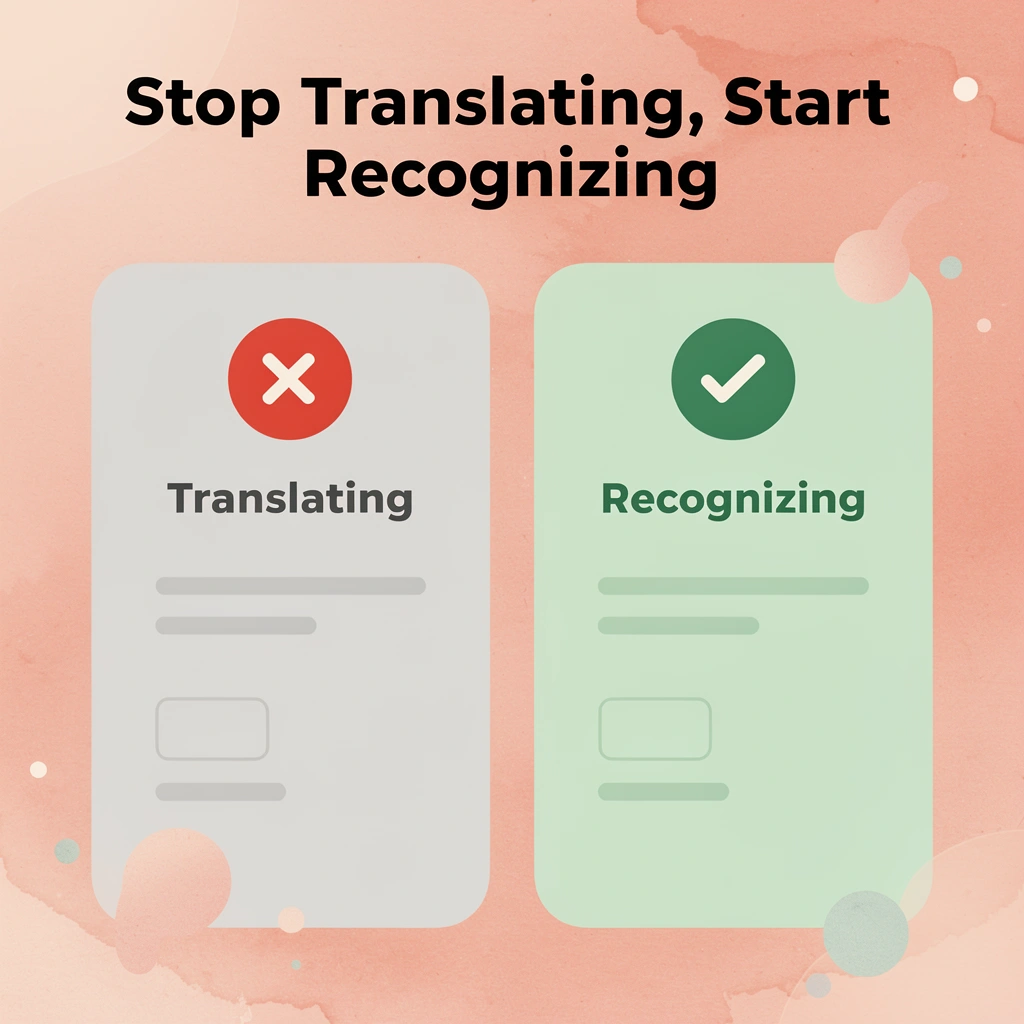
You already know which gap is holding you back. Another grammar drill or streak-based app won't close it. What does work is consistent exposure to real Mexican Spanish at your level, repeated often enough that your brain stops translating and starts recognizing.
"The brain doesn't learn a language through rules; it learns through repeated, meaningful exposure to real speech at the right level." — Language Acquisition Research
💡 Tip: If you've been stuck at the same level for months, the problem isn't effort but the type of input you're getting. Switch from drills to authentic content and watch your comprehension accelerate.
If you're tired of studying Spanish but still struggling in real conversations, download Parrot and start your free 7-day trial. Our platform matches authentic Mexican Spanish videos to your level, lets you tap any word for instant translation, and saves vocabulary from content you'd actually want to watch — just the exposure your ear needs, starting today.
Parrot is designed to make language learning more accessible, contextual, and consistent:
Level-matched videos – Keeps content comprehensible and appropriately challenging so you can learn without being overwhelmed.
Tap-to-translate – Removes language barriers instantly, helping you stay focused and maintain learning momentum.
Vocabulary saving – Builds a personal word bank from authentic content, making vocabulary more relevant and memorable.
Free 7-day trial – Lets you experience the learning system with zero upfront commitment and start building better habits immediately.
🎯 Key Point: Real fluency comes from real content — not textbook sentences. Parrot gives your ear the authentic Mexican Spanish exposure it needs to stop struggling and start understanding.
✅ Best Practice: Use your free 7-day trial to watch at least one video per day. Even 5 minutes of level-matched authentic input daily builds the neural recognition that classroom Spanish never could.
Related Reading
Duolingo Alternatives
Pimsleur Spanish Review
Pimsleur Vs Babbel
Duolingo Vs Rosetta Stone
Alternative To Pimsleur
Best Free App To Learn Spanish
Rosetta Stone Vs Pimsleur
Rocket Spanish Review
Rocket Spanish Vs Babbe
Rosetta Stone Alternatives
Babbel Spanish Review
Rocket Spanish Vs Rosetta Stone
Best Duolingo Alternative For Spanish
Living Language Vs Rosetta Stone