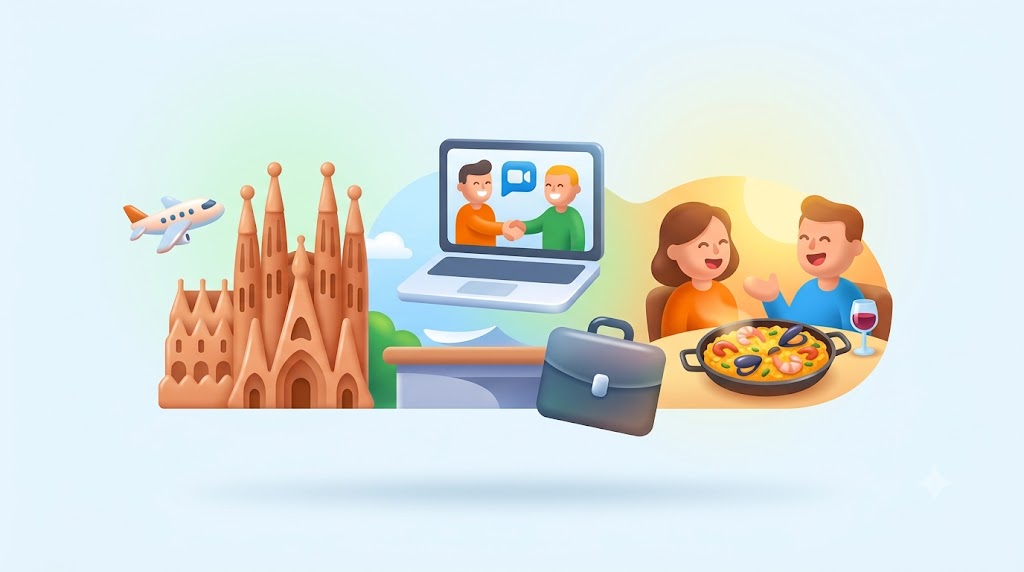
Spanish is spoken by over 500 million people across more than 20 countries, making it one of the most practical languages to pick up for travel, work, and everyday connection. Whether the goal is navigating a trip through Latin America, communicating with Spanish-speaking colleagues, or simply understanding a favorite song, the reasons to learn Spanish are concrete and immediate. Finding the best way to learn conversational Spanish comes down to practicing the way people actually speak, not just how the language appears on a page.
Most traditional methods focus on grammar rules and written exercises, which rarely translate into confident real-world conversations. Parrot takes a different approach by centering practice on natural, spoken Spanish from the start. For anyone ready to move beyond textbooks and actually hold a conversation, learn Spanish.
Table of Contents
Why More People Than Ever Are Learning Spanish
25 Reasons to Learn Spanish
Why Many People Never Reach Conversational Spanish
How to Learn Spanish in a Way You Can Actually Sustain
Is Learning Spanish Worth It for Your Goals?
How Parrot Makes Learning Spanish Easier to Stick With
Start Learning Spanish Today
Summary
Conversational Spanish fluency requires far more time than most learners expect. Research cited by the HelloTalk Blog estimates that English speakers need roughly 600 to 750 hours of study to reach conversational ability in Spanish. That figure reframes the challenge from a weekend project into a long-term commitment that demands a sustainable method, not just motivation.
Inconsistency is the most common reason learners stall before reaching fluency. Only 1 in 5 language learners ever reach conversational fluency according to the HelloTalk Blog, and irregular practice is one of the clearest contributing factors. Missing a few weeks creates a psychological gap that pushes many learners to quit entirely, even when their foundational progress was solid.
Spanish is growing faster than most people realize, and the demand is coming from real economic and social shifts. The number of Spanish speakers worldwide grew by 30 million in 2025 alone, a 5% increase in a single year according to Language Magazine. Supply chains across Latin America, bilingual urban neighborhoods, and expanding Spanish-language media are all driving that growth from the ground up.
The financial case for Spanish fluency is real, though it varies by industry. Bilingual employees in healthcare, education, customer service, and finance are in consistent short supply relative to demand, and in sectors with high Spanish-speaking customer volume the wage premium is measurable. Beyond earnings, fluency makes workers genuinely harder to replace in client-facing roles where communication quality directly affects outcomes.
Enjoyment is not a reward for serious learners. It is the actual mechanism that sustains long-term progress. A 2024 systematic review published in Frontiers in Education found that emotionally engaging learning experiences consistently improved motivation and sustained participation, but only when they supported meaningful language use rather than streaks or point systems. Learners who quit overwhelmingly built routines around obligation rather than genuine interest.
The personal reasons to learn Spanish tend to outlast the professional ones. Sitting at a family dinner and understanding the conversation in real time, laughing at a joke without waiting for someone to explain it, or expressing something personal to someone who matters to you in their own language- these moments don't appear on a resume but consistently drive long-term commitment in ways that career goals alone rarely do.
Parrot's Learn Spanish app addresses the consistency and method gap directly by delivering short-form authentic video content built around comprehensible input, so daily practice fits inside a real schedule rather than requiring a cleared calendar.
Why More People Than Ever Are Learning Spanish
Spanish is growing faster than most people realize. Language Magazine reports that Spanish speakers worldwide grew by 30 million in 2025 alone, representing a 5% increase in one year. This is not gradual drift but a measurable surge in global demand for the language.
"Spanish speakers worldwide grew by 30 million in 2025 alone — a 5% increase in a single year." — Language Magazine / Observatorio del Español, 2025
🔑 Takeaway: A 5% single-year growth rate across a language spoken by hundreds of millions is extraordinary. This is momentum at scale, signaling that learning Spanish is becoming less a personal enrichment choice and more a practical necessity.

The growth reflects real, structural changes in how people live and work, not a passing trend. Supply chains stretch across Latin America. Streaming platforms serve Spanish-language audiences in every time zone. Neighborhoods in cities like Houston, Miami, and Los Angeles have become bilingual environments. Spanish is expanding because the world people live in needs it.
💡 Tip: If you are deciding when to start learning Spanish, the answer is now: the economic, cultural, and social demand for Spanish speakers is accelerating.
⚠️ Warning: Treating Spanish as a "nice to have" skill is an increasingly costly mistake. In bilingual job markets like Miami or Los Angeles, Spanish fluency is becoming a baseline expectation, not a bonus.
What's really driving people to learn Spanish now?
The economic case is compelling, but the more honest reason people learn Spanish is personal. They want to talk to a partner's family without a translator. They want to laugh at a joke in real time. Language fluency at that level is a social skill, and the gap shows up in the smallest, most human moments.
According to Speakeasy BCN, Spanish is the second most spoken language by native speakers. This scale means the return on modest fluency is unusually high. Ten minutes of real practice compounds differently than ten minutes of vocabulary flashcards: one builds pattern recognition, the other builds a list you'll forget by Thursday.
Why do so many learners stall before fluency clicks?
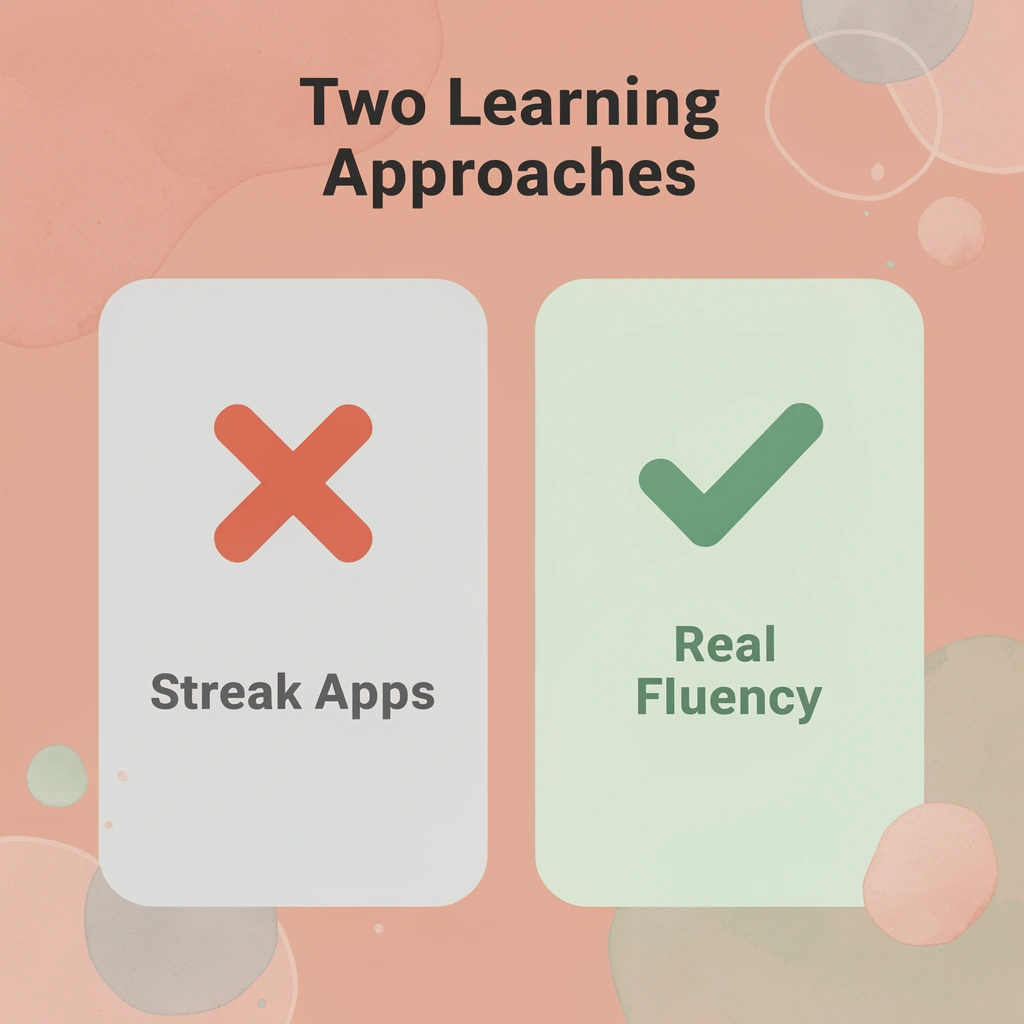
Most people who want to learn Spanish have already tried apps with streaks and cartoon owls, or bought textbooks that taught the subjunctive before ordering coffee. The frustration isn't a lack of effort—it's a mismatch between method and goal. Learners who want real conversations need to hear real Spanish, not drill conjugation tables alone. Tools like Parrot use short-form video immersion built around comprehensible input, helping learners build fluency through natural exposure rather than memorization.
The barrier to starting isn't time or talent: it's the belief that fluency requires years of formal study before anything clicks. That belief is wrong, and the data behind Spanish's explosive growth suggests millions of people are already figuring that out.
Related Reading
Best App To Learn Spanish While Driving
How To Learn Spanish In A Week
Games To Learn Spanish
Best Tools To Learn Spanish
Reasons To Learn Spanish
25 Reasons to Learn Spanish
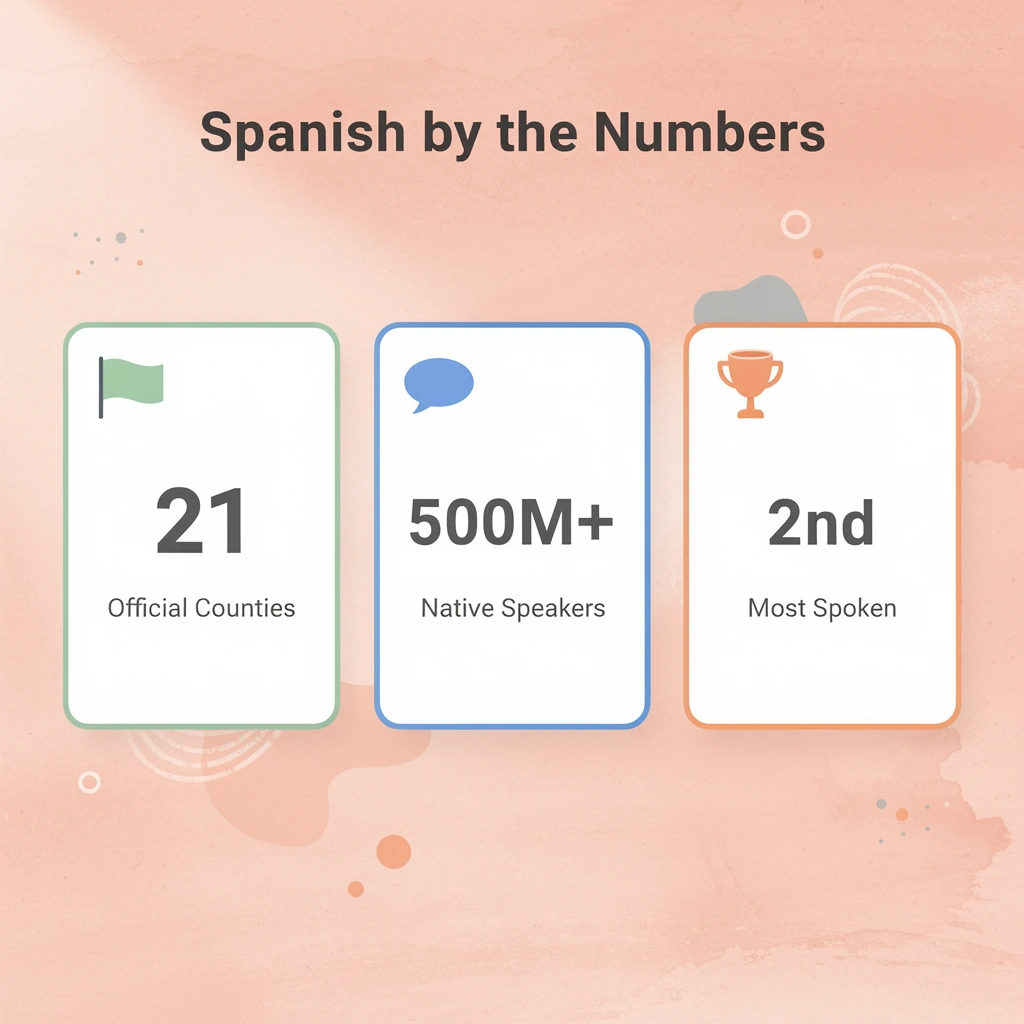
Spanish is the official language of 21 countries and is spoken by over 500 million native speakers around the world, according to Middlebury Language Schools. Being truly fluent in Spanish opens doors that most other language skills simply can't.
"Spanish is the official language of 21 countries and is spoken by over 500 million native speakers around the world." — Middlebury Language Schools
Spanish is one of the world's most widely spoken languages, with a broad global presence:
Official countries – Spanish is an official language in 21 countries around the world.
Native speakers – More than 500 million people speak Spanish as their first language.
Global reach – It is one of the most widely spoken and influential languages worldwide, used across multiple continents.
🎯 Key Point: With 500 million+ native speakers across 21 countries, Spanish is one of the most powerful language investments you can make — unlocking career opportunities, travel experiences, and cultural connections that few other skills can match.
💡 Tip: You don't need to be perfectly fluent to start reaping the real-world benefits of Spanish — even basic conversational skills can dramatically expand your personal and professional world.
Career and Business
1. Access More Job Opportunities
Bilingual employees in healthcare, education, customer service, and finance are scarce relative to employer demand. Employers across English-speaking countries consistently list Spanish as the most requested second language in job postings, particularly in roles where direct customer communication affects outcomes.
2. Stand Out to Employers
Speaking Spanish demonstrates persistence through difficulty, adaptability to new situations, and cross-cultural communication—skills valued in job performance and advancement, not merely on resumes.
3. Serve Spanish-Speaking Customers More Effectively
When a patient cannot explain their symptoms or a customer cannot understand a policy, everyone loses. Speaking Spanish removes that friction and builds trust that no translation app can replicate.
4. Expand International Business Opportunities
Talking directly with partners, suppliers, and clients across Latin America and Spain builds relationships that eliminate intermediaries. Misunderstandings that cost deals often stem from language gaps.
5. Increase Your Earning Potential
The wage premium for bilingual workers varies by industry and location, but in sectors with high Spanish-speaking customer volume, the advantage is clear and measurable. You become irreplaceable in such roles.
Travel and Living Abroad
6. Travel More Confidently
Translation apps fail in loud markets, on fast-moving buses, or when someone speaks quickly and informally. Knowing Spanish lets you navigate those moments with confidence.
7. Connect With Locals Instead of Staying in Tourist Areas
The best meal in Mexico City won't be on an English menu. The most honest travel advice in Colombia won't come from a hotel concierge. Language gets you past the surface.
8. Navigate Everyday Situations More Easily
Shopping, using public transit, visiting a pharmacy, or sorting out a billing issue becomes less stressful when you understand what's being said. Fluency is the difference between feeling capable and feeling helpless.
9. Prepare for Studying or Living Abroad
Arriving in a Spanish-speaking country without the language means spending your first months isolated. Learning before you go shortens that adjustment period and lets you live where you are instead of merely getting by.
10. Enjoy More Authentic Travel Experiences
Humor, local history, and cultural nuance rarely survive translation. Understanding a joke in context or catching a regional expression creates a different quality of experience than reading subtitles.
Culture and Entertainment
11. Watch Spanish Films and Series Without Subtitles
Subtitles divide your attention between reading and watching. Spanish cinema and television, from Pedro Almodóvar's films to Colombian crime dramas, reward viewers who follow dialogue directly.
12. Understand Spanish Music and Lyrics
Artists like Bad Bunny, Rosalía, and Juanes tell stories, reference history, and play with language in ways that don't survive translation. The meaning lives in the original words.
13. Read Books in Their Original Language
Gabriel García Márquez said translation is like looking at a tapestry from the back. Reading "Cien Años de Soledad" in Spanish differs fundamentally from any English version.
14. Follow Spanish Creators Across Digital Platforms
Spanish-language content on YouTube, TikTok, and podcasts grows faster than most English-language categories. Learning Spanish grants access to millions of creators in education, comedy, fitness, and technology beyond the reach of English-only audiences.
15. Experience Different Cultures Through Language
Language shapes how people express time, emotion, obligation, and relationships. Spanish has grammar structures and vocabulary that reflect a worldview English doesn't fully capture. Learning those structures changes how you think, not how you speak.
Relationships and Community
16. Communicate With a Partner's Family
Sitting at a dinner table and understanding the conversation, laughing at the right moment, asking a question that lands—that's belonging. Most people who start learning Spanish for work stay motivated because of moments like this. The relationship goal outlasts the resume goal almost every time.
17. Build Friendships Across Cultures
Speaking someone's native language is an act of respect that transforms the relationship from polite tolerance to genuine connection.
18. Connect With Millions of Spanish Speakers Online
Spanish is one of the most active languages across social platforms, gaming communities, and discussion forums. Fluency in Spanish opens access to communities that English-only users cannot reach.
19. Participate More Fully in Bilingual Communities
Whether you live in Miami, Los Angeles, New York, or London, Spanish-speaking communities are part of daily life. Speaking their language with neighbors, local organizations, and at community events changes how you feel about where you live.
20. Develop Greater Cultural Empathy
Learning another language forces you to hold two systems of meaning at once. This cognitive flexibility makes people better listeners, more patient communicators, and more aware of how context shapes meaning: a measurable shift in how you process other people.
Personal Growth
21. Improve Memory and Cognitive Flexibility
Managing two languages trains the brain to switch between competing systems, strengthening attention, working memory, and mental flexibility. This benefit extends to tasks unrelated to language.
22. Exercise Your Brain Throughout Life
Learning a language over a long time is one of the few activities that challenges your brain and sustains engagement for years without feeling like work, especially when it fits naturally into your daily life. Research consistently supports the relationship between lifelong bilingualism and cognitive reserve.
Most people think brain training requires dedicated effort and structured time. In reality, 10 to 15 minutes of genuine immersion in Spanish content, done consistently, produces more cognitive engagement than most formal study sessions twice as long.
23. Build Confidence by Learning a New Skill
The first time you have a real conversation in Spanish, something changes. You prove to yourself that something you thought impossible is possible. That confidence tends to transfer.
The common pattern with language learners who quit is that they never had that first real conversation. They studied vocabulary and grammar rules but never used language in practice. Methods built around comprehensible input, like short-form immersive video content, help learners reach that moment faster. Parrot uses scroll-friendly video immersion to make that first real conversation feel closer than most learners expect.
24. Gain Access to One of the World's Most Widely Spoken Languages
According to the Instituto Cervantes, Spanish is spoken by more than 630 million people worldwide, making it one of the most powerful global languages for communication, business, travel, and culture. That reach means learning Spanish pays off across every area of life.
25. Open Doors to Learning Other Romance Languages
Spanish shares deep structural and vocabulary roots with Portuguese, Italian, French, and Romanian. Learners who reach conversational Spanish consistently report that learning other Romance languages feels significantly more accessible because the cognitive framework is already in place.
One language learned well becomes the foundation for several others. But knowing why to learn Spanish and reaching fluency are two different things, and the gap between them is where most people disappear.
Why Many People Never Reach Conversational Spanish
Most learners don't fail Spanish because they lack intelligence or commitment. They fail because the gap between starting and speaking fluently is wider than anyone warned them about, and the methods they're using weren't designed to close it.
"The problem isn't the learner — it's the mismatch between expectations and reality that causes most people to quit before they get close."
⚠️ Warning: Motivation alone won't carry you to fluency. Without the right method, even the most dedicated learners hit a wall and never break through.

According to the HelloTalk Blog, it takes English speakers roughly 600 to 750 hours of study to reach conversational Spanish. Most people treat it like a weekend project when it's actually more like a marathon with no finish line visible from the starting block.
Regardless of the learning style, reaching Spanish proficiency requires a substantial time investment:
Weekend project – May seem like a low-effort approach, but still requires approximately 600–750 hours of meaningful practice.
Casual app use – Feels very low effort, yet achieving proficiency still demands around 600–750 hours of consistent learning.
Structured marathon – Sets realistic expectations by recognising that reaching proficiency typically requires 600–750 hours of focused study and practice.
🔑 Takeaway: 600 to 750 hours is not a weekend commitment — it's the equivalent of working a full-time job for 4+ months straight. Treating it as anything less is the single biggest reason learners plateau and quit.
Why does inconsistency stop so many learners in their tracks?
The failure point is usually consistency, not capability. Missing three weeks of practice because life got busy, the app stopped feeling rewarding, or progress felt invisible creates a psychological gap that's hard to close. The HelloTalk Blog reports that only 1 in 5 language learners reach conversational fluency, with inconsistency being one of the clearest reasons why.
Why do common study habits build recognition instead of real communication?
Most people spend their early months memorizing vocabulary lists, doing grammar exercises, and collecting streaks on gamified apps. Those activities feel productive but build recognition, not communication. When a native speaker talks at natural speed with contractions and slang, that carefully memorized vocabulary often disappears under pressure. Apps like Parrot use short-form video immersion built on comprehensible input, helping learners encounter Spanish the way the brain absorbs language: through meaningful, contextual exposure rather than isolated drilling.
Why does waiting to feel ready keep learners from actually speaking?
Waiting to speak is another quiet trap. Many learners convince themselves they need to feel "ready" before attempting real conversation, but readiness built from study alone rarely arrives. Speaking activates a different thinking process than reading or listening. Those uncomfortable moments are not signs of failure; they are how passive knowledge becomes active fluency.
What does a method actually optimized for conversational fluency look like?
The problem isn't the learner. The methods most people use by default were never designed to develop conversation skills. They were designed to hit completion goals, keep people using the app, and create the feeling of progress. Real language learning requires repeated exposure to meaningful language, low-pressure practice, and enough enjoyment to sustain the habit long after initial motivation fades.
Sustainable learning doesn't need more time. It needs a different relationship with the process itself.
How to Learn Spanish in a Way You Can Actually Sustain
Sustainable learning is a structured problem, not willpower. Learners who reach conversational fluency aren't those who studied hardest in January—they're those who built a routine that survived February, March, and every distracted Tuesday after that.
"The learners who win aren't the most motivated — they're the most consistent." — Language Acquisition Research
💡 Tip: Before picking an app or course, design your routine first. A 5-minute daily habit you actually keep beats a 2-hour session you abandon by week two.
⚠️ Warning: Relying on willpower alone is the #1 reason learners plateau. Structure—not motivation—keeps you moving forward.

The critical difference between progress and plateau is rarely ability. It's contact time with the language, accumulated over weeks and months. According to the Amauta Spanish School Blog, Spanish has over 500 million native speakers worldwide. This abundance means podcasts, short videos, music, interviews, and storytelling in Spanish are everywhere—your biggest structural advantage as a learner.
"Spanish has over 500 million native speakers worldwide, making authentic input infinitely accessible to learners at every level." — Amauta Spanish School Blog
Different types of language input develop different skills while requiring varying levels of effort:
Podcasts – Best for improving listening comprehension with relatively low effort.
Short videos – Combine visual and audio learning, making them effective with low to moderate effort.
Music – Reinforces vocabulary, pronunciation, and rhythm with very little effort.
Interviews – Expose learners to natural speech patterns and conversational language, requiring moderate focus.
Storytelling – Teaches grammar and vocabulary in context while developing deeper comprehension, typically requiring moderate to high effort.
🎯 Key Point: With 500 million+ native speakers, the real barrier to Spanish fluency isn't access to content — it's building the consistent structure to consume it.
What a sustainable routine actually looks like
Four or five short structured sessions weekly build your grammatical foundation. Daily listening—even 20 minutes of Spanish video or audio at your level—trains your brain to recognize rhythm and sentence patterns before you consciously understand every word. Two or three speaking sessions each week, whether with a tutor, language partner, or talking through your day aloud in Spanish, convert passive recognition into active communication. Most learners skip speaking because it feels uncomfortable. That discomfort is where fluency lives.
How do you close the gap between intention and automatic habit?
The friction point is the gap between "I'll do it later" and a habit that runs on autopilot. Apps like Parrot address this by delivering short-form immersive video content built around comprehensible input, allowing learners to get authentic Spanish exposure in 10- to 15-minute scroll-friendly sessions that fit into a real day rather than requiring a cleared calendar.
Why enjoyment isn't optional
Enjoyment isn't a reward for serious learners—it's how learning works. A 2024 systematic review in Frontiers in Education found that emotionally connected learning experiences consistently improved motivation and sustained participation when they supported real language use rather than rewarding streaks or points. Watching a travel documentary in Spanish because you want to visit Colombia isn't a shortcut; it's the most direct path to the repeated, meaningful exposure that builds fluency. Follow the football club. Watch the cooking channel. Read about the music. The content you consume in Spanish should feel like something you'd seek out anyway.
What actually causes learners to quit?
Students who quit aren't the ones who lacked discipline. They're the ones who built routines around obligation instead of interest and eventually ran out of willpower to sustain them. Willpower runs out. Curiosity doesn't.
But knowing how to structure your learning is only part of the picture. The more personal question is whether Spanish fluency is worth pursuing for your current situation.
Is Learning Spanish Worth It for Your Goals?
Whether Spanish is worth learning comes down to a simple test: does the life you want require it, or would it improve it? For most people, the answer is yes, but the reasons are more personal than expected.
"The question isn't whether Spanish has value — it's whether your goals make that value impossible to ignore."
🎯 Key Point: The real ROI of learning Spanish isn't universal; it's defined by your career ambitions, travel goals, and personal connections.
💡 Tip: Before committing to a Spanish learning plan, ask yourself one question: would fluency open a door you want to walk through? If yes, the investment is almost always worth it.

The value of learning Spanish depends on how it aligns with your personal or professional goals:
Career in global business – Spanish can have a high impact by expanding communication opportunities in international markets.
Travel to Latin America or Spain – Speaking Spanish makes travel easier and enables richer cultural experiences.
Connecting with Spanish-speaking family – Learning the language can strengthen personal relationships and cultural connections.
Cognitive and brain health benefits – Learning a second language is associated with cognitive benefits such as improved attention, memory, and mental flexibility.
Casual hobby with no clear use case – Learning Spanish can still be enjoyable, but the urgency and long-term motivation may be lower without a specific goal.
⚠️ Warning: Skipping the goal-alignment step is the most common reason learners quit — they start without a personal reason strong enough to sustain the effort.
What practical benefits does learning Spanish actually open up?
The practical case is hard to ignore. According to the HelloTalk Blog, Spanish is the second most spoken language in the world by native speakers. Travel becomes richer, professional doors open faster, and cultural access—from literature to film to music—is immediate and lasting.
What actually keeps learners motivated over the long term?
But the most lasting motivation isn't career advantage or travel convenience. It's the irreplaceable moments: speaking directly with a partner's family without a translator, having a real conversation with a friend who grew up speaking Spanish at home, expressing something personal in the right words to someone who matters. Those moments don't appear on a resume, but they stay with you. Learners who persist with Spanish typically had a specific person or place they wanted to reach, not abstract fluency.
The familiar approach of downloading an app, building a streak, and trusting points becomes language work initially. But the habit of learning and the habit of checking in aren't the same, and many learners notice the gap between daily activity and actual progress. Apps like Parrot use short-form video immersion and comprehensible input so that 10 to 15 minutes of daily practice builds real conversational ability rather than maintaining a number on a screen.
How far do you actually need to go to reach your goal?
How far you need to go depends entirely on your goal. If you want basic conversations while traveling through a country where Spanish is an official language in 20 or more countries, a few months of consistent practice suffices. If you want to work in Spanish, study abroad, or integrate into a Spanish-speaking community, you're looking at a longer journey, though still achievable. The barrier to starting is lower than most people assume.
Spanish justifies itself the first time you understand something you weren't supposed to, or say something in Spanish and watch someone's face change because they weren't expecting you to meet them there. That moment is the return on investment no spreadsheet captures.
Related Reading
Fastest Way To Learn Spanish
How To Learn Medical Spanish
Best Way To Learn Spanish As An Adult
Best App To Learn To Speak Spanish
How To Learn Spanish On Your Own
Best App To Learn Mexican Spanish
Mango Vs Rosetta Stone
Rosetta Stone Spanish Reviews
How Parrot Makes Learning Spanish Easier to Stick With
Learning Spanish opens career opportunities, enriches travel experiences, and connects you with millions of speakers worldwide. The challenge isn't starting — it's staying consistent long enough to see results. That's where Parrot helps.
"The biggest barrier to language learning isn't ability — it's consistency. Most learners quit before the results become visible." — Language Learning Research
🎯 Key Point: Spanish is one of the most valuable languages you can learn, but only if you stick with it long enough to reach fluency.
💡 Tip: Parrot is designed to solve the consistency problem by turning sporadic study sessions into a sustainable learning habit that delivers results.

Why do traditional lessons feel like a chore after a while?
Traditional lessons become repetitive: the same exercises day after day feel like a chore, even for motivated learners.
Parrot uses research-backed comprehensible input through entertaining short-form videos. Daily practice feels like watching content you enjoy rather than sitting through another lesson, making it easier to sustain learning over months.
How does Parrot help you understand new words without losing your flow?
Stopping constantly to look up unfamiliar words is frustrating. With clickable subtitles and instant translations, Parrot lets you understand new vocabulary without interrupting the video. You stay focused on the overall message while naturally expanding vocabulary through context, closer to how languages are learned in real life.
Why does vocabulary stick better when learned through real video context?
Words you memorize on flashcards often disappear when you talk to someone. Parrot closes this gap by letting you save words and expressions from videos and review them in the real situations where you first encountered them. Seeing words used repeatedly in meaningful contexts makes them easier to remember and recognize in conversation.
How does Parrot match Spanish content to your current ability level?
Finding Spanish content that matches your skill level is challenging. Beginners feel overwhelmed by native-speaker content; advanced learners outgrow simplified materials. Parrot's AI-powered recommendation feed personalizes authentic videos based on your proficiency and interests, increasing difficulty as your comprehension improves.
Real benefits come from confidently understanding, enjoying, and using Spanish in everyday life. By making authentic Spanish both understandable and enjoyable, Parrot builds the consistency that transforms months of practice into genuine conversational ability.
Start Learning Spanish Today
Pick the right method and 10 minutes a day adds up to real conversations. Pick the wrong one and 10 months feels like nothing.

If you've tried apps that rewarded streaks but left you unable to hold a sentence, that frustration was earned. Learn Spanish with Parrot instead, which builds fluency through short-form authentic video, clickable subtitles, and AI-powered recommendations calibrated to your level. You spend less time hunting for content and more time absorbing Spanish through context, repetition, and real speech.
Related Reading
Pimsleur Vs Babbel
Rocket Spanish Vs Babbel
Rocket Spanish Vs Rosetta Stone
Duolingo Alternatives
Best Duolingo Alternative For Spanish
Rocket Spanish Review
Alternative To Pimsleur
Babbel Spanish Review
Rosetta Stone Vs Pimsleur
Rosetta Stone Alternatives
Living Language Vs Rosetta Stone
Duolingo Vs Rosetta Stone
Best Free App To Learn Spanish
Pimsleur Spanish Review