Finding the best way to learn conversational Spanish often leads people to Pimsleur, but audio-only lessons leave many learners feeling like something is missing. Passive listening builds familiarity with sounds, yet it rarely prepares someone to hold a real conversation. If you want a method that matches how you actually think and speak, exploring alternatives is a practical next step.
Parrot takes a different approach, centering the learning experience on active conversation practice rather than repetition into the void. Learners respond, react, and build genuine speaking confidence by engaging with the language in realistic situations. For anyone ready to move beyond word recognition and toward fluent dialogue, Parrot offers a direct path to learn Spanish.
Table of Contents
Why People Look for an Alternative to Pimsleur
Why Switching From Pimsleur Doesn't Automatically Solve the Problem
15 Best Pimsleur Alternatives for Learning Spanish
What to Look for in an Alternative to Pimsleur
Which Pimsleur Alternative Is Right for Your Spanish Goals?
How Parrot Can Complement Any Pimsleur Alternative With Authentic Spanish
Start Learning Spanish Today
Summary
Learners who feel stuck after completing structured audio courses often aren't failing because of a lack of effort. The gap typically comes from a mismatch between the type of practice and the actual goal. Scripted prompts build recognition of controlled language, but real conversation requires processing unpredictable speech at natural speed, a fundamentally different cognitive skill.
The format of a learning tool shapes whether it fits into a real schedule. Pimsleur lessons run approximately 30 minutes each, which works for learners with dedicated study blocks but creates friction for those with irregular or fragmented time. Research from a 2025 Cambridge replication study found that spaced, consistent practice significantly outperformed massed practice on delayed vocabulary retention, meaning a shorter tool used four days a week will typically outperform a longer one used once.
Switching platforms without diagnosing the actual gap rarely produces better results. Many alternatives to structured audio programs still deliver controlled, curated language environments, even if they look very different on the surface. The interface changes while the core exposure stays scripted, leaving the comprehension ceiling intact no matter how many new features are available.
Comprehensible input, defined as language that is mostly understandable with enough unfamiliar content to stretch ability, is the most research-backed filter for evaluating any Spanish learning tool. A 2023 Cambridge meta-analysis of 24 studies involving 2,771 participants found measurable vocabulary acquisition through meaning-focused input including listening, reading, and reading while listening. Material that is either too easy or completely incomprehensible produces far less acquisition than content calibrated just above current ability.
Speaking development depends on output, not just exposure. Meta-analytic research on second-language interaction consistently shows that learners who produce language, negotiate meaning, and respond to unpredictable input develop conversational ability faster than those who only listen and repeat. Any platform that never requires retrieval under mild pressure is training recognition rather than production.
Authentic content is not automatically useful for every learner. Jumping from structured lessons directly into native-speaker podcasts or unscripted media without adequate scaffolding often results in catching only one word in ten, which Dr. Stephen Krashen's comprehensible input research identifies as insufficient for acquisition. Input level matters as much as its authenticity.
Parrot addresses the gap between scripted lesson environments and real conversation by placing learners inside short-form native-speaker video content matched to proficiency level, where the language is unscripted, contextual, and delivered at natural speed.
Why People Look for an Alternative to Pimsleur
Pimsleur works. Its spaced repetition audio model builds real spoken recall, and for someone starting out who wants to speak Spanish instead of studying charts, it offers a clear path forward. The real question isn't whether Pimsleur works, but whether what it teaches matches what you need.
"The real question isn't whether Pimsleur works—it's whether what it teaches matches what you need to learn."
💡 Tip: If your goal extends beyond basic spoken phrases to reading, writing, or real-world conversation depth, consider whether Pimsleur's audio-only model suits your needs.
⚠️ Warning: Many learners stick with a familiar tool long after it stops serving them. Recognizing the limits of any method, including Pimsleur, is the first step toward faster, more targeted progress.

What happens when the tool doesn't match the goal?
The failure point is usually a mismatch between the tool and the goal. Pimsleur is built around listening to a prompt, retrieving a response, and speaking it aloud. That loop works well for building conversational reflexes, but it falls short if your goal is to read Spanish, follow fast-moving conversations between native speakers, or understand regional slang.
The same gap shows up for visual learners, grammar-curious learners, and goal-specific learners. Someone learning Spanish for travel to Mexico City needs different vocabulary than someone preparing for a job in Madrid. Someone who processes language through reading needs to see words before hearing them clearly. Pimsleur delivers a standardized audio experience, which is a strength for some and a limitation for others.
Why do learners hit a ceiling with scripted audio courses?
Most learners hit a ceiling around the intermediate stage: you hear two native speakers talking at natural speed and realize you can follow almost none of it. This gap exists because scripted prompts and real conversation are fundamentally different. Real speech is unpredictable, fast, and loaded with context that no audio course fully replicates. Dr Stephen Krashen's research on comprehensible input argues that fluency develops through exposure to meaningful language in context, not through drilling controlled responses. Learners seeking to close that gap need authentic immersion. Our Parrot app addresses this by placing learners inside short-form native-speaker video content, where the language is unscripted, contextual, and immediately relevant to real conversation.
Does the format fit into a real daily schedule?
Practical constraints matter too. Pimsleur lessons typically run 25 to 30 minutes, which suits some schedules but not others. A learner with only 10 minutes between meetings may struggle to fit the format consistently. Since consistency drives most language learning success, a method that requires a specific time block loses to one that fits into daily gaps.
What you need from a Spanish learning tool at month one differs significantly from what you need at month six. Recognizing that shift signals progress, but switching tools doesn't guarantee better results.
Why Switching From Pimsleur Doesn't Automatically Solve the Problem
Changing apps feels productive, like organizing your desk before a big project. But the underlying work hasn't changed, and neither has the gap in your Spanish.
"The interface changed; the exposure didn't." — The real risk of app-switching without addressing the root cause
⚠️ Warning: Switching platforms creates a false sense of progress. You feel like you're taking decisive action when you're rearranging the furniture.

The failure point is usually this: learners assume the problem was the platform, when the actual problem was what the platform wasn't giving them. A new app with more videos, grammar breakdowns, or gamified quizzes can look completely different from Pimsleur while delivering the same controlled, predictable language environment underneath. You're still hearing curated sentences and responding to scripted prompts. The interface changed; the exposure didn't.
Visual design & interface → Controlled, curated sentences remain.
Gamification & rewards → Scripted prompts with no real variation remain.
Video or audio format → A predictable language environment remains.
Branding & marketing → The gap in your Spanish remains.
💡 Tip: Before switching apps, ask yourself one critical question: "Is this new platform giving me unscripted, unpredictable exposure to real Spanish—or just a shinier version of the same controlled input?"
🎯 Key Point: The real problem was never Pimsleur specifically—it's the nature of any platform that keeps you inside a safe, curated bubble instead of pushing you toward authentic language use.
What actually needs to change
Switching from one organized system to another doesn't fix the main problem. Learners seeking real conversations often move to feature-rich platforms, only to spend more time selecting activities than practicing Spanish. Excessive choices become fatiguing. More features don't guarantee better learning, and complicated tools take time away from language practice.
What actually closes the gap for real conversation?
According to the Pimsleur FAQ, each conversational lesson runs about 30 minutes long. But learners who feel stuck aren't lacking discipline—they're lacking the right input for their level. The real challenge isn't remembering scripted responses; it's understanding fast-talking native speakers who change subjects without warning. No amount of lesson-completing closes that gap. What closes it is consistent exposure to Spanish as it's spoken at natural speed, with the unpredictability real conversation demands. Learn Spanish with Parrot, which uses short-form native-speaker video to deliver comprehensible input in 10 to 15 minutes a day, fitting modern schedules rather than requiring dedicated learning blocks.
When authentic content backfires
Some learners overcorrect after structured lessons and jump straight into native-speaker podcasts, telenovelas, or social media with no support. That content is real, but real isn't automatically useful. If you're catching one word in ten, you're not acquiring Spanish; you're experiencing it from a distance. Krashen's comprehensible input research is clear: language sticks when you understand the message, not when you're surrounded by sounds. The level of input matters as much as the source.
What actually makes switching platforms worth it?
Switching platforms helps only when the new one addresses a specific gap the old one left open—not a different interface or more content categories, but genuinely different exposure calibrated to where you are now. Most app comparisons miss that precision, and it's what separates feeling busy from improving.
But knowing what to look for in a replacement is only half the equation.
Related Reading
15 Best Pimsleur Alternatives for Learning Spanish
Fifteen platforms stand out as real Pimsleur alternatives, splitting into different categories: structured grammar, live conversation, authentic video, or content-driven immersion. Choosing between them depends on figuring out which gap you need to fill.
"The best language learning platform isn't the most popular one — it's the one that targets your specific weakness, whether that's grammar structure, speaking confidence, or real-world comprehension."
💡 Tip: Before picking a Pimsleur alternative, identify your weakest skill — passive listening, active speaking, or grammar accuracy — so you can match the platform to your actual need.
Structured grammar → Best for beginners building foundations → Key strength: Rule-based clarity.
Live conversation → Best for intermediate learners → Key strength: Real-time speaking practice.
Authentic video → Best for visual learners → Key strength: Native-speed comprehension.
Content-driven immersion → Best for advanced learners → Key strength: Cultural fluency.
🎯 Key Point: No single platform wins every category — the right choice depends entirely on where you are in your Spanish journey and which skill is holding you back the most.

1. Parrot
Parrot addresses Pimsleur's main limitation by exposing you to natural Spanish through short videos from native speakers, organized by skill level. Built on Dr. Stephen Krashen's comprehensible input theory, the platform lets learners tap words for instant translations, save vocabulary to a personal dictionary, review through spaced repetition, and practice speaking aloud. Ten to fifteen minutes daily of this contextual input builds listening reflexes that scripted audio prompts cannot.
How does Parrot train you for real conversations?
The practical difference is significant. Pimsleur trains you to respond to controlled cues; Parrot trains you to understand unpredictable, natural speech from different speakers, accents, and topics. This cognitive skill matters in real conversations.
2. Babbel
Babbel suits learners seeking structured progression in grammar and written Spanish alongside spoken practice. Its lessons cover vocabulary, grammar rules, practical dialogues, and all four language skills, with built-in speech recognition. It also offers separate courses for Spain and Latin American Spanish, which Pimsleur does not differentiate clearly. According to NYT Wirecutter's review of the best language learning apps, Babbel offers lessons in 14 languages with courses as short as 15 minutes.
3. Rosetta Stone
Rosetta Stone's Dynamic Immersion method connects Spanish words directly to images and situations rather than English translations. Its TruAccent pronunciation tool provides real-time feedback on spoken output, and Chat Missions simulate everyday conversational scenarios. This visual, contextual approach helps vocabulary stick for learners who find audio-only instruction isolating.
4. Rocket Spanish
Rocket Spanish mirrors Pimsleur's structure but offers greater depth. It combines audio lessons with grammar explanations, culture notes, and voice-recognition practice across three levels from beginner through advanced. While Pimsleur emphasizes spoken recall, Rocket builds a broader curriculum around it. Learners seeking spoken emphasis with stronger grammar foundations will find Rocket fills that gap.
5. Duolingo
Duolingo removes barriers to getting started with its game-like structure, short activities, and streak system that make daily practice feel achievable. NYT Wirecutter reports that Duolingo has over 500 million registered users worldwide, demonstrating how effectively its habit design works. The tradeoff: its controlled exercises prepare you for the app, not for native speakers talking at full speed.
6. italki
Self-paced audio courses cannot surprise you. italki solves this by connecting learners with teachers and community tutors for one-on-one conversation sessions. Learners filter by specialization, availability, budget, and accent, adapting the experience to individual goals rather than following a fixed script. This unpredictability builds the listening and response speed that structured audio cannot replicate.
Most learners switching from Pimsleur to italki notice the gap between scripted practice and live conversation is wider than expected. This gap reflects a methodological failure: the absence of unpredictable, uncontrolled input.
7. Dreaming Spanish
Dreaming Spanish is built entirely around comprehensible input, using video content designed to be understandable at each learning stage. Its content is organized by level, from absolute beginner through advanced, with visual context carrying the weight that audio-only formats leave to imagination. For someone accustomed to Pimsleur's controlled prompts, Dreaming Spanish feels like the difference between reading from a script and watching a conversation unfold.
8. LingQ
LingQ is ideal for Spanish practice centered on content you care about rather than predetermined lessons. Its library includes books, podcasts, news, sports, and entertainment, plus you can import your own material—YouTube videos, ebooks, and more. Vocabulary is studied in context using spaced repetition, so words attach to meaning rather than existing in isolation. This context-anchored approach helps LingQ users develop reading comprehension faster than audio-only methods.
9. FluentU
FluentU sources Spanish content from real media: TV clips, movie scenes, commercials, and interviews. Each video includes interactive subtitles, vocabulary lists, and comprehension questions. The platform organizes material by level across both Spain and Latin American Spanish, so you don't have to search for suitable authentic content yourself. For learners seeking real media without the frustration of sourcing it, FluentU bridges structured lessons and independent immersion.
10. Mango Languages
Mango Languages uses a conversation-first approach similar to Pimsleur but adds visual instruction, cultural context, and grammar explanations. Its Latin American Spanish course centers on practical conversations with personalized review. Understanding why certain phrases are used in specific regions helps you use them naturally, a nuance that audio-only courses typically miss.
11. SpanishPod101
SpanishPod101 offers one of the broadest content libraries of any Spanish platform, with audio and video lessons from absolute beginner through advanced, plus lesson notes, grammar breakdowns, vocabulary lists, and quizzes. Its range of formats lets learners switch between listening, reading, and structured review, making it a strong supplement for those seeking extra material without committing to a rigid new program.
12. Language Transfer
Language Transfer uses interactive audio that asks learners to pause, think, and build answers before hearing the correct response—a different thinking process than Pimsleur's listen-and-repeat loop. The courses are free across its website, app, YouTube, and SoundCloud. For learners who want active thinking built into audio practice rather than passive absorption, Language Transfer offers a compelling free option.
13. Preply
Preply works similarly to italki but offers a larger tutor marketplace and more organized matching. Learners search by accent, availability, price point, and teaching style, then book one-on-one sessions tailored to their level and goals. Unlike app-based options, Preply pairs you with a real person who responds to what you say rather than what the script expects. That responsiveness provides the closest thing to real-world conversation practice a structured platform can offer.
14. Coffee Break Spanish
Coffee Break Spanish works best as a supplementary resource. Its podcast format fits naturally into commutes and walks, with conversational explanations that feel like a knowledgeable friend rather than a formal instructor. For learners using a primary platform who want additional Spanish audio without screen time, it fills that gap effectively.
15. Memrise
Memrise combines vocabulary practice, useful phrases, and video clips from native speakers in a format between flashcard apps and full courses. Its native-speaker content helps learners hear authentic pronunciation and see words used in context, surpassing text-based tools. It works best alongside other learning resources if you want variety and visual reinforcement without committing to a structured curriculum.
Which platform should you actually choose?
Each of the fifteen platforms solves a specific problem: grammar gaps, live conversation deficits, listening comprehension ceilings, vocabulary retention, or cultural fluency. No single platform covers all of them, so the choice matters more than most comparisons suggest.
Most learners discover after trying two or three alternatives that the platform itself is rarely the bottleneck.
What to Look for in an Alternative to Pimsleur
Choosing a Pimsleur alternative means finding the gap between your current Spanish and real conversation.
💡 Tip: Before committing to any platform, assess where your Spanish breaks down: in vocabulary, listening speed, or spontaneous production.

The most useful framework comes from ACTFL's 2024 Proficiency Guidelines, which define proficiency as what you can do with Spanish in spontaneous, unscripted situations, not what you know. Most platforms deliver knowledge, not performance. A course can give you hundreds of vocabulary words and still leave you frozen when a native speaker asks a casual question at normal speed.
"Proficiency is defined as what you can do with the language in spontaneous, unscripted situations — not what you know about it." — ACTFL Proficiency Guidelines, 2024
🔑 Takeaway: If a platform can't put you in unscripted, real-time scenarios, it's building knowledge, not the conversational performance you need.
⚠️ Warning: Don't mistake vocabulary size or grammar scores for proficiency. The real test is whether you can hold a conversation at native speed without freezing.
Does the input stay just ahead of you?
Researchers call this comprehensible input. A 2023 Cambridge study examining 24 research papers involving 2,771 people found that people could learn new vocabulary through meaning-focused input, including listening, reading, and reading while listening. Material you cannot follow teaches little; material you understand completely challenges you even less. The sweet spot is Spanish that is mostly understandable, with enough unfamiliar language to stretch your ability without breaking comprehension.
Most learners default to structured audio programs because they feel manageable, but "manageable" and "effective" aren't the same. When every sentence is scripted and every response anticipated, you practice recognition, not production. Learn Spanish through Parrot places learners inside native-speaker short-form video content, where the language is real, the pacing is natural, and comprehension is supported through context rather than controlled through a script.
Will it actually make you speak?
Speaking development requires output, not exposure alone. Research analyzing multiple studies on second-language interaction shows that learners who produce language, negotiate meaning, and respond to unpredictable input develop conversational ability faster than those who only listen and repeat. Ask whether the platform puts you in a position where you must retrieve language from memory under mild pressure, rather than selecting the correct answer from a menu.
Can you sustain it three times a week?
A 2025 Cambridge replication study found that spaced practice significantly outperformed massed practice on delayed vocabulary retention tests. A platform you use consistently four days a week will outperform a theoretically superior platform you use once. Thirty-minute structured audio sessions require uninterrupted time, while short, immersive video content fits into a commute, lunch break, or spare moments before a meeting. The best alternative is the one you will return to.
The right choice becomes clearer once you know what you are trying to build.
Related Reading
Which Pimsleur Alternative Is Right for Your Spanish Goals?
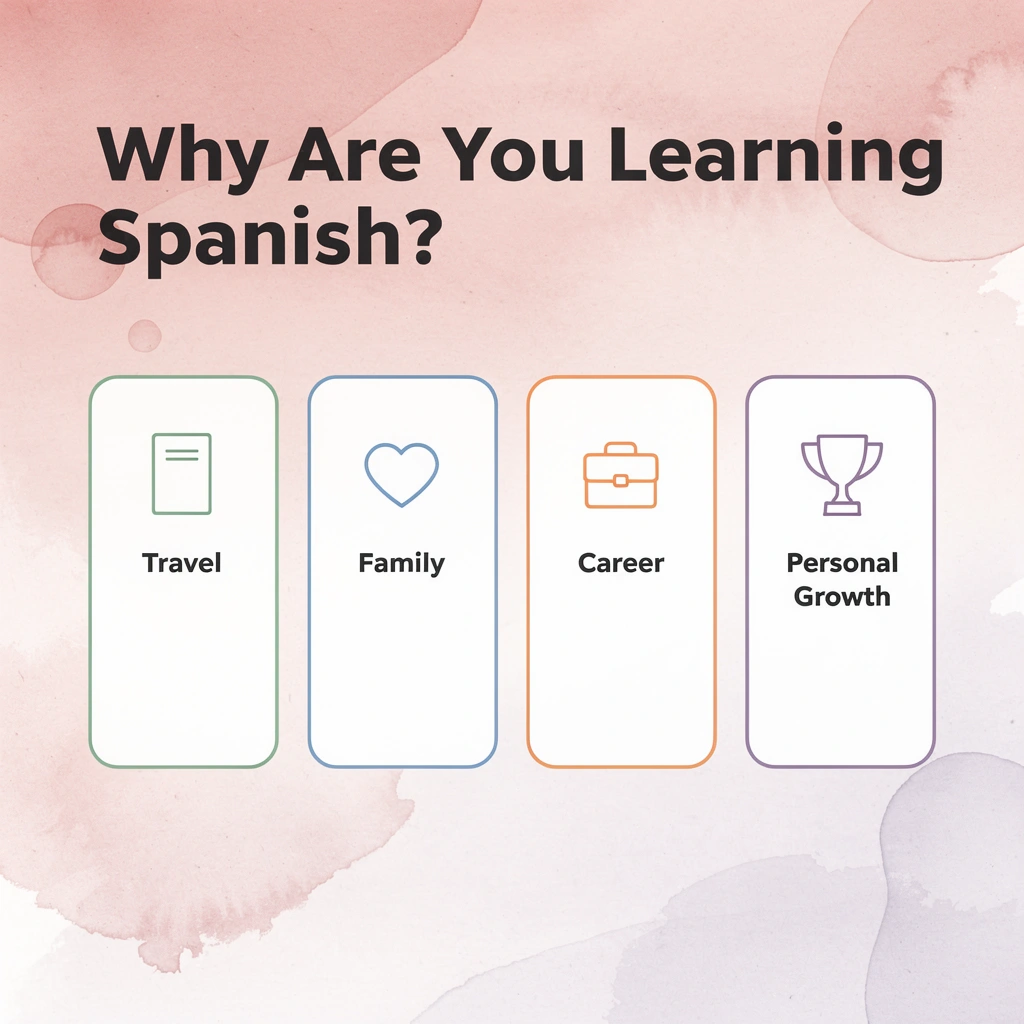
The right choice depends on one honest question: what is Spanish actually for? A trip to Mexico City next spring, a relationship with a partner's family, a career change, a personal challenge you've put off for too long. Your answer shapes which format will keep your attention long enough to make a real difference.
"The single most important factor in language learning success is why you're learning — your motivation and goal clarity determine which tool will actually stick." — Language Learning Research
🎯 Key Point: Match your Spanish learning tool to your specific goal — whether that's travel, family connection, or career advancement — and you dramatically increase your chances of sticking with it.
💡 Tip: Before committing to any Pimsleur alternative, write down your #1 reason for learning Spanish in one sentence. The clearest goal points directly to the best format for you.
Travel (e.g., Mexico City trip) → Audio-first, conversational → Priority: Speaking confidence fast.
Family & relationships → Immersive, cultural context → Priority: Emotional connection.
Career change → Structured, grammar-forward → Priority: Professional fluency.
Personal challenge → Gamified, habit-building → Priority: Long-term engagement.
What your current gap actually tells you
The problem usually isn't a lack of desire to learn, but a mismatch. A learner who needs to understand fast, everyday speech from native speakers but spends study time on scripted audio prompts is building a different skill entirely. Pimsleur trains spoken recall under controlled conditions: genuinely useful for producing rehearsed phrases, but it does not train your ear to process unpredictable, natural speech. If you feel confident in structured lessons but freeze when a real person talks, that is the gap worth closing.
Does your starting point change how fast you close the gap?
If you are a complete beginner, focus on doing it regularly instead of trying to learn everything at once. According to NYT Wirecutter, Babbel says users can have a 15-minute conversation after 5 hours of study. This demonstrates how quickly structured dialogue instruction produces usable results. Early wins matter because they keep learners coming back. The best starting point is the one you will open tomorrow.
When structured lessons stop being enough
A learner finishes a course, scores well on exercises, then struggles with a podcast, film, or real conversation. Structured programs limit exposure by controlling what you hear: every sentence is paced, spoken clearly, and designed for comprehension. Real Spanish is not. At the intermediate stage, you need abundant content, variety, and genuinely interesting material to sustain engagement beyond the first week.
How does real input close the gap between classroom Spanish and actual conversation?
Learn Spanish with Parrot fills this gap by offering short videos from native speakers matched to your skill level. The content is authentic and comprehensible: you hear real speech in real situations, with enough support to follow along. For students who know the basics but need to bridge the gap between classroom Spanish and real conversation, this distinction matters.
Does your available time actually fit the format you chose?
PCMag UK notes that Pimsleur offers courses in 51 languages, demonstrating its strength as a broad, structured audio system. However, course variety doesn't guarantee it will work for you. If you have only short, irregular study windows, a platform built around 30-minute audio sessions can be hard to use. Short-form video content fits better into a lunch break, commute, or ten minutes between meetings. Format is not a preference—it is a retention strategy.
What actually makes an alternative worth choosing?
The right choice matches your current gap, fits your available time, and exposes you to Spanish real enough for actual conversation. Everything else is optional.
The moment you stop searching for the perfect platform and start asking what Spanish exposure you're missing, the decision becomes simple.
How Parrot Can Complement Any Pimsleur Alternative With Authentic Spanish
Choosing an alternative to Pimsleur doesn't mean giving up on an audio-first approach. Pimsleur builds listening habits and spoken recall, while another resource can provide the exposure and context that structured audio lessons cannot cover alone. Parrot fits into this routine by adding regular exposure to Spanish you're more likely to encounter outside a lesson.
"Structured audio lessons build a strong foundation, but authentic exposure is what bridges the gap between classroom Spanish and real-world fluency." — Language Acquisition Research
💡 Tip: Pair your Pimsleur alternative with Parrot to cover what no single method can do alone — delivering the authentic, real-world Spanish that structured programs consistently miss.
🎯 Key Point: Parrot complements any audio-first routine by layering in genuine conversational exposure, turning your study time into a complete fluency-building system.
Pimsleur / Audio Lessons → Builds listening habits and spoken recall → Misses authentic real-world context.
Pimsleur Alternative → Builds structured exposure and grammar context → Misses natural, unscripted Spanish.
Parrot → Builds real-world Spanish and everyday vocabulary → Misses standalone structured progression.
Why does structured audio practice need authentic exposure to fill the gaps?
Pimsleur's structured audio practice gives learners repeated chances to listen, predict responses, and speak Spanish aloud. However, no single course covers every Spanish speaker, topic, accent, expression, or conversation setting. Real Spanish is unpredictable: you might hear different accents, unfamiliar expressions, or speech at speeds you haven't encountered in lessons. Parrot adds exposure through short-form videos featuring native speakers, letting you encounter different voices and subjects while practicing Spanish in context.
Once comfortable with structured lessons, consuming random native-speaker content can create a new problem: the material may exceed your level. A video can be interesting but too fast, too vocabulary-heavy, or unrelated to your interests. Finding something simultaneously authentic, understandable, and engaging takes more time than the study session itself. Our Parrot recommendation feed uses AI, your proficiency level, and your interests to personalize content, surfacing relevant videos as your ability develops.
How does Parrot help you understand unknown words without breaking your focus?
Real content includes words and expressions you might not know. Stopping to look up definitions disrupts focus and turns listening into a vocabulary exercise. Parrot's clickable subtitles and instant translations help you stay in the content. You can check unfamiliar words without leaving the video or losing track of what's happening.
Hearing a word once doesn't guarantee you'll remember it. Parrot lets you save vocabulary straight from videos and review those words in real situations, giving you additional exposure beyond the initial encounter. This makes learning feel more connected: you encounter the language again in the same context where you first learned it.
How does combining video and audio create a more complete learning routine?
Pimsleur's audio-based format lets you focus on listening and spoken response without a screen, but you lose visual context. Parrot adds that dimension through video and subtitles. Seeing the speaker, situation, and visual information provides additional clues about meaning, while subtitles connect sounds with their written forms.
You don't have to choose one platform and abandon the other. Pimsleur provides structured audio practice, repetition, anticipation, and spoken recall. Parrot complements that foundation with personalized exposure to authentic Spanish that's easier to discover, understand, and revisit. One gives you a structured opportunity to produce Spanish; the other exposes you to how Spanish is spoken in different contexts. The goal is building a routine where structured practice leads into authentic Spanish exposure, so what you practice in a lesson becomes easier to recognize and understand in the real world.
Start Learning Spanish Today
Stop searching for the perfect program and start adding real Spanish to your daily routine. Parrot offers short-form videos from native speakers matched to your level and interests, clickable subtitles for words you don't know, and vocabulary you can save and revisit in context.
"The shift from searching for content to absorbing real language is where conversational fluency truly begins." — Parrot
💡 Tip: Look for tools that combine authentic input, clickable subtitles, and vocabulary saving in one place — that combination is far more effective than juggling multiple apps.
Short-form native videos → Matches content to your level and interests.
Clickable subtitles → Instantly look up unknown words in context.
Vocabulary saving → Lets you revisit and retain words you've learned.
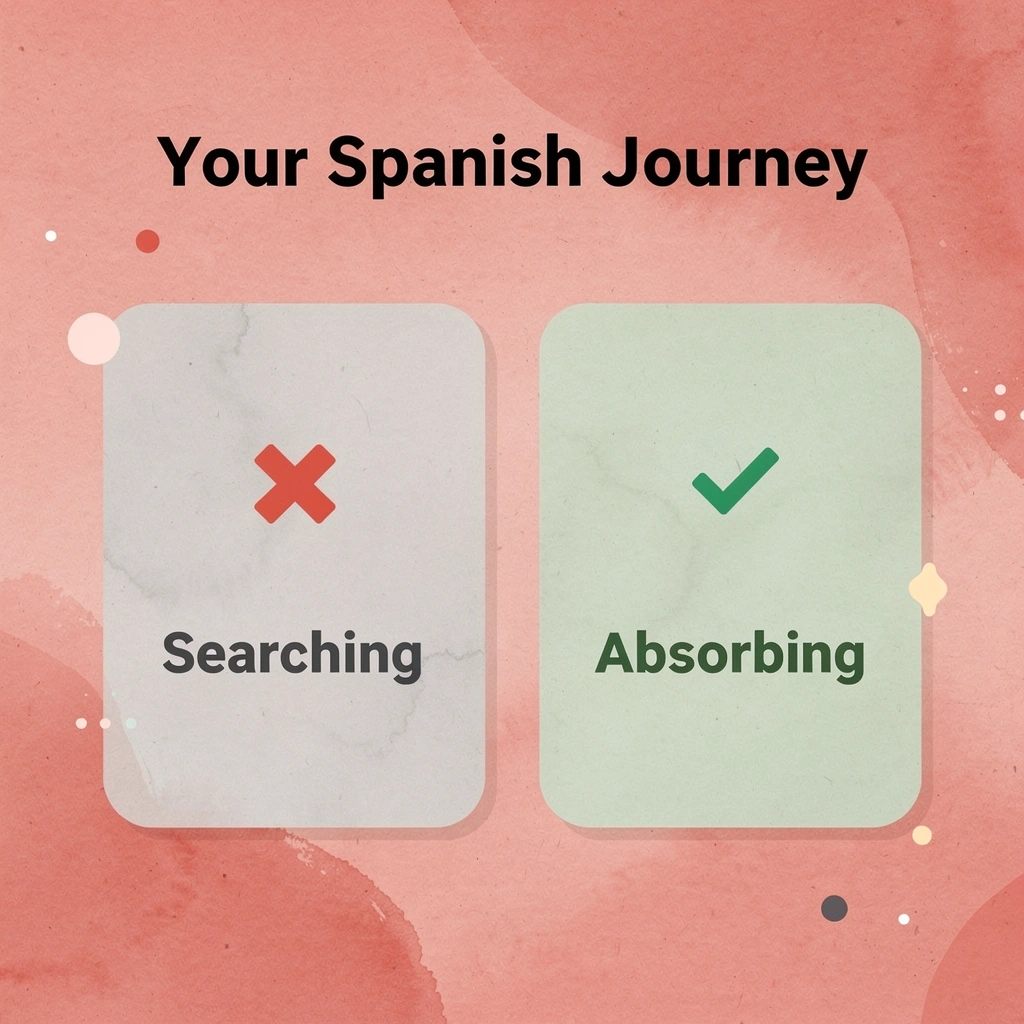
Spend study time absorbing real Spanish instead of hunting for engaging, appropriate content. That shift—from searching to absorbing—is where conversational fluency begins. Download Parrot and start your free 7-day trial at learn spanish to add the authentic, comprehensible input your current practice is missing.
🎯 Key Point: Comprehensible input from native speakers is one of the most research-backed methods for building fluency, and Parrot delivers it in a format that fits your daily routine.
✅ Best Practice: Commit to 10–15 minutes per day of watching native-speaker content with clickable subtitles. Consistent daily exposure beats occasional marathon study sessions.
Related Reading
Rosetta Stone Alternatives
Duolingo Vs Pimsleur
Rocket Spanish Vs Pimsleur
Rocket Spanish Vs Rosetta Stone
Living Language Vs Rosetta Stone
Pimsleur Vs. Babbel
Duolingo Vs Pimsleur
Rocket Spanish Vs. Babbel