The 600-hour rule was built for full-time diplomats, not busy adults. Here is what those timelines actually mean for you, and the first milestone worth chasing.
The 600-hour figure for French fluency is everywhere online. It shows up on language blogs, government sites, and app marketing alike. But for most working adults trying to squeeze French into a packed day, that number lands less like a roadmap and more like a verdict. The common assumption is that if you can't study for 30+ minutes a day in a focused session, you'll never reach any meaningful French milestone, and that belief stops countless learners before they ever begin. See our learn Spanish for how this works in practice.
Those timelines leave out where the 600-hour estimate came from, and why it does not translate directly to self-directed learning. Foreign Service Institute classifies French as a Category I language, estimating that same figure to 750 class hours to reach professional working proficiency (roughly CEFR B2 to C1) for native English speakers. FSI training runs at approximately 25 hours of structured classroom instruction per week, in a full-time immersive setting designed specifically for government diplomats. That is a six-month sprint with nothing else on your plate.
Most learners are not diplomats. When a busy adult reads "that same figure hours," they do the math fast: at 20 minutes a day, that is nearly five years. That calculation alone kills motivation before a single lesson starts. Raw hours are not the whole story.
Key takeaways
The FSI's 550-750 hour estimate for French fluency describes structured classroom instruction, not the fragmented, self-directed study most working adults actually do.
Two learners can both log 600 hours and land in completely different places; the variable that separates them is what happened inside those hours, not how many they clocked.
Comprehensible input, hearing and reading French at a level just above your current ability, is the most research-backed driver of acquisition, and it works in short bursts, not just marathon sessions.
Passive grammar drills feel productive but quietly cancel out progress; the habits that slow learners down most are also the ones that feel the most like studying.
Reaching A2 conversational French is achievable in under a year on 10-15 minutes a day, if those minutes are spent on high-quality input rather than rote review.
The average American already spends 7+ hours daily on screens; the bottleneck isn't available time, it's whether that time is doing anything in French.
Parrot (parrotapp.com) redirects existing scroll time into short-form French video built around comprehensible input, so the hours you're already spending on your phone start moving your fluency forward.
CEFR Levels and Fluency Milestones Every French Learner Should Know
Before you can answer "how long will this take me," you need a map that shows where you are and what each destination actually looks like in practice. The CEFR framework gives you exactly that: six clearly defined levels, each tied to real communicative ability rather than vague labels like "intermediate." Understanding what separates A1 survival phrases from B2 conversational independence helps you set honest timelines and choose the right practice methods for where you are right now.
1. A1/A2 - Absolute Beginner to Elementary - Survival French in 60-200 Hours
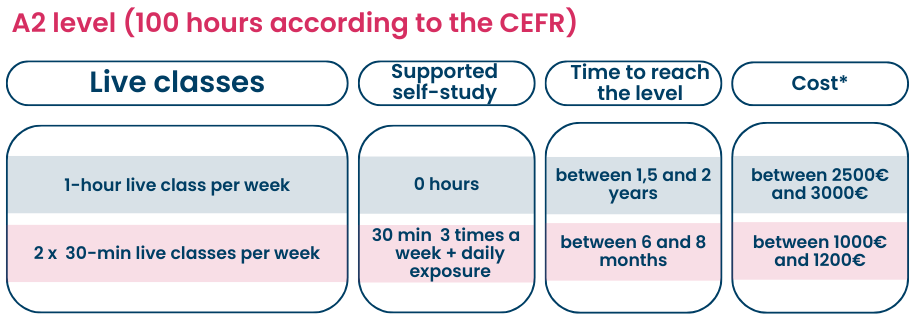
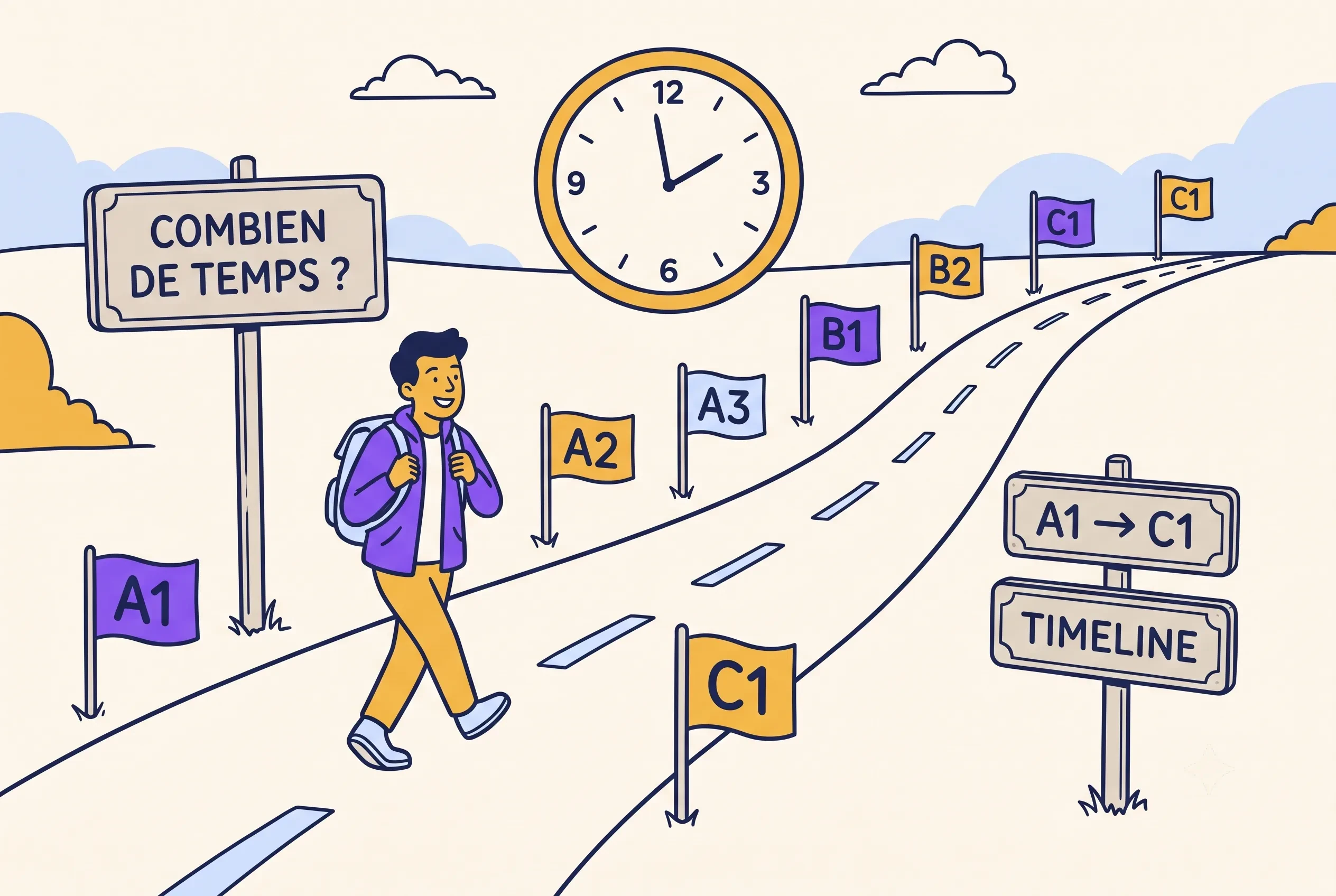
At A1, learners reach roughly 70 to 80 cumulative hours; A2 adds another 80 to 100 hours, landing around 150 to 180 hours total. That is two to six months at one hour per day. A Basic User can introduce themselves, order food, ask for directions, and manage short social exchanges when the other person speaks slowly. The honest limitation: native speakers will often switch to English the moment they sense hesitation. A2 is a meaningful milestone, not a comfortable one.
Learners who have struggled with traditional memorization-based methods often find these early levels especially frustrating. Vocabulary drills rarely survive contact with real spoken speech. That is precisely where immersive listening practice changes the equation: at Parrot, every video watched contributes to listening comprehension immediately, building the ear for native-speed sound before formal grammar explanations even enter the picture.
2. B1/B2 - Independent User - Spontaneous Conversation and Workplace French in 300-600 Hours
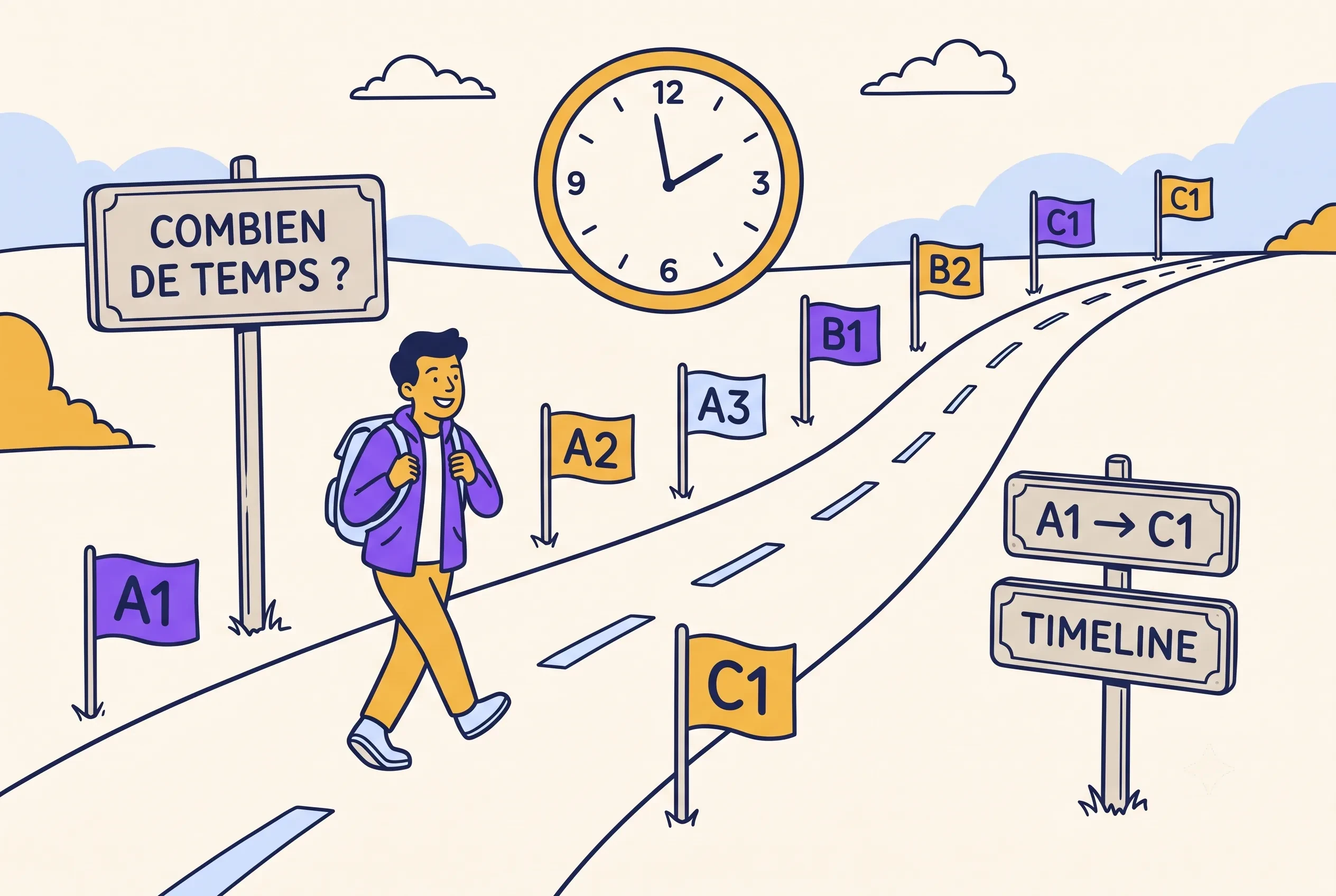
B1 requires roughly 300 to 360 cumulative hours; B2 pushes the total to 540 to 620 hours. At B2, learners can hold spontaneous conversations, follow native-speaker television with minimal subtitles, and handle most workplace tasks. The CEFR recognizes B2 as the threshold for genuine conversational fluency, where interaction with native speakers becomes natural rather than effortful. This is the level most working professionals should target first.
The stretch from B1 to B2 is where the infamous intermediate plateau lives. Passive study stops producing gains; learners need active, personalized practice on top of immersive content. Parrot's Comprehensible Input Method governs how content is selected and sequenced for each learner, so the short-form video feed keeps serving material that is just challenging enough to push the level forward. Layering Parrot Back speaking practice and the AI Tutor on top of those video sessions is what lets learners break through the plateau and reach conversational fluency rather than stalling indefinitely.
3. C1/C2 - Proficient to Mastery - Effortless, Near-Native French Beyond 700 Hours
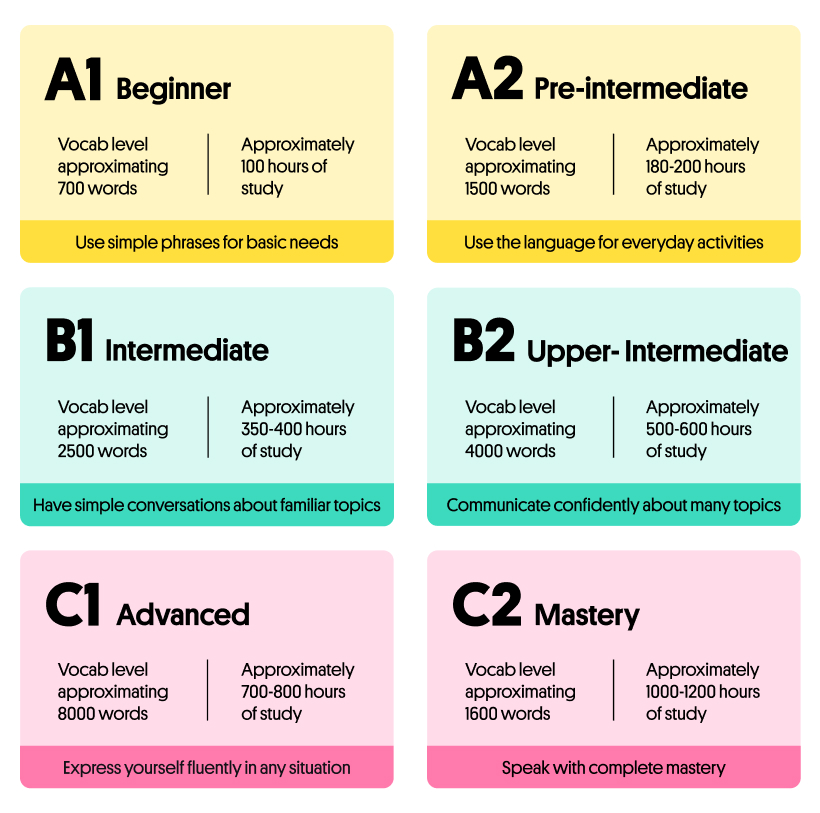
Beyond 700 hours, learners enter C1 territory. The Alliance Française places C2 mastery at 1,060 cumulative hours of study. At C1/C2, the language flows without obvious searching for words; learners can summarize complex sources, argue nuanced positions, and operate with near-native precision in academic or professional settings.
As the CEFR level descriptions make clear, proficient users handle virtually any communicative situation with flexibility and precision. The gap between B2 and C2 is wider in hours than the gap between A1 and B2 combined, and most learners find diminishing practical returns past C1. At this stage, real-world listening comprehension, the kind built through consistent exposure to native-speaker content, not textbook audio, is what separates a high-B2 plateau from genuine C-level ease.
4. The Full CEFR Framework - Six Levels from A1 to C2 and What Each One Means Practically
The Council of Europe's Common European Framework of Reference for Languages (CEFR) organizes French and Spanish proficiency into six levels:
A1 and A2 (Basic User)
B1 and B2 (Independent User)
C1 and C2 (Proficient User)
Every level is defined by communicative ability in real situations, not by classroom hours logged. This framework is the most widely used proficiency map in European language education, and it gives learners a precise location on the journey rather than a vague sense of "intermediate." Crucially, each level maps to a distinct listening and speaking threshold, which is why the method you use to practice matters as much as the hours you put in.
"I feel overwhelmed by the sheer number of resources available online for learning French, making it hard to know where to start."
— what we hear from French language learners
5. Hour Ranges by CEFR Level - A Reference Table for Planning How Long to Learn French
Realistic hour estimates give learners a concrete planning tool: A1/A2 requires roughly 60-200 guided hours; B1/B2 demands an additional 300-600 hours of cumulative study; C1/C2 pushes the total to 700-1,000+ hours. These figures align with FSI Category I estimates for English speakers. The key caveat: hours are not equal, an immersive hour with a native tutor accelerates progress far more than a passive Duolingo session of the same length.
6. A1/A2 in Practice - What 'Basic User' Actually Looks Like Day-to-Day in French
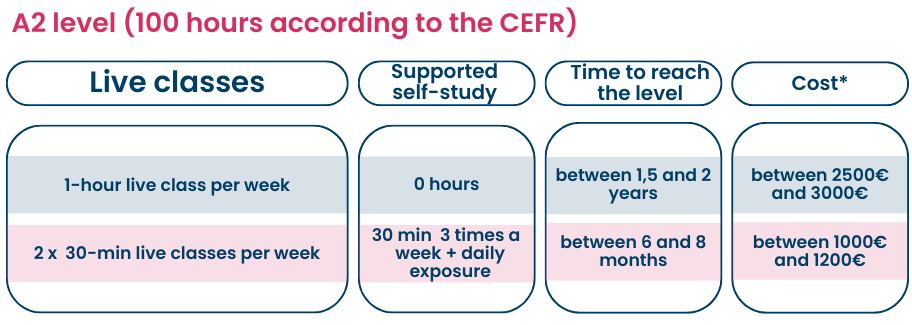
Seeing A1 and A2 in action clarifies what 'basic user' really means: an A1 learner can say 'Bonjour, je m'appelle Marie' and order a coffee; an A2 learner can describe their job, ask for a train ticket, and follow simple written signs. The contrast between the two sub-levels is stark when the same real-world scenario is written at each stage. The tradeoff: A2 feels functional until conversation speeds up or vocabulary strays from familiar topics, confidence can collapse quickly.
Related Reading
French Grammar Rules
French Phrases For Beginners
What FSI Data Really Says About French Learning Hours
The FSI's hour estimates are widely quoted and just as widely misread, often leaving learners either discouraged by the scale of the task or falsely reassured that their current pace is enough. What those figures actually measure, and what they leave out, changes how you should interpret your own progress. Understanding the gap between FSI conditions and real-world learning is the first step toward setting a timeline that reflects your actual situation.
The Official Numbers - FSI's 550-750 Hour Estimate for Professional French Fluency
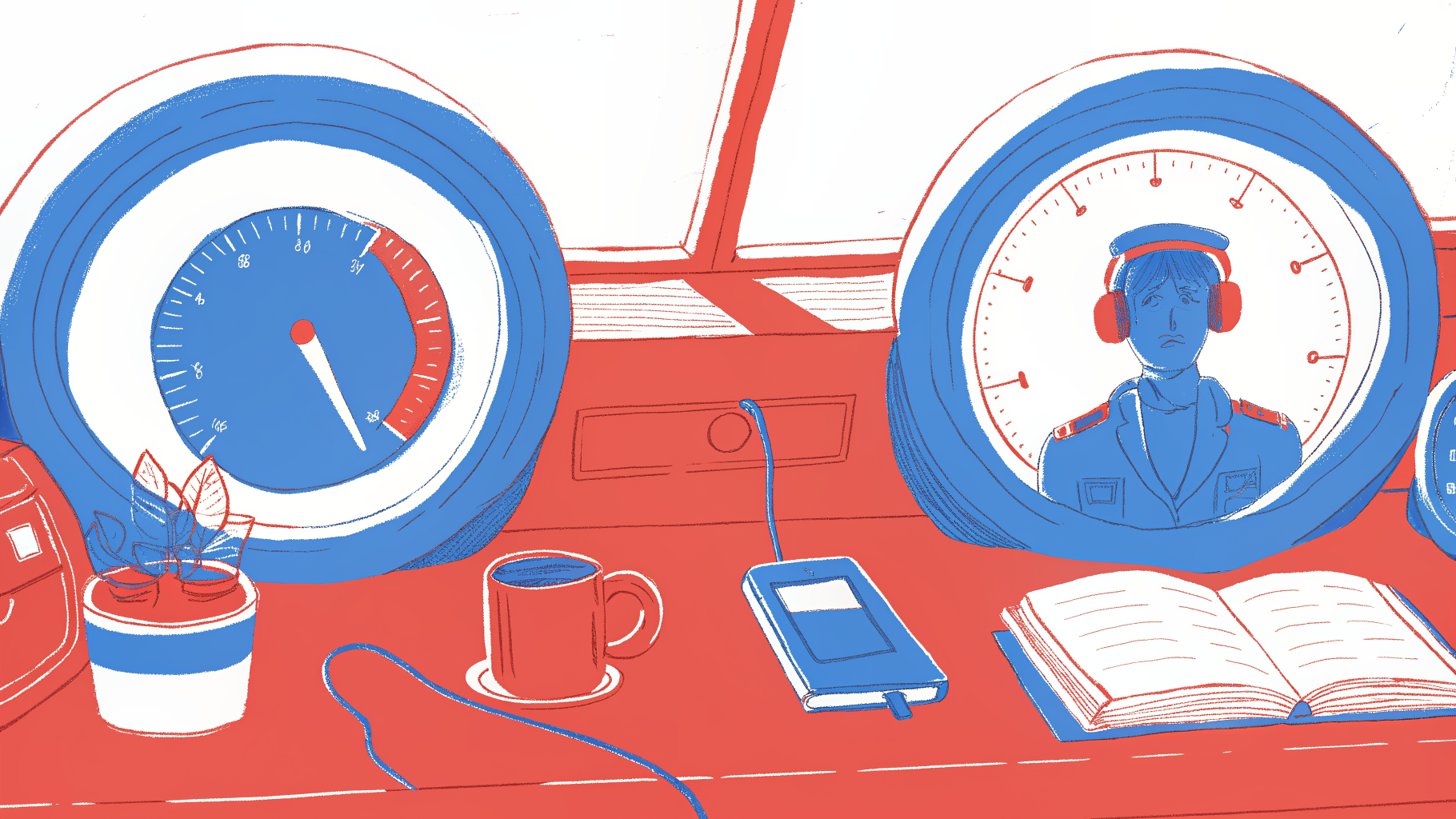
550 to 750 class hours. That is the figure the Foreign Service Institute (FSI) places on reaching ILR Level 2, equivalent to B2 proficiency, in French for native English speakers. That number describes classroom contact time, logged by trained adult diplomats in structured, immersive cohorts, studying six or more hours each day. A State Department employee completing FSI training is surrounded by French from morning briefings to afternoon role-plays, with instructors calibrating every input to their current level. A commuter catching 20 minutes on a train is operating in a completely different efficiency band. The U.S. Department of State Foreign Service Institute data does not say those commute minutes are worthless; it simply was never designed to describe them.
One full year of 15-minute daily sessions adds up to roughly 91 hours, approximately a quarter of the way to B1 per Foreign Service Institute (FSI) benchmarks. This is one of the sharpest shocks beginners face: a full year of maintained streaks can feel like serious progress, yet the cumulative hours tell a sobering story. Learners who come to Parrot having kept those streaks diligently, and still feel stuck, are not experiencing a motivation failure. They are experiencing a conditions problem. The gap between a diplomat's six-hour immersive day and a commuter's fragmented minutes is a structural mismatch between the hours available and the hours assumed by the FSI framework.
That mismatch grows when you factor in what those hours actually contain. The FSI's 550-750 estimate is already the favorable end of the spectrum because French earns its Category I classification through structural proximity to English. English and French share roughly 30% of their vocabulary, a direct consequence of the Norman Conquest and centuries of shared Latin roots.
Learners tackling Arabic or Mandarin face 2,200-plus hours under the same framework. Even within the favorable Category I band, learners regularly ask whether 2-3 hours a day across roughly 12 months is genuinely sufficient for conversational ability, and the honest answer is that it depends entirely on what fills those hours. Passive exposure and active, comprehensible input are not equivalent.
30%
of their vocabulary
Intensive study compresses the timeline, and institutional data confirms it. The Defense Language Institute (DLI) runs a French program spanning 36 weeks at approximately six hours of classroom instruction per day. What the DLI data confirms is that method quality and input density matter. Most learners cannot manufacture a DLI environment, but they can raise the quality of the hours they do have.
How a learner uses fragmented time, commutes, lunch breaks, the 15 minutes before bed, becomes decisive. Parrot is built for those windows. Its short-form video feed delivers comprehensible input during exactly those moments, exposing learners to real, conversational language rather than textbook phrases engineered around memorization drills.
The Comprehensible Input Method underlying every video session governs how content is selected and sequenced, ensuring that even a 12-minute commute session is calibrated to the learner's current level, mirroring, in a portable format, the instructor calibration that makes FSI training efficient. Listening Practice is immediate: every video watched contributes directly to real-world listening comprehension, not the kind built for fill-in-the-blank exercises. And when a learner wants to move from passive input to active production, Parrot Back and the AI French Tutor layer in speaking practice and personalized feedback on top of that immersive foundation.
The hours available to most learners are not going to match a diplomat's schedule. Density and method determine what those hours are worth.
Factors That Genuinely Influence How Fast You Learn French
The common assumption is that if you can't study for 30+ minutes a day in a focused session, you'll never reach any meaningful French milestone. But two learners can both log hundreds of hours of French study, with one sounding near-fluent at a dinner party in Lyon while the other struggles to order coffee. The difference is what happened inside those hours. Five variables consistently separate fast learners from slow ones, and most of them have nothing to do with how long you sit at a desk.
1. Prior Romance Language Knowledge - The Grammar Head Start That Cuts Years Off Your Timeline
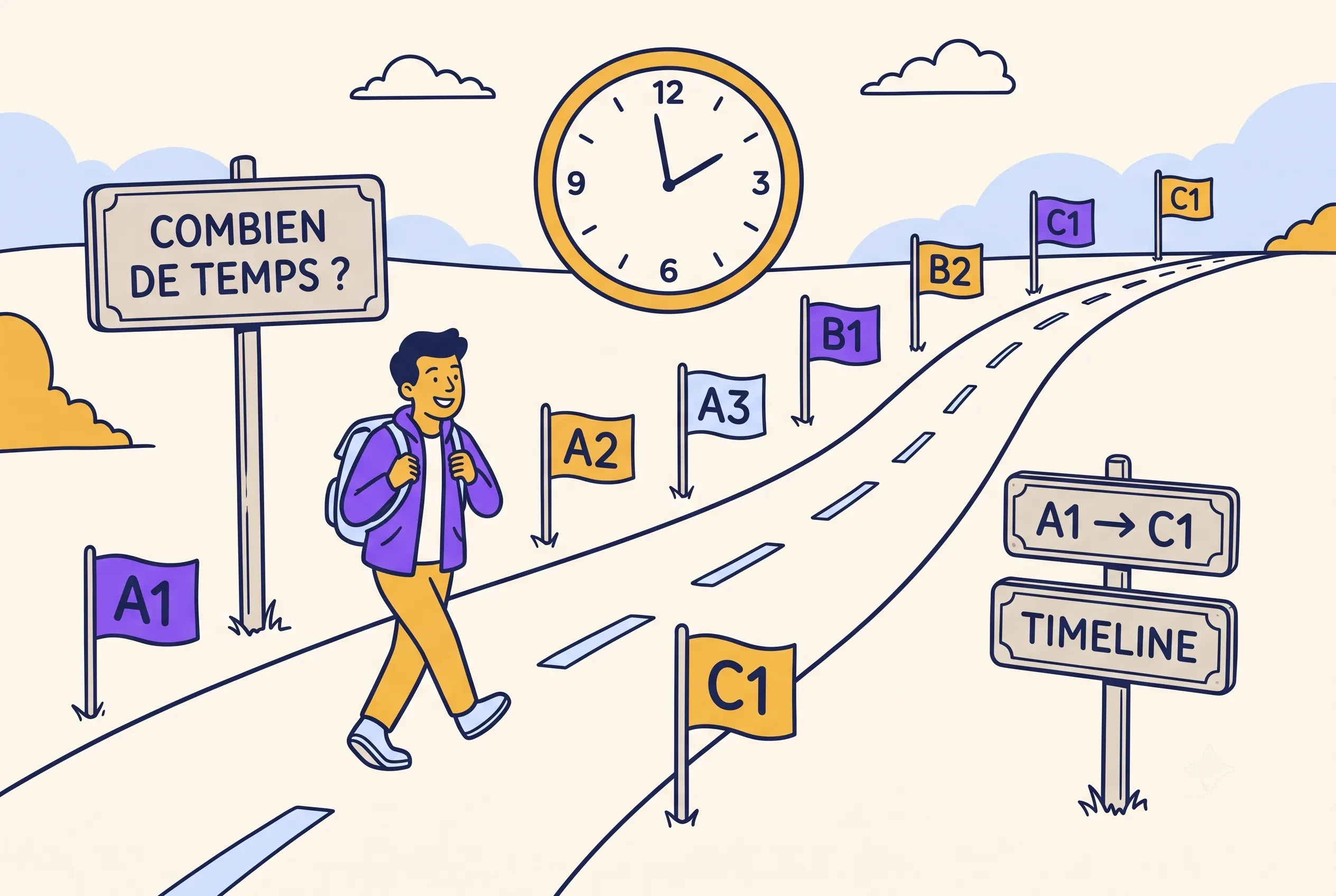
Prior Romance language knowledge is the single biggest structural advantage a French learner can carry into the process. This shared foundation meaningfully reduces the effective hours needed to reach the same proficiency level compared to English-only speakers. Spanish, Italian, and Portuguese speakers share grammar patterns and a vast overlapping vocabulary with French, so their brains are pattern-matching against a system they already own. A Spanish speaker can realistically reach B1 in six months of consistent study; an English-only speaker on the same schedule will typically land closer to A2, as broader proficiency research on comparative timelines for Romance-language backgrounds consistently shows. That gap spans an entire proficiency tier.
One important nuance here: the advantage of prior Romance knowledge is real, but it can be overstated when learners rely on it too heavily through cognates. Many cognates between French and English, or even French and Spanish, are rare, archaic, or domain-specific words that simply don't appear in everyday conversation. Learners who bank on cognate overlap to carry them often hit a wall the moment they step outside textbook vocabulary and into real-world listening. Structural grammar knowledge transfers; individual word shortcuts frequently don't.
2. Study Method Quality - Active Speaking and Comprehensible Input vs. Passive App Clicking
Active methods produce measurably faster fluency gains than passive ones. Method quality can independently compress or extend acquisition timelines regardless of total hours logged, which is what acquisition research consistently reports. Speaking with a tutor, processing comprehensible input at the right difficulty level, and producing output that forces real retrieval all build fluency in ways that passive app-clicking cannot replicate. Most busy learners default to streak-based apps because active methods feel logistically heavy, but that friction quietly costs months of real progress.
This is the exact problem Parrot is designed to remove. The app's Comprehensible Input Method governs how content is selected and sequenced for each learner. Underlying every video session, it continuously calibrates difficulty so input stays at the level just above what the learner already controls, which is where acquisition actually happens. Rather than passive watching, learners can layer in Parrot Back, a speaking practice feature that turns immersive video sessions into active retrieval moments.
And when a learner wants personalized, conversational feedback on top of that, the AI Spanish Tutor steps in, most useful during or after video sessions when targeted practice beyond passive watching is what the moment calls for. This combination of sequenced input, speaking output, and personalized feedback replicates what a dedicated language tutor provides, without requiring a fixed 30-minute block on a calendar.
3. Immersion Level - Consuming French Media Daily as a Documented Timeline Compressor
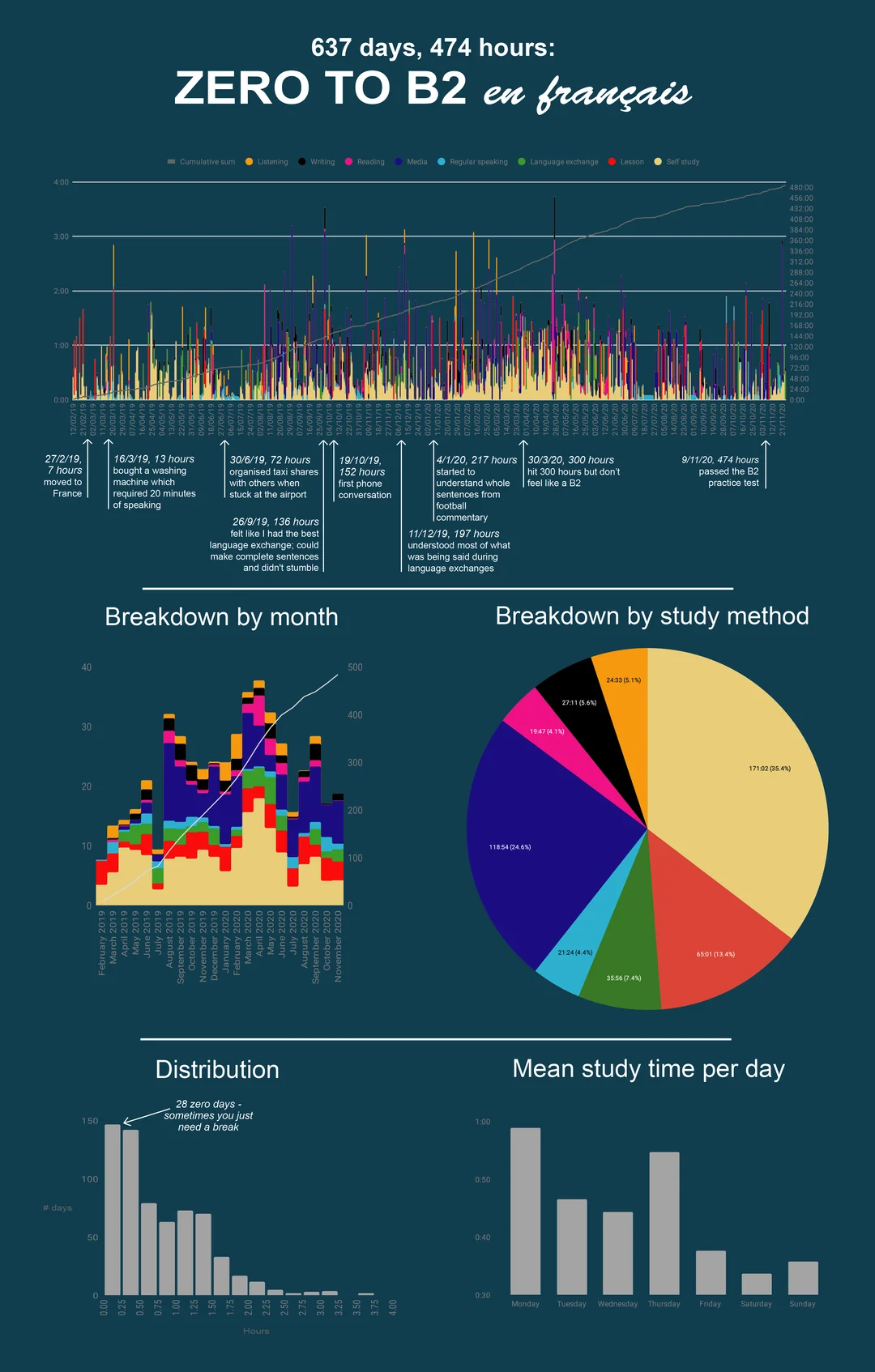
Immersion through French media is a documented timeline compressor. Across the market for self-directed language learning, this stands out as one of the clearest accelerants available to independent learners. Even a single episode of a French show daily creates cumulative listening hours that passive grammar review never generates, building contextual vocabulary outside formal study sessions and accelerating acquisition at every level.
Parrot's short-form video feed operationalizes this directly. Every video a learner watches contributes immediately to listening practice, not as a background exercise, but as a structured session where native-speaker content is paired with vocabulary aids in real time. Listening practice is built into the act of watching, which is the only realistic way a busy learner accumulates the listening volume that real-world comprehension requires. Beginners who have struggled with the fact that French spelling and pronunciation feel intimidating, even HelloFrench notes this is a genuine barrier even for advanced language learners, find that consistent exposure to spoken French through natural video content gradually desensitizes that fear in a way that staring at written rules never does.
4. Daily Consistency Over Sporadic Marathon Sessions - The Single Biggest Predictor of How Long It Takes

Short, frequent contact with French outperforms long, irregular sessions at every proficiency level. Cognitive science research on spaced repetition consistently shows that the brain consolidates language more efficiently when it encounters the material in distributed intervals rather than concentrated blocks. A learner doing ten focused minutes on a weekday commute five days a week is accumulating more retrieval events, and more durable memory traces, than someone who sits down for a 50-minute session once a week. The calendar looks slower with micro-sessions, but the acquisition curve often isn't.
This is also where AI-generated study plans tend to mislead beginners most sharply. Timelines promising B1 in three to six months are calibrated for an idealized learner with significant prior exposure; they don't reflect what true beginners actually experience. Parrot's approach is built on the opposite logic: rather than front-loading an ambitious plan, it meets learners inside the small pockets of time they already have, using a short-form video feed that fits a commute, a lunch break, or ten minutes before sleep. Consistency accumulates. Ambitious schedules that collapse after two weeks do not.
5. Intrinsic Motivation and Real-World Stakes - Why Your Reason for Learning French Determines How Fast You Actually Get There

Learners driven by concrete goals, a French partner, a job in Paris, a literature degree, sustain the daily effort that gamification pressure cannot replicate long-term. The Reddit French community illustrates this vividly: a university student studying French literature hunts down native podcasts on philosophy and current events because the content genuinely matters to her, not because an app awarded a badge. The tradeoff is that intrinsic motivation is harder to manufacture; without a real stake, learners plateau at comfortable intermediate levels indefinitely.
Common Mistakes That Silently Slow Your French Progress
Most learners who plateau aren't studying too little. They're repeating habits that feel like progress but quietly cancel out the hours they're putting in. Understanding exactly where that time disappears is what separates a realistic French timeline from one that keeps getting pushed back.
Logging Hours - Why It Rarely Works
The common assumption is that if you can't study for 30+ minutes a day in a focused session, you'll never reach any meaningful French milestone. The uncomfortable truth about French learning timelines is that most of the time learners invest gets quietly cancelled out by specific habits. None of them feel like mistakes in the moment. That's exactly what makes them so costly.
When Streak Mechanics Work Against You
Duolingo's streak system deserves credit for one thing it does genuinely well: getting people to show up. For absolute beginners building the habit of daily contact with a new language, that consistency nudge has real value. The limitation emerges at intermediate stages, where the mechanics continue rewarding daily login and task completion even when the tasks no longer generate meaningful comprehension or speaking gains.
Research into app-based language learning consistently finds that streak systems reward daily login and task completion rather than actual comprehension or speaking ability, so learners can maintain long streaks while making minimal real language progress. Duolingo has publicly acknowledged this gap by expanding its courses toward B2-level content, a move that implicitly signals earlier course structures were insufficient for meaningful fluency regardless of how consistently learners showed up.
This matters beyond the beginner stage in ways that are easy to miss. Learners who clock hundreds of streak days can still consistently misuse constructions like faillir vs. presque, a subtle grammatical distinction that silently persists even at higher levels. Stem-changing -er verbs, where the é/e flips to è in verbs like lever and espérer, look regular but are not, producing error rates that remain stubbornly high precisely because streak-based repetition drills the visual pattern without building the listening ear that catches the distinction in real speech. Engagement and acquisition are not the same mechanism.
1. Protecting Your Duolingo Streak Instead of Actually Learning French
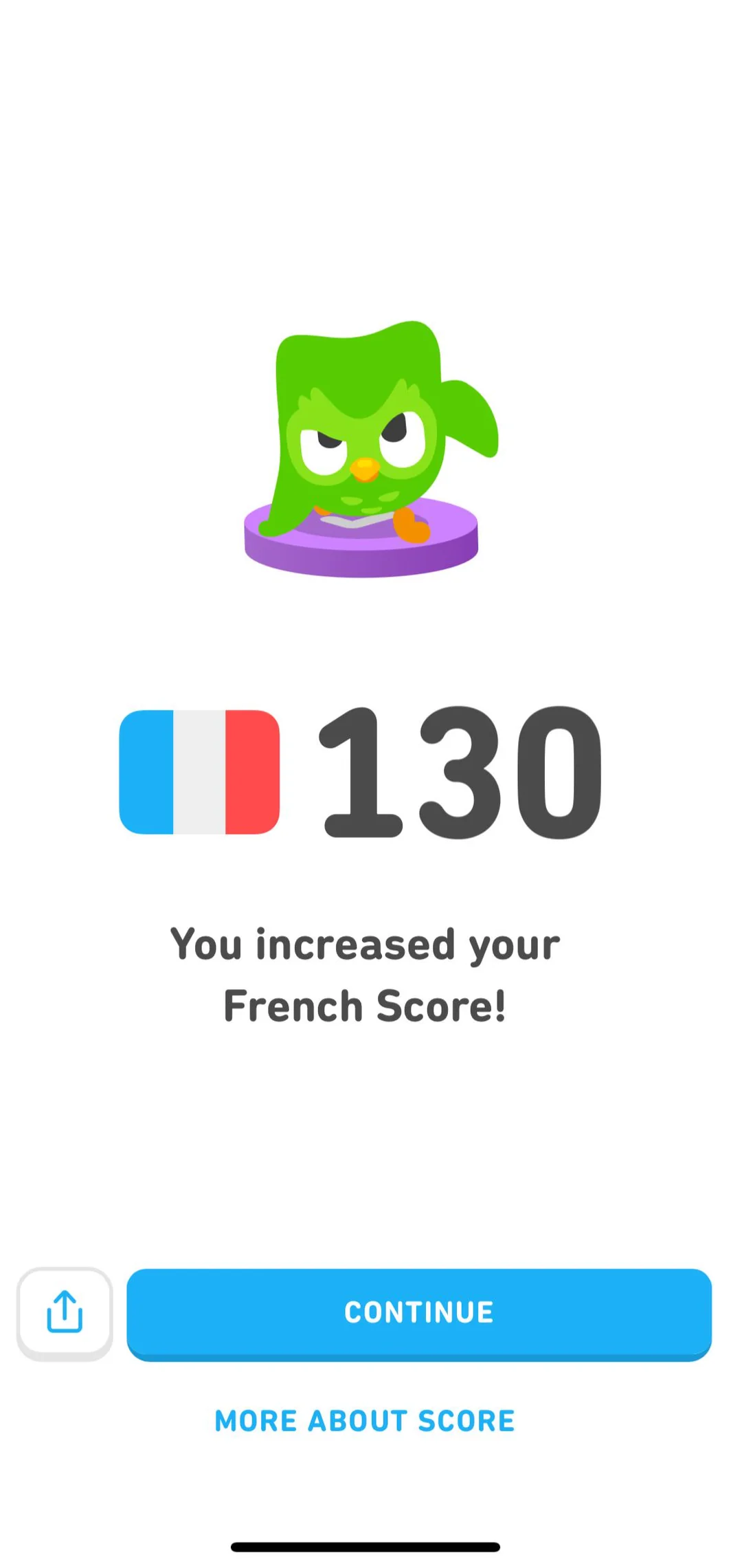
Gamified apps reward daily app-opening, not genuine comprehension or speaking ability. One Hacker News user logged a 1,000-day Duolingo streak and still couldn't hold a conversation or understand native speakers at normal pace. If your goal is conversational French fluency, treating streak maintenance as progress is a silent timeline killer, you feel productive while actually plateauing well below B1.
2. Waiting Until You 'Feel Ready' Before Speaking a Single Word of French
Delaying speaking practice until you feel confident is one of the most common and costly mistakes French learners make. Speaking is a distinct muscle, passive input alone cannot build it. Learners who postpone output often find they've built up an irrational psychological barrier, making the eventual transition far harder and adding months to their realistic fluency timeline.
3. Weekend Binge Sessions Instead of Short Daily French Exposure

Consistency beats volume. Language acquisition research on spaced learning shows that the brain consolidates vocabulary and grammar more durably through repeated, distributed exposure than through massed practice. A learner who spends 90 minutes on French every Saturday is giving their brain one retrieval event per week; a learner who spends 15 minutes every weekday is generating five. Over months, that difference in retrieval frequency compounds into a measurable gap in retention and fluency.
This is precisely where silent errors take hold. Homophones and spelling variants, Autant pour moi vs. Au temps pour moi, for instance, can reinforce incorrect written forms for months when a learner only encounters them in infrequent, high-volume sessions without real-time feedback. Distributed short sessions, paired with active retrieval, are what surface and correct those errors before they calcify. Parrot's short-form video feed is structured for exactly this pattern: each session contributes immediately to listening practice with native-speaker content and vocabulary aids alongside, making five short weekday encounters far more productive than a single Saturday marathon, and giving the brain the repeated retrieval frequency that actually moves the needle.
4. Treating French Grammar Study as Your Primary Learning Activity
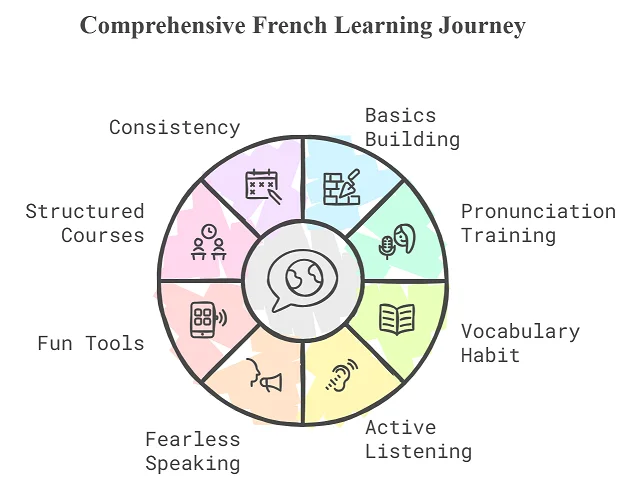
Spending the majority of study time on grammar rules rather than comprehensible, contextual input, French podcasts, shows, graded readers, produces learners who can explain subjunctive usage but cannot understand a native speaker. Grammar is a support tool, not the engine. Learners who invert this ratio consistently report slower progress and lower real-world comprehension despite feeling academically thorough.
5. English Speakers Ignoring the Thousands of French Words They Already Know
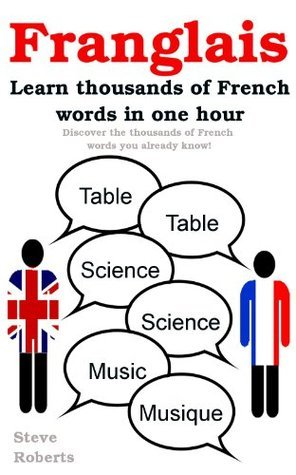
English contains an estimated 30-40% vocabulary of French origin, words like 'government,' 'justice,' 'restaurant,' and 'architecture' transfer almost directly. English-only learners who treat French as a language learned from zero dramatically overestimate how long fluency will take and underutilize a massive head start. Recognizing and actively leveraging this cognate bank can compress the early vocabulary-building phase by weeks.
Why Replacing Passive Scrolling With Short French Video Beats Marathon Study
Neurolinguistic research now argues that the brain requires active, emotionally relevant, real-world language encounters to drive acquisition. That finding lands differently when you stack it against a second fact: the average American already spends more than two hours a day on social media. The bottleneck for most French learners is available time and what that time is doing to their brain.
Why the FSI's Hour Count Doesn't Apply to How Most People Learn French
The FSI's 550-750 hour estimate was built on intensive, instructor-led classroom contact, typically six or more hours a day in a cohort setting with trained teachers providing constant, contextualized feedback. That is a very specific kind of hour. A learner passively tapping through a vocabulary app on a lunch break is logging time, but not the same type of time. Total hours are a proxy metric. What predicts timeline compression is the quality of language contact per hour, and most self-directed learners never interrogate that distinction.
How Comprehensible Input Cuts Down the Hours You Need to Learn French
According to Frontiers in Psychology's October 2025 neuro-ecological critique of Krashen's hypothesis, language is acquired through exposure to contextualized, meaning-focused input at the right level of difficulty, not through explicit grammar instruction or drilling. The mechanism is Krashen's i+1 principle: input pitched just above your current level keeps comprehension intact while forcing the brain to reach slightly further, which is precisely where acquisition happens.
Short-form French video delivers this naturally. A 60-second clip of a native speaker discussing food, travel, or a news story gives you tone, rhythm, vocabulary in context, and cultural cues simultaneously. A grammar worksheet gives you a rule in isolation. The brain acquires language from meaning, not from rules.
The honest trade-off: comprehensible input alone will not make you a confident speaker if you never practice producing the language. Immersive video builds the receptive foundation fast, but active output matters too, especially for conversational fluency. Tutoring platforms like Preply or LanguaTalk can bridge that gap by pairing receptive immersion with structured speaking practice.
What High-Quality Contact Actually Looks Like
High-quality language contact combines comprehensible input with real communicative pressure. That means encountering French in context, through video, audio, or conversation, at a difficulty level where you understand most of what you're hearing but are consistently reaching slightly further. It also means producing output: forming sentences, responding to questions, and making your brain retrieve rather than just recognize. Receptive immersion builds the foundation; active output is what converts that foundation into conversational fluency.
Related Reading
French Alphabet Pronunciation
How To Learn French Through Conversation
How To Learn French With Movies
Learning Resources For African French
Your Realistic French Learning Timeline Based on Daily Time Available
Forty-five minutes of weekend grammar review will not get you to B1. Ten minutes of focused French input every weekday will. The difference is how contact hours actually accumulate, and once you see the math laid out by daily budget, the timeline stops feeling impossible.
Daily Time Budget to CEFR Milestone Map
The U.S. Foreign Service Institute places French at roughly 550 to 750 total hours to professional working proficiency, which maps loosely to B2 on the CEFR scale. Divide that across realistic daily budgets and the calendar picture shifts dramatically.
- Daily Budget
A2 (approx. 150 hrs)
B1 (approx. 300 hrs)
B2 (approx. 600 hrs)
- 10 min/day
~30 months
~60 months
~120 months
- 30 min/day
~10 months
~20 months
~40 months
- 60 min/day
~5 months
~10 months
~20 months
These are raw-hour estimates. Method quality compresses every column. A busy parent fitting 15 minutes of comprehensible input into a lunch break will accumulate more acquisition-grade exposure per week than someone grinding low-engagement drills for 30 minutes. A language enthusiast logging one focused hour daily with active speaking practice can realistically hit B2 in closer to 14 months rather than the raw 20-month estimate, a compression consistent with method-quality findings from industry research and the FSI's own acknowledgment that input density affects outcomes.
Why Calendar Months and Contact Hours Tell Different Stories
The critical failure point for most French learners with limited time is measuring progress in calendar months rather than real contact hours.
Duolingo's streak mechanic is effective at building the daily contact habit, a genuine achievement for a free, accessible tool. The structural limitation is that it measures logins and task completions rather than comprehension or speaking ability, so progress can plateau without learners realizing it. The platform's expansion toward B2-level content signals an awareness of that gap and a move to address it, though learners already at intermediate stages may find they need to supplement with more output-focused practice in the meantime.
When a tool measures the wrong unit, learners optimize for the wrong outcome. Contact hours only predict fluency when those hours contain the right type of cognitive engagement, and the calendar math only becomes meaningful once the quality of each session is accounted for.
Next steps
If your schedule keeps breaking every French timeline you find, the path forward starts with measuring input quality instead of session length. Start with our learn Spanish.
The FSI's 600-hour benchmark was built for diplomats in full-time immersive classrooms, not for adults working with 10-minute windows. That matters because CEFR milestones are defined entirely by communicative ability in real situations, not hours logged. Short, frequent exposures to comprehensible French content build more durable memory than longer infrequent drills, which means a 10-minute commute session of genuine, contextually rich French video is not a smaller version of traditional study. It operates through a different acquisition pathway where the effective hour multiplies rather than merely accumulates. Together, those two realities point to one practical action: stop optimizing your schedule and start optimizing what fills it.
If you want to go deeper on how short-form input applies to another Romance language built on the same acquisition principles, the comprehensible input approach is also central to how parrotapp.com helps you learn Spanish.
Frequently Asked Questions
Does speaking Spanish or another Romance language mean I'll learn French faster?
Yes, it's the single biggest structural advantage a French learner can have. A Spanish speaker can realistically reach B1 in six months of consistent study, while an English-only speaker on the same schedule will typically land closer to A2. That said, leaning too heavily on cognates can backfire, because many shared words between French and Spanish or English are rare or domain-specific and don't show up in everyday conversation.
What does 'fluent in French' actually mean?
The CEFR framework defines B2 as the threshold for genuine conversational fluency, the point where interaction with native speakers becomes natural rather than effortful. At B2 (roughly 540 to 620 cumulative hours), learners can hold spontaneous conversations, follow native-speaker television with minimal subtitles, and handle most workplace tasks.
Can I make real progress on French with only 15-20 minutes a day?
You can, but the math is sobering: one full year of 15-minute daily sessions adds up to roughly 91 hours, approximately a quarter of the way to B1. What determines whether those short windows are genuinely useful is the quality and density of the method you use in them, not willpower or streak length alone.
Is watching French TV and movies actually useful, or just an excuse to procrastinate?
It's a documented timeline compressor, not a supplement. Even a single episode of a French show daily creates cumulative listening hours that passive grammar review never generates, building contextual vocabulary outside formal study sessions and accelerating acquisition at every level.
Why do two people who both study 600 hours end up at completely different levels?
Because raw hours don't tell the whole story, what fills those hours does. Active methods like speaking with a tutor, processing comprehensible input at the right difficulty level, and producing output that forces real retrieval build fluency in ways that passive app-clicking simply cannot replicate, and method quality can independently compress or extend acquisition timelines regardless of total hours logged.