Your streak proves you opened the app. It doesn't prove you learned French. Here's what the most popular language apps actually train, and which of 43 alternatives are built for real fluency.
Most French learners who stick with a gamified app for six months or more still can't hold a basic conversation when a native speaker catches them off guard, a pattern documented repeatedly in learner forums and language acquisition research. The common assumption is that if you just stick with the app long enough and keep the streak alive, the conversation ability will eventually come. That gap between daily usage and real-world ability isn't a coincidence.
It's the product of how these apps are built and what they're actually measuring. A 365-day streak means you opened the app 365 times. It says nothing about whether you absorbed any French.
As the Duolingo blog itself acknowledges, the app's mechanics measure daily engagement, not real-world conversational ability. That's not purely a design flaw, engagement metrics are inherently easier to measure and optimize than long-term fluency outcomes, and app economics reward daily opens. The Duolingo blog itself acknowledges this tension, noting the app works best as a complement to native-speaker practice.
See our learn Spanish for how this works in practice.
The streak is a loyalty program. Airlines run the same system: fly with us often enough and you feel rewarded, regardless of where the flights actually took you. Language acquisition research consistently finds that app-based learners develop reading recognition skills faster than speaking proficiency, a gap that reflects what drill-based formats actually train: controlled pattern-matching rather than the open-ended production real conversation requires.
The gap between reading and speaking isn't random. It reflects what the dominant app method actually trains: recognition, translation, and pattern-matching in a controlled environment, not the open-ended, unpredictable flow of real conversation. Stephen Krashen's research on comprehensible input offers the clearest explanation.
Brains acquire language by processing meaningful, native-speed content slightly above current ability, not by drilling isolated grammar fragments. The Duolingo blog even concedes that the app works best as a complement to native-speaker practice, not a replacement for it. Most learners never read that disclaimer.
The frustrating part isn't that these apps are badly built. The most popular ones are exquisitely engineered to keep you opening them, which is a completely different goal from making you fluent. Before diving into the full ranked list of 43 apps, it's worth pulling back the curtain on the two names that dominate every conversation about French learning and asking whether they actually teach different things, or just package the same loop in a different color.
Key takeaways
Six months of daily app use and a flawless streak still leaves most learners frozen the moment a native speaker opens their mouth, that gap is the rule, not the exception.
Duolingo and Babbel teach you to complete drills; they do not teach you to process real French at real speed, which are entirely different cognitive skills.
The app that fits your actual day beats the app with the best feature list, an app demanding a clean block of focused attention will lose to a packed schedule every time.
Download rankings and App Store ratings reward marketing budgets and streak mechanics, not conversational outcomes, the most popular French app and the most effective one are almost never the same product.
A 90-day streak measures daily opens, not comprehension growth; discipline pointed at the wrong method produces disciplined non-speakers.
Parrot's short-form video feed closes the gap by replacing drill loops with a TikTok-style stream of native French speakers delivering comprehensible input, the kind of exposure that builds real listening comprehension inside the same five-minute windows gamified apps waste on bubble-tapping.
What Duolingo and Babbel Actually Teach You Versus What They Promise
Spend six months on a gamified French app and you'll have a flawless streak, a cabinet full of digital badges, and a very real problem: the moment a native speaker opens their mouth, you freeze. The pattern is familiar to anyone who has put serious time into either of the two most widely discussed French apps. You open the app every day, protect the streak, clear every lesson, and then land in Paris and discover you can't follow a single sentence of real conversation. That gap between app performance and real-world ability isn't a personal failure.
It's structural. The common assumption is that if you just stick with the app long enough and keep the streak alive, the conversation ability will eventually come. It doesn't, because the architecture isn't built for that destination.
Both apps have genuine strengths worth naming honestly. The Duolingo Forum Archive records a course completer noting that Duolingo's French tree felt more valuable than four years of high school French study. Babbel's teacher-designed lessons build solid grammar foundations and introduce practical conversation scenarios faster than most free alternatives.
For total beginners, either app beats staring at a blank page. The problem isn't where they start. It's where they stop.
Duolingo's Real Limitation Isn't That It's Free, It's That Streaks Replace Learning Goals
The app is built to produce daily opens, and it succeeds brilliantly at that. Streaks, hearts, and leaderboards create a feedback loop that rewards consistency with the app, not progress in French. The honest version of what many learners experience is this: the gamification loop is so well-designed that you can spend hundreds of hours inside it while genuinely questioning whether you're acquiring a language or simply maintaining a score.
You are mostly maintaining a score. As learners documented in the Duolingo Forum Archive have noted, including one who completed the full French tree, finishing every lesson does not guarantee movement past A1 or A2, because the app's exercise formats are not designed to bridge the gap to spontaneous conversational production. That ceiling isn't accidental.
Translate-the-sentence drills cannot train the spontaneous production and deep grammar comprehension that conversational independence requires. One learner who had already earned 993 French crowns on Duolingo put it plainly: they moved to books because the app had run out of road (Duolingo Forum Archive). The LingQ Blog puts the structural issue in plain terms: Duolingo can be a useful starting point, but its format was not built to carry learners to fluency.
The evidence for that claim is visible in the architecture itself.
How Duolingo and Babbel Compare on High-Frequency French Input
Babbel's structured lessons explain why French works the way it does, and its dialogue-based scenarios are more realistic than Duolingo's isolated sentences. For learners who want grammar foundations, Babbel earns its reputation. The shared blind spot sits one layer deeper.
Neither app prioritizes high-frequency comprehensible input, the sustained exposure to native-speaker French that linguistic research identifies as the primary driver of conversational fluency. The 80/20 rule in French vocabulary research shows that a core of roughly 1,000 high-frequency words covers the vast majority of spoken French, yet both apps deliver that vocabulary through translation drills rather than through the natural, contextualized repetition that makes words stick in conversation. Both apps optimize for session-completion metrics.
The more comfortable you get with either app, the more comfortable you are with the app, not with French.
This is precisely the problem Parrot is built to solve. Learners who come to Parrot after months on Duolingo or Babbel share a consistent profile: traditional memorization-based methods haven't transferred to real listening or speaking, and they want a research-backed alternative.
Parrot's short-form video feed is built on the structural opposite of drill loops. Instead of translating isolated sentences, learners absorb real native-speaker French in short clips sequenced to their level. Every video watched contributes directly to listening practice: real-world listening comprehension, not textbook pattern recognition. The Comprehensible Input Method underlies every video session, governing how content is selected and sequenced for each learner, targeting the 95-98% comprehensibility threshold at which the brain can process meaning rather than decode noise.
When learners want to move from passive absorption to active production, Parrot Back, the app's speaking practice feature, creates the bridge. And for learners who want personalized feedback or targeted practice beyond watching, the AI Tutor is available during or after video sessions to make that practice responsive rather than generic. Knowing what these apps can and can't do is only half the equation.
The harder question is figuring out which of the 31 apps on this list actually matches how your brain acquires language. The next section gives you a three-question filter to answer that before you download anything else.
1,000
high-frequency words cover most spoken French
How to Choose the Right French Learning App Before You Waste Another Month
Time is the variable most learners underestimate. Before comparing features or reading another review, identify the single constraint that will actually determine whether you stick with an app long enough for it to matter, because that constraint, not the app's star rating, should make the decision for you.
"You can spend years on a single app, 4+ years in my case, without any clear signal of whether you're making meaningful progress toward fluency, which makes me wonder if it was ever the right choice."
— what we hear from language learning app users
Pros and cons at a glance
Goal-first thinking sounds logical. It isn't. If your goal is conversational French but your real life gives you nine fragmented minutes between meetings, an app architected around 25-minute structured sessions will sit unopened. The constraint kills the goal before method ever gets a chance. Start with the constraint: how much unbroken time do you actually have, and where? That single answer eliminates more apps than any feature comparison will.
The Three-Question Filter That Cuts 43 Options Down to a Shortlist
Ask three questions before reading a single review:
Does the app work in sessions shorter than 10 minutes without losing coherence?
Does it expose you to native-speaker French, or only to controlled, forgiving drill sentences?
Does it measure whether you understood something, or only whether you showed up?
An app that fails any one of these three questions will not compound toward real speech, regardless of its star rating or price point. Most apps fail at least two.
Method Match Between Input-Based and Drill-Based Apps
The functional difference here is not subtle. Drill-based apps ask you to produce or recognise a target word in a controlled sentence, one you could guess from context even without French. Input-based apps expose you to meaning-rich native content pitched just above your current level, what researcher Stephen Krashen identified as comprehensible input, the condition under which acquisition actually happens.
Taalhammer's 2025 analysis puts it plainly: adult learners are goal-driven and want to speak fluently, which requires a fundamentally different approach than traditional app design provides. The honest trade-off is that input-based apps demand more cognitive engagement per session. If you want passive, low-effort tapping, they will feel harder.
That friction is the point.
The 95-98% comprehensible content threshold is where acquisition flips from theoretical to real. Below it, your brain is decoding noise, not acquiring language. No amount of consistency below that threshold compounds toward conversation.
Fluency Signals Versus Streak Metrics
Streaks measure app loyalty. They do not measure whether your brain retained a grammatical structure or could deploy a phrase under pressure. Before committing, check what the app surfaces as "progress." If the primary feedback loop is a daily login count or a points total, the app is optimising for retention, not acquisition. A real fluency signal looks different: can you understand a native speaker you have never heard before? Can you produce a sentence you were not drilled on? Those are the markers worth tracking.
With that three-question filter in hand, you're ready to move through the ranked list without getting lost in feature noise. What follows is every serious contender, all 43, scored against the only criteria that actually predict whether you'll be speaking French six months from now.
31 Best French Learning Apps Tested and Ranked for 2026
Every serious contender in the list below was scored against those three questions, which means the rankings look nothing like the App Store charts. Download rankings reward marketing budgets and streak-driven retention loops, while real conversational progress requires a fundamentally different quality of daily input that popularity metrics never capture.
That gap matters because most ranked lists apply no consistent evaluative spine. Every app sounds equally good with different branding, and the reader finishes the article more confused than when they started. The only question that separates useful apps from expensive habit-trackers is whether the method produces real comprehension and speaking output, or just keeps you tapping until you quit.
The ranking below tests each app against that single standard: does it build comprehensible exposure to native-level French, or does it optimize for session completion?
The Evaluative Standard Behind This Ranking
Every entry below was assessed on four criteria: method quality (input-based vs. drill-based), realistic fluency ceiling for the average committed learner, session-length fit for a busy schedule, and honest pricing. Apps that score well on all four appear near the top. Apps that excel on one but fail on another are ranked accordingly, with the tradeoff named plainly.
1. Duolingo - Best Free App for Complete Beginners
For absolute beginners who need a zero-cost, zero-pressure entry point, Duolingo is the most frictionless start available. The gamified loop builds a daily habit faster than almost any other app, and the French course covers A1 to early A2 vocabulary with reasonable breadth. The honest ceiling is real: according to the 2025 Duolingo Language Report, engagement data tracks streaks and lessons completed, not conversational output or speaking ability gained.
Learners who rely on it exclusively typically plateau around A2 without supplementation. Free tier is genuinely useful; Super Duolingo runs approximately $7/month. Best when you need to build the habit before you build the skill.
2. Babbel - Best App for French Grammar Foundations
Babbel is the structured alternative for learners who want teacher-designed curricula rather than gamified randomness. Lessons are built around practical dialogue scenarios, and the grammar explanations are clearer and more systematic than most app competitors. The tradeoff is engagement: the lesson format feels closer to a textbook than a scroll feed, and learners who need novelty to stay consistent often drop off after the first month. Pricing sits around 4/month. Best for learners who already know they respond well to structured, grammar-forward instruction and want a reliable framework rather than immersive exposure.
3. Pimsleur - Best App for Pronunciation and Commute Learning
Pimsleur is the strongest audio-only option in this ranking, built on a spaced-repetition method that prioritizes speaking and listening over reading or writing. Each lesson runs approximately 30 minutes, which fits a commute or workout without requiring a screen. Pimsleur's spaced-retrieval audio method has a long research lineage supporting its effectiveness for pronunciation and listening comprehension development, and independent learner reviews consistently highlight speaking confidence as its strongest outcome, making it the clearest choice for learners whose primary goal is sounding credible before they can read a menu. Pricing runs approximately $21/month. The limitation is real: without reading and writing practice, grammar intuition develops slowly, and learners who need to read French for work will need a supplement.
4. Busuu - Best App for Native Speaker Writing Corrections
Busuu's differentiating feature is its native-speaker correction community, where written exercises are reviewed and corrected by French speakers rather than an algorithm. The feedback loop is genuinely rare among apps: corrections typically arrive within hours, and the community size is large enough that French learners are well served. For learners who want written French to improve alongside spoken French, this feedback mechanism is more valuable than any AI grammar checker. Pricing starts around 0/month for premium. The limitation is that speaking practice remains thin; Busuu corrects what you write, not how you sound, so pronunciation development requires a separate tool.
5. Lingopie - Best App for Learning French Through TV and Film
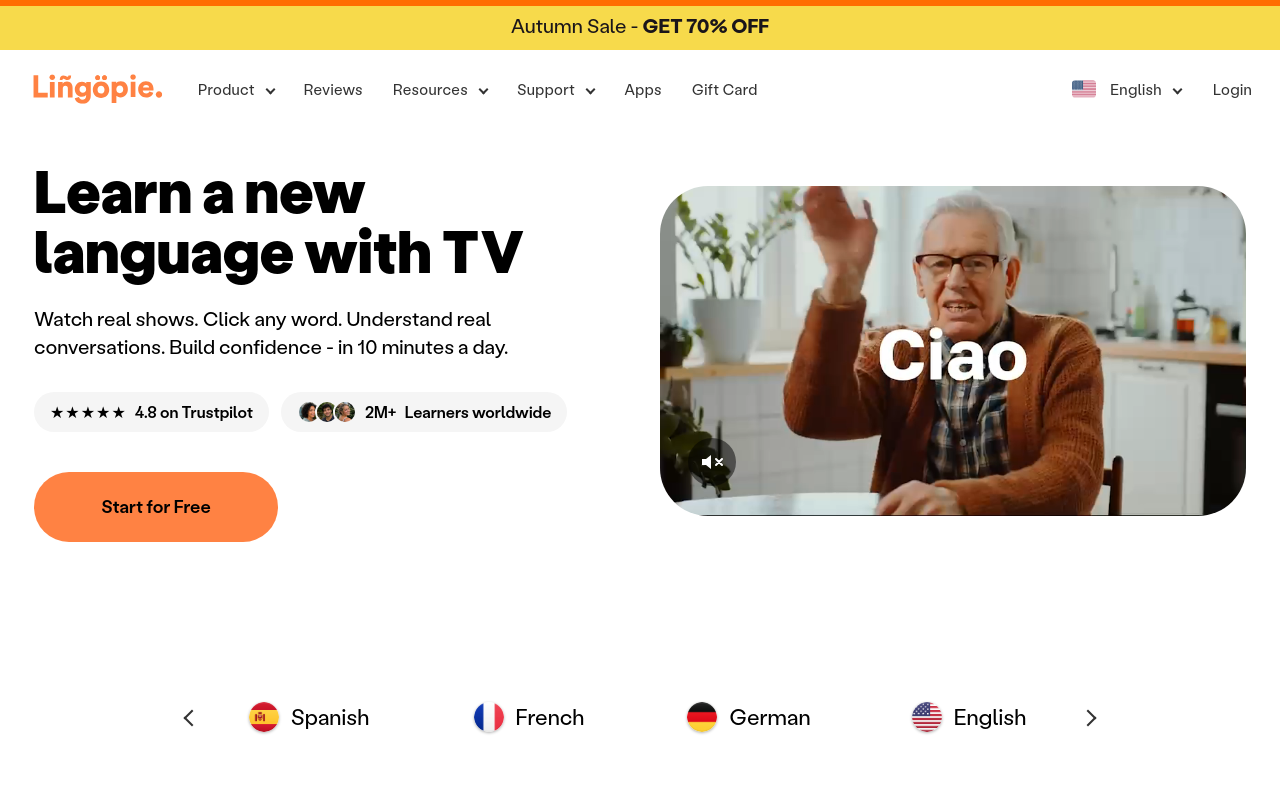
Lingopie delivers French TV shows and movies with interactive subtitles that let learners click any word for an instant definition and add it to a personal vocabulary list. The method is grounded in comprehensible input theory: watching real French content at or slightly above your current level builds vocabulary in context rather than in isolation. Learners and reviewers consistently report stronger vocabulary retention when words are encountered in the context of a video scene they can replay, rather than in isolation, the mechanism Lingopie's click-to-learn subtitle method is built around, and particularly useful for intermediate learners who have exhausted beginner apps but are not yet comfortable with raw native content. Pricing runs around $8/month. The tradeoff is that complete beginners will find the content overwhelming before they reach A2.
6. Parrot - Best App for Comprehensible Input via Short-Form Native Video
A pattern shows up repeatedly among learners who have cycled through two or three apps from this list: they finish every lesson, maintain the streak, and still freeze when a native speaker talks at normal speed. The cost is structural. Most apps are optimized for session completion rather than comprehension output, so the learner gets better at the app without getting better at French, and learners who have struggled with traditional memorization-based methods feel this ceiling most acutely.
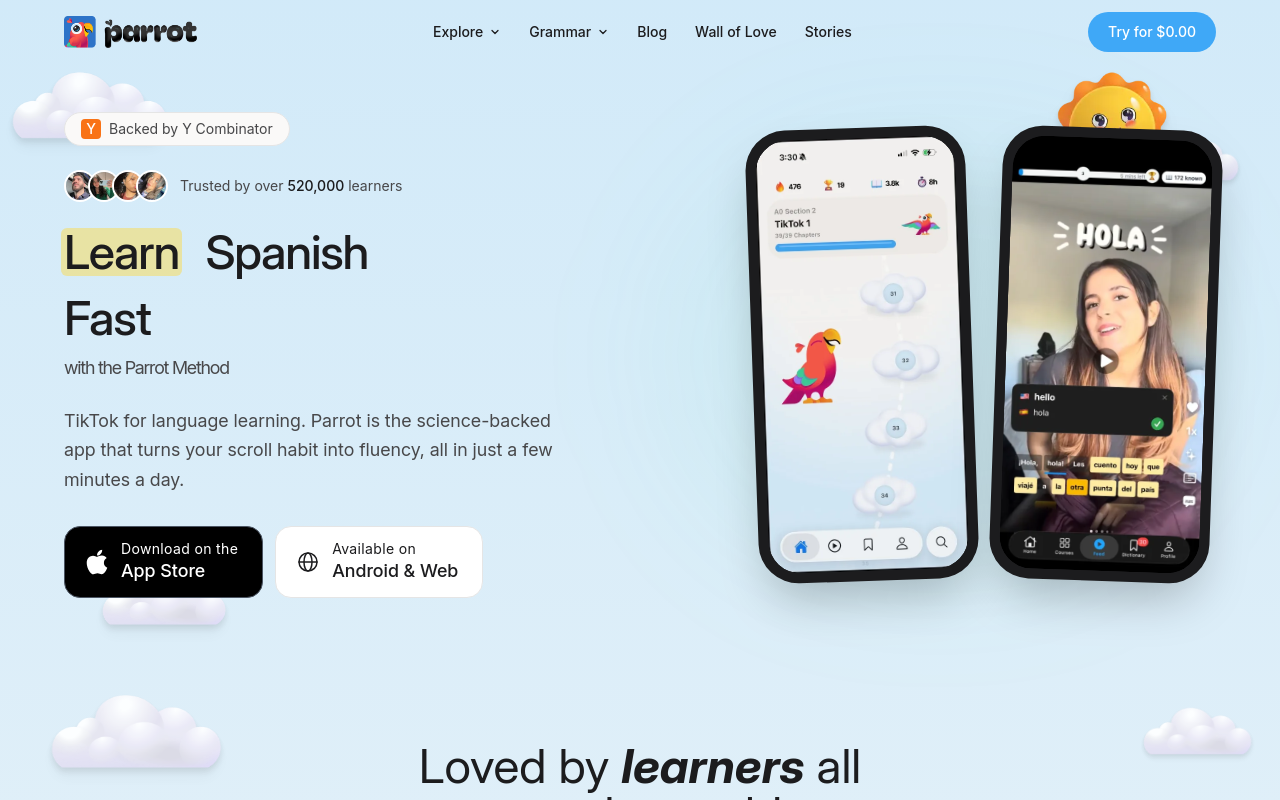
Parrot is built around a different mechanism. Its short-form video feed delivers native-speaker content calibrated to the learner's current comprehension level, mimicking the scroll behavior they already use daily. Idle phone time converts into genuine input acquisition rather than another streak to protect. Underlying every video session is the Comprehensible Input Method, which governs how content is selected and sequenced for each individual learner so that exposure stays meaningful rather than overwhelming.
Transcripts and translations are available on every video immediately, so listening practice and reading comprehension develop in parallel. Every video watched contributes directly to listening practice, not the textbook kind, but the real-world kind that closes the gap between lesson performance and the experience of understanding a native speaker talking at full speed. Where Parrot goes further than passive video tools is Parrot Back, a speaking practice feature that gives learners active, personalized feedback on top of the immersive video content.
Rather than watching and hoping the ability to speak follows, learners can practice producing the language they have just heard, with feedback that targets the specific gaps the AI Spanish Tutor and speaking engine identify. That combination, comprehensible input through short-form native video, parallel listening and reading development, and active speaking practice, is the reason Parrot is most beneficial for the learner who has already tried a gamified app for months and still cannot process a native speaker talking at normal speed. Stephen Krashen's comprehensible input research, the same science that anchors the strongest entries in this list, consistently links this kind of meaningful native-speed exposure to real speaking gains rather than the grammar-drill loop that most apps dress up in a shinier interface.
The same figure the Duolingo Language Report makes from the opposite direction: engagement metrics like streaks and lessons completed do not track speaking ability, which is precisely the gap Parrot's method is designed to close.
7. Rocket French - Best App for Structured Long-Form Course Completers
Rocket French is a comprehensive course rather than a subscription feed, which makes it the right pick for a specific learner type: someone who wants a defined beginning, middle, and end rather than an open-ended subscription. The course covers grammar, listening, and cultural content in a structured sequence, and the audio components are strong. The tradeoff is motivation architecture: without streaks or social features, learners who need external accountability tend to stall around the midpoint. One-time pricing (typically 50 to $300 depending on the level purchased) is appealing for learners who dislike ongoing subscriptions. Not ideal if you need daily habit reinforcement built into the product.
8. Tandem - Best App for Live Conversation Practice with Native Speakers
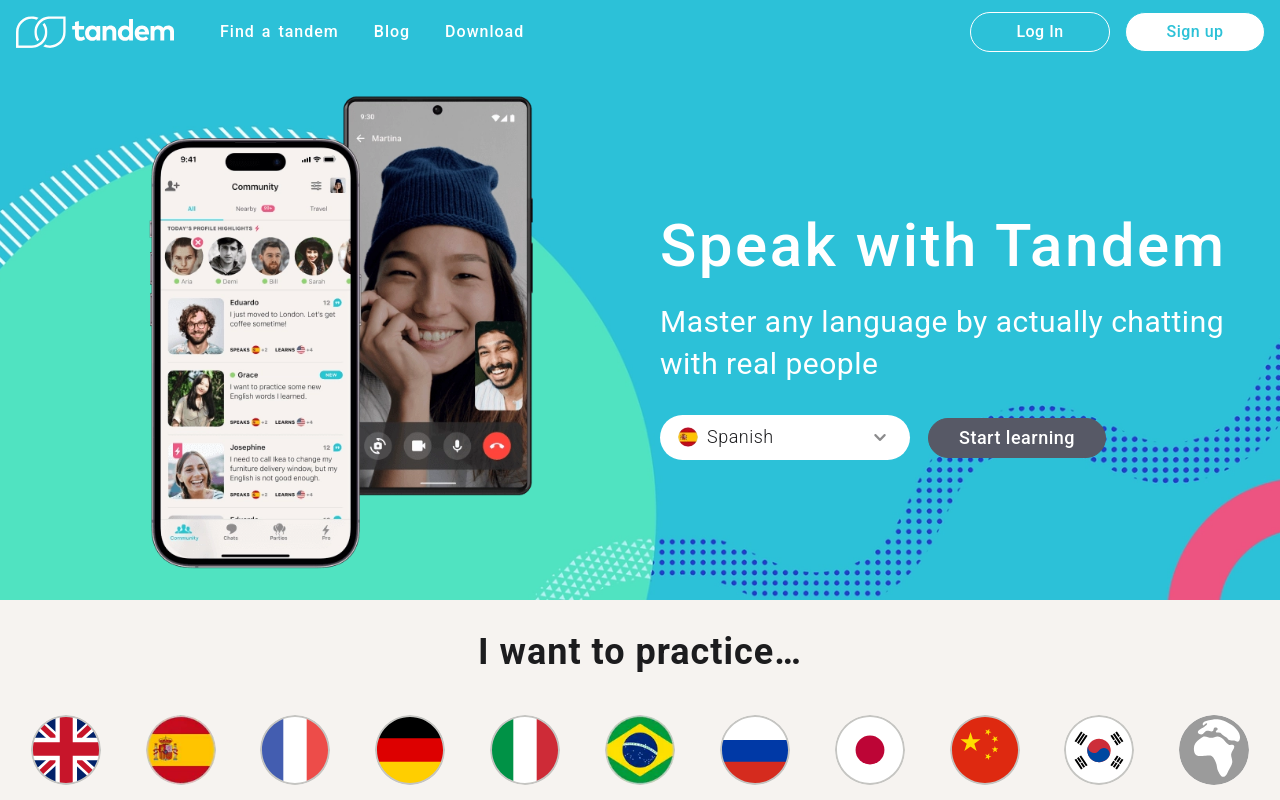
Tandem connects learners with native French speakers for real-time text, audio, and video conversation exchange. The value is direct: you practice speaking with an actual person, not an algorithm, and the correction quality reflects genuine native intuition rather than a programmed response. The limitation is coordination overhead.
Finding a reliable exchange partner takes effort, scheduling across time zones adds friction, and the quality of the experience depends heavily on your partner's availability and teaching instinct. Free to use with optional premium features. Best for intermediate learners who have enough French to sustain a basic conversation and want to stress-test it with a real speaker.
9. HelloTalk - Best App for Text-Based Language Exchange with Corrections
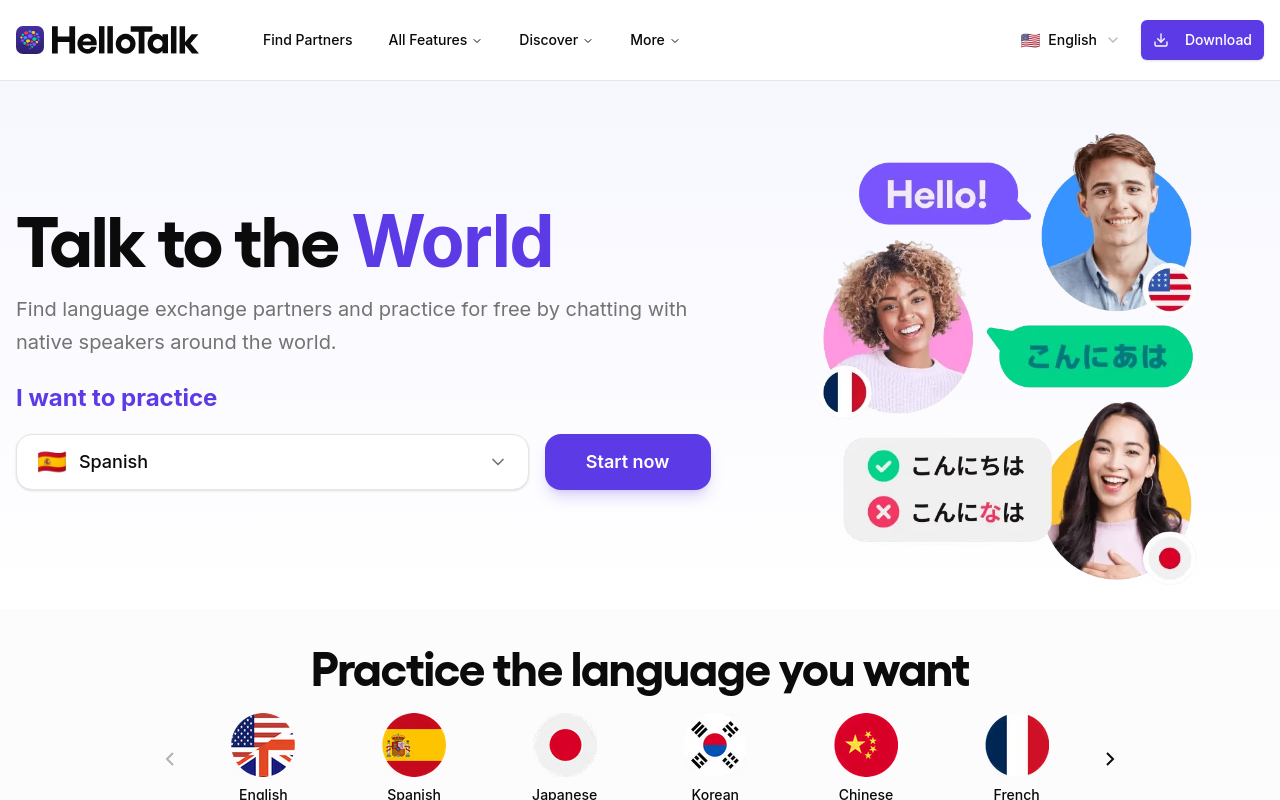
HelloTalk is the text-first alternative to Tandem, built around written conversation with native speakers who correct your messages in context. The correction feature is the core value: native speakers mark up your writing directly in the chat, which creates a feedback loop that feels natural rather than clinical. The tradeoff is that text exchange develops written fluency faster than spoken fluency, and learners who need to improve their listening comprehension will find the app limited. Free tier covers most core features; a premium subscription adds additional tools. Best for learners who are more comfortable writing than speaking and want to build confidence before attempting live conversation.
10. Anki - Best App for Custom French Flashcard Spaced Repetition
Anki is not a French learning app in the traditional sense; it is a spaced-repetition flashcard engine that you configure yourself. For learners who want precise control over what vocabulary they study and when, nothing in this list matches its flexibility. The tradeoff is setup cost: building a quality French deck takes real time, and learners who are not willing to invest that upfront effort will get more value from a pre-built alternative. The app itself is free on desktop and Android; the iOS version carries a one-time cost of approximately $25. Best for intermediate to advanced learners who want to target specific vocabulary gaps rather than follow a generic curriculum.
11. Clozemaster - Best App for Intermediate French Vocabulary in Context
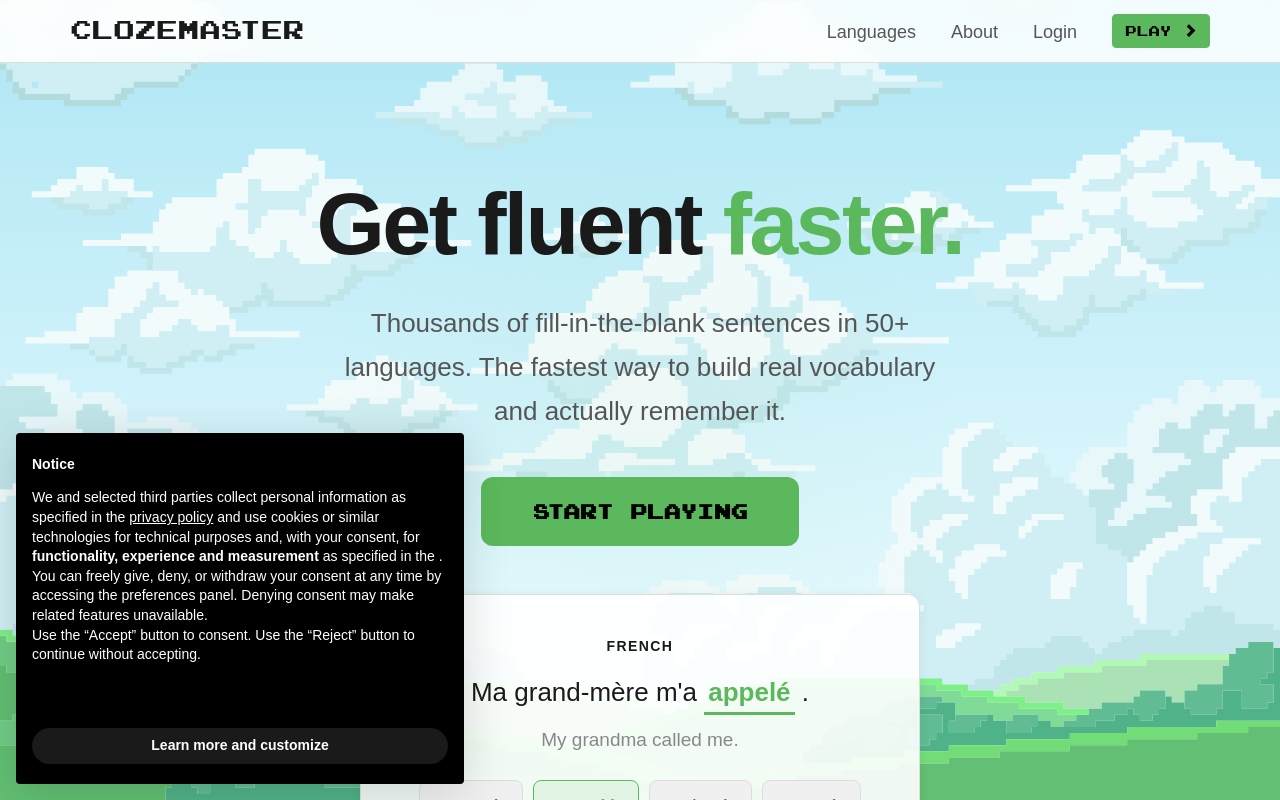
Clozemaster presents vocabulary through fill-in-the-blank sentences drawn from real French text, which means words are learned in context rather than in isolation. The method is particularly effective for intermediate learners who have exhausted beginner vocabulary apps and need exposure to how words actually function in sentences. The gamified scoring system adds motivation without the hollow streak mechanics of lower-tier apps. Free tier covers a meaningful amount of content; premium runs around $8/month. The limitation is that Clozemaster does not teach grammar explicitly, so learners who need structural explanation alongside vocabulary practice will need to pair it with a grammar-focused tool.
12. Rosetta Stone - Best App for Immersive Visual-Association Learning
Rosetta Stone's image-and-audio association method teaches French without translation, which forces the brain to build direct connections between the French word and the concept rather than routing through English. The method has genuine research backing for building intuitive comprehension, and the interface is polished. The honest tradeoff is cost and pace: Rosetta Stone is one of the more expensive options in this ranking (typically 2 to $36/month depending on the subscription tier), and the no-translation approach can frustrate learners who want explicit grammar explanation. Best for learners who have tried translation-heavy apps and want to rewire toward direct comprehension.
13. Italki - Best Platform for Affordable One-on-One French Tutoring
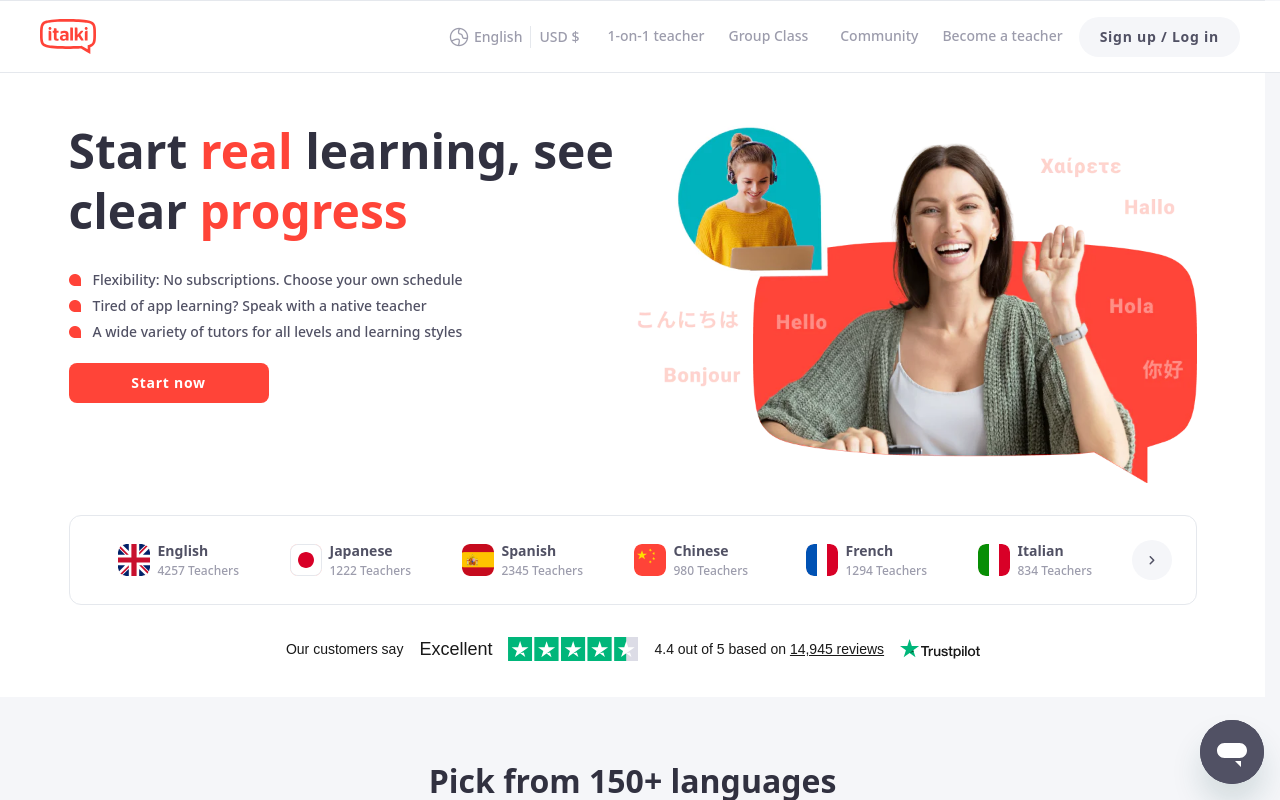
Italki is not an app in the traditional sense; it is a marketplace connecting learners with community tutors and professional teachers for one-on-one video sessions. The pricing range is wide, from approximately $5/hour for community tutors to $40/hour or more for credentialed teachers, which makes it accessible across most budgets. The quality variability is the honest limitation: community tutors range from excellent to inconsistent, and finding the right fit takes a few sessions. Best for learners who have plateaued on self-study apps and need real human conversation practice to push past the intermediate wall.
14. Speechling - Best App for French Pronunciation Coaching with Human Feedback
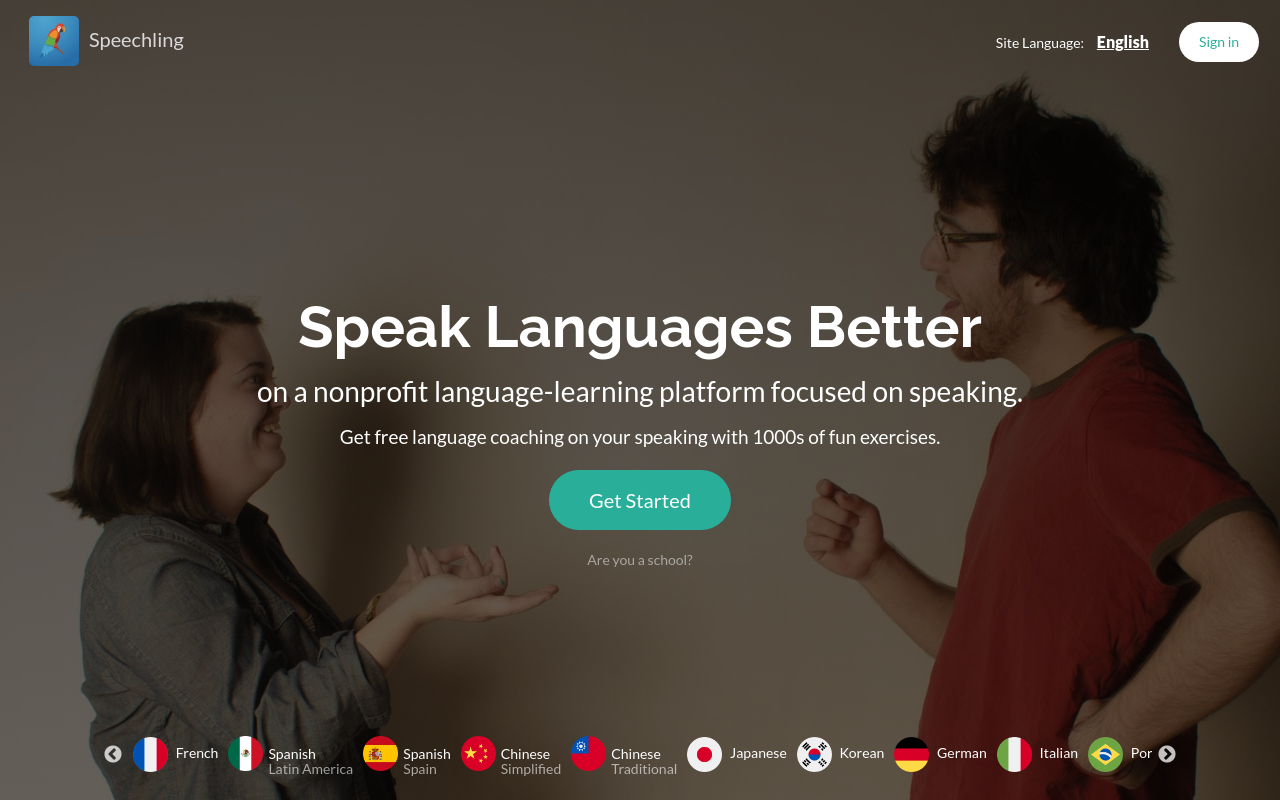
Speechling records your spoken French and sends it to human coaches who provide specific, actionable feedback on pronunciation. The human element is the differentiator: an algorithm can flag that your vowel is wrong, but a coach can explain why it sounds wrong to a native ear and demonstrate the correction. Pricing is unusually accessible, with a free tier that includes a limited number of monthly submissions and a paid plan around $20/month for unlimited coaching. The limitation is throughput: if you want to practice speaking for 30 minutes daily, the submission model creates a bottleneck. Best for learners who have identified specific pronunciation problems and want targeted correction rather than general practice.
15. Kwiziq - Best App for Systematic French Grammar Testing and Tracking
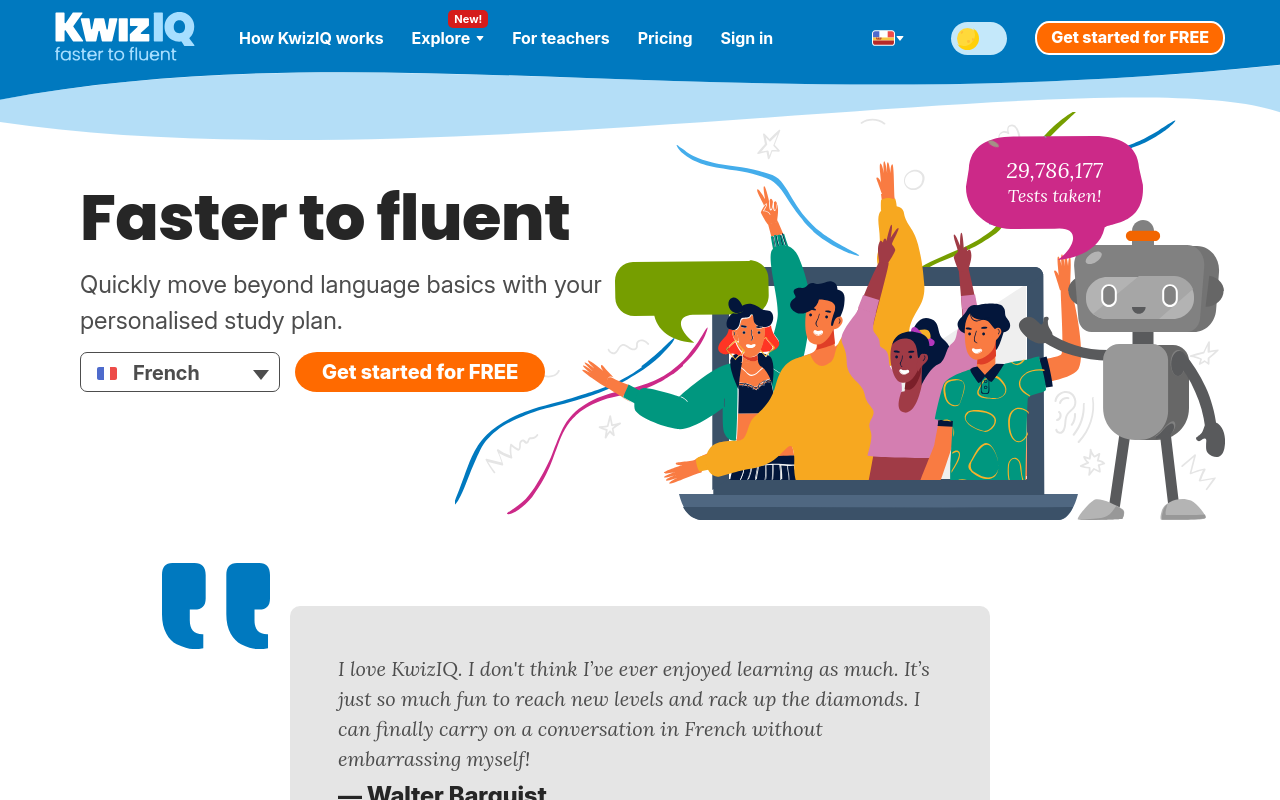
Kwiziq builds a profile of your French grammar knowledge through adaptive testing, then targets the specific gaps rather than running you through a generic curriculum. The diagnostic engine is useful for intermediate learners who know they have grammar holes but cannot pinpoint exactly where. Pricing runs around 0/month. The tradeoff is that Kwiziq is grammar-first and light on listening or speaking practice, so it functions best as a supplement to an immersion tool rather than a standalone solution. Not the right pick for beginners who need broad vocabulary exposure before grammar refinement makes sense.
16. Speakly - Best App for High-Frequency French Vocabulary with Listening
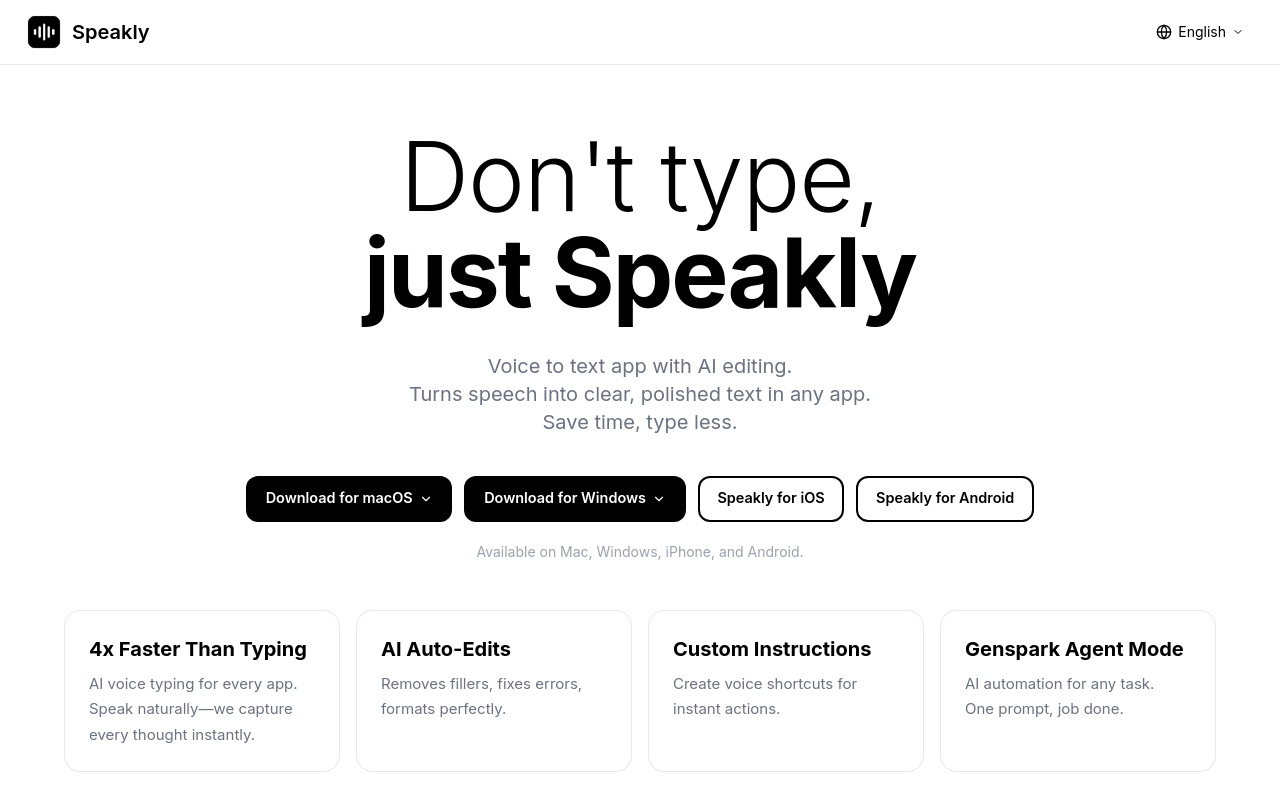
Speakly is built around a frequency-ranked vocabulary approach: it teaches the most statistically common French words first, so every session builds toward the core vocabulary that covers the majority of everyday conversation. The listening exercises are integrated throughout rather than siloed into a separate module. Pricing runs around 0/month. The honest limitation is that frequency-based learning can feel mechanical once you move past the top-tier vocabulary, and the app does not develop reading or writing skills to the same depth as listening. Best for learners who want to maximize conversational coverage in the shortest possible time before a trip or immersion experience.
17. Yabla - Best App for French Immersion Through Authentic Video with Quizzes
Yabla uses real French video content, including news segments, music videos, and cultural programming, paired with interactive quizzes that test comprehension after each clip. The combination of authentic content and structured accountability is stronger than passive video watching alone. Pricing runs around 0/month. The tradeoff is that the quiz format can interrupt the natural flow of immersion, and learners who prefer to absorb content without stopping for comprehension checks may find the format frustrating. Best for intermediate learners who want immersion with built-in accountability rather than the self-directed discipline that raw video watching requires.
18. FluentU - Best App for Learning French from Real-World Video Clips
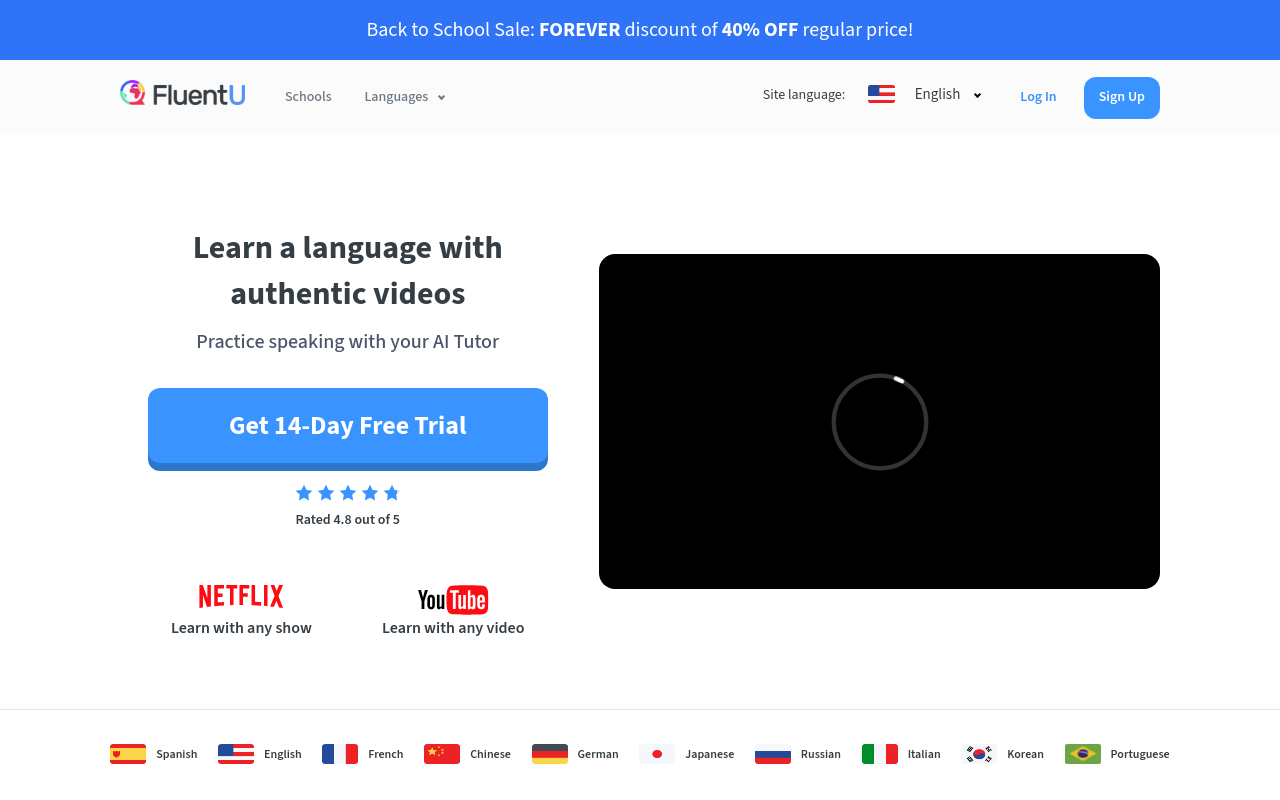
FluentU takes real-world French video content and layers interactive subtitles, vocabulary tracking, and spaced-repetition review on top of it. The method is similar to Lingopie but with a broader content library and more structured vocabulary review built into the experience. Pricing runs around $30/month, making it one of the more expensive app options in this ranking. The higher cost is justified for learners who want a single platform that combines authentic video input with systematic vocabulary retention, but learners on a tighter budget will find comparable immersion value at lower price points. Best for committed intermediate learners who want immersion and vocabulary review in one place.
19. Mondly - Best App for AR-Enhanced French Conversation Practice
Mondly's augmented-reality conversation feature places virtual French speakers in your physical environment, creating a more spatially engaging practice context than a flat screen. The novelty is real, but so is the limitation: AR conversation practice is most useful for learners who have already built basic vocabulary and want to simulate real-world interaction, not for beginners who need foundational input first. Pricing runs around 0/month. The app's standard lesson content outside the AR feature is solid but not differentiated from mid-tier competitors. Best for learners who respond to novelty and spatial engagement and have at least A2-level French to work with.
20. Preply - Best Platform for Flexible French Lessons with Vetted Tutors
Preply operates similarly to Italki but with a more structured vetting process for tutors and a built-in lesson management system that tracks progress across sessions. The quality floor is higher than open marketplaces, which reduces the trial-and-error cost of finding a good teacher. Pricing varies widely depending on the tutor, typically 5 to $60/hour. The tradeoff is that the higher quality floor comes with a higher average price point than unvetted alternatives. Best for learners who want the accountability and quality assurance of a structured tutoring platform and are willing to pay a modest premium for it.
21. Pocketlang - Best App for French Vocabulary via Micro-Lesson Notifications
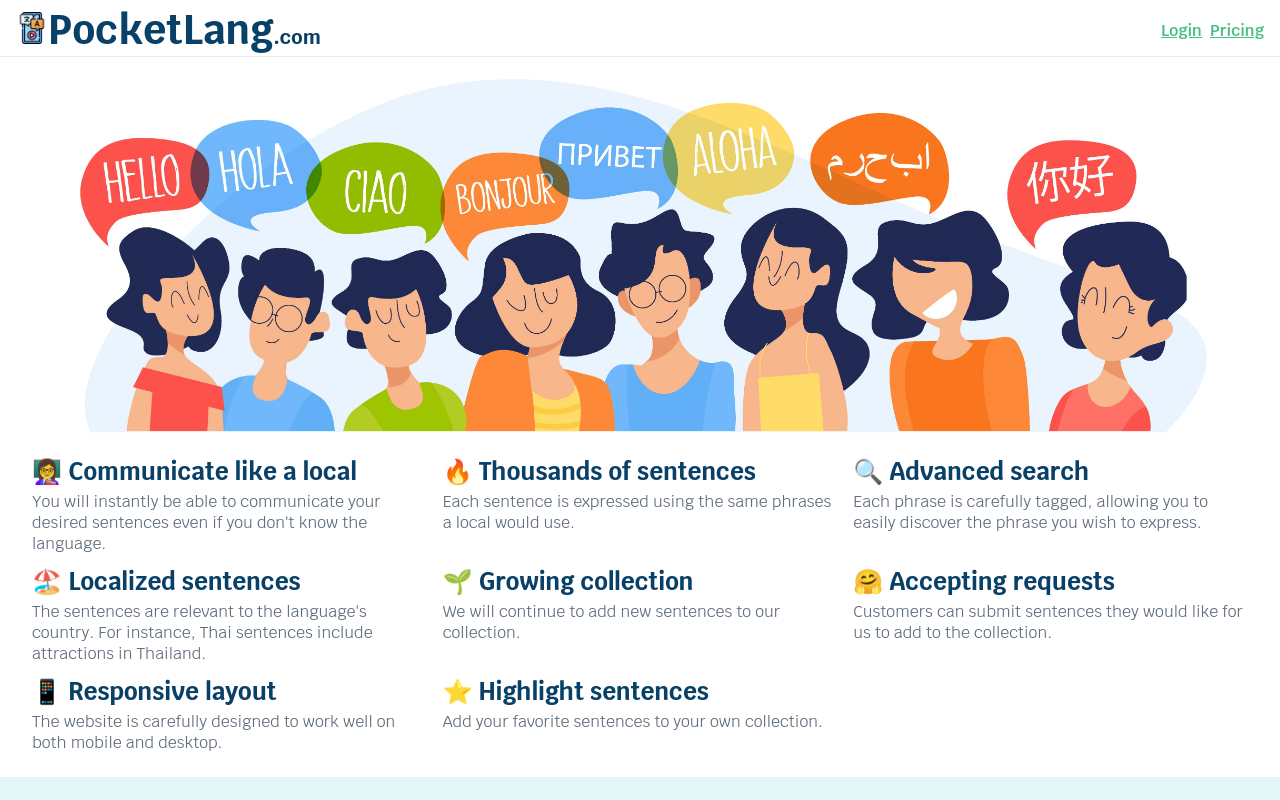
Pocketlang delivers vocabulary and short grammar points through push notifications throughout the day, turning idle phone-checking moments into brief French exposure. The micro-lesson format is the right fit for learners who genuinely cannot carve out a dedicated study block but want to accumulate input in fragments. The honest limitation is depth: micro-notifications build passive vocabulary recognition faster than active recall or speaking ability, so Pocketlang works best as a supplement rather than a primary learning tool. Pricing is low, typically under $5/month. Best for extremely time-constrained learners who want something rather than nothing on days when a full session is impossible.
22. Language Transfer - Best Free Audio Course for French Grammar Intuition
Language Transfer is a free audio course built around a Socratic dialogue method: the teacher asks questions and the learner constructs answers in real time, which builds grammatical intuition rather than rote memorization. The French course is shorter than the Spanish flagship, but the method is the same and the results are disproportionate to the zero cost. The tradeoff is that the course ends; it is not an ongoing subscription, and learners who finish it will need to move to an immersion tool to continue developing. Completely free. Best for beginners who want a grammar foundation built on understanding rather than memorization before they move into content-based immersion.
23. Assimil French - Best Self-Study Course App for Natural Phrase Absorption
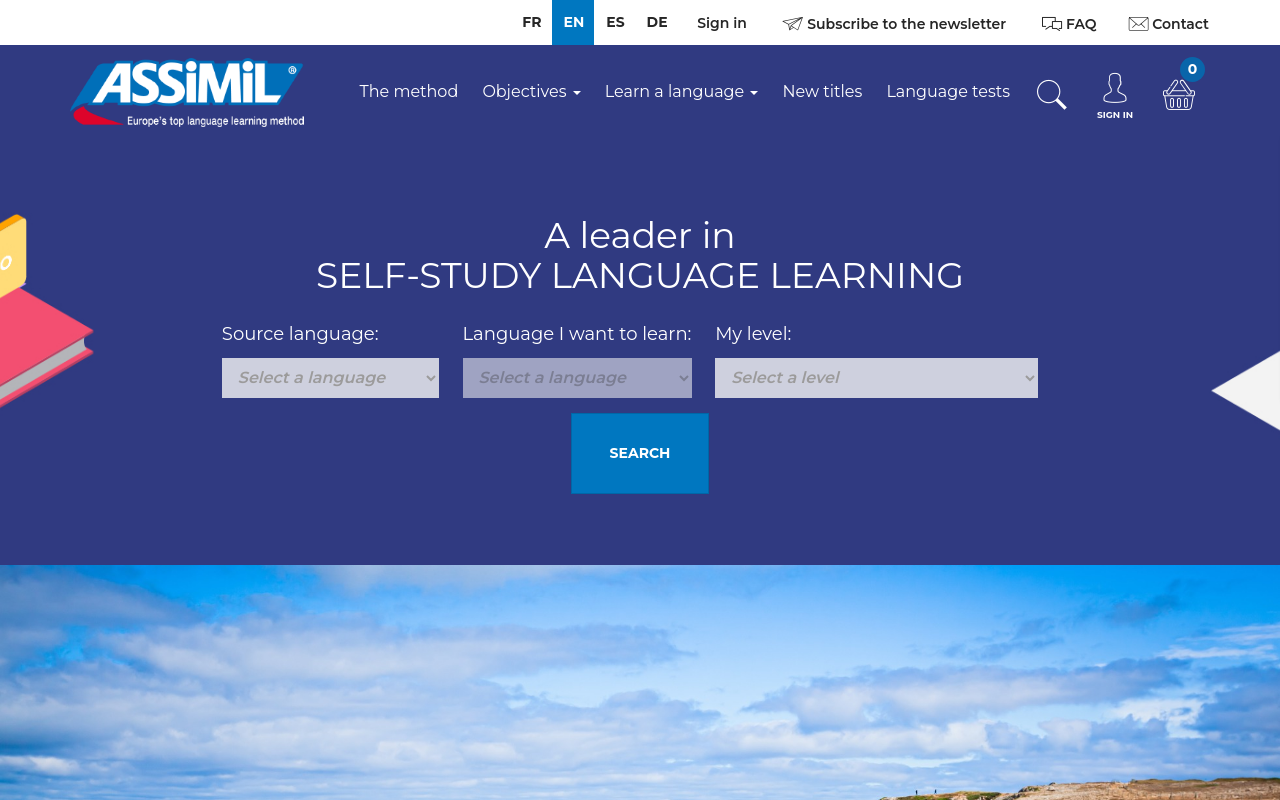
Assimil teaches French through native-speaker dialogues presented in sequence, with the learner absorbing natural phrases through repeated exposure rather than explicit grammar instruction. The method is one of the oldest and most respected in self-study language learning, and the French course is among the strongest in the Assimil catalog. The tradeoff is format: Assimil is book-first with audio support, and the app experience is less polished than native-app competitors. Pricing varies by course but typically runs $40 to $80 for the full course. Best for self-directed learners who are comfortable with a book-based structure and want a proven phrase-absorption method.
24. Glossika - Best App for French Sentence-Level Fluency Through Mass Repetition
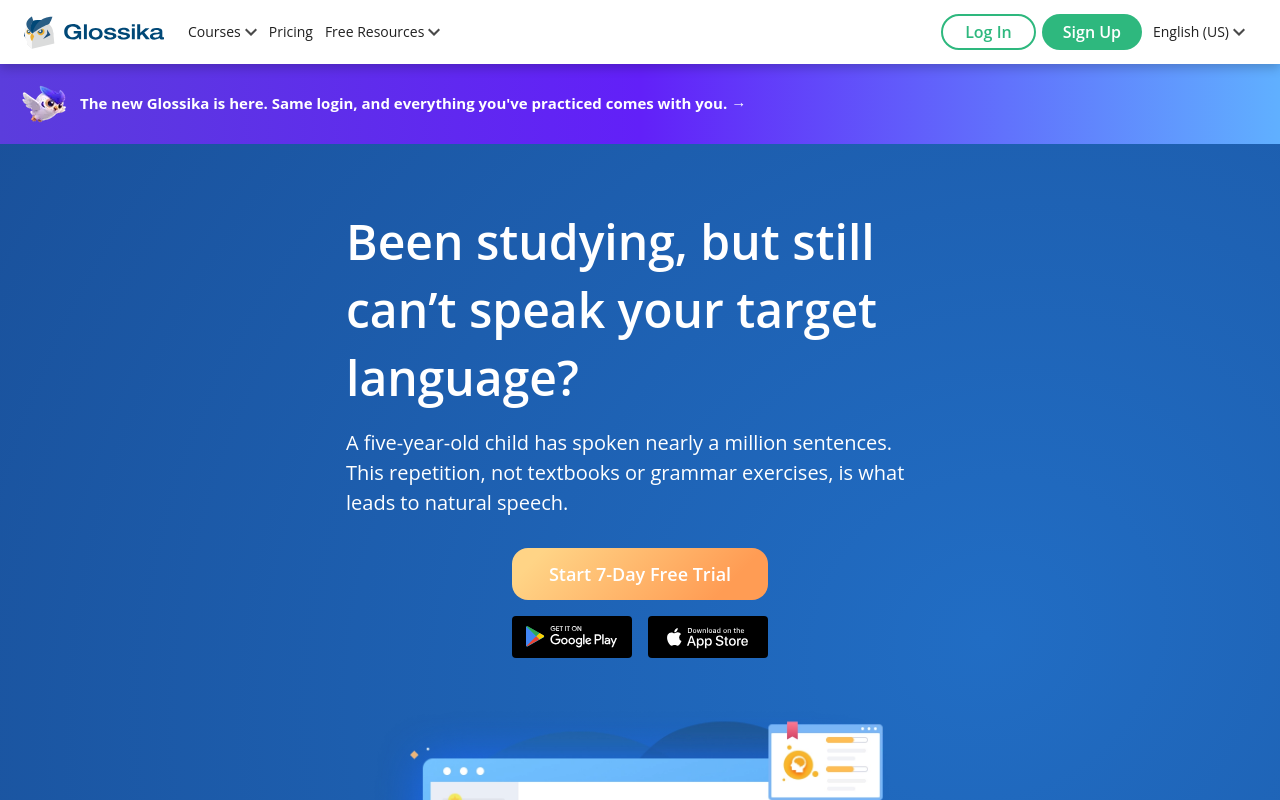
Glossika trains fluency through mass sentence repetition: thousands of French sentences delivered in spaced-repetition cycles, with the learner repeating each sentence aloud. The method builds sentence-level automaticity faster than vocabulary-isolated drilling, which is the key mechanism behind its effectiveness for intermediate learners. Pricing runs around $30/month. The tradeoff is that the repetition volume can feel monotonous, and learners who need variety to stay engaged will find the format punishing over time. Best for intermediate learners who have identified that their problem is processing speed rather than vocabulary size and want a high-volume drilling solution.
25. Drops - Best App for Visual French Vocabulary Building in Five-Minute Sessions
Drops presents French vocabulary through visual association in five-minute daily sessions, with a strict time cap that creates a focused, low-pressure practice window. The visual method is effective for concrete nouns and everyday objects, and the five-minute format removes the "I don't have time" barrier entirely. The honest limitation is scope: visual vocabulary building covers a narrow band of the French you need for real conversation, and grammar, listening, and speaking are entirely absent. Free tier with a daily five-minute limit; premium removes the cap at around 0/month. Best as a vocabulary supplement for visual learners, not a standalone solution.
26. Memrise - Best App for French Vocabulary with Native Speaker Video Clips
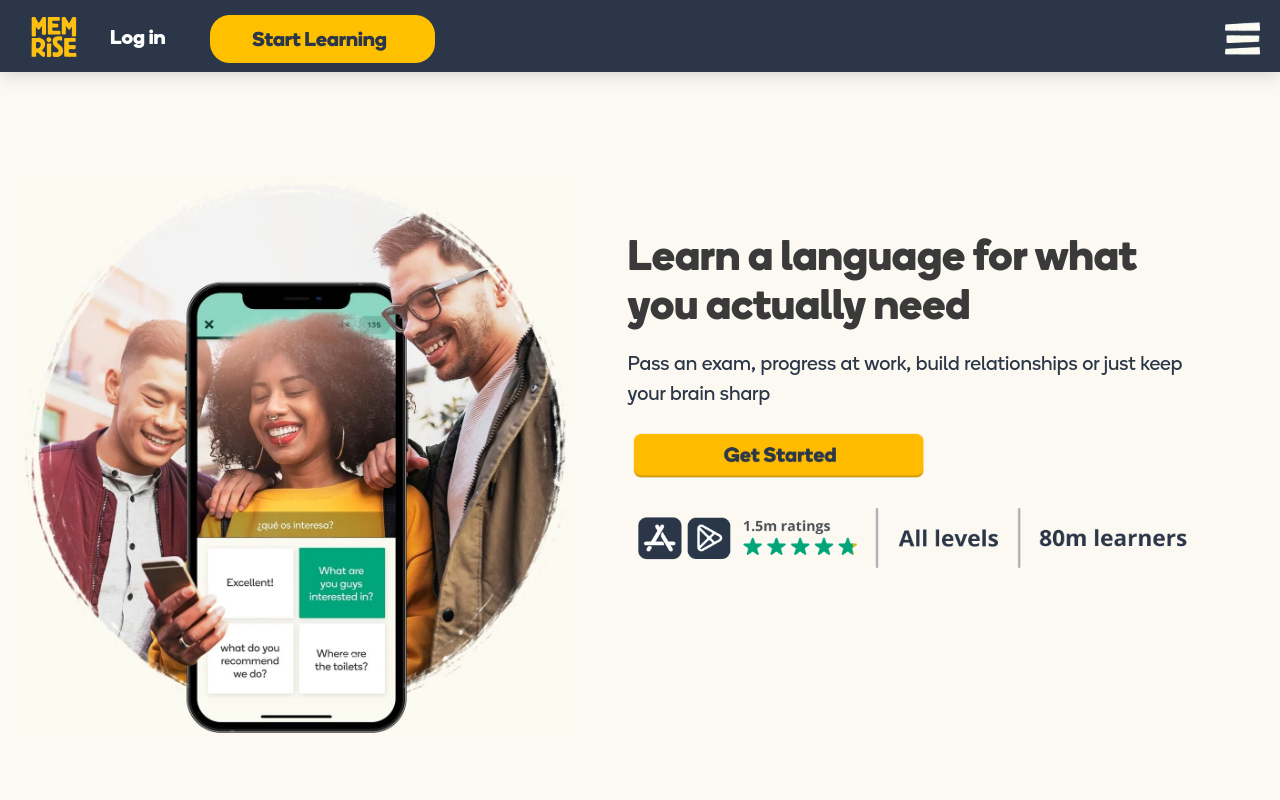
Memrise integrates short clips of native French speakers using words in natural context alongside its vocabulary review system. The native-speaker video component is the differentiator: seeing and hearing a real person use a word in a real sentence builds retention faster than text-and-audio flashcards alone. The app's broader course library is uneven in quality, and the user-generated content varies significantly. Pricing runs around $9/month. Best for learners who want vocabulary review with a human face attached to it and are comfortable filtering for the higher-quality course content within the library.
27. Frantastique - Best App for Advanced French with Personalized Storyline Lessons
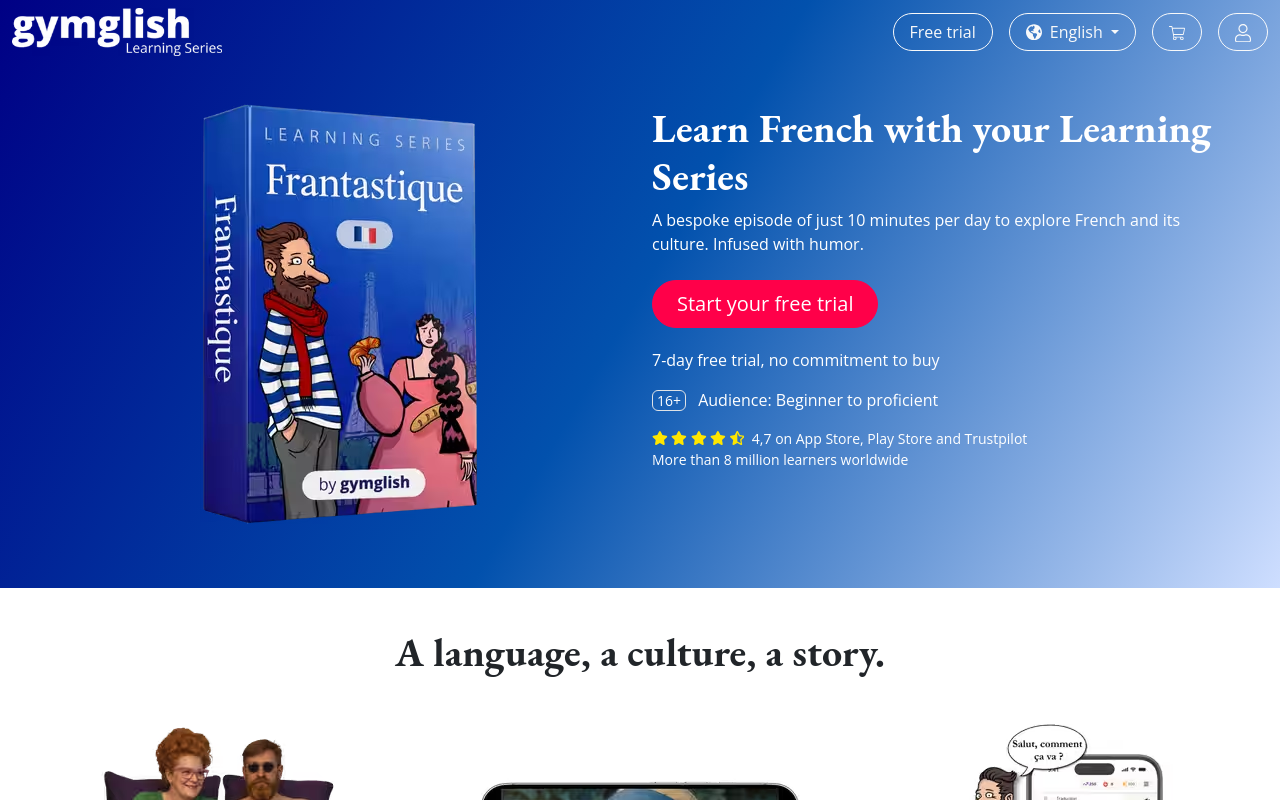
Frantastique delivers daily French lessons through a serialized storyline featuring recurring characters, which creates narrative engagement that keeps advanced learners returning when standard grammar review feels tedious. The personalization engine adapts lesson difficulty based on performance, and the cultural content is sophisticated. Pricing runs around 7/month. The tradeoff is that the format is designed for learners who already have solid B1 or higher French; beginners will find the content inaccessible and the humor opaque. Best for advanced learners who are bored with standard apps and need a creative format to sustain motivation through the upper-intermediate plateau.
28. Lingvist - Best App for Data-Driven French Vocabulary Acceleration
Lingvist uses machine learning to identify the fastest path through French vocabulary, prioritizing words by frequency and personal knowledge gaps rather than a fixed curriculum sequence. The result is a more efficient vocabulary acquisition curve than generic frequency lists, particularly for learners who already have partial knowledge and want to fill specific gaps. Pricing runs around 5/month. The limitation is that Lingvist is vocabulary-first and does not develop listening, speaking, or cultural comprehension to any meaningful depth. Best for learners who have identified vocabulary size as their primary bottleneck and want a data-efficient solution for closing that gap.
29. Spokira - Best App for French Pronunciation Repair with AI Feedback Loops
Spokira uses AI phoneme analysis to identify specific pronunciation errors and deliver targeted correction exercises, which makes it more precise than general speaking practice apps. The feedback loop is faster than human coaching and available on demand, which suits learners who want to practice pronunciation at any hour without scheduling a session. The honest tradeoff is that AI phoneme analysis, while improving rapidly, still misses the nuanced native-ear judgment that a human coach provides for advanced pronunciation refinement. Pricing varies; check current rates on the Spokira website. Best for intermediate learners who want to address specific, identifiable pronunciation errors rather than general speaking fluency.
30. TV5Monde - Best Free App for Authentic French News and Cultural Content
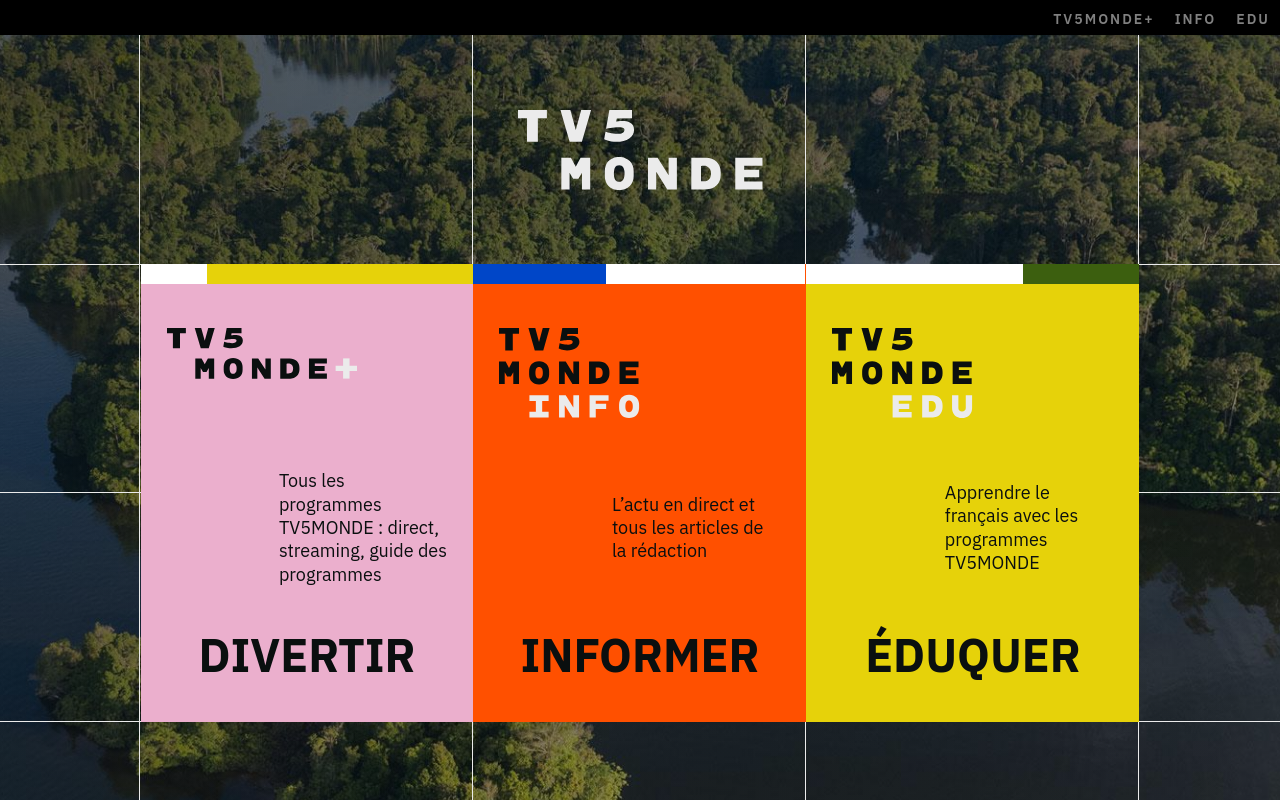
TV5Monde delivers authentic French news, cultural programming, and educational content from French-speaking media organizations around the world, with subtitles available at multiple difficulty levels. The content is native-level and culturally rich, and the zero cost makes it the strongest free immersion option in this ranking. The tradeoff is that the app assumes at least A2-level French; complete beginners will find the content opaque without a foundational vocabulary base. Completely free. Best for intermediate learners who want authentic cultural immersion without a subscription cost and are comfortable with the self-directed discipline that raw content consumption requires.
31. Readlang - Best App for French Reading Comprehension with Instant Translation
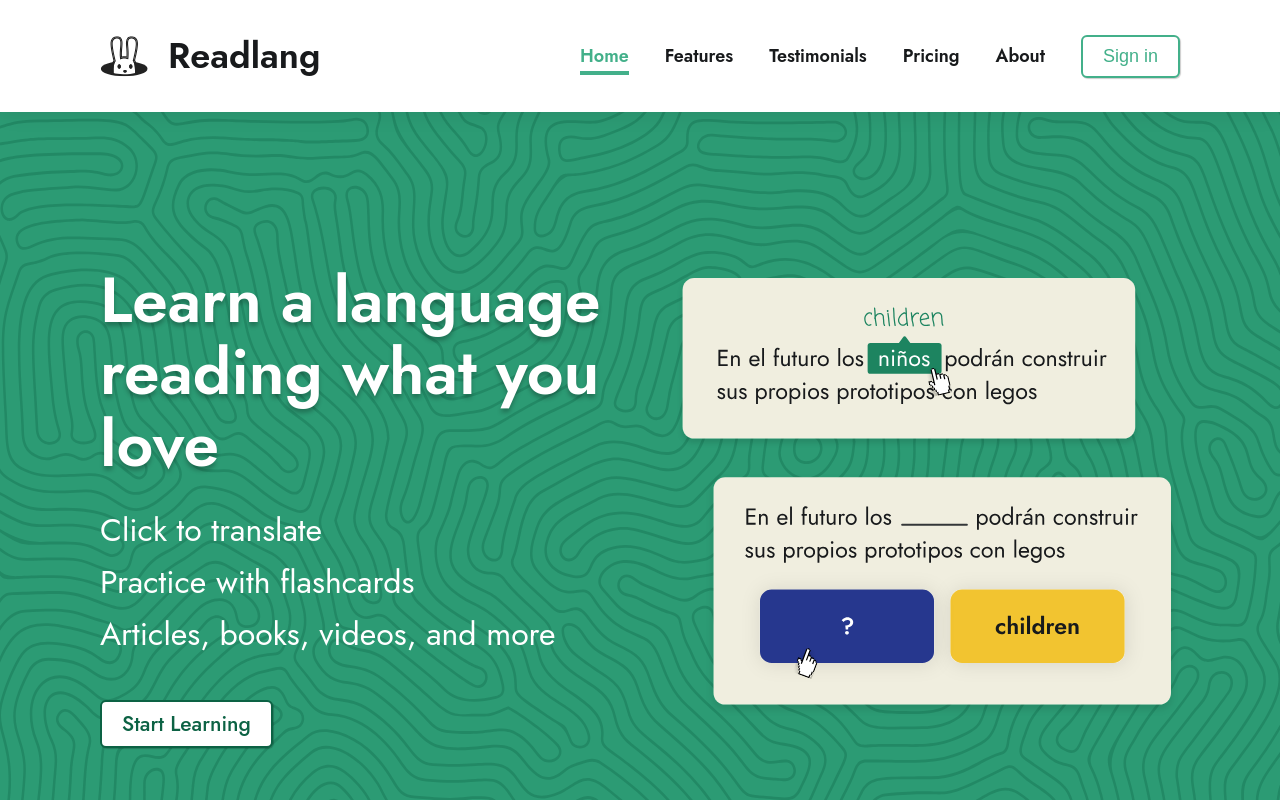
Readlang lets learners import any French text, from news articles to novels to blog posts, and click any word or phrase for an instant translation. The clicked words are automatically added to a spaced-repetition review queue, which connects reading comprehension directly to vocabulary retention. The method is particularly effective for learners who want to read real French content before they feel "ready," because the instant translation removes the friction of stopping to look up words manually. Pricing runs around $5/month for premium. Best for intermediate learners who want to accelerate reading comprehension using content they actually care about rather than a pre-selected curriculum.
The remaining twelve entries below cover tools that serve specific niches or learner types. Each has a genuine use case, but the honest assessment is that most busy learners will find their primary need met by one of the top nineteen above.
Related Reading
Best App To Learn French For Travel
Best Books To Learn French
French Language Learning Resources
How To Learn French Through Conversation
How To Conjugate Re Verbs In French
How To Learn French With Movies
Learning Resources For African French
How Long To Learn French
French Alphabet Pronunciation
How Much the Top French Learning Apps Cost Compared Side by Side
Subscription price is the first number most learners Google, and the last thing that predicts whether they'll speak French six months later. Before committing to any plan, it helps to see the full pricing picture in one place, then ask a harder question: what does each dollar actually buy in terms of real comprehension, not just a smoother app experience? One genuine barrier we see again and again: learners compare tutoring platforms like Preply and quickly rule them out on cost, then default to a free or cheap app, without ever asking whether that app's method can actually close the gap to real conversation. The honest cost comparison is what each price tier changes about the learning method itself.
The Pricing Table - Free Tiers, Monthly Rates, and Annual Plans for the Top French Apps
The top French learning apps cost anywhere from nothing to roughly $21 per month, with annual billing typically cutting the monthly rate by 30 to 50 percent. Here is what real data shows across the most widely used options.
App
Free Tier
Monthly Price
Annual Price
What the Paid Tier Unlocks
Duolingo
Yes, genuinely usable
~$84/year
Ad removal, unlimited hearts, streak repair
Babbel
Limited
~4/month
~$84/year
Full lesson library, speech recognition
Rosetta Stone
No
~2/month
Varies
Full immersive image-audio course
Pimsleur
Trial only
~$21/month
Varies
Full audio lesson library
Rocket French
No
One-off ~50/level
N/A (lifetime)
Complete audio-interactive course, free updates
Busuu
Limited
~4/month
Varies
Native speaker corrections, McGill certification
Glossika
No
~$30/month
Varies
Full sentence-repetition library, speaking and listening drills across all levels
Frantastique
Trial
Subscription
Varies
Adaptive story-based lessons, algorithm-personalised drills
Lingopie
Limited
Subscription
Varies
Full interactive French video library
Memrise
Yes
Subscription
Varies
Chatbots, expanded games, advanced review
Cost vs. Outcome, Not Cost vs. Cost - What Each Price Tier Actually Unlocks
Price per month tells you nothing about fluency return on investment. A $7 monthly plan that never moves you past tourist phrases costs more in wasted time than a $21 plan that builds real listening comprehension. The question is what paying more actually changes about the method.
For most gamified apps, the answer is: very little. Duolingo's subscription page markets its paid tier primarily through streak repair, unlimited hearts, and monthly streak rewards, not through more advanced conversational content or a different instructional approach. The core lesson loop stays identical whether you pay or not.
As independent reviewers have confirmed after testing the upgrade, Super Duolingo's most prominently marketed paid-tier benefits are habit-protection features rather than new instructional content: streak repair, unlimited hearts, and monthly streak rewards protect your habit of opening the app, but they do not move you closer to holding a real French conversation. The core lesson loop and exercise formats remain the same whether you pay or not, which means the upgrade deepens the same method rather than opening a different path to conversation. Babbel's paid tier does unlock practical scenario lessons and real-time pronunciation feedback, which represent a genuine method difference over a free tier.
Pimsleur at $21 per month is audio-only and genuinely strong for commuters who want pronunciation practice without a screen. Rocket French's one-off purchase removes the subscription trap entirely. Each of these unlocks something structural.
That distinction matters. A second cost that rarely appears in any comparison is the opportunity cost of a method mismatch. Learners who have struggled with traditional memorization-based approaches, drilling vocabulary lists, grinding flashcard decks, often spend months inside an app before realizing the method itself is the ceiling, not their effort.
That time loss is real money, even when the app is free.
This is precisely where Parrot's approach diverges from the pricing conversation entirely. Parrot is built around the Comprehensible Input Method, a research-backed alternative to memorization, and delivers it through a short-form video feed of native-speaker content. Every video watched immediately contributes to listening practice, training your ear to real-speed French rather than the slowed, simplified audio most apps use. Because the AI governs how content is selected and sequenced for each learner, the method scales with your level rather than stalling at tourist-phrase territory. Parrot Back adds a speaking practice layer, and the AI Tutor provides personalized feedback during or after video sessions when you want targeted practice beyond passive watching.
Critically, all of this fits into the gaps already in your day. There is no dedicated study block to find or protect. A short-form video session on a commute or a lunch break is the session, not a compromise version of one. That architectural decision matters more than monthly price for anyone whose schedule has already defeated every previous language app they tried.
The hidden cost is the months spent inside a method that cannot close the gap between app performance and real-speed native conversation. Parrot's short-form video feed delivers comprehensible input through native-speaker content on its free tier, approximating what paid immersion platforms charge a premium to replicate. Price is the last filter most learners apply, but it should be the first question you answer about your schedule. The next section shows which of these apps was engineered around the 10-minute gaps in a busy day, rather than expecting you to carve out a dedicated study block you'll never find.
The French App That Fits Busy Days Instead of Fighting Them
Busy learners do not fail French because they lack motivation. They fail because the apps they use are built for a different kind of day than the one they actually live.
Why Short Lessons and Fitting Your Schedule Are Not the Same Thing
An app can shrink its drills to five minutes and still demand something a packed day cannot reliably give: a clean, intentional block of attention. That is the hidden architecture behind most gamified apps. The session is shorter, but the mental contract is the same: sit down, open the app, perform.
When a meeting runs long or the commute gets chaotic, that contract breaks, the streak dies, and so does the habit. The structural problem is duration's requirement for a dedicated study block that busy lives cannot protect week after week. Short lessons and schedule-fit are two different promises.
One shrinks the task. The other removes the task entirely by living inside behavior the learner already does.
The Scrolling Gap Is Already There
The average person spends roughly two hours per day on their phone, most of it in short, fragmented bursts of scrolling during commutes, lunch breaks, and the ten minutes before sleep. This tracks closely with research on young users too: a 2023 study of school-aged children found an estimated average screen time of 2.77 hours per day. That time already exists.
Stephen Krashen's Input Hypothesis established that acquisition happens below the level of conscious attention, through exposure to meaningful, comprehensible native content, not through deliberate drilling. Swapping a social media scroll for a native French video feed does not require a new habit.
It requires a different feed.
Why Comprehensible-Input Feeds Outperform Streak-Based Apps for Time-Starved Learners
A busy learner's real enemy is spending daily minutes on sessions that feel productive but produce zero speaking ability. Streak-based apps train the brain to process French as a tapping task: match the word, close the loop, protect the number.
Krashen's research is direct on this point: gamified drills produce learning, while comprehensible input produces acquisition, and only acquisition transfers to spontaneous speech. Parrot's short-form video feed delivers exactly what Krashen's framework requires: input that is 95-98% comprehensible, so learners absorb authentic vocabulary and natural speech patterns without conscious drilling. Even 10-15 minutes of comprehensible input per day, grounded in Krashen's acquisition framework, accumulates meaningful exposure over time in a way that isolated drill sessions of the same length do not. A commuter scrolling for twelve minutes absorbs real French.
Same time, same phone, different outcome. One honest trade-off: comprehensible input builds comprehension and speaking intuition; it does not replace deliberate grammar study for learners who need explicit rules to feel grounded.
The next section shows you exactly what that swap looks like in practice.
Next steps
If your Duolingo streak has outlasted your ability to follow a native speaker at normal speed, the path forward starts with changing the input, not the schedule. A streak measures how often you opened the app. It has never measured whether your brain retained a grammatical structure or could deploy a phrase under real pressure. That is not a discipline problem. It is a method problem. Start with our learn Spanish.
The research on comprehensible input is direct: gamified drills produce the kind of learning that app metrics can count, while exposure to meaningful native-speed content produces the acquisition that transfers to spontaneous speech. And the gap between what you pay for and what changes is equally direct: Super Duolingo's paid upgrade buys streak repair and unlimited hearts, not a different instructional path. Retention mechanics and fluency mechanics are not the same product. Those two facts together point toward one obvious move: replace the drill loop with a native-content feed that fits the fragmented time you already have.
If you want to go deeper on how comprehensible input applies across Romance languages, see learn Spanish as a parallel case that walks through the same method with additional context on how native-speed exposure builds conversation from the ground up.
Frequently Asked Questions
Is Duolingo actually effective for learning French?
Duolingo is effective for building a daily habit and covering A1 to early A2 vocabulary, but learners who rely on it exclusively typically plateau around A2 without supplementation. The app's engagement data tracks streaks and lessons completed, not conversational output, meaning a long streak says nothing about whether you've absorbed real French.
How do I choose between 43 apps without wasting another month on the wrong one?
The post recommends a three-question filter before reading any review: Does the app work in sessions shorter than 10 minutes without losing coherence? Does it expose you to native-speaker French, or only controlled drill sentences? Does it measure whether you understood something, or only whether you showed up? Most apps fail at least two of these questions, and any app that fails even one will not compound toward real speech.
What's the difference between input-based and drill-based French apps?
Drill-based apps ask you to produce or recognize a target word in a controlled sentence you could often guess without any French knowledge, while input-based apps expose you to meaning-rich native content pitched just above your current level, what researcher Stephen Krashen identified as comprehensible input, the condition under which acquisition actually happens. The honest trade-off is that input-based apps demand more cognitive engagement per session, but that friction is what drives real conversational progress.