
Drilling French sounds builds recognition. It doesn't build the muscle memory that real conversation demands. Here's why the gap exists and how to actually close it.
Spend enough hours on French phonetic rules and something quietly convincing happens: you start to feel ready. You know the IPA symbols. You've drilled the audio files. You can hear the difference between "u" and "ou" when you play them back-to-back in isolation. The common assumption is: "I just need more drills and more phonetic rules; if I study the sounds long enough, they'll eventually click in real conversation." Then a native speaker replies to you at full speed, and everything you practiced simply vanishes. See our learn Spanish for how this works in practice.
That gap between preparation and performance is the central frustration of French pronunciation practice, and it is far more common than most learners realise. The problem is not effort. The problem is what that effort is actually training.

Research from the Islamic University of Kalimantan (2020) found that learners who had drilled rules in isolation still experienced heightened anxiety the moment they had to produce language in real interaction. Unexpected questions from a live speaker triggered a freeze response that classroom drilling does not prepare learners for.
That is a structural problem. When you consciously retrieve a phonetic rule mid-conversation, that retrieval competes directly with listening, forming meaning, and planning your reply. Something has to give, and it is usually fluency.
Drilling isolated sounds produces measurable improvement on one specific skill: recognising that sound when it appears alone. That skill does not transfer cleanly to production inside fast, connected speech. The nasal vowels sound different inside "on y va" than they do on a phonetics chart.
Progress feels real because recognition improves. Spoken confidence only develops when you hear a real phrase and immediately produce it out loud, repeatedly, until the shape of it lives in muscle memory, automatic, below the level of conscious retrieval.
Key takeaways
Pronunciation is a motor skill, not a knowledge problem, drilling phonetic rules and IPA charts builds awareness, not muscle memory, which is why fluency stalls even after months of study.
French vowels are pure sounds: the mouth locks into one position and holds it, which is the opposite of how English vowels behave, and that single difference is responsible for most of the accent English speakers carry into French.
The French R is the top confidence-blocking consonant for English learners because it's produced in the throat, not with the tongue, and freezing on it mid-sentence is a production problem, not a knowledge gap.
Silent letters and liaison mean written French and spoken French follow different logic entirely; treating that gap as a footnote is what makes native speech sound like a wall of sound.
Short daily repetition outperforms weekly phonetics marathons, the research on motor skill acquisition is clear that frequency beats session length.
Parrot Back by Parrot (parrotapp.com) closes the loop: say out loud and repeat what you hear from real native speech, so every sound covered in this guide gets trained the way the brain actually builds it, through repetition in context, not rules on a page.
The Real Cost of Drilling Sounds in Isolation - What Traditional Pronunciation Guides Get Wrong
The conventional approach treats pronunciation as a knowledge problem. Learn the rules, memorize the symbols, understand how the mouth is supposed to move, and fluency will follow. It doesn't, because pronunciation is a motor skill, and motor skills are not acquired by understanding them. They're acquired by doing them, repeatedly, under conditions that force the body to adapt.
Pronunciation isn't a knowledge problem. It's a motor skill, and motor skills are not acquired by understanding them.

The common assumption that many learners hold onto when struggling with French pronunciation is: "I just need more drills and more phonetic rules; if I study the sounds long enough, they'll eventually click in real conversation." You can spend months identifying every phoneme on an IPA chart and still sound unmistakably foreign the moment a real conversation starts moving. The problem is what the effort is actually training.
Why Isolated Sound Files Fail to Automate in Real Sentences
Recognising a sound in a quiet audio clip and reproducing it inside a fast, flowing sentence are two completely different skills. Research into comprehensible input versus explicit phonetic instruction consistently shows that hearing sounds in context builds the ear-mouth reflex that isolated drills never reach. A learner who can identify the French nasal "on" on a chart will often freeze mid-sentence when that same sound needs to come out automatically, without stopping to think. The drill trained recognition. It never trained production under pressure.
The Hidden 80/20 Problem - Over-Drilling Rare Sounds and Under-Drilling Liaison and Rhythm
Corpus data on everyday spoken French shows that liaison and elision are not edge cases. They are the backbone of how French actually sounds. Native speakers link words constantly, drop vowels reflexively, and compress syllables in ways no phonetic chart captures. Yet most French pronunciation drills spend the majority of their time on individual phonemes that appear far less frequently in real speech.
Spoken French rhythm is where comprehension and fluency live. Drilling rare sounds while ignoring liaison is like practising individual guitar notes while never learning how chords connect.
IPA-Heavy Study Feels Like Homework and Gets Abandoned Before It Pays Off
The International Review of Research in Open and Distributed Learning found that dropout rates in structured, decontextualized study programs are significantly high, a pattern that plays out with IPA-heavy approaches just as it does elsewhere. Abstract phonetic rules feel productive in the first session. By week three, they feel like homework with no visible payoff.
French Vowel Sounds Practice - The Foundation Every Other Sound Depends On
French vowels are not just different from English vowels; they work on a completely different principle, and that gap is what makes them feel so resistant to casual practice. English speakers aren't mishearing French vowels by accident; they're reaching for the closest sound their brain already knows, which is almost always a moving diphthong where French needs a locked, stable position. A focused set of high-leverage contrasts covers most of the confusion, and that's exactly what this section works through.

Why French Vowels Confuse English Speakers - Pure Sounds vs. English Diphthong Drift
English vowels almost never hold still. Say the word "go" slowly and notice how your mouth moves: the sound glides from one position to another. That movement is a diphthong, and English is full of them. French vowels, by contrast, are pure. The mouth locks into one position and stays there for the entire sound. When an English speaker hears a French vowel, the brain automatically reaches for the nearest English diphthong approximation, which is almost always wrong.
The scale of the gap is real. Citing Eupedia Phonemes in European Languages, French has up to 17 distinct vowel sounds, compared to fewer in Italian and just 5 in Spanish. That is not a small difference to paper over with a few drills.
17
Distinct French vowel sounds vs. fewer in other languages
The 5 High-Leverage Vowel Contrasts That Resolve Most Misunderstandings
The same linguistics discussion identifies the core culprits: several front rounded vowels, including /y/, /ø/, and /œ/, that exist in French but appear in very few languages an English speaker is likely to have encountered. Add the schwa and four nasal vowels, and you have a small, definable set of sounds that account for the overwhelming majority of French vowel confusion.
The highest-leverage contrasts are:
u versus ou (tu versus tout)
eu versus oeu (feu versus peur)
the open/closed é versus è (chanter versus fête)
Master these five contrasts and you have addressed most of what makes French vowels distinctively hard.
Contrast Drilling Inside Real Phrases
The problem with isolation drills is that repeating "u" twenty times trains recognition of that sound in silence. It does not train your ear to catch it inside tu veux at native speed. Recognition in a drill does not transfer to comprehension in real speech.
The fix is contrast drilling inside real phrases. Hear a native speaker say tu veux, then hear the typical English-speaker version, then say the phrase aloud yourself immediately. Your mouth and ear both engage at once, and that simultaneous engagement is what closes the gap between recognising a vowel in a drill and producing it inside real speech.
French Consonant Sounds Practice - From the S/Z Distinction to Sounds English Doesn't Have
Nail the French 'j' in isolation and you'll feel ready. Take that same sound into a real sentence and something shifts: the consonant softens, blurs, or disappears entirely depending on what sits beside it. That gap between the drill and the reality is where most learners lose confidence, and it's worth understanding exactly why it happens before trying to fix it.

Why "Poisson" vs "Poison" Is the Highest-Stakes Consonant Contrast in French
The s/z distinction separates "fish" from "poison," and getting it wrong in a restaurant or a pharmacy lands hard. According to industry data Levis's 2015 research on minimal pairs in spoken corpora, the core assumption behind minimal-pair drilling is that mispronouncing contrasting words leads directly to misunderstanding, which makes high-stakes contrasts like poisson versus poison a genuine priority. But Levis also found that many of the minimal pairs used in standard pronunciation materials include at least one word so rare it almost never appears in real spoken French. The contrasts worth drilling are the ones that carry real communicative risk in everyday speech, and the s/z pair is one of the few that genuinely does.
The Consonants English Speakers Default to Incorrectly
The French 'j' (as in je, jour) is softer and more continuous than anything English uses at the start of a word. English speakers tend to harden it, pushing toward the 'zh' in "measure" but with too much tension. The double-l trap is equally common: fille and bille use a 'y' glide, not an 'l' sound, and no amount of staring at the spelling fixes that reflex. Final consonants add another layer. French drops most of them in normal speech, so the 't' in petit or the 's' in vous disappears unless a vowel follows. The written form actively misleads the ear.
How French Consonants Shift at Word Boundaries
The word plus is a clean example of the boundary problem. It is pronounced three different ways depending on what follows:
Silent in je n'en veux plus (negation)
As /ply/ before a consonant in plus tard
As /plyz/ before a vowel in plus encore
No rule taught in isolation prepares a learner for that shift in real time.
The French R Sound - and Why Your Throat, Not Your Tongue, Does the Work
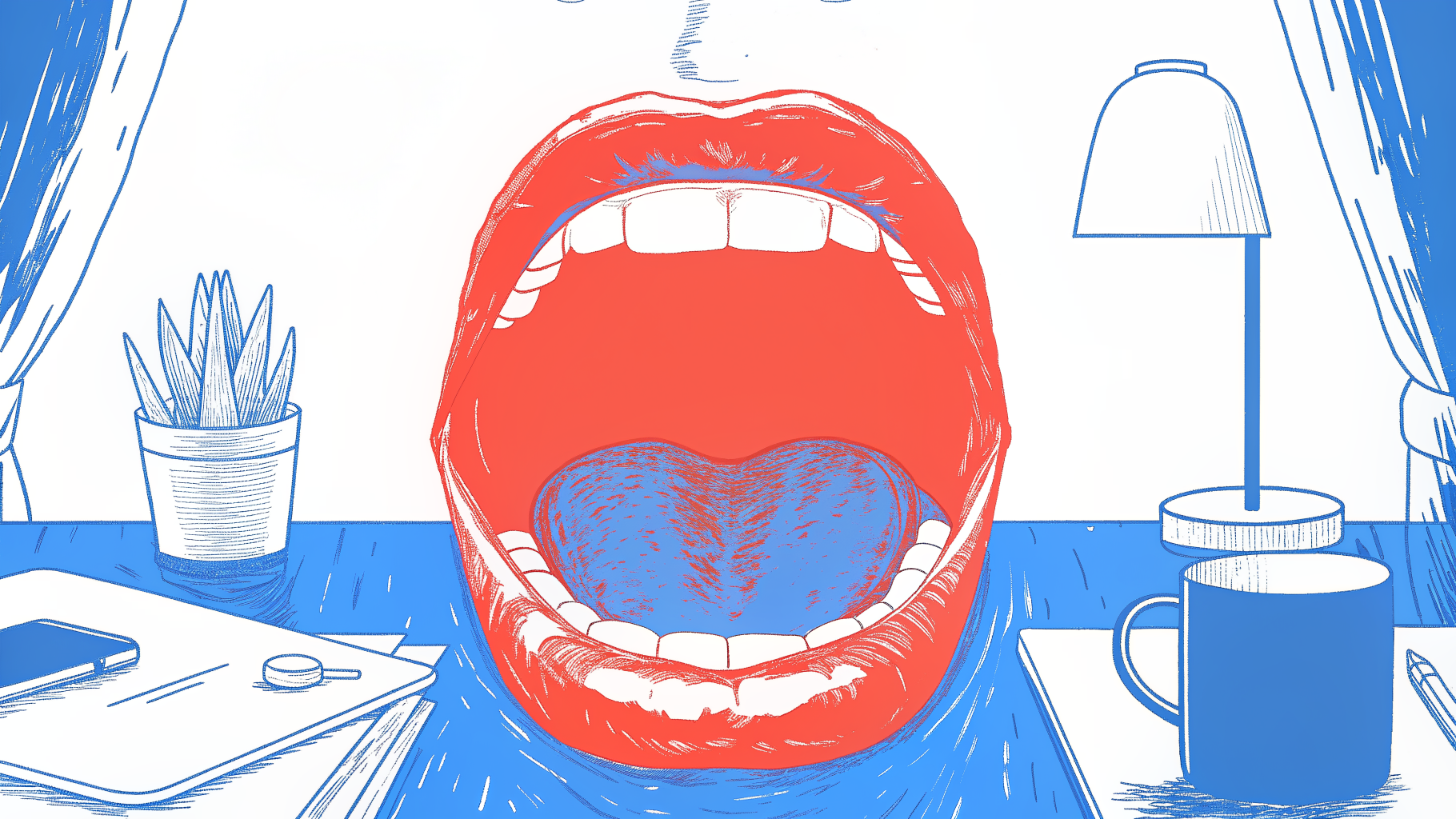
The French R is the sound that makes confident learners suddenly go quiet. French (January 2025), it is the single most confidence-blocking consonant for English speakers learning French, because its unfamiliar production causes learners to freeze or avoid speaking altogether. Understanding why that happens, and what to do instead, changes everything about how fast the sound clicks.
Where the French R Actually Lives in Your Mouth (Hint - Forget Your Tongue Tip)
The French R is not a tongue sound. It lives at the back of the throat, produced by the uvula, that small fleshy structure you can feel vibrating when you gargle. English speakers instinctively reach for the tongue tip, front-of-mouth articulation, which is exactly wrong. As Hello French (January 2025) explains, this is a fundamentally different articulatory gesture that requires retraining muscle memory, not adjusting a familiar sound. The failure is physical before it is phonetic.
This shows up in two distinct ways that beginners consistently experience:
At the start of a word or in isolation, learners default to their tongue tip and produce something that sounds plainly wrong to a native ear.
Next to another consonant, the R tends to vanish entirely, a sensation learners describe as the sound "dying in the throat," because the throat mechanics are not yet automatic and an undertrained uvular gesture simply drops out under the pressure of a neighboring consonant.
Even learners who nail the sound in a practice drill find it "sounds off" in real speech, because consistency requires the throat position to become reflexive, not consciously constructed each time.
This points to a broader principle: sounds that must be felt in an unfamiliar part of the body cannot be learned through listening alone, because no amount of isolated phoneme recordings trains that internal physical awareness. What actually builds the reflex is high-volume exposure to the sound inside real, native-speaker speech, the kind of comprehensible input that lets the ear and throat calibrate together across many repetitions.
The Vowel-Sandwich Effect - How Surrounding Sounds Shape Your R Without You Thinking About It
The R in rue and the R in bonjour are not produced from the same throat position. The vowels immediately surrounding the R co-articulate with it, physically shaping where and how the sound is made. This is not a stylistic difference; it is mechanics. Trying to construct the R from a phonetic description, then slot it into words, gets the order backwards. The surrounding speech rhythm is what guides the articulator into position automatically, which is precisely why the throat inconsistency that learners notice ("it sounds off") persists when practice is built around the isolated phoneme rather than the full phrase.
Parrot's short-form video feed addresses this directly. Because every video session is governed by the Comprehensible Input Method, sequencing native-speaker content to match a learner's current level, learners accumulate dense, contextualised repetitions of the French R inside complete utterances, not stripped-down drills. Listening practice is most beneficial when a learner needs to improve real-world comprehension rather than textbook performance, and every video watched contributes to it immediately. The ear learns what the correctly vowel-wrapped R actually sounds like across dozens of natural contexts; the throat follows.
A Listen-and-Repeat Sequence Built Around High-Frequency Phrases, Not the Letter Itself
Hello French (January 2025) recommends embedding the R inside a complete high-frequency phrase, such as je voudrais or bonjour, rather than isolating the phoneme. Repeating "bonjour" gives the throat the vowel context the isolated R strips away. Learners who crack these sounds fastest are those who let surrounding speech rhythm guide the articulator into position, trusting the phrase over the isolated phoneme, and repeating until the throat finds the right shape on its own.
Parrot's Parrot Back feature puts this principle into active practice. After watching native-speaker video content, learners use Parrot Back to record themselves producing the same high-frequency phrases they just heard in context. Because the input comes first, full phrases, natural rhythm, real speakers, the throat already has a reference point before speaking begins. Where a learner has struggled with traditional memorization-based methods and wants a research-backed alternative, this sequence (comprehensible input → speaking practice on the same material) removes the guesswork about what the target sound should feel like. The R stops being an abstract phoneme to construct and becomes a shape the throat has already heard dozens of times and is now being asked to reproduce.
Nasal Sounds in French - Practice the Four Nasals Before You Practice Anything Else
French has four nasal vowels, and they are unlike anything in English, which means most learners either avoid them or drill them blindly without knowing which ones actually matter in real conversation. This section gives you a smarter starting point: which nasals carry the most weight in everyday spoken French, and a simple physical trick for producing them correctly that works better than staring at phonetic notation.
Which Two Nasals Do Most of the Heavy Lifting in Everyday French Speech
Not all nasal vowels show up equally in real conversation. According to Detey et al. Working Papers 2011, University of Geneva Archive, /ɔ̃/ (the "on" sound) and /ɑ̃/ (the "an/en" sound) are by far the most frequent nasal vowels in spoken French. Meanwhile, /œ̃/ (the "un" sound) is already merging with /ɛ̃/ in contemporary French and is increasingly rare in everyday speech.
Key takeaway: Drilling all four nasals with equal effort means spending most of your practice time on sounds that will barely change how intelligible you sound. Rank your practice toward /ɔ̃/ and /ɑ̃/ first.
A simple rule fixes this automatically: hear a nasal in native speech before you drill it, and your practice naturally ranks toward what matters. That is exactly the logic behind Parrot's short-form video feed. Every clip you watch is selected and sequenced around the sounds that actually appear most in real spoken French, so the time you have between commutes, lunch breaks, or before bed is spent on what moves the needle fastest.
The Nose-or-Mouth Test, A Proprioceptive Trick That Beats Phonetic Notation
The defining physical feature of a French nasal vowel is the lowering of the velum, which redirects airflow through the nasal cavity. Detey et al. Working Papers 2011, University of Geneva Archive note that this is a proprioceptive distinction learners can feel without any formal phonetics training, simply by monitoring where the air goes during production.
Try it now. Say "on y va" out loud and hold a finger lightly under your nose. You should feel a gentle stream of air. That sensation is the reflex you are training. No chart gives you that feedback, and no amount of staring at phonetic notation tells your body what to do. This is why Parrot's speaking practice focuses on production inside real phrases rather than isolated drills: the muscle memory builds from hearing and repeating native-speaker audio in context, not from memorizing symbols on a page.
The Two Errors English Speakers Make With Nasals, and Why Listening Fixes Both
Here is the core collision beginners run into: in English, the nasal quality is carried by a consonant that follows the vowel, the 'n' in "band" or the 'm' in "lamp." In French, the nasal consonant is absorbed into the vowel itself and disappears from articulation entirely. The difference is stark when you compare English /plæ̃n/, where the nasal consonant is still fully pronounced, with French /plɑ̃/, where it is gone. English speakers instinctively wait for a consonant that never arrives, and misproduce the vowel trying to find it.
The result is the anglicized approximation pattern beginners regularly fall into, defaulting to something like "jah-SINTH" for Jacinthe (correctly /ʒa.sɛ̃t/) because the ear has never been trained to hear /ɛ̃/ as a complete, self-contained vowel rather than a vowel waiting for a nasal consonant to finish it. As Spokira notes in its overview of French phonology, the nasal vowel system is one of the sharpest structural departures from English, and it demands ear training before production can improve.
Listening to the difference inside real phrases, rather than on a phonetics chart, corrects both errors at once. Parrot's Comprehensible Input Method is built around exactly this sequence: massive exposure to native-speaker audio in context first, so your ear internalizes the correct vowel shape before your mouth tries to reproduce it. The Parrot Back feature then closes the loop, giving you personalized speaking practice on the sounds you have already heard modeled, so passive recognition converts into active production. For learners who have hit a wall with traditional memorization-based methods, that input-first sequence is where the breakthrough tends to happen.
Silent Letters in French and Liaison - Why Written French and Spoken French Are Almost Different Languages
Written French and spoken French operate on different logic. The gap is the central fact of the language, and learners who treat it as a footnote pay for that assumption every time a native speaker opens their mouth.
"Learners struggle with the disconnect between written and spoken French, particularly due to silent letters and liaison rules that are not intuitive from reading alone."
— what we hear from French language learners

Why Final Consonants Vanish (and the High-Frequency Exceptions That Trip Learners Up Most)
The default rule in French is silence. According to phonetics guides, most written final consonants are not pronounced, with the main exceptions being C, R, F, and L (the mnemonic "CaReFuL"). The practical consequence is that a learner reading French aloud and pronouncing every letter they see will sound wrong on the majority of words they encounter.
What makes this genuinely disorienting is that those silent letters are not always silent, and that inconsistency is one of the sharpest frustrations beginners face. Learners who come to us having drilled written French first describe the same collision: they learned a rule, then encountered an exception, then another, until the written form felt less like a guide and more like a trap. That confusion is not a personal failing. It reflects a real structural problem in the language.
Part of the explanation lies in history. As Spokira documents, French spelling preserves consonants that signal Latin and Greek etymological roots, roots that were never actually pronounced in spoken French. A significant portion of French silent letters are scribal inventions. Trying to reverse-engineer spoken French from the written form means working from a document that is partly fabricated.
Liaison - When a Silent Consonant Suddenly Speaks
Liaison is where the fabrication problem gets genuinely disorienting. A consonant that is silent at the end of one word reactivates when the next word begins with a vowel. Vous parlez keeps the S silent. Vous avez voices it as a Z. Some of these liaison consonants are not even survivals of the original Latin sound; they are spelling-driven re-insertions, reinstated in speech because the written form suggested they should be there.
Liaison is a spectrum of obligatory, optional, and forbidden cases that no table fully captures, and the gap between the written rule and actual spoken behaviour is where learners consistently get stuck. A case like c'est utile, where liaison feels like it should apply but the spoken reality is less clear, exposes how uncertain even intermediate learners remain.
Or consider comment avez: the expected liaison pattern breaks, and no amount of staring at the written form explains why. These are not edge cases. They are the texture of everyday French, and learners who have built their comprehension primarily through reading arrive at real conversations without the auditory map they need.
This is precisely why Parrot's Comprehensible Input Method sequences listening exposure the way it does. Underlying every video session, it governs how content is selected and matched to each learner's level, so that liaison, elision, and prosody are encountered repeatedly in natural context before they need to be produced. Listening Practice built into every video session means that each watch is also training your ear to hear the connected speech patterns that written rules cannot fully describe. When you are ready to move from comprehension into production, Parrot Back, the speaking practice feature, gives you a structured place to rehearse those same patterns with feedback, rather than discovering on your first real conversation that your pronunciation was built on the written form.
Colloquial Elisions Native Speakers Use Constantly
Il y a becomes y'a. Tu as becomes t'as. Je suis collapses into ch'uis. These are the default forms native speakers use in everyday spoken French. A learner who has only practised the written full forms will struggle to parse natural speech even when they know every word in a sentence.
The disconnect between written and spoken French determines whether a learner can function in a real conversation at all. Building comprehension first, through sustained exposure to native-speaker content at a level you can follow, is what closes that gap. Written rules are a starting point, not a destination.
Related Reading
How Long To Learn French
French Alphabet Pronunciation
How To Learn French Through Conversation
How To Learn French With Movies
Learning Resources For African French
How to Practice Speaking French Daily (Without Scheduling a Study Session)
Five minutes on your commute is not a consolation prize for missing a "real" study session. Short, daily practice is the mechanically superior approach, and the research backs that up.

Why Fragmented Minutes Beat a Weekly Phonetics Marathon
Research published in the Journal of the Acoustical Society of America (industry data) found that spaced, distributed practice sessions consistently outperform a single massed block of equivalent total time for phonetic skill-building. The reason is mechanical: each short session catches the memory trace just before it fades, forcing the brain to reconstruct it, which makes the motor-speech pattern stronger each time. One long Saturday session doesn't trigger that cycle repeatedly. Several short moments spread across a single day do.
The same study showed that high-variability exposure, hearing target sounds across different speakers and real contexts, beats low-variability isolated drills. Hearing the French R inside one recorded phrase, repeated fifty times, trains recognition of that single recording. Hearing it across ten different clips trains the reflex that fires in actual conversation.
The Hear-Pause-Repeat Ritual - Your Core Daily Pronunciation Loop
The mechanism is simple: hear a phrase from a native speaker, pause, speak it back aloud before moving on. That gap between hearing and repeating is where the ear-mouth link forms. Research on perceptual phonetic training (Bradlow et al., what most researchers in this space consistently report) confirms that training the ear to distinguish sounds measurably improves a learner's ability to reproduce them. Passive listening, without the spoken response, skips the production step and leaves the reflex half-built.
One honest limitation worth naming: this method requires you to actually speak aloud. Mouthing words silently is a partial substitute, but it is not equivalent. If your commute is a shared, quiet space, the ritual works better with earphones and a low voice than in complete silence.
When to Slot It In - Commute, Lunch, and the Two Minutes Before You Sleep
The average American commute is long enough for several full hear-pause-repeat cycles each way, without adding a single minute to a busy day. The three natural slots to target are:
Commute, both directions give you full hear-pause-repeat cycles with no extra time cost.
Lunch break, a few minutes away from a screen is enough for a complete mini-session.
Two minutes before sleep, a short session at the end of the day catches the memory trace at a natural consolidation point.
Next steps
If your months of phonetic drilling still leave you freezing the moment a real French speaker replies, the path forward starts with training your ear and mouth together on the rhythm of actual speech, not on rules studied in isolation. Start with our learn Spanish.
The research on spaced repetition shows that many short, distributed practice episodes spread across real gaps in your day outperform a single concentrated block of the same total length, and gains compound further when each episode exposes you to target sounds across varied speakers and contexts. The finding on nasal vowels reinforces this: two nasals (/ɔ̃/ and /ɑ̃/) do the overwhelming majority of work in everyday French, while learners who drill all four equally spend most of their effort on sounds that barely move the needle on intelligibility. Together, these point to one action: get dense, contextualised exposure to the sounds that actually appear in real spoken French, repeated in short moments throughout your day, not in a single weekly study block.
Start with Parrot, where the Comprehensible Input Method sequences native-speaker video to your level, so every clip you watch builds the ear-mouth reflex that drills never reach. Hit Parrot Back after each video, say the phrase aloud, and the hear-pause-repeat loop does the rest.
Frequently Asked Questions
What's the real difference between French 'u' and 'ou', and why does it matter?
The online communities contrast, as in tu versus tout, is one of the five highest-leverage vowel contrasts in French, meaning getting it wrong causes genuine misunderstanding. French vowels are pure sounds: the mouth locks into one position and stays there, unlike English vowels that glide between positions, so an English speaker's instinct to drift will consistently produce the wrong sound.
Why does my pronunciation fall apart as soon as a real conversation starts moving?
Consciously retrieving a phonetic rule mid-conversation competes directly with listening, forming meaning, and planning your reply, and working memory has a hard ceiling, so fluency is usually what gives. Research from the Islamic University of Kalimantan (2020) found that learners who drilled rules in isolation still froze when unexpected questions came from a live speaker, because drilling never trains production under that kind of real-time pressure.
Is listen-and-repeat actually useful, or is it just another drill that won't transfer?
Listen-and-repeat works when the input comes first as a complete, natural phrase rather than an isolated phoneme. Repeating a phrase like je voudrais or bonjour gives your throat the surrounding vowel context it needs to find the right shape automatically, repeating an isolated sound strips that context away and trains recognition without building the muscle memory required for real speech.
Do I need to learn all the IPA symbols to improve my French pronunciation?
No, and heavy IPA study can actually backfire. Abstract phonetic rules feel productive in the first session, but research cited in the International Review of Research in Open and Distributed Learning found that dropout rates in structured, decontextualized study programs are significantly high, a pattern that plays out with IPA-heavy approaches just as it does elsewhere. Pronunciation is a motor skill acquired through repeated doing, not through understanding symbols.
What common pronunciation mistakes should I prioritize fixing first?
Focus on the contrasts that carry real communicative risk: the online communities, eu/oeu, and open/closed é/è vowel pairs account for most French vowel confusion for English speakers, and the s/z distinction matters because mispronouncing it turns poisson (fish) into poison. Beyond individual sounds, liaison and rhythm are the backbone of how French actually sounds in connected speech, and most learners under-drill these while over-drilling rare phonemes.