
More resources won't fix the problem. The real barrier is neurological, and once you understand the mechanism behind fluency, every tool on this list either earns its place or gets cut.
Most language learners abandon a new app within the first month, yet the average learner juggles multiple tools simultaneously before quitting. That gap tells the real story. The common assumption is that the problem is simply not having found the right resource yet, that one more app or course will finally unlock fluency.
Collecting French learning resources feels productive. It is not the same as acquiring French. The act of downloading a new app, saving a grammar guide, or subscribing to a podcast triggers a genuine sense of forward motion.
Your brain registers the action as progress. The conversation ability does not follow, because none of those actions put real French in front of you at the right level for acquisition to happen.
The deeper problem is that the most popular apps are engineered for retention, not fluency. Streak mechanics, a design pattern used by leading apps like Duolingo and Babbel, are highly effective at building the daily habit that is the first prerequisite for any language progress. Research on behavioral consistency confirms that.
The limitation is narrower than critics suggest: the habit infrastructure those mechanics create is genuinely valuable at the beginner stage, but the format that sustains daily opens is not the same format that drives comprehension gains at intermediate level and beyond. Switching between five tools that all share this design logic does not diversify your learning. It compounds the same flaw.
Research into comprehensible input, built on Stephen Krashen's work, consistently shows that sustained exposure to real language just above your current level drives fluency far faster than grammar drills or completion-based exercises. Most popular resource lists ignore this entirely, over-indexing on gamified tools and under-representing the input-rich formats that actually wire your brain for conversation. A learner following that list faithfully can log hundreds of hours and still panic when ordering coffee in Paris. No one explains the mechanism that determines whether any resource actually wires your brain for conversation.
That mechanism has a name. Once you understand it, every resource on this list will either make immediate sense or get cut. This list covers five categories:
Comprehensible input tools
Grammar references
Vocabulary systems
Speaking and output practice
Immersion and listening resources
Resource accumulation is a form of productive procrastination.
Key takeaways
Collecting French resources feels productive, it isn't. Most learners juggle multiple tools simultaneously and still quit within the first month because accumulation is not acquisition.
Consciously memorized grammar rules and real conversational ability live in separate parts of your brain, and no amount of drilling moves knowledge from one to the other.
Audio and video resources only function as acquisition material when you understand roughly 95-98% of the words, below that threshold, your brain treats the input as noise, not language.
Gamified apps are genuinely useful for building the daily habit that makes everything else possible, but months inside XP bars rarely produce a conversation you can hold under real pressure.
A small core of tenses, present, passé composé, and imparfait, covers the overwhelming majority of spoken French; grammar study is a diagnostic tool, not the engine of fluency.
The first resource you choose shapes whether the other 50 tools on this list ever get a real chance to work, starting with the wrong format costs months, not days.
Parrot (parrotapp.com) closes the gap by delivering short-form French video, comprehensible input at the right level, so your brain acquires the language the same way research shows it actually does.
The Real Reason Your French Study Hours Aren't Producing Conversations
Consciously memorized grammar rules and real conversational ability live in separate parts of your brain, and no amount of drilling moves knowledge from one to the other. The common assumption is that the problem is simply not having found the right resource yet, that one more app or course will finally unlock fluency. That belief misses the real issue: the gap between structured study and actual conversation is neurological, not a matter of finding a better tool. Understanding the mechanism is the difference between choosing resources that feel productive and choosing ones that actually wire your brain for conversation.
Why Your Brain Treats Grammar Drills and Real Language Acquisition as Two Different Activities
"Learners spend time on passive study methods (flashcards, word memorization, repetitive lessons) that don't translate into actual speaking ability, directly reflecting why study hours fail to produce real conversations."
— what we hear from language learners
Pros and cons at a glance
According to industry research, the brain runs two completely separate systems when it processes language. Acquisition happens subconsciously, through exposure to meaningful messages. Learning is the conscious memorization of rules.
Only the acquired system drives spontaneous speech. Consciously learned grammar can only function as what Krashen calls the Monitor, a slow internal editor that checks output after the fact. The Monitor requires time, focus on form, and knowledge of the rule.
Real conversation offers none of those conditions. This is why a learner can ace a conjugation exercise and still stumble through a basic exchange at a café. The drill trained the Monitor, not the fluency system.
And it is why so many learners, even those who have built solid reading and writing comprehension, still cannot produce spoken language under the pressure of a live exchange. Study hours and conversational readiness are separate things, and conflating them is one of the most expensive mistakes a language learner can make. Learners who have spent months on flashcards, word memorization, and repetitive fill-in-the-blank lessons know this feeling well: the passive study felt productive, but when a real conversation arrived, the system that drives spontaneous speech simply wasn't trained.
The Comprehensible Input Gap Most Resource Lists Never Mention
Krashen's research defines the precise condition for acquisition: comprehensible input at level i+1, meaning real language pitched just one step above your current competence. As Krashen states directly, "we acquire language in one way and only one way: when we understand messages." Crucially, that input must carry a real message. Decontextualized fragments and grammar drills carry no message at all, which is why an hour of fill-in-the-blank exercises can pass without triggering the acquisition system even once.
Most popular resource lists never apply this as a filter. They recommend tools based on popularity, gamification quality, or structured curricula, none of which guarantee level-appropriate language in meaningful context. A learner in the early stages of Spanish study, say A1 or A2, often doubts whether they are ready to hold a real conversation at all.
That doubt is a symptom of spending time in the wrong system. Passive methods build the Monitor. Only meaningful, level-matched exposure to native-speaker content builds the acquisition system, and only the acquisition system produces real conversational ability.
This is exactly the gap Parrot addresses. Every video in Parrot's short-form feed delivers content from real native speakers, sequenced by the Comprehensible Input Method so each session stays at the learner's productive edge rather than drifting into overwhelming or trivially easy material. And when a learner has built enough baseline comprehension to begin producing spoken language, Parrot Back (speaking practice) and the AI Spanish Tutor create a space to hold conversations in real, conversational Spanish rather than textbook phrases, practising confidently with the same native-speaker content that built comprehension in the first place.
Comprehensible input doesn't require a classroom, a tutor, or a two-hour study block. It just requires the right resources, chosen with that single criterion in mind, exactly the filter applied to every tool in the next section.
French Language Learning Apps and Digital Tools Worth Your Time
Streaks, XP bars, and lesson-completion badges do one thing exceptionally well: they get beginners to open an app every day, and that consistency is the first genuine prerequisite for any language progress. But a pattern we see repeatedly among learners who come to Parrot is this: they spent months, sometimes years, inside gamified apps and came away with a nagging sense that nothing was sticking. The vocabulary drilled in Tuesday's lesson felt gone by Thursday.
The sentences felt rehearsed, not internalized. That feeling is a structural one, not a personal failing. Duolingo's own research on the intermediate plateau is candid about what happens next: once foundational vocabulary is in place, the drill format reaches diminishing returns, because it cannot replicate the unpredictable, contextual language real conversation demands.
That is a design boundary worth knowing before you choose how to spend your daily minutes. That is the evaluative lens for every tool below. One question only: does it deliver comprehensible input, or does it keep you busy?
The list is short on purpose. Learners who juggle many apps at once consistently report the same outcome after a few months: they kept one or two and quietly dropped the rest. App-stacking creates the feeling of a system while fragmenting the sustained exposure that actually drives acquisition.
The tools below are ranked by how directly they deliver that exposure.
1. Parrot - Overall Best French Language Learning Resource
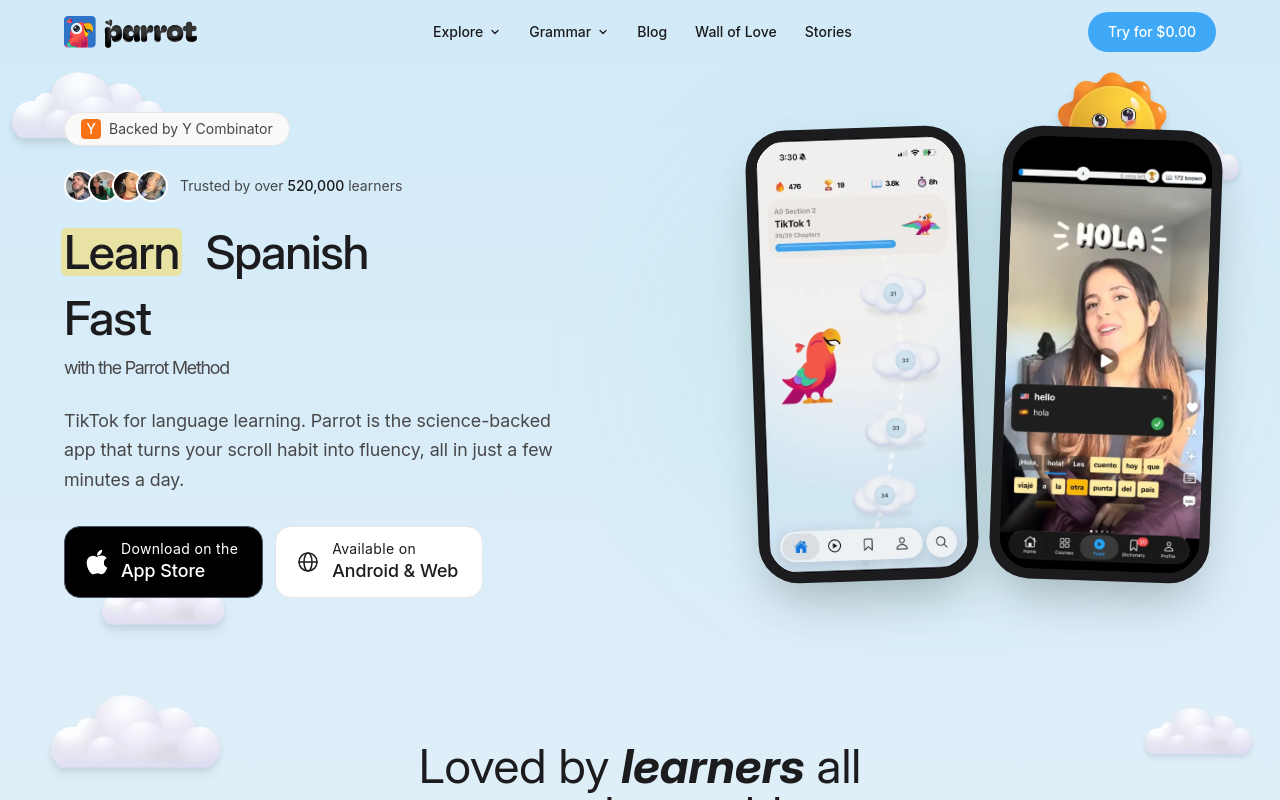
The core frustration Parrot is built to solve is specific: learners who have put real time into traditional memorization-based methods and still cannot parse native-speed audio or hold a natural conversation. Drilling vocabulary in isolation builds recognition; it does not build the internalized, automatic comprehension that real exchanges demand. Parrot's short-form video feed delivers real video clips calibrated just above your current comprehension level, the i+1 principle Krashen's acquisition research identifies as the core driver of fluency, with transcripts and vocabulary aids available on every clip.
Every scroll is a comprehensible input session, not a drill. The Comprehensible Input Method underlies every video session; it governs how content is selected and sequenced for each learner, so the gap between what you understand and what you are hearing closes progressively rather than randomly. The format is also designed around the windows learners actually have: commutes, lunch breaks, the fifteen minutes before bed.
There is no dedicated study block required. Where Parrot moves beyond passive input is Parrot Back, its speaking practice feature, and its AI Tutor. During or after video sessions, when a learner wants personalized feedback or targeted practice beyond passive watching, the AI Tutor provides active, personalized engagement on top of the immersive video content.
This combination, comprehensible input through native-speaker video, listening practice calibrated to your level, and an AI Tutor for the moments you want to produce language, not just absorb it, addresses the full acquisition loop that drill-only apps leave incomplete. Most beneficial for learners who have already discovered that memorization-based methods are not moving the needle and want a research-backed alternative grounded in how people actually acquired their first language.
2. Immersion.co - Full CI Library with Native Tutors and AI Crosstalk
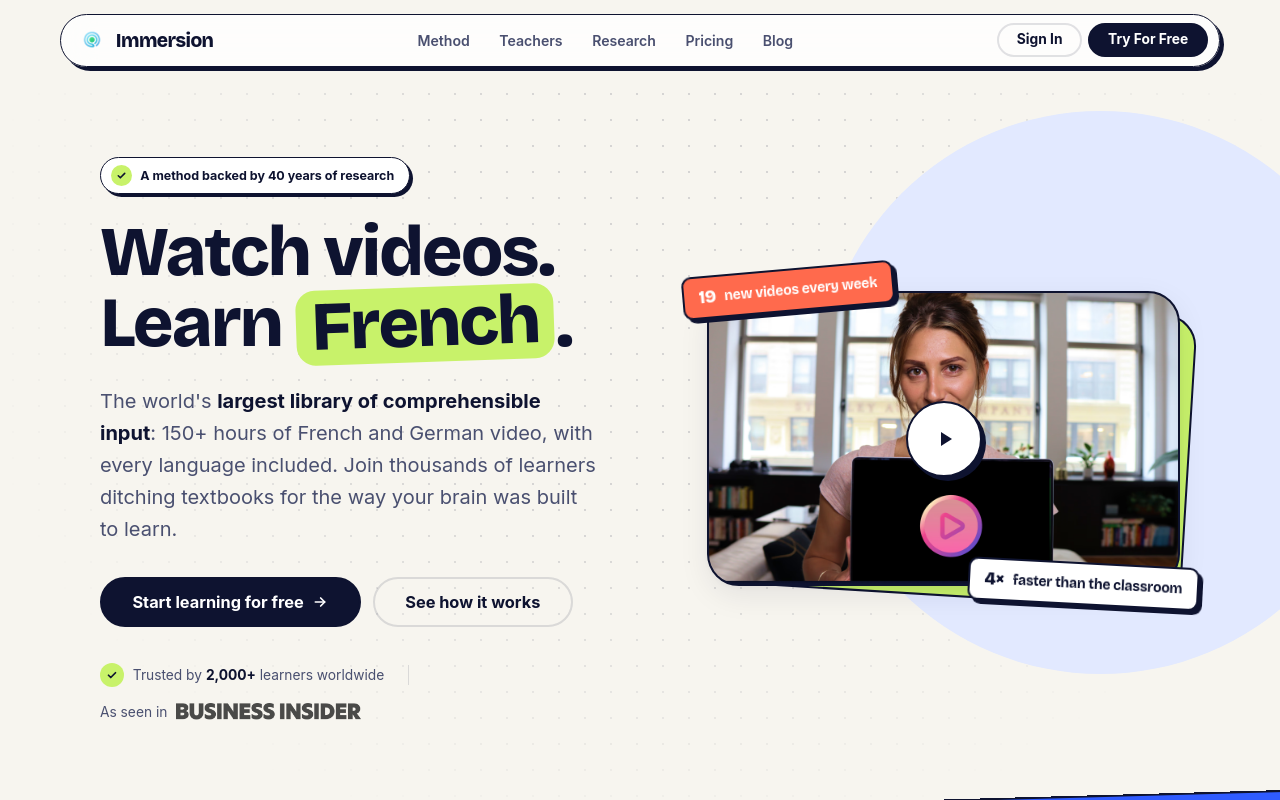
Immersion.co pairs a structured library of native-language content with access to tutors and AI conversation practice, so input and output live in the same environment. The tradeoff is cost and setup time: it is overkill for a learner who only has ten minutes a day. Best suited to intermediate learners ready to move from passive listening into regular speaking output within a single platform.
3. Anki - Spaced-Repetition Flashcard Engine for Vocabulary Retention
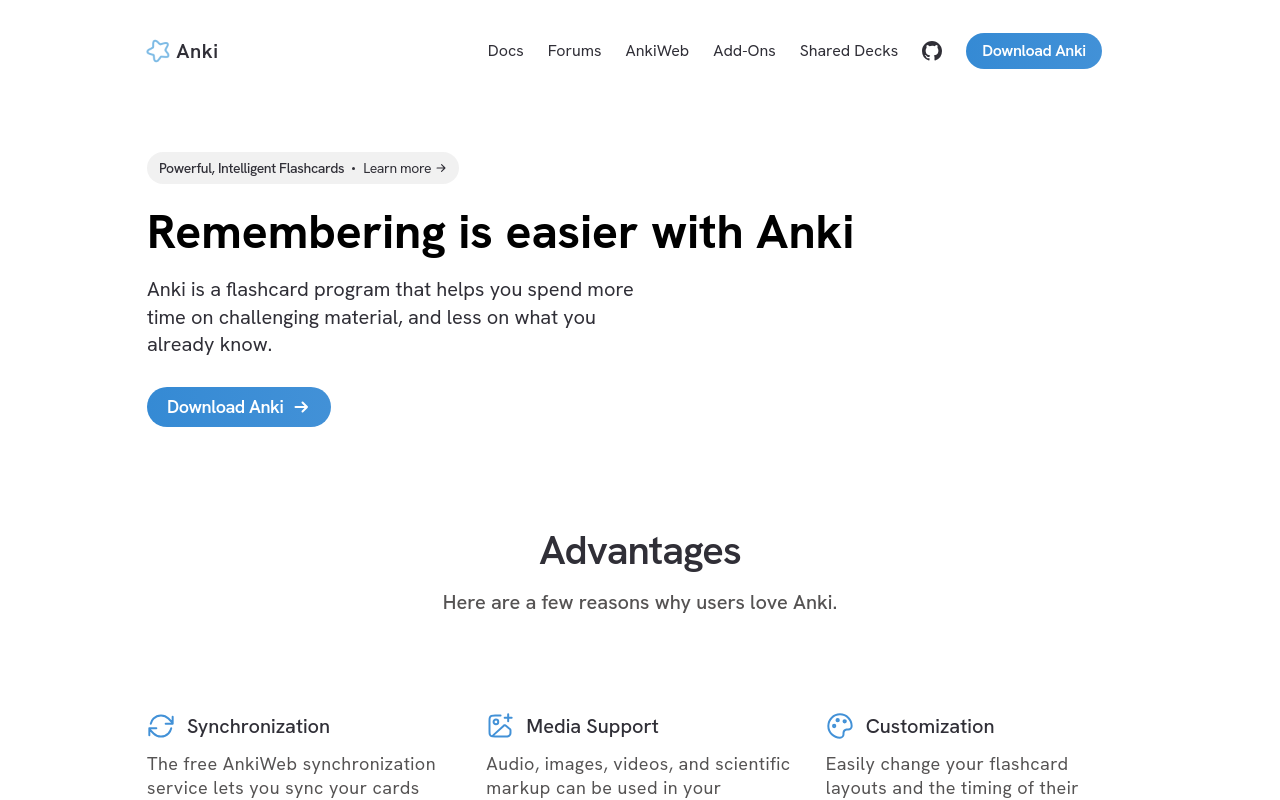
Anki's spaced-repetition algorithm is the most evidence-backed vocabulary retention system available, and its frequency decks are community-validated across millions of downloads. It does not deliver comprehensible input on its own, so treat it as a complement to CI tools rather than a primary acquisition engine. Most beneficial when used for fifteen minutes daily alongside a reading or listening habit; without that pairing, it builds recognition without building comprehension.
4. Readlang - Contextual Vocabulary Acquisition Through French Reading
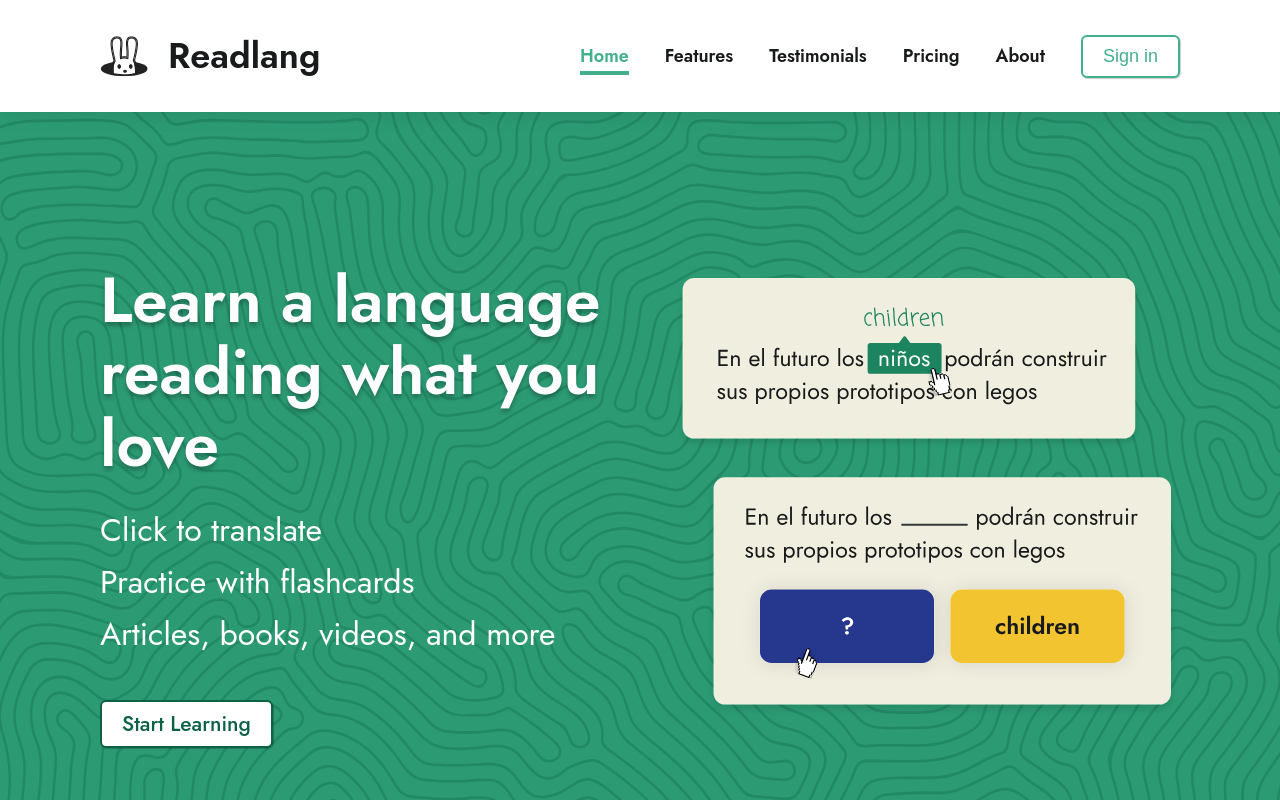
Readlang lets you import any target-language text, click an unknown word, and get an instant translation that is automatically added to a spaced-repetition review queue. The vocabulary you build comes directly from content you chose to read, so it is contextually grounded rather than decontextualized. The limitation is that it requires you to source your own reading material; learners without a clear content habit will find the tool underused. Ideal as a companion to a reading-first CI approach.
5. Duolingo - Gamified Drill-Based App Best for Habit Formation
Duolingo's strength is habit formation, not acquisition depth. Its streak mechanics reliably get beginners to open an app daily, and that consistency has real value at the A1 to A2 stage. The ceiling is well-documented: as Duolingo's own intermediate plateau research confirms, learners who rely on it past foundational vocabulary stop making noticeable progress because the drill format cannot replicate the contextual exposure real conversation requires. Use it to build a daily habit, then graduate.
6. LingQ - Immersive Reading and Listening Platform with Vocabulary Tracking
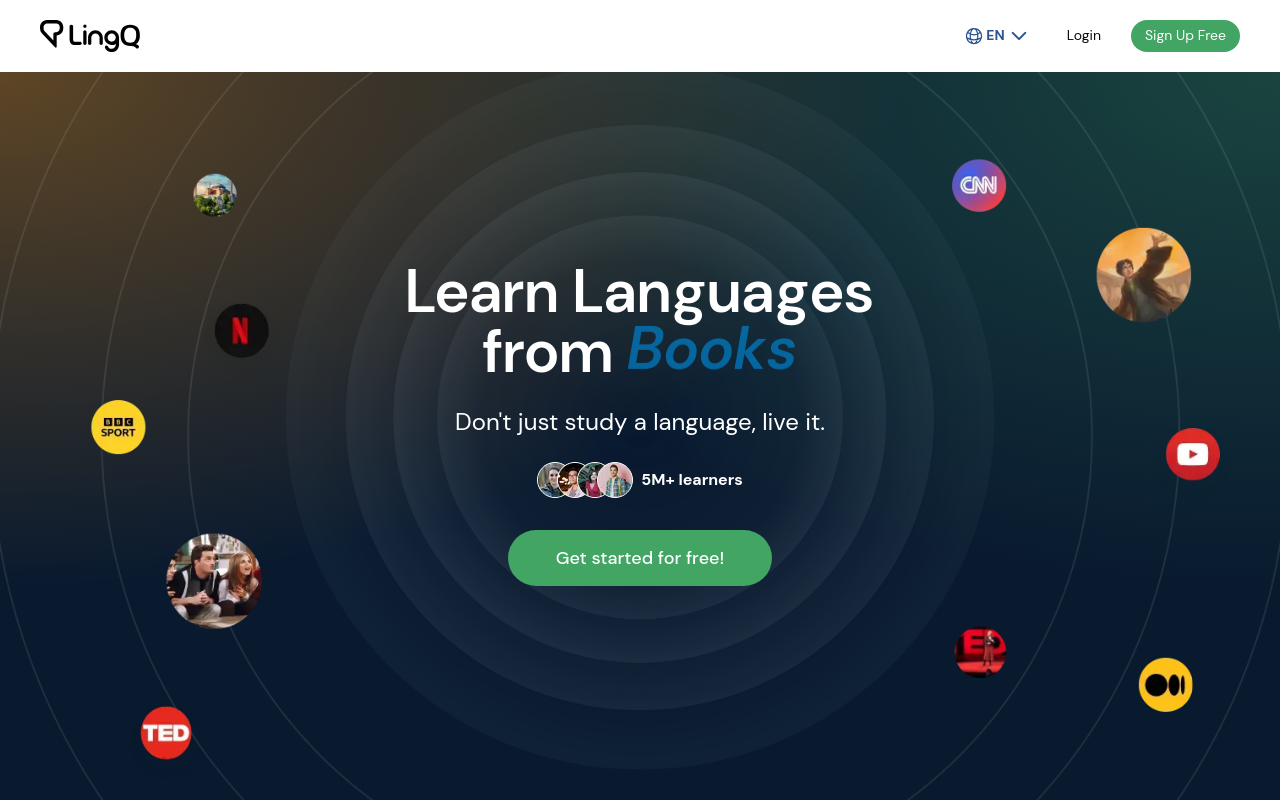
LingQ turns authentic articles, podcasts, and books into interactive reading and listening material, highlighting unknown words and tracking vocabulary growth over time. It is one of the few comprehensible input options that scales from beginner to advanced without switching platforms. The interface has a learning curve and the free tier is restrictive; learners who do not commit to regular reading sessions will not see the vocabulary tracking pay off. Strong pick for intermediate learners with a reading habit.
7. LingoPie - Immersive French TV and Film with Interactive Subtitles
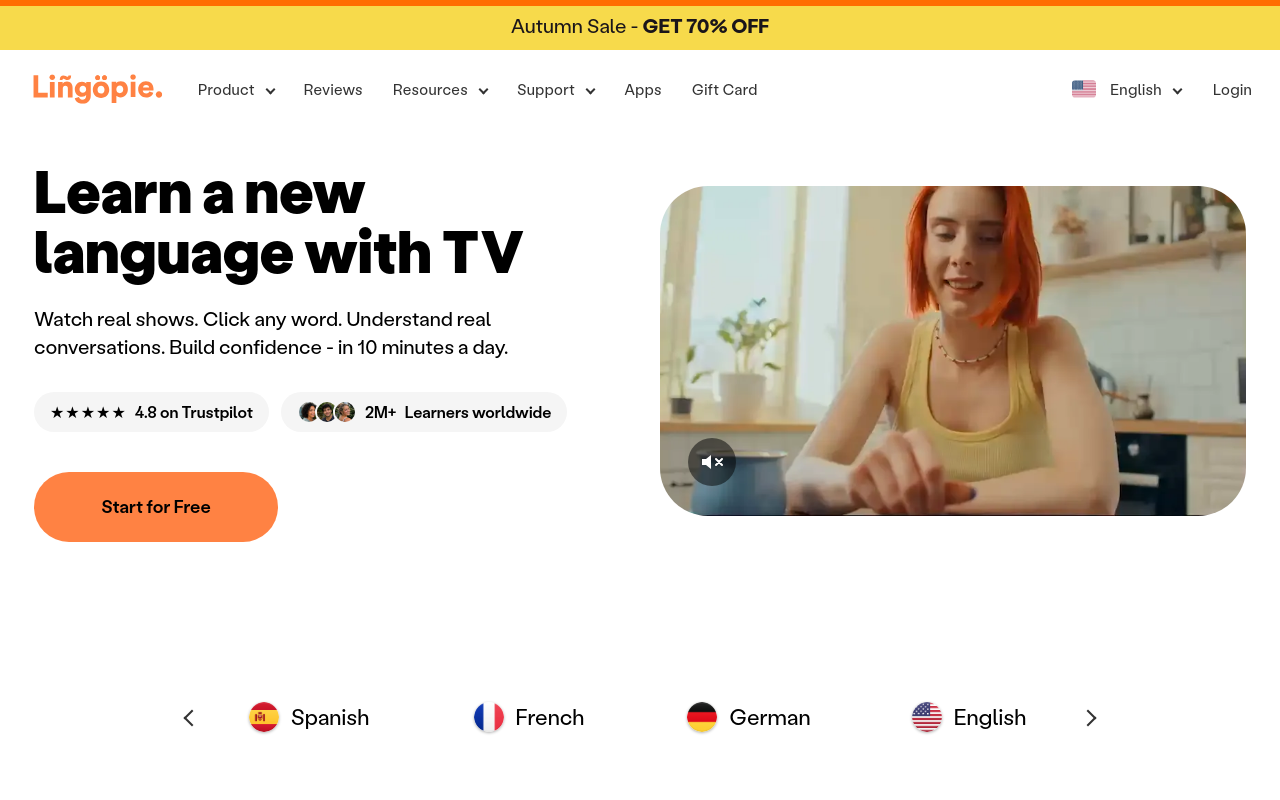
LingoPie wraps TV shows and films in clickable subtitles that add words to a review queue, turning passive viewing into active vocabulary acquisition. The content library is smaller than a standard streaming service, and the subtitle interaction requires attention that pure passive watching does not. Most beneficial when used as a structured viewing session two or three times a week, not as background noise. A practical bridge between entertainment and structured skill practice.
8. Babbel - Structured Drill-Based App Covering Core Grammar and Vocabulary
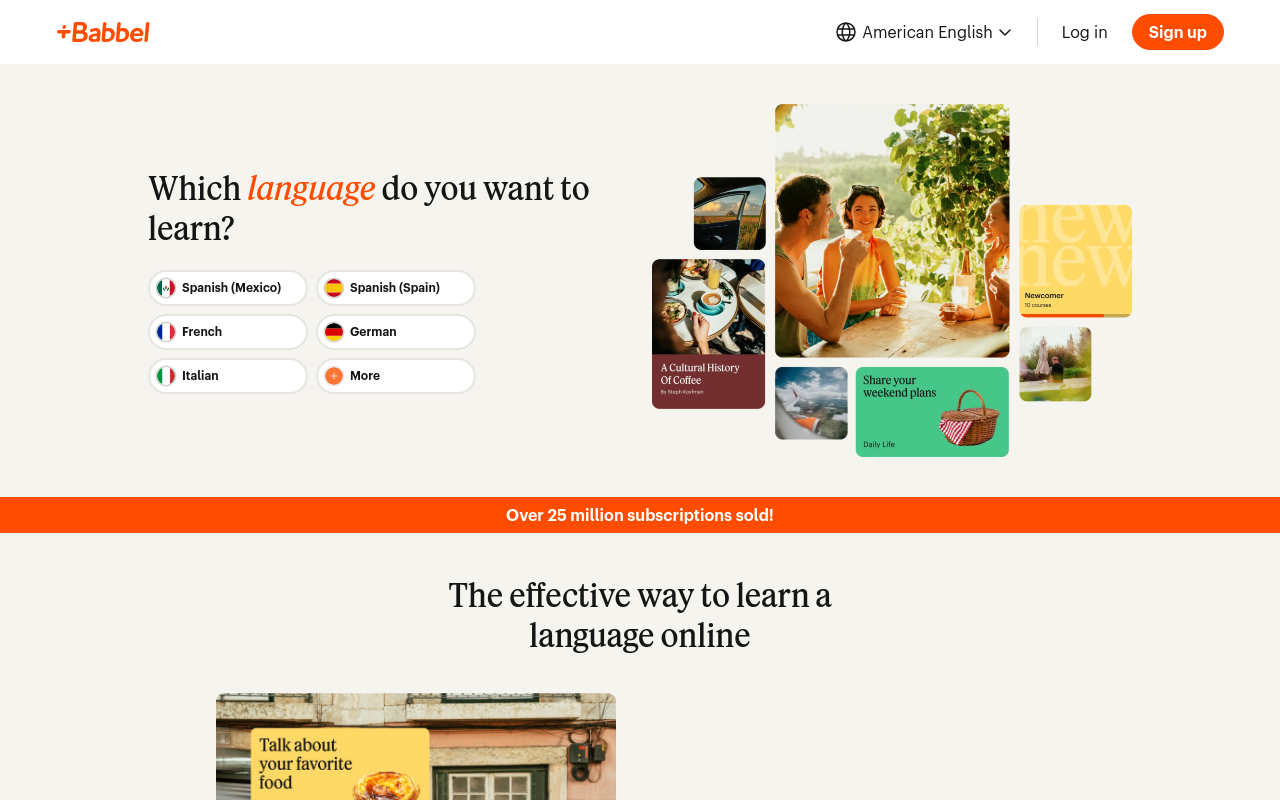
Babbel's lesson design is meaningfully more structured than most gamified competitors: teacher-designed sequences covering practical conversation scenarios give beginners a coherent progression that app-hopping cannot replicate, and the grammar explanations are clearer than most free alternatives. The honest design boundary is the same one that applies to any drill-based format: the input is controlled and predictable in ways that real conversation is not, so the gap between Babbel's exercises and native-speed audio remains until you bridge it with unscripted listening. Worth considering for complete beginners who want structured scaffolding before moving to CI tools, but the same intermediate plateau problem applies once foundational grammar is in place.
9. HelloTalk - Output Practice and Self-Assessment Through Native Speaker Exchange
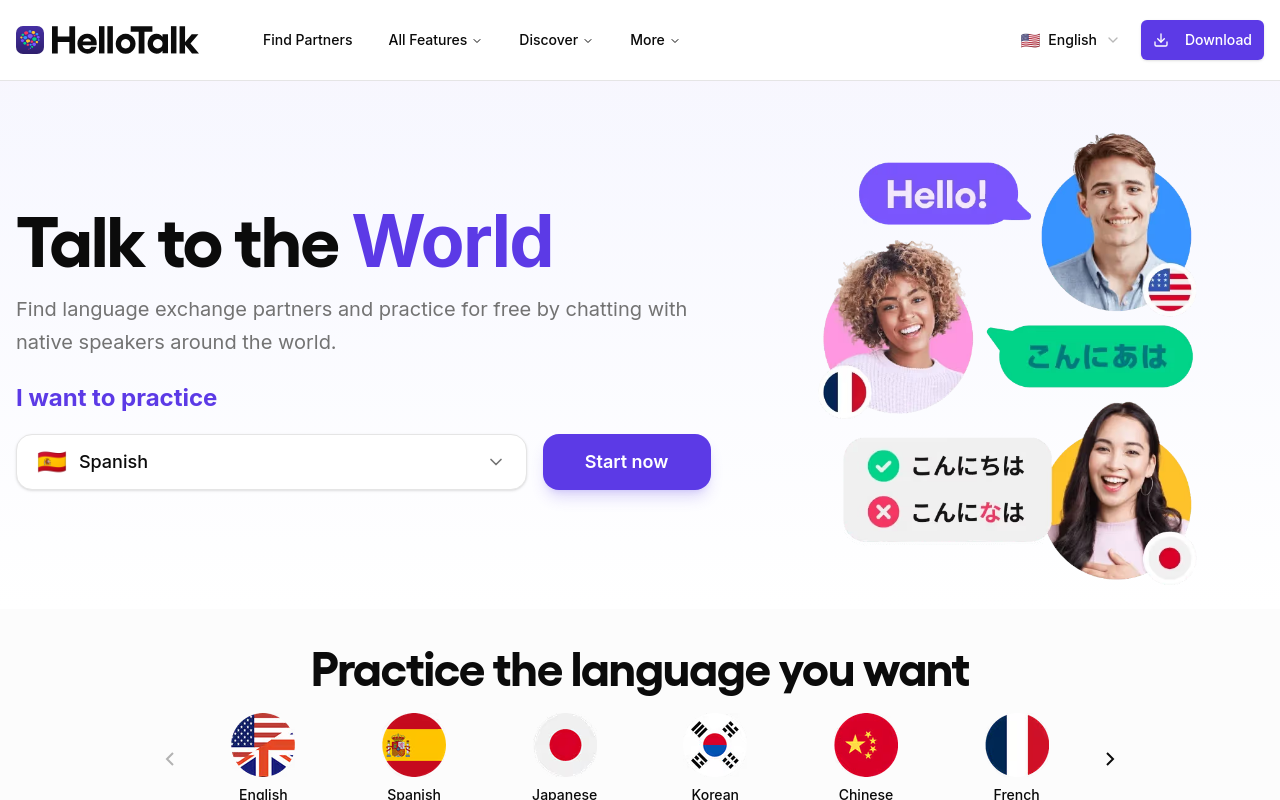
HelloTalk connects you with native speakers for text, voice, and video exchange, with built-in correction tools that let partners annotate your messages. It is the lowest-cost way to get output practice and native feedback outside of formal tutoring. The quality of exchange varies significantly depending on who you match with, and the app's social features can become a distraction. Most beneficial when used with a clear weekly target, for example, two structured voice exchanges per week. Learners whose available windows run closer to ten or fifteen minutes will find text and voice-memo exchanges a more sustainable format than full voice calls.
10. iTalki - On-Demand Human Tutoring for Structured Progress Tracking
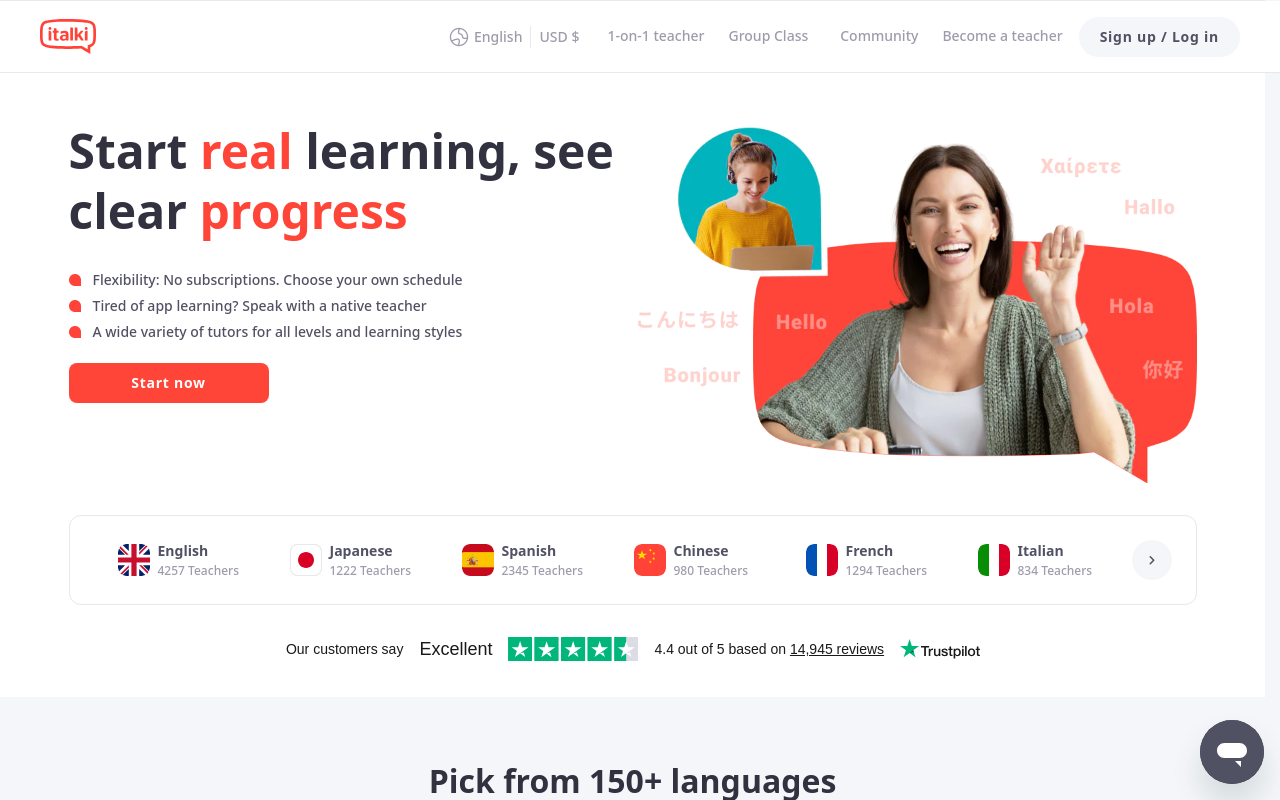
Live conversation with a tutor is the highest-ROI activity for speaking ability, and iTalki's community teacher tier makes it accessible at rates significantly below institutional pricing. One thirty-minute session per week consistently outperforms daily app use for speaking gains because it closes the CI loop with real output and immediate correction. The tradeoff is scheduling friction; learners who cannot commit to a recurring slot often let sessions lapse.
11. Coffee Break French - Podcast-Style Lessons Bridging Drill Apps and Real Input
Coffee Break French sits between structured drill apps and full CI immersion, offering explained input in English-heavy episodes at beginner and lower-intermediate levels. It is a useful transition tool for learners who find pure target-language audio overwhelming but want to move beyond app drills. The English scaffolding that makes it accessible at A1 also limits its acquisition ceiling; plan to phase it out as comprehension grows rather than treating it as a long-term primary resource.
12. InnerFrench Podcast - Native-Speed CI Audio Calibrated for Intermediate Learners
InnerFrench delivers monologue episodes entirely in French, spoken at a pace and vocabulary level designed for B1 to B2 learners, making it one of the most precisely calibrated comprehensible input alternatives available in audio form. The host speaks clearly without artificial slowdown, which trains the ear for real conversational French. No interactive features, no vocabulary review; it is pure input. Pair it with Anki or Readlang to convert passive listening into retained vocabulary.
13. Vocabuo - CEFR-Structured Vocabulary App with Content-Based Flashcard Creation
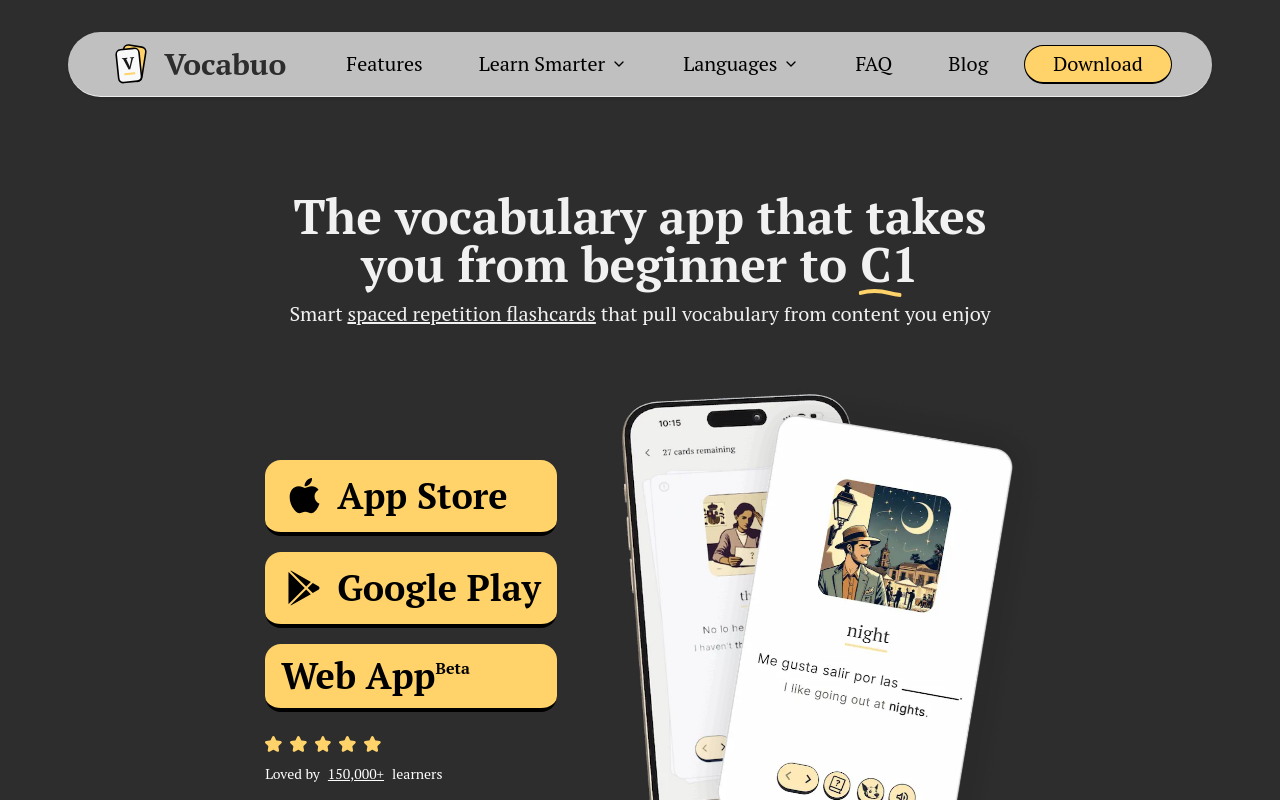
Vocabuo organizes vocabulary acquisition around CEFR levels and lets learners build flashcard sets from content they are already consuming, reducing the setup friction that makes Anki inaccessible for some learners. The tradeoff is a smaller community deck library compared to Anki, which means less peer-validated content to draw from. A practical lower-friction alternative for learners who want spaced repetition without Anki's configuration overhead, particularly at A2 to B1 level.
14. Fonetix - Prosody-Focused Oral Comprehension Tool for French Sound Perception
Fonetix targets a specific and often neglected problem: the gap between reading a language accurately and hearing it at native speed. Its prosody and sound-perception training helps learners decode the liaisons, elisions, and rhythm patterns that make native audio feel impenetrable. It is a narrow tool, not a primary acquisition engine. Most beneficial for intermediate learners who read well but consistently struggle to parse spoken language in real conversation or media.
15. Progress Trackers and Self-Quiz Tools - The Underserved Self-Assessment Gap in French Apps
Most learners have no reliable way to measure whether their comprehension is actually improving between formal assessments. Tools like Progress with Lawless French and self-quiz features in LingQ fill this gap by surfacing comprehension data rather than engagement metrics. The honest limitation is that self-assessment tools only work if you use them consistently and honestly; they cannot replace the feedback loop of a real conversation partner or tutor. Treat them as a calibration check, not a primary learning tool.
16. The 80/20 App Cluster - The Small Set of Tools Responsible for Most French Acquisition Gains
Applying the 80/20 principle to French language learning resources reveals that the majority of real acquisition comes from a small cluster: one strong CI delivery tool, one spaced-repetition vocabulary system, and one output/speaking practice channel. Everything else is supplementary. Learners who spread effort across six or more apps typically make slower progress than those who commit deeply to two or three high-ROI tools used consistently.
17. Tandem - Structured Language Exchange App with Built-In Correction Tools
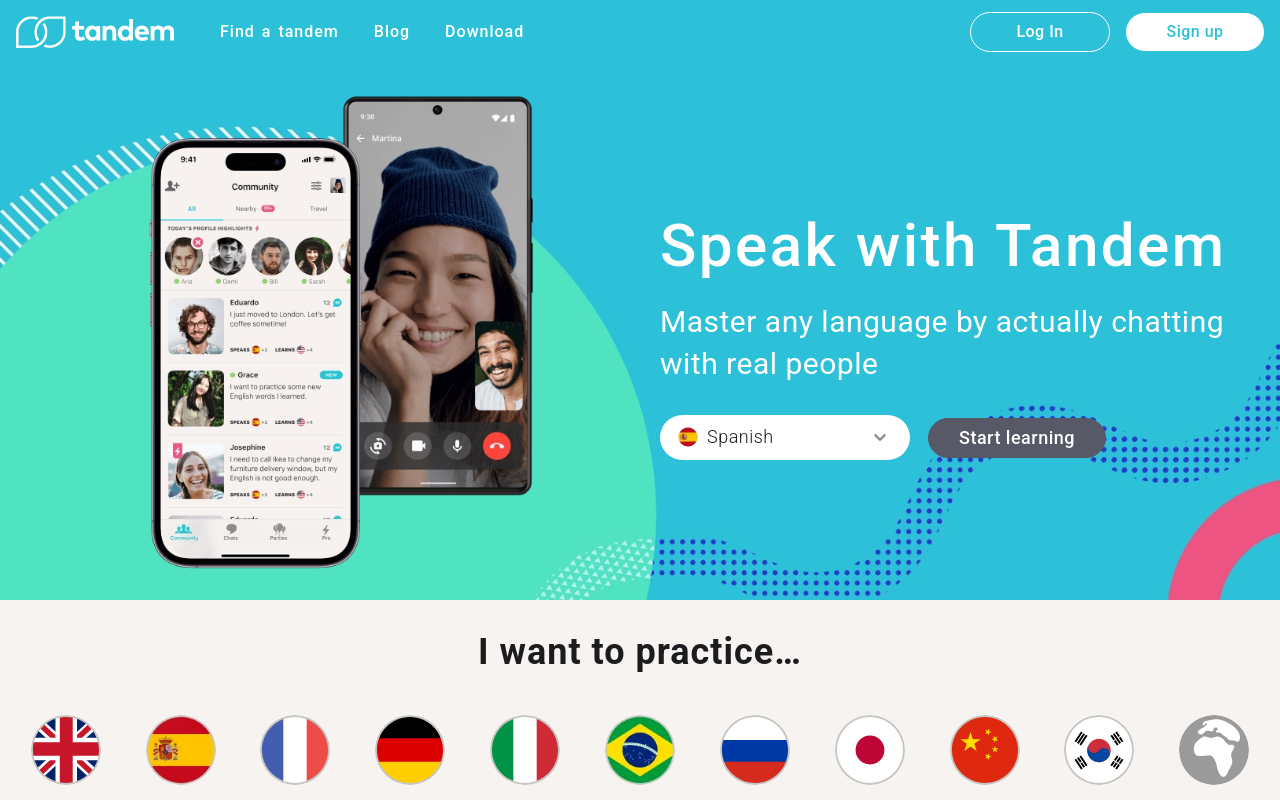
Tandem functions similarly to HelloTalk but with a stronger emphasis on structured exchange and in-app correction features that make feedback more systematic. The built-in translation and correction tools lower the barrier for native speakers to give useful feedback, which improves the quality of exchange compared to unstructured messaging apps. The same caveat applies: match quality varies, and output practice without sufficient input foundation produces limited gains. Most effective at B1 level and above, when you have enough of the language to sustain a real exchange.
Gamified apps are not failing learners because they are the wrong app. They are optimized for a different goal than fluency. Engagement mechanics designed to maximize daily app-opens cannot substitute for the meaningful, contextualized language your brain requires to acquire it, as Duolingo's own plateau research and broader analysis of the intermediate plateau consistently confirm.
Learners who keep searching for a better drill app are solving the wrong problem. The tools that move the needle share one trait: they put real language in front of you, repeatedly, at a level your brain can process and absorb. Apps and digital tools give you the infrastructure for acquisition, but the highest-ROI comprehensible input for most learners does not come from a screen at all.
It comes through your headphones. The next section maps the podcast and audio landscape by comprehension difficulty, so you can find the exact listening level where your brain is acquiring language fastest rather than just filling time.
French Podcasts and Audio Resources That Actually Train Your Ear
Sorting French audio by difficulty is the whole game. Research on vocabulary coverage thresholds consistently shows that listeners need to understand roughly 95 to 98 percent of words in a passage before their brain can treat the input as acquisition material rather than noise. Below that threshold, you are practicing the skill of tuning out.

Beginner and Intermediate CI Audio Podcasts Engineered for Comprehension
News in Slow French is the most widely recommended entry point for a reason: its hosts deliberately slow their delivery and choose vocabulary an A2-to-B1 learner already partially recognizes, which keeps comprehension above that critical threshold. Coffee Break French takes a similar approach, layering brief grammar commentary around short native-style dialogues so that even a complete beginner gets contextual scaffolding rather than isolated drills. Both shows are most beneficial for learners who can already handle basic greetings and present-tense sentences but would drown in unscripted native conversation. One honest trade-off: engineered-for-learner podcasts eventually feel too easy, and that ceiling arrives faster than most people expect. Once you stop encountering unfamiliar words, you have stopped acquiring.
Intermediate to Advanced CI via InnerFrench and French Comprehensible Input
InnerFrench, hosted by Hugo Cotton, occupies the sweet spot that intermediate learners spend months hunting for: natural but unhurried French on genuinely interesting topics, with no English translation. The show has built a subscriber base in the hundreds of thousands across podcast and YouTube platforms. For visual learners who want to treat YouTube as an audio-only resource during chores, the French Comprehensible Input channel (over 200,000 subscribers) delivers story-based narration at graded speeds, making it one of the most practical B1-to-B2 bridges available without a paywall.
That middle-ground problem is real and worth naming directly. Intermediate learners consistently find themselves caught between audio that feels insultingly slow and native-speed content that feels like a wall of sound, and the gap between those two zones is where motivation goes to die. The discovery process compounds the frustration: even learners who search deliberately report spending significant time cycling through shows that are wrong for their level before finding one that fits.
At the advanced end, the problem shifts: learners targeting C1 often want long-form, in-depth French audio comparable in depth and narrative scope to English history podcasts, and that format is genuinely rare in French, leaving serious learners without the immersive, content-rich listening they need to push past a plateau. The deeper limitation worth naming: none of these standalone resources give you feedback. You can listen for months and still not know whether your comprehension gaps are closing or compounding.
Parrot's Comprehensible Input method addresses this directly. It underlies every video session, governing how content is selected and sequenced for each individual learner rather than leaving that calibration to guesswork. Its Listening Practice feature is most beneficial when a learner needs to improve real-world listening comprehension, and it works immediately: every video watched contributes to that practice, with native-speaker content and vocabulary aids alongside rather than after. For learners who have struggled with traditional memorization-based methods and want a research-backed alternative, that sequencing removes the guesswork of knowing when to graduate from one source to the next.
Dead-Time Audio as Your Primary CI Session
The average American commuter spends roughly 55 minutes per day in transit, a figure corroborated by multiple Census Bureau datasets. That number is a learning plan.
Load one episode before you leave. Treat the commute as a single-task comprehensible input session with no English podcasts, no music. Learners who do this consistently find the habit forms faster than any desk-based study routine because it attaches to a slot that already exists in the day.
The only real risk is picking audio above your level and spending those 55 minutes in frustrated confusion rather than acquisition, a calibration problem, and exactly what kills momentum before fluency arrives. Getting that calibration right, and keeping it right as your level moves, is where structured sequencing turns dead time into genuine progress.
Related Reading
Fastest Way To Learn French
Best App To Learn French For Travel
Best Books To Learn French
French Alphabet Pronunciation
How To Learn French Through Conversation
How To Conjugate Re Verbs In French
How To Learn French With Movies
Learning Resources For African French
How Long To Learn French
French Films, Shows, and Media That Make Immersion Stick
French films and TV shows are not a reward you unlock after reaching intermediate level. According to industry research on comprehensible input, authentic media, films, TV shows, news broadcasts, is the prime vehicle for language acquisition precisely because it delivers natural speech patterns, cultural context, and real-world vocabulary simultaneously, in ways structured courses cannot replicate. The practical implication is direct: a beginner watching level-appropriate French content is doing something neurologically more effective than an intermediate learner grinding grammar drills, because only one of those activities constitutes comprehensible input.
The catch is that this only works if the input is actually comprehensible. At A2 level, spoken French in media feels too fast and overwhelming, everything flying by before your brain can latch onto meaning, so immersion through films and shows becomes frustrating rather than productive. Even learners who have prior French education, immersion classes, or years of study often find that media consumption feels like a necessary but maddeningly hard bridge to cross.
The gap between textbook French and the French people actually speak on screen is real, and it stops acquisition cold when the input is pitched too far above current ability. The catch is configuration. Passive watching without the right subtitle strategy and level-matched content produces entertainment, not acquisition.
The nine resources below show you exactly how to set each one up for maximum French CI: what to watch and how to watch it.
1. Language Reactor - Turn Netflix into a French CI Machine
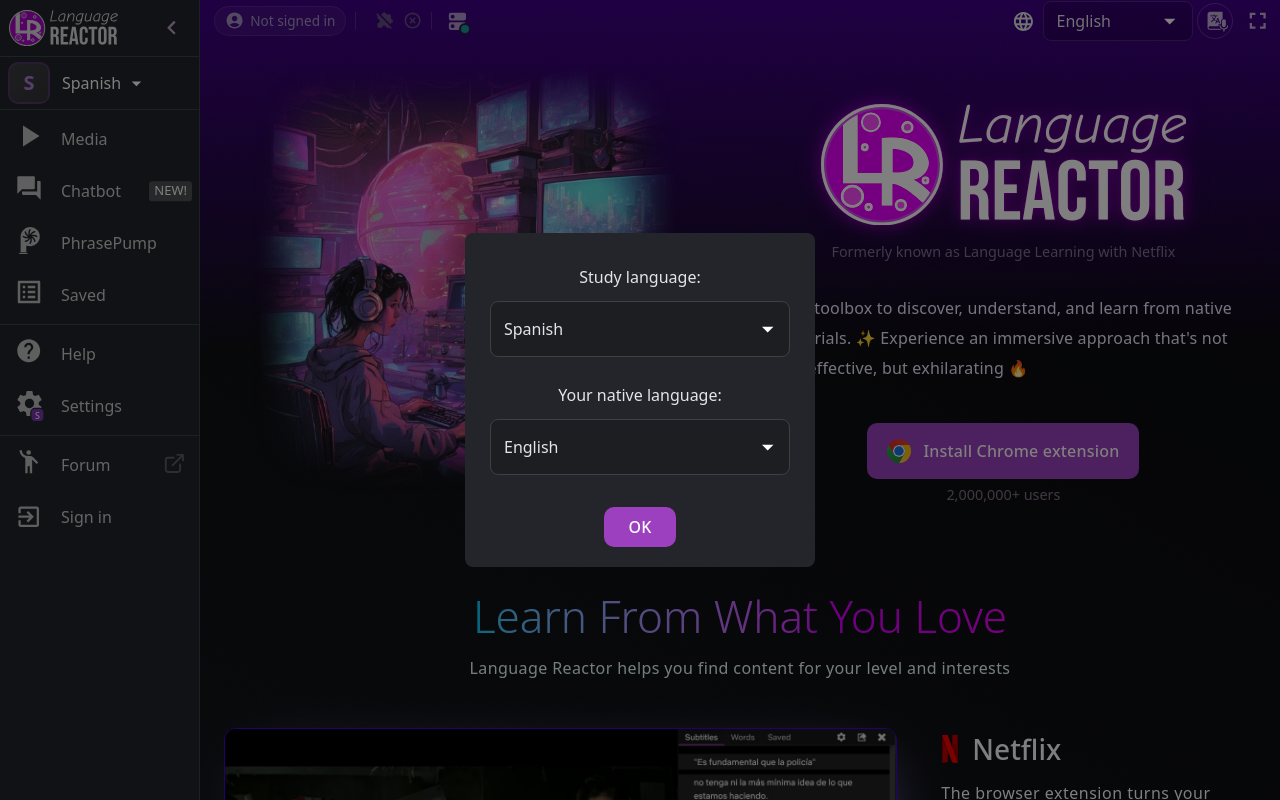
Language Reactor transforms any French Netflix title into an active comprehensible input session by layering dual subtitles (French and English simultaneously), an instant pop-up dictionary, and sentence-mining directly onto the video player. It is most beneficial for an early-to-mid level learner who needs reading support to make video content comprehensible; that reading scaffold is what keeps the input in the i+1 zone rather than tipping into incomprehensible noise. The real tradeoff: stopping to click vocabulary breaks immersion flow, so experienced learners often recommend a first pass without clicking, then a second pass for mining.
2. Beginner-Level Netflix Picks - 'Astérix' and 'Camping' for Simple, Natural French
Astérix et Obélix and the Camping comedy series both use short sentences, predictable dialogue patterns, and heavy visual context, which makes them ideal i+1 content for A1-A2 learners. Sanako's research confirms that input pitched just above current ability drives acquisition faster than content that overwhelms. The limitation: the vocabulary range is narrow, so these titles build confidence but not breadth. Treat them as a launchpad, not a destination.
3. Intermediate Netflix Picks - 'Lupin,' 'Drôle,' and 'Call My Agent' for Real Parisian French
Lupin, Drôle, and Dix Pour Cent (Call My Agent) all feature fast Parisian speech, slang, and professional register, the register gap that trips up most B1 learners who have studied textbook French but never heard how Parisians actually talk. Lupin adds thriller pacing that holds attention even when comprehension dips. The honest tradeoff: natural speech speed makes these genuinely hard without French subtitles active, so pair them with Language Reactor rather than going subtitle-free too early.
4. Advanced Viewing - 'Le Chant du Loup' and French Thrillers for Specialized Vocabulary
Le Chant du Loup (The Wolf's Call) is a submarine thriller that saturates dialogue with military and technical vocabulary, the kind of domain-specific French no textbook covers. For C1-level learners, this is the specialized input that closes the gap between functional fluency and native-level comprehension. The tradeoff is obvious: without prior domain exposure, technical vocabulary density makes this frustrating rather than productive for anyone below B2.
5. The Subtitles Trap - When French Subtitles Help vs. When They Become a Crutch
French subtitles reinforce the audio-text connection and are the correct default for A2-B1 learners. English subtitles shift cognitive load entirely to reading, which means your brain stops processing French audio. The common pattern among learners who plateau: they switch to English subtitles the moment difficulty rises, which feels productive but eliminates the comprehension challenge that drives acquisition. The rule of thumb is to use French subtitles until you understand 70 percent without them, then reduce subtitle reliance progressively. Research from The Triple Helix at UChicago reinforces this: comprehensible input must remain cognitively active to drive acquisition, and leaning on English subtitles routes around that activation entirely.
6. France 24 English/French - Daily News as Structured Comprehensible Input
France 24 broadcasts the same news cycle in both English and French, which gives intermediate learners a built-in comprehension scaffold: watch the English segment first to anchor the topic, then watch the French segment as active CI. Ten minutes daily is enough to build news-register vocabulary and formal spoken French. The limitation is register: France 24's formal broadcast style does not prepare you for casual conversation, so it works best as a supplement to colloquial content rather than a standalone resource.
7. RFI Savoirs - Graded News Audio and Transcripts Built for French Learners
RFI Savoirs structures real news content into graded listening exercises with full transcripts, comprehension questions, and vocabulary glossaries built in. It is one of the few free resources that applies explicit pedagogical scaffolding to authentic French media, making it appropriate from A2 upward. The tradeoff versus unstructured Netflix viewing: RFI Savoirs feels closer to studying than immersion, which reduces engagement for learners who need entertainment to sustain a daily habit.
8. The 20-Minute Episode Habit - Using Short French Shows as Daily Immersion Sessions
Sanako's research recommends short, regular media sessions over infrequent intensive blocks, because frequent low-pressure exposure allows the brain to absorb language naturally over time. A single 20-minute French episode watched daily outperforms a two-hour weekend binge for retention. The goal is comprehensible input absorbed, not time passed. The practical format: one episode of a level-matched show, French subtitles active, with Language Reactor installed. Most learners who build this habit report that it stops feeling like studying within two weeks, which is the point where consistent immersive practice starts compounding.
9. French Cultural Documentaries - '13 Novembre' and Historical Docs for Deep Cultural CI
13 Novembre: Fluctuat Nec Mergitur is a documentary series about the 2015 Paris attacks, told through survivor testimony in unscripted, emotionally direct French. Historical and cultural documentaries like this deliver something fiction cannot: unscripted speech with genuine emotional register, regional accents, and cultural subtext that reveals how French people actually process collective experience. The limitation is difficulty: unscripted documentary French is faster and less predictable than scripted drama, making it B2-minimum content.
Media and audio will carry you far, but there is a ceiling to what self-directed immersion alone can break through. The next section covers the French courses and teachers that compress that ceiling by giving you the one thing no show or podcast can: real-time feedback on whether you are actually producing the language correctly.
French Language Courses and Teachers That Accelerate Real Progress
Course volume is irrelevant if the format never forces you to speak. The single variable that predicts real conversational gains is how fast a course closes the loop between hearing French and producing it under pressure.
1. Pimsleur French - Best Structured Course for Pronunciation-First Beginners
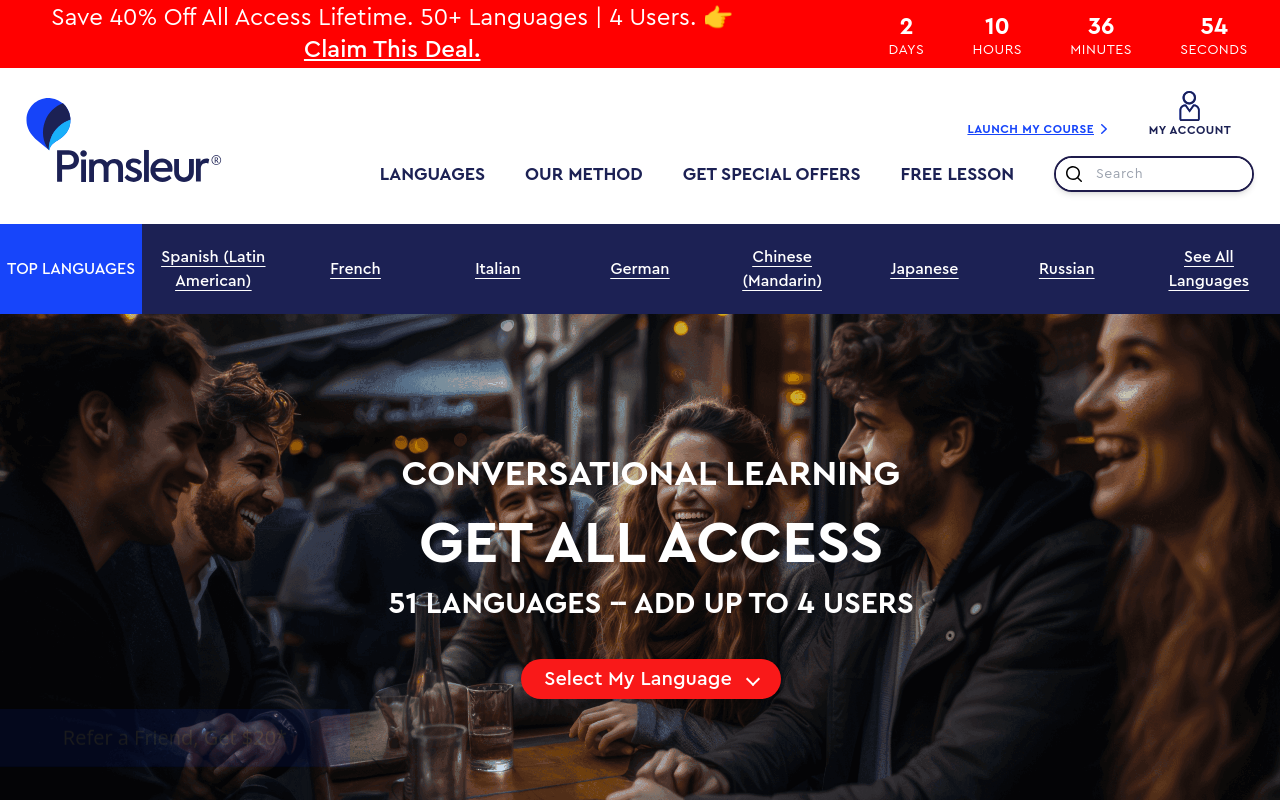
Pimsleur builds genuine pronunciation confidence early: its audio-only, spaced-repetition format wires mouth muscle memory from day one, and independent analysis of the program corroborates measurable phonetic gains across Levels I through IV, a real advantage for learners who have struggled with French sounds in text-based courses. Pimsleur's own published guidance positions the method as a shortcut to mastery precisely because it prioritizes spoken output over written drill. The ceiling, though, arrives sooner than most learners expect: independent review consistently finds that after 50 hours of Pimsleur French, learners know only about 20% of the top 1,000 most frequently used French words, and the method rehearses pre-built sentences rather than generating novel ones.
Right pick for commuters who need pronunciation scaffolding; wrong pick if spontaneous conversation is the near-term goal.
2. Rocket French - Best Structured Course for Learners Who Need Reading and Grammar Alongside Speaking
20%
of the top 1
Rocket French pairs audio dialogue with written transcripts and grammar explanations, making it the stronger choice for learners who process language visually as well as aurally. The tradeoff is pacing: the multi-modal format adds time per session, which busy learners frequently skip. Most beneficial when you have 30-plus minutes per sitting and want a single course to cover pronunciation, reading, and light grammar simultaneously rather than juggling separate tools.
3. Alliance Française - Best Structured Course for Learners Who Need Institutional Rigor and CEFR Alignment
Alliance Française courses map directly to CEFR levels, which matters most when a learner needs a verifiable credential or wants external confirmation of their actual level. Tuition for intensive programs runs higher than self-study alternatives, so the ROI calculation hinges on whether CEFR documentation has professional or academic value for you. If it does not, the structured schedule and classroom accountability are still worth considering for learners who abandon self-directed study without external deadlines.
One practical gap worth flagging: most structured programs, Alliance Française included, focus on European French, and learners targeting Québécois French will find that notable phonological and vocabulary differences are rarely addressed at the course level. That regional gap is one of the more persistent frustrations beginners encounter, and no single structured course currently solves it cleanly.
4. Italki Tutors - Highest-ROI Activity for Closing the Speaking Output Loop
A single weekly session with an Italki community tutor, available at rates well below institutional tutoring, forces the one thing no structured course or app delivers: real-time production of novel sentences with immediate corrective feedback. That feedback loop is precisely what Pimsleur's own architecture cannot close because scripted repetition never demands spontaneous output. For time-scarce learners, one weekly conversation practice French session here outperforms daily passive tool use for speaking gains.
5. Preply French Tutors - Best Live Tutoring Platform for Structured Lesson Accountability
Preply sits at a higher average price point than Italki but adds a layer of structured lesson planning and tutor accountability that unstructured conversation sessions lack. Tutors on Preply typically arrive with prepared materials, track progress across sessions, and can be messaged between calls. The right pick for learners who want structured French lessons with a human teacher rather than open-ended conversation, and who are willing to pay a premium for that consistency.
6. One 30-Minute Italki Session Per Week Beats Daily App Use for Speaking Gains
For time-scarce learners, a single weekly 30-minute live conversation session produces more measurable speaking improvement than daily passive app use because it demands production, not just recognition. Reddit learners consistently report that even one structured Italki lesson per week was the single best decision in their learning path. The tradeoff is that this only holds when sessions are well-defined, unfocused conversation practice without clear goals underdelivers.
7. Match Your Course Level to Your Current CI Comprehension Threshold Before Enrolling
Choosing a course or tutor at the wrong CEFR level is the most common reason learners stall, A1 group classes frustrate self-studiers who have already passed that comprehension threshold, while jumping to B2 before grammar is solid creates gaps that derail oral progress. Auditing your current comprehensible input level before enrolling, not just your vocabulary count, is the selection criterion that determines whether a course accelerates or wastes your time.
8. Self-Study Apps as the Foundation, Live Tutoring as the Accelerant - A Sequenced Hybrid Strategy
The dead zone most learners fall into sits between weekly Italki sessions and daily structured audio: passive recognition practice that never demands real output. This is where Parrot's approach is most directly useful. That is a meaningful distinction for learners who have struggled with traditional memorization-based methods and want an alternative grounded in how acquisition actually works.
The listening practice built into every video session primes vocabulary and auditory processing right up to the moment a live tutoring session demands you speak, so every tutoring dollar works harder. For learners who want active, personalized practice on top of that immersive video content, Parrot's AI Tutor feature, most valuable during or after video sessions, delivers targeted feedback and retrieval practice beyond passive watching, functioning as a supplement or replacement for the rote drills that traditional school-based instruction relies on too heavily. The sequenced approach: build baseline comprehension through immersive input daily, then convert that comprehension into production through weekly live tutoring.
Neither half works as well alone. Once you have chosen the course or tutor that matches your current comprehension threshold, there is one more layer most learners add too early and rely on too heavily: explicit grammar instruction. The next section draws a clear line between grammar resources that support fluency and the grammar-drill trap that quietly replaces it.
French Grammar and Skill Practice Resources That Support Fluency Without Becoming the Goal
A small core of tenses, present, passé composé, and imparfait, cover the overwhelming majority of spoken French you will encounter in real conversation and narrative. Yet the most common learner mistake is treating grammar study as the engine of fluency rather than the diagnostic tool it was always meant to be. The resources below earn their place precisely because they answer specific questions that arise from real input exposure, not because they replace that exposure.
Learners under time pressure consistently face one specific trap: not knowing which grammar structures to prioritize, so they drift into broad study materials that feel productive but don't move the needle on comprehension or conversation. That drift is expensive when your daily study window is short. It is exhausting to spend an hour conjugating subjunctive tables and then freeze completely when a native speaker rattles off a casual sentence.
That freeze happens because conscious rule knowledge and automatic speech production are separate cognitive processes. As the Journal of Linguistics, 'A Multilingual Corpus Study of the Competition Between Past and Perfect in Narrative Discourse' demonstrates, the passé composé versus imparfait distinction is governed by discourse-level pragmatics and contextual meaning, not by the tidy rule-sets printed in grammar guides. No amount of drilling moves that distinction into automatic speech.
Parrot's short-form video feed makes comprehensible input the default activity in the same micro-sessions most learners currently spend on grammar sites. That matters because the Comprehensible Input Method, the research-backed principle underlying how Parrot selects and sequences every video for each learner, puts real language exposure first and treats grammar lookup as the pit stop it always should have been. For early-to-mid level learners who need reading support to make video content fully comprehensible, Parrot's Reading Practice with Video Transcripts and Inline Translation sits alongside each video: you watch, you read the transcript, you tap any word for an in-context translation, and the tense distinction the Journal of Linguistics corpus research describes lands in a real sentence you actually heard, not in an abstract table.
Every video session contributes immediately to listening practice, so even a five-minute session builds the comprehension exposure that makes grammar rules stick when you do consult them. The tools below become what they were always meant to be: a quick pit stop, not the main road.
1. Lawless French - Grammar Reference as CI Scaffolding, Not Curriculum
Lawless French is one of the most comprehensive on-demand grammar references available in English, covering verb conjugations, register distinctions, and idiomatic usage with jargon-light explanations that work equally well for self-directed learners and those coming from a classroom background. Its real value materializes when a specific structure blocks your comprehension of something you just watched or read. The limitation worth naming: browsing it sequentially turns it into exactly the abstract curriculum it should not be. Use it reactively, fire it up after a Parrot video raises a specific question, answer that question, and return to the input. Use it proactively and you are back on the grammar treadmill.
2. Reverso French Spell and Grammar Checker - Error Feedback Without Breaking Immersion Flow
Reverso flags grammar and spelling errors in written French and shows corrections in context, which matters because decontextualized red marks rarely transfer to speaking. Research in second-language acquisition consistently shows that written error correction is most effective when the learner already has enough input exposure to recognize why the correction makes sense. A short writing session tied to real content you watched, rather than to abstract prompts, gives Reverso something meaningful to work with. It is the right pick after that kind of session; it is not a substitute for the input that precedes it.
3. LangCorrect - Human-Corrected Writing Practice That Keeps Grammar in Context
LangCorrect pairs your written French journal entries with native-speaker corrections, closing the production loop that pure input cannot close alone. The platform's community of native correctors catches nuance that automated checkers miss, particularly at the discourse level where tense and register choices live, exactly the level where, as the Journal of Linguistics corpus study confirms, passé composé and imparfait decisions are actually made. The honest tradeoff: corrections improve writing first, speaking second. Learners who skip speaking practice entirely and rely only on LangCorrect will still freeze in real conversation. Parrot Back, Parrot's dedicated speaking practice feature, is where that gap closes.
4. The Subjunctivisor - A Niche Lookup Tool for One Specific Stuck Point, Not a Daily Ritual
The Subjunctivisor tells you whether a given French verb or expression triggers the subjunctive. Corpus data on spoken French suggests the subjunctive appears far less frequently in everyday conversation than grammar syllabi imply, making it a genuine edge case for beginners. This tool earns its place when a specific sentence confuses you; it is overkill as a daily French skill practice focus for anyone below upper-intermediate level. If breaking through the intermediate plateau is your goal, the highest-leverage move is still depth on the core tenses before edge cases get any dedicated time.
5. The 80/20 French Grammar Stack - Prioritizing Present, Passé Composé, and Imparfait Before Edge Cases
The same Journal of Linguistics corpus research confirms that high-frequency narrative tenses represent the highest-leverage French grammar resources a learner can prioritize. Mastering present, passé composé, and imparfait unlocks comprehension of the vast majority of authentic French stories before any edge case deserves attention. Coffee Break Languages offers a clear, jargon-light walkthrough of exactly this distinction, a useful reference to consult once after encountering the contrast in real input, not a daily exercise to repeat.
Treat the 80/20 stack not as a single tool but as a sequencing principle: depth on the common tenses first, everything else on demand. Every tool in this section earns its place as a pit stop, a place to resolve a specific confusion and get back on the road. The listening exposure that makes those pit stops useful accumulates session by session inside Parrot's short-form video feed, with transcript support for early-to-mid learners and speaking practice via Parrot Back for the production side.
The question that remains is how to arrange all 39 resources into a daily routine that actually fits your life, not a 90-minute study block, but a stack you will still be running six months from now.
Related Reading
Best French Audio Books
Rocket French Reviews
Best Apps To Learn French Vocabulary
Pimsleur French Review
Best Online French Tutors
Is Babbel Good For French
Is Duolingo Good For French
Best Podcasts For Learning French
French Tv Shows To Learn French
How to Build a French Learning Stack That Fits Your Actual Life
Building an effective French learning stack means choosing fewer tools more deliberately.
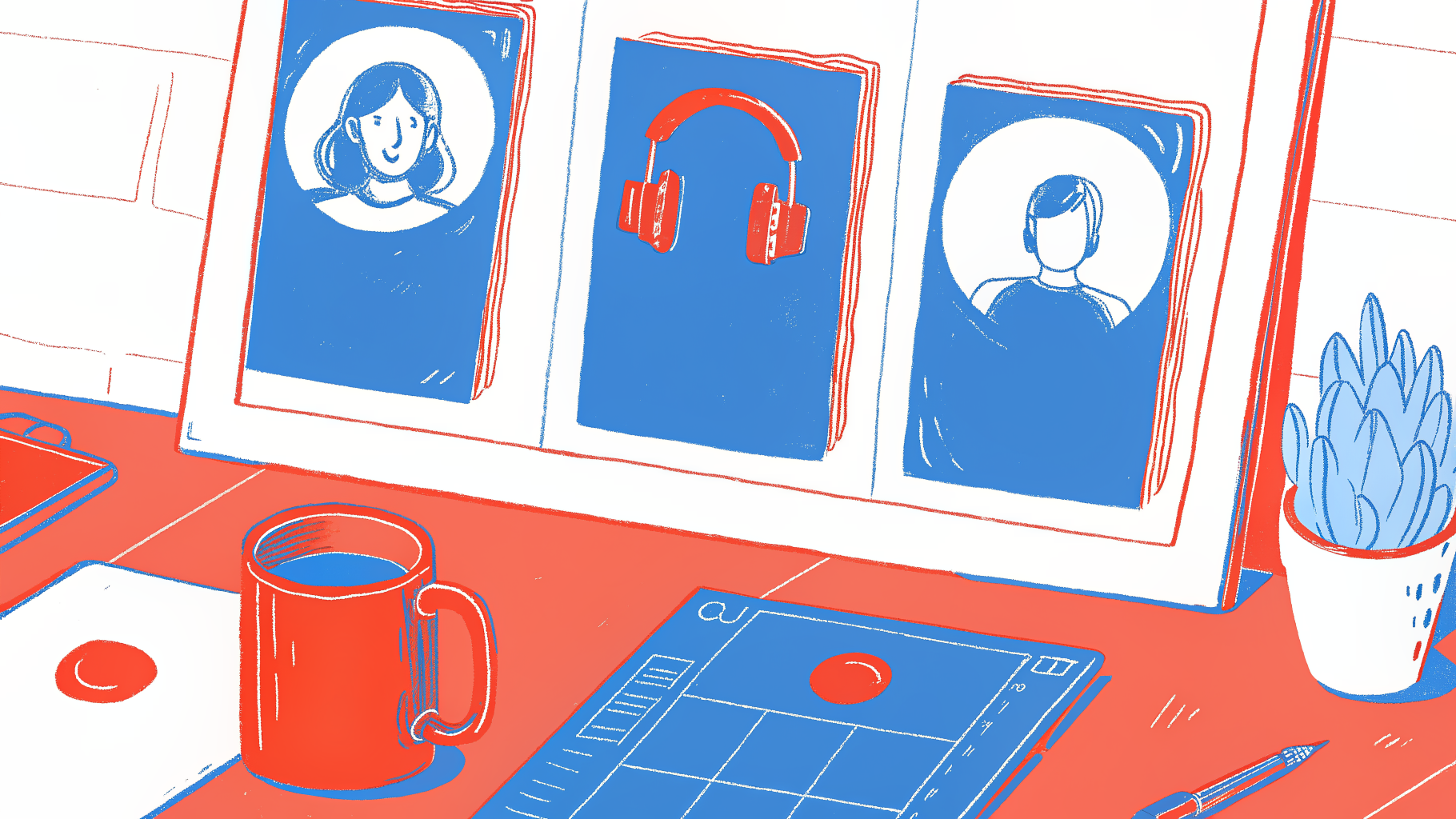
The Three-Layer French Learning Stack
A phone full of French apps and still freezing mid-sentence. That experience is more common than any resource list admits, and the data explains why: the app market hit 26.5 million downloads in a single month in August 2024, flooding learners with options that compete for the same scarce daily minutes. A smaller, sequenced stack is the answer.
Three Layers Cover Everything
Three layers cover everything acquisition needs:
A comprehensible input anchor fills your highest-attention slot, typically a 10-minute morning commute session with a short-form video feed matched to your level.
A single audio source, such as an InnerFrench episode, runs during lower-attention moments like a lunch walk.
One weekly speaking session, thirty minutes on a platform like Italki, converts passive input into active output.
Adding a fourth layer does not accelerate progress; it splits attention and collapses the habit.
Why 10 to 20 Minutes of Right Input Beats 90 Minutes of Mixed Studying
Consistency beats duration. A minimum viable routine performed daily outperforms longer sessions done sporadically. Fifteen focused minutes of level-matched French input activates the acquisition mechanism your brain already uses; ninety scattered minutes across grammar drills, flashcards, and a podcast above your level activates none of it cleanly. A micro-session stack demands honest level-matching: if the CI anchor is too easy, acquisition stalls; if the audio source is too dense, it becomes background noise.
How to Audit Your French Learning Stack
Run one test on every tool you use: did it produce a moment in the past two weeks where you understood something a native speaker said, or said something a native speaker understood? If the answer is no, the tool is optimizing for engagement, not acquisition. The global language learning app market reached $6.34 billion, so the industry's incentive is retention metrics, not your fluency. Most learners can cut their stack to three items without losing anything that was working. You now have the architecture: a minimal stack, a daily time budget, and a clear criterion for every resource you keep.
Next steps
If you have spent months cycling through apps and still freeze the moment a native speaker deviates from any script you have practiced, the path forward starts with choosing resources that actually deliver comprehensible input rather than engagement metrics dressed up as learning. Start with our learn Spanish.
Gamified apps are not failing you because you picked the wrong one. They are failing you because, as Duolingo's own intermediate plateau research confirms, engagement mechanics optimized for daily app-opens cannot substitute for the meaningful, contextualized language your brain requires to acquire French. At the same time, the 55 minutes of daily commute time most learners already have is not a supplement to a learning plan. According to the comprehensible input research covered in the audio section, it is the learning plan. Together, those two points point to the same action: stop filling dead time with drill apps and start filling it with level-matched French audio and video that your brain can actually process as real language.
If you want to go deeper on how the comprehensible input method applies beyond French, see learn Spanish for a closer look at how the same acquisition mechanism works across languages.
Frequently Asked Questions
I've been using Duolingo for months but still can't hold a real conversation, is something wrong with me?
Nothing is wrong with you, it's a structural limitation of the format, not a personal failing. Duolingo's own research confirms that once foundational vocabulary is in place, the drill format reaches diminishing returns because it cannot replicate the unpredictable, contextual language real conversation demands. Switching to a tool that delivers comprehensible input at your level is the fix, not more drilling.
What does 'comprehensible input' actually mean, and why does it matter for learning French?
Comprehensible input means real language pitched just one step above your current level, what Krashen calls i+1. It matters because, as Krashen's research states, 'we acquire language in one way and only one way: when we understand messages.' Decontextualized drills and grammar exercises carry no real message, so they can pass an hour without triggering the acquisition system that actually drives conversational ability.
Is it better to use one French learning app or stack several at once?
One focused tool consistently outperforms juggling several. Learners who stack multiple apps repeatedly report the same outcome after a few months: they kept one or two and quietly dropped the rest. App-stacking creates the feeling of a system while fragmenting the sustained exposure that actually drives acquisition.
I only have ten or fifteen minutes a day, is that enough time to make real progress in French?
Yes, if the time is spent on the right kind of input. Comprehensible input doesn't require a classroom, a tutor, or a two-hour study block, it just requires the right resources. Parrot's short-form video feed is specifically designed around the windows learners actually have, such as commutes, lunch breaks, and the fifteen minutes before bed.
Will using Anki or flashcards eventually make me fluent in French?
Not on their own. Anki's spaced-repetition algorithm is the most evidence-backed vocabulary retention system available, but it does not deliver comprehensible input by itself, so it builds recognition without building comprehension. The post recommends treating it as a complement to a reading or listening habit rather than a primary acquisition engine.