Most French practice advice assumes time and partners you don't have. Here's how to build real speaking fluency inside the stolen minutes of your actual day.
Conventional French speaking advice was built for a world that most learners don't actually live in. The common assumption is that speaking practice requires another person, a tutor, a native speaker, or at least a language exchange partner, to be effective. It assumes a quiet room, a willing partner, and a calendar with open 30-minute blocks.
For the busy learner squeezing practice between a commute, a lunch break, and a pile of evening obligations, that world is mostly fiction. Tools like Parrot exist precisely because the gap between ideal advice and real daily life is where most French learners quietly give up, expanding to French & English language learning in the upcoming quarter. The failure isn't personal.
It's structural. The standard advice to find a conversation partner sounds reasonable until you try to actually do it. You need to find someone available, coordinate schedules across time zones, and show up ready to speak a language you're still shaky in.
It's not intimidating because learners are timid; it's intimidating because the method demands social infrastructure that most people simply don't have on standby. The time problem compounds this. 7 hours on work and work-related activities daily, leaving discretionary time scattered in short intervals rather than concentrated in usable blocks.
A 30-minute partner session requires coordinating two people's fragmented schedules simultaneously. That's not a discipline problem. That's arithmetic.
Gamified apps solve a real problem: they make showing up feel rewarding. The trouble is that tapping is not speaking. After months of completing levels, many learners hit a wall the moment a French colleague tries to make small talk.
Stephen Krashen's comprehensible input research is clear on why: passive recognition of vocabulary does not activate the speech production system. The cognitive skill practiced in a tap-based app and the cognitive skill required to hold a conversation are genuinely different skills. The gap between reading French and speaking French is not closed by more reading.
It is closed by output, by actually saying words aloud, repeatedly, in context. The method that survives real life cannot depend on a schedule. It has to live inside time the learner is already spending, turning a commute into a speaking rep rather than a passive moment.
Parrot converts those stolen minutes into actual spoken practice, sitting inside a TikTok-style scrollable feed of short videos created by native Spanish speakers, delivering real, engaging content matched to the learner's level. This is the core delivery mechanism of the entire app, requiring no partner and no calendar block. The next section puts a number on what staying stuck in the wrong method is quietly costing you.
8.7 hours
Daily work hours for employed parents

"As an A1/A2 learner, I doubt whether I have enough French to even start conversational practice, the common advice seems to set an unrealistically high bar before "real" speaking is supposed to begin."
— what we hear from beginner French learners
Key takeaways
Scheduled 30-minute speaking sessions fail most learners not because of laziness, but because the format assumes free time that busy adults don't have.
Silent study, listening, reading, watching, builds comprehension but leaves the speech-production pathways untrained, which is why fluent readers still freeze when asked to speak.
Speaking anxiety is a structural problem, not a confidence problem; solo techniques that remove the social pressure of a live partner activate the same neural pathways as real conversation.
The minutes already lost to passive scrolling are phonological exposure waiting to be redirected, French fluency is more likely to be built there than in a dedicated study block.
Five partner-free techniques can build real spoken French ability at any level, including shadowing, self-recording, and narration, without a tutor or a scheduled session.
Replacing passive video consumption with active French video immersion accelerates fluency faster than grammar drilling because the brain acquires spoken language from audio-visual input, not rules.
Parrot Back by Parrot (parrotapp.com) closes the loop: say out loud and repeat what you hear inside short video clips, turning scroll time into daily speaking practice that builds confidence and sharpens comprehension without a partner or a calendar slot.
What Staying Stuck in Silent French Practice Actually Costs You
The common assumption is that speaking practice requires another person, a tutor, a native speaker, or at least a language exchange partner to be effective, which means that without one readily available, speaking practice simply gets skipped. Learners who have trained exclusively through silent or passive study often hit a wall when a native speaker responds fluently after a simple "Bonjour": the pace, the pressure, and the social friction of holding up a queue expose exactly how wide the gap between receptive understanding and active production really is. According to the Swain Output Hypothesis, comprehension and speaking draw on separate neurological processes: listening activates semantic processing, while speaking forces syntactic processing, the kind that builds the grammatical scaffolding you actually need to produce a sentence under pressure.
The practical consequence is a productive versus receptive vocabulary gap.
Key takeaway: As Swain's research makes clear, passive input never triggers the "pushed output" mechanism that closes this gap; comprehension is a necessary foundation, but not a sufficient one. One widely cited framework captures the imbalance neatly: the method is 80% input (listening, reading) and 20% output (speaking).
Spaced repetition research makes the mechanism precise: short, frequent spoken output sessions outperform occasional long study blocks on retention, because the brain consolidates procedural skills during the gaps between practice.
Key takeaway: Daily micro-practice, even five minutes, outperforms a two-hour session once a week on fluency maintenance.
Skipped days do not pause your progress; they quietly reverse it.
The most common version of this trap looks like reasonable caution: "I'll start speaking once my grammar is stronger." In reality, waiting for ideal conditions carries a daily cost. The Swain Output Hypothesis is direct on this point: solo speaking activities, including narration, shadowing, and repeating aloud, are fully valid output practice, because a partner is not required to trigger the noticing and hypothesis-testing functions that build fluency.
Parrot is most beneficial precisely here: for learners who have struggled with traditional memorisation-based methods and want a research-backed alternative that keeps them producing output, not just absorbing input. The Parrot Back feature activates speaking practice directly within the video-learning flow, so there is no separate booking, no cleared calendar, and no dependency on another person's schedule. For learners who want personalised feedback on top of that immersive foundation, an AI-powered tutor that provides personalized practice and guidance, adapting to each learner's level and progress to accelerate fluency, is available: targeted practice that goes beyond passive watching, without the coordination cost of a human tutor.
Closing this gap does not require a conversation partner, a tutor booking, or a cleared calendar. It requires a specific set of solo techniques, and the right structure to deploy them in the exact stolen minutes you already have.
Solo Techniques That Build Real French Speaking Ability Without a Partner
Five solo techniques can build real French speaking ability without a partner, a tutor, or a scheduled session. Each one activates the same speech-production pathways that conversation practice does, while removing the social freeze response that causes most early-stage learners to go silent when pressure hits. A1 and A2 learners in particular tend to feel they are not yet ready to hold a real conversation, and that feeling is legitimate. These five techniques exist precisely to close that gap, building the solo preparation that makes partner practice viable rather than terrifying. Start with technique one and work through all five in a single sitting.
Pros and cons at a glance
Shadowing means listening to a short native French clip and repeating it aloud immediately, matching rhythm, intonation, and pronunciation as closely as possible. A systematic review published in Language Teaching Research Quarterly found that shadowing produces measurable gains in prosody, segmental accuracy, and oral fluency when practiced independently with recorded native-speaker audio, with no conversation partner required. The real friction point most learners hit: they shadow a podcast and mishear half the words because there is no transcript.
Pair audio with a script, pause every two to three phrases, and echo before moving on. This is where the technique shifts from passive at best to genuinely productive. The material you shadow matters as much as the method.
Parrot's short-form video feed is built on the Comprehensible Input Method, so every clip is selected and sequenced to sit at the edge of your current level, native-speaker content you can actually process, not an overwhelming stream. That makes it practical shadowing material from the first session, not something you graduate into after months of study.
1. Shadowing - Echo Native French Rhythm and Intonation in Real Time
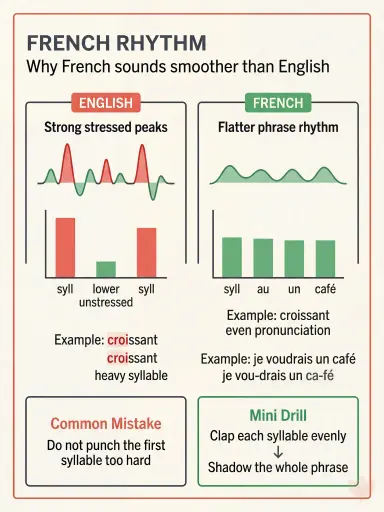
Shadowing trains your mouth and ear simultaneously by having you listen to native French audio and repeat it immediately, mimicking rhythm, stress, and liaison patterns phrase by phrase. It's ideal for intermediate learners whose pronunciation has plateaued despite grammar study. The real tradeoff: without a transcript, beginners often mishear and reinforce incorrect sounds, so pairing audio with a script is essential early on.
2. Self-Narration - Describe Your Daily Life Out Loud in French as It Happens
Self-narration means describing your actions in French as they happen: making coffee, commuting, cooking dinner. The technique forces you to bridge the gap between passive comprehension and active speech production, because you cannot narrate what you cannot retrieve. Vocabulary gaps surface immediately and memorably, far more so than in a flashcard session.
A practical format: set a two-minute timer each morning and narrate your routine entirely in French, noting every word you reach for but cannot find. Those gaps become your targeted review list for the day. This is also one of the clearest arguments for building a consistent daily habit rather than relying on long, infrequent sessions.
Fifteen minutes of self-narration every morning compounds in a way that a two-hour weekend session cannot, because the retrieval practice is spread across more waking moments and more real contexts. Mirror talk means speaking French while watching yourself in a mirror, which adds a visual feedback layer that audio-only practice removes. Watching your own mouth movements helps you correct the physical articulation of French sounds, the rounded "u," the nasal vowels, that feel unnatural to English speakers.
Research published in the Journal of Knowledge Learning and Science Technology found that visual self-monitoring during speaking practice reduces speaking anxiety, which matters because anxiety is the primary reason early-stage learners produce nothing at all. The honest trade-off: mirror talk builds comfort and accuracy but cannot tell you whether a native speaker would understand you. It is a confidence-building tool, not a fluency test.
Recording yourself is the most avoided technique in solo practice, and the most diagnostic. Hearing your own French voice played back reveals pronunciation patterns you cannot catch in real time: liaisons you are dropping, vowels you are flattening, rhythm that sounds more English than French. The format is simple: record a 60-second monologue on any topic, play it back once without stopping, then note two specific corrections.
Repeat the same monologue the next day and compare. Most learners skip this step entirely because the discomfort of hearing their own voice feels worse than the discomfort of not improving. Push through it once and the habit becomes straightforward.
For learners who want feedback that goes beyond their own ear, Parrot Back, the app's speaking practice feature, gives you a structured place to practise speaking confidently with content drawn from real native speakers, so the gap between what you produce and what native audio sounds like stays visible and actionable rather than invisible.
3. Mirror Talk - Build Comfort With Your Own French Voice and Mouth Movements
Speaking to your reflection removes the social anxiety of being heard while giving you visual feedback on mouth shape, facial expression, and body language, all of which affect French pronunciation, especially vowel sounds like 'u' and 'eu.' Research confirms mirror practice reduces speaking anxiety and encourages self-correction. The tradeoff is that without audio playback, subtle pronunciation errors in nasal vowels or liaison can go unnoticed and become ingrained habits.
4. Record and Review - Catch Pronunciation Errors Before They Become Habits
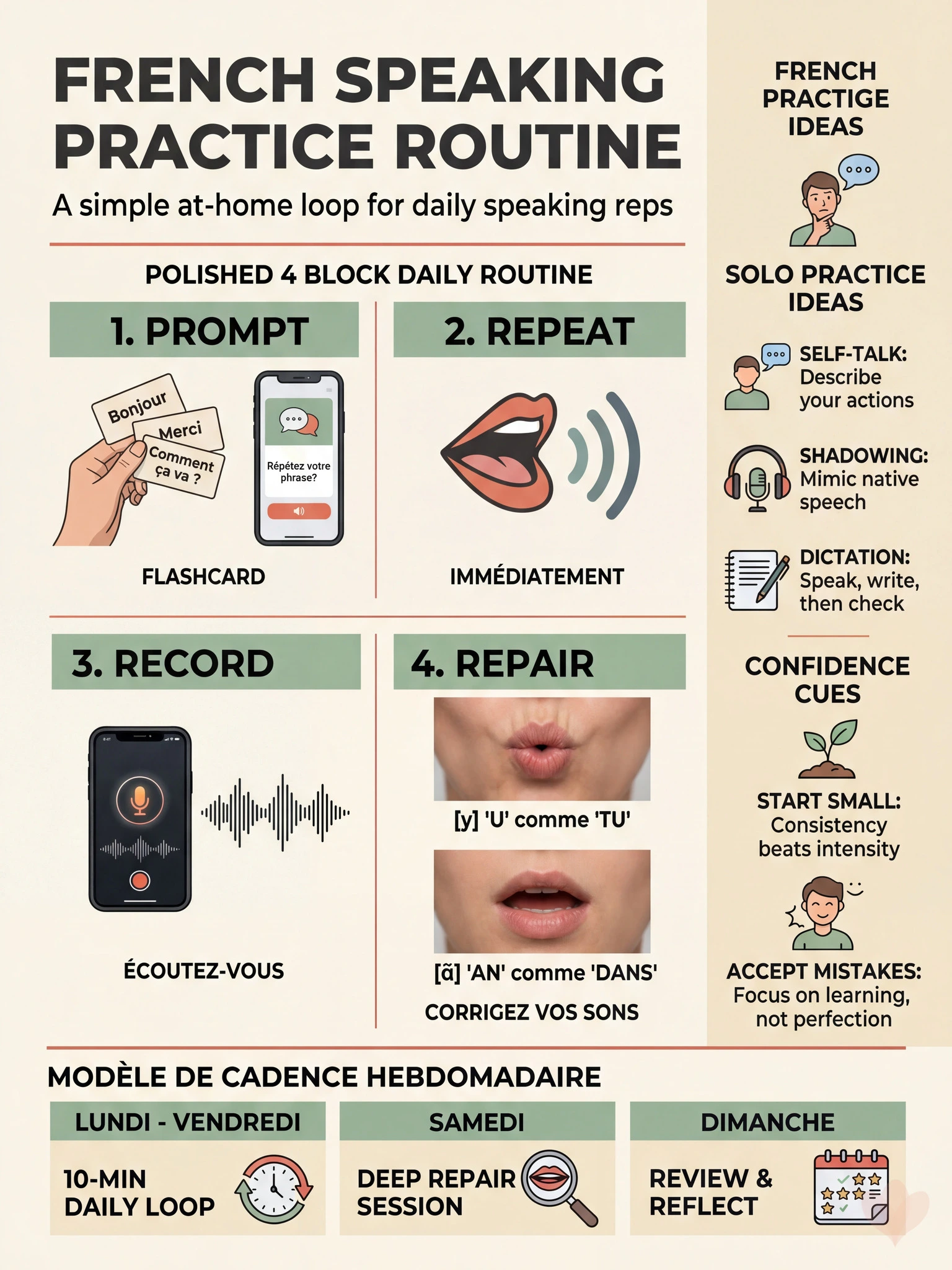
Recording yourself speaking French and playing it back creates an objective feedback loop that mirrors, inner monologues, and shadowing cannot provide. You hear exactly what a native speaker hears, misplaced stress, dropped liaisons, anglicized vowels, and can target one specific issue per review session. The key tradeoff is psychological: most learners find listening to their own voice uncomfortable, which causes them to avoid this technique precisely when it would help most.
5. Question-and-Answer Drill - Simulate Real Conversation Structure Entirely Alone

A question-and-answer drill means asking yourself a question in French, pausing, and answering it aloud. Write five questions the night before, then answer each one spontaneously the next day. This simulates the turn-taking structure of real conversation without requiring another person.
The constraint that makes it effective: no reading from notes during the answer. Spontaneous retrieval under mild pressure is what builds the automatic recall that real conversation demands. For learners who want to add native audio prompts to this structure, Parrot's Review Cards surface short French clips you can respond to immediately, fitting the drill into the gaps of a busy day without queuing up a podcast or hunting for a transcript.
Because the underlying content selection is governed by the Comprehensible Input Method, the prompts you get are calibrated to your level rather than randomly pulled, which means the mild pressure of the drill stays productive rather than demoralising. These five techniques give you everything you need to build a serious speaking habit without a single scheduled session or willing partner. The goal is to make speaking French a normal, low-friction part of your day, something that happens in fifteen minutes or less and accumulates into real ability.
Solo practice does have a ceiling that no amount of mirror talk can break through. The next section shows you how to add a real interactive layer to your French speaking practice without committing to a tutor, a calendar slot, or an awkward first call.
Interactive French Conversation Practice Methods That Don't Require a Scheduled Tutor
Interactive French conversation practice doesn't require a standing appointment. The real structural barrier isn't finding a native speaker; it's that most practice formats are built around synchronous availability: match with a partner, agree on a time, show up prepared. For adult learners whose free time arrives in 10-minute fragments, that model fails before it starts. The options below are ranked by scheduling friction, from lowest to highest commitment.
1. HelloTalk & Tandem - Asynchronous Voice Messaging with Native French Speakers
Language exchange apps connect you with native French speakers who want to learn your language, with zero scheduling required. Send a 30-second voice memo describing your day; a native speaker corrects your phrasing in their own voice memo back, on their own schedule. HelloTalk adds a social feed that lets shy learners browse and engage before committing to direct conversation, while Tandem functions more like a matchmaking service for focused one-to-one exchange.
That social-feed entry point matters more than it sounds: one of the most persistent struggles beginners face is feeling their French isn't "good enough" to start a real exchange at all. Being able to observe and react before speaking directly lowers that hesitation barrier in a concrete way. The honest trade-off: text drift is real.
Many exchanges slide into written chat rather than voice, so you have to actively choose the audio format every time to get speaking practice rather than a pen-pal thread. And traditional app habits compound this; learners conditioned by flashcard and drill-based tools often default back to passive, text-heavy interaction even inside platforms designed for speaking.
2. French Discord Servers - Drop-In Live Voice Channels for On-Demand Speaking Practice
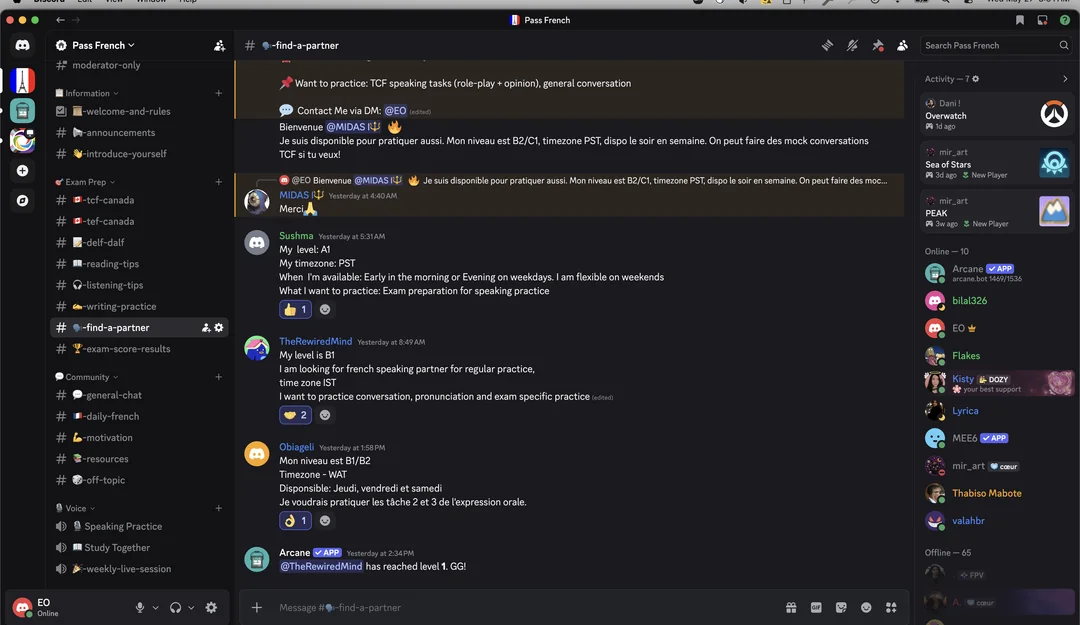
Drop-in voice channels on French Discord servers are the lowest-friction live speaking option available for online French speaking practice. The official French learning Discord server holds a large and active membership, meaning a voice channel is almost always open, whether you have 10 minutes during a commute or 30 minutes before bed. You can listen silently for the first few minutes before speaking, a genuine advantage for learners who feel their French isn't "good enough" yet to jump straight into conversation.
A related, underappreciated problem: even when beginners do engage with a native speaker one-on-one, the conversation tends to collapse quickly. Native speakers pick up on limited proficiency and, without meaning to be unkind, run out of conversational scaffolding to offer. A group channel sidesteps this dynamic because the pressure of sustaining a bilateral exchange is distributed across multiple participants.
The limitation: channel activity is uneven across time zones, and quieter servers can go days without a live voice session.
3. iTalki & LanguaTalk - Affordable Flexible One-on-One Video Sessions for Targeted Feedback
One-on-one video sessions on iTalki and LanguaTalk sit at the higher-commitment end of this list, but the scheduling model is far more flexible than traditional tutoring. Community tutors on iTalki are typically available at accessible price points per session, and booking a single session with no recurring commitment is standard practice. Learners who use drop-in sessions for targeted feedback, pronunciation correction, a specific grammar pattern, a job interview in French, consistently report more progress per hour than those who book recurring weekly slots without a clear agenda.
The trade-off is preparation: an unstructured one-off session without a focused goal often produces less usable output than a well-framed 20-minute async exchange. This is where the gap left by memorization-based study becomes most visible. Learners who have spent months on flashcard drills and repetitive lessons arrive at a live session underprepared for real-time output; they recognize words but can't produce sentences under pressure.
Active, speaking-focused practice before the session matters.
4. Essential French Conversation Starters - Question Structures to Use Immediately in Any Setting
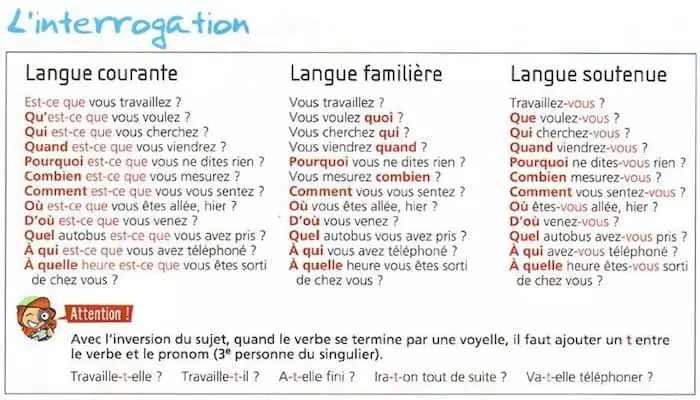
Before entering any live or asynchronous exchange, having a small bank of reliable French conversation starters eliminates the blank-mind freeze that kills practice sessions. Structures like 'Qu'est-ce que tu fais dans la vie ?' or 'Tu peux me corriger si je fais des erreurs ?' work across every platform and partner type. The tradeoff is that relying on fixed scripts too long can slow the development of spontaneous, unscripted speaking fluency.
5. French Conversation Groups & Community Practice - Meetup and Online Circle Formats
French conversation communities, both local Meetup groups and online circle formats like Speaky or organized Zoom conversation tables, sit at the highest scheduling friction on this list, but they offer something the other formats don't: the social pressure of a group setting that mirrors real-world French interaction. Finding native French speakers online through a structured group also produces more varied input than a single tandem partner, exposing you to regional accents and conversational registers. Across the market, structured community formats tend to produce more sustained engagement than one-to-one cold matches precisely because the group dynamic distributes conversational load.
The real limitation is consistency: group schedules are fixed, attendance fluctuates, and a quiet week can break the habit entirely. Learners who supplement structured group sessions with immersive listening practice between meetings, the kind that builds real-world comprehension rather than textbook pattern recognition, maintain momentum through those quiet stretches far more reliably than those who rely on group meetings alone. Every method in this section still asks you to carve out intentional time: to open an app, find a partner, or join a channel.
The next section removes even that friction by showing how replacing the passive scrolling you're already doing with French short-form video turns dead time into fluency-building immersion, no scheduling required.
Related Reading
How Long To Learn French
French Alphabet Pronunciation
How To Learn French Through Conversation
How To Learn French With Movies
Learning Resources For African French
How Replacing Passive Scrolling With French Video Immersion Builds Fluency Faster
Authentic native-speaker audio and video supply the phonological, prosodic, and contextual patterns the brain needs to produce speech, patterns that decoded grammar rules simply cannot replicate, according to a neuro-ecological critique of Krashen's input hypothesis published in Frontiers in Psychology. Parrot is built around this finding: its short-form video feed surfaces native-speaker content sequenced by the Comprehensible Input Method, so every video you watch builds listening comprehension and lays down the prosodic templates your speaking brain can draw on later.
The Comprehension Sweet Spot for French Video Immersion
The i+1 principle, first articulated in Krashen's Input Hypothesis, holds that acquisition happens when input is slightly beyond your current level: understandable enough to follow, but containing enough unfamiliar elements to push growth. In concrete terms, a learner at A2 level will find most unscripted news broadcasts too dense, but a 90-second French cooking or lifestyle clip, with visual context filling the gaps, often lands right in the zone. One honest limitation: if you are a complete beginner, even short-form native content will sit above i+1, and frustration replaces acquisition. You stay in the comprehension window that the Frontiers in Psychology neuro-ecological analysis identifies as the engine of acquisition, rather than sliding below it into confusion.
Passive Background Listening vs Engaged Viewing and the Difference That Determines Whether You Improve
Not all exposure to French audio is equal. The Frontiers in Psychology neuro-ecological analysis is direct on this point: passive reception of input is insufficient, and engaged, active processing of authentic language content is a neurologically distinct and more effective pathway to spoken fluency. That distinction shapes how Parrot is designed to be used. !Person watching French cooking video on phone, sound waves flowing toward their ear
Passive background listening builds familiarity
Engaged viewing builds production
Engaged viewing means looking at the speaker's face, noticing mouth shape and breath patterns, and repeating phrases aloud immediately after hearing them
That last step, shadowing what you just heard, is where listening to native French content converts into speaking practice
Without it, the input stays input
Replacing passive social-media scrolling with French short-form video does not add study time; it converts time you were already spending on screens into the active phonological and prosodic exposure that the neuro-ecological research identifies as neurologically necessary for speech production. That is the practical promise of the approach Parrot is built on.
How Parrot Back Turns Your Scroll Habit Into Daily French Speaking Practice
A substantial block of daily mobile screen time already exists in your schedule. The question is whether the time you're already spending is doing any work. Most learners treat their phone as the enemy of progress, something to put down before the "real" studying begins.
The hidden cost of that framing is steep: adults in the US spend over 3 hours per day on mobile devices, with a significant portion absorbed by passive short-form video scrolling. That's the highest-frequency language exposure window in your day, and it's currently producing zero spoken output. Parrot Back speaking practice closes that loop by embedding a repeat-aloud prompt directly inside the short-form video format, turning the phone already in your hand into a French speaking coach.
Why Saying It Out Loud Moves the Needle
Listening to French and speaking French engage the brain differently. Those are different cognitive pathways, and as the output research established earlier in this article, one cannot substitute for the other.
Key takeaway: Learners who speak aloud during input retain spoken forms at significantly higher rates than those who listen only, because hearing a phrase and immediately echoing it forces your mouth, not just your ears, to encode the pattern.
How Parrot Tracks Speaking Progress Instead of Login Streaks
Streak-based apps measure consistency of login, not growth in spoken ability. Parrot Method progress is measured by how much spoken output you produced. That said, Parrot Back is most effective for learners who already have some French exposure.
Complete beginners may find the repeat-aloud mechanic moves faster than their comprehension can support. If that describes you, a few weeks of basic listening exposure will make the method click far more readily. The next section hands you a concrete day-by-day solo speaking challenge so you leave this article with a plan already in motion, not just a list of intentions.
Next steps
If your spoken French stays frozen because there is no partner available to practice with, the path forward starts with building output into time you are already spending, not time you have to find. Start with our learn Spanish.
Passive comprehension and active speech production are separate cognitive pathways, which means months of listening and reading cannot substitute for the pushed output that actually builds speaking ability. Small, consistent actions attached to existing contextual cues, such as a scroll session, compound into automaticity at a rate that weekly study blocks can never match. Together, those two realities point to one practical move: swap the feed you are already scrolling for native French video, shadow what you hear out loud, and let repetition do the work that willpower cannot.
Start building that habit by trying Parrot, where the short-form video feed and built-in Parrot Back speaking feature sit inside the same scroll session you already have, so the first speaking rep costs nothing extra to schedule.
Frequently Asked Questions
Does shadowing actually work if I don't have a transcript to follow along with?
Shadowing works best when you pair audio with a script, without one, you risk mishearing too many words for the technique to be productive. The post recommends pausing every two to three phrases and echoing before moving on, which is what shifts shadowing from passively useful to genuinely productive.
Can I really practice speaking French by talking to myself, or do I need someone to respond?
Yes, solo speaking activities like self-narration, shadowing, and repeating aloud are fully valid output practice because a partner is not required to trigger the noticing and hypothesis-testing functions that build fluency. A practical way to start is setting a two-minute timer each morning and narrating your routine entirely in French, noting every word you reach for but can't find.
How does the question-and-answer drill work when there's no one to ask me questions?
You write five questions the night before and then answer each one spontaneously the next day, out loud and without reading from notes. The key constraint is spontaneous retrieval under mild pressure, which is what builds the automatic recall that real conversation demands, no partner needed.
I understand French pretty well already, why can't I just keep listening and reading until I'm ready to speak?
Understanding French and being able to speak it draw on separate neurological processes: listening activates semantic processing, while speaking forces syntactic processing, the kind that builds the grammatical scaffolding needed to produce a sentence under pressure. As Swain's Output Hypothesis makes clear, passive input never triggers the pushed output mechanism that closes this gap, so comprehension is a necessary foundation but not a sufficient one.
Is it true that short daily practice sessions are better than one long weekly session?
Yes, spaced repetition research cited in the post is direct on this: daily micro-practice, even five minutes, outperforms a two-hour session once a week on fluency maintenance. Skipped days don't just pause progress; they quietly reverse it, because spoken fluency is closer to a physical skill than a stored fact.