
Most French books build readers, not speakers. Here are the ones worth your time, and the format trap to avoid before you pick one.
Finishing a French grammar book feels like progress. The exercises are ticked, the conjugation tables are highlighted, and the confidence is real. But the common assumption is that the right book, studied thoroughly enough, will eventually unlock the ability to speak French.
Yet the moment a native speaker opens their mouth at normal speed, that confidence evaporates. This is a format problem, and understanding it is the first step toward fixing it. See our learn Spanish for how this works in practice.
The brain treats reading French and speaking French as genuinely different tasks. Recognizing a correct sentence on a page and producing one under pressure draw on separate neural pathways. You can build strong reading comprehension and still have speaking circuits that are almost entirely untrained.
That gap is wider than most learners expect, and no amount of extra chapters closes it. Receptive skill and productive skill are not the same thing. According to The Language Gym's December 2025 analysis, comprehension-based study does not automatically wire the neural pathways required for real-time spoken output.
The same research notes that explicit grammatical knowledge, the kind books specialize in, does not automatically convert into the procedural, automatized knowledge fluent speaking demands. A learner who completes a beginner French book cover to cover and then freezes when a native speaker says "Comment ça va?" is not failing because they studied the wrong rules.
They are failing because recognition was never going to produce speech on its own. The Language Gym also identifies sporadic study as a central barrier: infrequent sessions prevent the automatization fluent speaking requires. Books demand a cleared desk and a 30-minute block.
Those conditions are rare for anyone with a real schedule, so sessions slip, weeks pass, and progress stalls not because the learner gave up, but because the format requires conditions that busy lives rarely deliver. The problem is knowing which books are worth your limited time and which ones will quietly waste another month. That is exactly what the next section cuts through.
Key takeaways
Finishing a French grammar book feels like progress, but the moment a native speaker talks at normal speed, that progress disappears, and the book is not to blame for what it was never designed to do.
Format mismatch kills more French learning attempts than lack of motivation: a five-star grammar reference is a lookup tool, not a path to spoken fluency.
Absolute beginners almost universally reach for the thickest, most comprehensive book available, which is exactly the format least suited to getting them speaking.
The B1 plateau hits hardest because intermediate learners have exhausted what structured reading can give them, yet keep reaching for more books instead of changing the input type.
Grammar references earn their shelf space only when treated as on-demand references, not cover-to-cover curricula.
Even French books bundled with audio or companion apps were designed for a desk, the gap between 'has an app' and 'usable during a commute' is wider than the product descriptions admit.
The recognition-production gap is a neuroscience problem: your brain reads French far better than it speaks it because reading and spontaneous speech recruit different cognitive pathways that drills don't train.
Parrot (parrotapp.com) closes that gap directly, short-form French video content delivers comprehensible input the way the brain actually acquires spoken language, converting book knowledge into real conversation without adding another grammar chapter.
How to Choose the Right French Book Before You Waste Another Month
In reality, format mismatch kills more French learning attempts than lack of motivation ever will. A five-star rating on a grammar reference tells you nothing about whether that book fits your goal, your schedule, or the way your brain actually acquires spoken language.
The 80/20 Filter - Does This Book Target the French You'll Actually Use First?
If the first third of a beginner book is devoted to subjunctive mood rules and irregular verb tables, it is optimizing for written accuracy rather than conversational survival. A book built around the 80/20 rule front-loads greetings, common verbs, and practical sentence patterns. If you cannot picture yourself using the content in a conversation within the first two weeks, the book is not targeting the French you need first. That gap between word recognition and sentence comprehension is a reliable sign of a level mismatch, not a sign that the learner lacks ability. Choosing the right level from the start is the single most protective decision a beginner can make.
Three Criteria for Choosing a French Book That Fits Your Life
Reaching A2 conversational threshold requires a meaningful investment of study hours. A book demanding 45-minute daily sessions sounds reasonable until week three, when life intervenes.
Image: French phrasebook hitting bullseye target surrounded by mismatched grammar books on desk
Audio availability matters: Format alone produces measurably different acquisition outcomes.
Check the exercise-to-explanation ratio: Four pages of grammar rules with two practice sentences is a reference guide, not a learning tool.
Confirm the stated level matches your actual level: Beginners routinely abandon books labeled "for French learners" that silently assume B1 knowledge.
The overwhelm of choosing is real, too.
The sheer volume of French learning resources, apps, books, YouTube channels, SRS tools, podcasts, creates a paralysis that sends many learners back to whichever option they found first, regardless of fit.
The filter below is designed to cut through that noise and anchor the decision on what you actually need.
Match Your Goal to the Right Book Type Before You Scroll the List
Use the table below to find your match before reading the full reviews.
Conversational speaking → Best book format: Dialogue-heavy, audio-paired book → Key feature to look for: Built-in audio + output exercises → Avoid: Grammar-only references.
Reading comprehension → Best book format: Graded reader → Key feature to look for: Level-labelled texts (A1–B2) → Avoid: Phrasebooks.
Travel survival → Best book format: Situation-organised phrasebook → Key feature to look for: Topic chapters (airport, restaurant) → Avoid: Dense grammar primers.
Grammar mastery → Best book format: Reference guide + workbook → Key feature to look for: Exercise-to-explanation ratio → Avoid: Cover-to-cover commitment.
Vocabulary building → Best book format: CEFR-aligned wordlist + SRS → Key feature to look for: Frequency ordering → Avoid: Random topic lists.
Stracke, Nguyen & Nguyen's 2023 study in ReCALL found that learners relying on a single modality without complementary interactive components faced significantly higher abandonment risk. This is the core delivery mechanism of the entire app, during a commute, over lunch, or before bed. The Comprehensible Input Method governs how content is selected and sequenced for each learner, which means the listening exposure stays calibrated to actual level rather than defaulting to material that is too advanced or too simple. The next section applies this four-point filter to the most-recommended beginner French books so you can see, at a glance, which one was built for someone exactly like you.
What Are the Best French Books for Absolute Beginners with No Prior Knowledge
Applying that filter to the most-recommended titles cuts the wall of options down fast. What remains exposes a pattern worth noting before diving into individual picks: absolute beginners almost universally reach for the thickest, most comprehensive book on the shelf, and that instinct is exactly what stalls progress before it starts. Part of the problem is structural: finding a clear, consolidated starting point is genuinely difficult, and the scattered, contradictory advice beginners encounter early on makes it harder to trust any single recommendation.
The books that actually move beginners forward are engineered to sequence concepts so each lesson makes the next one feel obvious, not impossible. The picks below are ranked by how well they protect a true beginner from the overwhelm that kills most self-study attempts in the first few weeks. The Goodreads community consistently recognizes Easy French Step-by-Step for its methodical, progressive structure, and self-taught adult learners on Amazon rate it among the highest of any beginner French resource, specifically because it removes the guesswork about where to start.
That social proof matters, but it comes with a nuance worth naming: learners rate these books for reducing overwhelm and building reading comprehension, skills the books genuinely deliver. The same grammar-forward, building-block structure that earns five stars for clarity is precisely what trains the brain into a "read and translate" habit. That habit actively competes with the automatic, spontaneous output real speech demands.
Keep that tradeoff in mind as you read through the list below.
Parrot App - Best for Beginners Who Learn by Listening and Watching
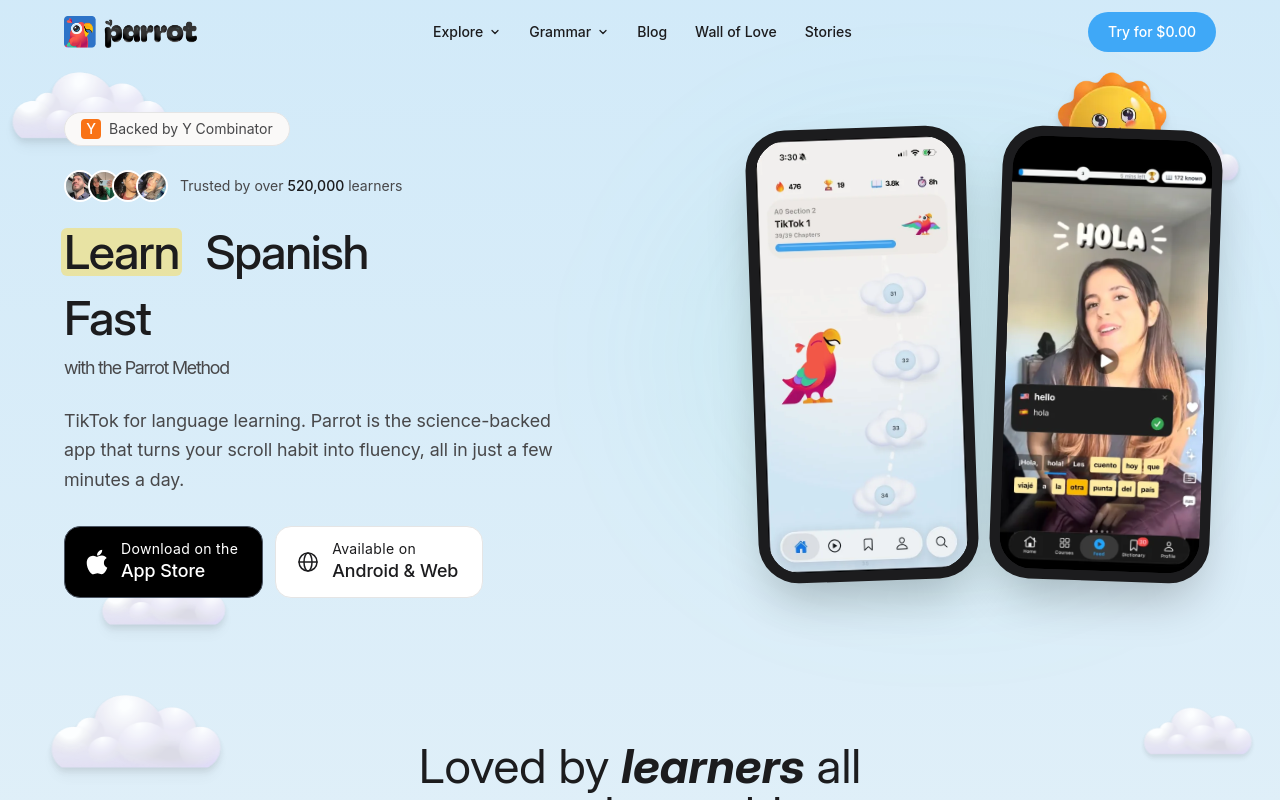
Parrot is most effective when used alongside a structured grammar primer. Learners who pair a grammar book with short-form comprehensible input practice report faster progress from recognition to production, consistent with Krashen's Input Hypothesis and Swain's Output Hypothesis, both cited in the research sections of this post.
Every book on this list is silent. They can show you how a verb conjugates, but none of them can make you hear how a native speaker says it in a rushed, real-world sentence. That gap is where many beginners stall: they finish a grammar chapter, feel confident on paper, then hear a native speaker and understand almost nothing.
Parrot bridges that gap by delivering a short-form video feed of real spoken French built around the Comprehensible Input Method, content matched to beginner level so grammar rules absorbed from any book below get immediately reinforced through the listening and context the brain uses to actually acquire language. Two features make the listening practice immediately actionable rather than passive. First, video transcripts displayed alongside video content, with inline translation support, so learners can read what they hear and look up unfamiliar words in context without leaving the feed.
You can check meaning in the moment, then re-watch and listen without looking, building real comprehension rather than gap-filling. Second, the Parrot Back speaking practice feature moves learners from recognition to production: after watching, you practice producing the language rather than just absorbing it, which is the step most self-study tools skip entirely. Most beneficial when used alongside any structured grammar primer on this list, and especially well-suited for beginners who have found memorization-based approaches leave core concepts feeling slippery even after repeated drilling.
1. Easy French Step-by-Step - Best Structured Grammar Primer for True Beginners
Easy French Step-by-Step by Myrna Bell Rochester uses a logical, methodical approach that builds grammar foundations without overwhelming jargon, introducing core sentence structures before layering in vocabulary in context. It is the closest thing to a self-study classroom available in print, and the sequencing is tight enough that a beginner who has no instructor can follow it without getting lost. The tradeoff: it is grammar-first by design, which means listening and speaking practice require a separate resource from day one.
Parrot's short-form video feed pairs cleanly here; grammar learned from this book gets immediate spoken reinforcement, and the transcript-on-every-video feature means you can look up any word that appears in natural speech without breaking your viewing session. Practice Makes Perfect: Complete French All-in-One by Annie Heminway consolidates grammar, vocabulary, reading, and writing into a single volume, combining seven individual books covering grammar, verbs, sentence builders, and pronouns, along with hundreds of practical exercises for self-study. For a learner who cannot afford a tutor and does not want to buy multiple books, the value is real, and for anyone who has struggled to find beginner French resources in local physical stores, a single comprehensive volume that ships reliably solves a practical problem immediately.
The limitation is weight, both physical and cognitive: at this size, it rewards disciplined chapter-by-chapter use rather than cover-to-cover commitment, which many beginners underestimate. French All-in-One for Dummies by the Experts at Dummies bundles several mini-books in a lighthearted, approachable style, using plain-language explanations, cultural notes, and a conversational tone rather than dense grammatical terminology. It is the right pick for adult learners who froze up in a high-school language class and carry that anxiety into self-study.
The tradeoff is depth: the accessible tone occasionally sacrifices grammatical precision, so learners who want rigorous structure will outgrow it faster than the other picks here.
2. Practice Makes Perfect - Complete French All-in-One - Best Comprehensive Single-Volume Reference
Annie Heminway's Complete French All-in-One covers grammar, vocabulary, and reading comprehension in one hefty volume, earning a 4.5-star rating across hundreds of reviews. It works best as a thorough reference that beginners can return to repeatedly rather than a cover-to-cover course. Reddit learners note it introduces concepts broadly rather than progressively, so retention can suffer without supplemental practice, treat it as an anchor reference, not a sole learning tool.
3. French for Dummies All-in-One - Best Low-Intimidation Option for Anxious Adult Beginners
French for Dummies All-in-One strips away academic formality with a conversational, often humorous tone that makes grammar feel approachable rather than daunting. It's the go-to pick for adult beginners who bounced off dry textbooks or feel self-conscious starting a language later in life. Coverage spans pronunciation, everyday vocabulary, and travel phrases. The tradeoff is depth, it skims some grammar points that more serious self-studiers will eventually need to revisit elsewhere.
4. Assimil French With Ease - Best for Beginners Who Want Story-Driven Immersion
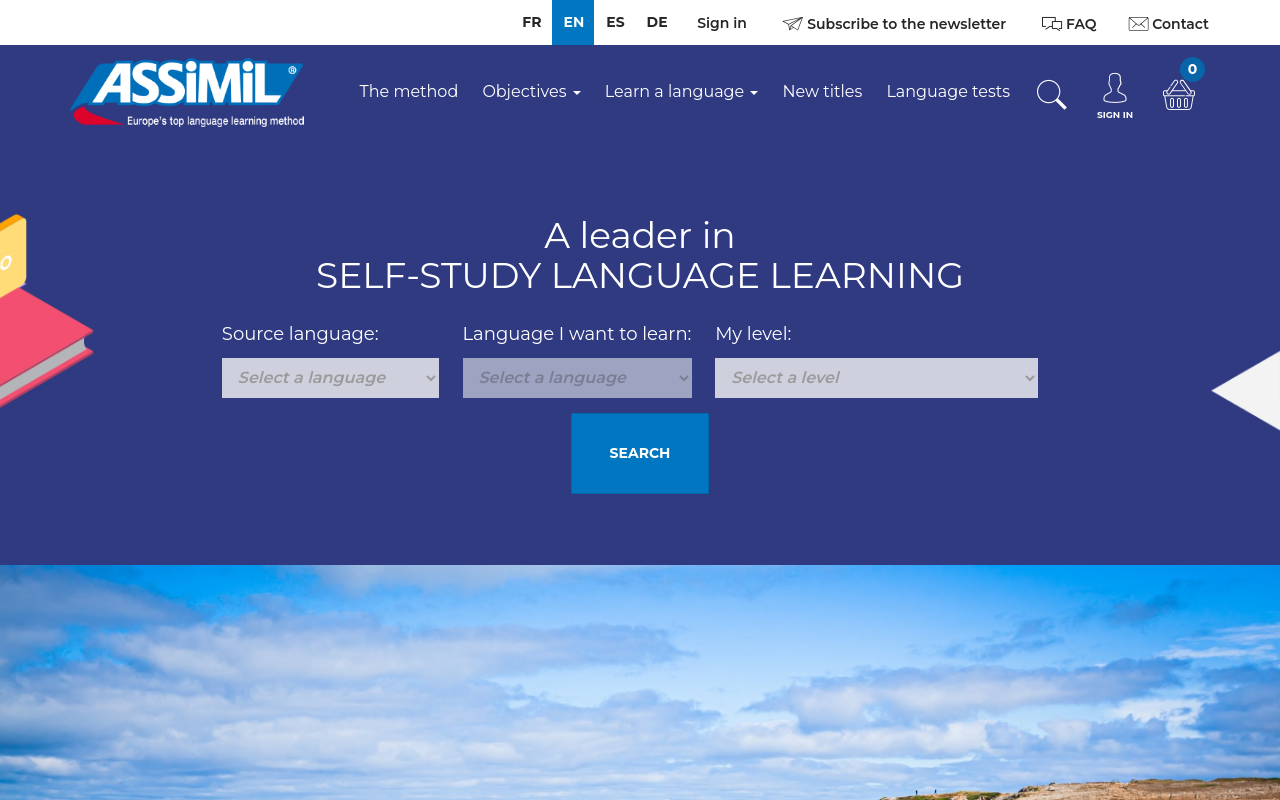
Assimil French With Ease takes a different path entirely: instead of grammar tables, it uses short dialogues and a passive-then-active wave method, asking learners to absorb patterns through story and repetition before they are expected to produce them. The accompanying audio is central to the method and not optional, which makes it the most listening-integrated print option on this list. The real tradeoff is pacing: Assimil's gentle, dialogue-driven approach can feel slow to learners who want explicit grammar rules explained upfront.
7. Grammaire Progressive du Français - Best for Beginners Ready to Think in French from Day One
Grammaire Progressive du Français at the beginner level is the pick for learners who want explanations written in French from the first page, a deliberate choice that forces comprehension-in-context rather than translation. It is widely used in French classrooms internationally, and its three-column layout (rule, example, exercise) keeps each concept self-contained and testable. Not ideal if you need English scaffolding to feel confident; very effective if you are willing to sit with a little productive discomfort from the start.
8. Barron's 501 French Verbs - Best Dedicated Verb Reference for Self-Studying Beginners

Barron's 501 French Verbs is not a course; it is a lookup tool that earns its place on a beginner's shelf the moment verb conjugation becomes the bottleneck, which happens faster than most new learners expect. Every verb entry is fully conjugated across all tenses and moods, making it faster to check a form than to search online. The limitation is obvious: it teaches nothing about how to build a sentence or when to use a tense, so it works best as a companion to a structured primer like Easy French Step-by-Step, not as a standalone starting point.
The six book picks above give any absolute beginner a clear, frustration-mapped starting point. Once that initial foundation is in place, the next question is where to go deeper without getting lost in a grammar rabbit hole. The next section tackles exactly that: how to use comprehensive grammar and reference guides as precision lookup tools rather than cover-to-cover commitments that kill motivation before page 100.
What Are the Best Comprehensive Grammar and Reference Guides for French Learners
Serious French learners accumulate a small, specific shelf of reference books, and they return to those books for years, not weeks. The difference between a useful reference and a shelf trophy comes down to one thing: knowing that these books are lookup tools, not curricula.
Why Grammar References Work Best as On-Demand Lookup Tools Not Cover-to-Cover Reads
Reading a grammar reference from cover to cover feels productive, but in practice it is one of the fastest ways to kill motivation. A learner who cracks open a reference to answer one specific question that just surfaced in real input, then closes the book again, retains that rule far better than someone grinding through chapters in order. This matters especially for returning learners: verbal fluency can recover through immersion relatively quickly, but grammar knowledge deteriorates significantly, creating a specific need for structured reference tools rather than another cover-to-cover read.
The gap is real: you may follow a conversation reasonably well before you can reliably recall which subjunctive ending belongs where. The practical takeaway is straightforward: use reference books the way a chef uses a knife-skills manual: pull it out when a specific technique stumps you, not as a daily reading assignment.
Bescherelle La Conjugaison, the Verb Bible That Even Native French Speakers Keep on Their Desk
It covers complete conjugation tables for over 12,000 French verbs across every tense and mood, making it the definitive desk resource for students and native speakers alike. That last point is worth pausing on: this is not a learner-simplified summary. It is the same authoritative reference native speakers reach for when they need to verify a form.
You can find the print edition on Amazon UK or download the Bescherelle La Conjugaison app on Google Play to carry that authority in your pocket. The trade-off is real, though: Bescherelle documents verb forms exhaustively, but it does not teach you to produce them under the millisecond pressure of a live conversation. Knowing that vouloir conjugates a particular way in the conditional and firing that form automatically mid-sentence are two entirely separate cognitive achievements.
Bridging that gap is where a tool like Parrot's Flight School becomes a natural complement. Rather than presenting rules in isolation, Flight School is built on the Comprehensible Input Method, which governs how content is selected and sequenced for each learner. Every short-form video session surrounds the structures Bescherelle defines with real spoken French, so a conditional form you looked up yesterday starts appearing as something your ear already recognizes, not as an entry you memorized.
For learners who have built baseline comprehension and are ready to begin producing spoken output, Parrot Back (speaking practice) extends that further, moving the rule from a page you consulted to language you can actually use.
La Grammaire Progressive du Français, the Classroom-Proven Guide with Explanations and Exercises Side by Side
La Grammaire Progressive du Français is the best self-study grammar guide for learners who want explanation and practice in the same session. Its structure is deliberate: grammar explanation on the left page, exercises on the right. That pairing means you never have to flip between chapters to apply what you just read.
Language schools worldwide adopt it precisely because that layout removes friction. It works best for A1 to B2 learners who want structure without the intimidation of a purely academic reference. One persistent concern among learners at this stage is acquiring "textbook French," forms that are technically correct but bear little resemblance to how native speakers actually talk.
A layout-driven grammar guide is an excellent foundation, but pairing its exercises with immersive, native-speaker video content is how learners move from rule-correct to naturally fluent. Parrot's short-form video feed is built for exactly that transition: listening practice drawn from real speech, not scripted textbook dialogue, so the grammar you just drilled appears in the rhythm and register of actual conversation.
English Grammar for Students of French, the Fix for Learners Who Blank on Terms Like Subjunctive or Partitive
A recurring problem: a learner opens a French grammar book, hits the word "partitive," and realizes they have no idea what that means in English either. English Grammar for Students of French by Jacqueline Morton solves this directly. It works through English grammatical concepts first, then maps them onto their French equivalents, so you are never trying to learn two unfamiliar things at once.
If you already know what a subjunctive clause is, skip it. But for learners who studied English intuitively and never learned its formal grammar, this reference removes a hidden obstacle that stalls progress at every level. Learners commonly conflate literary reading with grammar reference study, treating a novel in French as a substitute for explicit structural instruction, and this book is a corrective for exactly that confusion.
The Ultimate French Review and Practice, the Bridge Book for A2 to B1 Learners Closing the Gap
David Stillman and Ronni Gordon's The Ultimate French Review and Practice is designed for learners who have cleared the basics but keep hitting the same structural errors. Gordon targets exactly that gap, focusing on English-to-French translation nuances where interference from the learner's first language causes the most consistent errors. The exercises are cumulative, making it highly effective as a focused remediation resource for a learner who has identified a specific weakness. At some point, though, even the most diligent reference user will notice diminishing returns.
The clearest signal is that you stop finding answers. The rules you look up are ones you have already looked up before, and the problem is no longer comprehension but activation. A learner who reaches that point has built a solid passive knowledge base.
The next honest question is whether that knowledge is activating in real spoken output, or staying on the page where it was learned. Even the best grammar reference answers "how does this rule work?" But it leaves a silence where "can I use this rule mid-conversation?" should be. That silence is where dedicated speaking and listening practice takes over.
The next section answers exactly that: which books are built for learners who have cleared the beginner stage and need something that pushes them toward real B1 to C1 production.
Related Reading
French Language Learning Resources
Best App To Learn French For Travel
Best Books To Learn French
How Long To Learn French
French Alphabet Pronunciation
How To Learn French Through Conversation
How To Learn French With Movies
Learning Resources For African French
How To Conjugate Re Verbs In French
What Are the Best French Books for Intermediate and Advanced Learners (B1–C1)
It is a format problem, and the intermediate stage is exactly where it bites hardest.
Why Intermediate Learners Hit a Wall That Beginner Books Never Warned Them About
The B1 plateau is not a mystery. No book, however advanced, can force that transfer on its own, because the transfer mechanism is spoken output practice. A B1 learner who can conjugate every tense in writing but goes blank under conversational pressure is undertrained in active use, not grammar.
Vocabuo identifies active recall and spoken practice as the primary mechanisms for moving vocabulary from passive recognition into fluent use. There is a compounding problem that most intermediate learners recognise immediately: at B1–B2, you can often identify individual words in a sentence but still cannot parse full, real-world French text, a news article, a blog post, a native-speaker conversation moving at natural speed. The words are familiar in isolation; strung together under real communicative conditions, they blur.
It is an exposure deficit: not enough contact with comprehensible, native-paced language in the formats where it actually lives.
The 3 Intermediate-to-Advanced Books That Actually Push You Toward Production
The best French books for intermediate learners share one structural feature: they force you to produce language, not just read about it. Communication Progressive du Français (B1–B2) pairs dialogue and authentic text directly with structured production tasks, so every grammar point is immediately tested through output rather than explained and left sitting on the page. Intermediate learners consistently report it as the first book that made grammar feel usable rather than theoretical.
Ultimate French Review and Practice (McGraw-Hill) earns strong ratings among B1–C1 self-studiers because its exercise density is high relative to explanation length. More output reps per hour means faster procedural consolidation, so it is most useful when a learner already has a grammar reference and needs volume practice. For vocabulary, CEFR-aligned wordlists give intermediate learners a precise tool to audit exactly which words sit between their current level and their target level.
Pairing a CEFR wordlist with spaced repetition is the most direct route to closing the B1–B2 vocabulary gap systematically. One real constraint worth naming: B1–B2 learners frequently struggle to find fiction they can read without looking up every other word, which makes text-based immersion feel punishing rather than motivating, and no standard book series has solved that problem cleanly. The single most useful filter is the output ratio: count the pages of explanation versus the pages of production tasks.
If explanation dominates, the book trains passive recognition, which is already what got you stuck. A second filter is audio integration. Broader research on the intermediate plateau frames the core bottleneck as the gap between knowing the language and being able to use it spontaneously, and that gap is widest in listening and speaking, not reading.
The feature almost none of the books include is real listening-and-response practice under time pressure, which is where tools designed around the full input-to-output loop become necessary supplements. Listening practice alone does not close the output gap that teams researching language acquisition identify as the core mechanism of the plateau, which is why the most effective approaches combine structured listening with forced spoken response. That combination is designed for learners who have struggled with traditional memorisation-based methods and need a research-backed alternative that trains the full input-to-output loop.
Intermediate learners also face a resource fragmentation problem: no single book covers all aspects of French learning at the intermediate-to-advanced level, so most learners end up stitching together a grammar reference, a vocabulary tool, an audio course, and a conversation partner, four separate workflows that rarely reinforce each other.

Which French Learning Books Include Audio Support or Companion Apps
Many French learners study during commutes or lunch breaks, yet most French learning books with audio support were designed for a desk, not a subway car. The gap between "this book has an app" and "I can actually use this on the go" is wider than the product descriptions suggest.
What the McGraw-Hill Companion App Bundled with Practice Makes Perfect Actually Gives You
The companion app runs on iOS, Android, and desktop, and it bundles vocabulary flashcards, exercise answer keys, and a self-testing record-and-replay function that lets learners compare their pronunciation against native-speaker audio. Each lesson is also built to finish in a short session, so the book and its audio layer are compatible with a commute or a lunch break. The honest trade-off: the app's audio is anchored to exercise answers and pronunciation checks, so it is not designed to drive the session the way a dedicated audio program does.
Dedicated audio programs like Pimsleur are built around continuous listening from the first minute. You hear a phrase in context, respond under mild time pressure, and hear it again, a sequence that builds recall speed and trains pronunciation through repetition, and that many learners find effective precisely because the audio drives the session rather than waiting for them to press play. The trade-off is that learner-controlled audio does not replicate the mild retrieval pressure of a timed audio prompt, a pressure that can accelerate the transition from recognising a word to deploying it automatically.

Why Even the Best French Books Alone Won't Make You Fluent in Real Conversations
Hundreds of hours with grammar books, a shelf full of French resources, and you still go blank the moment a native speaker asks you something off-script. That gap, the one no format upgrade has closed, is a format problem, and the neuroscience explains exactly why.
The Recognition-Production Gap - Why Your Brain Reads French Better Than It Speaks It
According to a 2025 neuro-ecological critique published in Frontiers in Psychology, text-based, grammar-first study activates declarative memory systems, while fluent speaking draws on procedural memory networks that only consolidate through active spoken output and real-time interaction. The moment you can read French comfortably and recognise grammar patterns confidently, your brain has deeply entrenched a recognition-and-translation habit. That habit is a direct neurological competitor to the automatic, sub-second retrieval that conversation demands. For reading comprehension, that investment keeps paying dividends, but for spoken fluency, the gain curve flattens.
What Comprehensible Input Research Actually Says About How Spoken Fluency Is Acquired
Comprehensible input is necessary, but it is not sufficient. Stephen Krashen's Input Hypothesis holds that the brain acquires language through contextualised listening and reading at a level just above current ability. But broader trends in acquisition research argue that input alone cannot activate the full neural circuitry for production; the brain also requires forced output and genuine interactive pressure to automate speech. Merrill Swain's Output Hypothesis, established in 1985, reached the same conclusion: producing language, not just consuming it, is what pushes acquisition forward. Learners who log hundreds of passive hours and still freeze mid-sentence are failing because their study format never once required them to generate spoken French under real pressure.
The Format Problem - Why 10-Minute Gaps Are Where Real Acquisition Happens
Books require a desk, sustained attention, and blocks of time most busy learners cannot reliably protect. Conversational practice can happen in the margins of a day, and those margins are precisely where spoken fluency is built. The two formats serve different cognitive functions:
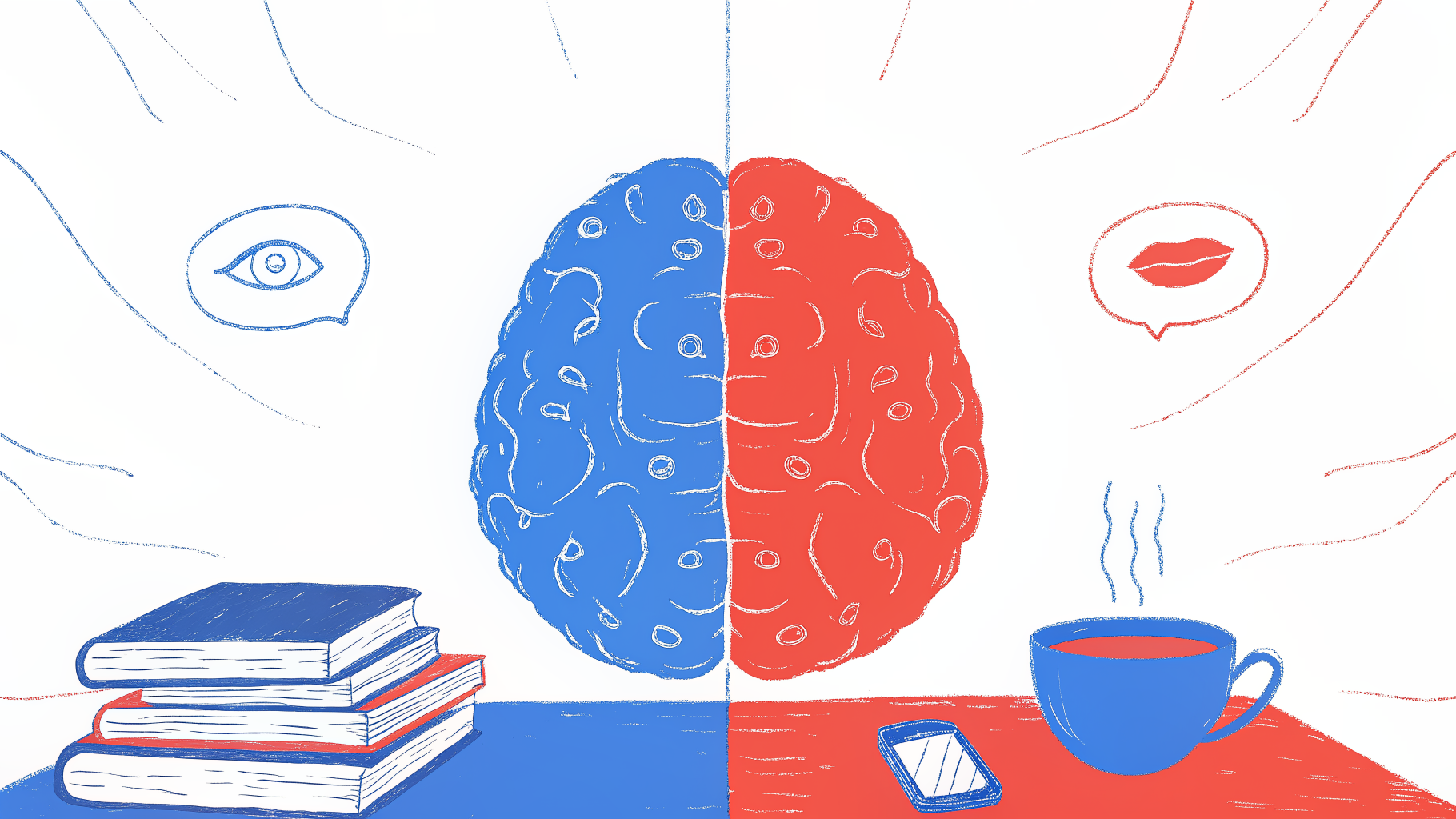
Short-form immersive practice builds conversational fluency faster than books, but it is not a substitute for the reference depth a grammar guide provides when you need to understand why a structure works.
Books provide that reference depth but were never designed to build the spoken-output habit that real conversation demands.
You do not need to abandon the books already on your shelf.
You just need to add the one practice layer they were never designed to provide.
Next steps
If your months of book study have left you confident on paper but silent in real conversation, the path forward starts with recognizing that the format, not the effort, is the bottleneck. Start with our learn Spanish.
The recognition-and-translation habit your brain builds through successful book study is a direct neurological competitor to automatic spoken retrieval, meaning more reading after you reach comfortable comprehension actively widens the gap rather than closing it. The B1 plateau works the same way: it is not caused by a grammar knowledge gap but by the brain's failure to transfer passively accumulated rules into the procedural system that real-time speaking demands, and no book can force that transfer. Together, those two realities point to one action: adding a spoken-output practice layer to the reference tools already on your shelf, not replacing them, but giving book knowledge somewhere to go.
Start with Parrot's short-form comprehensible input feed, which sequences real native-speaker content to your current level automatically. From there, Parrot Back moves you from listening into production, so the grammar you already know stops living only on the page.
Frequently Asked Questions
What is the best book to learn French for beginners?
There is no single best book for every beginner, the right pick depends on your goal, schedule, and learning style. The post recommends pairing a structured grammar primer like Easy French Step-by-Step with a listening resource like Parrot, since every book on the list is silent and cannot train the spoken-French circuits the brain needs for real conversation.
Why do I understand French grammar but freeze when a native speaker talks to me?
This is a format problem, not a willpower problem. Recognizing a correct sentence on a page and producing one under pressure draw on separate neural pathways, so strong reading comprehension does not automatically wire the circuits real-time speaking demands. Explicit grammatical knowledge, the kind books specialize in, does not automatically convert into the proceduralized, automatized knowledge fluent speaking requires.
What are the A1, A2, B1, B2, C1, C2 French levels?
These are levels from the CEFR (Common European Framework of Reference for Languages), a standard scale used to describe language ability from complete beginner (A1) up to mastery (C2). The post references A2 as a conversational threshold and notes that confirming a book's stated level matches your actual level is one of four key criteria for choosing the right French book.
Can you actually teach yourself French with just books?
Books can build strong grammar foundations and reading comprehension, but the post is clear that self-study with books alone leaves a significant gap: none of the books on the list provide listening or speaking practice, and research cited in the post found that learners relying on a single modality without complementary interactive components faced significantly higher abandonment risk. Pairing a grammar book with a resource that delivers real spoken French and output exercises is what the post recommends for self-taught learners.
How do I choose a French book that I'll actually finish?
The post lays out four practical filters: check that the session length fits your real schedule (not an ideal one), confirm audio is available, look for a high exercise-to-explanation ratio rather than pages of rules with minimal practice, and make sure the stated level genuinely matches where you are now. A book demanding 45-minute daily sessions sounds reasonable until life intervenes, so format compatibility with your actual life is the first thing to verify.