Forty-seven percent of EU citizens cannot hold a conversation in a language other than their own mother tongue, according to the Eurobarometer Special Survey on Europeans and Their Languages (2024). The common assumption is that any highly-rated French app will get you conversation-ready before your flight if you are consistent enough, and that single figure quietly dismantles it. The waiter at your brasserie, the ticket agent at the Gare du Nord, the pharmacist in a small Provençal town: statistically, there is a better-than-even chance none of them can rescue you from a language gap you assumed technology would fill.
See our learn Spanish page for how this works in practice. Most travelers pack Google Translate like a safety net and board the plane feeling prepared. The problem surfaces fast: a noisy café, a metro tunnel with no signal, a local who answers your translated question at full conversational speed.
The app freezes, mishears, or simply cannot keep up. Zipf's Law shows that a small core of high-frequency words accounts for the overwhelming majority of real-world language use. Applied to travel French, a small core of high-frequency phrases covers the vast bulk of what a tourist actually needs.
The Eurobarometer research reinforces this, finding that attitude and motivation drive successful real-world language use far more than formal study volume. The same survey found that citizens who attempt the local language, even at a basic level, report significantly more positive interactions than those who rely on substitutes. Warmer service, more patient directions, the occasional unsolicited recommendation from someone who decided you were worth helping.
The case for learning travel French is airtight. The harder question is whether the apps most travelers download actually deliver spoken readiness, or just the comfortable illusion of it.
Key takeaways
47% of EU citizens cannot hold a conversation in a language other than their mother tongue, consistency with a popular app is not the variable that changes that number.
Streaks measure logins, not listening comprehension; a 90-day Duolingo streak can still leave you frozen when a Parisian waiter rattles off the daily specials at full speed.
The freeze moment is a processing-speed problem, not a vocabulary problem, and most top-rated French apps are engineered around vocabulary acquisition, not spoken-speed recognition.
Mastering 50-80 phrases across four or five high-stakes spoken registers (ordering, directions, transport, emergencies) beats a 500-word passive vocabulary the instant a local replies naturally.
The forgetting curve drops sharpest in the first 24 hours, so a single well-structured 15-minute session today is worth more than a longer session the week before your flight.
Parrot's short-form video feed closes the gap by putting native French speakers on screen delivering comprehensible input at real conversational speed, the same listen-and-repeat loop that builds processing fluency, not just recognition.
Why Most French Learning Apps Leave Travelers Tongue-Tied
Most French learning apps are optimized to keep you opening them, not to prepare you for the moment a Parisian café server rattles off the daily specials at full speed. The gap between finishing a beginner course feeling confident and arriving in France understanding almost nothing is not a motivation problem; it is a design problem. Understanding exactly where mainstream apps fall short points directly to what a travel-focused learner actually needs to practice instead.
Streaks Measure Logins Not Listening
Gamified apps are built around one core mechanic: keep you coming back. What they cannot measure is French listening comprehension, because comprehension requires exposure to authentic speech, not correct answers on a multiple-choice tile. A common pattern among travelers is finishing an entire beginner tree, feeling confident, then arriving in France and understanding almost nothing a local says. That gap reflects the difference in what each type of tool is optimized for: Duolingo is genuinely effective at building vocabulary recognition and keeping learners engaged over time, but its core loop is not designed to train listening comprehension of fast-spoken French, a distinct skill that requires a different kind of input.
The Skill Gap No App Leaderboard Shows
The specific skill real travel demands is decoding fast, connected speech in noisy environments: a brasserie, a metro platform, a market stall. Native speakers contract syllables, link words together, and drop sounds that textbook audio carefully preserves. Research published in Cognition by Hartshorne, Tenenbaum, and Pinker (2018) found that grammar acquisition declines steeply after a critical early window in childhood, meaning adult learners face a genuine biological ceiling that no streak count can override. Knowing this is not a reason to quit; it is a redirect.
When Every Pre-Trip Minute Counts, Cartoon Drills Are the Wrong Bet
Most pre-trip learners carve out a short window each day. Spending those minutes tapping translation tiles trains pattern recognition on written prompts, not ears on spoken French. Stephen Krashen's comprehensible input research argues that listening to real speech at a level just above your current ability is the primary driver of language growth. Early-to-mid level learners get the most from approaches that pair real native speech with readable transcripts, so the audio becomes meaningful rather than overwhelming. Every minute spent on cartoon drills is a minute your auditory system is not being trained on the sounds that will actually greet you in France.

The 8 Best Apps to Learn French for Travel Ranked for Real Conversation
A traveler who spent three months tapping through cartoon exercises only to freeze when a Parisian waiter listed the daily specials at full speed has not hit a vocabulary problem. They have hit a processing-speed problem, and most popular apps are not primarily designed to solve it. Their core loop targets vocabulary acquisition and daily engagement, skills that genuinely matter but that are distinct from real-time listening comprehension.
The apps deliver slow, text-anchored audio where the answer sits in a multiple-choice box; real French speakers in a café or metro deliver fast, mumbled, accent-inflected speech with zero visual scaffolding. Those are two completely different cognitive tasks, and only one of them shows up on your trip. The listening comprehension gap travelers hit is not closed by covering more phrase categories.
It is closed by deliberate, repeated exposure to native-speed spoken audio before departure. That single criterion, whether an app trains your ear on real French or trains your eyes on colored tiles, is the lens every ranking below uses. One reality worth naming before you choose a tool: no single app covers every need.
Many learners find themselves stitching together multiple resources, structured grammar references, extended listening content, vocabulary tools, precisely because most apps are designed around one strength. The ranking below is honest about what each app does and does not do so you can build a stack that actually fits your trip. And if you are preparing for Québec rather than France, note that most apps and courses default to European French; that regional gap is real and worth factoring into which tool you lean on most heavily.
What Separates a Travel-Ready App From a Travel-Useless One
Phrase coverage is table stakes. Every app on this list teaches you basic café orders. The question is whether it trains you to understand the reply when the barista asks whether you want it at the counter or at a table, in a fast Parisian accent, with background noise.
Pimsleur's publicly documented course design centers listening comprehension and oral production over reading or writing skills, a methodology the company describes as its core differentiator, which aligns more directly with travel-conversation needs than text-heavy or gamified approaches do. That audio-first principle is the benchmark. Apps that build around it rank higher here.
Apps that bury it under reading drills and point systems rank lower, regardless of how polished their interface looks. The table below maps each app's core training method to what it actually prepares you for, so you can match your remaining pre-trip time to the right tool.
Parrot → Core training method: Short-form native video feed → Listening comprehension: High → Speaking practice: High (parrot-back) → Best travel use case: Ear calibration to real speech → Monthly cost: Free / Premium tier.
Pimsleur → Core training method: Audio spaced repetition → Listening comprehension: High → Speaking practice: High → Best travel use case: Commute listening, oral recall → Monthly cost: ~$20/month.
Babbel → Core training method: Structured dialogue lessons → Listening comprehension: Medium → Speaking practice: Medium → Best travel use case: Grammar scaffolding → Monthly cost: ~5/month.
Rosetta Stone → Core training method: Visual-image association → Listening comprehension: Medium → Speaking practice: Medium → Best travel use case: Reading context, visual cues → Monthly cost: ~2/month.
Duolingo → Core training method: Gamified drills → Listening comprehension: Low (improves with Stories feature) → Speaking practice: Low → Best travel use case: Vocabulary base-building, habit formation → Monthly cost: Free / ~$7/month.
italki → Core training method: Live tutor conversation → Listening comprehension: Very High → Speaking practice: Very High → Best travel use case: Real-time feedback → Monthly cost: $8–15/hour (community tutors).
Immersion → Core training method: Comprehensible input content → Listening comprehension: High → Speaking practice: Low → Best travel use case: Extensive listening practice → Monthly cost: Varies.
Praktika → Core training method: AI scenario roleplay → Listening comprehension: Medium → Speaking practice: High → Best travel use case: Scripted travel scenario drilling → Monthly cost: Varies.
The Ranked List
The eight picks below are ordered by how well they prepare a traveler to both hear and speak French in real situations, not by phrase count, not by app-store rating, and not by how satisfying the notification badge feels. Most travelers spend weeks tapping through app lessons that feel productive, only to freeze the moment a French waiter rattles off the day's specials at full speed. The familiar response is to keep adding vocabulary categories and hope comprehension follows.
The hidden cost is that comprehension of fast-spoken French is a separate skill from reading or recognizing vocabulary, and it only develops through exposure to native-speed audio. Parrot's short-form native-speaker video feed closes that gap by putting real native speech in front of you in scroll-sized sessions, and critically, every video watched contributes directly to listening practice, so your ear is calibrated to actual French before you board, not just the sanitized audio version of it. That makes it the benchmark every other app in this ranking is measured against.
1. Parrot - Best Overall App to Learn French for Travel
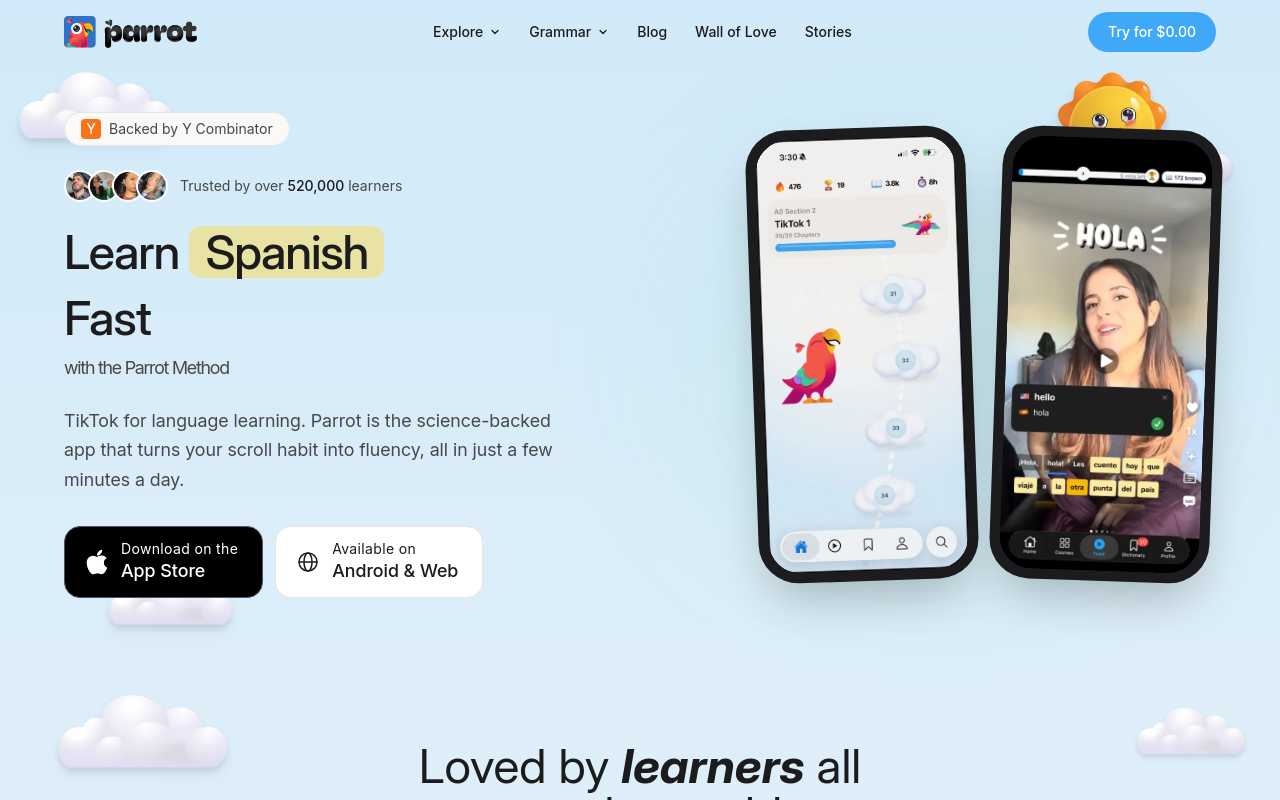
Parrot earns the top slot because its entire product loop is built around the mechanism most directly tied to closing the listening comprehension gap: native-speed spoken French delivered in short-form video, the same scroll-and-absorb format you already use for entertainment. The design is intentional. Learners start consuming real native-speaker content immediately upon opening the app, with no onboarding maze standing between them and actual French.
You hear common phrases in real context, repeat them back with Parrot Back speaking practice, and move to the next clip. That combination of immersive listening and prompted speaking production is most beneficial when a learner has struggled with traditional memorization-based methods and wants a research-backed alternative; the comprehensible input method underlying every session governs how content is selected and sequenced, so what you watch is matched to what you can actually absorb. The one honest trade-off is that structured grammar scaffolding is minimal, so pair it with Babbel if verb conjugation feels shaky.
2. Pimsleur - Best for Hands-Free Audio Learning Before Your Trip
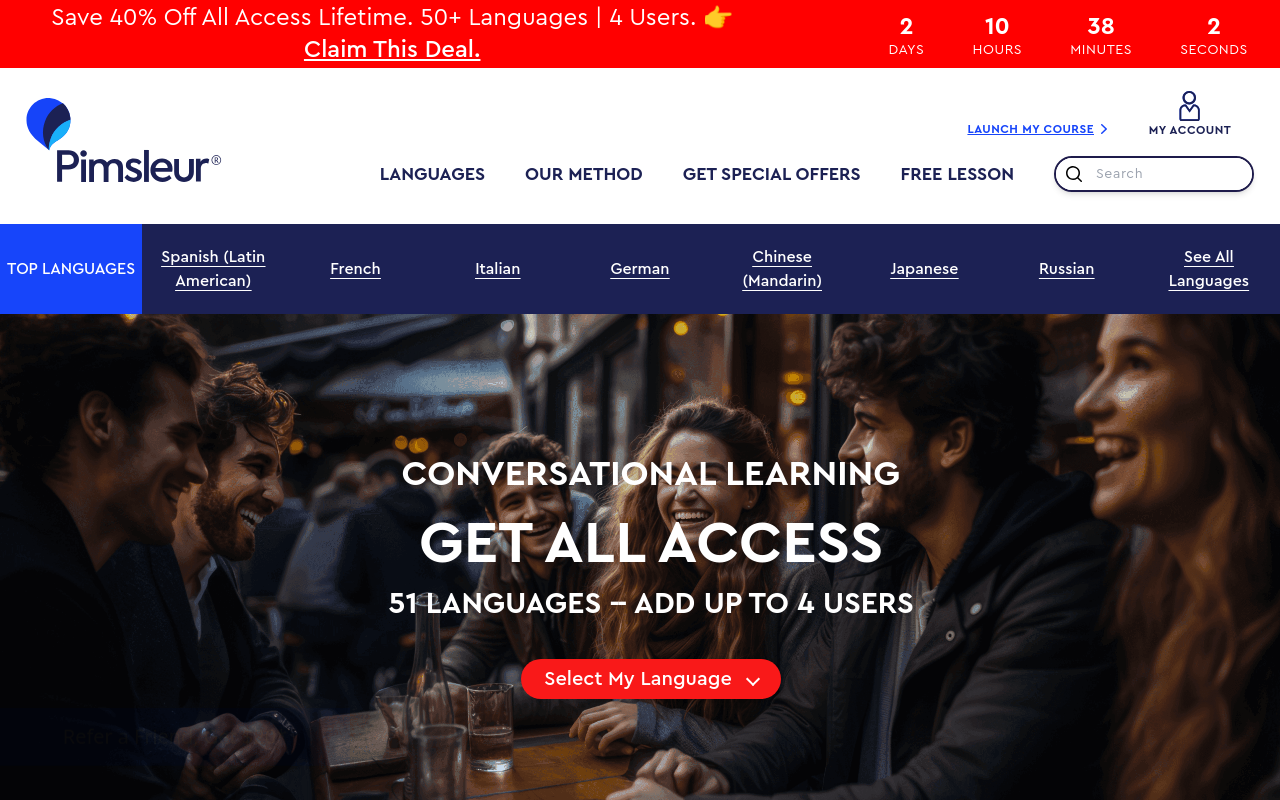
Pimsleur's French courses are designed so learners hear and respond to native-speaker audio in realistic conversational scenarios, but the platform also includes gamified elements such as Speed Round games, Quick Match, Daily Challenges, and unlockable Rewards alongside its core audio-based listen-and-respond method. That makes it the strongest commute tool in this list: 30-minute audio sessions build oral recall through spaced repetition while your hands are busy. The real limitation is cost (around $20 per month). Pimsleur does include Reading Lessons as a named feature, so the platform covers more ground than a purely audio description suggests. Best for learners with a longer commute and at least four weeks before departure.
3. Babbel - Best for Structured Grammar With Real Dialogue
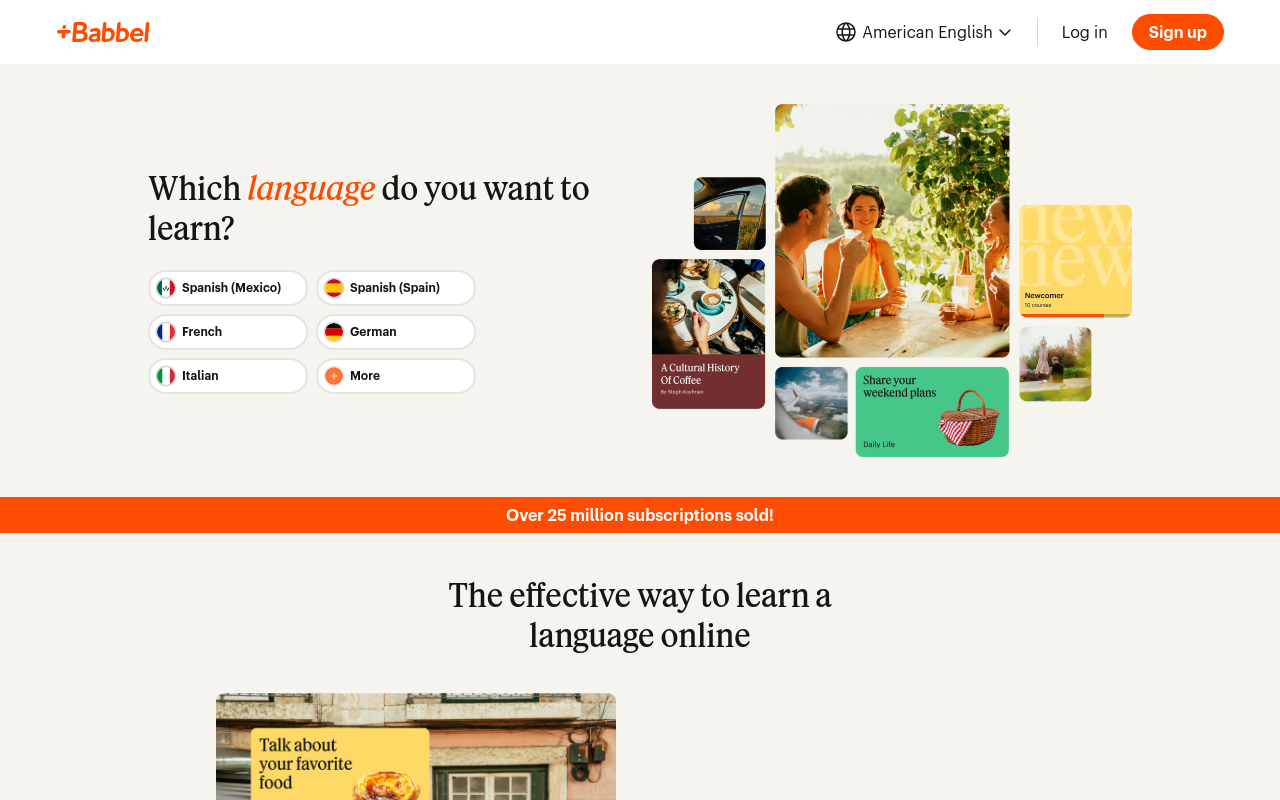
Babbel sits in a solid middle tier. Its teacher-designed lessons are built around practical dialogue rather than abstract conjugation tables, which gives it more real-world relevance than most grammar-first apps. The structure helps learners who feel anxious without a clear progression path. The honest limitation for travel prep is worth naming: Babbel offers speech recognition for pronunciation practice, interactive dialogues, AI conversation partners, and podcasts, tools explicitly designed to build real conversation skills, so it goes beyond controlled, slow audio. Use it to build sentence structure confidence, then supplement with native audio input.
4. Rosetta Stone - Best for Immersive Visual-Association Learning
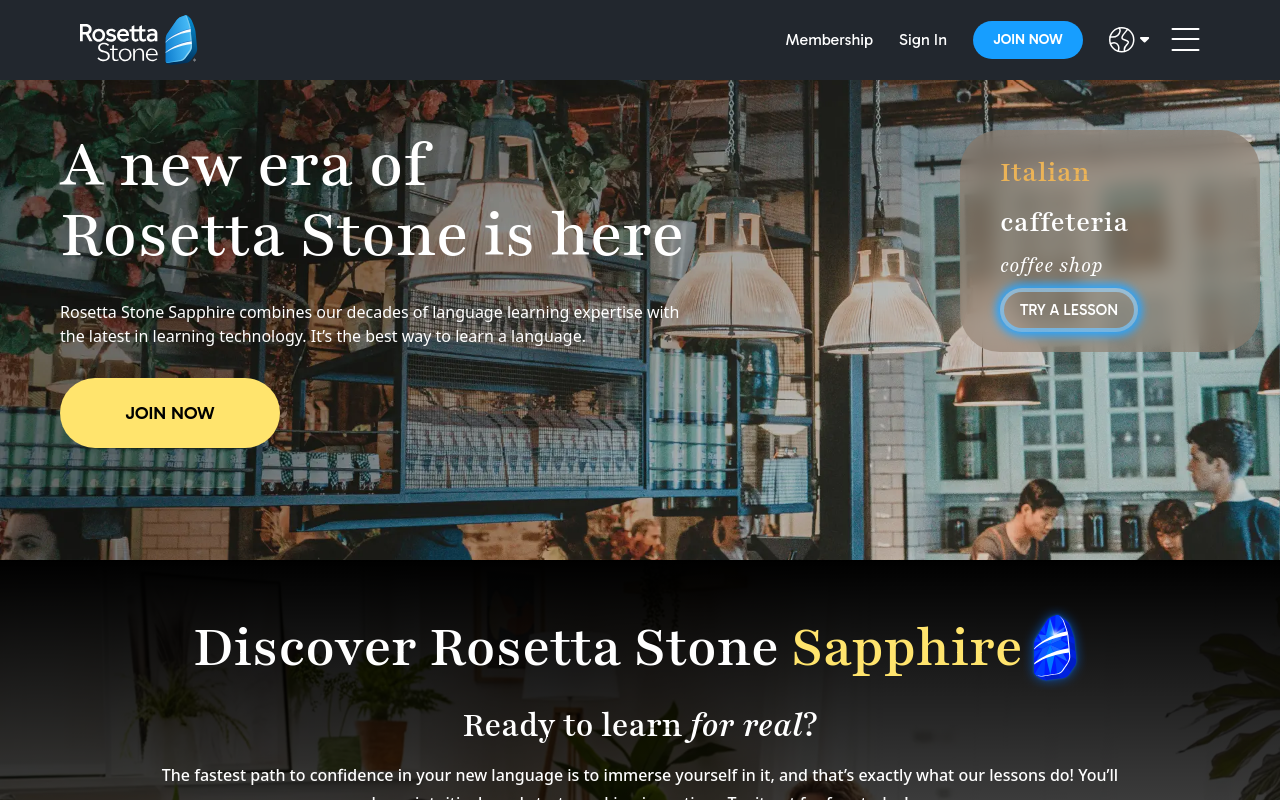
Rosetta Stone's image-and-audio association method removes translation as a crutch, which has genuine cognitive value for building intuitive word recognition. For travelers, that pays off when reading menus, signage, or transport boards. Rosetta Stone also includes audio-centric features such as its TruAccent speech-recognition tool and Chat Missions for spoken conversation practice, so it is not lacking in audio capability. Rosetta Stone is a reasonable pick if you are a visual learner with more than six weeks before your trip, but pair it thoughtfully with tools that expose you to the speed and accent variation of real French conversation.
5. Duolingo - Best Free App for Building a French Vocabulary Base
Duolingo's strength is accessibility: it is free, it is frictionless, and it genuinely builds vocabulary recognition over time. For a traveler who needs zero budget and zero commitment, it is better than nothing. The structural trade-off is worth naming clearly: the same engagement mechanics that make Duolingo exceptionally good at keeping beginners coming back, streaks, points, short tappable exercises, are not designed to train listening comprehension of fast-spoken French. The audio is slow and clearly enunciated, the answer is always visible on screen, and the gamified format trains reading recognition far more than it trains your ear. Treat it as a vocabulary warm-up, not a conversational readiness tool.
6. italki - Best for Real Conversation Practice With Native Tutors
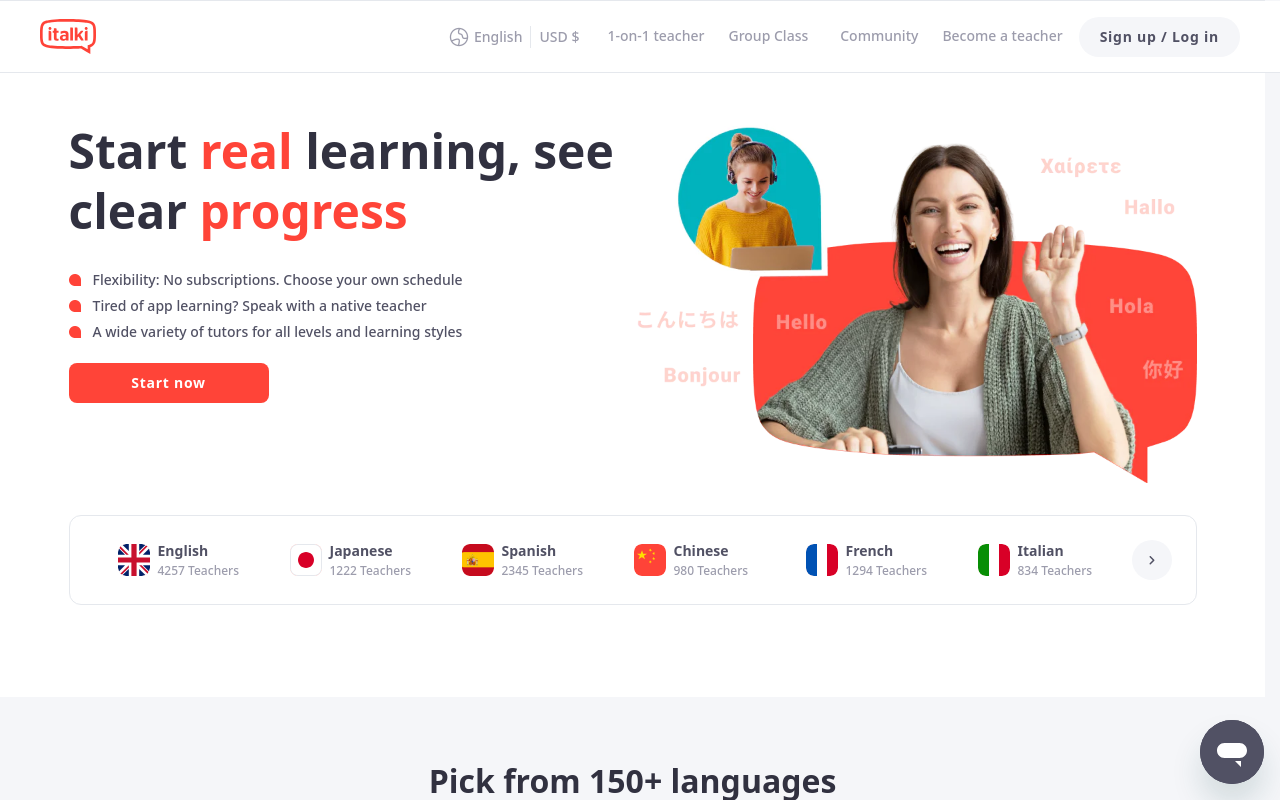
Italki is the only option in this list that puts you in front of a real native speaker in real time, which makes it the highest ceiling for conversational readiness. Community tutors on the platform are generally among the more affordable options for live instruction, making it accessible for pre-trip sessions even on a modest budget. The trade-off is scheduling friction: you need to book in advance, show up at a set time, and tolerate the discomfort of making mistakes in front of another person. That discomfort is also the point. A handful of sessions in the final week before your trip, focused on travel scenarios, will do more for your spoken confidence than months of solo app work.
7. Immersion - Best for Comprehensible Input With Structured French Content
Immersion takes the comprehensible-input principle, the research-backed idea that language acquisition accelerates when you understand the substantial majority of what you hear, and applies it to structured French content. That positions it well for learners who are past the absolute beginner stage and want to build listening fluency through extended exposure rather than drills. The limitation for travel-focused learners is that the content is not specifically designed around travel scenarios, so the vocabulary payoff is broader but less targeted. It is most valuable as a complement to a travel-scenario-focused tool, not as a standalone trip prep resource.
8. Praktika - Best AI Conversation Coach for Travel Scenario Drilling
Praktika uses AI conversation to simulate travel scenarios: ordering food, checking into a hotel, asking for directions. That scenario-specific drilling is genuinely useful for the kind of traveler who freezes not because they lack vocabulary but because they have never practiced producing French under any pressure at all. The honest limitation is that AI conversation partners do not replicate the speed, accent variation, or ambient noise of real French environments. Praktika builds production confidence and reduces hesitation, which matters, but it does not train your ear the way native-speed audio does. Use it alongside an audio-first tool, not instead of one.
How to Read This Ranking for Your Trip Timeline
The right pick depends on how much time you have before you board and what your weakest skill is. If your flight is within two weeks, prioritize audio-first tools that expose you to native-speed French immediately. Parrot is designed so you start consuming real native-speaker content from the moment you open the app, with no ramp-up required.
If you have six weeks or more, a combination of structured grammar (Babbel or Rosetta Stone) in the first half and native audio immersion in the second half gives you both scaffolding and ear calibration. Pimsleur is worth layering into your commute throughout. italki is worth adding in the final week regardless of timeline, because no app replicates the cognitive pressure of a real conversation.
The single most common mistake travelers make is spending all their pre-trip time on whichever app feels most comfortable, which is almost always the one that rewards reading recognition and streaks rather than the one that forces them to process fast-spoken French. Comfort before departure costs you comprehension on arrival. Knowing which app fits your learning style is only half the equation.
The other half is knowing exactly when and how to use it in the weeks before your trip. The next section turns these eight picks into a concrete 15-minute daily routine built around your flight date, not an open-ended fluency goal.
Comfort before departure costs you comprehension on arrival.
Related Reading
French Language Learning Resources
Best App To Learn French For Travel
Best Books To Learn French
How Long To Learn French
French Alphabet Pronunciation
How To Learn French Through Conversation
How To Learn French With Movies
Learning Resources For African French
How To Conjugate Re Verbs In French
How to Learn French for Travel at Your Own Pace in 15 Minutes a Day
Fifteen minutes a day sounds manageable until your departure date starts closing in and the app you downloaded with good intentions has not been opened in two weeks. What follows is a closer look at why the standard "learn at your own pace" advice breaks down for travelers, and how a structured micro-schedule built around screen time you already spend can change that.
Why "Learn at Your Own Pace" Fails Pre-Trip Learners
"Your own pace" sounds like freedom, but for most pre-trip learners it quietly becomes no pace at all. It is the only honest pace-setter you have. Without external structure, motivation drifts and sessions shrink, and that is a method problem, which is why a structured, retention-focused 15-minutes-a-day approach matters more than raw time on screen.
The Micro-Schedule That Actually Works
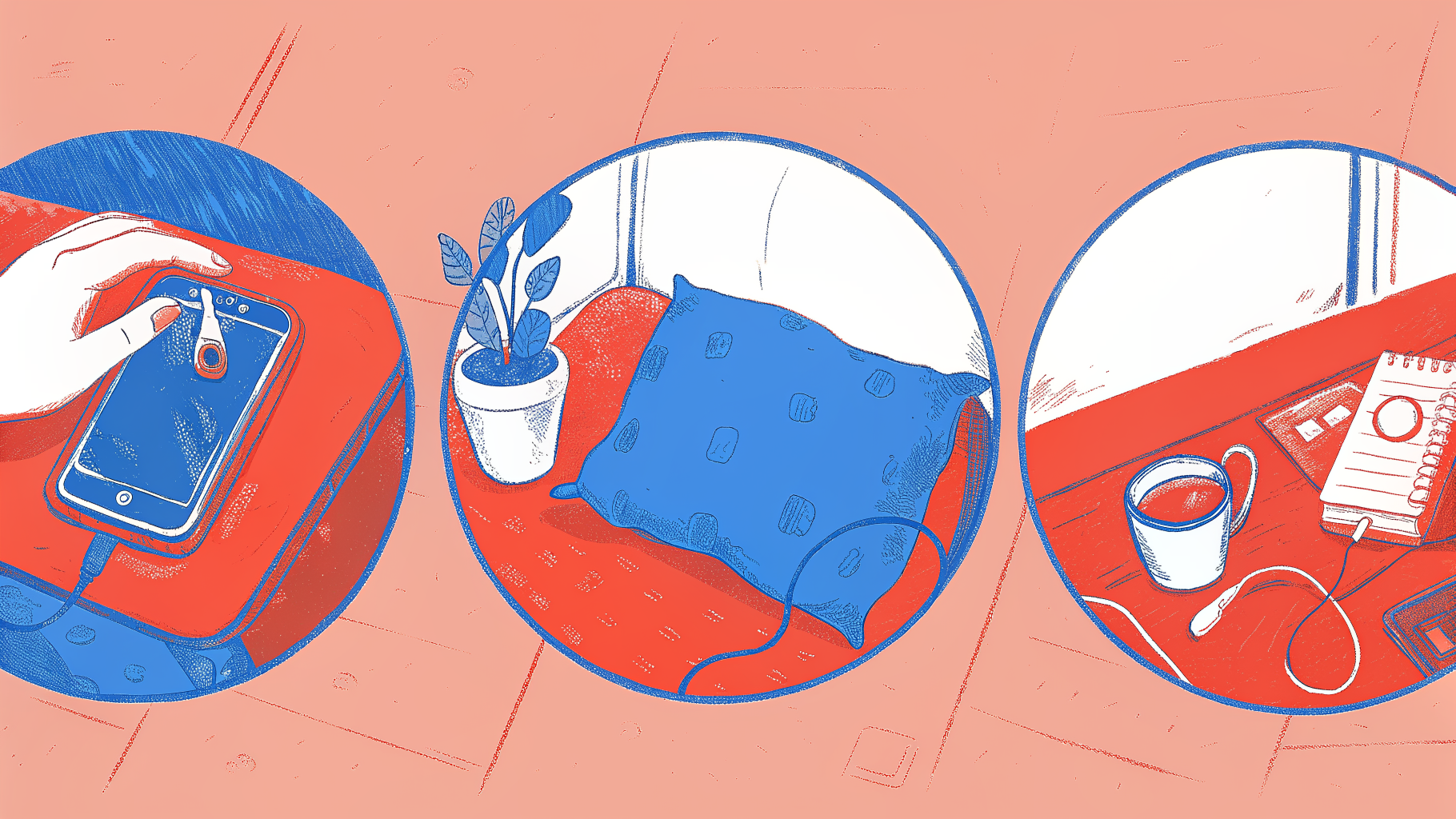
Fitting practice into your existing day requires a clear framework. That structure matters because Allconnect's 2024 research confirms screen time is already concentrated in short, repeated sessions rather than single long blocks, so these windows exist in your day right now. You are not building a new habit. That said, real life compresses the ideal. If your lunch is a working lunch, the midday slot disappears.
✓ Pros
✗ Cons
Three slots fit existing screen-time patterns, no new habit needed
Car commute with no hands-free option shrinks the morning slot
Two consistent slots beat three aspirational ones
Working lunch removes the midday slot entirely
Missing a day does not reset your French, and an app that punishes you for skipping with a broken streak is guilting you.
That is a product design problem. Real progress is measured by whether you understood something today that you did not understand last week, not by whether your calendar shows an unbroken chain of green checkmarks. Retention built on the Comprehensible Input Method works differently: the method is 80% input (listening, reading) and 20% output (speaking), so each session stretches comprehension rather than drilling vocabulary you will forget by morning.
Most default screen time in the evening goes to social feeds, short videos, and passive scrolling. None of it is building travel French. YouGov data shows the smartphone is the last thing most Americans look at before bed, and Allconnect confirms that evening screen sessions are among the most consistent and longest of the day.
Redirecting even a slice of that window toward French content, a short video, a podcast clip, costs nothing in willpower because the phone is already in your hand. When you want to move beyond passive watching, Parrot Back turns the same session into speaking practice, and the AI tutor steps in for personalized feedback on exactly the phrases you stumbled over, so the 15 minutes compound rather than repeat. A 15-minute daily schedule gets you to the gate, but only if you are spending those minutes on the right French.
The Travel French Phrases Every App Should Cover Before You Board
The core synthesis claim here is this: because attitude and motivation, not curriculum volume, are the primary drivers of successful real-world language use, a traveler who masters 50-80 phrases across four or five specific spoken registers will outperform one with a 500-word Duolingo vocabulary the moment a local replies at full speed.

"Traditional phrasebooks overwhelm travelers with 400+ phrases, resulting in learners retaining none of them before boarding, a core gap that a curated French travel phrase app should address."
— what we hear from French travel app learners
Six travel scenarios account for the vast majority of real French interactions: getting through transport hubs, ordering food, checking into accommodation, handling emergencies, managing numbers and prices, and basic social courtesy. Yet a common assumption persists that the more vocabulary an app covers, the more prepared you will be. Only 47% of EU citizens can converse in a language other than their mother tongue, a figure that reflects how poorly broad curricula translate to real conditions. The practical implication: triage your itinerary first, then select input that mirrors those exact spoken contexts, rather than following a generic progress bar.
The Five Phrase Categories That Cover 80% of Real Travel Interactions
47%
of EU citizens can converse in a language other than their
Numbers are equally load-bearing: without "combien?" and the digits 1 through 20 spoken aloud, every market and taxi negotiation stalls. Knowing "Excusez-moi, où est la station de métro?" is a start; hearing it answered at native pace is the actual skill. The critical gap is not category breadth. An app that teaches "J'ai une réservation" as a written card and an app that plays it inside a realistic hotel-desk exchange are training entirely different skills.
The Listening Gap - Why Memorizing a Phrase Fails the Moment a Parisian Speaks Back
Research confirms this gap is dramatic: while clear speech runs at around 100 words per minute, natural conversational speech reaches roughly 200 words per minute, double the pace most learners are trained to process. Parrot's short-form video feed addresses this directly: every session trains the ear on real native-speaker audio rather than synthesized slow playback, so the learner's listening threshold rises before they ever reach the departure gate.
An app that drills "learning French travel phrases" through reading exercises trains recognition, not comprehension under real conditions.
Next steps
If your pre-trip French practice has left you recognizing words on a screen but freezing the moment a local replies at full speed, the path forward starts with redirecting existing scroll time toward native-speed audio, not adding more vocabulary categories to an already crowded app. Start with our learn Spanish.
Gamified streak apps are engineered to maximize daily active users, not conversational readiness, which means every minute spent tapping colored tiles is a minute your ear is not being calibrated to the speed and accent variation of real French. And because a traveler's real exposure is narrow and high-stakes, covering four or five spoken registers well, airport arrivals, the brasserie, the pharmacy, the hotel desk, outperforms a 500-word Duolingo vocabulary the moment a pharmacist answers back at full conversational pace. Together, those two realities point to one practical next step: find input that mirrors exactly those spoken contexts, delivered at native speed, before you board.
For a deeper look at how audio-first methods compare to gamified approaches across different learning goals, spoken-response practice with parrotapp.com builds the kind of listening readiness that transfers to real conversation.
Frequently Asked Questions
Is there an app comparison table I can look at before deciding?
Yes, the post includes a table that maps each app's core training method, listening comprehension level, speaking practice level, best travel use case, and approximate monthly cost side by side. You can use it to match whichever app fits your remaining pre-trip time and budget.
Which app is actually designed around travel French scenarios, not just general language learning?
Parrot is built specifically around closing the gap most travelers hit, understanding real French at native speed, by feeding you short-form native-speaker video from the moment you open the app, paired with Parrot Back speaking practice. Its comprehensible input method sequences content to what you can actually absorb, so your ear is calibrated to real French before you board, not just a slow, sanitized version of it.
Will learning even a little French actually make a difference when talking to locals off the main tourist trail?
Yes, the post cites Eurobarometer research finding that citizens who attempt the local language, even at a basic level, report significantly more positive interactions than those who rely on substitutes like Google Translate. The practical payoff it describes includes warmer service, more patient directions, and occasional unsolicited recommendations from locals who decided you were worth helping.