
French has a Category I difficulty rating, the easiest tier for English speakers. The reputation that says otherwise came from bad teaching methods, not the language itself.
Sixty-eight percent of adults who attempt a second language quit within the first three months, and the most common reason isn't difficulty. It's the feeling that they're already failing. The common assumption is that if French feels this hard and nothing is sticking, they're probably just not cut out for language learning. That feeling is worth examining honestly before you write off French entirely. The fear of French is real. It circulates in classrooms, on social media, in the half-joking warnings from people who "tried it once."
But fear and fact are different things. If you've ever wondered whether learning a new language is genuinely beyond you, the answer almost certainly has more to do with how you were taught than with how your brain works. The reputation came from classrooms where a 14-year-old was handed a conjugation table on day one and told to memorize it before Friday.
See our learn Spanish for how this works in practice. That experience, repeated across generations, created a cultural shorthand: French equals failure. The method, not the language, left the scar.
The Foreign Service Institute classifies French as a Category I language, meaning it sits among the easiest languages for native English speakers to acquire. That classification rarely enters the cultural conversation. Around 30 to 40 percent of English vocabulary shares French or Latin roots, so thousands of words are already recognizable before a learner studies a single day.
The hard features get outsized attention because they're salient and strange; the enormous shared foundation gets ignored because familiarity doesn't make for a good warning story. Research published in Cognition by Hartshorne, Tenenbaum, and Pinker (2018) studied nearly 670,000 English speakers and found that the widespread belief that adults "can't" learn a second language conflates a narrow deficit with a general inability to acquire language. What declines slightly with age is the ability to reach native-like grammatical mastery, not the ability to become genuinely fluent and conversational.
Anxiety about French tells you the approach that introduced you to it wasn't working for you. That's methodological information, not a verdict on your ability.
The method, not the language, left the scar.
Key takeaways
French sits in the FSI's easiest tier for English speakers, Category I, with a 600-to-750-hour path to professional proficiency, shorter than roughly 70% of world languages.
English speakers already know thousands of French words before opening a textbook, a direct consequence of the Norman Conquest of 1066 flooding English with French vocabulary.
The genuinely hard parts of French fit on a short list: four sounds with no English equivalent, silent letters, and liaison rules, name them precisely and they stop feeling like a fog.
68% of adults who attempt a second language quit within three months, and the most common reason isn't difficulty, it's the feeling of already failing, usually caused by the wrong method.
Grammar drills feel productive because they're measurable, but conjugating the passé composé on paper does not build the neural pathways that produce speech under real conversational pressure.
Conversational French is reachable in 6 to 15 months at 30 minutes a day, not because the bar is low, but because consistent high-frequency input compounds faster than long, infrequent sessions.
Parrot (parrotapp.com) closes the method gap directly: short-form French videos deliver comprehensible input, the acquisition method with the strongest research backing, in the same scroll sessions you're already spending on your phone.
How French Difficulty Compares to Other Languages According to FSI
The Foreign Service Institute (FSI) language difficulty rankings give you one of the few objective benchmarks available for answering that question, and where French lands tells you something genuinely useful before you commit a single hour to studying it. Understanding both the number and its limits will help you set a timeline that reflects your situation, not just a statistic.
FSI's Category I Rating - What 600 to 750 Hours Actually Tells You
French is a Category I language, the easiest tier the Foreign Service Institute (FSI) recognizes for native English speakers. According to the FSI's official classification, reaching professional working proficiency in French requires roughly 600 to 750 classroom hours. It is also worth naming a limitation the FSI itself acknowledges: these categories are designed explicitly for native English speakers. French's high inflectional grammar, verb conjugations, and grammatical gender create friction that English speakers largely absorb within the 750-hour window, but that same friction hits much harder for speakers of languages with little or no inflection. That context matters, because it means the FSI number is not a universal truth; it is an English-speaker-specific benchmark.
The Difficulty Spectrum in One Table - Category I vs.
"The FSI ranking feels too broad, most languages get lumped into Category IV, which makes it hard to distinguish meaningful difficulty differences between languages that are dissimilar to English but not "extremely" difficult."
— what we hear from language learners
Languages
Approximate Hours to Proficiency
Category I (easiest)
French, Spanish, Italian, Portuguese, Dutch
600 to 750 hours
Category III
Russian
~1,100 hours
Category IV (hardest)
Arabic, Mandarin Chinese, Japanese, Korean
2,200+ hours
2,200+
Hours to master Arabic, Mandarin, or Japanese
According to the FSI's classification, Category IV languages like Arabic, Mandarin, and Japanese require more than 2,200 hours to reach professional proficiency, roughly three to four times longer than French. That gap reflects proximity to English specifically, shared vocabulary, cognates, and sentence structure, rather than the internal regularity of a language. It is also fair to note that the FSI's Category IV is unusually broad, grouping together languages that differ substantially from one another in their demands on an English speaker. Learners trying to choose between, say, Indonesian and Arabic will find the four-tier system gives them limited resolution. The categories are a useful starting frame, not a precise roadmap.
The 80/20 of French Difficulty - One Easy Language With a Hard Outer Shell
The difficulty is real, but it is concentrated. Around 30% of English vocabulary traces directly to French origins, a legacy of the Norman Conquest, meaning English speakers arrive with a substantial head start before opening a single textbook. The hard parts, gendered nouns, silent letters, and the subjunctive, can feel like obstacles, but they are not evenly distributed across the learning curve.
Related Reading
How Long To Learn French
French Alphabet Pronunciation
How To Learn French Through Conversation
How To Learn French With Movies
Learning Resources For African French
Why French Is Surprisingly Easy for English Speakers
It is a linguistic fact with a specific historical cause, and understanding it changes where you think the starting line actually is.
How the Norman Conquest Gave English Speakers a French Vocabulary Head Start
According to Wikipedia's analysis of French influence on English, approximately 30% of English vocabulary derives directly from French, a consequence of the Norman Conquest of 1066, when French became the language of England's ruling class for roughly 300 years. That centuries-long overlap flooded English with French words across law, government, cuisine, and the arts. French uses the same Latin alphabet as English, so there is no new writing system to acquire.
Compare that to Mandarin, Arabic, or Japanese, where script alone can consume months of study before a learner reads a single sentence. With French, you read from day one. Both languages also follow Subject-Verb-Object sentence order, so the grammatical logic of English transfers directly.
"She eats the bread" and "Elle mange le pain" move in exactly the same sequence. The next section names the specific challenges that do require genuine effort, so you can size them accurately rather than letting vague anxiety do the sizing for you.
What Actually Makes French Challenging to Learn
What's actually happening is more precise: four distinct sounds in French have no English equivalent whatsoever. According to Spokira, French contains approximately 36 distinct sounds, including nasal vowels and consonants that simply do not exist in English. The four nasal vowels alone, /ɑ̃/ (as in an), /ɛ̃/ (as in in), /œ̃/ (as in un), and /ɔ̃/ (as in on), require airflow through the nose while shaping a vowel your mouth has never practiced, because French phonology has no English parallel for any of them (Spokira). Then there is the rounded front vowel /y/ (as in tu), where your lips round as if saying "oo" while your tongue positions itself for "ee."
The uvular R presents a similarly unfamiliar challenge: produced at the back of the throat rather than with the tongue tip, it feels closer to a gentle gargle than anything English trains you to do. As both Spokira and Wikipedia, French Phonology document, the articulation point of the French uvular R is entirely different from the English R, a consistent finding across phonetics literature on French as a second language. Gendered nouns in French are the feature learners complain about most loudly.
Every French noun is either masculine or feminine, and the assignment often feels arbitrary: la table (feminine) but le bureau (masculine). There is no semantic logic that reliably predicts gender, which means learners must absorb gender alongside each new word rather than deriving it from rules. That said, many written verb endings that appear distinct on the page are pronounced identically when spoken, a pattern well-documented in French phonology research (Spokira).
The forms je parle, tu parles, and ils parlent look like three separate conjugations; out loud, all three sound the same. French verb conjugation in spoken conversation is considerably simpler than a conjugation table suggests. A more rigorous, research-backed approach, one grounded in how the language actually sounds, cuts through that confusion faster.
The Spoken vs Written Gap That Catches Every Learner Off Guard
The spoken-vs-written gap is the single biggest ambush in French learning. Learners drill vocabulary and conjugation tables, feel reasonably prepared, and then hear a native speaker and understand almost nothing. What makes spoken French feel like a different language is the way native speakers compress it.
Words run together, final consonants drop, and elision happens constantly at conversational speed. The written sentence je ne sais pas becomes something closer to chais pas in casual speech, yet once you recognize these patterns for what they are, the language becomes far more navigable. There is no hidden tenth level of French difficulty waiting to ambush you.
How Long It Realistically Takes to Learn French
The research says otherwise, and the math is worth sitting with before you write off the idea entirely.
The 6-to-15-Month Window - What the Research Actually Says
HelloFrench puts that window clearly, anchored in the Foreign Service Institute (FSI)'s finding that French requires 600 to 750 hours to reach working proficiency for English speakers. At 30 minutes a day, that math works out to roughly 9 to 15 months of consistent effort. A learner who clocks 600 to 750 hours of passive grammar review has not accumulated that many hours of genuine acquisition. The FSI data assumes active, meaning-first exposure; that distinction is where most timelines quietly fall apart. It is also worth naming the harder truth: reaching B2 level requires closer to 1,000 hours, a commitment that demands real lifestyle trade-offs, commute time repurposed, evenings restructured, family moments renegotiated.
Conversational French achievable in 6 to 15 months at 30–45 min/day → Pro: Regular short daily sessions build retention more effectively → Con: Those hours must be quality hours, not passive grammar review.
Top 1,000 high-frequency words cover ~85% of everyday spoken conversation → Pro: 30 minutes of comprehensible spoken input activates acquisition pathways → Con: Passive grammar review barely registers compared to meaning-first exposure.
30 minutes of comprehensible spoken input activates acquisition pathways → Pro: Meaning-first exposure supports acquisition → Con: Drilling vocabulary lists in isolation does not transfer to real conversation.
Reaching B2 requires closer to 1,000 hours with real lifestyle trade-offs → Pro: — → Con: The time commitment is substantial and requires sustained effort.
Consistency is the variable that matters most. HelloFrench's research confirms that regular short daily sessions build retention more effectively than infrequent marathon blocks, because the brain consolidates language during sleep and between sessions, not during them. The session fits the life, not the other way around.
The 80/20 Shortcut That Compresses the Timeline
The top 1,000 high-frequency French words cover roughly 85% of everyday spoken conversation. Applying the 80/20 principle to high-frequency vocabulary and real input compresses the timeline to fluency dramatically. The method is 80% input (listening, reading) and 20% output (speaking); it governs how content is selected and sequenced so that what you watch is always pitched at the edge of your current level, not above it or beneath it. The math is friendlier than most people expect, but only if those daily minutes are doing the right kind of work.
Related Reading
French Language Learning Resources
Fastest Way To Learn French
Best App To Learn French For Travel
Best Books To Learn French
How Long To Learn French
French Alphabet Pronunciation
How To Learn French Through Conversation
How To Learn French With Movies
Learning Resources For African French
How To Conjugate Re Verbs In French
Tips to Make Learning French Easier That Most Advice Gets Wrong
Effort applied to the wrong method does not cancel out. It compounds. The learners who find French most manageable are not the ones logging the longest sessions; they are the ones who quietly swapped low-yield drills for high-frequency input and mandatory speaking output, often in shorter windows than any advice column recommends.
How to Get Speaking Practice When Apps Only Train Recognition
Most gamified apps train recognition, not production. A learner can build a long streak and still be mute in a real conversation because tapping the correct answer never requires the brain to generate language independently. This is where the method gap is most costly.
Parrot's Comprehensible Input Method governs how content is selected and sequenced for each learner, underlying every video session. On top of that, Parrot Back, the built-in speaking practice feature, is designed to convert idle scroll time into active output, pushing learners beyond passive familiarity and into genuine production. For learners who have already hit a wall with memorization-based methods and want a research-backed alternative, this combination, immersive video input followed by structured speaking output, is where the approach is most beneficial.
La Libre Language Learning's review of comprehensible-input research supports the core principle: meaningful input at the right level, paired with real output practice, is what moves the needle. (Independent validation of session-level output outcomes is not yet available from third-party sources; the claim rests on the underlying Krashen framework cited above.)
Each of these adjustments chips away at the friction. But they all point to the same root cause. The next section names it directly: French is not the problem, and neither is your schedule or your aptitude. The method is.
1. Use Comprehensible Input (i+1) Instead of Grammar Drills to Acquire French Naturally
Most learners waste months memorizing conjugation tables before they can hold a conversation. Krashen's i+1 principle, consuming French content just one level above your current ability, lets the brain acquire grammar implicitly through exposure, the same way children learn. The real tradeoff: finding genuinely level-appropriate content takes effort, and impatient learners often jump too far ahead, turning input into noise.
2. Swap 30-Minute Study Blocks for 10-15 Minute Micro-Sessions Embedded in Daily Life
Sporadic long sessions feel thorough but produce weak retention. Spaced repetition research shows that distributing retrieval practice across multiple short windows consolidates memory far more effectively than massing the same minutes into one block. A 12-minute French podcast on five consecutive commutes outperforms a single Saturday hour.
The honest tradeoff: micro-sessions require zero extra calendar space but do demand consistency. Missing two days in a row erases more ground than the same two days would cost in a longer weekly session. Making scrolling productive, turning the time already spent on a phone into structured comprehensible input, is exactly the habit shift Parrot's feed is designed to support.
3. Prioritize Listening to Natural Spoken French Early to Close the Spoken-Written Gap
French compresses syllables, drops sounds, and runs words together in ways the written form never signals. Drilling vocabulary from a textbook does nothing to close this gap. Consistent exposure to real spoken French at a comprehensible level does. According to Krashen's Input Hypothesis, the brain acquires language through meaningful exposure pitched just above current ability, not through rule memorization. With Parrot, listening practice begins immediately, every video watched contributes, with vocabulary aids alongside native-speaker content so the unfamiliar pieces resolve through context rather than memorization.
4. Apply the 80/20 Rule - Master the 1,000 Most Frequent French Words Before Anything Else
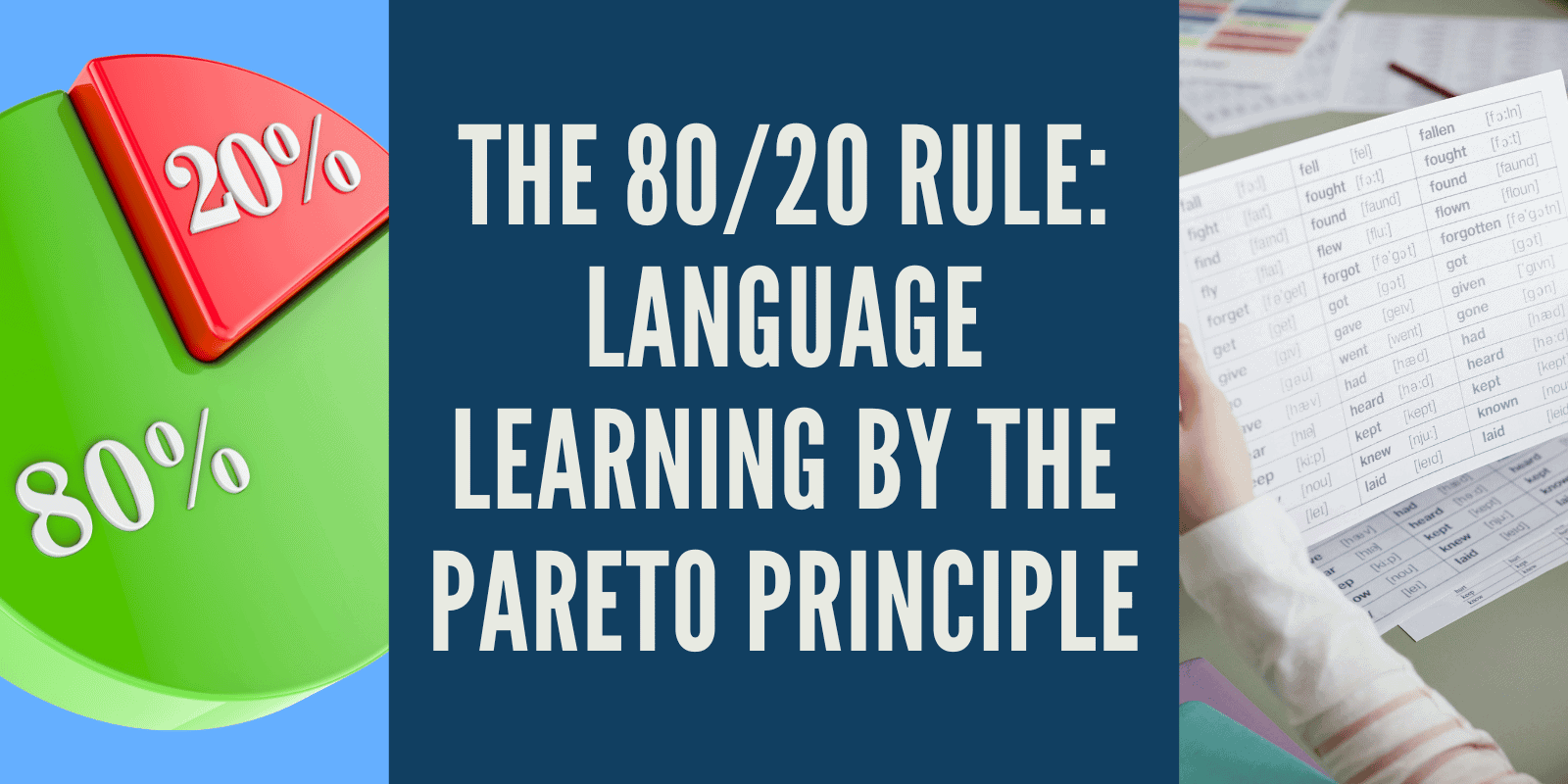
Vocabulary frequency research shows the 1,000 most common words in a language account for approximately 85% of everyday spoken conversation. A learner who owns those 1,000 words can follow most casual French conversations. A learner who has memorized irregular verb tables cannot. The tradeoff worth naming: frequency-first study feels incomplete early because gaps appear constantly.
5. Ditch Passive App Streaks and Add Mandatory Active Speaking Output from Week One
Gamified apps like Duolingo build recognition fluency, you can identify correct answers, but recognition and production use different neural pathways. Learners who spend months on passive apps are often shocked they cannot form a sentence under real conversational pressure. Active output practice, speaking aloud, writing original sentences, shadowing, forces retrieval and closes the gap. The tradeoff: active output is uncomfortable and exposes gaps, which is exactly why most learners avoid it.
Why App Streaks Don't Build Speaking Ability, and What Does
A long streak measures app opens, not conversation ability. Tapping the correct answer in a recognition exercise never requires the brain to generate language independently, which is why passive app use builds familiarity without building fluency. Beginners who expect that consistent app use will unlock spontaneous conversation within months are set up for a frustrating plateau, not because they lacked effort, but because recognition practice and production practice are fundamentally different cognitive tasks.
Krashen's Input Hypothesis confirms that only acquired, production-ready language is available for spontaneous speech. Imperfect early output is not a problem to avoid; it is the mechanism that forces retrieval under pressure. For learners who have already hit a wall with recognition-based methods, Parrot's Comprehensible Input Method and Parrot Back speaking practice work together, structured around the same comprehensible-input principles La Libre Language Learning's research supports, to move learners from passive familiarity into active, communicative ability.
The Real Reason French Feels Hard Is Your Method Not the Language
Months of consistent study, and you still freeze the moment someone speaks French at normal speed. That experience is not a sign of low ability. It is a sign of a method that was never designed to produce speech in the first place.
Why Grammar Drills Create the Illusion of Progress Without Building Speech
Conjugation tables feel productive because they are measurable. You can memorize the passé composé endings, pass a quiz, and log a completed lesson. The problem is that recognizing a pattern in isolation and retrieving it under real conversational pressure are two completely different cognitive tasks. That gap is not a discipline failure. It is what happens when a method trains pattern recognition instead of language production.
What the Research Actually Says About How Brains Acquire Language
The science here is direct. According to a 2025 neuro-ecological critique published in Frontiers in Psychology, language is acquired primarily through comprehensible, meaningful input rather than explicit grammar instruction or rote drilling. The same research draws on Stephen Krashen's acquisition framework, which holds that the brain absorbs language subconsciously when exposed to real content pitched just above the learner's current level.
Critically, the neuro-ecological critique adds one important nuance: passive consumption alone is not enough. Active, contextually embedded engagement with the language is what converts input into retrievable speech. Method and context determine outcomes.
Aptitude is almost never the limiting variable.
Redesigning the Method From Passive Exposure to Active Speaking
The practical implication is a method shift, not a schedule overhaul. Instead of a 30-minute grammar session, the same window becomes a comprehensible input session: real spoken content at near-natural speed, followed immediately by speaking practice that forces production, not just recognition. Parrot bridges that gap by turning short-form video content into immersive practice that ends with the learner speaking, and it is most beneficial when you have struggled with memorization-based methods and want a research-backed alternative. One honest trade-off: input-first methods are associated with faster conversational fluency gains than drill-based approaches in Krashen's acquisition research, but learners who need formal certification or grammar-heavy examinations may still benefit from supplemental structured study alongside immersive practice.
Next steps
If grinding through conjugation tables has left you fluent in quizzes but mute in real conversations, the path forward starts with matching your method to how the brain actually acquires language. Start with our learn Spanish.
The FSI data shows French needs roughly 600 to 750 hours of quality input to reach conversational proficiency, and vocabulary frequency research confirms that the 1,000 most common words already cover 85% of everyday speech. That means the hours you log matter far less than what fills them. Pair that with Krashen's finding that only meaning-first, comprehensible exposure produces speech you can retrieve under pressure, and the next step becomes obvious: replace low-yield drills with real spoken input consumed in the short windows you already have.
Start with Parrot to see the comprehensible-input method in action. The same architecture that sequences native-speaker video content to build listening comprehension, then layers in speaking practice through Parrot Back, applies directly to how you build any Romance language from the ground up.
Frequently Asked Questions
Why is French considered so approachable for English speakers?
Around 30% of English vocabulary derives directly from French, a legacy of the Norman Conquest of 1066, meaning English speakers already recognize thousands of words before studying a single day. Both languages also share the same Latin alphabet and Subject-Verb-Object word order, so there is no new script to learn and the grammatical logic of English transfers directly to French.
Are French verb conjugations really as complicated as they look?
On paper, French conjugation tables look complex, but many written endings that appear distinct are actually pronounced identically in spoken French, for example, je parle, tu parles, and ils parlent all sound the same out loud. That means spoken French conjugation is considerably simpler than a conjugation table suggests, and learners who focus only on written drills often overestimate how hard it is in real conversation.
Why do I understand written French but struggle to follow native speakers?
The spoken-vs-written gap is the single biggest ambush in French learning: native speakers compress speech so that words run together, final consonants drop, and elision happens constantly, turning a written phrase like je ne sais pas into something closer to chais pas. No amount of memorization-based drilling closes this gap on its own, consistent exposure to real native spoken content is what trains your ear for that compression.
How does French difficulty compare to other languages I might consider?
The Foreign Service Institute classifies French as a Category I language, the easiest tier for native English speakers, requiring roughly 600 to 750 hours to reach professional working proficiency. By contrast, Category IV languages like Arabic, Mandarin, Japanese, and Korean require more than 2,200 hours, roughly three to four times longer than French.
Does age really matter when it comes to learning French?
Research published in Cognition by Hartshorne, Tenenbaum, and Pinker (2018), studying nearly 670,000 English speakers, found that what declines slightly with age is the ability to reach native-like grammatical mastery, not the ability to become genuinely fluent and conversational. Adults who feel they "can't" learn a second language are conflating a narrow deficit with a general inability to acquire language.