Podcasts build French comprehension, but they quietly skip the skill that matters most: speaking. Here are the shows worth your commute and exactly how to use them so the hours actually stick.
The common assumption is that consistent podcast listening during dead time is a productive path to French language learning. Most of that time disappears into music, silence, or mindless scrolling. French learners who discover podcasts realize something important: that dead time is recoverable. Audio fits a car, a subway car, a lunch break. No screen required. No desk. That realization is real, and it matters.
27.2 minutes
Average American's daily commute to work
See our learn Spanish for how this works in practice. Structured courses demand a chair, a schedule, and a block of uninterrupted attention that busy learners rarely have.
Podcasts demand none of that. Workers commute daily, and the majority drive alone, which makes audio the only format that actually fits the window. A 27-minute one-way commute is not enough time to open a textbook.
It is exactly enough time to finish one focused podcast episode. That asymmetry is why podcasts outperform courses on consistency: the format bends to the learner's life instead of demanding the learner bend to it.
Consistent listening does produce real gains. Your ear adjusts to French rhythm and intonation. Vocabulary recognition builds quietly in the background. Stephen Krashen's comprehensible input research established that audio input, pitched just above a learner's current level, is one of the most effective drivers of receptive language development.
The ceiling is also real. Understanding French and producing it are two entirely different cognitive tasks. A learner can finish an entire podcast season and still stumble through a restaurant order. Listening builds the input side of the brain. The output side stays dormant until something actively trains it. The failure is invisible: hours logged feel like progress, comprehension genuinely improves, but speaking ability has barely moved.
Active comprehensible input sessions change the outcome. Pairing audio exposure with structured speaking practice in the same stolen windows closes the gap that passive listening leaves open. Podcasts are powerful, but only if you know which ones to choose and exactly how to use them.
Key takeaways
Commuters average 4.5 hours of transit time per week, enough input to move the needle, but only if the audio is pitched at the right level for acquisition to happen.
Comprehension and speech production are separate neurological skills. Podcasts train one of them. Fluency requires both.
The 'beginner French podcast' label is nearly meaningless unless the show guarantees English scaffolding and explicit level-gating, most don't.
Krashen's i+1 principle holds that acquisition accelerates only when content sits just above your current ceiling. Comfortable podcasts you already follow may be the reason you've plateaued.
Passive listening builds vocabulary and trains your ear, but no volume of audio input alone closes the gap between understanding French and producing it.
Parrot (parrotapp.com) is built around comprehensible input, the same acquisition method the research points to, delivering short-form French video content pitched just above your level so that listening hours actually convert into speaking ability.
The Podcast Listening Mistakes That Keep French Learners Stuck
Most learners treat consistent podcast listening as a reliable path to French fluency, slotting episodes into commutes and assuming the hours will compound. The cruel truth is that French comprehension and French production are two completely separate neurological skills, and podcasts, by default, only train one of them.
The Level-Mismatch Trap - Why Beginner Labels Lie and Intermediate Learners Stagnate
The label "beginner" on a French podcast means almost nothing without knowing your actual vocabulary depth. Comprehensible input theory, developed by linguist Stephen Krashen, holds that acquisition only happens when content sits at i+1, meaning just one step above your current level. As Frontiers in Psychology confirms, input pitched too far above a learner's current threshold becomes noise rather than acquisition-driving material, producing no measurable progress regardless of how many episodes you consume.
This is why a learner can binge many episodes of a well-regarded French podcast, follow the host's voice comfortably after a few weeks, and still freeze the moment a native speaker fires a question at them in real time. Recognition built on mismatched input is a ceiling. The method is 80% input (listening, reading) and 20% output (speaking) precisely to close this gap: the content selection and sequencing engine governs which videos surface for each learner, so the level-matching happens automatically rather than relying on a podcast label that may have nothing to do with your actual vocabulary depth.
Learners who have struggled with traditional memorisation-based methods and want a research-backed alternative find this particularly valuable. Every video watched contributes to listening practice immediately upon opening the app, with no setup or placement test standing between the learner and real, native-speaker content.
The Output Gap - Why Your Brain Recognises French But Refuses to Produce It
Multiple industry sources confirm that passive exposure does not activate the full neural networks required for fluent production; comprehensible input is necessary but not sufficient to cross the threshold from understanding to speaking. Your brain files podcast French under "things I can decode" rather than "things I can generate," and those are stored differently. Production requires a separate rehearsal loop that listening alone never triggers.
As InfinLume's breakdown of the input hypothesis reinforces, Krashen's model accounts for acquisition through input but does not supply the active production practice that real-world conversation demands. A learner who has absorbed hundreds of hours of audio can follow a native speaker at speed yet still fumble through "où est la gare?" under mild social pressure.
The input half of the equation is solved. The output half was never started. This is the exact gap Parrot is designed to close.
During or after video sessions, say out loud and repeat what you hear to build speaking confidence and sharpen comprehension, so the transition from hearing French to producing it is built into the workflow rather than left to the learner to arrange separately. For learners who want active, personalised practice layered on top of immersive video content, Parrot's AI Spanish Tutor provides personalised feedback and targeted practice beyond passive watching, available the moment a learner wants to go deeper than the video alone. The right episode, at the right level, paired with a speaking loop, trains the production skill podcasts leave untouched.
Which Podcasts Are Best for Absolute Beginners Learning French
Why "Beginner French Podcast" Is Nearly Meaningless as a Label
The core problem with the "beginner French podcast" category is one that almost no review site names directly: a podcast's beginner label is nearly meaningless as a selection criterion unless it guarantees English scaffolding and explicit level-gating by season, because most self-described beginner podcasts deliver unscaffolded authentic French that falls catastrophically below the 95-98% vocabulary comprehension threshold(https://pmc.ncbi.nlm.nih.gov/articles/PMC9420481/) required for any acquisition to occur, turning commute minutes into noise exposure rather than language learning. Absolute beginners consistently tell us that listening to French, even podcasts marketed directly at them, feels like a future goal rather than something they can do right now.
Shows like InnerFrench, despite their reputation, land far above where a true A1 learner can process meaning. The result is a familiar spiral: a learner tries a podcast everyone recommends, understands almost nothing, and quietly concludes they are "bad at languages," when the real problem was a mismatched tool in week one. The real question, then, is whether a show controls speech rate and locks its difficulty to a specific level from episode one.
Without those three features, English scaffolding, controlled speech rate, and explicit level-gating, A1–A2 learners spend their commute absorbing noise they cannot decode. Research on comprehensible input confirms this drives zero acquisition. The 95-98% vocabulary comprehension threshold is the floor below which listening stops being learning.
Most self-described beginner podcasts fall through it immediately. Knowing which structural features make a show genuinely safe for A1–A2 learners, and which shows actually have them, is what separates useful selection from guesswork.
1. Coffee Break French - Best Structured Beginner Podcast (A1–A2)
Coffee Break French is the clearest pick for absolute beginners because its architecture is built around English scaffolding from the first episode, with Season 1 explicitly targeting A1–A2 learners so you never have to guess your entry point. The host walks you through French phrase by phrase, explaining grammar in English before French appears, which keeps comprehension above the threshold that actually drives acquisition. With a 6-star rating across more than 10,000 reviews, figures tracked independently by Rephonic, its longevity is a credibility signal no newer show can match.
It also makes commute time genuinely useful. The scaffolded format means that the twenty minutes between your front door and your desk, or your lunch break, or the ten minutes before bed, can function as real input absorption rather than background noise, provided you are starting at Season 1 and not jumping ahead. The one real tradeoff: the audio-only format builds recognition, not production.
Learners who finish Season 1 can follow the dialogue but often freeze when asked to produce a sentence themselves. Comprehensible input is the engine; output practice is the other wheel, and podcasts alone do not spin it.
Duolingo French Podcast: Best Narrative-Style Beginner Listen (A2).
263 million
Coffee Break French total downloads
2. Duolingo French Podcast - Best Narrative-Style Beginner Listen (A2)
The Duolingo French Podcast tells real human stories mostly in French, with an English-speaking narrator providing context so beginners can follow along without getting lost. Learners report understanding around 80% from early on, making it ideal for A2 listeners who want engaging content over dry drills. The limitation: it skips explicit grammar instruction, so it works best alongside a structured resource.
3. News in Slow French - Best for Beginners Who Want Real-World Topics
News in Slow French offers lesson-style structured content for beginners, not only real-world topics for those who find lesson-style podcasts too artificial. The hosts discuss current events at a deliberately reduced pace with clear pronunciation, making real-world vocabulary accessible earlier than most A1–A2 shows allow. The structural caveat worth flagging before you commit is the paywall.
Free-tier access is limited, and the full episode library sits behind a subscription. For learners who want consistent weekly content on real topics and are willing to pay for it, the tradeoff is fair. For anyone testing the waters, exhaust the free episodes before subscribing.
4. It's Never Too Late to Start - An Encouraging Note for Adult Beginners Picking Their First French Podcast
Adult beginners frequently worry they've missed their window to learn French fluently, they haven't. Podcasts like Coffee Break French and the Duolingo French Podcast are specifically designed for people starting from zero at any age, with no prior knowledge assumed. The community evidence is clear: learners returning to French after decades away, or starting entirely fresh as adults, make consistent progress when they choose level-appropriate audio and listen regularly.
Which Podcasts Are Best for Intermediate French Learners Ready to Drop the Training Wheels
The intermediate plateau is real, and it has a specific shape: you understand enough French to feel confident, but not enough to stop mentally translating. Most learners stuck here keep replaying the same comfortable podcasts, mistaking recognition for acquisition. Comprehensible input research tells a different story. Stephen Krashen's i+1 principle holds that acquisition accelerates only when content sits just above your current ceiling, not at it. The practical implication is sharper than most podcast recommendation lists acknowledge: staying with content you already decode at 95% produces diminishing returns, while jumping too far above your level makes input incomprehensible and equally unproductive.
The moment intermediate learners graduate to unscaffolded French audio, they are most likely to slip below the comprehensibility threshold that makes listening productive. Vocabulary gaps at B1 and B2 are still patchy enough that native-speed delivery goes dark in stretches. The popular advice to "level up" to harder podcasts can silently stall acquisition rather than accelerate it. Correctly calibrated content delivered entirely in French, at a pace that keeps comprehension above 85 to 90 percent without an English safety net, is what moves learners forward.
Educational and language-learning podcasts are among the fastest-growing content categories globally, which means the B1–B2 shelf is now well-stocked. The five picks below are ranked by topic variety, cultural authenticity, and how well each one holds that productive stretch zone for intermediate learners.
1. InnerFrench - Gold-Standard Comprehensible Input for B1–B2 Learners
InnerFrench is the clearest answer to "which B1–B2 French podcast should I start with" because host Hugo speaks entirely in French at a deliberate, unhurried pace, covering cultural, historical, and social topics that hold genuine interest beyond tourist French. The format is engineered for comprehensible input: no English, no translation, no scaffolding crutches. The real tradeoff is topic range; Hugo's selection skews toward French history and society, so learners craving sports, tech, or global news will eventually feel the ceiling.
2. Passerelles - The Bridge Podcast for Learners Ditching English Training Wheels
Passerelles, hosted by Emilie, is designed for intermediate learners making the transition away from English explanations. Every episode runs entirely in clear, unrushed French, and Emilie's framing of grammar concepts in French trains the brain to think inside the language rather than through it. It is the right pick when a learner knows they understand French but still reaches for English as a cognitive safety net. The episode catalogue is smaller than InnerFrench, so binge-listeners will exhaust it faster.
3. French Blabla - Conversational Intermediate French with a Native Teacher's Voice
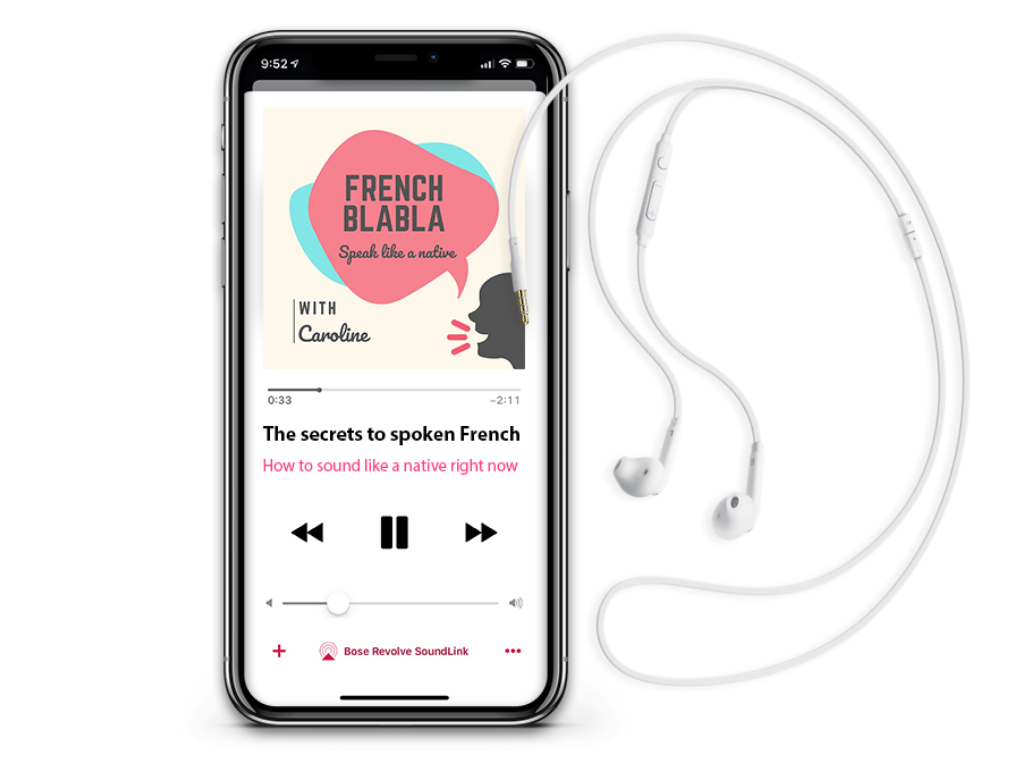
French Blabla fills a gap the other picks leave open: genuine conversational register, not textbook French. The host speaks the way a native French friend actually talks, with natural rhythm, filler words, and informal phrasing that classroom French never covers. For B1 learners whose listening diet has been mostly scripted or slowed audio, this is a productive stretch. The tradeoff is that the faster conversational pace makes it a poor first stop for learners still consolidating core vocabulary; it rewards those who have already built a solid B1 base.
4. Journal en Français Facile (RFI) - Real News at an Intermediate-Friendly Pace
Journal en Français Facile from Radio France Internationale delivers daily ten-minute news episodes at a pace slightly below standard broadcast speed, making authentic news content accessible without simplifying the vocabulary into irrelevance. The daily format is its structural advantage: consistent listening habits form more reliably when new content arrives every day. The limitation is genre; if current events feel like a chore rather than a draw, the motivation to return daily will fade faster than with story-driven formats like InnerFrench.
5. Français Authentique - Immersive Mindset Training for Committed B1–B2 Listeners
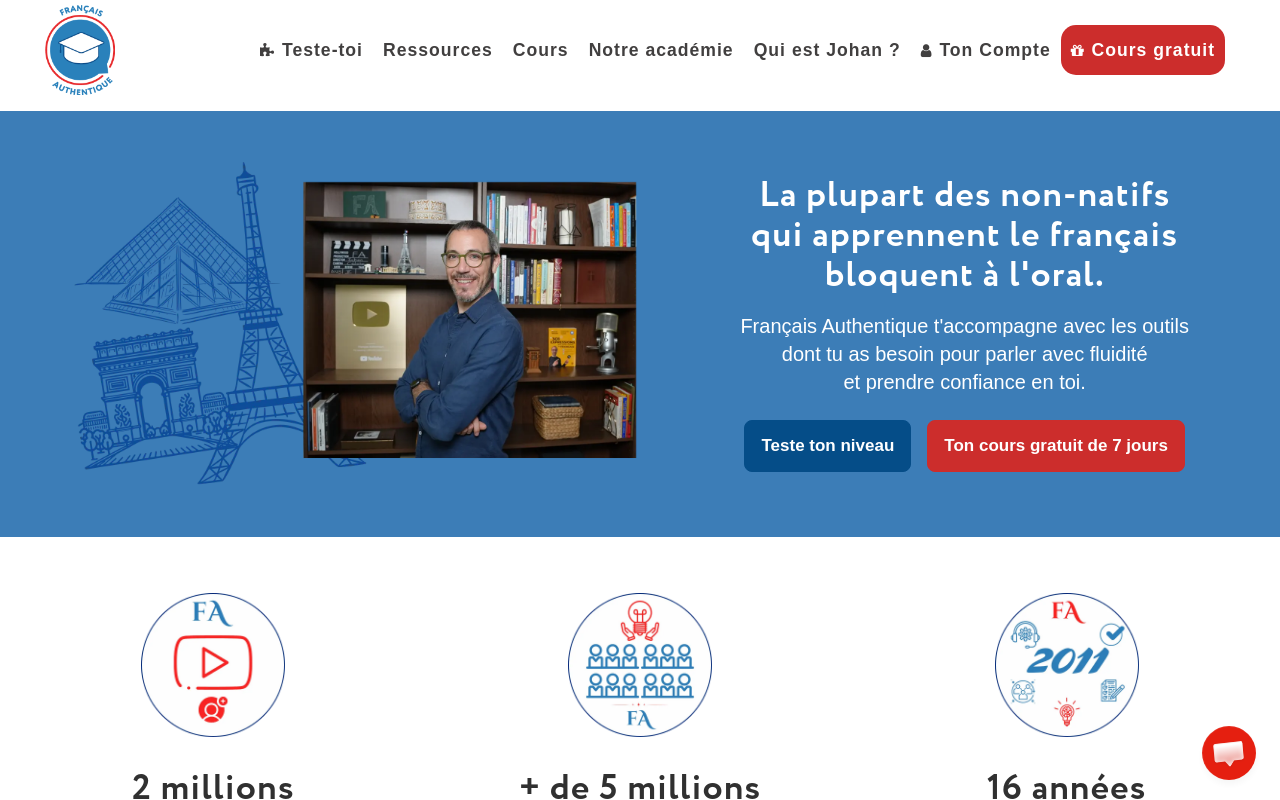
Français Authentique takes a different angle from the rest of this list. Host Johan Tekfak frames episodes around the mindset and habits of language acquisition, not just French content itself, which makes it useful for learners who have the vocabulary but freeze in real conversation. The all-French delivery holds the immersion standard. The honest limitation: learners who want dense vocabulary input or cultural storytelling will find the self-improvement framing repetitive over time. It works best as a complement to content-heavier podcasts, not as a sole diet.
Passive listening through all five of these builds strong comprehension. The speaking gap is a separate problem. Learners who commit to all-French podcasts are finally doing the right kind of listening, but the production side of language stays quiet with every episode absorbed without output. Parrot's comprehensible input method addresses exactly this: it delivers short-form video content pitched at the same i+1 level and then prompts learners to speak the language back, converting absorbed input into actual conversational output rather than leaving it as passive recognition.
The B2 graduation signal is simple: when InnerFrench starts feeling easy and you are catching every word without effort, you have outgrown the intermediate tier. That is the cue to step into the deep end, where the next section's picks live, built entirely from unscripted native French with no concessions to learner comfort.
Related Reading
French Language Learning Resources
French Alphabet Pronunciation
How To Learn French Through Conversation
How To Conjugate Re Verbs In French
How To Learn French With Movies
Learning Resources For African French
How Long To Learn French
Which Podcasts Are Best for Advanced French Learners Chasing Authentic Fluency
Advanced French learners face a specific challenge: finding content that is authentic enough to build real fluency but comprehensible enough to drive acquisition rather than frustration. Three podcasts separate the learners who genuinely close the gap from those who accumulate listening hours without converting them into fluency. The content needs to sit just above your current ceiling. Stephen Krashen's comprehensible input research, replicated across decades of acquisition studies, shows that audio pitched at i+1 (one step above current level) drives acquisition, while fully native, unstructured speech often produces zero uptake because the brain cannot extract meaning fast enough to build new patterns.
One of the most common frustrations advanced French learners face is that structured learning apps, Duolingo and their kin, leave them feeling completely lost the moment they encounter real, authentic French conversation. Completing every lesson, earning every streak badge, and still freezing in front of a native speaker is a predictable result of training on content that was never designed to expose you to how French actually sounds, moves, and breathes. The three podcasts below are chosen to bridge that gap, absorbing authentic vocabulary and natural speech patterns from content pitched at native level, not pedagogical level.
1. Journal en Français Facile - Daily B2 News Immersion from RFI
The gap between 'learning content' and 'authentic native content' is a real barrier. | what we hear from advanced French language learners
Journal en français facile from Radio France Internationale delivers roughly 10 minutes of current news daily in slightly slowed, lexically simplified French that preserves the register and vocabulary of real journalism without stripping it bare. It is the strongest B2 anchor on this list because it solves the comprehensibility problem while keeping content culturally dense. You are absorbing the vocabulary and cadence of authentic French journalism, not a classroom simulation of it. The Apple Podcasts listing makes it easy to subscribe and build a daily habit without friction.
The real limitation: learners who use it as their only input bank thousands of minutes of receptive listening without activating the motor-planning circuits required to speak, so comprehension grows while production stays frozen. This is the trap that learners who have already struggled with traditional memorization-based methods, and who come to a research-backed alternative to escape passive accumulation, most need to guard against.
2. Easy French - Unscripted Street Interviews for Authentic Casual Speech
Easy French is the best source of genuinely unscripted, colloquial French on this list. Street interviews with Parisians capture the elisions, filler words, and regional cadence that no scripted podcast reproduces, making it the right pick when your goal is authentic casual speech comprehension rather than formal register. The companion YouTube channel's scale (millions of views across its library) confirms this is a proven, widely-used resource, not a niche experiment.
This podcast also directly addresses one of the sharpest pain points advanced learners report: finding French content that feels authentically French rather than pedagogically simplified. Easy French does not simplify; it exposes you to the full texture of how native speakers actually talk on the street, which is exactly the kind of real-world listening comprehension that textbook audio can never replicate. The trade-off: episodes vary in difficulty depending on the speaker, so B2 learners will occasionally hit passages that are genuinely opaque without transcripts.
3. Parlez Away - Conversational Deep Dives for Upper-Intermediate to Advanced Listeners
Parlez Away fills the register gap between news French and casual street speech by anchoring long-form conversations on culture, history, and social topics in natural but measured delivery. Upper-intermediate learners who find Easy French too fast and Journal en français facile too formal will find this the most comfortable stretch zone, content-rich enough to feel genuinely French, linguistically measured enough to stay inside productive comprehension. That combination is rarer than it sounds; the gap between "learning content" and "authentic native content" is real, and Parlez Away sits closer to the authentic side than almost anything else at this level. It is not ideal for accent variety because the hosts maintain consistent metropolitan French, so learners targeting regional comprehension should treat it as a complement rather than a primary source.
Advanced learners who spend months inside these three podcasts often report the same frustration: they can follow French comfortably but still freeze when they need to produce it. Neurolinguistic research consistently shows that receptive listening activates different neural pathways than the motor-planning circuits required for speech production, so no amount of additional audio input alone closes that gap.
Parrot is built around exactly this insight. Every video session runs on a comprehensible input method that governs how content is selected and sequenced for each learner, short-form native video pitched at the level just above your current ceiling, so you are absorbing authentic vocabulary and natural speech patterns rather than rehearsing sanitized classroom language. When you are ready to move from listening to producing, Parrot Back provides structured speaking practice that converts receptive gains into actual output, and the AI tutor layer gives personalized feedback and targeted practice on top of the immersive video content rather than leaving you to self-assess in a vacuum.
Every video watched simultaneously contributes to real-world listening comprehension, not textbook listening, but the kind trained on how native speakers actually speak. These three podcasts represent the best the advanced tier has to offer, but even learners who complete every episode of all three consistently report the same frustration: understanding French and speaking it remain stubbornly different skills. The next section explains exactly why that gap exists, and what it actually takes to close it.
Why Even the Best French Podcasts Won't Make You Speak Without This
Your podcast habit is doing real work. It is building vocabulary, training your ear, and wiring comprehension pathways that matter. But comprehension and speech production are not the same neurological process, and no volume of listening bridges that gap on its own.
Why Audio-Only Formats Are Structurally Wired for Listening Not Speaking
The core promise of podcast-based language learning, that consistent weekly listening will compound into conversational ability, is structurally false regardless of which podcast a learner chooses. Two independent bodies of evidence converge on the same conclusion: comprehensible input is necessary but not sufficient for acquisition, and speaking is a physically separate skill requiring its own motor-output practice that no amount of passive listening can substitute for. The podcast format is a one-way channel by design. It delivers input; it requests nothing back.
As industry research confirms, speech production relies on distinct motor-planning and output pathways that are neurologically separate from the circuits that decode heard language. Listening trains recognition. Speaking trains a physically different skill, one that requires its own deliberate, repeated activation to develop.
A learner who spends months absorbing French audio has exercised exactly one half of the acquisition equation, and the other half remains completely untouched. Switching to a better-leveled show does not fix it. The structural limitation is the format itself: no speaking prompt, no corrective feedback, no motor output required.
The Listener-to-Speaker Gap Where Plateau Actually Happens
The plateau arrives quietly. Learners report understanding much of a podcast episode and still freezing the moment a native speaker addresses them directly. Research synthesized by The Language Gym puts it plainly: comprehensible input alone is insufficient to develop productive output, because speaking requires a separate set of cognitive and motor processes that must be explicitly practiced.
Recognition and retrieval are different cognitive acts, and passive listening only trains the first one. Every hour logged without a paired speaking session improves comprehension while leaving the production gap completely intact.
It is a structural gap that more podcast hours cannot close.
How to Extend Your Podcast Habit Into Real Speaking Practice
The lowest-friction path is adding an output layer on top of what works. Most podcast listeners already have the comprehension foundation; what they need is a format that demands a spoken response and closes the feedback loop their current routine leaves open.
That is the structural gap Parrot's short-form video feed addresses. Where a podcast delivers audio and moves on, a video-first comprehensible input session can pair immersive input with active parrot-back speaking practice, converting listening time into production time. The right podcast gets you to the door.
Next, a level-by-level decision framework that matches your current French to the show most likely to move you forward. If you prefer dedicated 30-minute study blocks at a desk, following grammar tables, working through exercises, and reviewing rules in sequence, this approach will feel thin; it is designed for learners who need French to fit into fragmented, screenless windows, not for those who learn best with structured, grammar-first sessions.
Related Reading
Best French Audio Books
French Tv Shows To Learn French
Rocket French Reviews
Pimsleur French Review
Next steps
If your commute hours keep stacking up without turning into real conversational ability, the path forward starts with pairing comprehensible input at the right level with active speaking practice. Start with our learn Spanish.
The 95-98% vocabulary comprehension threshold means that most self-described beginner podcasts deliver content too difficult to drive any acquisition at all, turning listening time into noise exposure. And even when level-matching is solved, receptive listening activates different neural pathways than the motor-planning circuits required for speech, meaning thousands of minutes of well-chosen audio still leave the production gap completely intact. Together, those two realities point to one logical next step: a format that handles level sequencing automatically and builds spoken output into the same session, not as an afterthought.
Start with Parrot to see how comprehensible input and speaking practice run together in a single workflow. The same method applies to French learners: short-form native video pitched just above your current ceiling, paired with Parrot Back speaking drills that convert what you absorb into language you can actually produce.
Frequently Asked Questions
Why can I understand French podcasts fine but still freeze when I try to speak?
Understanding French and producing it are two completely separate neurological skills, and podcasts only train one of them. Your brain files podcast French under "things I can decode" rather than "things I can generate," and those are stored differently. Production requires a separate rehearsal loop, pairing listening with active speaking practice, such as repeating out loud what you hear, is what closes that gap.
How slow does a French podcast need to be for it to actually help me learn?
The key is keeping your vocabulary comprehension at or above the 95-98% threshold, below that, listening becomes noise exposure rather than language learning. For absolute beginners, this means the podcast needs controlled speech rate and English scaffolding, not just a slower pace. Shows that don't explicitly gate their difficulty to A1–A2 from episode one often fall below that threshold even when they feel accessible after a few weeks.
Is it true that podcasts work better than traditional courses for learning French?
Podcasts outperform courses on consistency because the format fits around a learner's life, a 27-minute commute is exactly enough time for one focused episode, but not enough to open a textbook. That said, podcasts have a real ceiling: they build comprehension but do not train speaking ability. The most effective approach pairs audio input with active speaking practice in the same stolen time windows.
What does i+1 mean, and how do I know if a podcast is the right level for me?
I+1 is a concept from linguist Stephen Krashen's comprehensible input research, meaning content should sit just one step above your current level, not at it, and not far beyond it. In practice, staying with content you already decode at 95% produces diminishing returns, while content too far above your level becomes incomprehensible noise. A podcast's beginner or intermediate label is nearly meaningless without checking whether it guarantees controlled speech rate and level-gating by season.
Does it get harder to learn French as an adult, or is it too late to start?
Acquisition research does not support age as a hard ceiling for conversational fluency, particularly when input is comprehensible and consistent. The learners who stall are not the ones who started late, they are the ones who picked the wrong tool in week one, hit content they couldn't follow, and stopped. Choosing a properly scaffolded starting point and pairing it with active speaking practice removes that variable.