Duolingo's French course has real strengths and a real ceiling. Here is exactly where it helps, where it stalls, and what fills the gap.
The common assumption among language learners, especially those studying French to connect with family, a partner, or a heritage culture, is that if they keep their streak alive and finish more lessons, the conversation ability will eventually come; they just need more time and consistency on the app. Duolingo has over 500 million registered accounts and consistently ranks as the world's most downloaded education app. That scale is real, and it matters. But scale tells you how many people started something, not how many finished it fluently. See our learn Spanish for how this works in practice.
500 million
Registered Duolingo accounts worldwide
: Engagement Mechanics Reward Showing Up, Not Language Acquisition Every tap earns XP. Every day you open the app extends your streak.
Hearts limit how many mistakes you can make before the session ends. None of those mechanics measure whether language is sticking in long-term memory. They measure whether you showed up and finished the activity.
That distinction sounds small. It is not. Learners who track their streak for months often describe the same experience: the numbers climb, the motivation stays, but the moment a real French speaker says something unexpected, everything freezes.
The app optimized for return visits, and it succeeded at exactly that. Activity types lean heavily on translation taps, word matching, and listening recognition. That structure trains recognition, which is genuinely useful early on, but it is a different cognitive process from producing spontaneous speech.
Image: Duolingo app streak and XP mechanics on a desk beside a blank speech bubble
Finishing the Course and Acquiring the Language Are Two Separate Outcomes French is among the nine courses that now cover advanced B2-level content, making it one of the platform's most developed offerings. That is a meaningful credential. The ceiling, though, is real. Finishing the course and acquiring the language are treated, in practice, as two separate outcomes.
Key takeaways
Duolingo's streak mechanic is its strongest feature, and its most misleading one, because finishing lessons and acquiring a language are not the same activity.
A 300-day streak does not predict conversation ability; most learners who complete the French tree still freeze when a native speaker opens their mouth.
Duolingo's gamified loop is calibrated to measure how often you show up, not whether your French is improving, those two things diverge fast.
Duolingo Plus removes ads and adds a few extras, but it does not change the underlying architecture, so paying for it does not fix the output problem.
The wall most learners hit is structural, not motivational, the app was built to keep you returning, not to produce a speaker.
Comprehensible input, hearing and reading French at a level just above yours, is the most research-backed path to real acquisition, and Duolingo delivers almost none of it.
Parrot (parrotapp.com) is built around that gap: short-form French video content, structured like comprehensible input, so the method your brain actually uses to acquire language is the one doing the work.
What Are Duolingo's Strengths for Learning French?
Duolingo's Strengths for Learning French
Duolingo's strengths for learning French are real, specific, and worth naming clearly before anything else. Using it well requires knowing exactly what those strengths are, so you don't spend months on the wrong expectations.
1. Streaks, XP, and Leaderboards - Habit Formation That Actually Keeps You Returning Daily
Image: Is Duolingo Good for French - streaks xp leaderboards habit
Duolingo's gamification system, daily streaks, experience points, and competitive leaderboards, is engineered around habit-formation research, not just entertainment. For French learners who struggle with consistency, these mechanics create a powerful psychological pull to open the app every day. The real tradeoff: the system can incentivize completing a lesson quickly over genuine comprehension, rewarding streak maintenance rather than deep learning.
What Are Duolingo's Weaknesses for Learning French?
The common assumption among Duolingo users is that if they keep their streak alive and finish more lessons, the conversation ability will eventually come; they just need more time and consistency on the app. Finishing the Duolingo French tree feels like an achievement. The XP adds up, the streak counter climbs, and the progress bar fills in satisfying increments.
But a 300-day streak and a completed course are not the same thing as being able to understand a native French speaker on the Paris metro. That gap is a structural one, and it shows up in specific, predictable ways.
1. Conversational Fluency Gap - Drills Don't Build Real Speaking Ability
Duolingo's format builds recognition, not production. Tapping the correct tile, matching a word to its translation, choosing the right multiple-choice answer: these activities train your brain to identify language, not generate it. Second language acquisition research is clear that spontaneous speech requires a different kind of input entirely. Reaching even a B1 level on the Common European Framework means producing unrehearsed speech in real time, under real conversational pressure. Translation drills do not train that skill, regardless of how many days in a row you complete them.
A pattern that surfaces repeatedly among serious French learners is this: reading comprehension improves noticeably on Duolingo, but spoken French stays frozen. As one observation from a native French teacher noted, students who completed the full course arrived with decent vocabulary and readable written French, but with no working grammar intuition and no ability to produce spontaneous speech. The app had never asked them to.
Every minute spent in drill mode is a minute not spent on comprehensible input: real native speech, delivered in context, at natural speed. Stephen Krashen's input hypothesis, supported by decades of replication in SLA research, identifies this as the primary driver of language acquisition. Parrot is built on exactly this principle, using short-form French video clips from real native speakers so learners absorb the language the way the brain is designed to absorb it.
2. Shallow Grammar Explanations - A Real Wall for Intermediate French Learners
French grammar is not simple. The subjunctive alone stops thousands of intermediate learners cold. Duolingo's grammar notes, where they exist at all, are brief pop-ups that introduce a rule without explaining the reasoning behind it.
Second language acquisition research consistently shows that implicit grammar exposure works best when learners receive enough comprehensible input to internalize patterns naturally. Duolingo's format does neither: it is not deep enough to teach grammar explicitly, and it does not provide enough contextual input for implicit acquisition to take hold. The result is a learner who can pass a fill-in-the-blank exercise on the subjunctive but cannot use it in conversation.
3. Repetitive and Slow-Paced - Frustrating Once You're Past Beginner Level
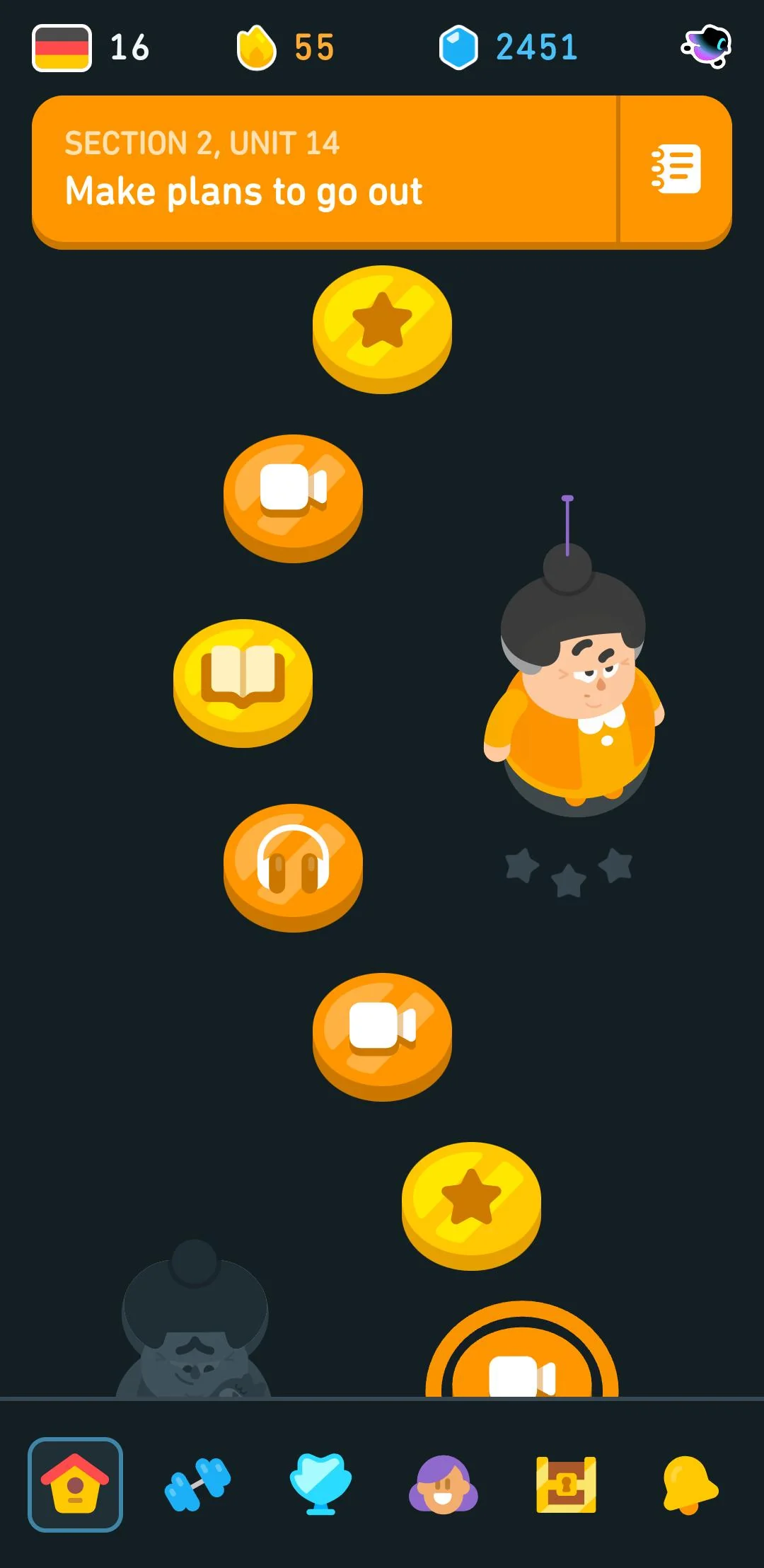
Duolingo's lesson structure is optimized for absolute beginners, cycling through the same vocabulary and sentence patterns at a pace that quickly feels tedious for anyone with prior French exposure or fast early progress. Intermediate learners report a distinct plateau where the app offers little new challenge, yet the gamification loop keeps pushing the same content. The format rewards streak maintenance over genuine linguistic advancement, making it a poor fit for learners ready to move beyond A2.
4. Can Duolingo Make You Fluent in French? An Honest Answer
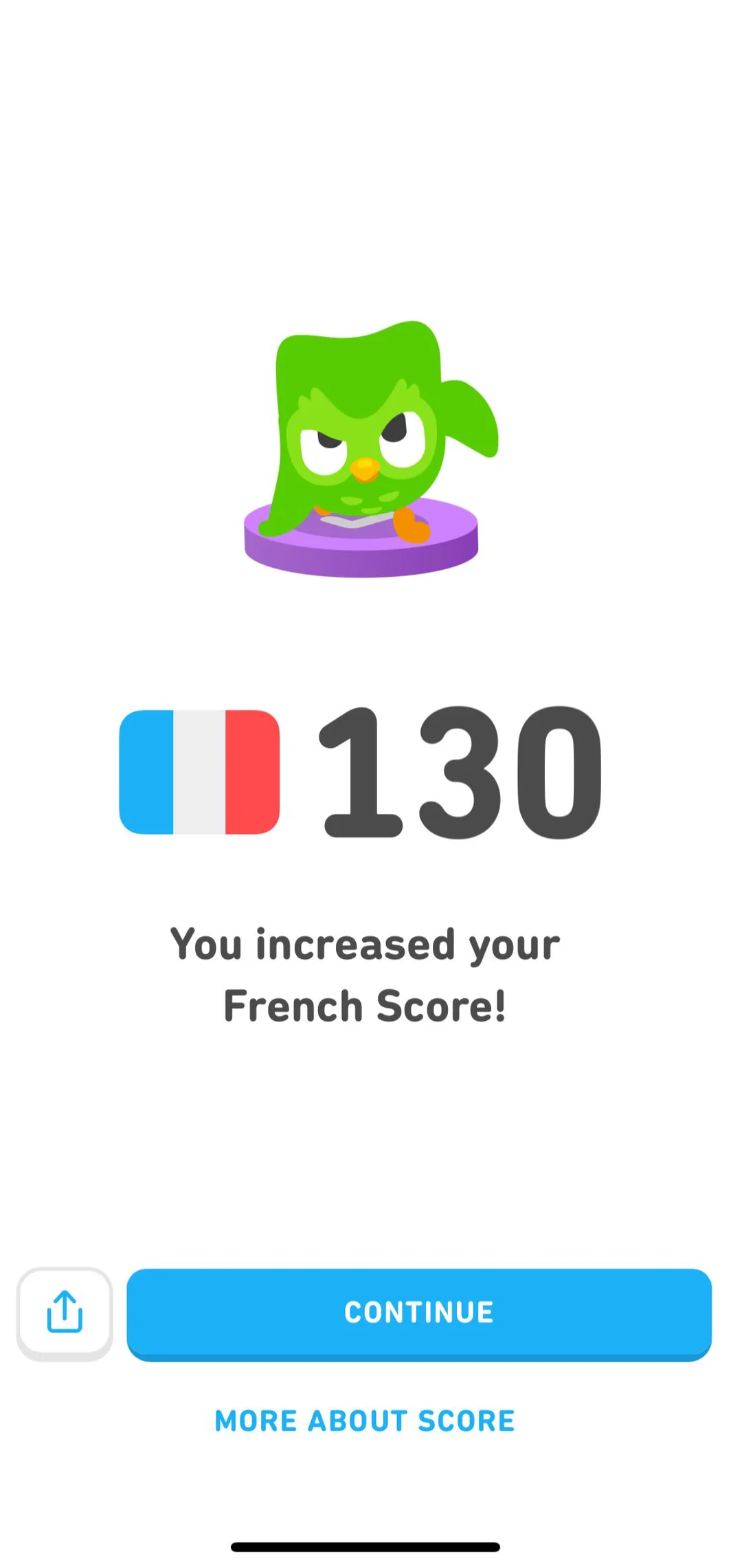
The short, honest answer is no. Duolingo can carry a dedicated learner to a solid A2 or early B1 foundation, enough to read simple texts and recognize common phrases, but fluency requires speaking with real people, consuming native content, and developing grammar depth that Duolingo simply doesn't provide. It is a legitimate starting point and a useful maintenance tool, but treating it as a complete French learning solution will leave you well short of fluency.
5. Free Tier Limitations - Ads, Energy Caps, and Restricted Content Access
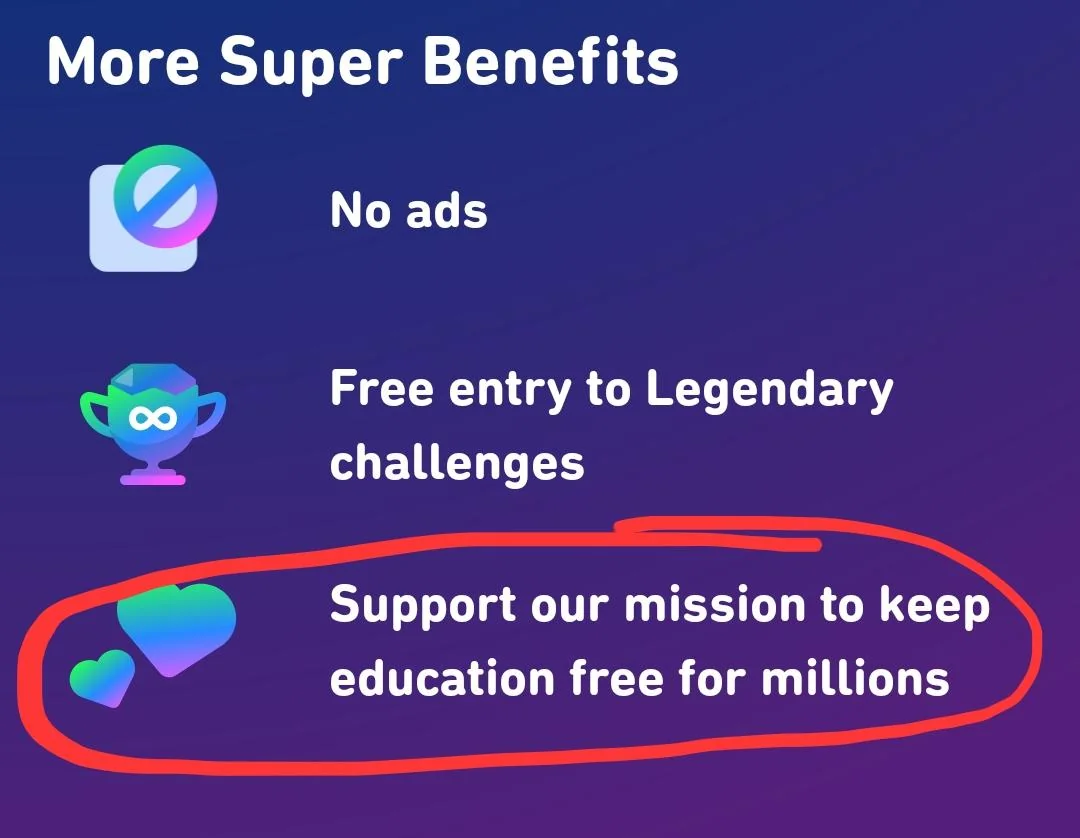
The free version of Duolingo has grown increasingly restrictive, with intrusive ads breaking lesson flow, an energy system that cuts off practice sessions before learners feel finished, and certain content locked behind the Super Duolingo paywall. For French learners trying to build a consistent daily habit on a budget, these friction points are more than annoying, they actively interrupt the spaced repetition and momentum that make language learning effective, undermining the app's own core value proposition.
What Duolingo Users Actually Say About Learning French
Among French learners, a pattern becomes impossible to ignore: learner after learner reports the same arc, almost word for word. The streak climbs. The XP accumulates. Then a native speaker opens their mouth, and everything stops. The common assumption among these learners is that if they keep their streak alive and finish more lessons, the conversation ability will eventually come. They just need more time and consistency on the app.

The Market Consensus - Useful for Basics, Humbling in Real Conversation
Among French learners and language enthusiasts, opinion on Duolingo for French is precise. The near-universal verdict is that the app works well as an entry point and almost nowhere else. Learners consistently describe picking up basic vocabulary, recognizing common phrases, and feeling genuinely good about early progress. The trouble starts the moment that progress gets tested outside the app. As one widely echoed observation puts it, Duolingo "sets you up to succeed, but it won't work as your only tool."
That ceiling is structural.
The Classic User Arc - Early Wins, Streak Pride, Then the Plateau Wall
The arc is almost universal. Week one feels like momentum. Month three feels like mastery is close. Then somewhere around the 100-day mark, the wins stop compounding. Duolingo's own efficacy research measures outcomes like word learning and grammar pattern recognition, not spontaneous spoken output. That is not a criticism of the research; it is an honest description of what the app was built to improve. The problem is that most learners sign up wanting the second thing and get measured only on the first.
Streaks make this worse. The gamification that drives daily returns also makes it tempting to rush through a session without absorbing anything, because the streak rewards showing up, not understanding.
The 80/20 Problem - What Duolingo Covers vs. What Conversation Actually Demands. Real conversation is dominated by spontaneous output and real-time listening comprehension, two skills Duolingo's activity model is not designed to build.
Related Reading
French Language Learning Resources
Fastest Way To Learn French
Best App To Learn French For Travel
Best Books To Learn French
How Long To Learn French
French Alphabet Pronunciation
How To Learn French Through Conversation
How To Conjugate Re Verbs In French
How To Learn French With Movies
Learning Resources For African French
Duolingo Cost and Pricing - Is Duolingo Plus Worth It for French?
Deciding whether to pay for Duolingo is a reasonable question, but the more useful question is what, exactly, you are paying for. The answer matters more for French learners than the pricing page suggests, and the way Duolingo structures its tiers makes that answer deliberately hard to find before you've already committed.

What the Free Tier Actually Gives French Learners (and What It Walls Off)
The free tier gives you the full French course, streaks, and XP. What it takes back is attention and momentum. According to Duolingo's own product page, the free experience includes ads between lessons and a hearts system that cuts off practice the moment you make too many errors. Make four mistakes and your session ends. For a beginner trying to build a daily habit, that friction is genuinely punishing.
There is a subtler frustration layered on top of that: Legendary lessons, the highest-difficulty practice units in each skill, are effectively inaccessible on the free plan, locking beginners out of the content they need most precisely when they're ready to push past the basics. That is a meaningful ceiling, not a minor inconvenience.
Duolingo Super - What the Mid-Tier Upgrade Unlocks and What It Doesn't
Super removes the ads and the hearts system, adds offline access, and unlocks unlimited skill tests and, crucially, restores access to Legendary lessons that free users cannot reach. But as Duolingo confirms, it does not change the lesson structure or add any meaningful free-form conversation practice. The ceiling rises slightly, but it stays well short of fluency. Paying for Super buys comfort and content access, not genuine communicative capability.
One more friction point worth naming: Duolingo buries its subscription pricing behind a "Start Free Trial" button, requiring users to click through before they can see what they'll actually be charged. That lack of transparency makes comparison-shopping harder than it should be, and it's a pattern that extends to Duolingo's advertising as well, where pricing is rarely disclosed upfront. For learners trying to make an informed decision, it's a frustrating dynamic to navigate.
Duolingo Max's AI Conversation Feature - Does It Finally Close the Fluency Gap?
Duolingo Max introduces an AI Roleplay feature for scripted conversational scenarios, a genuine step forward from the hearts-and-XP loop. The scripted nature of the scenarios limits how much real conversational practice a learner can get; what you're drilling is closer to textbook phrase patterns than the fluid, unscripted exchanges that actual fluency demands. And the price reflects that premium positioning. In markets like the Philippines, the full Max plan cost sits out of reach for many individual learners, with some splitting family plans just to make the per-person cost workable.
That gap, between structured app exercises and real conversational French, is precisely what Parrot is built to address. Where Duolingo Max offers scripted AI roleplay as an add-on, Parrot's core method is built around a research-backed approach that governs how content is selected and sequenced for each learner, every session. Instead of translating vocabulary in isolation, learners watch a short-form video feed of native-speaker content, building real-world listening comprehension the way acquisition works, through exposure to language used naturally rather than textbook phrases engineered for a lesson. Every video watched contributes directly to that listening practice, immediately and without a paywall tier governing access.
For learners who want more than passive immersion, Parrot's AI French Tutor layers in active, personalized practice, available during or after video sessions, when a learner wants targeted feedback beyond what watching alone provides. And Parrot Back, the app's speaking practice feature, closes the production side of the loop that Duolingo Max's roleplay only partially addresses. As My Engineering Buddy's independent review of Duolingo's pricing and alternatives makes clear, the structural limits of Duolingo's tiers are well-documented, and for learners who have already found that memorization-based methods aren't sticking, a comprehensible-input alternative is worth understanding before the next subscription renewal arrives.
Duolingo vs Other French Learning Apps - How Does It Actually Compare?
That comparison starts with an uncomfortable truth: most people who abandon Duolingo do not leave because they chose the wrong app. They leave because they hit a wall and assume the solution is a different interface. The mascot was never the problem. Neither was the color scheme. What stalls progress is the architecture underneath, streaks, XP, and dopamine loops calibrated to measure how often you open the app, not how much French your brain has actually acquired.
A deeper problem compounds the plateau: Duolingo's gamified format makes it structurally easy to rely on context clues and test-taking instincts rather than genuine acquisition. Learners finish a lesson feeling productive, but when they try to recall a word in a real conversation, nothing is there. That hollow retention is a predictable outcome when an app optimizes for daily active users instead of language depth. Experienced French learners have ranked Duolingo as significantly inferior to dedicated resources like Anki and immersive listening tools, and it is conspicuously absent from many B2-level success stories altogether, suggesting it is simply not effective enough to credit once real progress is made.
1. Parrot - Best for French Learners Who Want Comprehensible Input Through Short-Form Video
Most alternatives to Duolingo are built on the same engagement loop, just reskinned. Parrot's short-form video feed is the structural exception: it delivers French through meaning-in-context, the way acquisition actually happens according to Krashen's comprehensible input research (1982), which remains the dominant theoretical framework in SLA and has been corroborated by empirical reviews including Mason & Krashen (1997) and Renandya & Jacobs (2002). Parrot's AI governs how content is selected and sequenced for each learner, so the feed adapts to where you are. There is no onboarding maze to navigate: immediately upon opening the app, learners start consuming real spoken French tied to real situations, so every video watched from the first session contributes directly to listening comprehension.
For learners who have struggled with traditional memorization-based methods and want a research-backed alternative, that immediacy matters. When passive watching builds enough of a foundation, Parrot Back, the app's speaking practice feature, lets learners move from input to active output without leaving the platform, adding personalized feedback on top of the immersive video content.
It is worth noting that the comprehensible input hypothesis itself continues to be refined by ongoing research. A Frontiers in Psychology neuro-ecological critique of Krashen's hypothesis argues that input alone does not fully account for the complexity of language acquisition, and that context, interaction, and embodied experience all play roles. Parrot's design reflects this nuance: the short-form video feed handles comprehensible input and listening practice, while Parrot Back addresses the active, interactive dimension that passive watching cannot cover on its own. The trade-off is that it is optimized for listening and reading comprehension at early-to-mid levels, so advanced learners producing complex output will still need live conversation practice alongside it.
2. Lawless French - Best for Grammar Depth Duolingo Completely Skips
Lawless French is the resource learners consistently reach for when Duolingo's cursory grammar notes leave them stranded on the subjunctive or the conditional. The site provides detailed, structured explanations with examples that go far beyond what any gamified app surfaces. It is free, well-organized, and widely endorsed by serious learners as the reference Duolingo never became. The limitation is that it is a reference tool, not a practice engine, so reading its grammar pages alone will not build spoken fluency.
3. iTalki - Best for Real Conversational Practice No App Can Replicate
Community tutors on iTalki typically charge between 0 and $20 per hour for French, making live conversation practice genuinely accessible rather than theoretical. Research on corrective feedback in SLA, including Lyster & Ranta's widely cited 1997 classroom study, consistently shows that real-time native-speaker correction accelerates output accuracy in ways no app has replicated. Productive output forces active language creation and forges neural connections that passive input alone cannot build. iTalki is most valuable once you have baseline comprehension and are ready to start speaking.
4. The Gamification Trap - Why Switching Apps Alone Won't Make You Fluent in French
Learners frustrated with Duolingo often switch to other short-form or gamified apps expecting an immersive alternative, and quickly discover those apps are built on the same loop: streaks, XP, and dopamine, not acquisition. Research and community consensus align here: gamification works at A1/A2 to build the habit of showing up, but actively works against you past B1, when protecting a streak replaces actually learning. No app-based approach alone reliably produces spoken fluency without deliberate conversational practice.
Should You Use Duolingo for French? The Honest Worth-It Verdict
Here is what most learners discover too late: the streak and the skill are two completely different things, and the app is only designed to deliver one of them. If you have spent months tapping tiles and watching your XP climb while your spoken French stays frozen, that is not a motivation problem. It is a structural one.
"People question whether Duolingo for French leads to real language learning or merely streak-keeping behavior, a core tension directly relevant to whether the app is 'worth it'."
— what we hear from language learning app users

The Honest Verdict - Duolingo Is a Vitamin, Not a Meal
Duolingo is best understood as a daily supplement, not a complete learning system. Used for 10 minutes as vocabulary review before more demanding practice, it earns its place. Used as the whole session, it creates the feeling of progress without the substance of it. The distinction matters because feelings of progress are exactly what the streak mechanic is engineered to produce, regardless of whether acquisition is actually happening.
The research behind this is not editorial opinion. A Duolingo Forum Archive analysis put it plainly: "Reading at B1 and conversing at B1 are totally different universes." Completing French units trains recognition. Conversation requires spontaneous output, which recognition-based drills simply do not build.
That gap is not hypothetical. Consider what a near-four-year commitment to Duolingo French actually yields: learners who maintain streaks of well over a thousand days frequently arrive at B1, a result that falls short of the high-B2 proficiency Duolingo's own marketing implies. The free version compounds the problem further, offering an experience so stripped back that serious learners routinely describe it as feeling like a different, inferior app altogether. These are not edge cases; they represent the predictable ceiling of a system built around habit maintenance rather than acquisition.
The harder truth is that streak-keeping and language learning can become mutually exclusive behaviors. Every session spent protecting a streak is a session governed by what the app rewards, not what your brain needs. That is the core tension serious French learners face, and it is structural, not personal.
Who Should Use Duolingo for French (and Who Is Wasting Their Time)
The evidence reveals two separate plateau clocks running simultaneously for Duolingo users: a content clock, because the French course tops out around A1/A2 to low-B1 in conversational terms, and a returns clock, because fewer than 5% of users ever reach 12,500 XP, meaning most quit long before hitting even that modest ceiling (Duolingo Forum Archive). In other words, most learners are not failing because they ran out of Duolingo content; they are failing because the diminishing emotional returns of gamified drilling cause dropout before any fluency milestone is reachable, and the streak mindset that drives early engagement is the same mechanism that eventually makes users feel trapped rather than motivated to pursue the higher-leverage practice that would actually move them forward.
Duolingo works well for absolute beginners who need low-pressure exposure to French sounds and basic vocabulary, and for intermediate learners who use it as a warm-up alongside heavier input practice. It is genuinely not worth it as a standalone tool for anyone whose goal is holding a real conversation, because the app's architecture cannot close that gap no matter how consistent you are.
The honest trade-off: if conversation is your target, every minute spent exclusively on gamified drills is a minute not spent on comprehensible input, the method that actually wires the brain for spontaneous speech. That is the hidden cost of the streak loop. Parrot is built around this principle directly: its short-form video feed delivers native-speaker content sequenced by the Comprehensible Input Method, so every session you watch is simultaneously listening practice calibrated to your level. Where Duolingo asks you to recognize isolated vocabulary, Parrot's Parrot Back feature asks you to produce real speech, the output practice that recognition drills structurally cannot provide.
One practical advantage worth naming: Parrot's short daily session format makes it genuinely usable as a family tool, so learners who want to build a household habit rather than a solitary streak have a format that supports that. The app is particularly well matched to learners who have already stalled on memorization-based methods and want a research-backed alternative, which describes a significant share of the people who have spent years on Duolingo and find themselves still frozen in spoken French.
Quick Decision Framework - Should You Use Duolingo for French?
Complete beginner, zero French exposure → Verdict: ✅ Yes → Best use: Daily 10-min habit builder; vocabulary on-ramp.
Beginner wanting basic travel phrases → Verdict: ✅ Yes → Best use: Supplement with Lawless French for grammar context.
Intermediate learner, goal = conversation → Verdict: ⚠️ Partial → Best use: Use only as warm-up; pair with Parrot or iTalki.
Learner with family/heritage connection, needs real speech → Verdict: ❌ No (alone) → Best use: Move primary time to comprehensible input + live tutoring.
Advanced learner targeting B2+ → Verdict: ❌ No → Best use: Content ceiling too low; use native media + iTalki.
Rule of thumb: Duolingo is worth keeping if it occupies ≤20% of your weekly French study time. The moment it becomes your whole session, you are optimizing for streak, not acquisition.
Related Reading
Best Podcasts For Learning French
Best French Audio Books
French Tv Shows To Learn French
Rocket French Reviews
Best Apps To Learn French Vocabulary
Pimsleur French Review
Best Online French Tutors
Is Babbel Good For French
Next steps
If your streak keeps climbing while your spoken French stays frozen, the path forward starts with recognizing that streaks track app engagement, not language acquisition. Those are different metrics pointing to different destinations. Start with our learn Spanish.
The content ceiling insight means that Duolingo's French course tops out around A1/A2 to low-B1 in conversational terms, so no amount of consistency closes that gap. The structural blind spot insight means that even the highest-tier subscription cannot deliver the unrehearsed, real-time conversation practice the brain needs to wire spontaneous speech, because the app's architecture was never built for that outcome. Together, they point to one practical move: shift your primary practice time toward comprehensible input from native speakers, which is the method the research actually credits for spontaneous spoken output.
Start with Parrot to see what a comprehensible input feed looks like in practice. From there, Parrot Back adds speaking output, and the AI Tutor layers in personalized feedback, giving you the full acquisition loop that gamified drills structurally cannot close on their own.
Frequently Asked Questions
Is Duolingo a good first step for learning French, even if it won't get me to fluency?
Yes, as a starting point for complete beginners it has real value. Duolingo is effective for building vocabulary foundations and basic sentence structure, requiring no prior knowledge to start, but the post is clear that finishing the course and actually acquiring the language are, in practice, two separate outcomes.
Does the science actually back up Duolingo's claims about learning French?
Duolingo's own efficacy research measures outcomes like word learning and grammar pattern recognition, not spontaneous spoken output. The gamification mechanics, streaks, XP, hearts, are data-driven retention tools designed to optimize daily return behavior, which is not the same as measuring whether French is sticking in long-term memory.
Why do so many people seem to hit a wall and stop making progress on Duolingo French?
The plateau is structural, not a motivation problem. Duolingo's activity model, tapping tiles, matching words, multiple-choice answers, trains recognition, not spontaneous production. Learners repeatedly report that reading comprehension improves but spoken French stays frozen, because the app never asks them to produce unrehearsed speech in real time.
Does Duolingo's AI conversation feature finally make it worth upgrading for French?
Duolingo Max adds AI Roleplay for scripted conversational scenarios, which closes some gaps, but the post notes its scripted nature limits real conversational practice. Simulated conversation inside a gamified system is still an activity disconnected from the meaningful, context-rich input that drives acquisition.