Streaks go up, real French still sounds like noise. Here is why the most popular vocabulary apps are built for habit, not fluency, and how to pick one that actually transfers to the real thing.
Diligent learners hit a wall that feels personal but is actually structural. The common assumption is that the problem is "I haven't studied enough vocabulary yet, I just need to learn more words and keep my streak going." But you open the app, complete the session, watch the streak counter tick up, and still go blank the moment a native speaker opens their mouth. That gap is a method problem, and understanding it is the first step toward fixing it with an approach built around real listening. See our learn Spanish for how this works in practice.
"Most French learning apps plateau at A1–A2 level content, leaving intermediate and advanced learners without meaningful progression, directly causing the 'stuck at quiz mode' problem."
— what we hear from intermediate and advanced French learners

A 2025 study published in Behavioral Sciences by Wang et al. found something that should change how every French learner thinks about quiz scores: participants showed a clear advantage in word recognition, but that advantage disappeared entirely in free recall, the condition that mirrors actual conversation. Recognizing "bonjour" when it appears next to a smiley face is a completely different cognitive act from pulling it out of memory mid-sentence while a barista is already moving on to the next customer.
Fluency adds a third layer on top of recall: processing words at natural speed, inside real sentences, with no multiple-choice safety net. Most French vocabulary apps never train that layer at all. Scoring perfectly on a word-match quiz does not mean those words are wired into your listening comprehension.
It means you are good at the quiz. The same 2025 Behavioral Sciences study showed that when retrieval conditions changed, even from words to pictures, memory performance dropped significantly, because vocabulary learned in one format does not automatically transfer when the context shifts. Silence to speech is a far bigger shift than words to pictures.
Words absorbed through visual flashcards carry no auditory fingerprint. When spoken French arrives at natural speed, compressed and connected across syllables, your brain has no sonic anchor to grab. The problem is the vocabulary drilled in silence was never anchored to sound, face, or situation.
An approach built around real spoken French, where a word is saved the moment you hear it inside authentic video, gives spaced repetition something the flashcard never had: a memory trace that already lives in the right context.
Key takeaways
Recognition and recall are different cognitive skills, most vocabulary apps train the first one almost exclusively, which is why you can ace a quiz and still go blank mid-conversation.
Streak counts and star ratings measure how enjoyable an app is to study with, not how well it prepares you to understand a native speaker.
Words encoded inside real spoken French, with tone, rhythm, and sentence context intact, are retrieved faster under real-world conditions than words drilled through isolated flashcard repetition.
Pricing screens rarely tell you whether the feature that actually drives retention is included in the plan you're buying.
The app you'll open tomorrow is the one that fits the minutes you actually have, not the schedule you planned, session length and friction matter more than feature depth.
Onboarding flows longer than two minutes see 47% higher abandonment before a learner ever reaches the feature that was supposed to help them.
Parrot's Personal Dictionary closes the loop: tap any word inside real French audio to save it, then review it through spaced repetition so the vocabulary moves from short-term recognition into long-term recall.
How to Choose the Right French Vocabulary App Before You Waste Another Month
That context gap explains why the most downloaded language apps and the highest-rated ones on any platform can still leave learners stranded the moment real French begins. Download counts and star ratings measure user satisfaction with the experience of studying, not the experience of understanding. A learner can enjoy an app, complete every lesson, and earn every badge while building a vocabulary that collapses on contact with native speech.
The ranking systems that surface these tools were never designed to ask whether words learned inside them transfer to a podcast, a film, or a conversation at a café counter. What most teams building in this space report is that gamified language learning platforms optimise for streak maintenance and daily habit formation rather than comprehension transfer, leaving learners with high session counts and vocabulary that evaporates under real conversational pressure. This is not an accident or an oversight; it is a design outcome, and that fragmentation is its own form of failure.
Parrot App was built around the Comprehensible Input Method precisely to close that gap, integrating listening, speaking, and vocabulary into the same session rather than separating them into disconnected modules. A retired traveller drilling tourist phrases and a professional aiming for conversational fluency will both rate an app five stars for entirely different reasons. Neither metric tells you whether the learning method inside the app matches how your brain actually consolidates a second language.
Across the broader landscape of retention research, contextual input format stands out as a key predictor of long-term retention because rich context gives your memory more hooks to hang the word on. If an app's primary format is text-matching or multiple-choice, that is a red flag regardless of its star rating, because the context is not manufactured; it is the content itself.
Check the app store screenshots for what the interface celebrates: if the primary visuals show streak counters, XP bars, leaderboards, or level-up animations, engagement metrics rather than retention outcomes drove the design decisions. Parrot App is most beneficial precisely when a learner has already run that experiment, when they have maintained streaks on a traditional memorisation-based app and still found that real French leaves them stranded, and they want a research-backed alternative built around comprehensible input instead of point accumulation. - Input format: prioritise apps that deliver words inside real native speech rather than text-matching or multiple-choice drills.
SRS-backed personal dictionary: look for a tap-to-save mechanic that captures words from content you actually watched and returns them through spaced repetition. - Session-length fit: confirm the core learning loop is meaningful at ten minutes or less, not dependent on thirty-minute blocks.
A generic vocabulary list, however well-researched, is built around what the average learner is assumed to need, rather than the words that surface naturally from content you are already engaged with. That moment of noticing is itself a memory event, and an app that captures it compounds its value over time. If the app's vocabulary system is entirely separate from its content layer, with no bridge between what you watched and what you review, that integration is missing and the compounding effect disappears with it.
Whether Session Length and Format Match the Windows You Actually Have
An app that requires thirty-minute blocks to deliver a coherent learning experience is not a flexible tool; it is a scheduling commitment, and for most adult learners fitting French into a commute, a lunch break, or the gap between putting children to bed and needing to sleep, that commitment is the first thing that breaks under a pressured week. Each session type within a well-designed app should stand on its own, so that none of them require you to have done the others first in the same sitting. That modularity is what allows the habit to survive a disrupted schedule rather than collapse the moment life intervenes.
The learner wanted to study; the app demanded more time than the day allowed, and the streak broke, and the habit never recovered. Format fit is not a convenience feature. For most learners with real schedules, it is the variable that determines whether any of the other quality signals ever get a chance to matter.
Related Reading
French Language Learning Resources
Best App To Learn French For Travel
Best Books To Learn French
How Long To Learn French
French Alphabet Pronunciation
How To Learn French Through Conversation
How To Learn French With Movies
Learning Resources For African French
How To Conjugate Re Verbs In French
The 8 Best Apps to Learn French Vocabulary in 2026 Ranked and Reviewed
Thirty seconds into a Duolingo session, you're matching "le chien" to a cartoon dog. Thirty seconds into a native French video, you're hearing "le chien" used the way a Parisian actually uses it, inside a sentence, with tone and rhythm intact. Both apps claim to teach vocabulary.
Only one of them encodes the word in a way your brain can retrieve under real-world conditions. That gap, between words you can recognize in a quiz and words you can pull up mid-conversation, is the lens every app below is evaluated through. Database size and streak counts are not the criteria.
The question for each app is simpler: does it build recall, or does it build quiz performance? One of the most consistent frustrations learners face at the start is simply not knowing which apps are worth their limited time, a problem real enough that curated, ranked comparisons have become the go-to resource before anyone downloads anything. Eight apps, one honest filter: that is the exact promise this guide keeps.
Parrot App
Duolingo
Babbel
Anki
Pimsleur
Rosetta Stone
Clozemaster
Memrise
Parrot App leads for context-first recall, the only app in this set where spaced repetition surfaces the original spoken video clip alongside each review item rather than a stripped-down flashcard, a structural encoding advantage predicted by Krashen's comprehensible input research. Duolingo's own page claims personalized AI-driven lessons and research-backed efficacy across reading, writing, listening, and speaking, making no acknowledgment of any "recall ceiling," which is an assertion our draft imposes on Duolingo that the page does not support. Babbel suits structured conversation learners.
Anki is the gold standard for serious spaced repetition. Pimsleur owns audio-only commute sessions. Rosetta Stone fits image-association learners.
Clozemaster bridges the gap for intermediates. Memrise lands closest to contextual video learning among the mid-tier options.
1. Parrot App - Best Overall for Context-First French Vocabulary
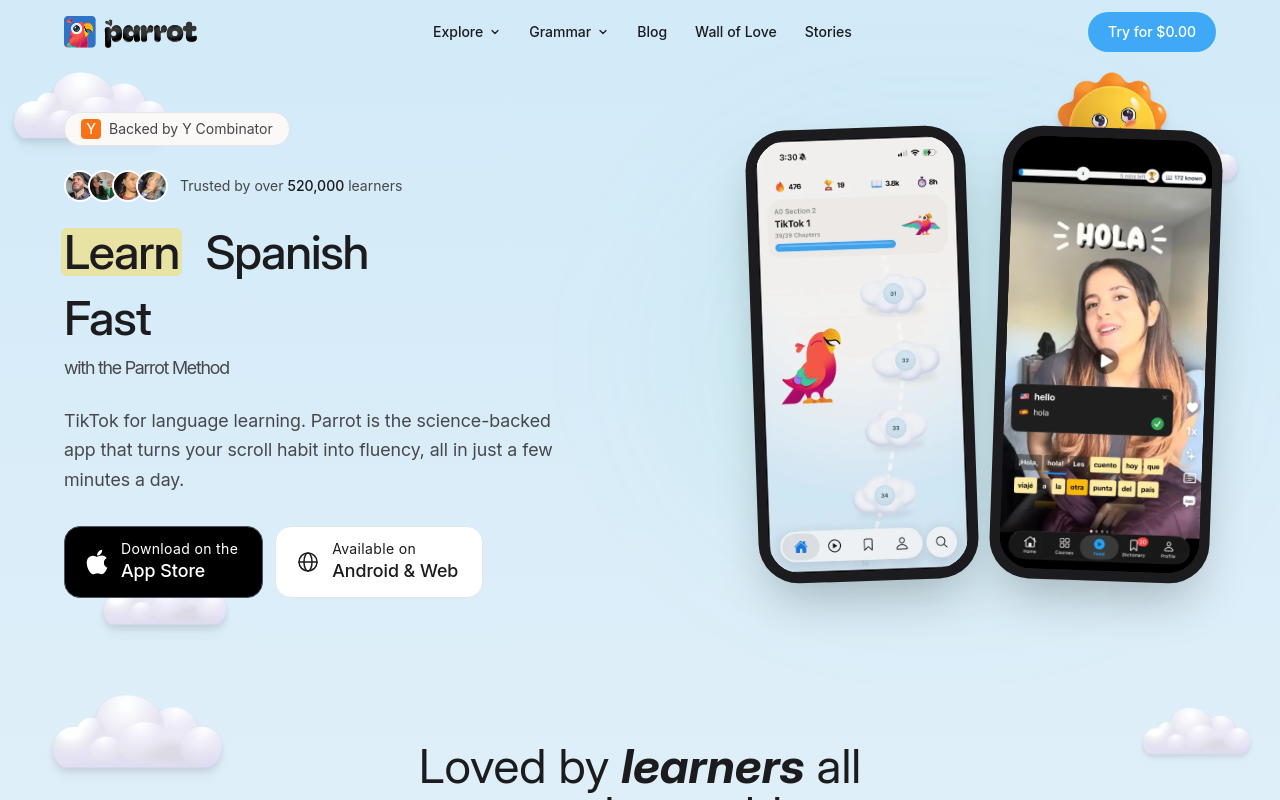
Parrot App is built around context-first vocabulary acquisition. A learner watches a native video in Parrot's short-form video feed, taps an unfamiliar word, and it saves instantly to a personal dictionary. From that moment, spaced repetition surfaces the word in future sessions, with the review carrying the original spoken context rather than a stripped-down flashcard.
That encoding difference is what comprehensible input research predicts will drive real recall: Stephen Krashen's input hypothesis, and the Wang et al. finding in Behavioral Sciences that context-shift drops memory performance, both support why audio-anchored saving outperforms silent flashcard review. The Comprehensible Input Method underlies every video session on Parrot, governing how content is selected and sequenced for each learner, so the videos a learner sees aren't random; they're calibrated to sit just above current comprehension, the zone where acquisition actually happens.
Every video watched also contributes directly to listening practice, building real-world listening comprehension rather than the textbook-conditioned ear most beginner apps produce. When a learner wants to go beyond passive watching, Parrot's Parrot Back feature adds speaking practice, and an AI Tutor layer offers personalized feedback and targeted drills on top of the immersive video content. The practical result is an app designed to fit learning into the gaps in the day, a commute, a lunch break, a few minutes between tasks, without it feeling like studying.
That matters because learners who have already failed with traditional memorization-based methods aren't looking for more flashcard queues; they're looking for something that converts ordinary screen time into acquisition. Most beneficial when you have 10 to 15 minutes of fragmented time and no appetite for grammar drills, and especially beneficial when traditional memorization-based methods have already failed you and you want a research-backed alternative.
2. Duolingo - Best Free Habit-Builder (With Real Recall Limits)
In the Duolingo, Inc. Q3 2025 Earnings Press Release, Duolingo reported that daily active users grew 36% year over year, making it the most proven habit-formation tool in this category. Its core growth metric is DAU and streak engagement, not fluency outcomes.
Learners who finish the French tree and still blank on spoken French are not outliers; they are the predictable result of an app optimized for daily opens over listening recall. Best for building the study habit from zero; not sufficient as a standalone vocabulary tool past the beginner stage. Babbel's lessons are built by actual language teachers, organized around practical dialogues, and sequenced more deliberately than Duolingo's gamified loops.
Vocabulary is introduced inside short conversation scenarios, which gives it more contextual grounding than isolated flashcard apps. The trade-off is format: lessons run 10 to 15 minutes but lean on text and audio prompts rather than native video, so the retrieval cues encoded at the moment of learning are thinner than full immersive input. Best for learners who want a structured syllabus and are willing to trade some immersion depth for clear lesson progression.
3. Babbel - Best for Structured Conversation-Focused Lessons
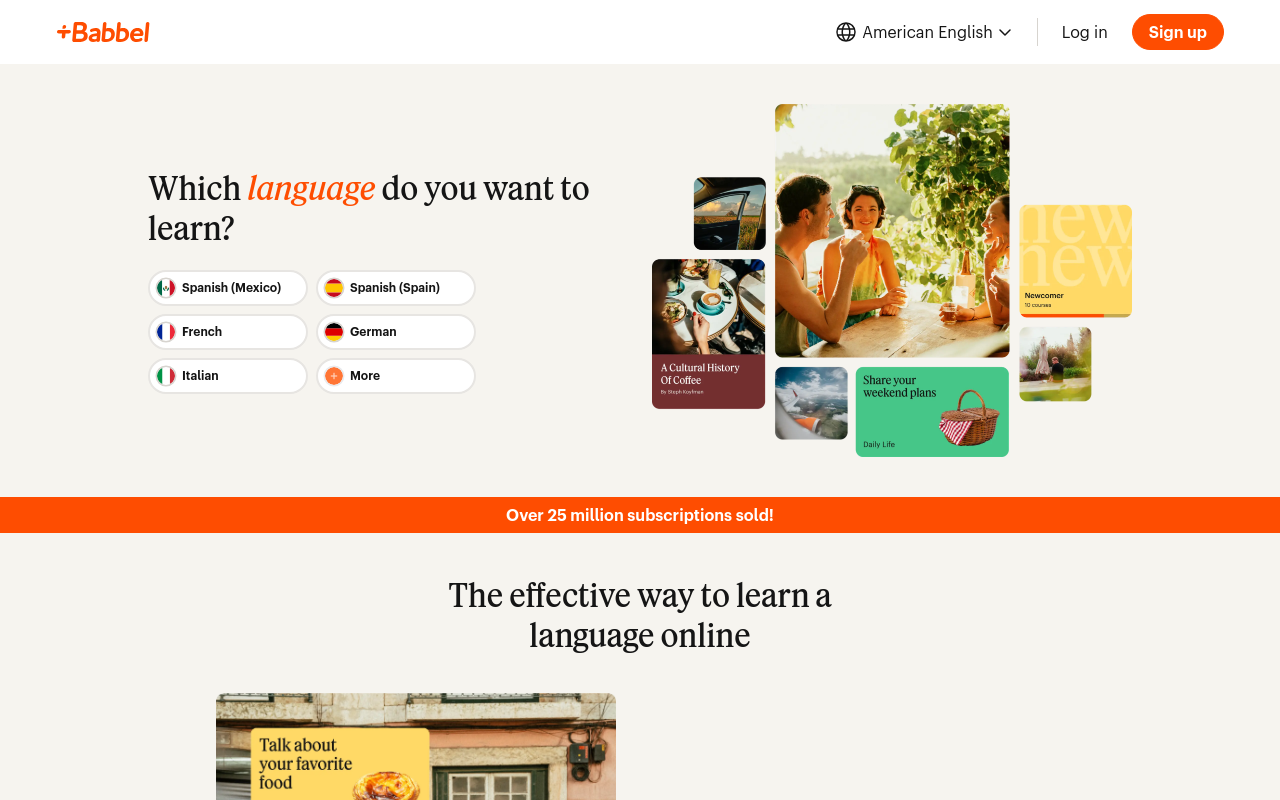
Babbel's curriculum is built around practical dialogue scenarios rather than isolated word lists, giving learners vocabulary anchored in real conversational contexts. Its structured lesson progression suits adult learners who want a clear path from A1 to B1. The honest weaknesses: lessons are text-heavy, the personal dictionary SRS is limited compared to dedicated flashcard tools, and the free tier is essentially a demo, meaningful use requires a paid subscription.
4. Anki - Best Free App for Serious Spaced Repetition
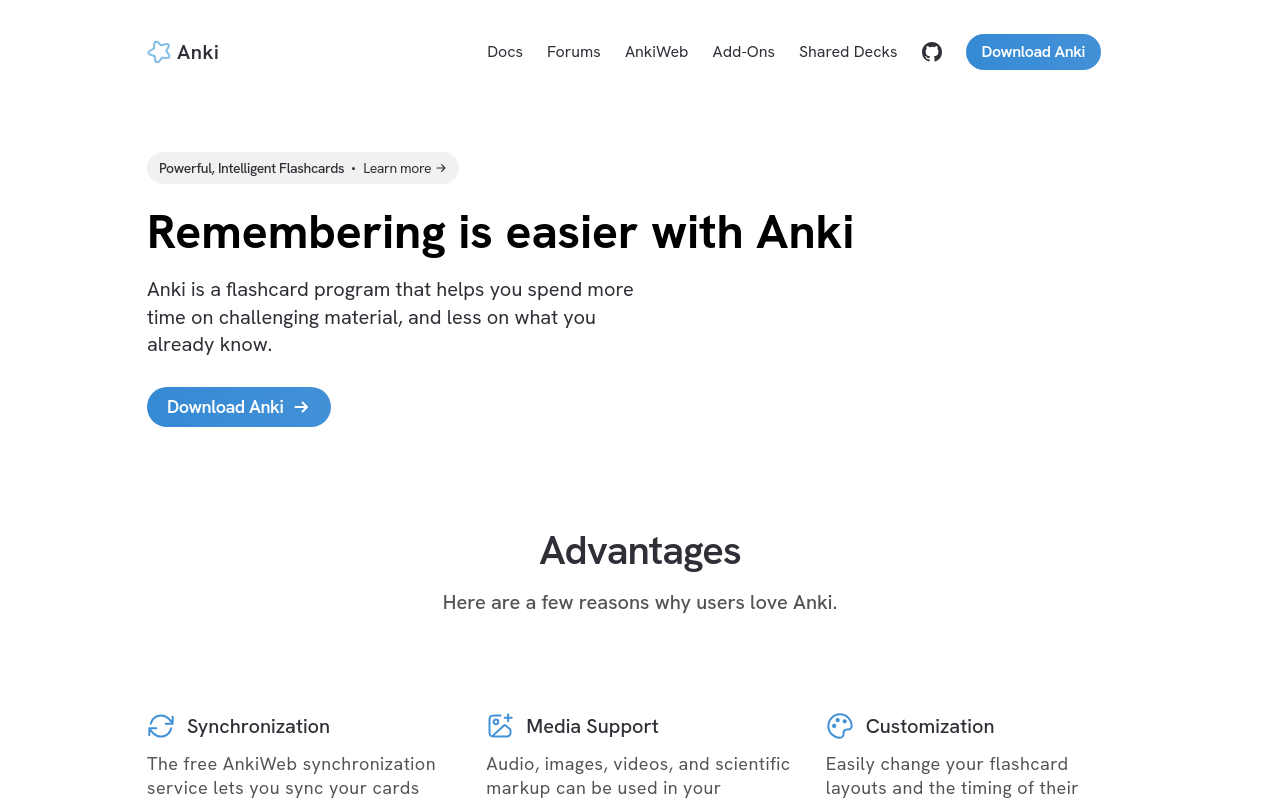
Anki's algorithm is built directly on the forgetting curve research that underpins modern spaced repetition, and its desktop version is free. The iOS app carries a one-time purchase price, which shifts the cost math compared to monthly subscriptions. The real barrier is setup: pre-built French decks vary wildly in quality, and building a personal deck from scratch takes time that most busy learners will not invest.
Most beneficial when the learner is disciplined enough to curate their own cards and already has a source of contextual input elsewhere. Anki handles the retention schedule; it does not supply the context. Pimsleur's method is built on spaced oral repetition, so vocabulary is introduced through listening and speaking prompts rather than text or visuals.
That audio-first format is useful for commuters who cannot look at a screen. The limitation is vocabulary breadth: Pimsleur's core French program covers conversational survival vocabulary at a pace that feels slow to learners who want to expand beyond functional phrases. It is also among the more expensive subscription options relative to the size of its word set.
Best for audio-only environments; less efficient for learners who want rapid vocabulary expansion.
5. Pimsleur - Best for Audio-First Vocabulary in Dead-Time Sessions
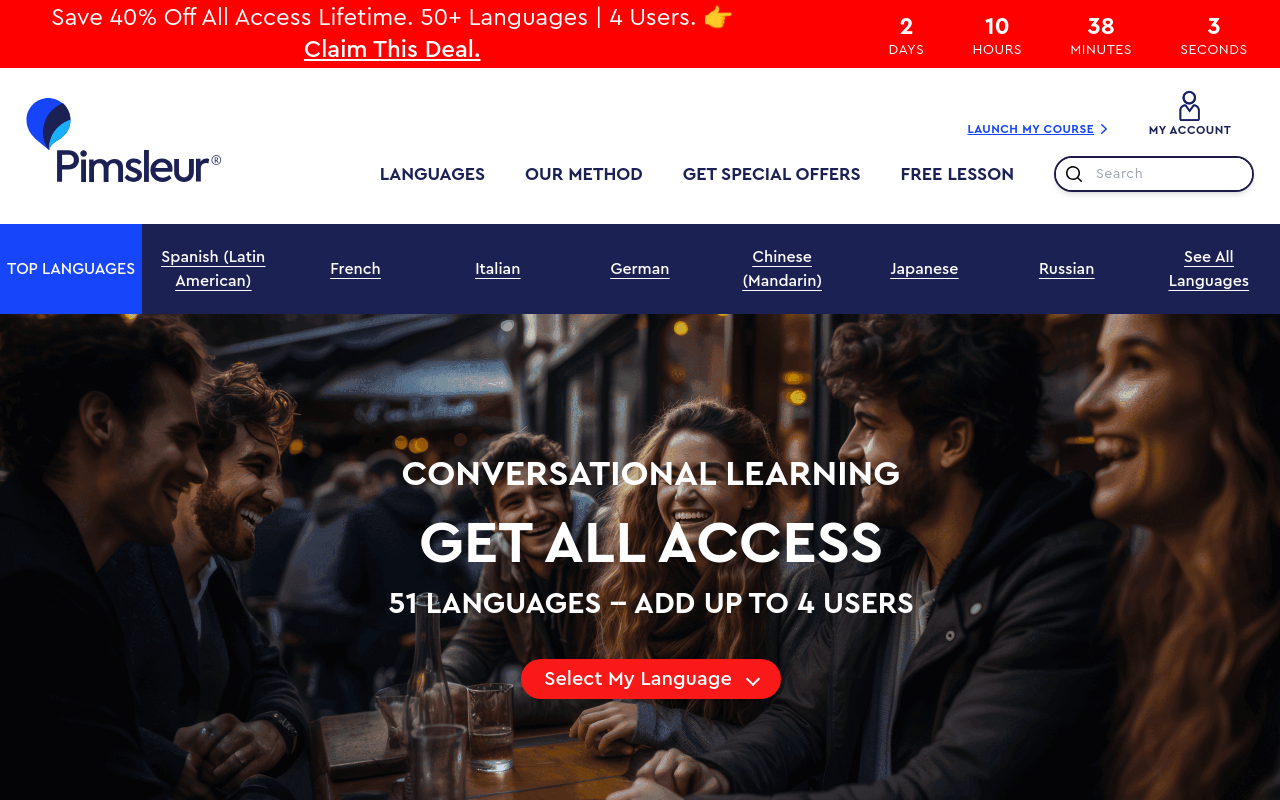
Pimsleur's 30-minute audio lessons are engineered for commuters and multitaskers who cannot look at a screen, using spaced recall prompts to build spoken vocabulary and pronunciation simultaneously. It is genuinely effective for auditory learners building A1–A2 spoken French. The honest trade-off: there is no personal dictionary, no visual context, vocabulary breadth is narrow, and at roughly $20.95/month it is expensive relative to what it covers.
6. Rosetta Stone - Best for Immersive Image-Association Learning
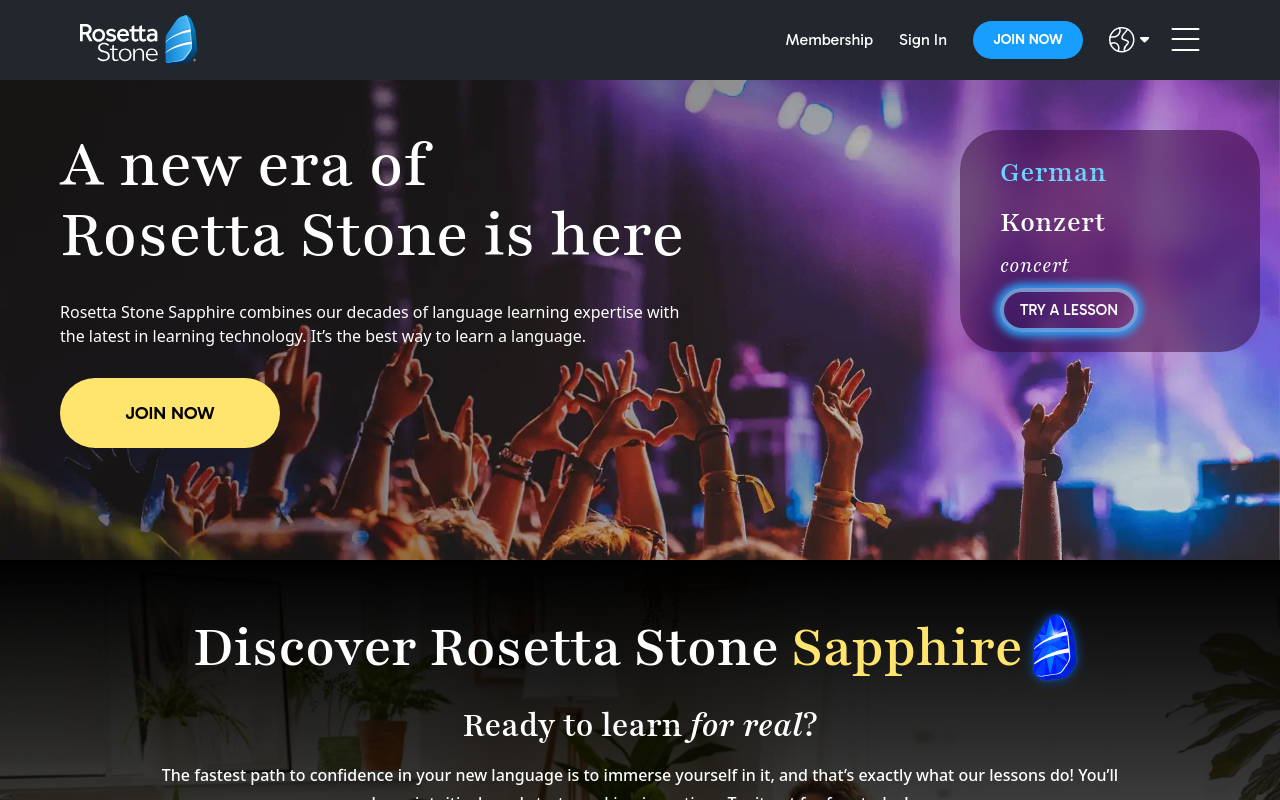
Rosetta Stone's image-and-audio pairing method avoids translation, forcing the brain to associate French words directly with concepts rather than English equivalents. Its TruAccent speech recognition tool provides pronunciation feedback that goes beyond what most apps offer. The honest trade-off is pace: the method is thorough but slow, and the annual subscription cost is higher than most competitors in this list. Learners who want to build a large active vocabulary quickly will find the image-association approach limiting. Best for beginners who prioritize pronunciation accuracy and are willing to invest in a methodical, long-form program.
7. Clozemaster - Best for Intermediate Learners Building Vocabulary in Context
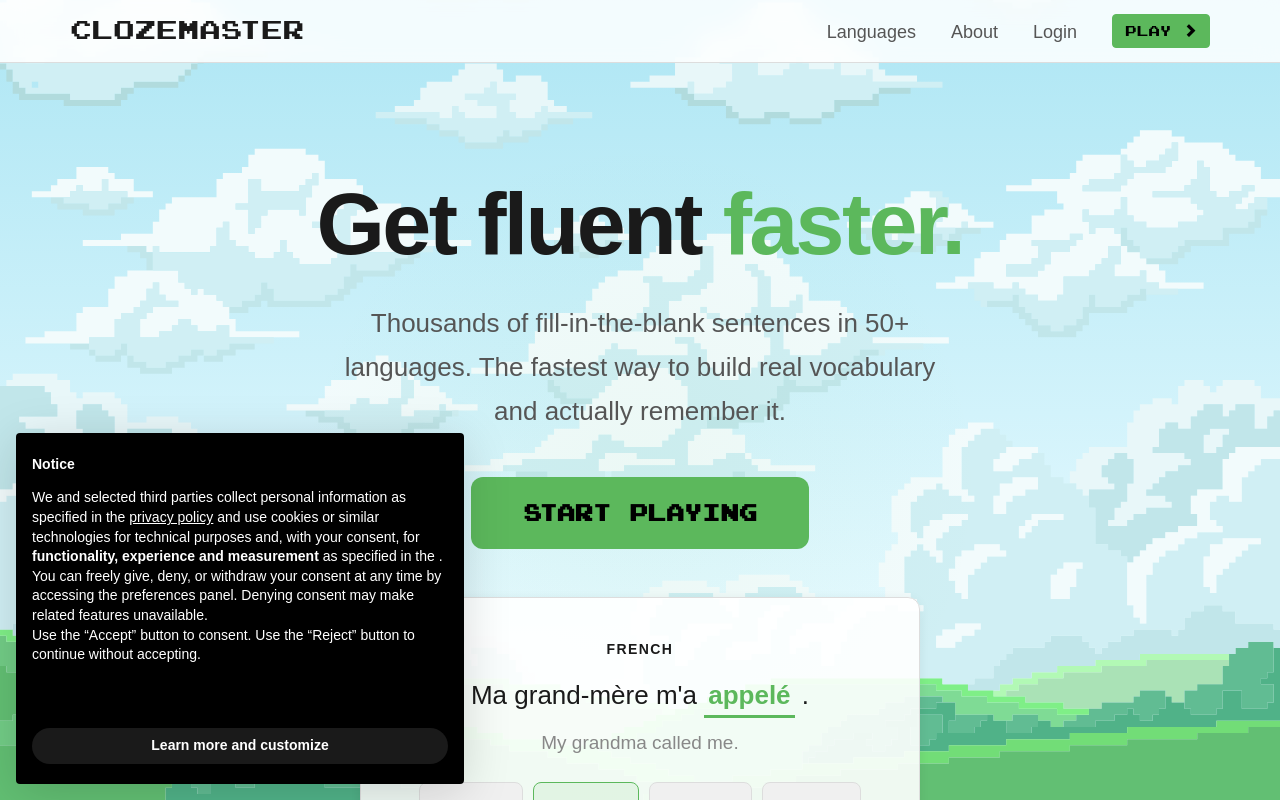
Clozemaster fills a real gap: it is designed for learners who have outgrown beginner apps but are not yet ready to consume raw native content. Its format presents vocabulary inside full sentences, with the target word blanked out, so retrieval is practiced in a grammatical context rather than in isolation. The gamification layer is lighter than Duolingo's, which suits learners who find streak mechanics more distracting than motivating. The limitation is audio quality and variety; sentences are not drawn from native media, so the listening context is still somewhat artificial. Best for intermediate learners who need volume and sentence-level context without the cognitive load of unscripted native speech.
8. At-a-Glance Comparison - Best-For Labels Across All 8 Apps
Before diving into full reviews, this scannable anchor maps each app to its single strongest use case: Parrot App (best overall / context-first SRS), Duolingo (best free habit-builder), Babbel (best structured curriculum), Anki (best free SRS), Pimsleur (best audio-only), Rosetta Stone (best image-association immersion), Clozemaster (best for intermediates). Use this table to jump directly to the app that matches your current level and session-length constraints.
Related Reading
Best Podcasts For Learning French
Best Online French Tutors
Best French Audio Books
French Tv Shows To Learn French
Is Babbel Good For French
Pimsleur French Review
Is Duolingo Good For French
Rocket French Reviews
French Vocabulary App Pricing Compared So You Can Stop Guessing
Many learners discover that an app's assigned proficiency level, say, a Duolingo "B2" badge, does not reflect real-world conversational ability, which makes it genuinely difficult to judge whether any paid or free app is worth the investment at all. The real question is which subscription tier unlocks a personal SRS dictionary tied to words you encountered in real spoken French, and whether that tier is priced in a way that feels honest rather than exploitative.
App
Free Tier
Monthly
Annual
SRS Personal Dictionary
Duolingo
Ad-supported; hearts system limits session length, not word access
~$7-13 (Super)
~68 (Max, one observed US price)
No
Anki
Free on desktop/Android; ~$24.99 one-time on iOS
Free (web/Android)
Free (web/Android)
Yes (fully manual)
Babbel
None
~4/month
~$84/year
No
Memrise
Limited
Paid tier required
Paid tier required
Partial
MosaLingua
None
~4/month
Paid only
Yes (paid)
TV5MONDE
Fully free
Free
Free
No
Pimsleur
Trial only
~$21/month
Premium, All Access, or Lifetime plans available
No
Parrot App
Free trial
Subscription
Subscription
Yes (core feature, every tier)
Which Paid Tier Unlocks SRS and a Personal Dictionary and Whether It's Worth It
Among the apps that do offer a personal SRS dictionary, the pricing logic varies considerably. MosaLingua locks it behind its paid plan at around 4 a month. 99 on iOS; the trade-off is that building a personal deck requires manual card creation, which most busy learners abandon within weeks.
Duolingo's pricing ladder, free tier, Super, Max, looks like a spectrum of learning depth, but the actual constraint on the free tier is session time via the hearts system, not vocabulary access, which means upgrading purchases more minutes of the same recognition-based format rather than a meaningfully different encoding method; according to Copycat Cafe, the only genuinely differentiated Max features are AI Video Call and Roleplay. Parrot App takes a different approach, making the SRS personal dictionary a core feature available at every subscription tier rather than a premium reward. The honest trade-off is that the depth of AI-personalized practice, including the AI Tutor for targeted feedback during or after video sessions, is tied to the subscription; but the SRS personal dictionary itself is never withheld as a tier reward.
Best Free Option - What You Get and the Honest Caveat
TV5MONDE is the only app in this comparison that is fully free at every access point, no ads, no subscription, no one-time fee. Its caveat is that it offers no SRS system and no personal vocabulary tracking, so retention depends entirely on the learner's own habits. It works best as a supplement rather than a standalone method, particularly for learners who have already built a foundation and want unmediated exposure to real French media.
Which French Vocabulary App Actually Fits Your Life Right Now
That shape matters more than any feature list. The app you open tomorrow is the one that fits the minutes you actually have, not the minutes you plan to have, and that alignment is harder to engineer than it sounds. Most learners read a few reviews, pick the highest-rated app, and commit.
That works for about a week. Then the 25-minute session requirement collides with a packed morning, the app gets skipped once, then twice, and the motivation window closes. The hidden cost is the subscription fee plus the weeks of compounding vocabulary exposure that never happened.
According to Statista's September 2024 language learning app analysis, motivation and habit scaffolding, not content volume, drive sustained engagement. The commuter with a short subway ride needs an app whose session format fits that window by design. A short-form feed where you tap unfamiliar words to save them to a personal dictionary with spaced repetition matches that behavioral window.
A structured 20-minute lesson app does not, regardless of its feature list. Spaced repetition tied to words you personally saved is the single capability worth prioritizing above everything else. A word encountered in context, saved immediately, and surfaced at the precise interval before forgetting builds retrieval strength that isolated flashcard drilling cannot replicate.
That feature sits behind different paywalls on every app, so confirming it exists at your tier before subscribing is non-negotiable. Five saved words per session beats a 30-minute drill you do once and abandon. The session that fits inside your real day builds the habit, and the habit produces the vocabulary.
If you prefer structured study blocks or grammar-focused lessons that walk you through conjugation tables and syntax rules, Parrot App's short-form video feed and vocabulary-first approach are not the right fit. Babbel's own page emphasizes "quick lessons" and bite-sized content as core features, not 30-minute structured study blocks, though it does offer grammar tips and structured courses at multiple proficiency levels.
Next steps
If you have spent months watching your streak counter climb while real French conversations still leave you blank, the path forward starts with how vocabulary gets encoded in the first place, not how much of it you accumulate. Start with our learn Spanish.
The body of this guide showed that words learned in isolated text formats fail to transfer when retrieval conditions shift to spoken, cue-free conversation, which means every quiz you ace is measuring a skill that does not survive contact with a native speaker. It also showed that Duolingo's explosive growth is built on optimizing for daily app opens, not language outcomes, so the platform most learners default to was never designed to close the gap between quiz performance and real comprehension. Together, those two findings point to one logical next step: a tool where vocabulary is saved inside spoken context and reviewed through spaced repetition before it fades, not a streak-first app that rewards you for showing up without measuring whether anything stuck.
Start by exploring how to learn Spanish with Parrot App's short-form video feed, where tapping an unfamiliar word saves it instantly to a personal dictionary and schedules its first spaced repetition review automatically. No placement quiz, no streak to protect on day one. Just a word heard inside real speech, saved in the moment you need it, and returned to you at the interval your memory actually requires.
Frequently Asked Questions
Why do I keep blanking on French words mid-conversation even after studying them in an app?
The problem is a method issue, not a motivation one. Vocabulary drilled through visual flashcards or multiple-choice quizzes carries no auditory fingerprint, so when spoken French arrives at natural speed, your brain has no sonic anchor to grab, a pattern supported by the 2025 Behavioral Sciences study showing that memory performance drops significantly when the retrieval context shifts, even from words to pictures.
Is a long daily streak actually a good sign that an app is working?
Not necessarily. Gamified apps optimize for streak maintenance and daily habit formation rather than comprehension transfer, which is why learners can hit extended streaks and still be unable to hold a real conversation. A more useful signal in reviews is whether other learners describe understanding real French, for example, following a podcast for the first time, rather than just celebrating their streak length.
What three things should I check before downloading a French vocabulary app?
The post identifies three criteria: input format (look for contextual, audio-anchored learning rather than text-matching or multiple-choice), a spaced-repetition system tied to a personal word list so reviews happen before words fade, and session-length fit that works inside short windows like a commute or lunch break rather than requiring long uninterrupted study blocks.
Does Anki work well as a standalone French vocabulary tool?
Anki handles the retention schedule effectively, its algorithm is built directly on forgetting-curve research, but it does not supply any contextual input on its own. Pre-built French decks vary wildly in quality, and building a personal deck from scratch takes time most busy learners won't invest, so the post recommends it only for learners disciplined enough to curate their own cards who already have a separate source of contextual input.