
Fluency isn't a knowledge problem. It's a wiring problem, and the fix has nothing to do with more grammar study or longer sessions.
Yet finishing a grammar workbook is progress of a specific kind: it builds accuracy and reading comprehension, but it does not reliably transfer to spoken fluency under real conversational pressure. Across language learning communities, a pattern surfaces constantly: learners who have spent years on structured English lessons, completed course after course, and maintained app streaks still freeze the moment a native speaker asks something as simple as "How was your weekend?" The problem is architecture. See our learn Spanish for how this works in practice. The conventional model was built for a learner with a quiet desk, a free hour, and a test at the end.
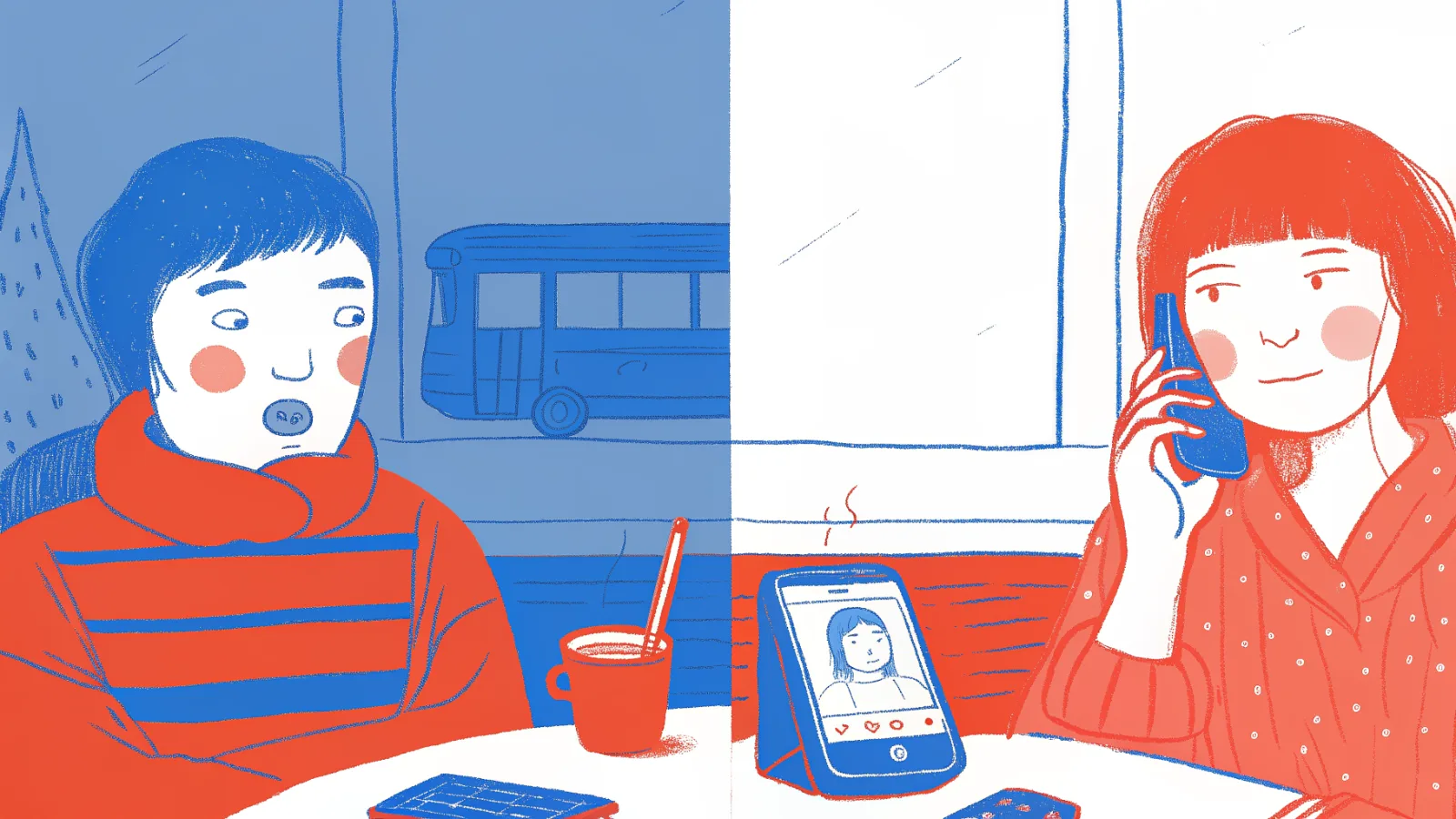
That learner rarely exists. What actually exists is five minutes on the bus, a lunch break spent half-distracted, and a phone that's already open.
Tools built around short-form immersive practice fit that reality; grammar workbooks and structured lesson sequences do not. Grammar instruction does not reliably produce spoken fluency in adult learners. A learner can memorize every tense, ace every fill-in-the-blank exercise, and still be unable to order coffee without rehearsing the sentence three times in their head first.
That's a method mismatch: grammar knowledge and live speech production are separate skills, and drilling one does not train the other. This is the trap that's hardest to see from inside it.
Learners hold off on speaking until their grammar feels correct. But speaking practice is precisely what fixes grammar in real time.
Waiting for readiness delays the only activity that creates readiness. Overcoming fear of speaking English comes from low-stakes repetition that grammar drills were never designed to provide. A large share of learners disengage well before fluency becomes possible. Short, consistent contact with spoken English every day beats one long session per week, but the standard model never says that out loud.
Key takeaways
Grammar drills build reading accuracy, they do not reliably transfer to spoken fluency under real conversational pressure, and conflating the two keeps most learners stuck at the same plateau for years.
Fluency is a physical skill wired through repeated activation of the same speaking circuits, frequency of speaking encounters, not the length of any single session, is what builds the neural pathways that make speech feel automatic.
The average adult already spends 360 minutes a day on a smartphone in fragmented bursts; the time infrastructure for fluency-building exists, it's just pointed at the wrong content.
Comprehensible input, audio and video you can follow without translating every word, trains your ear and mouth simultaneously in a way grammar workbooks structurally cannot.
Swapping dead scroll time for short, high-frequency speaking exposure beats any 30-minute study block you'll skip after week two.
Parrot is a short-form video app built around comprehensible input, the most researched method in language acquisition, that turns the phone time you're already spending into speaking practice; English is on the roadmap, with Spanish available now.
The Real Reason Fluency Feels Physically Impossible for Busy English Learners
That freeze when a native speaker catches you off guard is not nerves or a lack of vocabulary; it is your mouth and mind failing to find a pattern they have never properly drilled.
Fluency Is a Physical Skill, Not a Knowledge Problem
The common assumption is that consistent, long dedicated sessions are the only real path to English fluency, that short scattered moments don't add up to anything meaningful.
"Busy learners with limited field exposure (e.g. only one field-speaking contact at work) find it physically difficult to practice enough to build spoken fluency, creating a bottleneck that feels impossible to break."
— what we hear from adult English language learners
A swimmer does not get faster by reading about stroke technique; the muscles have to repeat the movement until it becomes automatic. Industry research found that fluency depends on the strength of white matter pathways built through repeated, active use of specific neural circuits, not on passive exposure.
The same research confirms that passive comprehension and active speech production activate neurologically distinct circuits.
The fix stops looking like more study time you do not have, and starts looking like smarter use of the gaps you already own.
Related Reading
English Language Learning Methods
How To Learn English
18 Tips to Speak English Fluently and Confidently in 2026
Fluency is a physical skill, wired into your brain through repeated activation of the same speaking circuits, and the research behind this changes everything about how you should practice. Frequency of speaking encounters, not the length of any single session, is what builds the neural pathways that make speech feel automatic. Research on spaced practice consistently shows that multiple short speaking activations distributed across a day reinforce neural production pathways more effectively than a single longer grammar drill of equivalent total time, because each brief retrieval attempt strengthens the same circuits independently. That single insight is the lens for every tip below.
1. Fluency Over Perfection - The Foundational Mindset Shift
Fluency is about delivering your message, not passing a grammar test. Native speakers care whether they understand you, not whether your verb tense was textbook-perfect. The learners who progress fastest commit to speaking imperfectly and often, rather than waiting until they feel ready. The real cost of chasing perfection is silence, and silence produces zero speaking practice. Start sentences before you know how they will end. Correct yourself mid-thought. That is exactly what fluent speakers do.
One gap worth naming honestly: many learners can understand almost everything they read and yet still freeze the moment they have to speak. That productive-receptive split is a structural problem. Receptive skills and speaking circuits are trained differently, and most traditional study methods only develop the former. The tips below are sequenced to close that gap.
2. Strategic English Media Immersion - Phone, Podcasts, and Subtitled Shows
Change your phone language to English today. Follow English-speaking accounts, listen to podcasts during your commute, and watch shows with English subtitles rather than subtitles in your native language. This is comprehensible input, the mechanism that trains your ear to process real spoken English at natural speed. The limitation is real: consuming media does not automatically produce speaking ability. You still need output practice. But immersion builds the listening foundation that makes every other tip on this list work faster.
A second limitation is equally real: a lot of media content moves faster than a beginner can comfortably follow, which means comprehensible input stops being comprehensible. Learners we work with consistently describe the same frustration: native speakers at full conversational speed feel like a wall of sound. That is why Parrot's short-form video feed is built around the Comprehensible Input Method, sequencing content from real native speakers at the level where you can follow along and absorb the language naturally, rather than simply being overwhelmed by it.
3. Daily Speaking Practice - Self-Talk, Shadowing, Recording, and Conversation Platforms
Speaking practice does not require a partner. Narrate your morning out loud. Record a one-minute voice note on a random topic during your lunch break. Shadow a short BBC clip by pausing after each sentence and mimicking the rhythm immediately. Book a short conversation-only session on italki or Preply to practice one specific topic. These micro-sessions, stacked across a day, accumulate more speaking repetitions than a single long study block ever could.
For learners who want structured output practice built directly into their immersion sessions, Parrot Back is the speaking practice feature that sits inside the app's video feed. Rather than watching passively, you say out loud and repeat what you hear to build speaking confidence and sharpen comprehension, training your mouth and ear together on the same material. That pairing of production and perception is the exact mechanism that makes shadowing work.
4. Phrase-Chunk Vocabulary Building - Learn Expressions, Not Isolated Words
Your brain recalls language in blocks, not individual words. Learning "make a decision" as one unit is faster to retrieve under conversational pressure than knowing "make" and "decision" separately and assembling them in real time. This is how native speakers actually store language. Build your vocabulary around chunks: "I was wondering if," "it turns out that," "the thing is." The trade-off is that this approach requires more upfront patience than memorizing word lists, but the payoff in natural-sounding speech is significant.
This matters most in the moment it is hardest: live conversation. Learners we work with consistently describe expressing themselves as the specific sticking point, they know what they want to say but cannot produce it the way a native speaker would, even after months of daily study. Phrase-chunk learning, reinforced through repeated exposure to real native-speaker content, is the most direct route out of that gap.
5. Working With Native Speakers and Coaches via Preply and italki
Preply and italki are the two most accessible platforms for booking live conversation practice with native speakers or certified coaches. Community tutors on italki are generally more affordable than professional tutors, while certified coaches on either platform command higher rates. The recurring cost is the honest trade-off; weekly sessions add up. To get the most value, come to each session with a specific goal, one topic, one situation, one set of phrases, rather than treating it as open-ended chat. Focused sessions produce measurably faster gains.
6. Digital Tools and Apps - Filling Practice Gaps With Technology
Apps are best used as gap-fillers, not as your primary fluency method. Flashcard tools with spaced repetition are effective for locking in high-frequency vocabulary. Speech recognition features in tools like Google Assistant or voice-to-text apps give you low-stakes pronunciation feedback without a human audience.
The limitation is structural: most apps reward engagement metrics, not conversation ability. Use them to reinforce what you are already practicing through speaking, not as a substitute for it. A tool that keeps your mouth moving in dead time is worth more than one that only trains your eyes.
Parrot is most beneficial for learners who have already tried memorization-based methods and found that those methods do not transfer to actual speaking. The placement test at the start identifies your current level so the content is calibrated to where you are: useful but not overwhelming. Speaking activities with pronunciation scoring are built into the listening experience. Parrot scores pronunciation with proprietary models it built and trained. Listening comes first; speaking is about 20% of the experience.
20%
of the experience
7. The 3:2:1 Speaking Rule - Structured Repetition for Fluency Gains
Speak about the same topic three times, each time slightly differently. The first attempt is rough. The second is smoother because your brain has already retrieved the vocabulary once. The third feels almost automatic. This mirrors how fluency develops: not through learning new material, but through repeated retrieval of the same material under slightly different conditions. Pick one topic per day, a weekend plan, a work situation, a news story, and speak about it three times across the day in short bursts. The repetition does the wiring.
8. Pronunciation Refinement - Targeting Sounds That Undermine Clarity

Trying to fix every pronunciation error at once is a fast path to paralysis. Instead, identify the two or three sounds that most often cause misunderstanding in your specific accent and target those. Common culprits include the "th" sound, the difference between short and long vowels, and word stress patterns. Record yourself, listen back, and compare against a native speaker saying the same phrase. Minimal pair drills (ship/sheep, bit/beat) are efficient for this. Pronunciation work is most valuable when it is targeted, not comprehensive.
9. Natural and Idiomatic Expressions - Sounding Like a Real Speaker, Not a Textbook

The most effective source for this kind of input is content from real native speakers. Not scripted dialogue written to be grammatically tidy, but natural spoken English in context. That is precisely what Parrot's short-form video feed draws on, so the expressions you encounter are the ones that actually appear in real conversations, not the ones a textbook committee approved.
10. Overcoming Fear and Expanding Your Comfort Zone - Speaking Despite Anxiety

English language anxiety is a documented barrier to spoken fluency, identified in industry research as a core inhibitor of speaking performance. Anyone who has frozen mid-sentence while a native speaker waited knows this is a distraction problem. The fix is graduated exposure: start with low-stakes speaking (self-talk, recording, voice messages to friends) before moving to live conversation. Treat awkwardness as a signal that your brain is building new pathways, not as evidence that you are failing.
Parrot Back is designed to fit into this graduated exposure approach. It lets you practice speaking confidently with content from real native speakers inside the app, with no live audience and no social stakes, before you carry those same phrases into an actual conversation.
11. Think Directly in English - Stop Translating From Your Native Language
The translation bottleneck is one of the most concrete speed killers in spoken English. When you formulate a thought in your native language and then translate it, you add a cognitive processing step that slows your output and breaks conversational rhythm. The fix is to practice thinking in simple English phrases directly, even imperfect ones. Start with your internal monologue during routine tasks: "I need to send that email," "the meeting is in an hour." Over time, this reduces the mental load of speaking and makes responses feel faster and more natural.
12. Never Apologize for Your English - Protect Your Authority in Conversation
Opening with "Sorry for my bad English" sets a defensive tone before you have said anything of substance. It signals to the listener that they should lower their expectations, and it signals to your own brain that you are not capable. Both effects work against you. Native speakers who communicate clearly in a second language do not apologize for it; they simply speak. If you make an error, correct it and move on. Your authority in a conversation comes from what you say, not from how grammatically perfect your sentences are.
13. Rescue Phrases for Mid-Conversation Breakdowns - Staying Fluent When You're Stuck

When you lose a word mid-sentence, the worst response is silence or a visible panic. Rescue phrases keep the conversation moving while you recover. Memorize these as chunks: "What I mean is," "let me rephrase that," and "could you give me a moment." These phrases serve two functions: they buy you thinking time, and they signal to the listener that you are engaged and in control, not lost. Fluent speakers use them constantly. Having them ready removes one of the biggest sources of mid-conversation anxiety.
14. Talk to Yourself Out Loud - Narrate Daily Activities in English
Solo speaking practice is underused and surprisingly effective. Narrating your daily activities out loud, cooking, commuting, getting ready, trains your brain to produce English without the social pressure of a real audience. It also forces you to confront vocabulary gaps in real time: you reach for a word, realize you do not know it, and look it up immediately. That retrieval moment is one of the strongest memory-encoding events in language learning. The only trade-off is that it feels strange at first. Do it anyway. The strangeness fades within a week.
15. Record Yourself for One Minute Daily - Track Progress and Spot Patterns
Image: How to Speak English Fluently and Confidently - record yourself one minute
Recording yourself speaking for one minute on a random topic is one of the highest-return habits on this list. Play it back and listen for filler words ("um," "like," "you know"), pronunciation habits you were not aware of, and sentence structures you repeat. Do this daily for two weeks and you will hear clear progress, one of the most motivating experiences a language learner can have. The discomfort of hearing your own voice is real, but it passes. What stays is an accurate picture of where you actually are, which is more useful than any test score.
16. Shadow Native Speakers - Copy Rhythm, Speed, and Intonation Precisely
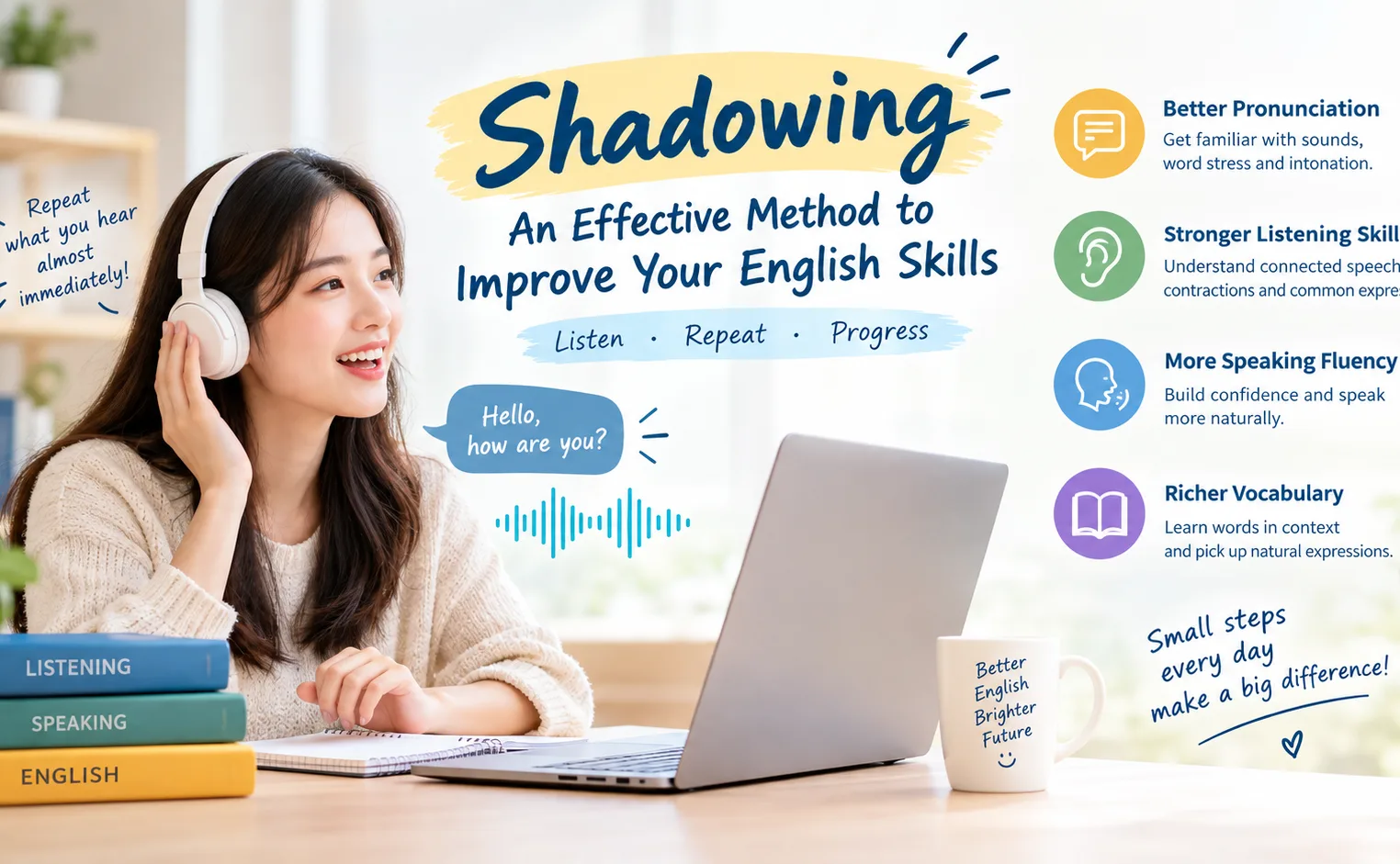
Shadowing is one of the most research-supported techniques for rewiring spoken output. The method is simple: pick a short audio or video clip of a native speaker, listen to one sentence, pause, and immediately copy the rhythm, speed, and intonation as precisely as you can. You are training your mouth and ear to work together on the prosody of real English. Language researcher Alexander Arguelles documented this technique extensively, emphasizing that the physical act of mimicking speech patterns, not just understanding them, is what produces lasting change in spoken output.
Parrot's short-form video feed gives you a ready supply of real native-speaker clips calibrated to your level, so you are always shadowing content that is comprehensible enough to replicate accurately, the condition that makes shadowing actually work, rather than just producing frustrated guessing.
17. Build an Immersive English Environment at Home - Surround Yourself With the Language
Image: How to Speak English Fluently and Confidently - build an immersive environment
Immersion does not require moving to an English-speaking country. It requires making English the default in your existing environment. Change your phone, computer, and streaming service to English.
Label objects around your home in English. Listen to English radio or podcasts as background audio while you cook or clean. Watch English content with English subtitles rather than translated ones.
Each of these changes is small individually. Collectively, they increase your daily exposure to spoken English by hours without requiring any dedicated study time. The compounding effect over weeks adds up to real progress.
18. Master High-Frequency Vocabulary Through Contextual Phrase Practice

A relatively small core of high-frequency English words covers the vast majority of everyday spoken conversation. That is a manageable target, and it means that depth of mastery over a smaller set of words beats breadth of exposure to a larger one. The most effective way to build this mastery is through contextual phrase practice: learn each high-frequency word in three or four real phrases where it appears naturally, rather than as an isolated definition.
"Take" becomes "take a break," "take your time," "take a look." Your brain stores and retrieves these as patterns, which is exactly how fluent speakers access vocabulary under pressure. Parrot's verb conjugations and grammar insights surface this structural layer without turning your practice into a grammar drill; the patterns emerge from real content rather than being imposed on top of it.
Most of these tips are genuinely effective. The honest tension is that most of them also assume you can carve out deliberate practice time, and that is exactly what the busiest learners cannot do. The commute happens. The lunch scroll happens. The five minutes before sleep happens. What rarely happens is a clear 30-minute block with no competing demands.
That is the hidden cost of tip lists: comprehensive on paper, paralyzing in practice. The tips that produce the fastest gains, shadowing, self-talk, immersive input, and phrase-chunk recall, all share a single mechanism: they require frequent, short activations of your speaking and listening circuits, not long structured sessions. A short-form video format built around comprehensible input, the same mechanism powering the immersion, shadowing, and phrase-chunk tips above, lets you stack spoken-English exposure directly onto the scroll habit you already have. Parrot is designed exactly for this: turning the time you already spend on your phone into the kind of active, ear-and-mouth training that the best tips on this list actually require.
Each of these 18 tips works. But if you look closely, the ones that produce the fastest fluency gains, shadowing, self-talk, immersive input, phrase-chunk recall, share a single hidden mechanism. The next section names that mechanism, explains the research behind it, and shows why five focused minutes of the right kind of exposure consistently outperforms a 30-minute grammar session.
Related Reading
How Long Does It Take To Learn English Fluently
Best Apps To Learn English
Types Of Music Good For Learning English
Learning English As A Second Language
English Learning App For Kids
Best Websites To Learn English
How To Learn English Speaking At Home
Game To Learn English
English Learning Activities
Tof
Best Podcasts For Learning English
How Short Daily English Exposure Builds the Fluency Long Study Sessions Never Could
Three hundred and sixty minutes. That is how long the average adult spends on a smartphone each day, almost entirely in fragmented bursts during commutes, queues, and idle moments between tasks. That single figure is what makes the mechanism worth understanding: the time infrastructure for fluency-building already exists inside habits that are already running. The only change required is redirecting what fills those windows, not carving new study blocks out of a schedule that has none to spare.

Why Your Brain Acquires Spoken English in Micro-Doses Not Marathon Sessions
The science here is direct. Research on massed versus spaced learning shows that distributing practice across multiple shorter sessions produces significantly better long-term retention than one long session, even when total study time is equal. Each spaced retrieval attempt strengthens the neural pathway, making the next retrieval faster and more automatic, which is the compounding mechanism behind real fluency. Short and frequent beats long and occasional, every time.
A streak tells you how often you opened an app. It says nothing about whether you opened your mouth. Gamified metrics reward consistency of attendance, not quality of output. Learners who interact with material in brief daily gaps outperform those who passively consume it in longer blocks. That gap is a design problem.
How to Stack the 18 Tips Into the Gaps You Already Have
The unifying principle is active spoken-English engagement inside existing micro-gaps. Replace the first ten minutes of a morning scroll with a short English video clip followed by an immediate repeat-aloud attempt. Stack English self-talk onto a commute already in progress. Record one minute of yourself during a lunch break. None of these require a redesigned day.
Parrot's short-form video feed meets learners inside that existing habit, pairing comprehensible-input clips with parrot-back speaking practice, so the gap between "I watched English content today" and "I actually spoke English today" closes by design rather than willpower.
The small blocks of time you already have are enough; the variable is what you put inside them.
Next steps
If your schedule never seems to open up for a proper study session, the path forward starts with recognizing that fluency is built through frequency of speaking encounters, not the length of any single one. Start with our learn Spanish.
The research on spaced practice is clear: ten brief speaking activations scattered across a day do more structural work than one twenty-minute grammar drill, because each short retrieval attempt physically strengthens the neural pathways that make speech feel automatic. And because the average adult already spends several hours a day on a phone in fragmented micro-sessions, the time infrastructure for that practice already exists. Those two facts together point to one action: redirect the scroll habit you already have toward active spoken English, rather than waiting for a free hour that never arrives.
Start with learning Spanish through Parrot's short-form video feed, which pairs comprehensible input with built-in speaking practice so each session trains your ear and your mouth at the same time. Open the app during the next scroll gap you would have wasted anyway.
Frequently Asked Questions
Why can I understand English perfectly but still freeze when I have to speak?
Passive comprehension and active speech production activate neurologically distinct circuits in your brain. Hours of listening build vocabulary and comprehension, but the production circuit sits idle the entire time, which is why you can follow a fast-paced English podcast word for word and still go blank when asked to speak.
Is it better to study grammar or just start speaking, even if I make mistakes?
Start speaking, even imperfectly. Grammar knowledge and live speech production are separate skills, and drilling one does not train the other. Speaking practice is precisely what fixes grammar in real time, waiting until your grammar feels correct delays the only activity that creates readiness.
How do I deliberately work on my pronunciation without getting overwhelmed?
Identify the two or three sounds that most often cause misunderstanding in your specific accent and target those, rather than trying to fix every error at once. Record yourself, listen back, and compare against a native speaker saying the same phrase, minimal pair drills like ship/sheep or bit/beat are efficient for this.
Why should I learn phrases instead of individual words?
Your brain recalls language in blocks, not individual words, so learning 'make a decision' as one unit is faster to retrieve under conversational pressure than assembling 'make' and 'decision' separately in real time. Building vocabulary around chunks like 'I was wondering if' or 'it turns out that' is how native speakers actually store language, and the payoff in natural-sounding speech is significant.
How do I start sounding more natural and less like a textbook?
Collect idiomatic phrases and contractions from the shows, podcasts, and conversations you are already exposed to, write them down, say them out loud the same day, and use them in your next conversation. Phrases like 'I'm not sure I follow' or 'that makes sense' sound far more natural than their textbook equivalents, and the gap between understanding natural English and producing it closes only through active output.