
Knowing grammar rules and using them mid-conversation are two different skills. Here is why most structured guides only teach one, and how to build both.
The common assumption is that if a learner just follows the right step-by-step grammar guide and completes every exercise, they'll eventually be able to speak English naturally. Yet the majority of adult language learners abandon a structured grammar course before finishing it, a pattern documented consistently in research on self-directed learning dropout. That number shouldn't surprise anyone who has worked through every exercise correctly and still gone completely blank the moment a native speaker asked a simple question.
The problem is architecture. Guides like these were built to deliver rules in sequence, not to build the real-time output habit that actual conversation demands.
For busy beginners who absorb language on the go, the gap between "knowing the rule" and "using it under pressure" is where progress quietly dies. See our learn Spanish for how this works in practice.
The core failure is the absence of communicative pressure. Completing exercises gives a learner a map of the language, but a map is not a road. Without being forced to produce language in real time, the brain never builds retrieval speed. Rules stay stored as conscious knowledge rather than automatic reflex. Learners who finish a structured guide often describe the exact same frustration: "I know the grammar. I just can't use it." That's a design gap baked into the guide itself.
A map is not a road. The average adult has very limited genuine discretionary time for self-study on any given day, a reality that sustainable-learning research has consistently highlighted.
Traditional grammar guides were architected around extended classroom blocks that far exceed what most adult learners can carve out in a day. That structure collapses the moment a learner is on a commute or fitting in ten minutes before bed.
A plan that demands more time than a learner can consistently give doesn't just stall progress; it creates a guilt cycle that further erodes motivation. Research comparing spaced, staged grammar exposure against massed rule-drilling consistently shows the same outcome: learners who encounter grammar in small, meaningful chunks retain it longer and apply it faster under conversational pressure. A beginner who absorbs subject-verb agreement through real spoken sentences is building a retrieval pathway. A beginner who reads the rule in a chart is building a memory of having read a rule. Only one of them survives a real conversation.
Key takeaways
Most adult learners abandon a structured grammar course before finishing it, not because grammar is hard, but because drilling rules in isolation kills motivation before fluency has a chance to form.
Every English sentence runs on one chassis: Subject-Verb-Object. Master that pattern before touching tenses, prepositions, or anything else, and every rule you add later has somewhere to attach.
Three tenses, simple present, simple past, simple future, cover the overwhelming majority of daily English communication. Trying to absorb all 12 at once is how beginners master none of them.
Clause-building is the step where grammar stops being a labelling exercise and starts letting you say what you actually mean, not just what a template permits.
Five minutes of daily practice in context, graded reading, shadowing, a short journal entry, does more for retention than an hour of rule memorisation.
Finishing the five steps on paper is real progress; freezing the moment a native speaker talks at full speed is the gap that paper cannot close. Parrot is built to close it, short-form videos powered by comprehensible input, the most researched method in language acquisition, so grammar rules you studied become reflexes you actually speak. English is coming soon.
The Hidden Cost of Passive Grammar Exposure Most Beginners Never See Coming
That subtler trap has a familiar shape: the assumption that following the right step-by-step grammar guide and completing every exercise will eventually produce natural speech.
That gap has a precise neurological explanation, and closing it requires understanding why your brain treats watching and speaking as completely separate jobs.

Why Your Brain Treats Watching English and Speaking English as Completely Different Tasks
Comprehension and production are not two points on the same scale. They are two distinct cognitive operations. At the neurological level, language comprehension activates pattern-recognition circuits, while speaking requires a separate multi-stage encoding pipeline: conceptualisation, lexical encoding, phonological encoding, and articulation.
The recognition system is trained.
The False-Progress Trap
Each clip feels like comprehensible input English because you understand it. But understanding is the destination for the recognition system; it gives the production system no workout at all.
Hours of scrolling can build a strong passive vocabulary, but words learned that way are only partly known: recognisable in context, but not retrievable under the real-time pressure of a conversation.
Recognition vs. Production - the Gap That Stalls Most Grammar Plans
Here is the structural problem with standard grammar sequences: they build recognition first and assume production will follow.
Step 1 Starts Here - Learn the Eight Parts of Speech Every English Sentence Needs
That right sequence starts at the word level, and the first thing to understand is that every word you say in English is already doing a job. The sentence "She runs quickly through the park" contains five words and five distinct roles firing simultaneously, whether you can name them or not. Words are best understood through their grammatical function in a sentence rather than as isolated definitions, because the same word can shift categories depending on how it is used. That insight changes everything about how you should learn this list.
Think of the eight parts of speech as job titles on a team. Memorising the titles without understanding the duties is like knowing every player's name but not their position. The moment a sentence sounds wrong, you need to know which role broke down, not just which label applies. Here are the eight roles, defined by what they do.
One pattern beginners run into repeatedly is mixing parts of speech inconsistently inside a single list, dropping in a gerund or adjective among nouns, or stringing verbs alongside naming words, without noticing the mismatch. That is a functional gap. It signals that the learner has memorised labels without absorbing what each word class actually does inside a live sentence.
Adult learners face a second, compounding problem: most readily available parts-of-speech lessons are built for children, full of cartoon examples and simplified definitions that feel patronising to someone with a full professional life. Finding material pitched at adult comprehension and adult schedules, lessons that fit into gaps in the day without feeling like studying, is genuinely hard. That is the gap Parrot is built to close.
1. Nouns - The Name-Givers That Tell You What a Sentence Is About
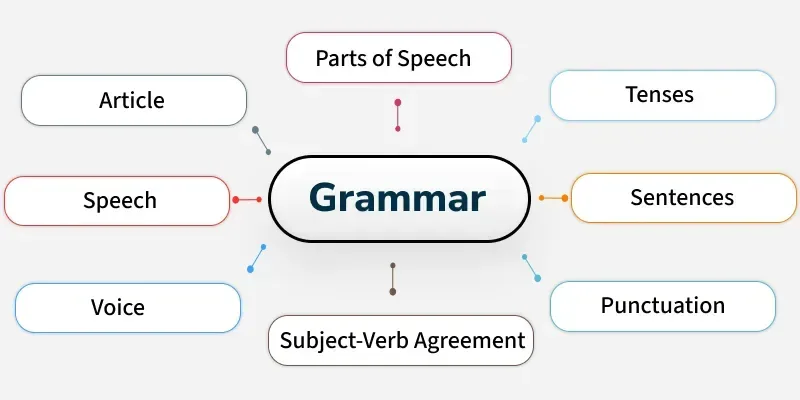
Nouns name people, places, things, and ideas, giving every sentence its subject matter. In "She runs quickly through the park," park is the noun anchoring the location. Nouns are the most common word class in English, and they are the first point of failure when beginners mix word classes inside a list, using verbs and adjectives where nouns belong, which signals a gap in functional understanding rather than a vocabulary gap.
2. Pronouns - The Stand-Ins That Prevent Repetitive, Clunky Sentences
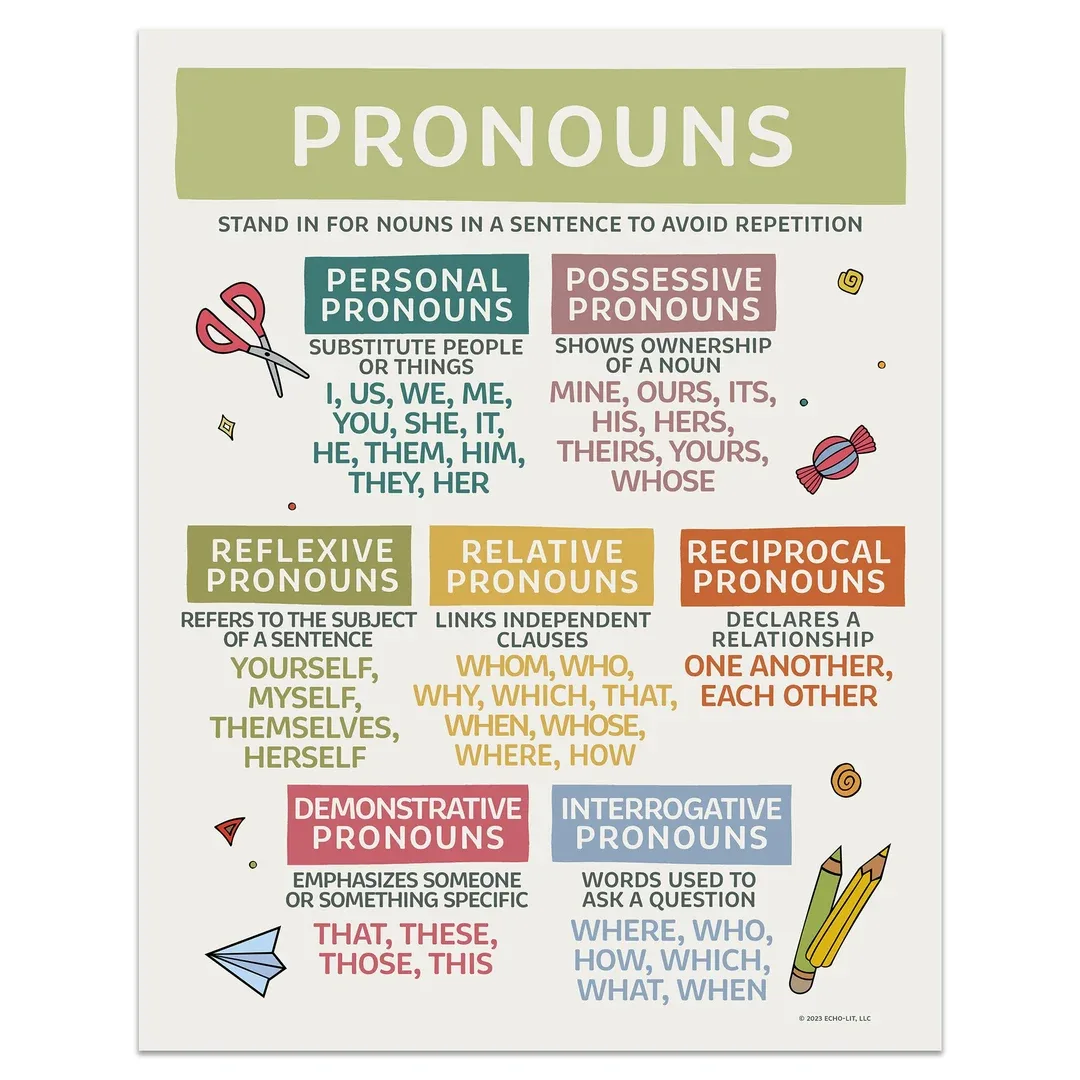
Pronouns replace nouns already introduced, keeping sentences fluid. Without she in "She runs," you would repeat the subject's full name every single time. Pronoun reference errors are among the most persistent mistakes at every level of English writing, precisely because learners learn the label "pronoun" without tracking which noun the pronoun is currently standing in for inside a live sentence.
3. Verbs - The Action and State Words Every English Sentence Cannot Exist Without
Verbs express actions, events, or states, and no English sentence can exist without one. Runs in "She runs quickly" carries the entire sentence's energy. A sentence with no verb is not a sentence.
Verb conjugation errors are the single most common beginner mistake, which is why understanding the verb's functional role, carrying time and person, matters more than memorising its name. Parrot surfaces verb conjugation insights and grammar breakdowns directly inside its short-form video feed, so the brain connects each conjugated form to real spoken sound before it ever connects it to a label. That turns screen time into learning time rather than passive scrolling.
4. Adjectives - The Describers That Add Precision to Every Noun You Use
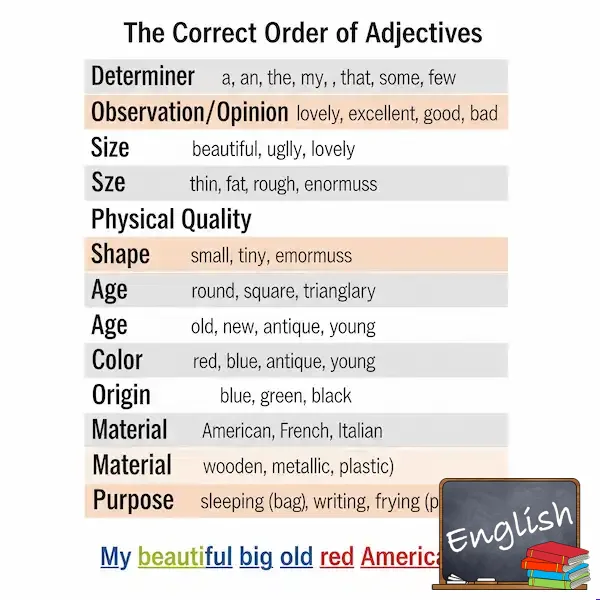
Adjectives modify nouns, answering questions like which one, what kind, or how many. They sit closest to the noun they describe: "a quick runner" not "a runner quick." The practical limitation here is overuse; stacking multiple adjectives before a noun without knowing their conventional order ("a big red old car" sounds wrong; "an old big red car" sounds worse) is a reliable sign that function has not yet been absorbed.
5. Adverbs - The Flexible Modifiers That Describe Verbs, Adjectives, and Other Adverbs
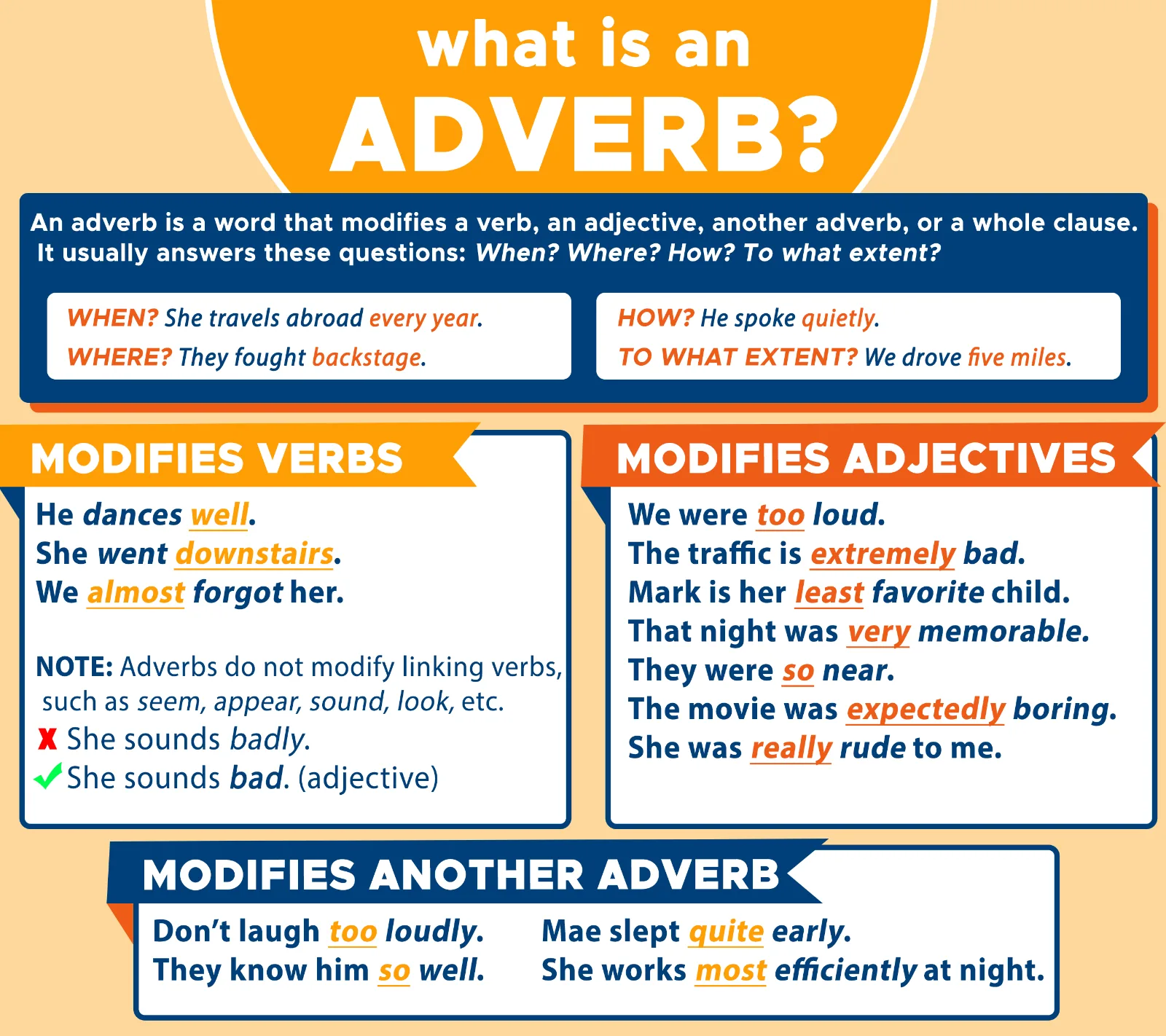
Adverbs modify verbs, adjectives, and other adverbs, answering how, when, where, or to what degree. Quickly in "She runs quickly" modifies the verb. Their flexibility is their tricky quality: adverbs move around the sentence more freely than almost any other part of speech, which means placement errors are common and often invisible to the learner until a native speaker sounds confused.
6. Prepositions - The Relationship Words That Connect Nouns to the Rest of the Sentence
Prepositions show the relationship between a noun and another element in the sentence, usually expressing time, place, or direction. Through in "through the park" tells you the spatial relationship between the running and the park. Preposition choice is notoriously difficult because it is largely idiomatic: no grammar rule predicts which preposition a given combination demands. Function-first learning helps here because you learn the relationship being expressed, not just the word.
7. Conjunctions - The Joiners That Link Words, Phrases, and Whole Clauses Together
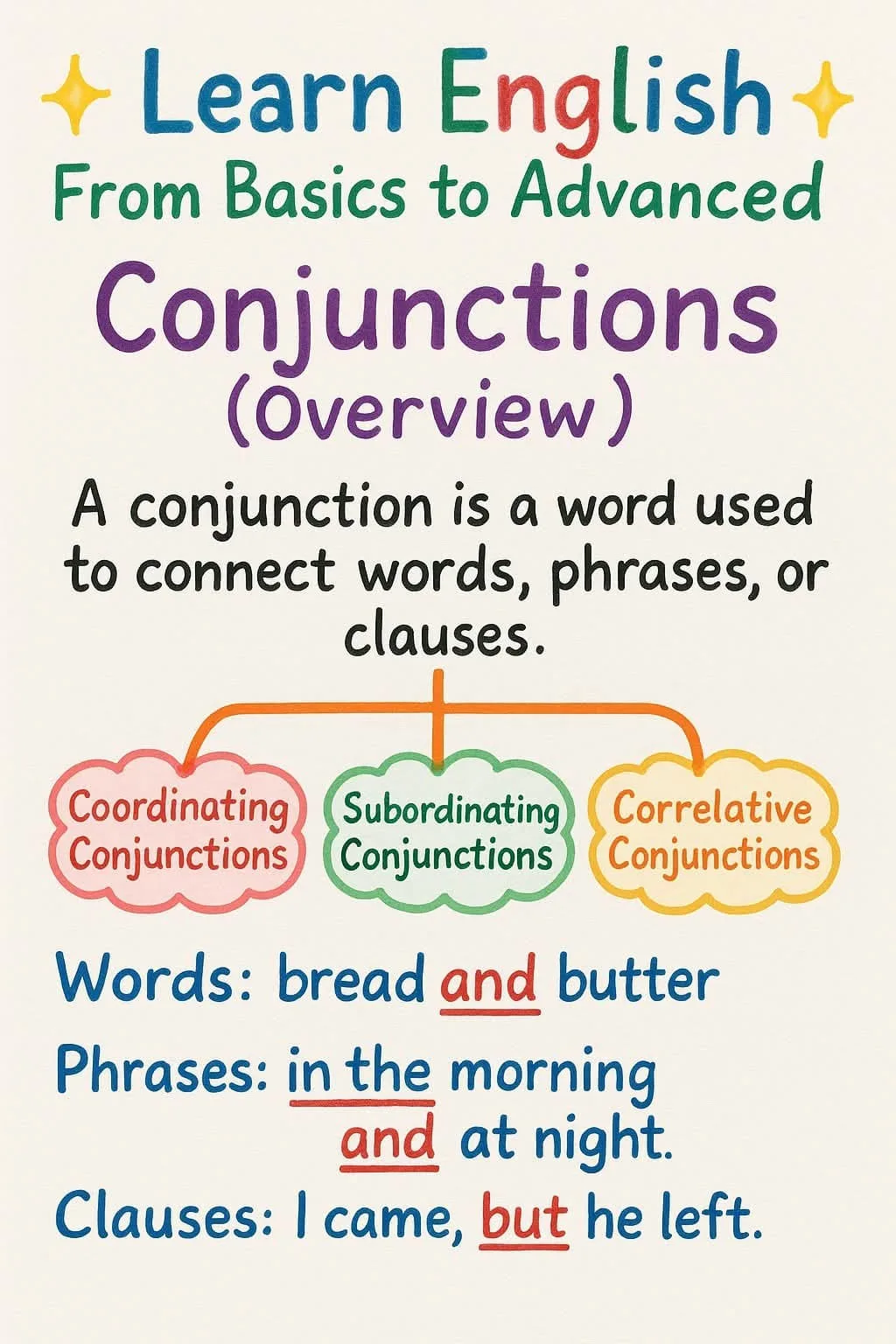
Conjunctions connect elements of equal or unequal weight. And, but, and or join equal parts; because, although, and when attach a dependent idea to a main one. Without conjunctions, every thought stays short and choppy. Understanding this joining function is what lets a learner graduate from "I was tired. I studied." to "I studied although I was tired," a shift that sounds immediately more natural to any listener.
8. Interjections - The Emotion Words That Stand Alone Outside Normal Sentence Grammar
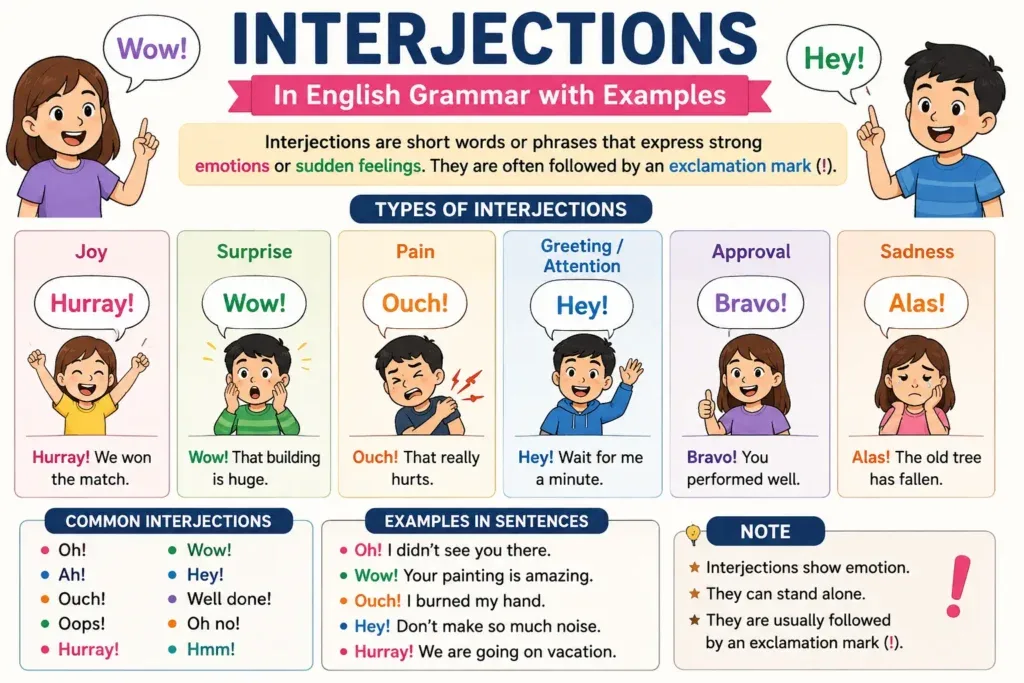
Interjections express sudden emotion and operate independently of the sentence's grammatical structure. Oh, wow, hey, and ouch carry feeling without needing a subject or verb. They are the smallest category in everyday formal writing but among the most frequent in real spoken English. Learners who only study grammar through textbooks rarely encounter them in context, which is one reason natural spoken English still sounds foreign even after months of structured study. Because Parrot delivers grammar exposure through a short-form video feed built on the Comprehensible Input Method, sequencing content to match each learner's current level, interjections appear the way they actually appear in real speech: woven into natural conversation, not listed on a worksheet.
Industry research makes the practical case for learning what each word does rather than what it is called: grammar instruction built on functional categories reduces the cognitive overload that comes with rote memorisation of abstract labels. Learners who track function in real sentences build flexible pattern recognition; learners who drill definitions memorise a static map that freezes the moment a real conversation moves faster than their mental checklist. Parrot's verb conjugation and grammar insights surface inside natural short-form video, connecting each grammatical role to real spoken sound without it feeling like studying, which is exactly what an adult learner fitting practice into a busy day needs.
Knowing the eight roles each word can play is the foundation, but a list of players does not make a team. The next step is understanding the one formation every English sentence runs by default: Subject, Verb, Object, the chassis that holds every thought together.
Step 2: Build Every English Sentence on the Subject-Verb-Object Pattern

SVO Is the Chassis Every English Thought Is Bolted To
Subject + Verb + Object (SVO) is the core sentence pattern in English, and it applies from the simplest spoken phrase to the most complex written argument. The chassis itself never changes. Only the words inside it do. Research on early language acquisition consistently finds that grammatical structure accelerates foundational word learning only when learners encounter it inside meaningful language they are actively processing for meaning, not when it is drilled as an abstract rule.
Subject-Verb Agreement and Contractions Making SVO Sound Natural Out Loud
Subject-verb agreement is the micro-rule that keeps your SVO sentences grammatically accurate: singular subjects take singular verbs, plural subjects take plural verbs. "The dog chases" versus "The dogs chase." Broader acquisition research confirms that grammatical number-marking actively shapes how quickly learners acquire foundational vocabulary. Agreement errors can measurably slow overall language development.
Platforms that embed SVO sentences inside comprehensible input sessions, such as Parrot, whose feed is structured around this principle, help the chassis move from a consciously recalled rule toward an instinctively felt rhythm. Once that rhythm feels natural, the next challenge is expressing when something happens. That is where tenses come in, and in Step 3 you will see why you only need to master three of the twelve before you can handle the vast majority of real English conversations.
Step 3: Master Three Tenses Before You Touch the Other Nine
Beginners who try to absorb all 12 English tenses at once rarely master any of them. Language educators and tense-sequencing frameworks broadly agree that the three simple tenses cover the vast majority of daily English communication needs, making them the most efficient starting point before any other form. That single fact should reshape how you plan your first three months.
1. Start With Present Simple, Past Simple, and Future Simple - In That Order
Beginners should learn these three tenses in sequence, not simultaneously. Expert English teachers and structured tense-sequencing approaches consistently identify these as the foundational forms to master before continuous or perfect tenses. Each tense builds directly on the last:
Present Simple handles habits and facts ("I eat breakfast").
Past Simple shifts the same SVO chassis back in time ("I ate breakfast").
Future Simple projects it forward ("I will eat breakfast").
Only the verb changes; the structure stays identical.
The trade-off is real: staying in this lane feels slow, and you will encounter perfect and continuous forms in natural speech before you have studied them. That discomfort is normal and temporary. It is also the exact moment where most learners abandon a grammar textbook and lose momentum, particularly when their study time is already fragmented across a commute, a lunch break, or fifteen minutes before bed. Parrot is built for exactly that reality: its short-form video feed delivers comprehensible-input sessions that fit into the gaps of a real day, so the three simple tenses get the repeated, spaced exposure they need without requiring a dedicated study block.
2. Avoid the 12-Tense Trap - Cognitive Overload Kills Progress for Beginners
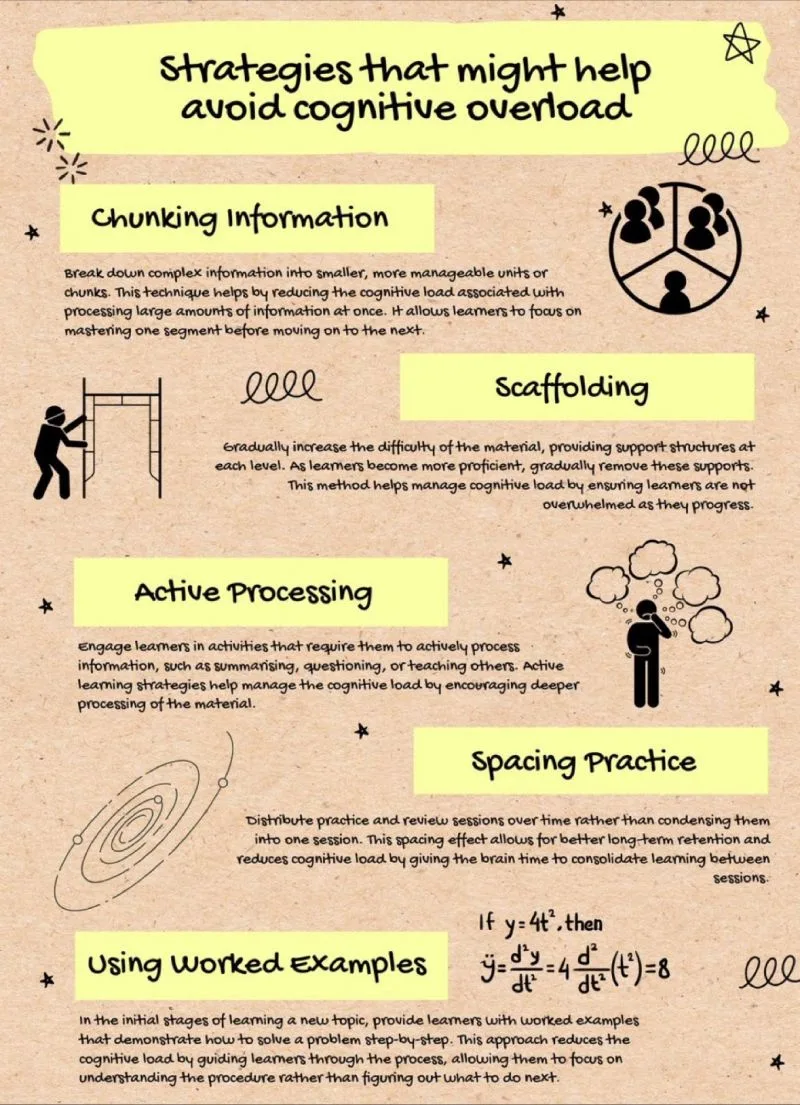
Attempting all 12 tenses at once fragments attention before any single tense becomes automatic. Research on tense acquisition consistently shows that sequencing tense learning, starting with the three simple forms, reduces overwhelm and builds a stable grammatical foundation before introducing complex forms like present perfect or past continuous.
The deeper problem is one many learners recognize painfully: even correctly sequenced tenses, drilled through written exercises or rote memorization, rarely fire automatically under real-time conversation pressure. Traditional memorization-based study produces recognition without production. You can identify the right tense on a worksheet and still freeze mid-sentence when speaking. Parrot is most beneficial precisely when a learner has struggled with that memorization gap and wants a research-backed alternative.
Tense knowledge only becomes usable fluency when it is retrieved repeatedly in short, spaced sessions tied to meaningful language production. Parrot's Comprehensible Input Method underlies every video session, governing how content is selected and sequenced for each learner so that Present Simple, Past Simple, and Future Simple appear in real speech at the right level of challenge, Krashen's i+1 in practice. When a learner wants to move beyond passive watching, say out loud and repeat what you hear to build speaking confidence and sharpen comprehension, turning rule knowledge into genuine reflex.
3. The Full Tense Roadmap - Simple → Continuous → Perfect - Know the Path Without Rushing It
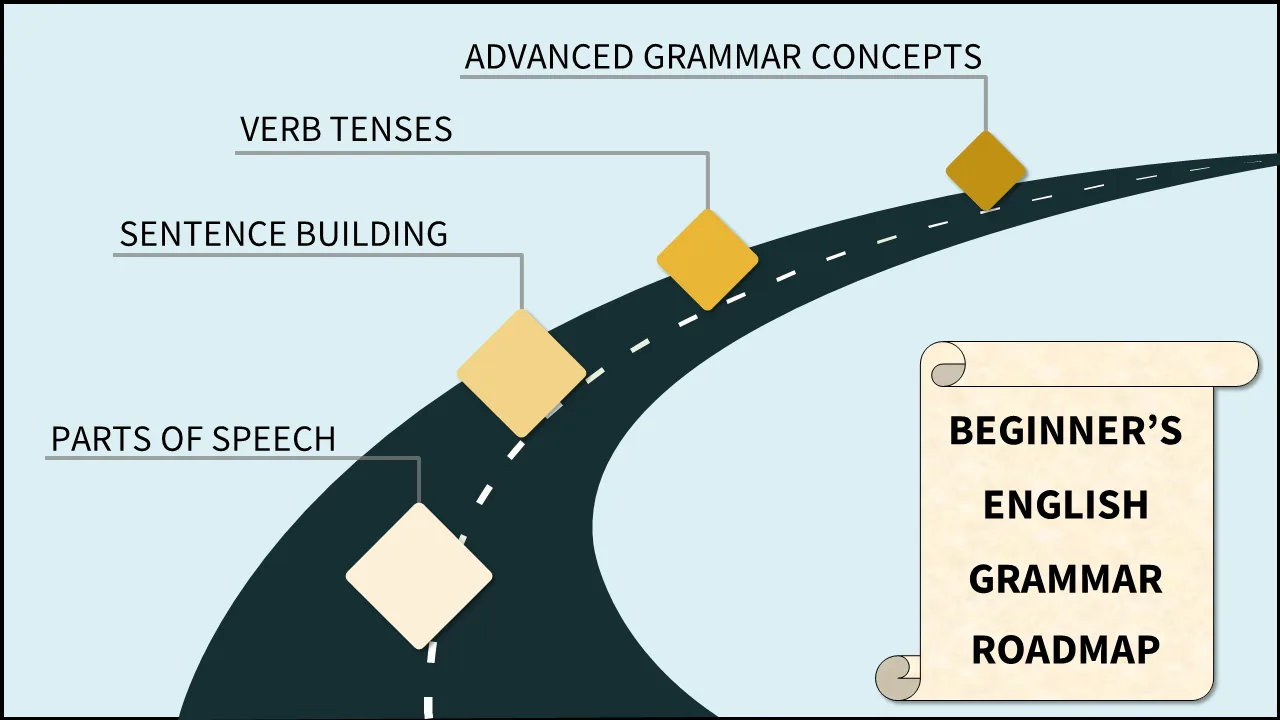
Once the three simple tenses feel instinctive, the roadmap continues: continuous tenses (present continuous, past continuous) come next, followed by perfect forms. Structured tense-sequencing frameworks map this exact progression, simple first, then continuous, then perfect, giving learners a clear path through all 12 forms without needing to tackle them simultaneously.
Knowing the full path matters because it removes anxiety; you are scheduling the remaining nine tenses rather than ignoring them. Most beginners who see the roadmap upfront stay consistent longer than those who treat the tense system as an undifferentiated list to memorise. Parrot's placement test identifies exactly where you sit on that roadmap on day one, so the verb conjugations and grammar insights surfaced during your sessions are always matched to your current stage, neither too far ahead nor retreading ground you have already covered.
Once the three simple tenses feel automatic, not just understood but instinctive, you have the time dimension locked onto the SVO chassis from Step 2. The next move is learning how to chain those building blocks together: Step 4 shows you how to combine simple sentences into complex ones using clauses, which is where grammar stops feeling like a rulebook and starts feeling like genuine expression.
Related Reading
English Language Learning Methods
How To Learn English
Step 4: Combine Simple Sentences into Complex Ones Using Clauses
Until now, every sentence you have built follows the Subject-Verb-Object pattern from Step 2, with tenses layered in from Step 3. This step adds a second layer: combining clauses.
What Makes a Clause Independent vs. Dependent
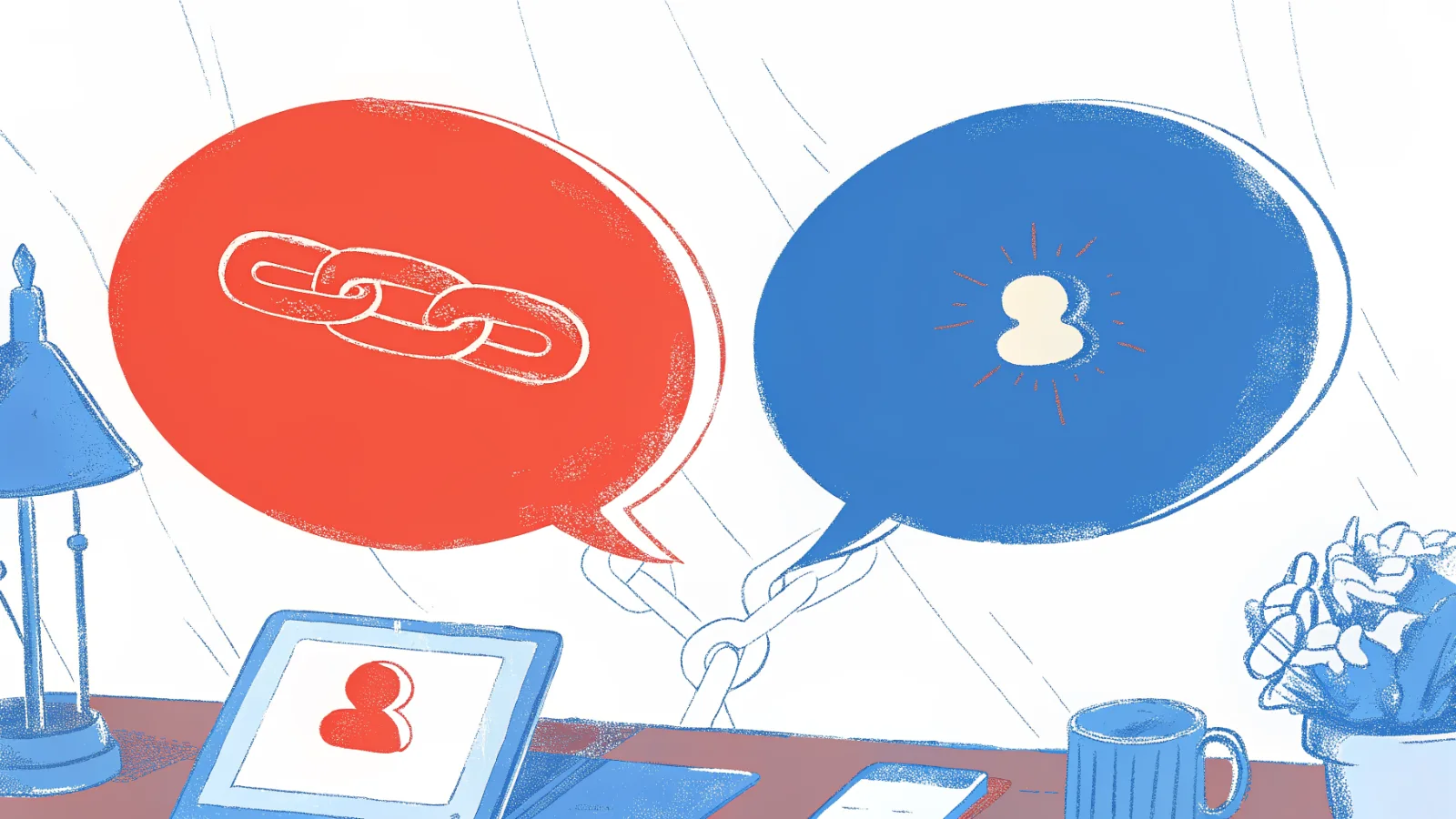
An independent clause stands alone as a complete thought: "She works hard." A dependent clause cannot stand alone; it leans on the independent clause for meaning: "because she wants a promotion."
The Conjunctions That Join Clauses
According to industry research on ESL writing development, the ability to attach dependent clauses using subordinating conjunctions like "because," "although," and "when" is the primary marker that separates developing writers from more advanced ones. Mastering a handful of these conjunctions unlocks most of the complexity you need.
Write About Your Own Life to Make Clauses Stick
Abstract practice sentences fade quickly. Writing sentences about your own life under real communicative pressure is what makes them stick.
"I left my last job because the hours were unsustainable" is harder to forget than any fill-in-the-blank exercise, because your brain has somewhere to anchor it. Personal stakes make the grammar memorable.
When you are ready to move from writing those sentences to speaking them, Parrot's speaking practice, Parrot Back, is most beneficial at exactly that moment: once you have baseline comprehension and want to start producing spoken language rather than just recognising it. Parrot scores pronunciation with proprietary models it built and trained. Listening comes first; speaking is about 20% of the experience, helping you catch and correct the clause errors that are hardest to hear in yourself.
20%
of the experience
Building multi-clause sentences gives you the architecture of real English. Step 5 is where you turn these structures into daily habits so they move from the page into your mouth, automatically, without thinking.
Step 5: Practice Grammar Daily in Context So It Actually Sticks

Read graded content
Shadow native speakers
Write a short journal entry
"My learners struggle to write naturally, suggesting that passive field study without daily contextual practice is not translating into real writing fluency."
— what we hear from language educators
Feed Grammar Into Context With Five Minutes of Graded Reading
Daily English grammar practice works best when grammar arrives inside meaning, not as a rule to memorise in isolation. Five minutes of graded reading, a news article written for learners, a short story at your level, or captioned native-speaker content, exposes you to correct sentence patterns the way a child absorbs language: through repeated, contextual contact. Parrot's Reading Practice with Video Transcripts and Inline Translation addresses this directly: transcripts appear alongside the video so the written form of every spoken phrase is visible at the moment it is heard, and inline translation removes the friction of pausing to look words up.
Shadow Native Speakers to Build Grammatical Muscle Memory
Parrot's short-form video feed pairs comprehensible input with native-speaker audio, turning five minutes on your phone into a read-listen-shadow loop, while Parrot Back, Parrot's dedicated speaking practice feature, creates the low-stakes repetition environment where active production becomes the practice itself.
Write a Three-to-Five Sentence Journal Entry Using That Day's Grammar Focus
Write about something that actually happened to you today, using the tense or structure you studied earlier in the week. Include a full stop, a comma where a clause joins, an apostrophe in a contraction. Punctuation rules in English writing are not cosmetic; they signal grammatical structure to the reader, and writing them trains the same production reflex as speaking. Parrot scores pronunciation with proprietary models it built and trained, and listening comes first, with speaking making up about 20% of the experience.
What 30 Days of Daily Micro-Practice Can and Cannot Do
Parrot's short-form video sessions are designed for exactly that constraint, the whole family can use them together in short daily sessions, and the content is selected to be engaging educational material kids actually enjoy.
The Production Bridge - Why Writing and Shadowing Close the Gap Reading Cannot
Reading tells your brain what correct grammar looks like, but writing and shadowing require it to produce that grammar under real conditions.
Parrot's verb conjugations and grammar insights surface inside video sessions rather than in a separate drill module, so the retrieval practice happens inside comprehensible, contextual content rather than in isolation.
Related Reading
Best Apps For Learning English Pronunciation
Best Tv Shows To Learn English
Best Books To Learn English Grammar
English Pronunciation Exercises
Best Audiobooks To Learn English
Best Movies For Learning English
Best Books For Learning English
Best Youtube Channels To Learn English
Best Apps To Improve English Speaking Skills
How Short-Form Video Turns These Grammar Steps into Real Spoken English
Completing all five grammar steps is a genuine achievement. But a pattern surfaces again and again: learners who finish the sequence on paper still freeze the moment a native speaker fires a sentence at them in real time. The map was solid. The terrain was missing.

Why the Five-Step Map Needs Real Spoken Terrain to Become Fluency
The reason is mechanical. Consciously studied grammar rules cannot initiate spontaneous speech; they can only act as an editor after the fact. That is Krashen's Monitor Hypothesis in plain terms: your grammar knowledge sits in a review queue, not in the production system that generates real-time sentences. Drilling the five steps builds the queue. It does not build the reflex.
Comprehensible input closes that gap. When a learner encounters the SVO pattern and Past Simple tense from steps 2 and 3 inside a short, real English video clip, the brain files those structures as acquired, not merely learned. That is the difference between recognising a rule on a page and producing it under conversational pressure.
Active Noticing vs. Passive Watching - The Difference That Decides Whether Grammar Sticks
Short daily sessions beat long infrequent ones, but only when those sessions require active retrieval tied to real spoken output. A beginner who watches a short, comprehensible video clip and then attempts to reproduce a sentence from it in their own words is engaging every mechanism that makes practice stick simultaneously: spaced repetition, active retrieval, and meaningful context.
The mechanism is a three-step loop: consume a clip, identify one grammar structure you heard, then reproduce a sentence using that structure in your own words. That ten-minute consume-retrieve-produce session outperforms an hour of grammar-rule review in production outcomes, a finding consistent with broader trends in active-retrieval research, because it exercises the production system that passive grammar drills do not activate.
Parrot's short-form video feed is built on comprehensible input so that a 10-15 minute session functions as a listening session, a grammar-noticing session, and a conversation-building session at once. The five steps give you the grammar scaffold; comprehensible-input video gives you the living language to build on it.
Next steps
If drilling tense tables and completing every exercise still leaves you freezing mid-conversation, the path forward starts with recognizing that grammar rules only become reflexes when they are retrieved through real spoken output, not completed on a worksheet. Start with our learn Spanish.
Knowing what job each word does in a live sentence, rather than memorizing abstract labels, is the cognitive shortcut that builds flexible pattern recognition. And tense knowledge only becomes usable fluency when it is retrieved repeatedly in short, spaced sessions tied to meaningful production. Together, these two insights point to the same next step: a practice loop where you consume real language, notice one structure, and reproduce it in your own words, all inside a single short session.
Start with Parrot to see that consume-retrieve-produce loop in action. The same comprehensible-input method that turns grammar steps into spoken reflexes applies across languages, so the session structure works immediately.
Frequently Asked Questions
Why do I freeze when speaking even though I understand English well?
Because comprehension and speaking are two separate cognitive operations, not two points on the same scale. Your recognition system can be fully trained by watching and listening while your production pipeline, the multi-stage process of conceptualising, encoding, and articulating a sentence, remains completely untouched. Gains in comprehension do not automatically transfer to spoken output.
Is watching a lot of English content enough to become fluent?
No. Passive viewing exercises the recognition system only, and words learned that way are only partly known, recognisable in context but not retrievable under the real-time pressure of a conversation. Spoken grammar only develops when output is demanded alongside input, not after it.
What is the best order to learn English grammar as a complete beginner?
The post recommends starting at the word level by learning the eight parts of speech, understanding what each word does in a sentence rather than just memorising its label, and then building on that foundation with the Subject-Verb-Object sentence pattern. Getting SVO right first gives every new word and rule a pre-assigned place to land.
Why do most step-by-step grammar guides fail to produce real speaking ability?
They are built to deliver rules in sequence, not to build the real-time output habit that conversation demands. Without communicative pressure, rules stay stored as conscious knowledge rather than automatic reflex, which is why learners who complete structured guides often report: 'I know the grammar. I just can't use it.'
How is learning the function of a word different from just memorising its grammar label?
Memorising a label like 'adverb' tells you what a word is called; understanding its function tells you what job it does inside a live sentence, for example, that an adverb answers how, when, where, or to what degree. Research cited in the post shows that grammar instruction built on functional categories reduces the cognitive overload of rote memorisation and builds flexible pattern recognition that holds up when a real conversation moves faster than a mental checklist.