Drilling sounds without training your ear first doesn't build better pronunciation. It builds better mistakes. Here is why sequence, not effort, is the fix.
Spending months on pronunciation drills and still getting blank stares is one of the most demoralizing experiences in language learning. The common assumption is: "If I just drill the sounds enough times, my pronunciation will eventually click." So you've put in the reps, repeated the sounds, run through tongue twisters until your jaw ached. And yet, the moment a real conversation happens, something breaks down. That gap between practice and performance is a sign that the method has a structural flaw most learners never catch. See our learn Spanish for how this works in practice.
Muscle memory built in silence is muscle memory for silence. When you repeat a sound in isolation, your brain encodes that movement in a vacuum, stripped of rhythm, stress, and the connected flow of natural speech. Research on second language acquisition consistently shows that phoneme-level drilling produces limited transfer to spontaneous conversation, because real speech doesn't work sound by sound. It works in streams, where vowels blur into consonants and stress patterns carry more meaning than any individual phoneme ever could.

A pattern surfaces repeatedly among learners who report no improvement: they describe repeating sounds, running minimal pair exercises, or practicing through songs. What's almost never in that list is extended exposure to natural spoken English before the drilling starts. The sharper diagnosis is that the issue is an undertrained ear. Repetition then reinforces the wrong pattern, compounding the problem with every session. If your practice consists mostly of output without a prior phase of deep input, the method is working against you. Effort isn't the variable. Sequence is.
Key takeaways
Drilling sounds in isolation without accurate listening first doesn't build a neutral habit, it encodes the wrong pattern deeper with every repetition.
Your ear has to come before your mouth: auditory perception research shows you can't reliably produce a sound you haven't yet learned to hear.
The fastest path to clearer pronunciation is flooding your brain with real, natural speech until the target sounds feel obvious, not running through phonetic charts or tongue twisters.
Most learners stall not because they lack effort but because they skip the listening gap, the stage where your brain maps unfamiliar sounds before your mouth attempts them.
The 18 techniques in this post aren't a menu to pick from; they're a sequence, and the listening-first principle is the spine that makes all of them work.
Parrot's Parrot Back closes the loop by having you say out loud and repeat exactly what you hear, locking in accurate sound perception and spoken output in the same rep.
The Listening Gap That Makes Pronunciation Drills Useless Without It
The common assumption is that if you just drill the sounds enough times, your pronunciation will eventually click, but auditory perception research delivers an uncomfortable finding for anyone who has spent months drilling vowel sounds into a mirror: your mouth cannot reliably reproduce a sound your ear has never learned to distinguish. That gap sits at the root of why so many learners practice diligently and still sound wrong to native speakers.
your mouth cannot reliably reproduce a sound your ear has never learned to distinguish.
Why Your Ear Has to Learn the Sound Before Your Mouth Can Produce It
Research in second-language phonology is consistent on this point: isolated articulatory drill without prior perceptual training is insufficient for durable pronunciation improvement, because learners must first develop accurate auditory targets before motor production practice can be effective, a finding replicated across multiple acquisition studies and summarized in perceptual training literature.
One of the most persistent obstacles we see is that learners hear phonemes through the filter of their native language. The brain doesn't register an unfamiliar Spanish sound as different; it maps it onto the nearest familiar sound and moves on.
That is precisely the problem Parrot's Comprehensible Input Method is built to solve. Rather than starting with output drills, the method prioritizes immersive listening at the right level of comprehensibility, training the ear to carve out accurate phonological representations before the mouth is asked to reproduce them. When you are ready for output, Parrot Back speaking practice gives you a structured place to produce what your ear has already internalized, closing the perception-to-production loop the research demands.
What Popular Pronunciation Advice Gets Right and Still Misses
Across the most widely shared pronunciation advice for Spanish learners, a clear consensus emerges: improvement comes down to training your ear to hear subtle sound differences and training your mouth muscles to produce them consistently. Imitation of native speakers consistently outperforms phonetic chart study.
Apps that accept a close-enough pronunciation and mark it correct train auditory approximation, not discrimination. Learners hear themselves as correct because they cannot yet hear the difference.
Key takeaway: Industry research is clear: perceptual training must come first, or motor practice has no accurate target to aim at.
Parrot's AI Spanish Tutor addresses this directly during and after video sessions, when a learner wants personalized feedback or targeted practice beyond passive watching.
For learners who want to maintain and sharpen existing Spanish skills daily without burnout, or who need to fit practice into gaps in the day rather than dedicate hour-long study blocks, this sequenced approach also has a practical advantage: short-form video sessions keep immersive perceptual input accessible without it feeling like studying, so the ear keeps training even on the days when formal drill is off the table.
Related Reading
How To Speak English Fluently And Confidently
How To Learn English Grammar Step By Step
English Language Learning Methods
How To Learn English
18 Ways to Improve English Pronunciation Fast Starting Today
Accurate perception has to come first. That is not a preference but a constraint the research imposes. Motor learning shows that repeating a movement without accurate sensory feedback does not build a neutral habit waiting to be corrected; it encodes the wrong pattern more deeply with every repetition. The same constraint applies to your mouth: drill a vowel you cannot yet hear correctly, and you are not practicing good pronunciation. You are practicing a confident, calcified version of the wrong one. Accurate perception is the prerequisite for every technique below.
Because English is a stress-timed language, where rhythm, linking, and intonation carry as much communicative weight as individual phonemes, research on non-native speaker intelligibility consistently shows that misplaced stress causes misunderstanding even when every individual sound is technically correct. That finding changes the order in which you should practice. Ear first, then mouth. Short daily sessions beat weekly marathons, a point British Council LearnEnglish emphasizes when it recommends consistent active listening as the foundation of any pronunciation program.
The 18 techniques below are ordered from highest to lowest leverage, filtered through one question: what does this help you avoid?
1. Shadowing - Mirror a Native Speaker's Rhythm in Real Time
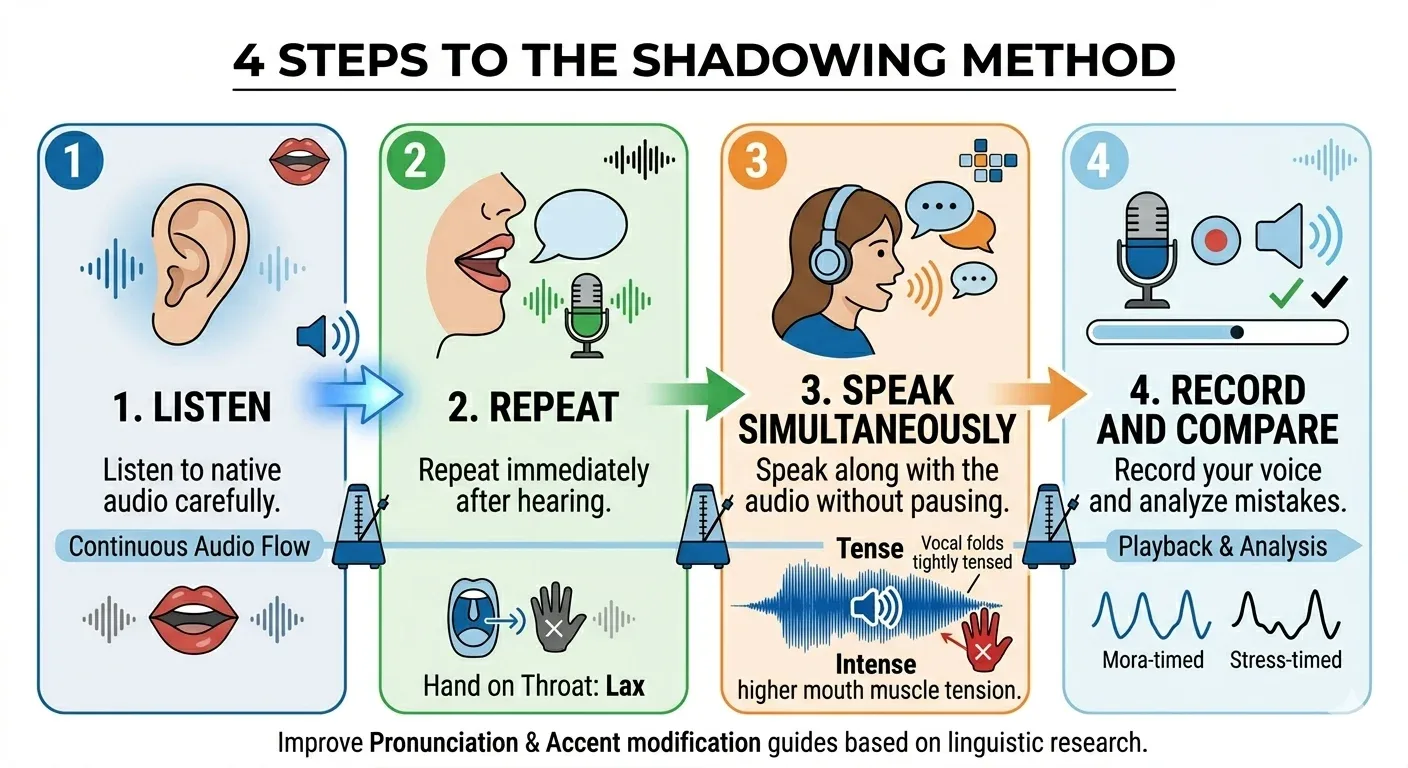
Shadowing is among the highest-leverage pronunciation techniques available to a self-directed learner, with research on shadowing in language acquisition showing measurable gains in both prosody and fluency after consistent practice. Pick a 30-second audio clip from a podcast or interview, play it, and speak simultaneously, matching the speaker's rhythm, stress, and pace exactly. The key variable is clip selection: material at or just above your current listening comfort level produces the most transfer. The tradeoff: shadowing is cognitively exhausting, and beginners often pick clips that are too fast, which trains sloppy approximations rather than accurate ones. Start slow.
2. Recording Yourself - Hear What You Actually Sound Like
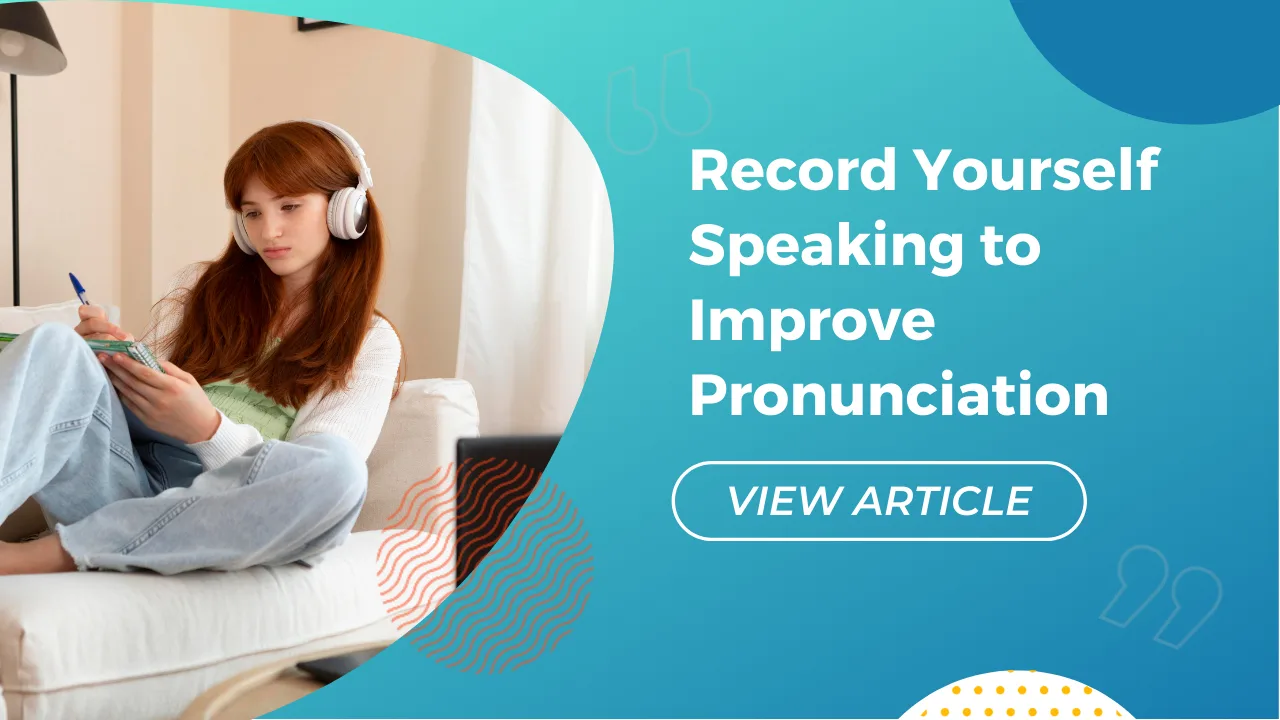
Recording yourself is uncomfortable precisely because it works. Your internal audio feed is filtered by bone conduction and expectation; the recording is what listeners actually hear. Record a single sentence, play it back immediately, and compare it to a native speaker saying the same sentence. The gap between what you thought you said and what you hear is your real practice target. Most learners who try this for the first time report that their vowels are flatter and their rhythm is more monotone than they expected.
3. Reading Aloud - Turn Silent Study Into Active Mouth Training
Reading silently builds vocabulary. Reading aloud builds the muscle memory your mouth needs to produce sounds at conversational speed. Choose a short paragraph from any article, read it aloud at a natural pace, record it, and compare. The action step is simple: five minutes of aloud reading daily, focused on one pronunciation feature at a time, whether that is linking, stress, or a specific vowel cluster. Industry research notes that consistent short sessions outperform occasional long ones for building this kind of articulatory habit.
4. Slowing Down - Nail the Sound Before You Speed Up
Slowing down is the correct sequence. Speaking faster than your articulatory accuracy allows trains imprecision. Drop your speaking pace noticeably on any sentence you are practicing, hold each sound long enough to feel its physical position in your mouth, then gradually increase speed only after the sound is stable. This is the same progression sports coaches use for motor skill acquisition: accuracy before speed, always. The mistake most learners make is treating slow speech as a temporary embarrassment rather than a necessary stage.
5. IPA (International Phonetic Alphabet) - Decode Any English Sound on Paper
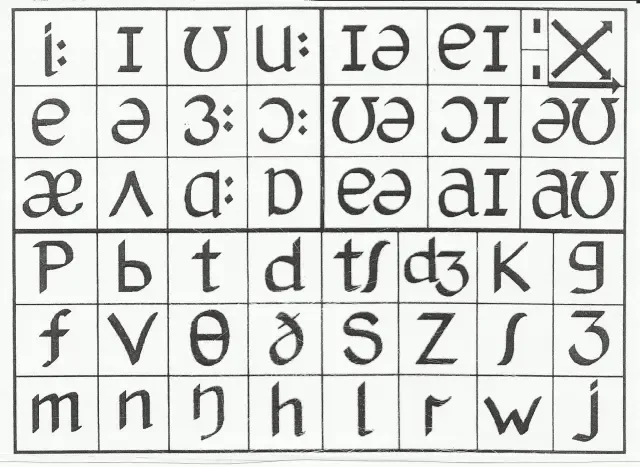
Because English spelling does not reliably predict pronunciation, learning how sounds are physically formed is essential, and the International Phonetic Alphabet gives you a consistent map. English's spelling-to-sound irregularity is genuinely extreme. The poem "The Chaos" by Gerard Nolst Trenité is famous in pronunciation circles precisely because it makes even native speakers stumble, a vivid illustration of how much the written word misleads the learner's ear. The action step is narrow: do not try to memorize the full IPA chart.
Instead, look up the IPA transcription of every new word you encounter in a dictionary, and use it to confirm where your tongue and lips should be. Focus first on the core English vowel sounds, which cause the most cross-language confusion. Ten minutes with a chart and a dictionary is enough to start.
6. Mouth Movements - Watch and Copy the Physical Shape of Sounds
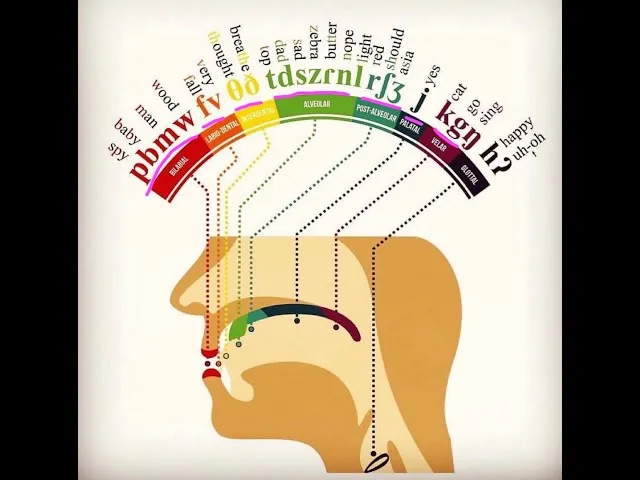
English has sounds that do not exist in most other languages, and no amount of listening will teach your mouth to make them if you have never seen the physical shape required. Find a phonetics video that shows a close-up of mouth position for the sounds you struggle with, pause on the frame, hold that shape yourself, and then produce the sound. The "th" sounds, the short "i" versus long "ee" distinction, and the American "r" are the three positions most worth studying this way before any other drill.
7. Minimal Pairs - Train Your Ear to Hear the Difference Between Similar Sounds
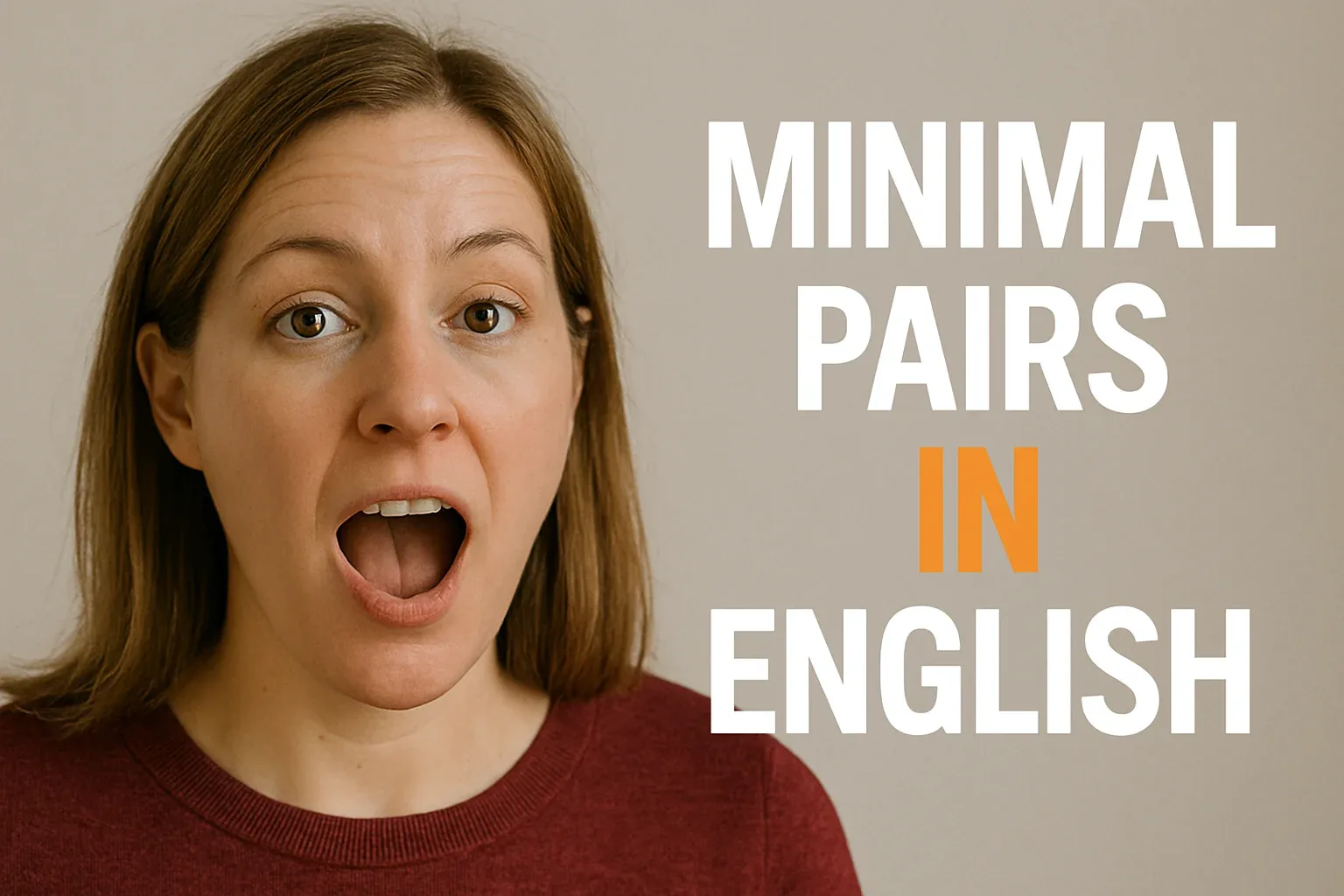
Minimal pairs practice trains your ear to detect distinctions your native language may not mark. A minimal pair is two words that differ by exactly one sound: "ship" and "sheep," "bit" and "beat," "cat" and "cut." The action step: find a minimal pairs list for the two sounds you most often confuse, listen to a native speaker alternate between them repeatedly, then record yourself doing the same and compare. Drilling without listening first is the exact mistake this technique is designed to fix. Ear before mouth, every time.
8. Word Stress - Put the Emphasis on the Right Syllable Every Time
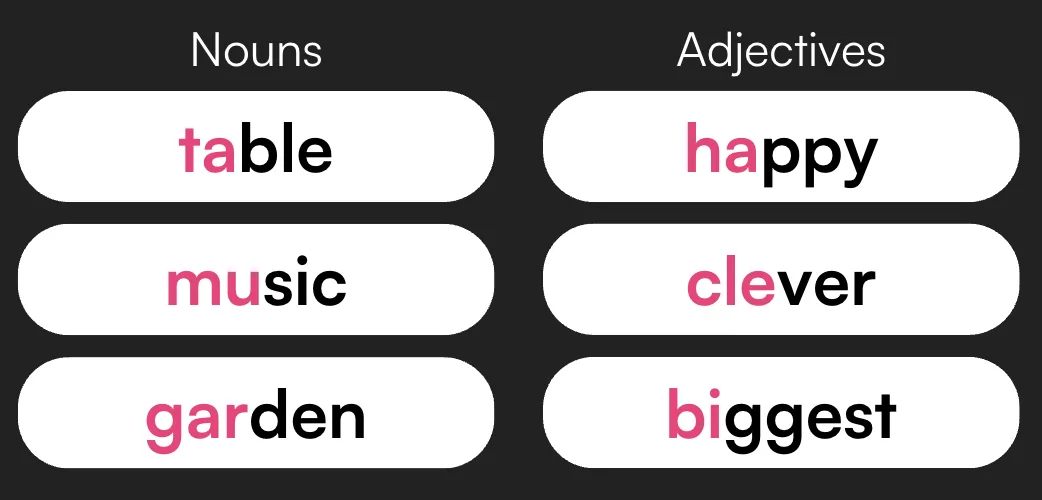
Word stress in English is not decorative. Misplaced stress changes how a word is perceived, and in many cases makes it unrecognizable to a native listener even when every individual sound is correct. The action step: when you learn a new word, mark its stressed syllable immediately, say it several times with exaggerated stress on the right syllable, then reduce to normal volume. English is a stress-timed language where key syllables are longer and louder while unstressed syllables compress and reduce. Getting this wrong is the most common reason technically accurate pronunciation still sounds foreign.
9. Connected Speech - Stop Pronouncing Every Word in Isolation
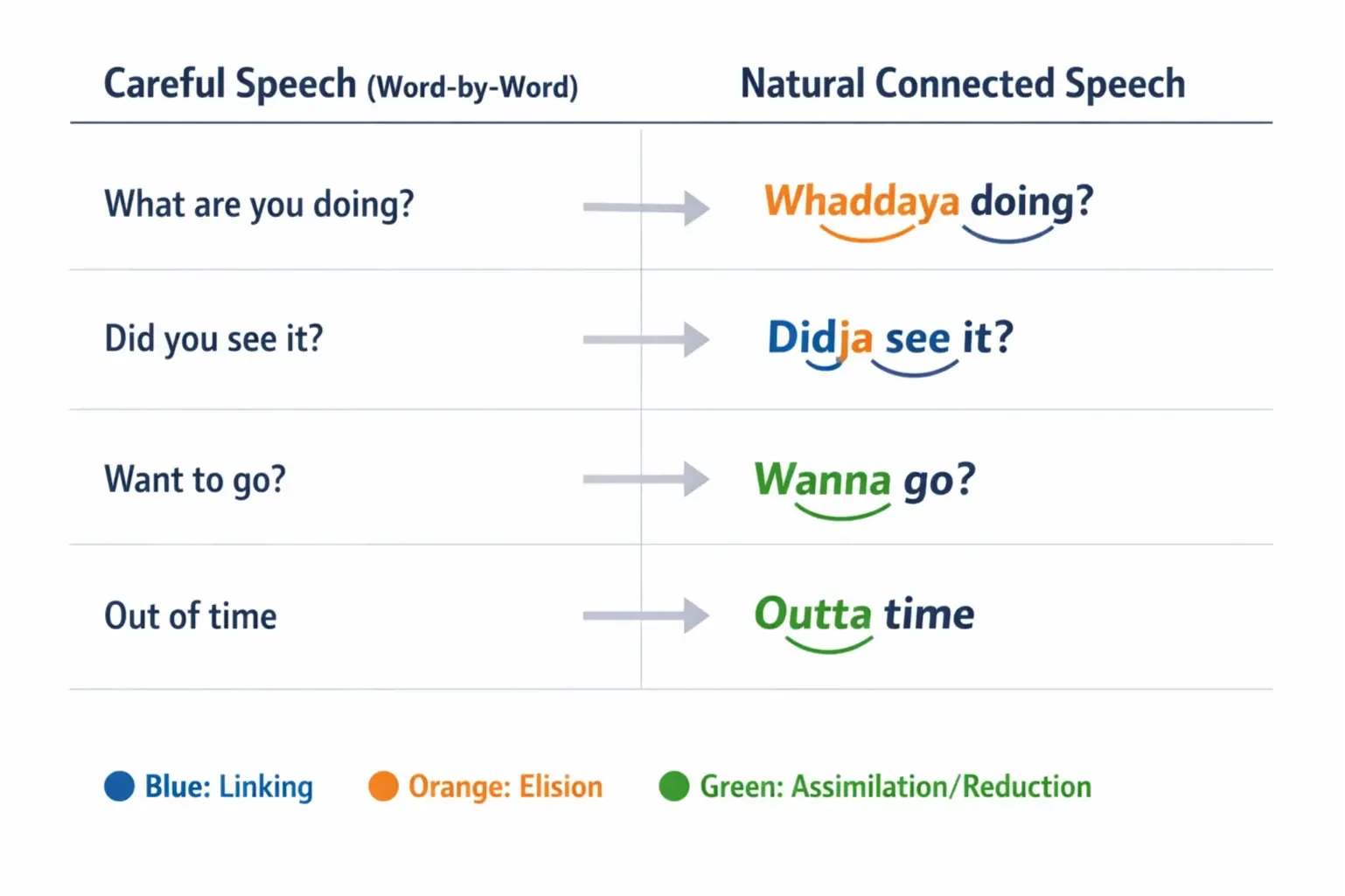
Native English speakers do not pronounce every word in full, clear isolation. Sounds link, reduce, and sometimes disappear entirely in natural conversation. Learners who pronounce every word separately are technically correct and consistently hard to understand in fast conversation. The action step: take any sentence you use often, find a native speaker recording of it, transcribe exactly what you hear (not what the words should sound like), and practice that phonetic version. Connected speech is where pronunciation transfers from the classroom to the street.
10. Voice-to-Text as a Pronunciation Checker - Let AI Tell You If It Understood You
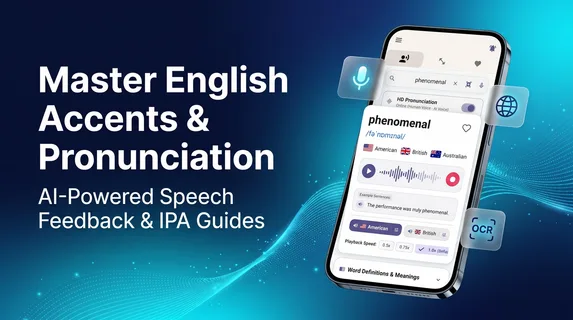
Dictating a sentence into your phone's notes app and watching whether voice-to-text transcribes it correctly is a free, immediate pronunciation check available to anyone. If the software misreads your word, your pronunciation is outside the range the model expects. The important caveat: research on ASR accuracy with non-native speakers shows that speech recognition tools perform significantly worse on accented speech, meaning a failed transcription might reflect a system limitation rather than a real pronunciation error. Use it as a rough signal, not a definitive verdict.
11. Tongue Twisters - Build Precision and Speed for Difficult Sound Clusters
Tongue twisters are not gimmicks. They are targeted drills for the specific sound clusters that cause articulatory breakdown at speed. The poem "The Chaos" by Gerard Nolst Trenité, well known in pronunciation circles for making even native speakers stumble, covers nearly every irregular English spelling-to-sound pattern in one text, a pointed reminder that English orthography is so unpredictable that mastering its sounds requires deliberate, structured effort rather than intuition.
The action step: pick one tongue twister targeting a sound you struggle with, say it at half speed until it is clean, then increase pace. The goal is maintaining accuracy when your mouth has to move fast.
12. Intonation Practice - Rise and Fall Like a Native, Not a Robot
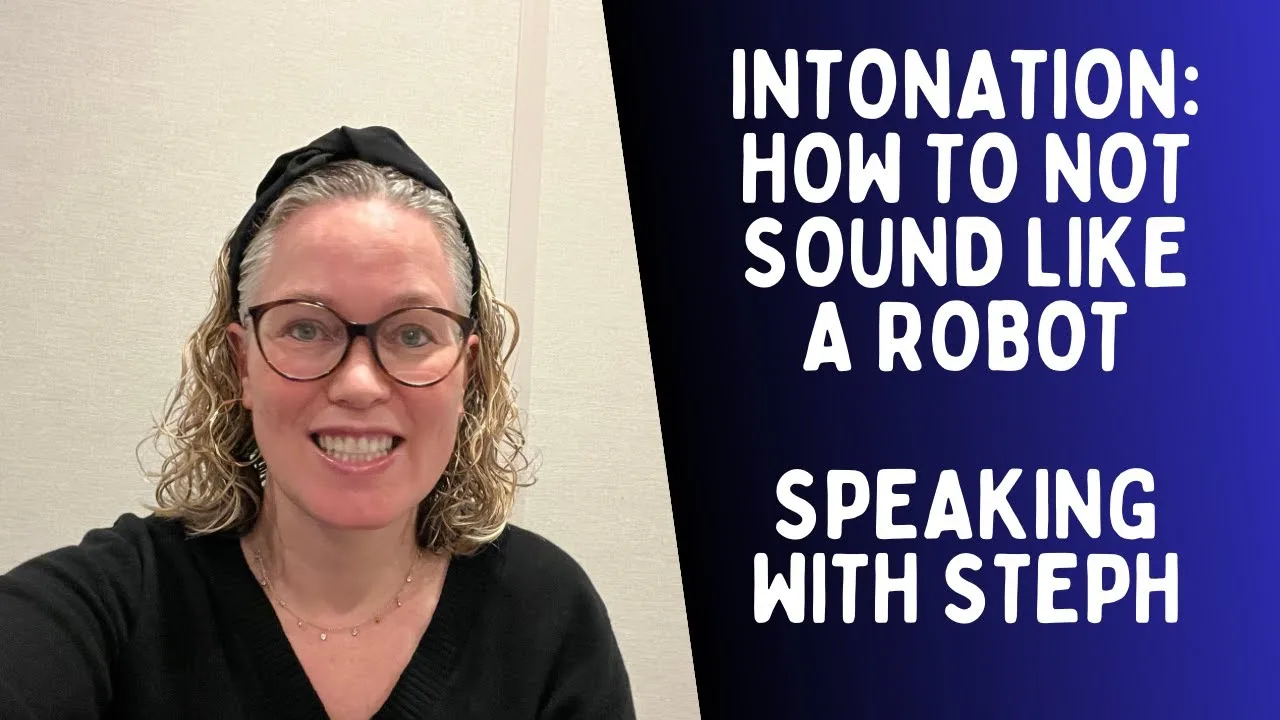
Intonation is the melody of English, and it carries meaning that individual words cannot. A rising tone on a statement signals uncertainty. A flat tone on a question sounds rude. The action step: record a native speaker saying a short paragraph, map the pitch rises and falls with a simple up-down notation above each word, then read the paragraph aloud matching that map. Industry pronunciation resources frame intonation as the "music" of the language, and getting it wrong is the primary reason fluent speakers still sound robotic to native listeners.
13. Finding a Language Partner - Get Real Human Feedback on Your Accent
A language partner gives you something no app can: a real person who will tell you when they did not understand you, and why. The action step: find a native English speaker on a language exchange platform, Preply is one option, who is learning your native language, agree on 15-minute sessions, and ask them to flag any word they had to mentally correct to understand. The limitation is real: most language partners are too polite to give consistent corrective feedback without explicit permission. Ask for it directly at the start of every session.
14. Immersive Listening - Flood Your Ears With Native English Every Day

Accurate auditory targets have to come before accurate production. If your ear cannot reliably distinguish two sounds, your mouth will not produce them consistently no matter how many drills you do. The action step: add a consistent block of native English audio to something you already do daily, a commute, a lunch break, a walk, with no obligation to study or take notes. The goal is exposure volume. Industry research on pronunciation learning supports the principle that consistent daily listening, even passive, accelerates the perceptual calibration that makes active practice more effective.
15. Repeat-and-Mimic (Parrot Back) - Replay, Repeat, and Lock In the Sound

The listen-pause-repeat-compare loop is the most research-supported pronunciation drill available, and it is also the one most learners skip because setting it up creates just enough friction to abandon on a busy day. Finding a good clip, pausing at the right moment, and replaying to compare takes effort. Parrot Back, the speaking practice feature inside Parrot's short-form video feed, builds this loop directly into content you are already watching, so the technique that works best is also the one that actually gets done.
This is especially valuable for learners who have struggled with traditional memorization-based methods and want a research-backed alternative that keeps them in the content rather than pulling them out of it. Most beneficial when a learner wants active, personalized practice layered on top of immersive listening rather than replacing it.
16. ChatGPT for Pronunciation Feedback - Your Always-Available AI Coach

Type a sentence you are unsure about into ChatGPT and ask it to explain the stress pattern, the connected speech reductions, and the sounds most likely to cause confusion for a native listener. It will not hear your voice, but it will give you accurate, detailed phonetic guidance on demand. The action step: after any recording session, type the sentence you practiced and ask for a breakdown of its pronunciation features. Use it to build the auditory target before you drill, not as a replacement for actually speaking aloud.
17. Micro-Practice Sessions - Five Minutes Daily Beats One Hour Weekly
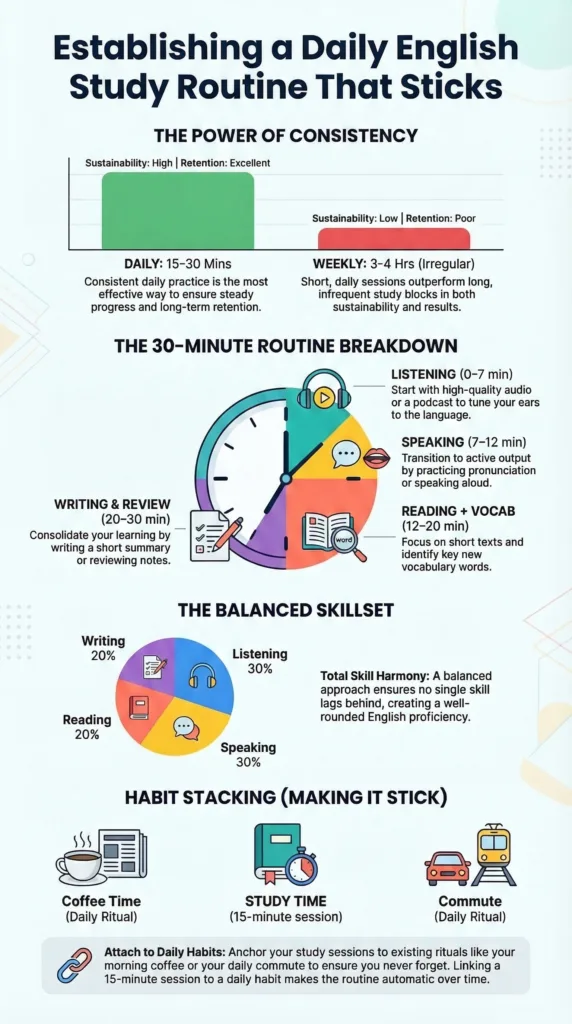
Motor skill research in speech-language pathology consistently shows that short, frequent practice sessions outperform long, infrequent ones for building articulatory habits. The mechanism is consolidation: your brain encodes motor patterns during rest between sessions, not during the sessions themselves. The action step: commit to a short, focused pronunciation session every day, at the same time, attached to an existing habit like morning coffee or a commute.
One hour on Sunday feels productive. A short session every morning changes your speech. The tradeoff is that five-minute sessions require a clear, pre-selected focus so no time is lost deciding what to practice.
18. Entertainment-First Immersion - Learn Pronunciation Through Shows and Music You Love
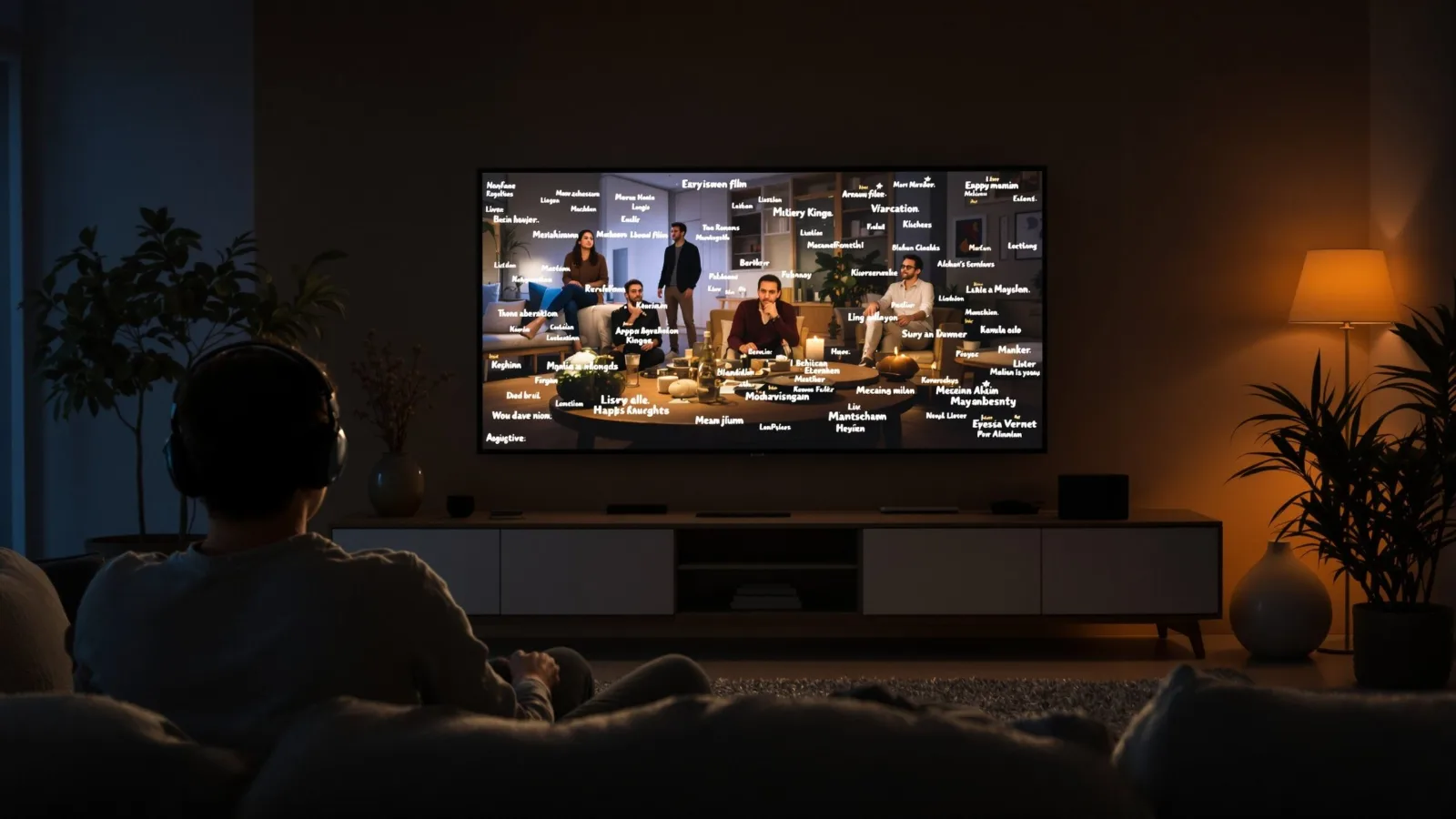
Pronunciation exposure that feels like entertainment gets done consistently. Exposure that feels like homework gets skipped. The action step: pick one English-language show or playlist you genuinely enjoy, watch or listen with English subtitles on, and pause on any phrase whose spoken version does not match what you expected from the written words.
That gap is connected speech in action, and given how dramatically English pronunciation departs from its spelling, those gaps will be frequent and instructive. The limitation: passive entertainment without an active pause-and-repeat moment is enjoyable but slow. It builds familiarity with rhythm and intonation over time, but it will not fix a specific sound problem without deliberate attention layered on top.
Eighteen techniques is a lot to hold in your head at once, and if you try to run all of them in parallel, you will likely run none of them consistently. The next section shows how a single organizing principle ties all 18 together into a sequence that actually sticks, starting with the one step that makes every other technique on this list work faster.
Related Reading
How Long Does It Take To Learn English Fluently
Best Apps To Learn English
Types Of Music Good For Learning English
Learning English As A Second Language
English Learning App For Kids
Best Websites To Learn English
How To Learn English Speaking At Home
Game To Learn English
English Learning Activities
Tof
Best Podcasts For Learning English
How Listening-First Practice Ties All 18 Techniques Together
Eighteen techniques look like a menu. They are not.
"I feel overwhelmed when trying to integrate multiple listening techniques (e.g. dictation, subtitled rewatching, passive listening) without a unifying framework to tie them together."
— what we hear from language learners
The listening-first principle is the spine that connects every item in this system, and the sequence matters more than the individual steps. Research into memory encoding in digital language learning consistently finds that listening-based input followed by immediate spoken repetition activates deeper encoding pathways than isolated pronunciation drilling, which means ear training is the prerequisite that makes the other seventeen work.
Most learners treat listening and speaking as separate activities scheduled at separate times. The hidden cost is real: the gap between a passive listening session and the next speaking drill is where pronunciation gains evaporate, because the sound your ear just absorbed fades before your mouth ever attempts it. Parrot Back collapses that gap into a single 60-second habit. Say out loud and repeat what you hear to build speaking confidence and sharpen comprehension, so the ear-to-mouth transfer happens inside the same clip rather than days apart.
Key takeaway: Short, frequent bursts of listening-then-imitation scattered across a commute are neurologically superior to long, infrequent drill sessions, because memory consolidation favors distributed exposure and consistent low-friction engagement compounds faster than effortful but irregular practice.
You now have the sequence: 18 techniques, one listening-first spine, and a single micro-habit that bridges them all. The next section shows you exactly how to take the first rep right now, in under a minute.
Next steps
If your pronunciation practice keeps breaking down the moment a real conversation starts, the path forward starts with fixing the sequence, not adding more repetitions. Drilling sounds before your ear has accurate targets encodes the wrong motor pattern more deeply with every session, and no amount of effort reverses that without first closing the perceptual gap. Start with our learn Spanish.
Listening to authentic, meaningful content and immediately imitating it encodes pronunciation more durably than isolated drills, because it activates both the perceptual and motor systems at once. This means ear training is not one option among the eighteen techniques above; it is the prerequisite that makes the other seventeen work. Short, frequent bursts of listening-then-imitation are also neurologically superior to long, infrequent sessions, because memory consolidation favors distributed exposure. Together, these two findings point to one action: a daily micro-habit that keeps the ear and mouth working in the same loop, not on separate schedules days apart.
Start with learning Spanish through Parrot's listening-first video feed, where the Parrot Back feature builds the hear-pause-repeat loop directly into content you are already watching. One session under sixty seconds closes the ear-to-mouth gap that traditional drilling never does.
Frequently Asked Questions
Why do I keep mispronouncing words even after drilling them over and over?
The most likely cause is an undertrained ear, not insufficient repetition. Without an accurate auditory target, your brain registers nothing wrong during drills and reinforces the same incorrect pattern with every session, so more repetition actually compounds the problem rather than fixing it.
How do I copy a native speaker effectively to improve my pronunciation?
Shadowing is the highest-leverage technique for this: pick a 30-second clip from a podcast or interview, play it, and speak simultaneously while matching the speaker's rhythm, stress, and pace exactly. The key is choosing material at or just above your current listening comfort level, clips that are too fast train sloppy approximations rather than accurate ones.
Can I practice English pronunciation effectively on my own at home?
Yes, recording yourself is one of the most effective solo methods because your internal audio feed is filtered by bone conduction and expectation, while the recording is what listeners actually hear. Record a sentence, play it back, and compare it to a native speaker saying the same sentence to identify your real practice target.
Does learning word stress really matter that much for being understood?
Yes, misplaced stress is the most common reason technically correct sounds still cause misunderstanding. Research on non-native speaker intelligibility consistently shows that misplaced stress causes misunderstanding even when every individual sound is technically correct, because English is a stress-timed language where rhythm carries as much communicative weight as individual phonemes.
Should I focus on phonetic rules and IPA charts to fix my pronunciation?
IPA is useful, but only as a targeted reference tool rather than something to memorize in full. The post recommends a narrow action step: look up the IPA transcription of every new word you encounter in a dictionary to confirm where your tongue and lips should be, focusing first on the core English vowel sounds that cause the most cross-language confusion.