Your course is complete. Your certificate is downloaded. So why does a real conversation still stop you cold? Here is how to spot the courses actually built to make you speak.
Finishing a course feels like progress. The streak is intact, the certificate is downloaded, the lesson tree is fully green. But then a native speaker says hello, and the words just don't come. That silence isn't a personal failure. It's the predictable result of a system designed to measure the wrong thing. The common assumption among most adult individual learners is that if they just find the right structured course with enough lessons and a reputable certificate, consistent daily study will eventually make them fluent. This belief is widespread, understandable, and almost entirely wrong.
"Most online English courses reduce to 'fill in the blank worksheets', structured on paper but failing to simulate real-life language use in context."
— what we hear from online English language learners
The gap between course completion and real conversation is one of the most documented frustrations in language learning, and it affects learners at every level. Understanding why it happens is the first step toward choosing a path that actually builds spoken English rather than just rewarding study time. Platforms like Parrot have built their entire methodology around closing this gap for Spanish learners, which signals what English learners should be demanding from any course they evaluate.

Completing a structured English course and being able to hold a real conversation are two entirely separate outcomes. A course can be finished by a learner who has never once produced a sentence under real conversational pressure. The activities involved train recognition and recall in a controlled environment:
Reading prompts
Filling blanks
Matching vocabulary
They do not train the brain to retrieve and assemble language automatically when a real person is waiting for a response.
Passive recognition means you can identify the correct answer when it appears in front of you. Automatic output means you can produce the right word, in the right order, under time pressure, mid-conversation. These are neurologically different skills.
A learner can accumulate months of streaks and thousands of lesson points while their spoken fluency stays completely flat.
The tools aren't useless. They measure engagement, not acquisition.
The Common European Framework of Reference for Languages (CEFR) runs from A1 (complete beginner) to C2 (near-native mastery). Most adult learners who have studied English for one to two years sit somewhere between A2 and B1: functional but limited. Many stay at this plateau for years, cycling through courses that feel productive but never push spoken output past a comfort zone. If a course can't tell you which CEFR level its content targets and how it builds speaking ability within that band, that is a meaningful signal about its design priorities.
The course was never designed to make you speak.
The problem isn't that you didn't study hard enough. It's that the course was never designed to make you speak.
Key takeaways
Completing a course, finishing the lesson tree, earning the certificate, maintaining the streak, is not the same as acquiring a language. The gap between those two things is a design flaw, not a motivation problem.
Most ranked English course lists sort by lesson count, certificate prestige, or gamification features. None of those variables predict whether you'll hold a real conversation after six months.
The research-backed mechanism behind fluency is comprehensible input: exposure to language you almost understand, at volume, before grammar drilling. Courses built around drills first produce learners who are fluent on paper and silent in person.
Free tools like Duolingo can build a daily habit and carry beginners to A2, but the moment they stop working, stop using them. Loyalty to a single platform is the most common reason learners plateau.
University-backed certificates from platforms like Coursera carry real weight in job applications and graduate admissions, but they measure academic English, not spoken fluency under pressure.
For business and professional learners, speaking practice cannot be the reward you unlock after enough lessons. It has to be the training itself.
Parrot is a short-form video app built around comprehensible input, the same acquisition method the research points to, where real spoken content replaces grammar drills. English is coming soon alongside French and Italian.
How to Choose the Right Online English Course Before Wasting Another Month
The common assumption among most adult individual learners (beginners) is: "If I just find the right structured course with enough lessons and a reputable certificate, consistent daily study will eventually make me fluent."
It's that most courses are built around the wrong signal: verb conjugations and grammar insights feel like progress because they produce measurable, gradable output, but knowing a rule and producing speech in real time are entirely different cognitive tasks.

The Three Architecture Signals That Separate Speaking Courses from Studying Courses
Comprehensible input ratio: how much of each session puts you inside real, natural English at a level just above your current ability, rather than explaining rules about English.
Spoken output frequency: how early and how often the course forces you to produce speech, not just recognise patterns.
Session length fit: adult learners consistently complete far more sessions when individual units are short; a course designed around long blocks assumes a schedule most working adults simply don't have.
As Medianic documents in its analysis of the app-based language learning market, completion metrics, streaks, lesson counts, and badges tend to be the primary optimisation target, which means a high lesson count can mask near-zero acquisition value for spoken fluency.
Parrot is built around all three signals simultaneously, and it is most beneficial precisely when a learner has struggled with traditional memorisation-based methods and wants a research-backed alternative. A placement test at the start ensures the input you receive sits just above your current level rather than boring you with content you've mastered or overwhelming you with content you can't yet process. The short-form video feed delivers that input in units calibrated to real life: learners start consuming content immediately upon opening the app, there is no onboarding friction standing between them and actual English, and the format fits the gaps that actually exist in a working adult's day, the commute, the lunch break, the ten minutes before bed.
And Parrot Back, the platform's dedicated speaking practice feature, closes the gap that passive input alone can never close: you say out loud and repeat what you hear to build speaking confidence and sharpen comprehension at every stage of the journey, not just the early lessons where speaking practice is easiest to design.
Best Free Online English Courses - BBC Learning English and ManyThings.org
BBC Learning English reaches a vast global audience and delivers free daily audio and video segments, vocabulary sets, and real-world British English in short, well-produced chunks, a genuine high-quality resource for building listening comprehension and vocabulary up to around B1. ManyThings.org adds a library of free listening comprehension exercises that work as low-pressure comprehensible input practice, particularly for beginners building reading-listening links.
That is where a paid, acquisition-first course earns its cost.
How to Spot the A1-to-B1 Plateau Before You Enroll
Before enrolling, ask one question: does this platform show you what its B1-to-B2 content actually looks like, or does it only demo the beginner modules? Parrot addresses this directly: the placement test sets your entry point, the Comprehensible Input Method sequences content that scales with you as an underlying principle governing every session, and Parrot Back keeps spoken output in every stage of the journey, not just the early lessons where speaking practice is easiest to design.
The 43 Best Online English Courses Ranked for 2026
Months of completed lessons, hundreds of vocabulary cards reviewed, streaks maintained without a single break, and then a native speaker says something slightly off-script and the words simply stop coming. That gap between studying and speaking is a design problem. The platforms dominating this list have been built to maximize lesson completion, not conversation readiness. Across the app-based, certification, and tutor-marketplace segments of online English learning, the dominant competitive signals tend to be lesson volume and credential delivery, a design priority that leaves the specific combination of habit-replacing short-form input and high-frequency spoken output underserved in most mainstream tools.
That is the ranking lens used here. Each of the 43 entries below is evaluated on two questions: does it deliver comprehensible input at the right level, and does it force spoken output? Brand size, certificate count, and star ratings are noted where relevant, but they do not determine rank. The research basis for this approach traces to Stephen Krashen's comprehensible input hypothesis, which holds that adults acquire language most efficiently by processing meaning-rich input slightly above their current level, not by memorizing grammar rules or accumulating lesson badges.
Cost data is woven in where it changes the decision. For live tutor platforms, session costs vary meaningfully depending on whether you book a community tutor or a certified teacher, and on the platform and tutor experience level. Those figures matter when comparing tutor-based options against structured apps, because the per-hour cost of real conversation practice is often lower than learners assume.
The entries span every level from A1 beginner to C1 advanced and every format from fully free to premium live instruction. Where a platform appears in other sections of this article, university certificates, free beginner options, business English, the entry here focuses strictly on its acquisition and speaking credentials, not its credential architecture.
1. Parrot - Best for Replacing Doomscrolling with Active Spoken English Acquisition
Most learners already spend a significant portion of their day scrolling short-form video. Every one of those hours is passive consumption that builds zero spoken English. Parrot is built to flip that existing habit into active acquisition.
It delivers a personalized short-form video feed matched to the learner's level and interests, content drawn from real native speakers, not scripted studio recordings, and pairs every clip with transcripts and translations available immediately. A placement test at the outset ensures the feed is calibrated from the first session rather than defaulting to generic beginner content. Verb conjugations and grammar insights surface in context during video sessions, so structural knowledge is absorbed alongside meaning rather than front-loaded as memorization.
One of the most common frustrations learners bring to this category is finishing hours of structured study only to freeze the moment a real speaker deviates from a textbook script. The underlying issue is that memorization-based methods build recognition without building retrieval under pressure. Parrot is most beneficial precisely when that is the obstacle: its comprehensible input method governs how content is selected and sequenced for each learner, surfacing real native-speaker material at the right level continuously rather than cycling through fixed lesson sets. Parrot Back speaking practice then converts those comprehensible input sessions into real output, letting learners practise speaking confidently with content from real native speakers, which creates the retrieval pressure that passive watching never generates.
The design integrates into time learners are already spending rather than requiring a dedicated study block to be carved out of a busy schedule, converting dead time into the comprehensible input and output loop that most other courses here require you to schedule separately.
The annual plan includes a 7-day free trial with full Premium access; a card is required to start, and a reminder is sent before the trial ends. App Store purchases are refunded through Apple's standard process; for all other purchases, refunds are available on request and no request has been turned down. US prices apply; pricing is localized by country, so other markets see different prices.
Parrot earns the top slot because its architecture combines three elements that most other platforms on this list address separately: level-matched input from real native speakers, in-context grammar, and forced spoken output, integrated into the short pockets of time learners already have rather than requiring a dedicated study block. Best when your biggest obstacle is consistency, not motivation, and especially when traditional memorization-based methods have already been tried and found wanting.
2. Coursera English for Career Development - Best Structured University-Backed Course for Job Seekers
Developed by the University of Pennsylvania, this course targets B1 to B2 learners preparing for professional job searches in English-speaking contexts. The curriculum covers résumé writing, interview language, and workplace communication with video lectures and peer-reviewed assignments. It earns its place for learners who need a verifiable credential alongside structured input, but the trade-off is clear: written and reading skills develop faster than speaking ability, and learners who finish this course without a separate conversation outlet often plateau before they feel truly interview-ready out loud.
3. Duolingo English Course - Best Free App for Absolute Beginners Building Daily Habits
Duolingo's gamified English course is the most widely used free option for A1–A2 learners who need a low-friction daily habit. Short lessons, streaks, and push notifications make it sticky. It covers vocabulary, basic grammar, and reading with some listening. The core limitation for this audience: speaking practice is minimal and AI-evaluated, comprehensible input is shallow, and learners plateau quickly at B1 without supplementing with real conversation or richer input sources.
4. British Council Online Business English - Best for B2–C1 Professionals Needing Career-Focused Fluency
The British Council's online business English programs blend structured grammar instruction with professionally relevant listening and speaking tasks. For learners already at B2, the content is genuinely challenging and the listening materials reflect real business communication rather than scripted textbook dialogue. The limitation is cost and pacing: programs are priced at the premium end of the market, and the structured schedule suits disciplined learners more than those who need flexible, self-directed sessions. Strong for professionals who want institutional credibility attached to their learning.
5. Udemy Complete English Course - Best Budget Paid Option for Comprehensive Grammar Foundations
Udemy's top-rated complete English courses, frequently discounted during platform sales, offer video lecture libraries covering grammar from A1 through B2 in a single purchase. The value proposition is straightforward: comprehensive grammar reference at a fraction of subscription costs. The honest limitation is that Udemy courses are almost entirely passive. Watching video explanations builds reading and grammar awareness, but without a speaking component layered on top, learners finish the course better at explaining grammar rules than using them in live conversation.
6. Preply English Tutoring - Best Live 1-on-1 Tutor Platform for Speaking Confidence
Preply connects learners with vetted English tutors for live video sessions, with pricing that varies depending on tutor credentials and experience. The platform's filtering tools let learners match by accent, specialty, schedule, and teaching style, which matters more than it sounds: a well-matched tutor is widely regarded as the fastest path to speaking confidence, live conversational pressure requires real-time retrieval and repair in ways that speech-recognition feedback alone does not replicate. The trade-off is cost consistency; sessions with highly rated tutors at the upper price range add up quickly, and learners who skip sessions during busy weeks lose momentum faster than with self-paced tools.
7. italki Community English - Best Low-Cost Tutor Marketplace for Flexible Speaking Practice
Italki separates community tutors (informal, conversational, priced at the lower end of the market) from professional teachers (structured, credentialed, priced higher to reflect their preparation and expertise). For learners whose primary goal is speaking practice rather than grammar instruction, community tutors often deliver better value per hour for speaking goals because sessions stay conversational rather than sliding into grammar correction, a trade-off clearly reflected in the pricing differential between the two tiers. The platform's flexibility is its biggest asset: no subscription, no minimum commitment, and the ability to book a 30-minute session on short notice. The limitation is quality variance; tutor quality across the marketplace is wide, and finding a strong match takes a few trial sessions.
8. BBC Learning English - Best Free Structured Resource for Intermediate Self-Study
BBC Learning English offers a genuinely deep library of free audio, video, and text content organized by level and topic, with a particular strength in authentic British pronunciation and real-world listening material. For intermediate learners at B1 to B2, the 6 Minute English series and The English We Speak deliver comprehensible input through natural conversation rather than scripted drill. The ceiling is the absence of any speaking output mechanism: learners absorb well-produced input but have no structured way to produce spoken English within the platform itself.
9. Rosetta Stone English - Best Immersive App for Learners Who Want Zero Native-Language Instruction
Rosetta Stone's core method associates images, audio, and text without translation, building intuitive recognition rather than rule memorization. For learners who find translation-heavy apps create a mental bottleneck, this approach reduces dependence on the native language. The trade-off is pace: the association method builds recognition more gradually than input-heavy alternatives at the beginner stage, and the subscription price sits at the higher end of the app category, a fair investment for learners who find translation-based tools create a cognitive bottleneck, and a harder one for those who don't.
10. Babbel English - Best Structured App for Beginners Who Want Grammar Explanations Alongside Conversation
Babbel's linguist-designed lessons combine short grammar explanations with dialogue-based practice, making it one of the more coherent beginner experiences in the app category. Unlike purely gamified competitors, Babbel builds toward conversational phrases rather than isolated vocabulary, which gives beginners a faster path to usable sentences. The limitation is that the speaking practice component is speech-recognition based rather than live, so learners get pronunciation feedback but not the unpredictable, real-time pressure of actual conversation. Best for A1 to A2 learners who want structure before jumping into live tutoring.
11. edX Academic English for Success - Best University-Backed Free Course for Academic Writing and Reading
EdX hosts several academic English courses from universities including UC Berkeley and the University of Queensland, targeting learners preparing for English-medium higher education. The free audit track delivers strong reading and writing instruction with genuine academic rigor. The honest limitation is that these courses are built for academic English specifically, formal writing, citation conventions, and lecture comprehension, rather than conversational fluency. Learners whose goal is spoken English in everyday or professional contexts will find the content useful but narrow.
12. EnglishClass101 - Best Audio and Video Podcast-Style Course for Commuters and Busy Learners
EnglishClass101 delivers structured lessons in a podcast format, organized by level from absolute beginner to advanced, with video lessons, audio tracks, and vocabulary tools available across a subscription. The commuter use case is its strongest angle: lessons work well on audio-only, making dead transit time productive. The limitation is depth of speaking practice; the format is primarily input-focused, with limited forced output beyond vocabulary review. Learners who use it as a comprehensible input supplement alongside a speaking outlet get more value than those relying on it as a standalone fluency tool.
13. Pimsleur English - Best Audio-Only Course for Learners Who Hate Screens
Pimsleur's method is built on 30-minute audio lessons that use spaced repetition and prompted speaking responses, requiring learners to produce spoken answers out loud rather than simply listen. Pimsleur's spaced-repetition audio structure is designed around prompted speaking responses rather than passive listening, a meaningful distinction for learners who struggle with screen-based apps or who want to practise during commutes, exercise, or household tasks, since producing spoken answers out loud engages retrieval in a way passive listening alone does not. The trade-off is that the format is linear and the content density per session is lower than screen-based alternatives; advanced learners often outgrow the structure before completing the full program.
14. Cambly - Best On-Demand Native Speaker Conversation Platform for Fluency at Any Hour
Cambly connects learners with native English speakers and offers structured, goal-oriented lessons, courses, guided topics, and automated feedback, not purely unscripted, free-form conversation, though real conversations with native speakers are a core part of its offering, available on-demand without appointment scheduling. Pricing is among the more accessible live-conversation options by cost per minute, making it a practical fit for learners who want frequent short sessions. The platform has no curriculum, grammar instruction, or level progression, which is both its strength and its limit. For learners who already have a grammar foundation and need raw conversation hours, Cambly delivers. For beginners who need scaffolding before speaking, it can feel unproductive without supplementary input tools.
15. Lingoda English Sprint - Best Structured Live Group Class Program for Rapid Progress
Lingoda runs live group classes with certified teachers, organized into structured monthly sprints that reward consistent attendance with partial refunds. The small group class format creates real conversational pressure at a lower per-session cost than 1-on-1 tutoring. The sprint incentive structure works well for learners who need external accountability to stay consistent. The limitation is schedule rigidity: sprint participants commit to a fixed number of sessions per month, and learners with unpredictable schedules often miss sessions, which undercuts both the refund incentive and the learning momentum.
16. Busuu English - Best App with Real Human Feedback on Writing and Speaking Exercises
Busuu's standout feature is its community correction system: learners submit written and spoken exercises and receive feedback from native English speakers in the platform's community. This creates a genuine output loop that most app-based courses skip entirely. The structured curriculum covers A1 through B2 with clear progression, and the human feedback element adds a layer of authentic interaction that speech-recognition tools cannot replicate. The trade-off is that feedback turnaround depends on community participation, which varies by time zone and language pair, so some submissions wait longer than others.
17. ELSA Speak - Best AI Pronunciation Coach for Learners Focused on Accent Reduction
ELSA (English Language Speech Assistant) uses AI-driven speech recognition to analyze pronunciation at the phoneme level, identifying specific sounds that deviate from standard American English. For learners whose primary obstacle is being understood rather than finding words, ELSA's targeted feedback is more precise than any general-purpose language app. The limitation is scope: ELSA is a pronunciation tool, not a fluency or comprehension tool. Learners who use it alongside a comprehensible input source and a live conversation outlet see the best results; using it as a standalone course leaves vocabulary and listening comprehension underdeveloped.
18. Speak English With Vanessa (YouTube + Course) - Best Free Comprehensible Input Channel for Intermediate Learners
Vanessa Prothe's YouTube channel delivers thousands of hours of clear, natural spoken English at B1 to C1 level, with topics ranging from everyday vocabulary to cultural nuance. The content is genuinely comprehensible input in the Krashen sense: native-speed speech made accessible through context, repetition, and clear articulation. The free YouTube library alone is one of the highest-value resources on this list for intermediate learners. The paid course adds structured progression and exercises, but the free channel is sufficient for most learners who pair it with a speaking practice outlet.
19. ABA English - Best Self-Paced Video-Based Course Using Short Film Scenes as Input
ABA English builds its curriculum around short film scenes featuring native speakers in natural dialogue, using the scenes as the primary input source before introducing grammar explanations. The approach is closer to comprehensible input methodology than most structured apps, and the film format keeps engagement higher than talking-head video lectures. The limitation is that the content library is smaller than competitors, and learners at B2 and above often exhaust the available material before reaching their fluency goals. Best for A1 to B1 learners who respond well to narrative-driven input.
20. Open University English Language Skills (OpenLearn) - Best Fully Free University-Level Self-Study Course
The Open University's OpenLearn platform offers free English language skills courses with genuine academic depth, covering reading, writing, grammar, and study skills at a university standard. For learners who want structured, credentialed-quality instruction without paying university fees, OpenLearn is one of the few free options that does not feel like a watered-down trial. The trade-off is that the content skews toward written academic English, and the platform has no speaking practice component, making it best suited as a grammar and reading foundation rather than a conversational fluency tool.
21. Wall Street English - Best Blended Learning Program for Adults Needing In-Person and Online Flexibility
Wall Street English operates a blended model combining online self-study with access to physical learning centers in major cities, targeting adult learners who want the accountability of in-person interaction alongside flexible digital content. The structured curriculum covers A1 through C1 with clear milestones. The limitation is geographic: the in-person component is only available in cities with a Wall Street English center, and the online-only experience, while solid, loses the differentiated value that makes the blended model worth its premium pricing.
22. FluentU English - Best Comprehensible Input Platform Using Real YouTube Videos with Interactive Subtitles
FluentU takes authentic YouTube videos, news clips, movie trailers, speeches, vlogs, and layers interactive subtitles that let learners click any word for instant definition, pronunciation, and example sentences. The result is a comprehensible input experience built from real-world content rather than scripted material, which accelerates the gap between classroom English and the English learners actually encounter. The trade-off is cost: FluentU's subscription is priced above most app competitors, and learners who are disciplined about using free YouTube with manual vocabulary lookup can approximate the experience at no cost, though with significantly more friction.
23. Gymglish (Wunderbla English) - Best Micro-Lesson Daily Email Course for Busy Professionals
Gymglish delivers a single daily email containing a short narrative-based lesson, typically taking five to ten minutes to complete. The micro-lesson format is designed for professionals who cannot commit to longer sessions, and the spaced repetition built into the narrative structure reinforces vocabulary without requiring learners to manage flashcard decks separately. The limitation is depth: five-minute daily lessons accumulate slowly, and learners who want rapid progress will find the pace frustrating. Best for learners maintaining existing skills or building incrementally over a long horizon rather than those seeking fast fluency gains.
24. Magoosh English Grammar - Best Free Grammar Reference and Drill Course for TOEFL and IELTS Prep
Magoosh's free English grammar resources and paid test-prep courses are built around TOEFL and IELTS grammar requirements, making them highly targeted for learners whose goal is a standardized test score rather than conversational fluency. The free grammar video library is thorough and well-explained. The honest limitation is that test-prep grammar instruction optimizes for written accuracy and reading comprehension, not spoken production, so learners who finish Magoosh's grammar track and expect conversational readiness will find a gap between their grammar knowledge and their speaking ability.
25. Speechling - Best Affordable Speaking Practice Tool with Human Coach Audio Feedback
Speechling offers a subscription model where learners record themselves speaking target sentences and receive audio feedback from human coaches rather than AI. The human feedback element is the differentiator: human coaches can evaluate prosody, rhythm, and naturalness in ways that automated scoring algorithms address only partially, which is the core design premise behind Speechling's model. Pricing is among the lowest for human-coached speaking practice in the market. Speechling provides its own built-in curriculum of thousands of sentences plus supplementary tools (vocabulary flashcards, listening comprehension practice, dictation, fill-in-the-blank exercises, and an audio dictionary), meaning learners are not required to rely on a separate external input source before using its coaching sessions.
26. TED-Ed English Lessons - Best Free Advanced Listening and Critical Thinking Resource for C1 Learners
TED-Ed's structured English lessons use TED Talk content as the input source, pairing authentic advanced-level listening with comprehension questions and vocabulary work. For C1 learners who have exhausted intermediate resources, TED-Ed provides challenging input from expert speakers on substantive topics. The trade-off is accessibility: the content assumes strong listening comprehension and a wide vocabulary, making it unsuitable for learners below B2. There is also no speaking output mechanism within the platform, so TED-Ed functions best as a high-quality input source within a broader learning stack.
27. Tandem Language Exchange - Best Free Speaking Practice Through Reciprocal Native Speaker Exchange
Tandem pairs learners with native English speakers who are learning the learner's native language, creating a reciprocal exchange where both parties practice their target language. The format produces genuine conversational pressure and cultural context that no app can simulate. The limitation is reliability: exchange partners vary widely in commitment and availability, and learners who need consistent weekly speaking practice often find the informal arrangement less dependable than a paid tutor. Best used as a free supplement to structured learning rather than a primary speaking outlet.
28. Anki English Vocabulary Decks - Best Free Spaced-Repetition Vocabulary Tool for Serious Self-Studiers
Anki's spaced-repetition algorithm is among the most research-supported vocabulary retention tools available, and the English deck library, covering everything from general vocabulary to IELTS word lists to phrasal verbs, is extensive and free. The trade-off is the setup cost: Anki requires learners to configure their own deck, manage review sessions, and supply their own input context. Learners who invest the setup time and pair Anki with a comprehensible input source see strong vocabulary retention; learners who want a guided experience will find the tool demanding.
29. Cake English App - Best Short-Video Comprehensible Input App for Gen Z and Millennial Learners
Cake delivers short video clips from movies, TV shows, and YouTube content with line-by-line subtitles and pronunciation practice built around each clip. The format is closer to how younger learners already consume content, reducing the friction between entertainment habits and language acquisition. The speaking component lets learners record themselves repeating lines and compare their pronunciation to the original. The limitation is content depth at higher levels: the library skews toward entertainment content rather than professional or academic English, which makes Cake most effective for A2 to B1 learners building conversational vocabulary.
30. Mondly English - Best AR and VR-Enhanced Language App for Immersive Conversation Simulation
Mondly's augmented and virtual reality features simulate real-world conversation scenarios, ordering food, checking into a hotel, navigating directions, using voice recognition to evaluate spoken responses in context. For learners who find flat app interfaces demotivating, the spatial context of AR and VR creates a more memorable association between language and situation. The trade-off is hardware dependency: the VR features require a compatible headset, and the AR features, while accessible on smartphones, add meaningful value only for learners who engage with them consistently rather than treating them as a novelty.
What Are the Best Online English Courses for University-Backed Certificates
Coursera is the clearest answer for learners who need a university-backed English certificate that holds up in a job application or graduate admissions folder. According to SQ Magazine, it is the dominant platform for university-affiliated English credentials, partnering with institutions including Georgia Tech and UC Irvine to deliver certificates that carry genuine institutional weight. That weight matters in a specific, narrow context: a hiring manager or admissions officer scanning a credential wants to see a recognizable university name. Coursera delivers that. What it cannot deliver is the spoken English that comes from real-time, pressure-tested conversation.
One thing worth flagging before you enroll: a persistent source of confusion in this space is the difference between a certificate of completion and a genuinely accredited credential. Many learners discover too late that "free accredited certificates" promoted by platforms like the British Council carry no real accreditation value. They are completion records, not institutional credentials. Coursera's university-backed certificates are verifiable and institutionally recognized because they are issued through degree-granting universities. That distinction is worth understanding before you spend time or money on any English certificate program.
1. Coursera - The Dominant Platform for University-Backed English Certificates
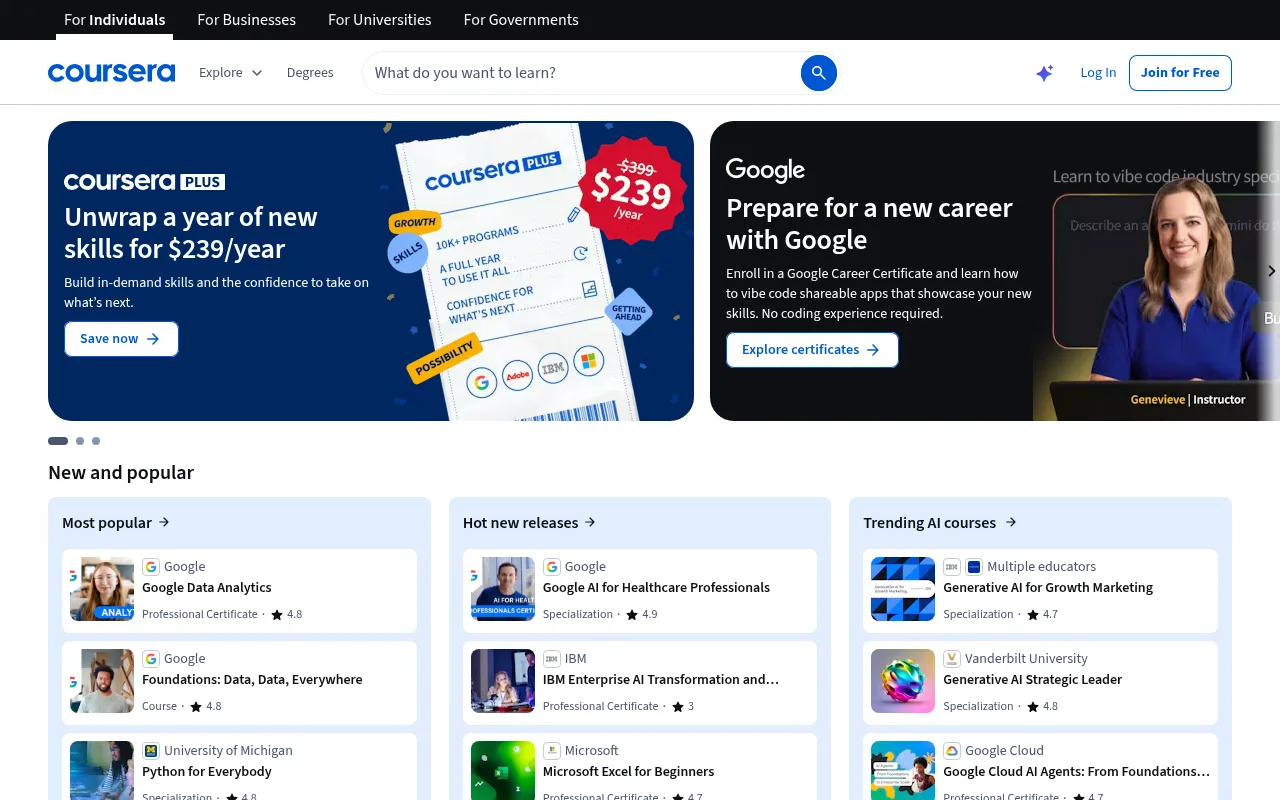
Coursera hosts the largest concentration of university-affiliated English courses available on a single platform, with partners ranging from Georgia Tech to UC Irvine offering certificates that are verifiable and institutionally recognized, as SQ Magazine confirms. The access model matters here: Coursera's subscription pricing varies by region and plan type, and financial aid is available for learners who qualify. Check Coursera's site directly for current figures before enrolling. Most beneficial when you need a credential a third party can verify, not when your primary goal is spoken fluency.
A second pain point worth naming: learners pursuing structured university-backed English programs frequently struggle to find platforms that guarantee real teacher interaction. The concern is legitimate. Many platforms offer structured coursework with no confirmed live instructor feedback, leaving learners unsure whether a teacher has even been assigned to them. Structured coursework without that feedback loop can stall progress, particularly for learners who need to identify gaps in their spoken output and their written grammar. If reliable teacher interaction is a non-negotiable for you, clarify that before committing to any platform.
2. 'Speak English Professionally' by Georgia Tech - Best for Career-Focused Credential Seekers
Georgia Tech's 'Speak English Professionally' on Coursera is the strongest pick for non-native speakers building a professional portfolio for US or international job applications. As the Coursera Blog details, leading universities are using digital platforms to prepare learners with both technical and human communication skills. This course sits squarely in that model, covering workplace communication across in-person, online, and phone contexts. The Georgia Tech name carries recognizable weight with employers. The honest limitation: the assessment is text-based and asynchronous, so the certificate documents your written and analytical performance, not your ability to hold a spontaneous spoken exchange.
3. 'Learn English - Beginning Grammar' by UC Irvine - Best for Foundational Academic English
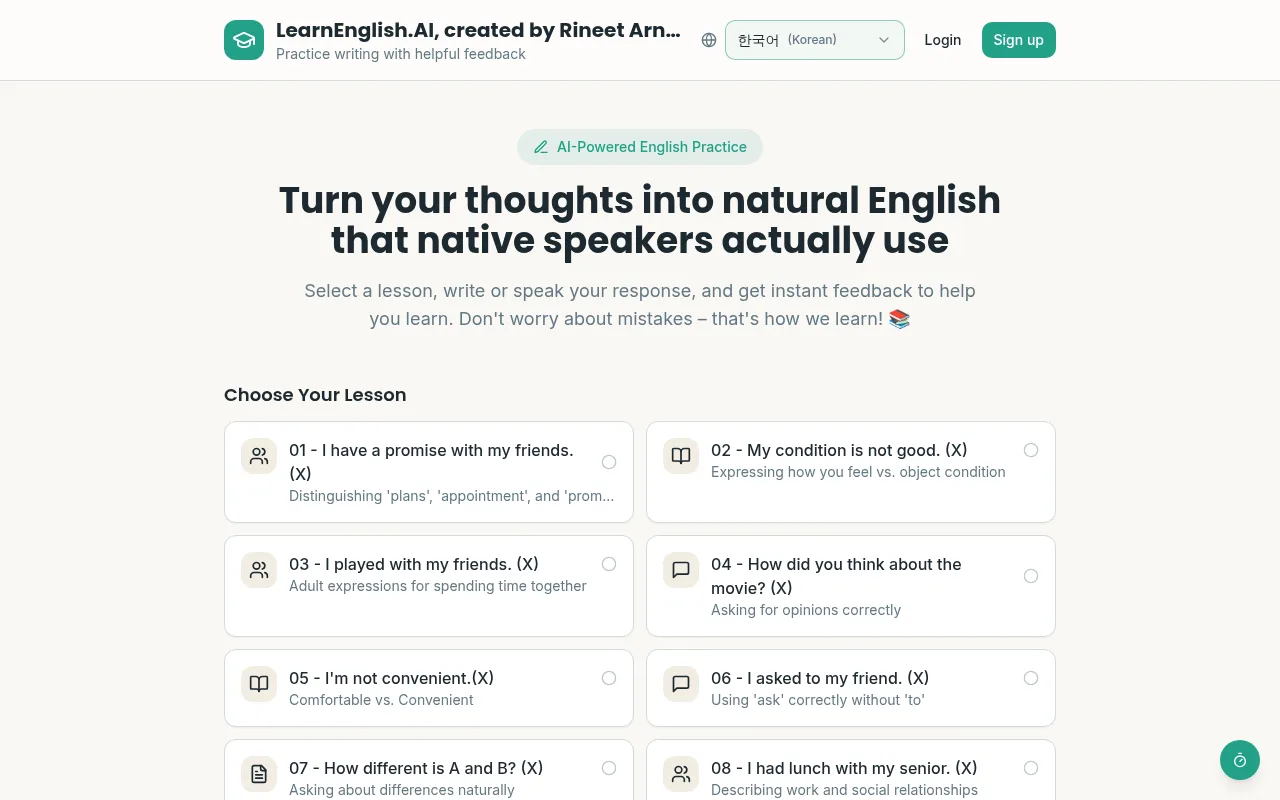
UC Irvine's 'Learn English: Beginning Grammar' specialization on Coursera offers a sequenced, multi-course grammar pathway suited to learners who need a documented foundation before entering academic programs. SQ Magazine identifies it as one of Coursera's key university-backed English offerings. It builds reading and writing competency systematically, which makes it useful as a pre-enrollment credential. Grammar proficiency and spoken fluency are different skills, and this specialization trains only one of them.
4. Professional Credential Seekers and Academic Applicants - The Ideal Coursera Certificate Audience
University-backed Coursera certificates deliver the most value to learners who need documented proof of English competency, job applicants, visa seekers, or students applying to English-medium universities. For this audience, the institutional name on the certificate matters as much as the content. The pathway is a poor fit for learners whose primary goal is casual conversational fluency, since structured academic courses rarely replicate real-world speaking environments.
5. Conversational Fluency Seekers - Who This Pathway Does NOT Serve Well
Learners whose primary goal is to hold natural, spontaneous conversations in English will find university-backed Coursera courses structurally misaligned with that need. These courses optimize for assessable, text-based outputs, quizzes, written assignments, peer reviews, not live dialogue. Anyone seeking the best online English courses purely for spoken fluency should pair or replace this pathway with conversation-focused platforms or live tutoring services.
6. Academic Rigor Trade-Off - Strong Grammar and Writing Gains, Limited Spoken Output
The defining honest trade-off of university-backed online English courses is that their structured, academically rigorous format produces measurable improvements in grammar accuracy, reading comprehension, and formal writing, skills directly tested in IELTS, TOEFL, and university coursework. However, the asynchronous video-and-quiz model generates almost no real speaking practice, meaning learners who complete these courses often still struggle with spontaneous spoken English despite holding a certificate.
Why University Certificate Courses Won't Build Conversational English Fluency
Completing a Coursera English specialization and still freezing in a real conversation is a common and frustrating experience. The courses are engineered for reading, writing, and grammar performance because those are the skills academic assessments measure. A certificate earned through asynchronous, text-assessed coursework measures studied performance rather than communicative competence. Learners who finish a Georgia Tech or UC Irvine specialization and still cannot hold a spontaneous exchange have hit the structural ceiling of this format, not a gap in their effort.
This is where a tool like Parrot becomes relevant. Parrot is most beneficial when a learner has struggled with traditional memorization-based methods and wants a research-backed alternative; its Comprehensible Input Method governs how content is selected and sequenced for each learner, ensuring that every video session is calibrated to where you actually are rather than where the syllabus assumes you should be. Its Parrot Back feature provides speaking practice that text-based coursework cannot offer, the kind of forced output that moves a learner from parsing grammar on a screen to producing language under real conditions.
Critically, transcripts and translations are available immediately on every video, so learners who want to decode what they are hearing in real time have that scaffold right there, without interrupting the session. For learners who have completed a grammar-heavy academic program and still lack spoken fluency, that combination closes a meaningful gap.
Related Reading
How Long Does It Take To Learn English Fluently
Best Apps To Learn English
Types Of Music Good For Learning English
Learning English As A Second Language
English Learning App For Kids
Best Websites To Learn English
How To Learn English Speaking At Home
Game To Learn English
English Learning Activities
Best Podcasts For Learning English
Tof
What Are the Best Free Online English Courses for Beginners
The best free online English courses for beginners can carry you from A1 to solid A2, and in some cases to early B1, if you understand what each tool is actually built to do and stop using it the moment it stops working.
Duolingo - Best Free App for Building a Daily English Habit
The gamified streak system makes it easy to open the app every day, which matters enormously at A1 when consistency is the whole game.
A systematic literature review published in the English Journal of Indragiri on Duolingo's documented benefits found that the app's advantages have defined boundaries, and that it functions best as an early-engagement tool rather than a fluency progression system.
One more practical warning: some learners begin with an app that appears completely free, only to hit mandatory paywalls or subscription prompts shortly after starting, disrupting the early momentum that matters most at A1. Duolingo's core content remains genuinely free, which makes it a reliable starting point on that front.
BBC Learning English - Best Free Resource for Authentic British Content
BBC Learning English delivers something Duolingo structurally cannot: authentic, native-speed content produced for real communicative purposes. The 6-Minute English episodes are particularly effective for A2 learners building listening comprehension, because each episode introduces vocabulary in context before the conversation unfolds, making the jump to real spoken English feel manageable rather than overwhelming.
What Free Courses Actually Deliver, and Where Parrot's Flight School Picks Up
The honest answer to "can you become fluent using only free tools" is no, and the reason is architectural, not motivational. Free tools can fill study hours productively at A1 and A2. They cannot at B1 and beyond, because none of them are built around the mechanism that drives acquisition past the beginner stage: sustained comprehensible input paired with real speaking output.
This is exactly where Parrot's Flight School is designed to intervene, offering a structured progression that free tools leave unaddressed. Parrot Back is the platform's speaking practice component, giving beginners a structured place to produce output, not just consume input.
Which Online English Courses Are Best for Business or Professional Communication
Professionals at B2–C1 level who know they need to reach C1 or higher for competitive remote roles feel this acutely: their grammar reference knowledge is solid, but their ability to retrieve vocabulary and hold register under pressure hasn't been trained. That gap is structural, and it requires a structural fix.

iTalki and Cambly Are the Speaking Layer Your Coursera Certificate Cannot Replace
ITalki connects learners with live tutors for real-time speaking practice that structured video courses and apps cannot replicate, and its filter system lets professionals find tutors who specialise specifically in business English, workplace communication, and professional presentation skills rather than general language learning. That specificity matters at the higher levels: a B2 speaker preparing for an overseas client presentation needs someone who can push back on vague phrasing and model executive register, not a tutor running through present-perfect drills.
Cambly skews toward on-demand, shorter sessions and native English speakers available around the clock, making it a practical fit for professionals in non-Western time zones who need flexible access rather than a fixed weekly schedule.
The Two-Layer Professional English Stack That Actually Moves the Needle
Structured courses and apps build vocabulary and grammar knowledge but leave a gap in spontaneous spoken communication; live conversation practice with a tutor is what closes that gap for workplace and professional contexts.
This is precisely where a tool like Parrot belongs in that stack: before the tutor session, not instead of it. Parrot's placement test ensures content is pitched at the right level from day one, so a C1-track professional isn't wading through material calibrated for someone still building basic fluency.
Parrot's speaking practice feature, Parrot Back, adds the output layer that passive video alone cannot provide.
A practical example: a professional using Parrot's short-form video feed daily for comprehensible input and vocabulary exposure, activating Parrot Back for spoken retrieval practice, then booking two iTalki community tutor sessions per week for unscripted conversation, covers both layers without overlap. Parrot handles acquisition-first input and output drills; the tutor sessions handle the real-time negotiation of meaning that no app can fully replicate.
Stop Picking Courses That Make You Study English Instead of Speak It
Language acquisition research consistently finds that many learners who complete structured online courses do not reach conversational fluency, an outcome that reflects course design priorities, not learner effort.
The cycle is familiar: complete lessons, earn badges, feel productive, then freeze the moment a native speaker goes off-script. Completion metrics are what most platforms are built to optimize, not communicative competence. Finishing a lesson triggers the same reward signal whether or not it moved you one step closer to speaking under pressure.
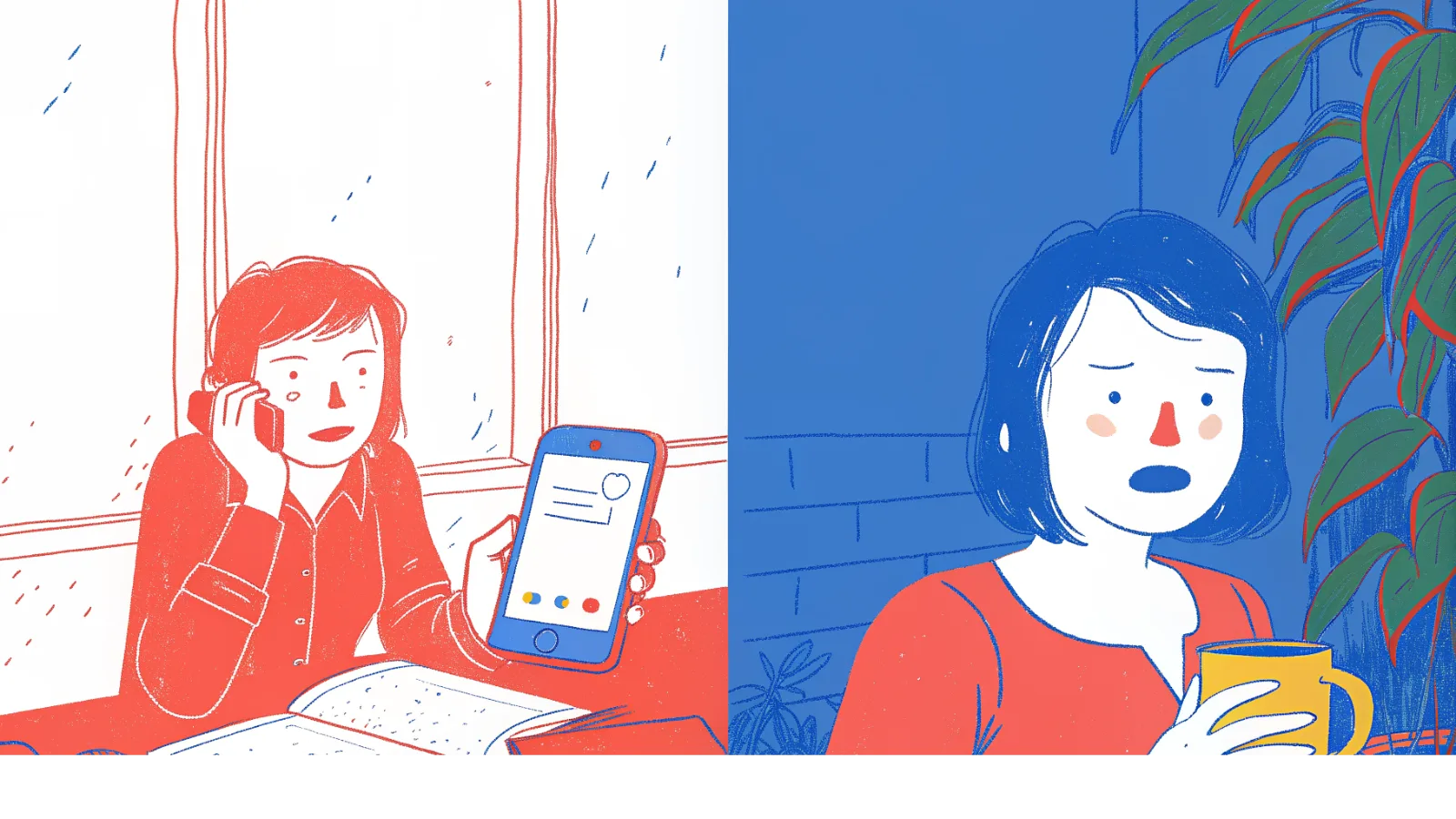
Here is the pattern that keeps repeating: learners spend years on academic English, studying grammar rules, drilling conjugations, filling in worksheets, and arrive at a job interview stressed and underprepared. Passive comprehension and active spoken production draw on different neural systems, and years of input alone won't close that divide without deliberate speaking practice built into the method itself.
The One Question That Exposes Whether a Course Will Actually Make You Speak
Ask this before enrolling: does the course require you to produce spoken English, or only to recognize it? Recognition and production are different cognitive skills. Stephen Krashen's comprehensible input research shows that the brain acquires language through meaningful exposure at the right difficulty level, not through explicit grammar instruction, which is why courses built around grammar drills so often leave learners fluent on paper but silent in conversation.
Why Comprehensible Input Beats Grammar Drills
Key takeaway: Input at the right level of challenge builds the neural pathways that produce speech, while grammar drills build knowledge about language without internalizing it. A course that gives you 500 grammar exercises and zero speaking reps is a more elaborate way to stay stuck.
Parrot is built around exactly this insight, using real video content to deliver comprehensible input that moves learners toward natural speech rather than textbook knowledge.
Critically, Parrot does not stop at input. Parrot Back adds structured speaking practice on top of the video sessions, giving learners the production reps that passive watching cannot provide on its own. And for learners who want personalized feedback or targeted practice, during or after video sessions, the AI Spanish Tutor steps in to make that active practice feel less like a formal exercise and more like a real exchange.
Parrot is most beneficial when a learner has struggled with traditional memorization-based methods and wants a research-backed alternative, which describes nearly every learner who has watched their grammar scores climb while their spoken fluency stayed flat.
Every course in this article has been evaluated against that single acquisition-first question: does it make you speak, or just study? The answers vary considerably, and they matter.
Next steps
If your completed lessons and earned badges still leave you silent the moment a native speaker goes off-script, the path forward starts with measuring progress by a different standard entirely: how much real native-speaker input and unscripted spoken output you produce, not how many lessons you finish. Start with our learn Spanish.
Completion metrics are what most platforms are built to optimize, not communicative competence. Finishing a lesson triggers the same reward signal whether or not it moved you closer to speaking under pressure, which is why months of streaks can coexist with zero conversational gain. At the same time, structured university-backed certificates are engineered for reading, writing, and grammar performance, making them a measure of studied performance rather than communicative competence. Together, those two design realities point to the same corrective action: choosing a tool built around comprehensible input and forced speaking output rather than lesson counts or credential architecture.
Start with Parrot to see its acquisition-first method in action. The same placement-calibrated video feed, Parrot Back speaking practice, and Comprehensible Input sequencing that drive spoken fluency in Spanish reflect exactly what to demand from any English course you evaluate next.
Frequently Asked Questions
Why do I freeze when speaking even after finishing a whole English course?
Completing a course and being able to hold a real conversation are two entirely separate outcomes, most courses train passive recognition (identifying the right answer when it appears in front of you) rather than automatic output (producing the right word under time pressure mid-conversation). These are neurologically different skills, so months of streaks and lesson points can leave spoken fluency completely flat. The course was likely never designed to make you speak.
Is there a free online English course worth using?
BBC Learning English and ManyThings.org are both free and genuinely useful for building listening comprehension and vocabulary up to around B1. The limitation is that free platforms rarely include structured speaking output, personalised feedback, or the spaced repetition needed to move vocabulary from recognition to production, which is exactly where learners from grammar-heavy educational backgrounds tend to stall.
What should I actually check before signing up for any English course?
Look for three architecture signals: how much of each session puts you inside real, natural English just above your current level (comprehensible input ratio); how early and how often the course forces you to produce speech rather than just recognise patterns (spoken output frequency); and whether individual session lengths fit a working adult's day rather than assuming long dedicated study blocks. Also ask whether the platform can show you what its B1-to-B2 content actually looks like, a course that only demos beginner modules is almost certainly built for beginners and quietly abandons mid-level learners.
Does Parrot offer a free trial, and what's the refund policy?
The annual plan includes a 7-day free trial with full Premium access; a card is required to start, and a reminder is sent before the trial ends. App Store purchases are refunded through the App Store.
I'm stuck at the same level for months, is that normal, and what actually breaks the plateau?
Yes, many learners stay at the A2-to-B1 plateau for years, cycling through courses that feel productive but never push spoken output past a comfort zone. The bottleneck at that stage shifts from knowing grammar rules to deploying them under real-time pressure, so the fix is authentic, varied, native-speed input paired with high-frequency spoken output practice, not more grammar study. Parrot's placement test sets your entry point and its Comprehensible Input Method scales difficulty automatically, while Parrot Back keeps spoken output built into every stage of the journey.