Most practice feels productive but targets the wrong brain circuits. These 13 techniques fix the exact gaps keeping you stuck, so you can finally speak without freezing.
It is a wiring problem, and understanding it changes everything about how you practice. See our learn Spanish for how this works in practice.
The standard study toolkit feels productive. Grammar exercises, vocabulary lists, app streaks, all of it registers as effort. But effort aimed at the wrong target still misses. Research in language acquisition consistently finds that grammar drills and vocabulary study activate fundamentally different neural pathways than spontaneous speech production. Written, rule-based practice fires the brain's analytical system, which is excellent for passing tests. It does not fire the procedural memory circuits that let you answer "What do you do for work?" without mentally composing a sentence first.
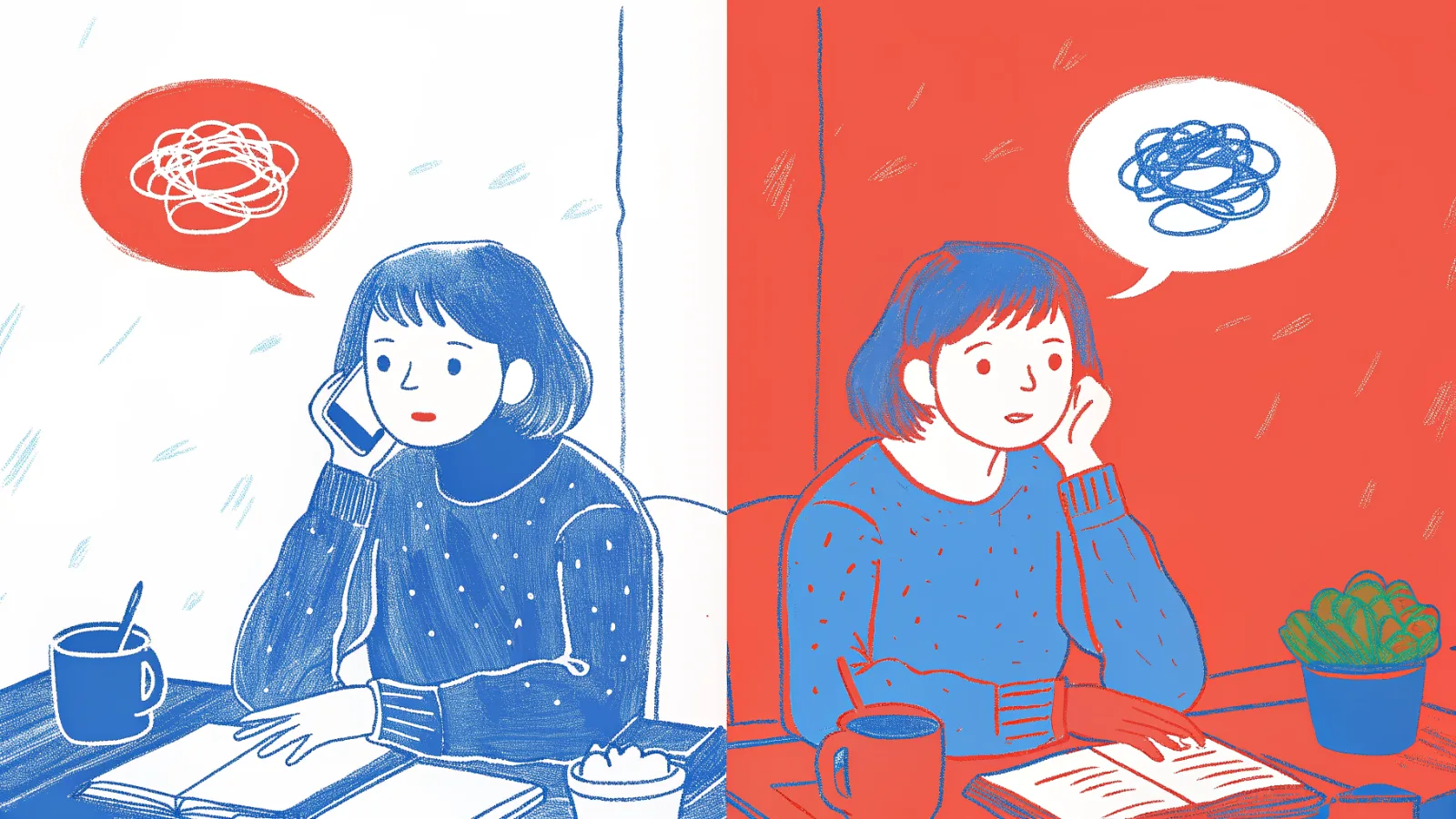
Stephen Krashen's acquisition-versus-learning hypothesis draws the same boundary: language acquired through real, contextual input becomes automatic; language learned through explicit rules stays conscious and slow. Conscious and slow is not fluent. Three specific mechanisms keep dedicated learners stuck.
First, over-reliance on mental translation: a 2024 graduate thesis from the University of Southern Maine identifies the processing delay it creates as a primary bottleneck for spontaneous output. Second, practicing isolated words instead of full phrases: the brain retrieves language in connected chunks, not word by word. Third, no real spoken output: receptive study never builds the production-specific pathways fluency actually requires, regardless of hours logged.
Key takeaways
Grammar drills and vocabulary lists feel like progress but train recognition, not production, two skills your brain stores and retrieves completely differently.
Freezing mid-sentence is not a confidence problem; it is a wiring problem caused by practicing the wrong skill for the goal you actually have.
Watching English content passively can fool motivated learners into thinking they are building speaking ability, they are not.
The method matters more than the minutes: short, frequent exposure to real speech beats long, infrequent study sessions every time.
Most speaking tips boil down to 'practice more,' which is useless advice if the practice itself is misaligned with how language acquisition actually works.
Your brain learns to speak a language by hearing it so much that words surface automatically, not by memorizing rules and hoping production follows.
Parrot is built around comprehensible input, the most researched method in language acquisition, delivering short-form video immersion so your brain absorbs real speech the way it was wired to, English is coming soon alongside live Spanish.
The Passive Progress Trap That Fools Even Motivated Learners
What looks like progress, growing vocabulary, grammar confidence, daily streaks, can actually be your brain getting better at recognizing English while your ability to produce it stays stuck, and understanding why that gap exists is the first step to closing it.

Why Your Brain Mistakes Watching for Speaking Practice
You can spend months absorbing English content and still freeze the moment someone asks you a simple question, because understanding a language and speaking it fire different circuits entirely.
According to the TESOL Input Hypothesis Group 2 presentation of Krashen's framework, passive consumption keeps your affective filter low, so anxiety stays minimal and your brain feels comfortable.
Streaks Measure Logins Not Conversations
Learners often spend years inside gamified loops and still cannot hold a conversation, because the system never forced their mouth and brain to work together under real pressure.
Engagement is not acquisition.
The Output Gap Passive Learners Never Encounter
Krashen's Monitor Model explains that grammar rules function only as an after-the-fact editor. They cannot generate fluent output. Spoken fluency requires pushed output: the uncomfortable moment when you must retrieve, assemble, and deliver a sentence in real time with no script.
13 Ways to Improve English Speaking Skills Fast
The thirteen techniques that follow target specific reasons learners stay stuck. Each one is the antidote to one precise production gap.
1. Build a Daily 10-15 Minute Speaking Practice Habit
Consistency beats volume every time. Ten to fifteen focused minutes of spoken output daily builds the mouth-muscle memory and automatic retrieval that real conversation demands, where an occasional 90-minute grammar session does not. The gap this closes is the habit gap: learners who wait for a free hour never practice at all. Attach your speaking session to something already fixed in your day, a commute, a coffee, a lunch break, and the habit sticks without willpower.
2. Shadow Native Speakers to Copy Rhythm and Accent
Shadowing is the fastest method for closing the gap between textbook English and real spoken English. Play a short audio clip and speak along with the speaker in real time, matching rhythm, stress, and intonation simultaneously. Learners who push themselves to produce speech reach conversational fluency faster. A 60-second podcast clip during a morning commute is enough to start. One honest limitation worth knowing: shadowing reinforces whatever accent you model, so choose clear, natural native speech from the beginning rather than correcting the habit later.
3. Narrate Your Day Out Loud in English
Running commentary on what you are doing, seeing, and deciding, spoken quietly or under your breath, builds the habit of generating English directly from experience rather than routing through your native language first. This targets the mental translation delay that makes conversation feel one beat too slow, a frustration that almost every intermediate learner recognizes. Start with simple observations: "The traffic is heavy, I need to reply to that email, I am making coffee." Complexity grows naturally over days. The limitation is self-consciousness in public spaces, so most learners do this most effectively during solo commutes, cooking, or household tasks.
4. Read Aloud for 10 Minutes Every Day
Reading aloud converts passive vocabulary into active speaking vocabulary by forcing your mouth to produce words your eyes have only scanned. It also trains sentence flow and natural pausing, two things silent reading never touches. Pick content slightly above your comfort level: a news article, a short story, a speech transcript. Ten minutes done daily builds more speaking fluency than 90 minutes done once a week, because the mouth and brain adapt through repetition, not volume. This is one of the most underused techniques among intermediate learners.
5. Record Yourself Speaking and Review the Playback
Record 60 to 90 seconds of yourself speaking on your phone each day, then listen back once. Listening back closes that loop fast.
The gap it targets is the difference between how you think you sound and how you actually sound, and that gap is almost always larger than expected the first time. You do not need a partner, a studio, or special equipment. A phone, a quiet corner, and one honest listen per day is enough to accelerate self-correction faster than most formal feedback methods.
6. Learn Complete Phrases and Idioms Instead of Isolated Words
They cannot generate a single word of spontaneous conversation, because rule-based practice fires entirely different neural circuits than real-time speech production. When a phrase is stored as one chunk, your mouth retrieves it whole without pausing to assemble grammar mid-sentence. The IELTS speaking band descriptors specifically reward lexical resource, meaning the range and accuracy of vocabulary used naturally, not the ability to recite definitions from a memorized list.
7. Train Your Brain to Think Directly in English Without Translating
The fix is deliberate: every time you catch yourself translating, pause and find the English thought directly, even if it comes out simpler or less precise than you intended. It feels slow at first, and many learners report weeks of frustration before it starts to feel natural. Within two to three weeks of consistent effort, the internal switch begins to happen automatically, hesitation drops, and responses start arriving before the grammar check does.
8. Use Tongue Twisters to Sharpen Pronunciation Precision
The mechanism is physical: your articulators need repetition to build muscle memory for unfamiliar positions, the same way a musician practices scales before a performance. Five minutes of deliberate pronunciation work, focused on your two or three most persistent errors, produces faster improvement than general conversation practice alone. Identify your specific problem sounds first, then choose twisters that isolate exactly those.
9. Overcome the Fear of Speaking with Practical Mindset Shifts
Fear of making mistakes keeps learners silent in real interactions, so the speaking muscle never develops. It compounds over time: the less you speak, the more frightening speaking becomes. This is especially true for learners approaching high-stakes moments like campus recruitment or job interviews, where the pressure to sound fluent feels urgent and the window to build that fluency feels narrow.
The practical shift is to reframe errors as data. Every mispronounced word or wrong tense points to the next thing to practice. For learners who find social interaction draining, Parrot's Parrot Back feature, where you say out loud and repeat what you hear to build speaking confidence and sharpen comprehension, creates a private environment where output practice happens without social cost, and mistakes surface as feedback rather than embarrassment.
Conversation clubs and platforms like Preply serve the same function in a group setting. The limitation is that mindset shifts require repetition to stick; one brave conversation is not enough to rewire the pattern.
10. Listen Actively to Native Speakers to Absorb Natural Patterns
Passive listening feels productive but rarely produces measurable speaking gains.
This technique also surfaces connected speech patterns, reductions, and contractions that textbooks never teach, the sounds that make native speakers hard to understand even when vocabulary is strong. Ten minutes of active listening with transcript verification builds more real comprehension than an hour of background audio. Most learners skip the transcript step because it reveals exactly how much they missed, which is precisely why it is worth doing.
11. Join Conversation Groups or Practice with AI Roleplay
Frequent, short speaking interactions compound faster than rare, long sessions. Conversation clubs remove the highest-stakes element of speaking fear by creating environments where mistakes are expected. For learners who cannot access in-person groups, or who find group settings socially exhausting, tools like ChatGPT let you simulate conversation at any hour without social pressure: type your spoken responses, ask for corrections, and request specific roleplay scenarios such as job interviews or travel situations. The honest limitation is that text-based AI practice does not train pronunciation or listening comprehension, so it works best as a complement to audio-based techniques rather than a standalone solution.
12. Build Vocabulary Consistently for Fluent, Natural Conversation
Spaced repetition systems review words at precisely the interval before you forget them, making retention significantly more efficient than reviewing a list from top to bottom every day. Learners who build vocabulary through phrases and collocations rather than definitions find that new words enter their spoken output within days rather than weeks. Parrot's short-form video feed delivers vocabulary inside real native speech, so words arrive with context, rhythm, and cultural register already attached, conditions that support more durable encoding than reviewing words in isolation.
13. Use Descriptive Workarounds When You Forget a Word
Circumlocution, describing a word you cannot recall rather than stopping the conversation, is a measurable fluency skill. Instead of freezing when a word disappears mid-sentence, describe the concept or talk around it to keep the conversation moving. This signals communicative competence and removes the fear of blank moments. IELTS speaking examiners explicitly credit this strategy under fluency and coherence criteria at Band 6 and above. The technique also reduces the anxiety that causes learners to stay silent rather than risk an imperfect sentence, which means it directly addresses the fear-of-speaking barrier that keeps so many intermediate learners stuck.
Related Reading
How Long Does It Take To Learn English Fluently
Best Apps To Learn English
Types Of Music Good For Learning English
Learning English As A Second Language
English Learning App For Kids
Best Websites To Learn English
How To Learn English Speaking At Home
Game To Learn English
English Learning Activities
Best Podcasts For Learning English
Tof
How to Fit Daily English Speaking Practice Into a Packed Schedule
Removing that fear of imperfect sentences matters little, however, if practice itself feels like a rare, high-stakes event. Learners who reserve speaking practice for long dedicated sessions tend to treat each one as a performance, which reintroduces exactly the pressure circumlocution was meant to dissolve. Research on motor-skill acquisition and language automaticity consistently shows that short, frequent practice intervals produce faster fluency gains than infrequent marathon sessions, and speaking English is no exception to that pattern.
The science here is direct. Research on spaced practice consistently finds that distributing learning across multiple short sessions produces stronger long-term retention and transfer than equivalent time spent in one massed block, because each brief session reactivates memory traces before they fully decay, a compounding effect that accumulates meaningfully with consistent daily output. The critical word is transfer: spaced sessions build usable, conversational skills, not just recognition. One honest trade-off worth naming: micro-sessions work best when each one forces output, not passive listening. Short and passive is still passive.

Three Schedule Anchors That Turn Dead Time Into Speaking Practice
Most learners already have a built-in speaking slot in their daily commute, time they are filling with music or scrolling. Attaching a speaking habit to an existing anchor, commute shadowing, lunch narration, bedtime read-aloud, removes the decision cost that kills standalone study sessions. Habit research consistently shows that stacking a new behavior onto a reliable existing cue increases follow-through far more than scheduling it as a separate task.
Most learners who struggle to practice consistently are short on a design that makes the right action the default action. Thirty days of ten-minute micro-sessions won't replace years of immersion, but they will outperform thirty days of skipped hour-long blocks every time.
Parrot is built around this exact design: short-form comprehensible input clips sized for a commute or lunch break, with parrot-back speaking practice woven in so the habit stack builds itself.
Next steps
If you have spent months on grammar drills and app streaks but still freeze the moment a native speaker talks at full speed, the path forward starts with replacing passive study time with output-forcing practice built around real spoken input. Start with our learn Spanish.
The finding that grammar rules can only ever act as a post-speech editor, never generating a single word of spontaneous conversation, means every hour spent drilling conjugations is an hour that does not build the automatic retrieval real conversation demands. The finding that the average learner already spends over two hours a day on short-form video, yet gains zero measurable speaking confidence from it, means the time is not the problem. The infrastructure is already there. Together, they point to one move: redirect existing scroll time toward comprehensible input paired with spoken output, so the habit stack builds itself instead of fighting your schedule.
Start with Parrot's short-form video feed, where comprehensible input is sequenced to your level from the first session and Parrot Back exercises push your mouth to produce what your ears just absorbed. The two skills, listening and speaking, compound together from day one instead of staying permanently separated.
Frequently Asked Questions
Does recording yourself actually help you speak better English?
Yes, listening back to your own recordings closes the gap between how you think you sound and how you actually sound. Most learners never hear themselves the way a native speaker does, so errors in stress, rhythm, and word choice go unnoticed for months. A phone, a quiet corner, and 60 to 90 seconds a day is enough to make this work.
Will watching English movies and videos improve my speaking?
Passive watching alone is not enough, comprehensible input is necessary but not sufficient for spoken fluency. Because recognition and production fire different circuits in the brain, you can absorb hours of English content and still freeze when asked to say something. Short-form native video works best when it is sequenced at the right difficulty level and paired with active output practice, not used as a substitute for speaking.
Is reading aloud actually useful, or is it just busywork?
Reading aloud converts passive vocabulary into active speaking vocabulary by forcing your mouth to produce words your eyes have only scanned, and it trains sentence flow and natural pausing that silent reading never touches. Ten minutes done daily builds more speaking fluency than 90 minutes done once a week, because the mouth and brain adapt through repetition, not volume.
Can joining a conversation club or language exchange really get rid of speaking anxiety?
Conversation clubs help by creating a low-pressure environment where mistakes are expected, which reduces the freeze that happens when a real conversation begins. The key is consistency, short, regular interactions of even just a quarter of an hour compound faster than occasional long ones. For learners who find even low-pressure group settings draining, private on-demand speaking practice is an effective alternative.
What specifically helps with IELTS speaking preparation?
The IELTS speaking band descriptors specifically reward lexical resource, the range and accuracy of vocabulary in natural use, not memorized lists. Learning words inside the phrases they naturally live in, such as "make a decision" or "run out of time," means your mouth retrieves them as whole chunks without pausing to assemble grammar mid-sentence, which is exactly what the exam and spontaneous conversation demand.