Most beginners start with grammar drills and vocabulary lists, and most beginners quit. Here is the method switch that actually works with your brain.
Most adult individual learners (beginners) think that learning English properly means mastering grammar rules and high-frequency vocabulary lists first, then gradually unlocking the ability to understand and speak real English. It feels like the right move. Structured, measurable, safe. The problem is that feeling productive and actually acquiring language are two completely different things, and the gap between them is where most beginners quietly get stuck. See our learn Spanish for how this works in practice.
As of December 2024, adults default to textbooks, grammar apps, and vocabulary drills because these feel productive, but this approach rarely translates into the ability to understand or speak real, natural English. That mismatch is a method problem.
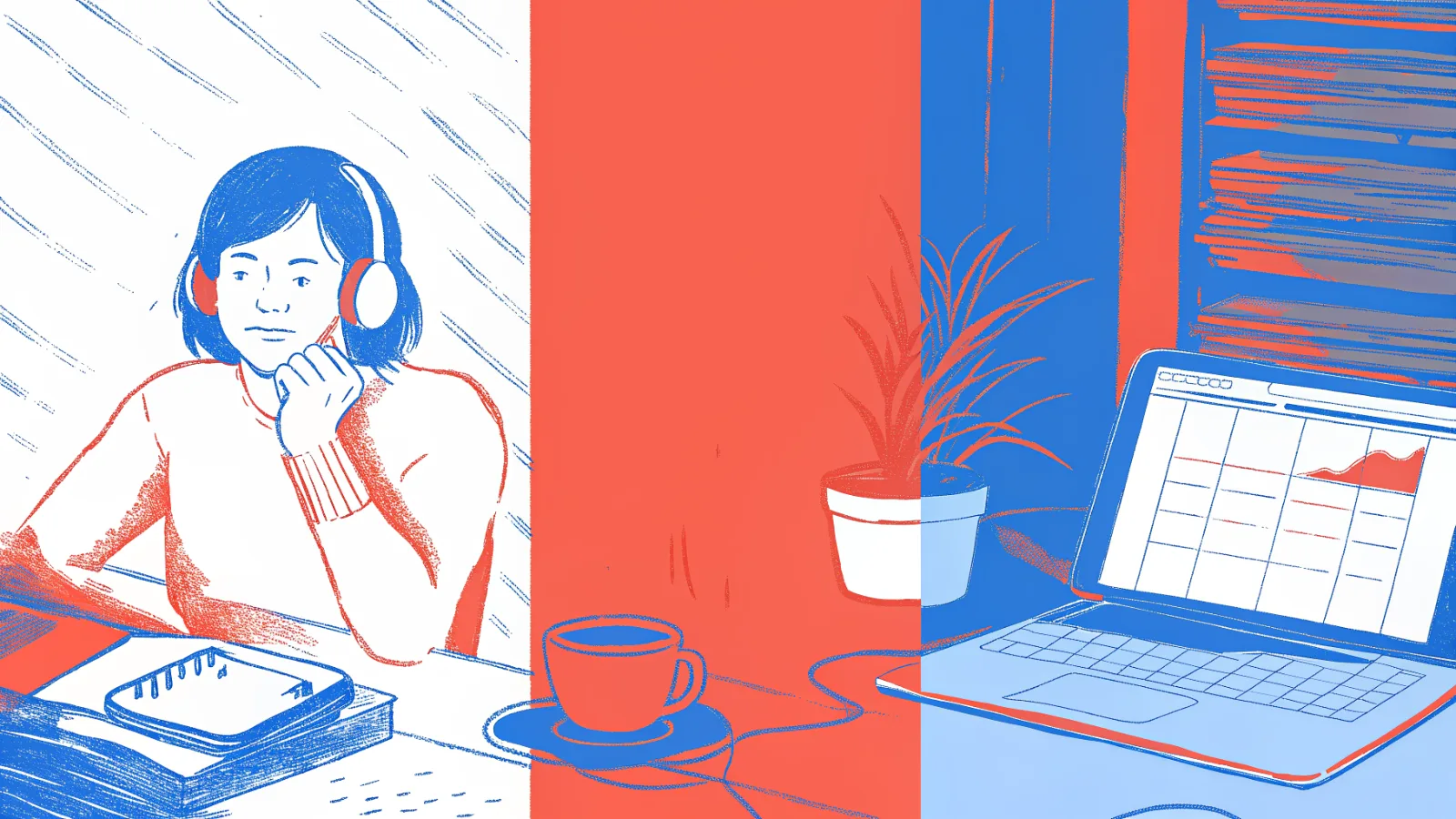
Finishing three grammar units and still not understanding a single YouTube video in English is a painfully common experience. The exercises were completed. The rules were memorized. Yet a native speaker talks, and nothing lands.
That is because grammar study trains you to recognize patterns on a page, not to process meaning at speed in real speech. Recognition and acquisition are not the same skill.
As LingoStars (December 2024) notes, bouncing between grammar rules, apps, and vocabulary lists without a unified method leads to frustration and causes most beginners to quit before making meaningful progress. Every switch resets the learning curve without building on what came before. The starting line most people are handed is in the wrong race entirely. Before looking at any specific method or resource, there is one foundational idea about how the brain actually acquires language that changes everything about where you begin.
Key takeaways
Grammar drills and vocabulary lists feel productive, but research shows they slow acquisition down, not speed it up.
Your brain acquires language the same way it did when you were a child: through massive exposure to input you can almost, but not quite, fully understand.
Comprehensible input, content pitched just above your current level, is the mechanism behind every method on this list that actually works.
Stacking five apps on day one doesn't accelerate progress; it splits attention across tools built for different acquisition stages and burns most beginners out before any single one takes hold.
Streak badges measure login consistency, not acquisition quality, and those two things diverge fast the moment real life intervenes.
The 22 methods here aren't a menu to work through simultaneously; they're a single principle expressed in different formats, and picking one and going deep beats sampling all 22.
Parrot is a short-form video app built around comprehensible input, the same mechanism this post keeps pointing back to. English is coming soon; Spanish is live now if you want to start building the habit today.
The Comprehensible Input Reframe Every English Beginner Needs Before Starting
That foundational idea is comprehensible input, and it explains a pattern the data makes hard to ignore: the majority of adult language learners abandon their chosen method within the first few months.
What Stephen Krashen's Input Hypothesis Actually Says About Beginner Brains
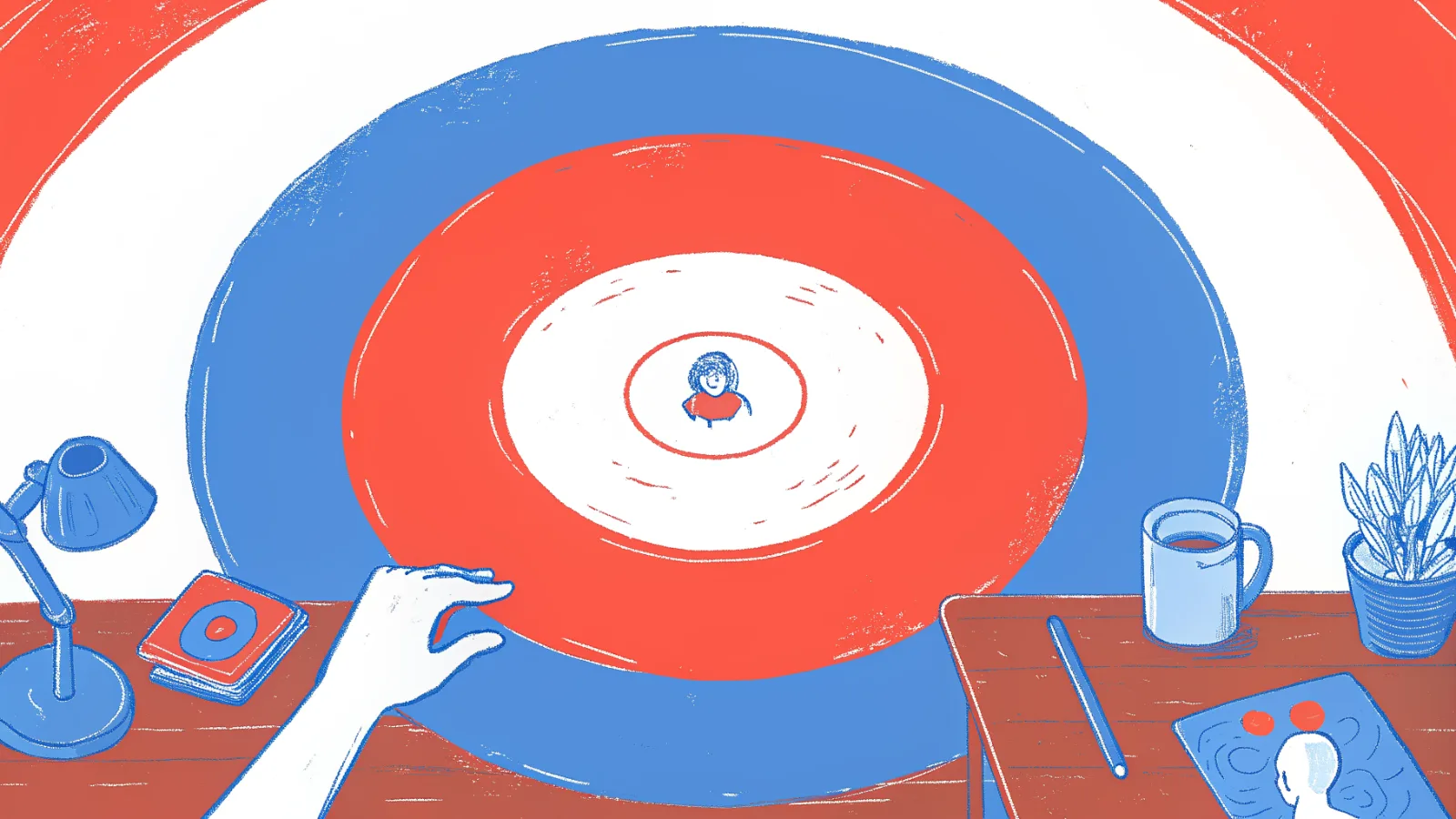
Stephen Krashen's framework on second language acquisition, which has accumulated approximately 160,000 citations on Google Scholar, draws a sharp line between two processes: acquisition and learning. Acquisition is subconscious, driven by meaningful language the brain can mostly understand, the same biological mechanism that gave you your first language before you could name a single grammar rule.
160,000
Citations backing Krashen's acquisition theory
Krashen's Affective Filter Hypothesis describes a mental barrier that rises under stress, blocking comprehensible input from reaching the brain's language-processing system.
The i+1 Sweet Spot - Why Slightly-Above-Your-Level Input Beats Beginner Drills
Krashen's Input Hypothesis specifies that acquisition happens when learners encounter input at i+1: one step above their current level, understandable in context but containing something just beyond their grasp.
Every hour spent on conjugation tables is an hour the brain is not processing real, meaning-rich language.
The 22 methods ahead are filtered through this same acquisition lens, so you can start on the right path from day one.
Related Reading
How To Learn English
How To Learn English Grammar Step By Step
English Language Learning Methods
Is Learning English Hard
English For Tourism
How To Improve English Speaking Skills
How To Improve English Vocabulary
How To Improve English Pronunciation
How To Speak English Fluently And Confidently
Best Online English Courses
22 Ways to Start Learning English Right Now Without Getting Lost
Stacking five apps, two grammar books, and a YouTube playlist on day one feels thorough. It isn't. It splits your attention across tools that serve completely different acquisition stages, and most beginners burn out before any single method has time to work. The research points in one direction: your brain builds language through comprehensible input, meaning content that sits just above your current level, not through volume of exercises completed. The 22 methods below are ordered by that same measure. The ones ranked highest deliver the most comprehensible input per minute. Start there.
"Beginners feel lost or overwhelmed when starting to learn English, not knowing where to begin, directly aligning with the 'Without Getting Lost' angle of the topic."
— what we hear from beginner English learners
One hidden pattern connects every item on this list: they all deliver English your brain can almost-but-not-quite understand, in contexts you actually care about. That specific combination is what drives measurable progress toward real conversation.
Why Passive App Use Alone Won't Build Speaking Fluency
Completing streaks, tapping through multiple-choice screens, and listening without producing any output creates a feeling of productivity that does not translate into spoken fluency. Learners who have spent months inside gamified apps and still cannot hold a basic conversation share a common diagnosis: the app measured engagement, not acquisition. According to industry research, retrieval practice and active output are non-negotiable for producing durable fluency, because spaced repetition works through effortful re-encoding, not passive re-exposure. Use passive app time as a warm-up or a low-energy filler activity, but never as your primary method. Speaking output, however imperfect, is where real acquisition happens.
1. The 100 Most Common English Words - Verbs, Pronouns, and Prepositions First
The top 100 words in spoken English, including verbs like be, have, do, go, make, and get, plus pronouns and prepositions, cover a disproportionately large share of everyday conversation. Prioritizing these words gives you the fastest return on vocabulary study because they appear in almost every sentence you will ever hear. Start here before touching any other vocabulary list. Most beginner apps bury these words inside themed units; pull them out and learn them as a standalone set first.
2. 10-15 Minutes of Daily Practice Beats a Two-Hour Weekend Cram Session
Daily consistency is the single most underrated variable in language acquisition. According to a meta-analysis of 317 experiments, distributed practice produces reliably better long-term retention than massed practice, especially over longer intervals. Ten focused minutes every morning compounds faster than a two-hour Sunday session, a finding supported by a meta-analysis of that same figure experiments, which showed distributed practice produces reliably superior long-term retention compared with massed practice. The tradeoff is real: short daily practice requires protecting a small window in your schedule rather than relying on occasional motivation. That discipline is what separates learners who progress from those who plateau.
3. Duolingo, Babbel, Anki, and italki - Free and Low-Cost Tools for Every Learning Style
Each tool serves a different acquisition function, and knowing which is which prevents the most common beginner mistake of using all of them as if they were interchangeable. Anki is a free spaced repetition system where you input sentences and their translations from any source you choose, so vocabulary locks into long-term memory. italki connects you with tutors and native speakers for written feedback and conversation practice. Gamified apps work best as a low-friction warm-up rather than your primary acquisition method. Stack them by function, not by volume.
4. Self-Narration and Shadowing - Speaking Practice When You Have No Partner
Narrate what you are doing as you do it, then shadow: play a short English clip, pause it, and copy the speaker's rhythm, stress, and intonation as precisely as you can before moving on. Both methods force real-time vocabulary retrieval rather than passive recognition, which is what builds speaking fluency. Learners who delay speaking tend to follow the same pattern: months of preparation with no output, then the discovery that recognition and production are completely different skills. Start producing from day one, even imperfectly.
5. Three Tenses First, Perfectionism Last - Grammar Prioritization for Beginners
Simple Present, Simple Past, and Simple Future cover the vast majority of everyday English conversation. Beginners who attempt all twelve English tenses simultaneously end up using none of them with confidence. Prioritize these three until they feel automatic, then layer in continuous and perfect forms as your listening exposure builds. Crucially, grammar study is most effective after you have enough input to recognize patterns in context, not as the first step before any listening or reading. Prioritize being understood over grammatical perfection from your very first conversation; errors are data, not failure.
6. BBC Learning English / 6 Minute English and EnglishClass101 for Beginner Listening
BBC Learning English's '6 Minute English' delivers real-topic conversations at controlled pace with transcripts, making it ideal for A1–B1 learners. EnglishClass101 on YouTube offers structured beginner video lessons with cultural context. Both are free and require no sign-up. The tradeoff: BBC content uses British English exclusively, which may confuse learners targeting American pronunciation, pairing it with an American-English YouTube channel balances the exposure.
7. Sticky Notes on Every Object and Switching Your Phone to English
Every time you walk past, your brain makes a micro-connection between the object and the English word with zero additional study time. Simultaneously, switching your phone's language settings to English forces you to interact with English dozens of times a day inside a context you already understand from habit, so the surrounding vocabulary becomes comprehensible by default. Both methods are high-frequency and zero-cost. The honest limitation: sticky notes only cover concrete nouns, so pair them with at least one active listening or speaking method daily.
8. Short Clips on Repeat with English Subtitles Instead of Native-Language Subtitles
Turn on English captions, not subtitles in your first language. When you read in your native language, your brain processes the translation and skips the English audio entirely. English captions force your brain to connect the spoken sound to the written word simultaneously, which is exactly the mechanism comprehensible input relies on. Start with slow, clearly spoken content: cooking videos, travel vlogs, and nature documentaries work well because the visuals carry enough meaning to anchor unfamiliar words. Replay each short clip two or three times before moving on; the second and third passes are where vocabulary attaches to meaning.
9. Vocabulary Tied to Your Real Life - Job, Family, and Hobbies First
Learn the words for your job, your family members, your hobbies, and your daily routine before touching abstract or general vocabulary lists. Words tied to situations you encounter every day get reinforced naturally through repeated real-world exposure, so they enter long-term memory faster than words learned from a generic frequency list. A nurse needs different vocabulary than a software developer or a parent. Building vocabulary effectively means anchoring new words to contexts you already live in. Personalized vocabulary sticks because it gets used repeatedly in situations that matter to you.
10. Oxford Headway - A Structured Grammar Syllabus Anchor for Beginners Who Want a Roadmap
Oxford Headway is a widely used graded course series that sequences grammar and vocabulary from absolute beginner level upward. It works best as a structural anchor rather than a primary acquisition tool: use it to understand what grammar patterns exist at your level, then confirm those patterns through listening and reading rather than through drilling exercises alone. The tradeoff is that textbook-based learning can feel slow and disconnected from real spoken English if it becomes your only input source. Treat Headway as a map, not the territory. The territory is the English you hear and read every day.
11. The 50 Common English Phrases Every Beginner Must Learn Before Grammar Rules
Phrases like "Could you repeat that?" and "I don't understand" are functional tools that keep real conversations alive before your grammar is strong enough to construct complex sentences. Learning set phrases as chunks, rather than building them word by word from grammar rules, is how children acquire language and how adults acquire it fastest too. This is the i+1 principle from Stephen Krashen's comprehensible input research in practice: you absorb slightly-above-your-level language by having enough context to make meaning. Memorize 50 high-frequency phrases in your first two weeks and conversations become possible immediately.
12. The Illusion of Progress - Why Passive App Use Without Speaking Output Fails
Passive consumption, completing streaks, tapping through multiple-choice screens, and listening without output creates a feeling of productivity that does not translate into spoken fluency. A pattern that surfaces repeatedly among learners who have spent months inside gamified apps without gaining conversational ability is the same: the app measured engagement, not acquisition. According to industry research, retrieval practice and active output are non-negotiable for durable fluency, because spacing works through effortful re-encoding, not passive re-exposure. Use apps as a warm-up, not the main event.
13. Five Habits That Help You Learn English Faster Than the Average Beginner
The five habits that consistently separate faster learners from slower ones are: listening to English every day without exception, producing spoken or written output in every session, reviewing new vocabulary through spaced repetition rather than re-reading notes, choosing content slightly above your current level rather than content you can understand perfectly, and measuring progress in concrete terms rather than hours spent studying. None of these habits requires more than 15 minutes a day. What they require is sequencing: input first, output second, review third. Learners who reverse that order, starting with grammar study and saving listening for later, consistently take longer to reach conversational fluency.
14. Spaced Repetition and Word-in-Context - The Most Effective Vocabulary Building Method
Spaced repetition, as documented across more than a century of cognitive psychology research and confirmed by a meta-analysis of that same figure experiments, consistently produces better long-term retention than massed review. The key is adding whole sentences to your flashcard deck rather than isolated words, so context travels with every vocabulary item. When you see the word "run" inside the sentence "I run to the station every morning," your brain encodes the word's meaning, its grammar, and its natural context simultaneously. Anki makes this free and automatic. Ten minutes of spaced repetition review per day compounds into thousands of retained vocabulary items within months.
15. Language Exchange Partners on Tandem and HelloTalk for Real Speaking Practice
Speaking practice with real people accelerates fluency in ways that solo practice cannot replicate because a real conversation introduces unpredictability: you cannot script what the other person says, which forces genuine real-time comprehension and retrieval. Tandem and HelloTalk connect you with native English speakers who want to learn your language, so the exchange is free and mutually motivated. The most common mistake is waiting until grammar or vocabulary feels "ready" before booking a session. It never will. Prioritize being understood over grammatical perfection from the first conversation, and treat every error as useful feedback rather than evidence that you are not ready.
16. Reading Widely in English - Graded Readers Before Novels, News Before Literature
Reading widely in English builds vocabulary in context, which is more durable than learning words from a list, but the level of the text matters enormously. Graded readers from series like Oxford Bookworms are written with controlled vocabulary at each proficiency level, so you understand the overwhelming majority of words without a dictionary, which keeps input comprehensible and reading enjoyable rather than exhausting. If you need a dictionary for more than one word per page, the text is too advanced; move down a level without guilt. Once graded readers feel easy, short news articles from sites like VOA Learning English bridge the gap to authentic native content.
17. Pronunciation Training with Minimal Pairs and the International Phonetic Alphabet
English has sounds that do not exist in most other languages, and training your ear to distinguish them early prevents fossilized pronunciation errors that are hard to correct later. Minimal pairs are word pairs that differ by a single sound, such as "ship" and "sheep" or "bit" and "beat," and practicing them trains your ear and mouth simultaneously. The International Phonetic Alphabet (IPA) gives every English sound a consistent symbol, which is especially useful for sounds your native language does not have. Free IPA charts are available online. Pair IPA study with shadowing practice so you connect the symbol to the sound to the physical sensation of producing it.
18. Keeping a Daily English Journal - One Paragraph Per Day Builds Writing and Thinking Fluency
Write one paragraph in English every day describing what happened, what you ate, or what you are thinking about. Writing forces active vocabulary retrieval rather than passive recognition, and doing it daily means you encounter the same high-frequency words repeatedly across different personal contexts, which accelerates retention. The paragraph does not need to be correct; it needs to exist. Use italki's community notebook feature to request corrections from native speakers on your entries. Over four weeks, the improvement in sentence construction is usually visible when you compare your first entry to your most recent one, and that comparison is one of the most motivating progress signals available to a beginner.
19. Setting Micro-Goals Instead of Vague Ambitions: 'Learn 10 Words Today' Over 'Get Fluent'
Vague goals like "get fluent" or "improve my English" produce no action because they have no measurable completion point. Specific micro-goals, such as "learn 10 new words today," "shadow one BBC clip before breakfast," or "record a 60-second voice memo tonight," give you a concrete output to produce and an immediate sense of completion when you finish. Listening back to voice memos from two weeks ago is one of the most motivating things a beginner can do, because the improvement is audible and real. Specific goals also reveal quickly when a method is not working, so you can adjust rather than persist with something ineffective for months.
20. Using Google Translate and DeepL Strategically - as a Checking Tool, Not a Crutch
The strategic use is checking individual unfamiliar words rather than translating entire paragraphs, so you stay inside English as much as possible and only dip into translation when comprehension breaks down completely. DeepL often produces more contextually natural phrasing for nuanced sentences compared with word-for-word translation tools. The honest risk: leaning on translation for every unknown word prevents the productive struggle that forces your brain to infer meaning from context, which is a core acquisition mechanism. Use both tools sparingly and deliberately.
Related Reading
How Long Does It Take To Learn English Fluently
Best Apps To Learn English
Types Of Music Good For Learning English
Learning English As A Second Language
English Learning App For Kids
Best Websites To Learn English
How To Learn English Speaking At Home
Game To Learn English
Tof
English Learning Activities
Best Podcasts For Learning English
How to Turn These English Learning Ways Into a Habit That Actually Sticks
The metric being rewarded is consistency of login, not quality of acquisition, and those two things diverge sharply the moment life gets complicated. A learner who spends forty-five minutes replaying a single BBC clip until every word clicks is doing more acquisition-effective work than one who taps through five gamified exercises in eight minutes to protect a streak, a distinction supported by what cognitive research consistently shows: effortful re-encoding, not passive re-exposure, drives durable retention, yet most platforms award the badge only to the second person.
That is the median time for a new behavior to feel automatic, according to broader behavioral research, not the 21 days that streak-based apps quietly promise when they send you a congratulations badge at three weeks.

They are being misled about how long the uncomfortable early phase actually lasts.
Map Your Day's Dead Zones Before You Pick a Single Method
A 12-minute commute, the five minutes before your phone screen goes dark at night, the dead time between ordering lunch and eating it, these are your real classroom. What most habit researchers find is that habits anchored to an existing daily cue, chosen by the person themselves, and performed in the morning formed more reliably than habits requiring a brand-new time block.
Crucially, a routine anchored to an existing daily moment, like a morning scroll, dramatically shortens the window where willpower is required, reducing the period of vulnerability that the 21-day myth leaves learners dangerously unprepared for.
Stack One Comprehensible Input Activity With One Retrieval Activity in the Same 10-Minute Window
Input feeds retrieval; retrieval reinforces input. Research on spaced repetition consistently shows that short daily sessions outperform longer infrequent ones.
The Four-Week Recognition Signal That Confirms the Habit Is Working
That involuntary recognition confirms that passive exposure is beginning to convert into implicit pattern recognition, which is exactly the acquisition mechanism the comprehensible-input research describes.
Once you can follow the gist of a simple English exchange, even imperfectly, you have crossed the threshold that separates learners who plateau from those who accelerate.
Next steps
If you have spent weeks on conjugation tables and vocabulary lists and still cannot follow a single sentence of real spoken English, the path forward starts with recognizing that grammar study and vocabulary drills are outputs of fluency, not the inputs that build it. The brain acquires language the same way it did for your first language: through massive, repeated exposure to meaning-rich content you can almost understand. Start with our learn Spanish.
Every method on this list that actually works shares one hidden common denominator: it delivers English your brain can almost-but-not-quite understand, in contexts you care about, and that specific combination drives measurable progress toward real conversation. At the same time, distributing short sessions across the gaps already in your day is not a compromise for busy people; it is structurally superior to longer infrequent study blocks, because frequency of exposure matters more than total minutes, and anchoring each session to an existing cue is precisely the condition that makes the behavior automatic fastest. Together, these two findings point to the same first action: pick one piece of content slightly above your current level, fit it into a gap you already have, and repeat it daily until the habit runs itself.
Start with Parrot to experience the comprehensible input method firsthand. The feed calibrates to your level from your first session, so the gap-fitting habit you build now transfers directly to English the moment it launches.
Frequently Asked Questions
How long should I study English each day as a beginner?
Ten to fifteen minutes every single day is enough, and it outperforms longer, infrequent sessions. A meta-analysis of 317 experiments found that distributed practice produces reliably better long-term retention than massed practice, so ten minutes every morning consistently beats two hours on Sunday.
Should I learn grammar rules before anything else?
No, grammar study is most useful after you have enough listening exposure to recognize patterns in context, not as the first step before any input. Start by focusing on just three tenses, Simple Present, Simple Past, and Simple Future, since they cover the overwhelming majority of everyday English conversation, and prioritize those until they feel automatic before adding more.
How do I practice pronunciation on my own without a teacher?
Use shadowing: listen to a short clip, pause it, and copy the speaker's rhythm, stress, and pronunciation as closely as possible before moving on. If you can record yourself and compare the audio to the original, do it, shadowing without any feedback can otherwise lock in mispronunciations.
Is reviewing vocabulary words enough to make them stick?
Passive review alone is not enough, retrieval practice and active recall are non-negotiable for producing durable fluency, unlike passive re-exposure. Use a spaced repetition tool like Anki and add whole sentences rather than isolated words, so context travels with the vocabulary and forces effortful re-encoding at precisely the moment you are about to forget a word.
Why do I keep finishing lessons but still can't understand real English?
Because grammar study trains you to recognize patterns on a page, not to process meaning at speed in real speech, and recognition and acquisition are not the same skill. The brain acquires language through comprehensible input, meaning content that sits just one step above your current level and carries real meaning, not through the volume of exercises completed.