
Most adult ESL learners study hard and still freeze the moment a native speaker opens their mouth. The problem is not effort. It is a method built to produce completers, not speakers.
Completing a course feels like progress. Finishing every module, keeping a streak alive, scoring well on grammar checks, it all signals effort, and effort should lead somewhere.
But for millions of adult ESL learners, it leads to a specific, demoralizing moment: a native speaker opens their mouth, and everything learned on screen disappears. Most traditional ESL programs were never designed to produce speakers.

See our learn Spanish for how this works in practice.
They were designed to produce completers. Tools built around a different standard, like immersive acquisition-based approaches, measure whether you can actually respond, a distinction supported by Mahmoudi and Mahmoudi's finding that curricula over-indexed on external measurable outputs produce structurally incomplete speakers. An adult learner can score 90% on a grammar quiz and still go completely blank when a native speaker asks for directions.
That gap is a structural one. According to Mahmoudi in the International Journal of Language and Linguistics, both internal variables (cognitive processing, motivation, anxiety) and external variables (curriculum design, grammar instruction) independently shape whether a learner can actually use a language.
Traditional ESL programs over-index on external, measurable outputs: completed units, correct answers, attendance. They almost never test the internal cognitive and affective conditions that determine whether words come out under real pressure.
The same research concludes that curricula giving "extreme attention to external variables" at the expense of affective and motivational factors produce structurally incomplete learners. For a busy adult fitting study into a commute or a lunch break, that imbalance is fatal to progress. The result is a learner who knows the rule for the present perfect but freezes the moment they need to use it in a real exchange.
Knowing a rule and retrieving it under conversational pressure are two entirely different cognitive acts, and grammar drills train only the first. The methods most adult learners use were never designed to produce speakers.
To understand why, it helps to look at what the research actually says about how the four core language skills work together, and which one traditional ESL programs almost always get backwards.
Key takeaways
Grammar drills and streak-keeping feel like progress but produce learners who can pass a quiz and freeze the moment a native speaker opens their mouth.
Comprehensible input, the same process that wired your first language, is the research-backed method that drives real acquisition, and it works without a classroom or a tutor.
Skill order matters more than skill count: listening before speaking before reading before writing is the sequence that mirrors how fluency actually develops.
Free platforms are not equal, the ones that sequence graded input outperform content libraries that drop you in and let you drown.
Twenty minutes of daily input consolidates more than a two-hour Saturday session; consistency beats volume every time the research is run.
Apps hit a hard ceiling the moment speaking is required, because recognition tasks and spontaneous speech run on entirely different cognitive tracks.
The average person already scrolls short-form video for nearly an hour a day, that habit is an acquisition engine the moment the content delivers comprehensible input instead of entertainment.
Parrot is a short-form video app built on comprehensible input that turns passive scroll time into speaking ability, English support is on the roadmap, with Spanish live now.
How the Four Core Language Skills Actually Work Together for Fast Acquisition
Listening, speaking, reading, and writing are the four core language skills every learner must build. The common assumption among most adult individual learners (beginners) is that if they just complete enough structured lessons and memorize enough grammar rules, speaking ability will naturally follow. Traditional ESL programs reinforce this belief by front-loading grammar instruction and written tests because those are easy to grade.
Why Listening Is the Upstream Skill That Feeds the Other Three
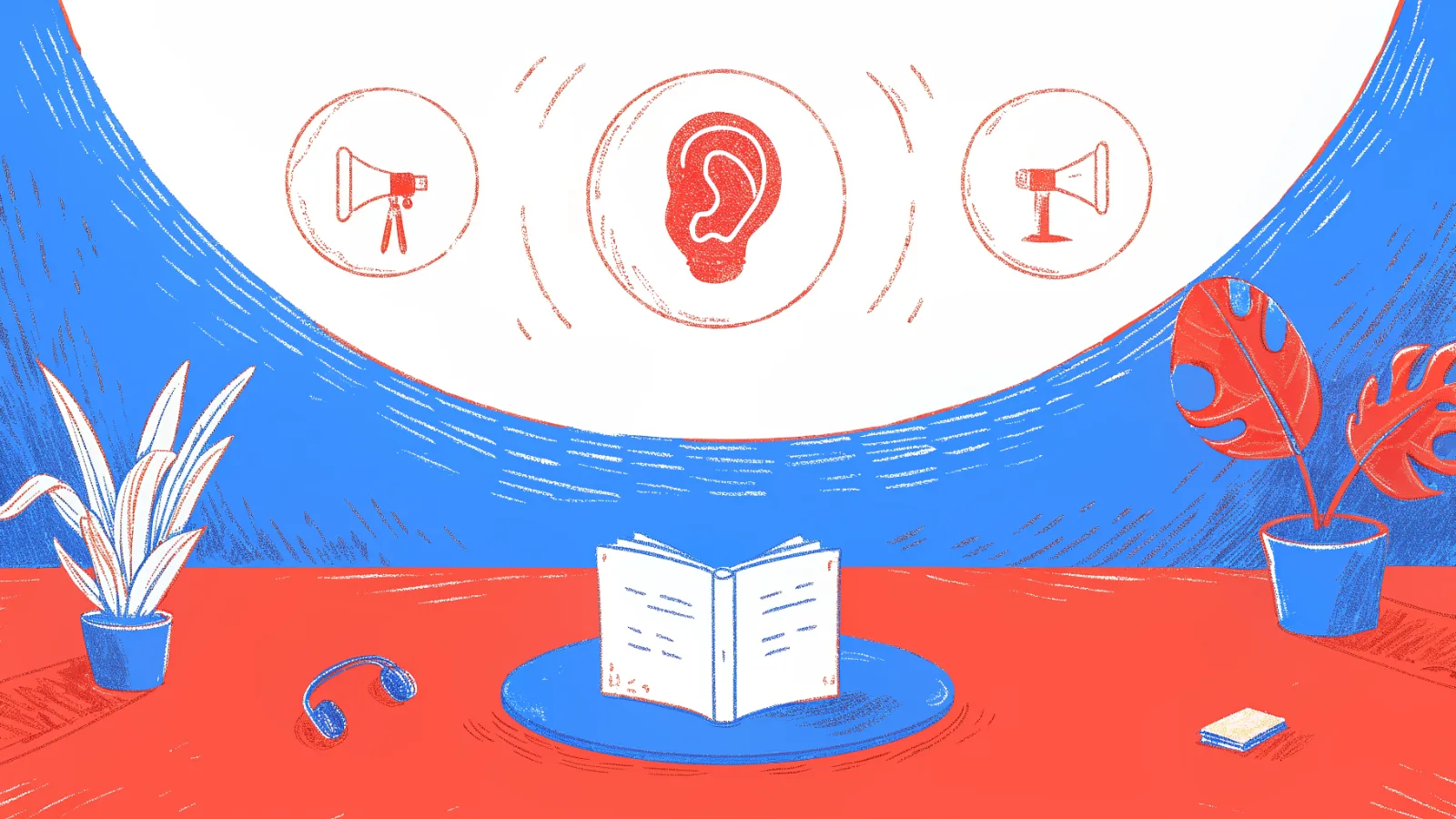
Listening is the only skill that directly mirrors how every human acquired their first language. Yet most formal ESL curricula invert this entirely, asking adult learners to memorize grammar rules before they have ever heard those structures used naturally in conversation.
One of the most telling patterns we see among beginners is that traditional US teaching prioritized grammar over vocabulary, leaving learners unable to bridge listening comprehension and reading ability, a direct breakdown in how the four skills are supposed to reinforce each other.
Krashen's Second Language Acquisition Theory explains why this matters: acquisition happens when learners receive comprehensible input pitched just above their current level, not through conscious grammar study. Crucially, his Monitor Hypothesis shows that consciously learned grammar rules can only edit output after the fact; they cannot generate fluent speech.
Key takeaway: Consciously learned grammar rules can only edit output after the fact; they cannot generate fluent speech. Hours spent on grammar workbooks build a proofreading reflex, not a speaking ability.
Consciously learned grammar rules can only edit output after the fact; they cannot generate fluent speech.
Parrot is built to break that cycle.
How to Practice Each of the Four Core Skills So They Reinforce Each Other
Practice each of the four core skills by anchoring them to listening input first, then letting speaking, reading, and writing grow outward from that base.
Listening → When: First → How: Prioritise native-paced audio or video content you can understand at roughly 80 percent, then gradually increase the difficulty. Parrot's short-form video feed delivers a stream of native-paced content sequenced to your current level → Why It Works: Builds the upstream foundation all other skills depend on.
Speaking → When: After listening → How: Repeat and reconstruct phrases you have already heard rather than generating sentences from grammar rules memorised in isolation. Parrot Back is designed for this: say out loud and repeat what you hear → Why It Works: Builds speaking confidence and sharpens comprehension.
Reading → When: After listening exposure to the same vocabulary → How: Read words you have already heard multiple times to strengthen the connection between spoken and written language → Why It Works: Prior listening exposure makes recognition faster and more durable, addressing a gap that often appears when grammar-first instruction fails to connect listening with reading.
Writing → When: Last.
Forces you to produce language you have already absorbed through listening and reading, rather than constructing it from scratch using a grammar checklist.
Most cognitively demanding; benefits most from a solid listening-and-reading base.
Why Adults Need a Different Skill Sequence Than Children
Adults need a heavier listening-to-output ratio than classroom children, not a lighter one. Krashen's Affective Filter Hypothesis identifies why: adults carry significantly higher anxiety and self-consciousness into language learning than children do, and that anxiety actively blocks acquisition when learners are pushed to produce output before they feel ready.
The natural answer for all of these learners is a longer listening phase before forced speaking. Research on the silent period in language acquisition shows that comprehension develops well ahead of production, and that rushing output before comprehension is solid produces learners who can recite phrases but cannot hold a real conversation, which is the opposite of the goal most adult learners actually care about: being able to express themselves naturally to friends in their own language.
Parrot is built on the opposite sequence, flooding learners with comprehensible, native-paced video input from the first session, with a placement test that ensures the content starts at the right level for each individual.
Related Reading
How To Learn English
Is Learning English Hard
Where Should I Start If I Want To Learn English?
English For Tourism
How To Improve English Speaking Skills
How To Improve English Vocabulary
How To Improve English Pronunciation
How To Learn English Grammar Step By Step
How To Speak English Fluently And Confidently
English Language Learning Methods
Best Online English Courses
What Are the Best Free Platforms for Learning ESL Without Paying a Dime
The best free ESL platforms are not equal. Some deliver graded, sequenced input that your brain can actually absorb; others hand you a content library and leave you to sink or swim. The platform's input quality, not its feature count, determines whether real acquisition happens. And for learners on tight budgets, one structural frustration runs through all of them: the moment you need the features that actually accelerate progress, a paywall appears.
1. Free ESL Materials and Resources - Where to Start Without Spending Anything
Start here before committing to any single platform. The free ESL landscape splits into two categories:
Structured, level-aware tools that sequence content by difficulty
Open libraries that work best once you already know your level
Beginners who skip this distinction often land on intermediate content, hit a wall fast, and quit.
Identify your approximate CEFR level first (A1 through C2), then match the platform to that level rather than defaulting to whichever site ranks highest. One practical reality worth naming: established free platforms can go offline or become inaccessible without warning, leaving learners without resources they had come to rely on. Building your learning stack across more than one tool is a genuine risk-management move, not just a productivity tip.
2. BBC Learning English - Free Structured Lessons and Real-World News Content
BBC Learning English draws tens of millions of learners worldwide, which signals something important: real-world news content, delivered at a controlled pace, works. The platform organizes material by skill and level, mixing grammar explanations with authentic audio from BBC journalists. It is strongest for intermediate learners (B1 to B2) who want exposure to natural British English without paying anything. The one real tradeoff is limited speaking practice; you consume content well here but produce very little of it.
3. British Council LearnEnglish - Comprehensive Lessons Organized by CEFR Proficiency Level

British Council LearnEnglish structures its free content explicitly around CEFR levels, so you always know where you stand and what comes next. That sequencing matters because it mirrors the i+1 principle: content just above your current level is the zone where acquisition accelerates. Some premium features are gated behind a subscription, but the free tier covers grammar, vocabulary, and listening across all six CEFR bands. Best for self-directed adult learners who want a clear progression path without guessing which lesson to take next.
4. USA Learns - Free English Platform Built for Adult Immigrant Learners
USA Learns is federally supported and purpose-built for adult immigrants building practical English alongside real-life skills like job applications and healthcare conversations. That context-first design is a genuine differentiator: vocabulary sticks faster when it is tied to situations you actually face. The platform has attracted a large and growing base of adult learners, which reflects both its accessibility and its word-of-mouth reputation in immigrant communities. It is less useful for learners already above a B1 level, since the content ceiling is relatively low.
5. News in Levels - Graded News Articles That Adjust Vocabulary Complexity as You Improve
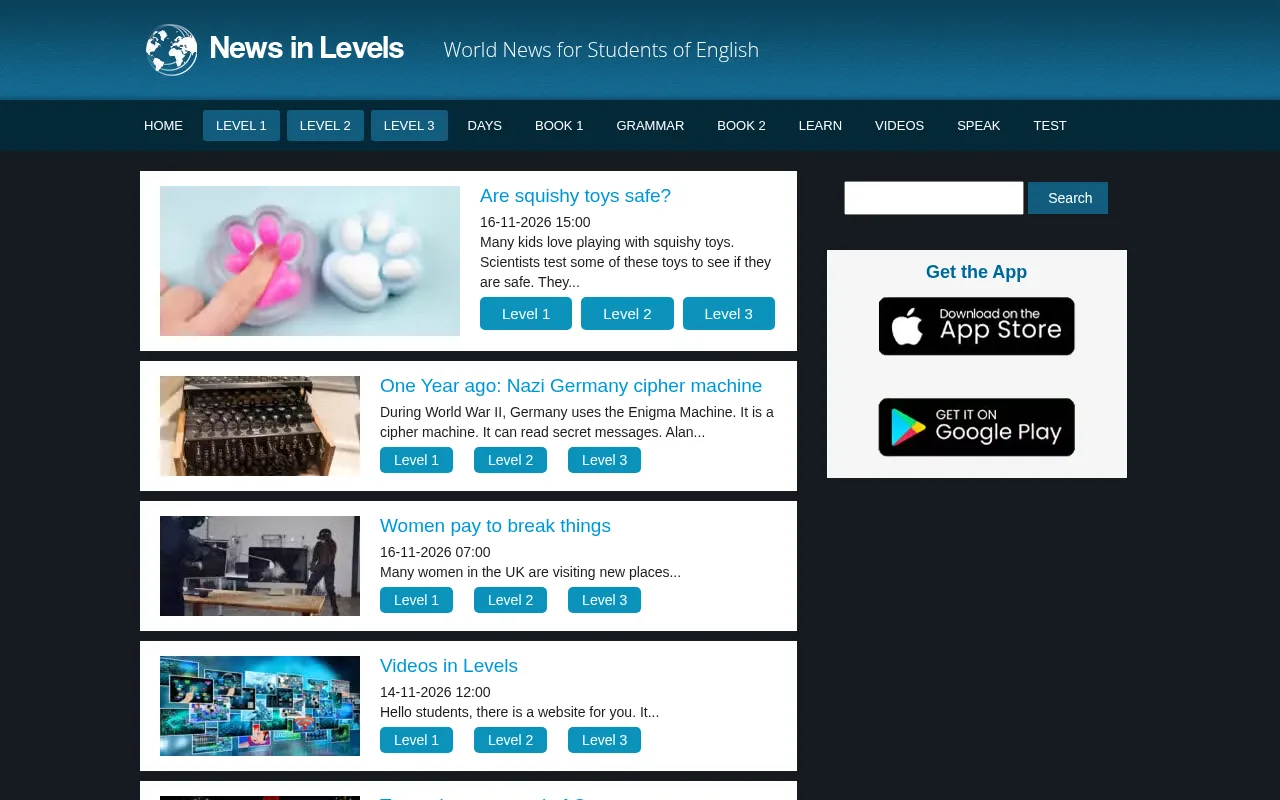
News in Levels is one of the clearest live examples of comprehensible input in action. Each news story is rewritten at three vocabulary levels; a beginner reads Level 1, then the same story at Level 2, then Level 3 as their vocabulary grows. That graduated repetition is exactly how the brain consolidates new words without conscious memorization. The tradeoff is interface simplicity: there is no adaptive engine tracking your progress, so you have to self-select your level honestly or the benefit disappears.
6. ESLfast - 2,500+ Graded Audio Conversations and Stories for Listening Practice
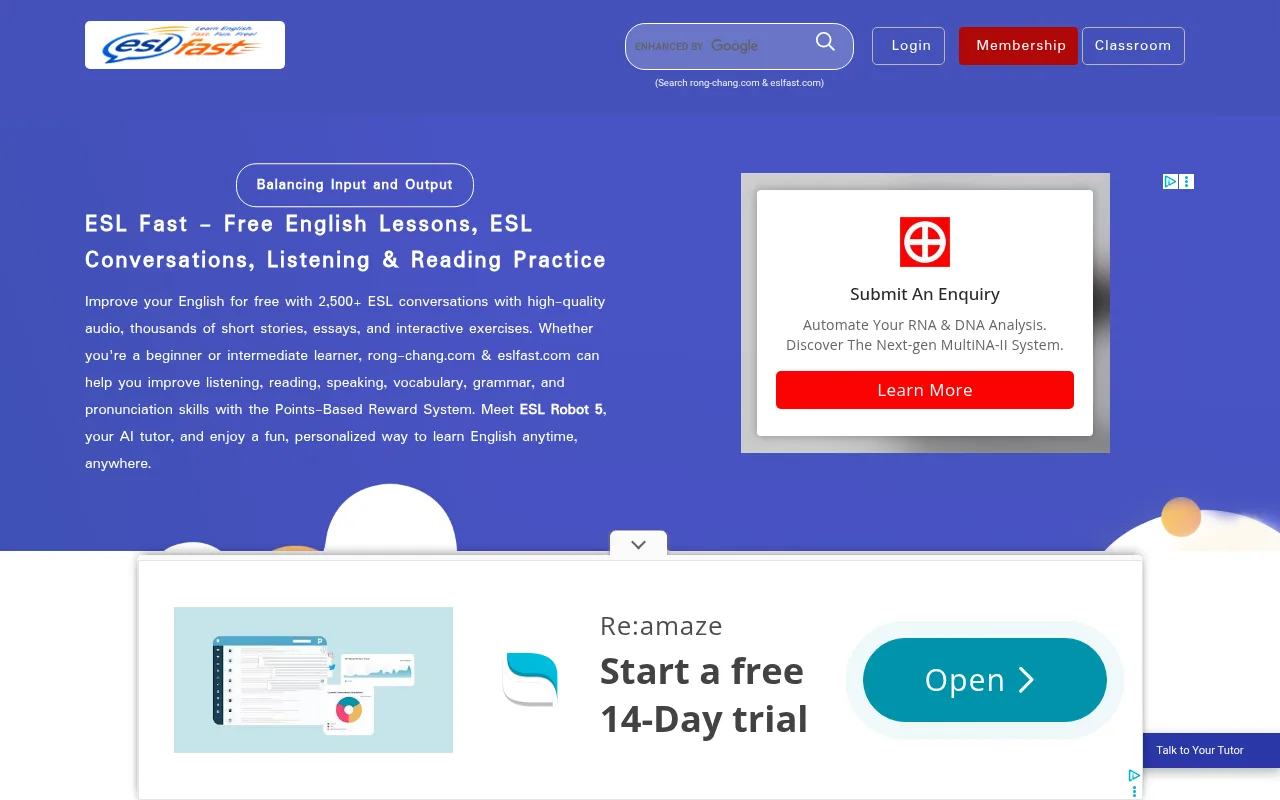
2,500+
graded audio conversations and stories, free
ESLfast offers a large library of graded audio conversations and stories, making it one of the deepest free listening resources available. Listening at a slightly-above-level pace, repeatedly, is one of the highest-leverage habits a self-directed learner can build, and ESLfast delivers that volume for free. The platform's design is minimal and dated, which frustrates learners used to polished apps. Treat it as a listening gym, not a full curriculum; pair it with a platform that covers reading and writing to fill the gaps it leaves open.
7. Duolingo - Gamified Daily Practice for Building ESL Vocabulary and Basic Grammar
Duolingo builds a daily habit reliably, and for complete beginners that habit has real value. The gamified streaks and bite-sized sessions lower the activation energy to show up, which matters more than most learners admit. The honest ceiling, though, is well-documented: research consistently finds that gamified drill-based apps produce vocabulary recognition without reliable conversational transfer. Duolingo is a strong tool for vocabulary and listening development, research supports meaningful gains in those skills, and its daily habit mechanics are genuinely effective. For spoken fluency specifically, layering in graded input tools that require spoken responses is what carries those gains into real conversation.
Most of these platforms share one structural gap: they deliver input but never ask you to speak back, which is where acquisition locks in. This is precisely where learners who have struggled with traditional memorization-based methods feel the ceiling most acutely; passive recognition does not convert to spoken confidence on its own. Parrot is built around the Comprehensible Input Method, which governs how content is selected and sequenced for each learner, and it adds a spoken-response layer, Parrot Back, that free platforms consistently skip.
The short-form video feed is designed so learning does not feel like studying and fits into the gaps already in your day, turning screen time that might otherwise be idle into active acquisition. A placement test means you enter at the right level rather than grinding through content that is too easy or too hard.
Free platforms give you a powerful launchpad, but every one of them eventually hits a ceiling, whether that is a lack of personalized feedback, no speaking practice, or content that stops scaling with your level. The next section maps the paid and freemium app landscape so you can see exactly where each tool's ceiling sits and how to stack them deliberately rather than cycling through them hoping one will finally make you fluent.
What Apps Are Recommended for ESL Learners and What Each One Does Best
Tap the wrong app for the wrong job and you will not plateau slowly. You will plateau fast, right at the ceiling the app was built for.
1. Duolingo - Best for Vocabulary Building Through Gamified Spaced Repetition
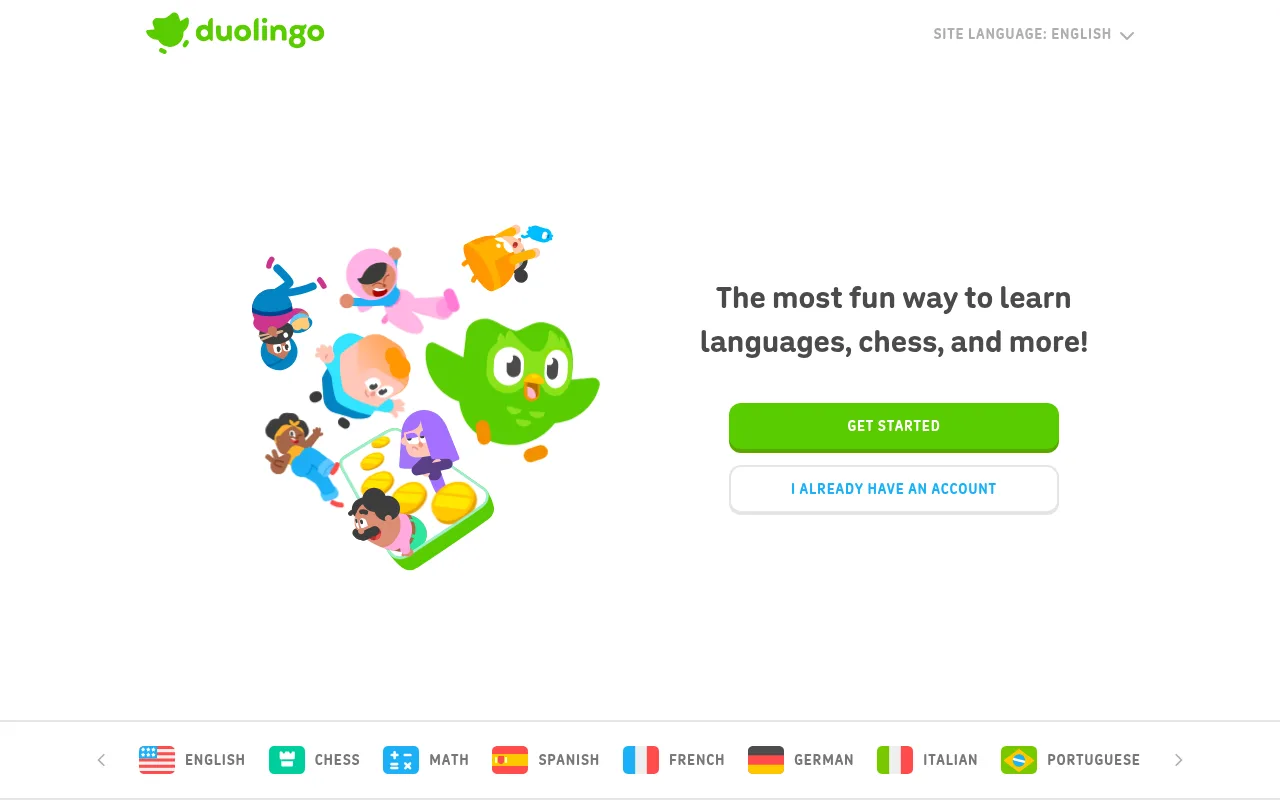
Duolingo's gamified spaced-repetition system genuinely builds vocabulary. Research published in Scilit, Duolingo in English education: Evidence-based perspectives on learning outcomes finds it can support learners up to approximately a B2 level in reading and listening, though spoken fluency outcomes are more limited. Use it for word recognition and basic pattern exposure.
The real tradeoffs are worth naming clearly: grammar is explained poorly, sentence construction is shallow, and a lengthy streak can coexist with freezing mid-sentence in a real conversation. A concern many beginners run into is trusting a streak as a proxy for progress. It is not. Adult learners also frequently abandon apps once the novelty fades, and Duolingo's loop is particularly dependent on that initial novelty to sustain engagement past the first few weeks.
2. Babbel - Best for Structured Grammar and Scaffolded Conversational Practice
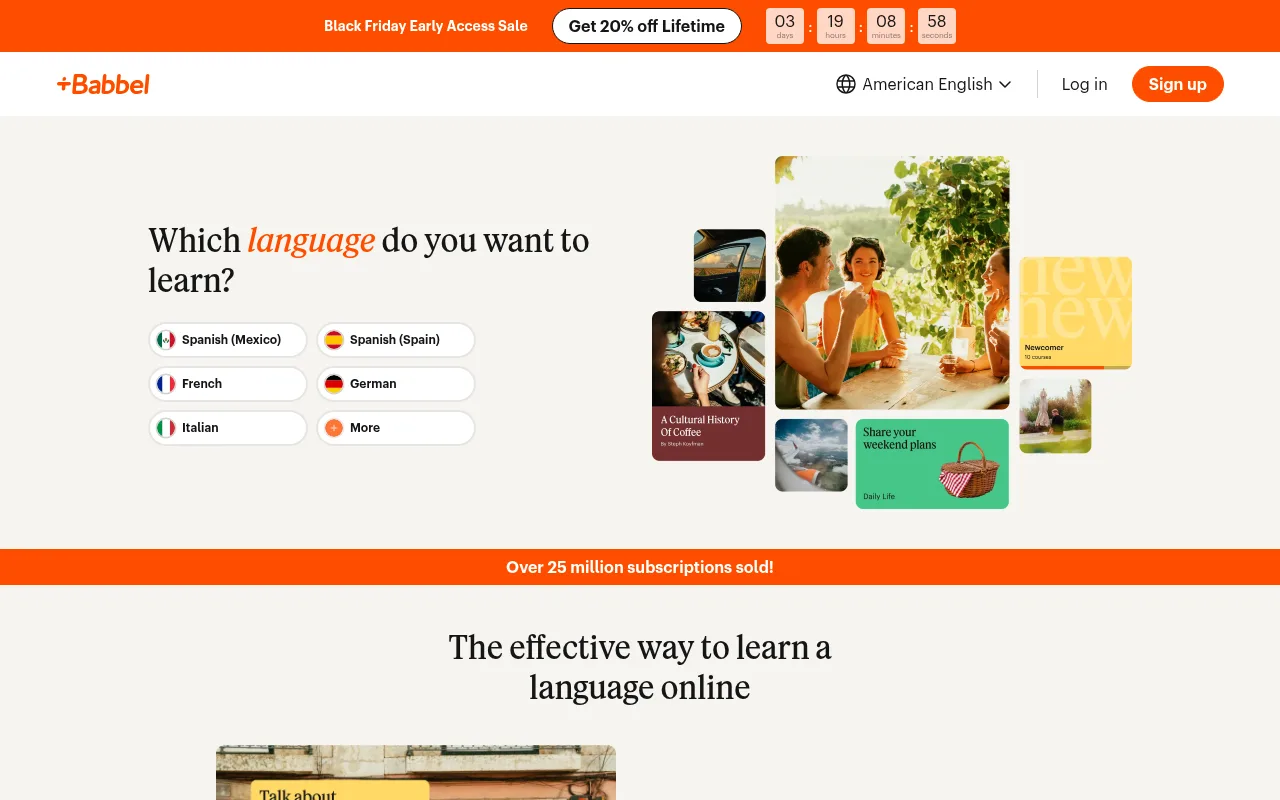
Babbel's teacher-designed lessons give adult beginners a logical grammar sequence that Duolingo skips. It is the right pick if you need to understand why a sentence is structured the way it is before you feel confident saying it. The limitation that matters: the scaffolded pace feels slow once you hit intermediate level, and many learners drop off after the novelty fades, which means the structure only pays off if you stick past the first few weeks.
3. Pimsleur - Best Audio-First App for Commuters Focused on Listening and Speaking
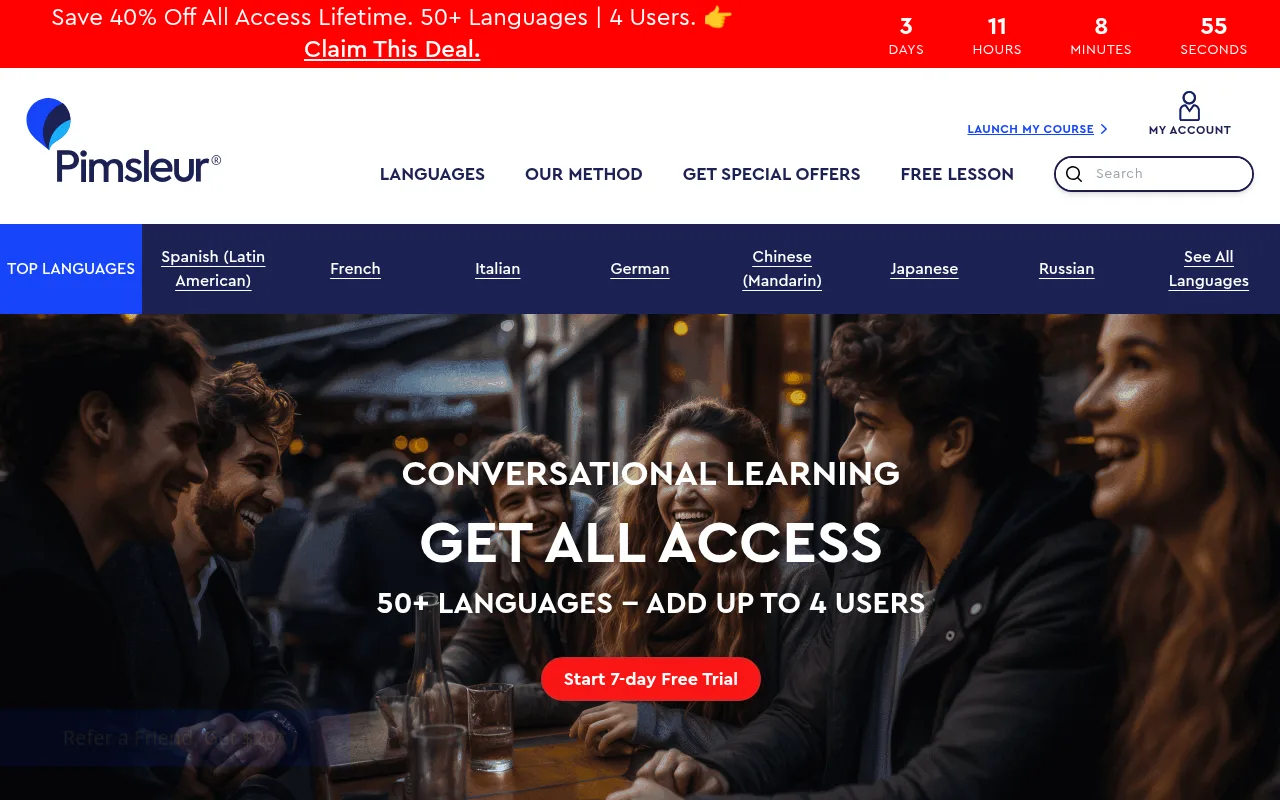
Pimsleur's audio-response method is purpose-built for ears-only situations: a morning commute, a walk, a drive. Each session asks you to recall and produce a spoken phrase before the recording confirms it, which trains a different reflex than tapping a screen. Most beneficial when you have dead time and want to build pronunciation and listening comprehension simultaneously. The ceiling: it is a closed script. You will not learn to hold an unscripted conversation because the app never puts you in one.
4. Talkpal - Best AI Conversation Tool for Low-Stakes Speaking Practice Between Human Sessions
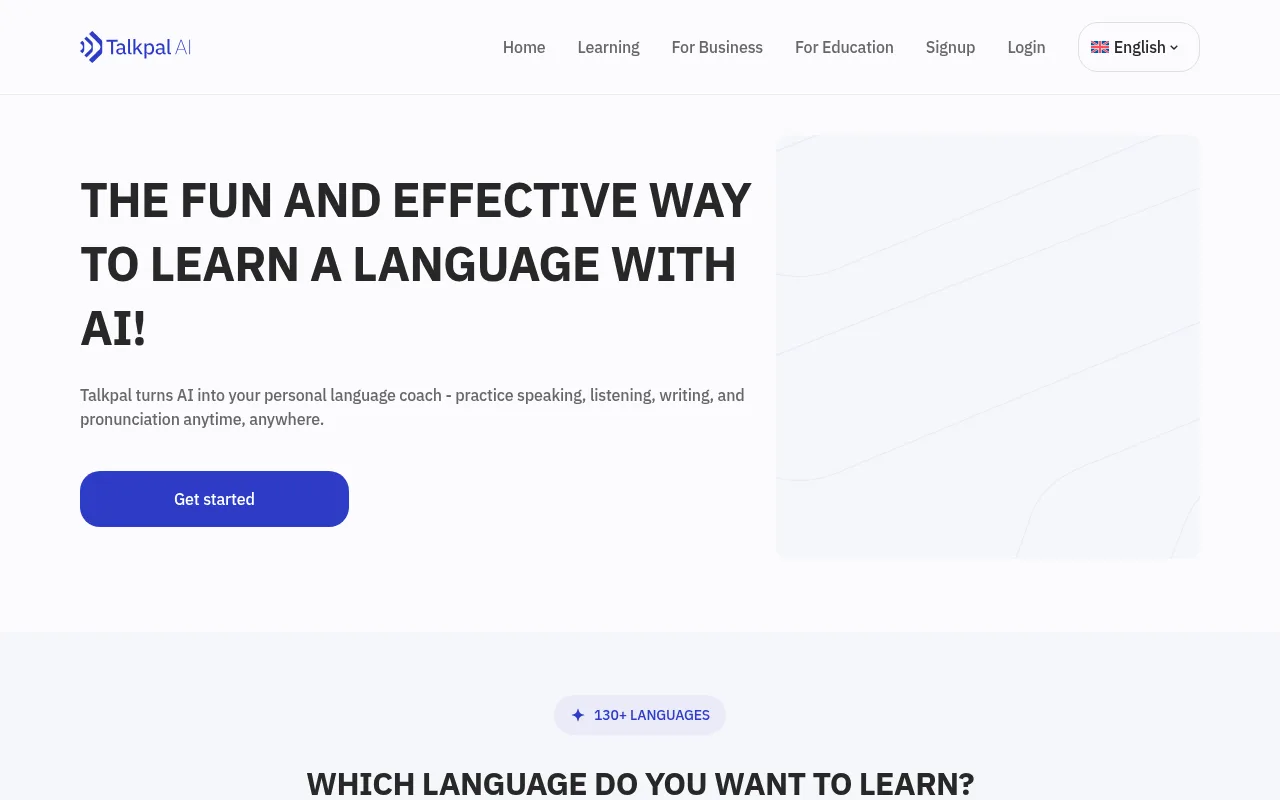
Talkpal gives you an AI conversation partner available at any hour, which removes the social pressure that stops many learners from practicing speaking at all. It is the right bridge tool between structured app work and live tutoring: low stakes, immediate feedback, and no scheduling friction. The limitation is authenticity.
AI conversation lacks the cultural spontaneity and unpredictability of a real person, so it sharpens fluency mechanics without fully preparing you for the social texture of real English exchanges. A related concern beginners raise is trust: when learners discover that content or feedback in a language app is AI-generated, it can erode confidence in what they are actually learning. That skepticism is legitimate and worth factoring into how you use any AI-first tool.
5. Tandem - Best Language Exchange App for Real Conversation With Native English Speakers
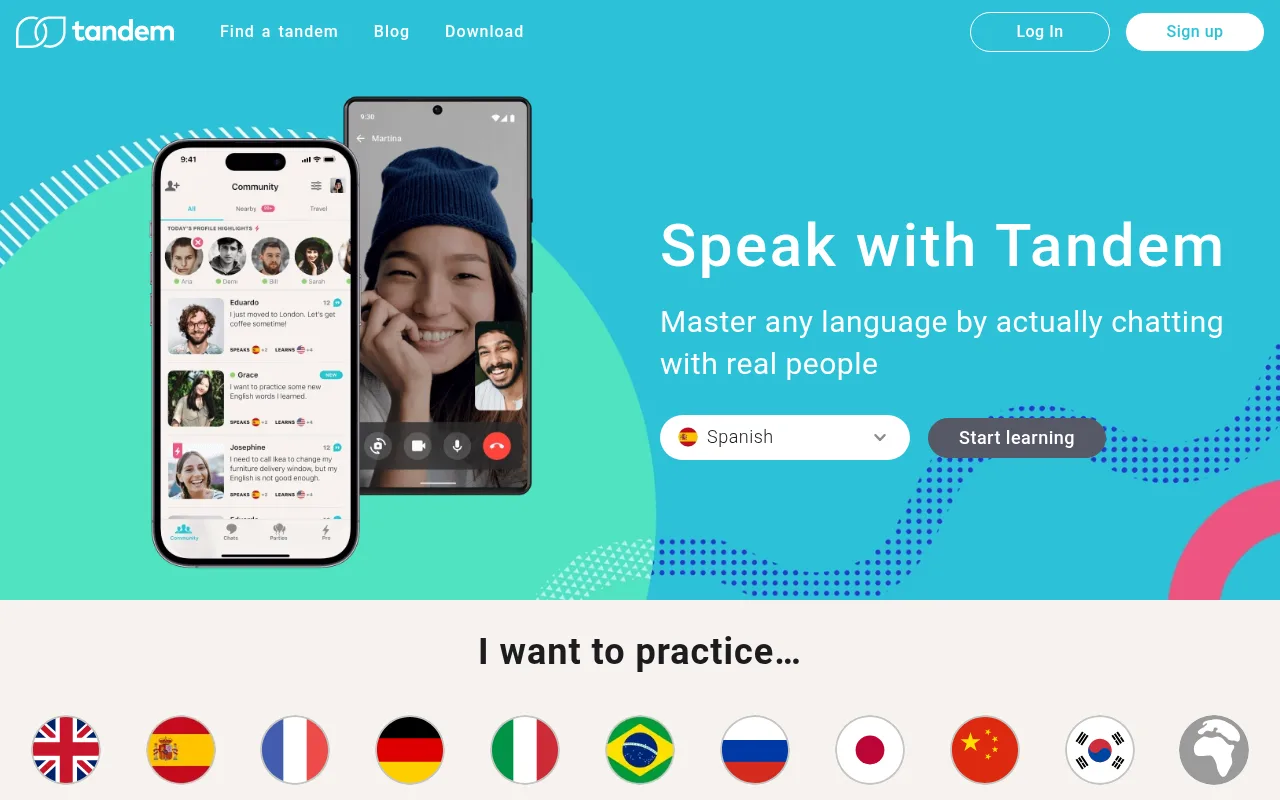
Tandem pairs you with native English speakers who want to learn your language, making every session a mutual exchange. The peer-accountability dynamic keeps sessions honest in a way no solo app can replicate. The practical tradeoff: partner quality and reliability vary considerably. Some learners find a great match quickly; others cycle through several partners before finding someone consistent. It works best as a complement to structured study, not a replacement for it, because unguided conversation without any input scaffolding can reinforce errors.
6. The Right App Depends on Your Use Case - A Quick Matching Guide for ESL Learners
No single app serves every ESL learner equally well. Vocabulary gaps call for Duolingo; grammar confusion points to Babbel; commuters benefit most from Pimsleur; anxious speakers should start with Talkpal before moving to Tandem. Matching the app to the specific skill deficit, rather than downloading whatever is most popular, is what separates learners who plateau from those who make measurable progress toward B2 fluency and beyond.
7. The Honest Limitation - Apps Build Patterns but Rarely Deliver Real Spoken Fluency Alone

The critical gap is neurological, not motivational, and it shapes how learners should interpret their own progress: app completion rates and quiz scores measure declarative recall, the ability to recognize and select a correct answer, which is processed by a different memory system than the procedural, automatic memory that real-time speech requires. Research in cognitive linguistics consistently distinguishes these two systems, and acquisition researchers including DeKeyser (2015) note that declarative knowledge does not automatically convert into procedural fluency without dedicated production practice. An adult learner can maintain a lengthy streak and still freeze mid-sentence, not from lack of effort, but because no amount of gamified exercise completion bridges that neurological gap without dedicated, low-stakes spoken output practice.
Duolingo's own page claims its courses effectively teach speaking skills, directly contradicting the claim that app-based tools like Duolingo are insufficient to develop real spoken fluency.
Tools built around comprehensible input, like Parrot's video-first approach, close part of this gap by asking your brain to process real spoken language and respond, rather than recognize a correct answer on a screen. Parrot's short-form video feed puts learners into content immediately upon opening the app. There is no onboarding maze before exposure begins. Transcripts and translations are available on every video, so you are never stranded by a word you cannot place.
Underlying every session is the Comprehensible Input Method, which governs how content is selected and sequenced for each learner, and a placement test at the start means that sequencing is calibrated to where you actually are, not a default starting point. The annual plan includes a 7-day free trial with full Premium access; a card is required to start, and a reminder goes out before the trial ends. Refunds are available on request.
Apps can carry you a long way toward B2, but every app in this list shares one structural blind spot: none of them can replicate the cognitive pressure, cultural spontaneity, and real-time feedback of a live human conversation. That missing layer is exactly what the next section covers.
Related Reading
How Long Does It Take To Learn English Fluently
Best Apps To Learn English
Types Of Music Good For Learning English
Tof
Game To Learn English
How To Learn English Speaking At Home
English Learning Activities
Best Websites To Learn English
Best Podcasts For Learning English
English Learning App For Kids
How Live Tutoring and Speaking Practice Unlock Fluency Apps Can't Reach

Why Apps Hit a Structural Ceiling the Moment You Need to Speak
"Learners with basic conversational English still struggle to achieve fluency without consistent live speaking practice, something apps cannot replicate."
— what we hear from language learners
Live speaking practice accelerates spoken fluency because real conversation forces retrieval under social pressure, the exact condition that exposes and then gradually closes the gap between passive recognition and active production. Research on output-based practice confirms that this pressure burns patterns into procedural memory, the system that runs automatic speech, a finding consistent with industry research on input-output synthesis. Recognition lives in declarative memory, and without that pressure to produce, it tends to stay there.
italki and Preply - How One Weekly Session Delivers the Feedback Loop Apps Cannot
italki connects learners with native English-speaking tutors for 1-on-1 live sessions, with community tutors on the platform available at a range of price points. Preply operates on a similar model, giving learners further options for scheduling and tutor style.
Pros and cons at a glance
✓ Pros
Pronunciation Gaps → Surfaces pronunciation gaps no app can reveal.
Vocabulary Blind Spots → Exposes vocabulary gaps that only appear mid-sentence.
Fluency Breakdowns → Reveals where mental models are incomplete.
Social Pressure & Retrieval → Forces retrieval under social pressure, reinforcing patterns in procedural memory.
✗ Cons
Limited Session Frequency → A single weekly session is not enough on its own.
Lack of Between-Session Input → Without practice or input between sessions, a tutor has nothing to correct.
Both platforms reward learners who come prepared. The most effective pattern is booking one 25-minute community tutor session per week to review vocabulary built through other practice, then arriving with real material already loaded.
Speak Imperfectly Now and Use English Subtitles to Close the Ear-to-Word Gap
Mistakes are the mechanism of ESL progress. Speaking imperfectly in a low-stakes moment creates the retrieval pressure that moves a word from recognition into production.
Between live sessions, watching English-language media with English subtitles (not your native language) trains the ear-to-word connection directly. Seeing the words as you hear them spoken by native speakers links sound to spelling in a way that passive listening alone cannot achieve. This is the same Comprehensible Input Method underlying Parrot's short-form video feed, which governs how content is selected and sequenced for each learner. The feed pairs native-speaker content with Parrot Back, Parrot's spoken response practice feature, so that by the time you book your first italki session, you arrive with real input already loaded, not a blank slate.
What a Recommended Daily Study Routine for ESL Learners Actually Looks Like
That is not motivational framing; it is how memory consolidation actually works. The trouble is that most busy adults either skip the routine entirely because 60-minute study blocks feel impossible, or they fill whatever time they do have with passive English content that feels productive but asks nothing of them. Both habits stall progress at roughly the same rate, and B1-level learners in particular know this frustration intimately: exposure alone keeps them feeling stagnant, spinning in place despite hours logged.

The 20-30 Minute Daily Session - How to Split It So Every Minute Drives Acquisition
A recommended daily ESL routine runs 20 to 30 minutes, structured as receptive input first and spoken output second. What most language educators consistently find is that a balanced session should prioritize listening and reading comprehensible input before any speaking or writing, because sufficient input is a prerequisite for meaningful output production. In practice, that split looks like this:
Spend the first 10 to 12 minutes on graded audio or video at a level you can follow with some effort.
Spend the final 8 to 10 minutes speaking aloud, recording a voice memo, or narrating what you just heard back in your own words.
Why Consistency in Short Sessions Beats Weekend Study Marathons
Short daily sessions outperform infrequent long ones because of how neural pathways are reinforced and how forgetting works between gaps. Broader research on spaced repetition and language acquisition found that regular exposure reinforces neural acquisition pathways, while gaps between sporadic sessions allow forgetting to erode what was built. A single long weekend session simply cannot replicate what five or six short daily sessions accomplish across the same number of hours.
This is why Parrot is built around the goal of helping learners build a consistent daily habit in short, manageable daily sessions, lowering the barrier enough that showing up every day becomes the default rather than the exception.
The Hidden Time-Waster - Passive Consumption Disguised as Practice
It is easy to spend 30 minutes watching an English TV show, feel like you studied, and gain almost nothing transferable to speaking. Without comprehension checks, retrieval demands, or output requirements, the brain processes the experience as entertainment rather than language learning. This is a pattern that holds learners back well past the B1 level: more exposure, same plateau.
Parrot addresses this directly. Parrot's short-form video feed is governed by the Comprehensible Input Method, the same research framework that is recognized across the field as the foundation of effective acquisition, and it sequences content to match each learner's level automatically, based on an initial placement test. Every video is chosen because it sits at the right difficulty, challenging enough to push acquisition, accessible enough to sustain comprehension.
What converts that input into spoken output is Parrot Back, the app's speaking practice feature, which requires you to respond aloud to what you just watched, closing the loop between passive reception and active production. Speaking activities with pronunciation scoring are built into the listening experience; Parrot scores pronunciation with proprietary models it built and trained. Listening comes first; speaking is about 20% of the experience. Together, those features, comprehensible video input, Parrot Back speaking output, verb conjugations and grammar insights surfaced in context, convert the same 20 minutes from passive scrolling into measurable acquisition work.
The routine above gives you the container: 20 focused minutes, input before output, every day without fail. Parrot is designed to fill that container with the right content and the right demands so none of those minutes go to waste.
How Short-Form Video Turns Your Scroll Habit Into Real English Speaking Ability
It is an untapped acquisition engine, waiting for the right content to run through it.
The average TikTok user spends around 52 minutes per day on the app, with a separate report placing that figure closer to 58 minutes. That time is already spent, the question is whether it works for you.
Why Sequenced Short-Form Content Delivers Comprehensible Input Better Than a Textbook Chapter
A textbook chapter is written at a fixed level, covering a grammar point you may have already internalized or one you are not ready for. Short-form video, when sequenced to your current proficiency, delivers what acquisition research calls i+1: content that is one step beyond what you already know, which is the precise condition under which the brain absorbs new language naturally. That is how acquisition actually works, a process Krashen's Input Hypothesis formalizes as i+1, and which the sequenced-input research in §1 supports.
The Scroll-to-Speech Ratio - Why Passive Watching and Active Acquisition Are Not the Same Thing
Passive exposure alone does not close the fluency gap. Merrill Swain's Output Hypothesis explains why: comprehension creates familiarity, but spoken output creates fluency.
Key takeaway: Comprehension creates familiarity, but spoken output creates fluency. Without a spoken-response requirement after the input, you are training your ears, not your mouth.
Being asked to reproduce what you just heard, in your own voice, forces your brain to shift from recognition mode into production mode. That shift, from understanding language to generating it, is where fluency is actually built.
How a 10-Minute Video Session Can Outperform a 30-Minute Grammar Drill for Spoken Fluency
A grammar drill demands more than that, and usually loses.
30-Minute Grammar Drill
10-Minute Comprehensible Video Session
What it requires
A desk, focus, and a block of time that evaporates under real-life pressure
Fits the window adult learners realistically protect in a busy day
What it builds
Declarative knowledge: rules you can recite
Procedural knowledge: patterns you can use under pressure
Outcome for spoken fluency
Does not produce spoken fluency
Produces spoken fluency
Parrot is built on exactly this insight: a short-form video feed sequenced to your current level, with a spoken-response requirement after each clip, so the 10 minutes you already give to video becomes the session that actually moves your fluency needle.
Related Reading
Best Apps For Learning English Pronunciation
Best Tv Shows To Learn English
Best Books To Learn English Grammar
English Pronunciation Exercises
Best Books For Learning English
Best Youtube Channels To Learn English
Best Movies For Learning English
Best Apps To Improve English Speaking Skills
Best Audiobooks To Learn English
Next steps
If you have spent weeks completing lessons and scoring well on grammar quizzes but still freeze the moment a real conversation starts, the path forward starts with a different cognitive target entirely. Grammar drills build declarative recall, the ability to recognize and select a correct answer. Spoken fluency runs on procedural memory, an entirely separate system that only activates through real output under real conditions. No streak closes that neurological gap on its own. Start with our learn Spanish.
The app-completion ceiling and the live-output requirement are not independent problems. They are the same problem, seen from two angles. Gamified exercise completion trains the wrong memory system for speaking, which is why learners can hold a 300-day streak and still go blank mid-sentence. And live conversation accelerates fluency not because tutors correct grammar, but because retrieval under social pressure is the precise condition that burns patterns into the procedural memory spontaneous speech actually runs on. Together, those two realities point to one action: get inside level-appropriate spoken input today, and pair it with a spoken-response requirement before the session ends.
Start with Parrot to see the short-form video feed and Parrot Back speaking practice in a single session. A placement test sets your level before the first clip plays, so the input lands where acquisition actually happens, not where it feels safe.
Frequently Asked Questions
Why can I pass grammar quizzes but still go blank when a native speaker talks to me?
That gap is structural, not personal. Traditional ESL programs over-index on external, measurable outputs like completed units and correct answers, while almost never testing the internal cognitive and affective conditions that determine whether words come out under real conversational pressure. Knowing a grammar rule and retrieving it under conversational pressure are two entirely different cognitive acts, and grammar drills only train the first one.
What's the right order to study listening, speaking, reading, and writing?
Listening should come first, because it is the upstream skill that feeds all the others and directly mirrors how every human acquired their first language. Speaking should follow listening, then reading after you have already heard the vocabulary, and writing last, since it is the most cognitively demanding skill and benefits most from a solid listening-and-reading base. Most traditional ESL programs get this sequence backwards by front-loading grammar instruction and written tests.
How is learning English as an adult different from how kids learn it in school?
Adults need a heavier listening-to-output ratio than classroom children, not a lighter one. Krashen's Affective Filter Hypothesis explains why: adults carry significantly higher anxiety and self-consciousness into language learning, and that anxiety actively blocks acquisition when learners are pushed to produce output before they feel ready. A longer listening phase before forced speaking is the natural answer for adult learners.
How do I structure my ESL practice so each skill actually reinforces the others?
Anchor all practice to listening input first, then let speaking, reading, and writing grow outward from that base. For speaking, repeat and reconstruct phrases you have already heard rather than generating sentences from memorized grammar rules. For reading, encounter words you have already heard multiple times so recognition is faster and more durable, and save writing for last so you are producing language you have already absorbed rather than constructing it from scratch.
What free platforms can I use to start learning English without paying anything?
Several free options exist, each suited to different levels and goals: BBC Learning English works well for intermediate learners (B1–B2) wanting real-world news content; British Council LearnEnglish structures free content explicitly around all six CEFR levels; USA Learns is purpose-built for adult immigrants building practical English for everyday situations; News in Levels rewrites each news story at three vocabulary levels for graduated comprehensible input; and ESLfast offers a large library of graded audio conversations and stories for high-volume listening practice. Because established free platforms can go offline without warning, building your learning stack across more than one tool is a genuine risk-management move.