
Pimsleur's science is real. Its format is a relic. Here is what you actually pay, what you genuinely get, and why the two rarely line up for busy learners today.
Pimsleur French is built on a deceptively simple premise: speak before you read, produce before you study, and let your memory do the heavy lifting. The common assumption is that falling behind in Pimsleur means you are the problem, that you simply need more discipline to make the 30-minute sessions work. That assumption is worth examining carefully, because the science behind the method and the delivery format it comes packaged in are two very different things, and understanding the distinction matters before you commit any money to it.
Graduated interval recall is the engine. The method works by reintroducing vocabulary and phrases at increasing time intervals, forcing your brain to retrieve a word just as it begins to fade. That retrieval effort is the memory work.
The harder the pull, the stronger the trace. This is the same principle behind spaced repetition systems used across cognitive science research, applied specifically to spoken output rather than flashcard recognition. The prompt-and-pause mechanic is where it gets concrete.
A narrator presents a phrase, silence follows, and you speak your answer aloud before hearing the correct response. You are not passively absorbing. You are producing under mild pressure, which is meaningfully different from listening to a podcast and hoping vocabulary sticks.
Paul Pimsleur formalised this approach in the mid-twentieth century, designing it specifically for adult oral acquisition rather than classroom grammar study. The catch is the time requirement. Thirty minutes sounds manageable until you realise the session cannot be split.
The graduated recall intervals are calibrated to a single unbroken block; a 10-minute fragment does not preserve the spacing benefit. That is a structural problem. The full architecture spans five levels, 30 lessons each, 150 lessons total.
Completed at one lesson per day, that is 150 days to reach what the program considers a baseline spoken foundation. The science behind graduated interval recall remains solid. The delivery format, however, was designed for a learner who could sit down at a desk with no competing demands.
That learner is increasingly rare. The research aged well. The format did not.
Before you decide whether the method is right for you, you need to know what it costs. Next, we break down exactly what Pimsleur French will run you across every pricing tier, so there are no surprises at checkout.

Key takeaways
Pimsleur's prompt-and-pause structure produces a French accent that holds up in real conversation, that part of the method is genuinely good and backed by solid science.
Completing all five Pimsleur French levels costs roughly $750, and the ceiling you hit at the end is approximately A2 to low-B1, survival French, not fluency.
The 30-minute daily block isn't a feature; it's a structural requirement the program cannot flex around, which is why busy adults don't fail Pimsleur, Pimsleur fails their schedules.
Pimsleur's ~500-word spoken vocabulary falls well short of what linguists and the CEFR define as conversational fluency, so the marketing and the outcome are not the same thing.
The learner who actually gets results from Pimsleur is narrow: commute-free mornings, no kids, and an ironclad 30-minute window every single day.
Parrot (parrotapp.com) closes the gap by delivering comprehensible-input French through short-form video, the same acquisition method the research backs, in chunks that fit a 12-minute lunch break or a 24-minute commute.
Pimsleur French Pricing Breakdown and What You Actually Pay
Finishing all five Pimsleur French levels adds up to a substantial sum at the monthly rate. Many delay even starting the free trial until they can map out exactly what the structure entails and what it will cost over the full run.
The program spans five levels, each lesson running 30 minutes. Switching to annual billing meaningfully reduces that figure, but only if you sustain perfect daily consistency for the full run. This is precisely why so many learners stall at the research stage: they sense, correctly, that the headline price is not the real price.
What $750 Buys You Versus What Else $750 Could Buy
For $750, Pimsleur offers significantly more than audio lessons alone.

Digital flashcards and reading supplements
Bite-Sized Lessons
Speak Easy interactive transcripts
Speed Round games
Voice Coach AI pronunciation feedback
Daily Challenges and Rewards
Offline learning
Apple CarPlay/Android Auto support
Multi-user access (up to 4 users)
What the feature list does not include is flexibility. No adaptive pacing. No human on the other end.
Competing apps charge considerably less: Babbel's annual subscription is a fraction of Pimsleur's cost, and Duolingo's core offering is free, making Pimsleur's price point difficult to justify on cost alone without a specific outcome that only its method can deliver. For learners who find that traditional memorization-based methods haven't stuck, the kind of learner who genuinely struggled with Pimsleur's scripted recall drills, a different approach exists. Parrot is most beneficial precisely in this situation: it is built around the Comprehensible Input Method, a research-backed alternative to rote repetition, and it applies that method through a short-form video feed of engaging content that drives real listening comprehension rather than scripted recall.
Learners who want active practice on top of that passive immersion can use Parrot Back for speaking practice and the AI Spanish Tutor for personalized feedback during or after video sessions, turning what was a passive watch into a targeted drill without the $750 commitment. The $750 price is only defensible if the method's output justifies the premium, and for most busy learners who need conversational range rather than scripted recall, the math does not hold.
What the Research Actually Says About Audio-Only Language Acquisition
Pimsleur's method is grounded in real psycholinguistic research, specifically Paul Pimsleur's 1967 work on spaced repetition and auditory memory, and that foundation is not in dispute. What the marketing materials leave unaddressed is how much the field has moved since then. Learners who acquire language through varied, contextually rich material, real speech at natural pace, visual context, and authentic conversational register, demonstrate stronger transfer to unscripted situations than learners trained exclusively on studio-produced dialogue. That gap between controlled practice and real-world speech is not a minor caveat. A Parisian cashier, a Lyon taxi driver, and a Marseille market vendor do not speak at Pimsleur's measured tempo, and no amount of scripted repetition fully prepares a learner for that gap.
Pros and Cons of Pimsleur French That Most Reviews Skip
The prompt-and-pause structure forces you to produce sounds before your brain has time to overthink them, and the result is a French accent that holds up in the real world far better than anything gamified point-scoring produces. The graduated interval recall system spaces prompts at increasing intervals within each 30-minute lesson to push vocabulary into long-term memory, and the research behind interval-based consolidation is not in dispute.
Real native French speakers do not speak in that controlled register. Lingtuitive's review flags this directly: Pimsleur dialogues are fully scripted and performed by studio actors, meaning learners train their ear on a controlled, artificial register rather than the connected, reduced speech of native speakers in real conversation. Learners who sail through Level 2 and can order food confidently often report freezing the moment a native speaker responds at normal speed, because their ear has never been exposed to that register.
A second, quieter failure runs alongside the register problem: grammar. Because Pimsleur drills phrases without ever explaining the rules underneath them, learners hit a wall the moment they try to improvise beyond memorized lines. Constructions that require understanding, negation variety, subjunctive triggers, why certain word orders are wrong, stay invisible.
This is exactly where tools built around real native video content earn their keep. Parrot's short-form native video feed exposes learners to unscripted speech in sub-15-minute windows, addressing the register gap without requiring the unbroken 30-minute block Pimsleur's architecture demands. When passive watching isn't enough, Parrot Back, the speaking practice feature, and the AI Spanish Tutor layer in active, personalized production practice on top of that immersive content, most useful once a learner has built enough baseline comprehension to start generating spoken output of their own.
The 30-Minute Lock-In - A Format Flaw That Stings More After Paying $750
As Lingtuitive explains, the 30-minute length is a structural requirement engineered around the spaced-recall intervals built into each session; a partial lesson does not deliver a proportionally smaller benefit, it undermines the interval-recall mechanism altogether. Compound that with the vocabulary ceiling and the picture gets harder to defend. According to OptiLingo's analysis, Pimsleur teaches approximately 500 words across its entire core program, well below the 2,000 to 3,000 words linguists place at the threshold of conversational fluency. The next section puts a number on it: here is exactly where on the fluency spectrum Pimsleur French leaves you, and what it would take to go further.

Can You Actually Become Fluent With Pimsleur French
Pimsleur French is a well-known starting point for many learners, but understanding exactly where its ceiling sits, and why it was built there, is the fastest way to decide whether it gets you where you actually want to go.
What Pimsleur French Actually Delivers - The A2 to Low-B1 Ceiling Explained
Pimsleur French is marketed as a path to conversational fluency, but its structural ceiling falls well short of what linguists and the CEFR actually define as the ability to hold a real, unscripted conversation with a native speaker. The Council of Europe, CEFR Level Descriptions define A2 as the ability to "communicate in simple, routine tasks requiring a direct exchange of information on familiar topics," while B1 adds the capacity to handle "most situations likely to arise while travelling" but explicitly stops short of unpredictable or abstract conversation. Pimsleur's scripted, phrase-recall approach is well suited to that A2–low-B1 band and rarely pushes beyond it.
Stephen Krashen's comprehensible input research shows that fluency develops through exposure to authentic, meaning-rich input slightly above the learner's current level, not through memorised phrase recall, and Pimsleur's methodology sits at odds with that principle. The Council of Europe, CEFR Level Descriptions are explicit: B2 demands "the ability to understand the main ideas of complex text" and "interact with a degree of fluency and spontaneity that makes regular interaction with native speakers quite possible without strain for either party."
Image: Pimsleur French fluency ceiling illustrated with a spotlight stopping at a skill barrier
As the Erasmus University Rotterdam Language Training Centre (CEFR Levels) reinforces, reaching that threshold requires broad exposure across all four skills:
Listening
Reading
Speaking
Writing
The audio-only format that makes Pimsleur so convenient in the car is the same format that leaves the written dimension of French almost entirely unaddressed.
After Level 5, There Is No Level 6: Pimsleur's Missing Continuation Path
The program ends with no bridge content, no adaptive difficulty ramp, and no path forward built into the product. Reaching B2, where the Council of Europe, CEFR Level Descriptions say native interaction stops feeling like a performance and starts feeling like a conversation, requires a substantial number of instructional hours for English speakers according to industry data Service Institute estimates, with independent study hours running higher still. Learners who reach Level 5 expecting to be conversational aren't wrong to feel shortchanged; the math simply never supported the destination, and the product offers no signpost toward what comes next. The commute windows Pimsleur already trained you to use are the same windows a short-form video feed fits into naturally, and the format is accessible enough that the whole family can work through short daily sessions together.
Related Reading
French Language Learning Resources
Best App To Learn French For Travel
Best Books To Learn French
How Long To Learn French
French Alphabet Pronunciation
How To Learn French Through Conversation
How To Learn French With Movies
Learning Resources For African French
How To Conjugate Re Verbs In French
Is Pimsleur Worth It for Busy Learners Who Can't Do 30 Minutes Daily
The learner who genuinely benefits from Pimsleur French is specific to the point of being rare: someone with a fixed, uninterrupted 30-minute window available every single day, a strong preference for audio-only learning, and a near-term goal tied to spoken French rather than reading or writing. The program's graduated interval recall system requires consistent daily completion of full sessions; anything less disrupts the spaced-repetition chain and undermines retention. That profile is narrow, and it is just not the profile of most busy learners evaluating this program.
Why the 30-Minute Block Is Non-Negotiable, Not Just Recommended
The 30-minute session is not a suggestion Pimsleur arrived at for marketing reasons. According to Pimsleur's own method documentation, the spacing and timing of every recall prompt inside a lesson is calibrated to that fixed 30-minute unit. The architecture assumes you start, proceed without interruption, and finish. Shortening the session doesn't produce a proportionally smaller benefit; it breaks the recall architecture entirely.
Missing a session does not simply pause your progress; it degrades the retention traces the previous session built, often enough that the next lesson's prompts land on ground that is no longer solid. The answer isn't more willpower; it's a format that meets a 15-minute daily window as reliably as a 30-minute one.
The Discipline Myth - It's a Format Problem, Not a Willpower Problem
Framing Pimsleur drop-off as a motivation failure misreads what is actually a structural mismatch. The format demands something specific; if your life cannot reliably supply it, the format is the wrong fit, not your character. That distinction matters when choosing where to invest, because a method aligned with your actual schedule will outperform a theoretically superior one you cannot sustain. Parrot's Comprehensible Input Method is grounded in the research-backed principle that language acquisition happens most efficiently when learners encounter real content slightly above their current level, not when they repeat isolated prompts on a fixed schedule.
No Screen Available - That's the One Scenario Where Pimsleur Wins Outright
Driving is the clearest legitimate use case for Pimsleur. No screen is available, hands are occupied, and a 30-minute commute can supply the uninterrupted window the method requires. Outside that context, the constraint becomes harder to justify. When a screen is available, even briefly, the calculus shifts, and formats that pair audio with visual input or allow flexible session lengths become more competitive.
Seven days per week is Pimsleur's design assumption. The graduated recall system is calibrated to a 24-hour interval between sessions. Stretching that to 48 hours places the next lesson's recall prompts outside the window where the previous session's traces are still accessible at full strength. Five days per week begins to produce measurable retention gaps, and anything less compounds the problem further. The consistency standard that works for most busy learners looks different: 15 minutes or less, daily, in whatever window is realistically available.
Three questions settle the decision quickly:
Does your schedule reliably produce a 30-minute uninterrupted daily window, not occasionally, but consistently?
Is spoken French your primary goal, rather than reading, writing, or understanding native speakers in unscripted contexts?
Are you a beginner, or do you already have a French foundation?
If the answer to all three is yes, Pimsleur is a defensible purchase.
If any answer is no, the format mismatch will surface quickly and the subscription value will erode with it.
For early-to-mid level learners whose answer to question two includes reading comprehension alongside speaking, or who find that audio-only input alone doesn't make native content feel accessible, Parrot's Reading Practice with video transcripts and inline translation addresses that gap directly, making video content comprehensible rather than overwhelming.
The Exit Ramp - When to Stop and What to Look for Next
The exit signal is clear: if you have missed more sessions than you have completed across any given month, the graduated recall chain has likely degraded to the point where repeating earlier lessons is more productive than pushing forward. At that point, switching to a format better suited to your actual schedule is the more productive move. What to look for next:
a method built around comprehensible input from real native-speaker content
a daily habit that fits inside 15 minutes
speaking practice that gives personalized feedback rather than scripted prompts
Pimsleur Alternatives That Actually Fit How You Learn French Today
The right alternative to Pimsleur isn't the one with the longest feature list. It's the one you'll actually finish on a Tuesday when your commute runs 24 minutes and your lunch break is 12. The average one-way commute in the United States is approximately 27 minutes, which means most learners have two sub-30-minute windows per day, not one clean half-hour block. That structural mismatch is the real reason people abandon programs, not lack of discipline.
1. French Podcasts - Best for Filling Pimsleur's Pronunciation-Only Gap
"People using Pimsleur are generally satisfied, but they may not be aware of richer, more comprehensive alternatives that combine listening, grammar, and immersion."
— what we hear from language learners
Podcasts built for French learners, such as Coffee Break French and Français Authentique, solve a specific problem: they deliver comprehensible input at variable speeds, so your ear adjusts to how French actually sounds rather than how a studio actor performs it. A 15-minute episode fits a commute perfectly. The trade-off is real, though. Podcasts give you zero speaking practice and no feedback loop, so pronunciation errors go uncorrected. Most beneficial when paired with something that forces you to produce language, not just absorb it.
2. Parrot - Best for Conversation-Building When Pimsleur's Scripts Stop Working
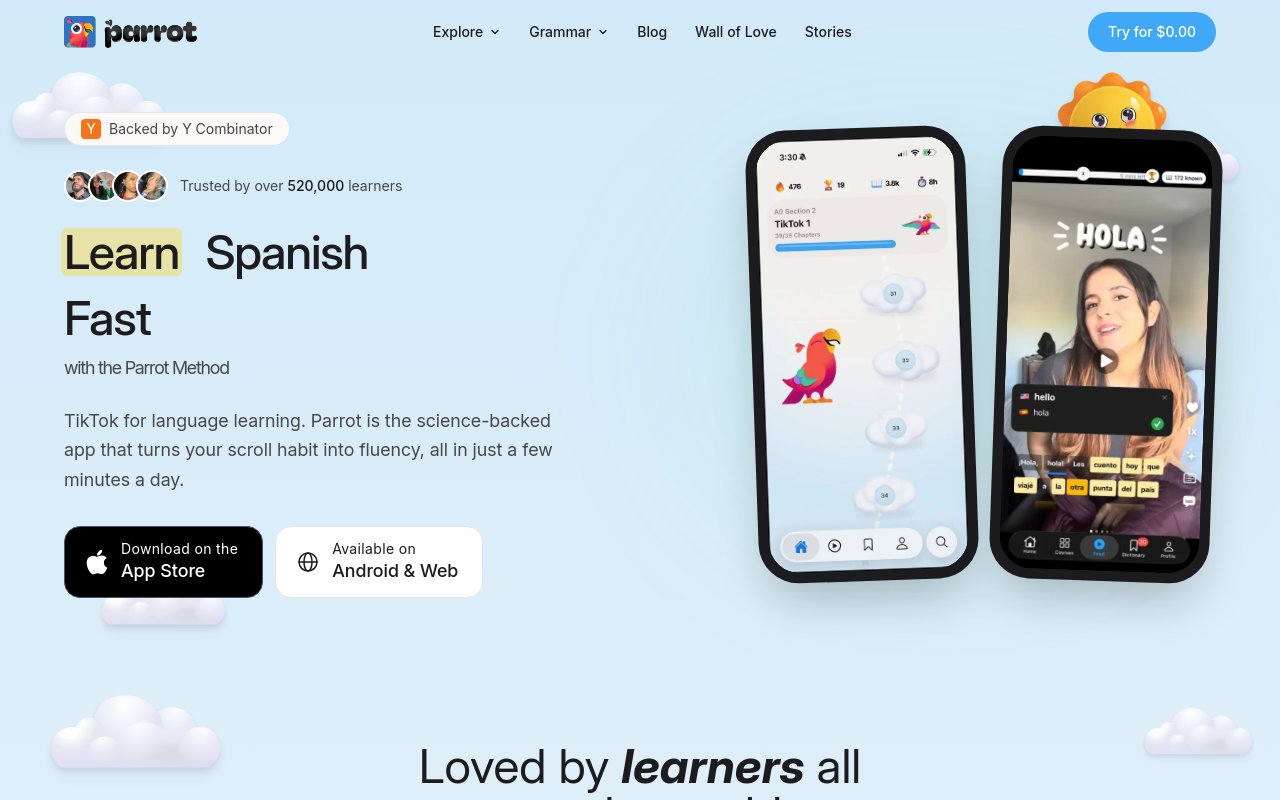
Parrot is built for the learner who finishes a Pimsleur lesson and still can't hold a real conversation. Its short-form video clips, 10 to 15 minutes total, scroll-native, use comprehensible input, the most research-backed acquisition method available. Designed for commutes, lunch breaks, and before-bed gaps, it fits how people actually use their phones. The output metric is conversation readiness, not lesson completion.
3. Babbel - Acknowledged Alternative for Structured Grammar Pimsleur Skips
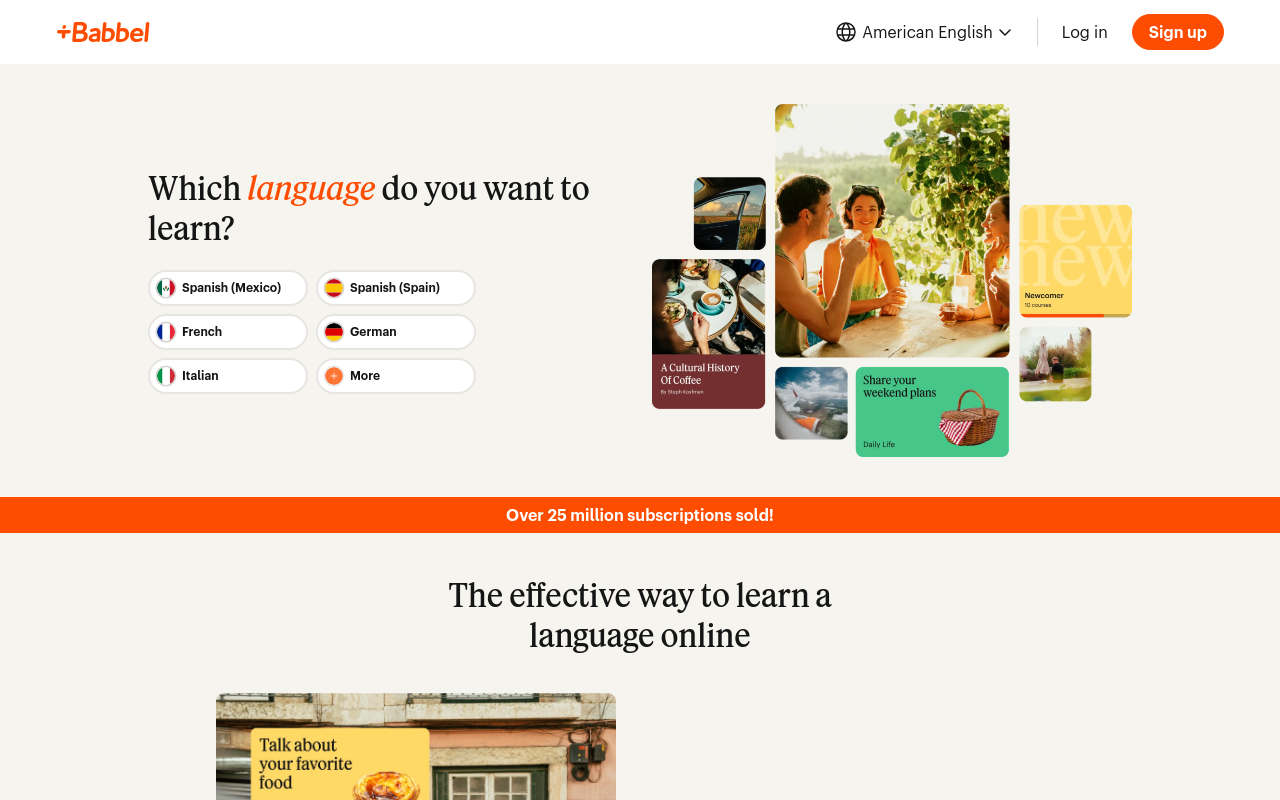
Babbel's teacher-designed lessons address the grammar scaffolding that audio-only programs skip entirely. If reading and writing are part of your French goals, that matters. Babbel's average session runs roughly 15 minutes, which fits the commute window more naturally than a 30-minute indivisible block. The honest limitation: Babbel explicitly offers tools aimed at real conversation, including interactive dialogues and AI conversation practice, positioning the platform as a way to become "conversation-ready" and have "real-life conversations."
4. Rosetta Stone - Acknowledged Alternative for Visual-Intuitive Learners
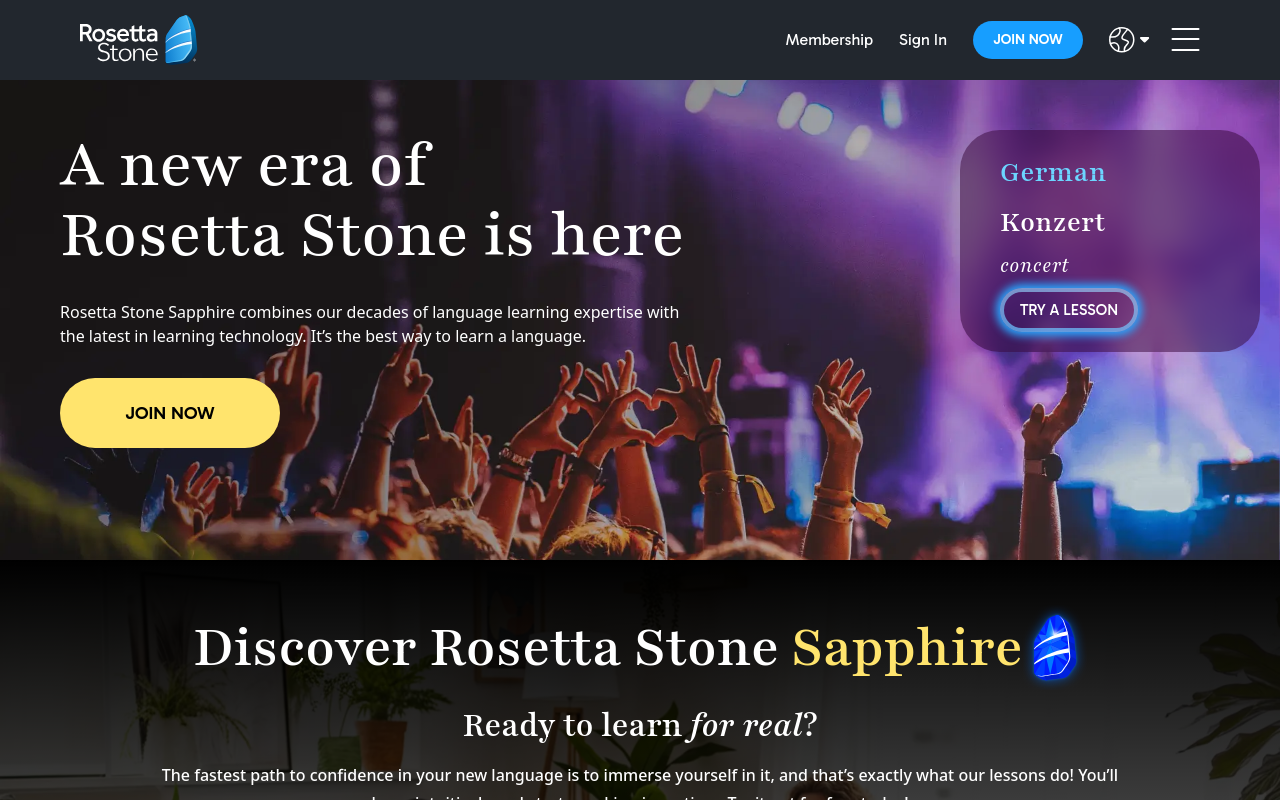
Rosetta Stone's image-and-audio association method works well for learners who think visually and find text-heavy instruction frustrating. It removes translation as a crutch, which has genuine merit in early acquisition. That said, independent reviewers and language-learning researchers have noted that recognition-based methods, including both image-association and audio-only approaches, tend to build stronger passive comprehension than spontaneous production, a limitation Rosetta Stone's own documentation acknowledges by recommending supplemental conversation practice alongside its core program. If holding a real conversation is the goal, neither tool gets you there alone.
5. Scripted-Recall vs. Conversation-Readiness - Why the Output Metric Is the Real Difference
Learners who finish a structured audio program and still freeze when a native speaker goes off-script share a common diagnosis: they trained their ear on controlled, predictable input. Stephen Krashen's comprehensible input research, the most replicated framework in second-language acquisition, argues that acquisition happens fastest when learners receive meaningful input slightly above their current level, not when they rehearse memorized exchanges. A conversation-focused app or tutoring platform applies that principle through exposure to real, unpredictable French, sized for a commute or a lunch break, with support resources available so the input stays comprehensible without becoming artificial. The output metric that matters is not lesson completion. It's whether you're building the ability to follow and respond to unpredictable French.
Related Reading
Best Podcasts For Learning French
Best Online French Tutors
Best French Audio Books
French Tv Shows To Learn French
Is Babbel Good For French
Is Duolingo Good For French
Rocket French Reviews
Best Apps To Learn French Vocabulary
Next steps
If your daily schedule hands you stolen minutes instead of a clean half-hour, the path forward starts with accepting that Pimsleur's indivisible 30-minute recall chain is a structural requirement, not a suggestion, and a format built around it will charge you regardless of whether your life can accommodate it. Start with our learn Spanish.
Pimsleur was engineered for a 1970s learner with a dedicated study window, meaning its spaced-recall intervals break the moment a session is split or skipped, turning missed days into compounding retention debt rather than neutral pauses. At the same time, research on how the brain acquires language consistently favors frequent, varied, authentic input over infrequent high-volume drilling of scripted, studio-performed dialogue, meaning the learner who fits three short sessions of real native-speaker content into existing gaps is likely building more durable comprehension than the learner forcing one perfect Pimsleur block. Together, those two realities point to a format that fits the commute window you actually have, not the one the program assumes you have.
Start with Parrot. From there, Parrot's AI-sequenced native video feed delivers comprehensible input in whatever window your day provides, and Parrot Back layers in speaking practice on top of it when you're ready to produce.
Frequently Asked Questions
What is Pimsleur French?
Pimsleur French is an audio-based language program built around graduated interval recall, a method that reintroduces vocabulary at increasing time intervals so your brain retrieves words just as they begin to fade. Each lesson runs 30 minutes and uses a prompt-and-pause mechanic that requires you to speak your answer aloud before hearing the correct response. The full program spans five levels and 150 lessons total.
What will Pimsleur French not teach you?
Pimsleur does not teach grammar rules explicitly, so learners cannot improvise beyond memorized phrases, constructions involving negation variety, subjunctive triggers, or unfamiliar word orders stay invisible. It also does not expose you to real native speech patterns, since all dialogues are performed by studio actors in a controlled register that doesn't reflect how French speakers actually sound in conversation. Its core vocabulary tops out at roughly 500 words, well below the 2,000-3,000 words linguists consider the threshold for conversational fluency.
What results can I realistically expect after finishing all five Pimsleur French levels?
Completing all five levels places most learners at roughly an A2 to low-B1 level on the CEFR scale, enough to order food, confirm a reservation, and handle basic travel situations, but not enough to hold spontaneous or abstract conversations with native speakers. The vocabulary ceiling of approximately 500 words and the scripted, studio-actor dialogues mean your listening comprehension of real native speech will still have significant gaps even after 150 lessons.
How long does it take to complete Pimsleur French?
At the recommended pace of one lesson per day, the full five-level program takes 150 days. Each lesson is 30 minutes and cannot be split into shorter segments without breaking the spaced-recall intervals the method depends on, so the time commitment is a fixed structural requirement rather than a flexible one.
What should I do after finishing Pimsleur French, or if it stops working for me?
Because Pimsleur leaves learners with a survival-phrase foundation rather than conversational fluency, the next step requires exposure to unscripted native speech and opportunities to produce novel sentences. An approach built around real native content, like Parrot's short-form video feed, which uses the Comprehensible Input Method to match content to where you actually are as a learner, directly addresses the two gaps Pimsleur leaves: the scripted-actor register problem and the inability to improvise beyond memorized lines.