Passive French listening feels productive until a native speaker replies and every hour vanishes. Here is how to pick audio that your brain can actually acquire, not just endure.
Earbuds in every commute. Audiobook queued at bedtime. Forty-five minutes of French narration floating through the kitchen while you cook dinner.
The common assumption is that if you listen to enough French audio, the language will eventually click and you'll start speaking naturally. It feels like progress, and that feeling is the problem. Millions of learners log hundreds of hours this way, then freeze the moment a native speaker responds, unable to recall a single phrase from all those sessions.
If that sounds familiar, you're not alone, and you're not lazy. The method itself is broken. See our learn Spanish for how this works in practice.
The reason sits in hard neuroscience. The Language Gym's February 2025 analysis of comprehensible input research is direct: The Parrot Method is built on comprehensible input theory, developed by linguist Dr. Stephen Krashen.
His decades of research at USC show that we acquire language when we understand messages. Audio pitched above your current level is invisible. Apps built around active comprehensible input sessions exist precisely because passive exposure, however well-intentioned, keeps the brain in observer mode rather than acquisition mode. Repetition does not fix this. Hearing the same incomprehensible audio fifty times does not gradually unlock meaning the way context clues do in reading. Without a comprehensible base, new words have nowhere to attach.
Sleep-learning programs face the same ceiling: a 2025 neuro-ecological critique published in Frontiers in Psychology found that passive exposure alone does not trigger the encoding mechanisms required for language acquisition, even when input is comprehensible. The honest trade-off is this: commute audio carries real value, but only when the input sits inside your comprehension window. Below 95% familiarity, the hours do not count toward fluency. No title, however well-reviewed, compensates for a passive listening habit. Before we get to the 13 titles worth your time, you need to see exactly what that passive habit is costing you.
Key takeaways
Passive listening, earbuds in, brain off, logs hours without building speaking ability, because recognition memory and production memory are two separate systems.
Publisher 'beginner' labels are marketing, not linguistics; a mislabeled title can drop your comprehension below 65%, which means your brain spends the session decoding, not acquiring.
The audiobook itself is rarely the problem, the missing active layer is; pausing every few minutes to parrot back what you heard out loud is what converts audio exposure into retrievable French.
Intermediate learners face the sharpest trap: when native French starts to sound comfortable, the instinct is to celebrate, but comfort without output is where progress quietly stalls.
Advanced listeners who can follow C1+ audio cold still freeze when a native speaker fires back at full speed, that gap between recognition and real-time production is where most plateau.
Parrot App closes that gap directly: its short-form French video format is built on comprehensible input, the most researched method in second language acquisition, so every session trains your brain to produce French, not just hear it.
The Three Hidden Costs of Picking the Wrong French Audio Book
That passive habit has a price, and it shows up in ways most learners never connect back to their listening routine. Consumer data consistently shows that a significant share of purchased audiobooks end up unfinished, and French learners track that average faithfully. The assumption driving those purchases is straightforward enough: enough French audio, absorbed over enough time, will eventually tip into natural speech.
Busy learners accept that logic, load their phones, and hit play. Motivation is rarely the issue. What the star ratings, Editor's Pick badges, and bestseller lists never disclose are the three specific costs quietly accumulating every time a learner treats listening as a substitute for production.
Pros and cons at a glance
Stephen Krashen's comprehensible input research established that acquisition requires roughly 95-98% comprehension of the input you're hearing. Drop below that threshold and your brain stops acquiring language; it starts white-knuckling through confusion. A beginner who buys an unabridged French novel and abandons it by day three hasn't failed at French.
They've paid a difficulty mismatch tax. The "Beginner" label on an audiobook product page describes a marketing category, not a calibrated proficiency match, and that gap is where most french audio for beginners purchases go wrong. This is precisely why Parrot's Comprehensible Input Method governs how content is selected and sequenced for each learner, rather than left to a shelf label.
Rather than handing a beginner a firehose of native-speed audio, the method underlies every video session, continuously calibrating input to the level where acquisition can occur. Vocabulary aids appear alongside native-speaker content in real time, so the listening practice a learner gets builds real-world comprehension instead of expensive confusion.
The Retention Gap Passive Listening Cannot Close
Studley AI's analysis of active versus passive recall makes the mechanism clear: passive listening builds recognition memory, while active retrieval builds production memory. These are distinct brain pathways.
Research published in Anatomical Sciences Education (Kooloos et al. 2019) confirmed that passive education methods produce significantly lower long-term retention than active retrieval methods. Passive listening also creates an illusion of mastery: familiarity with heard material feels like learning, so learners overestimate their retention right up until they try to recall a word in conversation and find nothing there. A learner who finishes a full French audiobook and still can't hold a sentence together hasn't done anything wrong. They've been using a tool never designed to build production memory.
Parrot is built around closing exactly that gap. The Parrot Back feature moves a learner from passive watcher to active speaker during or after video sessions, the moment when production memory is forged. Because active recall consistently outperforms passive review for long-term retention, Parrot Back functions as the retrieval layer that pure listening can never provide.
For learners who have already struggled with traditional memorization-based methods and want a research-backed alternative, this active speaking practice is where the real return on study time lives. The AI Spanish Tutor extends that further, delivering personalized feedback and targeted practice on top of immersive video content, so no session ends at passive consumption. Both of these costs are avoidable, but only if you match the title to your actual proficiency level before you buy.
A practical level-matching framework in the next section shows you exactly how to do that, so you never waste another credit on the wrong book.
How to Pick French Audiobooks by Proficiency Level Before You Buy
Publisher-assigned level labels are marketing copy, not linguistic calibration. A title stamped "beginner" can sit comfortably at 65% comprehension for an A1 learner, which means one in three words is a mystery, and the brain shifts from acquiring language to exhausting itself on decoding. That gap is why so many learners finish an audiobook feeling vaguely accomplished but unable to reproduce a single sentence.
One of the most common traps beginners fall into is choosing an audiobook based on prior familiarity with its story, having read a title in another language, for instance, and assuming that narrative scaffolding will compensate for genuine vocabulary gaps. It does not. Familiarity with plot is not the same as lexical coverage, and the brain cannot acquire what it cannot comprehend, no matter how motivated the listener is.
The 98% Comprehension Rule Is Your Real Buying Filter
Genre and difficulty labels are the wrong selection criteria. The only filter that predicts whether a French audiobook will drive acquisition is whether it lands in your personal 95-98% comprehension window, a threshold so narrow that two learners at the same nominal level may need completely different titles depending on which vocabulary they have already internalized. Material below that band becomes background noise the brain never encodes as language; material above it forces conscious decoding rather than subconscious acquisition. The research is precise: according to a detailed analysis of Krashen's input hypothesis, learners must understand 95 to 98 out of every 100 words for input to drive subconscious acquisition rather than conscious, effortful decoding.
A separate body of research reviewed by Why the Input We Give Our Learners Must Be 95-98% Comprehensible in Order to Enhance Language Acquisition reaches the same conclusion: the threshold is the operating condition under which acquisition actually fires. That number is your buying filter, not the product page label. Test it before you buy.
Audible's free sample feature runs long enough for a useful comprehension check. Listen once without pausing. Count the words you genuinely do not know. If you are missing more than a handful per hundred, outside the 95-98% comprehension window, the book is too hard, and re-listening will not fix that.
Your personal lexical coverage is the only number that matters, and gauging it accurately is harder than it sounds. Learners routinely overestimate their comprehension in the moment. Passive familiarity with sounds can mask genuine gaps in vocabulary retention. What feels accessible on first listen often reveals itself as incomprehensible the moment a learner tries to reproduce a sentence or use a word in conversation.
Pacing, Vocabulary Density, and Narrative vs. Drill at Each Proficiency Tier
A1 and A2 learners need slow delivery, high-frequency vocabulary, and short sentence structures. Drill-style audio or graded dialogues serve this tier better than native-speed narrative, because vocabulary density in authentic storytelling sits well above the 98% threshold for most beginners. The goal at this stage is absorbing authentic vocabulary and natural speech patterns, and that only happens when the surrounding language is already comprehensible enough to let new items stand out as i+1 rather than noise.
B1 and B2 learners can handle narrative audio, provided it uses contemporary conversational register rather than literary or formal prose. At this tier, Krashen's i+1 principle means one new structure per passage, not ten. Learners at this stage can genuinely start absorbing the natural speech patterns that carry conversational fluency, the register, rhythm, and connective vocabulary that textbooks strip out.
C1 and above? Native-speed literary prose is finally viable. This is where LibriVox earns its place, offering hundreds of French public-domain titles, all free. Audible carries the deepest catalog of graded and native French titles, and its sample feature is the most practical tool for running the same kind of check described earlier before committing.
Hoopla connects to your public library card and offers free streaming with no waitlists, making it strong for A2 to B1 learners. Spotify's catalog depth for structured French audiobooks is thin. LibriVox is free and best suited to C1 learners ready for unabridged literary French.
Most learners hit a comprehension wall, assume they need to listen more, and queue the same mismatched audiobook again. Passive re-exposure to incomprehensible input does not close the gap. The input hypothesis research is unambiguous on this point: volume of exposure to material above your threshold adds frustration, not acquisition.
This is where Parrot's approach addresses the gap directly. Parrot's short-form video feed is built on the Comprehensible Input Method; every clip is selected and sequenced to land inside that narrow i+1 zone where acquisition actually fires, not just outside it. Rather than relying on a learner to self-assess their comprehension level before choosing content (a judgment most beginners cannot reliably make), Parrot's feed governs content selection automatically, calibrating to the learner's current level on an ongoing basis.
That makes it useful during commute time, lunch breaks, or before bed, short sessions where learners need content that works immediately, without manual difficulty matching. When a learner wants to move from passive listening to active use, Parrot's AI Spanish Tutor and Parrot Back speaking practice feature provide personalized feedback and targeted output practice on top of the immersive video sessions, converting comprehensible input into conversational ability. Parrot is most beneficial for learners who have already tried memorization-based methods and found that studying vocabulary lists in isolation does not translate to real-world listening comprehension.
Level-Matching Quick-Reference - Which French Audiobook Format Fits You?
Decision rule: Use Audible's free sample before buying. If you are missing more than a handful of words per 100, outside the verified 95-98% comprehension window, move one tier down.
Best French Audiobooks for Complete Beginners Who Are Just Starting Out
Filtered through that lens, the five best French audiobooks for complete beginners share a single defining trait: they force your brain to produce French rather than simply hear it. That distinction separates the picks that build real speaking ability from the ones that feel productive while delivering almost nothing you can use.
Parrot App - Best French Audio Learning for Beginners Who Already Scroll
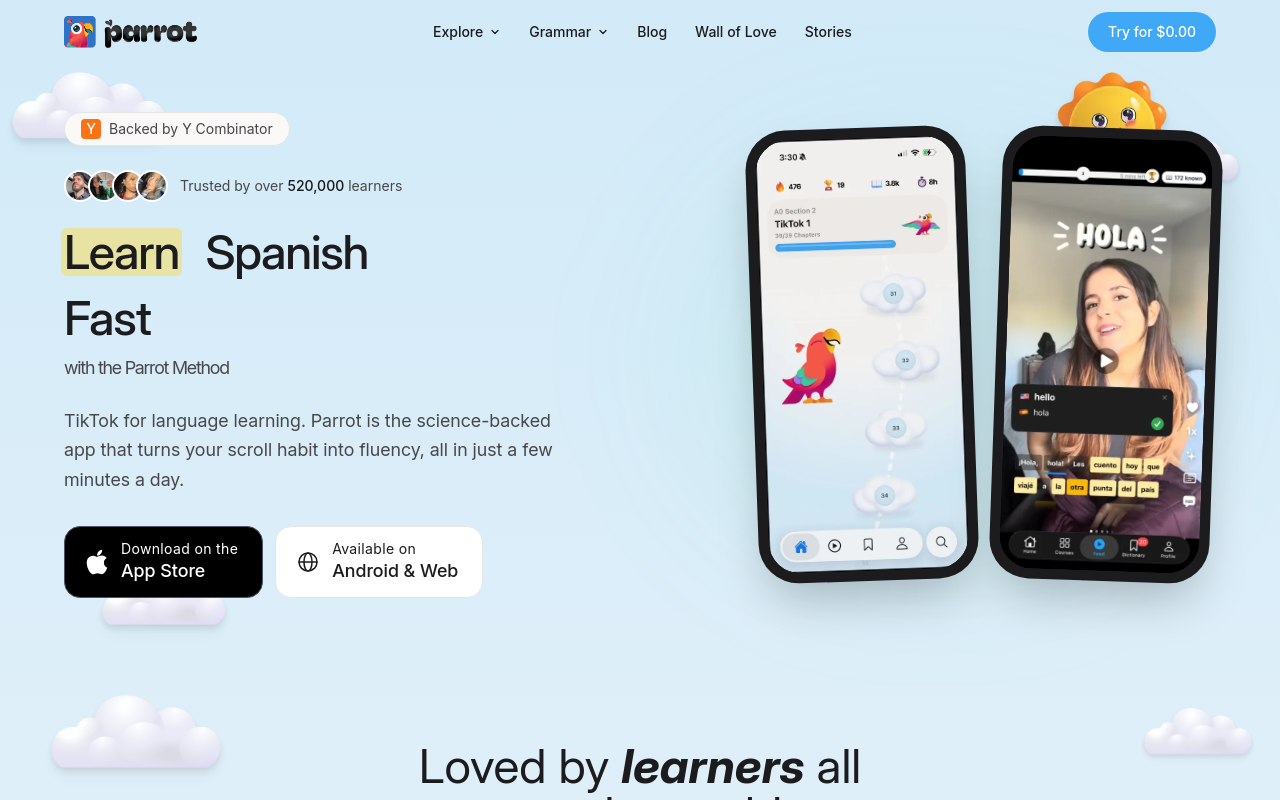
Most beginners will reach for a traditional audiobook first, finish a few sessions feeling encouraged, then quietly realize they cannot reproduce a single phrase when a real conversation starts. That gap exists because recognition memory and production memory are built by entirely different cognitive processes, and it is made worse by a structural problem in the audiobook market itself: the vast majority of adapted French audio content is pitched at intermediate B1/B2 learners, leaving true beginners with almost nothing that actually matches their level. Parrot is explicitly designed for commute-based learning through short-form video clips, with active "Parrot Back" speaking repetition steps built into every session, so learners are producing French from the very first clip rather than only hearing it.
It delivers French through short, comprehensible-input video clips, governed by the Comprehensible Input Method, which controls how content is selected and sequenced for each learner, that slot into the same commute window as any audiobook but demand active recognition rather than passive hearing. Video transcripts are displayed alongside video content, with inline translation support, so learners can read what they hear and look up unfamiliar words in context without leaving the feed. Every video watched also counts as direct listening practice, building real-world comprehension rather than textbook familiarity.
When a learner wants to move beyond immersive watching into active production, Parrot Back (the app's speaking practice feature) creates a retrieval loop on top of the input, the kind of loop that is most beneficial when someone has struggled with traditional memorization-based methods and wants a research-backed alternative. The honest trade-off: it works best as a daily complement to audio, not a standalone replacement for structured listening practice.
1. Paul Noble French - Best Zero-Grammar-Table Audio Course for True Beginners
Learn French with Paul Noble builds sentences from day one using a conversational scaffolding method that never asks you to memorize a conjugation table. The course is structured in short segments that fit a commute without demanding a dedicated study block. Real listeners consistently praise the low-anxiety pacing, though the depth-versus-breadth ceiling is genuine: Paul Noble covers everyday survival French thoroughly but leaves intermediate grammar largely untouched, so treat it as a confident launchpad rather than a complete course.
One practical warning worth naming: beginners who purchase French audiobook bundles, the "3 Books in 1" style packages that sometimes include a Paul Noble-adjacent title, frequently encounter broken or inaccessible audio links, leaving them without the audio component they need to actually learn. If that happens to you, the audio is the non-negotiable part; do not settle for the text-only fallback.
2. Short Stories in French for Beginners by Olly Richards - Best for Building Natural French Cadence
Short Stories in French for Beginners is the right pick when you want comprehensible narrative audio rather than drills. Olly Richards uses a dual-language format with controlled vocabulary and everyday situations, giving listeners enough context to infer meaning without constant dictionary interruption. The Goodreads rating and review volume signal strong validated beginner utility across a wide range of starting levels.
The one real limitation: listeners who need structured pronunciation feedback will find the story format too passive on its own and should pair it with an active speaking method. French audio content beyond mainstream literary titles is also genuinely scarce; if you finish this book and go looking for a comparable adapted novel or essay collection in French, the catalog thins out quickly. That scarcity is a real constraint of the market, not a flaw in this particular title.
3. Pimsleur French - Best Spaced-Repetition Audio Method for Speaking from Day One
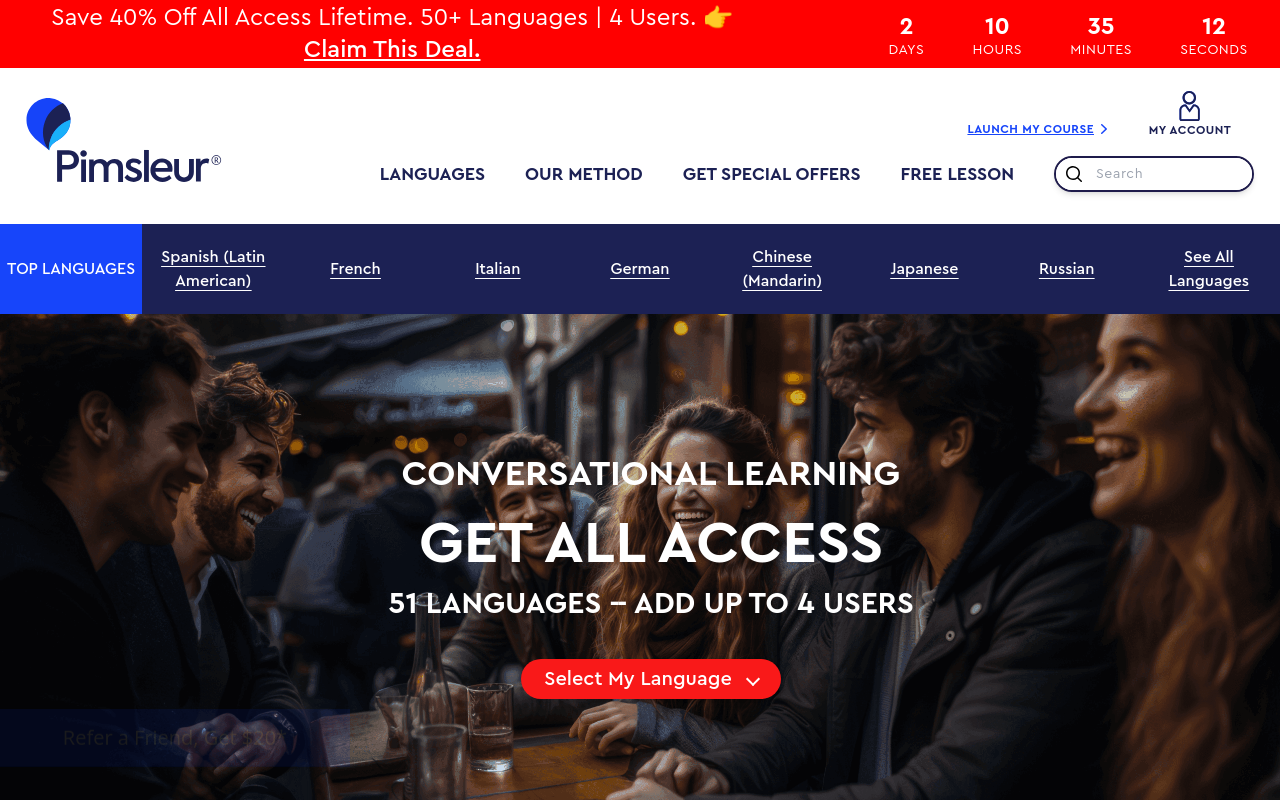
Pimsleur French earns its place here for a specific reason that most beginners miss. According to a Headway review of the Pimsleur method, the Anticipation Method removes grammar-rule pressure and lets learners focus purely on listening and speaking from lesson one, making it genuinely well-suited for absolute beginners who find textbook formats overwhelming. A HelloFrench review of the same method reinforces that verdict, noting its effectiveness for building an early speaking habit from a cold start.
Each lesson runs exactly 30 minutes and is designed to be completed once daily. The critical ceiling warning: once learners exhaust the structured retrieval loop, most need to add a grammar-focused resource or a conversation platform to close the gaps Pimsleur leaves open. It builds a strong recognition base; it does not automatically build a production one.
The common thread across every pick above is that the titles delivering real retention all smuggle active retrieval into the listening experience. Pimsleur does it through the anticipation prompt. Olly Richards does it through context-inference.
Paul Noble does it through sentence-building scaffolding. Parrot does it through the combination of comprehensible video input, video transcripts displayed alongside video content with inline translation support, and a dedicated speaking-practice layer in Parrot Back. The moment that retrieval loop disappears and a learner graduates to unstructured native audio expecting the same gains, acquisition stalls.
Finishing a structured audio course and feeling confident is real progress; mistaking that confidence for production readiness is the single most common reason beginners plateau in week three. These five picks will get you producing your first French sentences and training your ear to the language's rhythm. Once you can hold a basic exchange, the challenge shifts from exposure to comprehension at speed.
That is where the intermediate tier earns its place, and the titles in the next section are built specifically to close that gap.
Best French Audiobooks for Intermediate Learners Building Listening Comprehension
For intermediate French learners, the most dangerous place to be is comfortable. When native French starts to sound natural during a listening session, the instinct is to celebrate. The reality, according to The French Experiment's July 2021 analysis, is more unsettling: at the B1/B2 plateau, learners already know enough grammar and vocabulary that native-speed audio stops generating the mild comprehension strain required for acquisition.
The brain has optimized for passive recognition and entered a comfort loop. You are training yourself to be a comfortable audience member, not a speaker. This is compounded by a practical reality most intermediate learners quietly face: without consistent access to native French speakers in their local environment, self-directed listening practice becomes the primary, and often only, engine of progress.
That makes the quality of that practice matter enormously. Learners who fill that gap with passive, unfocused listening risk cementing recognition habits that never transfer to production or real-world comprehension, the kind of comprehension that collapses the moment a native speaker accelerates, drops syllables, or shifts register mid-sentence. The fix is strategically chosen content pitched just above your current level, targeting specific gaps: voice-tracking across characters, cadence recognition in modern spoken French, and philosophical vocabulary that stretches without snapping comprehension entirely.
As How We Learn Languages noted in March 2026, graded narrative audio outperforms raw native content at the intermediate stage precisely because controlled vocabulary and pacing allow pattern recognition to develop without cognitive overload. The four titles below are benchmarked against that standard.
Parrot App - Best French Audiobook Companion for Intermediate Listeners Who Learn by Doing
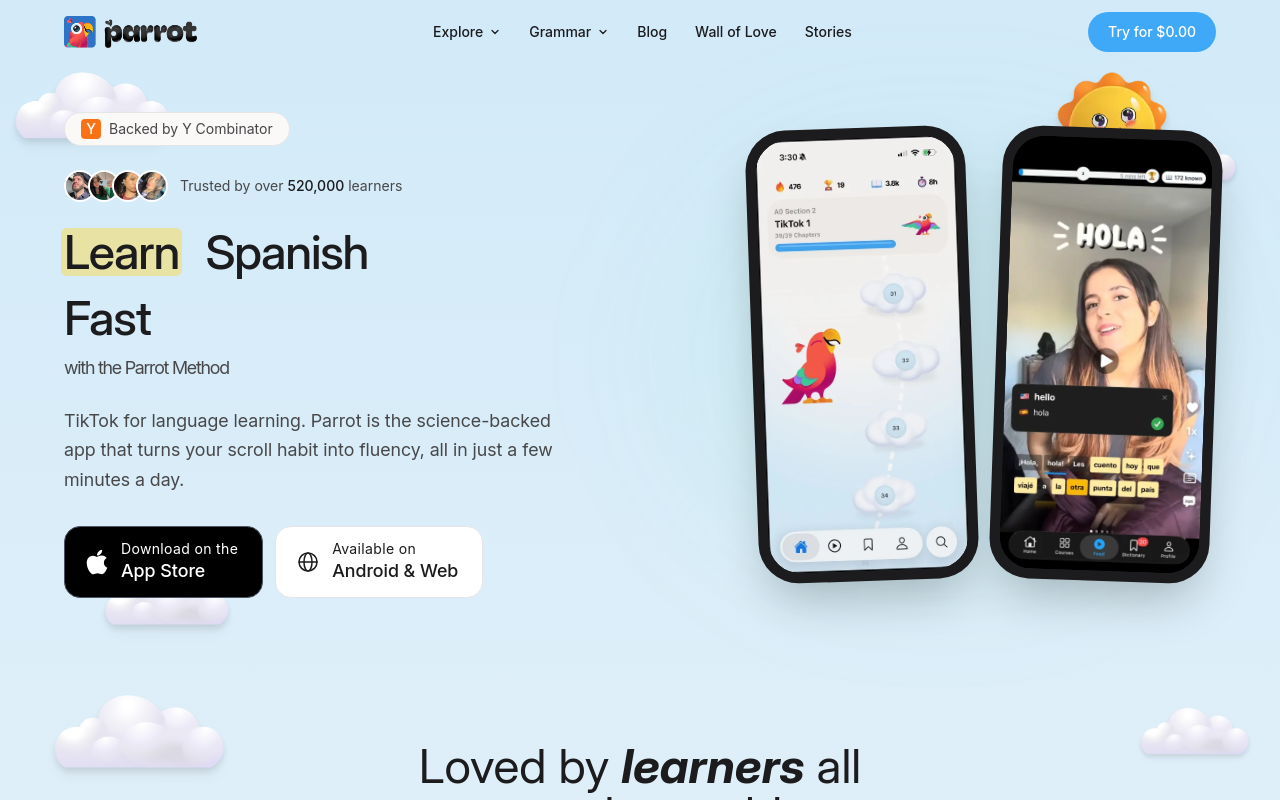
Long-form audiobooks build immersion depth, but they carry a structural weakness: passive listening lets the brain drift into recognition mode without ever triggering production. Parrot App addresses this directly through its core "Parrot Back" step, where users repeat native-speaker audio out loud, building active production into every session rather than allowing passive exposure to go unchallenged. Sessions are built from real native video content, structured around active retrieval, and designed to build a consistent daily habit in three separate 5-minute micro-sessions (morning, lunch, and a third moment) rather than a single consolidated session.
That distinction matters. Parrot is most beneficial when a learner needs to improve real-world listening comprehension, the kind that holds up when French accelerates to conversational speed, not the kind that performs well only in controlled, clean-audio environments. Every video session contributes immediately to listening practice, with native-speaker content delivered alongside vocabulary aids that keep input comprehensible without stripping away authentic rhythm and cadence.
For learners who have built baseline comprehension and are ready to start producing spoken French, Parrot's speaking practice feature creates a bridge from passive recognition to active output, closing the gap that long-form audiobooks leave open. The honest trade-off: Parrot is a complement, not a replacement. Pair it with the audiobooks below for immersion depth, and use Parrot for the daily active-listening reps that wire vocabulary into retrievable speech rather than recognition-only memory.
1. L'Élégance du Hérisson - Best B1–B2 Audiobook for Training Multi-Voice Listening
The best intermediate French audiobook for building listening comprehension is L'Élégance du Hérisson by Muriel Barbery, which trains a skill most learners neglect: tracking voice shifts across characters. As How We Learn Languages noted in March 2026, its dual-perspective narration, alternating between a cynical concierge and a precocious young girl, forces the ear to distinguish register and tone rather than following a single narrative voice. That is the kind of multi-voice listening that breaks down in real French conversations, where speakers shift register constantly and without warning. The trade-off is pacing: philosophical digressions slow the plot, which can test attention during longer sessions. Use chapter breaks as natural pause points for shadowing practice rather than listening straight through.
2. Chanson Douce - Best Prix Goncourt Audiobook for Absorbing Contemporary Spoken French Cadence
Chanson Douce by Leila Slimani, winner of the Prix Goncourt, is the strongest intermediate pick for learners whose comprehension collapses the moment French accelerates to conversational speed, one of the most common and frustrating plateaus at the B1/B2 level. How We Learn Languages, March 2026, flags its sharp, crisp modern French as a direct model for the cadence learners will encounter in real conversations, not literary French from another century. The prose is spare and precise, which keeps cognitive load manageable while still demanding active tracking. The limitation: its subject matter, a domestic thriller with dark themes, is not for every listener, and emotional weight can distract from the linguistic workout.
3. Le Petit Prince - Best Stretch Audiobook Balancing Philosophical Depth with Accessible Vocabulary
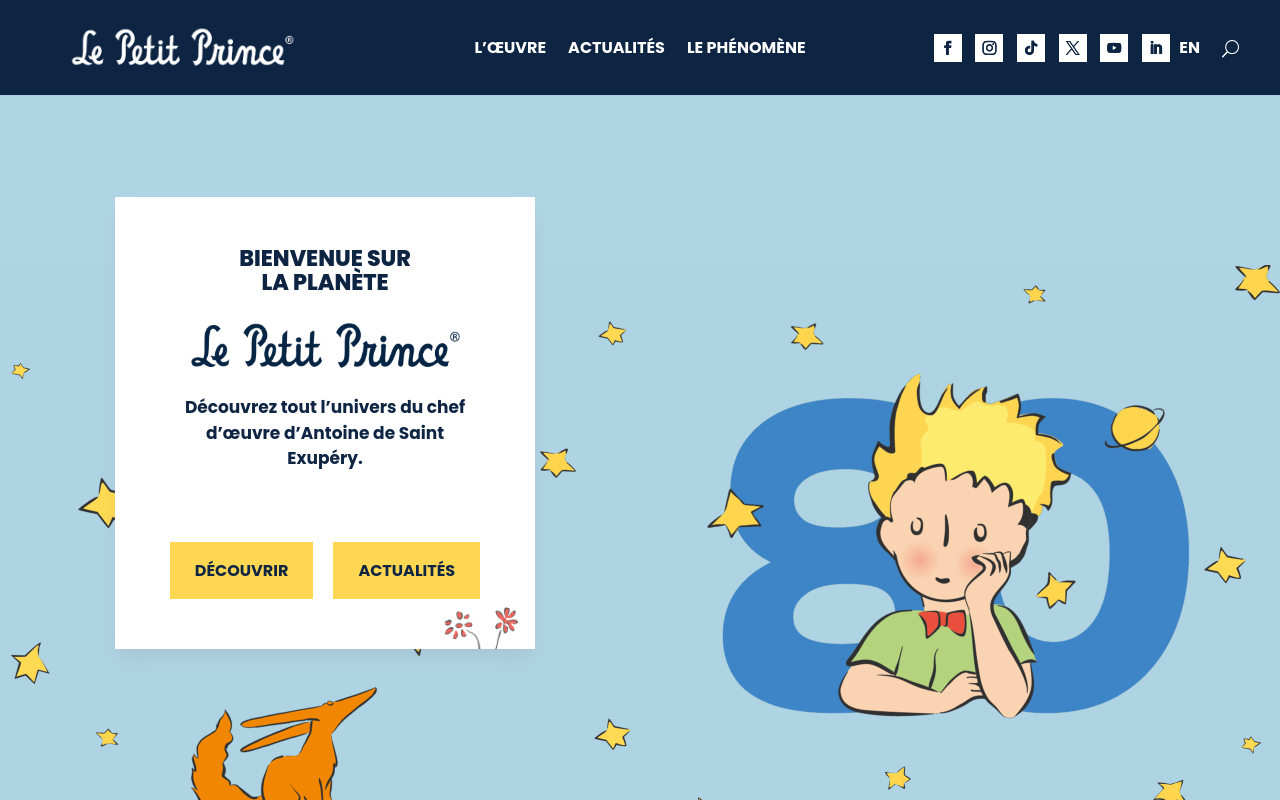
Le Petit Prince by Antoine de Saint-Exupéry is the right pick when a B1 learner wants philosophical vocabulary stretch without the density of contemporary literary fiction. How We Learn Languages, March 2026, describes it as a "perfect stretch title": vocabulary is deceptively philosophical yet accessible at the B1/B2 level, while native speakers still find it genuinely enjoyable rather than remedial. That crossover quality matters because it means the audiobook narration is performed with authentic native rhythm, not the flattened delivery of learner-targeted recordings, which means the pronunciation and cadence habits you build from it are real, not simplified approximations.
The trade-off is brevity: it is a short listen that builds confidence but not stamina. These intermediate titles are deliberately pitched to stretch your comprehension without snapping it. Once you have built that listening stamina, a new challenge opens up: the dense, stylized prose of France's literary canon.
The next section maps the best classic French literature audiobooks for advanced learners who are ready to meet the language at its most demanding.
Related Reading
Fastest Way To Learn French
Best App To Learn French For Travel
Best Books To Learn French
French Language Learning Resources
How To Conjugate Re Verbs In French
How To Learn French With Movies
Learning Resources For African French
How Long To Learn French
French Alphabet Pronunciation
How To Learn French Through Conversation
Best Classic French Literature Audiobooks for Advanced Learners
For advanced French learners, the real question is never "can I follow this?" It is "can I reproduce what I just heard?" That gap between recognition and production is where most C1+ listeners quietly stall, finishing audiobook after audiobook and still freezing when a native speaker fires back a question at full speed.
The World Scientific Reports, Talapova & Iliyas, 'The Effectiveness of Shadowing Method for Improving Speaking Skills in Foreign Language Education' is direct on this point: simultaneous listen-and-repeat engages active spoken output in a way that passive listening alone cannot replicate. The same study flags that fast-paced recordings with unfamiliar accents, exactly the conditions you find in unabridged classic French literary audiobooks, require deliberate shadowing strategies to produce any speaking gain at all. Without that output layer, even sixty hours of Camus or Hugo cements a comfortable audience identity, not a speaker's muscle memory.
One friction point worth naming: finding free, accessible sources of classic French literature audiobooks with genuine human narration is harder than it should be at the advanced level. Most audiobook apps rely on TTS (text-to-speech) rather than human narration, which falls short for building authentic French listening skills. The prosody, breath, and register cues that shadowing research depends on are simply not present in synthetic voices. That is why a newly launched free YouTube channel dedicated to unabridged classic French literary audio is worth saving immediately if you find one.
The three titles below are ranked by the specific phonetic and stylistic skill each one builds, not by prestige alone.
Parrot - Turn French Audiobook Listening Into Active Speaking Practice
Advanced learners who finish L'Étranger and still freeze mid-conversation are failing at output, not comprehension. Every hour of unaccompanied literary listening widens the gap between what you recognize and what you can say on demand.
Parrot addresses this directly through a short-form video feed built on the Comprehensible Input Method, a research-backed alternative for learners who have struggled with traditional memorization-based approaches and want structured, evidence-grounded practice instead. Crucially, there is no ramp-up delay: immediately upon opening the app, learners start consuming content right away, so passive exposure converts to active engagement from the first session. The Parrot Back feature then adds a speaking-practice layer on top of that immersive video content. It trains real conversational cadence rather than literary prose pacing, closing the production gap that even a Hugo marathon cannot touch.
Parrot is most beneficial when a learner wants active, personalized practice on top of immersive video content, and it works equally well for learners who have hit the ceiling of passive listening and need a speaking-output mechanism that responds to their individual gaps.
1. L'Étranger by Camus - Minimalist Prose Audiobook Ideal for Sentence-Level Shadowing
L'Étranger by Albert Camus opens with "Aujourd'hui, maman est morte," and every sentence that follows holds that same clipped, declarative weight. That minimalist syntax makes it the strongest classic French literature audiobook for sentence-level shadowing practice: short clauses, flat affect, and a single narrator voice mean you can pause, reproduce a line, and immediately hear whether your rhythm matched. The tradeoff is scope; Camus's register is so stripped-down that it trains one stylistic register and one alone.
Why Audiobooks Alone Won't Make You Fluent and What to Do Instead
Audiobooks can carry you deep into the French language, but the fluency gap many learners hit is a retrieval problem. Understanding the difference between recognising French and producing it changes how you should be using audio in your learning. What follows breaks down exactly where passive listening reaches its ceiling and how to close that gap with the kind of active practice that turns input into speakable language.
Recognition Is Not the Same as Retrieval
Hearing French and producing French use separate memory systems. Recognition memory activates when you encounter something familiar; production memory activates when your brain must reconstruct language from scratch, under pressure, in real time. Passive audiobook listening trains the first system almost exclusively. That is why learners finish entire novels in French and still freeze the moment someone asks them a question. The input landed; the output pathway was never built.
The Comprehensible Input Gap - What Audiobooks Cannot Force Your Brain to Do
"Learners rely on passive listening methods (e.g. watching TV in French with words 'blurring together') without active comprehension, highlighting that passive audio input alone does not build fluency."
— what we hear from language learners
Stephen Krashen's comprehensible input research established that acquisition happens when learners process meaning, not when they simply hear sounds. But even comprehensible input, absorbed passively, has a ceiling. It builds the recognition side of fluency.
What it cannot do is force retrieval. Retrieval, the act of pulling language out rather than letting it wash over you, is what consolidates vocabulary into something speakable. A learner who listens to a typical commute's worth of French and then spends even a few minutes shadowing sentences aloud, or reconstructing what they just heard, gets more acquisitional return from that short active slice than from the preceding passive listening, consistent with research by Kooloos et al. (2019), published in Anatomical Sciences Education, which found active retrieval methods produce significantly higher long-term retention than passive exposure methods, because retrieval effort, not exposure volume, is what moves material into usable long-term memory.
Turning Your Commute Into Output Practice
Most learners press play and hope absorption happens. The ear gets trained, but the mouth stays silent. Parrot's short-form video feed works as the active counterpart to audiobook exposure, pairing comprehensible input at the right level with AI-driven parrot-back speaking practice that forces production inside the same 10-to-15-minute window you already have. Most beneficial for early-to-mid level learners who need reading support to make content comprehensible, it converts the recognition audiobooks build into the retrieval fluency that actually lets you speak.
One honest trade-off: this approach requires audio-out capability during your commute, so it is less practical for learners in loud transit environments where speaking aloud draws stares or is simply impossible. In those cases, even silent pause-and-reconstruct practice, stopping playback and mentally rebuilding the last sentence before moving on, is a stronger habit than uninterrupted listening.
Related Reading
Rocket French Reviews
Best Apps To Learn French Vocabulary
Pimsleur French Review
Best Online French Tutors
Is Babbel Good For French
Is Duolingo Good For French
Best Podcasts For Learning French
French Tv Shows To Learn French
Next steps
If you have finished French audiobooks and still freeze mid-conversation, the path forward starts with separating exposure from acquisition. Passive listening builds a recognition brain, not a production one, and no amount of re-listening closes that gap on its own. Start with our learn Spanish.
The 95-98% comprehension rule means that audio pitched even slightly outside your personal vocabulary window never encodes as language, regardless of how many hours you log. The retrieval research means that a commuter who spends five minutes shadowing French sentences aloud gets more acquisitional return from that short slice than from the preceding passive session, because retrieval effort, not exposure volume, is what moves material into usable long-term memory. Together, they point to one practical change: every listening session needs an active output layer attached to it, not added later as a separate study block.
Start with Parrot to see the Comprehensible Input Method and Parrot Back speaking practice in action. From there, apply the same active-output principle to any French audiobook you choose from the level-matched list above.
Frequently Asked Questions
Can I actually learn French by listening to audiobooks while driving or sleeping?
Commute audio isn't worthless, but its value depends entirely on whether the input sits inside your 95-98% comprehension window. Passive exposure alone, including sleep-learning, does not trigger the encoding mechanisms required for language acquisition, according to a 2025 neuro-ecological critique published in Frontiers in Psychology.
What's a free way to access French audiobooks?
LibriVox offers hundreds of French public-domain titles completely free. Hoopla is another free option if you connect it to your public library card, with no waitlists and content well-suited to A2–B1 learners.
When can I start listening to classic French literature in audio format?
Native-speed literary prose like L'Étranger or Les Misérables is only viable at the C1 level and above, where unabridged audio finally sits inside your comprehension window. Attempting it earlier shifts your brain from acquiring language to exhausting itself on decoding.
Why can I understand a French audiobook while listening but still can't say anything in conversation?
Passive listening builds recognition memory, while speaking in conversation requires production memory, and these are distinct brain pathways. Research confirms that passive education methods produce significantly lower long-term retention than active retrieval methods, and passive listening creates an illusion of mastery that collapses the moment you try to recall a word in real conversation.
How do I know if a French audiobook is actually the right level for me before I buy it?
Use Audible's free sample feature and listen once without pausing, counting the words you genuinely don't know. If you're missing more than a handful per hundred words, outside the verified 95-98% comprehension window, the book is too hard, and re-listening won't fix that.