Watching French movies feels productive. It almost never is. Here is why your brain tunes out native speech, and the exact level-matched system that finally makes films work for acquisition.
The common assumption is that if you just watch enough French movies, your brain will absorb the language the way kids pick up their first language, effortlessly and naturally over time. The instinct is sound. The problem is almost never the movie you picked.
The real issue is invisible, and it kills progress for learners at every level. Most people sit down with a film, hit play, and spend 90 minutes watching subtitles scroll past while the French audio washes over them like a radio left on in another room. They finish the film feeling vaguely productive.
See our learn Spanish for how this works in practice. By morning, they've retained almost nothing. Input must be 95-98% comprehensible for language acquisition to occur, and native-speed French films, where an intermediate learner may decode as little as 20-40% of what they hear, fall catastrophically short of that bar.
This is a neuroscience problem. Stephen Krashen's Input Hypothesis describes this as the "i+1" principle: acquisition happens when input is just one step beyond your current level, not ten steps beyond it. A thriller with overlapping Parisian slang and rapid-fire dialogue is i+8 for most learners.
The brain has no acquisition mechanism for that gap. It tunes out. The second friction point is subtitle choice.
Watching with English subtitles silently switches your brain into reading mode. Your eyes process English; your ears treat the French audio as background texture. The third is the absence of any active system.
Without pausing, rewinding, and engaging with specific phrases, the session is entertainment, not a comprehensible input session. When your brain can decode speech, it maps sound to meaning and builds new neural connections. When it cannot, the speech functions as ambient noise: exposure time accumulates, but acquisition does not.
Children acquiring a first language are never exposed to incomprehensible input; caregivers instinctively simplify speech to stay near that 95-98% window. Nobody does that for an adult watching Amélie cold. The movie doesn't adjust.
The learner has to. The fix is not to abandon movies. It is to start with the right one for your exact level.
Before you press play on anything, there is a single calibration decision that determines whether tonight's film becomes a breakthrough or another two hours of expensive confusion.
95-98%
Comprehensible input needed for acquisition
: 10 Steps to Actually Acquire French From Movies Step 1: Run the 5-Minute Comprehension Audit Before You Commit to Any Film
Before you invest 90 minutes in a movie, spend five minutes testing whether it belongs in your current rotation at all. Pull up a scene from the first ten minutes, turn off all subtitles completely, and watch it once through. Afterward, ask yourself one honest question: could you reconstruct the general meaning of what just happened using only what you heard? Not every word, not every sentence, but the gist. If the answer is no, the film is not yet your film. It belongs on a list labeled "six months from now."
This single habit eliminates the most common and most damaging mistake learners make, which is choosing a film based on cultural prestige or personal enthusiasm rather than actual comprehension level. A movie you genuinely want to watch but cannot yet decode will not teach you French. It will teach you to tolerate confusion, which is a completely different skill and not the one you need right now.
Run this audit every time, without exception, and treat the result as diagnostic data rather than a judgment on your intelligence or effort. Step 2: Build Your Level-Matched Starting List Using These Four Film Categories French films exist on a rough comprehensibility spectrum, and knowing which tier matches your current level removes the guesswork entirely. Beginners and false beginners should start with animated films and children's features produced in France, titles like Kirikou et la Sorcière, Ernest et Célestine, or Le Petit Prince, where vocabulary is concrete, sentences are short, speakers enunciate clearly, and the visual context carries enormous meaning.
Lower-intermediate learners do well with comedies and family dramas from the 1990s and early 2000s, where pacing is moderate and register is relatively neutral. Upper-intermediate learners can move into contemporary comedies like Intouchables or Le Prénom, where natural speech speed is present but dialogue is still largely clear and contextually grounded. Advanced learners can begin approaching thrillers, period films, and anything featuring strong regional accents or argot-heavy working-class dialogue.
Attempting to skip tiers is the most reliable way to guarantee a session that produces no acquisition whatsoever. Step 3: Set Up Your Subtitle Ladder and Never Skip a Rung The subtitle ladder is a structured three-phase approach that moves you from supported comprehension toward unsupported listening over multiple viewings of the same material. On your first watch, use French subtitles, not English ones.
This keeps your brain processing the target language in both channels simultaneously, reading and hearing the same words at the same moment, which reinforces phoneme-to-meaning mapping rather than bypassing it. On your second watch of the same scene or film, remove subtitles entirely and rely on what you built in the first pass. On a third exposure, if you are using a short clip or episode rather than a full film, try listening before reading, then confirm with French subtitles afterward.
English subtitles are not a rung on this ladder. They are a detour off it. Reserve them only for a single-sentence lookup when a critical plot point has been lost and context cannot recover it, then return to French immediately.
Step 4: Work in 8-12 Minute Segments, Not Full Films The instinct to watch a complete film in one sitting is understandable, but it is structurally incompatible with active acquisition. A 90-minute film watched passively in one sitting gives your brain 90 minutes of input it cannot process. The same 90 minutes broken into eight 10-minute segments, each worked through deliberately, gives your brain eight acquisition cycles.
Pick a scene. Watch it once with French subtitles. Watch it again without.
Identify two or three phrases you almost understood but couldn't quite lock in. Look those up. Watch the segment a third time.
Then move to the next one. This is slower in the short term and dramatically faster in the long term. Acquisition is not a function of hours logged.
It is a function of comprehensible cycles completed. One hour of segmented, active engagement with a film you can mostly understand will produce more measurable progress than ten hours of passive full-film viewing at a level above your current reach. Step 5: Create a Phrase Capture System You Will Actually Use Every acquisition session needs an output mechanism, and it needs to be frictionless enough that you use it consistently rather than abandoning it after the second session.
The goal is not to transcribe dialogue or build a vocabulary list of isolated words. The goal is to capture complete phrases in the exact form they appeared in the film, with enough surrounding context that the phrase makes sense when you return to it later. A simple notebook with three columns works well: the phrase as heard, a rough translation, and the scene or emotional context in which it appeared.
Digital tools like Notion or Anki work equally well if you will actually open them. What does not work is the intention to remember something without writing it down, because you will not remember it. The phrases that feel most vivid and memorable in the moment are precisely the ones that disappear overnight without a record.
Capture ten phrases per session maximum. More than that becomes cataloguing rather than acquiring. Step 6: Prioritize Dialogue-Dense Scenes Over Action or Montage Sequences Not all scenes in a French film are equally useful for language acquisition, and learning to identify the high-yield segments before you invest time in them will make your sessions significantly more efficient.
Action sequences, chase scenes, montages set to music, and extended visual storytelling without dialogue are cinematically valuable but linguistically inert. They give your ears almost nothing to work with. The scenes that produce the most acquisition are two-person conversations in contained settings, arguments, meals, phone calls, and any scene where characters are explaining something to each other, negotiating, or expressing an emotional position.
These scenes tend to feature natural but clear speech, high repetition of common syntactic structures, and strong contextual scaffolding that helps you infer meaning even when individual words are unfamiliar. When you sit down with a new film, skim through it first and mark the dialogue-heavy scenes. Start your active work there and return to the action sequences later, once your comprehension of the film's register and vocabulary has been established.
Step 7: Use the Pause-and-Predict Technique to Force Active Processing Passive watching, even with French subtitles, allows your brain to remain in a receptive but low-engagement state where input passes through without triggering the deeper processing that produces acquisition. The pause-and-predict technique breaks that passivity by inserting a moment of active production before the film tells you what comes next. When a character begins a sentence, pause the film before they finish it.
Say aloud, in French, what you think they are about to say, or what you would say in that situation. Then unpause and compare. You will frequently be wrong, and that is the point.
The mismatch between your prediction and the actual phrase is a powerful acquisition signal. Your brain registers the gap, which makes the correct form more memorable than it would have been if you had simply heard it without any prior engagement. This technique works especially well with common conversational structures, expressions of agreement or disagreement, and any scene where social conventions are being navigated, because those are the contexts where the language is most formulaic and most transferable to your own speaking.
Step 8: Rewatch the Same Film Multiple Times Before Moving On The cultural pressure to consume new content constantly is one of the most reliable enemies of language acquisition. Novelty feels productive. Repetition feels like going backward.
In reality, the relationship is inverted. The first time you watch a French film at your level, you are spending most of your cognitive resources on plot comprehension, character tracking, and scene interpretation. The second time, those resources are freed up and your brain can actually attend to the language.
Key takeaways
Passive watching, hitting play and letting French wash over you, is not immersion; it is expensive background noise that your brain learns to ignore.
Comprehension percentage is the variable that determines whether a movie teaches you anything: below 95% comprehensible input, your brain shifts from acquiring language to exhausted guessing.
Film selection is a calibration decision, not a taste preference, the wrong level movie for your stage will produce zero acquisition regardless of how many times you rewatch it.
Rewatching the same film three times with English subtitles trains your eyes, not your ears; the spoken French underneath stays neurologically invisible.
Comprehension and production are separate skills, following a French film and understanding it does not mean you can speak a word of what you just heard.
Shadowing dialogue out loud is the bridge between recognition memory and spoken output, and most learners skip it entirely.
Frequency without structured recall after each session surrenders most gains to the forgetting curve before the next viewing session begins.
Parrot closes the production gap by delivering short-form French video clips built around comprehensible input, the same acquisition method the research supports, so the speaking practice that movies can't give you happens daily, in minutes.
How to Pick the Right French Movie for Your Level Before You Press Play
When more than roughly 5% of dialogue is opaque to you, your brain stops acquiring language and starts exhausted guessing, because input must be 95-98% comprehensible to genuinely drive acquisition rather than exhaustion. The right French film is not necessarily the most acclaimed one on the market. This is also the principle underlying the Comprehensible Input Method that governs how Parrot sequences content for every learner, as the structural rule that determines which video you see next and why.
Beginners - Why Animated and Family Films Are a Calibration Tool Not a Compromise
5%
Max opaque dialogue before acquisition stops
Films like Le Petit Prince or French-dubbed Disney classics keep speech rates low enough that an A1 or A2 learner can segment individual words rather than hearing one continuous wall of sound. Learners who have struggled with traditional memorization-based methods find this calibration valuable, because the content feels native and real without triggering the comprehension collapse that killed their motivation before.
Intermediate Learners - How Amélie Unlocks Natural Pacing Without Overwhelming You
For intermediate learners, the right film sits at the boundary of comfortable and challenging. Amélie is the community consensus pick at B1 to B2 for good reason: its narration is clear and measured, its dialogue is emotionally driven rather than rapid-fire, and its vocabulary skews toward everyday Parisian life rather than technical or argot-heavy registers. As industry research on Krashen's theory explains, i+1 input, material just one step beyond your current competence, is what triggers genuine acquisition rather than mere recognition.
At that point, Amélie's layered storytelling gives you enough context to infer meaning from tone, facial expression, and situation, which is how i+1 acquisition actually happens. Learners who watch during a commute, a lunch break, or the twenty minutes before bed are absorbing authentic vocabulary and natural speech patterns in the same micro-sessions that compound fastest at the intermediate stage.
The Overlapping Dialogue Test for Advanced French Learners
If you can follow the joke before the reaction shot tells you it landed, you're operating at C1. Every level shares one universal rule: avoid dubbed American blockbusters regardless of proficiency.
The 4-Step Viewing Strategy That Turns Any French Movie Into a Lesson
Rewatching a French film three times without changing anything is a habit, not a method. Each pass through the same English subtitles trains your eyes, not your ears, and the spoken French running underneath stays invisible. The fix is a different sequence of passes through the same scene. The most common trap beginners fall into is defaulting to passive watching because no one has handed them a clear step-by-step strategy for turning a film into a structured lesson. Every step below exists to close that gap.
Step 1 - Watch With English Subtitles First to Lock In Plot and Emotional Context
Start with one scene, not the whole film. Watch it once with English subtitles to absorb the story, the emotional stakes, and the character dynamics. This is context-loading.
When you understand what a scene means before you decode how it sounds, your brain stops burning processing power on plot and can redirect it entirely toward the French in Step 2. Skip this step and every subsequent pass starts from confusion. This is the step most learners skip, and it is the most structurally important one.
Watching with same-language subtitles trains the brain to connect spoken sounds to their written forms, which is especially critical for French, where many letters are silent and spoken and written words diverge significantly. The subtitle progression from native-language to target-language subtitles replicates the scaffolded input that caregivers provide to children acquiring a first language. It pushes a native-speed film back inside the comprehensibility window where acquisition occurs.
It is the mechanism, the same Comprehensible Input principle that underlies how Parrot sequences its short-form video content, that makes the audio-visual pairing functional rather than decorative. Rewind the same short clip and watch it actively. Pause whenever a phrase catches your attention, not because you cannot translate it, but because it sounds like something a real person would say.
Write it down. The target is a small handful of expressions per session, never more than you can comfortably revisit before the next viewing. Learners who try to capture every unfamiliar word report burnout within two sessions and abandon the journal entirely.
Quality beats volume: a phrase like "du coup" (meaning "so" or "as a result") pulled from a rewound scene in Intouchables and grounded in dramatic context will outlast a list of twenty isolated vocabulary words studied cold. The constraint is the method. Most learners close the notebook here and call it a night.
The problem is that harvested phrases sitting in a journal never become spoken French. Research on spaced retrieval consistently shows that production repetitions need to happen close in time to initial encoding, before working memory resets. This approach is most valuable for learners who have struggled with traditional memorization-based methods and want a research-backed alternative that keeps them inside the target language rather than drilling vocabulary lists in isolation.
Step 2 - Switch to French Audio With French Subtitles to Train Sound-to-Word Recognition
On the second pass, keep French audio but swap to French subtitles. This forces your brain to connect spoken sounds to their written forms, a critical skill in French where silent letters make audio-only listening deeply misleading. Research confirms same-language captions significantly improve both listening and reading comprehension. The tradeoff: some learners lean too heavily on the text and stop actively listening, so stay conscious of the audio.
Step 3 - Active Chunking - Rewind 2-3 Minute Scenes and Harvest 3-5 Usable Phrases Per Session
Pause the passive watching and go active: select a 2-3 minute scene, rewind it repeatedly, and write down only the slang, idioms, and recurring phrases you'd actually use in conversation, capped at 3-5 expressions per session. Chasing every unknown word leads to burnout and shallow retention. This constraint forces quality over quantity. The tradeoff: progress feels slow per session, but the phrases you do capture stick because they're grounded in real dramatic context.
Step 4 - Watch the Same Scenes Raw With No Subtitles to Test Your Ear's True Progress
Remove all subtitles and replay the same scene you just worked through. This is a diagnostic, not a punishment. Research published in the Arab World English Journal (AWEJ), 'The Effect of Subtitling on the Enhancement of EFL Learners' Listening Comprehension' found that learners who watched with subtitles significantly outperformed those who watched without them on listening comprehension tests, which means the subtitle-free pass only pays off after the scaffolded passes have done their work.
If you can follow the scene without reading, your ear has genuinely adapted to that cadence. If you cannot, the gap is real data. It tells you exactly which sounds to rewind and isolate next session.
Comfortable comprehension on this final pass is the only honest measure of progress, and every video session you run through Parrot's listening practice feed compounds that progress by stacking further exposure to native-speed, real-world French cadence on top of the work you have already done. Running all four steps builds a listening ear that can decode natural French cadence. But comprehension alone will not make you speak.
The next section shows you how to take the phrases you have harvested and drill them through shadowing so they move from passive recognition into the muscle memory of your mouth.
How to Practice Shadowing French Dialogue So It Sticks in Your Mouth Not Just Your Memory
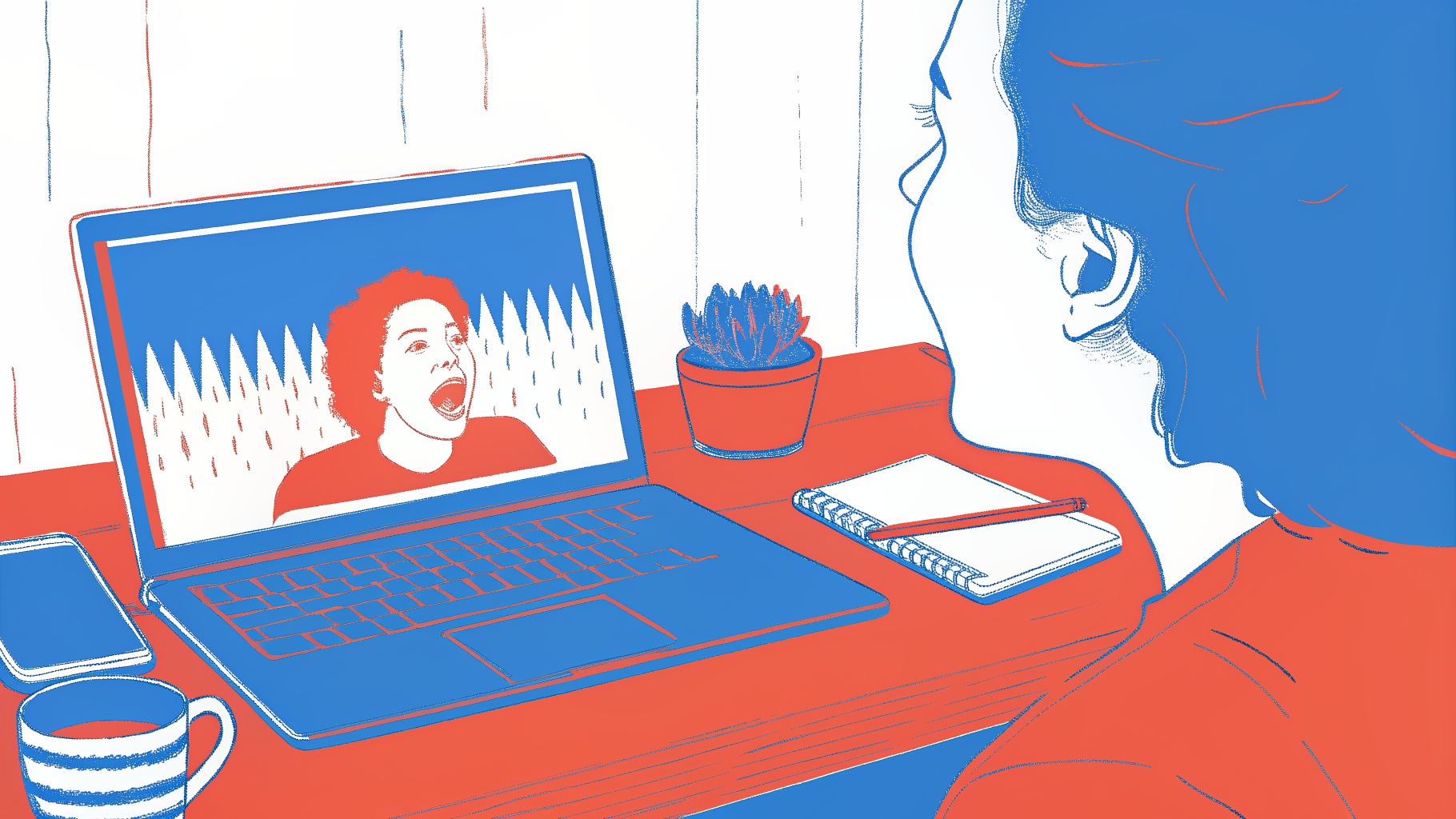
Closing that gap requires deliberate practice that goes beyond passive watching.
Why Understanding French on Screen Doesn't Mean You Can Speak It
Comprehension and production are neurologically separate skills, and the research is unambiguous on this point. The challenge is compounded by the specific phonetic complexity of French: beginners consistently struggle with pronunciation distinctions like the multiple forms of e, plain e, é, è, ê, ë, each with a subtly different mouth shape and airflow, and passive listening does little to train the mouth to reproduce them.
Comprehension and production are neurologically separate skills.
The three-step shadowing protocol works as follows:
Pause after a character delivers a short line, something brief enough to repeat back comfortably in one breath.
Repeat it out loud, mimicking their exact intonation, rhythm, and accent, not just the words.
Record yourself and play it back against the original.
That comparison is where real learning happens, because your ear can now hear the nasal vowel you are still Anglicizing, or the é you are flattening into an English schwa.
The Journal of Language Teaching review explains the mechanism: shadowing engages the articulatory loop and builds procedural muscle memory, automating motor routines for target-language sounds so pronunciation becomes less effortful over time.
Critically, this only works with active oral production.
Listening twice is not a substitute, and this is precisely where immersive video sessions, while excellent for real-world listening comprehension, need an active speaking layer on top to close the gap.
Why Familiar Dubbed Films Make the Best French Shadowing Material
The best shadowing material is content where your brain already knows the plot. When you shadow a dubbed Hollywood film you have seen before, your cognitive resources are entirely free for pronunciation work because zero effort goes toward decoding meaning. Le Petit Prince works for the same reason: the story is simple, the vocabulary is clean, and the child and narrator characters speak at a pace that gives you a realistic target to mimic.
Industry research confirms that shadowing improves pronunciation, fluency, intonation, and overall speaking proficiency because it demands active imitation of a model speaker's acoustic features, not just word recognition. Familiar content keeps that model audible instead of buried under the cognitive load of an unfamiliar plot. This is where Parrot's approach directly addresses two problems at once.
Its method is 80% input (listening, reading) and 20% output (speaking), content structured around the comprehensible input method so every video watched immediately contributes to real-world listening comprehension, not the kind of sanitized, textbook French that leaves learners flat-footed in actual conversation. That listening foundation matters most for learners who have hit a wall with traditional memorization-based methods. But listening alone, as the Journal of Language Teaching review confirms, is not enough.
Parrot's Parrot Back speaking practice adds the active, personalized production layer on top, targeting the exact gap between what you can hear and what your mouth can actually reproduce. Bite-sized clips are sized for commute or lunch-break windows, which aligns with the broader principle in habit-formation research that short, consistent practice sessions sustain engagement more reliably than longer, infrequent ones. Shadowing works.
But manually hunting for the right line, rewinding, and timing your pauses is friction that kills the habit before it starts. The next section shows how Language Reactor automates exactly that loop, so you spend your energy on speaking, not scrubbing a timeline.
Related Reading
How Long To Learn French
French Alphabet Pronunciation
How To Learn French Through Conversation
How To Learn French With Movies
Learning Resources For African French
How to Use Language Reactor to Make French Films Work Harder for You
Language Reactor is a Chrome extension that overlays dual subtitles onto Netflix and YouTube, turning passive viewing into something closer to active study, but the features that drive acquisition are more specific than most learners realize before they install it. Understanding exactly what the clip-loop and instant-lookup tools do, and where they fall short with French phrases and idioms, separates a setup that builds real comprehension from one that just makes watching feel more productive.
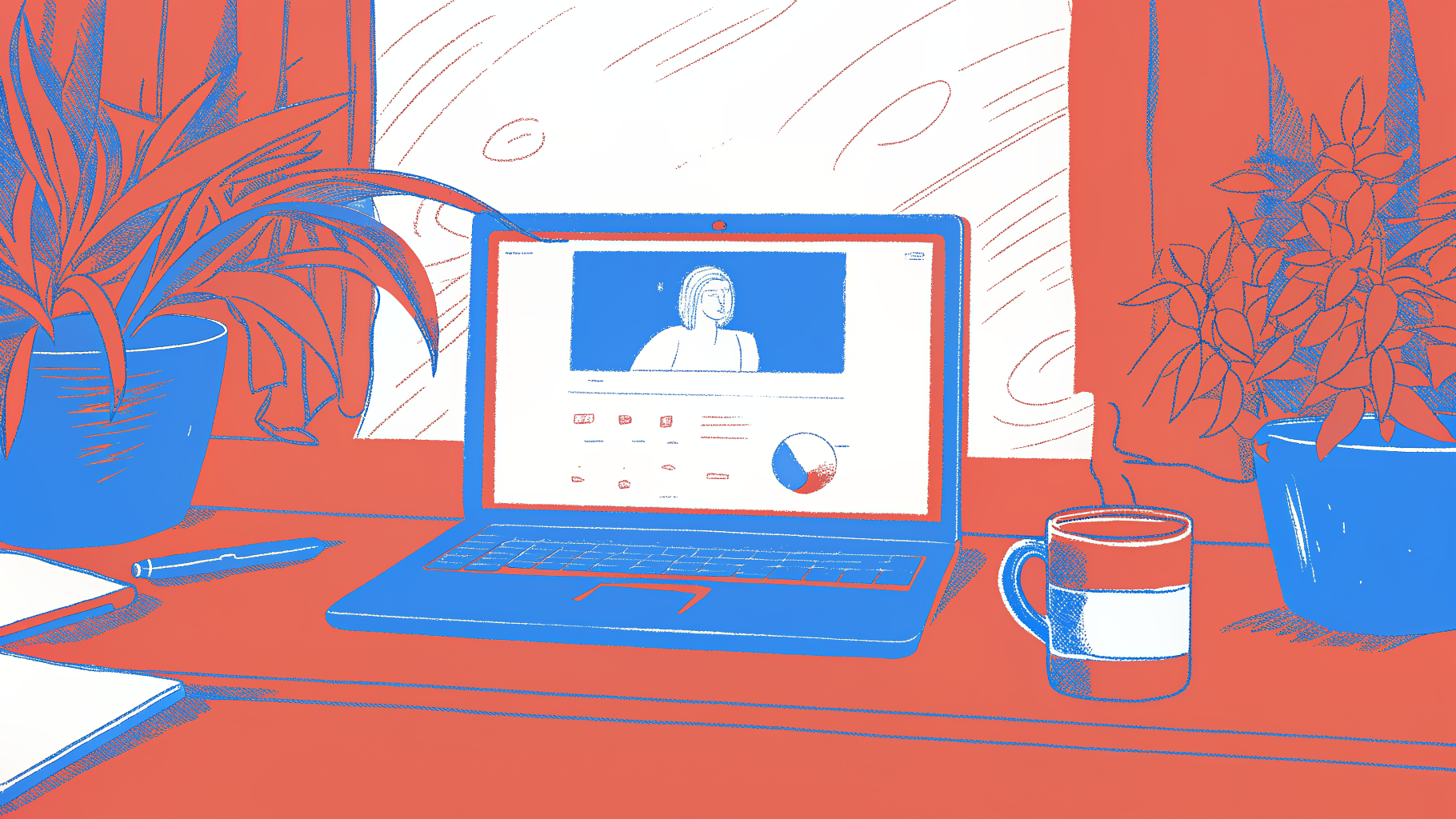
What Language Reactor Actually Does Inside Netflix and YouTube
The feature that matters most for active watching is the clip-loop: a single keystroke replays the current subtitle segment on demand, automating the manual rewind step that otherwise breaks your concentration mid-scene. Repeating a segment until the sounds and meaning lock together changes the difference between acquisition and exposure.
Where to Find Beginner-Friendly French Films Without Paying for Five Streaming Services
Several free platforms make it straightforward to start without a paid subscription, and TV5MONDE offers a substantial catalog of French films and series at no cost, with many titles carrying French subtitles already attached. Short films are typically brief enough to map almost perfectly onto a focused lunch-break session, which is one reason major French festivals like Clermont-Ferrand program so many of them. Krashen's comprehensible input research ties acquisition rate directly to the proportion of time spent above the 95-98% comprehension threshold, not to total exposure minutes.
How to Build a Weekly French Movie Habit That Actually Moves the Needle
Frequency without retrieval is just expensive entertainment. A learner who watches three full French films on the weekend and calls it "immersion" is doing something genuinely valuable. Comprehensible input matters, but without a structured recall checkpoint after each session, the forgetting curve resets most of that exposure to near zero by morning.
The 80/20 Scene Rule - Why One Clip Done Right Beats a Full Film Done Passively
"I'm unsure which French movies or shows are actually effective for language acquisition, not just entertaining. I need curated, learning-focused recommendations."
— what we hear from French language learners
The math here is straightforward. Vocabulary research consistently shows that high-frequency vocabulary covers an outsized share of everyday spoken dialogue, so a small core of common words does the heavy lifting in real conversation. That means one focused scene, worked actively several times across a week, puts you in contact with the exact words that recur constantly in real French conversation. Three passive full-length films spread across the same week give you volume but not the repetition density that moves words into long-term memory.
A Realistic Three-Session Weekly Template for Busy Learners
The goal is short, focused sessions several times a week. Session one: watch the scene with French subtitles, pause on unfamiliar words, log three to five phrases. Session two, two days later: replay the same scene without subtitles and attempt to recall the phrases you logged.
Session three, two days after that: active retrieval only, cover your notes and reconstruct the phrases from memory before checking. The evidence on this point is unambiguous: passive re-exposure produces far weaker retention than forced active retrieval, which is exactly what sessions two and three supply. Most learners skip sessions two and three, but across the broader learning science literature, active retrieval sessions produce significantly stronger retention than passive re-exposure, and that is where the compounding effect originates.
Why French Series Like Lupin or Call My Agent Compound Your Vocabulary Faster
Serialized content does something standalone films cannot: it recycles vocabulary automatically. Recurring characters, repeated settings, and ongoing storylines mean the same high-frequency words surface across episodes without you engineering it. This reflects a well-established principle: repeated contextual encounters reinforce retention by providing naturally spaced re-exposure. That natural recycling works best when paired with the active retrieval sessions described above, making serialized viewing a complement to structured practice rather than a substitute for it.
Related Reading
Best Podcasts For Learning French
Best French Audio Books
French Tv Shows To Learn French
Is Duolingo Good For French
Rocket French Reviews
Best Apps To Learn French Vocabulary
Pimsleur French Review
Best Online French Tutors
Is Babbel Good For French
Next steps
If you have been finishing French films and waking up with nothing to show for it, the path forward starts with recognizing that the method, not the movie, is what drives acquisition. Start with our learn Spanish.
The subtitle ladder insight makes this concrete: moving from native-language subtitles to French subtitles to no subtitles is the only mechanism that pushes native-speed film back inside the 95-98% comprehensibility window where acquisition actually occurs. That means every passive rewatch you have done without that progression was exposure, not learning. The shadowing insight closes the second gap: comprehension and production are stored in separate neural systems, so understanding every word in a scene and being unable to reproduce a single sentence spontaneously are not contradictions.
They are the predictable result of skipping active output entirely. Together, these two facts point to the same next step: building a short, structured loop after each scene where you first scaffold comprehension, then speak the phrases aloud until they live in muscle memory, not just recognition memory.
Start with Parrot, where the same comprehensible input principle that governs the subtitle ladder also governs how every clip is selected and sequenced, and where Parrot Back converts the phrases you absorb into spoken output during the short gaps already in your day.
Frequently Asked Questions
What are the best French movies for absolute beginners?
Animated and family films are the strongest starting point for beginners. Films like Le Petit Prince and Le Petit Nicolas feature slower speech, high-frequency vocabulary, short declarative sentences, and naturally repeated core phrases, all of which keep the audio inside the comprehensibility window where acquisition actually occurs.
How should I use subtitles when watching French movies?
Watch a scene once with English subtitles to lock in plot and emotional context, then rewatch it with French subtitles so your brain connects spoken sounds to their written forms. Only after those two scaffolded passes should you remove subtitles entirely, that final raw pass is a diagnostic of genuine progress, not a starting point.
Can you actually learn French just from watching movies?
Movies alone are not enough, because comprehension and production are neurologically separate skills. Passive watching builds recognition memory, but you need active steps, phrase harvesting, shadowing, and speaking practice, to move what you hear into the motor memory required for real spoken French.
Why do I finish a French movie feeling like I learned something but remember almost nothing the next day?
Because input must be 95-98% comprehensible for language acquisition to occur, and a native-speed French film may only be 20-40% comprehensible to an intermediate learner. When the gap is that large, the brain has no acquisition mechanism to bridge it and treats the audio as ambient noise, exposure time accumulates, but nothing sticks.
Does watching French movies help with cultural immersion as well as language?
Yes, films like Amélie ground vocabulary in everyday Parisian life, and the dramatic context of a scene gives harvested phrases meaning that isolated vocabulary lists never provide. A phrase pulled from a rewound scene and anchored to an emotional moment will outlast a list of twenty words studied cold.