
You already know the rules. The reason you freeze mid-sentence has nothing to do with studying more of them.
The common assumption is that learners freeze because they haven't memorized enough rules yet, that they need to study more grammar before they can speak. Most French students recognize the pattern immediately: you can recite a conjugation table cold, then open your mouth in front of a native speaker and produce nothing. That gap is a predictable outcome of how grammar is typically taught.
Tools built around spoken-language immersion exist precisely because the standard study loop was never designed to produce speakers. The freeze is about context. Declarative knowledge and procedural skill live in different parts of the brain.
Northumbria University research published in 2010 found that knowing a grammar rule does not automatically translate into the ability to use it during real language processing. See our learn Spanish for how this works in practice. You learned French grammar in silence, on paper, with unlimited time to check your answer.
Live speech gives you none of those conditions. The brain has to retrieve vocabulary, apply agreement rules, monitor pronunciation, and track meaning simultaneously, all within a fraction of a second. A rule you studied in calm isolation simply does not fire fast enough under that load.
When speaking fails, the instinct is to go back and study more. That instinct feels logical. More grammar studied the same way produces more declarative knowledge and the same absent reflex.
The guilt is real. The fix is exposure to French grammar inside the exact conditions where speech happens: real voices, real rhythm, real pressure. Short-form French video content creates that context in the gaps of a normal day, turning patterns you already recognize on paper into reflexes your mouth can reach for mid-sentence.
Understanding how that method works against you is the first step to replacing it with something that doesn't.
70%
of language learners experience speaking anxiety, according to Lingomelo (2023)

Key takeaways
Freezing mid-sentence is not a memorization problem, it's a retrieval problem. Grammar stored in declarative memory is too slow for real-time speech, no matter how many tables you've drilled.
French has a large number of conjugated verb forms across all tenses and moods, but a tiny cluster of high-frequency verbs, être, avoir, aller, faire, covers the overwhelming majority of real spoken French.
Noun gender feels arbitrary because it largely is: no single rule covers the whole system, which means pattern exposure beats rule memorization every time.
Adjective agreement trips up English speakers twice at once, the ending changes and the word moves, so errors cluster predictably until the pattern is heard enough times to become reflex.
Close to half of all English words trace back to French or Norman French roots, meaning English speakers enter French with a hidden vocabulary advantage most beginner courses never use.
Three tenses handle the vast majority of everyday French conversation. The rest can wait until those three feel automatic.
Parrot (parrotapp.com) closes the gap between knowing a rule and owning it in speech, its short-form French video feed delivers comprehensible input, the most researched method for language acquisition, in the dead time you already have.
What Drilling Grammar Tables Actually Costs Your Progress
In real spoken conversation, research on Zipfian frequency distributions shows that a tiny core of high-frequency patterns does the overwhelming majority of communicative work, while hundreds of low-frequency forms sit at the long tail of actual usage.
That distinction matters, because the learner who finishes a full conjugation curriculum and still freezes when a native speaker talks too fast has not failed through lack of effort. The method is 80% input (listening, reading) and 20% output (speaking).
The 80/20 Reality of Spoken French Patterns
According to Piantadosi's 2014 review in Psychonomic Bulletin & Review, word frequency in natural language follows Zipf's law: the most frequent word appears roughly twice as often as the second, three times as often as the third, and so on. Prioritizing the high-frequency end of that curve is what the frequency distribution demands. Rather than working through a conjugation curriculum from rare to common, the feed surfaces native-speaker content calibrated to the high-frequency patterns a learner is ready to absorb, so visible progress comes faster than a grammar-table approach allows.
Why Busy Adults Pay the Steepest Price for Grammar-First Methods
Spending that window on a conjugation table means spending it on forms that, statistically, you may never encounter in a real conversation. As Piantadosi's frequency analysis makes clear, the distribution of actual usage is brutal to the grammar-first learner: the rare forms that fill most textbook chapters are precisely the forms least likely to appear when a native speaker opens their mouth. A more efficient path focuses attention on what actually shows up in speech, and that starts with the single most anxiety-inducing rule for beginners: noun gender, which your ear can learn faster than any table can teach it.
French Noun Gender and Number Rules That Actually Stick
If you feel a surge of panic at the thought of memorising French noun gender, you are not alone. French noun gender is genuinely hard, not because learners are inattentive, but because the system is littered with categories that resist a single reliable rule: animate nouns, profession nouns, nouns that exist in only one gender form, and dozens of endings that seem to contradict each other. The good news is that a noun's ending is doing most of the work, and your ear can learn to read that signal long before you consciously recall a single rule.
The Ending Patterns That Predict Gender for Most French Nouns
According to a McGill University study, a French noun's ending indicates its gender in 80% of cases, with the most reliable endings being correct more than 90% of the time. Knowing even a handful of those high-frequency endings lets you classify hundreds of words in one move (Copycat Cafe). Crucially, in a 2008 study, native French speakers were asked to determine the gender of 93 words (all masculine) and could only agree on the gender of 17 of them, evidence that native speakers work from accumulated exposure to the language as it is spoken. Pattern recognition is how everyone does it.
80%
of French nouns revealed by their ending

The default rule: add -s to the singular noun, exactly as in English.
Le livre becomes les livres; la table becomes les tables.
In writing, that -s is visible; in speech, it is almost always silent, so the article (les versus le or la) carries the plural signal for your ear.
The -al to -aux shift: un journal (a newspaper) becomes des journaux; un animal becomes des animaux.
A handful of nouns ending in -eau add -x rather than -s (gâteau to gâteaux), though the pronunciation stays identical.
These two patterns cover the vast majority of exceptions a beginner will encounter in real conversation (Copycat Cafe).
Short-form video content that embeds gendered nouns inside real spoken sentences lets your ear log the sound pattern repeatedly before you consciously recite a rule, a method consistent with input-based learning research, which finds that encountering grammatical patterns inside meaningful, contextualised speech builds internalization more durably than silent drill alone.
The Listening Practice built into every Parrot video session means that each clip watched is simultaneously training your ear to distinguish les from le and la, turning gender from a memory burden into an auditory instinct.
Once your ear starts tagging nouns as masculine or feminine, the next grammar layer snaps into place almost on its own, because every French article (le, la, un, une, des) is just gender and number made visible.
That is exactly where we are headed next.
French Articles and Determiners Every Beginner Needs to Know
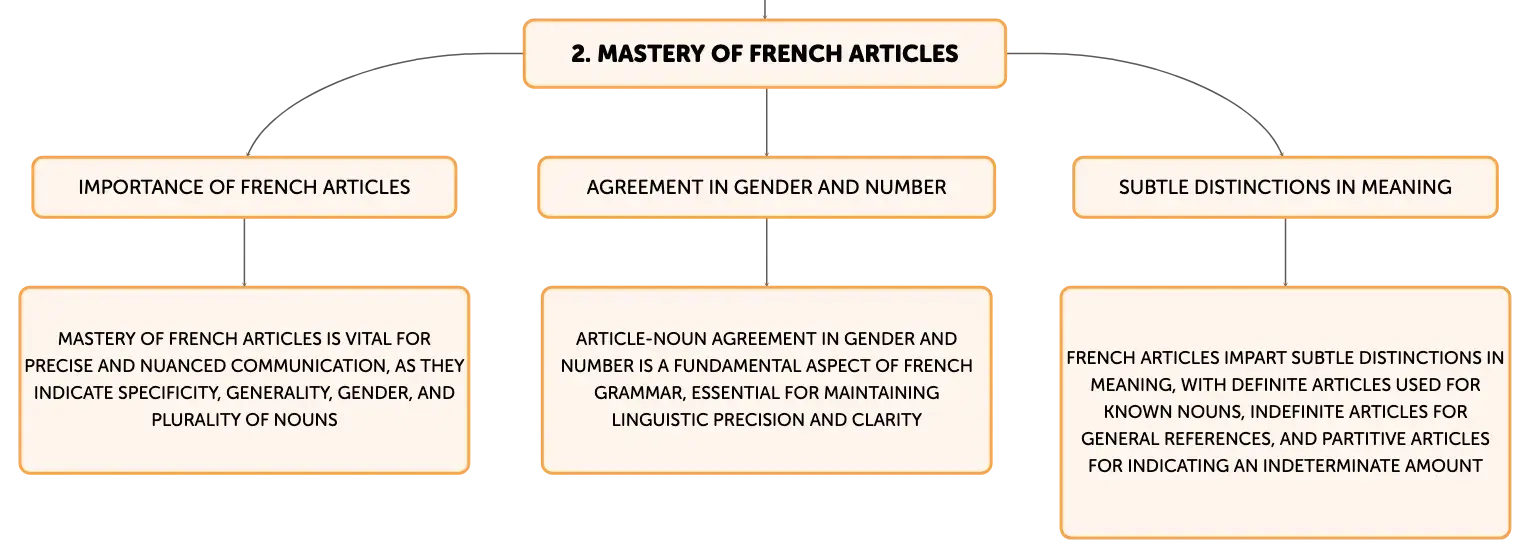
Three article types sit between a beginner and natural-sounding French, and the fastest way to own them is to stop memorizing tables and start anchoring each one to a real phrase you would actually say. Once a learner knows a noun's gender, the correct article follows automatically across all three types, collapsing what feels like three separate rule-sets into a single pattern-matching habit, a cascade that applied linguists describe as one of French grammar's most learner-friendly structural features. That means article mastery is not a separate project; it is a downstream reward for locking in gender recognition. The catch is that locking in gender recognition requires the kind of real-world listening exposure that textbooks cannot replicate, and that is exactly where most beginners stall. The three article types are:
Definite articles (le, la, les), used when pointing to something specific or general
Indefinite articles (un, une, des), used when introducing any one thing or a plural group
Partitive articles (du, de la, de l'), used when expressing an unspecified amount of something uncountable
1. Definite Articles (le, la, les) - Pointing to Something Specific or General
Use le (masculine), la (feminine), or les (plural) when both speaker and listener know exactly which thing is meant, or when speaking about a category in general. "J'aime le café" means you love coffee as a concept, not a specific cup. The tradeoff: beginners over-apply these, reaching for le/la out of habit even when the situation calls for a partitive or indefinite article instead.
Hearing native speakers cycle through all three article types inside natural speech, rather than encountering them in isolated drills, is what trains the ear to feel the difference before the conscious mind can name the rule. Parrot's short-form video feed puts that native-speaker input in front of learners during every session, with video transcripts displayed alongside video content, with inline translation support, so learners can read what they hear and look up unfamiliar words in context without leaving the feed. Consistent exposure to authentic spoken French is one of the most reliable accelerators of grammatical intuition, and every video watched on Parrot contributes to that listening practice immediately.
2. Indefinite Articles (un, une, des) - Introducing Any One Thing or a Plural Group
Un (masculine singular), une (feminine singular), and des (plural) introduce a noun the listener has not encountered yet in the conversation. "J'ai un stylo" means any pen, not a specific one. The persistent beginner slip is dropping des entirely because English skips it ("I need pens," not "I need some pens").
That omission sounds immediately unnatural to a native ear. Learners who rely on textbook drills often never register this gap because the drills isolate the article; they never hear it vanish mid-sentence the way a native speaker would notice. Parrot's Comprehensible Input Method, which governs how content is selected and sequenced for each learner, surfaces des repeatedly inside real sentences at the right difficulty level, so the absence of it eventually feels wrong rather than invisible.
3. Partitive Articles (du, de la, de l') - Expressing an Unspecified Amount of Something Uncountable
The partitive is the article English effectively hides, and it is the one that causes the most durable confusion. "Je voudrais du pain" means you want some bread, an unspecified portion. Swap it for "Je voudrais le pain" and you are suddenly asking for a specific, already-identified loaf.
Beginners routinely omit the partitive entirely, producing sentences that are grammatically incomplete and immediately unnatural to a native ear, because English treats "some" as optional and so the instinct to include du or de la never forms on its own. This is not a memory failure; it is an exposure failure. Learners we work with at Parrot who have struggled with traditional memorization-based methods find that the partitive clicks once they have heard it used dozens of times in context, which is precisely why Parrot's listening practice is most beneficial when the goal is real-world comprehension rather than textbook pattern recall.
The Copycat Cafe guide on French fluency timelines notes that grammatical structures tied to no English equivalent, the partitive being a prime example, take meaningfully longer to internalize through study alone than through sustained listening.
4. 'J'ai Besoin De' - Why Avoir Is Required and the Article Disappears
First, the verb avoir is non-negotiable; "je besoin de" is not a sentence. Second, the article contracts or drops after de depending on what follows.
Beginners who have not formally studied the underlying grammar rules will hear this construction and have no framework to explain why the article behaves the way it does, a disorienting experience that often leads to avoidance rather than mastery. Most learners who absorb French through real spoken content hear this construction dozens of times before consciously registering the rule, which is exactly how the pattern moves from fragile memory to reflex. Parrot's Parrot Back speaking-practice feature gives learners the chance to produce these constructions actively, not just hear them, so the grammar moves from passive recognition to usable output faster.
The honest limitation: phrase-anchoring works best when you have enough exposure to hear the same construction in varied contexts. Reading these examples once will not do it. That kind of varied, contextual repetition is among the strongest predictors of how quickly grammar becomes automatic.
Once you have articles locked to noun gender, you have built the foundation for the next layer of French grammar. But that layer carries its own trap: adjectives do not just agree with gender, they also shift position depending on meaning, and most beginners get this wrong in a very specific, predictable way. That is exactly what the next section unpacks.
French Adjective Agreement Rules Beginners Get Wrong Most Often
English speakers hit French adjectives from two directions at once: the ending has to change, and the word usually moves to the wrong side of the noun. That double adjustment is why adjective errors cluster so predictably in beginner writing and speech.
1. Gender and Number Agreement - Adding -e, -s, and -es to Match Every Noun
"Beginners struggle with possessive adjective agreement, particularly knowing when to use 'mon' vs 'ma', a core adjective agreement rule that trips up learners early on."
— what we hear from French language learners
French adjectives must match the gender and number of the noun they modify. A masculine singular adjective takes no extra ending (content), but the feminine form adds -e (contente), the masculine plural adds -s (contents), and the feminine plural adds -es (contentes). The pattern is consistent enough to learn quickly, but beginners who know the rule in isolation still drop the endings under pressure because they have never heard them at speed in real speech.
One of the earliest sticking points learners genuinely face is knowing when to use mon versus ma, possessive adjectives that follow the exact same gender-agreement logic as descriptive adjectives. If a learner cannot yet reliably identify whether a noun is masculine or feminine, the possessive agreement system collapses alongside the descriptive one. Both failures share the same root: not enough exposure to nouns and their genders in authentic context before being asked to produce them.
Parrot's short-form video feed addresses this directly; every video watched contributes listening practice that builds the implicit noun-gender knowledge that rule charts alone cannot deliver.
2. Adjective Placement - Most Adjectives Follow the Noun, but BAGS Adjectives Come First
Corpus research published in Isogloss confirms that post-nominal placement (adjective after the noun) is the dominant pattern in modern French, a shift that solidified in the 17th century. The BAGS group (Beauty, Age, Goodness, Size) is the practical exception: une belle fille, un grand homme. Placement can also shift meaning: un homme grand means a tall man; un grand homme means a great one. Default to post-noun, and treat BAGS as a small, learnable list, not a comprehensive rulebook.
3. The Two Errors Beginners Make Most - Wrong Placement and Missing Agreement Endings in Writing
The same Isogloss study found that English speakers measurably over-place adjectives before the noun because pre-nominal modification is the only pattern English offers. That instinct transfers directly into French, producing errors like une intéressante histoire instead of une histoire intéressante. The second dominant error is dropping written agreement endings entirely, particularly the silent -e on feminine adjectives, because the spoken difference is often imperceptible without sufficient listening exposure.
Beginners we work with regularly conflate content and contente when describing a feminine noun like femme, not because they do not know a rule exists, but because they have not yet heard the distinction land naturally in real speech enough times for it to feel wrong. Both errors share a common cause: rules studied in isolation do not survive contact with actual French at conversational speed. Parrot's comprehensible input method, the research-backed approach underlying every video session, governs how content is selected and sequenced for each learner, so the input arriving at the right level of difficulty keeps reinforcing placement and agreement in natural context rather than in artificially slowed, textbook sentences.
4. Listening to Natural French Speech to Internalize Adjective Patterns Without Rote Memorization
The Isogloss research also notes that adjective placement in French remains somewhat unsettled and is absorbed through exposure rather than fixed by a single memorizable rule. That finding has a practical consequence: the BAGS mnemonic is a useful starting scaffold, not a destination. Learners who stop at rule memorization still freeze mid-sentence because the ear has not caught up to what the notebook knows.
This is precisely where methods built on passive rule repetition fall short, and where comprehensible input, delivered consistently through short-form native video, closes the gap. Parrot's short-form video feed repeats phrases like une vieille maison and un grand homme in authentic context dozens of times, so pre-noun or post-noun position stops feeling like a rule to recall and starts feeling like the only way the phrase could possibly sound. That shift from recall to instinct is most beneficial for learners who have struggled with traditional memorization-based methods and want a research-backed alternative.
Use the BAGS scaffold to orient yourself, then let listening exposure do the deeper work of making those patterns automatic.
5. French Adjective Agreement Rules - The Complete Beginner Framework
The fastest beginner path combines two habits:
Default to post-noun placement for every new adjective.
Add agreement endings before writing anything down.
Memorize the BAGS list as a short exception group, not a rival system.
KwizIQ French offers a clean reference for those short, common pre-noun adjectives worth knowing by name.
Then prioritize listening.
Research consistently shows that placement patterns are internalized through real input, not rule repetition.
Once adjective agreement starts to feel automatic, the next step is production, actually using those agreements in spoken French.
That is where Parrot Back, Parrot's speaking-practice feature, is most valuable: it is most beneficial when a learner has built baseline comprehension and is ready to start producing spoken output, and when they want active, personalized practice on top of the immersive video content they have already been absorbing.
Once adjective agreement starts to feel automatic, verb conjugation tends to feel like the steepest wall ahead, though you only need the handful of high-frequency verbs that carry most of everyday French conversation.
French Verb Conjugation Basics Without the Overwhelming Tables
The Wiktionary Frequency Lists / OpenSubtitles French Wordlist 5000 shows that être, avoir, aller, and faire all appear within the first 30 most common French words overall, the first 30 words in the entire language, a single fact that rewrites the standard beginner roadmap entirely.
The Three Regular Verb Groups - One Pattern Each, Dozens of Verbs Unlocked
The first group, the -er verbs, covers the vast majority of all French verbs, and every member follows the same six-ending pattern in the present tense: -e, -es, -e, -ons, -ez, -ent. Within that group, however, a handful of verbs behave slightly differently from the rest, exactly the kind of gap that traditional references like 501 French Verbs tend to bury inside dense tables rather than flag upfront.
The Wiktionary Frequency Lists / OpenSubtitles French Wordlist 5000 confirms that être, avoir, aller, and faire dominate real spoken dialogue at a rate no regular verb approaches.
That is Zipf's law at work: a tiny cluster of words does most of the conversational heavy lifting, so beginners need far fewer tenses than any textbook suggests.
Related Reading
How To Learn French Through Conversation
How To Learn French With Movies
Learning Resources For African French
French Tenses Every Beginner Should Recognize Before Worrying About the Rest
French has a wide range of tense-mood combinations a learner could theoretically study. The honest answer to which ones you actually need first is three, and the rest can wait until those three feel like breathing. The core reason this narrow focus works is neurological, not motivational: declarative grammar rules studied from tables are stored in a part of the brain that is too slow for real-time speech.
That is exactly why knowledge that feels solid on paper vanishes mid-conversation, and why beginners who have spent months memorizing definitions like "use plus-que-parfait for past actions preceding another past action" still freeze the moment a native speaker responds. Short daily exposures to real spoken French are what actually convert that stored knowledge into the automatic, instinctive retrieval that conversation demands. Critically, because passé composé derives its meaning from surrounding context rather than intrinsic inflection, beginners can communicate meaningfully with a narrow tense core right now, without waiting until every grammatical nuance is mastered.
This is why Parrot's Comprehensible Input Method sequences video content and speaking practice around exactly those three tenses first, feeding you naturalistic spoken French during commutes, lunch breaks, or a few minutes before bed, so that repeated real-world exposure does the conversion work that grammar tables never could.
1. Présent (Present Tense) - The Non-Negotiable First Tense Every Beginner Must Master
The présent is where every conversation starts. Describe what you do, what you want, what exists around you. It also doubles as an informal future ("Je pars demain" covers "I'm leaving tomorrow" without touching a single future conjugation).
The real tradeoff: French présent has irregular high-frequency verbs (être, avoir, aller, faire) that do not follow the standard -er pattern, so beginners must absorb those four before the tense feels usable in real speech. Parrot's short-form video feed surfaces these high-frequency verbs constantly in natural spoken context, the same verbs, heard dozens of times across different speakers and situations, so your ear begins to process them automatically before you have consciously "studied" every conjugation row. Each video session is also a listening practice session, building the comprehension base that makes Parrot Back speaking practice land harder when you use it.
2. Passé Composé - The First Past Tense Beginners Should Learn for Real Spoken French
The International Journal of Multilingualism (October 2024) found that présent and passé composé are acquired earlier and more robustly than lower-frequency forms precisely because they dominate naturalistic spoken input. Crucially, a Journal of French Language Studies analysis confirmed that passé composé derives its meaning from surrounding context rather than intrinsic inflection, so beginners can communicate meaningfully without mastering every grammatical nuance first. "J'ai mangé" (I ate) is the engine of spoken French past narration.
Learn this before imparfait. The struggle most beginners hit here is not learning the form, it is applying it on the fly under conversational pressure. Parrot Back, Parrot's speaking practice feature, puts you in active recall of exactly these high-frequency forms so that retrieval becomes reflexive, not deliberate.
A few minutes of Parrot Back after a video session, squeezed into a lunch break, does more for real-time fluency than an hour of table-drilling at a desk.
3. Futur Proche (Aller + Infinitive) - Talk About the Future Without Learning New Conjugations
Futur proche requires zero new conjugation patterns beyond the already-learned présent of aller, making it the highest-return tense unlock at beginner level. The limitation is register: in formal writing or precise future contexts, futur simple still appears, so learners who move into professional French will eventually need it.
That day is not today. Because Parrot's content sequencing is governed by the Comprehensible Input Method, futur proche appears in your video feed at the point where your exposure to présent de aller is already solid, not before, not long after. You hear the structure working in real speech before you are asked to produce it.
4. Imparfait, Futur Simple, and Subjonctif - A Beginner's Roadmap for What to Defer Confidently
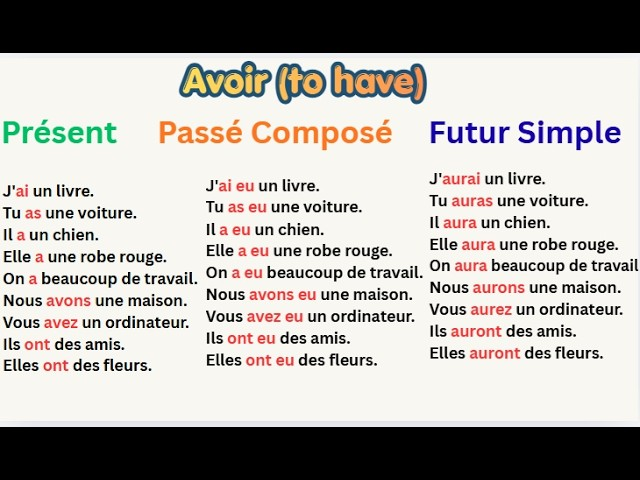
The Journal of French Language Studies research notes that futur and conditionnel carry intrinsic semantic complexity encoded in their verbal inflections, so they are structurally harder than passé composé for early learners. Additional research published in the Journal of Second Language Acquisition and Teaching (JSLAT) reinforces that acquisition order matters: high-frequency forms need to reach automaticity before lower-frequency forms compete for cognitive load in real-time speech. Imparfait matters for describing ongoing past states ("Je mangeais" = I was eating / I used to eat), but it skews toward narrative and written registers.
Subjonctif is real but rare in casual speech. Defer all three until your three core tenses feel automatic under pressure, not just on paper. Parrot's content sequencing makes this deferral structural rather than willpower-dependent; lower-frequency forms surface less often in your early feed, so the input itself mirrors the acquisition priority.
French carries numerous tense-mood forms across indicative, subjunctive, conditional, and imperative moods. Seeing that number is useful once: it confirms that the full map exists and that you are not missing anything by choosing where to start. Beginners who try to master all 15 forms before speaking any of them trade years of silence for a completeness that conversation never actually requires.
The three tenses covered above, présent, passé composé, and futur proche, are the territory where real spoken French happens. The rest of the map can wait until those three feel like breathing. And because Parrot is designed for learners who have already tried traditional memorization-based methods and found them stall at exactly this wall, fluent on paper, frozen in conversation, the approach here is deliberately different: real spoken input, active speaking practice, and sequencing that reflects how acquisition actually works, not how grammar textbooks are organized.
5. French Verb Tenses Overview - The Full Landscape Beginners Need to See Before Zooming In
A high-level overview of all French verb tenses gives beginners essential context within French grammar rules before they commit to memorizing any single paradigm. Seeing the full map, indicative, subjunctive, conditional, and imperative moods alongside their tenses, helps learners understand why teachers keep saying 'don't worry about that yet.' The tradeoff is that a broad overview can feel abstract without concrete examples, so it works best as orientation rather than a standalone study method.
French Sentence Structure Rules That Free You From Word-for-Word Translation
The real divergences are specific and learnable, but they are also exactly where beginners stumble hardest. - Negation wraps the verb: ne before the verb, pas after it. - In spoken French, the ne is dropped so routinely that "Je parle pas français" is the norm, not an error, something most textbooks fail to foreground. - Object pronouns precede the verb: English says "I see him"; French says "Je le vois."
This is one of the most persistent pain points for beginners.
Learners who are used to English, or who have studied Spanish, instinctively append pronouns after the verb, producing constructions like a ressemble-la that mirror Spanish clitic placement but are ungrammatical in French.
The inversion applies consistently across all object pronouns, so one pattern covers the whole set once it clicks.
Questions can be formed two ways:
"Tu parles français?"
uses rising intonation and is what native speakers actually use.
"Parles-tu français?"
is grammatically correct but sounds formal, meaning beginners who learn only inversion are learning the less common form first.
How French Word-Order Flexibility Is Learned by Ear
The deeper problem surfaces when they try to write anything beyond a single sentence, a short email, a letter, a blog post, and find that translating word-for-word from English generates awkward, unnatural French at every turn. Real, contextualised input, not isolated rule review, is what converts declarative knowledge into automatic language use, and that process starts the first time you press play.

How Real Spoken French Turns Grammar Rules Into Instincts You Actually Use
Knowing a French grammar rule and owning it in live speech are two completely different cognitive states. You have invested real effort learning noun gender patterns, verb conjugations, and sentence structure, and that foundation matters. But every minute spent re-reading those conjugation charts is a minute of silence, and silence never trains the reflex your brain actually needs.
Why Grammar Becomes Instinct Through Repeated Context
Learners who can recite every rule in a conjugation table still blank the instant a native speaker opens their mouth, because textbook French and real spoken French sound nothing alike. Words blur together, sounds drop, and the brain has no stored pattern to match against. What most learners and researchers consistently find is that grammar rules studied in isolation do not transfer reliably to spontaneous speech; it is repetition of rules encountered in meaningful, contextualised input that converts declarative knowledge into automatic language use. The rule has to be heard operating inside real French speech, repeatedly, before it stops living in working memory and starts living in instinct.
Daily French Listening Bursts Build Reflex Faster
Frequent, short exposures to real spoken language build conversational reflexes more effectively than infrequent, longer study sessions. A short burst of French video content during a commute, hearing passé composé used naturally across several different clips, does more for your speaking reflex than re-reading a conjugation chart for the fifth time, a finding consistent with broader trends across the language-learning field showing that meaningful contextualised input outperforms isolated rule review for building automatic language use. One honest trade-off: this approach requires daily consistency. Miss a week and fluency instincts decay faster than conscious rule knowledge does.
What Comprehensible Input at Your Level Actually Looks Like for a Beginner
Comprehensible input means content slightly above your current level but still understandable from context. The principle is well established across the field: comprehensible input is the mechanism by which grammar rules move from conscious study into automatic, instinctive use. Parrot's short-form video feed is built on this principle, surfacing real native content at a level that keeps input comprehensible without making it comfortable enough to stop growing. You now have the rules, and you know how the brain actually makes them stick. The next section shows you exactly how to activate both in real French speech, starting in the next few minutes.

Related Reading
Best French Audio Books
Rocket French Reviews
Best Apps To Learn French Vocabulary
Pimsleur French Review
Best Online French Tutors
Is Babbel Good For French
Is Duolingo Good For French
Best Podcasts For Learning French
French Tv Shows To Learn French
Next steps
If you can recite French conjugation tables but freeze the moment a native speaker talks, the path forward starts with accepting that more grammar study was never the solution. The freeze is a neurological problem, not a knowledge gap: declarative rules stored from silent, paper-based study are processed too slowly to fire in real conversation. Start with our learn Spanish.
The ending-pattern insight for noun gender means you already have a practical classification system that works 80% of the time, without word-by-word memorization. The frequency insight for verb conjugation means that deeply internalizing être, avoir, aller, faire, pouvoir, vouloir, and savoir in present tense and passé composé covers the overwhelming majority of real spoken French before you touch a single regular paradigm. Together, they point to one action: stop expanding the list of rules you know and start hearing the rules you already know operating inside authentic French speech, repeatedly, until retrieval becomes reflex rather than recall.
Start with Parrot, where the same comprehensible input method that closes the gap between paper knowledge and spoken instinct is built directly into a short-form native-speaker video feed you can run during a commute, a lunch break, or ten minutes before bed. After each session, Parrot Back turns what you just heard into active spoken practice, with personalized feedback that confirms whether the patterns have moved from recognition into production. One session is the only commitment today requires.
Frequently Asked Questions
Why can I recite French grammar rules fine but still freeze when speaking to a native?
Knowing a rule and being able to use it under pressure are two different cognitive skills. Northumbria University research published in 2010 found that declarative knowledge, the ability to recite a rule, does not automatically translate into the ability to use it during real language processing, because live speech requires retrieving vocabulary, applying agreement rules, monitoring pronunciation, and tracking meaning all within a fraction of a second.
Is there a shortcut for guessing French noun gender without memorizing every word?
Yes, a noun's ending predicts its gender in about 80% of cases, with the most reliable endings correct more than 90% of the time. Masculine endings like -eau, -age, -isme, and -ment, and feminine endings like -tion, -ée, and -ure, cover a huge share of the nouns you'll actually encounter, meaning a short mental shortlist of high-signal endings does most of the heavy lifting.
Should I bother studying the subjunctive and rare verb forms early on?
The post argues against it. Every hour spent drilling low-frequency forms like the subjunctive of obscure verbs is an hour not spent cementing être, avoir, aller, and faire, the four irregular verbs that appear in nearly every sentence a French speaker produces, and the frequency distribution of real spoken French means rare forms contribute almost nothing to actual communication.
What's the difference between definite and indefinite articles in French, and why do beginners keep getting them wrong?
Definite articles (le, la, les) point to something specific or refer to a category in general, while indefinite articles (un, une, des) introduce something the listener hasn't encountered yet in the conversation. The most common beginner slip is dropping des entirely because English skips the equivalent, saying "I need pens" instead of the French equivalent of "I need some pens", which sounds immediately unnatural to a native ear.
How should a busy adult with only ten minutes a day approach French grammar study?
The post recommends prioritising high-frequency patterns over grammar tables, because the frequency distribution of real spoken French means the rare forms that fill most textbook chapters are precisely the ones least likely to appear when a native speaker opens their mouth. A method built around 80% input (listening and reading) and 20% output (speaking) makes even a short session contribute to the pattern recognition that actually transfers to conversation.