You're not stuck because you lack time. You're stuck because every tool you're using trains your ears and skips your mouth entirely.
The common assumption is that if you can't block out 30+ minutes of uninterrupted study time daily, you won't improve your English speaking. But spending hours watching English shows, scrolling through videos, and tapping through vocabulary apps feels productive. It genuinely is, for some skills.
But if you've ever frozen mid-sentence when someone asks you a simple question in English, you already know the uncomfortable truth: understanding a language and speaking it are two completely different things, and most home practice methods only train one of them. The gap between what your ears can follow and what your mouth can produce is where most home learners quietly get stuck, and speaking practice tools that close that gap are rarer than they should be. See our learn Spanish for how this works in practice.
"I feel stuck in a loop at home, doing shadowing, repeating sentences on apps, but I see no real progress, making me question whether my methods are working at all."
— what we hear from language learners
Passive listening and active speaking use separate cognitive pathways. When you watch English content, your brain is pattern-matching, predicting, and decoding. When you speak, it has to retrieve, sequence, and physically produce words under time pressure, with no pause button.
Those are fundamentally different demands. According to industry research, language learning apps are primarily consumption-based tools, and passive exposure to a language does not automatically transfer into spoken output because speaking requires active production practice that most apps simply don't provide. Recognition is not production.
The mouth needs its own training.
In the LingoBinge original research survey (2026), 40% of respondents named lack of time as the single biggest barrier to language learning. But the same research found that much of this "time shortage" is really a broken routine or a method that stopped feeling worth the effort. Five focused minutes of spoken output beats 45 minutes of passive scrolling, every time. This is a finding consistent with the spaced micro-practice evidence reviewed in Language Teaching Research, which shows short, frequent spoken bursts outperform single massed sessions for fluency gains.
40%
cite lack of time as top learning barrier
The frustrating part is that the no-partner problem is a design flaw in the tools, not a feature of home learning itself. Learners who have built solid comprehension don't need another human to begin producing spoken English. They need a method that demands output, one that turns content they're already consuming into a production drill, not just a listening exercise.
Key takeaways
Thirty-minute study blocks are not the entry point, they are the exit ramp. Most people never start because the bar is set too high, not because they lack discipline.
Passive apps and vocabulary loops build recognition, not production. Freezing mid-sentence is the gap between hearing English and having trained your mouth to make it.
Shadowing, repeating out loud what you hear, in real time, is the fastest bridge between passive listening and actual speech because it forces your lips and breath to catch up to your ear.
The average adult already spends 67 minutes a day on household tasks. That window is enough for a full speaking practice session without adding a single minute to your schedule.
Recording yourself exposes errors your brain edits out in real time. The gap between what you think you sound like and what the recording reveals is where months of undetected mistakes hide.
Reading aloud engages both the production and auditory systems at once, something silent reading never does, which is why it builds vocabulary you can actually say, not just recognize.
Parrot's Parrot Back closes the feedback loop that solo shadowing leaves open: say out loud and repeat what you hear, so every rep trains both speaking confidence and comprehension at the same time.
How Passive App Loops Keep You Busy Without Building Real Speaking Fluency
The common assumption is that if you can't block out 30+ minutes of uninterrupted study time daily, you won't improve your English speaking. A 200-day streak feels like proof you're making progress. It's proof you opened an app 200 times, which is a very different thing from producing a single unrehearsed English sentence out loud.
Pros and cons at a glance
✓ Pros
✗ Cons
Trains rhythm, intonation, and speed simultaneously
Will not by itself fix grammatical errors in spontaneous speech
Every short repetition trains mouth, ear, and rhythm at once
Does not replace structured output practice
Five fragmented 60-second bursts build more spoken habit than passive listening
,
Makes speech production progressively less effortful and more automatic
,
Why Gamified Streaks Reward Screen Time Not Spoken Output
The cognitive habit that spoken fluency actually requires is built in the mouth, not the thumb.
Many learners develop strong written English, solid grammar, accurate tenses, good reading comprehension, yet experience a significant breakdown the moment they switch to spoken English in real time.
The Mouth-Muscle Gap - Why Listening and Reading Alone Cannot Make You Fluent
What most teams researching speaking ability have found is that listening and reading alone are insufficient to develop speaking ability because the articulatory and cognitive habits of spoken output must be trained directly through speaking.
Learners who spend years on YouTube videos with subtitles, podcasts, and streaming shows often develop excellent passive comprehension while their spoken fluency stays stuck.
How the Illusion of Progress Keeps Learners Stuck at the Same Level
Every quiz completed, every level cleared, every badge earned produces a genuine dopamine signal that reads as progress, while the illusion of advancement accumulates without a single moment of spontaneous spoken output.
Parrot is designed to interrupt this loop at two points. Second, the Parrot Back feature closes the mouth-muscle gap directly: instead of rewarding a tap, it requires you to say out loud and repeat what you hear to build speaking confidence and sharpen comprehension. The 2022 conference research on speaking ability explicitly recommends direct articulatory practice over input-only approaches, which is the design logic behind a speak-and-repeat method rather than a streak-and-tap one.
The practical result is that a consistent daily habit of 15 minutes or less, built around native-speaker video and spoken output practice, does more to break through the intermediate plateau than hours of passive consumption. It is what the research on articulatory training has consistently shown: the mouth learns by moving, not by watching.
Related Reading
How To Learn English
How To Learn English Grammar Step By Step
Is Learning English Hard
Where Should I Start If I Want To Learn English?
English For Tourism
How To Improve English Speaking Skills
How To Improve English Vocabulary
How To Improve English Pronunciation
How To Speak English Fluently And Confidently
English Language Learning Methods
Best Online English Courses
Start Your Daily English Speaking Practice With the Shadowing Technique
Passive listening fills your ear with the language; shadowing forces your lips, tongue, and breath to catch up, and the gap between those two things is exactly why fluent listeners still freeze the moment they have to speak.
Pros and cons at a glance
✓ Pros
✗ Cons
Converts dead time into speaking reps without adding time to your day
Leaves pronunciation and rhythm completely unchecked
Activates the same articulatory and cognitive production pathways as real conversation
May reinforce a mispronounced word every morning for weeks without knowing it
Linking new behaviour to existing cue increases follow-through rates significantly
,
Builds output confidence through unscripted narration
,
How to Shadow Step by Step - Play, Pause, Repeat With Mouth Shape and Stress in Focus
To practice shadowing: play a short clip of five to thirty seconds, then repeat the speaker's words immediately after, copying their rhythm, intonation, and speed rather than focusing on grammar. Start at 0.75x speed on YouTube to catch every syllable, then work back up to normal pace as each phrase becomes comfortable.
How to Pick the Right Shadowing Content Using the 80% Comprehension Rule
Choose audio where you understand roughly 80% of the words without stopping. This maps directly to Stephen Krashen's i+1 hypothesis: input slightly above your current level pushes acquisition because you are grasping new vocabulary through context rather than stopping to look everything up.
Two free starting points: British Council LearnEnglish organizes dialogues and listening exercises by CEFR level, so an A2 learner is not drowning in C1 idioms, making it straightforward to find material pitched at exactly the right challenge.
Use Your Daily Routine to Practice English Speaking Without Extra Time
Two hours and 44 minutes. That is how much time the average adult spends on household tasks every day, according to the American Time Use Survey. The scheduling barrier that stops most people from practising spoken English is a design problem.
Narrate Cooking, Cleaning, and Getting Ready in English to Stack Reps Into Dead Time
Speak out loud in English during everyday tasks like cooking, cleaning, or getting ready, and you convert dead time into speaking reps without adding a single minute to your day. Research on private speech in second language acquisition, including work by Lantolf and Thorne on sociocultural theory, shows that speaking aloud to yourself activates the same articulatory and cognitive production pathways as real conversation.
This is real practice. Industry research on habit stacking has found that linking a new behaviour to an existing cue increases follow-through rates significantly compared to scheduling it as a standalone event. The challenge, then, is giving that habit-stacked moment enough structure to produce real output rather than trailing off into silence.
That is where Parrot's parrot-back speaking practice closes the gap, giving you a real spoken model to repeat immediately after, so your mouth learns the correct shape of the sentence at the same moment the habit fires.
The Five-Minute End-of-Day Spoken Summary That Builds Fluency Faster Than Grammar Drills
Record a 90-second voice note every evening summarising your day in English, and do not stop to correct yourself. The rule is forward motion only. Research on spaced micro-practice versus massed study sessions, including findings reviewed in Language Teaching Research, consistently shows that short, frequent spoken bursts outperform a single blocked study session for speaking fluency.
Beginner Sentence Frames That Make Narration Possible From Day One
Start spoken English from scratch with three frames: "I am [verb]-ing the [object]," "This [object] is [adjective]," and "Now I will [verb]." Each frame gives you a complete, correct sentence the moment you slot in a word you already know. Fluency is built by the accumulation of those small completions across days of English in real activities.
Read Aloud in English Every Day to Build Natural Speech Rhythm and Vocabulary
What most language researchers consistently observe is that reading aloud engages both the production and auditory systems simultaneously, creating an active encoding process that silent reading simply cannot replicate. This makes reading aloud a stealth dual-training tool: it activates the same mouth-and-ear circuit that shadowing trains, meaning even two minutes spent reading a recipe or news headline out loud delivers spoken-output practice that silent vocabulary study or passive listening cannot replicate. That dual activation is exactly what spoken fluency requires: your mouth forming the word at the same moment your ear confirms it.
Many learners can recognize a word on the page yet freeze when they need to say it aloud, a production problem that reading aloud is one of the most direct ways to close.
Books, News, and Song Lyrics - What to Read Aloud for Maximum Speaking Transfer
Read books, news articles, or song lyrics aloud to practice decoding words and forming complete sentences. Each format offers something slightly different: song lyrics train rhythm and stress, news trains neutral pacing, and books train sustained sentence flow. If you use Parrot's short-form video feed, the transcripts and translations available on every video give you ready-made aloud material drawn from native-level content, the same sentences spoken by real speakers, now on the page for your mouth to rehearse.
Reading those transcripts aloud lets you absorb authentic vocabulary and natural speech patterns from native-level content without having to source separate reading material, so the practice slots into an existing study habit.
Look Up New Words Then Say Them Out Loud Using Cambridge Dictionary
Look up unfamiliar words in Cambridge Dictionary before your reading session, then say each word aloud using the audio model. Cambridge Dictionary offers both US and UK pronunciation recordings for every entry, so you hear the exact stress pattern before your mouth attempts it. Without that step, a mispronounced word can become a mispronounced habit, and checking pronunciation first removes that trap before it compounds.
The Five-Minute Aloud Rule - Why a Short Daily Read Beats an Occasional Long Session
Consistency matters more than volume here. One paragraph of a news article each morning is enough to build English speech rhythm over two weeks, because daily repetition cements motor patterns that occasional long sessions cannot.
Reading aloud surfaces the words your mouth struggles to form, but it cannot confirm whether you are forming them correctly.
Record Yourself Speaking English to Spot Errors and Track Real Progress
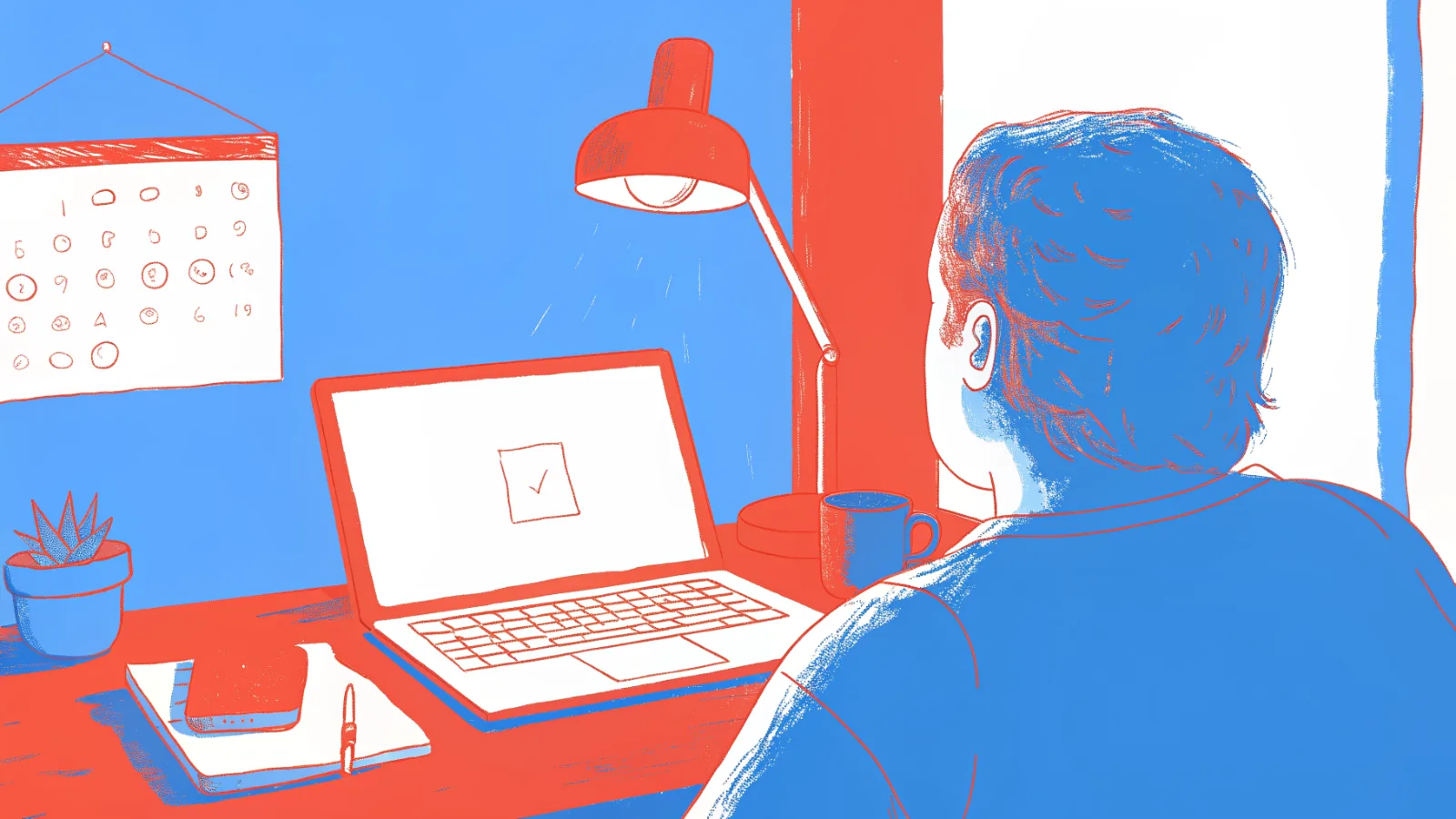
Record a Prompt Out Loud to Catch Exact Errors
That single playback does something no amount of passive study can: it converts a vague sense of sounding wrong into a pinpointable bottleneck, whether that is a mispronounced vowel, a mid-sentence pause that breaks meaning, or a grammar form you default to incorrectly under pressure. Self-monitoring through playback lets learners identify specific phonological and grammatical errors that vague impressions simply cannot surface.
One of the most disorienting discoveries beginners make on first playback is that they pause in the wrong places entirely, mid-sentence, at points that fracture meaning, without any awareness of doing so in the moment. The other near-universal reaction is cringe, but the cringe is actually signal: it means your ear has already spotted something your mouth has not fixed yet. Parrot's Parrot Back feature pairs that listen-back moment with an immediate speak-and-repeat rep, so the correction moves from a mental note into muscle memory in the same session, rather than evaporating the moment you close the recording.
Use Weekly Recordings as Your Personal Progress Report When No Teacher Is Grading You
Comparing a recording from week one with one from week four, answering the same prompt each time, makes intonation shifts and fluency gains audible in a way that no app completion badge can replicate. What most self-directed learners report is that tracking spoken output over time gives them measurable evidence of progress, which is critical for sustaining motivation when no external teacher is available.
One honest limitation: an archive of recordings tells you that something improved, but it cannot always tell you why or what to do next. That is where targeted feedback becomes essential, and Parrot's AI Spanish Tutor fills exactly that gap. Available during or after video sessions, it offers speaking activities with pronunciation scoring, built into the listening experience.
Practice English Speaking With AI Voice Tools When No Partner Is Available
Scheduling friction and social anxiety around speaking rank among the most consistent barriers to consistent practice, and that gap stops more home learners than any grammar rule ever did.
AI voice tools close it by giving you an always-available interlocutor that responds to whatever you say, forces you to produce real spoken output, and resets the conversation whenever you want to try again.
Run Scenario-Based AI Conversations to Force Real Spoken Output
Hold open-ended conversations in voice mode, roleplay real-world scenarios like ordering food or preparing for a job interview, and summarize stories aloud before answering follow-up questions. That structure turns a passive chat tool into a pressure-free speaking environment.
Parrot's AI Spanish Tutor is designed for exactly this stage: it is most beneficial once a learner has built baseline comprehension and is ready to start producing spoken Spanish, and it delivers active, personalized practice on top of the immersive video content already in the feed. That limitation is real, and it matters more at advanced levels than at beginner or intermediate ones.
Most learners who try AI chat tools end up typing their responses instead of speaking them. Parrot's Parrot Back speaking practice closes that gap by making you say out loud and repeat what you hear to build speaking confidence and sharpen comprehension. It is a direct answer to the pattern where learners struggle to simulate real interaction pressure without a live partner in the room.
When to Graduate to Tandem or Preply for Human Feedback
Tandem connects learners with native speakers for language exchange and is a genuinely strong option for conversational practice at any stage. Preply offers structured sessions with vetted tutors and is particularly effective at identifying the specific pronunciation and grammar patterns that automated tools miss. Both platforms deliver real value on their own terms; the note here is simply that arriving with some baseline spoken fluency, the kind Parrot's AI Tutor and Parrot Back are built to develop, means you spend the session on nuance rather than on getting your first sentences out.
Related Reading
How Long Does It Take To Learn English Fluently
Best Apps To Learn English
Types Of Music Good For Learning English
Learning English As A Second Language
English Learning App For Kids
Best Websites To Learn English
Tof
Game To Learn English
English Learning Activities
Best Podcasts For Learning English
Build a Structured Step-by-Step English Speaking Routine That Fits Your Day
Industry research found that habits become automatic in roughly 66 days on average, not the mythical 21. A UCL study confirmed this, finding that the median time for a behavior to feel automatic was 66 days, with a range of 18 to an estimated 254. The five methods in this guide are designed to work together as a single daily stack that fits inside that window.
The Under-15-Minute Daily Stack Where Each Speaking Method Slots Into Your Existing Day
Shadowing goes with your morning coffee or commute, as covered in §2.
Read-aloud (§4) fits a three-minute window after lunch.
Routine narration, as §3 established, runs silently inside tasks you already do.
The recording slot (§5) lands naturally before bed.
AI conversation practice (§6) fills any leftover gap.
Total active speaking time: under 15 minutes, a volume consistent with the spaced micro-practice findings in Language Teaching Research confirming that distributed short sessions outperform single blocked ones for spoken fluency.
The fragmented shape of this schedule is the core mechanism. Most home practice routines plateau because they keep the learner safely alone and in control, never replicating the distraction, interruption, and mild pressure of real conversation.
Parrot solves this directly: its short-form video feed, powered by the Comprehensible Input Method, selects and sequences content to match your current level, so you are never choosing what to watch next. Parrot Back, Parrot's dedicated speaking practice feature, lets you repeat each clip aloud and captures your spoken output, solving both the content problem and the feedback problem inside one two-minute window. That makes it a natural anchor for the stack.
How to Track Spoken Output Without a Streak Counter
Rather than logging every session perfectly, focus on a single lightweight metric. The signal you are watching is the ratio of speaking days to total days across a rolling two-week window.
When and How to Scale Up by Adding a Live Partner
This is also the natural moment to introduce Parrot's AI Tutor, a personalized practice layer that sits on top of the video content and delivers active, targeted feedback during or after video sessions, when passive watching alone is no longer enough. Experienced home learners commonly find that adding one live exchange session per week at this stage, rather than three, keeps the micro-routine intact while introducing the social pressure that solo practice cannot replicate.
Parrot is built to support this entire progression from the first day.
How Parrot's Speak-and-Repeat Method Accelerates the Speaking Confidence You Are Already Building
Two weeks of shadowing at home builds real momentum. The habit is the hard part, and you have already done it. But a pattern surfaces for learners at this stage: the feedback loop stays incomplete because solo shadowing gives your mouth the reps without telling you whether those reps are landing on real conversational material.
Why Parrot Back Mirrors the Shadowing Habit You Have Already Started
Across the market, the core function of shadowing, hearing a phrase and immediately producing it aloud, is the same cognitive and motor loop that Parrot Back formalises. Learners who already shadow at home are extending a proven habit rather than starting a new one. You already know how to hear-then-produce. Parrot Back adds structured real-conversation input and instant repetition scoring on top of exactly that loop, so the mouth gets more reps on material that sounds like an actual exchange, not a textbook recording.
What Parrot Actually Measures and Why It Aligns With Real Fluency
Speaking confidence grows through active spoken repetition of real conversational input. What learners report is that spoken repetition links directly to measurable gains in willingness to speak, the quality that determines whether you can hold a conversation. One honest trade-off: if you are at the very earliest beginner stage, the conversational input may feel fast before your ear has calibrated. Give it a session or two before judging the pace.
Parrot's 7 days with full Premium access, on the annual plan only, with a card required to start and a reminder sent before the trial ends, is the lowest-friction way to test whether parrot-back speaking practice closes the feedback gap the rest of this routine leaves open.
You now have the habits, the tools, and the method. The next section shows you what that one small step looks like and how to take it today.
Next steps
If life keeps crowding out your study sessions and spoken English still feels frozen mid-sentence, the path forward starts with accepting that fluency is built in the gaps, not in the blocks. Five fragmented 60-second shadow bursts scattered across your day build more of the spoken habit than one sit-down passive session ever could. Start with our learn Spanish.
Attaching a single English phrase or shadow rep to a task you already do is not a shortcut to real practice. It is real practice, because the articulatory habit of spoken output is built by the repetition of the trigger, not the length of the session. And most home routines plateau not from lack of time, but because they keep the learner safely alone and in control, never replicating the distraction and mild pressure of real conversation. Deliberately combining shadowing, narration, and recorded output across scattered moments trains the under-distraction speaking muscle that a single clean 30-minute block never reaches. Together, those two realities point to one action: stack short spoken reps onto moments you already own, with material that sounds like a real conversation.
Start with Parrot's short-form native-speaker video feed, where Parrot Back turns every clip into an immediate speak-and-repeat rep. Open the app, watch one clip, say it back aloud. That is the whole first step, and it fits inside the five minutes you already have.
Frequently Asked Questions
Can I really practice English speaking at home without a partner?
Yes. The post is clear that the no-partner problem is a design flaw in the tools, not a feature of home learning itself. Learners who have built solid comprehension don't need another human to begin producing spoken English, they need a method that demands output, such as shadowing or narrating daily tasks out loud.
How long do I actually need to practice each day to improve my spoken English?
Five focused minutes of spoken output beats 45 minutes of passive scrolling, according to the spaced micro-practice evidence cited in the post. A consistent daily habit of 15 minutes or less, built around native-speaker video and spoken output practice, does more to break through the intermediate plateau than hours of passive consumption.
Why can I understand English shows just fine but still freeze when I have to speak?
Passive listening and active speaking use separate cognitive pathways. When you watch English content, your brain is pattern-matching and decoding; when you speak, it has to retrieve, sequence, and physically produce words under time pressure. Recognition is not production, and only direct speaking practice builds the production circuits a real conversation demands.
How do I improve my English accent and pronunciation at home?
Shadowing is the method the post recommends for this. You play a short clip of five to thirty seconds and immediately repeat the speaker's words, copying their rhythm, intonation, and speed rather than focusing on grammar. Starting at 0.75x speed helps you catch every syllable, and exaggerating stress on key words on your second pass accelerates the gains.
What kind of content should I shadow to make sure it's the right level for me?
Choose audio where you understand roughly 80% of the words without stopping, which maps to what the post calls the i+1 principle, input slightly above your current level pushes acquisition because you grasp new vocabulary through context. The post points to British Council LearnEnglish and TalkEnglish.com as free starting points organized by level.