Most English games are optimized to keep you opening the app, not to make you fluent. Here is how to tell the difference before you waste another streak on busy-work.
Wanting a game to learn English is a completely reasonable instinct. Most adult individual learners (beginners) think that if a game is fun and they keep playing it every day, the English must be sinking in, that consistency and engagement are what matter most. Games lower anxiety, make daily practice feel sustainable, and fit into the ten-minute gaps between everything else life demands.
The problem is what most English learning apps are built to do. Most gamified language apps are engineered around one goal: keeping you opening the app tomorrow.
That is a business metric, not a fluency metric. And when you build a habit around immersive input rather than tap-the-bubble drills, the difference in what your brain retains becomes impossible to ignore.
According to the Duolingo Language Report 2020-2025, gamification mechanics like streaks, XP points, and leaderboards are designed to measure and reward app engagement, a model that genuinely helps millions of learners build a consistent daily habit, which is no small achievement. What the report also acknowledges is that engagement metrics and language-acquisition metrics are not the same thing: a learner can maintain a 365-day streak while remaining unable to hold a basic conversation, because habitual app-opening and communicative competence require different conditions to develop. Duolingo has reported over 500 million registered users globally, a scale that reflects genuine accessibility and reach.
Independent researchers and language educators have consistently noted, however, that engagement-based learning models tend to concentrate learners at early proficiency levels, because the reinforcement loop rewards showing up rather than systematically advancing through CEFR bands. Most users who rely on gamified apps as their sole learning tool do not reach conversational competence, not because the apps fail entirely, but because engagement optimisation and proficiency progression require different design priorities.
500 million
Duolingo registered users globally
ESL games for beginners built around timed drills train recognition, not retrieval under pressure. Tapping the correct bubble when four options are visible is a fundamentally different cognitive act from constructing a sentence in real time while someone is waiting. The Duolingo Language Report 2020-2025 documents high daily active user counts and sustained streak maintenance, evidence of a product that is genuinely good at keeping people engaged. That engagement, however, reflects four distinct design priorities:
Rewarding app-opening over proficiency advancement
Optimising streak maintenance rather than CEFR progression
Measuring recognition under controlled conditions rather than retrieval under pressure
Decoupling the reward loop from communicative competence
What engagement data cannot measure is proficiency progression, and second-language acquisition research consistently distinguishes the two: habitual app-opening and communicative competence are driven by different mechanisms. The freeze moment learners describe, understanding a word on screen but going blank when a native speaker uses it, reflects a gap between recognition under controlled conditions and retrieval under real conversational pressure. The reward loop is structurally decoupled from communicative competence. Most gamified apps are optimising for the wrong outcome entirely.
The reward loop is structurally decoupled from communicative competence. The problem isn't that games are bad.
Key takeaways
Most English learning games are dressed-up drill sheets, points, badges, and streaks reward showing up, not acquiring language.
Engagement and acquisition are not the same signal; a game can hold your attention for a full session while your brain processes nothing transferable to real conversation.
Life-simulation games like Animal Crossing expose players to 2,500-3,500 unique English words in natural conversational context, more than most dedicated vocabulary apps deliver.
Speaking output without phoneme-level feedback or escalating complexity pressure builds fluency without accuracy, which is a ceiling, not progress.
Words learned through taps and timers live in recognition memory, not production memory, your brain spots them on a screen but freezes when a native speaker fires them at you.
Every game on this list hits a built-in ceiling: vocabulary and pattern recognition improve, but real-world conversation ability requires comprehensible input from real voices.
Parrot closes that gap, its short-form video format delivers comprehensible input the way research says acquisition actually works, with English coming to the platform soon.
What Makes a Game Actually Worth Your Time for Learning English

The Three Skill Dimensions That Separate Acquisition from Busy-Work
Most adult individual learners (beginners) think that if a game is fun and they keep playing it every day, the English must be sinking in, that consistency and engagement are what matter most.
Many learners at the A2–B1 level discover it the hard way: they pick up a game that felt manageable on the surface, only to find the dialogue, text-heavy menus, and in-game challenges demand a fluency they simply do not have yet.
According to industry research, Krashen's Input Hypothesis holds that learners acquire language only when they understand input that is slightly beyond their current level, what Krashen calls i+1. Input that is too hard produces anxiety, which Krashen's Affective Filter Hypothesis shows will block acquisition even when comprehensible content is technically present. The third dimension is processing depth: Krashen's Acquisition-Learning distinction confirms that consciously drilling rules builds explicit knowledge, not the subconscious competence that produces spontaneous speech.
That fragmented schedule is the real learning environment, and it demands input that is immediately comprehensible rather than input that requires a dictionary tab open alongside it.
How to Choose the Right English Learning Game for Your Level Before You Download
Gamestolearnenglish.com organises its content across four distinct categories, vocabulary, grammar, speaking, and pronunciation, because a game built for one dimension rarely transfers to another.
Apply three questions to any game before you commit time to it. Is the input slightly above your current level? If you understand less than roughly 70 percent, repetition will not fix that. Does meaning drive the interaction? If the core mechanic rewards speed or pattern-matching over understanding context, the game is training reflexes, not language. Does the format lower or raise your anxiety? Krashen's research is clear that a raised affective filter blocks input from being acquired regardless of quality.
Most games fail at least one of these three tests, which is the gap that a comprehensible-input model like Parrot is built to address. Parrot's Comprehensible Input Method governs how content is selected and sequenced for each learner, governing every video session from the inside out.
Why Meaning-Rich Context Is the Third Dimension That Determines Whether Acquisition Actually Happens
The Levels of Processing framework developed by Craik and Lockhart demonstrates that memory retention is proportional to the depth at which material is processed: shallow phonetic recognition produces weak, short-lived traces, while semantic processing, understanding what something means in a real situation, produces durable, retrievable memory. Applied to language learning, this means that a game rewarding you for tapping the correct answer before a timer expires is operating at the shallowest processing level, while a game that requires you to understand a character's intention, respond to a narrative situation, or produce language to achieve a goal in context is operating at the depth where acquisition actually takes root.
Best Games for Learning English Vocabulary That Go Beyond Word Lists
Life-simulation games expose learners to roughly 2,500-3,500 unique English words in natural conversational context, according to multiple industry sources analysing NPC dialogue in titles like Animal Crossing and Stardew Valley. That single fact reframes the whole question: the best vocabulary games are not the ones with the most flashcard rounds, but the ones that deliver the highest density of words inside situations that make their meaning obvious.
2,500-3,500
unique English words in life-sim games
A pattern that comes up again and again among adult beginners is knowing a word on a quiz but drawing a complete blank the moment a native speaker uses it in passing. That gap has a name: recognition without recall. It is one of the most frustrating places to be. You have put in the hours, you have studied the lists, and yet the word still will not surface when you actually need it.
Gamified drill apps recycle vocabulary you already recognise inside decontextualised exercises, so the brain rehearses familiarity rather than building the retrieval pathway that spontaneous speech demands. More drilling does not fix this. Input that places unfamiliar words inside a moment makes them stick, the way a character asking you to water their crops teaches "irrigation" better than any multiple-choice prompt ever could.
This is also why so many learners who have been through traditional memorisation-based methods, word lists, flashcard decks, rote repetition, eventually abandon them. The methods are broken because they are disconnected from any situation that makes a word feel real or worth retrieving. Game-based learning solves part of that problem by wrapping vocabulary in context. Parrot's Review Cards extend that logic further: a flash card system to review learning words with personalized activities based on level, so spaced repetition is anchored to real speech rather than a bare definition on a white screen.
Research on contextual vocabulary acquisition, including Webb & Nation's (2017) meta-analysis on vocabulary learning, consistently shows that words encountered in meaningful context are retained at significantly higher rates than words studied in isolation, because the brain encodes meaning alongside episodic memory rather than storing a word as a bare label. The games below are ranked on that criterion: how much contextually rich English they deliver per session, not how many points they award.
1. Stardew Valley & Animal Crossing - Everyday English Through Authentic Life Simulation Dialogue

Both titles embed practical social English inside repeating daily routines: greetings, requests, complaints, compliments, seasonal events. Animal Crossing's NPC dialogue in particular rotates hundreds of phrases tied to concrete situations, so words like "grateful," "exhausted," or "harvest" arrive with an emotional cue attached. The tradeoff is passive reading: you absorb the words but never produce them, so recognition builds faster than recall. Best for early-to-mid level learners who need high-volume, low-pressure English exposure in short daily sessions.
2. The Sims 4 - Household and Social Vocabulary in an Open-Ended English Sandbox

The Sims 4 layers household, relationship, and career vocabulary across menus, notifications, and dialogue bubbles that appear constantly during normal play. Because the game demands decisions ("promote," "negotiate," "renovate"), the vocabulary arrives with functional weight rather than decorative context. The limitation is that menu English skews formal and categorical, so conversational register stays underdeveloped. Most beneficial for intermediate learners building domain-specific word banks around work, home, and social life rather than pure conversational fluency.
3. Scrabble & Words With Friends - Spelling Patterns and Vocabulary Breadth Through Competitive Word Play
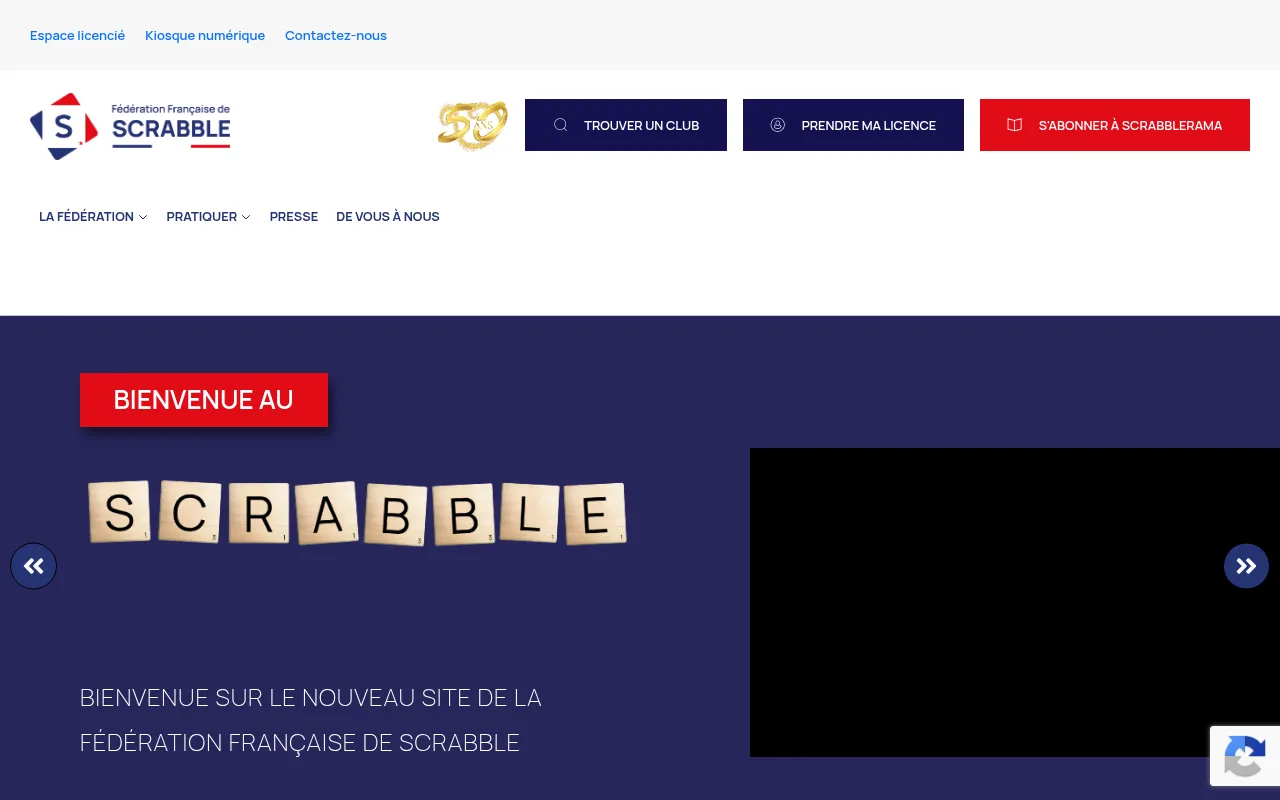
A head-to-head Scrabble session functions as a low-pressure vocabulary pressure-test: you must retrieve a real word under time and tile constraints, which trains active recall rather than passive recognition. Industry data on ESL learners using competitive word games points to measurable gains in spelling pattern recognition and vocabulary breadth over regular play. The honest tradeoff is that Scrabble rewards obscure two-letter words ("qi," "za") that carry zero conversational value. Use it to sharpen spelling instincts and stretch vocabulary range, with the understanding that practical spoken English requires different practice.
4. GamesToLearnEnglish.com - Free Browser-Based Vocabulary Games With Zero Sign-Up Required
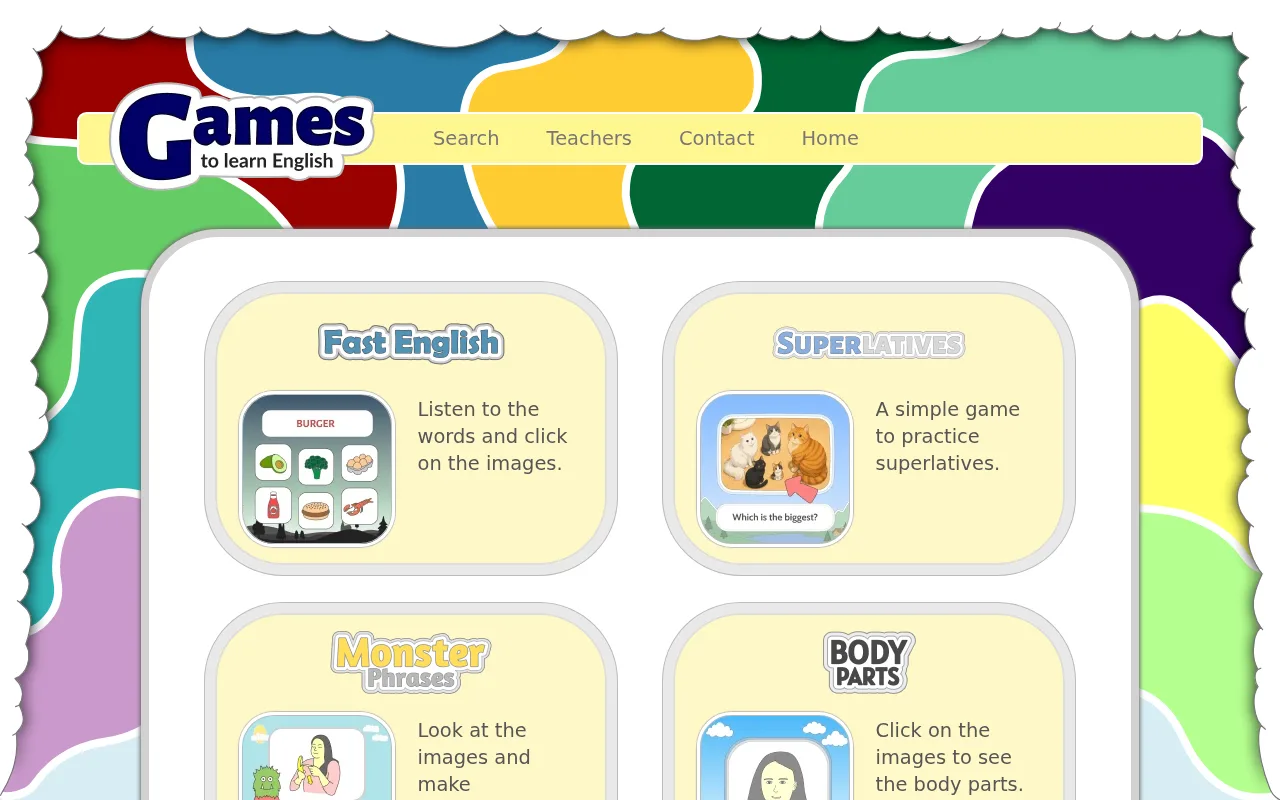
This browser-based platform offers vocabulary matching, sentence-building, and word-in-context exercises across beginner and intermediate levels, though access to its content requires an online game subscription rather than being entirely free. The low-friction entry point makes it potentially useful for adult beginners who want to test game-based learning before committing to a larger app. The ceiling is low: exercises are short, the content library is limited, and the contextual depth does not approach what a life-simulation game delivers. Best as a warm-up tool or a quick gap-filler rather than a primary vocabulary source.
5. The 10-15 Minute Session Method - How to Use Any Game to Maximise Vocabulary Retention Without Burnout
Capping game-based English study at 10-15 minutes per session exploits the spacing effect: short, frequent exposures to new vocabulary outperform marathon sessions for long-term retention. The method works with any game, pause after each session to write down three new words encountered and review them the next day. This suits busy adult learners most. The real tradeoff is discipline: games are designed to pull players in longer, so setting a timer before starting is essential.
6. Fun English Games for Kids - Age-Appropriate Picks That Build Vocabulary Through Play and Colour
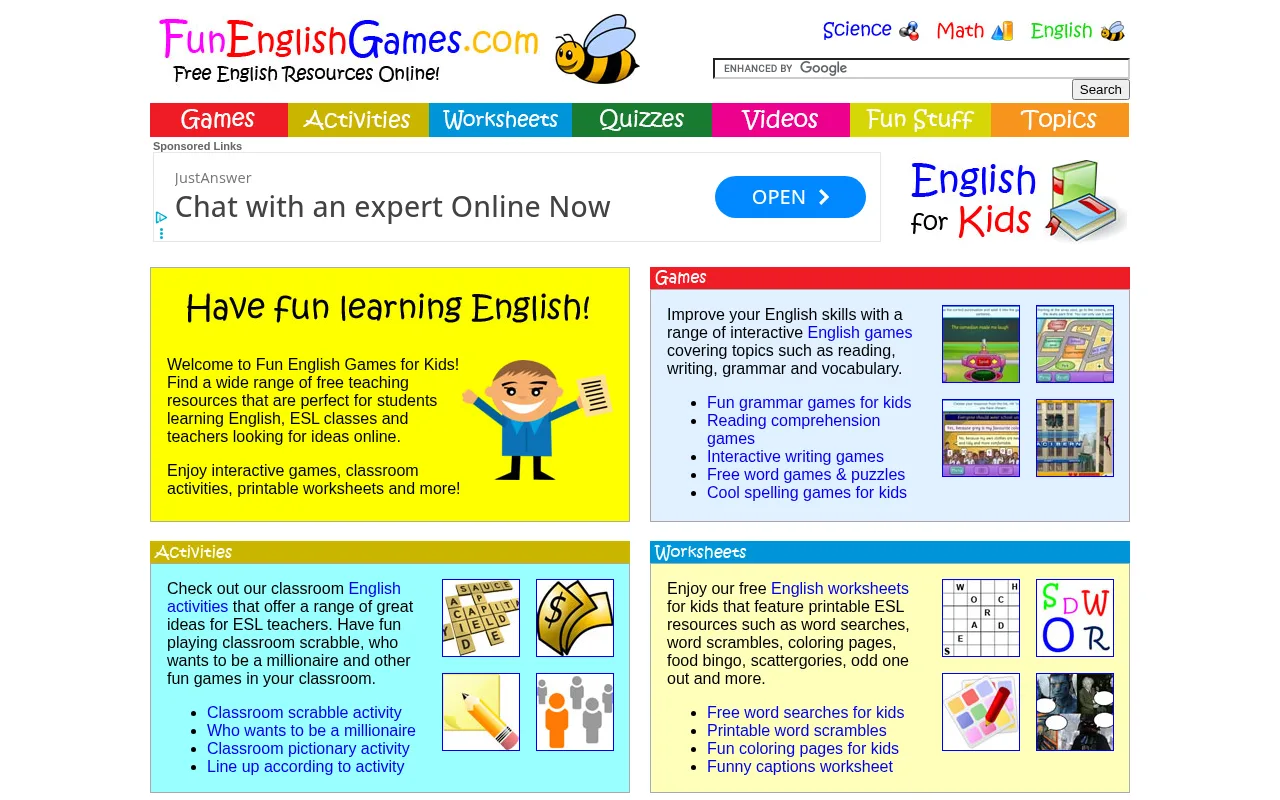
Platforms like Wordwall offer bright, gamified English vocabulary activities, matching games, quizzes, word searches, designed specifically for younger learners aged 5-12. Visual cues, simple instructions, and short rounds keep attention spans engaged while reinforcing core vocabulary sets like colours, animals, and classroom objects. These are the right pick for parents and teachers working with children at beginner level. The limitation is that older kids or fast learners outgrow the content quickly and need more challenging alternatives.
7. Games to Learn English Vocabulary - Matching the Right Game Type to Your Current Level and Goal
Not every game to learn English vocabulary suits every learner: word puzzle games build breadth, life-simulation games build contextual fluency, and platform-based games build structured recall. Choosing by level matters, beginners need visual, repetitive formats; intermediates benefit from open-ended dialogue-rich games; advanced learners gain most from competitive word games with broad lexicons. Resources like iSL Collective's ESL word game worksheets help teachers and self-studiers identify the right game type for a specific vocabulary goal.
Related Reading
How Long Does It Take To Learn English Fluently
Best Apps To Learn English
Types Of Music Good For Learning English
Learning English As A Second Language
English Learning App For Kids
Best Websites To Learn English
How To Learn English Speaking At Home
Tof
English Learning Activities
Best Podcasts For Learning English
Best Games That Build English Speaking and Pronunciation You Can Actually Use
Talking more in English does not automatically mean talking better. Group games generate spoken output, but without phoneme-level feedback or escalating complexity pressure, learners rehearse their existing errors with growing confidence. The result is fluency without accuracy, which is a ceiling. This is a real and common problem: non-native English speakers, including German and Brazilian learners, often have few opportunities to practice spoken English in daily life, so the practice time they do invest needs to count. The speaking and pronunciation tools below are ranked by how closely they simulate authentic conversational pressure and, critically, whether they deliver corrective feedback on what comes out of your mouth.
"Non-native English speakers (e.g. German, Brazilian users) rarely have opportunities to practice spoken English in their daily lives, making it hard to build real speaking fluency through games."
— what we hear from non-native English language learners
1. ELSA Speak - AI Pronunciation Coach with Phoneme-Level Feedback
Phoneme-level AI feedback is what separates ELSA Speak from every other pronunciation tool on this list. According to ELSA Speak's published efficacy research, learners who complete regular daily AI-coached sessions report meaningful gains in pronunciation accuracy over several weeks of consistent practice. The company's internal data points to improvements within roughly three weeks for users maintaining 15-minute daily sessions, a figure worth treating as directional rather than definitive given its self-reported source, but consistent with AI-feedback research showing that specific, phoneme-level correction accelerates pronunciation gains compared to undifferentiated practice. The AI identifies exactly which sounds are wrong, not just whether you passed or failed.
That specificity matters more than it might appear. Many learners find that apps like Duolingo are too lenient with pronunciation feedback, accepting a "close enough" pass when what they actually need is a stricter, more accurate assessment that tells them precisely where their mouth went wrong. ELSA Speak's phoneme-level model is designed to close that gap. The free tier covers limited lessons; the paid Pro plan unlocks personalized coaching, progress tracking, and a full lesson library. Most beneficial when a learner has specific accent or phoneme problems that group games will never diagnose.
2. Two Truths and a Lie - The ESL Speaking Game That Forces Spontaneous English Output
Group ESL games like Two Truths and a Lie build speaking and listening skills by forcing unscripted, spontaneous output in a low-stakes social frame. You have to construct three sentences on the spot, defend one under questioning, and read your audience's reactions in real time. That improvised pressure is exactly what Merrill Swain's Output Hypothesis identifies as an accelerator for acquisition: producing language you cannot fully plan in advance pushes your grammar to its limits. The honest limitation is that quieter learners default to simple sentences, so the complexity pressure is uneven across a group.
3. Simon Says and ESL Pictionary - Low-Prep Classroom Games That Build Spoken Vocabulary
Simon Says trains listening discrimination at natural speech speed, while ESL Pictionary forces descriptive spoken English under time pressure, two skills most vocabulary-only games skip entirely. Both are reliable low-prep ESL classroom games that create immediate social feedback without requiring materials or setup. The real limitation applies to both: neither delivers phoneme-level correction, so learners who mispronounce a word during a Pictionary description receive no signal that anything went wrong. Pair them with a dedicated pronunciation tool when accuracy, not just output volume, is the goal.
4. Free vs Paid Speaking Game Options - What You Actually Get at Each Price Point
Free speaking and pronunciation games, including classroom staples like Two Truths and a Lie and tongue twister challenges, cost nothing but also deliver no corrective feedback. The gap shows up fast. According to ELSA Speak's efficacy research, personalized feedback, progress tracking, and a full lesson experience are presented as core features of the product without being attributed exclusively to a paid Pro plan. Free options are worth starting with if your priority is spoken output volume and social confidence. Paid AI coaching earns its cost when you have specific phoneme problems that group games will never diagnose on their own, and when "close enough" feedback from more lenient apps is no longer giving you the accurate signal you need to actually improve.
Best Video Games for Learning English Through Real Story Immersion
Paid coaching and free games both operate in controlled, low-stakes environments where the language is predictable. Story-driven RPGs deliver more contextual English per hour than almost any other learning format. Baldur's Gate 3 alone contains over 2 million words of spoken and written dialogue, and titles like Skyrim and Persona 5 run 80 to 150 hours to complete. That is not background noise. That is a sustained, emotionally motivated reading and listening environment that no textbook schedule realistically matches.
Pros and cons at a glance
✓ Pros
Builds real vocabulary.
Sharpens pattern recognition.
Makes early English learning feel approachable.
✗ Cons
Every game has a structural limit that no amount of dedication can overcome.
Gamified platforms recycle familiar content, trapping learners at a plateau.
Primarily targets conscious learning, which does not transfer to spontaneous spoken output.
The critical caveat: volume alone does not equal acquisition. As PC Gamer's analysis of Baldur's Gate 3 and Starfield makes clear, the quantity-versus-quality tension in RPGs is real. If the English on screen sits too far above a learner's current level, the brain stops decoding meaning and starts pattern-matching quest markers and UI cues instead. A linguistically enormous game can deliver near-zero fluency gain when the difficulty is pitched wrong.
The eleven picks below are ranked by input quality, level fit, and how much the game forces players to actually process the language to move forward. Setup choices matter just as much as title selection, which is why console configuration and subtitle strategy appear alongside the game recommendations themselves.
How to Adjust Text Speed Settings So Any Game Teaches You English More Effectively
Auto-advance dialogue is the enemy of acquisition for anyone below B1. When text moves faster than a learner can decode it, the brain defaults to visual guessing rather than language processing. Turning off auto-advance and reducing text speed in games that support it, such as Persona 5 Royal, gives learners control over input pace and makes the difference between genuine comprehension and the illusion of it.
1. The Elder Scrolls V - Skyrim - Story-Driven RPG for Context-Heavy Vocabulary Immersion
Skyrim is the most practical entry point for intermediate English immersion games because its quest dialogue is direct, contextually grounded, and endlessly repeated across 100-plus hours of play. NPC conversations reinforce the same vocabulary clusters in varied situations, which mirrors the spaced repetition mechanism that builds retention. The real limitation: Skyrim's prose is functional rather than literary, so learners chasing register variety or nuanced vocabulary will plateau faster than they expect.
2. Disco Elysium - Literary RPG for Advanced Reading Comprehension and Nuanced Vocabulary
Disco Elysium is the highest-density reading environment on this list, built almost entirely from text-based dialogue choices with no action sequences to distract from comprehension. The vocabulary range spans bureaucratic, philosophical, and street-level registers, making it useful for C1-level learners who want to close the gap between understanding standard English and understanding how educated native speakers write. It is the wrong pick for anyone below B2; the prose will overwhelm rather than immerse. This is a tension many learners face directly: finding a story-rich game that matches their current proficiency level is harder than it looks, and misjudging the gap by even one CEFR level turns a compelling narrative into an unreadable wall of text.
3. Undertale - Accessible Story RPG for Intermediate Learners Seeking Emotional Narrative Context
Undertale earns its place because the emotional stakes of the story create a powerful motivation to understand every line, not just advance past it. The sentence structures stay short and punchy, vocabulary stays within a realistic A2-B1 range, and the humor relies on wordplay that rewards close reading. Learners who have bounced off heavier RPGs because the language felt exhausting consistently finish Undertale in full English without feeling overwhelmed.
4. Setting Console Language to English-Only Before Starting Any Game - The Core Immersion Setup Step
Before launching any title as a game to learn English, change your PlayStation, Xbox, or Nintendo Switch system language to English so that all menus, notifications, and default in-game text display in English automatically. This single setting forces passive exposure from the first screen. The tradeoff: some games override system language with their own settings, requiring a second manual adjustment inside the game's options menu.
5. Enabling English Subtitles Alongside English Audio - The Dual-Channel Subtitle Strategy
Running English audio with English subtitles simultaneously is the single highest-impact configuration for reading comprehension gains. The learner hears pronunciation and rhythm while reading the same words in real time, which accelerates the connection between written and spoken forms. The risk is passive reading: some learners let subtitles scroll without processing them. Slowing dialogue speed in games that allow it, or pausing cutscenes to re-read, converts passive exposure into active comprehension. This dual-channel approach pays its biggest dividends in real-world listening comprehension, because it trains the ear and the eye simultaneously rather than letting one outpace the other.
6. Adjusting In-Game Text Speed and Auto-Advance Settings to Control Reading Pace
Most RPGs and visual novels allow players to disable auto-advancing dialogue so text stays on screen until manually dismissed, a critical setup step when using any game to learn English. Slowing or pausing text gives learners time to decode unfamiliar words without losing story context. The tradeoff: not all games expose this setting, and some action-RPGs with voiced cutscenes lock text to audio timing with no override option.
7. Motivation and Play Hours - Why Engagement Sustains Input Volume That Textbooks Cannot
A learner who genuinely wants to know what happens next in a story will read and listen for three hours without noticing. That same learner will abandon a textbook chapter in twenty minutes. Emotional investment is the mechanism, not a side benefit. Learners across South America and other regions where English-only game releases were the norm often developed strong reading comprehension precisely because narrative motivation pushed them through material that would have stopped them cold in a structured classroom, without any formal support behind them. The practical implication: picking a genre you already enjoy in your native language dramatically increases the hours you will voluntarily accumulate, and total input hours are the single biggest variable in acquisition speed.
8. Genshin Impact - Free-to-Play Open-World RPG with Full English Voice Acting and Subtitles
Genshin Impact is the strongest recommendation for learners who want free online English learning games with genuine narrative depth. The game offers hundreds of hours of fully voiced English story content across its main quest and character storylines, all free to access without a purchase. The limitation worth naming: the gacha monetization model is designed to extend playtime, which benefits input volume but can create compulsive engagement patterns that have nothing to do with language goals.
9. Visual Novels on PC (Itch.io Free Titles) - Budget-Friendly English Immersion for Reading-Focused Learners
Itch.io hosts hundreds of free English visual novels ranging from beginner-friendly slice-of-life stories to complex branching narratives. The format is pure reading immersion with no action mechanics competing for attention, which makes comprehension the only task. Quality varies significantly, so filtering by download count and community ratings before committing time is essential. Learners at A2-B1 level who find full RPGs linguistically exhausting consistently get more usable input from a well-chosen visual novel than from a prestige RPG pitched above their level. Fast-paced action games present the opposite problem: titles built around combat, where dialogue is sparse, short, and barked under pressure, give learners almost no processing time and build very little vocabulary, however immersive the experience feels in the moment.
10. Paid vs Free - When Investing in a Full-Price Story RPG Delivers Better English Learning ROI
A story RPG priced at $40 to $60 typically delivers 80 to 150 hours of contextual English input, based on aggregated playtime data for Skyrim, Persona 5 Royal, and Genshin Impact. On a cost-per-immersion-hour basis, a single full-price RPG tends to compare favourably with ongoing subscription costs, provided the learner actually plays it consistently. The honest caveat is that an unplayed game delivers no input at all, so genre fit and genuine motivation matter more than any price-per-hour calculation.
11. Persona 5 Royal - JRPG Gold Standard for Reading Comprehension Across Registers and Social Contexts
Persona 5 Royal exposes learners to an unusually wide range of English registers within a single game: formal school announcements, casual teenage conversation, corporate dialogue, and supernatural monologues all appear across its 100-plus hour runtime. That register variety is rare in a single title and makes it the strongest pick for learners who want to move beyond functional English into socially fluent English, the kind of intermediate plateau that traditional memorization-based methods rarely break through. The barrier is commitment: the game demands real reading attention from the first hour, and learners who skip dialogue to advance faster will extract very little acquisition value from it.
---
There is a hidden cost to logging that same number of hours inside even the best story RPG. Every hour spent reading quest text and listening to voiced dialogue is an hour your speaking ability stays completely static. Games are exceptional input delivery systems, but transcripts and translations are not built into them, real-time feedback on what you misheard does not exist, and the listening practice they provide, while genuine, is not sequenced or selected to match your current level.
Parrot's short-form video feed addresses exactly this gap: every video watched contributes to listening practice immediately, transcripts and translations are available on every video, and the content is sequenced to your level rather than left to chance. Learners who build fluency through structured immersive listening practice alongside their RPG hours consistently find that the input-to-output gap closes faster than game-only immersion alone ever managed.
Stack enough of these RPG hours and something unexpected happens: your reading comprehension pulls ahead of your speaking ability by a wide margin. You understand far more English than you can produce. That gap has a name, and the next section explains exactly why every game on this list eventually hits it, and what it actually takes to break through.
The Fluency Ceiling Every English Game Eventually Hits and How to Break Through It
These apps are popular for good reasons. But every one of them is built around design choices that quietly work against the brain's language acquisition process once you move past the basics, and most learners never find out why their progress stalled.

Why Every Game on This List Has a Built-In Progress Ceiling
It does not prove you improved.
The 13 games on this list are genuinely good tools, yet each one shares the same structural limitation.
The ceiling is an engineering problem. Gamified platforms are built to maximize daily engagement by reducing cognitive load and recycling familiar content. That design choice keeps learners coming back, but it runs directly against the mechanism the brain needs to keep acquiring language.
According to industry research drawing on Krashen's Input Hypothesis, acquisition requires i+1 input: material pitched just above the learner's current level, delivered in meaningful communicative contexts. Gamified apps typically recycle already-known vocabulary in decontextualized exercises, so learners plateau once the app's content no longer provides genuine i+1 challenge. The streak mechanics that reward consistency are precisely what trap learners at a permanent beginner plateau: the system is designed to feel achievable, not to push just beyond what you already know.
The same research distinguishes "acquisition" (subconscious, fluency-building) from "learning" (conscious rule memorization), and most gamified apps train only the latter.
Using English Learning Games, and Knowing When to Move On
Games are most valuable in the first weeks of exposure, when new vocabulary is genuinely novel and every correct answer represents real i+1 input. That window is real but finite.
Once you can navigate a game's content without much effort, the input has collapsed from i+1 to i+0. The right signal is discomfort: if a game feels easy and satisfying, it has done its job, and it is time to introduce authentic, unscripted comprehensible input.
Replacing a game loop with a short-form video immersion format converts those same minutes from engagement into genuine acquisition. Comprehensible input research consistently identifies native-speaker audio-visual content pitched just above a learner's current level as one of the highest-leverage uses of limited daily study time. That principle drives Parrot's short-form video feed: contextually rich, level-appropriate clips matched to the daily gaps busy adults already have, so passive scrolling time becomes the kind of meaningful exposure that builds conversational English rather than just recognition.
Related Reading
Best Apps For Learning English Pronunciation
Best Tv Shows To Learn English
Best Books To Learn English Grammar
English Pronunciation Exercises
Best Audiobooks To Learn English
Best Movies For Learning English
Best Books For Learning English
Best Youtube Channels To Learn English
Best Apps To Improve English Speaking Skills
Next steps
If your vocabulary keeps growing but the words still freeze the moment a native speaker uses them in real conversation, the path forward starts with shifting from recognition practice to comprehensible input that your brain can absorb at real speech speed.
Vocabulary games build recognition, not recall, which means every tap-the-bubble session widens the gap between what you can identify on a screen and what you can produce under pressure. At the same time, the streak mechanics that feel like progress are engineered to reduce cognitive load and recycle familiar content, the exact opposite of the i+1 challenge acquisition requires. Together, they point to replacing game loops with level-appropriate native-speaker input that forces your brain to decode meaning rather than pattern-match against a controlled interface.
Start with learn Spanish on Parrot to see the comprehensible input method in practice. The placement test pins your starting level, the short-form video feed surfaces real conversational language calibrated just above where you are now, and the Parrot Back speaking feature closes the loop between passive listening and spoken output.
Frequently Asked Questions
Why do I keep freezing up in real conversations even after practicing with English games every day?
The freeze happens because most English learning games train recognition under controlled conditions, not retrieval under real conversational pressure. Tapping the correct bubble when four options are visible is a fundamentally different cognitive act from constructing a sentence in real time while someone is waiting, and the two skills require different conditions to develop.
What should I actually look for in a game before I spend time on it?
Apply three questions: Is the input slightly above your current level? Does meaning drive the interaction, rather than speed or pattern-matching? Does the format lower your anxiety rather than raise it? Krashen's research shows that a raised affective filter blocks input from being acquired regardless of content quality, so all three conditions need to be met together.
Are life-simulation games like Animal Crossing actually useful for building English vocabulary?
Yes, but with a clear tradeoff. Life-simulation games expose learners to roughly 2,500-3,500 unique English words in natural conversational context, and words encountered in meaningful context are retained at significantly higher rates than words studied in isolation. The limitation is that gameplay is passive reading, so recognition builds faster than the active recall you need for real conversation.
Is playing an English game for a long session on the weekend better than a few minutes every day?
No, shorter, distributed sessions outperform marathon ones. Industry research on the spacing effect shows that spaced practice can produce retention improvements above 20 percent compared to massed practice, so fifteen focused minutes inside a game beats ninety distracted minutes of the same.
Can I learn conversational English just by keeping a long streak on a gamified app?
Not reliably. A learner can maintain a 365-day streak while remaining unable to hold a basic conversation, because habitual app-opening and communicative competence require different conditions to develop. Engagement metrics and language-acquisition metrics are not the same thing, and most users who rely on gamified apps as their sole learning tool do not reach conversational competence.